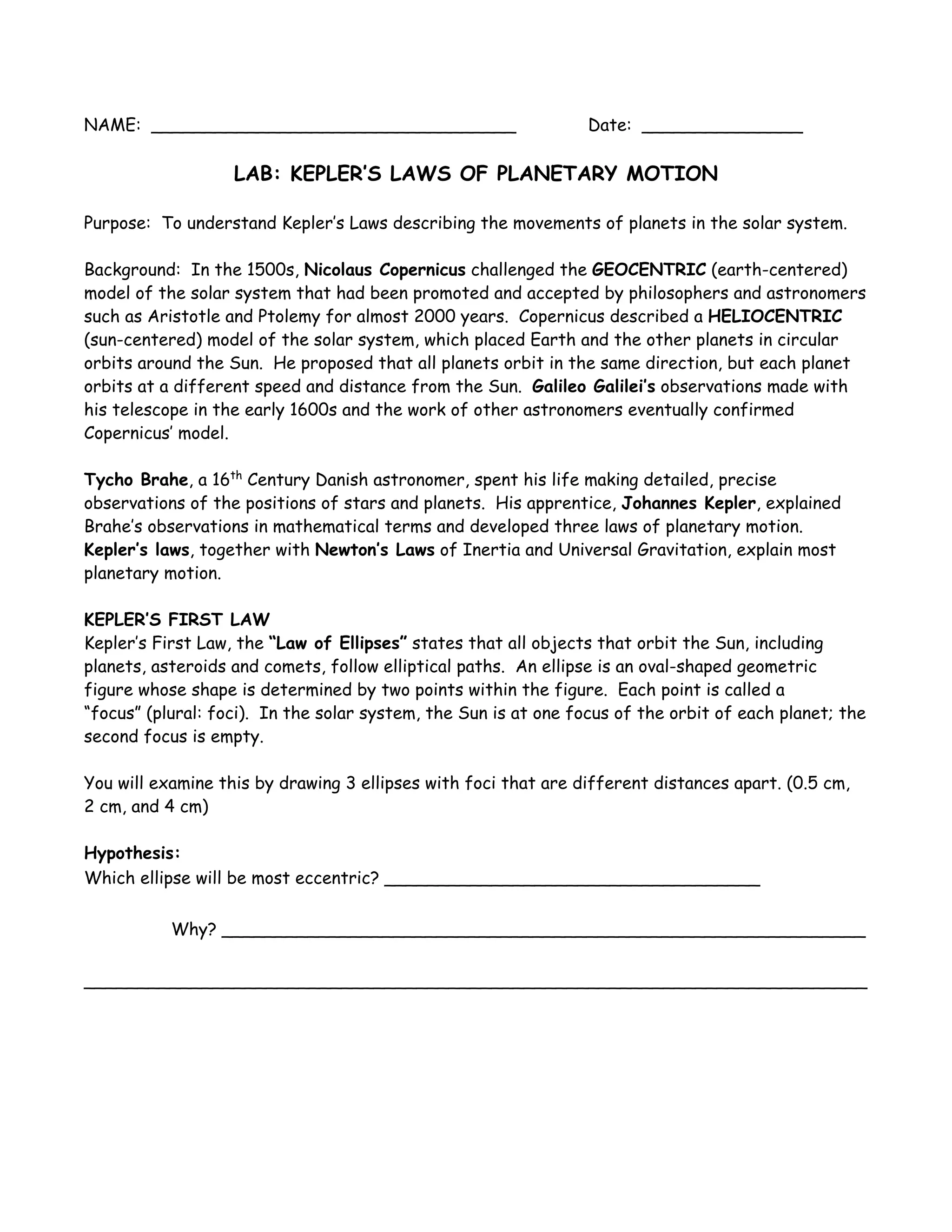
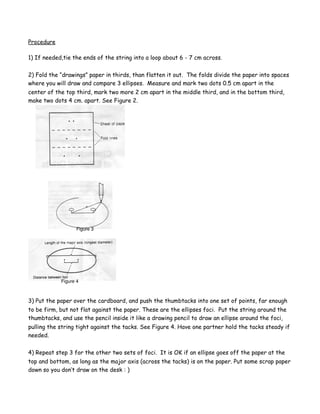
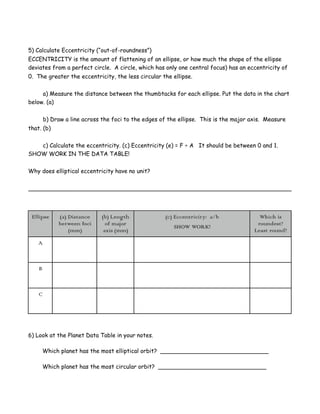
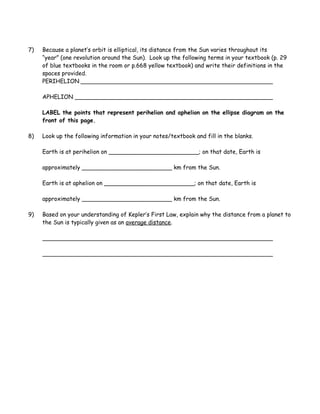
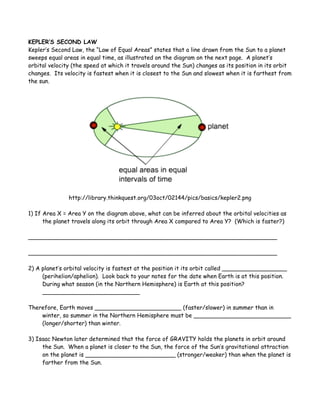
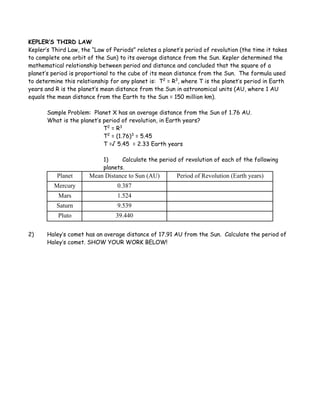
Kepler's laws describe the motion of planets orbiting the Sun. Kepler's first law states that planets follow elliptical orbits with the Sun at one focus. The more distant the foci, the more elongated the ellipse. Kepler's second law says that a line connecting a planet to the Sun sweeps out equal areas in equal times. A planet moves fastest when closest to the Sun. Kepler's third law relates the square of a planet's orbital period to the cube of its average distance from the Sun.


![Fp0910 El Encuentro[1]](https://cdn.slidesharecdn.com/ss_thumbnails/fp0910elencuentro1-100303113543-phpapp01-thumbnail.jpg?width=640&height=640&fit=bounds)


