CHAPTER 7:
  LEVERAGING SECONDARY BRAND
KNOWLEDGE TO BUILD BRAND EQUITY


         Kevin Lane Keller
       Tuck School of Business
         Dartmouth College


                                 7.1
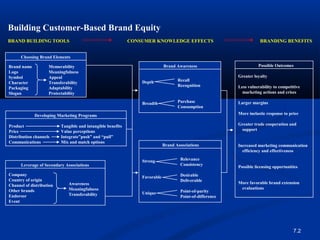
Building Customer-Based Brand Equity
BRAND BUILDING TOOLS                                         CONSUMER KNOWLEDGE EFFECTS                               BRANDING BENEFITS


      Choosing Brand Elements

Brand name          Memorability                                             Brand Awareness                         Possible Outcomes
Logo                Meaningfulness
Symbol              Appeal                                                                                 Greater loyalty
                                                                 Depth              Recall
Character           Transferability
                                                                                    Recognition            Less vulnerability to competitive
Packaging           Adaptability
Slogan              Protectability                                                                           marketing actions and crises

                                                                 Breadth            Purchase               Larger margins
                                                                                    Consumption
             Developing Marketing Programs                                                                 More inelastic response to price

Product                   Tangible and intangible benefits                                                 Greater trade cooperation and
Price                     Value perceptions                                                                 support
Distribution channels     Integrate”push” and “pull”
Communications            Mix and match options
                                                                             Brand Associations            Increased marketing communication
                                                                                                             efficiency and effectiveness

                                                                 Strong              Relevance
      Leverage of Secondary Associations                                             Consistency
                                                                                                           Possible licensing opportunities
Company                                                                              Desirable
                                                                 Favorable
Country of origin                                                                    Deliverable
                              Awareness                                                                    More favorable brand extension
Channel of distribution
                              Meaningfulness                                                                evaluations
Other brands                                                                         Point-of-parity
                              Transferability                    Unique
Endorsor                                                                             Point-of-difference
Event


                                                                                                                                        7.2
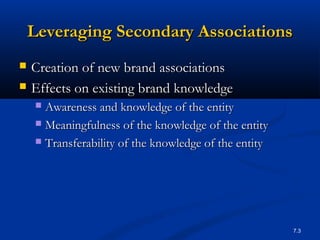
Leveraging Secondary Associations
   Creation of new brand associations
   Effects on existing brand knowledge
     Awareness and knowledge of the entity
     Meaningfulness of the knowledge of the entity

     Transferability of the knowledge of the entity


                                                       7.3
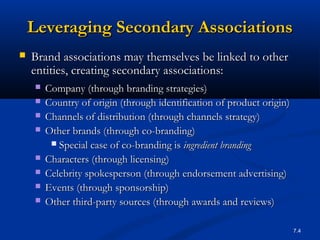
Leveraging Secondary Associations
   Brand associations may themselves be linked to other
    entities, creating secondary associations:
       Company (through branding strategies)
       Country of origin (through identification of product origin)
       Channels of distribution (through channels strategy)
       Other brands (through co-branding)
          Special case of co-branding is ingredient branding
       Characters (through licensing)
       Celebrity spokesperson (through endorsement advertising)
       Events (through sponsorship)
       Other third-party sources (through awards and reviews)

                                                                       7.4
Leveraging Secondary Associations
   These secondary associations may lead to a
    transfer of:
       Response-type associations
          Judgments (especially credibility)
          Feelings

       Meaning-type associations
          Product or service performance
          Product or service imagery


                                                 7.5
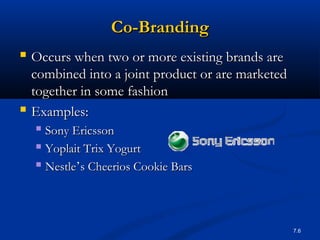
Co-Branding
 Occurs when two or more existing brands are
  combined into a joint product or are marketed
  together in some fashion
 Examples:
   Sony Ericsson
   Yoplait Trix Yogurt
   Nestle’s Cheerios Cookie Bars


                                                  7.6
Advantages of Co-Branding
 Borrow needed expertise
 Leverage equity you don’t have
 Reduce cost of product introduction
 Expand brand meaning into related categories
    Broaden meaning
    Increase access points
 Source of additional revenue


                                                 7.7
Disadvantages of Co-Branding
 Loss of control
 Risk of brand equity dilution
 Negative feedback effects
 Lack of brand focus and clarity
 Organizational distractions


                                    7.8
Ingredient Branding
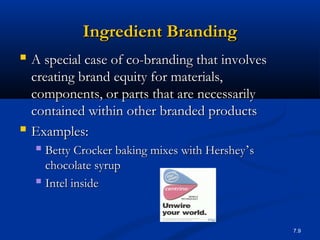
 A special case of co-branding that involves
  creating brand equity for materials,
  components, or parts that are necessarily
  contained within other branded products
 Examples:
   Betty Crocker baking mixes with Hershey’s
    chocolate syrup
   Intel inside


                                                7.9
Licensing
 Involves contractual arrangements whereby
  firms can use the names, logos, characters, and
  so forth of other brands for some fixed fee
 Examples:
   Entertainment (Star Wars, Jurassic Park, etc.)
   Television and cartoon characters (The Simpsons)
   Designer apparel and accessories (Calvin Klein,
    Pierre Cardin, etc.)


                                                       7.10
Celebrity Endorsement
 Draws attention to the brand
 Shapes the perceptions of the brand
 Celebrity should have a high level of visibility
  and a rich set of useful associations, judgments,
  and feelings
 Q-Ratings to evaluate celebrities


                                                     7.11
Celebrity Endorsement: Potential Problems
 Celebrity endorsers can be overused by endorsing
  many products that are too varied.
 There must be a reasonable match between the
  celebrity and the product.
 Celebrity endorsers can get in trouble or lose
  popularity.
 Many consumers feel that celebrities are doing the
  endorsement for money and do not necessarily
  believe in the endorsed brand.
 Celebrities may distract attention from the brand.
                                                  7.12
Sporting, Cultural, or Other Events
   Sponsored events can contribute to brand equity
    by becoming associated to the brand and
    improving brand awareness, adding new
    associations, or improving the strength,
    favorability, and uniqueness of existing
    associations.
   The main means by which an event can transfer
    associations is credibility.

                                                 7.13
Third-Party Sources
   Marketers can create secondary associations in a
    number of different ways by linking the brand to
    various third-party sources.
   Third-party sources can be especially credible
    sources.
   Marketers often feature them in advertising
    campaigns and selling efforts .
       Example: J.D. Power and Associates’ well-publicized
        Customer Satisfaction Index

                                                         7.14

Keller sbm3 07

  • 1.
    CHAPTER 7: LEVERAGING SECONDARY BRAND KNOWLEDGE TO BUILD BRAND EQUITY Kevin Lane Keller Tuck School of Business Dartmouth College 7.1
  • 2.
    Building Customer-Based BrandEquity BRAND BUILDING TOOLS CONSUMER KNOWLEDGE EFFECTS BRANDING BENEFITS Choosing Brand Elements Brand name Memorability Brand Awareness Possible Outcomes Logo Meaningfulness Symbol Appeal Greater loyalty Depth Recall Character Transferability Recognition Less vulnerability to competitive Packaging Adaptability Slogan Protectability marketing actions and crises Breadth Purchase Larger margins Consumption Developing Marketing Programs More inelastic response to price Product Tangible and intangible benefits Greater trade cooperation and Price Value perceptions support Distribution channels Integrate”push” and “pull” Communications Mix and match options Brand Associations Increased marketing communication efficiency and effectiveness Strong Relevance Leverage of Secondary Associations Consistency Possible licensing opportunities Company Desirable Favorable Country of origin Deliverable Awareness More favorable brand extension Channel of distribution Meaningfulness evaluations Other brands Point-of-parity Transferability Unique Endorsor Point-of-difference Event 7.2
  • 3.
    Leveraging Secondary Associations  Creation of new brand associations  Effects on existing brand knowledge  Awareness and knowledge of the entity  Meaningfulness of the knowledge of the entity  Transferability of the knowledge of the entity 7.3
  • 4.
    Leveraging Secondary Associations  Brand associations may themselves be linked to other entities, creating secondary associations:  Company (through branding strategies)  Country of origin (through identification of product origin)  Channels of distribution (through channels strategy)  Other brands (through co-branding)  Special case of co-branding is ingredient branding  Characters (through licensing)  Celebrity spokesperson (through endorsement advertising)  Events (through sponsorship)  Other third-party sources (through awards and reviews) 7.4
  • 5.
    Leveraging Secondary Associations  These secondary associations may lead to a transfer of:  Response-type associations  Judgments (especially credibility)  Feelings  Meaning-type associations  Product or service performance  Product or service imagery 7.5
  • 6.
    Co-Branding  Occurs whentwo or more existing brands are combined into a joint product or are marketed together in some fashion  Examples:  Sony Ericsson  Yoplait Trix Yogurt  Nestle’s Cheerios Cookie Bars 7.6
  • 7.
    Advantages of Co-Branding Borrow needed expertise  Leverage equity you don’t have  Reduce cost of product introduction  Expand brand meaning into related categories  Broaden meaning  Increase access points  Source of additional revenue 7.7
  • 8.
    Disadvantages of Co-Branding Loss of control  Risk of brand equity dilution  Negative feedback effects  Lack of brand focus and clarity  Organizational distractions 7.8
  • 9.
    Ingredient Branding  Aspecial case of co-branding that involves creating brand equity for materials, components, or parts that are necessarily contained within other branded products  Examples:  Betty Crocker baking mixes with Hershey’s chocolate syrup  Intel inside 7.9
  • 10.
    Licensing  Involves contractualarrangements whereby firms can use the names, logos, characters, and so forth of other brands for some fixed fee  Examples:  Entertainment (Star Wars, Jurassic Park, etc.)  Television and cartoon characters (The Simpsons)  Designer apparel and accessories (Calvin Klein, Pierre Cardin, etc.) 7.10
  • 11.
    Celebrity Endorsement  Drawsattention to the brand  Shapes the perceptions of the brand  Celebrity should have a high level of visibility and a rich set of useful associations, judgments, and feelings  Q-Ratings to evaluate celebrities 7.11
  • 12.
    Celebrity Endorsement: PotentialProblems  Celebrity endorsers can be overused by endorsing many products that are too varied.  There must be a reasonable match between the celebrity and the product.  Celebrity endorsers can get in trouble or lose popularity.  Many consumers feel that celebrities are doing the endorsement for money and do not necessarily believe in the endorsed brand.  Celebrities may distract attention from the brand. 7.12
  • 13.
    Sporting, Cultural, orOther Events  Sponsored events can contribute to brand equity by becoming associated to the brand and improving brand awareness, adding new associations, or improving the strength, favorability, and uniqueness of existing associations.  The main means by which an event can transfer associations is credibility. 7.13
  • 14.
    Third-Party Sources  Marketers can create secondary associations in a number of different ways by linking the brand to various third-party sources.  Third-party sources can be especially credible sources.  Marketers often feature them in advertising campaigns and selling efforts .  Example: J.D. Power and Associates’ well-publicized Customer Satisfaction Index 7.14

Editor's Notes