SARFARAZ NASRI GC UNIVERSITY FAISALABAD
SARFRAZ1412@GMAIL.COM
Presented to:
Dr. Rizwan
Department of Bioinformatics & Biotechnology
Gcuf
INTRODUCTION:
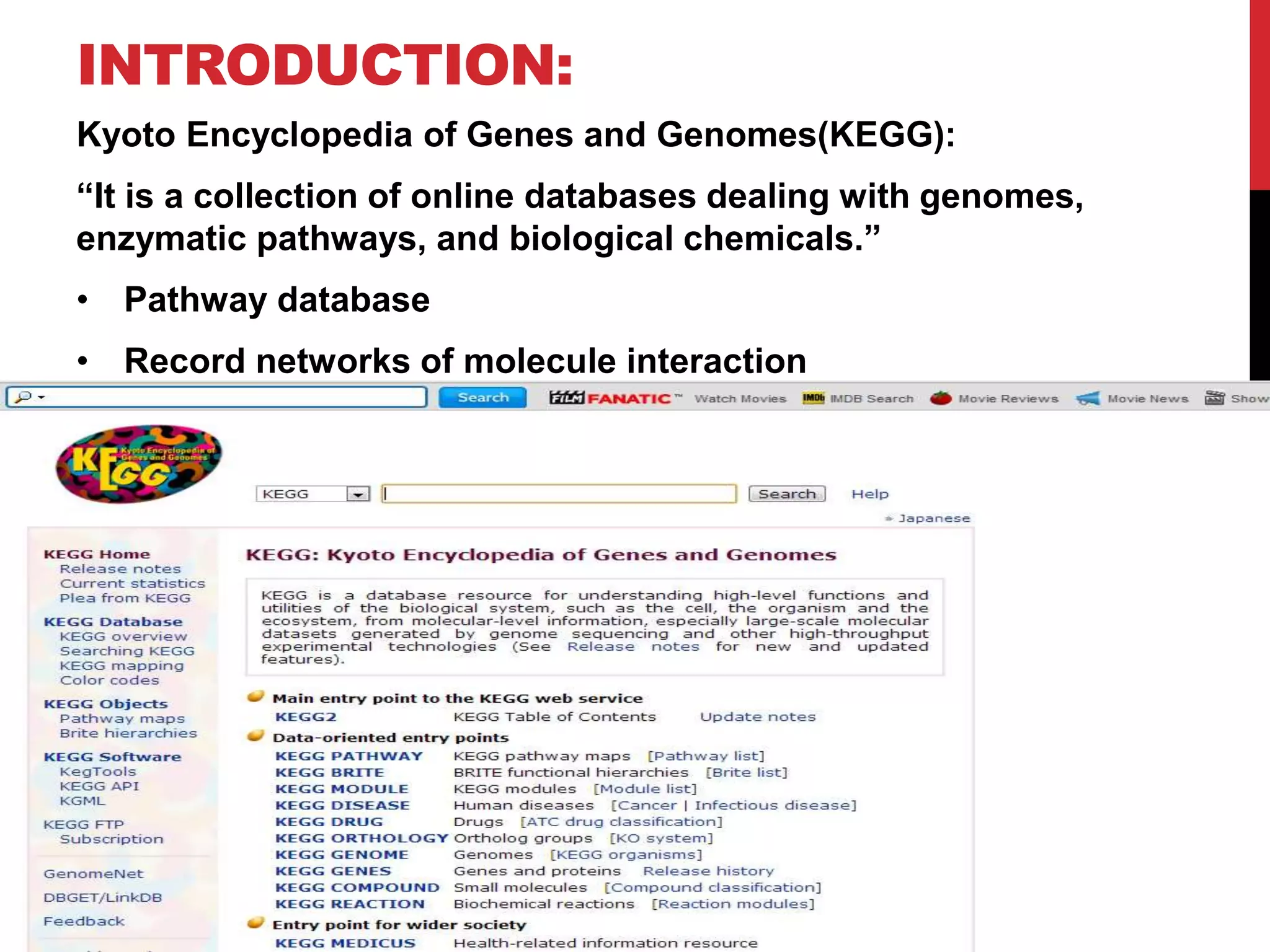
Kyoto Encyclopedia of Genes and Genomes(KEGG):
“It is a collection of online databases dealing with genomes,
enzymatic pathways, and biological chemicals.”
• Pathway database
• Record networks of molecule interaction
• Computerize current knowledge of biological systems & provide
consistent annotations.
• Maintain gene catalogs for sequenced genomes.
• Maintain catalogs of chemical reactions in living cells by
LIGAND.
• Provide new informatics technologies toward predicting
biological systems and designing further expriments.
OBJECTIVES:
DATABASE OF KEGG
KEGG maintain 6 main databases:
 KEGG Pathway(Atlas)
 KEGG Genes
 KEGG Genome
 KEGG Ligand
 KEGG BRITE
 KEGG Cancer
KEGG PATHWAY
“KEGG PATHWAY is a collection of manually drawn pathway
maps representing our knowledge on the molecular
interaction and reaction networks for:”
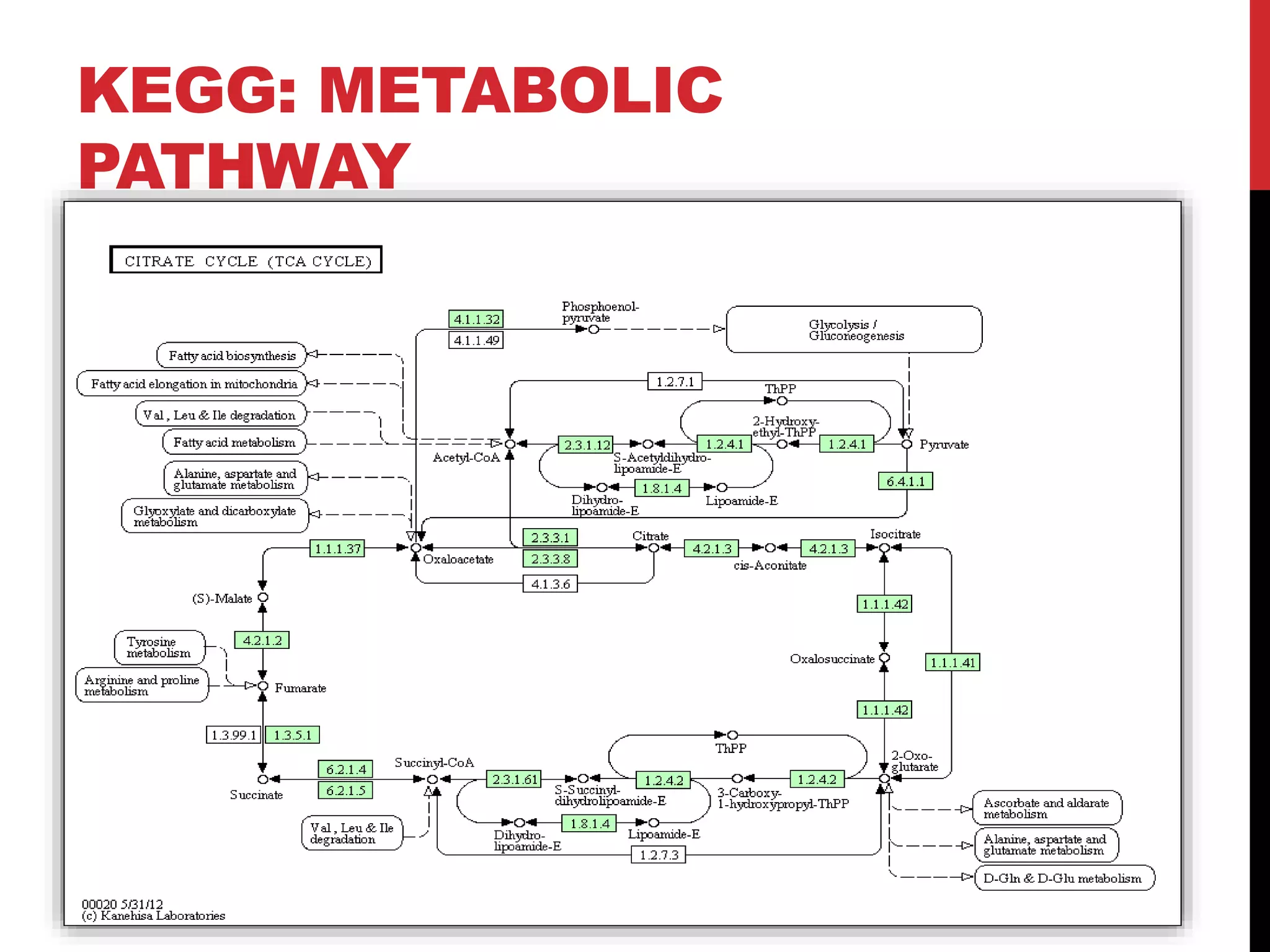
 Metabolism
 Genetic Information Processing
 Environmental Information Processing
 Cellular Processes
 Organismal Systems
 Human Diseases
 Drug Development
KEGG: METABOLIC
PATHWAY
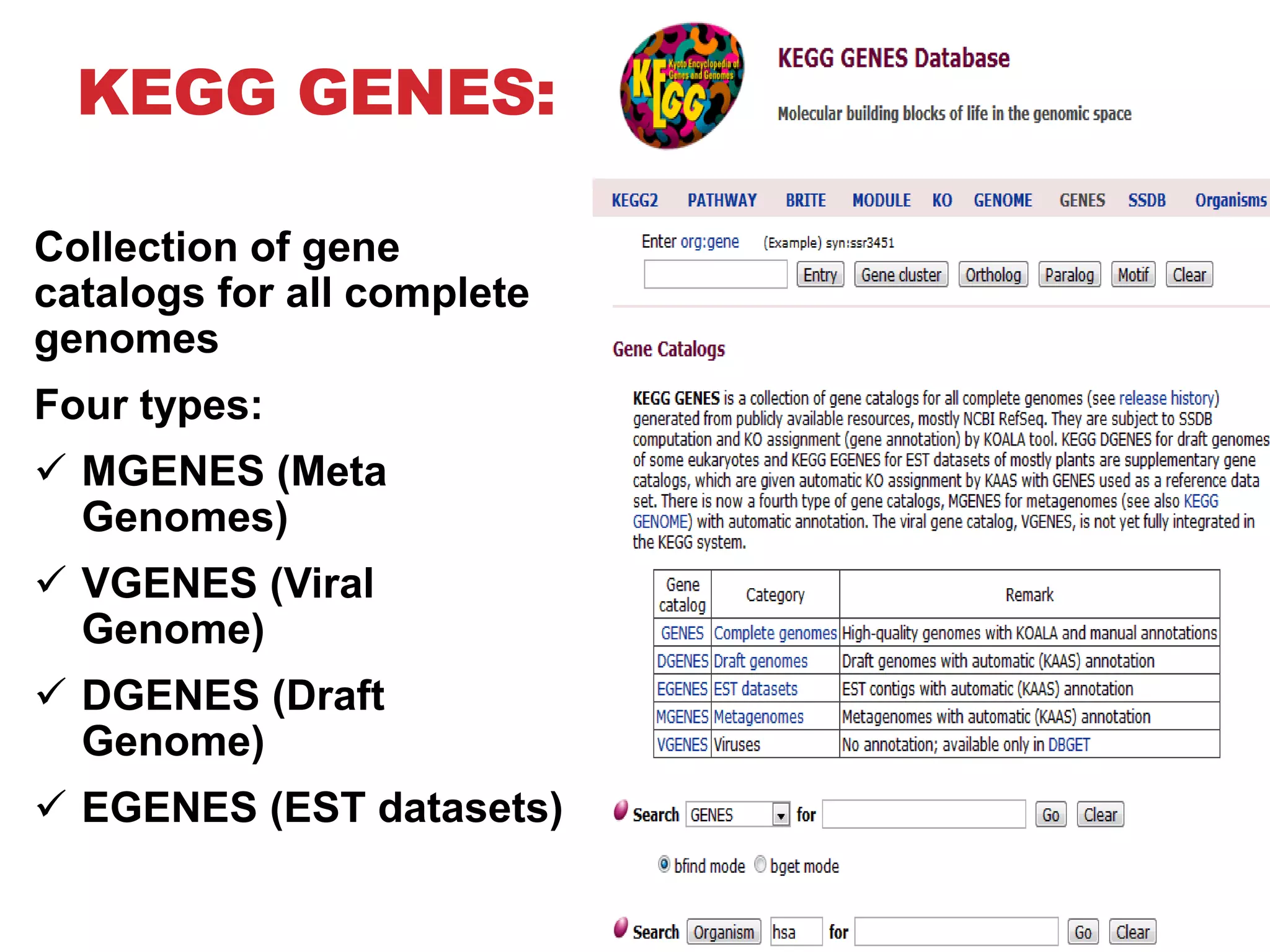
KEGG GENES:
Collection of gene
catalogs for all complete
genomes
Four types:
 MGENES (Meta
Genomes)
 VGENES (Viral
Genome)
 DGENES (Draft
Genome)
 EGENES (EST datasets)
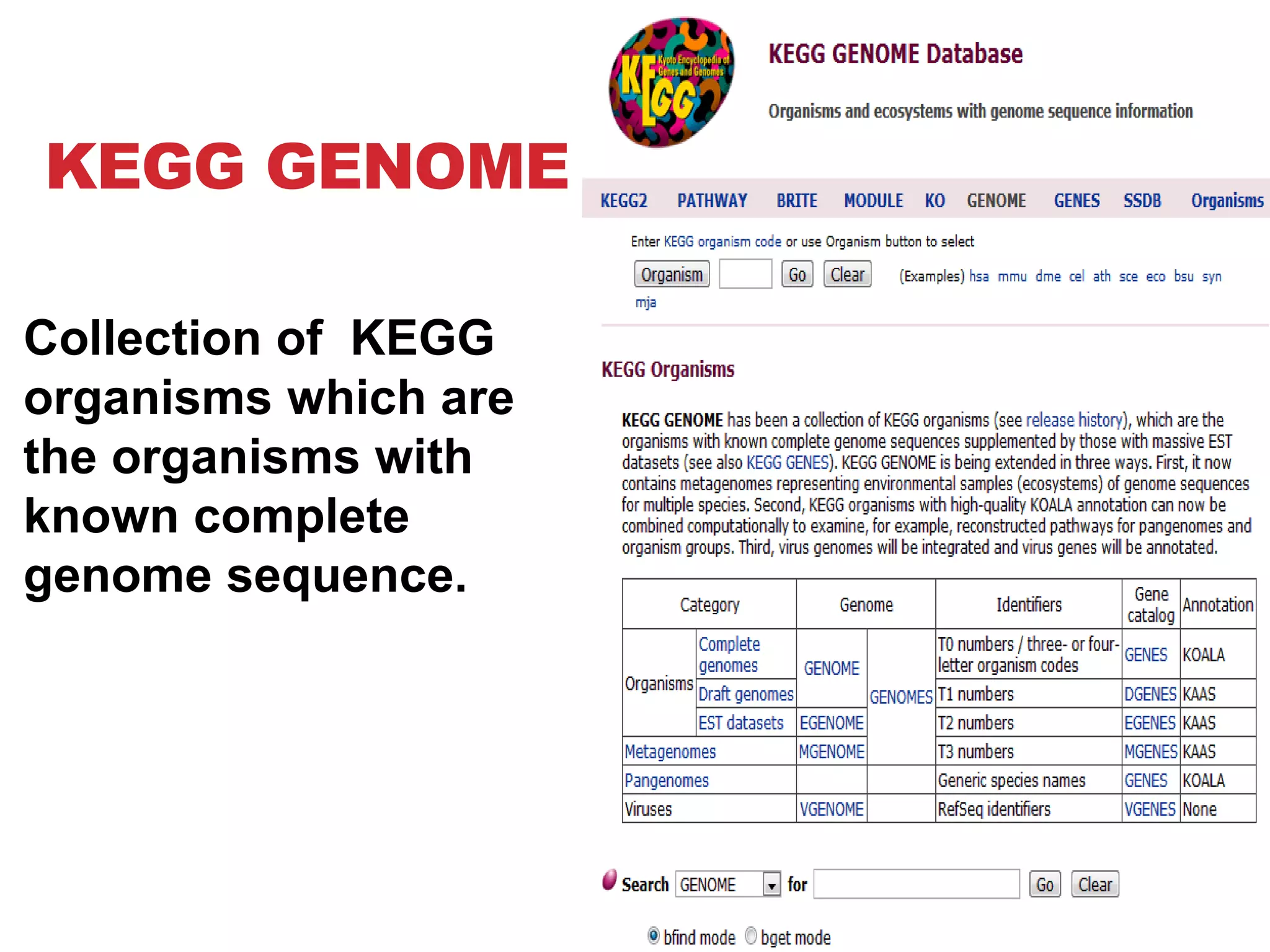
KEGG GENOME
Collection of KEGG
organisms which are
the organisms with
known complete
genome sequence.
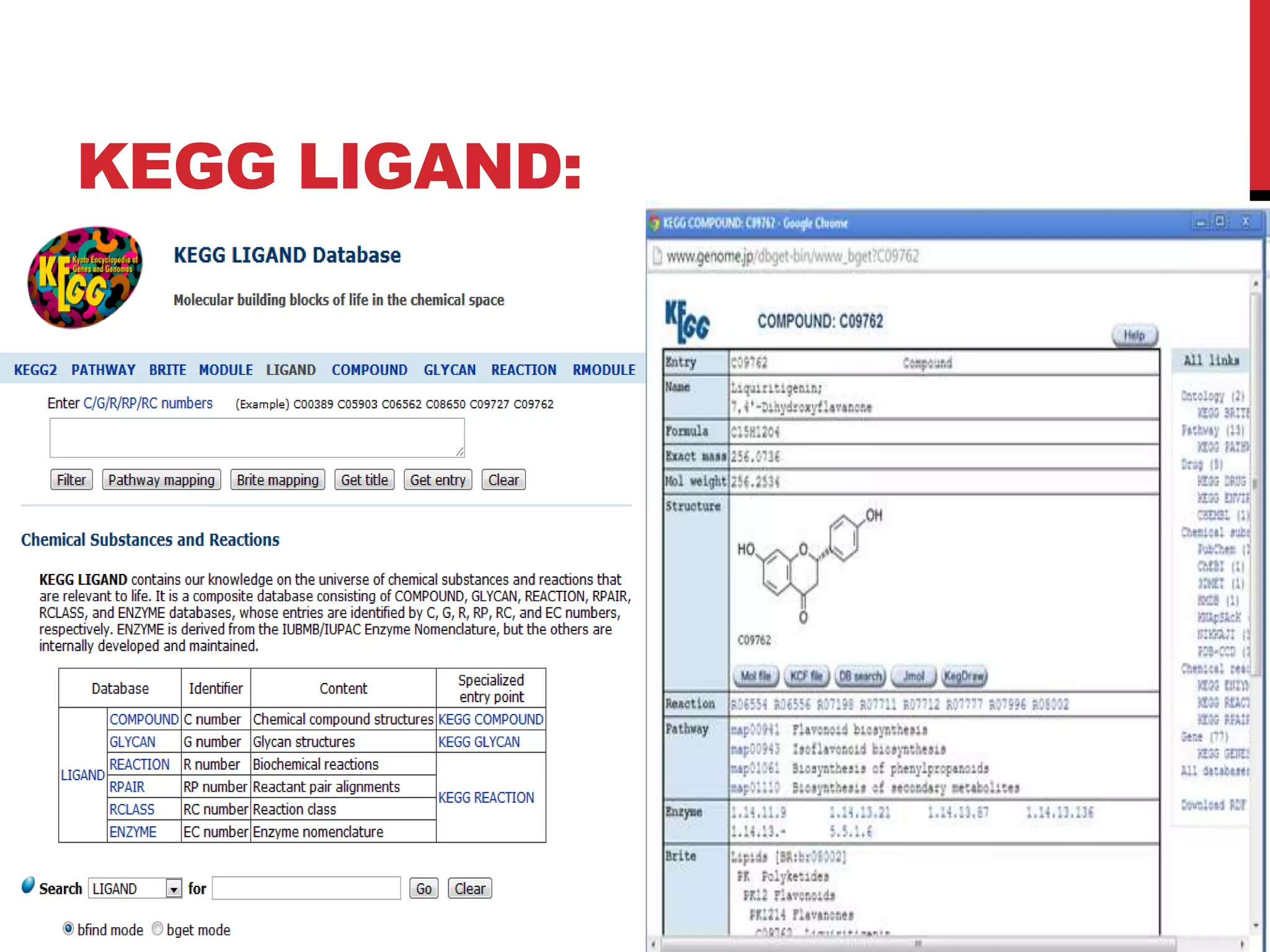
KEGG LIGAND:
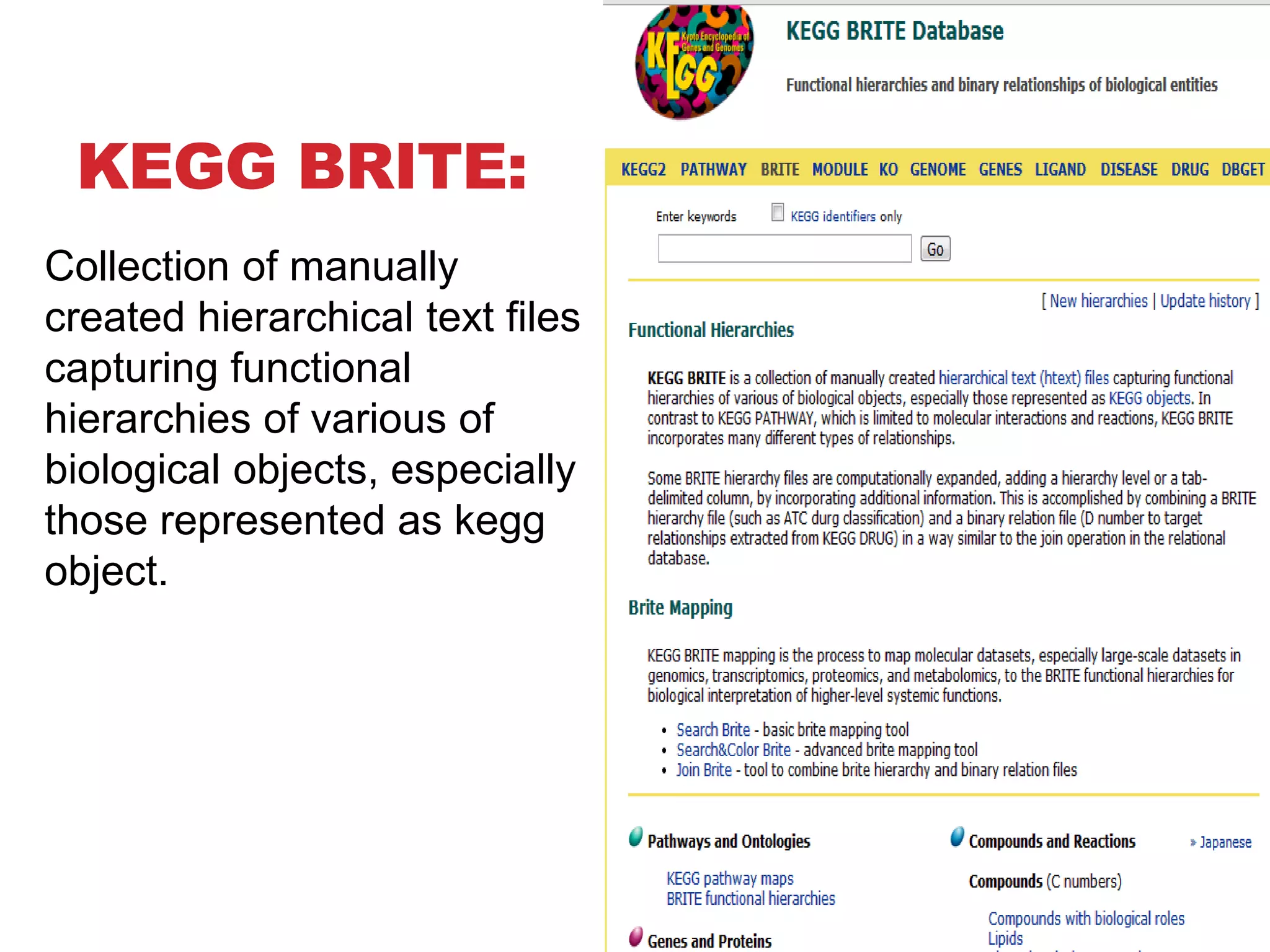
KEGG BRITE:
Collection of manually
created hierarchical text files
capturing functional
hierarchies of various of
biological objects, especially
those represented as kegg
object.
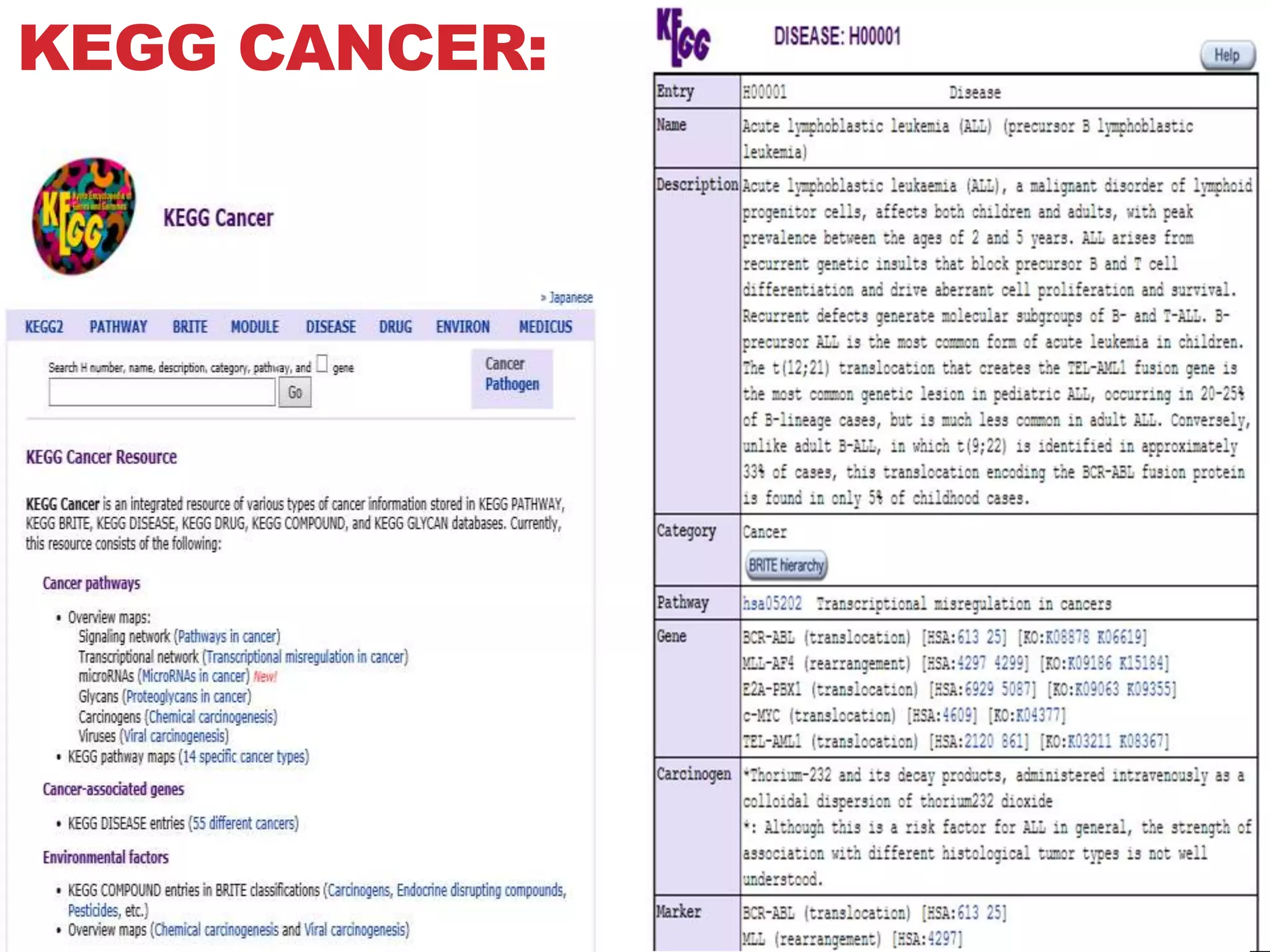
KEGG CANCER:
Applications:
 Use to detect functionally related enzyme clusters.
 Automatic detection of conserved gene clusters in
multiple genomes by graph comparison.
 Modeling & Stimulation
 Browsing and retrieval of data
CONCLUSION:
The Kyoto Encyclopedia of Genes and Genomes is a
vast library of information gathered from fully
sequenced genomes, genes, proteins, pathways, and
chemical compounds pertaining to over a hundred
different species of both prokaryotes and eukaryotes.

Kegg database resources

  • 1.
    SARFARAZ NASRI GCUNIVERSITY FAISALABAD SARFRAZ1412@GMAIL.COM
  • 2.
    Presented to: Dr. Rizwan Departmentof Bioinformatics & Biotechnology Gcuf
  • 3.
    INTRODUCTION: Kyoto Encyclopedia ofGenes and Genomes(KEGG): “It is a collection of online databases dealing with genomes, enzymatic pathways, and biological chemicals.” • Pathway database • Record networks of molecule interaction
  • 4.
    • Computerize currentknowledge of biological systems & provide consistent annotations. • Maintain gene catalogs for sequenced genomes. • Maintain catalogs of chemical reactions in living cells by LIGAND. • Provide new informatics technologies toward predicting biological systems and designing further expriments. OBJECTIVES:
  • 5.
    DATABASE OF KEGG KEGGmaintain 6 main databases:  KEGG Pathway(Atlas)  KEGG Genes  KEGG Genome  KEGG Ligand  KEGG BRITE  KEGG Cancer
  • 6.
    KEGG PATHWAY “KEGG PATHWAYis a collection of manually drawn pathway maps representing our knowledge on the molecular interaction and reaction networks for:”  Metabolism  Genetic Information Processing  Environmental Information Processing  Cellular Processes  Organismal Systems  Human Diseases  Drug Development
  • 7.
  • 8.
    KEGG GENES: Collection ofgene catalogs for all complete genomes Four types:  MGENES (Meta Genomes)  VGENES (Viral Genome)  DGENES (Draft Genome)  EGENES (EST datasets)
  • 9.
    KEGG GENOME Collection ofKEGG organisms which are the organisms with known complete genome sequence.
  • 10.
  • 11.
    KEGG BRITE: Collection ofmanually created hierarchical text files capturing functional hierarchies of various of biological objects, especially those represented as kegg object.
  • 12.
  • 13.
    Applications:  Use todetect functionally related enzyme clusters.  Automatic detection of conserved gene clusters in multiple genomes by graph comparison.  Modeling & Stimulation  Browsing and retrieval of data
  • 14.
    CONCLUSION: The Kyoto Encyclopediaof Genes and Genomes is a vast library of information gathered from fully sequenced genomes, genes, proteins, pathways, and chemical compounds pertaining to over a hundred different species of both prokaryotes and eukaryotes.