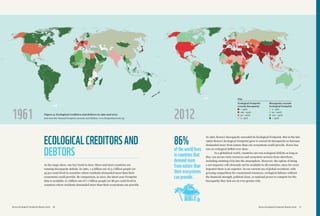
This document provides information about Korea's ecological footprint and biocapacity from the Korea Ecological Footprint Report 2016. It discusses how the ecological footprint measures human demand on nature, while biocapacity measures the ecosystems' ability to meet that demand. The key findings are that the average Korean has an ecological footprint eight times larger than Korea's biocapacity, fisheries make up the largest component of Korea's biocapacity, and the carbon footprint makes up 73% of Korea's total ecological footprint.