
Making Operational IT Strategic: Special Edition for Education CIOs
IntroductionsJavier EsteveIT Service Management LeaderKaseyaAnthony JulianoCTO & General PartnerLandmark Ventures
AgendaStrategy within Educational ITOperational IT: Shifting the balanceBest Practices: Gaining strategic influence using Kaseya
Strategy in Education ITIT in the business ties to the “product”That doesn’t map to EducationIT Operations are all that’s left
How IT becomes strategic in “Business”Better IT means faster time to market for product development Flexible architectureMore responsive processes & streamlined systemsIT fosters product innovationOut innovate the competitionLatest and greatest internet Web 2.0, mobile, social, etcIT is responsible for ‘brand’ protection + enhancementGovernance / compliance automationUptime/Reliability of serviceIT’s operational metrics tie to business metricsi.e. Website traffic as it relates to customer experienceOr Cost of a trade transaction going through the system fasterIT enables end user and sales force productivityAn enterprise app that makes end-users do their job fasterEnabling mobile means sales can close more deals
Business ≠ EducationAdministrators want CIOs to keep computers runningTime to Market isn’t measurable Budget is driven by politics and always is constrainedMultiple stakeholders: too many cooks in the kitchenProduct is a ‘well rounded student’ – much harder to measure than $$$ Generated
So how do you apply “Business IT” to “Education IT”?Goal #1: Improve Time to Market & Innovate Your Producti.e. Don’t let IT Service be a bottleneckSupport your teachers’ paths to innovation – new devices, new learning software packages, etcCreate initiatives that foster additional ways to reach students (online learning, ubiquitous computing, etc)Engage students in IT Service/Support to teach them the trade
So how do you apply “Business IT” to “Education IT”?Goal #2: Protect your brand by tying operational metrics to business metricsDon’t show up in the newspaper (keep operational budgets low, prevent visible outages, protect students from ‘big bad internet’Establish baselines of metrics on operational costs and publish how you’re driving them downKeep constant control of the environment across every endpoint and use those metrics to understand the impact on education
So how do you apply “Business IT” to “Education IT”?Goal #3: Improve End User and Sales Productivity“Hug” your end-users – make them happy by improving service levelsHave them help you sell what you’re doing!Make the Invisible become Visible (and vice versa)Become ‘Proactive’ to Shift the Balance
Operational IT: shifting the balance
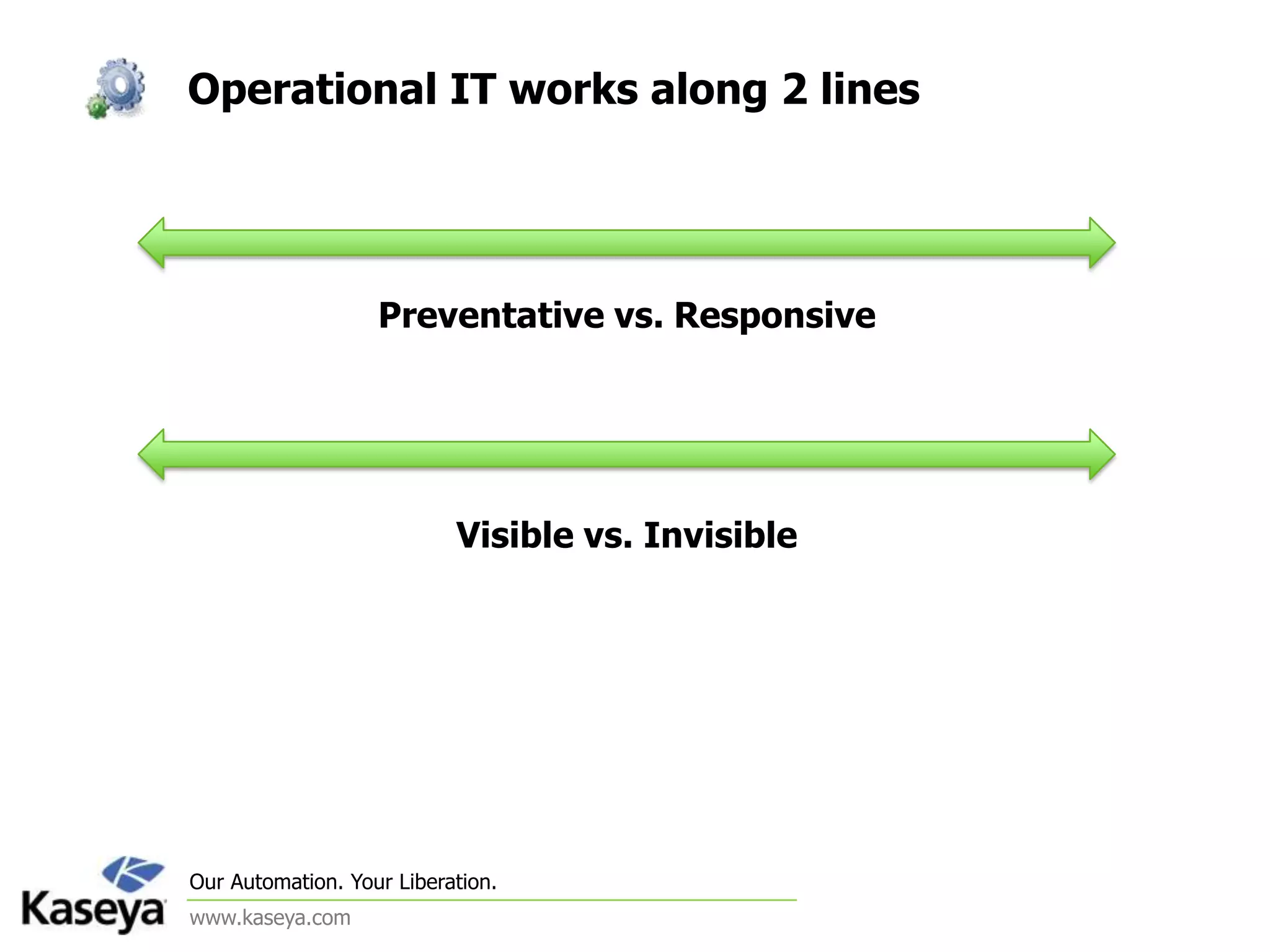
Operational IT works along 2 linesPreventative vs. ResponsiveVisible vs. Invisible
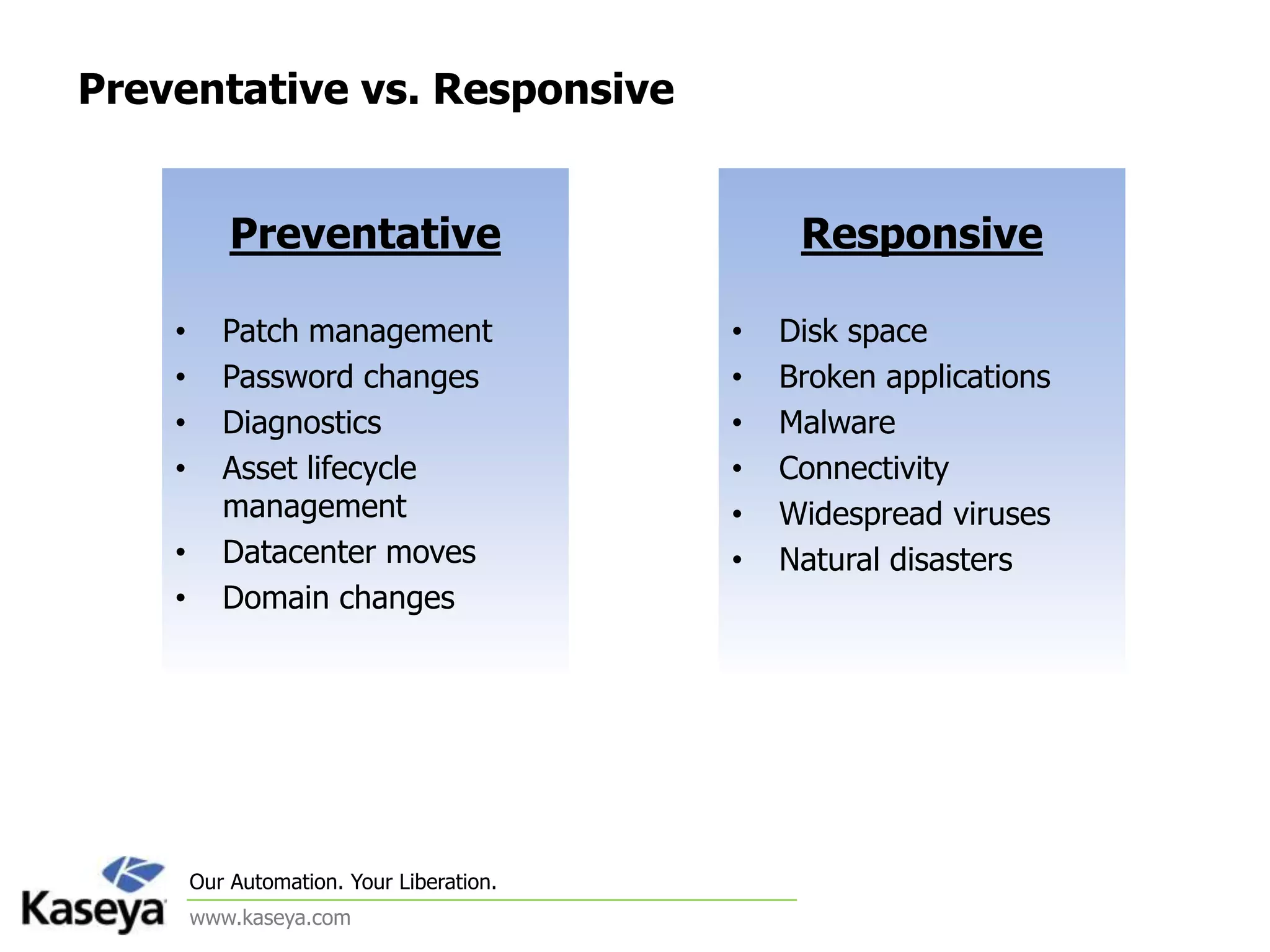
Preventative vs. ResponsivePreventativePatch managementPassword changesDiagnosticsAsset lifecycle managementDatacenter movesDomain changes ResponsiveDisk spaceBroken applicationsMalwareConnectivityWidespread virusesNatural disasters
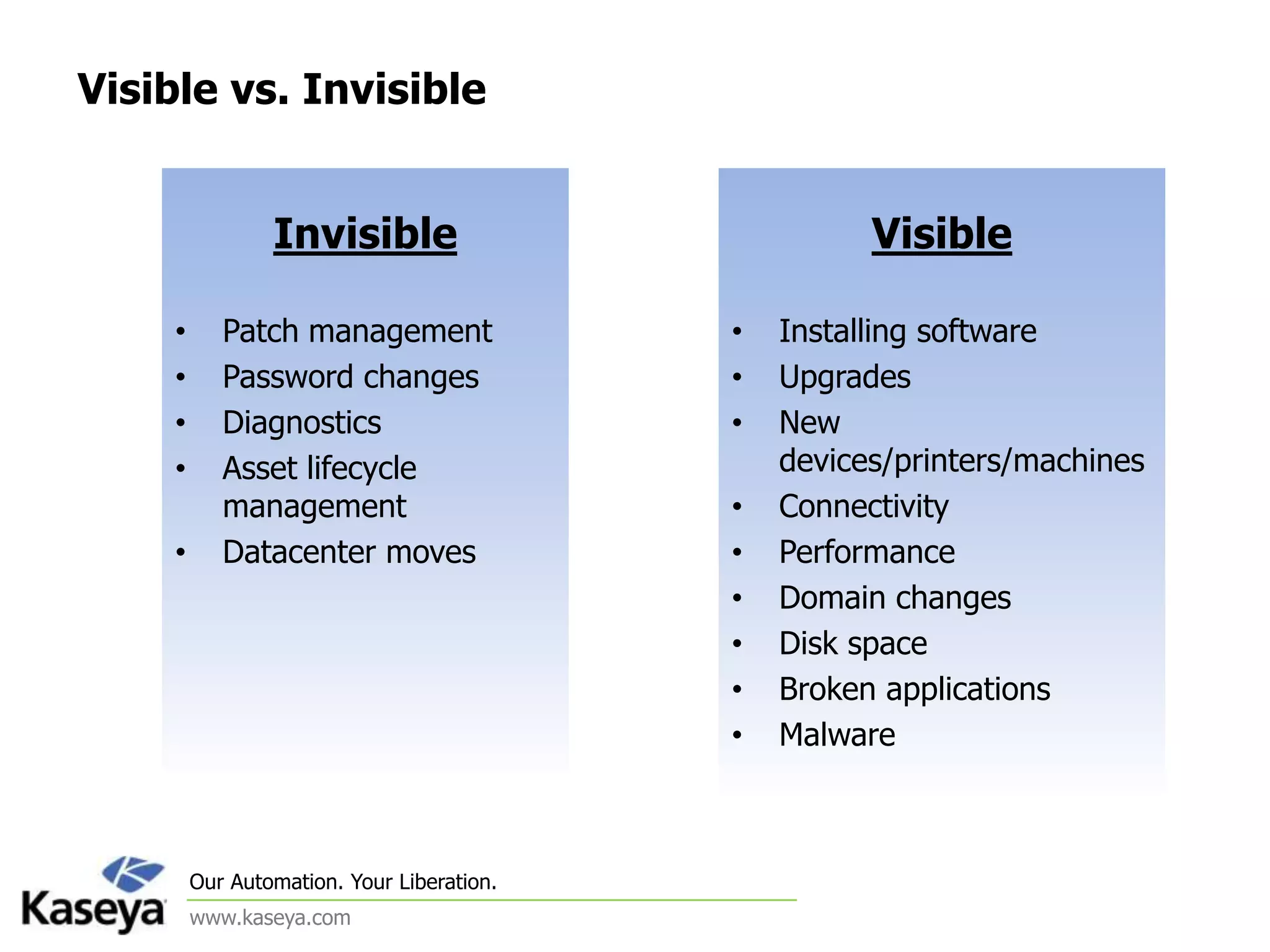
Visible vs. InvisibleInvisiblePatch managementPassword changesDiagnosticsAsset lifecycle managementDatacenter movesVisibleInstalling softwareUpgradesNew devices/printers/machinesConnectivityPerformanceDomain changes Disk spaceBroken applicationsMalware
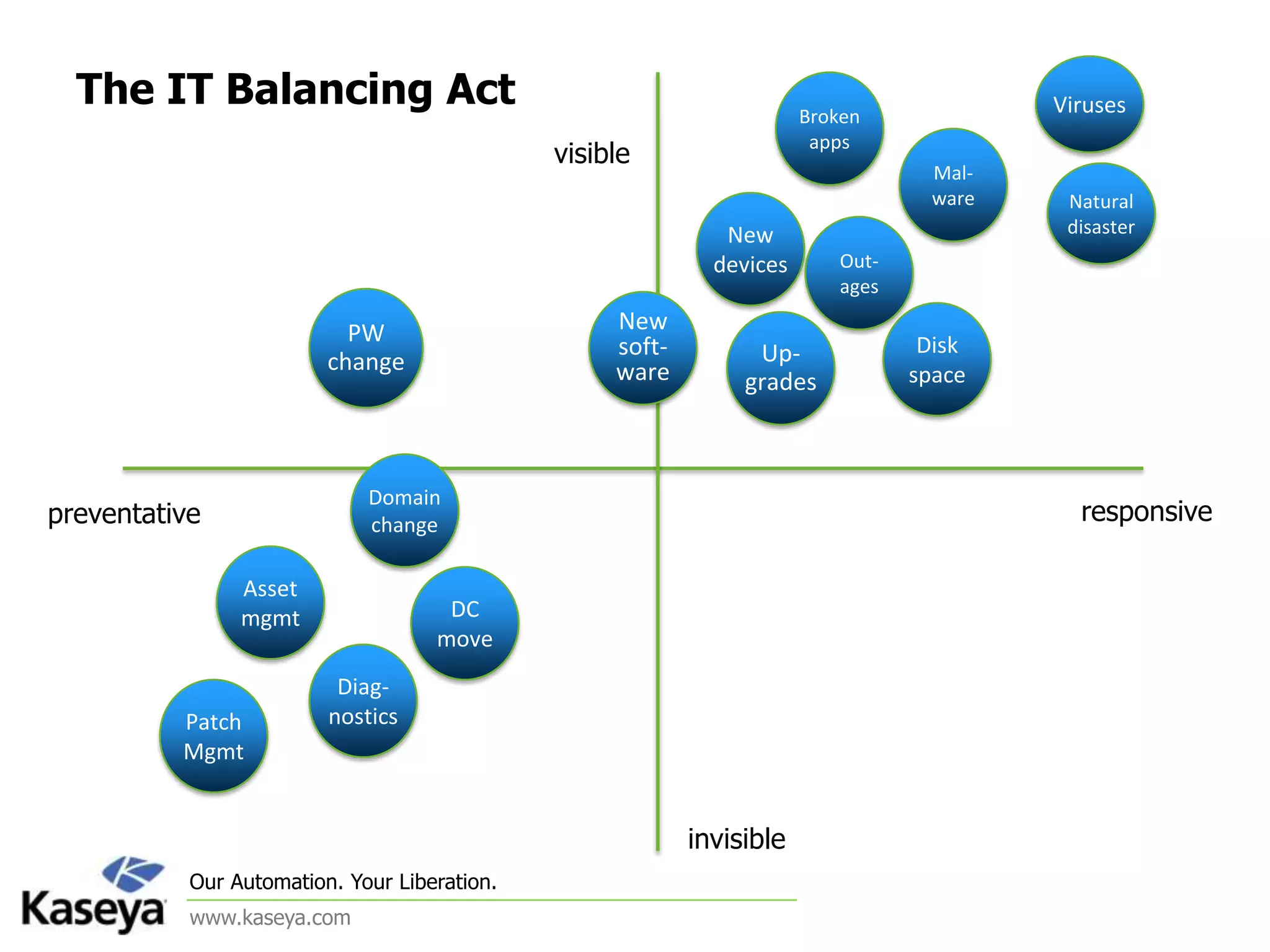
The IT Balancing ActVirusesBroken appsvisibleMal-wareNatural disasterNew devicesOut-agesPW changeNew soft-wareDisk spaceUp-gradesDomain changepreventativeresponsiveAsset mgmtDC moveDiag-nosticsPatch Mgmtinvisible
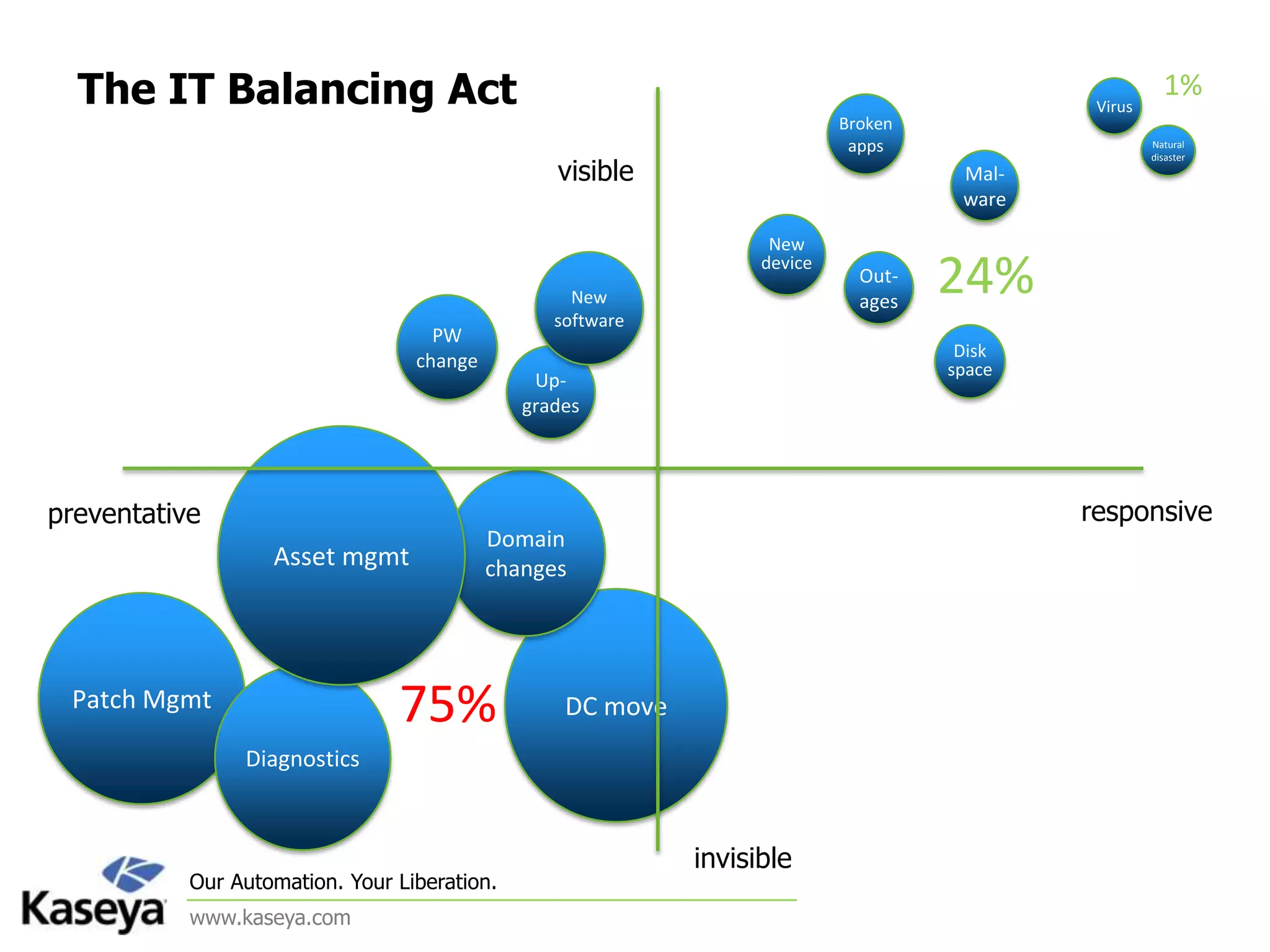
The IT Balancing Act1%VirusBroken appsNatural disastervisibleMal-wareNew device24%New softwareOut-agesPW changeDisk spaceUp-gradesAsset mgmtDomain changespreventativeresponsiveDC movePatch Mgmt75%Diagnosticsinvisible
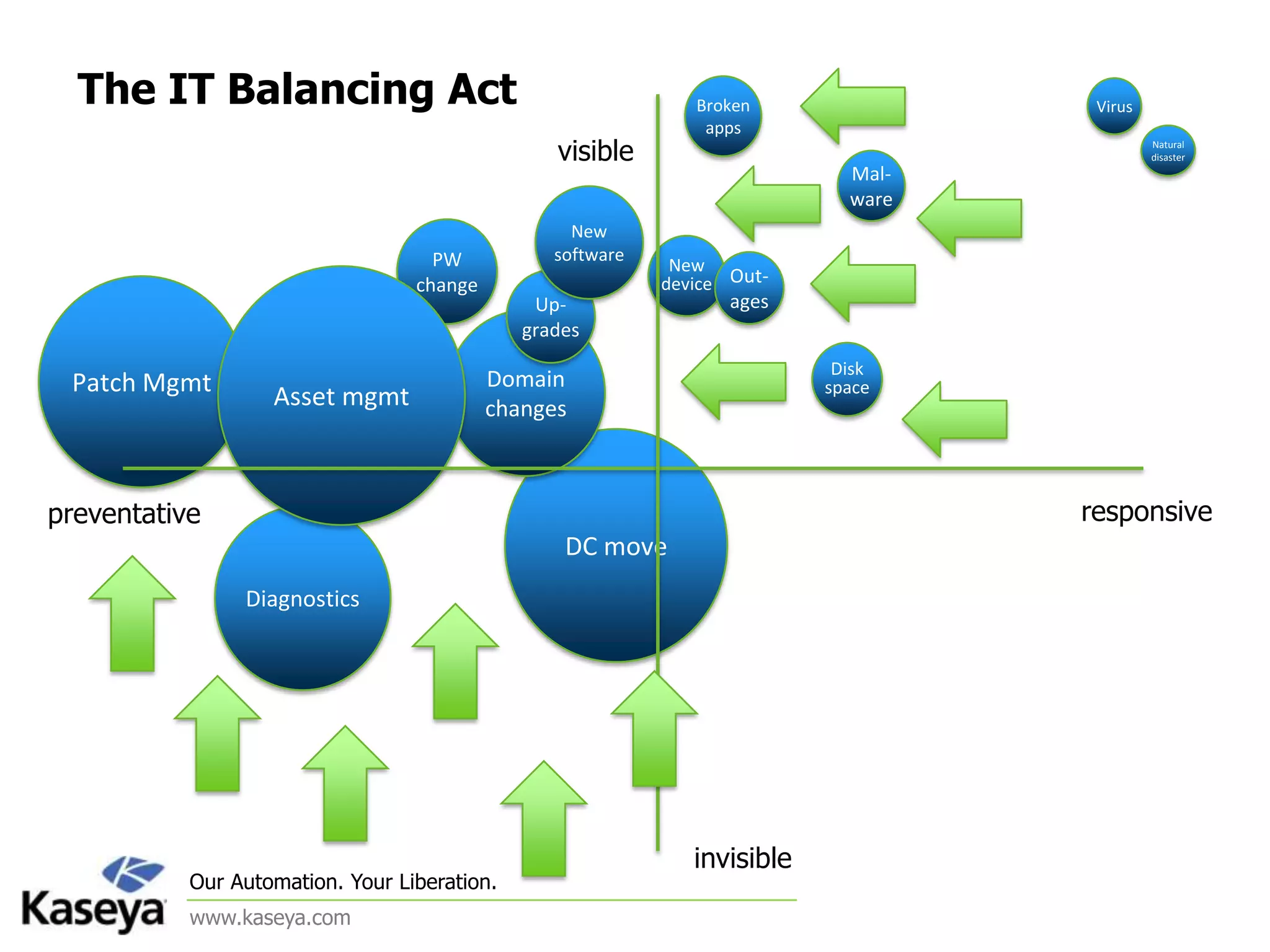
The IT Balancing ActBroken appsVirusNatural disastervisibleMal-wareNew softwarePW changeNew deviceOut-agesAsset mgmtUp-gradesPatch MgmtDomain changesDisk spaceDC movepreventativeresponsiveDiagnosticsinvisible
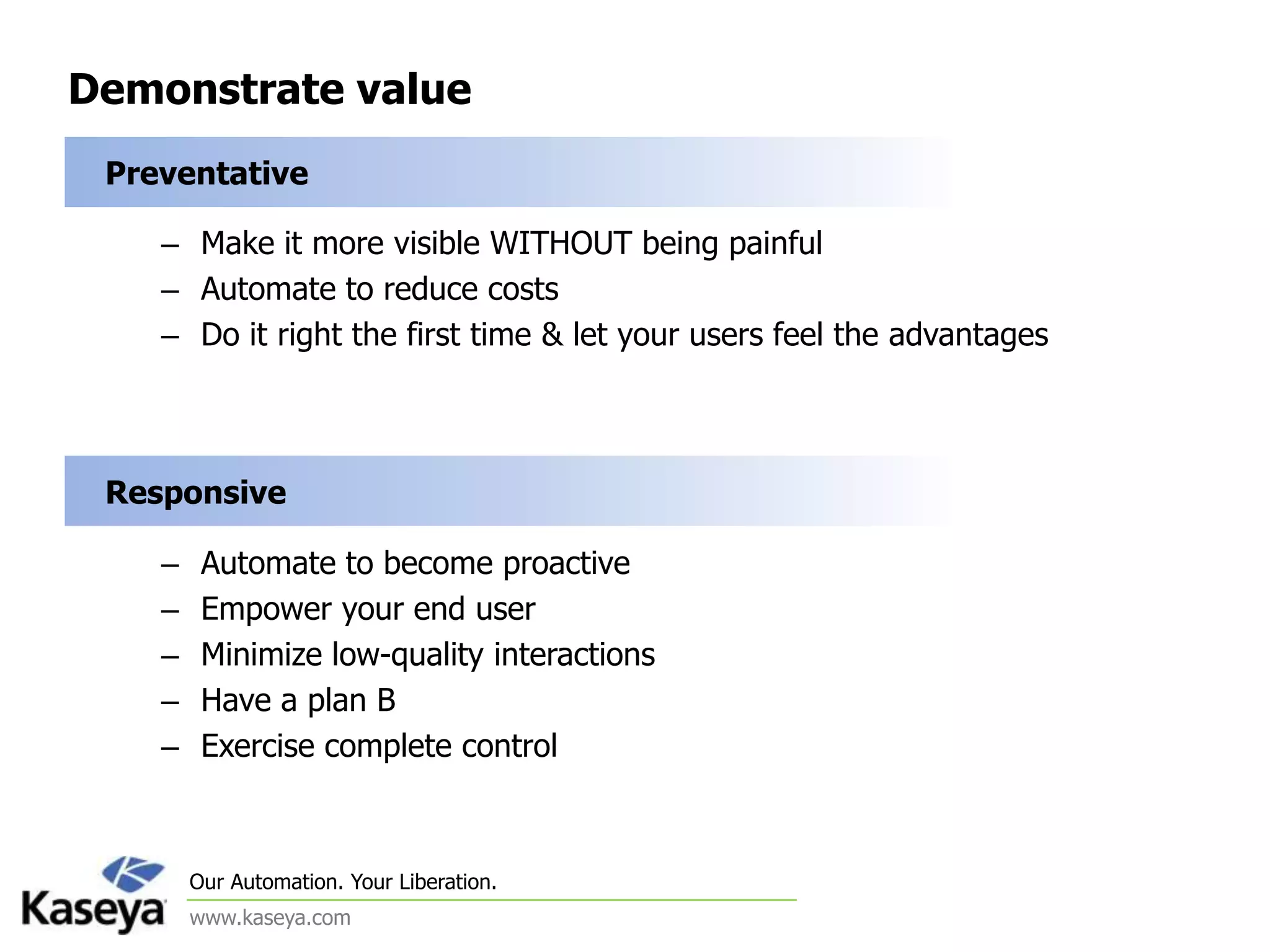
Demonstrate value  PreventativeMake it more visible WITHOUT being painfulAutomate to reduce costsDo it right the first time & let your users feel the advantages  ResponsiveAutomate to become proactiveEmpower your end userMinimize low-quality interactionsHave a plan BExercise complete control
Best practices: Gaining strategic influence using Kaseya
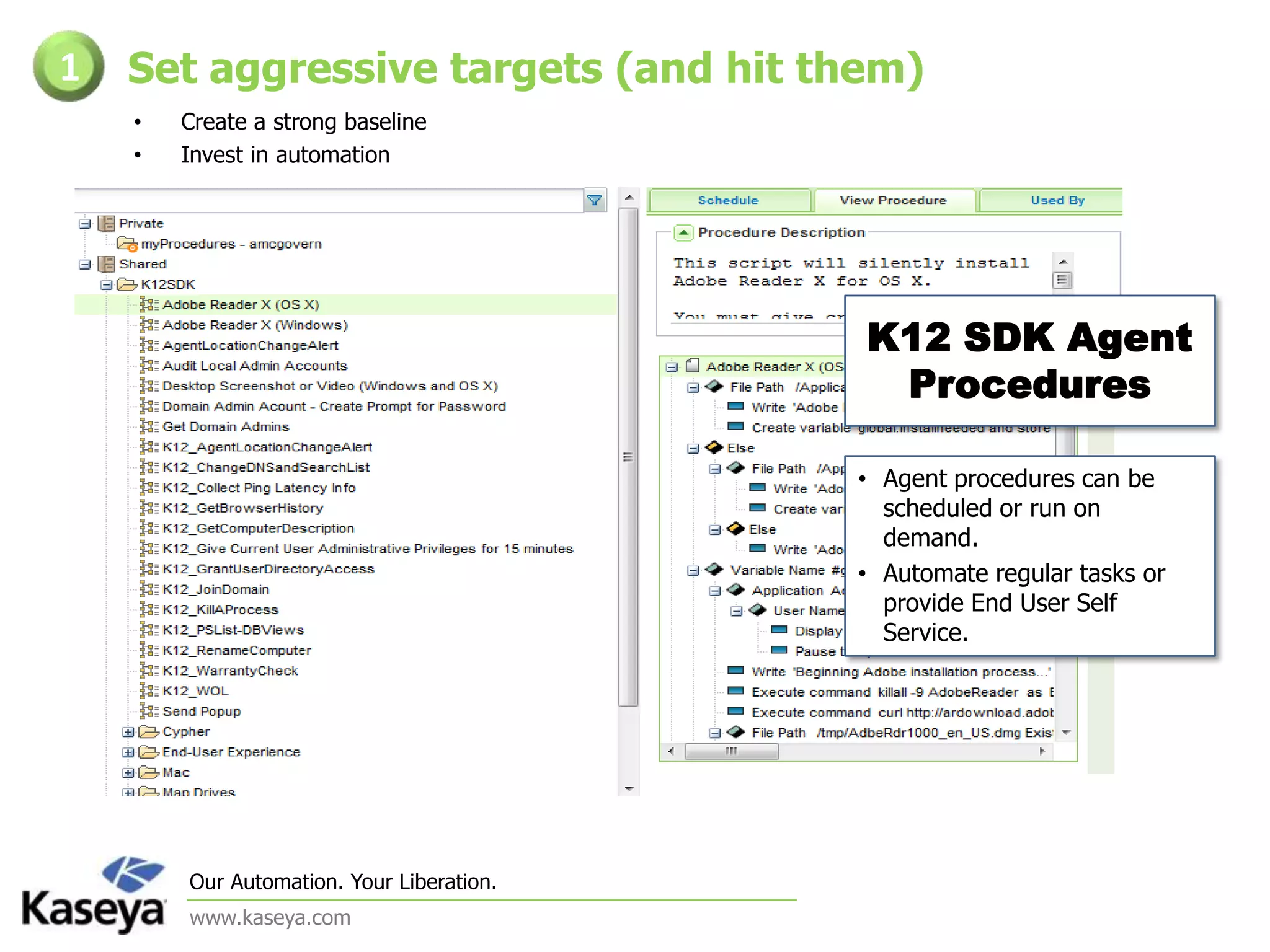
Set aggressive targets (and hit them)1Create a strong baselineInvest in automationK12 SDK Agent ProceduresAgent procedures can be scheduled or run on demand. Automate regular tasks or provide End User Self Service.
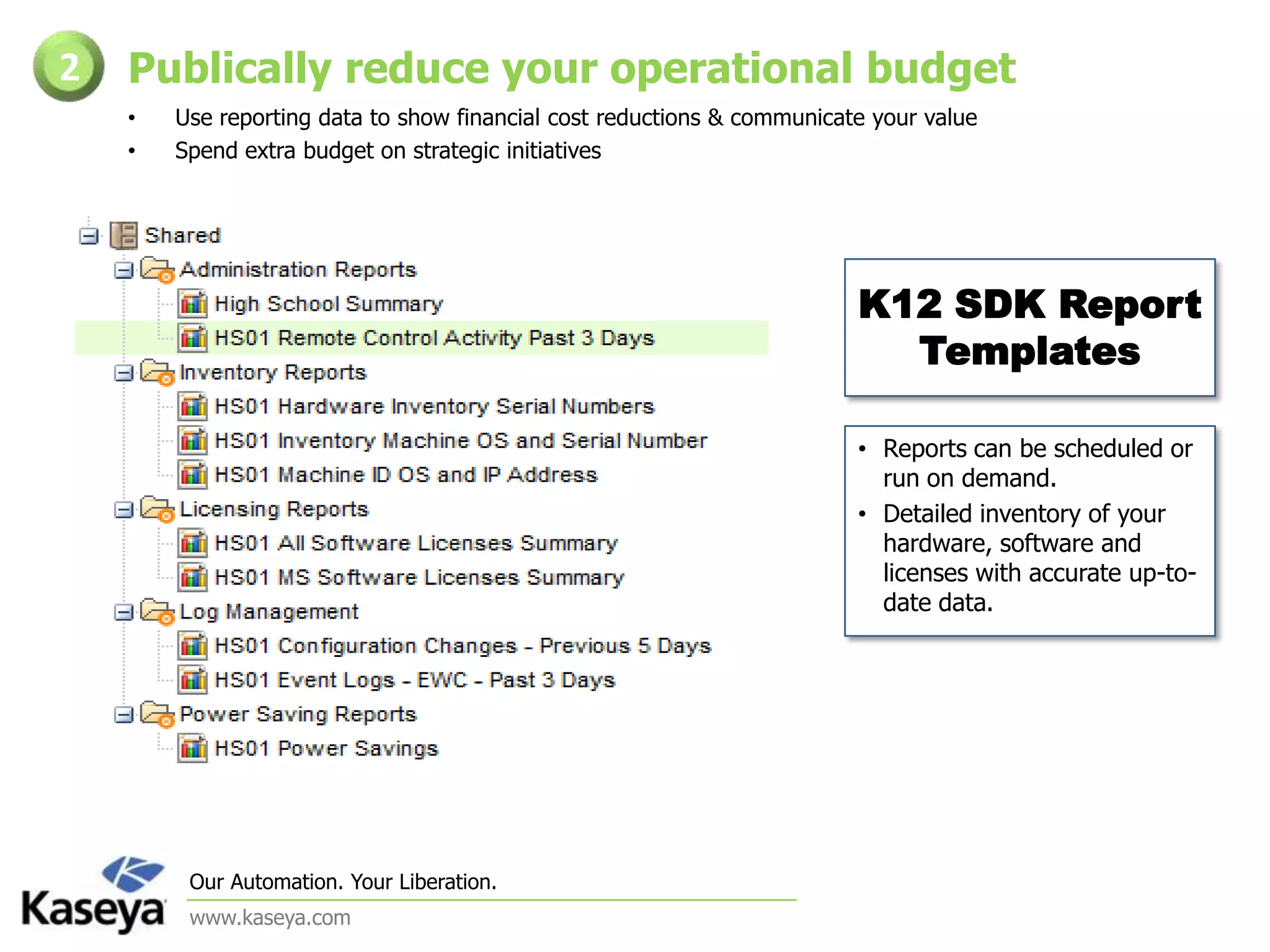
Publically reduce your operational budget2Use reporting data to show financial cost reductions & communicate your valueSpend extra budget on strategic initiativesK12 SDK Report TemplatesReports can be scheduled or run on demand. Detailed inventory of your hardware, software and licenses with accurate up-to-date data.
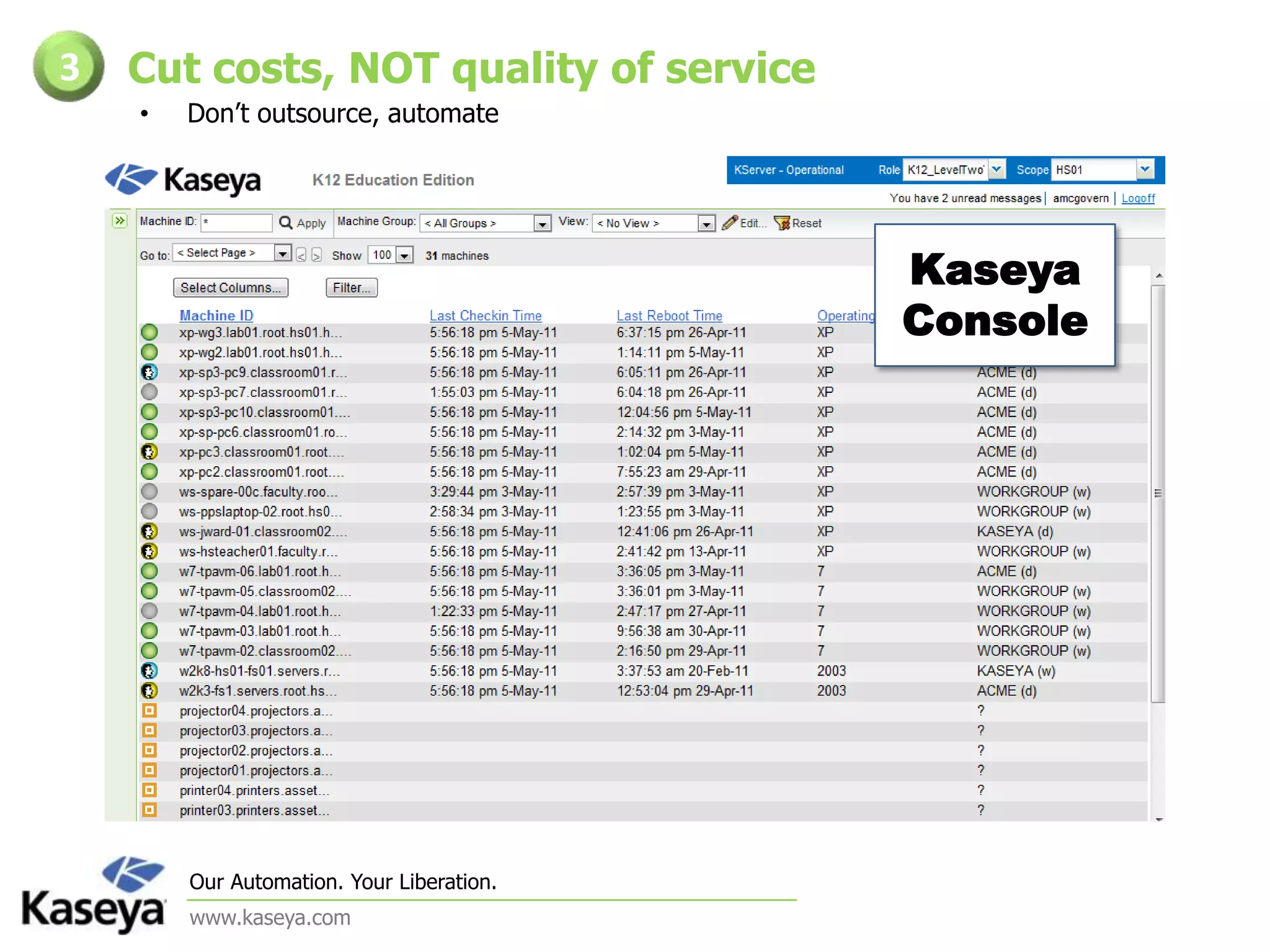
Cut costs, NOT quality of service3Don’t outsource, automateKaseya Console
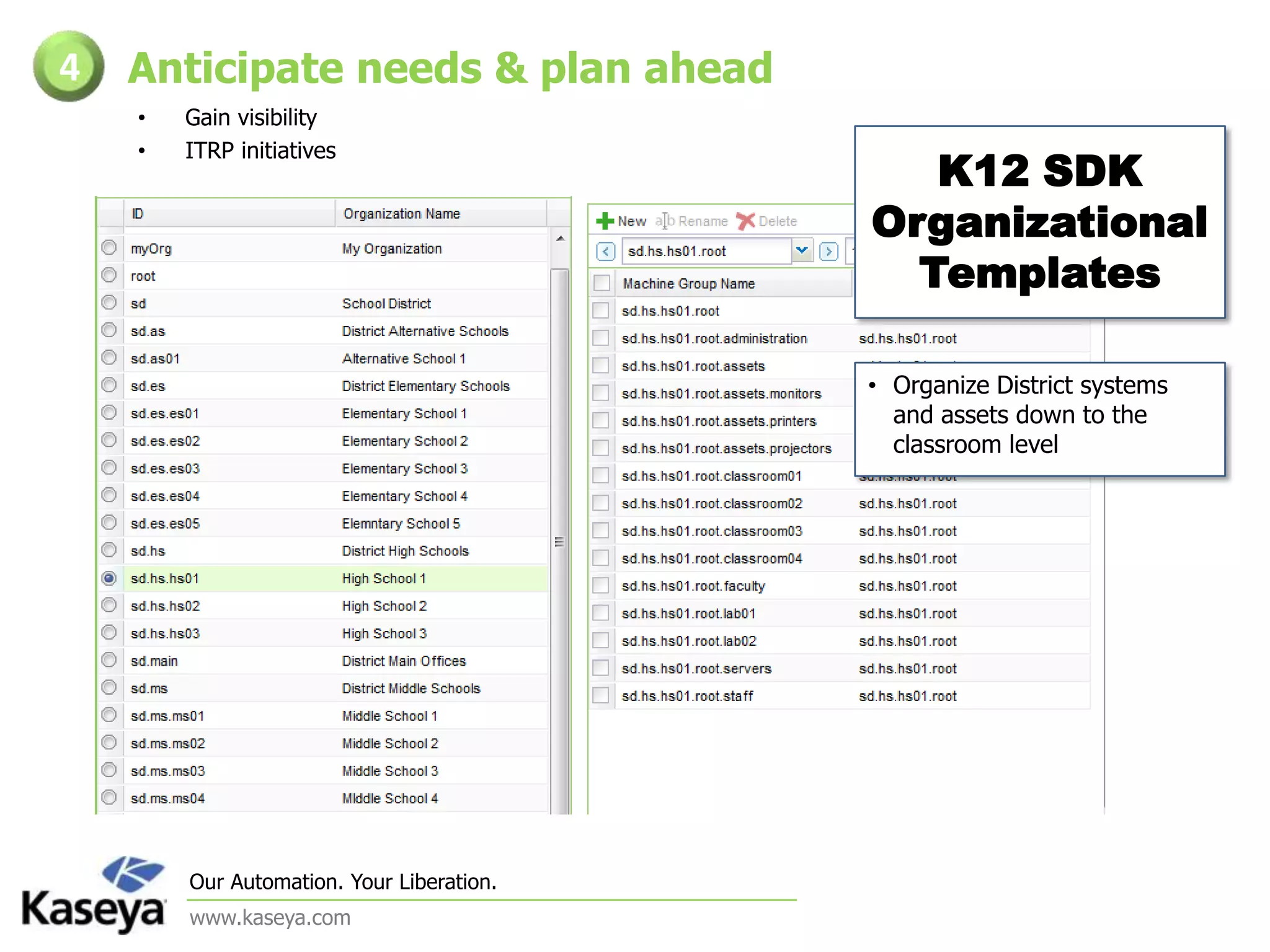
Anticipate needs & plan ahead4Gain visibilityITRP initiativesK12 SDK Organizational TemplatesOrganize District systems and assets down to the classroom level
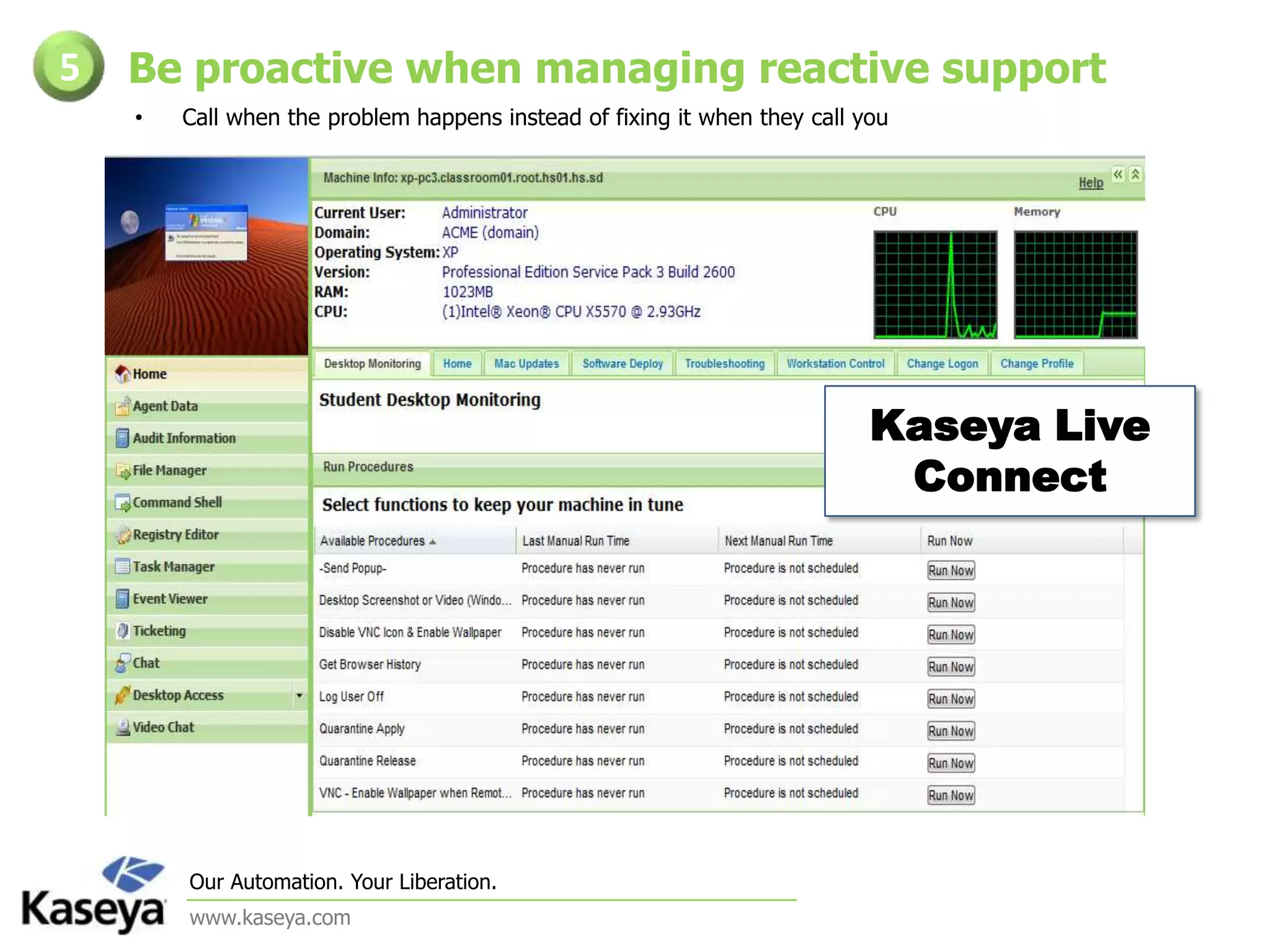
Be proactive when managing reactive support5Call when the problem happens instead of fixing it when they call youKaseya Live Connect
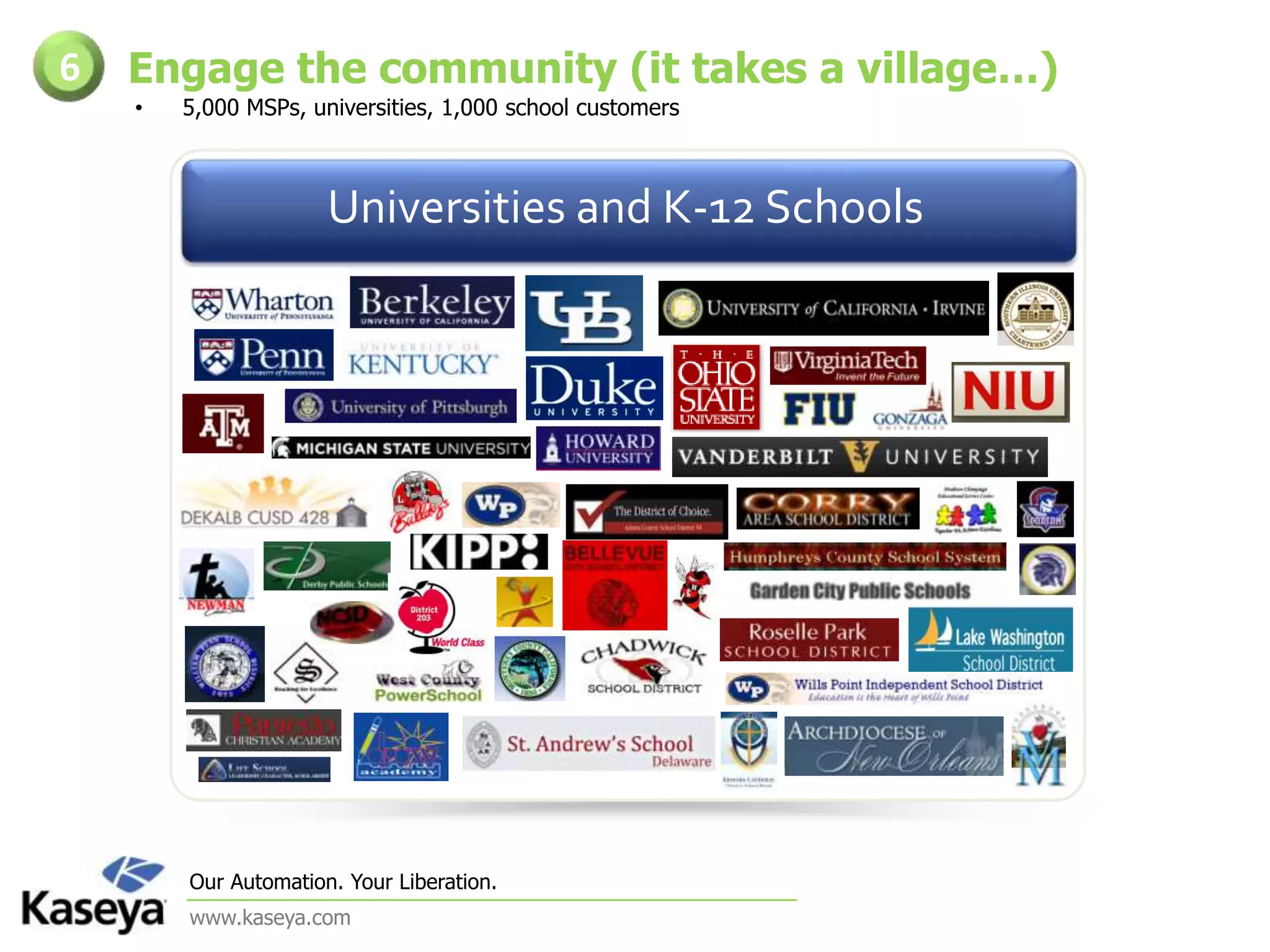
Engage the community (it takes a village…)65,000 MSPs, universities, 1,000 school customersUniversities and K-12 Schools
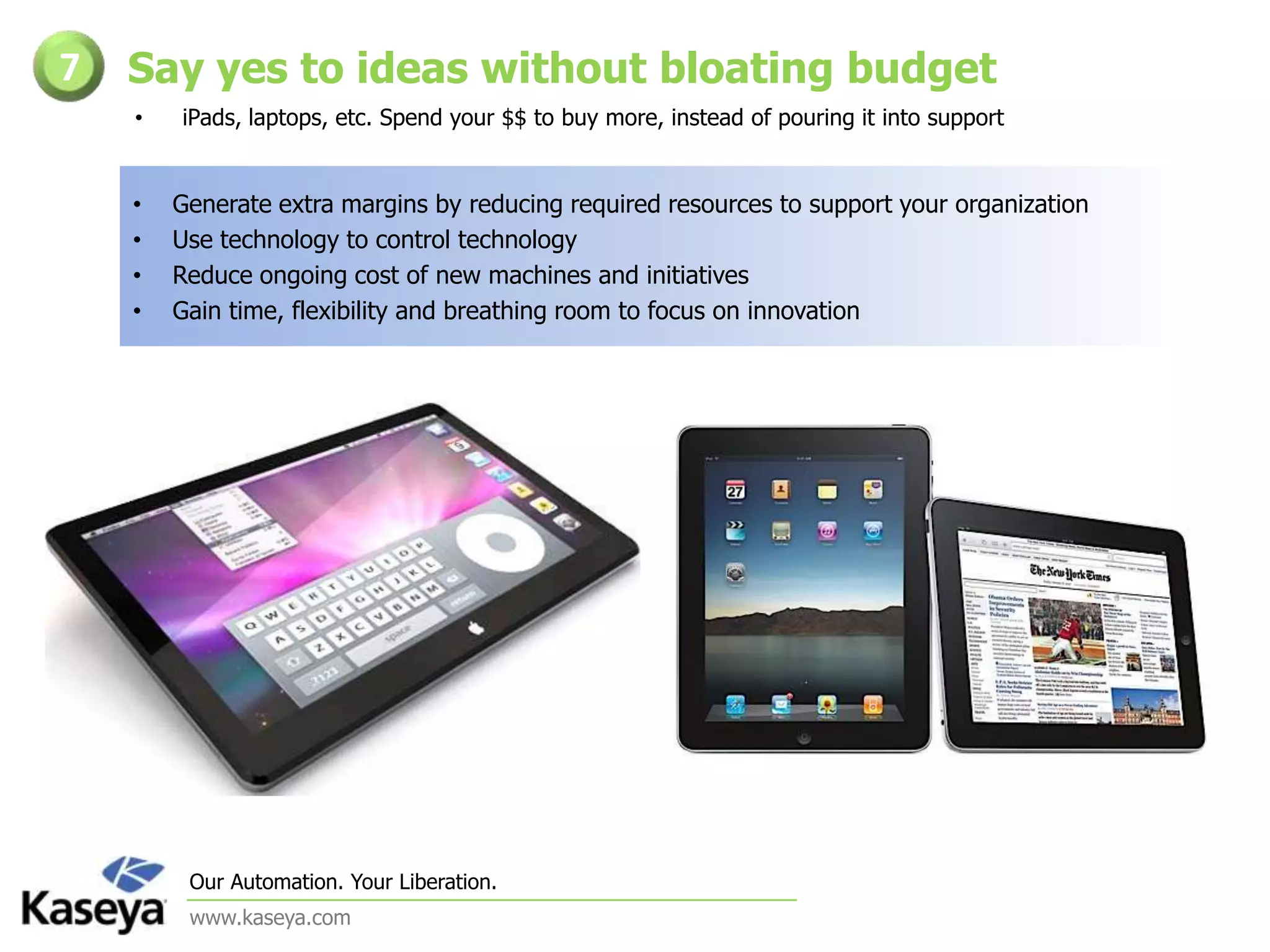
Say yes to ideas without bloating budget7iPads, laptops, etc. Spend your $$ to buy more, instead of pouring it into supportGenerate extra margins by reducing required resources to support your organization
Use technology to control technology
Reduce ongoing cost of new machines and initiatives
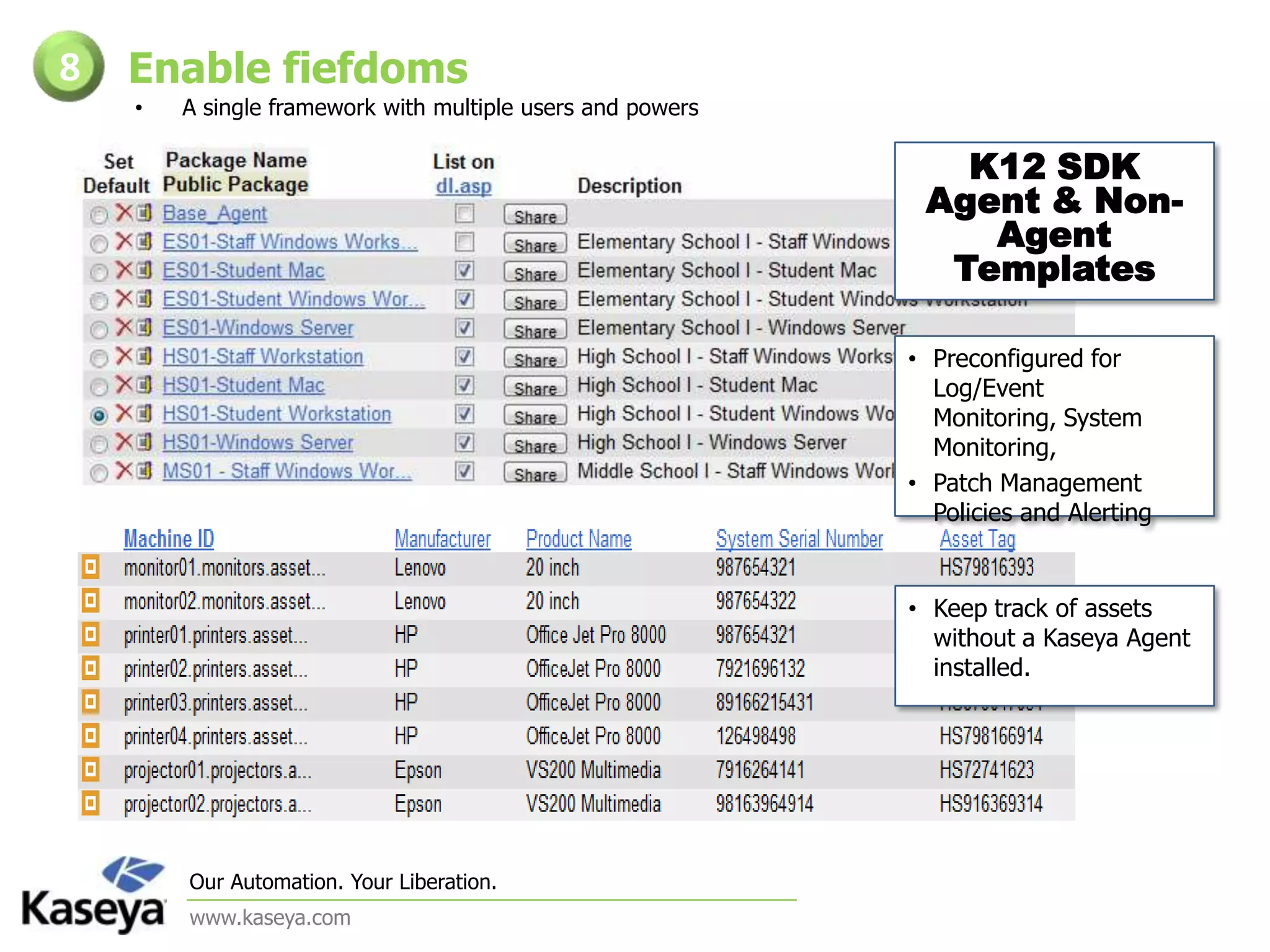
Gain time, flexibility and breathing room to focus on innovationEnable fiefdoms8A single framework with multiple users and powersK12 SDK Agent & Non-Agent TemplatesPreconfigured for Log/Event Monitoring, System Monitoring, Patch Management Policies and AlertingKeep track of assets without a Kaseya Agent installed.
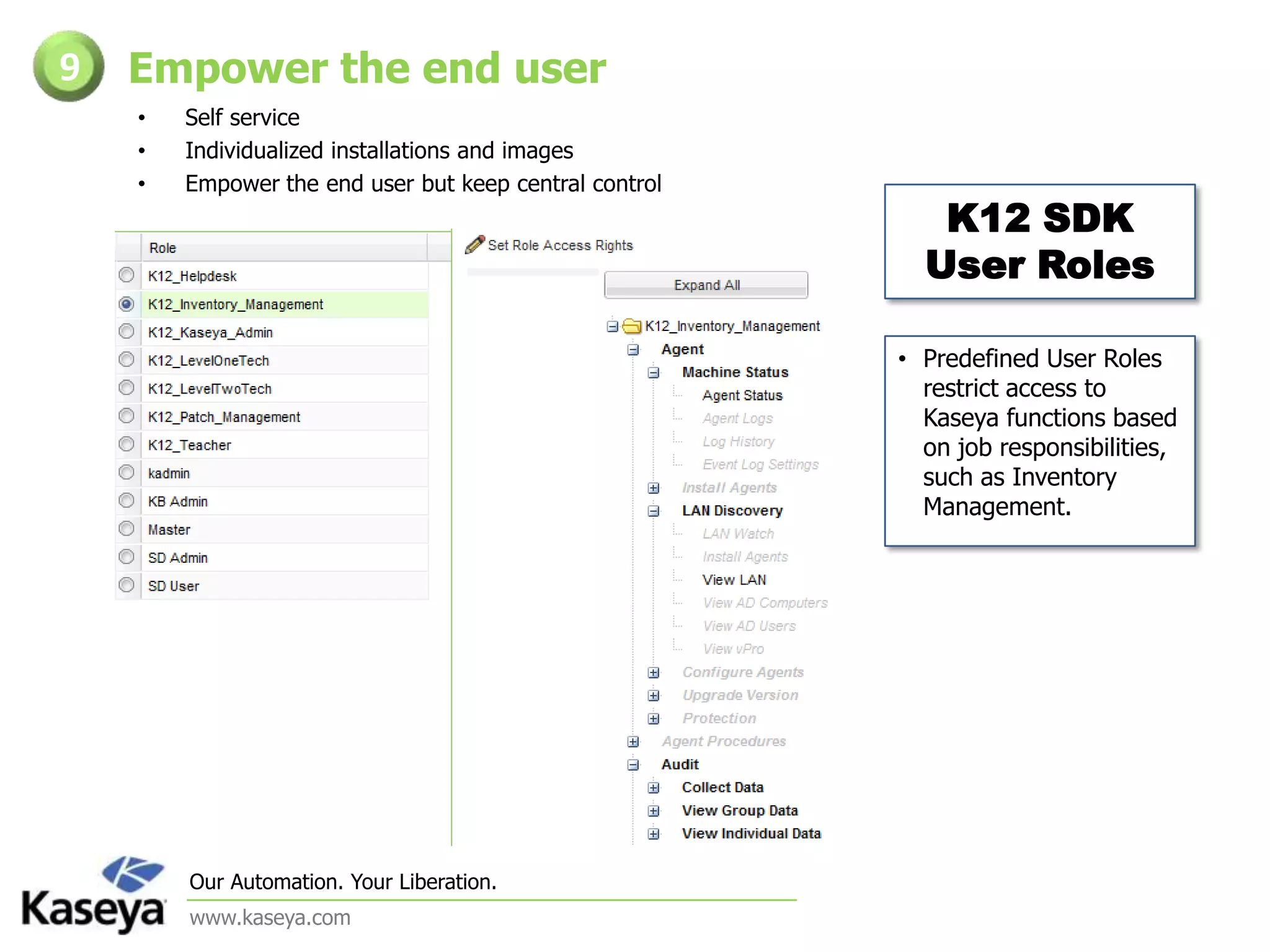
Empower the end user9Self serviceIndividualized installations and imagesEmpower the end user but keep central controlK12 SDK User RolesPredefined User Roles restrict access to Kaseya functions based on job responsibilities, such as Inventory Management.
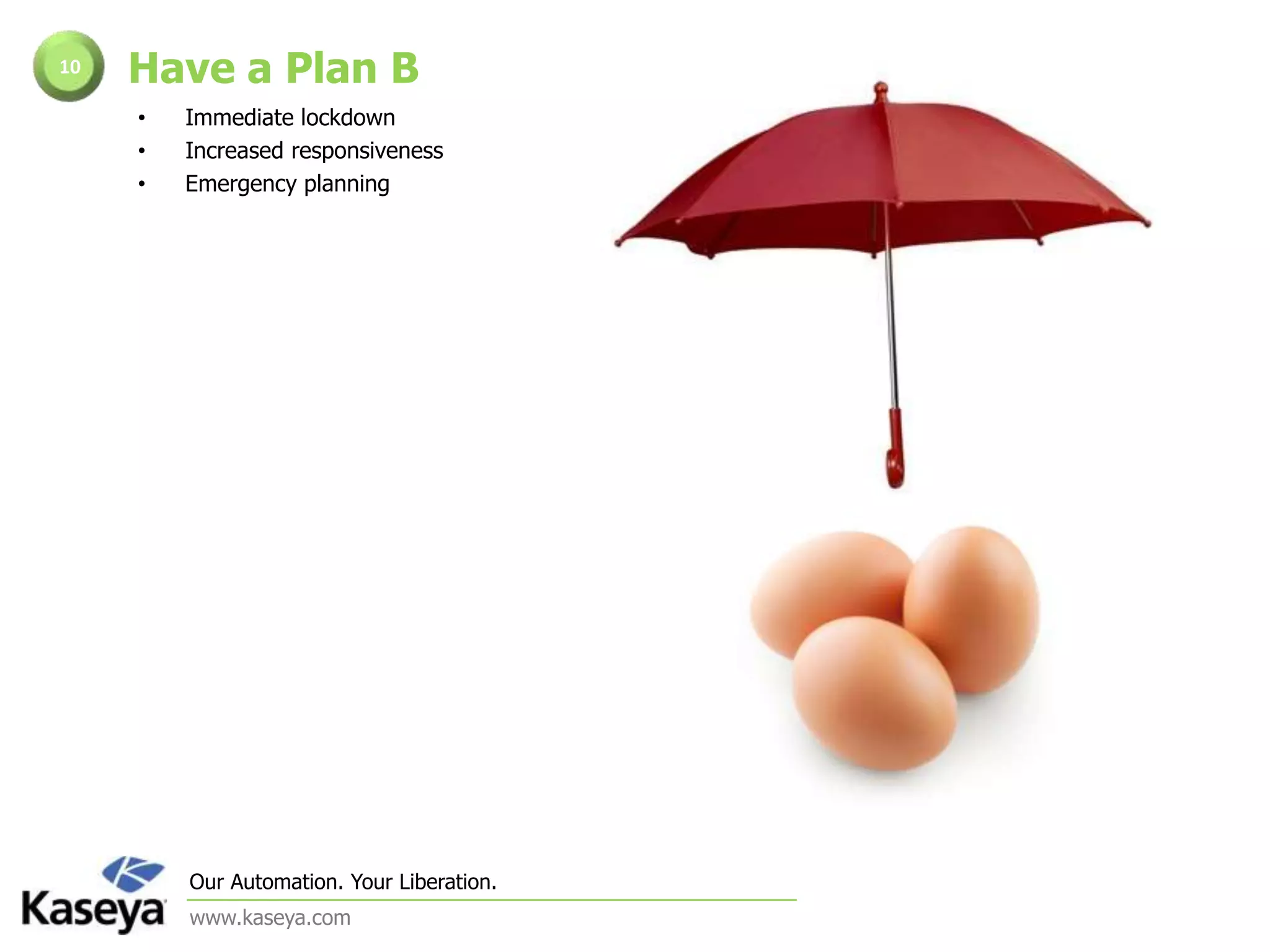
Have a Plan B10Immediate lockdownIncreased responsivenessEmergency planning
More on Kaseya
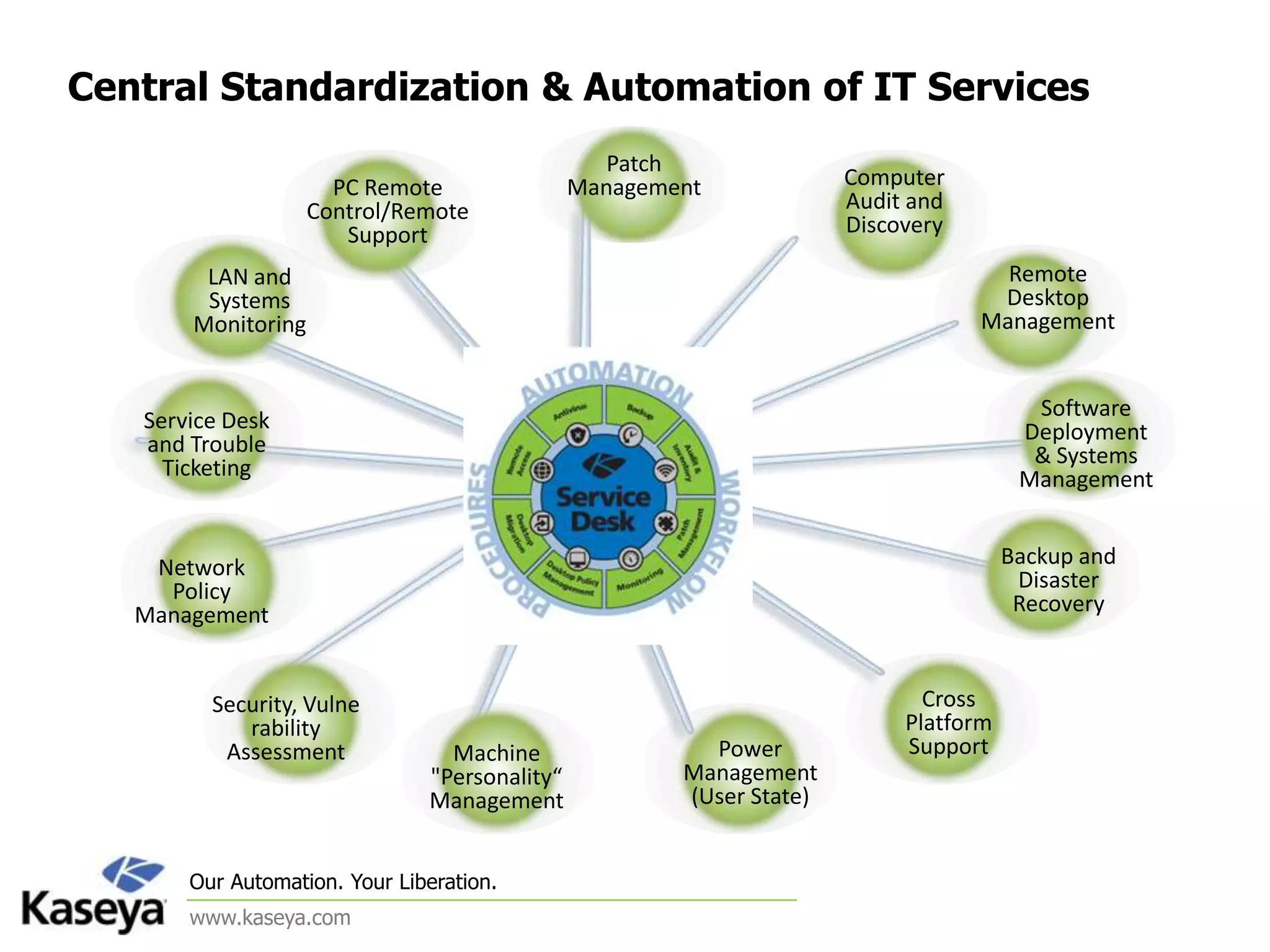
Central Standardization &Automation of IT ServicesPatchManagementComputer Audit and DiscoveryPC Remote Control/RemoteSupportRemoteDesktopManagementLAN and Systems MonitoringSoftware Deployment & SystemsManagementService Desk and Trouble TicketingBackup andDisasterRecoveryNetworkPolicyManagementCross Platform Support Security, Vulnerability AssessmentPower Management (User State)Machine"Personality“Management
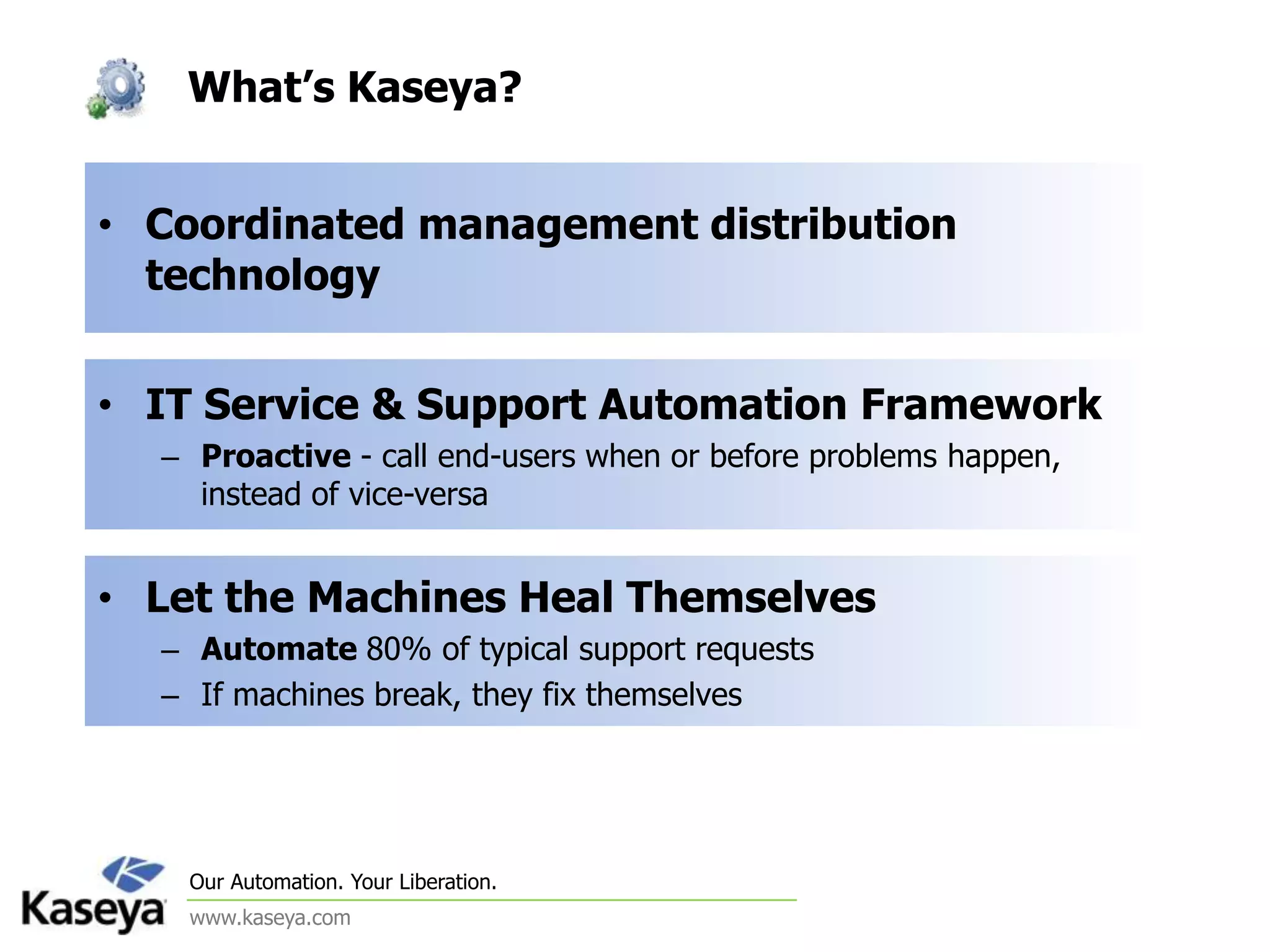
What’s Kaseya?Coordinated management distribution technologyIT Service & Support Automation FrameworkProactive - call end-users when or before problems happen, instead of vice-versaLet the Machines Heal ThemselvesAutomate 80% of typical support requestsIf machines break, they fix themselves
Kaseya Base Components Ability to manage any system, anywhereBrowser based consoleComprehensive software and hardware inventory of Windows and Mac SystemsTrack assets like monitors and printers without an agentSystem Monitoring , Alerting and ResolutionAutomation of routine procedures (defrags, disk clean etc)Microsoft Patch Management Software Deployment and 3rd Party UpdatesRemote Management with Kaseya Live ConnectEnd User Self ServiceTicketingReporting
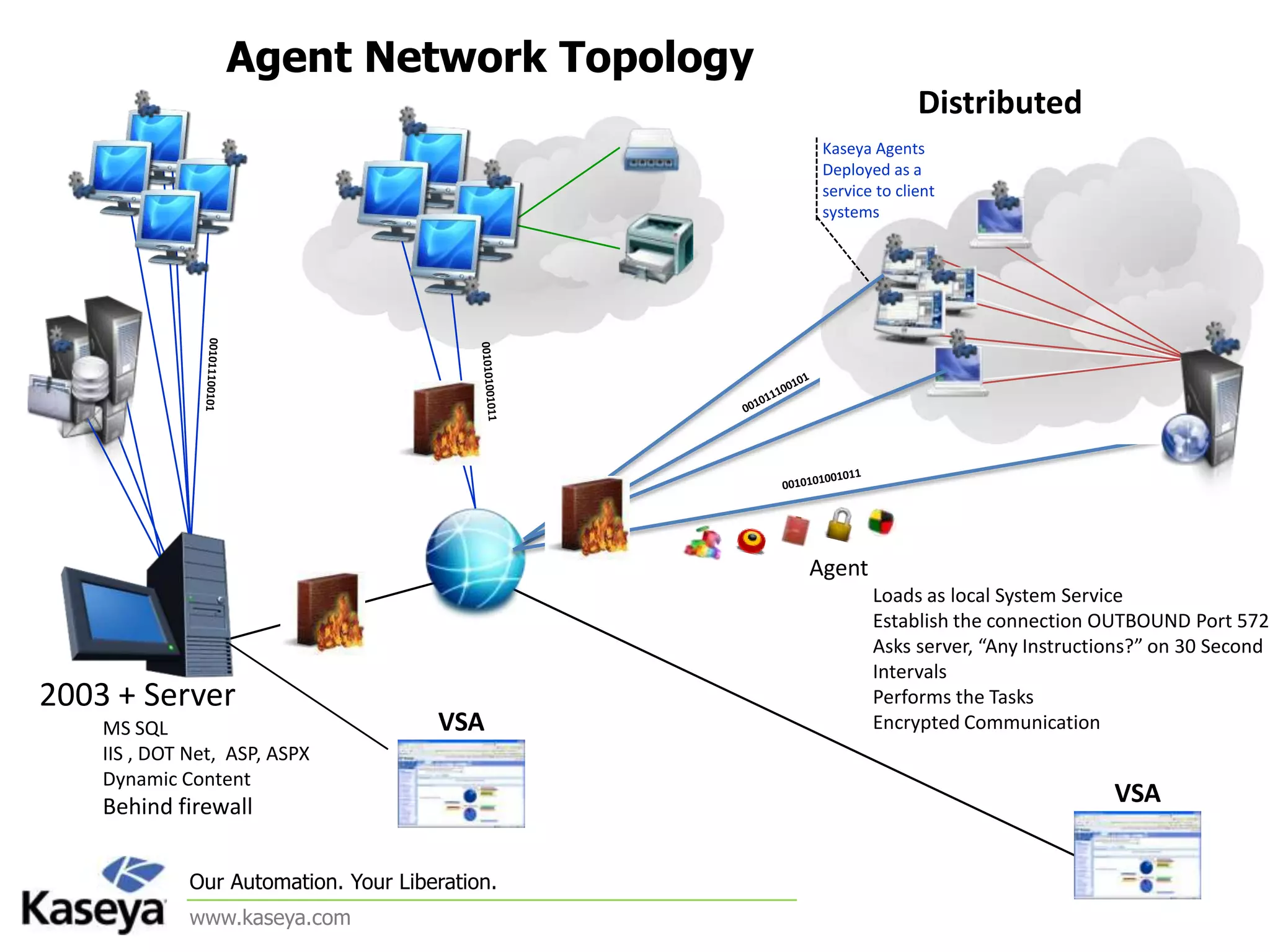
Agent Network TopologyDistributed Kaseya Agents Deployed as a service to client systems0010111001010010101001011001011100101VSAVSA0010101001011AgentLoads as local System ServiceEstablish the connection OUTBOUND Port 5721Asks server, “Any Instructions?” on 30 Second IntervalsPerforms the TasksEncrypted Communication2003 + ServerMS SQLIIS , DOT Net,  ASP, ASPX Dynamic ContentBehind firewall

Kaseya: Making Operational IT Strategic: Special Edition for Education CIOs

  • 1.
    Making Operational ITStrategic: Special Edition for Education CIOs
  • 2.
    IntroductionsJavier EsteveIT ServiceManagement LeaderKaseyaAnthony JulianoCTO & General PartnerLandmark Ventures
  • 3.
    AgendaStrategy within EducationalITOperational IT: Shifting the balanceBest Practices: Gaining strategic influence using Kaseya
  • 4.
    Strategy in EducationITIT in the business ties to the “product”That doesn’t map to EducationIT Operations are all that’s left
  • 5.
    How IT becomesstrategic in “Business”Better IT means faster time to market for product development Flexible architectureMore responsive processes & streamlined systemsIT fosters product innovationOut innovate the competitionLatest and greatest internet Web 2.0, mobile, social, etcIT is responsible for ‘brand’ protection + enhancementGovernance / compliance automationUptime/Reliability of serviceIT’s operational metrics tie to business metricsi.e. Website traffic as it relates to customer experienceOr Cost of a trade transaction going through the system fasterIT enables end user and sales force productivityAn enterprise app that makes end-users do their job fasterEnabling mobile means sales can close more deals
  • 6.
    Business ≠ EducationAdministratorswant CIOs to keep computers runningTime to Market isn’t measurable Budget is driven by politics and always is constrainedMultiple stakeholders: too many cooks in the kitchenProduct is a ‘well rounded student’ – much harder to measure than $$$ Generated
  • 7.
    So how doyou apply “Business IT” to “Education IT”?Goal #1: Improve Time to Market & Innovate Your Producti.e. Don’t let IT Service be a bottleneckSupport your teachers’ paths to innovation – new devices, new learning software packages, etcCreate initiatives that foster additional ways to reach students (online learning, ubiquitous computing, etc)Engage students in IT Service/Support to teach them the trade
  • 8.
    So how doyou apply “Business IT” to “Education IT”?Goal #2: Protect your brand by tying operational metrics to business metricsDon’t show up in the newspaper (keep operational budgets low, prevent visible outages, protect students from ‘big bad internet’Establish baselines of metrics on operational costs and publish how you’re driving them downKeep constant control of the environment across every endpoint and use those metrics to understand the impact on education
  • 9.
    So how doyou apply “Business IT” to “Education IT”?Goal #3: Improve End User and Sales Productivity“Hug” your end-users – make them happy by improving service levelsHave them help you sell what you’re doing!Make the Invisible become Visible (and vice versa)Become ‘Proactive’ to Shift the Balance
  • 10.
  • 11.
    Operational IT worksalong 2 linesPreventative vs. ResponsiveVisible vs. Invisible
  • 12.
    Preventative vs. ResponsivePreventativePatchmanagementPassword changesDiagnosticsAsset lifecycle managementDatacenter movesDomain changes ResponsiveDisk spaceBroken applicationsMalwareConnectivityWidespread virusesNatural disasters
  • 13.
    Visible vs. InvisibleInvisiblePatchmanagementPassword changesDiagnosticsAsset lifecycle managementDatacenter movesVisibleInstalling softwareUpgradesNew devices/printers/machinesConnectivityPerformanceDomain changes Disk spaceBroken applicationsMalware
  • 14.
    The IT BalancingActVirusesBroken appsvisibleMal-wareNatural disasterNew devicesOut-agesPW changeNew soft-wareDisk spaceUp-gradesDomain changepreventativeresponsiveAsset mgmtDC moveDiag-nosticsPatch Mgmtinvisible
  • 15.
    The IT BalancingAct1%VirusBroken appsNatural disastervisibleMal-wareNew device24%New softwareOut-agesPW changeDisk spaceUp-gradesAsset mgmtDomain changespreventativeresponsiveDC movePatch Mgmt75%Diagnosticsinvisible
  • 16.
    The IT BalancingActBroken appsVirusNatural disastervisibleMal-wareNew softwarePW changeNew deviceOut-agesAsset mgmtUp-gradesPatch MgmtDomain changesDisk spaceDC movepreventativeresponsiveDiagnosticsinvisible
  • 17.
    Demonstrate value PreventativeMake it more visible WITHOUT being painfulAutomate to reduce costsDo it right the first time & let your users feel the advantages ResponsiveAutomate to become proactiveEmpower your end userMinimize low-quality interactionsHave a plan BExercise complete control
  • 18.
    Best practices: Gainingstrategic influence using Kaseya
  • 19.
    Set aggressive targets(and hit them)1Create a strong baselineInvest in automationK12 SDK Agent ProceduresAgent procedures can be scheduled or run on demand. Automate regular tasks or provide End User Self Service.
  • 20.
    Publically reduce youroperational budget2Use reporting data to show financial cost reductions & communicate your valueSpend extra budget on strategic initiativesK12 SDK Report TemplatesReports can be scheduled or run on demand. Detailed inventory of your hardware, software and licenses with accurate up-to-date data.
  • 21.
    Cut costs, NOTquality of service3Don’t outsource, automateKaseya Console
  • 22.
    Anticipate needs &plan ahead4Gain visibilityITRP initiativesK12 SDK Organizational TemplatesOrganize District systems and assets down to the classroom level
  • 23.
    Be proactive whenmanaging reactive support5Call when the problem happens instead of fixing it when they call youKaseya Live Connect
  • 24.
    Engage the community(it takes a village…)65,000 MSPs, universities, 1,000 school customersUniversities and K-12 Schools
  • 25.
    Say yes toideas without bloating budget7iPads, laptops, etc. Spend your $$ to buy more, instead of pouring it into supportGenerate extra margins by reducing required resources to support your organization
  • 26.
    Use technology tocontrol technology
  • 27.
    Reduce ongoing costof new machines and initiatives
  • 28.
    Gain time, flexibilityand breathing room to focus on innovationEnable fiefdoms8A single framework with multiple users and powersK12 SDK Agent & Non-Agent TemplatesPreconfigured for Log/Event Monitoring, System Monitoring, Patch Management Policies and AlertingKeep track of assets without a Kaseya Agent installed.
  • 29.
    Empower the enduser9Self serviceIndividualized installations and imagesEmpower the end user but keep central controlK12 SDK User RolesPredefined User Roles restrict access to Kaseya functions based on job responsibilities, such as Inventory Management.
  • 30.
    Have a PlanB10Immediate lockdownIncreased responsivenessEmergency planning
  • 31.
  • 32.
    Central Standardization &Automationof IT ServicesPatchManagementComputer Audit and DiscoveryPC Remote Control/RemoteSupportRemoteDesktopManagementLAN and Systems MonitoringSoftware Deployment & SystemsManagementService Desk and Trouble TicketingBackup andDisasterRecoveryNetworkPolicyManagementCross Platform Support Security, Vulnerability AssessmentPower Management (User State)Machine"Personality“Management
  • 33.
    What’s Kaseya?Coordinated managementdistribution technologyIT Service & Support Automation FrameworkProactive - call end-users when or before problems happen, instead of vice-versaLet the Machines Heal ThemselvesAutomate 80% of typical support requestsIf machines break, they fix themselves
  • 34.
    Kaseya Base ComponentsAbility to manage any system, anywhereBrowser based consoleComprehensive software and hardware inventory of Windows and Mac SystemsTrack assets like monitors and printers without an agentSystem Monitoring , Alerting and ResolutionAutomation of routine procedures (defrags, disk clean etc)Microsoft Patch Management Software Deployment and 3rd Party UpdatesRemote Management with Kaseya Live ConnectEnd User Self ServiceTicketingReporting
  • 35.
    Agent Network TopologyDistributedKaseya Agents Deployed as a service to client systems0010111001010010101001011001011100101VSAVSA0010101001011AgentLoads as local System ServiceEstablish the connection OUTBOUND Port 5721Asks server, “Any Instructions?” on 30 Second IntervalsPerforms the TasksEncrypted Communication2003 + ServerMS SQLIIS , DOT Net, ASP, ASPX Dynamic ContentBehind firewall
  • 36.
    For More InformationJavierEsteve - javier.esteve@kaseya.comAnthony Juliano - ajuliano@landmarkventures.comVisit Our Education IT Resource Centerhttp://www.kaseya.com/industries/education-it-res.aspx  Learn More About Kaseyawww.kaseya.com/PPSresources
  • 37.

Editor's Notes

  • #4 Do you feel like a business partner or just a service provider? Do you struggle to make your voice heard in larger organizational decisions?  
  • #6 If you’re the CIO of a large Fortune 500 company, the strategy for being viewed as influential sounds straightforward: attach yourself to revenue generating projects and measure value in $ROI. But what if you’re the CIO of an Education organization? These business world strategies don’t translate as easily for Education CIOs. Technology in academia tends to be squarely focused on operations and support, which can sideline IT’s bigger goals and broader decision-making role in favor of “just keeping the lights on.”  To make matters worse, most end-users only ever get to see the “bad side” of operational IT, i.e. when a teacher’s machine isn’t working or a student’s internet connection goes down.  If you’re a CIO in education, all of the baselines most CIOs deal with are magnified, because you’re dealing with very unique users in a very constrained environment. You don’t get extra money to play around with strategic issues. You’re accountable to parents, trustees, school boards, and all of the money you spend is tightly locked down or even politically charged.
  • #7 If you’re the CIO of a large Fortune 500 company, the strategy for being viewed as influential sounds straightforward: attach yourself to revenue generating projects and measure value in $ROI. But what if you’re the CIO of an Education organization? These business world strategies don’t translate as easily for Education CIOs. Technology in academia tends to be squarely focused on operations and support, which can sideline IT’s bigger goals and broader decision-making role in favor of “just keeping the lights on.”  To make matters worse, most end-users only ever get to see the “bad side” of operational IT, i.e. when a teacher’s machine isn’t working or a student’s internet connection goes down.  If you’re a CIO in education, all of the baselines most CIOs deal with are magnified, because you’re dealing with very unique users in a very constrained environment. You don’t get extra money to play around with strategic issues. You’re accountable to parents, trustees, school boards, and all of the money you spend is tightly locked down or even politically charged.
  • #14 As you can see, very little of our preventative work is seen by the user. This is typical…preventative work is invisible, even though it takes up a huge amount of our time as CIOs. At the same time, most of what users DO see is during problems. With this kind of interaction, no wonder IT is seen as a utility!Let’s look at it another way…
  • #15 This balance makes it look like we spend all of our time doing visible stuff, but it’s really more like this…
  • #16 The reality is that almost all of the work you do in keeping an operational IT system running is both preventative AND invisible to the user.
  • #17 In order to gain strategic influence, educational CIOs need to demonstrate the ways in which they can add vale. This can happen by cutting costs, by putting more tech into schools, and most importantly by exposing the work that’s being done on the back-end in a positive, user friendly way.
  • #19 Here’s what Kaseya does.(wheel)2. Agent architecture3. Integration & automation.3 paradoxes in reverse order - ratio of machines (managing fiefdoms, and device, anywhere, doesn’t have to be on VPN) - allow for freedom but always have the ability to control a machine remotely. Application blocking, keyword filtering - kaseya allows you to do ops cheap and easy – do more w/ less. Automate, don’t spend resources continuing to play the ops game, so you have more tiume for straegy. But alspo, turn ops into strateguy – gather data, understand data, IT resource planning.