Leveraging Microsoft Technologies to Enable M&A GrowthByChristophe DeslandesChief Information OfficerKapStone
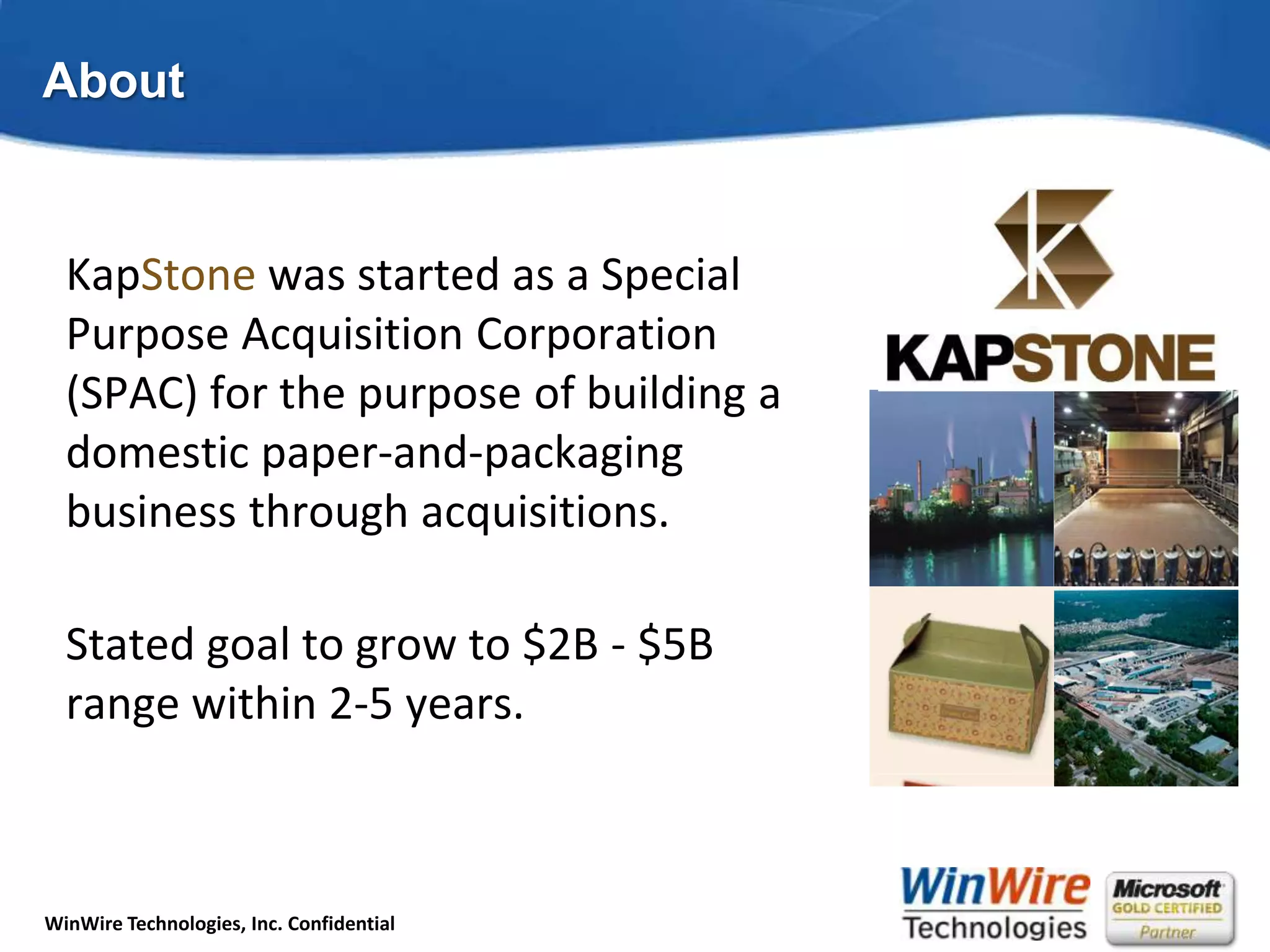
AboutKapStone was started as a Special Purpose Acquisition Corporation (SPAC) for the purpose of building a domestic paper-and-packaging business through acquisitions.Stated goal to grow to $2B - $5B range within 2-5 years.
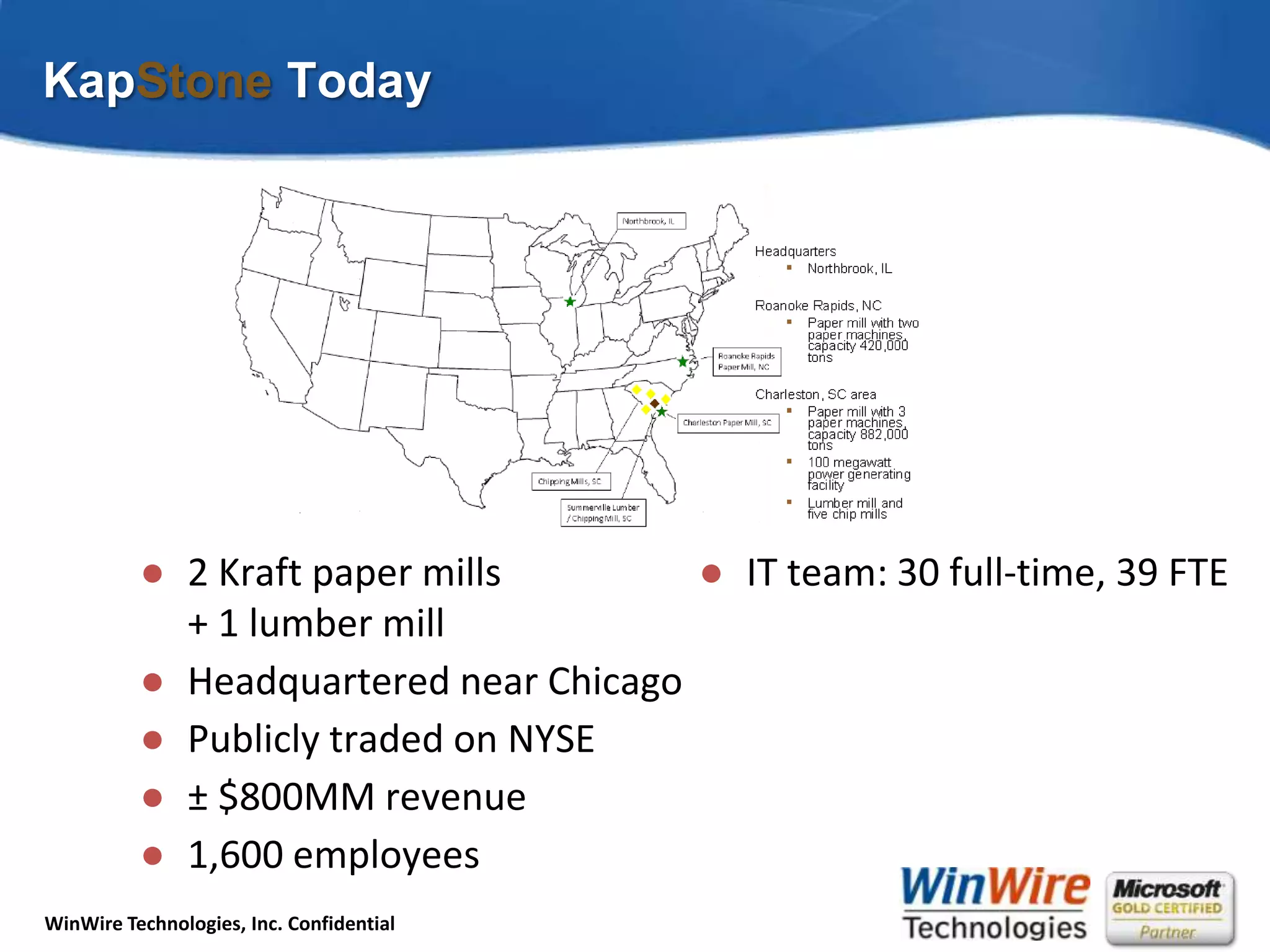
KapStone Today2 Kraft paper mills+ 1 lumber millHeadquartered near ChicagoPublicly traded on NYSE± $800MM revenue1,600 employeesIT team: 30 full-time, 39 FTE
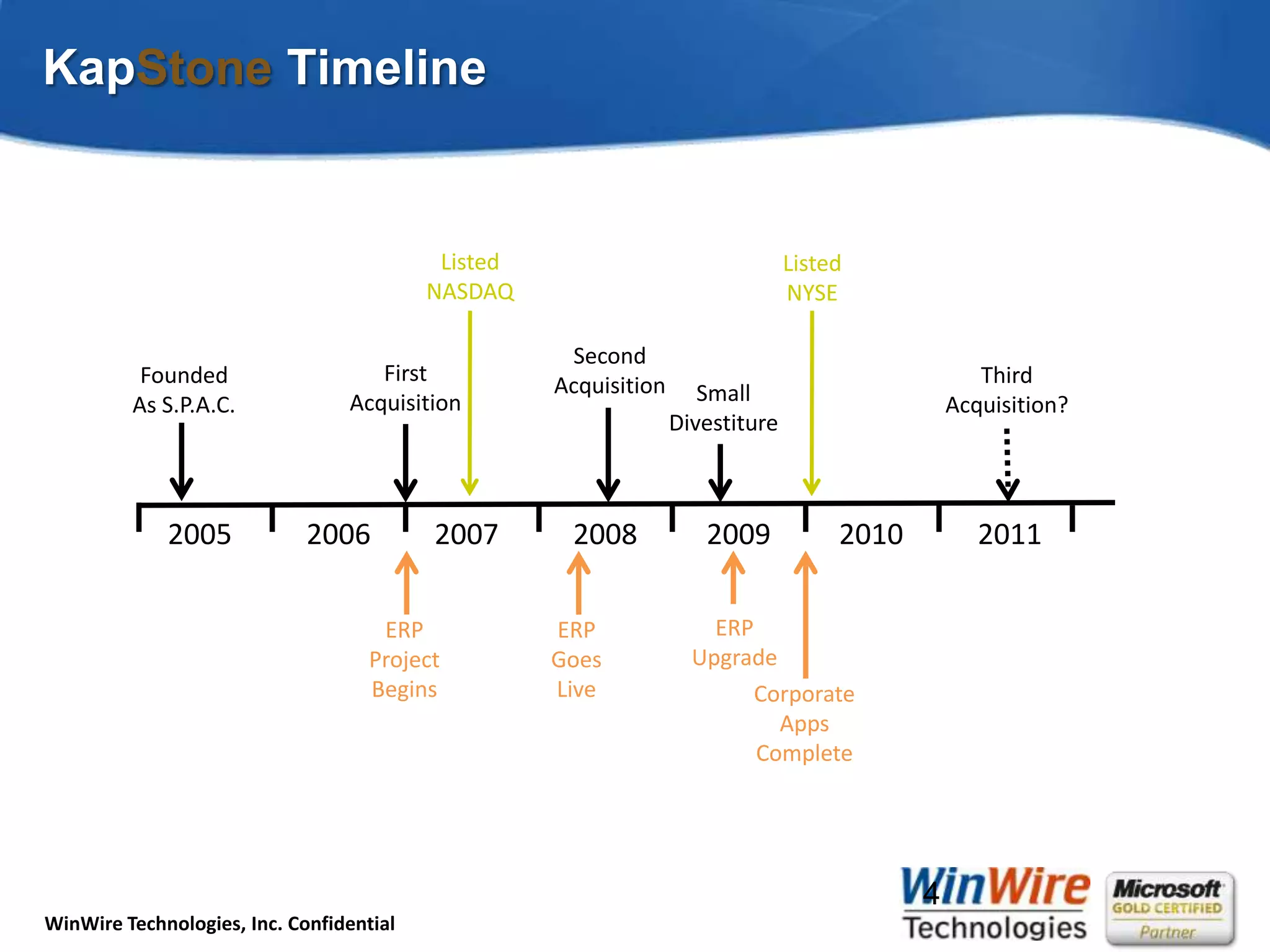
KapStoneTimelineListedNASDAQListedNYSESecondAcquisitionFirstAcquisitionFoundedAs S.P.A.C.ThirdAcquisition?SmallDivestiture2005200620072008200920102011ERPUpgradeERPGoesLiveERPProjectBeginsCorporateAppsComplete4
Part 1Building a Company
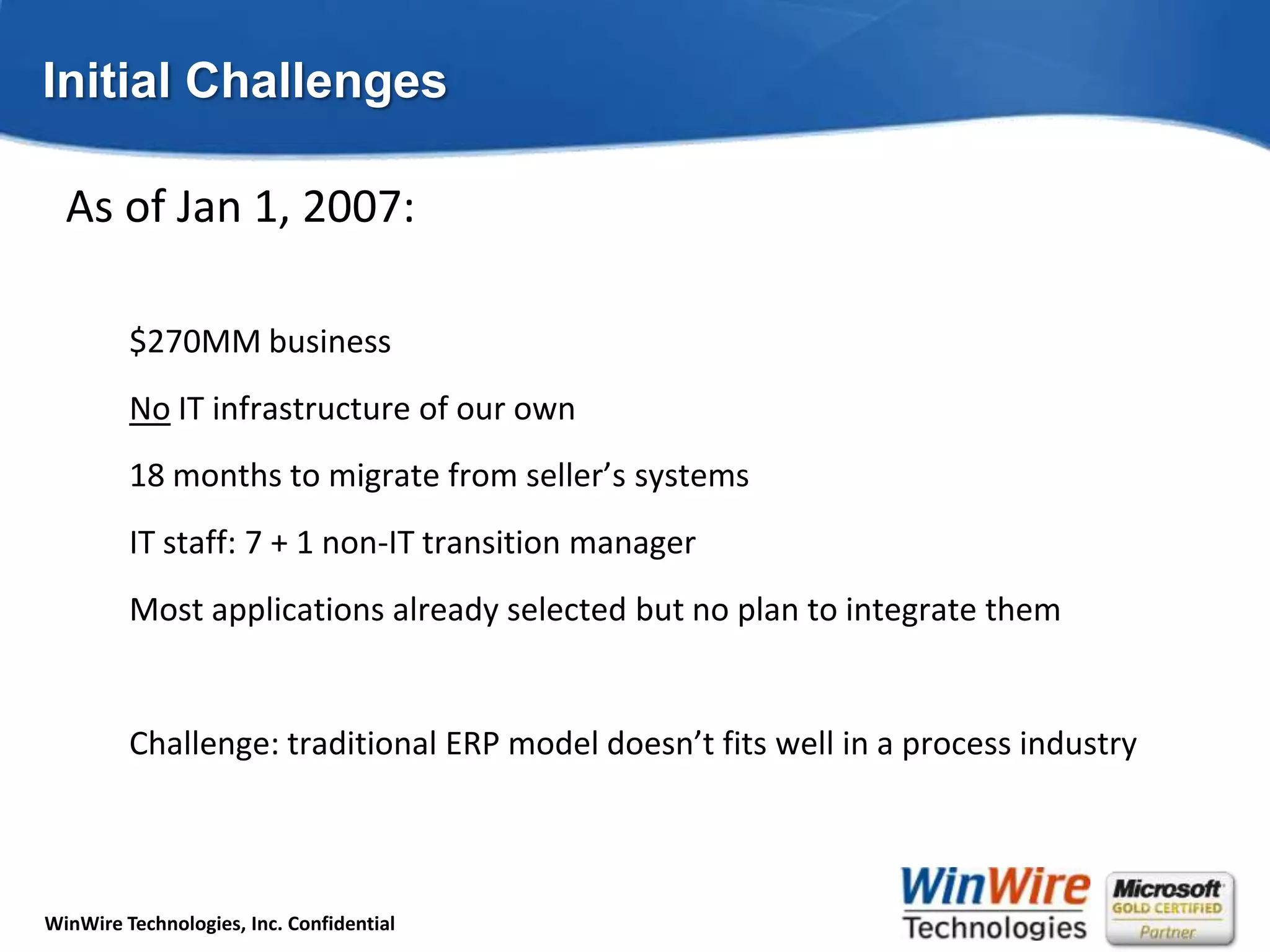
Initial ChallengesAs of Jan 1, 2007:$270MM businessNo IT infrastructure of our own18 months to migrate from seller’s systemsIT staff: 7 + 1 non-IT transition managerMost applications already selected but no plan to integrate themChallenge: traditional ERP model doesn’t fits well in a process industry
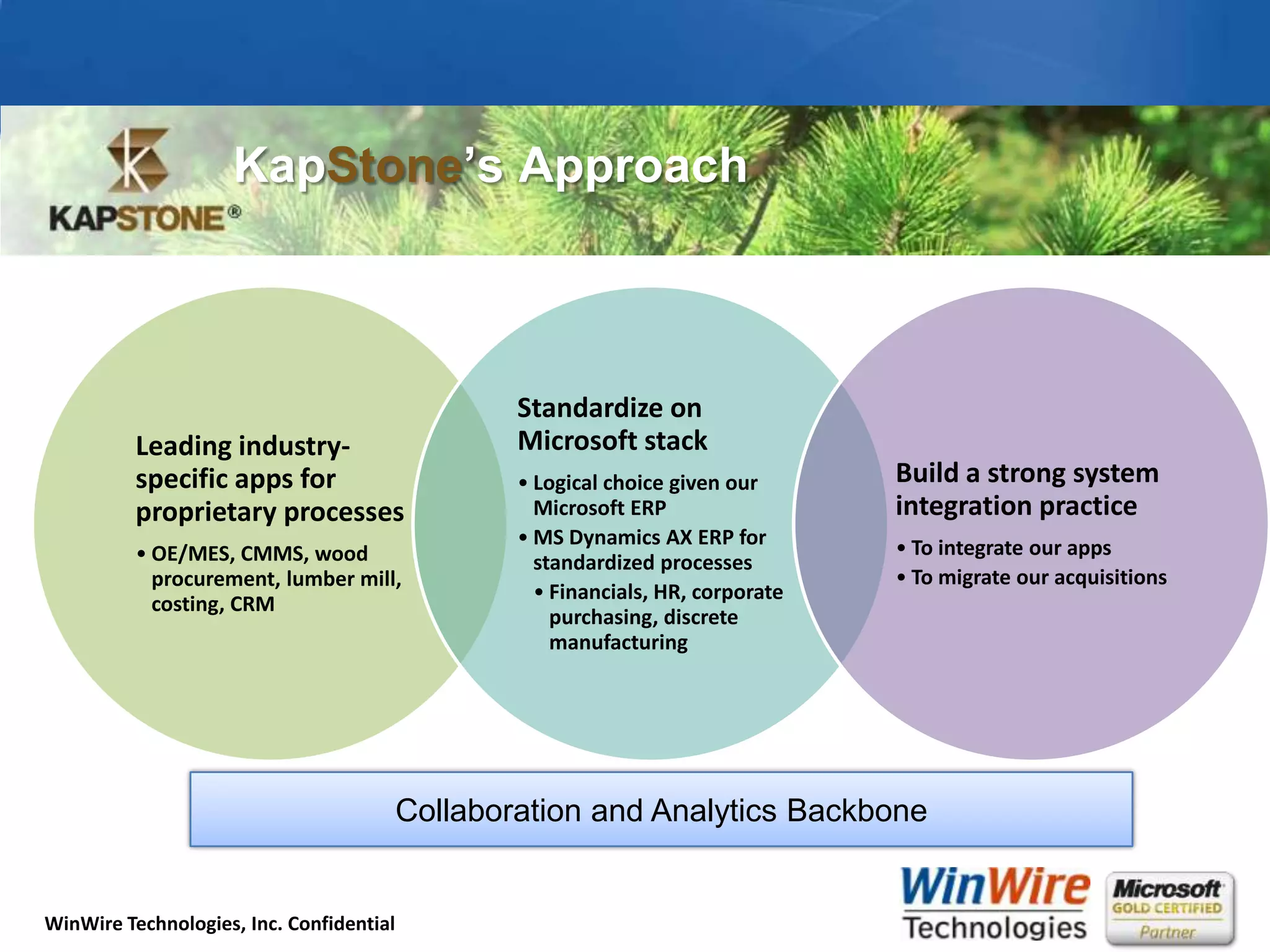
KapStone’sApproachCollaboration and Analytics Backbone
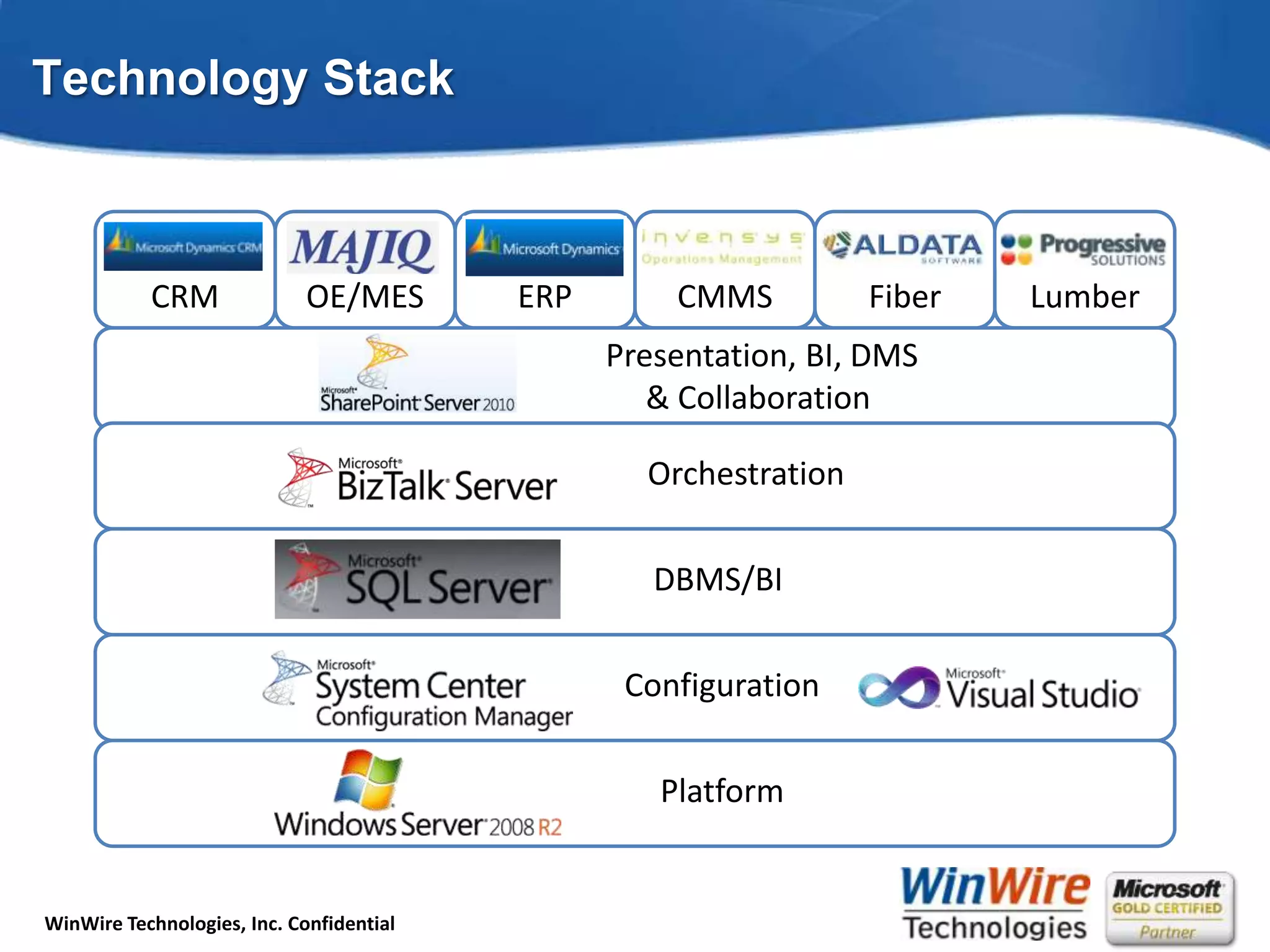
Technology StackERPCMMSOE/MESFiberCRMLumber                                Presentation,BI, DMS                               & Collaboration                            Orchestration                     DBMS/BIConfigurationPlatform
Risk MitigationTo facilitate system integration, we enforced the following requirements for our apps:Windows®-basedSQL Server®-basedActive Directory authenticationRobust integration layer (BizTalk, SOAP or XML preferred)For cloud services:  SOAP/XML interfacingClearly define the process boundaries between systemsi.e. once a transaction becomes $$$, feed to ERP!Maximize support from Microsoft
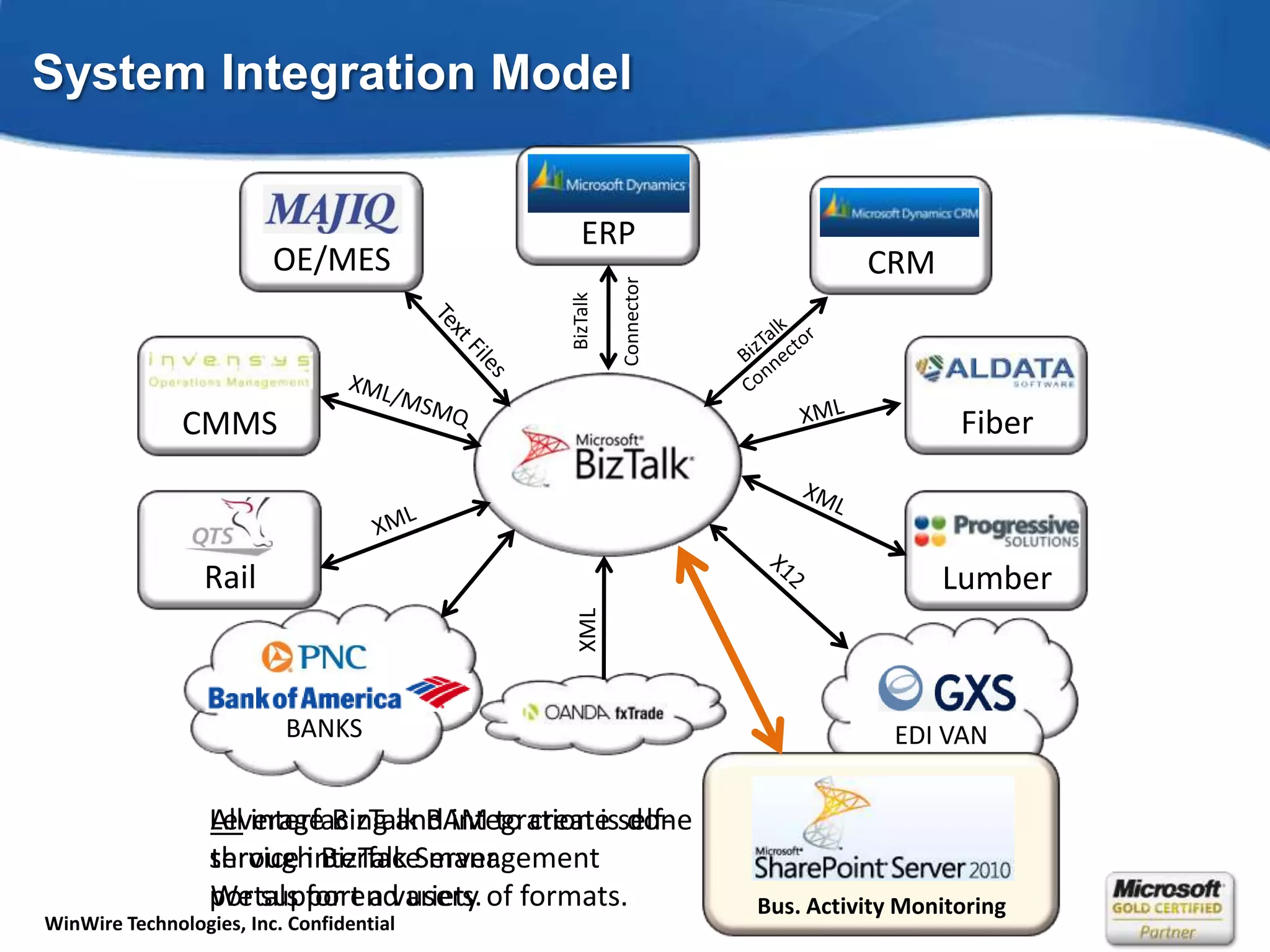
System Integration ModelERPOE/MESCRMBizTalkConnectorBizTalkConnectorText FilesFiberCMMSXML/MSMQXMLXMLRailLumberXMLX12BANKSXMLEDI VANBus. Activity MonitoringAll interfacing and integration is done through BizTalk Server.We support a variety of formats.Leverage BizTalk BAM to create self-service interface management portals for end users.
What About the Front End?Integrating multiple apps has many advantages:FlexibilityNo or little customizationEasy to upgradeAnd one big disadvantage:Multiple, loosely linked reporting sources
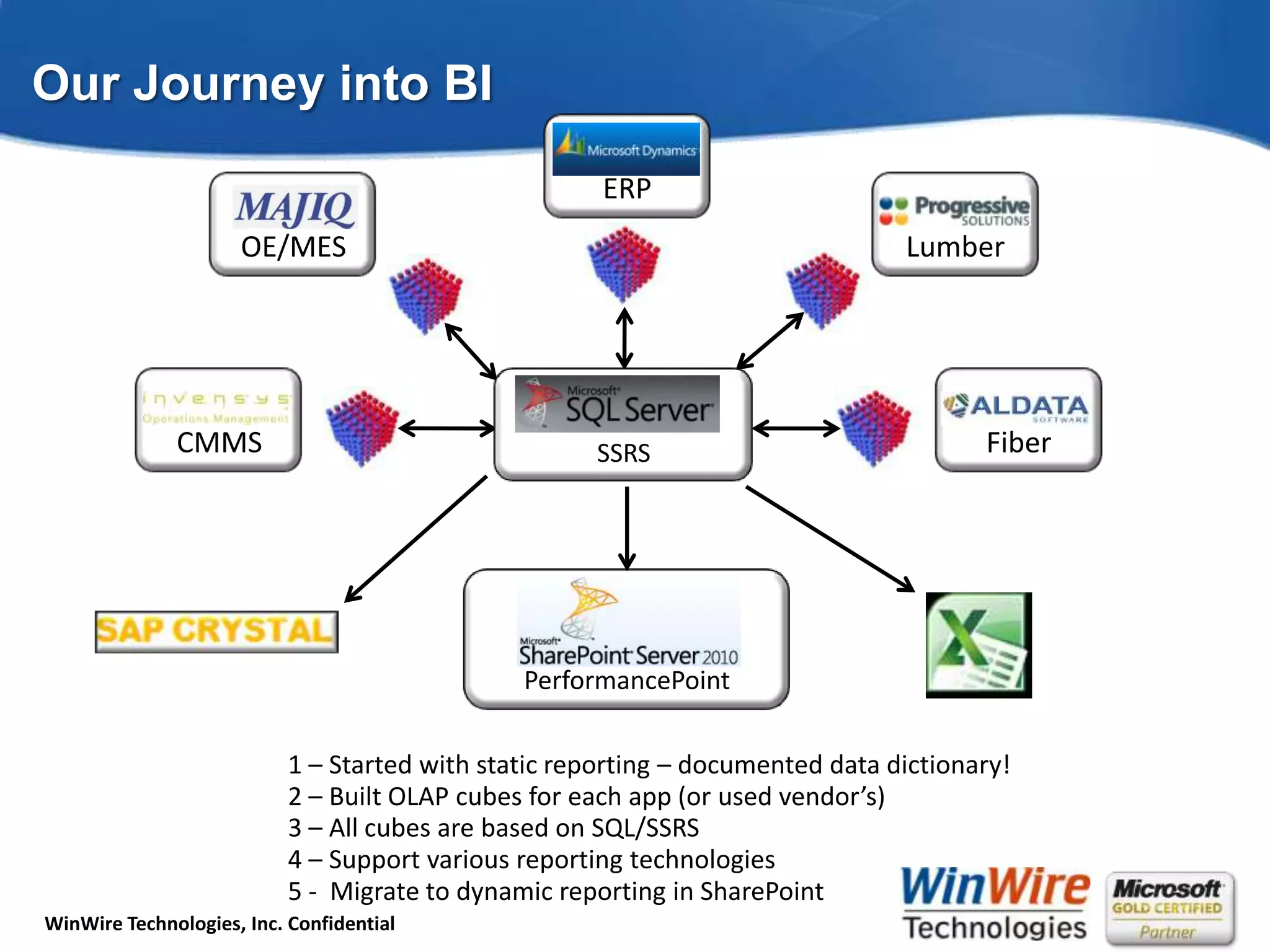
Reporting ApproachLike most companies, we start with static reporting, but also…Document the app’s data dictionary & build viewsLeverage the static reporting work to build BI cubesInvolve the vendor in cube design (or use theirs first!)Bring in experts to design cubes as neededERP/CRM must be system of reference
Common taxonomy is paramount!Our Journey into BIERPOE/MESLumberCMMSFiberSSRSPerformancePoint1 – Started with static reporting – documented data dictionary!2 – Built OLAP cubes for each app (or used vendor’s)3 – All cubes are based on SQL/SSRS4 – Support various reporting technologies5 -  Migrate to dynamic reporting in SharePoint
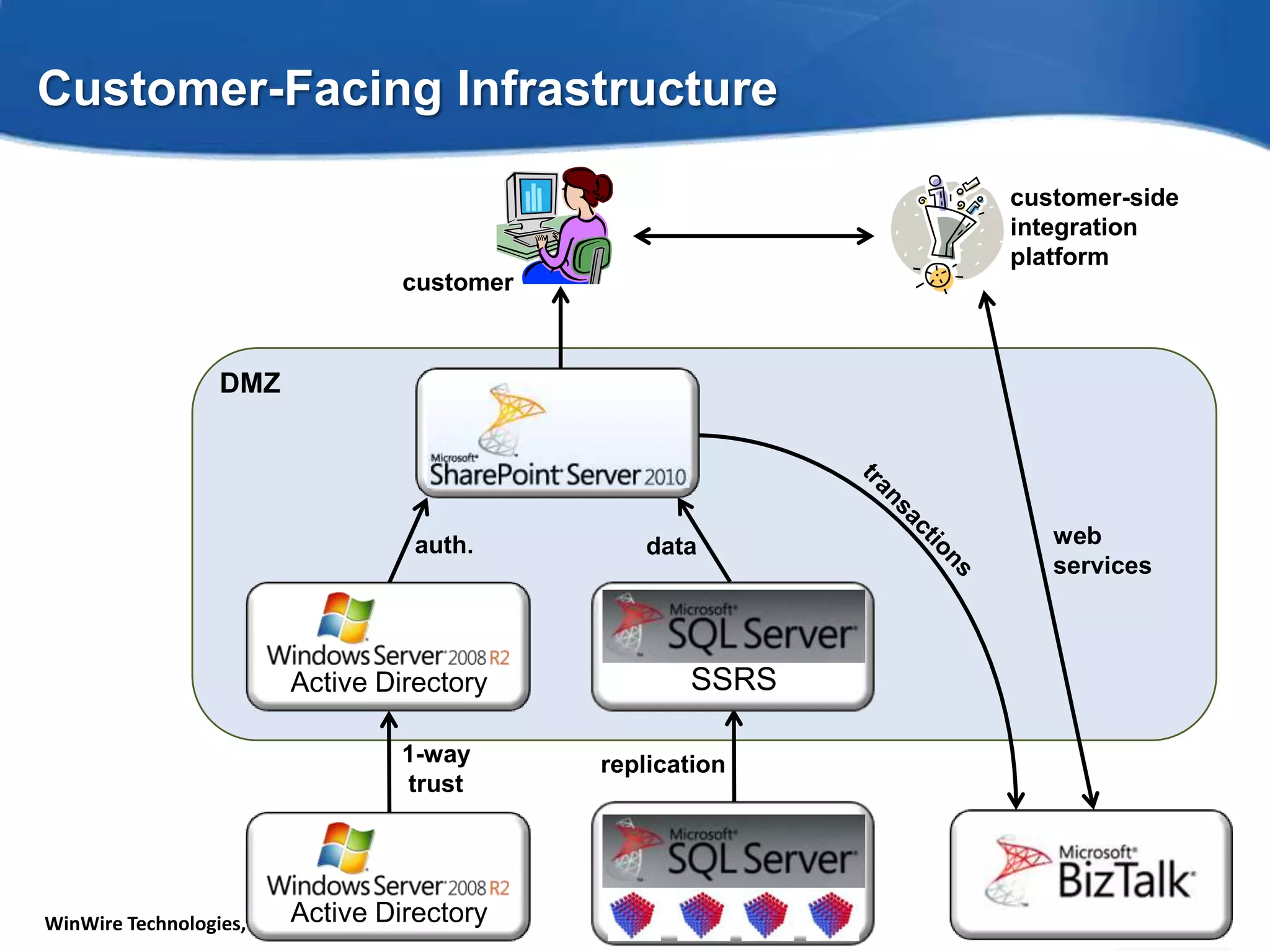
Customer-Facing Infrastructurecustomer-sideintegrationplatformcustomerDMZtransactionswebservicesauth.dataSSRSActive Directory1-waytrustreplicationActive DirectoryActive Directory
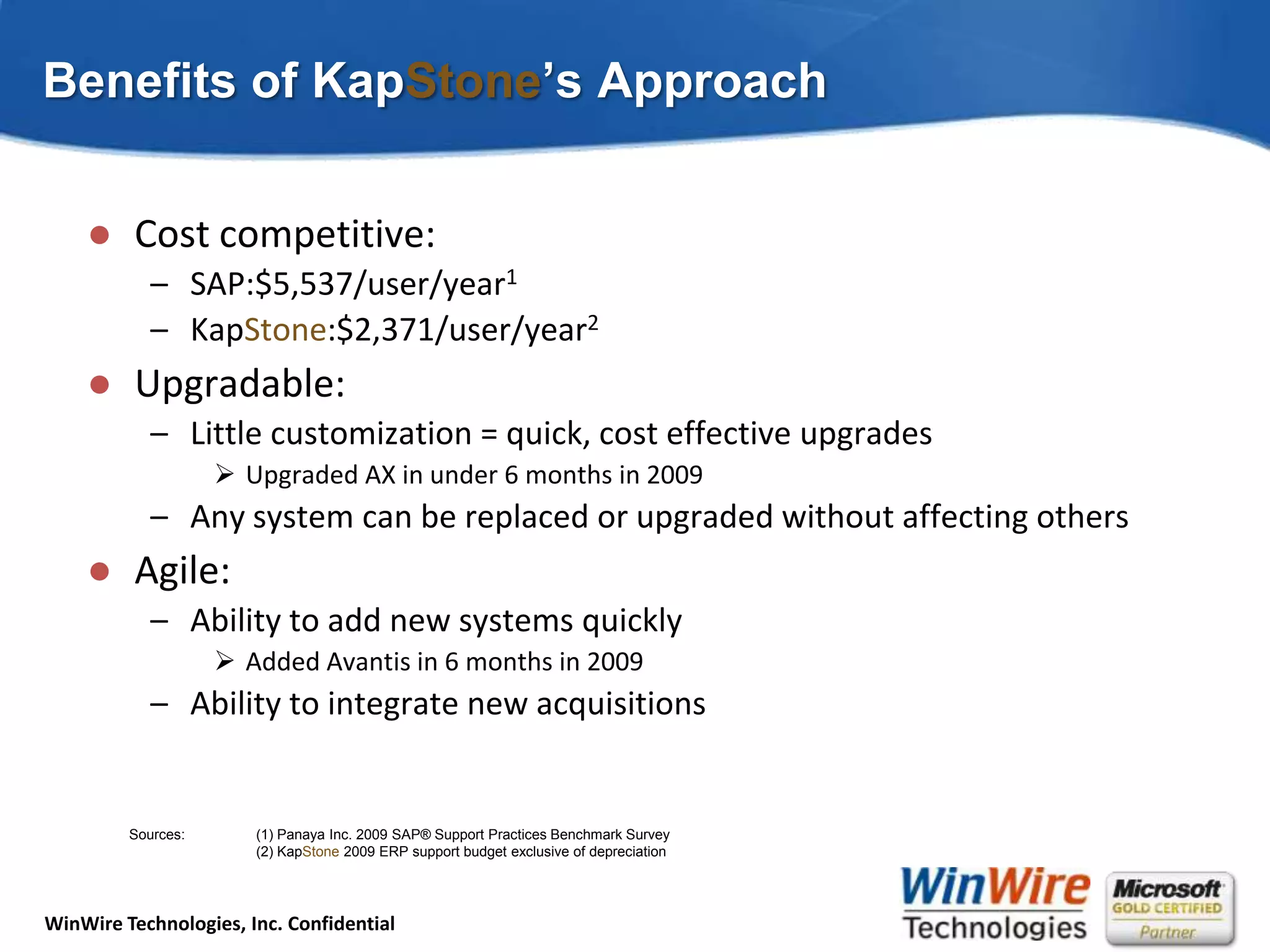
Benefits of KapStone’s ApproachCost competitive:SAP:		$5,537/user/year1KapStone:	$2,371/user/year2Upgradable:Little customization = quick, cost effective upgradesUpgraded AX in under 6 months in 2009Any system can be replaced or upgraded without affecting othersAgile:Ability to add new systems quicklyAdded Avantis in 6 months in 2009Ability to integrate new acquisitionsSources:	(1) Panaya Inc. 2009 SAP® Support Practices Benchmark Survey(2) KapStone 2009 ERP support budget exclusive of depreciation
Part 2Support Growth Through M&A
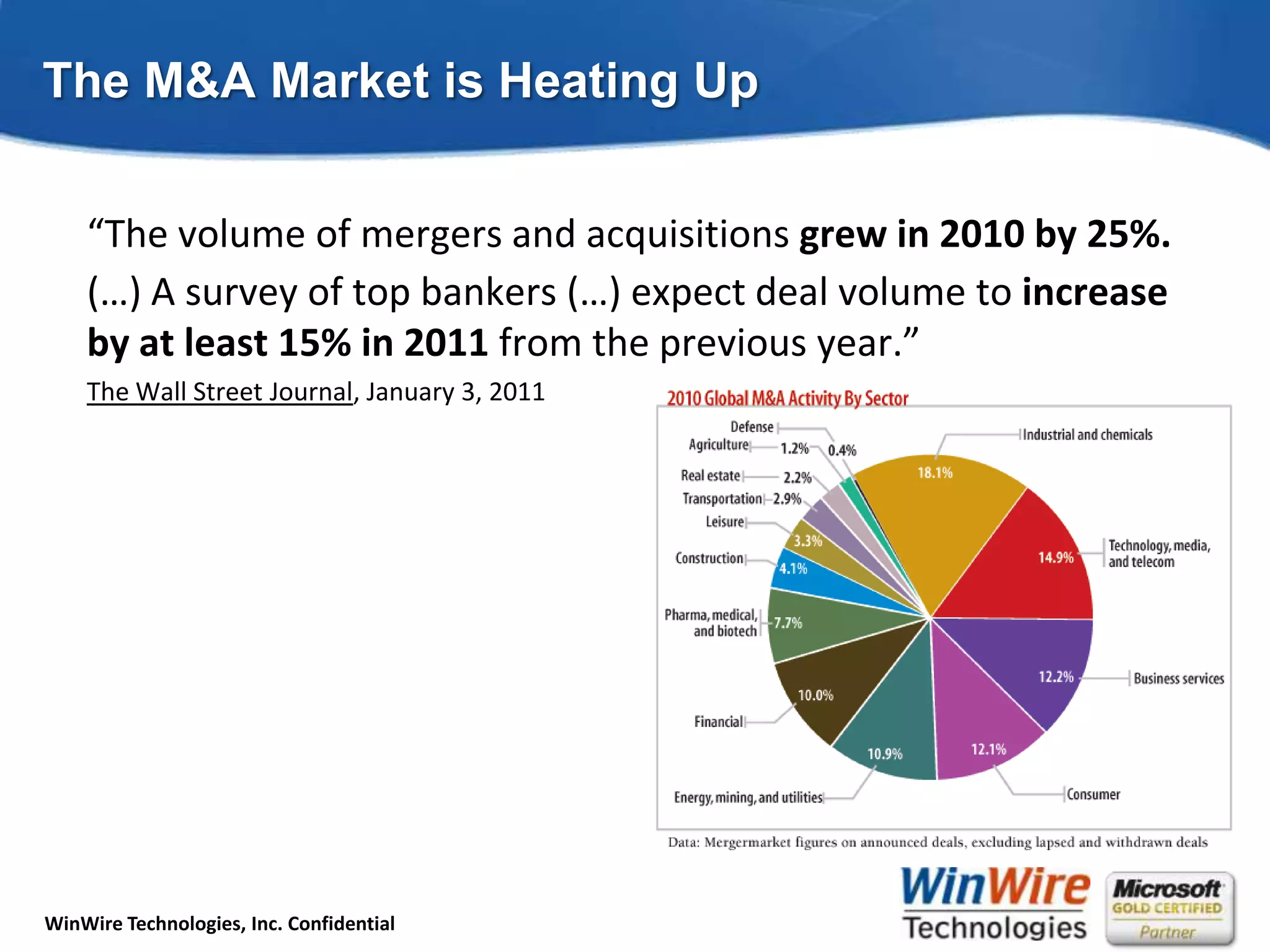
The M&A Market is Heating Up“The volume of mergers and acquisitions grew in 2010 by 25%.(…) A survey of top bankers (…) expect deal volume to increase by at least 15% in 2011 from the previous year.”The Wall Street Journal, January 3, 2011
M&A Challenges: 10 Things to RememberTypical M&A challenges for IT:IT isn’t always “in the loop”Acquisitions are often behind on IT investmentsPressure to get off seller’s systems quicklyPressure to consolidate financials & BI quicklyDon’t always know where IT growth will beManage CommunicationSecurity is a big concernIT must take the lead on non-IT activitiesMust be compliant within 12 monthsAcquisitions lead to divestitures
1. IT isn’t always “in the loop”Too often CIOs are not brought in early enough when a deal is negotiated.Tell your Board and CEO that you must be brought in Day One.
Ask them if they’d want to know the true cost of merging IT asset before or after negotiating a price!
Be ready with:migration cost modelssystem documentation (especially interfacing)methodologiesapp & technologies portfoliostandards
2. Acquisitions are often behind on IT investmentsBusinesses being sold tend not to invest much in IT!Be ready to upgrade servers right away
Be ready to roll out new desktops (real or virtual) right away
Acquisitions are a good opportunity to get out of unwanted support contracts  upgrade Day One!
Technologies to leverage:Hyper-V server virtualization, Terminal Services, desktop virtualization
3. Pressure to get off seller’s systems quicklyIn case of a divestiture, some apps may be running on the seller’s infrastructure.TSAs are costly.Negotiate rights to transfer licenses or run temporary instances
Go after low hanging fruits (email, DMS)
Migrate legacy apps to virtual instances in your datacenter
Technologies to leverage:

Kapstone CIO Insights