IFS ERP Survey: Impact of
 Mergers & Acquisitions
         Overview
Background
In the fall of 2011, a study was
conducted among manufacturing        This study was
executives and professionals of      conducted by IFS
                                     North America
middle market to large               and Mint Jutras
manufacturers to better understand   , an independent
the impact on customers when         research-based
                                     consulting firm
solution providers grow through      that specializes in
acquisition.                         analyzing the
                                     business impact
This study illuminates:              of enterprise
• Concerns of customers              applications

• How they respond
Major Areas Explored
 What percentage of companies    Applications included:
  are impacted by acquisitions?    Enterprise Resource
                                    Planning (ERP)
 How are these acquisitions       Customer
                                    Relationship Mgt
  perceived?                        (CRM)
 What actions are taken by        Enterprise Asset
                                    Management (EAM)
  customers post-acquisition?      Project/Portfolio
                                    Mgt (PPM)
                                   Supply Chain Mgt
                                    (SCM)
Key Findings
• Over half (54%) of survey respondents have “experienced” an
  acquisition of their software vendor
• Acquisitions that result in broad portfolios of products are not
  necessarily viewed negatively but this will depend on the
  nature of the portfolio
• Concerns primarily arise over the continued support and
  innovation of products that are implemented at the time of
  the acquisition
Type of Business
                  Process Mfg                                             38%

                  Discrete Mfg                                           36%

                         Other                         12%

                    Consultant               7%

Contracting/Industrial Projects             5%

                        Utility        1%

                                  0%             10%         20%   30%    40%
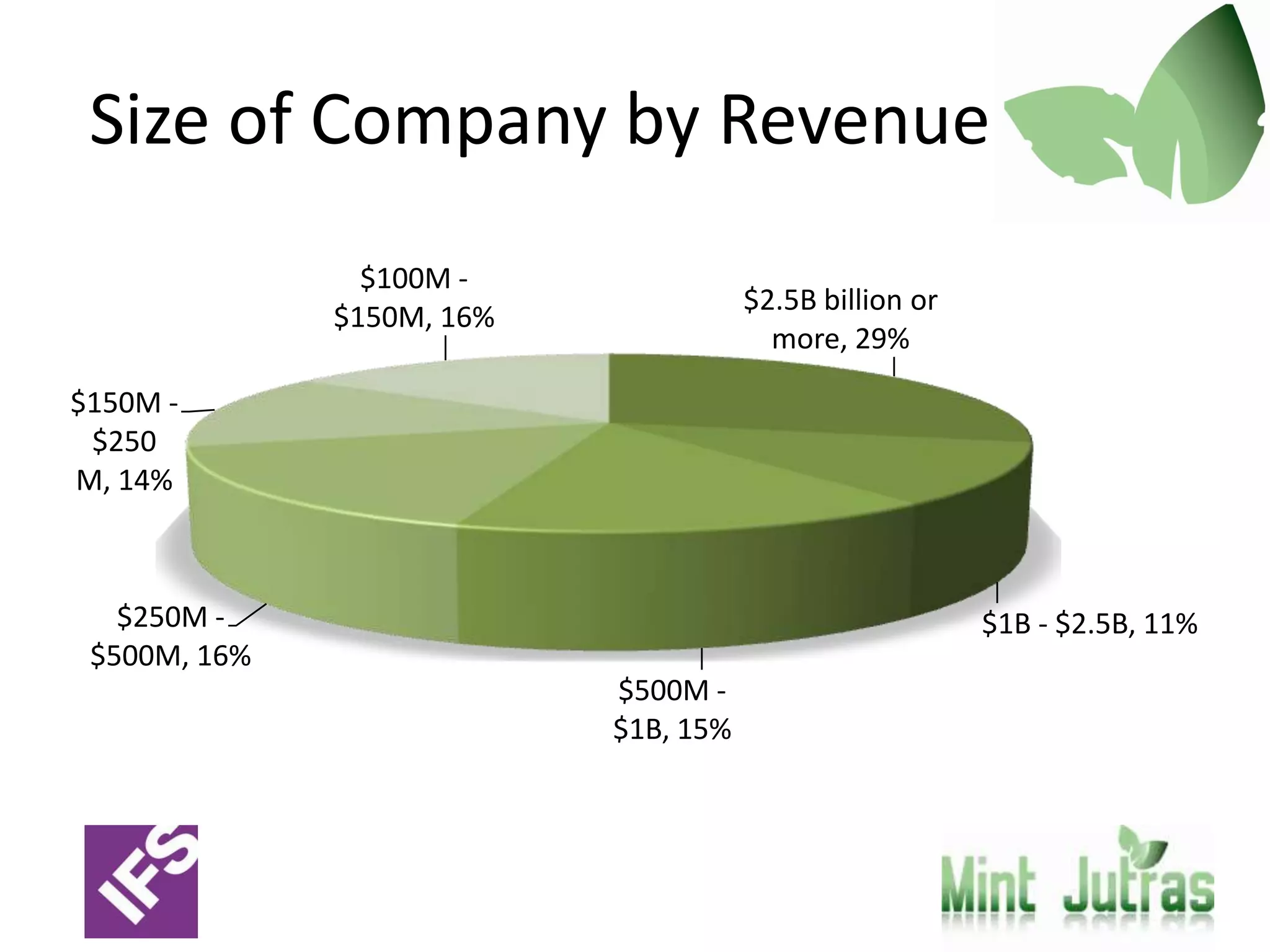
Size of Company by Revenue
                $100M -
                                      $2.5B billion or
              $150M, 16%
                                        more, 29%

$150M -
 $250
M, 14%


   $250M -                                               $1B - $2.5B, 11%
 $500M, 16%
                           $500M -
                           $1B, 15%
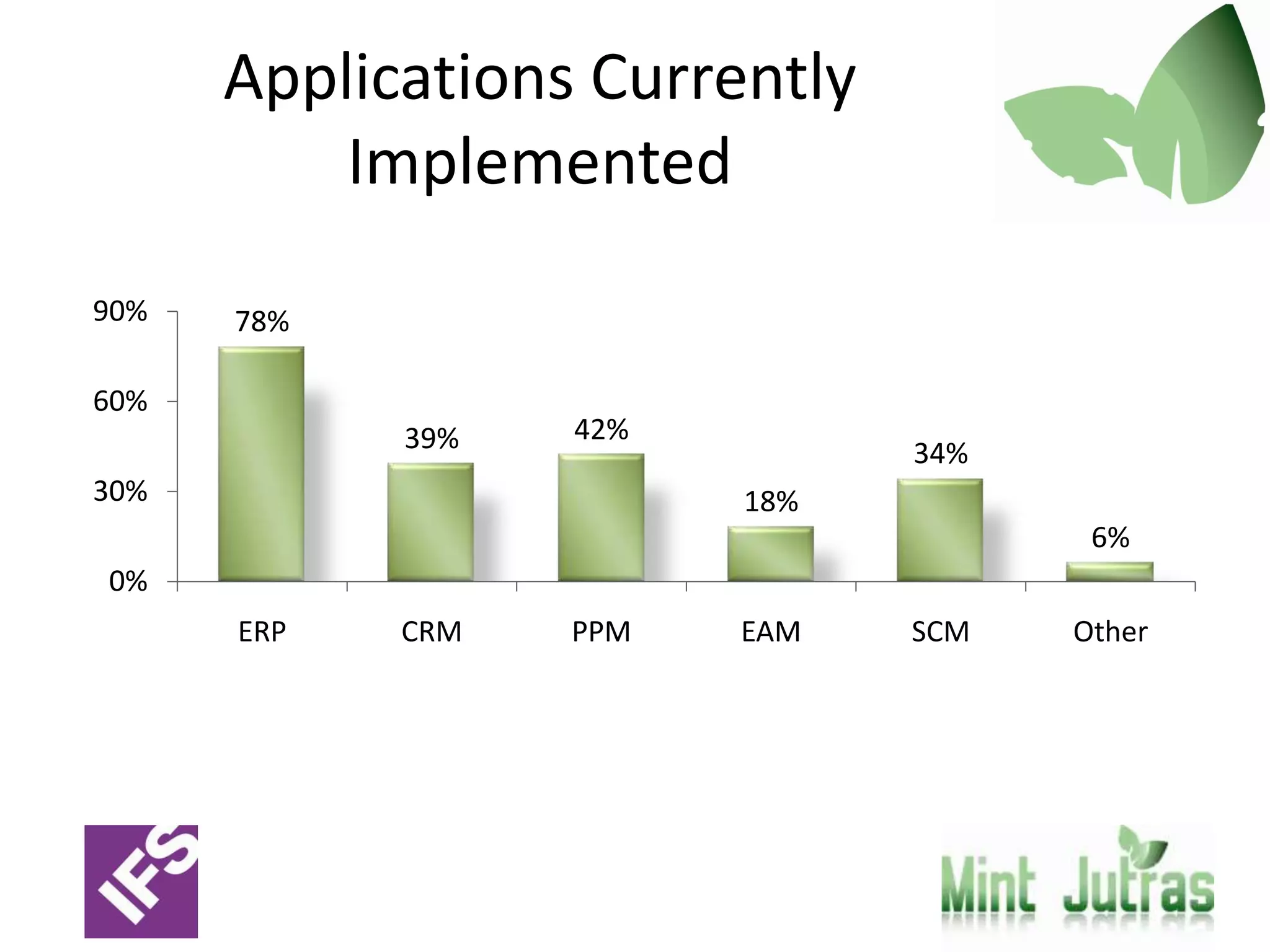
Applications Currently
          Implemented
90%   78%

60%
            39%   42%
                               34%
30%                     18%
                                      6%
0%
      ERP   CRM   PPM   EAM    SCM   Other
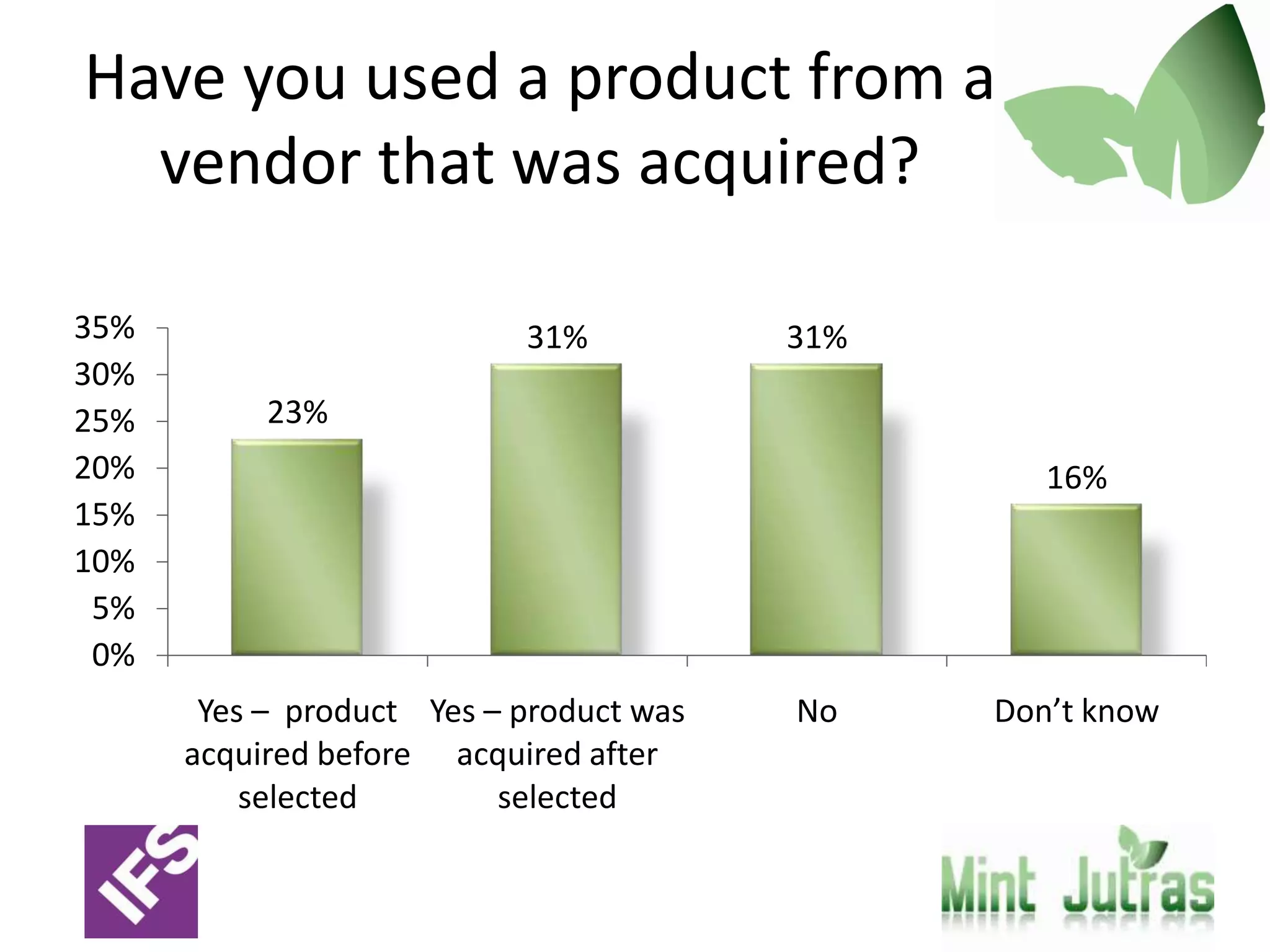
Have you used a product from a
  vendor that was acquired?

35%                        31%           31%
30%
25%        23%
20%                                               16%
15%
10%
 5%
 0%
       Yes – product Yes – product was   No    Don’t know
      acquired before acquired after
          selected        selected
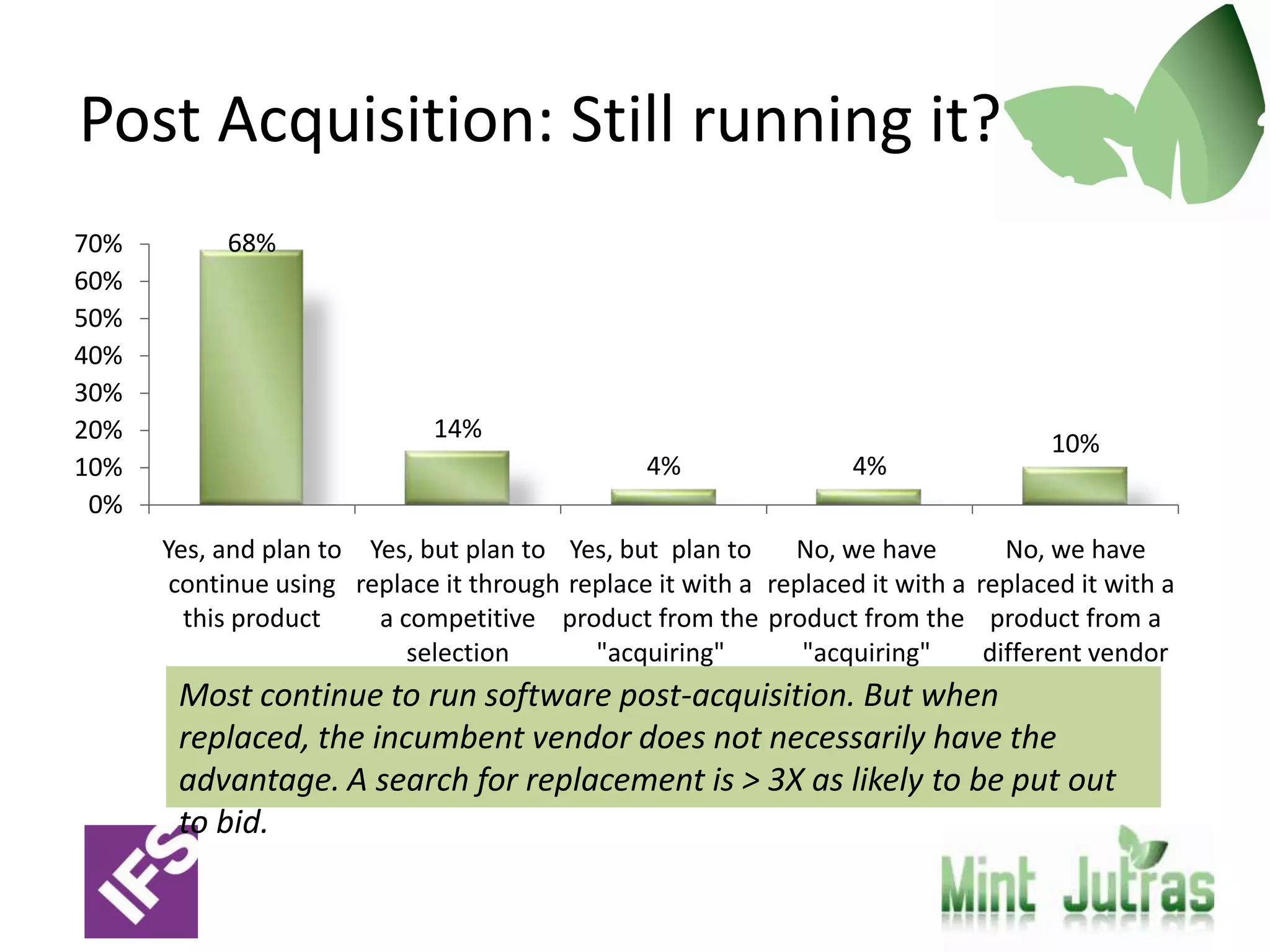
Post Acquisition: Still running it?
70%        68%
60%
50%
40%
30%
20%                           14%
                                                                                     10%
10%                                              4%                4%
 0%
      Yes, and plan to Yes, but plan to Yes, but plan to     No, we have         No, we have
       continue using replace it through replace it with a replaced it with a replaced it with a
        this product    a competitive product from the product from the product from a
                           selection       "acquiring"        "acquiring"      different vendor
                                              vendor
        Most continue to run software post-acquisition. But whenvendor
       replaced, the incumbent vendor does not necessarily have the
       advantage. A search for replacement is > 3X as likely to be put out
       to bid.
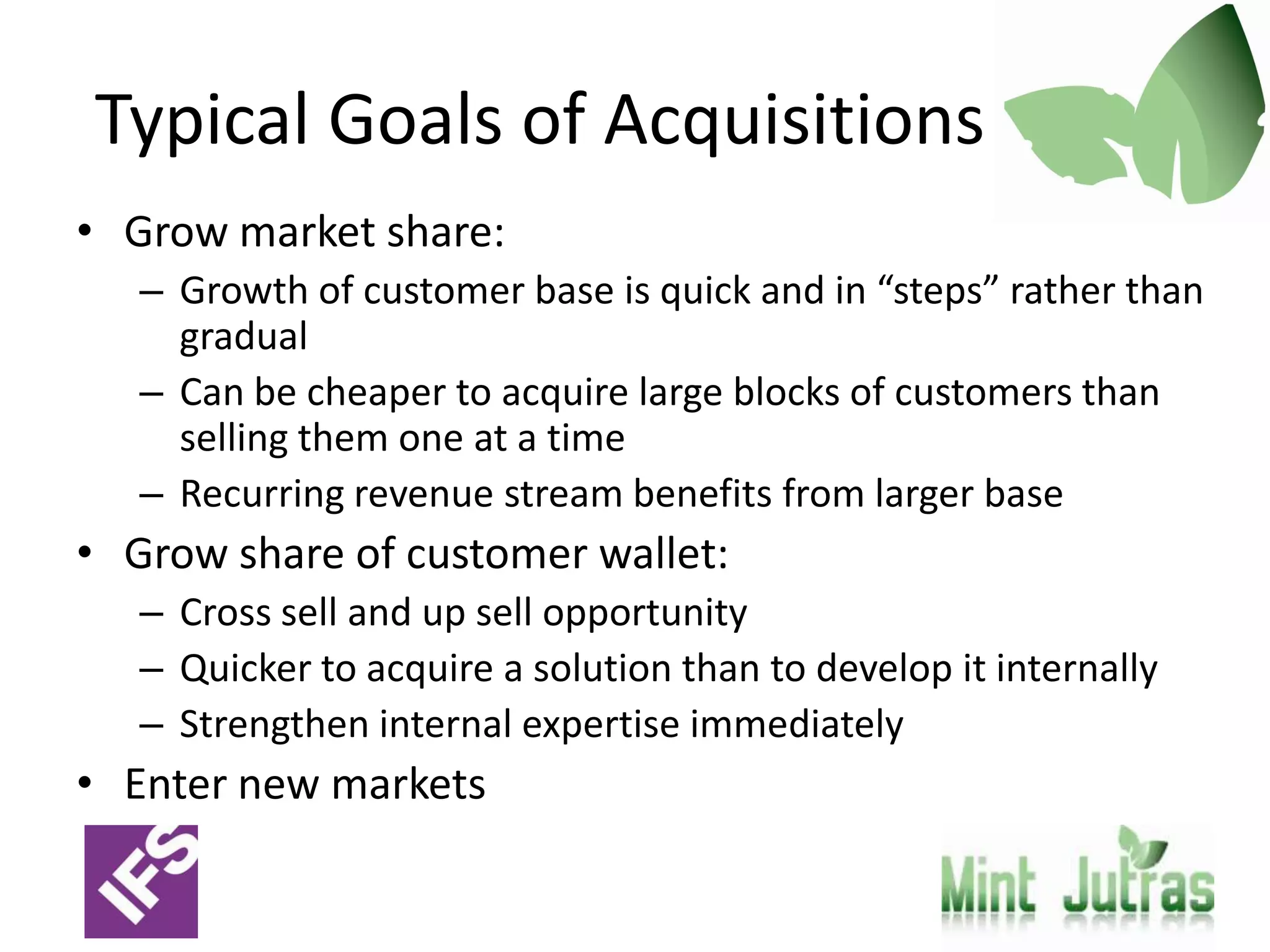
Typical Goals of Acquisitions
• Grow market share:
   – Growth of customer base is quick and in “steps” rather than
     gradual
   – Can be cheaper to acquire large blocks of customers than
     selling them one at a time
   – Recurring revenue stream benefits from larger base
• Grow share of customer wallet:
   – Cross sell and up sell opportunity
   – Quicker to acquire a solution than to develop it internally
   – Strengthen internal expertise immediately
• Enter new markets
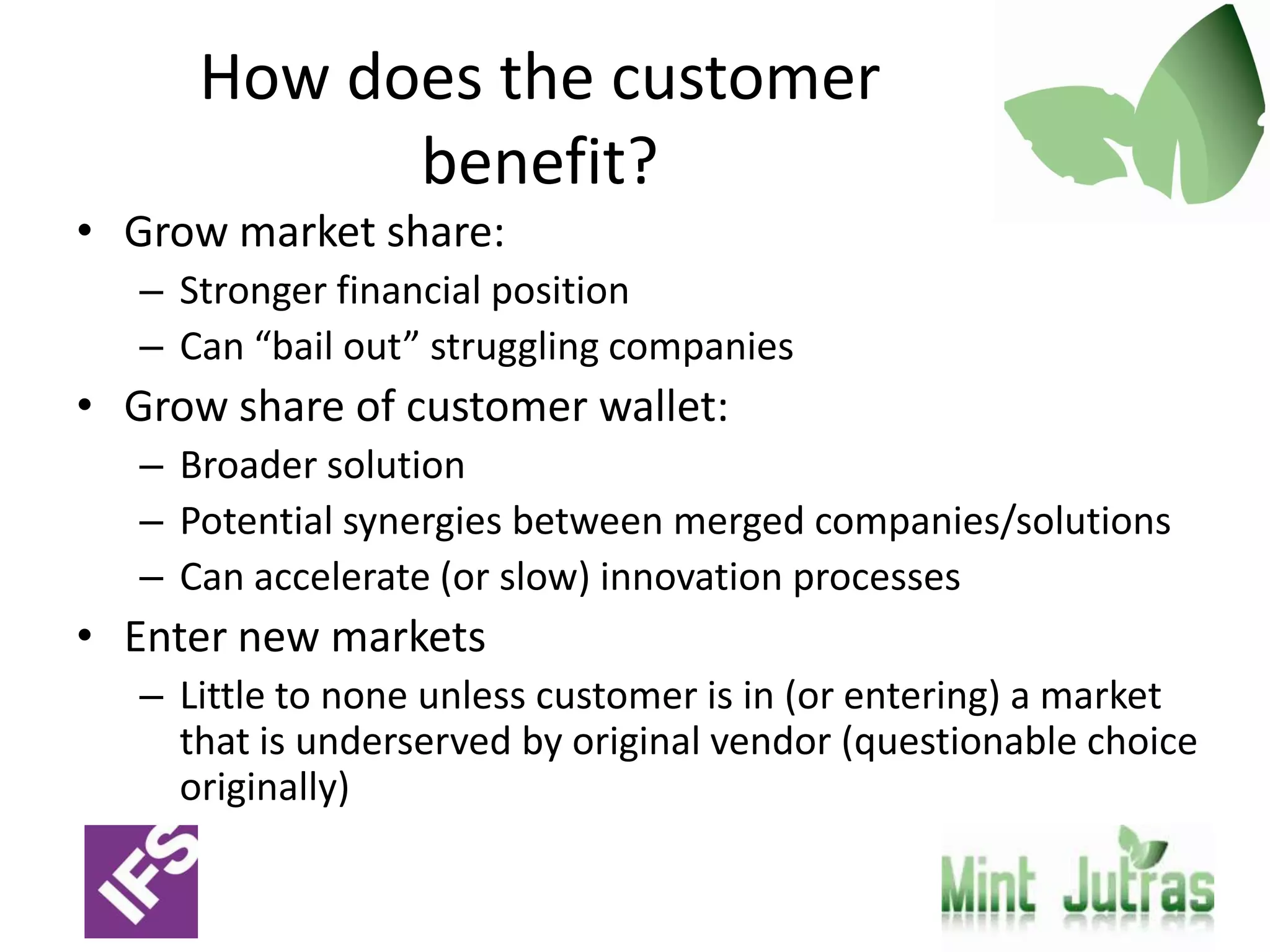
How does the customer
            benefit?
• Grow market share:
   – Stronger financial position
   – Can “bail out” struggling companies
• Grow share of customer wallet:
   – Broader solution
   – Potential synergies between merged companies/solutions
   – Can accelerate (or slow) innovation processes
• Enter new markets
   – Little to none unless customer is in (or entering) a market
     that is underserved by original vendor (questionable choice
     originally)
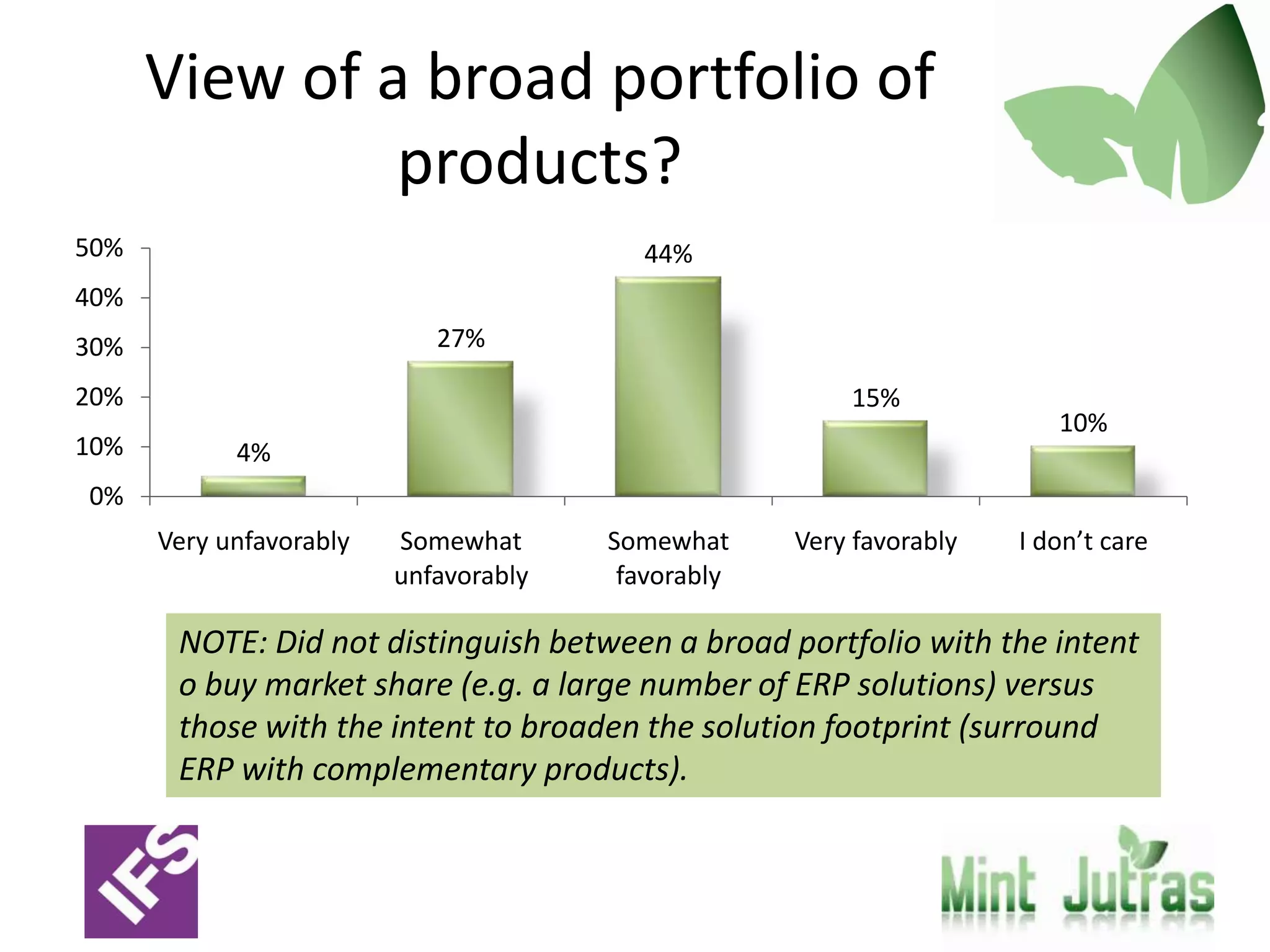
View of a broad portfolio of
               products?
50%                                       44%
40%
30%                         27%

20%                                                     15%
                                                                        10%
10%         4%
0%
      Very unfavorably   Somewhat      Somewhat     Very favorably   I don’t care
                         unfavorably    favorably

       NOTE: Did not distinguish between a broad portfolio with the intent
       o buy market share (e.g. a large number of ERP solutions) versus
       those with the intent to broaden the solution footprint (surround
       ERP with complementary products).
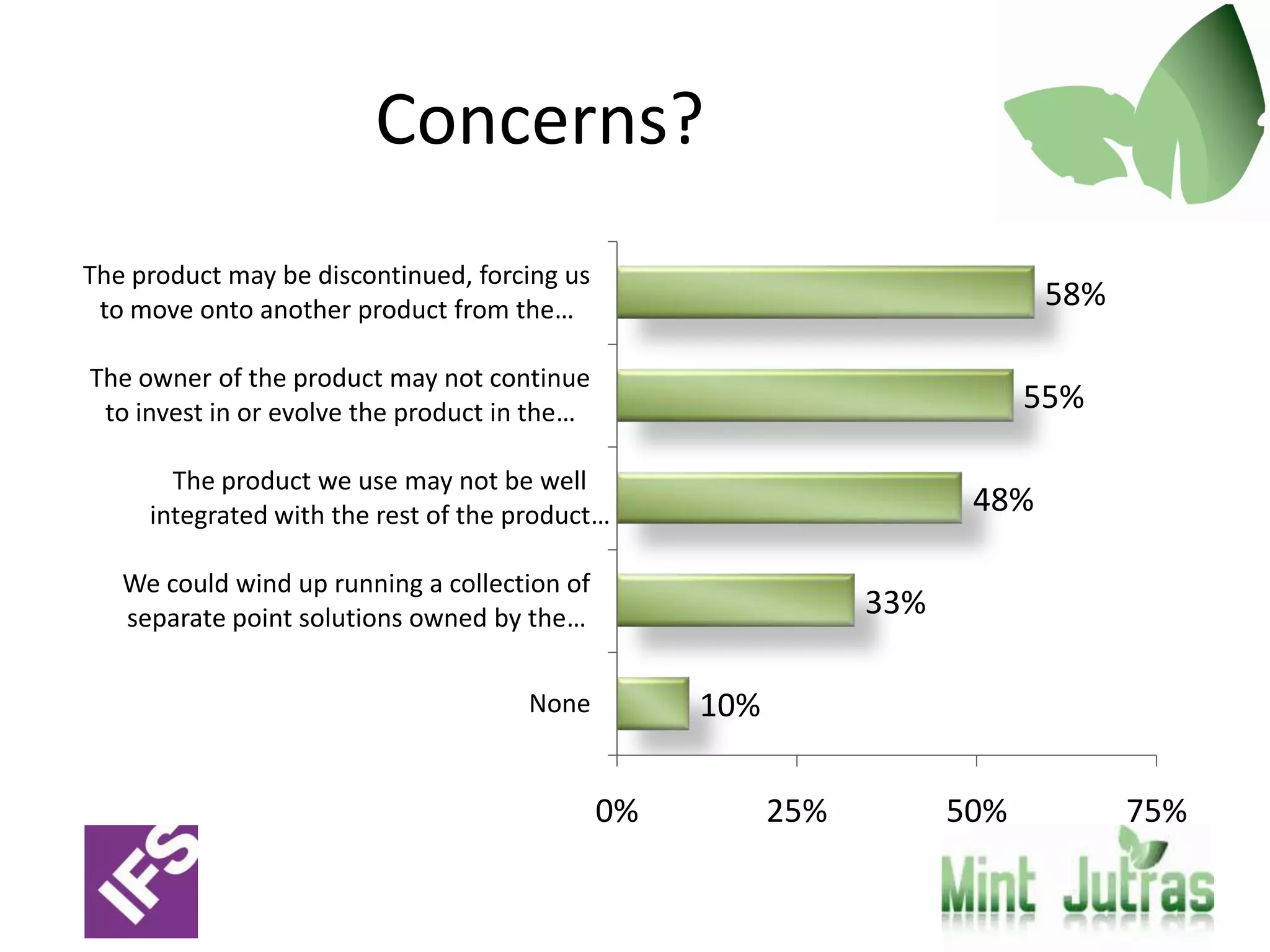
Concerns?
The product may be discontinued, forcing us
 to move onto another product from the…                                     58%

The owner of the product may not continue
 to invest in or evolve the product in the…                                55%

       The product we use may not be well
     integrated with the rest of the product…                         48%

   We could wind up running a collection of
   separate point solutions owned by the…                      33%

                                     None          10%

                                              0%         25%         50%          75%
About IFS
IFS is a public company (OMX STO: IFS) founded in
1983 that develops, supplies, and implements IFS
Applications™, a component-based extended ERP
suite built on SOA technology. IFS focuses on agile
businesses where any of four core processes are
strategic: Service & asset
management, manufacturing, supply chain and
projects. The company has 2,000 customers and is
present in more than 50 countries with 2,700
employees in total.
IFS ERP Survey : Impact of
  Mergers & Acquisitions
        Contact Information:
     Charles Rathmann, Analyst
         IFS North America
            262.317.7419
   chuck.rathmann@ifsworld.com

ERP Vendor Consolidation -- How it affects ERP users

  • 1.
    IFS ERP Survey:Impact of Mergers & Acquisitions Overview
  • 2.
    Background In the fallof 2011, a study was conducted among manufacturing This study was executives and professionals of conducted by IFS North America middle market to large and Mint Jutras manufacturers to better understand , an independent the impact on customers when research-based consulting firm solution providers grow through that specializes in acquisition. analyzing the business impact This study illuminates: of enterprise • Concerns of customers applications • How they respond
  • 3.
    Major Areas Explored What percentage of companies Applications included: are impacted by acquisitions?  Enterprise Resource Planning (ERP)  How are these acquisitions  Customer Relationship Mgt perceived? (CRM)  What actions are taken by  Enterprise Asset Management (EAM) customers post-acquisition?  Project/Portfolio Mgt (PPM)  Supply Chain Mgt (SCM)
  • 4.
    Key Findings • Overhalf (54%) of survey respondents have “experienced” an acquisition of their software vendor • Acquisitions that result in broad portfolios of products are not necessarily viewed negatively but this will depend on the nature of the portfolio • Concerns primarily arise over the continued support and innovation of products that are implemented at the time of the acquisition
  • 5.
    Type of Business Process Mfg 38% Discrete Mfg 36% Other 12% Consultant 7% Contracting/Industrial Projects 5% Utility 1% 0% 10% 20% 30% 40%
  • 6.
    Size of Companyby Revenue $100M - $2.5B billion or $150M, 16% more, 29% $150M - $250 M, 14% $250M - $1B - $2.5B, 11% $500M, 16% $500M - $1B, 15%
  • 7.
    Applications Currently Implemented 90% 78% 60% 39% 42% 34% 30% 18% 6% 0% ERP CRM PPM EAM SCM Other
  • 8.
    Have you useda product from a vendor that was acquired? 35% 31% 31% 30% 25% 23% 20% 16% 15% 10% 5% 0% Yes – product Yes – product was No Don’t know acquired before acquired after selected selected
  • 9.
    Post Acquisition: Stillrunning it? 70% 68% 60% 50% 40% 30% 20% 14% 10% 10% 4% 4% 0% Yes, and plan to Yes, but plan to Yes, but plan to No, we have No, we have continue using replace it through replace it with a replaced it with a replaced it with a this product a competitive product from the product from the product from a selection "acquiring" "acquiring" different vendor vendor Most continue to run software post-acquisition. But whenvendor replaced, the incumbent vendor does not necessarily have the advantage. A search for replacement is > 3X as likely to be put out to bid.
  • 10.
    Typical Goals ofAcquisitions • Grow market share: – Growth of customer base is quick and in “steps” rather than gradual – Can be cheaper to acquire large blocks of customers than selling them one at a time – Recurring revenue stream benefits from larger base • Grow share of customer wallet: – Cross sell and up sell opportunity – Quicker to acquire a solution than to develop it internally – Strengthen internal expertise immediately • Enter new markets
  • 11.
    How does thecustomer benefit? • Grow market share: – Stronger financial position – Can “bail out” struggling companies • Grow share of customer wallet: – Broader solution – Potential synergies between merged companies/solutions – Can accelerate (or slow) innovation processes • Enter new markets – Little to none unless customer is in (or entering) a market that is underserved by original vendor (questionable choice originally)
  • 12.
    View of abroad portfolio of products? 50% 44% 40% 30% 27% 20% 15% 10% 10% 4% 0% Very unfavorably Somewhat Somewhat Very favorably I don’t care unfavorably favorably NOTE: Did not distinguish between a broad portfolio with the intent o buy market share (e.g. a large number of ERP solutions) versus those with the intent to broaden the solution footprint (surround ERP with complementary products).
  • 13.
    Concerns? The product maybe discontinued, forcing us to move onto another product from the… 58% The owner of the product may not continue to invest in or evolve the product in the… 55% The product we use may not be well integrated with the rest of the product… 48% We could wind up running a collection of separate point solutions owned by the… 33% None 10% 0% 25% 50% 75%
  • 14.
    About IFS IFS isa public company (OMX STO: IFS) founded in 1983 that develops, supplies, and implements IFS Applications™, a component-based extended ERP suite built on SOA technology. IFS focuses on agile businesses where any of four core processes are strategic: Service & asset management, manufacturing, supply chain and projects. The company has 2,000 customers and is present in more than 50 countries with 2,700 employees in total.
  • 15.
    IFS ERP Survey: Impact of Mergers & Acquisitions Contact Information: Charles Rathmann, Analyst IFS North America 262.317.7419 chuck.rathmann@ifsworld.com