Arisa Alcantara
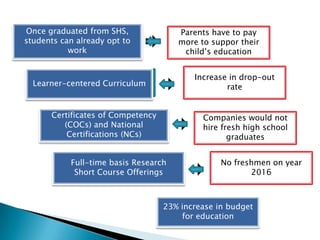
Once graduated from SHS,
studentsFunding opt to
can already
work

Parents have to pay
more to suppor their
child’s education
Increase in drop-out
rate

Effectiveness
Learner-centered Curriculum
Certificates of Competency
Employability of
(COCs) and National
Graduates
Certifications (NCs)

Companies would not
hire fresh high school
graduates

Full-time basis Research
College Institutions
Short Course Offerings

No freshmen on year
2016

23% increase in budget
Budget
for education
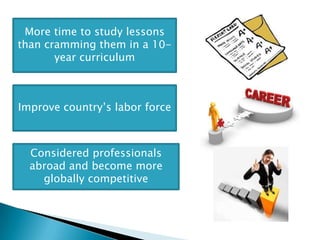
More time to study lessons
than cramming them in a 10year curriculum

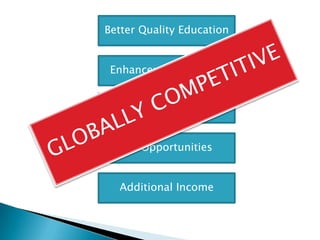
Improve country’s labor force

Considered professionals
abroad and become more
globally competitive
Better Quality Education
Enhancement of Skills
Proffesionals
Job Opportunities

Additional Income
A little bit of suffering
and sacrifice now, will be

worth it in the long
run.














Presidential Communications Development & Strategic Planning Office. (2012,
November 30). The K to 12 Basic Education Program. Retreived March 21, 2012, from
http://www.gov.ph/k-12/
Oliva, J.M., Flores, K.P., Emprecio, M., & Atale, G.M. (2011, December 4). K-12 Basic
Education Program in th Philippines: Beneficial or Additional Burden?. Retreived March
21, 2012, from http://ourhappyschool.com/debate/k-12-basic-education-programphilippines-beneficial-or-additional-burden
Cruz, I. (2010, October 14) Pros & Cons in the K+12 basic Education Debate. Retrieved
March 21, 2012 from http://multilingualphilippines.com/?p=2764
Hubpages. (n.d.) Why does the Philippines Need the K-12 Education System?. Retrieved
March 21, 2012 from http://cianeko.hubpages.com/hub/The-Implementation-o-theK-12-Program-in-the-Philippine-Basic-Education-Curriculum
Bernardo, A. & Borromeo, R. (2005). Visions for Education: essays on Philippine
Education in Honor of br. Andrew Gonzalez FSC. Manila: De la Salle University Press, Inc.
Fadul, J. (2011). Insights form Emergent Education Systems in Selected Countries with

De La Salle College of Saint Benilde School of Multidisciplinary Studies Scenarios upon
Full Implementation of the k-12 Program by 2016. Manila: Lulu Press, Inc.
Chua, Y. (1999). Robbed: An Investigation of Corruption in Philippine Education. Manila:
Philippine Center for Investigative Journalism
Manalang, P. (1992). Philippine Education: Promise and Performance. University of the
Philippines Press and Center for Integrative and Development Studies
Espiritu, S. (2000). The Emergence of Schools of the People: Implications for Education
Policy and Research. Quezon City: Katha Publishing Co., Inc.

K 12 program

  • 1.
  • 3.
    Once graduated fromSHS, studentsFunding opt to can already work Parents have to pay more to suppor their child’s education Increase in drop-out rate Effectiveness Learner-centered Curriculum Certificates of Competency Employability of (COCs) and National Graduates Certifications (NCs) Companies would not hire fresh high school graduates Full-time basis Research College Institutions Short Course Offerings No freshmen on year 2016 23% increase in budget Budget for education
  • 4.
    More time tostudy lessons than cramming them in a 10year curriculum Improve country’s labor force Considered professionals abroad and become more globally competitive
  • 5.
    Better Quality Education Enhancementof Skills Proffesionals Job Opportunities Additional Income
  • 6.
    A little bitof suffering and sacrifice now, will be worth it in the long run.
  • 7.
             Presidential Communications Development& Strategic Planning Office. (2012, November 30). The K to 12 Basic Education Program. Retreived March 21, 2012, from http://www.gov.ph/k-12/ Oliva, J.M., Flores, K.P., Emprecio, M., & Atale, G.M. (2011, December 4). K-12 Basic Education Program in th Philippines: Beneficial or Additional Burden?. Retreived March 21, 2012, from http://ourhappyschool.com/debate/k-12-basic-education-programphilippines-beneficial-or-additional-burden Cruz, I. (2010, October 14) Pros & Cons in the K+12 basic Education Debate. Retrieved March 21, 2012 from http://multilingualphilippines.com/?p=2764 Hubpages. (n.d.) Why does the Philippines Need the K-12 Education System?. Retrieved March 21, 2012 from http://cianeko.hubpages.com/hub/The-Implementation-o-theK-12-Program-in-the-Philippine-Basic-Education-Curriculum Bernardo, A. & Borromeo, R. (2005). Visions for Education: essays on Philippine Education in Honor of br. Andrew Gonzalez FSC. Manila: De la Salle University Press, Inc. Fadul, J. (2011). Insights form Emergent Education Systems in Selected Countries with De La Salle College of Saint Benilde School of Multidisciplinary Studies Scenarios upon Full Implementation of the k-12 Program by 2016. Manila: Lulu Press, Inc. Chua, Y. (1999). Robbed: An Investigation of Corruption in Philippine Education. Manila: Philippine Center for Investigative Journalism Manalang, P. (1992). Philippine Education: Promise and Performance. University of the Philippines Press and Center for Integrative and Development Studies Espiritu, S. (2000). The Emergence of Schools of the People: Implications for Education Policy and Research. Quezon City: Katha Publishing Co., Inc.