Helping People
Help the Land
NRCS
• A Long Range Plan identifies and prioritizes natural resource concerns in the
community.
• NRCS works with partners to develop local FCAs to help implement
conservation practices that address these resource concerns.
• NRCS hosts Local Work Group (LWG) meetings at the district level, where
local agricultural producers, landowners, conservation partners and other
members of the community discuss the natural resource needs for the district.
• Partner-Centric: strategically focus our investments on the highest-priority
resource needs in our state.
• Cost Effective: collaborating with partners leverages additional funding
sources to make the most effective use of limited federal conservation dollars.
• Focused & Targeted: targets investments in very specific areas to
achieve clearly-defined natural resource goals as identified by local partners.
• Results-Oriented: set measurable goals and to track and achieve
meaningful conservation results.
• A Management Tool: helps NRCS leadership and field staff better
prioritize, track, plan, and monitor conservation projects on-the-ground.
West Virginia’s Focused Conservation Approach is:
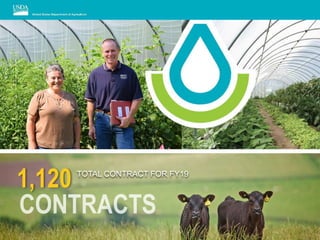
1,120 TOTAL CONTRACT FOR FY19
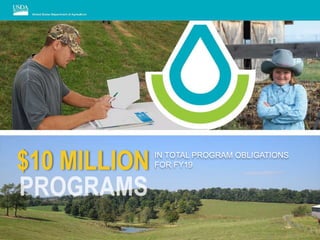
$10 MILLION IN TOTAL PROGRAM OBLIGATIONS
FOR FY19
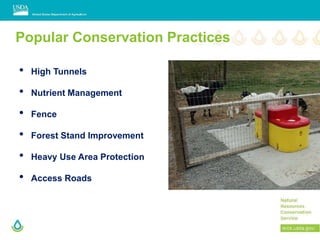
Popular Conservation Practices
• High Tunnels
• Nutrient Management
• Fence
• Forest Stand Improvement
• Heavy Use Area Protection
• Access Roads
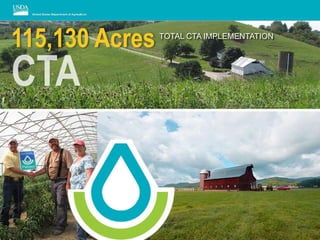
115,130 Acres TOTAL CTA IMPLEMENTATION
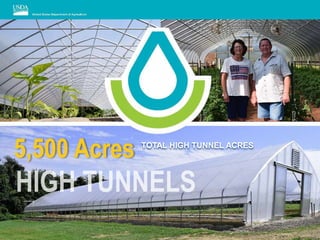
5,500 Acres TOTAL HIGH TUNNEL ACRES
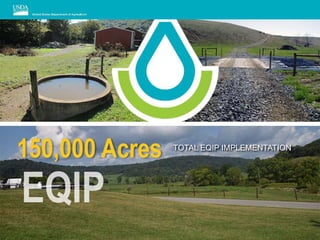
150,000 Acres TOTAL EQIP IMPLEMENTATION
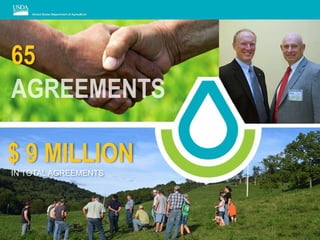
65
IN TOTAL AGREEMENTS
$ 9 MILLION
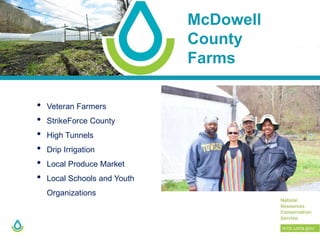
McDowell
County
Farms
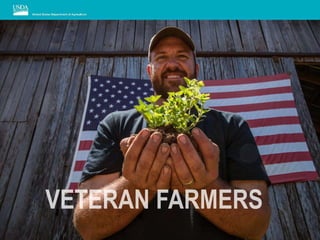
• Veteran Farmers
• StrikeForce County
• High Tunnels
• Drip Irrigation
• Local Produce Market
• Local Schools and Youth
Organizations
Financial + Technical
Assistance
Financial + Technical
assistance working
together
=
More conservation on
the ground
In accordance with Federal civil rights law and U.S. Department of Agriculture (USDA) civil rights
regulations and policies, the USDA, its Agencies, offices, and employees, and institutions
participating in or administering USDA programs are prohibited from discriminating based on race,
color, national origin, religion, sex, gender identity (including gender expression), sexual orientation,
disability, age, marital status, family/parental status, income derived from a public assistance
program, political beliefs, or reprisal or retaliation for prior civil rights activity, in any program or
activity conducted or funded by USDA (not all bases apply to all programs). Remedies and
complaint filing deadlines vary by program or incident. Persons with disabilities who require
alternative means of communication for program information (e.g., Braille, large print, audiotape,
American Sign Language, etc.) should contact the responsible Agency or USDA’s TARGET Center
at (202) 720-2600 (voice and TTY) or contact USDA through the Federal Relay Service at (800)
877-8339. Additionally, program information may be made available in languages other than English.
USDA is an equal opportunity provider, employer and lender.
USDA is an equal opportunity provider,
employer and lender.

July 30-130-NRCS

  • 1.
  • 3.
    • A LongRange Plan identifies and prioritizes natural resource concerns in the community. • NRCS works with partners to develop local FCAs to help implement conservation practices that address these resource concerns. • NRCS hosts Local Work Group (LWG) meetings at the district level, where local agricultural producers, landowners, conservation partners and other members of the community discuss the natural resource needs for the district.
  • 4.
    • Partner-Centric: strategicallyfocus our investments on the highest-priority resource needs in our state. • Cost Effective: collaborating with partners leverages additional funding sources to make the most effective use of limited federal conservation dollars. • Focused & Targeted: targets investments in very specific areas to achieve clearly-defined natural resource goals as identified by local partners. • Results-Oriented: set measurable goals and to track and achieve meaningful conservation results. • A Management Tool: helps NRCS leadership and field staff better prioritize, track, plan, and monitor conservation projects on-the-ground. West Virginia’s Focused Conservation Approach is:
  • 5.
  • 6.
    $10 MILLION INTOTAL PROGRAM OBLIGATIONS FOR FY19
  • 7.
    Popular Conservation Practices •High Tunnels • Nutrient Management • Fence • Forest Stand Improvement • Heavy Use Area Protection • Access Roads
  • 8.
    115,130 Acres TOTALCTA IMPLEMENTATION
  • 9.
    5,500 Acres TOTALHIGH TUNNEL ACRES
  • 10.
    150,000 Acres TOTALEQIP IMPLEMENTATION
  • 11.
  • 13.
    McDowell County Farms • Veteran Farmers •StrikeForce County • High Tunnels • Drip Irrigation • Local Produce Market • Local Schools and Youth Organizations
  • 14.
    Financial + Technical Assistance Financial+ Technical assistance working together = More conservation on the ground
  • 15.
    In accordance withFederal civil rights law and U.S. Department of Agriculture (USDA) civil rights regulations and policies, the USDA, its Agencies, offices, and employees, and institutions participating in or administering USDA programs are prohibited from discriminating based on race, color, national origin, religion, sex, gender identity (including gender expression), sexual orientation, disability, age, marital status, family/parental status, income derived from a public assistance program, political beliefs, or reprisal or retaliation for prior civil rights activity, in any program or activity conducted or funded by USDA (not all bases apply to all programs). Remedies and complaint filing deadlines vary by program or incident. Persons with disabilities who require alternative means of communication for program information (e.g., Braille, large print, audiotape, American Sign Language, etc.) should contact the responsible Agency or USDA’s TARGET Center at (202) 720-2600 (voice and TTY) or contact USDA through the Federal Relay Service at (800) 877-8339. Additionally, program information may be made available in languages other than English. USDA is an equal opportunity provider, employer and lender. USDA is an equal opportunity provider, employer and lender.

Editor's Notes

  • #4 Long Range Plan- with input from landowners, agency partners and other stakeholders
  • #5 NRCS West Virginia’s Focused Conservation Approach is: Partner-Centric: NRCS works with local, state, federal, and non-governmental partners to strategically focus our investments on the highest-priority resource needs in our state. Cost Effective: By collaborating with partners, NRCS leverages additional funding sources from other groups to make the most effective use of limited federal conservation dollars. Leveraging funds increases the total conservation investment and provides an economic stimulus to local and regional economies. Focused & Targeted: Instead of funding conservation projects on a scattered, farm-by-farm approach, NRCS targets its investments in very specific areas to achieve clearly-defined natural resource goals as identified by local partners. This approach harnesses the power of multiple landowners in one area undertaking similar conservation projects to achieve a regional or landscape-scale result. Results-Oriented: The strategic approach emphasizes planning with the end result in mind. NRCS staff work with local partners to set measurable goals and to track and achieve meaningful conservation results. A Management Tool: The strategic approach helps NRCS leadership and field staff better prioritize, track, plan, and monitor conservation projects on-the-ground. This way of doing business allows us to more effectively deliver project planning and increases efficiency in implementation.
  • #8 I just put some practices in here. It can be modified to what you want to highlight. Carla is working on getting an updated list of the most popular practices in order. I will send this to you on Monday morning.
  • #12 The actual dollar amount is $9,307,131.62 65 agreements in WV as of today’s date (info from Beth)
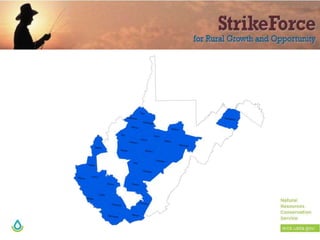
  • #13 In 2014, West Virginia became a StrikeForce state along with Kentucky, Louisiana and Tennessee. The impacted W.Va. counties are Barbour, Boone, Braxton, Ca-bell, Calhoun, Clay, Doddridge, Fayette, Gilmer, Hampshire, Lewis, Lincoln, Logan, Mason, McDowell, Mercer, Mingo, Nicholas, Pleasants, Randolph, Ritchie, Roane, Summers, Tyler, Upshur, Wayne, Webster, Wirt, and Wyoming counties
  • #14 I included the pdf of the National Story we did on this farm so you can put whichever points you’d like to share. Just edit the list above.
  • #15 Veteran Programs