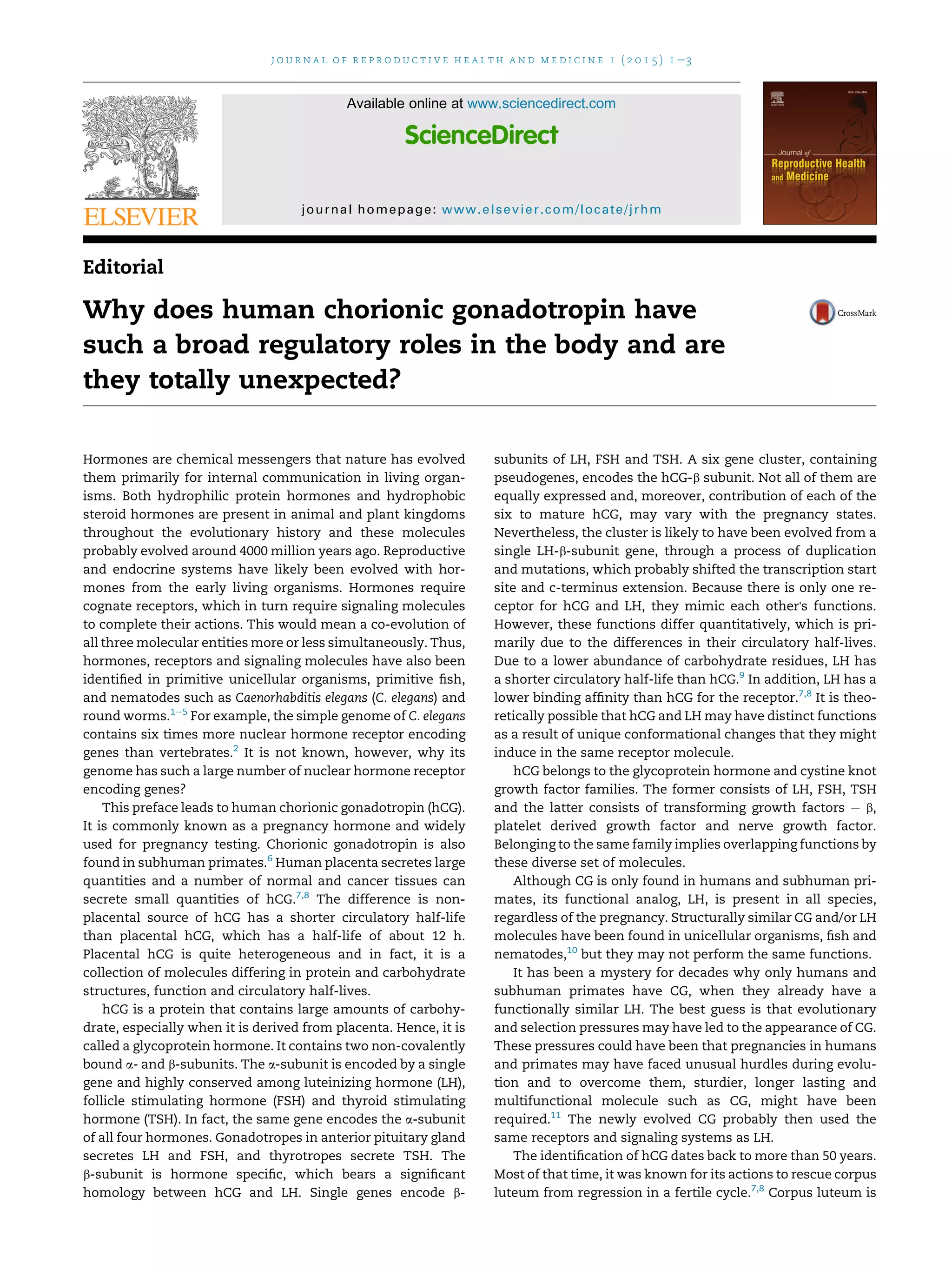
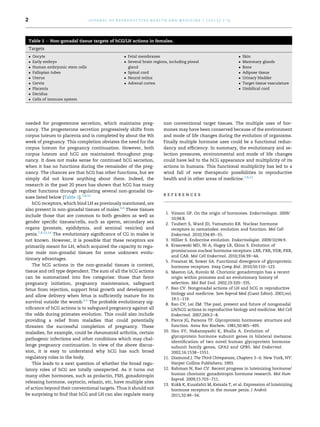
Human chorionic gonadotropin (hCG) is best known as the hormone detected in pregnancy tests, but it has many other roles and functions beyond early pregnancy. While hCG was long thought to only function in supporting the corpus luteum during pregnancy, research over the past 20 years has shown that hCG regulates numerous non-gonadal tissues through its receptors. These regulatory roles include supporting fetal growth and development, safeguarding the fetus from rejection, and allowing delivery when the fetus is mature. The broad regulatory roles of hCG are not entirely unexpected, as many other hormones also have multiple sites of action beyond their main targets. The evolution of these multiple hormone functions is thought to provide functional redundancy and efficiency in response