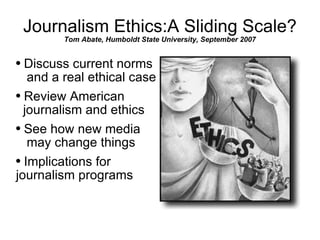
Journalism Ethics:A Sliding Scale? Tom Abate, Humboldt State University, September 2007 Discuss current norms  and a real ethical case Review American  journalism and ethics See how new media  may change things Implications for  journalism programs
Let's Quickly Define Terms Ethics:  principles of right conduct applied to the conduct of a person or members of a profession  Journalism: is the   collecting, writing, editing, and presenting of news in print and broadcast media
Prevailing Ethical Norm: Objectivity Society for Professional Journalists:  fair and honest reporting; publish or broadcast with compassion; high standards of personal and company behavior  http://www.spj.org/ethics_code.asp New York Times:   53 pages of specific do's and don'ts on everything from political activity to speaking fees to relationships with sources, all to avoid any “whiff of bias”  http://www.poynterextra.org/extra/ethics.pdf
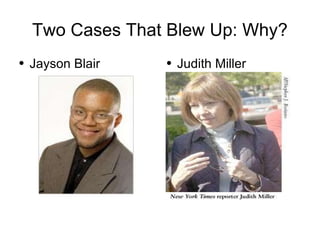
Two Cases That Blew Up: Why? Jayson Blair Judith Miller
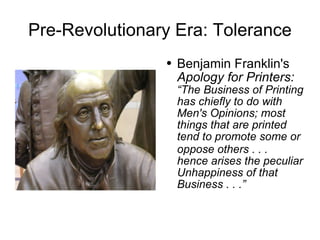
Pre-Revolutionary Era: Tolerance Benjamin Franklin's  Apology for Printers:   “The Business of Printing has chiefly to do with Men's Opinions; most things that are printed tend to promote some or oppose others . . .  hence arises the peculiar Unhappiness of that Business . . .”
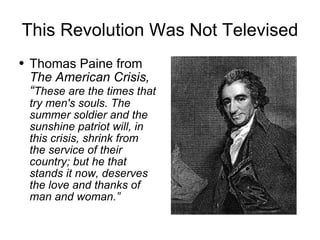
This Revolution Was Not Televised Thomas Paine from  The American Crisis,   “ These are the times that try men's souls. The summer soldier and the sunshine patriot will, in this crisis, shrink from the service of their country; but he that stands it now, deserves the love and thanks of man and woman.”
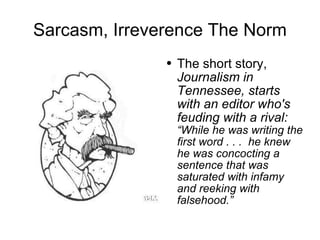
Sarcasm, Irreverence The Norm The short story,  Journalism in Tennessee, starts with an editor who's feuding with a rival:  “While he was writing the first word . . .  he knew he was concocting a sentence that was saturated with infamy and reeking with falsehood.”
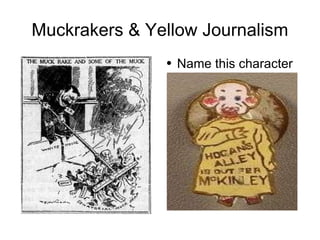
Muckrakers & Yellow Journalism Name this character
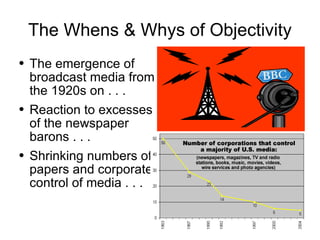
The Whens & Whys of Objectivity The emergence of broadcast media from the 1920s on . . . Reaction to excesses of the newspaper barons . . . Shrinking numbers of papers and corporate control of media . . .
With Great Power (and Profits) Come Great Responsibility
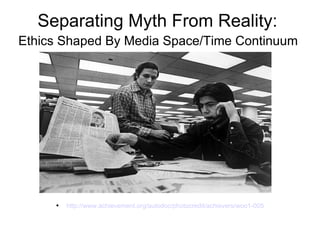
Separating Myth From Reality:  Ethics Shaped By Media Space/Time Continuum  http://www.achievement.org/autodoc/photocredit/achievers/woo1-005
Ethical Review We have seen that objectivity is today's norm But the standards were different in the past That implies they could change again Raising two questions: how will Internet media affect the business and ethics of journalism? And how should all of this affect the teaching of journalism?
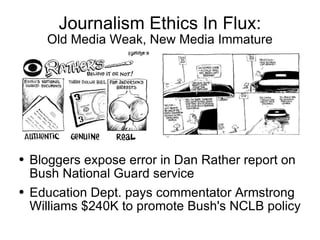
Journalism Ethics In Flux: Old Media Weak, New Media Immature Bloggers expose error in Dan Rather report on Bush National Guard service Education Dept. pays commentator Armstrong Williams $240K to promote Bush's NCLB policy
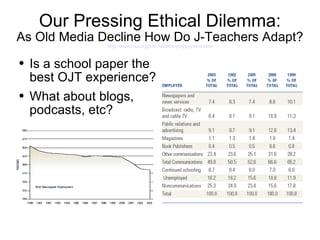
Our Pressing Ethical Dilemma: As Old Media Decline How Do J-Teachers Adapt? http://www.naa.org/info/facts04/employment.html Is a school paper the best OJT experience? What about blogs, podcasts, etc?
Ethical Questions For Journalism Programs How to teach old and new media skills? Audio/visual training, experience needed? Can we bring campus & community into “citizen journalism” Can academic journalism be an agent of change?
Closing Thoughts Preserve  the best parts of newspaper training and ethics – accuracy, fairness and honesty Change  journalism instruction to be visual; create metaphors of mass instruction Focus  on the local, whether that is geographic, psychographic, professional or virtual Embrace  citizen journalism, media literacy, civic engagement, the public agenda

Journalism Ethics

  • 1.
    Journalism Ethics:A SlidingScale? Tom Abate, Humboldt State University, September 2007 Discuss current norms and a real ethical case Review American journalism and ethics See how new media may change things Implications for journalism programs
  • 2.
    Let's Quickly DefineTerms Ethics: principles of right conduct applied to the conduct of a person or members of a profession Journalism: is the collecting, writing, editing, and presenting of news in print and broadcast media
  • 3.
    Prevailing Ethical Norm:Objectivity Society for Professional Journalists: fair and honest reporting; publish or broadcast with compassion; high standards of personal and company behavior http://www.spj.org/ethics_code.asp New York Times: 53 pages of specific do's and don'ts on everything from political activity to speaking fees to relationships with sources, all to avoid any “whiff of bias” http://www.poynterextra.org/extra/ethics.pdf
  • 4.
    Two Cases ThatBlew Up: Why? Jayson Blair Judith Miller
  • 5.
    Pre-Revolutionary Era: ToleranceBenjamin Franklin's Apology for Printers: “The Business of Printing has chiefly to do with Men's Opinions; most things that are printed tend to promote some or oppose others . . . hence arises the peculiar Unhappiness of that Business . . .”
  • 6.
    This Revolution WasNot Televised Thomas Paine from The American Crisis, “ These are the times that try men's souls. The summer soldier and the sunshine patriot will, in this crisis, shrink from the service of their country; but he that stands it now, deserves the love and thanks of man and woman.”
  • 7.
    Sarcasm, Irreverence TheNorm The short story, Journalism in Tennessee, starts with an editor who's feuding with a rival: “While he was writing the first word . . . he knew he was concocting a sentence that was saturated with infamy and reeking with falsehood.”
  • 8.
    Muckrakers & YellowJournalism Name this character
  • 9.
    The Whens &Whys of Objectivity The emergence of broadcast media from the 1920s on . . . Reaction to excesses of the newspaper barons . . . Shrinking numbers of papers and corporate control of media . . .
  • 10.
    With Great Power(and Profits) Come Great Responsibility
  • 11.
    Separating Myth FromReality: Ethics Shaped By Media Space/Time Continuum http://www.achievement.org/autodoc/photocredit/achievers/woo1-005
  • 12.
    Ethical Review Wehave seen that objectivity is today's norm But the standards were different in the past That implies they could change again Raising two questions: how will Internet media affect the business and ethics of journalism? And how should all of this affect the teaching of journalism?
  • 13.
    Journalism Ethics InFlux: Old Media Weak, New Media Immature Bloggers expose error in Dan Rather report on Bush National Guard service Education Dept. pays commentator Armstrong Williams $240K to promote Bush's NCLB policy
  • 14.
    Our Pressing EthicalDilemma: As Old Media Decline How Do J-Teachers Adapt? http://www.naa.org/info/facts04/employment.html Is a school paper the best OJT experience? What about blogs, podcasts, etc?
  • 15.
    Ethical Questions ForJournalism Programs How to teach old and new media skills? Audio/visual training, experience needed? Can we bring campus & community into “citizen journalism” Can academic journalism be an agent of change?
  • 16.
    Closing Thoughts Preserve the best parts of newspaper training and ethics – accuracy, fairness and honesty Change journalism instruction to be visual; create metaphors of mass instruction Focus on the local, whether that is geographic, psychographic, professional or virtual Embrace citizen journalism, media literacy, civic engagement, the public agenda