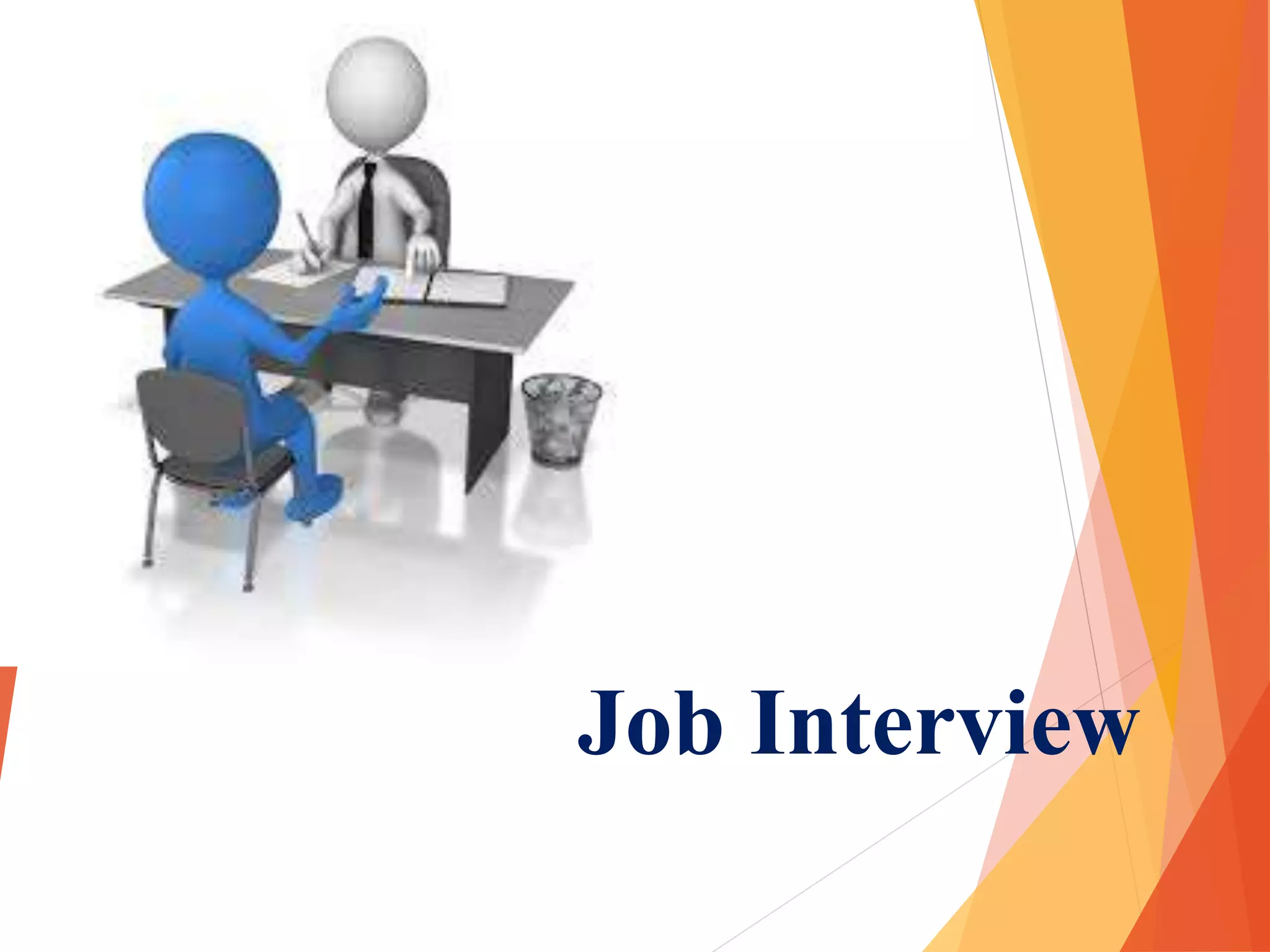
Job Interview
Job Interview
 Crucial component of selection process in any industry
 Right man for the right job
 Two way process-it is of vital importance for both
interviewer and interviewee.
 To find out if the candidate being interviewed has the
hard skills & soft skills to be the chosen for the specific
job.
Types of interviews
 Patterned interview
 Used to screen applicants
 Same type of question is asked to each candidate
 Compare the answer and evaluate the suitability of a candidate for a
particular job.
 Non-directive interview
 Open- ended questions
 Questions such as – “Please tell us about yourself” or “what prompted
you to apply for this job”
Types of interviews
 Stress Interview
 Handling stressful situations
Eg:”Why did you leave your last job?”
 “ What were you doing in a particular period ?”
 Candidate fall nervous or irritated
 Self confident candidates would be able to confront such questions with ease.
 Behavioural interview
 Based on principle “The present or future behaviour of a person can be
ascertained from his past behaviour”
 How a candidate face a crisis of any type .
 Responses reflects the personality of a person.
 Teleconferencing
 A telephone meeting held between two or more locations through a
telecommunications system.
 Telephone conferencing, Phone conferencing, Audio conferencing
 Audio only or audio –video data can be transmitted.
 Video conferencing
 Conduct of a video meeting among two persons or more at different
locations.
 Computer networks to transmit audio and video data
 Transmission of high quality audio and video images between multiple
people distributed geographically.
Groundwork before interview
 Resume
 Reveals personality
 Determines interview pattern
 Can prepare predictable questions
 Know about company
 Shows your analytical mind and interest
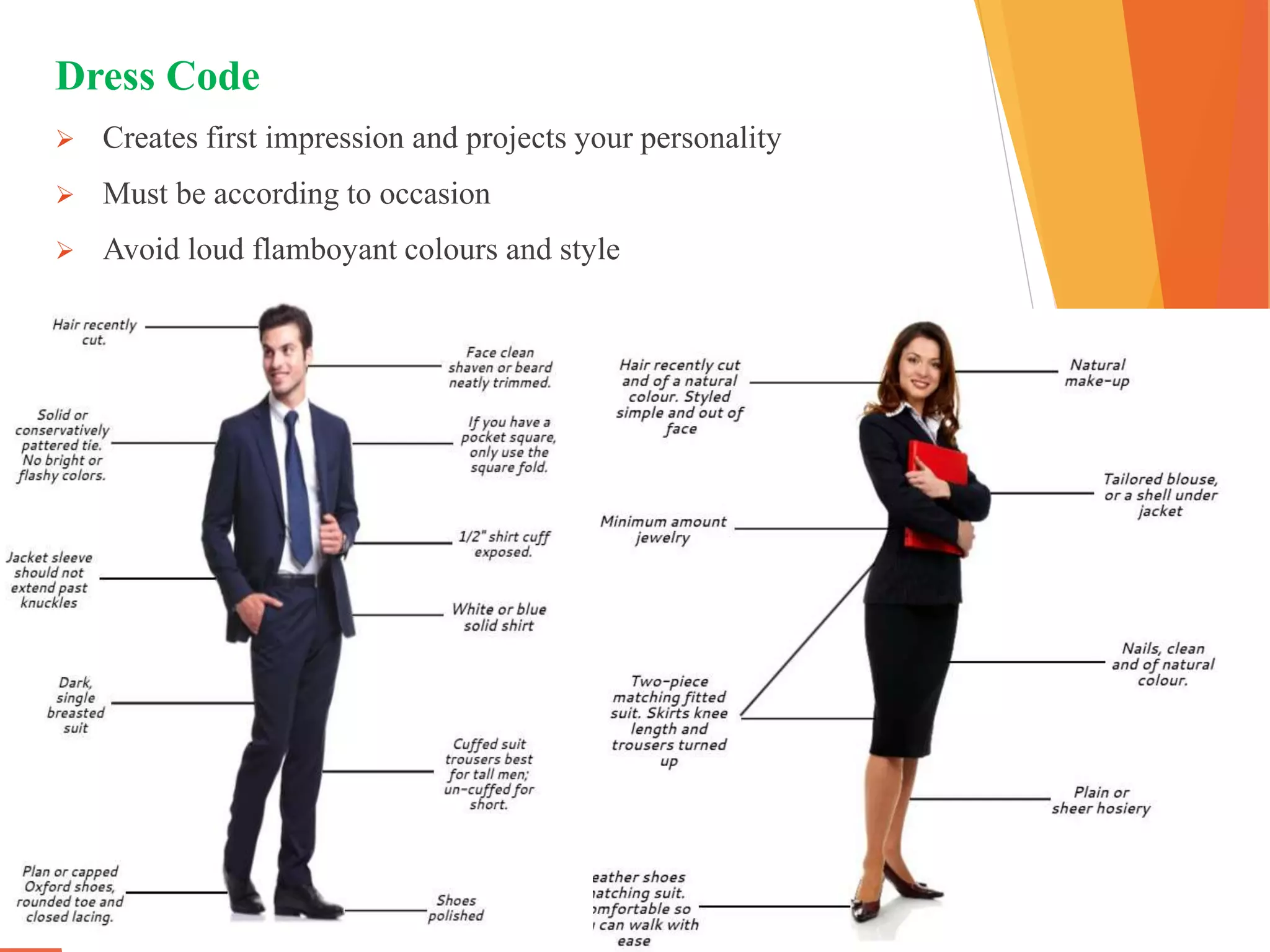
Dress Code
 Creates first impression and projects your personality
 Must be according to occasion
 Avoid loud flamboyant colours and style
Body Language
 Postures
 Gestures
 Facial expressions
 Involuntary movements
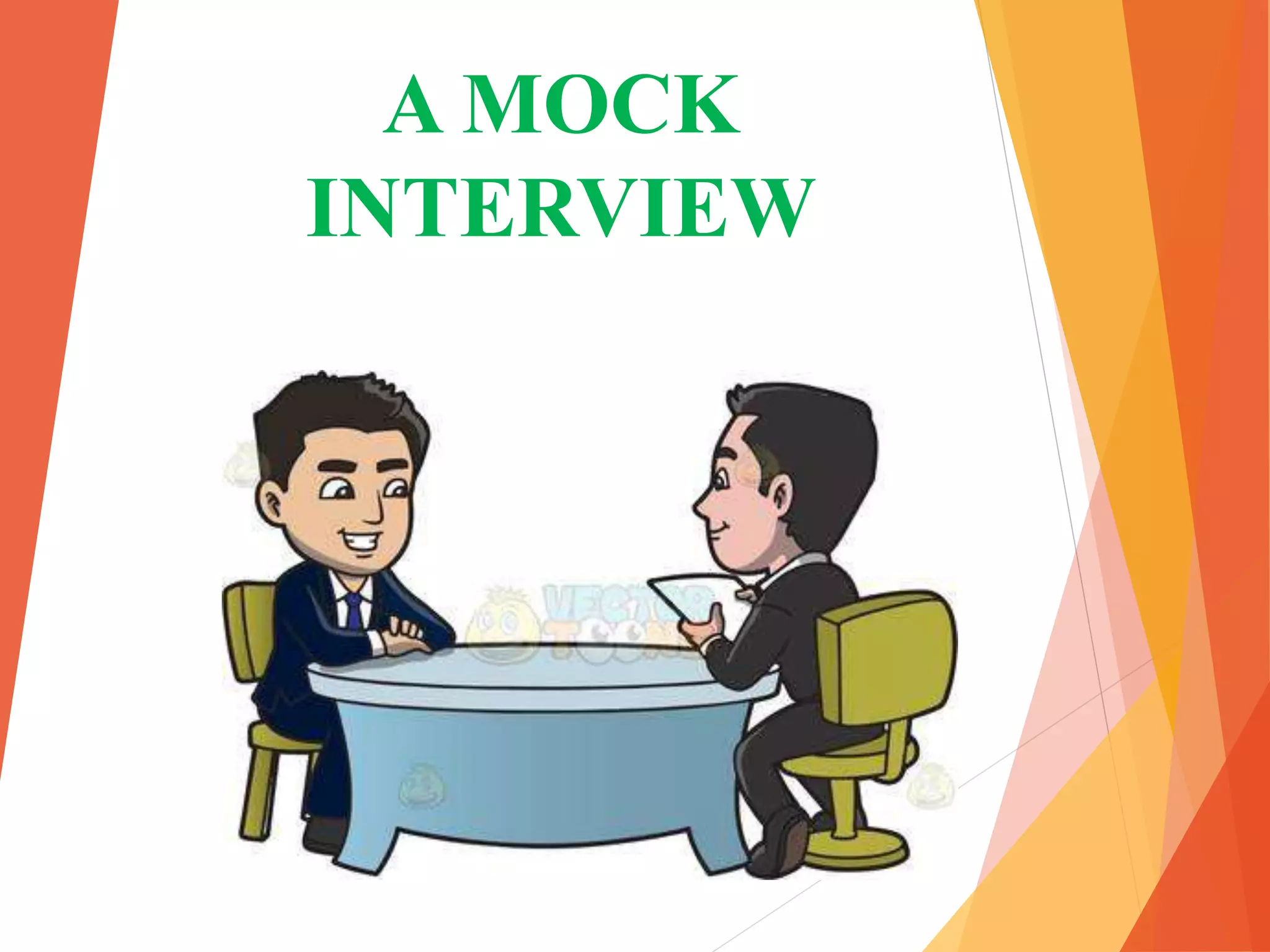
A MOCK
INTERVIEW
Probable Interview Question
1. Tell us about yourself.
2. would you call yourself a team player?
FEW TRICKY QUESTIONS AND
ANSWER
1. Why should we employ you?
 I have good coordination skill.
 My greatest asset is my ability to motivate people.
 I have good entrepreneurial skill.
 Iam a good team player.
 Iam very flexible person.
2. How much do you think you are worth?
 As I am still a student, I have not yet thought about it. On
the basis of your judgement a fair salary that is offered to
me on the basis of your evaluation would be acceptable
to me.
FEW TRICKY QUESTIONS AND ANSWER (Cont..)
3. Tell us about your strength and weakness.
4. What do you know about our company?
5. What do you think are the essential qualities of a good employee?
 According to me, the most essential aspects of a good employee
ethics, integrity, team work, cultural fit with the company
values and positive attitude at work.
 I will never compromise on these, because I regard these are the
fundamental aspect of any job.
6. What is more important to you– salary or growth opportunities?
Reference
 Personality Development and Soft Skills –
Barun K. Mitra
Job interview
Job interview

Job interview

  • 1.
  • 2.
    Job Interview  Crucialcomponent of selection process in any industry  Right man for the right job  Two way process-it is of vital importance for both interviewer and interviewee.  To find out if the candidate being interviewed has the hard skills & soft skills to be the chosen for the specific job.
  • 3.
    Types of interviews Patterned interview  Used to screen applicants  Same type of question is asked to each candidate  Compare the answer and evaluate the suitability of a candidate for a particular job.  Non-directive interview  Open- ended questions  Questions such as – “Please tell us about yourself” or “what prompted you to apply for this job”
  • 4.
    Types of interviews Stress Interview  Handling stressful situations Eg:”Why did you leave your last job?”  “ What were you doing in a particular period ?”  Candidate fall nervous or irritated  Self confident candidates would be able to confront such questions with ease.  Behavioural interview  Based on principle “The present or future behaviour of a person can be ascertained from his past behaviour”  How a candidate face a crisis of any type .  Responses reflects the personality of a person.
  • 5.
     Teleconferencing  Atelephone meeting held between two or more locations through a telecommunications system.  Telephone conferencing, Phone conferencing, Audio conferencing  Audio only or audio –video data can be transmitted.  Video conferencing  Conduct of a video meeting among two persons or more at different locations.  Computer networks to transmit audio and video data  Transmission of high quality audio and video images between multiple people distributed geographically.
  • 6.
    Groundwork before interview Resume  Reveals personality  Determines interview pattern  Can prepare predictable questions  Know about company  Shows your analytical mind and interest
  • 7.
    Dress Code  Createsfirst impression and projects your personality  Must be according to occasion  Avoid loud flamboyant colours and style
  • 8.
    Body Language  Postures Gestures  Facial expressions  Involuntary movements
  • 9.
  • 10.
    Probable Interview Question 1.Tell us about yourself. 2. would you call yourself a team player?
  • 11.
    FEW TRICKY QUESTIONSAND ANSWER 1. Why should we employ you?  I have good coordination skill.  My greatest asset is my ability to motivate people.  I have good entrepreneurial skill.  Iam a good team player.  Iam very flexible person. 2. How much do you think you are worth?  As I am still a student, I have not yet thought about it. On the basis of your judgement a fair salary that is offered to me on the basis of your evaluation would be acceptable to me.
  • 12.
    FEW TRICKY QUESTIONSAND ANSWER (Cont..) 3. Tell us about your strength and weakness. 4. What do you know about our company? 5. What do you think are the essential qualities of a good employee?  According to me, the most essential aspects of a good employee ethics, integrity, team work, cultural fit with the company values and positive attitude at work.  I will never compromise on these, because I regard these are the fundamental aspect of any job. 6. What is more important to you– salary or growth opportunities?
  • 13.
    Reference  Personality Developmentand Soft Skills – Barun K. Mitra