Job Analysis
POSDM CJS
MR IT DEL
2019
The Basics of Job Analysis
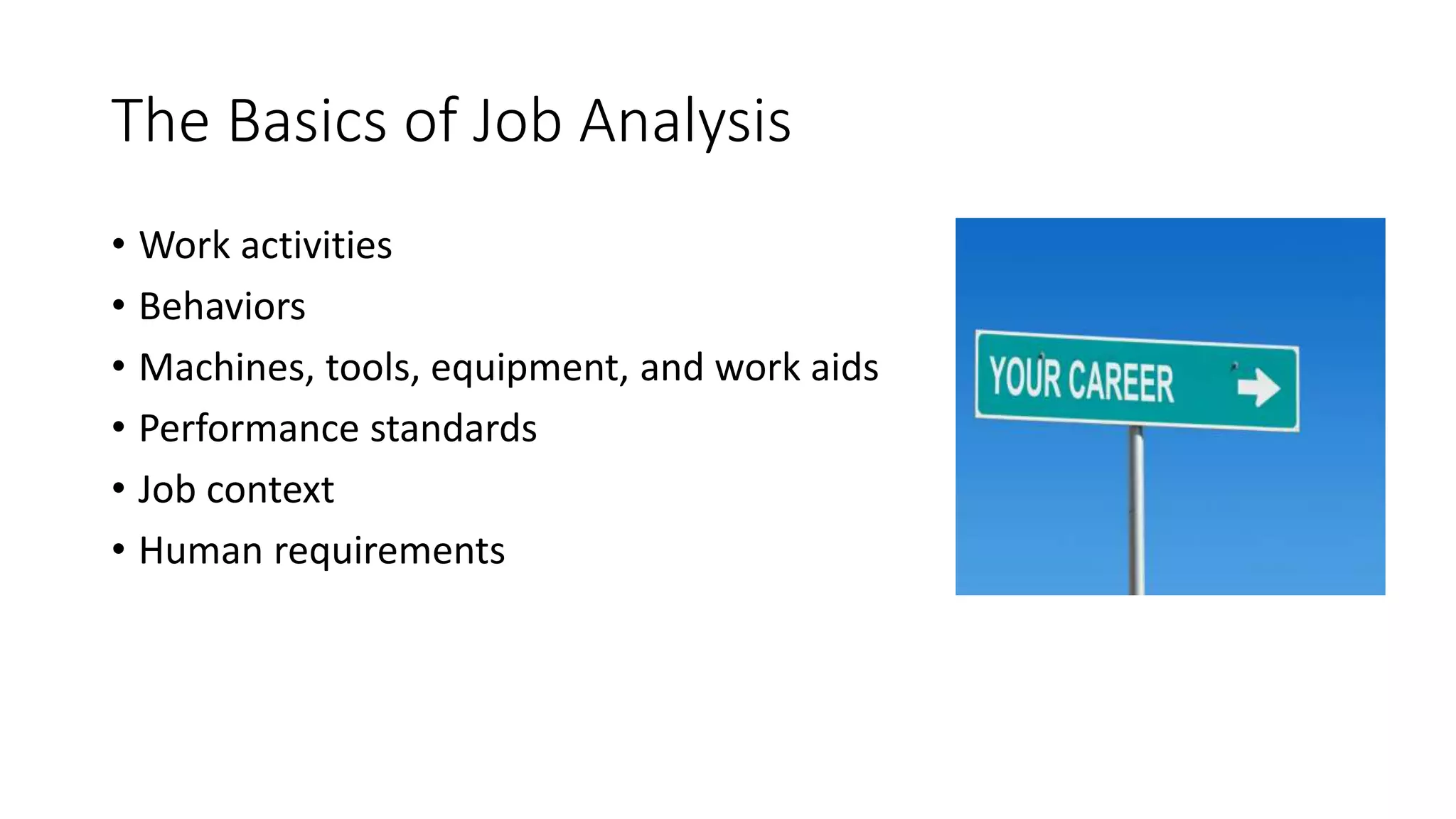
• Work activities
• Behaviors
• Machines, tools, equipment, and work aids
• Performance standards
• Job context
• Human requirements
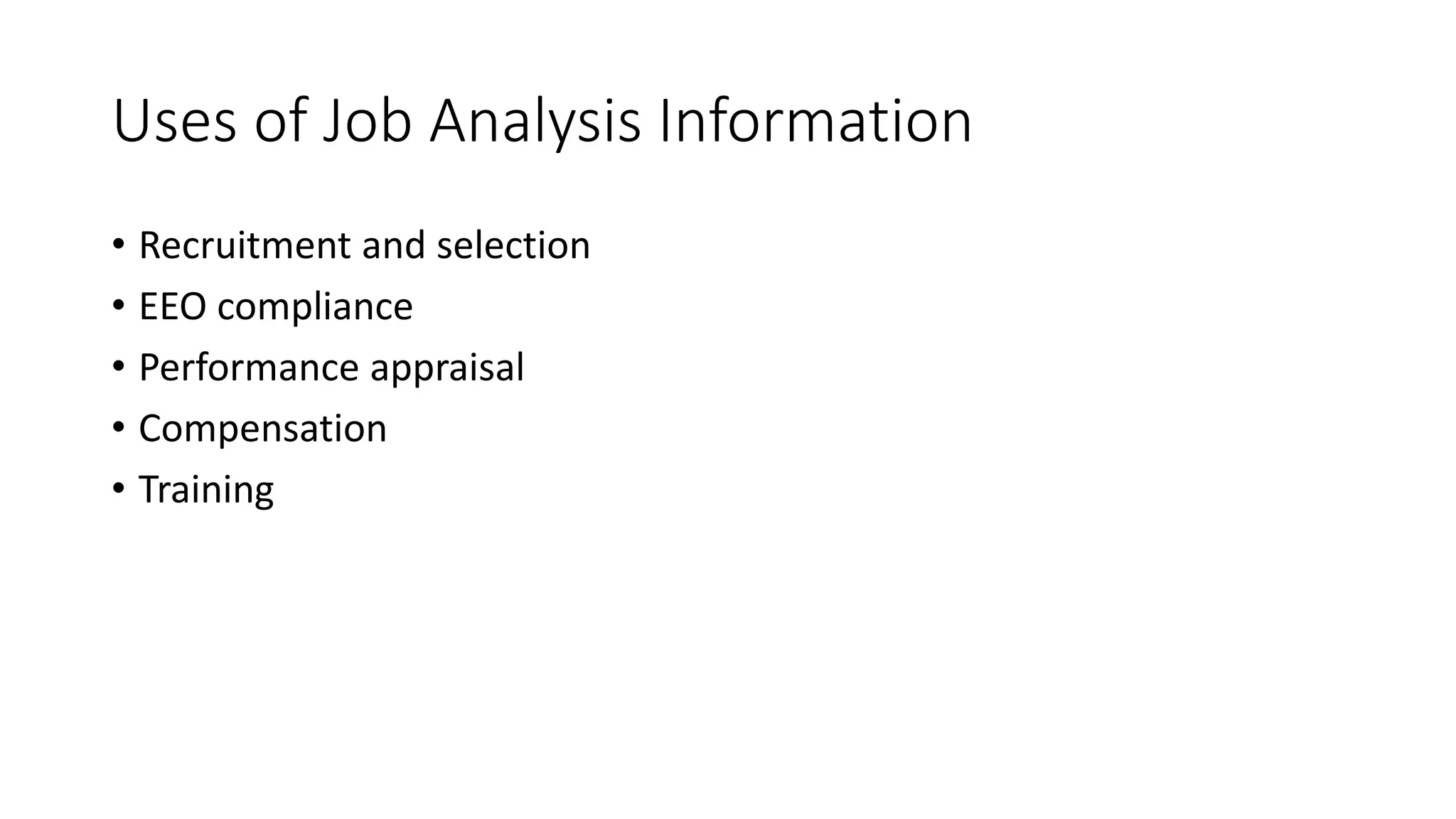
Uses of Job Analysis Information
• Recruitment and selection
• EEO compliance
• Performance appraisal
• Compensation
• Training
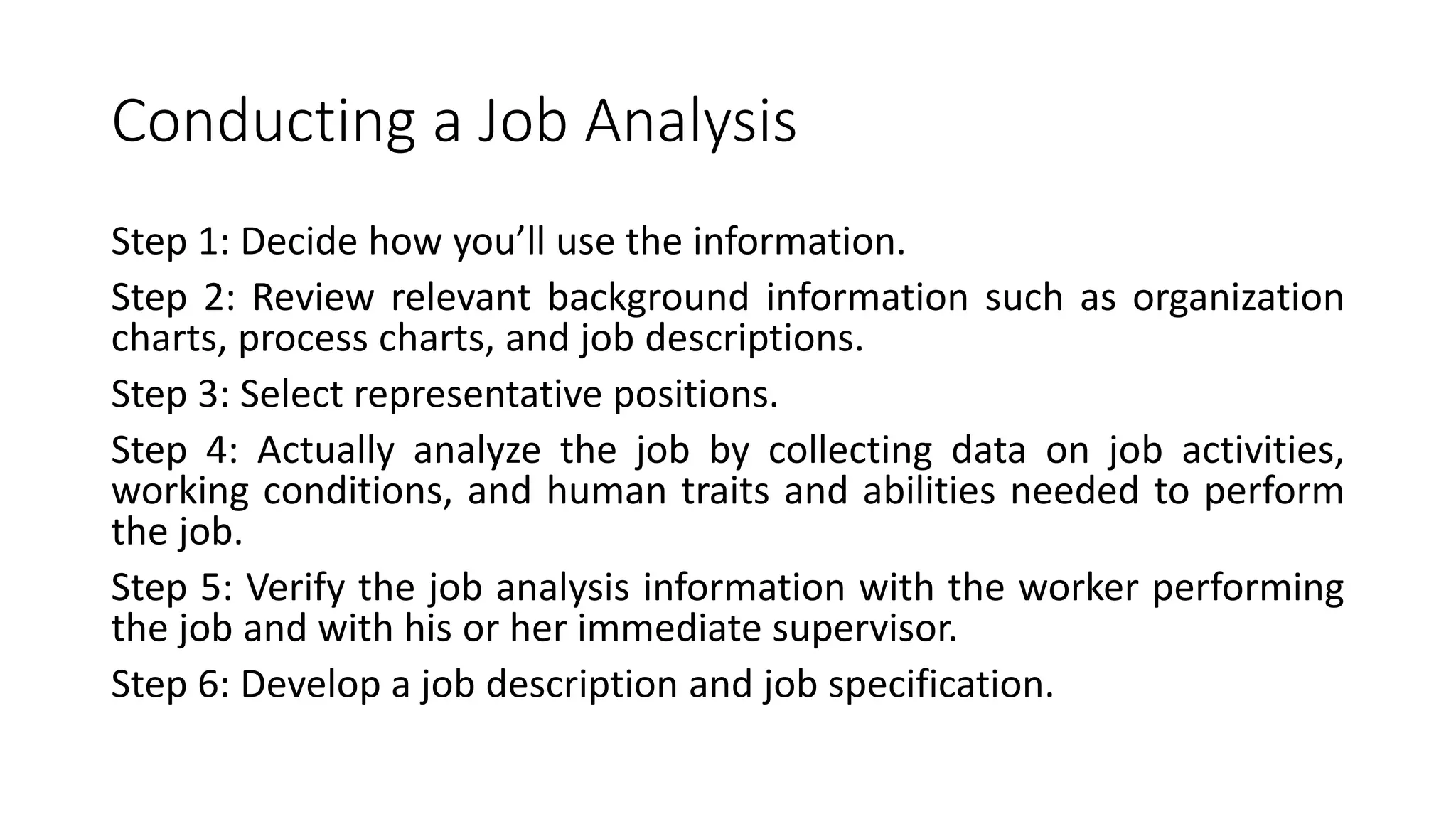
Conducting a Job Analysis
Step 1: Decide how you’ll use the information.
Step 2: Review relevant background information such as organization
charts, process charts, and job descriptions.
Step 3: Select representative positions.
Step 4: Actually analyze the job by collecting data on job activities,
working conditions, and human traits and abilities needed to perform
the job.
Step 5: Verify the job analysis information with the worker performing
the job and with his or her immediate supervisor.
Step 6: Develop a job description and job specification.
Conducting a Job Analysis
Job analysis may involve these processes:
• Workflow analysis is a detailed study of the flow of work from job to
job in a work process. Usually, the analyst focuses on one identifiable
work process, rather than on how the company gets all its work done.
• Business Process Reengineering means redesigning business
processes, usually by combining steps, so that small multifunction
teams, often using information technology, do the jobs formerly done
by a sequence of departments.
Business Process Reengineering
The basic reengineering approach is to:
1. Identify a business process to be redesigned (such as processing an
insurance claim)
2. Measure the performance of the existing processes
3. Identify opportunities to improve these processes
4. Redesign and implement a new way of doing the work
5. Assign ownership of sets of formerly separate tasks to an individual
or a team who use new computerized systems to support the new
arrangement
Job Redesign
Researches proposed redesigning jobs using methods such as job
enlargement, job rotation, and job enrichment.
• Job enlargement means assigning workers additional same-level activities.
Thus, the worker who previously only bolted the seat to the legs might
attach the back too.
• Job rotation means systematically moving workers from one job to another.
• Job enrichment means redesigning jobs in a way that increases the
opportunities for the worker to experience feelings of responsibility,
achievement, growth, and recognition—and therefore more motivation. It
does this by empowering the worker—for instance, by giving the worker
the skills and authority to inspect the work, instead of having supervisors
do that.
Job Analysis Guidelines
• A joint effort
• Clarity of questions and process
• Different job analysis methods
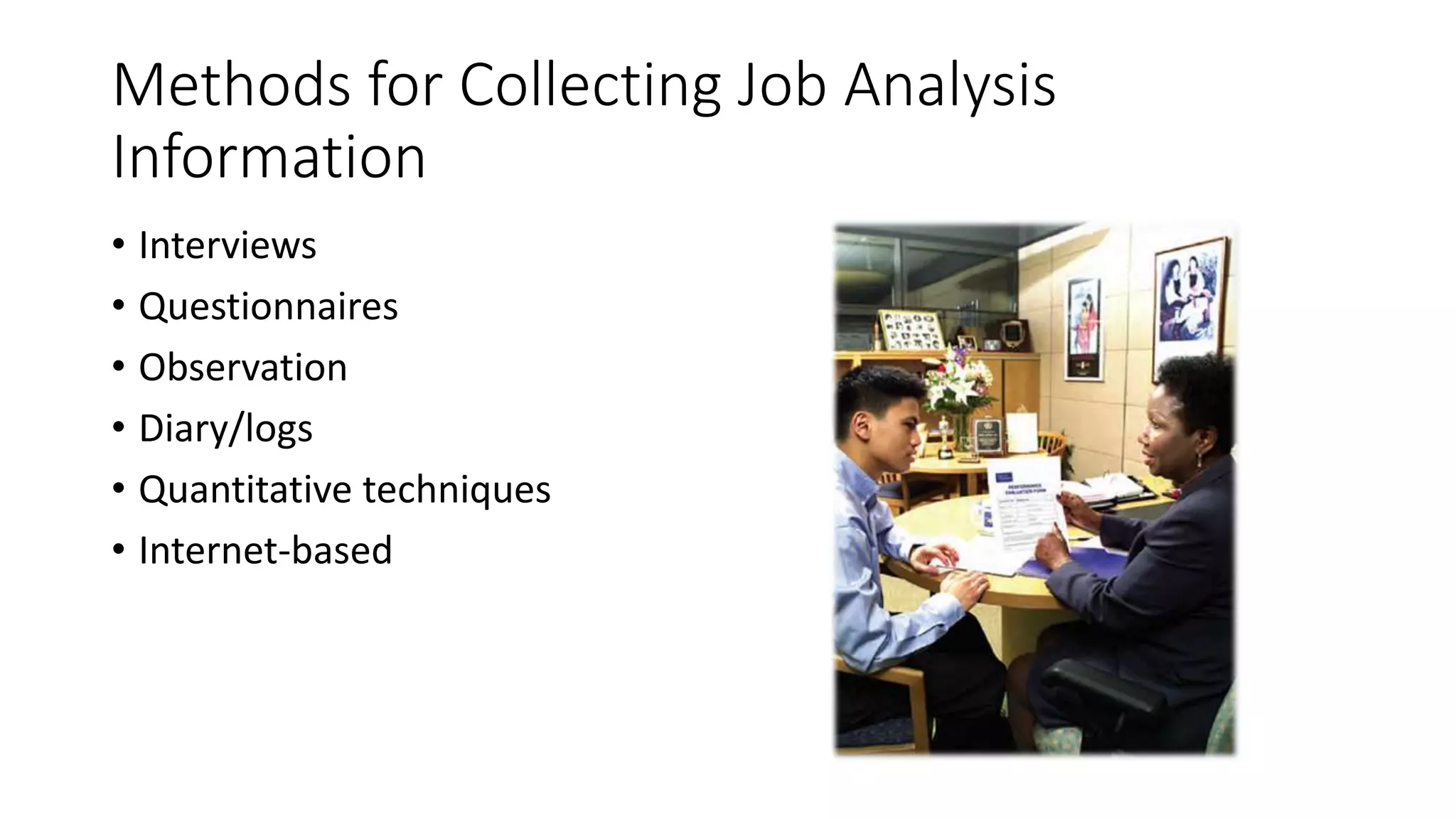
Methods for Collecting Job Analysis
Information
• Interviews
• Questionnaires
• Observation
• Diary/logs
• Quantitative techniques
• Internet-based
Collecting Job Analysis Information –
Interviews
The Interview:
• Typical questions
• Pros and cons
• Interviewing guidelines
Typical questions
Managers may conduct individual interviews with each employee,
group interviews with groups of employees who have the same job,
and/or supervisor interviews with one or more supervisors who know
the job. Some typical interview questions include the following:
• What is the job being performed?
• What are the education, experience, skill, and certification and
licensing requirements?
• What are the job’s physical demands? The emotional and mental
demands?
• And many others
Basic Interviewing Guidelines
• Quickly establish rapport.
• Use a structured guide.
• Ask the worker to list his or her duties in order of importance and
frequency of occurrence.
• Review the information with the worker’s immediate supervisor and
with the interviewee.
Job Description
• The most important product of job analysis is the job description.
• A job description is a written statement of what the worker actually
does, how he or she does it, and what the job’s working conditions
are.
• You use this information to write a job specification; this lists the
knowledge, abilities, and skills required to perform the job
satisfactorily.
Writing Job Descriptions
• Job identification
• Job summary
• Relationships
• Responsibilities and duties
• Authority
• Performance standards & working conditions
• Job specifications
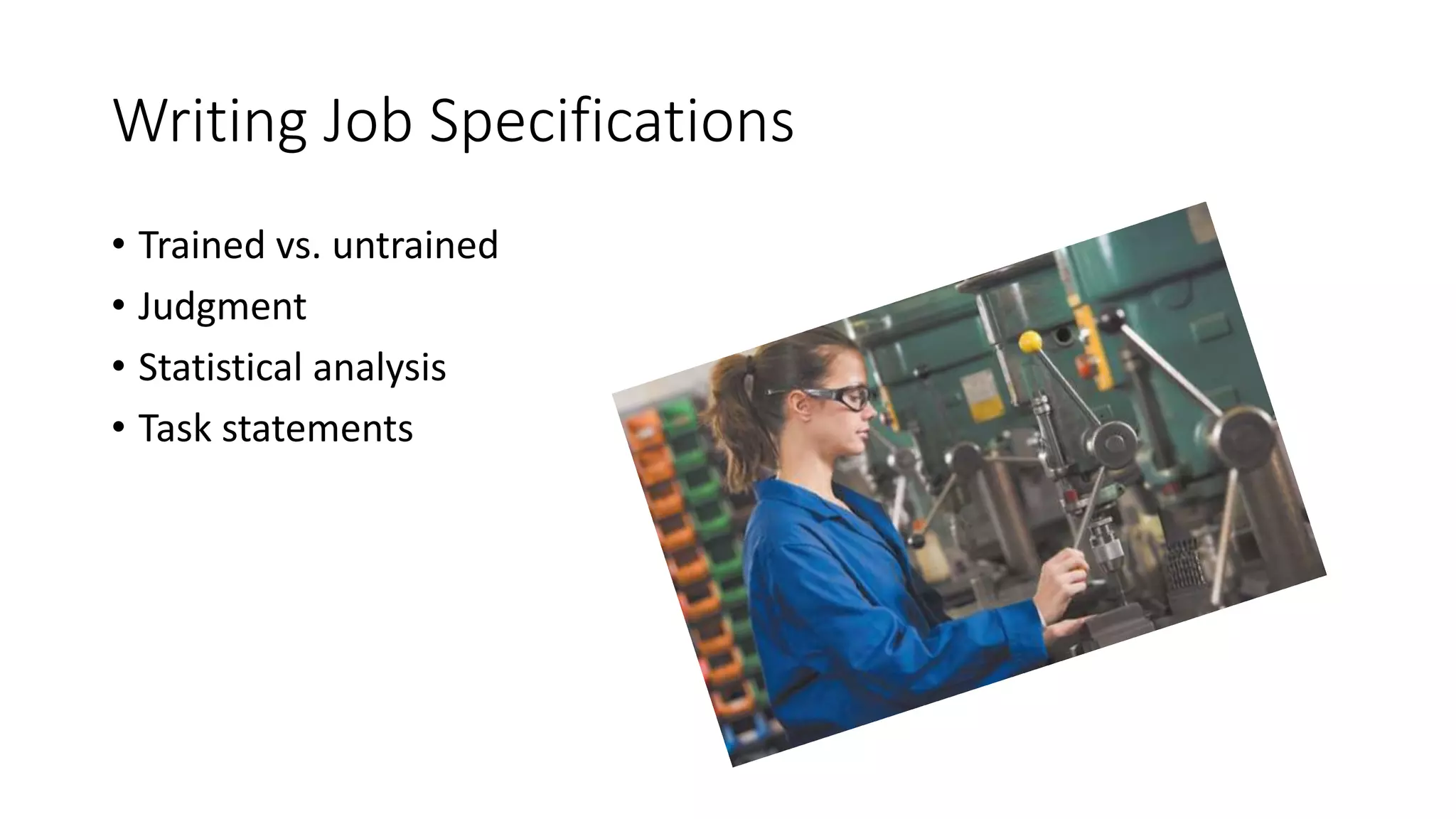
Writing Job Specifications
• Trained vs. untrained
• Judgment
• Statistical analysis
• Task statements
Talent Management Process
POSDM CJS
MR IT DEL
2019
What is Talent Management Process?
We can define talent management as the goal-oriented and integrated
process of planning, recruiting, developing, managing, and compensating
employees.
Talent Management:
• Tasks
• Goal-directed
• Uses the same “profile”
• Segments and manages employees
• Integrates/coordinates all talent management functions
Steps in Talent Management Process
• The usual process of talent management consists of the following steps:
• Decide what positions to fill
• Build a pool of job candidates
• Application forms
• Use selection tools
• Make an offer
• Orient, train, and develop
• Appraise
• Reward and compensate
Profiles in Talent Management
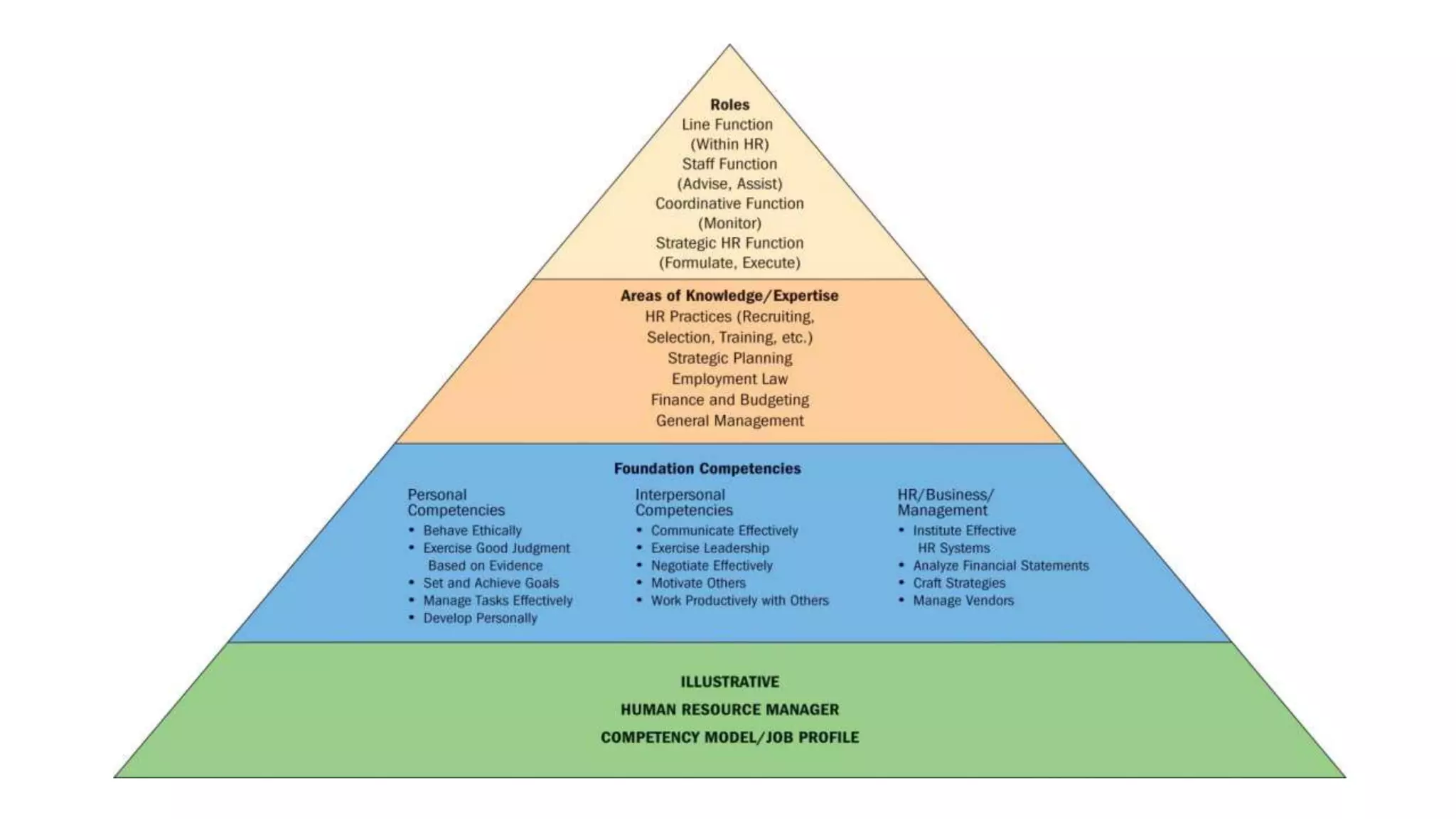
• Competencies and competency-based job analysis
• Competencies: Demonstrable characteristics of a person that enable performance of
the job.
• Competency-based job analysis: describing a job in terms of the measurable,
observable behavioral competencies an employee must exhibit to do a job well.
• Traditional job analysis focuses on “what” is accomplished on duties and
responsibilities. Competency-based analysis focuses more on “how” the
worker meets the job’s objectives or actually accomplished the work.
• Traditional job analysis is thus job focused. Competency-based analysis is
worker focused---specifically what must he or she be competent to do?
Job analysis

Job analysis

  • 1.
  • 2.
    The Basics ofJob Analysis • Work activities • Behaviors • Machines, tools, equipment, and work aids • Performance standards • Job context • Human requirements
  • 3.
    Uses of JobAnalysis Information • Recruitment and selection • EEO compliance • Performance appraisal • Compensation • Training
  • 5.
    Conducting a JobAnalysis Step 1: Decide how you’ll use the information. Step 2: Review relevant background information such as organization charts, process charts, and job descriptions. Step 3: Select representative positions. Step 4: Actually analyze the job by collecting data on job activities, working conditions, and human traits and abilities needed to perform the job. Step 5: Verify the job analysis information with the worker performing the job and with his or her immediate supervisor. Step 6: Develop a job description and job specification.
  • 6.
    Conducting a JobAnalysis Job analysis may involve these processes: • Workflow analysis is a detailed study of the flow of work from job to job in a work process. Usually, the analyst focuses on one identifiable work process, rather than on how the company gets all its work done. • Business Process Reengineering means redesigning business processes, usually by combining steps, so that small multifunction teams, often using information technology, do the jobs formerly done by a sequence of departments.
  • 7.
    Business Process Reengineering Thebasic reengineering approach is to: 1. Identify a business process to be redesigned (such as processing an insurance claim) 2. Measure the performance of the existing processes 3. Identify opportunities to improve these processes 4. Redesign and implement a new way of doing the work 5. Assign ownership of sets of formerly separate tasks to an individual or a team who use new computerized systems to support the new arrangement
  • 8.
    Job Redesign Researches proposedredesigning jobs using methods such as job enlargement, job rotation, and job enrichment. • Job enlargement means assigning workers additional same-level activities. Thus, the worker who previously only bolted the seat to the legs might attach the back too. • Job rotation means systematically moving workers from one job to another. • Job enrichment means redesigning jobs in a way that increases the opportunities for the worker to experience feelings of responsibility, achievement, growth, and recognition—and therefore more motivation. It does this by empowering the worker—for instance, by giving the worker the skills and authority to inspect the work, instead of having supervisors do that.
  • 10.
    Job Analysis Guidelines •A joint effort • Clarity of questions and process • Different job analysis methods
  • 11.
    Methods for CollectingJob Analysis Information • Interviews • Questionnaires • Observation • Diary/logs • Quantitative techniques • Internet-based
  • 12.
    Collecting Job AnalysisInformation – Interviews The Interview: • Typical questions • Pros and cons • Interviewing guidelines
  • 13.
    Typical questions Managers mayconduct individual interviews with each employee, group interviews with groups of employees who have the same job, and/or supervisor interviews with one or more supervisors who know the job. Some typical interview questions include the following: • What is the job being performed? • What are the education, experience, skill, and certification and licensing requirements? • What are the job’s physical demands? The emotional and mental demands? • And many others
  • 14.
    Basic Interviewing Guidelines •Quickly establish rapport. • Use a structured guide. • Ask the worker to list his or her duties in order of importance and frequency of occurrence. • Review the information with the worker’s immediate supervisor and with the interviewee.
  • 15.
    Job Description • Themost important product of job analysis is the job description. • A job description is a written statement of what the worker actually does, how he or she does it, and what the job’s working conditions are. • You use this information to write a job specification; this lists the knowledge, abilities, and skills required to perform the job satisfactorily.
  • 16.
    Writing Job Descriptions •Job identification • Job summary • Relationships • Responsibilities and duties • Authority • Performance standards & working conditions • Job specifications
  • 17.
    Writing Job Specifications •Trained vs. untrained • Judgment • Statistical analysis • Task statements
  • 18.
  • 19.
    What is TalentManagement Process? We can define talent management as the goal-oriented and integrated process of planning, recruiting, developing, managing, and compensating employees. Talent Management: • Tasks • Goal-directed • Uses the same “profile” • Segments and manages employees • Integrates/coordinates all talent management functions
  • 20.
    Steps in TalentManagement Process • The usual process of talent management consists of the following steps: • Decide what positions to fill • Build a pool of job candidates • Application forms • Use selection tools • Make an offer • Orient, train, and develop • Appraise • Reward and compensate
  • 22.
    Profiles in TalentManagement • Competencies and competency-based job analysis • Competencies: Demonstrable characteristics of a person that enable performance of the job. • Competency-based job analysis: describing a job in terms of the measurable, observable behavioral competencies an employee must exhibit to do a job well. • Traditional job analysis focuses on “what” is accomplished on duties and responsibilities. Competency-based analysis focuses more on “how” the worker meets the job’s objectives or actually accomplished the work. • Traditional job analysis is thus job focused. Competency-based analysis is worker focused---specifically what must he or she be competent to do?