No evidence for transient transformation via pollen
magnetofection in several monocot species
Background
• Plant tissue culture is a bottleneck for plant breeding
and implementation of synthetic biology.
• The majority of plant species, including most
bioenergy crops, require a tissue culture step for plant
transformation.
• A new physical method “magnetofection” was recently
described which stably transformed pollen with
exogenous DNA via magnetic particles (Zhao et al.
2017, Nature Plants).
Approach
• We tried to reproduce this method and were
unsuccessful.
• We teamed up with another lab (Fowler Lab, Oregon
State) to describe our findings.
Outcomes and Impacts
• We tested sorghum, maize and lily pollen, and were
not able to demonstrate even transient transformation
of DNA using magnetofection in monocots.
• The GUS reporter gene, which was used as a positive
control in the Zhao study should not be used in grass
pollen studies, since wild type pollen will give a high
rate of false positives.
• We hope this report will help the monocot
transformation research community, and avoid
unnecessary wastage of resources on this method.
Vejlupkova Z et al. (2020) Nature Plants, doi: 10.1101/2020.05.01.071266
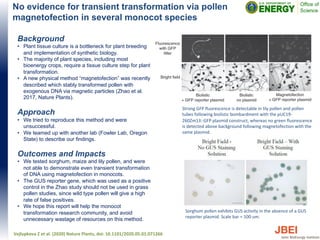
Strong GFP fluorescence is detectable in lily pollen and pollen
tubes following biolistic bombardment with the pUC19-
260Zm13::GFP plasmid construct, whereas no green fluorescence
is detected above background following magnetofection with the
same plasmid.
Sorghum pollen exhibits GUS activity in the absence of a GUS
reporter plasmid. Scale bar = 100 um.
Cost and life-cycle greenhouse gas implications of
integrating biogas upgrading and carbon capture
technologies in cellulosic biorefineries
Background
• Gaseous streams in biorefineries have been undervalued and
underutilized.
• In cellulosic biorefineries, coproduced biogas is assumed to be
combusted alongside lignin to generate process heat and electricity.
Biogas can instead be upgraded to compressed biomethane and
used as a transportation fuel.
• Capturing CO2-rich streams generated in biorefineries can also
contribute to greenhouse gas (GHG) mitigation goals.
Approach
• We developed process simulation models paired with a physical
units-based input-output life-cycle inventory model (BioC2G) to
quantify the cost and emissions implications
• We explored the impact of policy incentives currently in place in the
United States, including RFS RINs and LCFS credits
Outcomes and Impacts
• Absent policy incentives, biorefineries with biogas upgrading
systems can achieve a comparable minimum ethanol selling price
(MESP) and reduced GHG footprint compared to conventional
facilities.
• Incorporating RIN values advantages facilities that upgrade biogas
relative to other options (MESP of $0.72/LGE).
• Incorporating CCS increases the MESP but dramatically decreases
the GHG footprint (−21.3 gCO2e/MJ for partial, −110.7 gCO2e/MJ
for full CCS).
• The addition of CCS also decreases the cost of carbon mitigation to
as low as $52–$78/t CO2
Yang et al. (2020) Environ Sci Technol, doi: 10.1021/acs.est.0c02816
A structural and kinetic survey of GH5_4 endoglucanases reveals determinants
of broad substrate specificity and opportunities for biomass hydrolysis
Background
• Broad-specificity glycoside hydrolases (GHs) contribute to plant
biomass hydrolysis by degrading a diverse range of
polysaccharides, making them useful catalysts for renewable
energy and biocommodity production. GH5_4 contains numerous
broad-selectivity endoglucanases that hydrolyze cellulose,
xyloglucan, and mixed-linkage glucans.
• Discovery of new GHs with improved kinetic parameters or more
tolerant substrate binding sites could increase the efficiency of
renewable bioenergy production even further.
Approach
• This study focuses on structure elucidation and mechanistic
understanding of 10 new GH5_4 enzymes from cellulolytic
microbes. Their substrate selectivity were characterized by
normalized reducing sugar assays and mass spectrometry (NIMS).
Outcomes and Impacts
• It was found that GH5_4 enzymes have the highest catalytic
efficiency for hydrolysis of xyloglucan, glucomannan and soluble β-
glucans.
• The positions of key aromatic residues determine the overall
reaction rate and breadth of substrate tolerance, and they
contribute to differences in oligosaccharide cleavage patterns on
cellulose, mannan and xylan.
• GH5_4 endoglucanases can have broad specificity without
sacrificing high activity, making them a valuable addition to the
bomass deconstruction toolset.
Glasgow et al. (2020) Journal of Biological Chemistry, doi: 10.1074/jbc.RA120.015328
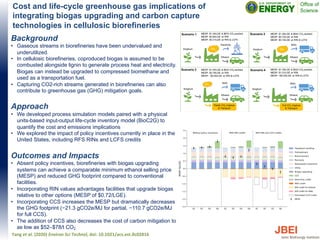
End products of oligo- and polysaccharide hydrolysis by 6UI3
as determined by quantitative NIMS. A, cellulose-based
substrates. B, mannose-based substrates.
Model of cellulose and mannan cleavage specificity in the 6UI3
active site cleft. A, structure of 6UI3 with β-(1,4)-glucan chain of XG
modeled in to approximate the binding of cellohexaose.
B, Schematic of 6UI3 binding cleft, highlighting sugar subsites and
key binding (W42, W159, Y227) and catalytic (E152, E271) residues.
Product/Substrate Pairing (PSP): A New Workflow for
Rationally Designed Strain Engineering
Background
• High titer, rate, yield (TRY), and scalability are challenging metrics
to achieve due to trade- offs between carbon use for growth and
production.
• Picking a host microbe and starting carbon feed are important but
overlooked when designing a strain to produce a new bioproduct.
• >10 desired modifications in one design cycle is a possibility using
multiplex CRISPR systems
Approach
• We describe a generalizable approach using genome-scale
metabolic models and multiplex-CRISPR engineering to select a
microbe, select which carbon feed to use, and rewire its
metabolism to produce a non-native product concomitant with
when it is growing.
Outcomes and Impacts
• This is the first study to implement a specific kind of computational
growth optimization modeling (“constrained minimum cut sets,
cMCS”); the first biotechnology study to implement 14
simultaneous gene knockdowns; and the first study to demonstrate
a shift of production from stationary phase to exponential phase.
• Both a native carbon feed (glucose) as well as an engineered
carbon feed (galactose) were used as carbon sources with more
consistent improvements observed from glucose.
• In a single design cycle, ~40% of the maximum theoretical yield of
a non-native product was reached in a 250 mL stirred tank reactor
in fed-batch mode, producing the highest titers reported to date of
the NRPS-derived compound, indigoidine.
Banerjee and Eng et al. (2020) Nature Communications, doi: 10.1038/s41467-020-19171-4
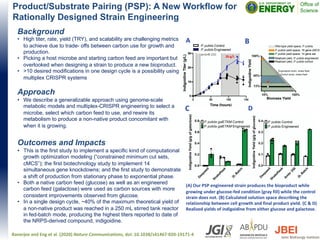
(A) Our PSP engineered strain produces the bioproduct while
growing under glucose-fed condition (gray fill) while the control
strain does not. (B) Calculated solution space describing the
relationship between cell growth and final product yield. (C & D)
Realized yields of indigoidine from either glucose and galactose.
A
C D
26 g/L
B
Development of genetic tools for the thermophilic
filamentous fungus Thermoascus aurantiacus
Background
• Fungal enzymes are vital for industrial biotechnology, including the
conversion of plant biomass to biofuels and bio-based chemicals.
• The thermophilic filamentous fungus Thermoascus
aurantiacus produces large amounts of highly thermostable plant
cell wall-degrading enzymes. However, no genetic tools have yet
been developed for this fungus, which prevents strain engineering
efforts.
Approach
• The goal of this study was to develop strain engineering tools such
as a transformation system, a CRISPR/Cas9 gene editing system
and a sexual crossing protocol to improve the enzyme production.
Outcomes and Impacts
• A transformation protocol was developed and optimized for T.
aurantiacus and used to integrate an expression cassette of the
transcriptional xylanase regulator xlnR, which led to up to 500%
increased xylanase activity.
• A CRISPR/Cas9 gene editing system was established in this
fungus, and two different gRNAs were tested to delete
the pyrG orthologue with 10% and 35% deletion efficiency,
respectively.
• A sexual crossing protocol was established using a hygromycin B-
and a 5-fluoroorotic acid-resistant parent strain. Crossing and
isolation of progeny on selective media were completed in a week.
Gabriel et al. (2020) Biotechnology for Biofuels, doi.org/10.1186/s13068-020-01804-x
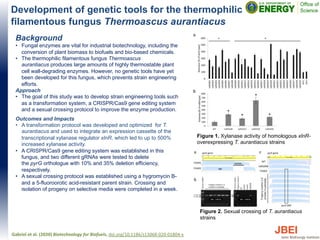
Figure 1. Xylanase activity of homologous xlnR-
overexpressing T. aurantiacus strains
Figure 2. Sexual crossing of T. aurantiacus
strains

JBEI October 2020 Research Highlights

  • 1.
    No evidence fortransient transformation via pollen magnetofection in several monocot species Background • Plant tissue culture is a bottleneck for plant breeding and implementation of synthetic biology. • The majority of plant species, including most bioenergy crops, require a tissue culture step for plant transformation. • A new physical method “magnetofection” was recently described which stably transformed pollen with exogenous DNA via magnetic particles (Zhao et al. 2017, Nature Plants). Approach • We tried to reproduce this method and were unsuccessful. • We teamed up with another lab (Fowler Lab, Oregon State) to describe our findings. Outcomes and Impacts • We tested sorghum, maize and lily pollen, and were not able to demonstrate even transient transformation of DNA using magnetofection in monocots. • The GUS reporter gene, which was used as a positive control in the Zhao study should not be used in grass pollen studies, since wild type pollen will give a high rate of false positives. • We hope this report will help the monocot transformation research community, and avoid unnecessary wastage of resources on this method. Vejlupkova Z et al. (2020) Nature Plants, doi: 10.1101/2020.05.01.071266 Strong GFP fluorescence is detectable in lily pollen and pollen tubes following biolistic bombardment with the pUC19- 260Zm13::GFP plasmid construct, whereas no green fluorescence is detected above background following magnetofection with the same plasmid. Sorghum pollen exhibits GUS activity in the absence of a GUS reporter plasmid. Scale bar = 100 um.
  • 2.
    Cost and life-cyclegreenhouse gas implications of integrating biogas upgrading and carbon capture technologies in cellulosic biorefineries Background • Gaseous streams in biorefineries have been undervalued and underutilized. • In cellulosic biorefineries, coproduced biogas is assumed to be combusted alongside lignin to generate process heat and electricity. Biogas can instead be upgraded to compressed biomethane and used as a transportation fuel. • Capturing CO2-rich streams generated in biorefineries can also contribute to greenhouse gas (GHG) mitigation goals. Approach • We developed process simulation models paired with a physical units-based input-output life-cycle inventory model (BioC2G) to quantify the cost and emissions implications • We explored the impact of policy incentives currently in place in the United States, including RFS RINs and LCFS credits Outcomes and Impacts • Absent policy incentives, biorefineries with biogas upgrading systems can achieve a comparable minimum ethanol selling price (MESP) and reduced GHG footprint compared to conventional facilities. • Incorporating RIN values advantages facilities that upgrade biogas relative to other options (MESP of $0.72/LGE). • Incorporating CCS increases the MESP but dramatically decreases the GHG footprint (−21.3 gCO2e/MJ for partial, −110.7 gCO2e/MJ for full CCS). • The addition of CCS also decreases the cost of carbon mitigation to as low as $52–$78/t CO2 Yang et al. (2020) Environ Sci Technol, doi: 10.1021/acs.est.0c02816
  • 3.
    A structural andkinetic survey of GH5_4 endoglucanases reveals determinants of broad substrate specificity and opportunities for biomass hydrolysis Background • Broad-specificity glycoside hydrolases (GHs) contribute to plant biomass hydrolysis by degrading a diverse range of polysaccharides, making them useful catalysts for renewable energy and biocommodity production. GH5_4 contains numerous broad-selectivity endoglucanases that hydrolyze cellulose, xyloglucan, and mixed-linkage glucans. • Discovery of new GHs with improved kinetic parameters or more tolerant substrate binding sites could increase the efficiency of renewable bioenergy production even further. Approach • This study focuses on structure elucidation and mechanistic understanding of 10 new GH5_4 enzymes from cellulolytic microbes. Their substrate selectivity were characterized by normalized reducing sugar assays and mass spectrometry (NIMS). Outcomes and Impacts • It was found that GH5_4 enzymes have the highest catalytic efficiency for hydrolysis of xyloglucan, glucomannan and soluble β- glucans. • The positions of key aromatic residues determine the overall reaction rate and breadth of substrate tolerance, and they contribute to differences in oligosaccharide cleavage patterns on cellulose, mannan and xylan. • GH5_4 endoglucanases can have broad specificity without sacrificing high activity, making them a valuable addition to the bomass deconstruction toolset. Glasgow et al. (2020) Journal of Biological Chemistry, doi: 10.1074/jbc.RA120.015328 End products of oligo- and polysaccharide hydrolysis by 6UI3 as determined by quantitative NIMS. A, cellulose-based substrates. B, mannose-based substrates. Model of cellulose and mannan cleavage specificity in the 6UI3 active site cleft. A, structure of 6UI3 with β-(1,4)-glucan chain of XG modeled in to approximate the binding of cellohexaose. B, Schematic of 6UI3 binding cleft, highlighting sugar subsites and key binding (W42, W159, Y227) and catalytic (E152, E271) residues.
  • 4.
    Product/Substrate Pairing (PSP):A New Workflow for Rationally Designed Strain Engineering Background • High titer, rate, yield (TRY), and scalability are challenging metrics to achieve due to trade- offs between carbon use for growth and production. • Picking a host microbe and starting carbon feed are important but overlooked when designing a strain to produce a new bioproduct. • >10 desired modifications in one design cycle is a possibility using multiplex CRISPR systems Approach • We describe a generalizable approach using genome-scale metabolic models and multiplex-CRISPR engineering to select a microbe, select which carbon feed to use, and rewire its metabolism to produce a non-native product concomitant with when it is growing. Outcomes and Impacts • This is the first study to implement a specific kind of computational growth optimization modeling (“constrained minimum cut sets, cMCS”); the first biotechnology study to implement 14 simultaneous gene knockdowns; and the first study to demonstrate a shift of production from stationary phase to exponential phase. • Both a native carbon feed (glucose) as well as an engineered carbon feed (galactose) were used as carbon sources with more consistent improvements observed from glucose. • In a single design cycle, ~40% of the maximum theoretical yield of a non-native product was reached in a 250 mL stirred tank reactor in fed-batch mode, producing the highest titers reported to date of the NRPS-derived compound, indigoidine. Banerjee and Eng et al. (2020) Nature Communications, doi: 10.1038/s41467-020-19171-4 (A) Our PSP engineered strain produces the bioproduct while growing under glucose-fed condition (gray fill) while the control strain does not. (B) Calculated solution space describing the relationship between cell growth and final product yield. (C & D) Realized yields of indigoidine from either glucose and galactose. A C D 26 g/L B
  • 5.
    Development of genetictools for the thermophilic filamentous fungus Thermoascus aurantiacus Background • Fungal enzymes are vital for industrial biotechnology, including the conversion of plant biomass to biofuels and bio-based chemicals. • The thermophilic filamentous fungus Thermoascus aurantiacus produces large amounts of highly thermostable plant cell wall-degrading enzymes. However, no genetic tools have yet been developed for this fungus, which prevents strain engineering efforts. Approach • The goal of this study was to develop strain engineering tools such as a transformation system, a CRISPR/Cas9 gene editing system and a sexual crossing protocol to improve the enzyme production. Outcomes and Impacts • A transformation protocol was developed and optimized for T. aurantiacus and used to integrate an expression cassette of the transcriptional xylanase regulator xlnR, which led to up to 500% increased xylanase activity. • A CRISPR/Cas9 gene editing system was established in this fungus, and two different gRNAs were tested to delete the pyrG orthologue with 10% and 35% deletion efficiency, respectively. • A sexual crossing protocol was established using a hygromycin B- and a 5-fluoroorotic acid-resistant parent strain. Crossing and isolation of progeny on selective media were completed in a week. Gabriel et al. (2020) Biotechnology for Biofuels, doi.org/10.1186/s13068-020-01804-x Figure 1. Xylanase activity of homologous xlnR- overexpressing T. aurantiacus strains Figure 2. Sexual crossing of T. aurantiacus strains