

POST-SURGICAL GUT
MICROBIOME
Understanding intestinal
Gut microbiota
More than 1014
resident bacteria in humanGIT
There is a life-long bidirectional and symbiotic
relationship with the host
Gut microbiota: the total microbial ecosystem
Gut microbiome: the collective genomic
content;150 times the human gene pool
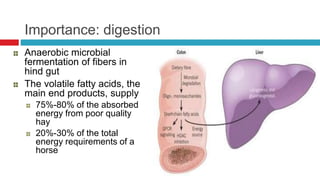
Importance: digestion
Anaerobic microbial
fermentation of fibers in
hind gut
The volatile fatty acids, the
main end products, supply
75%-80% of the absorbed
energy from poor quality
hay
20%-30% of the total
energy requirements of a
horse
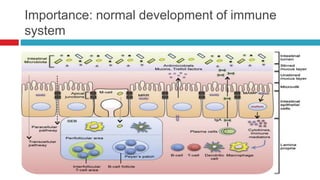
Importance: normal development of immune
system
Importance: intestinal barrier
Germ free mice compared to conventional mice
showed
Impaired intestinal morphology, cell renewal properties
Decreased total intestinal surface area
Aberrant intestinal morphology
Shorter ileal villi
Small intestinal crypts
Lower rate of ileal and Peyer's patches turn over
8 days after colonization cell renewal reverted to the
same degree of conventional mice
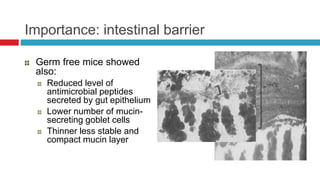
Importance: intestinal barrier
Germ free mice showed
also:
Reduced level of
antimicrobial peptides
secreted by gut epithelium
Lower number of mucin-
secreting goblet cells
Thinner less stable and
compact mucin layer
Importance: Health and disease
Reduced bacterial biodiversity (dysbiosis)
In obese compared to lean individuals
In infants with colic compared to those without colic
Gut microbial ecosystem differs
between children with or without atopic eczema
With or without autism
probiotic or prebiotic supplementation to liver disease
patients
Increased intestinal stability (reduced permeability)
Decreased bacterial translocation to the liver
Ameliorated symptoms of hepatic encephalopathy due to decreased
ammonia production
Importance: health and disease
Marked differences of gut microbita between
horses with colitis compared with normal horses
Horses fed diets rich in readily fermentable
carbohydrate are:
at increased risk of developing laminitis, simple
colonic obstruction and distension
with concurrent changes in hind gut bacterial
population compared with forage fed animals
Methods to study gut microbiota
Microbita study: Culture based techniques
Isolation and culture on selective and non-
selective media
identification through:
colony morphological characters,
growth patterns on different medias,
biochemical characters
Culture based techniques: pros and cons
Pros
Relatively
inexpensive
Widely available,
Possible
physiological and
biochemical studies,
Can provide a good
indication of
ecosystem
complexity
Cons
Most of the bacterial community
is unculturable
only 10% of direct microscopic
count from small intestine and 30%
from caecum and colon of horse
are culturable
60-70% of human gut bacteria are
not culturable
methods of sampling, transport,
cultivation and identification are
inconsistent among the different
studies; results discrepancy
very laborious and time
consuming
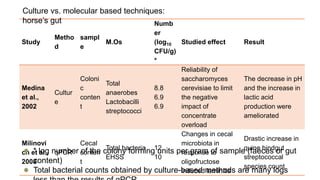
Study
Metho
d
sampl
e
M.Os
Numb
er
(log10
CFU/g)
*
Studied effect Result
Medina
et al.,
2002
Cultur
e
Coloni
c
conten
t
Total
anaerobes
Lactobacilli
streptococci
8.8
6.9
6.9
Reliability of
saccharomyces
cerevisiae to limit
the negative
impact of
concentrate
overload
The decrease in pH
and the increase in
lactic acid
production were
ameliorated
Milinovi
ch et al.,
2008
qPCR
Cecal
conten
t
Total bacteria
EHSS
12
10
Changes in cecal
microbiota in
response to
oligofructose
induced laminitis
Drastic increase in
quine hindgut
streptococcal
species count
Culture vs. molecular based techniques:
horse’s gut
* log number of the colony forming units per gram of sample (faeces or gut
content)
Total bacterial counts obtained by culture-based methods are many logs
Samples to study: Feces Vs. intestinal
content
A non-invasive surrogate for the lower intestinal
microbiota Human Microbiome Project, 2012.
Reflect the shifts in caecal microbiome in
horses with experimentally induced laminitis
yet, the relative abundance is not reflected
Milinovich et al., 2007.
Represent the microbial diversity of the distal
colon (dorsal colon) Hastie et al., 2008.
Fecal samples preservation
No difference in microbial composition
between samples that processed directly after
defecation and those stored for 24 hours at
room temperature Carroll et al. (2012.
long-term storage of faecal samples at -80 for
up to 6 months has no detrimental effects on
microbial community structure and diversity
Wu et al. (2010.
Microbita study: Molecular-based techniques
basis
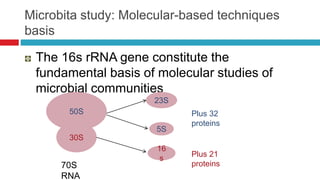
The 16s rRNA gene constitute the
fundamental basis of molecular studies of
microbial communities
50S
30S
23S
5S
16
s
Plus 32
proteins
Plus 21
proteins70S
RNA
16s rRNA: Reliable phylogenetic marker
homologous function and universal location in all micro-
organisms
Contains conserved regions; did not change over time
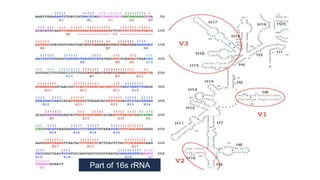
Unique nine variable regions (v1-v9).
universal primer can be used to amplify nearly all rRNA
genes of all microorganisms
Has appropriate length (about 1.5 kbp) compared to 5S
(short) and 23S (long) rRNA molecules.
Part of 16s rRNA
gene
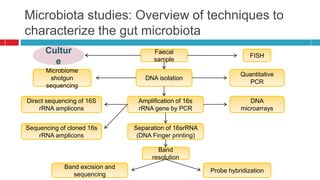
Microbiota studies: Overview of techniques to
characterize the gut microbiota
Faecal
sample
FISH
DNA isolation
Amplification of 16s
rRNA gene by PCR
Separation of 16srRNA
(DNA Finger printing)
Band
resolution
Microbiome
shotgun
sequencing
Direct sequencing of 16S
rRNA amplicons
Sequencing of cloned 16s
rRNA amplicons
Quantitative
PCR
DNA
microarrays
Band excision and
sequencing
Probe hybridization
Cultur
e
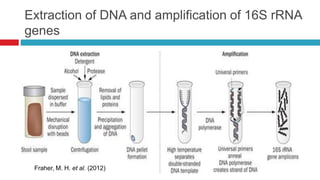
Extraction of DNA and amplification of 16S rRNA
genes
Fraher, M. H. et al. (2012)
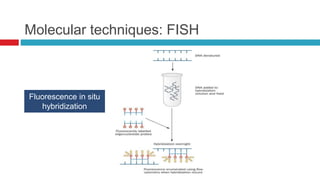
Molecular techniques: FISH
Fluorescence in situ
hybridization
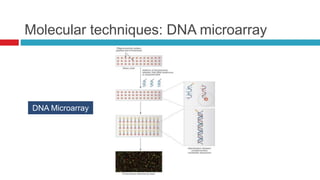
Molecular techniques: DNA microarray
DNA Microarray
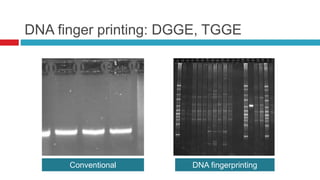
DNA finger printing: DGGE, TGGE
Conventional
electrophoresis
DNA fingerprinting
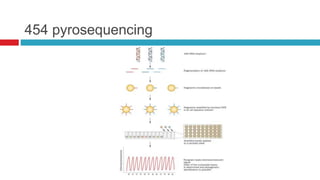
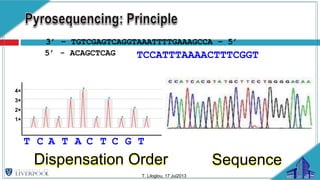
454 pyrosequencing
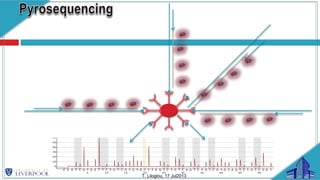
T. Liloglou, 17 Jul2013
39% 36% 37% 32% 39% 36% 38% 40% 43%
EE SS AA TT CC GG TT
5
GG AA TT TT CC
10
TT GG TT CC GG
15
TT GG TT GG CC
20
TT TT AA GG TT
25
CC TT GG TT CC
30
AA GG TT CC TT
35
GG TT CC GG TT
40
GG TT AA GG TT
45
CC TT GG TT CC
50
GG GG TT
0
10
20
30
40
50
60
A2 : YGGGT AT T T T YGYGT GGTGTTTTGYGGTYGTYGTYGTTGTGGTYGTTYGGGGTGGGGTGTGAGGAGGGGA
T. Liloglou, 17 Jul2013
3’ – TGTCGAGTCAGGTAAATTTTGAAAGCCA – 5’
5’ - ACAGCTCAG TCCA CTTTAAAA TTTCGGT
4×
3×
2×
1×
T C A CT A T C G T
Dispensation Order Sequence
454 Sequencing vs. other techniques
Provided an open ended view of microbial
communities
Non sequencing techniques: only known bacterial
groups can be detected using pre-designated
oligonucleotide probes.
Sequences can't be directly assigned to species
Sequences are annotated into operational taxonomic
units (OTU) (phylotypes)
OUT includes cluster of similar sequences with
identity threshold of 97%
Pitfalls of molecular-based techniques:
Extraction bias
Rigorous processing; excessive fragmentation of
bacterial genome; formation of more chimeric
DNA
The different extraction methods have resulted in
extraction of different quantities of DNA
variation in phylotype abundance and composition of
microbial communities
Pitfalls of molecular-based techniques:
Inhibitors
Inhibitory substances in sample; can inhibit the PCR
amplification of the extracted DNA:
Bile salts and complex polysaccharides in faeces
Collagen in food
Heme, immunoglobulin g and lactoferrin in blood
Humic acid in soil
Melanin and myoglobin in tissues
polysaccharides in plants;
proteinases and calcium ions in milk
urea in urine
Pitfalls of molecular-based techniques:
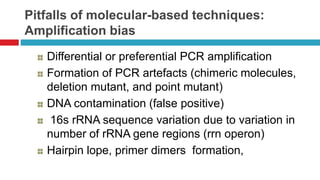
Amplification bias
Differential or preferential PCR amplification
Formation of PCR artefacts (chimeric molecules,
deletion mutant, and point mutant)
DNA contamination (false positive)
16s rRNA sequence variation due to variation in
number of rRNA gene regions (rrn operon)
Hairpin lope, primer dimers formation,
Pitfalls of molecular-based techniques:
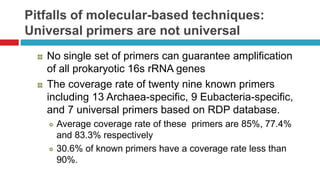
Universal primers are not universal
No single set of primers can guarantee amplification
of all prokaryotic 16s rRNA genes
The coverage rate of twenty nine known primers
including 13 Archaea-specific, 9 Eubacteria-specific,
and 7 universal primers based on RDP database.
Average coverage rate of these primers are 85%, 77.4%
and 83.3% respectively
30.6% of known primers have a coverage rate less than
90%.
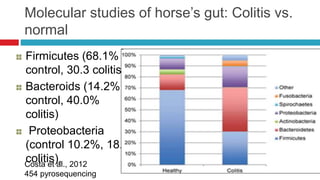
Molecular studies of horse’s gut: Colitis vs.
normal
Firmicutes (68.1%
control, 30.3 colitis),
Bacteroids (14.2%
control, 40.0%
colitis)
Proteobacteria
(control 10.2%, 18.7
colitis),Costa et al., 2012
454 pyrosequencing
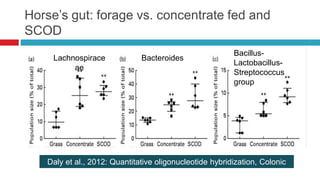
Horse’s gut: forage vs. concentrate fed and
SCOD
Daly et al., 2012: Quantitative oligonucleotide hybridization, Colonic
content
Lachnospirace
ae
Bacteroides
Bacillus-
Lactobacillus-
Streptococcus
group
Horse’s gut: forage vs. concentrate fed and
SCOD
Daly et al., 2012: Quantitative oligonucleotide hybridization, Colonic
content
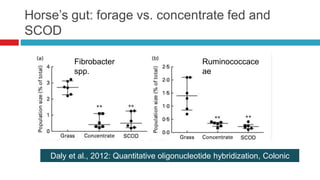
Fibrobacter
spp.
Ruminococcace
ae
Normal horses vs. those with chronic
laminitis
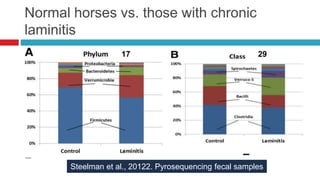
Steelman et al., 20122. Pyrosequencing fecal samples
17 29
Normal horses vs. those with chronic
laminitis
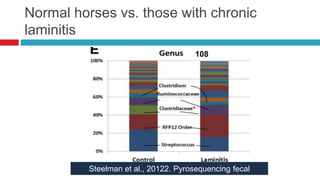
Steelman et al., 20122. Pyrosequencing fecal
108
Horse gut microbiome

Horse gut microbiome

  • 1.
  • 2.
    Gut microbiota More than1014 resident bacteria in humanGIT There is a life-long bidirectional and symbiotic relationship with the host Gut microbiota: the total microbial ecosystem Gut microbiome: the collective genomic content;150 times the human gene pool
  • 3.
    Importance: digestion Anaerobic microbial fermentationof fibers in hind gut The volatile fatty acids, the main end products, supply 75%-80% of the absorbed energy from poor quality hay 20%-30% of the total energy requirements of a horse
  • 4.
  • 5.
    Importance: intestinal barrier Germfree mice compared to conventional mice showed Impaired intestinal morphology, cell renewal properties Decreased total intestinal surface area Aberrant intestinal morphology Shorter ileal villi Small intestinal crypts Lower rate of ileal and Peyer's patches turn over 8 days after colonization cell renewal reverted to the same degree of conventional mice
  • 6.
    Importance: intestinal barrier Germfree mice showed also: Reduced level of antimicrobial peptides secreted by gut epithelium Lower number of mucin- secreting goblet cells Thinner less stable and compact mucin layer
  • 7.
    Importance: Health anddisease Reduced bacterial biodiversity (dysbiosis) In obese compared to lean individuals In infants with colic compared to those without colic Gut microbial ecosystem differs between children with or without atopic eczema With or without autism probiotic or prebiotic supplementation to liver disease patients Increased intestinal stability (reduced permeability) Decreased bacterial translocation to the liver Ameliorated symptoms of hepatic encephalopathy due to decreased ammonia production
  • 8.
    Importance: health anddisease Marked differences of gut microbita between horses with colitis compared with normal horses Horses fed diets rich in readily fermentable carbohydrate are: at increased risk of developing laminitis, simple colonic obstruction and distension with concurrent changes in hind gut bacterial population compared with forage fed animals
  • 9.
    Methods to studygut microbiota
  • 10.
    Microbita study: Culturebased techniques Isolation and culture on selective and non- selective media identification through: colony morphological characters, growth patterns on different medias, biochemical characters
  • 11.
    Culture based techniques:pros and cons Pros Relatively inexpensive Widely available, Possible physiological and biochemical studies, Can provide a good indication of ecosystem complexity Cons Most of the bacterial community is unculturable only 10% of direct microscopic count from small intestine and 30% from caecum and colon of horse are culturable 60-70% of human gut bacteria are not culturable methods of sampling, transport, cultivation and identification are inconsistent among the different studies; results discrepancy very laborious and time consuming
  • 12.
    Study Metho d sampl e M.Os Numb er (log10 CFU/g) * Studied effect Result Medina etal., 2002 Cultur e Coloni c conten t Total anaerobes Lactobacilli streptococci 8.8 6.9 6.9 Reliability of saccharomyces cerevisiae to limit the negative impact of concentrate overload The decrease in pH and the increase in lactic acid production were ameliorated Milinovi ch et al., 2008 qPCR Cecal conten t Total bacteria EHSS 12 10 Changes in cecal microbiota in response to oligofructose induced laminitis Drastic increase in quine hindgut streptococcal species count Culture vs. molecular based techniques: horse’s gut * log number of the colony forming units per gram of sample (faeces or gut content) Total bacterial counts obtained by culture-based methods are many logs
  • 14.
    Samples to study:Feces Vs. intestinal content A non-invasive surrogate for the lower intestinal microbiota Human Microbiome Project, 2012. Reflect the shifts in caecal microbiome in horses with experimentally induced laminitis yet, the relative abundance is not reflected Milinovich et al., 2007. Represent the microbial diversity of the distal colon (dorsal colon) Hastie et al., 2008.
  • 15.
    Fecal samples preservation Nodifference in microbial composition between samples that processed directly after defecation and those stored for 24 hours at room temperature Carroll et al. (2012. long-term storage of faecal samples at -80 for up to 6 months has no detrimental effects on microbial community structure and diversity Wu et al. (2010.
  • 16.
    Microbita study: Molecular-basedtechniques basis The 16s rRNA gene constitute the fundamental basis of molecular studies of microbial communities 50S 30S 23S 5S 16 s Plus 32 proteins Plus 21 proteins70S RNA
  • 17.
    16s rRNA: Reliablephylogenetic marker homologous function and universal location in all micro- organisms Contains conserved regions; did not change over time Unique nine variable regions (v1-v9). universal primer can be used to amplify nearly all rRNA genes of all microorganisms Has appropriate length (about 1.5 kbp) compared to 5S (short) and 23S (long) rRNA molecules.
  • 18.
    Part of 16srRNA gene
  • 19.
    Microbiota studies: Overviewof techniques to characterize the gut microbiota Faecal sample FISH DNA isolation Amplification of 16s rRNA gene by PCR Separation of 16srRNA (DNA Finger printing) Band resolution Microbiome shotgun sequencing Direct sequencing of 16S rRNA amplicons Sequencing of cloned 16s rRNA amplicons Quantitative PCR DNA microarrays Band excision and sequencing Probe hybridization Cultur e
  • 20.
    Extraction of DNAand amplification of 16S rRNA genes Fraher, M. H. et al. (2012)
  • 21.
  • 22.
    Molecular techniques: DNAmicroarray DNA Microarray
  • 23.
    DNA finger printing:DGGE, TGGE Conventional electrophoresis DNA fingerprinting
  • 24.
  • 25.
    T. Liloglou, 17Jul2013 39% 36% 37% 32% 39% 36% 38% 40% 43% EE SS AA TT CC GG TT 5 GG AA TT TT CC 10 TT GG TT CC GG 15 TT GG TT GG CC 20 TT TT AA GG TT 25 CC TT GG TT CC 30 AA GG TT CC TT 35 GG TT CC GG TT 40 GG TT AA GG TT 45 CC TT GG TT CC 50 GG GG TT 0 10 20 30 40 50 60 A2 : YGGGT AT T T T YGYGT GGTGTTTTGYGGTYGTYGTYGTTGTGGTYGTTYGGGGTGGGGTGTGAGGAGGGGA
  • 26.
    T. Liloglou, 17Jul2013 3’ – TGTCGAGTCAGGTAAATTTTGAAAGCCA – 5’ 5’ - ACAGCTCAG TCCA CTTTAAAA TTTCGGT 4× 3× 2× 1× T C A CT A T C G T Dispensation Order Sequence
  • 27.
    454 Sequencing vs.other techniques Provided an open ended view of microbial communities Non sequencing techniques: only known bacterial groups can be detected using pre-designated oligonucleotide probes. Sequences can't be directly assigned to species Sequences are annotated into operational taxonomic units (OTU) (phylotypes) OUT includes cluster of similar sequences with identity threshold of 97%
  • 28.
    Pitfalls of molecular-basedtechniques: Extraction bias Rigorous processing; excessive fragmentation of bacterial genome; formation of more chimeric DNA The different extraction methods have resulted in extraction of different quantities of DNA variation in phylotype abundance and composition of microbial communities
  • 29.
    Pitfalls of molecular-basedtechniques: Inhibitors Inhibitory substances in sample; can inhibit the PCR amplification of the extracted DNA: Bile salts and complex polysaccharides in faeces Collagen in food Heme, immunoglobulin g and lactoferrin in blood Humic acid in soil Melanin and myoglobin in tissues polysaccharides in plants; proteinases and calcium ions in milk urea in urine
  • 30.
    Pitfalls of molecular-basedtechniques: Amplification bias Differential or preferential PCR amplification Formation of PCR artefacts (chimeric molecules, deletion mutant, and point mutant) DNA contamination (false positive) 16s rRNA sequence variation due to variation in number of rRNA gene regions (rrn operon) Hairpin lope, primer dimers formation,
  • 31.
    Pitfalls of molecular-basedtechniques: Universal primers are not universal No single set of primers can guarantee amplification of all prokaryotic 16s rRNA genes The coverage rate of twenty nine known primers including 13 Archaea-specific, 9 Eubacteria-specific, and 7 universal primers based on RDP database. Average coverage rate of these primers are 85%, 77.4% and 83.3% respectively 30.6% of known primers have a coverage rate less than 90%.
  • 32.
    Molecular studies ofhorse’s gut: Colitis vs. normal Firmicutes (68.1% control, 30.3 colitis), Bacteroids (14.2% control, 40.0% colitis) Proteobacteria (control 10.2%, 18.7 colitis),Costa et al., 2012 454 pyrosequencing
  • 33.
    Horse’s gut: foragevs. concentrate fed and SCOD Daly et al., 2012: Quantitative oligonucleotide hybridization, Colonic content Lachnospirace ae Bacteroides Bacillus- Lactobacillus- Streptococcus group
  • 34.
    Horse’s gut: foragevs. concentrate fed and SCOD Daly et al., 2012: Quantitative oligonucleotide hybridization, Colonic content Fibrobacter spp. Ruminococcace ae
  • 35.
    Normal horses vs.those with chronic laminitis Steelman et al., 20122. Pyrosequencing fecal samples 17 29
  • 36.
    Normal horses vs.those with chronic laminitis Steelman et al., 20122. Pyrosequencing fecal 108

Editor's Notes

  • #3 The total microbial ecosystem of the hind gut is collectively known as ‘intestinal microbiota’. On the other hand, the collective genomic content of this community is usually referred to as intestinal microbiom 52 known phyla under the domain bacteria; 29 phyla have representatives cultured in lab and 23 phyla called candidate phyla have no culture representatives and known only through metagenomics Only 7-9 phyla have been detected in fecal or mucosal samples from human More than 90% of all phylotypes (sequences with 97% identity and representative for species) belong to just two divisions; Bacteroides and firmicutes
  • #5 The intestinal barrier is equipped with several levels of defense mechanisms to limit luminal antigen translocation. single layer of semi-permeable epithelial cells, apical junctions (adherens and tight junctions proteins) that bind epithelial cells together and regulate paracellular antigen and molecule entry across the epithelium. Specialized epithelial cells called M-cells mediate constant sampling of luminal antigens. Goblet cells, Paneth cells and enterocytes secrete mucins and antimicrobial peptides that assemble into a mucus layer. .Intestinal epithelial cells secrete IgA, which are produced by plasma cells in the lamina propria. microbial recognition receptors (MRR) such as TLR and NOD-like receptors that can recognize specific microbial associated molecular patterns. (MAMP). Basal recognition of intestinal microorganisms by intestinal epithelial cells induces secretion of cytokines and other immune mediators, which may help in the induction a regulatory response against intestinal microbiota and maintenance of intestinal homeostasis. It is estimated that 80% of antibody production takes place in the lamina propia Germ free mice are immunodeficient and highly susceptible to pathogens or opportunistic infections
  • #8 Perturbation of gut ecosystem (dysbiosis or dysbacteriosis) have been associated with many diseases Dysbiosis: imbalance among the different microbial species in the gut
  • #9 As a consequence of increased daily concentrates intake in horses; higher amount of water soluble carbohydrates (non-structural) escapes the enzymatic digestion in stomach and small intestine and become available substrate for hind gut microbial fermentation. Rapid fermentation in hind gut results in rapid build-up of lactic acid and lowered pH of caecal and colonic contents culminating in perturbation of gut microbiota and intestinal dysfunction (Clarke et al., 1990; Daly et al., 2012; Medina et al., 2002). Further consequences are the production and absorption of vasoactive amines into the circulation with subsequent peripheral circulatory disturbances (Bailey et al., 2002). Costa et al. (2012)
  • #12 cons It was estimated that only 1% of bacteria enumerate by direct microscopic count from aquatic habitat can be counted by plating procedures referred to as ‘ the great plate count anomaly’ (Staley and Konopka, 1985). The uncultured bacteria may not truly unculturable but the growth requirements for these organisms may not be known (Fraher et al., 2012). Other limitation of pure-culture techniques is the fact that the majority of the gut bacteria are in syntrophic relationship where one species depends on the metabolic activity of other species to grow and multiply (Stams, 1994).
  • #13 EHSS: equine hind gut streptococcal species
  • #15 Given the facts that sampling of faeces is not invasive, changes in faecal microbiota can reflect the changes in the other parts of the intestinal tract especially the distal colon and changes in the microbial ecosystem posed by the local inflammatory response to the indwelled sampling catheter; Be cautious faecal microbiota can be used as useful surrogate for the intestinal microbiota provided that results of the studies that used different samples should not be compared.
  • #17 The prokaryotic 70s ribosome is a crucial structure for the bacteria to synthesis its proteins. It is formed from 30s and 50s ribosomal subunits. The smaller ribosomal subunit has one RNA molecule (16s rRNA) and 21 proteins and the larger ribosomal subunit has two RNA molecules (5s and 23s rRNA) and 32 different proteins. The three RNA molecules (16s, 5s and 23s) contain 1542, 120 and 2904 nucleotides respectively (Nierhaus and Wittmann, 1980; Wittmann, 1982) S = sedementation velocity by analytical ultracentrifugation
  • #18 The qualities of this gene that enabled it to play this role are its homologous function and universal location in all micro-organisms. It contains conserved regions that did not change over time, interspersed with nine variable regions (v1-v9). These variable regions are unique to certain bacterial groups and allow phylogenetic identification i.e. ‘a reliable phylogenetic marker’. A universal primer set which target the conserved regions can be used to amplify nearly all rRNA genes of all microorganisms, however the use of different primer sets that target different bacterial groups gives more accurate results. Furthermore, The 16s rRNA has appropriate length (about 1.5 kbp) compared to 5s (short) and 23s (long) ribosomal RNA molecules.
  • #20 Microbiome shotgun sequencing Called metagenomics; the study of all genetic material recovered directly from environmental sample Advantages: not only providing the phylogenetical characterization of the microbial community but also can be telling about biological functions present in the community
  • #22 Fluorescence in situ hybridization ): Carried out directly on the fecal sample It involves the use of labelled general or group specific16S rRNA gene-targeted oligonucleotides probes cells are chemically treated to render them permeable to the probes which in turn anneal to the targeted 16s rRNA. Then cells can be counted by epifluorescence microscope or flow ctometry
  • #23 Array Phylogenetic oligonucleotide arrays contain probes derived from SSU rRNA sequence information Steps: the full length of 16s rRNA is amplified using the universal primers. The PCR products are then transcribed into RNA, purified using RNAase-free DNAase kit and labeled.The labelled products are then fragmented and hybridized to the array
  • #24 The conventional electrophoretic separation of 16s rRNA amplicons in agaroses gel almost results in a single band which is not descriptive. Conversely, by using DGGE and TGGE the DNA fragments of similar length but with different sequences can be separated. Separation is based on the decreased electrophoretic mobility of a partially melted double-stranded DNA molecule in polyacrylamide gels containing a linear gradient of DNA denaturants (a mixture of urea and formamide) or a linear temperature gradient. For further analysis the gel is stained and the patterns of band distribution can be compared to database or transferred to a nylon membrane for identification using different hybridization probes. Bands can also be excised from the gel for purification and sequencing or PCR amplification and production of clone libraries
  • #25 16s rRNA fragments, immobilized on beads, denatured Fragments amplified by emulsion PCR in oil-aqeous solution
  • #28 Sequencing technologies have provided unprecedented deep insights into the microbial ecosystems. Unlike the non-sequencing based techniques in which only the known bacterial groups can be detected by pre-designated oligonucleotide probes, sequencing provided an open-ended view of microbial communities and many new taxa have been detected (Wylie et al., 2012). On the other hand, the major challenge of next-generation sequencing technologies is to make good inferences from these indefinite large quantities of data. Furthermore, the sequences cannot be directly assigned to species; because bacterial species should be defined based on both molecular and phenotypic characteristics and as long as most of newly sequenced bacterial groups are never grown in culture; these sequences are annotated into operational taxonomic units (OTU) (phylotypes). Each OUT includes cluster of similar sequences with identity threshold of 97% and used as a surrogate for species (Inglis et al., 2012).
  • #29 Despite the improved sensitivity of PCR and its potential for detection of unclturable organisms and those of low abundance, it has inherent shortcomings and biases. Each physical, chemical and biological step starting from sampling to obtaining the 16s rRNA amplicons is a potential sources of bias. Rigorous processing required to lyse the gram positive bacteria (has a thicker cell wall) may lead to excessive fragmentation of gram negative bacterial genome (has a thinner cell wall) with subsequent formation of more chimeric DNA The different extraction methods have resulted in extraction of different quantities of DNA in addition to variation in phylotype abundance and composition of microbial communities
  • #32 Almost all of the molecular based studies of microbial communities are based on the use of what is called universal primers which should target the rDNA genes of all archaeal and bacterial groups. However, universal primes are not universal
  • #34 Fig. 1. Increased population abundance of the (a) Lachnospiraceae (cluster XIVa of the Clostridiaceae), (b) Bacteroidetes assemblage (Cytophaga–Flexibacter– Bacteroides) and (c) Bacillus–Lactobacillus–Streptococcus group in concentrate-fed and simple colonic obstruction and distension (SCOD) horses compared with grass-fed horses, as determined by quantitative oligonucleotide-RNA hybridisation. Data are presented as medians and interquartiles, n 6. Points represent individual animals. Significance of differences was determined using the Mann–Whitney U test for non-normally distributed data
  • #35 Decreased population abundance of (a) Fibrobacter spp. and (b) Ruminococcaceae (cluster IV of the Clostridiaceae) in concentrate-fed and simple colonic obstruction and distension (SCOD) horses compared with grass-fed horses, as determined by quantitative oligonucleotide-RNA hybridisation
  • #37 Two un assigned genera belong to clostridiaceae significantly higher in control compared to laminitic group unidentified rumen bacterium RFP12 belong to Verrucomicrobia