Introduction to
    Java Enterprise Edition
    ●   First steps with Servlet Technology.
Servlet Container & Application Server
●


                           Fernando Gil
                            Fernando Gil
                       lobho.gil@gmail.com
                        lobho.gil@gmail.com
                           Marzo 2012
                            Marzo 2012
Introduction
●   The goal of this course is to explain you how can
    you start to develop Java EE applications.


●   We will accomplished our goals by presenting the
    theory behind the concepts of Servlets and
    JavaServer Pages.


●   Using JBoss AS or similar we'll present practical
    exercises to support all the knowledge obtained.
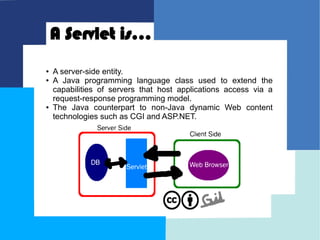
A Servlet is...
●   A server-side entity.
●   A Java programming language class used to extend the
    capabilities of servers that host applications access via a
    request-response programming model.
●   The Java counterpart to non-Java dynamic Web content
    technologies such as CGI and ASP.NET.
Server Responsibilities
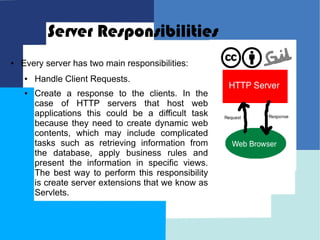
●   Every server has two main responsibilities:
    ●   Handle Client Requests.
    ●   Create a response to the clients. In the
        case of HTTP servers that host web
        applications this could be a difficult task
        because they need to create dynamic web
        contents, which may include complicated
        tasks such as retrieving information from
        the database, apply business rules and
        present the information in specific views.
        The best way to perform this responsibility
        is create server extensions that we know as
        Servlets.
Servlet Container
●   To deploy and run a servlet, a Web server uses a separate
    module. This specialized module is called Web container or
    servlet container and is responsible for managing the lifecycle of
    servlets, mapping a URL to a particular servlet and ensuring that
    the URL requester has the correct access rights.
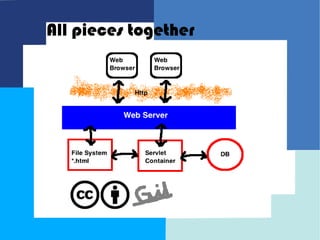
●   The next picture shows how different components fit together.
    The file system stores HTML files, the Servlet container execute
    the Servlets, and business data is in the database. The Web
    browser sends requests to the Web server. If the target is an
    HTML file, the server handles it directly but If the target is a
    servlet then the server delegates the request to the servlet
    container, once there, the servlet can use the file system and
    database to generate dynamic output.
All pieces together
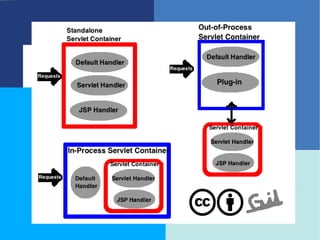
Servlet container types
Conceptually, a servlet container is a part of the web server, even though
it may run in a separate process. We can classify the servlet container in
three types:
●   Standalone: Are typically Java-based servers where the servlet
    container and the web server are integral part of a single program.
    One common example is Tomcat running by itself.
●   In-process: The servlet container is separated from the web server,
    because is a different program, but runs within the address space of
    the main server as a plug-in. One example is Tomcat running inside
    JBoss.
●   Out-of-process: The servlet container and the web server are
    different programs and both run in a different process. To perform
    communications between them, the web server uses a plug-in
    usually provided by the servlet container vendor.
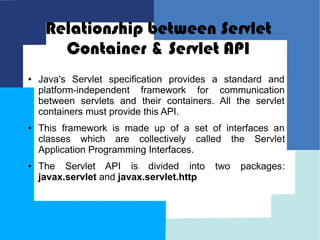
Relationship between Servlet
       Container & Servlet API
●   Java's Servlet specification provides a standard and
    platform-independent framework for communication
    between servlets and their containers. All the servlet
    containers must provide this API.
●   This framework is made up of a set of interfaces an
    classes which are collectively called the Servlet
    Application Programming Interfaces.
●   The Servlet API is divided into        two   packages:
    javax.servlet and javax.servlet.http
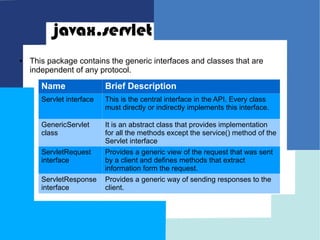
javax.servlet
●   This package contains the generic interfaces and classes that are
    independent of any protocol.

       Name                Brief Description
       Servlet interface   This is the central interface in the API. Every class
                           must directly or indirectly implements this interface.

       GenericServlet      It is an abstract class that provides implementation
       class               for all the methods except the service() method of the
                           Servlet interface
       ServletRequest      Provides a generic view of the request that was sent
       interface           by a client and defines methods that extract
                           information form the request.
       ServletResponse     Provides a generic way of sending responses to the
       interface           client.
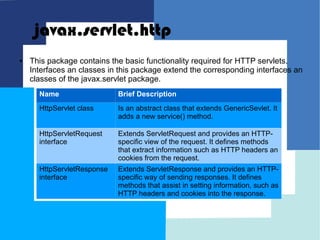
javax.servlet.http
●   This package contains the basic functionality required for HTTP servlets.
    Interfaces an classes in this package extend the corresponding interfaces an
    classes of the javax.servlet package.
      Name                  Brief Description
      HttpServlet class     Is an abstract class that extends GenericSevlet. It
                            adds a new service() method.

      HttpServletRequest    Extends ServletRequest and provides an HTTP-
      interface             specific view of the request. It defines methods
                            that extract information such as HTTP headers an
                            cookies from the request.
      HttpServletResponse   Extends ServletResponse and provides an HTTP-
      interface             specific way of sending responses. It defines
                            methods that assist in setting information, such as
                            HTTP headers and cookies into the response.
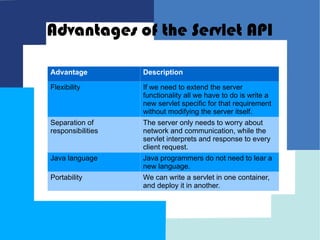
Advantages of the Servlet API

Advantage          Description

Flexibility        If we need to extend the server
                   functionality all we have to do is write a
                   new servlet specific for that requirement
                   without modifying the server itself.
Separation of      The server only needs to worry about
responsibilities   network and communication, while the
                   servlet interprets and response to every
                   client request.
Java language      Java programmers do not need to lear a
                   new language.
Portability        We can write a servlet in one container,
                   and deploy it in another.
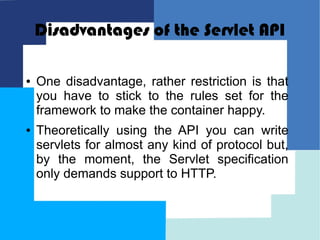
Disadvantages of the Servlet API

●   One disadvantage, rather restriction is that
    you have to stick to the rules set for the
    framework to make the container happy.
●   Theoretically using the API you can write
    servlets for almost any kind of protocol but,
    by the moment, the Servlet specification
    only demands support to HTTP.

Java EE 01-Servlets and Containers

  • 1.
    Introduction to Java Enterprise Edition ● First steps with Servlet Technology. Servlet Container & Application Server ● Fernando Gil Fernando Gil lobho.gil@gmail.com lobho.gil@gmail.com Marzo 2012 Marzo 2012
  • 2.
    Introduction ● The goal of this course is to explain you how can you start to develop Java EE applications. ● We will accomplished our goals by presenting the theory behind the concepts of Servlets and JavaServer Pages. ● Using JBoss AS or similar we'll present practical exercises to support all the knowledge obtained.
  • 3.
    A Servlet is... ● A server-side entity. ● A Java programming language class used to extend the capabilities of servers that host applications access via a request-response programming model. ● The Java counterpart to non-Java dynamic Web content technologies such as CGI and ASP.NET.
  • 4.
    Server Responsibilities ● Every server has two main responsibilities: ● Handle Client Requests. ● Create a response to the clients. In the case of HTTP servers that host web applications this could be a difficult task because they need to create dynamic web contents, which may include complicated tasks such as retrieving information from the database, apply business rules and present the information in specific views. The best way to perform this responsibility is create server extensions that we know as Servlets.
  • 5.
    Servlet Container ● To deploy and run a servlet, a Web server uses a separate module. This specialized module is called Web container or servlet container and is responsible for managing the lifecycle of servlets, mapping a URL to a particular servlet and ensuring that the URL requester has the correct access rights. ● The next picture shows how different components fit together. The file system stores HTML files, the Servlet container execute the Servlets, and business data is in the database. The Web browser sends requests to the Web server. If the target is an HTML file, the server handles it directly but If the target is a servlet then the server delegates the request to the servlet container, once there, the servlet can use the file system and database to generate dynamic output.
  • 6.
  • 7.
    Servlet container types Conceptually,a servlet container is a part of the web server, even though it may run in a separate process. We can classify the servlet container in three types: ● Standalone: Are typically Java-based servers where the servlet container and the web server are integral part of a single program. One common example is Tomcat running by itself. ● In-process: The servlet container is separated from the web server, because is a different program, but runs within the address space of the main server as a plug-in. One example is Tomcat running inside JBoss. ● Out-of-process: The servlet container and the web server are different programs and both run in a different process. To perform communications between them, the web server uses a plug-in usually provided by the servlet container vendor.
  • 9.
    Relationship between Servlet Container & Servlet API ● Java's Servlet specification provides a standard and platform-independent framework for communication between servlets and their containers. All the servlet containers must provide this API. ● This framework is made up of a set of interfaces an classes which are collectively called the Servlet Application Programming Interfaces. ● The Servlet API is divided into two packages: javax.servlet and javax.servlet.http
  • 10.
    javax.servlet ● This package contains the generic interfaces and classes that are independent of any protocol. Name Brief Description Servlet interface This is the central interface in the API. Every class must directly or indirectly implements this interface. GenericServlet It is an abstract class that provides implementation class for all the methods except the service() method of the Servlet interface ServletRequest Provides a generic view of the request that was sent interface by a client and defines methods that extract information form the request. ServletResponse Provides a generic way of sending responses to the interface client.
  • 11.
    javax.servlet.http ● This package contains the basic functionality required for HTTP servlets. Interfaces an classes in this package extend the corresponding interfaces an classes of the javax.servlet package. Name Brief Description HttpServlet class Is an abstract class that extends GenericSevlet. It adds a new service() method. HttpServletRequest Extends ServletRequest and provides an HTTP- interface specific view of the request. It defines methods that extract information such as HTTP headers an cookies from the request. HttpServletResponse Extends ServletResponse and provides an HTTP- interface specific way of sending responses. It defines methods that assist in setting information, such as HTTP headers and cookies into the response.
  • 12.
    Advantages of theServlet API Advantage Description Flexibility If we need to extend the server functionality all we have to do is write a new servlet specific for that requirement without modifying the server itself. Separation of The server only needs to worry about responsibilities network and communication, while the servlet interprets and response to every client request. Java language Java programmers do not need to lear a new language. Portability We can write a servlet in one container, and deploy it in another.
  • 13.
    Disadvantages of theServlet API ● One disadvantage, rather restriction is that you have to stick to the rules set for the framework to make the container happy. ● Theoretically using the API you can write servlets for almost any kind of protocol but, by the moment, the Servlet specification only demands support to HTTP.