G.ERIC MD4
Jaundice, or icterus, is a yellowish discoloration of tissue resulting
from the deposition of bilirubin. Tissue deposition of bilirubin occurs
only in the presence of serum hyperbilirubinemia and is a sign of either
liver disease or, less often, a hemolytic disorder. The degree of serum
bilirubin elevation can be estimated by physical examination. Slight
increases in serum bilirubin level are best detected by examining the
sclerae, which have a particular affinity for bilirubin due to their high
elastin content. The presence of scleral icterus indicates a serum
bilirubin
level of at least 51 μmol/L (3 mg/dL). The ability to detect scleral
icterus is made more difficult if the examining room has fluorescent
lighting. If the examiner suspects scleral icterus, a second site to
examine
is underneath the tongue. As serum bilirubin levels rise, the skin
will eventually become yellow in light-skinned patients and even green
if the process is long-standing; the green color is produced by
oxidation
of bilirubin to biliverdin.
The differential diagnosis for yellowing of the skin is limited. In
addition to jaundice, it includes carotenoderma, the use of the
drug
quinacrine, and excessive exposure to phenols. Carotenoderma is
the
yellow color imparted to the skin of healthy individuals who ingest
excessive amounts of vegetables and fruits that contain carotene,
such
as carrots, leafy vegetables, squash, peaches, and oranges. In
jaundice
the yellow coloration of the skin is uniformly distributed over the
body, whereas in carotenoderma the pigment is concentrated on
the palms, soles, forehead, and nasolabial folds. Carotenoderma
can
be distinguished from jaundice by the sparing of the sclerae.
Quinacrine
causes a yellow discoloration of the skin in 4–37% of patients
treated
with it.
Another sensitive indicator of increased serum bilirubin
is darkening
of the urine, which is due to the renal excretion of
conjugated
bilirubin. Patients often describe their urine as tea- or
cola-colored.
Bilirubinuria indicates an elevation of the direct serum
bilirubin fraction
and, therefore, the presence of liver disease. Serum
bilirubin levels increase when an imbalance exists
between
bilirubin production and clearance. A logical evaluation
of the patient
who is jaundiced requires an understanding of bilirubin
production
and metabolism.
Bilirubin, a tetrapyrrole pigment, is a breakdown
product of heme (ferroprotoporphyrin IX). About
70–80% of the 250–
300 mg of bilirubin produced each day is derived
from the breakdown
of hemoglobin in senescent red blood cells. The
remainder comes from
prematurely destroyed erythroid cells in bone
marrow and from the
turnover of hemoproteins such as myoglobin and
cytochromes found
in tissues throughout the body.
The formation of bilirubin occurs in reticuloendothelial cells,
primarily in the spleen and liver. The first reaction, catalyzed by the
microsomal enzyme heme oxygenase, oxidatively cleaves the α
bridge
of the porphyrin group and opens the heme ring. The end products
of this reaction are biliverdin, carbon monoxide, and iron. The
second
reaction, catalyzed by the cytosolic enzyme biliverdin reductase,
reduces the central methylene bridge of biliverdin and converts it
to
bilirubin. Bilirubin formed in the reticuloendothelial cells is virtually
insoluble in water due to tight internal hydrogen bonding between
the
water-soluble moieties of bilirubin
To be transported in blood, bilirubin
must be solubilized. Solubilization is accomplished by the reversible,
noncovalent binding of bilirubin to albumin. Unconjugated bilirubin
bound to albumin is transported to the liver. There, the bilirubin—
but
not the albumin—is taken up by hepatocytes via a process that at
least
partly involves carrier-mediated membrane transport. No specific
bilirubin transporter has yet been identified. After entering the
hepatocyte, unconjugated bilirubin is bound
in the cytosol to a number of proteins including proteins in the
glutathione-S-transferase superfamily. These proteins serve both to
reduce efflux of bilirubin back into the serum and to present the
bilirubin for conjugation.
In the endoplasmic reticulum, bilirubin is
solubilized by conjugation to glucuronic acid, a process that
disrupts
the internal hydrogen bonds and yields bilirubin monoglucuronide
and diglucuronide. The conjugation of glucuronic acid to bilirubin
is
catalyzed by bilirubin uridine diphosphate-glucuronosyl
transferase
(UDPGT). The now-hydrophilic bilirubin conjugates diffuse from
the
endoplasmic reticulum to the canalicular membrane, where
bilirubin
monoglucuronide and diglucuronide are actively transported into
canalicular bile by an energy-dependent mechanism involving the
multidrug resistance–associated protein 2 (MRP2).
The conjugated bilirubin excreted into bile drains into the
duodenum
and passes unchanged through the proximal small bowel.
Conjugated bilirubin is not taken up by the intestinal mucosa.
When
the conjugated bilirubin reaches the distal ileum and colon, it is
hydrolyzed
to unconjugated bilirubin by bacterial β-glucuronidases. The
unconjugated bilirubin is reduced by normal gut bacteria to form a
group of colorless tetrapyrroles called urobilinogens. About 80–
90%
of these products are excreted in feces, either unchanged or
oxidized
to orange derivatives called urobilins. The remaining 10–20% of the
urobilinogens are passively absorbed, enter the portal venous
blood,
and are re-excreted by the liver. A small fraction (usually <3
mg/dL)
escapes hepatic uptake, filters across the renal glomerulus, and is
excreted in urine.
The terms direct and indirect bilirubin—i.e., conjugated and unconjugated
bilirubin, respectively—are based on the original van den Bergh
reaction. This assay, or a variation of it, is still used in most clinical
chemistry laboratories to determine the serum bilirubin level. In
this assay, bilirubin is exposed to diazotized sulfanilic acid and splits
into two relatively stable dipyrrylmethene azopigments that
absorbmaximally at 540 nm, allowing photometric analysis. The direct
fraction
is that which reacts with diazotized sulfanilic acid in the absence of
an accelerator substance such as alcohol. The direct fraction provides
an approximation of the conjugated bilirubin level in serum. The total
serum bilirubin is the amount that reacts after the addition of alcohol.
The indirect fraction is the difference between the total and the direct
bilirubin levels and provides an estimate of the unconjugated bilirubin
in serum.
Unconjugated bilirubin is always bound to albumin in the serum, is
not filtered by the kidney, and is not found in the urine.
Conjugated
bilirubin is filtered at the glomerulus, and the majority is
reabsorbed
by the proximal tubules; a small fraction is excreted in the urine.
Any
bilirubin found in the urine is conjugated bilirubin. The presence of
bilirubinuria implies the presence of liver disease. A urine dipstick
test (Ictotest) gives the same information as fractionation of the
serum
bilirubin and is very accurate. A false-negative result is possible in
patients with prolonged cholestasis due to the predominance of
delta
bilirubin, which is covalently bound to albumin and therefore not
filtered by the renal glomeruli
The goal of this chapter is not to provide an encyclopedic review of
all of the conditions that can cause jaundice. Rather, the chapter is
intended to offer a framework that helps a physician to evaluate
the
patient with jaundice in a logical way. Simply stated, the initial step
is to perform appropriate blood
tests in order to determine whether the patient has an isolated
elevation of serum bilirubin. If so, is the bilirubin elevation due to
an increased unconjugated or conjugated fraction? If the
hyperbilirubinemia
is accompanied by other liver test abnormalities,
is the disorder hepatocellular or cholestatic? If cholestatic, is it
intra- or extrahepatic? All of these questions can be answered with
a thoughtful history, physical examination, and interpretation of
laboratory and radiologic tests and procedures.
The bilirubin present in serum represents a balance between
input from the production of bilirubin and hepatic/biliary removal
of the pigment. Hyperbilirubinemia may result from (1)
overproduction
of bilirubin; (2) impaired uptake, conjugation, or excretion
of bilirubin; or (3) regurgitation of unconjugated or conjugated
bilirubin from damaged hepatocytes or bile ducts. An increase
in unconjugated bilirubin in serum results from overproduction,
impaired uptake, or conjugation of bilirubin. An increase in
conjugated
bilirubin is due to decreased excretion into the bile ductules
or backward leakage of the pigment. The initial steps in evaluating
the patient with jaundice are to determine (1) whether the
hyperbilirubinemia
is predominantly conjugated or unconjugated in
nature and (2) whether other biochemical liver tests are abnormal.
Unconjugated Hyperbilirubinemia The differential diagnosis of
isolated
unconjugated hyperbilirubinemia is limited. The critical
determination is whether the patient is suffering from
a hemolytic process resulting in an overproduction of bilirubin
(hemolytic disorders and ineffective erythropoiesis) or from
impaired hepatic uptake/conjugation of bilirubin (drug effect or
genetic disorders). Hemolytic disorders that cause excessive heme
production may
be either inherited or acquired. Inherited disorders include
spherocytosis,
sickle cell anemia, thalassemia, and deficiency of red
cell enzymes such as pyruvate kinase and glucose-6-phosphate
dehydrogenase. In these conditions, the serum bilirubin level rarely
exceeds 86 μmol/L (5 mg/dL).
Higher levels may occur when there is
coexistent renal or hepatocellular dysfunction or in
acute hemolysis,
such as a sickle cell crisis. In evaluating jaundice in
patients with
chronic hemolysis, it is important to remember the
high incidence
of pigmented (calcium bilirubinate) gallstones
found in these these patients usually survive into
adulthood, although they may
be susceptible to kernicterus under the stress of
intercurrent illness
or surgery.
Gilbert’s syndrome is also marked by the impaired conjugation
of bilirubin (to approximately one-third of normal) due to
reduced
bilirubin UDPGT activity. Patients with Gilbert’s syndrome have
mild unconjugated hyperbilirubinemia, with serum levels almost
always <103 μmol/L (6 mg/dL). The serum levels may fluctuate,
and jaundice is often identified only during periods of fasting.
The
molecular defect in Gilbert’s syndrome is linked to a reduction
in transcription of the bilirubin UDPGT gene due to mutations
in the promoter and, rarely, in the coding region. Unlike both
Crigler-Najjar syndromes, Gilbert’s syndrome is very common.
The
reported incidence is 3–7% of the population, with males
predominating
over females by a ratio of 2–7:1.
Conjugated Hyperbilirubinemia Elevated conjugated
hyperbilirubinemia
is found in two rare inherited conditions: Dubin-Johnson
syndrome and Rotor syndrome (.Patients with either
condition present with asymptomatic jaundice. The defect in
Dubin-Johnson syndrome is the presence of mutations in
the gene
for MRP2. These patients have altered excretion of bilirubin
into
the bile ducts. Rotor syndrome may represent a deficiency of
the
major hepatic drug uptake transporters OATP1B1 and
OATP1B3.
Differentiating between these syndromes is possible but is
clinically
unnecessary due to their benign nature.
The remainder of this chapter will focus on the
evaluation of
patients with conjugated hyperbilirubinemia in the
setting of other
liver test abnormalities. This group of patients can
be divided into
those with a primary hepatocellular process and
those with intraor
extrahepatic cholestasis. This distinction, which is
based on the
history and physical examination as well as the
pattern of liver test
abnormalities, guides the clinician’s evaluation
History A complete medical history is perhaps the single
most
important part of the evaluation of the patient with
unexplained
jaundice. Important considerations include the use of or
exposure
to any chemical or medication, whether physician-
prescribed, overthe-
counter, complementary, or alternative medicines (e.g.,
herbal
and vitamin preparations) or other drugs such as anabolic
steroids.
The patient should be carefully questioned about possible
parenteral
exposures, including transfusions, intravenous and
intranasal
drug use, tattooing, and sexual activity.
Other important points
include recent travel history; exposure to people with jaundice;
exposure to possibly contaminated foods; occupational exposure
to
hepatotoxins; alcohol consumption; the duration of jaundice; and
the presence of any accompanying signs and symptoms, such as
arthralgias, myalgias, rash, anorexia, weight loss, abdominal pain,
fever, pruritus, and changes in the urine and stool. While none of
the latter manifestations is specific for any one condition, any of
them can suggest a particular diagnosis. A history of arthralgias
and myalgias predating jaundice suggests hepatitis, either viral or
drug-related. Jaundice associated with the sudden onset of severe
right-upper-quadrant pain and shaking chills suggests
choledocholithiasis
and ascending cholangitis.
Physical Examination The general assessment should
include evaluation
of the patient’s nutritional status. Temporal and
proximal
muscle wasting suggests long-standing disease such
as pancreatic
cancer or cirrhosis. Stigmata of chronic liver disease,
including
spider nevi, palmar erythema, gynecomastia, caput
medusae,
Dupuytren’s contractures, parotid gland enlargement,
and testicular
atrophy, are commonly seen in advanced alcoholic
(Laennec’s) cirrhosis
and occasionally in other types of cirrhosis. An
enlarged left
supraclavicular node (Virchow’s node) or a
periumbilical nodule
(Sister Mary Joseph’s nodule) suggests an abdominal
malignancy.
Jugular venous distention, a sign of right-sided heart failure,
suggests
hepatic congestion. Right pleural effusion in the absence of
clinically apparent ascites may be seen in advanced cirrhosis.
The abdominal examination should focus on the size and
consistency
of the liver, on whether the spleen is palpable and hence
enlarged, and on whether ascites is present. Patients with cirrhosis
may have an enlarged left lobe of the liver, which is felt below the
xiphoid, and an enlarged spleen. A grossly enlarged nodular liver
or an obvious abdominal mass suggests malignancy. An enlarged
tender liver could signify viral or alcoholic hepatitis; an infiltrative
process such as amyloidosis; or, less often, an acutely congested
liver
secondary to right-sided heart failure. Severe right-upper-
quadrant
tenderness with respiratory arrest on inspiration (Murphy’s sign)
suggests cholecystitis. Ascites in the presence of jaundice suggests
either cirrhosis or malignancy with peritoneal spread
Laboratory Tests A battery of tests are helpful in the
initial evaluation
of a patient with unexplained jaundice. These include
total and
direct serum bilirubin measurement with fractionation;
determination
of serum aminotransferase, alkaline phosphatase, and
albumin
concentrations; and prothrombin time tests. Enzyme
tests (alanine
aminotransferase [ALT], aspartate aminotransferase
[AST], and
alkaline phosphatase [ALP]) are helpful in
differentiating between
a hepatocellular process and a cholestatic processA
In addition to enzyme tests, all jaundiced patients should
have additional blood tests—specifically, an albumin level and a
prothrombin time—to assess liver function. A low albumin level
suggests a chronic process such as cirrhosis or cancer. A normal
albumin level is suggestive of a more acute process such as viral
hepatitis or choledocholithiasis. An elevated prothrombin time
indicates either vitamin K deficiency due to prolonged jaundice and
malabsorption of vitamin K or significant hepatocellular
dysfunction.
The failure of the prothrombin time to correct with parenteral
administration of vitamin K indicates severe hepatocellular injury.
The results of the bilirubin, enzyme, albumin, and prothrombin
time tests will usually indicate whether a jaundiced patient has a
hepatocellular or a cholestatic disease and offer some indication of
the duration and severity of the disease. The causes and
evaluations
of hepatocellular and cholestatic diseases are quite different.
Hepatocellular Conditions Hepatocellular diseases that can
cause
jaundice include viral hepatitis, drug or environmental toxicity,
alcohol, and end-stage cirrhosis from any cause. Wilson’s
disease occurs primarily in young adults. Autoimmune
hepatitis is typically seen in young to middle-aged women but
may
affect men and women of any age. Alcoholic hepatitis can be
differentiated
from viral and toxin-related hepatitis by the pattern of the
aminotransferases: patients with alcoholic hepatitis typically
have
an AST-to-ALT ratio of at least 2:1, and the AST level rarely
exceeds
300 U/L. Patients with acute viral hepatitis and toxin-related
injury
severe enough to produce jaundice typically have
aminotransferase
levels >500 U/L, with the ALT greater than or equal to the
AST.
While ALT and AST values <8 times normal may be seen in either
hepatocellular or cholestatic liver disease, values 25 times normal
or
higher are seen primarily in acute hepatocellular diseases. Patients
with jaundice from cirrhosis can have normal or only slightly
elevated aminotransferase levels.
When the clinician determines that a patient has a hepatocellular
disease, appropriate testing for acute viral hepatitis includes a
hepatitis A IgM antibody assay, a hepatitis B surface antigen and
core IgM antibody assay, a hepatitis C viral RNA test, and,
depending
on the circumstances, a hepatitis E IgM antibody assay. Because
it can take many weeks for hepatitis C antibody to become
detectable,
its assay is an unreliable test if acute hepatitis C is suspected.
Studies for hepatitis D and E viruses, Epstein-Barr virus (EBV), and
cytomegalovirus (CMV) may also be indicated.
Cholestatic Conditions When the pattern of the liver tests suggests
a
cholestatic disorder, the next step is to determine whether it is
intraor
extrahepatic cholestasis Distinguishing intrahepatic
from extrahepatic cholestasis may be difficult. History, physical
examination, and laboratory tests often are not helpful. The next
appropriate test is an ultrasound. The ultrasound is inexpensive,
does not expose the patient to ionizing radiation, and can detect
dilation of the intra- and extrahepatic biliary tree with a high
degree
of sensitivity and specificity. The absence of biliary dilation
suggests
intrahepatic cholestasis, while its presence indicates extrahepatic
cholestasis. False-negative results occur in patients with partial
obstruction of the common bile duct or in patients with cirrhosis
or primary sclerosing cholangitis (PSC), in which scarring prevents
the intrahepatic ducts from dilating.
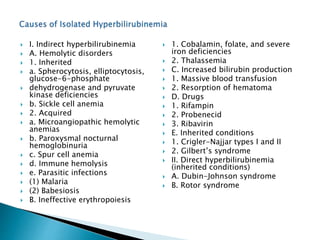
 I. Indirect hyperbilirubinemia
 A. Hemolytic disorders
 1. Inherited
 a. Spherocytosis, elliptocytosis,
glucose-6-phosphate
 dehydrogenase and pyruvate
kinase deficiencies
 b. Sickle cell anemia
 2. Acquired
 a. Microangiopathic hemolytic
anemias
 b. Paroxysmal nocturnal
hemoglobinuria
 c. Spur cell anemia
 d. Immune hemolysis
 e. Parasitic infections
 (1) Malaria
 (2) Babesiosis
 B. Ineffective erythropoiesis
 1. Cobalamin, folate, and severe
iron deficiencies
 2. Thalassemia
 C. Increased bilirubin production
 1. Massive blood transfusion
 2. Resorption of hematoma
 D. Drugs
 1. Rifampin
 2. Probenecid
 3. Ribavirin
 E. Inherited conditions
 1. Crigler-Najjar types I and II
 2. Gilbert’s syndrome
 II. Direct hyperbilirubinemia
(inherited conditions)
 A. Dubin-Johnson syndrome
 B. Rotor syndrome
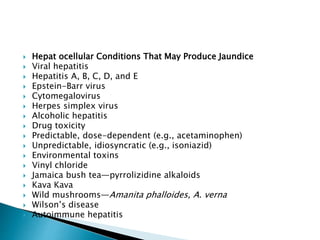
 Hepat ocellular Conditions That May Produce Jaundice
 Viral hepatitis
 Hepatitis A, B, C, D, and E
 Epstein-Barr virus
 Cytomegalovirus
 Herpes simplex virus
 Alcoholic hepatitis
 Drug toxicity
 Predictable, dose-dependent (e.g., acetaminophen)
 Unpredictable, idiosyncratic (e.g., isoniazid)
 Environmental toxins
 Vinyl chloride
 Jamaica bush tea—pyrrolizidine alkaloids
 Kava Kava
 Wild mushrooms—Amanita phalloides, A. verna
 Wilson’s disease
 Autoimmune hepatitis
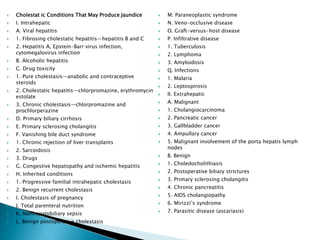
 Cholestat ic Conditions That May Produce Jaundice
 I. Intrahepatic
 A. Viral hepatitis
 1. Fibrosing cholestatic hepatitis—hepatitis B and C
 2. Hepatitis A, Epstein-Barr virus infection,
cytomegalovirus infection
 B. Alcoholic hepatitis
 C. Drug toxicity
 1. Pure cholestasis—anabolic and contraceptive
steroids
 2. Cholestatic hepatitis—chlorpromazine, erythromycin
estolate
 3. Chronic cholestasis—chlorpromazine and
prochlorperazine
 D. Primary biliary cirrhosis
 E. Primary sclerosing cholangitis
 F. Vanishing bile duct syndrome
 1. Chronic rejection of liver transplants
 2. Sarcoidosis
 3. Drugs
 G. Congestive hepatopathy and ischemic hepatitis
 H. Inherited conditions
 1. Progressive familial intrahepatic cholestasis
 2. Benign recurrent cholestasis
 I. Cholestasis of pregnancy
 J. Total parenteral nutrition
 K. Nonhepatobiliary sepsis
 L. Benign postoperative cholestasis
 M. Paraneoplastic syndrome
 N. Veno-occlusive disease
 O. Graft-versus-host disease
 P. Infiltrative disease
 1. Tuberculosis
 2. Lymphoma
 3. Amyloidosis
 Q. Infections
 1. Malaria
 2. Leptospirosis
 II. Extrahepatic
 A. Malignant
 1. Cholangiocarcinoma
 2. Pancreatic cancer
 3. Gallbladder cancer
 4. Ampullary cancer
 5. Malignant involvement of the porta hepatis lymph
nodes
 B. Benign
 1. Choledocholithiasis
 2. Postoperative biliary strictures
 3. Primary sclerosing cholangitis
 4. Chronic pancreatitis
 5. AIDS cholangiopathy
 6. Mirizzi’s syndrome
 7. Parasitic disease (ascariasis)
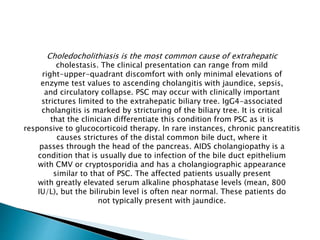
Choledocholithiasis is the most common cause of extrahepatic
cholestasis. The clinical presentation can range from mild
right-upper-quadrant discomfort with only minimal elevations of
enzyme test values to ascending cholangitis with jaundice, sepsis,
and circulatory collapse. PSC may occur with clinically important
strictures limited to the extrahepatic biliary tree. IgG4-associated
cholangitis is marked by stricturing of the biliary tree. It is critical
that the clinician differentiate this condition from PSC as it is
responsive to glucocorticoid therapy. In rare instances, chronic pancreatitis
causes strictures of the distal common bile duct, where it
passes through the head of the pancreas. AIDS cholangiopathy is a
condition that is usually due to infection of the bile duct epithelium
with CMV or cryptosporidia and has a cholangiographic appearance
similar to that of PSC. The affected patients usually present
with greatly elevated serum alkaline phosphatase levels (mean, 800
IU/L), but the bilirubin level is often near normal. These patients do
not typically present with jaundice.
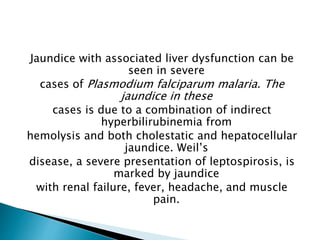
Jaundice with associated liver dysfunction can be
seen in severe
cases of Plasmodium falciparum malaria. The
jaundice in these
cases is due to a combination of indirect
hyperbilirubinemia from
hemolysis and both cholestatic and hepatocellular
jaundice. Weil’s
disease, a severe presentation of leptospirosis, is
marked by jaundice
with renal failure, fever, headache, and muscle
pain.
Jaundice

Jaundice

  • 1.
  • 2.
    Jaundice, or icterus,is a yellowish discoloration of tissue resulting from the deposition of bilirubin. Tissue deposition of bilirubin occurs only in the presence of serum hyperbilirubinemia and is a sign of either liver disease or, less often, a hemolytic disorder. The degree of serum bilirubin elevation can be estimated by physical examination. Slight increases in serum bilirubin level are best detected by examining the sclerae, which have a particular affinity for bilirubin due to their high elastin content. The presence of scleral icterus indicates a serum bilirubin level of at least 51 μmol/L (3 mg/dL). The ability to detect scleral icterus is made more difficult if the examining room has fluorescent lighting. If the examiner suspects scleral icterus, a second site to examine is underneath the tongue. As serum bilirubin levels rise, the skin will eventually become yellow in light-skinned patients and even green if the process is long-standing; the green color is produced by oxidation of bilirubin to biliverdin.
  • 3.
    The differential diagnosisfor yellowing of the skin is limited. In addition to jaundice, it includes carotenoderma, the use of the drug quinacrine, and excessive exposure to phenols. Carotenoderma is the yellow color imparted to the skin of healthy individuals who ingest excessive amounts of vegetables and fruits that contain carotene, such as carrots, leafy vegetables, squash, peaches, and oranges. In jaundice the yellow coloration of the skin is uniformly distributed over the body, whereas in carotenoderma the pigment is concentrated on the palms, soles, forehead, and nasolabial folds. Carotenoderma can be distinguished from jaundice by the sparing of the sclerae. Quinacrine causes a yellow discoloration of the skin in 4–37% of patients treated with it.
  • 4.
    Another sensitive indicatorof increased serum bilirubin is darkening of the urine, which is due to the renal excretion of conjugated bilirubin. Patients often describe their urine as tea- or cola-colored. Bilirubinuria indicates an elevation of the direct serum bilirubin fraction and, therefore, the presence of liver disease. Serum bilirubin levels increase when an imbalance exists between bilirubin production and clearance. A logical evaluation of the patient who is jaundiced requires an understanding of bilirubin production and metabolism.
  • 5.
    Bilirubin, a tetrapyrrolepigment, is a breakdown product of heme (ferroprotoporphyrin IX). About 70–80% of the 250– 300 mg of bilirubin produced each day is derived from the breakdown of hemoglobin in senescent red blood cells. The remainder comes from prematurely destroyed erythroid cells in bone marrow and from the turnover of hemoproteins such as myoglobin and cytochromes found in tissues throughout the body.
  • 6.
    The formation ofbilirubin occurs in reticuloendothelial cells, primarily in the spleen and liver. The first reaction, catalyzed by the microsomal enzyme heme oxygenase, oxidatively cleaves the α bridge of the porphyrin group and opens the heme ring. The end products of this reaction are biliverdin, carbon monoxide, and iron. The second reaction, catalyzed by the cytosolic enzyme biliverdin reductase, reduces the central methylene bridge of biliverdin and converts it to bilirubin. Bilirubin formed in the reticuloendothelial cells is virtually insoluble in water due to tight internal hydrogen bonding between the water-soluble moieties of bilirubin
  • 7.
    To be transportedin blood, bilirubin must be solubilized. Solubilization is accomplished by the reversible, noncovalent binding of bilirubin to albumin. Unconjugated bilirubin bound to albumin is transported to the liver. There, the bilirubin— but not the albumin—is taken up by hepatocytes via a process that at least partly involves carrier-mediated membrane transport. No specific bilirubin transporter has yet been identified. After entering the hepatocyte, unconjugated bilirubin is bound in the cytosol to a number of proteins including proteins in the glutathione-S-transferase superfamily. These proteins serve both to reduce efflux of bilirubin back into the serum and to present the bilirubin for conjugation.
  • 8.
    In the endoplasmicreticulum, bilirubin is solubilized by conjugation to glucuronic acid, a process that disrupts the internal hydrogen bonds and yields bilirubin monoglucuronide and diglucuronide. The conjugation of glucuronic acid to bilirubin is catalyzed by bilirubin uridine diphosphate-glucuronosyl transferase (UDPGT). The now-hydrophilic bilirubin conjugates diffuse from the endoplasmic reticulum to the canalicular membrane, where bilirubin monoglucuronide and diglucuronide are actively transported into canalicular bile by an energy-dependent mechanism involving the multidrug resistance–associated protein 2 (MRP2).
  • 9.
    The conjugated bilirubinexcreted into bile drains into the duodenum and passes unchanged through the proximal small bowel. Conjugated bilirubin is not taken up by the intestinal mucosa. When the conjugated bilirubin reaches the distal ileum and colon, it is hydrolyzed to unconjugated bilirubin by bacterial β-glucuronidases. The unconjugated bilirubin is reduced by normal gut bacteria to form a group of colorless tetrapyrroles called urobilinogens. About 80– 90% of these products are excreted in feces, either unchanged or oxidized to orange derivatives called urobilins. The remaining 10–20% of the urobilinogens are passively absorbed, enter the portal venous blood, and are re-excreted by the liver. A small fraction (usually <3 mg/dL) escapes hepatic uptake, filters across the renal glomerulus, and is excreted in urine.
  • 10.
    The terms directand indirect bilirubin—i.e., conjugated and unconjugated bilirubin, respectively—are based on the original van den Bergh reaction. This assay, or a variation of it, is still used in most clinical chemistry laboratories to determine the serum bilirubin level. In this assay, bilirubin is exposed to diazotized sulfanilic acid and splits into two relatively stable dipyrrylmethene azopigments that absorbmaximally at 540 nm, allowing photometric analysis. The direct fraction is that which reacts with diazotized sulfanilic acid in the absence of an accelerator substance such as alcohol. The direct fraction provides an approximation of the conjugated bilirubin level in serum. The total serum bilirubin is the amount that reacts after the addition of alcohol. The indirect fraction is the difference between the total and the direct bilirubin levels and provides an estimate of the unconjugated bilirubin in serum.
  • 11.
    Unconjugated bilirubin isalways bound to albumin in the serum, is not filtered by the kidney, and is not found in the urine. Conjugated bilirubin is filtered at the glomerulus, and the majority is reabsorbed by the proximal tubules; a small fraction is excreted in the urine. Any bilirubin found in the urine is conjugated bilirubin. The presence of bilirubinuria implies the presence of liver disease. A urine dipstick test (Ictotest) gives the same information as fractionation of the serum bilirubin and is very accurate. A false-negative result is possible in patients with prolonged cholestasis due to the predominance of delta bilirubin, which is covalently bound to albumin and therefore not filtered by the renal glomeruli
  • 12.
    The goal ofthis chapter is not to provide an encyclopedic review of all of the conditions that can cause jaundice. Rather, the chapter is intended to offer a framework that helps a physician to evaluate the patient with jaundice in a logical way. Simply stated, the initial step is to perform appropriate blood tests in order to determine whether the patient has an isolated elevation of serum bilirubin. If so, is the bilirubin elevation due to an increased unconjugated or conjugated fraction? If the hyperbilirubinemia is accompanied by other liver test abnormalities, is the disorder hepatocellular or cholestatic? If cholestatic, is it intra- or extrahepatic? All of these questions can be answered with a thoughtful history, physical examination, and interpretation of laboratory and radiologic tests and procedures.
  • 13.
    The bilirubin presentin serum represents a balance between input from the production of bilirubin and hepatic/biliary removal of the pigment. Hyperbilirubinemia may result from (1) overproduction of bilirubin; (2) impaired uptake, conjugation, or excretion of bilirubin; or (3) regurgitation of unconjugated or conjugated bilirubin from damaged hepatocytes or bile ducts. An increase in unconjugated bilirubin in serum results from overproduction, impaired uptake, or conjugation of bilirubin. An increase in conjugated bilirubin is due to decreased excretion into the bile ductules or backward leakage of the pigment. The initial steps in evaluating the patient with jaundice are to determine (1) whether the hyperbilirubinemia is predominantly conjugated or unconjugated in nature and (2) whether other biochemical liver tests are abnormal.
  • 14.
    Unconjugated Hyperbilirubinemia Thedifferential diagnosis of isolated unconjugated hyperbilirubinemia is limited. The critical determination is whether the patient is suffering from a hemolytic process resulting in an overproduction of bilirubin (hemolytic disorders and ineffective erythropoiesis) or from impaired hepatic uptake/conjugation of bilirubin (drug effect or genetic disorders). Hemolytic disorders that cause excessive heme production may be either inherited or acquired. Inherited disorders include spherocytosis, sickle cell anemia, thalassemia, and deficiency of red cell enzymes such as pyruvate kinase and glucose-6-phosphate dehydrogenase. In these conditions, the serum bilirubin level rarely exceeds 86 μmol/L (5 mg/dL).
  • 15.
    Higher levels mayoccur when there is coexistent renal or hepatocellular dysfunction or in acute hemolysis, such as a sickle cell crisis. In evaluating jaundice in patients with chronic hemolysis, it is important to remember the high incidence of pigmented (calcium bilirubinate) gallstones found in these these patients usually survive into adulthood, although they may be susceptible to kernicterus under the stress of intercurrent illness or surgery.
  • 16.
    Gilbert’s syndrome isalso marked by the impaired conjugation of bilirubin (to approximately one-third of normal) due to reduced bilirubin UDPGT activity. Patients with Gilbert’s syndrome have mild unconjugated hyperbilirubinemia, with serum levels almost always <103 μmol/L (6 mg/dL). The serum levels may fluctuate, and jaundice is often identified only during periods of fasting. The molecular defect in Gilbert’s syndrome is linked to a reduction in transcription of the bilirubin UDPGT gene due to mutations in the promoter and, rarely, in the coding region. Unlike both Crigler-Najjar syndromes, Gilbert’s syndrome is very common. The reported incidence is 3–7% of the population, with males predominating over females by a ratio of 2–7:1.
  • 17.
    Conjugated Hyperbilirubinemia Elevatedconjugated hyperbilirubinemia is found in two rare inherited conditions: Dubin-Johnson syndrome and Rotor syndrome (.Patients with either condition present with asymptomatic jaundice. The defect in Dubin-Johnson syndrome is the presence of mutations in the gene for MRP2. These patients have altered excretion of bilirubin into the bile ducts. Rotor syndrome may represent a deficiency of the major hepatic drug uptake transporters OATP1B1 and OATP1B3. Differentiating between these syndromes is possible but is clinically unnecessary due to their benign nature.
  • 18.
    The remainder ofthis chapter will focus on the evaluation of patients with conjugated hyperbilirubinemia in the setting of other liver test abnormalities. This group of patients can be divided into those with a primary hepatocellular process and those with intraor extrahepatic cholestasis. This distinction, which is based on the history and physical examination as well as the pattern of liver test abnormalities, guides the clinician’s evaluation
  • 19.
    History A completemedical history is perhaps the single most important part of the evaluation of the patient with unexplained jaundice. Important considerations include the use of or exposure to any chemical or medication, whether physician- prescribed, overthe- counter, complementary, or alternative medicines (e.g., herbal and vitamin preparations) or other drugs such as anabolic steroids. The patient should be carefully questioned about possible parenteral exposures, including transfusions, intravenous and intranasal drug use, tattooing, and sexual activity.
  • 20.
    Other important points includerecent travel history; exposure to people with jaundice; exposure to possibly contaminated foods; occupational exposure to hepatotoxins; alcohol consumption; the duration of jaundice; and the presence of any accompanying signs and symptoms, such as arthralgias, myalgias, rash, anorexia, weight loss, abdominal pain, fever, pruritus, and changes in the urine and stool. While none of the latter manifestations is specific for any one condition, any of them can suggest a particular diagnosis. A history of arthralgias and myalgias predating jaundice suggests hepatitis, either viral or drug-related. Jaundice associated with the sudden onset of severe right-upper-quadrant pain and shaking chills suggests choledocholithiasis and ascending cholangitis.
  • 21.
    Physical Examination Thegeneral assessment should include evaluation of the patient’s nutritional status. Temporal and proximal muscle wasting suggests long-standing disease such as pancreatic cancer or cirrhosis. Stigmata of chronic liver disease, including spider nevi, palmar erythema, gynecomastia, caput medusae, Dupuytren’s contractures, parotid gland enlargement, and testicular atrophy, are commonly seen in advanced alcoholic (Laennec’s) cirrhosis and occasionally in other types of cirrhosis. An enlarged left supraclavicular node (Virchow’s node) or a periumbilical nodule (Sister Mary Joseph’s nodule) suggests an abdominal malignancy.
  • 22.
    Jugular venous distention,a sign of right-sided heart failure, suggests hepatic congestion. Right pleural effusion in the absence of clinically apparent ascites may be seen in advanced cirrhosis. The abdominal examination should focus on the size and consistency of the liver, on whether the spleen is palpable and hence enlarged, and on whether ascites is present. Patients with cirrhosis may have an enlarged left lobe of the liver, which is felt below the xiphoid, and an enlarged spleen. A grossly enlarged nodular liver or an obvious abdominal mass suggests malignancy. An enlarged tender liver could signify viral or alcoholic hepatitis; an infiltrative process such as amyloidosis; or, less often, an acutely congested liver secondary to right-sided heart failure. Severe right-upper- quadrant tenderness with respiratory arrest on inspiration (Murphy’s sign) suggests cholecystitis. Ascites in the presence of jaundice suggests either cirrhosis or malignancy with peritoneal spread
  • 23.
    Laboratory Tests Abattery of tests are helpful in the initial evaluation of a patient with unexplained jaundice. These include total and direct serum bilirubin measurement with fractionation; determination of serum aminotransferase, alkaline phosphatase, and albumin concentrations; and prothrombin time tests. Enzyme tests (alanine aminotransferase [ALT], aspartate aminotransferase [AST], and alkaline phosphatase [ALP]) are helpful in differentiating between a hepatocellular process and a cholestatic processA
  • 24.
    In addition toenzyme tests, all jaundiced patients should have additional blood tests—specifically, an albumin level and a prothrombin time—to assess liver function. A low albumin level suggests a chronic process such as cirrhosis or cancer. A normal albumin level is suggestive of a more acute process such as viral hepatitis or choledocholithiasis. An elevated prothrombin time indicates either vitamin K deficiency due to prolonged jaundice and malabsorption of vitamin K or significant hepatocellular dysfunction. The failure of the prothrombin time to correct with parenteral administration of vitamin K indicates severe hepatocellular injury. The results of the bilirubin, enzyme, albumin, and prothrombin time tests will usually indicate whether a jaundiced patient has a hepatocellular or a cholestatic disease and offer some indication of the duration and severity of the disease. The causes and evaluations of hepatocellular and cholestatic diseases are quite different.
  • 25.
    Hepatocellular Conditions Hepatocellulardiseases that can cause jaundice include viral hepatitis, drug or environmental toxicity, alcohol, and end-stage cirrhosis from any cause. Wilson’s disease occurs primarily in young adults. Autoimmune hepatitis is typically seen in young to middle-aged women but may affect men and women of any age. Alcoholic hepatitis can be differentiated from viral and toxin-related hepatitis by the pattern of the aminotransferases: patients with alcoholic hepatitis typically have an AST-to-ALT ratio of at least 2:1, and the AST level rarely exceeds 300 U/L. Patients with acute viral hepatitis and toxin-related injury severe enough to produce jaundice typically have aminotransferase levels >500 U/L, with the ALT greater than or equal to the AST.
  • 26.
    While ALT andAST values <8 times normal may be seen in either hepatocellular or cholestatic liver disease, values 25 times normal or higher are seen primarily in acute hepatocellular diseases. Patients with jaundice from cirrhosis can have normal or only slightly elevated aminotransferase levels. When the clinician determines that a patient has a hepatocellular disease, appropriate testing for acute viral hepatitis includes a hepatitis A IgM antibody assay, a hepatitis B surface antigen and core IgM antibody assay, a hepatitis C viral RNA test, and, depending on the circumstances, a hepatitis E IgM antibody assay. Because it can take many weeks for hepatitis C antibody to become detectable, its assay is an unreliable test if acute hepatitis C is suspected. Studies for hepatitis D and E viruses, Epstein-Barr virus (EBV), and cytomegalovirus (CMV) may also be indicated.
  • 27.
    Cholestatic Conditions Whenthe pattern of the liver tests suggests a cholestatic disorder, the next step is to determine whether it is intraor extrahepatic cholestasis Distinguishing intrahepatic from extrahepatic cholestasis may be difficult. History, physical examination, and laboratory tests often are not helpful. The next appropriate test is an ultrasound. The ultrasound is inexpensive, does not expose the patient to ionizing radiation, and can detect dilation of the intra- and extrahepatic biliary tree with a high degree of sensitivity and specificity. The absence of biliary dilation suggests intrahepatic cholestasis, while its presence indicates extrahepatic cholestasis. False-negative results occur in patients with partial obstruction of the common bile duct or in patients with cirrhosis or primary sclerosing cholangitis (PSC), in which scarring prevents the intrahepatic ducts from dilating.
  • 28.
     I. Indirecthyperbilirubinemia  A. Hemolytic disorders  1. Inherited  a. Spherocytosis, elliptocytosis, glucose-6-phosphate  dehydrogenase and pyruvate kinase deficiencies  b. Sickle cell anemia  2. Acquired  a. Microangiopathic hemolytic anemias  b. Paroxysmal nocturnal hemoglobinuria  c. Spur cell anemia  d. Immune hemolysis  e. Parasitic infections  (1) Malaria  (2) Babesiosis  B. Ineffective erythropoiesis  1. Cobalamin, folate, and severe iron deficiencies  2. Thalassemia  C. Increased bilirubin production  1. Massive blood transfusion  2. Resorption of hematoma  D. Drugs  1. Rifampin  2. Probenecid  3. Ribavirin  E. Inherited conditions  1. Crigler-Najjar types I and II  2. Gilbert’s syndrome  II. Direct hyperbilirubinemia (inherited conditions)  A. Dubin-Johnson syndrome  B. Rotor syndrome
  • 29.
     Hepat ocellularConditions That May Produce Jaundice  Viral hepatitis  Hepatitis A, B, C, D, and E  Epstein-Barr virus  Cytomegalovirus  Herpes simplex virus  Alcoholic hepatitis  Drug toxicity  Predictable, dose-dependent (e.g., acetaminophen)  Unpredictable, idiosyncratic (e.g., isoniazid)  Environmental toxins  Vinyl chloride  Jamaica bush tea—pyrrolizidine alkaloids  Kava Kava  Wild mushrooms—Amanita phalloides, A. verna  Wilson’s disease  Autoimmune hepatitis
  • 30.
     Cholestat icConditions That May Produce Jaundice  I. Intrahepatic  A. Viral hepatitis  1. Fibrosing cholestatic hepatitis—hepatitis B and C  2. Hepatitis A, Epstein-Barr virus infection, cytomegalovirus infection  B. Alcoholic hepatitis  C. Drug toxicity  1. Pure cholestasis—anabolic and contraceptive steroids  2. Cholestatic hepatitis—chlorpromazine, erythromycin estolate  3. Chronic cholestasis—chlorpromazine and prochlorperazine  D. Primary biliary cirrhosis  E. Primary sclerosing cholangitis  F. Vanishing bile duct syndrome  1. Chronic rejection of liver transplants  2. Sarcoidosis  3. Drugs  G. Congestive hepatopathy and ischemic hepatitis  H. Inherited conditions  1. Progressive familial intrahepatic cholestasis  2. Benign recurrent cholestasis  I. Cholestasis of pregnancy  J. Total parenteral nutrition  K. Nonhepatobiliary sepsis  L. Benign postoperative cholestasis  M. Paraneoplastic syndrome  N. Veno-occlusive disease  O. Graft-versus-host disease  P. Infiltrative disease  1. Tuberculosis  2. Lymphoma  3. Amyloidosis  Q. Infections  1. Malaria  2. Leptospirosis  II. Extrahepatic  A. Malignant  1. Cholangiocarcinoma  2. Pancreatic cancer  3. Gallbladder cancer  4. Ampullary cancer  5. Malignant involvement of the porta hepatis lymph nodes  B. Benign  1. Choledocholithiasis  2. Postoperative biliary strictures  3. Primary sclerosing cholangitis  4. Chronic pancreatitis  5. AIDS cholangiopathy  6. Mirizzi’s syndrome  7. Parasitic disease (ascariasis)
  • 31.
    Choledocholithiasis is themost common cause of extrahepatic cholestasis. The clinical presentation can range from mild right-upper-quadrant discomfort with only minimal elevations of enzyme test values to ascending cholangitis with jaundice, sepsis, and circulatory collapse. PSC may occur with clinically important strictures limited to the extrahepatic biliary tree. IgG4-associated cholangitis is marked by stricturing of the biliary tree. It is critical that the clinician differentiate this condition from PSC as it is responsive to glucocorticoid therapy. In rare instances, chronic pancreatitis causes strictures of the distal common bile duct, where it passes through the head of the pancreas. AIDS cholangiopathy is a condition that is usually due to infection of the bile duct epithelium with CMV or cryptosporidia and has a cholangiographic appearance similar to that of PSC. The affected patients usually present with greatly elevated serum alkaline phosphatase levels (mean, 800 IU/L), but the bilirubin level is often near normal. These patients do not typically present with jaundice.
  • 32.
    Jaundice with associatedliver dysfunction can be seen in severe cases of Plasmodium falciparum malaria. The jaundice in these cases is due to a combination of indirect hyperbilirubinemia from hemolysis and both cholestatic and hepatocellular jaundice. Weil’s disease, a severe presentation of leptospirosis, is marked by jaundice with renal failure, fever, headache, and muscle pain.