Tanmoy D. Goswami et al Int. Journal of Engineering Research and Applications
ISSN : 2248-9622, Vol. 4, Issue 2( Version 2), February 2014, pp.50-53

RESEARCH ARTICLE

www.ijera.com

OPEN ACCESS

Android Based Rush And Drunk Driver Alerting System
Tanmoy D. Goswami*, Shrinivas R. Zanwar **, Zafar Ul. Hasan***
* Student, Department of Computer Sci. & Engg., Dr. Seema Quadri Institute of Tech, Aurangabad, India
** Asst. Prof, Department of Electronics & Communication Engineering, Dr. Seema Quadri Institute of Tech,
Aurangabad, India
*** Asst. Prof, Department of Computer Engg., SITRC, Nashik, India

ABSTRACT
The Rush driving and driving after consumption of alcohol is a major cause of road accident worldwide. In this
paper we proposed an idea to alert rush and drunk driver at early stage before actual accident take place.
Complete system works on a cell phone having software installed in it with some sensor. The program calculates
the sensor reading and matches with the pattern already present in system, if match found then an alert will give
to driver and also a text message will send to the relative asking for help with location details. This system will
design on an android based cell phone. Our proposed system will prevent many accidents to occur and save
lives.
Keywords - Acceleration Cell Phones, Rush Driving, Sensor.

I. INTRODUCTION
A report of Ministry of Road Transport &
Highways, Government of India says during the year
2011, there were around 4.98 lakh road accidents,
which killed 1.42 lakh people and injured more than
5 lakh persons, many of them are disabled for rest of
their lives [1]. Now a day’s risk to drive a vehicle has
risen very high. Crashes due to rush driving is a
serious danger not only to the drivers themselves but
also to the public present on the road. A major cause
of road accidents is either rush driving or driving
after having alcohol. In this paper we are proposed a
system which will very efficiently alert the driver
who is driving rashly. Identification of risk and
taking preventive action to minimize risk is a vital
challenge in front of current technology. So now time
demands a real time monitoring and alerting system
that will minimize such driving risks with fast
response time. Despite the fact that driving under the
influence of alcohol is a major problem, detection of
drunk driver is not so easy and it till depends on
visual observations by patrol officers. Drivers under
the influence of alcohol show a marked decline of
perception, recognition, and controlling of vehicle, so
they tend to make certain types of dangerous moves.
One of the portable devices that we all have with us
is cell phone. It can function very effectively and at
the same time its communication services have a
wide coverage. Hence a system that addresses this
issue can be easily designed and implemented using
cell phone technology. An alert can be given to the
careless or a rush driver by measuring the speed and
orientation of the vehicle. Those values can be
gathered by using accelerometer and orientation
sensor.
www.ijera.com

We will calculate separately longitudinal and lateral
acceleration values and match the result multiple
times with a predefined pattern to identify the rush or
drunk driver. After that the alert will be given to the
driver. Introduction of the paper should explain the
nature of the problem, previous work, purpose, and
the contribution of the paper. The contents of each
section may be provided to understand easily about
the paper.

II. LITERATURE SURVEY / RELATED
WORK
Some researches have already done in the
field of driving monitoring tools. Some of them are
knows as driver vigilance monitoring. It works on
detecting and preventing fatigue of the driver. Other
researchers focus on real-time driving pattern
recognition.
In detail, they worked with various
methodologies and techniques mentioned as follows.
Visual observation is an option to detect driver
fatigue. Two cameras were used on dashboard to
collect the visual cues of drivers, such as head
movement, eyelid movement, facial expression, and
gaze movement in order to detect fatigue with a
probabilistic model [2].
Issue of sleep onset from the global analysis
of the physiological state of fatigue, and take eyes
opening and closing as cues of sleep onset is also a
major area of concern in case of fatigue driving [3].
Help of vision-based system to monitor the eyes
conditions in order to predict fatigue in driving is
discussed.
Two fixed cameras to capture the driver's
sight line and the driving lane path for the purpose of
50 | P a g e
Tanmoy D. Goswami et al Int. Journal of Engineering Research and Applications
ISSN : 2248-9622, Vol. 4, Issue 2( Version 2), February 2014, pp.50-53
driving pattern and status recognition is dealt.
Correlation coefficients calculated to monitor the
driving status and patterns [4]. These methods all
required one or more cameras to be installed in the
vehicle and just in front of the driver. It will cause
some potential safety issues to the driver. Besides
visual methods, the interaction at the vehicle-human
interface also gives clues to driving information
monitoring.
It is assumed that the time derivative of
force exerted by the driver at the vehicle-human
interface, such as pressure on the accelerator pedal,
can help to decide the level of alertness of the driver.
Practically, a force sensor on the accelerator pedal to
capture the exerted force to predict driver fatigue
used [5].
Saab, automobile manufacturer has designed
an experimental product AlcoKey, which used the
breath sample of drivers. It collects the breath sample
before they start the vehicle. Then the AlcoKey's
radio transmitter sends a signal to the vehicle's
electronic control unit. Now the control unit will
decide wither the vehicle to be started or not based on
the level of alcohol present in the breath sample.
These researches worked based on the interactions
between human and vehicle to determine drunk
driving. It also required that the vehicle need to be
tightly coupled with the auxiliary add-ons, so their
compatibility have been compromised most of the
time [6].
Architecture for driving information system
using GPS receiver and specific sensors is
implemented. They have recorded the acceleration
and GPS data and used pattern matching to detect and
classify driving styles. The work shows that the
acceleration reflects the measures of driving pattern.
However, it do not only aim on the acceleration
signature, but also take help of GPS data. The devices
required in their system are specific and not
conveniently compatible [7].
III. RESEARCH PROBLEM
In the US NHTSA’s [8] has studied many
driving behaviors when vehicles are drive under
influence of alcohol. The researchers have found that
there are some patterns of driving behaviors for these
drivers who are under influence of alcohol. Based on
this research we can conclude that there are some
categories related to drunken driving behaviors. All
these driving behaviors are related to the vehicle
movement. Also depends on the driver’s vigilance &
judgment. The hints to solve this problem can be
classified as follows:
Clues related to vigilance problem and
judgment:
Example: such as poor response to traffic signal,
Failure in identifying lane markers and driving
www.ijera.com

www.ijera.com

without headlights at dark and drive on wrong side of
road.
Hints related to maintaining Speed issues:
Example: Sudden acceleration or deceleration and
breaking inappropriately and stopping carelessly.
Stimulus related to lane position maintenance
problem:
Example: Driving with twist and turns, swerving,
drifting, rough turning or taking a wide radius turn.

Fig 1: Problem in maintaining the lane position:

(a) Weaving, (b) Drifting, (c) Swerving, (d)
turning with wide radius [9]
51 | P a g e
Tanmoy D. Goswami et al Int. Journal of Engineering Research and Applications
ISSN : 2248-9622, Vol. 4, Issue 2( Version 2), February 2014, pp.50-53
The outcome concludes that:
 These driving patterns produce clear idea about
driving under the influence of alcohol.
 The pattern related to maintaining lane position
& speed control is the prime categories for good
enough to conclude drunken drive identification.
 If we focus on these hints we can implement the
identification system for drunk driving or rush
driving.

www.ijera.com

2. Calibration module
3. Data processing and pattern matching module
4. Alert and communication module.
The third module marked by a dashed box
will implement the identification algorithm. Our
design will consume very less power, as the screen is
only activated when required. The work flow of our
rush and drunken driving alerting system is also
illustrated in Fig. 2.

IV. PROPOSED METHODOLOGY
A. LANE POSITION MAINTENANCE AND LATERAL
ACCELERATION
Normally, the prime reason of abnormal or
irregular curvy movements is the lane position
maintenance which causes weaving, drifting,
weaving and turning with a wide radius. Result of
these all driving behaviors is an extraordinary change
on lateral acceleration. U.S. NHTSA’s report releases
the clear representation of these situations, as shown
in Fig. 1.
As demonstrated in Fig. 1(a), weaving in
simple words means moving a vehicle in zigzag
manner. Probably, the lateral movement is caused by
rotating a steering wheel toward one direction and a
next coming steering toward the other direction.
Similarly as stated above, the drifting, swerving and
turning with a wide radius have the abnormal lateral
movements, as shown in Fig. 1(b) (c) (d).
B. SPEED MAINTAINING AND LONGITUDINAL
ACCELERATION
A rush driver or a driver who is driving
vehicle under the influence of alcohol unable to keep
proper speed and so he often experiences difficulty in
driving. Sudden acceleration or deceleration,
eccentric braking and shaky stop are some strong
hints that concludes the driver is an under influence
of alcohol. They all cause an inappropriate change in
longitudinal acceleration.
We
pretend
that
the
longitudinal
acceleration is toward the head of the vehicle. So the
concise acceleration of vehicle will lead to an
extensive increase of longitudinal acceleration i.e. in
positive values. And on the converse, the concise
deceleration, eccentric braking or shaky stop will
cause an immense decrease of longitudinal
acceleration i.e. in negative values.

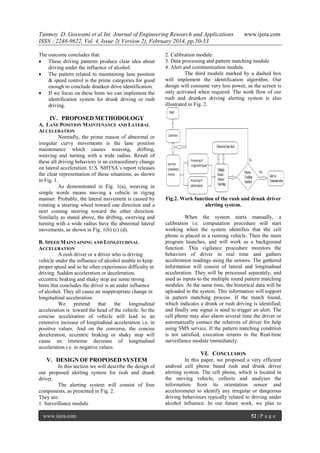
Fig.2. Work function of the rush and drunk driver
alerting system.
When the system starts manually, a
calibration i.e. computation procedure will start
working when the system identifies that the cell
phone is placed in a running vehicle. Then the main
program launches, and will work as a background
function. This vigilance procedure monitors the
behaviors of driver in real time and gathers
acceleration readings using the sensors. The gathered
information will consist of lateral and longitudinal
acceleration. They will be processed separately, and
used as inputs to the multiple round pattern matching
modules. At the same time, the historical data will be
uploaded in the system. This information will support
in pattern matching process. If the match found,
which indicates a drunk or rush driving is identified;
and finally one signal is send to trigger an alert. The
cell phone may also alarm several time the driver or
automatically contact the relatives of driver for help
using SMS service. If the pattern matching condition
is not satisfied, execution returns to the Real-time
surveillance module immediately.

VI. CONCLUSION
V. DESIGN OF PROPOSED SYSTEM
In this section we will describe the design of
our proposed alerting system for rush and drunk
driver.
The alerting system will consist of four
components, as presented in Fig. 2.
They are:
1. Surveillance module
www.ijera.com

In this paper, we proposed a very efficient
android cell phone based rush and drunk driver
alerting system. The cell phone, which is located in
the moving vehicle, collects and analyses the
information from its orientation sensor and
accelerometer to identify any irregular or dangerous
driving behaviours typically related to driving under
alcohol influence. In our future work, we plan to
52 | P a g e
Tanmoy D. Goswami et al Int. Journal of Engineering Research and Applications
ISSN : 2248-9622, Vol. 4, Issue 2( Version 2), February 2014, pp.50-53
Improve our identification system by
integrating all available sensing data on a cell phone,
e.g., GPS data and camera image also improve the
communication part by using free SMS services.

[5]

References
[1]

[2]

[3]

[4]

Report on “Road Accidents in India 2011”
by ministry of Road Transport and Highway
Transport Research Wings New Delhi” in
June 2012
Z. Zhu and Q. Ji, "Real Time and Nonintrusive Driver Fatigue Monitoring", in The
7th International IEEE Conference on
Intelligent Transportation Systems, pp. 657662, Oct. 2004.
A. B. Albu, B. Widsten, T. Wang, J. Lan
and 1. Mah, "A Computer Vision-Based
System for Real-Time Detection of Sleep
Onset in Fatigued Drivers", in 2008 IEEE
Intelligent Vehicles Symposium, pp. 25-30,
June 2008
J. Lee, J. Li, L. Liu and C. Chen, "A Novel
Driving Pattern Recognition and Status
Monitoring System", in First pacific rim

www.ijera.com

[6]
[7]

[8]
[9]

www.ijera.com

symposium, PSIVT 2006, pp. 504-512,
December 2006.
A. V. Desai and M. A. Haque, "Vigilance
Monitoring for Operator Safety: A
Simulation Study on Highway Driving", in
Journal of Safety Research, Vol. 37, No. 2,
pp. 139-147, 2006.
"Saab Alco Key Helps Drivers", http://
www.saabnet.comltsnlpress/061013a.html.
V. D. Lecce and M. Calabrese,
"Experimental System to Support Real Time
Driving Pattern Recognition", in Advanced
Intelligent Computing Theories and
Applications With Aspects of Artificial
Intelligence Annals of Emergency Medicine,
pp. 1192-1199, 2008.
U.S. NHTSA, "Traffic Safety", http://wwwnrd.nhtsa.dot.govlPubs/811172.pdf
“Mobile Phone Based Drunk Driving
Detection Jiangpeng Dai” Jin Teng, Xiaole
Bai, Zhaohui Shenj and Dong Xuan Digital
Object Identifier 10.41 0BIICST. PERVAS
IVEHEALTH2010.8901 http://dx.doi.org/10
.410BIICST.PERVASIVEHEAL TH2010.
8901

53 | P a g e

J42025053

  • 1.
    Tanmoy D. Goswamiet al Int. Journal of Engineering Research and Applications ISSN : 2248-9622, Vol. 4, Issue 2( Version 2), February 2014, pp.50-53 RESEARCH ARTICLE www.ijera.com OPEN ACCESS Android Based Rush And Drunk Driver Alerting System Tanmoy D. Goswami*, Shrinivas R. Zanwar **, Zafar Ul. Hasan*** * Student, Department of Computer Sci. & Engg., Dr. Seema Quadri Institute of Tech, Aurangabad, India ** Asst. Prof, Department of Electronics & Communication Engineering, Dr. Seema Quadri Institute of Tech, Aurangabad, India *** Asst. Prof, Department of Computer Engg., SITRC, Nashik, India ABSTRACT The Rush driving and driving after consumption of alcohol is a major cause of road accident worldwide. In this paper we proposed an idea to alert rush and drunk driver at early stage before actual accident take place. Complete system works on a cell phone having software installed in it with some sensor. The program calculates the sensor reading and matches with the pattern already present in system, if match found then an alert will give to driver and also a text message will send to the relative asking for help with location details. This system will design on an android based cell phone. Our proposed system will prevent many accidents to occur and save lives. Keywords - Acceleration Cell Phones, Rush Driving, Sensor. I. INTRODUCTION A report of Ministry of Road Transport & Highways, Government of India says during the year 2011, there were around 4.98 lakh road accidents, which killed 1.42 lakh people and injured more than 5 lakh persons, many of them are disabled for rest of their lives [1]. Now a day’s risk to drive a vehicle has risen very high. Crashes due to rush driving is a serious danger not only to the drivers themselves but also to the public present on the road. A major cause of road accidents is either rush driving or driving after having alcohol. In this paper we are proposed a system which will very efficiently alert the driver who is driving rashly. Identification of risk and taking preventive action to minimize risk is a vital challenge in front of current technology. So now time demands a real time monitoring and alerting system that will minimize such driving risks with fast response time. Despite the fact that driving under the influence of alcohol is a major problem, detection of drunk driver is not so easy and it till depends on visual observations by patrol officers. Drivers under the influence of alcohol show a marked decline of perception, recognition, and controlling of vehicle, so they tend to make certain types of dangerous moves. One of the portable devices that we all have with us is cell phone. It can function very effectively and at the same time its communication services have a wide coverage. Hence a system that addresses this issue can be easily designed and implemented using cell phone technology. An alert can be given to the careless or a rush driver by measuring the speed and orientation of the vehicle. Those values can be gathered by using accelerometer and orientation sensor. www.ijera.com We will calculate separately longitudinal and lateral acceleration values and match the result multiple times with a predefined pattern to identify the rush or drunk driver. After that the alert will be given to the driver. Introduction of the paper should explain the nature of the problem, previous work, purpose, and the contribution of the paper. The contents of each section may be provided to understand easily about the paper. II. LITERATURE SURVEY / RELATED WORK Some researches have already done in the field of driving monitoring tools. Some of them are knows as driver vigilance monitoring. It works on detecting and preventing fatigue of the driver. Other researchers focus on real-time driving pattern recognition. In detail, they worked with various methodologies and techniques mentioned as follows. Visual observation is an option to detect driver fatigue. Two cameras were used on dashboard to collect the visual cues of drivers, such as head movement, eyelid movement, facial expression, and gaze movement in order to detect fatigue with a probabilistic model [2]. Issue of sleep onset from the global analysis of the physiological state of fatigue, and take eyes opening and closing as cues of sleep onset is also a major area of concern in case of fatigue driving [3]. Help of vision-based system to monitor the eyes conditions in order to predict fatigue in driving is discussed. Two fixed cameras to capture the driver's sight line and the driving lane path for the purpose of 50 | P a g e
  • 2.
    Tanmoy D. Goswamiet al Int. Journal of Engineering Research and Applications ISSN : 2248-9622, Vol. 4, Issue 2( Version 2), February 2014, pp.50-53 driving pattern and status recognition is dealt. Correlation coefficients calculated to monitor the driving status and patterns [4]. These methods all required one or more cameras to be installed in the vehicle and just in front of the driver. It will cause some potential safety issues to the driver. Besides visual methods, the interaction at the vehicle-human interface also gives clues to driving information monitoring. It is assumed that the time derivative of force exerted by the driver at the vehicle-human interface, such as pressure on the accelerator pedal, can help to decide the level of alertness of the driver. Practically, a force sensor on the accelerator pedal to capture the exerted force to predict driver fatigue used [5]. Saab, automobile manufacturer has designed an experimental product AlcoKey, which used the breath sample of drivers. It collects the breath sample before they start the vehicle. Then the AlcoKey's radio transmitter sends a signal to the vehicle's electronic control unit. Now the control unit will decide wither the vehicle to be started or not based on the level of alcohol present in the breath sample. These researches worked based on the interactions between human and vehicle to determine drunk driving. It also required that the vehicle need to be tightly coupled with the auxiliary add-ons, so their compatibility have been compromised most of the time [6]. Architecture for driving information system using GPS receiver and specific sensors is implemented. They have recorded the acceleration and GPS data and used pattern matching to detect and classify driving styles. The work shows that the acceleration reflects the measures of driving pattern. However, it do not only aim on the acceleration signature, but also take help of GPS data. The devices required in their system are specific and not conveniently compatible [7]. III. RESEARCH PROBLEM In the US NHTSA’s [8] has studied many driving behaviors when vehicles are drive under influence of alcohol. The researchers have found that there are some patterns of driving behaviors for these drivers who are under influence of alcohol. Based on this research we can conclude that there are some categories related to drunken driving behaviors. All these driving behaviors are related to the vehicle movement. Also depends on the driver’s vigilance & judgment. The hints to solve this problem can be classified as follows: Clues related to vigilance problem and judgment: Example: such as poor response to traffic signal, Failure in identifying lane markers and driving www.ijera.com www.ijera.com without headlights at dark and drive on wrong side of road. Hints related to maintaining Speed issues: Example: Sudden acceleration or deceleration and breaking inappropriately and stopping carelessly. Stimulus related to lane position maintenance problem: Example: Driving with twist and turns, swerving, drifting, rough turning or taking a wide radius turn. Fig 1: Problem in maintaining the lane position: (a) Weaving, (b) Drifting, (c) Swerving, (d) turning with wide radius [9] 51 | P a g e
  • 3.
    Tanmoy D. Goswamiet al Int. Journal of Engineering Research and Applications ISSN : 2248-9622, Vol. 4, Issue 2( Version 2), February 2014, pp.50-53 The outcome concludes that:  These driving patterns produce clear idea about driving under the influence of alcohol.  The pattern related to maintaining lane position & speed control is the prime categories for good enough to conclude drunken drive identification.  If we focus on these hints we can implement the identification system for drunk driving or rush driving. www.ijera.com 2. Calibration module 3. Data processing and pattern matching module 4. Alert and communication module. The third module marked by a dashed box will implement the identification algorithm. Our design will consume very less power, as the screen is only activated when required. The work flow of our rush and drunken driving alerting system is also illustrated in Fig. 2. IV. PROPOSED METHODOLOGY A. LANE POSITION MAINTENANCE AND LATERAL ACCELERATION Normally, the prime reason of abnormal or irregular curvy movements is the lane position maintenance which causes weaving, drifting, weaving and turning with a wide radius. Result of these all driving behaviors is an extraordinary change on lateral acceleration. U.S. NHTSA’s report releases the clear representation of these situations, as shown in Fig. 1. As demonstrated in Fig. 1(a), weaving in simple words means moving a vehicle in zigzag manner. Probably, the lateral movement is caused by rotating a steering wheel toward one direction and a next coming steering toward the other direction. Similarly as stated above, the drifting, swerving and turning with a wide radius have the abnormal lateral movements, as shown in Fig. 1(b) (c) (d). B. SPEED MAINTAINING AND LONGITUDINAL ACCELERATION A rush driver or a driver who is driving vehicle under the influence of alcohol unable to keep proper speed and so he often experiences difficulty in driving. Sudden acceleration or deceleration, eccentric braking and shaky stop are some strong hints that concludes the driver is an under influence of alcohol. They all cause an inappropriate change in longitudinal acceleration. We pretend that the longitudinal acceleration is toward the head of the vehicle. So the concise acceleration of vehicle will lead to an extensive increase of longitudinal acceleration i.e. in positive values. And on the converse, the concise deceleration, eccentric braking or shaky stop will cause an immense decrease of longitudinal acceleration i.e. in negative values. Fig.2. Work function of the rush and drunk driver alerting system. When the system starts manually, a calibration i.e. computation procedure will start working when the system identifies that the cell phone is placed in a running vehicle. Then the main program launches, and will work as a background function. This vigilance procedure monitors the behaviors of driver in real time and gathers acceleration readings using the sensors. The gathered information will consist of lateral and longitudinal acceleration. They will be processed separately, and used as inputs to the multiple round pattern matching modules. At the same time, the historical data will be uploaded in the system. This information will support in pattern matching process. If the match found, which indicates a drunk or rush driving is identified; and finally one signal is send to trigger an alert. The cell phone may also alarm several time the driver or automatically contact the relatives of driver for help using SMS service. If the pattern matching condition is not satisfied, execution returns to the Real-time surveillance module immediately. VI. CONCLUSION V. DESIGN OF PROPOSED SYSTEM In this section we will describe the design of our proposed alerting system for rush and drunk driver. The alerting system will consist of four components, as presented in Fig. 2. They are: 1. Surveillance module www.ijera.com In this paper, we proposed a very efficient android cell phone based rush and drunk driver alerting system. The cell phone, which is located in the moving vehicle, collects and analyses the information from its orientation sensor and accelerometer to identify any irregular or dangerous driving behaviours typically related to driving under alcohol influence. In our future work, we plan to 52 | P a g e
  • 4.
    Tanmoy D. Goswamiet al Int. Journal of Engineering Research and Applications ISSN : 2248-9622, Vol. 4, Issue 2( Version 2), February 2014, pp.50-53 Improve our identification system by integrating all available sensing data on a cell phone, e.g., GPS data and camera image also improve the communication part by using free SMS services. [5] References [1] [2] [3] [4] Report on “Road Accidents in India 2011” by ministry of Road Transport and Highway Transport Research Wings New Delhi” in June 2012 Z. Zhu and Q. Ji, "Real Time and Nonintrusive Driver Fatigue Monitoring", in The 7th International IEEE Conference on Intelligent Transportation Systems, pp. 657662, Oct. 2004. A. B. Albu, B. Widsten, T. Wang, J. Lan and 1. Mah, "A Computer Vision-Based System for Real-Time Detection of Sleep Onset in Fatigued Drivers", in 2008 IEEE Intelligent Vehicles Symposium, pp. 25-30, June 2008 J. Lee, J. Li, L. Liu and C. Chen, "A Novel Driving Pattern Recognition and Status Monitoring System", in First pacific rim www.ijera.com [6] [7] [8] [9] www.ijera.com symposium, PSIVT 2006, pp. 504-512, December 2006. A. V. Desai and M. A. Haque, "Vigilance Monitoring for Operator Safety: A Simulation Study on Highway Driving", in Journal of Safety Research, Vol. 37, No. 2, pp. 139-147, 2006. "Saab Alco Key Helps Drivers", http:// www.saabnet.comltsnlpress/061013a.html. V. D. Lecce and M. Calabrese, "Experimental System to Support Real Time Driving Pattern Recognition", in Advanced Intelligent Computing Theories and Applications With Aspects of Artificial Intelligence Annals of Emergency Medicine, pp. 1192-1199, 2008. U.S. NHTSA, "Traffic Safety", http://wwwnrd.nhtsa.dot.govlPubs/811172.pdf “Mobile Phone Based Drunk Driving Detection Jiangpeng Dai” Jin Teng, Xiaole Bai, Zhaohui Shenj and Dong Xuan Digital Object Identifier 10.41 0BIICST. PERVAS IVEHEALTH2010.8901 http://dx.doi.org/10 .410BIICST.PERVASIVEHEAL TH2010. 8901 53 | P a g e