Assessment of volume status via
IVC diameter
By
Dr. Salwa Mahmoud Elwasif, MD
Fellow of Internal Medicine and Nephrology
Urology and Nephrology Center
Mansoura University
Agenda
• Case scenario
• Value of using IVC diameter?
• Anatomical background
• technique.
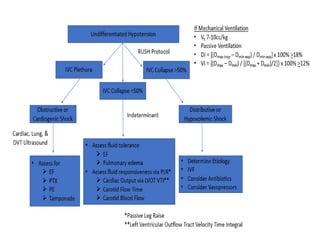
• Interpretation.
• pitfalls.
• Literature.
• Take home massage.
Case scenario
• A 71 year-old gentleman
• ESKD on CHD secondary to diabetic nephropathy
• Grade ǁ edema lower limb.
• Hypotension and muscle cramps in the 4th hour of
hemodialysis session necessitate premature
stoppage.
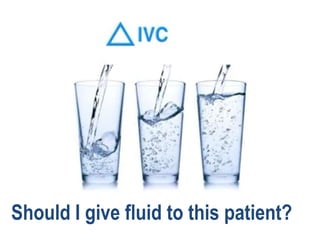
Should I give fluid to this patient?
indication
• Assessment of intravascular volume state.
• Undifferentiated hypotension or other
scenarios of abnormal volume status , such as
sepsis , dehydration and heart failure.
• Fast , reliable , reproducible and non invasive
method for detection of volume status.
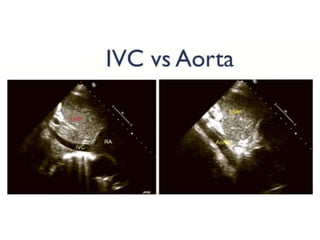
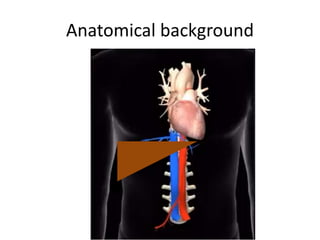
Anatomical background
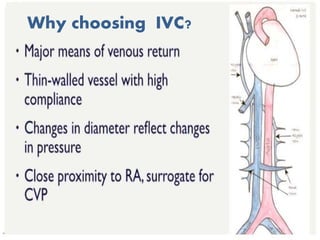
Why choosing IVC?
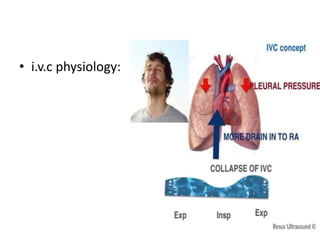
• i.v.c physiology:
Technique
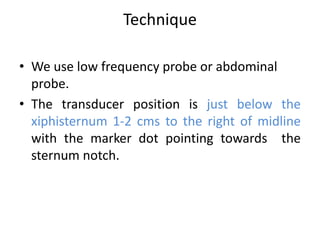
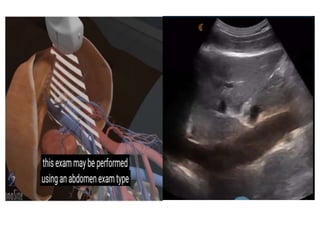
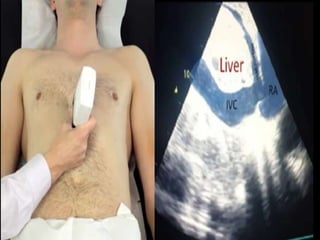
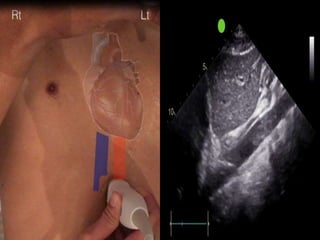
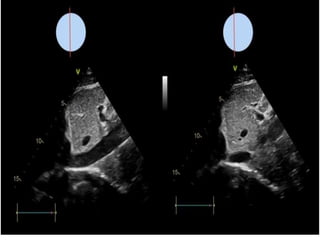
• We use low frequency probe or abdominal
probe.
• The transducer position is just below the
xiphisternum 1-2 cms to the right of midline
with the marker dot pointing towards the
sternum notch.
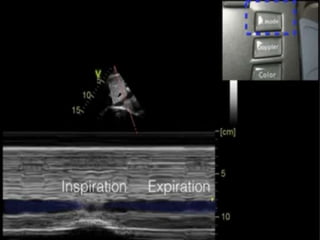
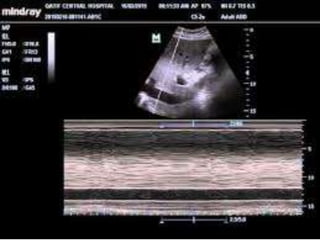
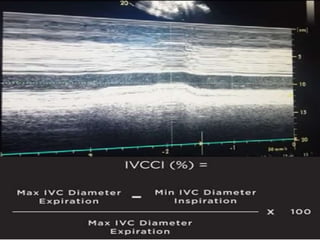
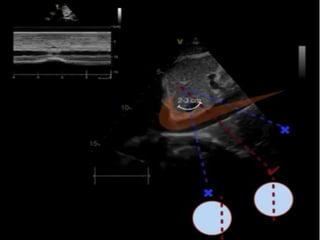
• M-mode line is placed through the IVC
2-3cms from the junction between IVC and
right atrium or 0.5-1 cm from the junction
of hepatic vien.
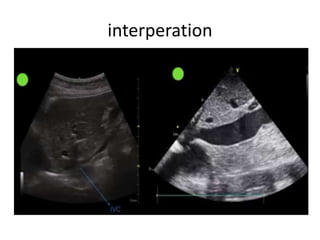
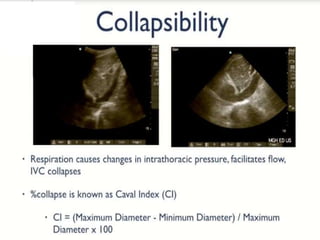
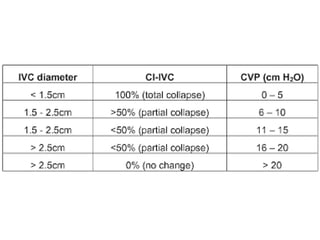
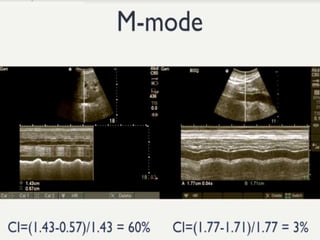
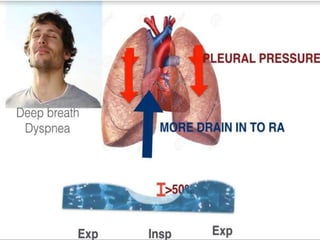
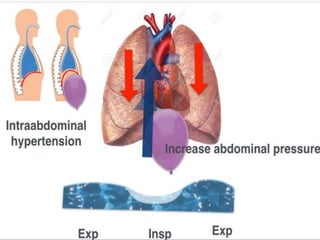
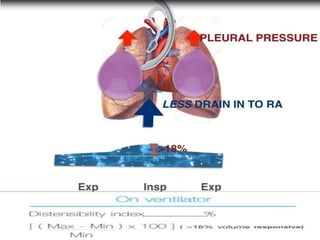
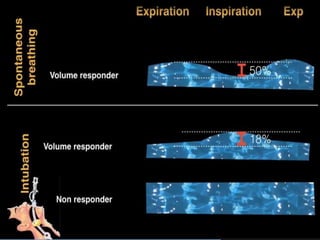
interperation
Can it replace CVP measurement?
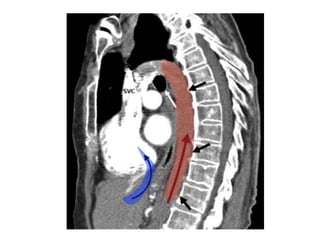
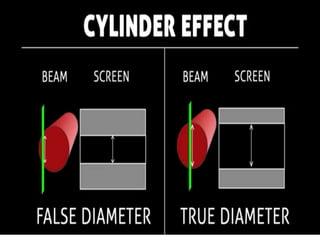
Pitfalls
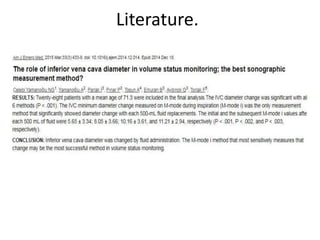
Literature.
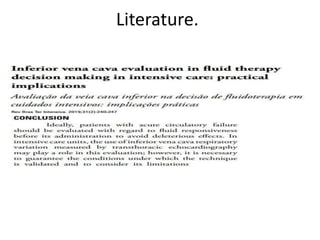
Literature.
Case scenario
• A 71 year-old gentleman
• ESKD on CHD secondary to diabetic nephropathy
• Grade ǁ edema lower limb.
• Hypotension and muscle cramps in the 4th hour of
hemodialysis session necessitate premature
stoppage.
Lower limb
varicose veins
Take home message
• Not all edema and chest crackles are signs of
overload
• Not all muscle cramp is a sign of dehydration
• Justify your diagnosis with available resources

I.vc

  • 1.
    Assessment of volumestatus via IVC diameter By Dr. Salwa Mahmoud Elwasif, MD Fellow of Internal Medicine and Nephrology Urology and Nephrology Center Mansoura University
  • 2.
    Agenda • Case scenario •Value of using IVC diameter? • Anatomical background • technique. • Interpretation. • pitfalls. • Literature. • Take home massage.
  • 3.
    Case scenario • A71 year-old gentleman • ESKD on CHD secondary to diabetic nephropathy • Grade ǁ edema lower limb. • Hypotension and muscle cramps in the 4th hour of hemodialysis session necessitate premature stoppage.
  • 4.
    Should I givefluid to this patient?
  • 5.
    indication • Assessment ofintravascular volume state. • Undifferentiated hypotension or other scenarios of abnormal volume status , such as sepsis , dehydration and heart failure. • Fast , reliable , reproducible and non invasive method for detection of volume status.
  • 6.
  • 7.
  • 8.
  • 9.
    Technique • We uselow frequency probe or abdominal probe. • The transducer position is just below the xiphisternum 1-2 cms to the right of midline with the marker dot pointing towards the sternum notch.
  • 12.
    • M-mode lineis placed through the IVC 2-3cms from the junction between IVC and right atrium or 0.5-1 cm from the junction of hepatic vien.
  • 14.
  • 18.
    Can it replaceCVP measurement?
  • 21.
  • 35.
  • 36.
  • 38.
    Case scenario • A71 year-old gentleman • ESKD on CHD secondary to diabetic nephropathy • Grade ǁ edema lower limb. • Hypotension and muscle cramps in the 4th hour of hemodialysis session necessitate premature stoppage. Lower limb varicose veins
  • 40.
    Take home message •Not all edema and chest crackles are signs of overload • Not all muscle cramp is a sign of dehydration • Justify your diagnosis with available resources