Simplifying test automation
with design patterns
Ivan Pashko
Speaker info
Ivan Pashko, Ukraine
Scrum Master in Betsson, Ciklum
• 8+ years in the IT
• Software Automation Developer
/in/ivan-pashko-33208042/
/groups/1180099188730673
Code smell
Clean code
Code is clean if it can be understood
easily – by everyone on the team, going
over a long time
Why Design Patterns?
General repeatable solution to a commonly occurring
problem in software design.
Test smells
• Test Code Duplication
• Conditional Test Logic
• Obscure Test
• Fragile Test
Test smells
• copy/paste
• if-else
• inheritance /overrides
• data sensivity (hardcode, magic values)
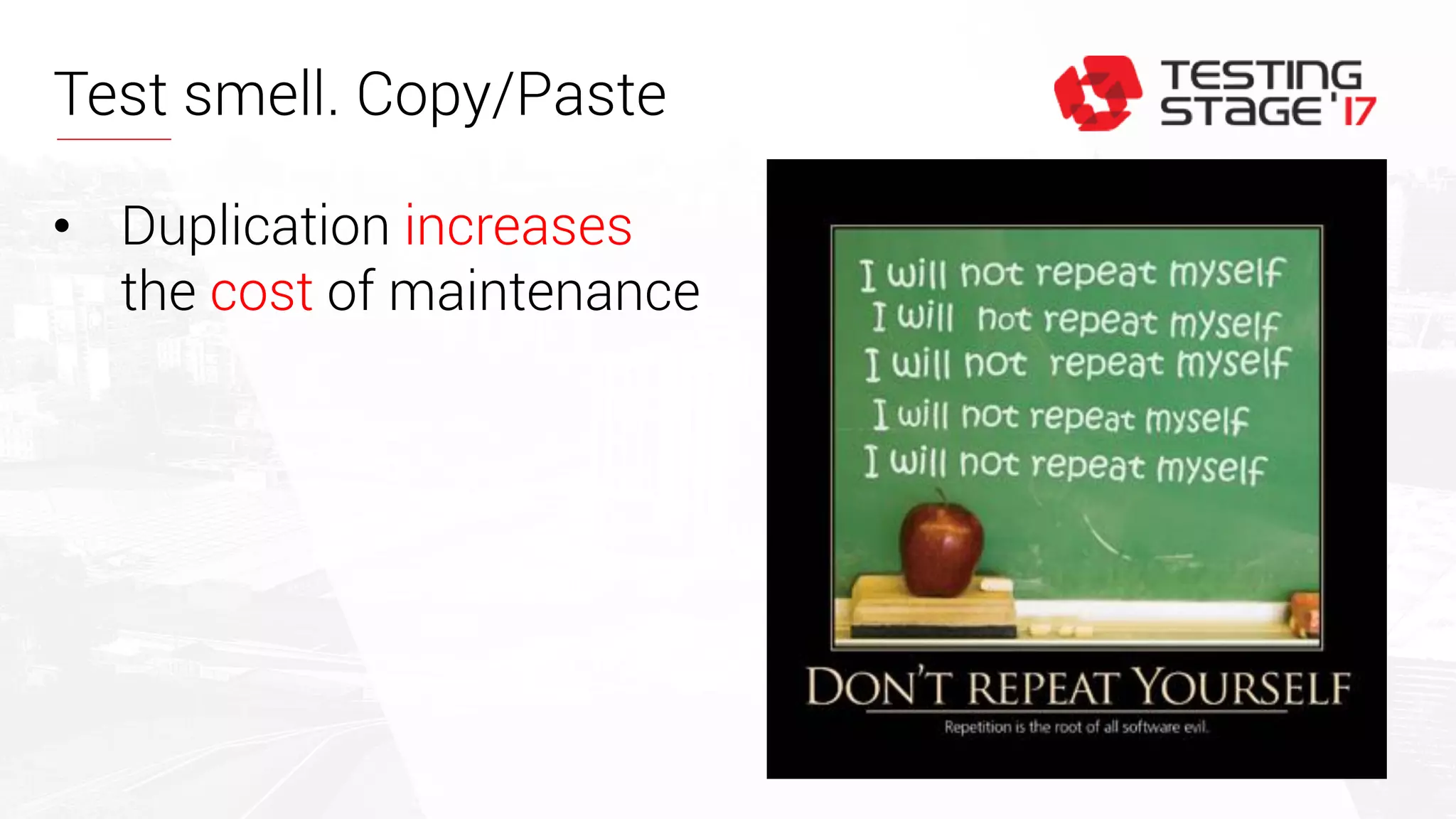
Test smell. Copy/Paste
• Duplication increases
the cost of maintenance
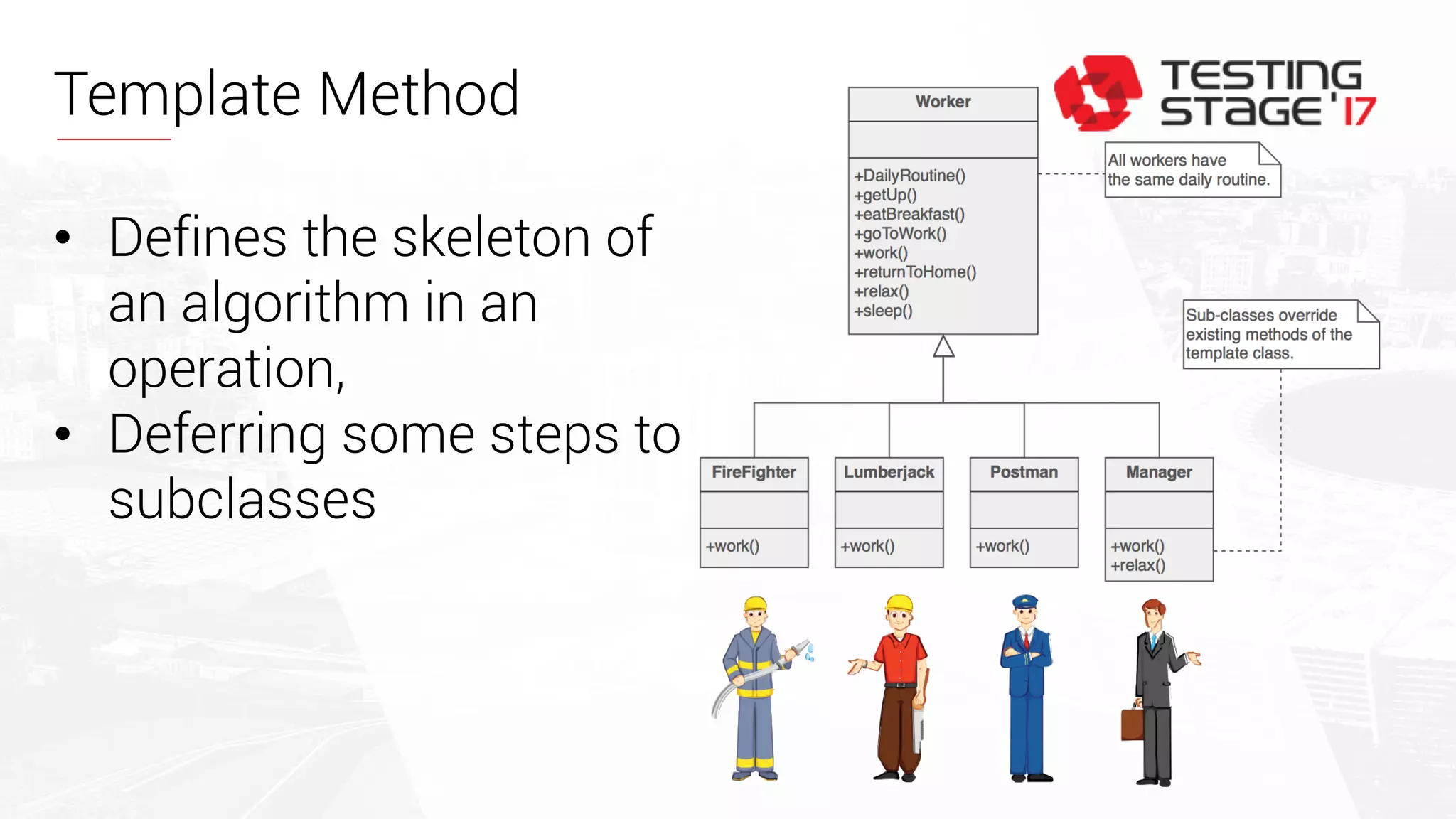
Template Method
• Defines the skeleton of
an algorithm in an
operation,
• Deferring some steps to
subclasses
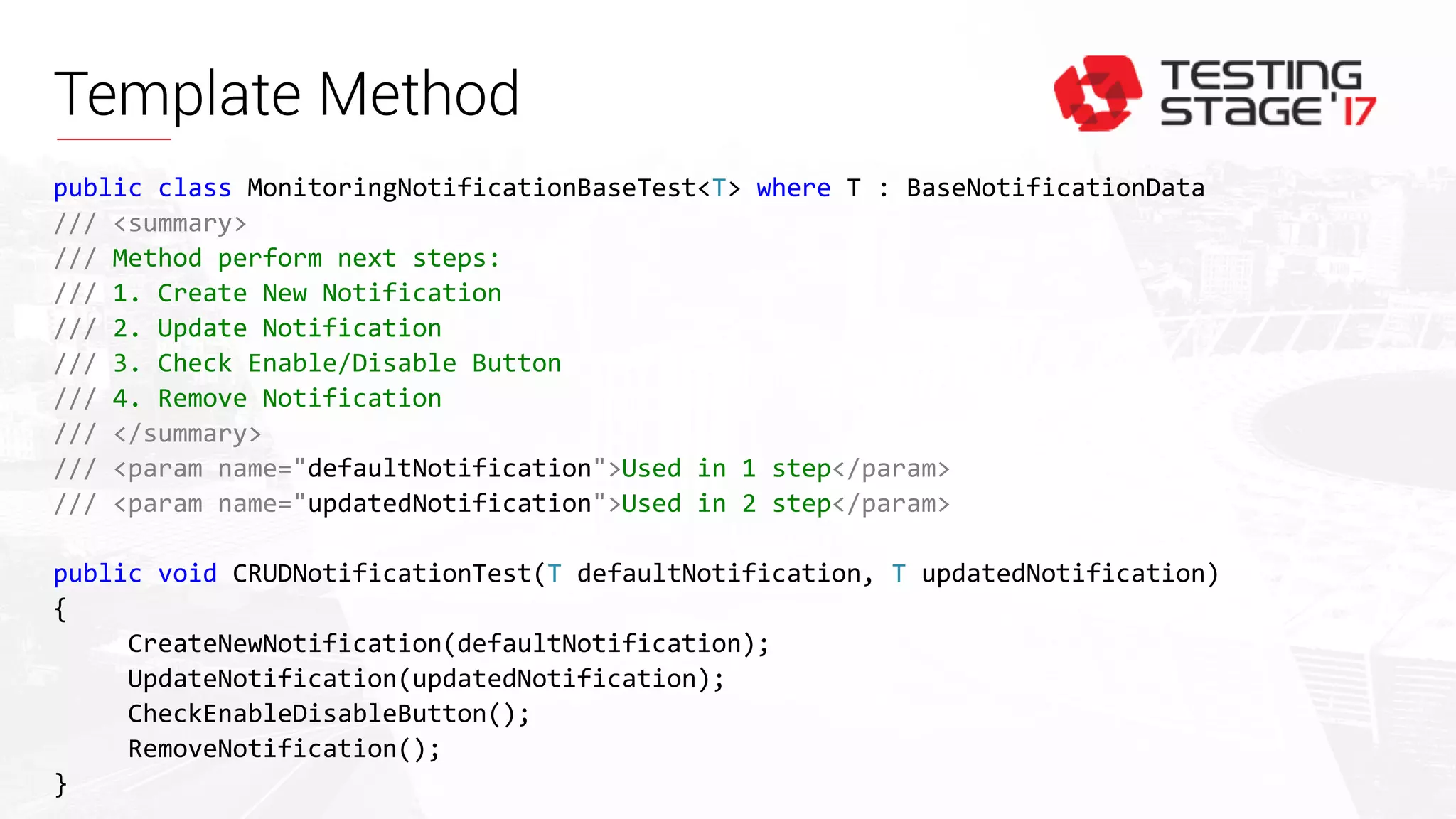
Template Method
public class MonitoringNotificationBaseTest<T> where T : BaseNotificationData
/// <summary>
/// Method perform next steps:
/// 1. Create New Notification
/// 2. Update Notification
/// 3. Check Enable/Disable Button
/// 4. Remove Notification
/// </summary>
/// <param name="defaultNotification">Used in 1 step</param>
/// <param name="updatedNotification">Used in 2 step</param>
public void CRUDNotificationTest(T defaultNotification, T updatedNotification)
{
CreateNewNotification(defaultNotification);
UpdateNotification(updatedNotification);
CheckEnableDisableButton();
RemoveNotification();
}
Test smell. Conditional Test Logic
Makes tests more complicated than
they really should be.
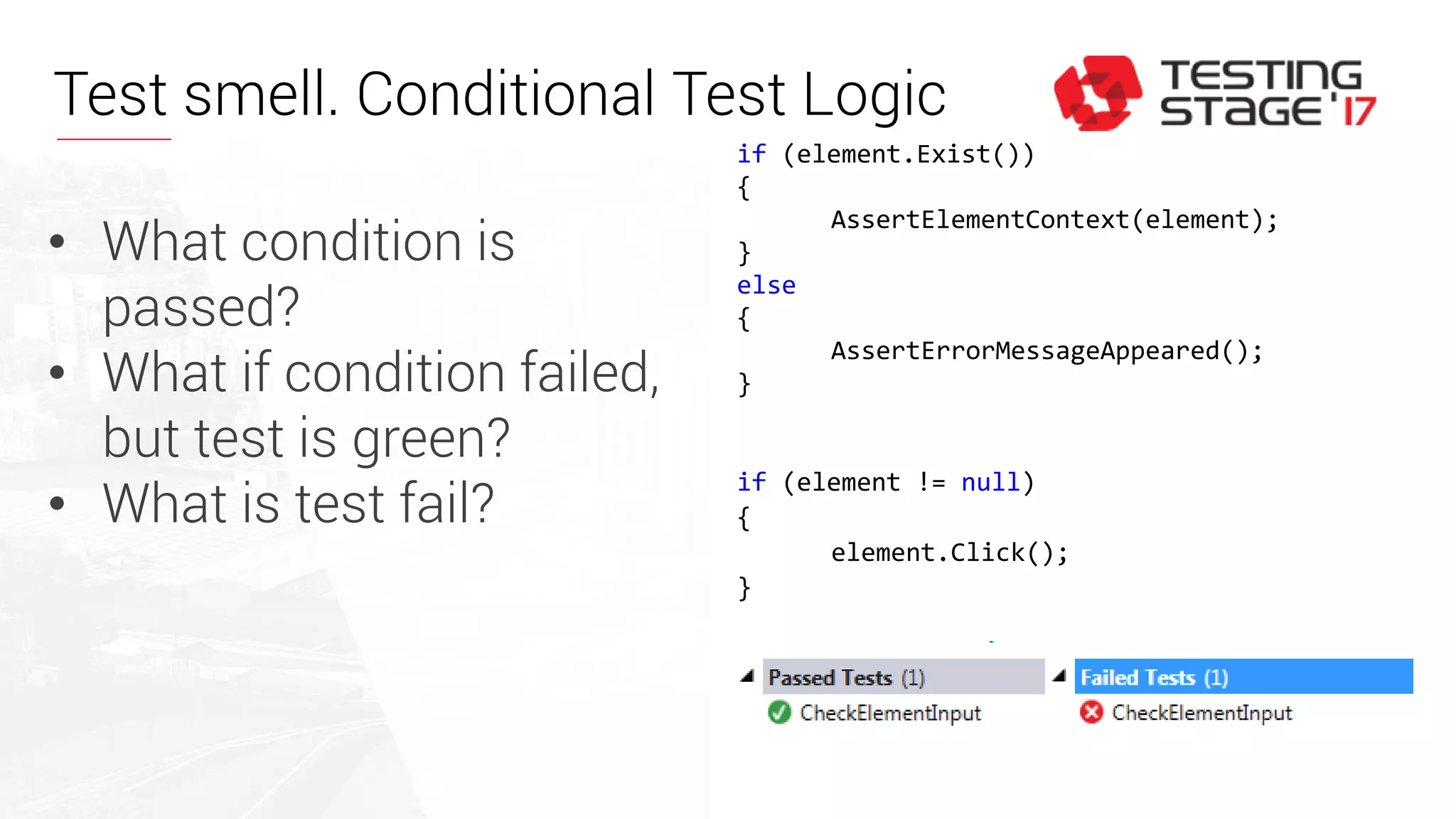
if (element.Exist())
{
AssertElementContext(element);
}
else
{
AssertErrorMessageAppeared();
}
if (element != null)
{
element.Click();
}
• What condition is
passed?
• What if condition failed,
but test is green?
• What is test fail?
Test smell. Conditional Test Logic
Strategy Pattern
Enables an algorithm's behavior to be selected at
runtime
Factory Pattern
• Hides the logic of
initializing an object
inside the factory.
• Refers to the object
using a common
interface instead of
the concrete class.
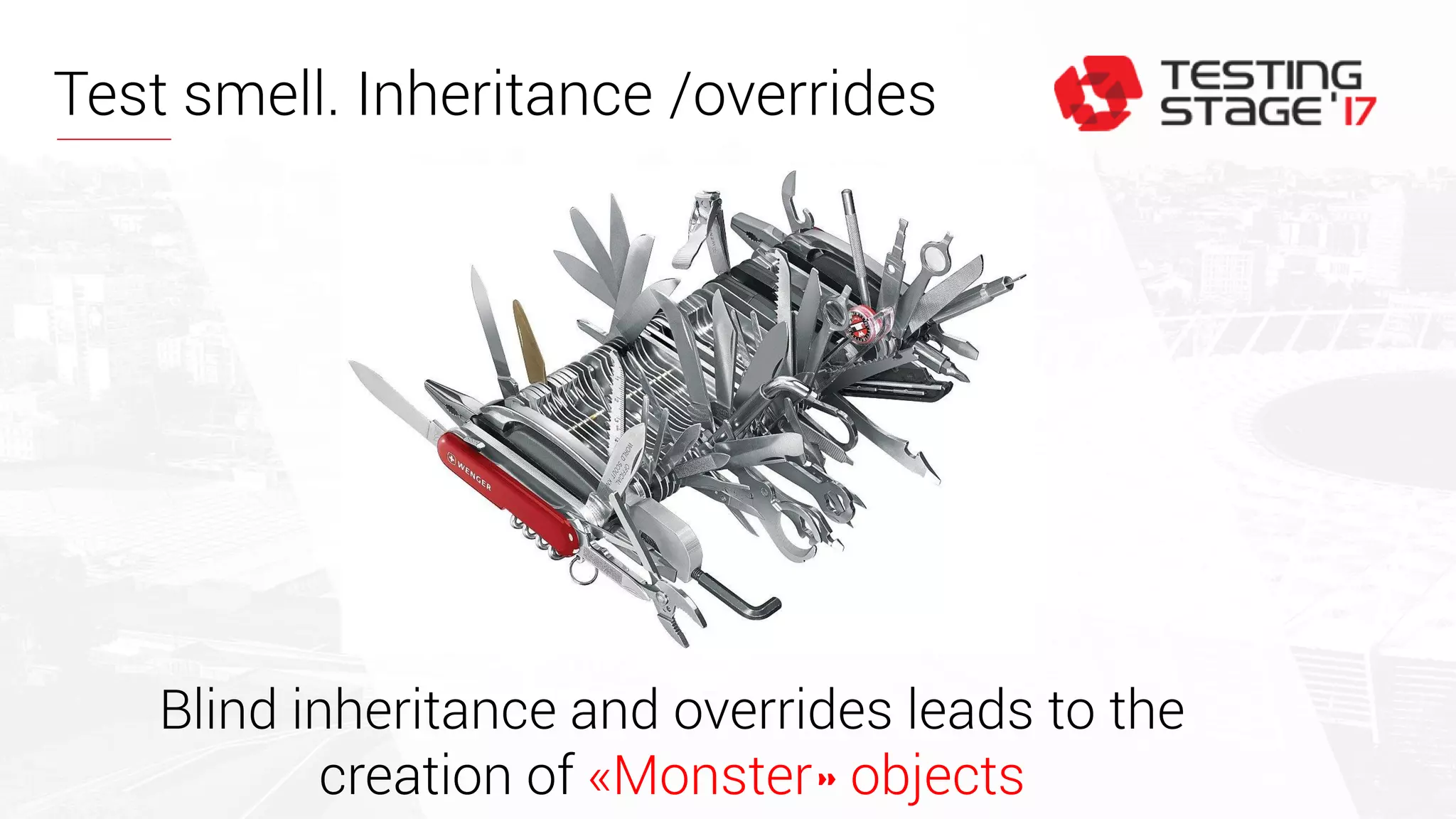
Test smell. Inheritance /overrides
Blind inheritance and overrides leads to the
creation of «Monster» objects
Composite Pattern
• The composite pattern
describes a group of
objects that is treated the
same way as a single
instance of the same type
of object.
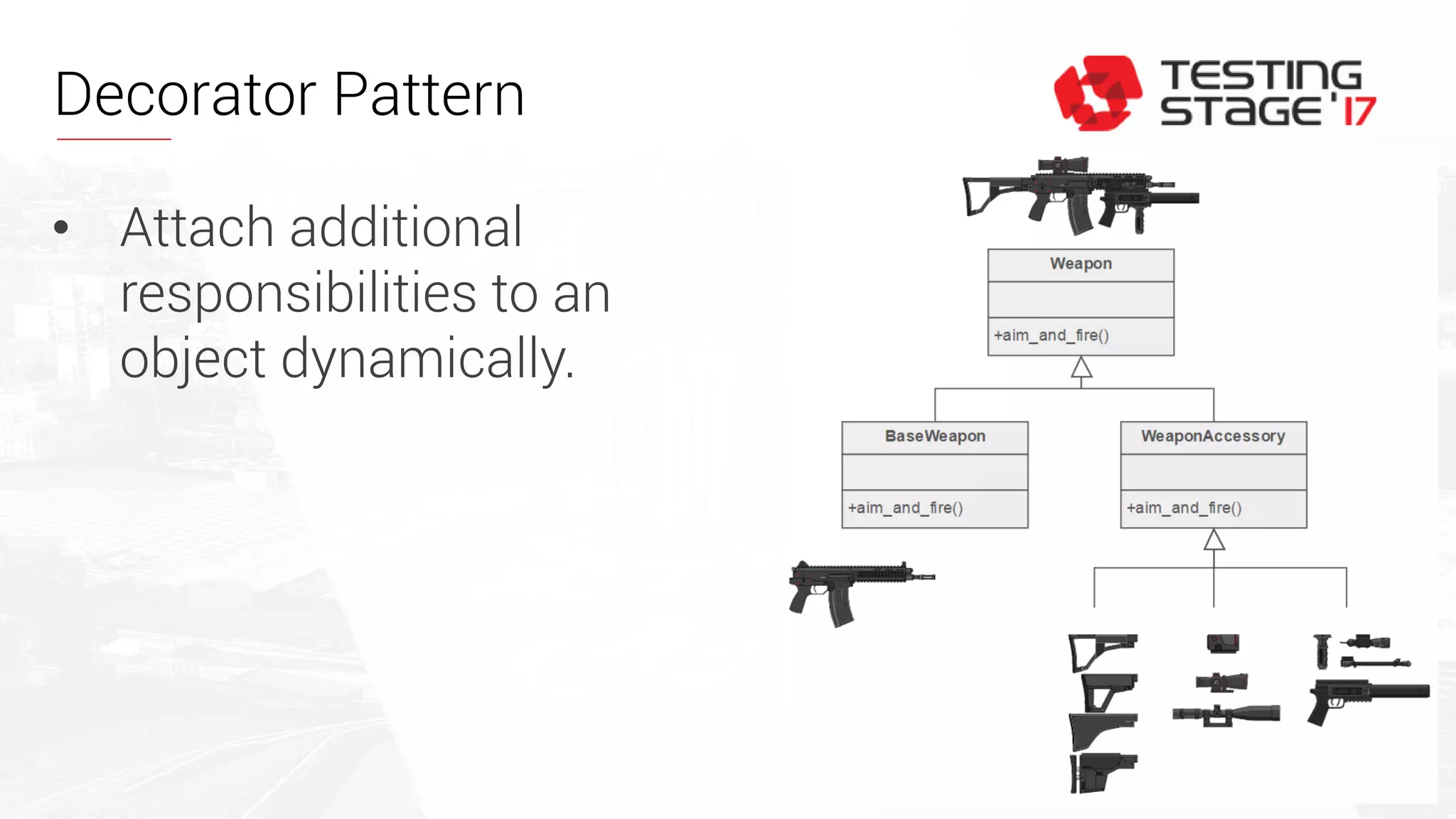
Decorator Pattern
• Attach additional
responsibilities to an
object dynamically.
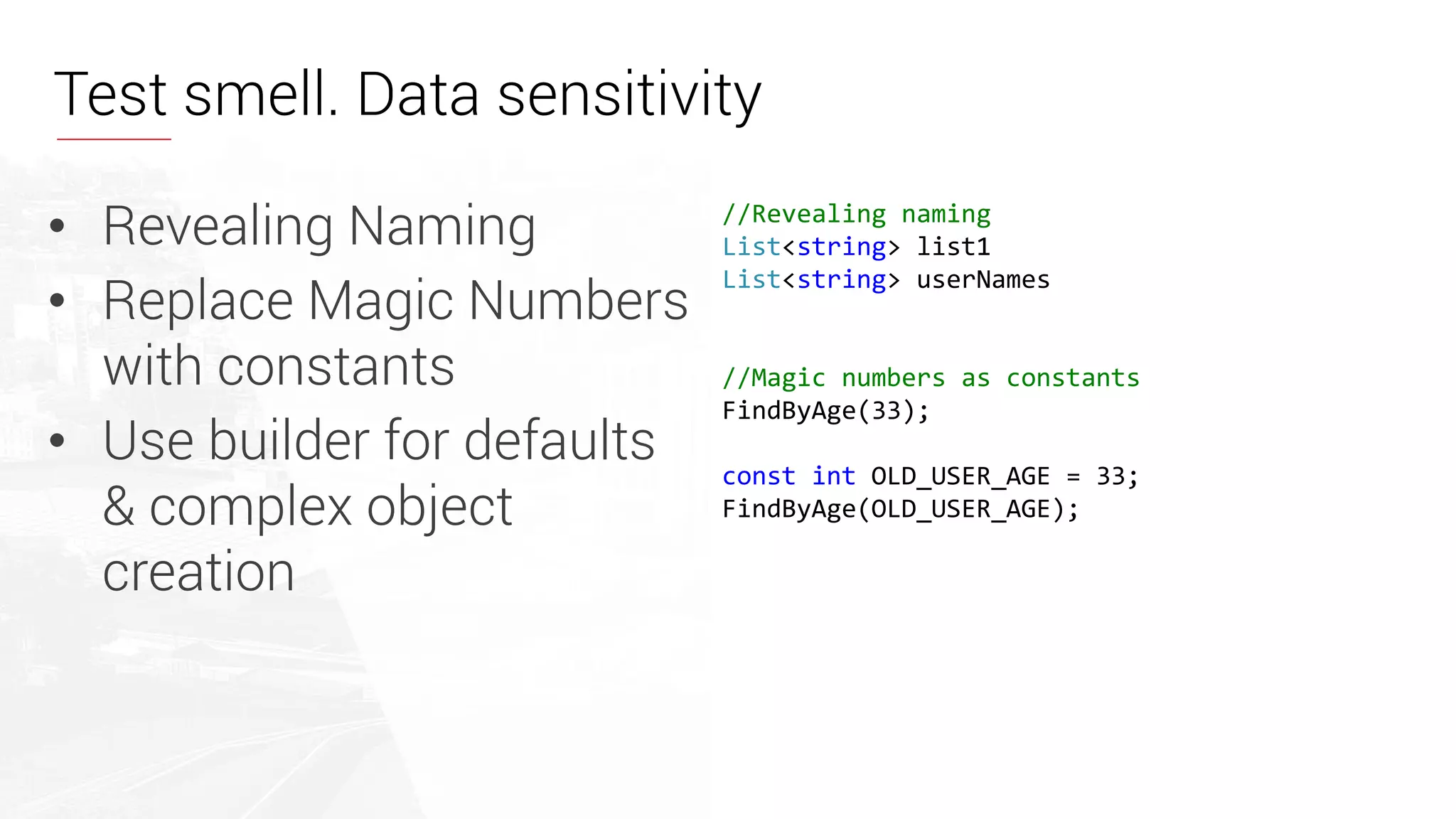
• Revealing Naming
• Replace Magic Numbers
with constants
• Use builder for defaults
& complex object
creation
//Revealing naming
List<string> list1
List<string> userNames
//Magic numbers as constants
FindByAge(33);
const int OLD_USER_AGE = 33;
FindByAge(OLD_USER_AGE);
Test smell. Data sensitivity
Builder Pattern
Separates the construction of a complex object from
its representation
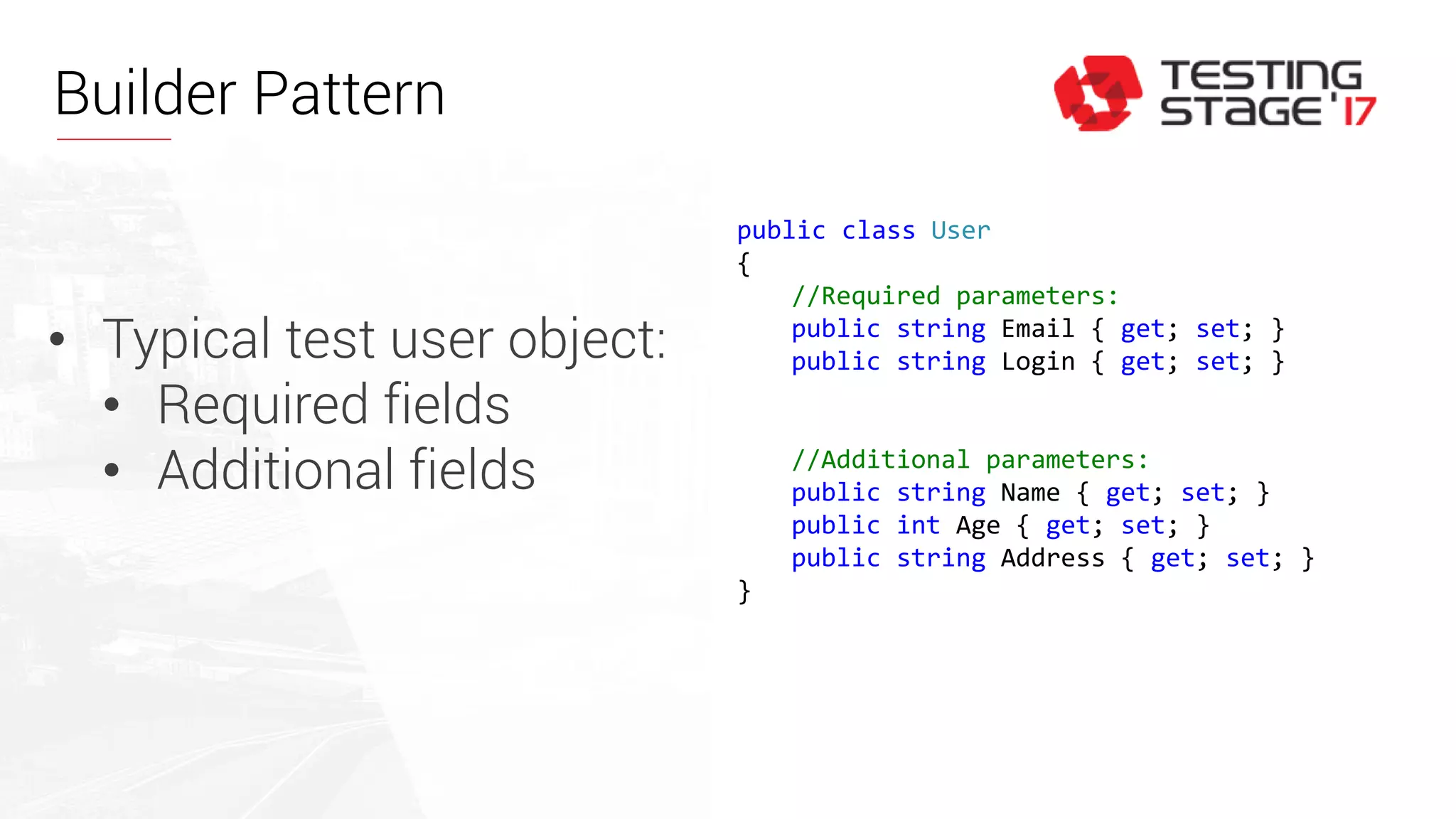
Builder Pattern
public class User
{
//Required parameters:
public string Email { get; set; }
public string Login { get; set; }
//Additional parameters:
public string Name { get; set; }
public int Age { get; set; }
public string Address { get; set; }
}
• Typical test user object:
• Required fields
• Additional fields
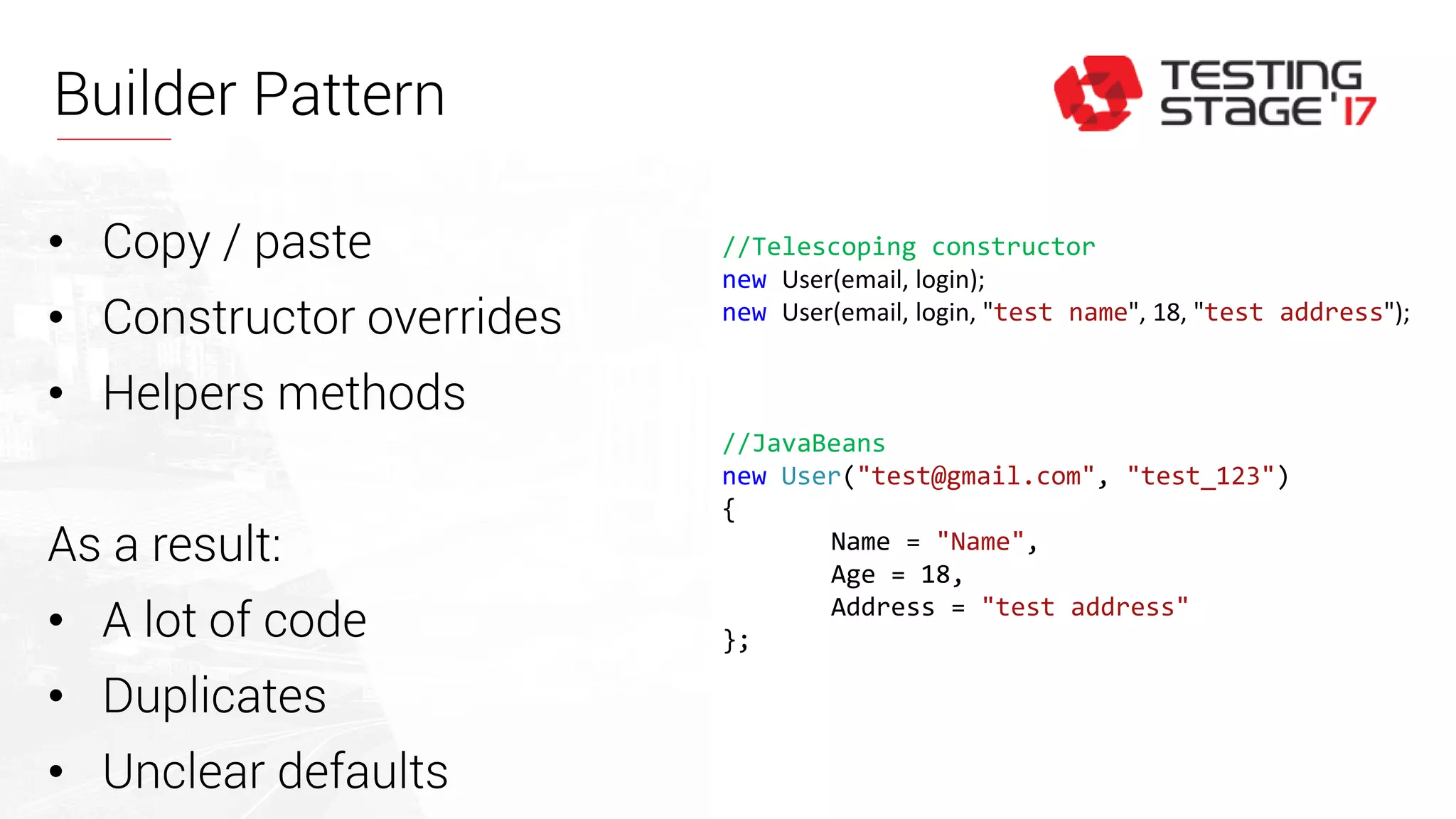
Builder Pattern
//Telescoping constructor
new User(email, login);
new User(email, login, "test name", 18, "test address");
//JavaBeans
new User("test@gmail.com", "test_123")
{
Name = "Name",
Age = 18,
Address = "test address"
};
• Copy / paste
• Constructor overrides
• Helpers methods
As a result:
• A lot of code
• Duplicates
• Unclear defaults
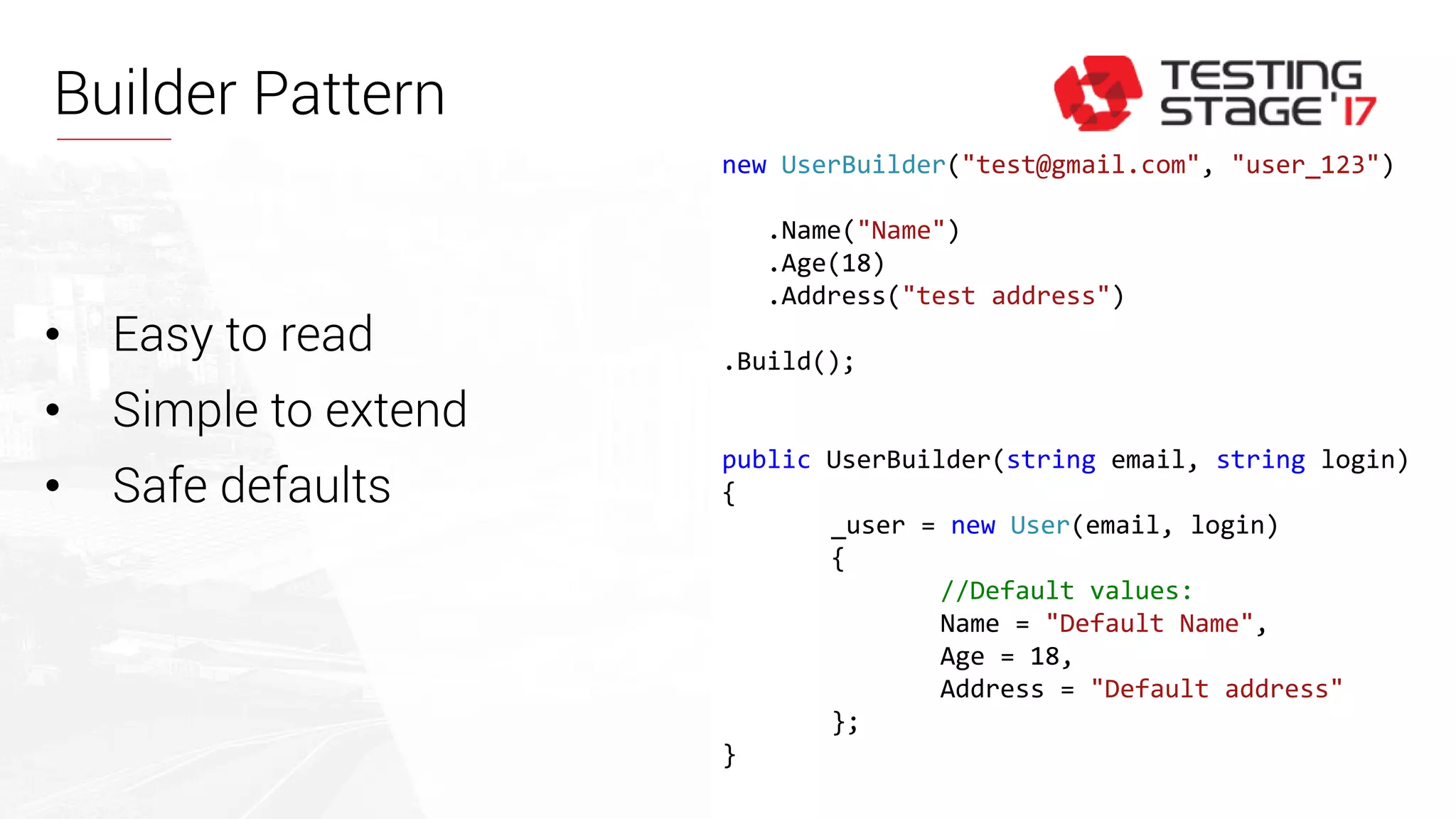
Builder Pattern
new UserBuilder("test@gmail.com", "user_123")
.Name("Name")
.Age(18)
.Address("test address")
.Build();
public UserBuilder(string email, string login)
{
_user = new User(email, login)
{
//Default values:
Name = "Default Name",
Age = 18,
Address = "Default address"
};
}
• Easy to read
• Simple to extend
• Safe defaults
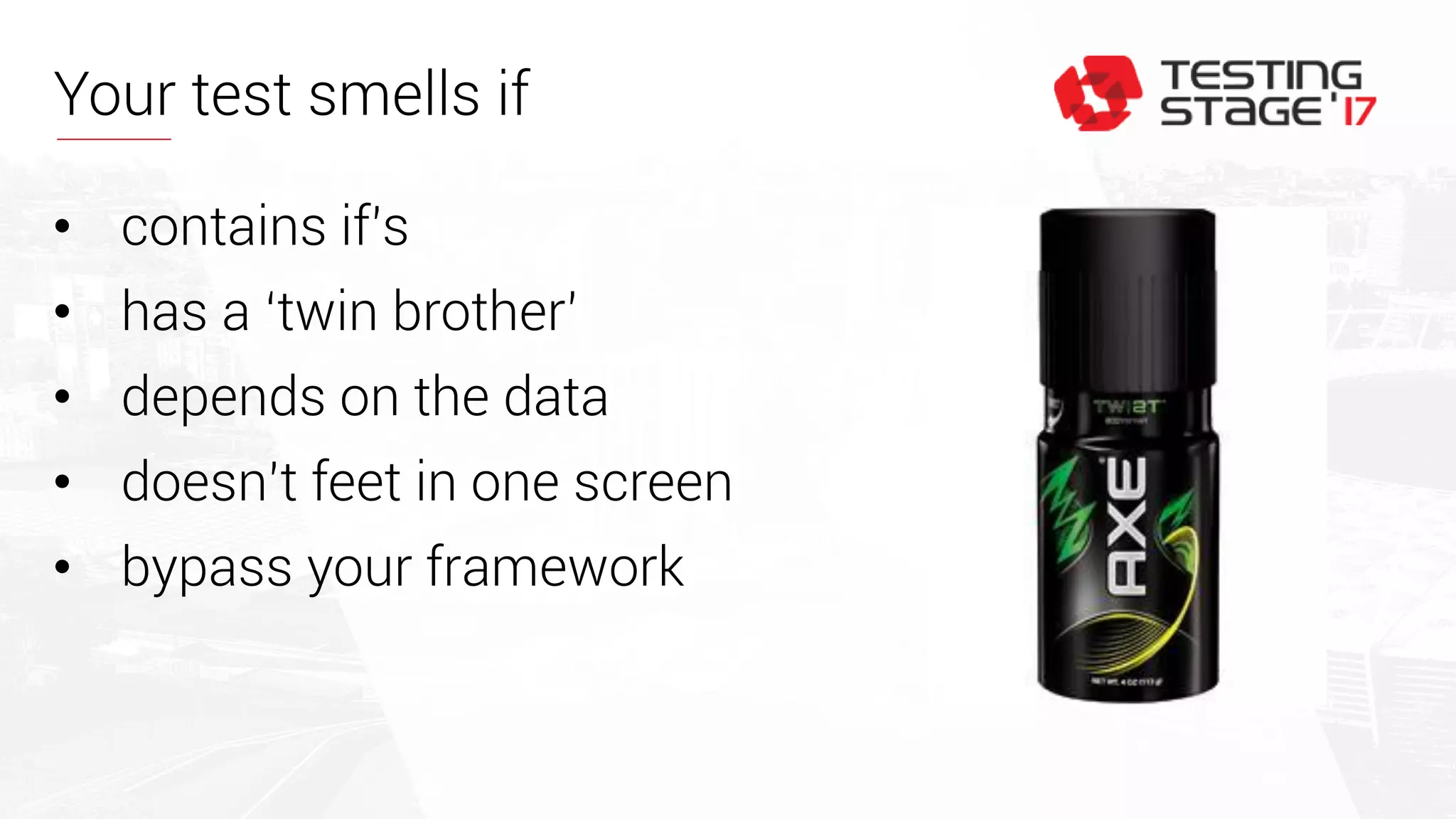
Your test smells if
• contains if’s
• has a ‘twin brother’
• depends on the data
• doesn’t feet in one screen
• bypass your framework
Good test
is like a
good joke
- it needs no explanation
Thank you
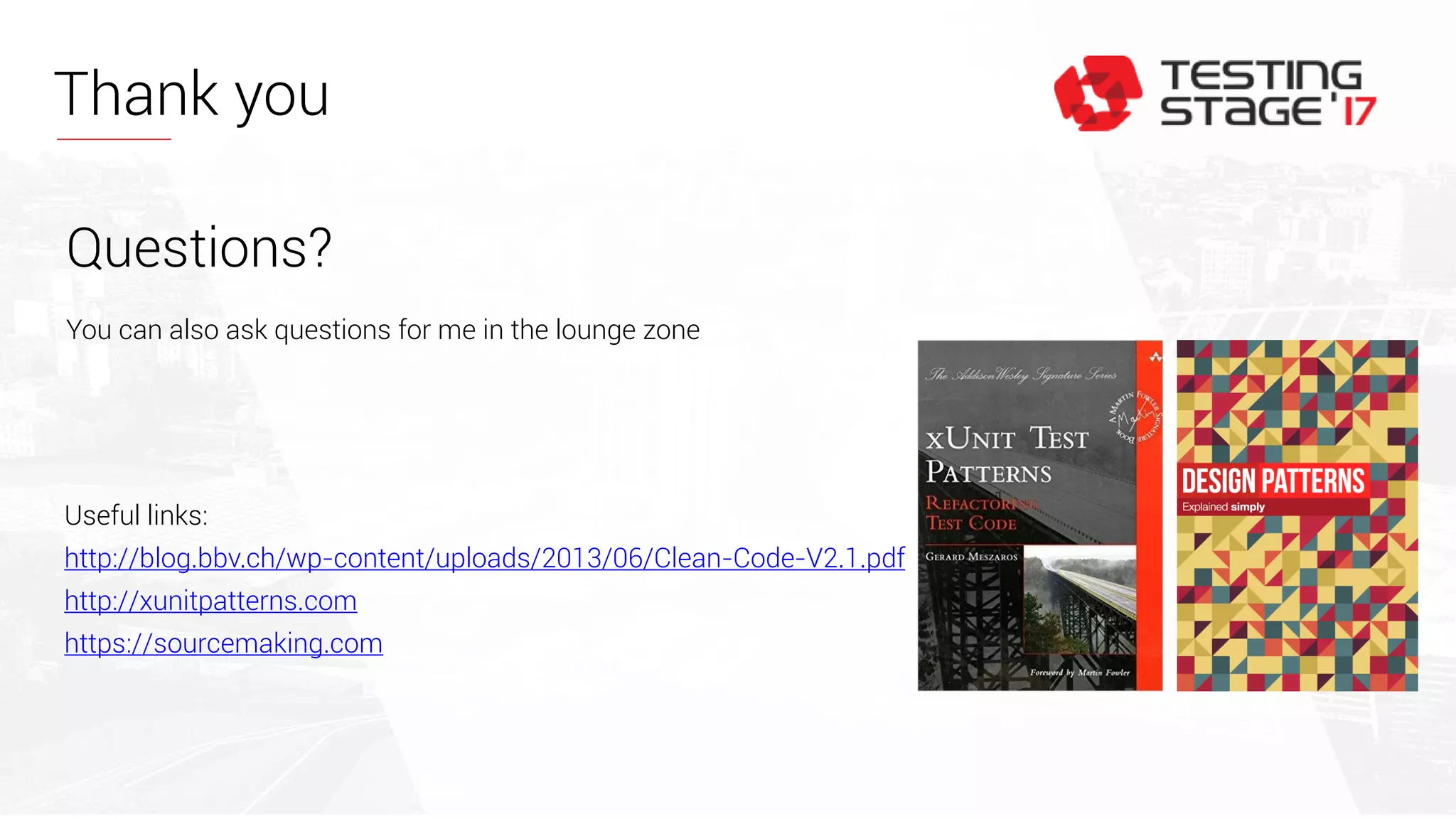
Useful links:
http://blog.bbv.ch/wp-content/uploads/2013/06/Clean-Code-V2.1.pdf
http://xunitpatterns.com
https://sourcemaking.com
Questions?
You can also ask questions for me in the lounge zone

Ivan Pashko - Simplifying test automation with design patterns