Itik Itik
Sa
Sibonga
If work is imaginatively transformed
into dance, the animals and fowls
associated with work are sure to be
included in the dance.
Symbolic and mimetic dances are the
most popular because graphical
image is what we experience and
imitate.
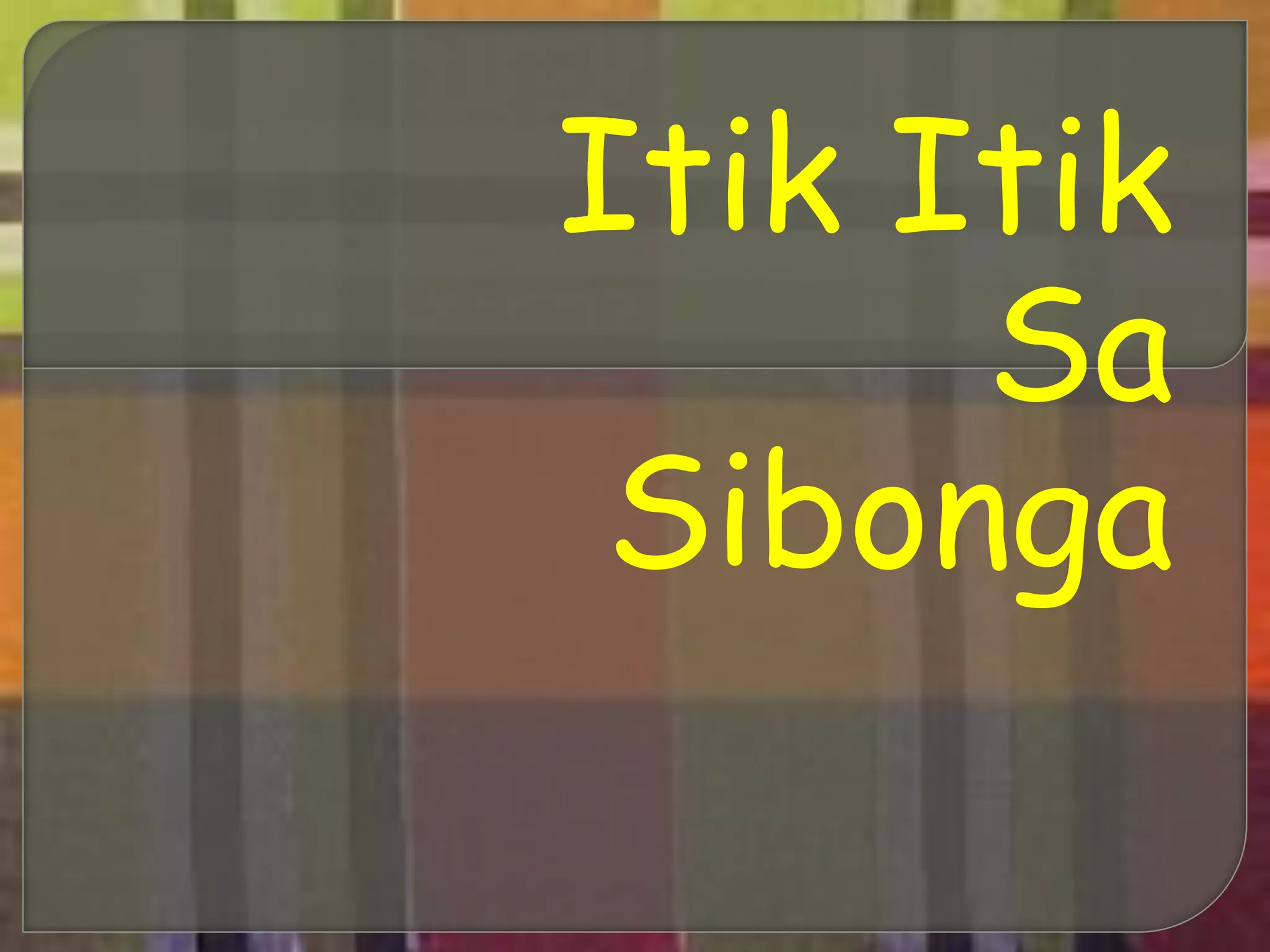
Itik are brown ducks found in paddies.
Their waddling and wiggling fired the
imagination of a colorful mind and a
dance was created, the Itik Itik sa
Sibonga.
Sibonga is a town in the southeast
part of Cebu known for its green fields
and verdant hills.
Though rice farming occupies most of
the farmers’ time, caring for ducks
takes second attention.
It is by watching the lakaw itik (duck
walk) that gave inspiration to create a
duck dance called Itik Itik.
Light and springy, the dance is best
interpreted by young boys and girls.
Itik Itik Sibonga means
“brown duck of
Sibonga”
Dance Culture – Lowland Christian
Place of Origin – Sibonga, Cebu
Ethnolinguistic Group – Cebuano
Classification – Mimetic/Festival
Music – Provided by
the rondalla (string
ensemble)
Time Signature – 3/4
Props - none
Mood – jovial; playful
Stance – erect
Performers – all girls/or B and G pair
Girl:
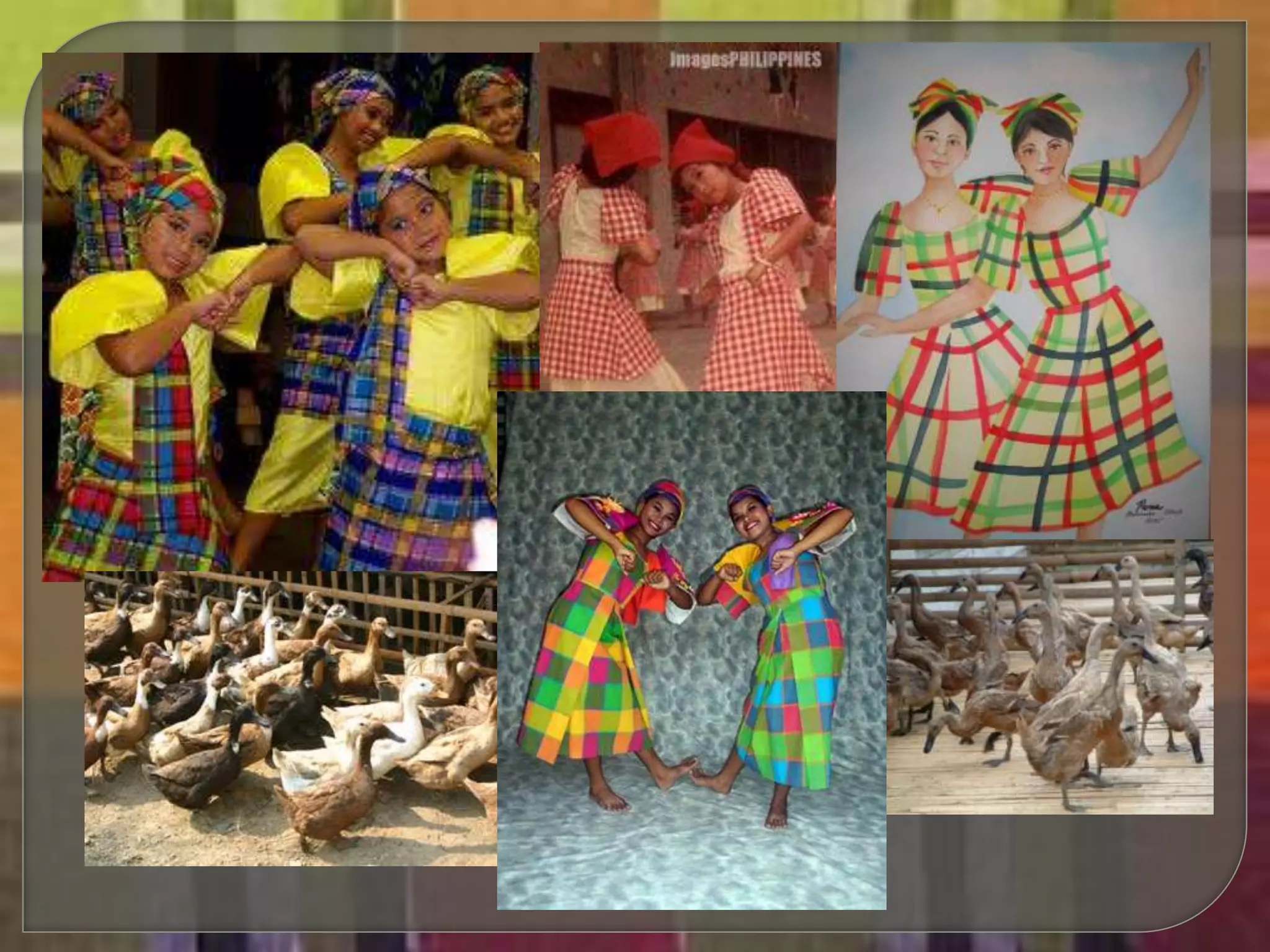
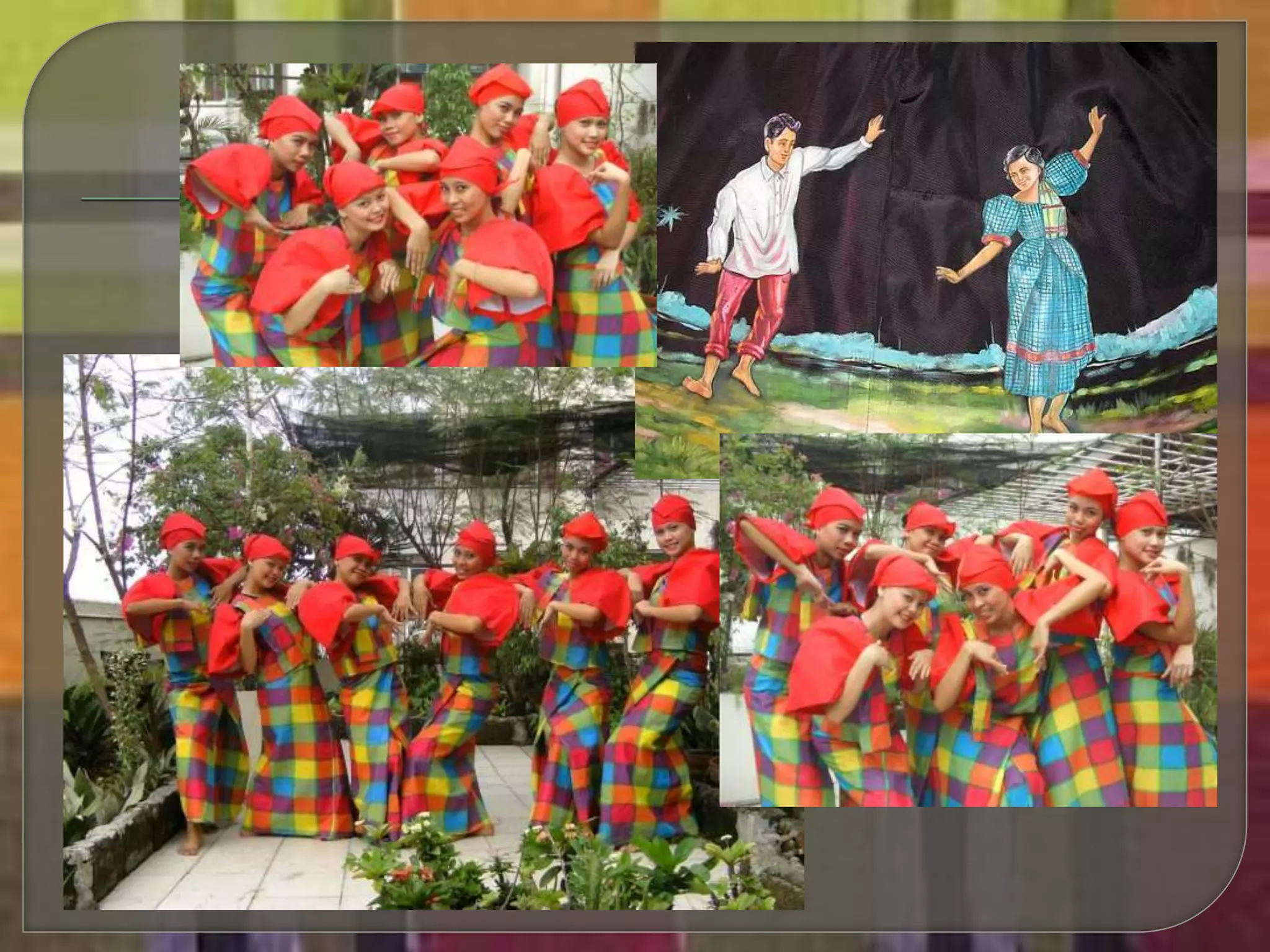
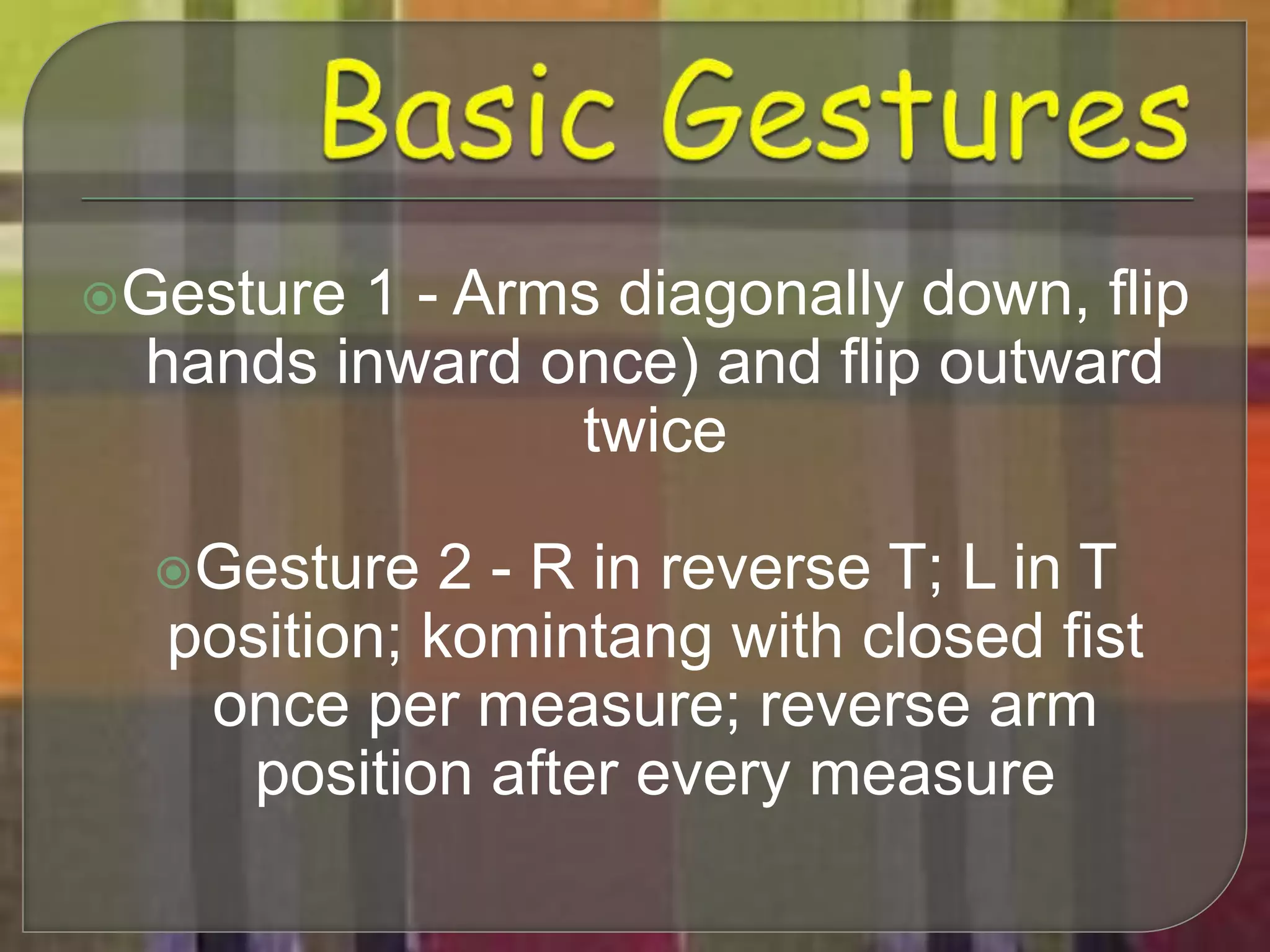
Camisa – blouse with stiff butterfly
sleeves or with wide bell sleeves
(a kimona can be worn in place of the
camisa)
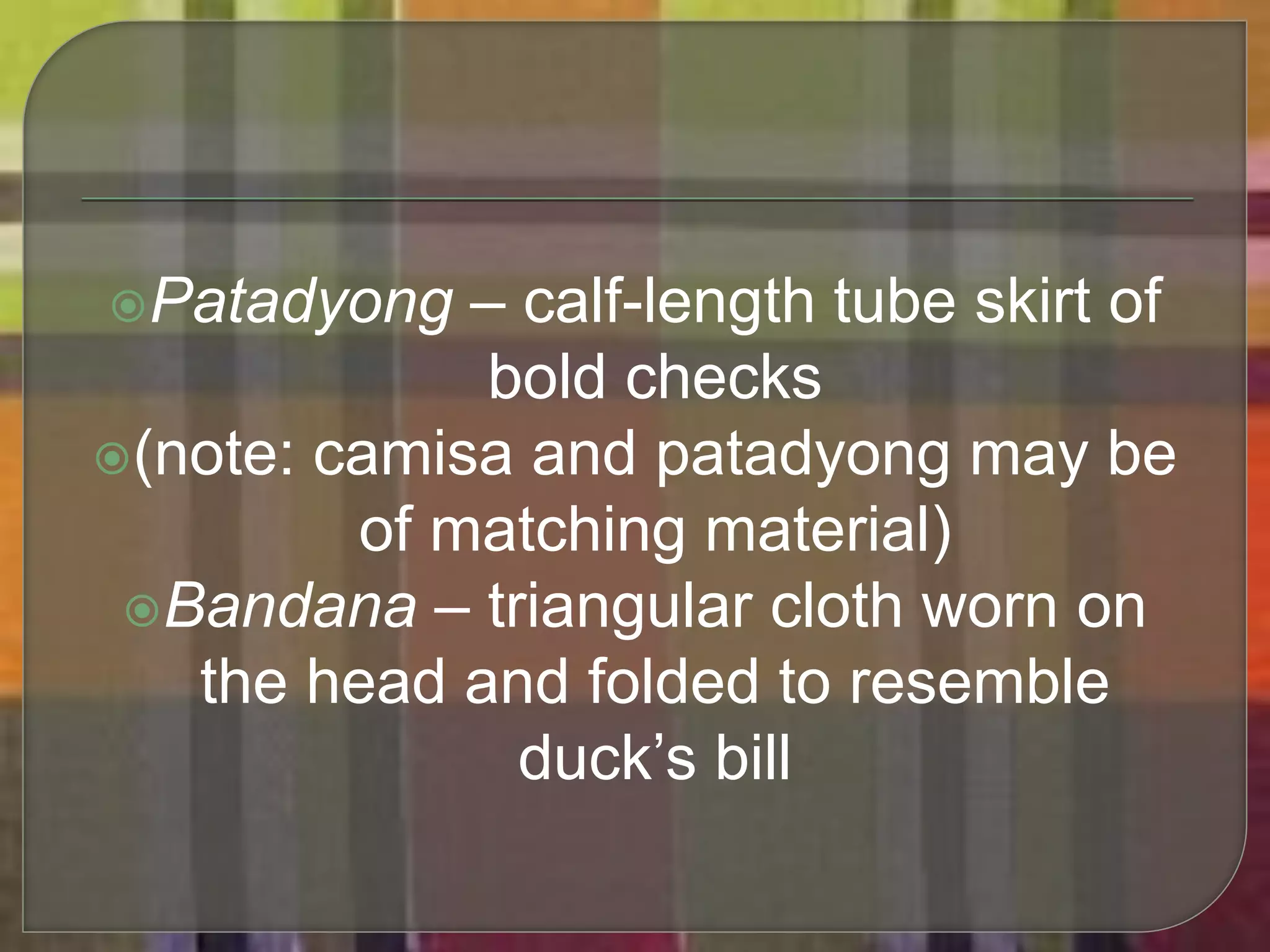
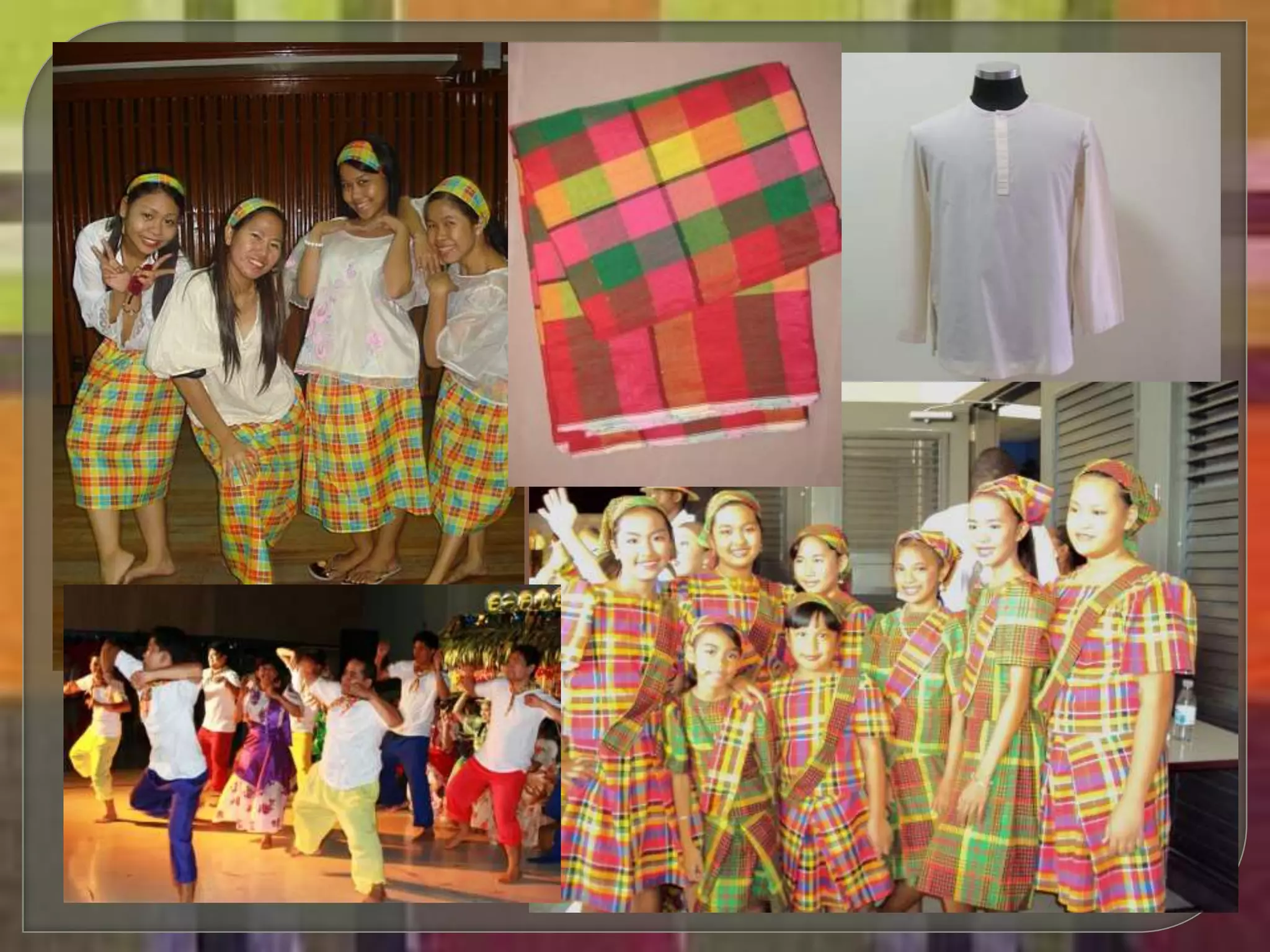
Patadyong – calf-length tube skirt of
bold checks
(note: camisa and patadyong may be
of matching material)
Bandana – triangular cloth worn on
the head and folded to resemble
duck’s bill
Boy:
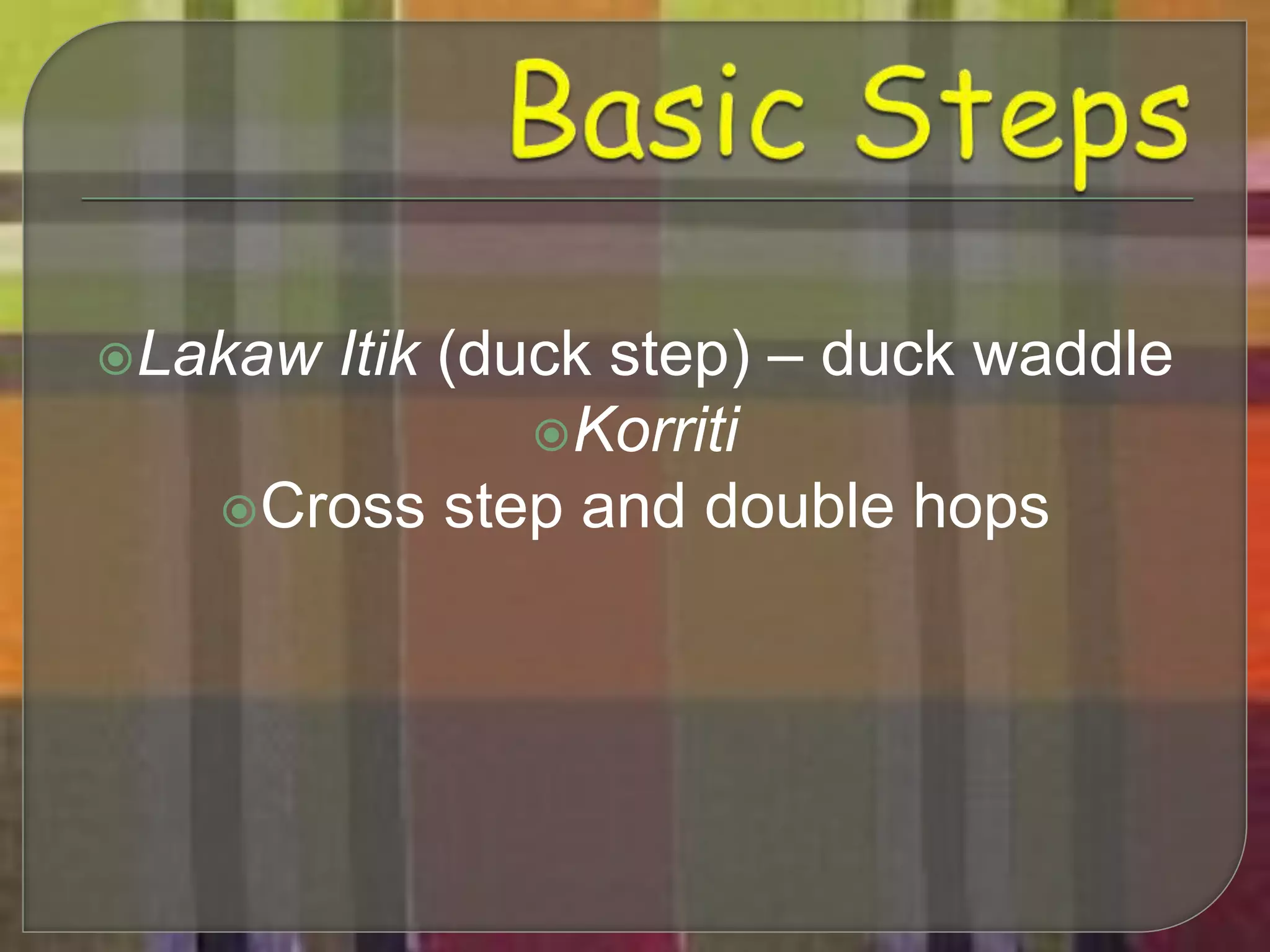
Camisa Chino – white collarless shirt
Kalsones – loose pants, preferably
red in color
Panyu – red or any color, folded into a
triangle and worn as neckerchief
Lakaw Itik (duck step) – duck waddle
Korriti
Cross step and double hops
Gesture 1 - Arms diagonally down, flip
hands inward once) and flip outward
twice
Gesture 2 - R in reverse T; L in T
position; komintang with closed fist
once per measure; reverse arm
position after every measure
Gesture 3 - R arm bent upward, back
of L hand touching R elbow; finger
flutter; reverse arm position per
measure
Figure 1- Girls’ Dance
8M – Lakaw itik; gesture 1
4M – Lakaw itik, turning R in place;
gesture 3
4M – Lakaw itik, turning L in place;
gesture 3
Figure 2 – Boys’ Entrance
8M - Cross step and double hop ,
following G; gesture 1
(G – same figure)
8M – facing partner – cross step and
double hop; gesture 3
Figure 3
4M – moving into two separate groups
(G and B groups), korriti; gesture 2
4M – Lakaw itik, turning R in place;
gesture 1
8M – korriti facing audience; gesture 2
Figure 4
Approaching partner
4M – Lakaw itik; gesture 1
4M – Lakaw itik; gesture 3
8M – repeat (exchanging places
passing R to R)
Figure 5
Facing partner , extend arms to 2nd
position, two hand hold
2M – Brush twice (B with R; G with L)
2M – four step turn (B to R; G to L)
4M – repeat (B with L; G with L)
8M – three hops R/3 hops L to exit
PFDS Sayaw
Volume 3
pp. 43-45
Dance Researcher –
Araceli Campos
 Formally presented at the CCP-FAT during the
National Folk Dance Festival 1986
Itik itik sa Sibonga (Philippine Folk Dance)

Itik itik sa Sibonga (Philippine Folk Dance)

  • 1.
  • 4.
    If work isimaginatively transformed into dance, the animals and fowls associated with work are sure to be included in the dance. Symbolic and mimetic dances are the most popular because graphical image is what we experience and imitate.
  • 5.
    Itik are brownducks found in paddies. Their waddling and wiggling fired the imagination of a colorful mind and a dance was created, the Itik Itik sa Sibonga.
  • 6.
    Sibonga is atown in the southeast part of Cebu known for its green fields and verdant hills. Though rice farming occupies most of the farmers’ time, caring for ducks takes second attention.
  • 7.
    It is bywatching the lakaw itik (duck walk) that gave inspiration to create a duck dance called Itik Itik. Light and springy, the dance is best interpreted by young boys and girls.
  • 8.
    Itik Itik Sibongameans “brown duck of Sibonga”
  • 9.
    Dance Culture –Lowland Christian Place of Origin – Sibonga, Cebu Ethnolinguistic Group – Cebuano Classification – Mimetic/Festival
  • 11.
    Music – Providedby the rondalla (string ensemble) Time Signature – 3/4
  • 12.
    Props - none Mood– jovial; playful Stance – erect Performers – all girls/or B and G pair
  • 13.
    Girl: Camisa – blousewith stiff butterfly sleeves or with wide bell sleeves (a kimona can be worn in place of the camisa)
  • 14.
    Patadyong – calf-lengthtube skirt of bold checks (note: camisa and patadyong may be of matching material) Bandana – triangular cloth worn on the head and folded to resemble duck’s bill
  • 15.
    Boy: Camisa Chino –white collarless shirt Kalsones – loose pants, preferably red in color Panyu – red or any color, folded into a triangle and worn as neckerchief
  • 17.
    Lakaw Itik (duckstep) – duck waddle Korriti Cross step and double hops
  • 18.
    Gesture 1 -Arms diagonally down, flip hands inward once) and flip outward twice Gesture 2 - R in reverse T; L in T position; komintang with closed fist once per measure; reverse arm position after every measure
  • 19.
    Gesture 3 -R arm bent upward, back of L hand touching R elbow; finger flutter; reverse arm position per measure
  • 20.
    Figure 1- Girls’Dance 8M – Lakaw itik; gesture 1 4M – Lakaw itik, turning R in place; gesture 3 4M – Lakaw itik, turning L in place; gesture 3
  • 21.
    Figure 2 –Boys’ Entrance 8M - Cross step and double hop , following G; gesture 1 (G – same figure) 8M – facing partner – cross step and double hop; gesture 3
  • 22.
    Figure 3 4M –moving into two separate groups (G and B groups), korriti; gesture 2 4M – Lakaw itik, turning R in place; gesture 1 8M – korriti facing audience; gesture 2
  • 23.
    Figure 4 Approaching partner 4M– Lakaw itik; gesture 1 4M – Lakaw itik; gesture 3 8M – repeat (exchanging places passing R to R)
  • 24.
    Figure 5 Facing partner, extend arms to 2nd position, two hand hold 2M – Brush twice (B with R; G with L) 2M – four step turn (B to R; G to L) 4M – repeat (B with L; G with L) 8M – three hops R/3 hops L to exit
  • 25.
    PFDS Sayaw Volume 3 pp.43-45 Dance Researcher – Araceli Campos  Formally presented at the CCP-FAT during the National Folk Dance Festival 1986