IT Relationship Management
Roadmap
Mark T. Edmead
Email: mark@mteadvisors.com
web: http://www.mteadvisors.com
(c) 2010 MTE Advisors 1
∗ Significant redundancies in technology and infrastructure
∗ Proliferation of shadow IT groups
∗ Ineffective and inefficient resource utilization
∗ Disparities in technical ability, standards, and support
∗ Business clients are confused by IT structure
∗ Many don’t know who to contact for what services
∗ Many not informed about IT policies, procedures or
projects
∗ Clients don’t feel they are receiving appropriate service
(c) 2010 MTE Advisors 2
Typical Situation
∗ Better coordination between business clients and IT
services
∗ More communication about IT processes, policies and
services
∗ Advocate for locally directed IT services
∗ Centralized coordination but local implementation
(c) 2010 MTE Advisors 3
What is Needed
∗ IT Strategy
∗ Project Management
∗ Business Analysis
∗ Marketing Communication
∗ Contract Negotiations
∗ Match Making
∗ Ambassador
∗ Translator
(c) 2010 MTE Advisors 4
Relationship Management is:
∗ Responsible for managing key client relationships
within the administrative divisions
∗ Plays a critical role in assuring close IT alignment
between each division and IT services
∗ Each Relationship Manager works to understand the
division's needs and plans and coordinates the
delivery of IT services to meet those needs
(c) 2010 MTE Advisors 5
The IT Relationship Manager is:
∗ Organizer, negotiator, communicator
∗ Technical enough to have credibility with IT, but
∗ Able to explain things non-technically, and
understand clients business at a high/strategic level
∗ Match relationship manager personality with clients
(c) 2010 MTE Advisors 6
Relationship Management Skills
∗ Provide comprehensive management of the client relationship
∗ Serve as a resource for connecting clients with the IT services they
require
∗ Advise clients of available IT services
∗ Including new and changed service offerings
∗ IT policies and standards
∗ Identify opportunities for technology enhancements that serve the
division’s business needs and strategic plans
∗ Facilitate project kick-off meetings
∗ Coordinate and facilitate resolution of technology issues, as well as
IT-enabled workflow/processes issues
∗ Ensure that client-specific service level agreements are met
(c) 2010 MTE Advisors 7
IT Relationship Manager Activities
∗ Requires thinking differently about IT
∗ From order taker to strategic business partner
∗ Beyond the IT as an “overhead” expense
∗ Provides accountability
∗ Higher level of partnership
∗ Enhanced resource specialization
∗ Frees up IT staff to do technical tasks
(c) 2010 MTE Advisors 8
Recognizing the value
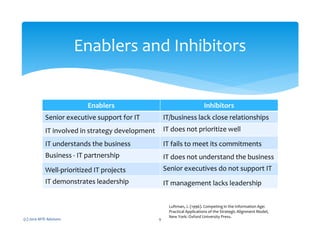
Enablers Inhibitors
Senior executive support for IT IT/business lack close relationships
IT involved in strategy development IT does not prioritize well
IT understands the business IT fails to meet its commitments
Business - IT partnership IT does not understand the business
Well-prioritized IT projects Senior executives do not support IT
IT demonstrates leadership IT management lacks leadership
(c) 2010 MTE Advisors 9
Enablers and Inhibitors
Luftman, J. (1996). Competing in the Information Age:
Practical Applications of the Strategic Alignment Model,
New York: Oxford University Press.
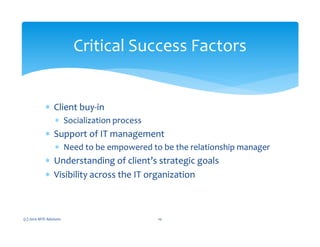
∗ Client buy-in
∗ Socialization process
∗ Support of IT management
∗ Need to be empowered to be the relationship manager
∗ Understanding of client’s strategic goals
∗ Visibility across the IT organization
(c) 2010 MTE Advisors 10
Critical Success Factors
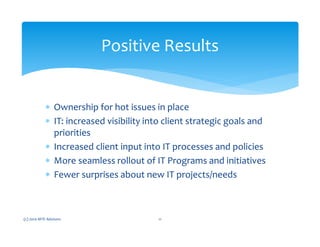
∗ Ownership for hot issues in place
∗ IT: increased visibility into client strategic goals and
priorities
∗ Increased client input into IT processes and policies
∗ More seamless rollout of IT Programs and initiatives
∗ Fewer surprises about new IT projects/needs
(c) 2010 MTE Advisors 11
Positive Results
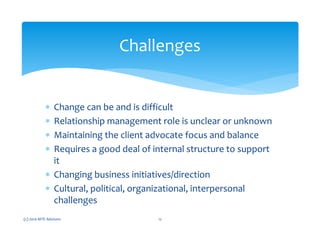
∗ Change can be and is difficult
∗ Relationship management role is unclear or unknown
∗ Maintaining the client advocate focus and balance
∗ Requires a good deal of internal structure to support
it
∗ Changing business initiatives/direction
∗ Cultural, political, organizational, interpersonal
challenges
(c) 2010 MTE Advisors 12
Challenges
∗ Need to know it’s a different organizational model
with organizational dynamics that have strengths and
weaknesses
∗ Getting communication piece right is critically
important
∗ Governance for projects and project portfolio must
be clearly defined, documented, and communicated
(c) 2010 MTE Advisors 13
Lessons Learned
Contact Information
Mark T. Edmead
Email: mark@mteadvisors.com
Web: http://www.mteadvisors.com
(c) 2010 MTE Advisors 14

IT Relationship Management Roadmap

  • 1.
    IT Relationship Management Roadmap MarkT. Edmead Email: mark@mteadvisors.com web: http://www.mteadvisors.com (c) 2010 MTE Advisors 1
  • 2.
    ∗ Significant redundanciesin technology and infrastructure ∗ Proliferation of shadow IT groups ∗ Ineffective and inefficient resource utilization ∗ Disparities in technical ability, standards, and support ∗ Business clients are confused by IT structure ∗ Many don’t know who to contact for what services ∗ Many not informed about IT policies, procedures or projects ∗ Clients don’t feel they are receiving appropriate service (c) 2010 MTE Advisors 2 Typical Situation
  • 3.
    ∗ Better coordinationbetween business clients and IT services ∗ More communication about IT processes, policies and services ∗ Advocate for locally directed IT services ∗ Centralized coordination but local implementation (c) 2010 MTE Advisors 3 What is Needed
  • 4.
    ∗ IT Strategy ∗Project Management ∗ Business Analysis ∗ Marketing Communication ∗ Contract Negotiations ∗ Match Making ∗ Ambassador ∗ Translator (c) 2010 MTE Advisors 4 Relationship Management is:
  • 5.
    ∗ Responsible formanaging key client relationships within the administrative divisions ∗ Plays a critical role in assuring close IT alignment between each division and IT services ∗ Each Relationship Manager works to understand the division's needs and plans and coordinates the delivery of IT services to meet those needs (c) 2010 MTE Advisors 5 The IT Relationship Manager is:
  • 6.
    ∗ Organizer, negotiator,communicator ∗ Technical enough to have credibility with IT, but ∗ Able to explain things non-technically, and understand clients business at a high/strategic level ∗ Match relationship manager personality with clients (c) 2010 MTE Advisors 6 Relationship Management Skills
  • 7.
    ∗ Provide comprehensivemanagement of the client relationship ∗ Serve as a resource for connecting clients with the IT services they require ∗ Advise clients of available IT services ∗ Including new and changed service offerings ∗ IT policies and standards ∗ Identify opportunities for technology enhancements that serve the division’s business needs and strategic plans ∗ Facilitate project kick-off meetings ∗ Coordinate and facilitate resolution of technology issues, as well as IT-enabled workflow/processes issues ∗ Ensure that client-specific service level agreements are met (c) 2010 MTE Advisors 7 IT Relationship Manager Activities
  • 8.
    ∗ Requires thinkingdifferently about IT ∗ From order taker to strategic business partner ∗ Beyond the IT as an “overhead” expense ∗ Provides accountability ∗ Higher level of partnership ∗ Enhanced resource specialization ∗ Frees up IT staff to do technical tasks (c) 2010 MTE Advisors 8 Recognizing the value
  • 9.
    Enablers Inhibitors Senior executivesupport for IT IT/business lack close relationships IT involved in strategy development IT does not prioritize well IT understands the business IT fails to meet its commitments Business - IT partnership IT does not understand the business Well-prioritized IT projects Senior executives do not support IT IT demonstrates leadership IT management lacks leadership (c) 2010 MTE Advisors 9 Enablers and Inhibitors Luftman, J. (1996). Competing in the Information Age: Practical Applications of the Strategic Alignment Model, New York: Oxford University Press.
  • 10.
    ∗ Client buy-in ∗Socialization process ∗ Support of IT management ∗ Need to be empowered to be the relationship manager ∗ Understanding of client’s strategic goals ∗ Visibility across the IT organization (c) 2010 MTE Advisors 10 Critical Success Factors
  • 11.
    ∗ Ownership forhot issues in place ∗ IT: increased visibility into client strategic goals and priorities ∗ Increased client input into IT processes and policies ∗ More seamless rollout of IT Programs and initiatives ∗ Fewer surprises about new IT projects/needs (c) 2010 MTE Advisors 11 Positive Results
  • 12.
    ∗ Change canbe and is difficult ∗ Relationship management role is unclear or unknown ∗ Maintaining the client advocate focus and balance ∗ Requires a good deal of internal structure to support it ∗ Changing business initiatives/direction ∗ Cultural, political, organizational, interpersonal challenges (c) 2010 MTE Advisors 12 Challenges
  • 13.
    ∗ Need toknow it’s a different organizational model with organizational dynamics that have strengths and weaknesses ∗ Getting communication piece right is critically important ∗ Governance for projects and project portfolio must be clearly defined, documented, and communicated (c) 2010 MTE Advisors 13 Lessons Learned
  • 14.
    Contact Information Mark T.Edmead Email: mark@mteadvisors.com Web: http://www.mteadvisors.com (c) 2010 MTE Advisors 14