Megan McDermett
March 28, 2016
1
Medical Nutrition Therapy for a Major Digestive Tract Surgery
Nutrition Assessment: Patient History
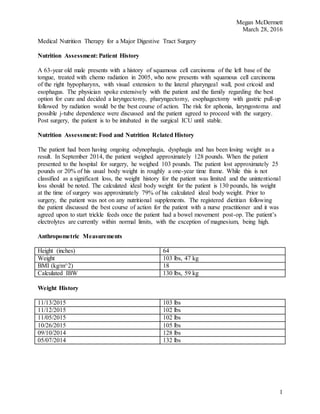
A 63-year old male presents with a history of squamous cell carcinoma of the left base of the
tongue, treated with chemo radiation in 2005, who now presents with squamous cell carcinoma
of the right hypopharynx, with visual extension to the lateral pharyngeal wall, post cricoid and
esophagus. The physician spoke extensively with the patient and the family regarding the best
option for cure and decided a laryngectomy, pharyngectomy, esophagectomy with gastric pull-up
followed by radiation would be the best course of action. The risk for aphonia, laryngostoma and
possible j-tube dependence were discussed and the patient agreed to proceed with the surgery.
Post surgery, the patient is to be intubated in the surgical ICU until stable.
Nutrition Assessment: Food and Nutrition Related History
The patient had been having ongoing odynophagia, dysphagia and has been losing weight as a
result. In September 2014, the patient weighed approximately 128 pounds. When the patient
presented to the hospital for surgery, he weighed 103 pounds. The patient lost approximately 25
pounds or 20% of his usual body weight in roughly a one-year time frame. While this is not
classified as a significant loss, the weight history for the patient was limited and the unintentional
loss should be noted. The calculated ideal body weight for the patient is 130 pounds, his weight
at the time of surgery was approximately 79% of his calculated ideal body weight. Prior to
surgery, the patient was not on any nutritional supplements. The registered dietitian following
the patient discussed the best course of action for the patient with a nurse practitioner and it was
agreed upon to start trickle feeds once the patient had a bowel movement post-op. The patient’s
electrolytes are currently within normal limits, with the exception of magnesium, being high.
Anthropometric Measurements
Height (inches) 64
Weight 103 lbs, 47 kg
BMI (kg/m^2) 18
Calculated IBW 130 lbs, 59 kg
Weight History
11/13/2015 103 lbs
11/12/2015 102 lbs
11/05/2015 102 lbs
10/26/2015 105 lbs
09/10/2014 128 lbs
05/07/2014 132 lbs
Megan McDermett
March 28, 2016
2
Labs
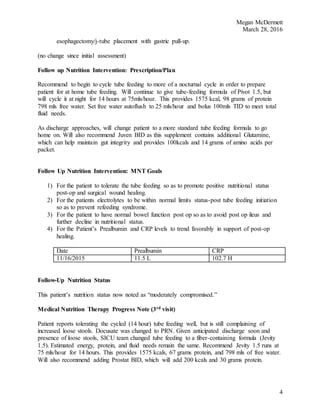
Albumin 3.0 L 11/05/2015
Anion Gap 4.0 11/13/2015
BUN 24 11/13/2015
Ca 8.1 11/13/2015
Cl 102 11/13/2015
CO2 30 11/13/2015
Creatinine 1.0 11/13/2015
Glucose 128 H 11/13/2015
K 3.9 11/13/2015
Na 136 11/13/2015
PO4 4.4 11/13/2015
eGFR 80.2 11/13/2015
SGOT 19 11/05/2015
SGPT 23 11/05/2015
Hgb A1c 4.9 05/07/2014
Mg 3.4 H 11/13/2015
Alk Phos 88 11/05/2015
Estimated Energy Requirements
Energy: 35-40 kcal/kg actual BW = 1700-1900 kcal/day
Protein: 1.5-2.0 gm/kg actual BW = 70-95 gm/day
Fluids: 1 ml/kcal = >1700 mls/day
Nutrition Diagnoses
1) Unintentional weight loss (NC-3.2 [Clinical category from the Academy of Nutrition and
Dietetics’ Nutrition Care Process terminology]) as related to odynophagia and dysphagia
secondary to squamous cell carcinoma of the hypopharynx, cervical esophagus as
evidenced by a noted 23 pound weight loss over the last year.
2) Increased nutrient (protein and kcal) needs (NI-5.1 [Nutrient Intake category from the
Academy of Nutrition and Dietetics’ Nutrition Care Process terminology]) related to need
for healing post-op as evidenced by status post laryngophareygectomy, transhiatal
esophagectomy/j-tube placement with gastric pull-up.
Nutrition Intervention: Prescription/Plan
Initiate trickle feeds of Pivot 1.5 and advance to goal rate of 45 ml/hour continuous as patient
tolerates tube feeding. The goal rate of tube feeding provides 1620 kcals, 101 gm pro (2.1
gm/kg), and 820 mls free water. Additional free water autoflushes at 25 mls/hour will give the
patient 1420 mls of free water.
Megan McDermett
March 28, 2016
3
Nutrition Intervention: MNT Goals
1) For the patient to tolerate the tube feeding so as to promote positive nutritional status
post-op and surgical wound healing.
2) For the patients electrolytes to be within normal limits status-post tube feeding initiation
so as to prevent refeeding syndrome.
3) For the patient to have normal bowel function post op so as to avoid post op ileus and
further decline in nutritional status.
Nutrition Monitoring/Evaluation
Dietitian will monitor patient’s weight, labs, electrolyte levels (magnesium, potassium, and
phosphorus), tube feeding tolerance, and overall hospital course. Patient’s nutritional status noted
as “severely compromised” and the patient will be reassessed within 3-5 days per hospital policy
unless a nutrition follow up is indicated anytime prior to 3-5 days.
Nutrition Status
This patient has been marked as “severely compromised” based on entire nutrition assessment.
Follow up Nutrition Assessment
Patient is a 63-year-old male status-post laryngopharyngectomy, transhiatal esophagectomy/j-
tube placement with gastric pull-up for laryngeal squamous cell carcinoma with pharyngeal and
cervical esophageal extension. Patient communicating via “Boogie Board” eWriter. Patient
reports to be tolerating tube feeding well and denies any gastrointestinal discomfort. He reports
some loose stool, but otherwise all previous goals are being met. Noted that patient is also
receiving docusate, omeprazole, ondanseteron, and calcitriol.
Follow up Estimated Energy Requirements
Energy: 35-40 kcal/kg actual BW = 1700-1900 kcal/day
Protein: 1.5-2.0 gm/kg actual BW = 70-95 gm/day
Fluids: 1 ml/kcal = >1700 mls/day
(no change since initial assessment)
Follow up Nutrition Diagnoses
1) Unintentional weight loss (NC-3.2 [Clinical category from the Academy of Nutrition and
Dietetics’ Nutrition Care Process terminology]) as related to odynophagia and dysphagia
secondary to squamous cell carcinoma of the hypopharynx, cervical esophagus as
evidenced by noted 23 pound weight loss over the last year.
2) Increased nutrient (protein and kcal) needs (NI-5.1 [Nutrient Intake category from the
Academy of Nutrition and Dietetics’ Nutrition Care Process terminology]) related to need
for healing post-op as evidenced by status post laryngophareygectomy, transhiatal
Megan McDermett
March 28, 2016
4
esophagectomy/j-tube placement with gastric pull-up.
(no change since initial assessment)
Follow up Nutrition Intervention: Prescription/Plan
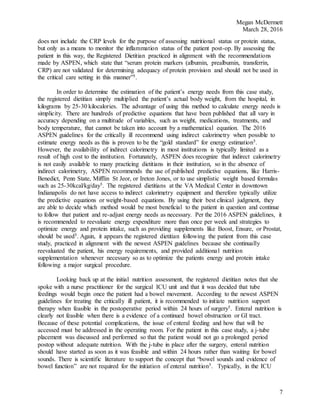
Recommend to begin to cycle tube feeding to more of a nocturnal cycle in order to prepare
patient for at home tube feeding. Will continue to give tube-feeding formula of Pivot 1.5, but
will cycle it at night for 14 hours at 75mls/hour. This provides 1575 kcal, 98 grams of protein
798 mls free water. Set free water autoflush to 25 mls/hour and bolus 100mls TID to meet total
fluid needs.
As discharge approaches, will change patient to a more standard tube feeding formula to go
home on. Will also recommend Juven BID as this supplement contains additional Glutamine,
which can help maintain gut integrity and provides 100kcals and 14 grams of amino acids per
packet.
Follow Up Nutrition Intervention: MNT Goals
1) For the patient to tolerate the tube feeding so as to promote positive nutritional status
post-op and surgical wound healing.
2) For the patients electrolytes to be within normal limits status-post tube feeding initiation
so as to prevent refeeding syndrome.
3) For the patient to have normal bowel function post op so as to avoid post op ileus and
further decline in nutritional status.
4) For the Patient’s Prealbumin and CRP levels to trend favorably in support of post-op
healing.
Date Prealbumin CRP
11/16/2015 11.5 L 102.7 H
Follow-Up Nutrition Status
This patient’s nutrition status now noted as “moderately compromised.”
Medical Nutrition Therapy Progress Note (3rd visit)
Patient reports tolerating the cycled (14 hour) tube feeding well, but is still complaining of
increased loose stools. Docusate was changed to PRN. Given anticipated discharge soon and
presence of loose stools, SICU team changed tube feeding to a fiber-containing formula (Jevity
1.5). Estimated energy, protein, and fluid needs remain the same. Recommend Jevity 1.5 runs at
75 mls/hour for 14 hours. This provides 1575 kcals, 67 grams protein, and 798 mls of free water.
Will also recommend adding Prostat BID, which will add 200 kcals and 30 grams protein.
Megan McDermett
March 28, 2016
5
Recommend continuing Juven BID (80 kcals, 7 grams arginine and 7 grams glutamine). Total
nutrient provision equals 1775 kcals and 97 grams of protein (2gm/kg actual body weight).
Tube feeding pump and IV pole have also been ordered and delivered to room. Will follow-up
with patient tomorrow to make sure new tube feeding was tolerated over night. If the patient
tolerates the new regimen well, will order home supply for patient. Will also provide education
to patient and his wife regarding tube feeding at home prior to discharge.
Discussion
The need for medical nutrition therapy in the Surgical ICU will always be great,
especially when it comes to the need tor enteral nutrition therapy in the case of an intubated
patient. For intubated patients, enteral nutrition is often the difference maker between positive
post-operative outcomes and deathly complications. We know from numerous studies and
journal articles that adequate protein and kilocalories are the essential elements for optimal
wound healing following a major surgical procedure. We are also now learning that optimal
nutrition status prior to surgery is just as important, if not more important, as the medical
nutrition therapy that follows surgery. Many studies are finding that preoperative immnonutrition
is improving the post surgical outcomes for many different cases1. The Nestle Health Science
nutrition supplement, Impact AR®, is quickly becoming a household item for any surgical clinic.
Often time’s, patients are recommended to drink two Impact AR® supplements per day for the
week preceding their upcoming surgery. This is so that, whether they are malnourished or not,
their nutrition status and immune system can be at the top of it’s game before a major trauma to
the body, like surgery, occurs.
The ERAS protocol outlines the catabolic effects surgery has on the body and suggests
possible solutions to minimize the stress of surgery on the human body. Insulin resistance and
hyperglycemia are closely associated with post-operative complications. In short, this is due to
the protein that is lost from muscle, causing loss of muscle mass and strength. In addition, due to
the muscle loss, insulin is incapable of moving glucose into muscle cells to store it as glycogen.
Many of the treatments in the ERAS protocol can reduce the development of insulin resistance.
Perioperative nutrition is one of the treatments that has the potential to decrease the catabolic
effects surgery has on the body. By avoiding the typical preoperative starvation period, insulin
sensitivity can be stimulated right before the patient undergoes the operation. By reducing the
metabolic stress and insulin resistance, any energy and protein consumed by the patient will be
used in a more anabolic way, hyperglycemia can be avoided, which will improve wound healing
post-op, and less lean body mass will be lost, which may mean patients are able to ambulate and
mobilize sooner4.
The patient from this case study unfortunately did not have the opportunity to enhance his
less than adequate nutrition status and immune system due to the fact that he was experiencing
ongoing odynophagia and dysphagia months prior to the hospital visit and surgery. The cancer
that had spread throughout his mouth down to his larynx, pharynx and esophagus was causing
him immense pain and swallowing difficulties. As a result, the patient’s oral intake was limited
and as expected he was losing weight up until the time of surgery. While an oral nutrition
supplement would not be appropriate due to the dysphagia the patient was experiencing, there is
Megan McDermett
March 28, 2016
6
research to suggest that perioperative enteral feeding can also have a positive impact on the
patients recovery following the surgery2. There are options for immunomodular enteral formulas
that can be administered to the patient either through nasogastric tube, dobhoff tube, or through
surgically placed g/j-tubes3. Had the patient come in any earlier for a surgical consult, this should
have been a consideration to discuss, especially considering the weight loss that had been
occurring.
Upon admission to the VA Medical Center, the dietitian in charge of the floor the patient
is admitted to screens all patients on that floor for nutritional risk. In the case of the patient, the
physician ordered a nutrition consult for the dietitian to recommend a tube feeding formula and
regimen for the patient following his surgery. Per the 2016 ASPEN guidelines, dietitians should
perform a nutritional risk screening for all patients admitted to the ICU “for whom volitional
intake is anticipated to be insufficient”5. Based on the registered dietitian’s assessment of the
patient in this case, he was noted to be at high nutritional risk and therefore would benefit from
early enteral nutrition therapy. The registered dietitian took into account the significant weight
loss the patient had had in the last several months leading up to the surgery, the fact that he was
having continuous odynophagia and dysphagia, and finally perhaps the most significant piece of
evidence of the patients nutritional risk, the patient was about to undergo an intensive surgery
that would remove his pharynx, larynx, and esophagus. All of these factors taken into
consideration place the patient at high nutritional risk. The registered dietitian following this
patient practiced in line with the ASPEN guidelines and provided adequate tube-feeding
recommendations on the day of assessment so that the enteral nutrition therapy could be initiated
as soon as possible following his surgical procedure.
Additionally, when determining a patient’s nutritional risk upon admission or any time
during their admission, the use of traditional visceral protein levels should not be used as
markers of nutrition status5. As noted above, the patient had a serum albumin level of 3.0, which
is marked as low because it is below the normal range for serum albumin which is 3.0-5.0. While
this level should not be valued for any nutritional indications, it can be indicative, preoperatively,
of prolonged hospital stay, infection, and mortality for a patient. Postoperatively,
hypoalbuminemia has limited usefulness as it is considered a negative acute phase reactor along
with prealbumin and transferrin. This means that post operatively, these values “reflect the
dynamic and catabolic response to surgery, stress, injury, infection, or organ failure. They do not
reflect the patient’s nutrition status”5. While the registered dietitian in this case does make note
of the low level of albumin prior to surgery, they do not include this level as a nutrition indicator
for the patient. The nutritional status of the patient was determined based on the unintentional
weight loss, difficulty swallowing, cancer, and need for an intense GI tract surgical operation and
tube feeding.
In addition to noting the albumin level, the registered dietitian also makes note of the
Prealbumin and CRP trends for the patient post-operatively. CRP levels are useful in assessing
the level of inflammation a patient has, and since trauma, such as surgery, causes the body to go
into the natural inflammatory response, the level of inflammation increases significantly post-op
and could therefore make management of nutrition therapy more difficult and increase likelihood
of complications5. By being, at least clinically aware of this level, the registered dietitian is able
to make more timely adjustments to the nutrition regimen if necessary. The registered dietitian
Megan McDermett
March 28, 2016
7
does not include the CRP levels for the purpose of assessing nutritional status or protein status,
but only as a means to monitor the inflammation status of the patient post-op. By assessing the
patient in this way, the Registered Dietitian practiced in alignment with the recommendations
made by ASPEN, which state that “serum protein markers (albumin, prealbumin, transferrin,
CRP) are not validated for determining adequacy of protein provision and should not be used in
the critical care setting in this manner”5.
In order to determine the estimation of the patient’s energy needs from this case study,
the registered dietitian simply multiplied the patient’s actual body weight, from the hospital, in
kilograms by 25-30 kilocalories. The advantage of using this method to calculate energy needs is
simplicity. There are hundreds of predictive equations that have been published that all vary in
accuracy depending on a multitude of variables, such as weight, medications, treatments, and
body temperature, that cannot be taken into account by a mathematical equation. The 2016
ASPEN guidelines for the critically ill recommend using indirect calorimetry when possible to
estimate energy needs as this is proven to be the “gold standard” for energy estimation5.
However, the availability of indirect calorimetry in most institutions is typically limited as a
result of high cost to the institution. Fortunately, ASPEN does recognize that indirect calorimetry
is not easily available to many practicing dietitians in their institution, so in the absence of
indirect calorimetry, ASPEN recommends the use of published predictive equations, like Harris-
Benedict, Penn State, Mifflin St Jeor, or Ireton Jones, or to use simplistic weight based formulas
such as 25-30kcal/kg/day5. The registered dietitians at the VA Medical Center in downtown
Indianapolis do not have access to indirect calorimetry equipment and therefore typically utilize
the predictive equations or weight-based equations. By using their best clinical judgment, they
are able to decide which method would be most beneficial to the patient in question and continue
to follow that patient and re-adjust energy needs as necessary. Per the 2016 ASPEN guidelines, it
is recommended to reevaluate energy expenditure more than once per week and strategies to
optimize energy and protein intake, such as providing supplements like Boost, Ensure, or Prostat,
should be used5. Again, it appears the registered dietitian following the patient from this case
study, practiced in alignment with the newest ASPEN guidelines because she continually
reevaluated the patient, his energy requirements, and provided additional nutrition
supplementation whenever necessary so as to optimize the patients energy and protein intake
following a major surgical procedure.
Looking back up at the initial nutrition assessment, the registered dietitian notes that she
spoke with a nurse practitioner for the surgical ICU unit and that it was decided that tube
feedings would begin once the patient had a bowel movement. According to the newest ASPEN
guidelines for treating the critically ill patient, it is recommended to initiate nutrition support
therapy when feasible in the postoperative period within 24 hours of surgery5. Enteral nutrition is
clearly not feasible when there is a evidence of a continued bowel obstruction or GI tract.
Because of these potential complications, the issue of enteral feeding and how that will be
accessed must be addressed in the operating room. For the patient in this case study, a j-tube
placement was discussed and performed so that the patient would not go a prolonged period
postop without adequate nutrition. With the j-tube in place after the surgery, enteral nutrition
should have started as soon as it was feasible and within 24 hours rather than waiting for bowel
sounds. There is scientific literature to support the concept that “bowel sounds and evidence of
bowel function” are not required for the initiation of enteral nutrition5. Typically, in the ICU
Megan McDermett
March 28, 2016
8
setting, GI dysfunction is not uncommon and it occurs in 30-70% of patients5. The absence of
bowel sounds or bowel mobility is only indicative of contractility and do not necessarily suggest
that there are problems with the patients absorptive capacity, barrier function, or mucosal
integrity. In fact, enteral nutrition supports the functional integrity of the gut by “maintaining
tight junctions between the intraepithelial cells, stimulating blood flow, and inducing the release
of trophic endogenous agents”5. The loss of functional integrity of the gut is a time-sensitive
reaction that can begin within hours of major surgery. Some of the consequences can include
“decreased bacterial challenge, risk for systemic infection, and greater likelihood of multiple-
organ dysfunction syndrome”5. As the severity of these conditions worsen, nutrition support
therapy in the form of enteral nutrition is even more likely to positively impact the patient, the
infection, organ failure, and their hospital length of stay. By providing enteral nutrition therapy
within the 24-48 hour window, the functional integrity of the gut can be maintained, stress on the
body and the systematic immune response can be modulated and disease severity can be
diminished.
So, while the agreed course of action was to initiate enteral nutrition once the patient
from the case study had experienced a bowel movement, the registered dietitian monitored the
time period that the patient was without nutrition support post surgery. The Pivot 1.5 formula
was initiated within the 24-48 hour window and the patient had no complications following his
operation. The concept of waiting for a bowel movement before initiating tube feeding is a
popular one among the ICU’s, however it is up to the dietitian to make sure that the ICU team is
aware of the brief window that patient has before some serious adverse effects, related to
prolonged starvation, can begin. Dietitians on ICU teams need to educate the rest of the team on
the complications and suggest that with patients requiring tube feeding, that there be a tube-
feeding protocol in place for the nurses and staff to follow. The 2016 ASPEN guidelines make
this recommendation and believe that with enteral nutrition feeding protocols in place in ICU’s
that the overall percentage of goal calories provided to patients can be increased5.
Enteral nutrition protocols can also be beneficial when a patient in the ICU presents with
diarrhea. Too many times is diarrhea used as an excuse to stop tube feeding. Whenever a patient
gets diarrhea in the ICU, the first assumption is the formula. Well, in the case of the patient from
this case study, he complained to the RD about some loose stools he was having. The RD noted
in her follow-up note that the patient was also receiving regular doses of docusate, which is a
common stool softener seen in the ICU. This medication was probably started so that the patient
would have a bowel movement and could therefore begin his enteral nutrition therapy regimen.
ASPEN recommends that enteral nutrition should not be automatically interrupted because of
diarrhea but that there be more evaluation as to what may be causing the diarrhea, such as a
regular stool softener being taken5. For this patient, that appears to have been the case because
the docusate was changed to PRN or “as needed.” This kind of situation is all too familiar for
dietitian’s in the ICU, which is why creating a tube feeding protocol may be helpful in situations
like these and when there is a question of whether to initiate or temporarily stop the tube feeding.
In the end, it is the responsibility of the dietitian in the ICU to make sure that patients are getting
the nutrition they need as soon as possible and as often as possible so as to optimize their
nutritional status and therefore improve their overall health status.
Megan McDermett
March 28, 2016
9
Selecting the right tube feeding formula is perhaps the most important job for dietitians in
the ICU. For the patient from this case study, an immune-modulating enteral formula was
chosen. The enteral formula chosen, Pivot 1.5, is designed for metabolically stressed surgical,
trauma, burn, or head and neck cancer patients who could benefit from a high-protein, immune
modulating nutrition therapy regimen. ASPEN recommends that immune modulating enteral
formulas be reserved for the perioperative patients in the surgical ICU5. In addition, they suggest
that immune modulating formulas containing both arginine and fish oils be routinely used in the
surgical ICU for post-operative patients5. The arginine and fish oils, which contain omega-3 fatty
acids, DHA and EP, work in conjunction with each other to support the immune system, reduce
inflammation, and decrease cardiac arrhythmias and reduce the risk of sepsis. However, both
arginine and fish oils must be present in the formula in order to see the benefits. Clearly in the
case of this patient, such a major surgery, removing his pharynx, larynx, and esophagus was
considered severe trauma by the surgical ICU dietitian, in which case, the appropriate formula
was chosen.
Prior to discharge for the patient, the SICU team switched the tube feeding formula from
the immune modulating formula, Pivot 1.5 to Jevity 1.5. Jevity 1.5 is a commercial mixed fiber-
containing formula that is a more “standard” formula as compared to Pivot 1.5, which is more
specialized. The patient was also experiencing trouble with loose stools while on Pivot 1.5,
which does not contain any fiber. As was previously noted, the patient was also getting regular
doses of docusate, which was likely a cause of the loose stools. This medication was changed to
PRN at the same time as the formula switch. According to the 2016 ASPEN guidelines, the use
of a commercial mixed fiber-containing formula is recommended if there is evidence of
persistent diarrhea5. In the case of this patient, he was experiencing persistent diarrhea and was
about to be discharged to home. The registered dietitian was already planning on switching the
patient’s formula to a more standard formula for home use, therefore the switch from Pivot 1.5
to Jevity 1.5 was the appropriate formula choice to switch the patient to, given his diarrhea and
discharge status. Despite the formula switch being ultimately agreeable with the dietitian, the
ICU team should have consulted the dietitian before initiating the new formula. This is another
example of policies and procedures that should be included in an ICU tube feeding protocol
designed by the dietitian.
At the completion of this patient’s hospital admission, he was discharged to home on a
home tube feeding regimen and is recovering well from surgery. This case study was particularly
interesting because of the complexity of the surgery the patient required. This patient had his
larynx, pharynx, and esophagus removed as a result of a mouth cancer that spread throughout the
beginning of his digestive tract. Due to the intense nature of the surgery and the removal of
multiple parts of the digestive tract, the role of the registered dietitian in this case could not have
been more important and because of the appropriate nutrition therapy implemented, the patient
was discharged to home and recovered well from his time in the hospital. Medical nutrition
therapy for surgical patients, is not only necessary, but clearly can make the difference between
post-op complications or no complications and ultimately life and death.
Megan McDermett
March 28, 2016
10
References
1. Gianotti Luca, Braga Marco, Nespoli Luca, Radaelli Giovanni, Beneduce Aldo, Di Carlo
Valerio. A randomized controlled trial of preoperative oral supplementation with a
specialized diet in patients with gastrointestinal cancer. Gastroenterology 2002; 122(7):
1763-70.
2. MacFie, J, Woodcock, N. P, Palmer, M. D, et al. Oral dietary supplements in pre- and
postoperative surgical patients: a prospective and randomized clinical trial. Nutrition
2000;16:723-728.
3. Xu, J., Zhong, Y., Jing, D., & Wu, Z. Preoperative Enteral Immunonutrition Improves
Postoperative Outcome in Patients with Gastrointestinal Cancer. World Journal of
Surgery. 2006; 30(7): 1284-1289. doi:10.1007/s00268-005-0756-8.
4. Ljungqvist, O. ERAS—Enhanced Recovery After Surgery: Moving Evidence-Based
Perioperative Care to Practice. The Journal of Parenteral and Enteral Nutrition. 2014;
38(5): 559-566. doi: 10.1177/0148607114523451.
5. McClave SA, Taylor BE, Martindale RG, et al. Guidelines for the Provision and
Assessment of Nutrition Support Therapy in the Adult Critically Ill Patient: Society of
Critical Care Medicine (SCCM) and American Society for Parenteral and Enteral
Nutrition (A.S.P.E.N.). The Journal of Parenteral and Enteral Nutrition. 2016; 40(2):
159-211. doi: 10.1177/0148607115621863.

ISPEN MNT Case Study

  • 1.
    Megan McDermett March 28,2016 1 Medical Nutrition Therapy for a Major Digestive Tract Surgery Nutrition Assessment: Patient History A 63-year old male presents with a history of squamous cell carcinoma of the left base of the tongue, treated with chemo radiation in 2005, who now presents with squamous cell carcinoma of the right hypopharynx, with visual extension to the lateral pharyngeal wall, post cricoid and esophagus. The physician spoke extensively with the patient and the family regarding the best option for cure and decided a laryngectomy, pharyngectomy, esophagectomy with gastric pull-up followed by radiation would be the best course of action. The risk for aphonia, laryngostoma and possible j-tube dependence were discussed and the patient agreed to proceed with the surgery. Post surgery, the patient is to be intubated in the surgical ICU until stable. Nutrition Assessment: Food and Nutrition Related History The patient had been having ongoing odynophagia, dysphagia and has been losing weight as a result. In September 2014, the patient weighed approximately 128 pounds. When the patient presented to the hospital for surgery, he weighed 103 pounds. The patient lost approximately 25 pounds or 20% of his usual body weight in roughly a one-year time frame. While this is not classified as a significant loss, the weight history for the patient was limited and the unintentional loss should be noted. The calculated ideal body weight for the patient is 130 pounds, his weight at the time of surgery was approximately 79% of his calculated ideal body weight. Prior to surgery, the patient was not on any nutritional supplements. The registered dietitian following the patient discussed the best course of action for the patient with a nurse practitioner and it was agreed upon to start trickle feeds once the patient had a bowel movement post-op. The patient’s electrolytes are currently within normal limits, with the exception of magnesium, being high. Anthropometric Measurements Height (inches) 64 Weight 103 lbs, 47 kg BMI (kg/m^2) 18 Calculated IBW 130 lbs, 59 kg Weight History 11/13/2015 103 lbs 11/12/2015 102 lbs 11/05/2015 102 lbs 10/26/2015 105 lbs 09/10/2014 128 lbs 05/07/2014 132 lbs
  • 2.
    Megan McDermett March 28,2016 2 Labs Albumin 3.0 L 11/05/2015 Anion Gap 4.0 11/13/2015 BUN 24 11/13/2015 Ca 8.1 11/13/2015 Cl 102 11/13/2015 CO2 30 11/13/2015 Creatinine 1.0 11/13/2015 Glucose 128 H 11/13/2015 K 3.9 11/13/2015 Na 136 11/13/2015 PO4 4.4 11/13/2015 eGFR 80.2 11/13/2015 SGOT 19 11/05/2015 SGPT 23 11/05/2015 Hgb A1c 4.9 05/07/2014 Mg 3.4 H 11/13/2015 Alk Phos 88 11/05/2015 Estimated Energy Requirements Energy: 35-40 kcal/kg actual BW = 1700-1900 kcal/day Protein: 1.5-2.0 gm/kg actual BW = 70-95 gm/day Fluids: 1 ml/kcal = >1700 mls/day Nutrition Diagnoses 1) Unintentional weight loss (NC-3.2 [Clinical category from the Academy of Nutrition and Dietetics’ Nutrition Care Process terminology]) as related to odynophagia and dysphagia secondary to squamous cell carcinoma of the hypopharynx, cervical esophagus as evidenced by a noted 23 pound weight loss over the last year. 2) Increased nutrient (protein and kcal) needs (NI-5.1 [Nutrient Intake category from the Academy of Nutrition and Dietetics’ Nutrition Care Process terminology]) related to need for healing post-op as evidenced by status post laryngophareygectomy, transhiatal esophagectomy/j-tube placement with gastric pull-up. Nutrition Intervention: Prescription/Plan Initiate trickle feeds of Pivot 1.5 and advance to goal rate of 45 ml/hour continuous as patient tolerates tube feeding. The goal rate of tube feeding provides 1620 kcals, 101 gm pro (2.1 gm/kg), and 820 mls free water. Additional free water autoflushes at 25 mls/hour will give the patient 1420 mls of free water.
  • 3.
    Megan McDermett March 28,2016 3 Nutrition Intervention: MNT Goals 1) For the patient to tolerate the tube feeding so as to promote positive nutritional status post-op and surgical wound healing. 2) For the patients electrolytes to be within normal limits status-post tube feeding initiation so as to prevent refeeding syndrome. 3) For the patient to have normal bowel function post op so as to avoid post op ileus and further decline in nutritional status. Nutrition Monitoring/Evaluation Dietitian will monitor patient’s weight, labs, electrolyte levels (magnesium, potassium, and phosphorus), tube feeding tolerance, and overall hospital course. Patient’s nutritional status noted as “severely compromised” and the patient will be reassessed within 3-5 days per hospital policy unless a nutrition follow up is indicated anytime prior to 3-5 days. Nutrition Status This patient has been marked as “severely compromised” based on entire nutrition assessment. Follow up Nutrition Assessment Patient is a 63-year-old male status-post laryngopharyngectomy, transhiatal esophagectomy/j- tube placement with gastric pull-up for laryngeal squamous cell carcinoma with pharyngeal and cervical esophageal extension. Patient communicating via “Boogie Board” eWriter. Patient reports to be tolerating tube feeding well and denies any gastrointestinal discomfort. He reports some loose stool, but otherwise all previous goals are being met. Noted that patient is also receiving docusate, omeprazole, ondanseteron, and calcitriol. Follow up Estimated Energy Requirements Energy: 35-40 kcal/kg actual BW = 1700-1900 kcal/day Protein: 1.5-2.0 gm/kg actual BW = 70-95 gm/day Fluids: 1 ml/kcal = >1700 mls/day (no change since initial assessment) Follow up Nutrition Diagnoses 1) Unintentional weight loss (NC-3.2 [Clinical category from the Academy of Nutrition and Dietetics’ Nutrition Care Process terminology]) as related to odynophagia and dysphagia secondary to squamous cell carcinoma of the hypopharynx, cervical esophagus as evidenced by noted 23 pound weight loss over the last year. 2) Increased nutrient (protein and kcal) needs (NI-5.1 [Nutrient Intake category from the Academy of Nutrition and Dietetics’ Nutrition Care Process terminology]) related to need for healing post-op as evidenced by status post laryngophareygectomy, transhiatal
  • 4.
    Megan McDermett March 28,2016 4 esophagectomy/j-tube placement with gastric pull-up. (no change since initial assessment) Follow up Nutrition Intervention: Prescription/Plan Recommend to begin to cycle tube feeding to more of a nocturnal cycle in order to prepare patient for at home tube feeding. Will continue to give tube-feeding formula of Pivot 1.5, but will cycle it at night for 14 hours at 75mls/hour. This provides 1575 kcal, 98 grams of protein 798 mls free water. Set free water autoflush to 25 mls/hour and bolus 100mls TID to meet total fluid needs. As discharge approaches, will change patient to a more standard tube feeding formula to go home on. Will also recommend Juven BID as this supplement contains additional Glutamine, which can help maintain gut integrity and provides 100kcals and 14 grams of amino acids per packet. Follow Up Nutrition Intervention: MNT Goals 1) For the patient to tolerate the tube feeding so as to promote positive nutritional status post-op and surgical wound healing. 2) For the patients electrolytes to be within normal limits status-post tube feeding initiation so as to prevent refeeding syndrome. 3) For the patient to have normal bowel function post op so as to avoid post op ileus and further decline in nutritional status. 4) For the Patient’s Prealbumin and CRP levels to trend favorably in support of post-op healing. Date Prealbumin CRP 11/16/2015 11.5 L 102.7 H Follow-Up Nutrition Status This patient’s nutrition status now noted as “moderately compromised.” Medical Nutrition Therapy Progress Note (3rd visit) Patient reports tolerating the cycled (14 hour) tube feeding well, but is still complaining of increased loose stools. Docusate was changed to PRN. Given anticipated discharge soon and presence of loose stools, SICU team changed tube feeding to a fiber-containing formula (Jevity 1.5). Estimated energy, protein, and fluid needs remain the same. Recommend Jevity 1.5 runs at 75 mls/hour for 14 hours. This provides 1575 kcals, 67 grams protein, and 798 mls of free water. Will also recommend adding Prostat BID, which will add 200 kcals and 30 grams protein.
  • 5.
    Megan McDermett March 28,2016 5 Recommend continuing Juven BID (80 kcals, 7 grams arginine and 7 grams glutamine). Total nutrient provision equals 1775 kcals and 97 grams of protein (2gm/kg actual body weight). Tube feeding pump and IV pole have also been ordered and delivered to room. Will follow-up with patient tomorrow to make sure new tube feeding was tolerated over night. If the patient tolerates the new regimen well, will order home supply for patient. Will also provide education to patient and his wife regarding tube feeding at home prior to discharge. Discussion The need for medical nutrition therapy in the Surgical ICU will always be great, especially when it comes to the need tor enteral nutrition therapy in the case of an intubated patient. For intubated patients, enteral nutrition is often the difference maker between positive post-operative outcomes and deathly complications. We know from numerous studies and journal articles that adequate protein and kilocalories are the essential elements for optimal wound healing following a major surgical procedure. We are also now learning that optimal nutrition status prior to surgery is just as important, if not more important, as the medical nutrition therapy that follows surgery. Many studies are finding that preoperative immnonutrition is improving the post surgical outcomes for many different cases1. The Nestle Health Science nutrition supplement, Impact AR®, is quickly becoming a household item for any surgical clinic. Often time’s, patients are recommended to drink two Impact AR® supplements per day for the week preceding their upcoming surgery. This is so that, whether they are malnourished or not, their nutrition status and immune system can be at the top of it’s game before a major trauma to the body, like surgery, occurs. The ERAS protocol outlines the catabolic effects surgery has on the body and suggests possible solutions to minimize the stress of surgery on the human body. Insulin resistance and hyperglycemia are closely associated with post-operative complications. In short, this is due to the protein that is lost from muscle, causing loss of muscle mass and strength. In addition, due to the muscle loss, insulin is incapable of moving glucose into muscle cells to store it as glycogen. Many of the treatments in the ERAS protocol can reduce the development of insulin resistance. Perioperative nutrition is one of the treatments that has the potential to decrease the catabolic effects surgery has on the body. By avoiding the typical preoperative starvation period, insulin sensitivity can be stimulated right before the patient undergoes the operation. By reducing the metabolic stress and insulin resistance, any energy and protein consumed by the patient will be used in a more anabolic way, hyperglycemia can be avoided, which will improve wound healing post-op, and less lean body mass will be lost, which may mean patients are able to ambulate and mobilize sooner4. The patient from this case study unfortunately did not have the opportunity to enhance his less than adequate nutrition status and immune system due to the fact that he was experiencing ongoing odynophagia and dysphagia months prior to the hospital visit and surgery. The cancer that had spread throughout his mouth down to his larynx, pharynx and esophagus was causing him immense pain and swallowing difficulties. As a result, the patient’s oral intake was limited and as expected he was losing weight up until the time of surgery. While an oral nutrition supplement would not be appropriate due to the dysphagia the patient was experiencing, there is
  • 6.
    Megan McDermett March 28,2016 6 research to suggest that perioperative enteral feeding can also have a positive impact on the patients recovery following the surgery2. There are options for immunomodular enteral formulas that can be administered to the patient either through nasogastric tube, dobhoff tube, or through surgically placed g/j-tubes3. Had the patient come in any earlier for a surgical consult, this should have been a consideration to discuss, especially considering the weight loss that had been occurring. Upon admission to the VA Medical Center, the dietitian in charge of the floor the patient is admitted to screens all patients on that floor for nutritional risk. In the case of the patient, the physician ordered a nutrition consult for the dietitian to recommend a tube feeding formula and regimen for the patient following his surgery. Per the 2016 ASPEN guidelines, dietitians should perform a nutritional risk screening for all patients admitted to the ICU “for whom volitional intake is anticipated to be insufficient”5. Based on the registered dietitian’s assessment of the patient in this case, he was noted to be at high nutritional risk and therefore would benefit from early enteral nutrition therapy. The registered dietitian took into account the significant weight loss the patient had had in the last several months leading up to the surgery, the fact that he was having continuous odynophagia and dysphagia, and finally perhaps the most significant piece of evidence of the patients nutritional risk, the patient was about to undergo an intensive surgery that would remove his pharynx, larynx, and esophagus. All of these factors taken into consideration place the patient at high nutritional risk. The registered dietitian following this patient practiced in line with the ASPEN guidelines and provided adequate tube-feeding recommendations on the day of assessment so that the enteral nutrition therapy could be initiated as soon as possible following his surgical procedure. Additionally, when determining a patient’s nutritional risk upon admission or any time during their admission, the use of traditional visceral protein levels should not be used as markers of nutrition status5. As noted above, the patient had a serum albumin level of 3.0, which is marked as low because it is below the normal range for serum albumin which is 3.0-5.0. While this level should not be valued for any nutritional indications, it can be indicative, preoperatively, of prolonged hospital stay, infection, and mortality for a patient. Postoperatively, hypoalbuminemia has limited usefulness as it is considered a negative acute phase reactor along with prealbumin and transferrin. This means that post operatively, these values “reflect the dynamic and catabolic response to surgery, stress, injury, infection, or organ failure. They do not reflect the patient’s nutrition status”5. While the registered dietitian in this case does make note of the low level of albumin prior to surgery, they do not include this level as a nutrition indicator for the patient. The nutritional status of the patient was determined based on the unintentional weight loss, difficulty swallowing, cancer, and need for an intense GI tract surgical operation and tube feeding. In addition to noting the albumin level, the registered dietitian also makes note of the Prealbumin and CRP trends for the patient post-operatively. CRP levels are useful in assessing the level of inflammation a patient has, and since trauma, such as surgery, causes the body to go into the natural inflammatory response, the level of inflammation increases significantly post-op and could therefore make management of nutrition therapy more difficult and increase likelihood of complications5. By being, at least clinically aware of this level, the registered dietitian is able to make more timely adjustments to the nutrition regimen if necessary. The registered dietitian
  • 7.
    Megan McDermett March 28,2016 7 does not include the CRP levels for the purpose of assessing nutritional status or protein status, but only as a means to monitor the inflammation status of the patient post-op. By assessing the patient in this way, the Registered Dietitian practiced in alignment with the recommendations made by ASPEN, which state that “serum protein markers (albumin, prealbumin, transferrin, CRP) are not validated for determining adequacy of protein provision and should not be used in the critical care setting in this manner”5. In order to determine the estimation of the patient’s energy needs from this case study, the registered dietitian simply multiplied the patient’s actual body weight, from the hospital, in kilograms by 25-30 kilocalories. The advantage of using this method to calculate energy needs is simplicity. There are hundreds of predictive equations that have been published that all vary in accuracy depending on a multitude of variables, such as weight, medications, treatments, and body temperature, that cannot be taken into account by a mathematical equation. The 2016 ASPEN guidelines for the critically ill recommend using indirect calorimetry when possible to estimate energy needs as this is proven to be the “gold standard” for energy estimation5. However, the availability of indirect calorimetry in most institutions is typically limited as a result of high cost to the institution. Fortunately, ASPEN does recognize that indirect calorimetry is not easily available to many practicing dietitians in their institution, so in the absence of indirect calorimetry, ASPEN recommends the use of published predictive equations, like Harris- Benedict, Penn State, Mifflin St Jeor, or Ireton Jones, or to use simplistic weight based formulas such as 25-30kcal/kg/day5. The registered dietitians at the VA Medical Center in downtown Indianapolis do not have access to indirect calorimetry equipment and therefore typically utilize the predictive equations or weight-based equations. By using their best clinical judgment, they are able to decide which method would be most beneficial to the patient in question and continue to follow that patient and re-adjust energy needs as necessary. Per the 2016 ASPEN guidelines, it is recommended to reevaluate energy expenditure more than once per week and strategies to optimize energy and protein intake, such as providing supplements like Boost, Ensure, or Prostat, should be used5. Again, it appears the registered dietitian following the patient from this case study, practiced in alignment with the newest ASPEN guidelines because she continually reevaluated the patient, his energy requirements, and provided additional nutrition supplementation whenever necessary so as to optimize the patients energy and protein intake following a major surgical procedure. Looking back up at the initial nutrition assessment, the registered dietitian notes that she spoke with a nurse practitioner for the surgical ICU unit and that it was decided that tube feedings would begin once the patient had a bowel movement. According to the newest ASPEN guidelines for treating the critically ill patient, it is recommended to initiate nutrition support therapy when feasible in the postoperative period within 24 hours of surgery5. Enteral nutrition is clearly not feasible when there is a evidence of a continued bowel obstruction or GI tract. Because of these potential complications, the issue of enteral feeding and how that will be accessed must be addressed in the operating room. For the patient in this case study, a j-tube placement was discussed and performed so that the patient would not go a prolonged period postop without adequate nutrition. With the j-tube in place after the surgery, enteral nutrition should have started as soon as it was feasible and within 24 hours rather than waiting for bowel sounds. There is scientific literature to support the concept that “bowel sounds and evidence of bowel function” are not required for the initiation of enteral nutrition5. Typically, in the ICU
  • 8.
    Megan McDermett March 28,2016 8 setting, GI dysfunction is not uncommon and it occurs in 30-70% of patients5. The absence of bowel sounds or bowel mobility is only indicative of contractility and do not necessarily suggest that there are problems with the patients absorptive capacity, barrier function, or mucosal integrity. In fact, enteral nutrition supports the functional integrity of the gut by “maintaining tight junctions between the intraepithelial cells, stimulating blood flow, and inducing the release of trophic endogenous agents”5. The loss of functional integrity of the gut is a time-sensitive reaction that can begin within hours of major surgery. Some of the consequences can include “decreased bacterial challenge, risk for systemic infection, and greater likelihood of multiple- organ dysfunction syndrome”5. As the severity of these conditions worsen, nutrition support therapy in the form of enteral nutrition is even more likely to positively impact the patient, the infection, organ failure, and their hospital length of stay. By providing enteral nutrition therapy within the 24-48 hour window, the functional integrity of the gut can be maintained, stress on the body and the systematic immune response can be modulated and disease severity can be diminished. So, while the agreed course of action was to initiate enteral nutrition once the patient from the case study had experienced a bowel movement, the registered dietitian monitored the time period that the patient was without nutrition support post surgery. The Pivot 1.5 formula was initiated within the 24-48 hour window and the patient had no complications following his operation. The concept of waiting for a bowel movement before initiating tube feeding is a popular one among the ICU’s, however it is up to the dietitian to make sure that the ICU team is aware of the brief window that patient has before some serious adverse effects, related to prolonged starvation, can begin. Dietitians on ICU teams need to educate the rest of the team on the complications and suggest that with patients requiring tube feeding, that there be a tube- feeding protocol in place for the nurses and staff to follow. The 2016 ASPEN guidelines make this recommendation and believe that with enteral nutrition feeding protocols in place in ICU’s that the overall percentage of goal calories provided to patients can be increased5. Enteral nutrition protocols can also be beneficial when a patient in the ICU presents with diarrhea. Too many times is diarrhea used as an excuse to stop tube feeding. Whenever a patient gets diarrhea in the ICU, the first assumption is the formula. Well, in the case of the patient from this case study, he complained to the RD about some loose stools he was having. The RD noted in her follow-up note that the patient was also receiving regular doses of docusate, which is a common stool softener seen in the ICU. This medication was probably started so that the patient would have a bowel movement and could therefore begin his enteral nutrition therapy regimen. ASPEN recommends that enteral nutrition should not be automatically interrupted because of diarrhea but that there be more evaluation as to what may be causing the diarrhea, such as a regular stool softener being taken5. For this patient, that appears to have been the case because the docusate was changed to PRN or “as needed.” This kind of situation is all too familiar for dietitian’s in the ICU, which is why creating a tube feeding protocol may be helpful in situations like these and when there is a question of whether to initiate or temporarily stop the tube feeding. In the end, it is the responsibility of the dietitian in the ICU to make sure that patients are getting the nutrition they need as soon as possible and as often as possible so as to optimize their nutritional status and therefore improve their overall health status.
  • 9.
    Megan McDermett March 28,2016 9 Selecting the right tube feeding formula is perhaps the most important job for dietitians in the ICU. For the patient from this case study, an immune-modulating enteral formula was chosen. The enteral formula chosen, Pivot 1.5, is designed for metabolically stressed surgical, trauma, burn, or head and neck cancer patients who could benefit from a high-protein, immune modulating nutrition therapy regimen. ASPEN recommends that immune modulating enteral formulas be reserved for the perioperative patients in the surgical ICU5. In addition, they suggest that immune modulating formulas containing both arginine and fish oils be routinely used in the surgical ICU for post-operative patients5. The arginine and fish oils, which contain omega-3 fatty acids, DHA and EP, work in conjunction with each other to support the immune system, reduce inflammation, and decrease cardiac arrhythmias and reduce the risk of sepsis. However, both arginine and fish oils must be present in the formula in order to see the benefits. Clearly in the case of this patient, such a major surgery, removing his pharynx, larynx, and esophagus was considered severe trauma by the surgical ICU dietitian, in which case, the appropriate formula was chosen. Prior to discharge for the patient, the SICU team switched the tube feeding formula from the immune modulating formula, Pivot 1.5 to Jevity 1.5. Jevity 1.5 is a commercial mixed fiber- containing formula that is a more “standard” formula as compared to Pivot 1.5, which is more specialized. The patient was also experiencing trouble with loose stools while on Pivot 1.5, which does not contain any fiber. As was previously noted, the patient was also getting regular doses of docusate, which was likely a cause of the loose stools. This medication was changed to PRN at the same time as the formula switch. According to the 2016 ASPEN guidelines, the use of a commercial mixed fiber-containing formula is recommended if there is evidence of persistent diarrhea5. In the case of this patient, he was experiencing persistent diarrhea and was about to be discharged to home. The registered dietitian was already planning on switching the patient’s formula to a more standard formula for home use, therefore the switch from Pivot 1.5 to Jevity 1.5 was the appropriate formula choice to switch the patient to, given his diarrhea and discharge status. Despite the formula switch being ultimately agreeable with the dietitian, the ICU team should have consulted the dietitian before initiating the new formula. This is another example of policies and procedures that should be included in an ICU tube feeding protocol designed by the dietitian. At the completion of this patient’s hospital admission, he was discharged to home on a home tube feeding regimen and is recovering well from surgery. This case study was particularly interesting because of the complexity of the surgery the patient required. This patient had his larynx, pharynx, and esophagus removed as a result of a mouth cancer that spread throughout the beginning of his digestive tract. Due to the intense nature of the surgery and the removal of multiple parts of the digestive tract, the role of the registered dietitian in this case could not have been more important and because of the appropriate nutrition therapy implemented, the patient was discharged to home and recovered well from his time in the hospital. Medical nutrition therapy for surgical patients, is not only necessary, but clearly can make the difference between post-op complications or no complications and ultimately life and death.
  • 10.
    Megan McDermett March 28,2016 10 References 1. Gianotti Luca, Braga Marco, Nespoli Luca, Radaelli Giovanni, Beneduce Aldo, Di Carlo Valerio. A randomized controlled trial of preoperative oral supplementation with a specialized diet in patients with gastrointestinal cancer. Gastroenterology 2002; 122(7): 1763-70. 2. MacFie, J, Woodcock, N. P, Palmer, M. D, et al. Oral dietary supplements in pre- and postoperative surgical patients: a prospective and randomized clinical trial. Nutrition 2000;16:723-728. 3. Xu, J., Zhong, Y., Jing, D., & Wu, Z. Preoperative Enteral Immunonutrition Improves Postoperative Outcome in Patients with Gastrointestinal Cancer. World Journal of Surgery. 2006; 30(7): 1284-1289. doi:10.1007/s00268-005-0756-8. 4. Ljungqvist, O. ERAS—Enhanced Recovery After Surgery: Moving Evidence-Based Perioperative Care to Practice. The Journal of Parenteral and Enteral Nutrition. 2014; 38(5): 559-566. doi: 10.1177/0148607114523451. 5. McClave SA, Taylor BE, Martindale RG, et al. Guidelines for the Provision and Assessment of Nutrition Support Therapy in the Adult Critically Ill Patient: Society of Critical Care Medicine (SCCM) and American Society for Parenteral and Enteral Nutrition (A.S.P.E.N.). The Journal of Parenteral and Enteral Nutrition. 2016; 40(2): 159-211. doi: 10.1177/0148607115621863.