Ischemic stroke
Dr Baba H S
Outline
• INTRODUCTION
• EPIDEMIOLOGY
• CLASSIFICATION
• ETIOLOGY/RISK FACTORS
• PATHOPHYSIOLOGY
• CLINICAL MANIFESTATION
• INVESTIGATION
• TREATMENT
• COMPLICATIONS
• PREVENTION
• REFERENCES
Introduction
• Stroke is defined as a syndrome of rapid onset neurological deficit of
vascular origin caused by focal cerebral, spinal or retinal infarction or
hemorrhage
• TIA is defined as a transient episode of neurological dysfunction
caused by focal brain, spinal cord or retinal ischemia without
evidence of acute ischemia (AHA/ASA 2009)
• Stroke is the second leading cause of death worldwide, with
6.2million dying from stroke in 2015
• Stroke is a significant economic, social and medical problem
worldwide
• Stroke has grown in incidence worldwide , however it is declining
among the affluent and rising among those with less access to
medical care
Epidemiology
• 5th commonest cause of death, if considered separately from CVD
• Leading cause of disability worldwide
• In the US, annual incidence 795,000
• Prevalence increases with age
• Lifetime risk higher in women
• In Nigeria, prevalence is 1.14/1000, 30 day case fatality rate 40%
(Kolawole W. H)
• Stroke registry in Ibadan gave the annual incidence of stroke in
Nigerians as 26 per 100,000 populations
• At LASUTH stroke was the commonest cause of neurological
admissions
• In Nigeria cerebral ischemia accounted for 64%, ICH for 19% and SAH
for 6% of all strokes
• A cross sectional study between Jan 2010 and July 2013 in NHA
showed 62.5% had ischemic stroke while ICH 30.5% and SAH was
2.9%.[Nura H.A et-al]
• Stroke is classified into two major types
• Brain ischemia due to thrombosis, embolism, or systemic
hypoperfusion.
• Brain hemorrhage due to intracerebral hemorrhage (ICH) or
subarachnoid hemorrhage (SAH).
• Ischemic stroke represents a variety of conditions in which blood flow
to part or all of the brain is reduced resulting in tissue damage
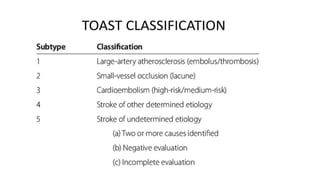
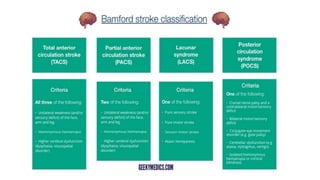
• Ischemic stroke can be classified clinically using the TOAST
classification and Bamford classification
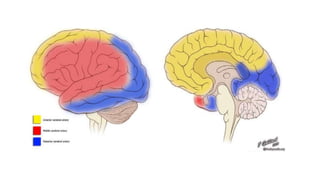
Watershed infarcts
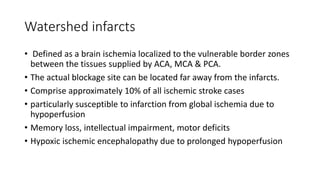
• Defined as a brain ischemia localized to the vulnerable border zones
between the tissues supplied by ACA, MCA & PCA.
• The actual blockage site can be located far away from the infarcts.
• Comprise approximately 10% of all ischemic stroke cases
• particularly susceptible to infarction from global ischemia due to
hypoperfusion
• Memory loss, intellectual impairment, motor deficits
• Hypoxic ischemic encephalopathy due to prolonged hypoperfusion
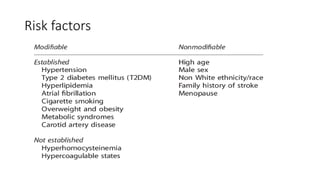
Risk factors
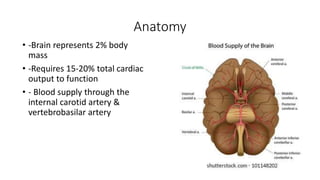
Anatomy
• -Brain represents 2% body
mass
• -Requires 15-20% total cardiac
output to function
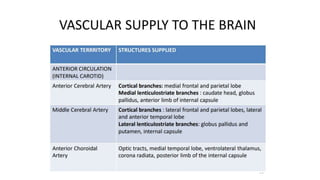
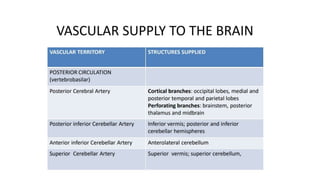
• - Blood supply through the
internal carotid artery &
vertebrobasilar artery
Etiology
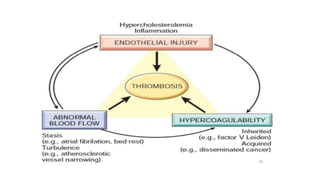
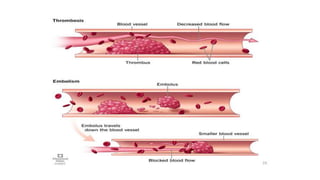
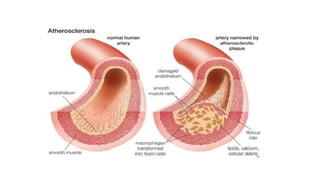
• Thrombosis: lacunar stroke, large-vessel thrombosis.
• Embolic occlusion : artery-to-artery, cardioembolic (atrial fibrillation, mural
thrombus, myocardial infarction, DCM, Mitral stenosis), paradoxical embolus
• Drugs: cocaine, amphetamine, LSD, heroin
• Hypercoagulable disorders: Protein C, S deficiency, SC anaemia, TTP, DIC,
nephrotic syndrome
• Fibromuscular dysplasia
• Vasculitis, SLE
• Fat/air embolus
• Moyamoya disease
• Eclampsia
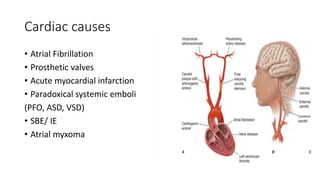
Cardiac causes
• Atrial Fibrillation
• Prosthetic valves
• Acute myocardial infarction
• Paradoxical systemic emboli
(PFO, ASD, VSD)
• SBE/ IE
• Atrial myxoma
Cerebral autoregulation & cerebral perfusion
pressure
• The brain is able to autoregulate its blood flow within a mean arterial
pressure of 60-150mmhg (cerebral autoregulation)
• Beyond this pressure the brain is unable to compensate for changes
in perfusion pressure
• Cerebral auto regulation is impaired during ischemic stroke.
• In hypertensive individuals, autoregulation is adapted to occur in high
arterial pressure. Sudden reduction of BP to normal could exacerbate
Autoregulation derangement leading to further CBF reduction.
pathophysiology
• Acute occlusion of an intracranial vessel leads to a decrease in blood
flow to the brain region it supplies
• Reduction in cerebral blood flow to zero causes brain tissue death
within 4-10mins
• Blood flow <16-18ml/100g tissue/min leads to infarction within an
hour
• <20ml/100mg tissue/min  ischemia without infarction unless
prolonged (hours-days)
• A TIA results when blood flow is restored to ischemic tissue before
significant infarction develops.
• Ischemic core is an affected area where blood flow is
<10ml/100g/min
• Ischemic penumbra, blood flow <25ml/100g/min
-area surrounding the ischemic core
-neurons are non functional
-structurally normal
-target of revascularization
• Infarction occurs via 2 pathways
1. Necrotic pathway
2. Apoptotic pathway
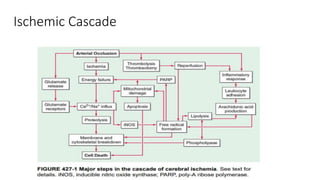
Ischemic Cascade
• With decreasing cerebral blood flow the following occurs:
• Protein synthesis is initially inhibited and completely ceases
• Transient increase in glucose utilization then it drops dramatically
with conversion to anaerobic glycolysis
• There's accumulation of lactic acid with tissue acidosis
• Neuronal electrical failure and failure of membrane ion hemostasis
Brain ischemia initiates a cascade of events that eventually lead to cell
death, including:
• Depletion of adenosine triphosphate (ATP)
• Changes in ionic concentrations of sodium, potassium, and calcium
Increased lactate, acidosis
• Accumulation of oxygen free radicals
• Activation of proteolytic processes.
• Intracellular accumulation of water leading to cytotoxic edema
• Ischemia also directly results in dysfunction of the cerebral
vasculature with breakdown of the blood-brain barrier
• Influx of proteins and water into the extracellular space leading to
vasogenic edema.
• Extravasation of peripheral blood from disrupted blood brain barrier
can also occur hemorrhagic transformation
Clinical presentation
• Common signs and symptoms :
• Hemiparesis, monoparesis or quadriparesis
• Hemisensory deficits
• Monocular or binocular visual loss, visual field deficits, diplopia
• Dysarthria, aphasia, facial droop
• Ataxia, Vertigo
• Sudden decrease in level of consciousness
Management
• Focused hx and examination to establish the lesion, localize region of
brain dysfunction and identify risk factors.
• Airway, breathing and circulation
• Vital signs
• Head and neck exam
• Major organ system examination: CVS, neurologic
• National Institute of Health Stroke Score: NIHSS
Investigations
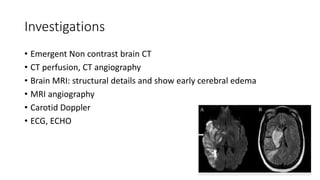
• Emergent Non contrast brain CT
• CT perfusion, CT angiography
• Brain MRI: structural details and show early cerebral edema
• MRI angiography
• Carotid Doppler
• ECG, ECHO
• Blood glucose, HbA1C
• FBC, ESR, clotting profile
• Lipid profile
• Serology
• Toxicology screen
• Genetics
Investigations
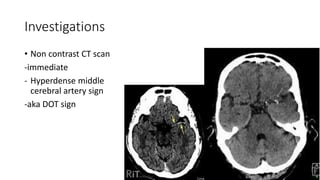
• Non contrast CT scan
-immediate
- Hyperdense middle
cerebral artery sign
-aka DOT sign
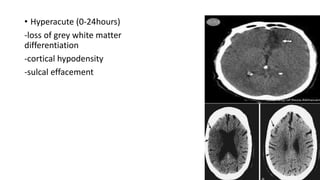
• Hyperacute (0-24hours)
-loss of grey white matter
differentiation
-cortical hypodensity
-sulcal effacement
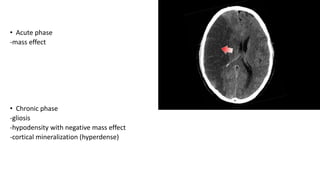
• Acute phase
-mass effect
• Chronic phase
-gliosis
-hypodensity with negative mass effect
-cortical mineralization (hyperdense)
Treatment
• AIMS:
-redeem the ischemic penumbra
-achieve timely recanalization of occluded artery & reperfusion of
ischemic tissue
-optimize collateral flow
-apply principles of acute stroke care
-avoid secondary brain injury
• ABC: airway, breathing, circulation
• Stabilize the patient as necessary
• Complete initial evaluation and assessment all within 60 mins of
patient arrival
• Address comorbidities: antipyretics, oxygen supplementation, IVF ,
vasopressor therapy
• Blood glucose control. : maintain blood glucose level between 140-
180mg/dl (7.7-10mmol/L)
Blood pressure control
• For patients who are not candidates for fibrinolytic therapy, current
guidelines recommend permitting moderate hypertension in most
patients with acute ischemic stroke.
• The exceptions would be patients who have active comorbidities (eg,
aortic dissection, acute myocardial infarction [MI],
• Acute antihypertensive therapy is typically indicated when blood
pressure is >220/120 mm Hg,(ASA 2013)
• For those who have received IV thrombectomy blood pressure should
be maintained
Fibrinolytic therapy
• IV thrombolysis with rtPA is proven to be effective in improving functional
outcomes after an ischemic stroke up to 4.5 hours after symptom onset
• Fibrinolytic therapy with alteplase (rt-PA).
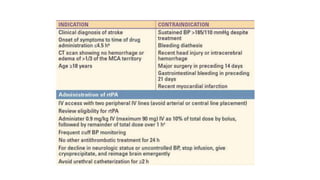
• Indications for administration of rtPA for AIS
– Clinical diagnosis of stroke
– Onset of symptoms to time of drug administration ≤ 4.5 h
– CT scan showing no hemorrhage or edema of >1/3 of the MCA territory
– Age ≥ 18 years
-persisting neurological deficit
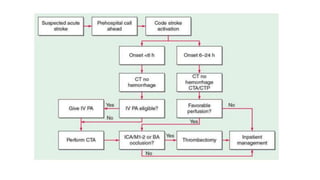
• Endovascular therapy with mechanical thrombectomy :
• for patients in whom fibrinolysis is ineffective or contraindicated.
Within 6-16hrs post event
• 4 devices have been approved :
1. Merci retriever
2. Penumbra system
3. Solitaire FR Revascularization Device
4. Trevo
Antithrombotic therapy
• AHA/ASA recommend giving aspirin 325mg PO within 24-48hrs of
ischemic stroke onset
• Aspirin therapy reduces the risk of stroke recurrence within 14 days (
International Stroke Trial )
• Aspirin treatment started within 48 hrs of onset of AIS and continued
for up to 4 weeks reduced mortality to 3.3% (CAST)
• DAPT -is recommended in the short term and only for specific
patients: those with early arriving minor stroke and high-risk TIA or
severe symptomatic stenosis
• Treatment with DAT (aspirin + clopidogrel) started within 24hrs of
onset and continued up to 21 days is effective in reducing ASI
recurrence within 90 days.
Anticoagulation
• Atrial Fibrillation- 2 weeks after AF
• Arterial dissection- immediately due to high risk of re stroke
• Venous sinus/ cortical vein thrombosis
- Warfarin
- DOAC: thrombin inhibitors- dabigatran
factor Xa inhibitor- rivaroxaban/apixaban
Supportive care
• Nutritional support: enteral feeding NG Tube feeding if there’s
dysphagia
• Screen for dysphagia, to prevent aspiration
• Intermittent pneumatic compression for immobile patients
• Use of prophylactic-dose subcutaneous heparin has not been
established as beneficial
• • Use of hemodilution, IV albumin, to increase CBF has no any
benefit.
• Use of pharmacological and Non pharmacological neuroprotective
medications has no benefits.
• Regular skin assessment and skin hygiene.
• Use of prophylactic antibiotics and indwelling catheter should be
AVOIDED.
• Management of Cerebral edema:
• IV mannitol may be used to raise the serum osmolality.
• Hemicraniotomy reduces mortality by 50%
• Seizure control: antiepileptics for secondary prevention of
subsequent seizures.
Supportive care
• Rehabilitation : multidisciplinary approach
• Planning for discharge
• formal evaluation of the patients ADL
• ability to communicate and functional mobility
• Depression screening : use of antidepressants for diagnosed
depression
Prevention
• Primary prevention
• Healthy diet
• Smoking avoidance and cessation
• Blood pressure control: BP target <130/80mmHg
-SBP <120mmHg reduces risk of stroke & MI by 43% (SPRIN-Trial)
• Weight reduction, Increased physical activity
• Low dose statin
• Antiplatelet therapy: aspirin, clopidogrel
Secondary prevention (prevent further
strokes)
• Treatment of dyslipidemia:
- dietary, lifestyle modifications
- High intensity statin therapy : goal is to lower LDL-C by 50% or more in
patients <75yrs
- Screen for atrial fibrillation and initiate anticoagulant drug therapy to
reduce recurrent events
- Control of blood pressure in hypertensive patients
- Smoking cessation
- Screening and management of diabetes mellitus
- Surgery & stenting for carotid stenosis
Complications
ACUTE
• A-aspiration pneumonia
• P-post stroke seizures
• C-cerebral edema
• D-dehydration
• E-electrolyte derangement
• F-fever
• G-glycemia (hyper/hypo)
• H-hemorrhagic transformation
• I-increased ICP
• Long term complications
-DVT & PE
-Re-stroke
-UTI
-Constipation
-Bed sores
-Contractures
Stroke Mimics
• Hypoglycemia
• Hemiplegic migraine
• Todd’s paresis.
• Hypertensive encephalopathy
• Multiple sclerosis
• Wernicke’s encephalopathy.
• Viral encephalitis
• Head injury.
• Conversion disorder.
• Cerebral venous thrombosis.
• Compressive myelopathy
Conclusion
• Acute ischemic stroke is a medical emergency in which every minute
counts.
• Achievement of reperfusion can reverse neurologic deficits, even if
severe, and allow patients to regain function
References
• Wahab KW. The burden of stroke in Nigeria. Int J Stroke. 2008 Nov;3(4):290-2. doi:
10.1111/j.1747-4949.2008.00217.x. PMID: 18811746.
• Arshad Majid, MB, ChB, FRCP, Mounzer Kassab, MD , Pathophysiology of ischemic stroke
https://www.uptodate.com/contents/pathophysiologyof-ischemic-stroke#H21816470
• Natalia S Rost, Alexis Simpkins Overview of secondary prevention of ishemic stroke
• Edward C Jaunch Ischemic Stroke https://emedicine.medscape.com/article/1916852-
overview
• Wade S. Smith, S. Claiborne Johnston, J. Claude Hemphill, Ischemic stroke :
• Harrison Principle of Internal Medicine 20th Edition. 6. CONTINUUM (MINNEAP
MINN)2020;26(2, CEREBROVASCULAR DISEASE):435–456.
• https://www.stroke-manual.com/toast-stroke-classification/#1631720401843-ec8ba1b8-
1bb6

Ischaemic stroke pathogenesis and treatment

  • 1.
  • 2.
    Outline • INTRODUCTION • EPIDEMIOLOGY •CLASSIFICATION • ETIOLOGY/RISK FACTORS • PATHOPHYSIOLOGY • CLINICAL MANIFESTATION • INVESTIGATION • TREATMENT • COMPLICATIONS • PREVENTION • REFERENCES
  • 3.
    Introduction • Stroke isdefined as a syndrome of rapid onset neurological deficit of vascular origin caused by focal cerebral, spinal or retinal infarction or hemorrhage • TIA is defined as a transient episode of neurological dysfunction caused by focal brain, spinal cord or retinal ischemia without evidence of acute ischemia (AHA/ASA 2009)
  • 4.
    • Stroke isthe second leading cause of death worldwide, with 6.2million dying from stroke in 2015 • Stroke is a significant economic, social and medical problem worldwide • Stroke has grown in incidence worldwide , however it is declining among the affluent and rising among those with less access to medical care
  • 5.
    Epidemiology • 5th commonestcause of death, if considered separately from CVD • Leading cause of disability worldwide • In the US, annual incidence 795,000 • Prevalence increases with age • Lifetime risk higher in women • In Nigeria, prevalence is 1.14/1000, 30 day case fatality rate 40% (Kolawole W. H)
  • 6.
    • Stroke registryin Ibadan gave the annual incidence of stroke in Nigerians as 26 per 100,000 populations • At LASUTH stroke was the commonest cause of neurological admissions • In Nigeria cerebral ischemia accounted for 64%, ICH for 19% and SAH for 6% of all strokes • A cross sectional study between Jan 2010 and July 2013 in NHA showed 62.5% had ischemic stroke while ICH 30.5% and SAH was 2.9%.[Nura H.A et-al]
  • 7.
    • Stroke isclassified into two major types • Brain ischemia due to thrombosis, embolism, or systemic hypoperfusion. • Brain hemorrhage due to intracerebral hemorrhage (ICH) or subarachnoid hemorrhage (SAH).
  • 8.
    • Ischemic strokerepresents a variety of conditions in which blood flow to part or all of the brain is reduced resulting in tissue damage • Ischemic stroke can be classified clinically using the TOAST classification and Bamford classification
  • 11.
    Watershed infarcts • Definedas a brain ischemia localized to the vulnerable border zones between the tissues supplied by ACA, MCA & PCA. • The actual blockage site can be located far away from the infarcts. • Comprise approximately 10% of all ischemic stroke cases • particularly susceptible to infarction from global ischemia due to hypoperfusion • Memory loss, intellectual impairment, motor deficits • Hypoxic ischemic encephalopathy due to prolonged hypoperfusion
  • 12.
  • 13.
    Anatomy • -Brain represents2% body mass • -Requires 15-20% total cardiac output to function • - Blood supply through the internal carotid artery & vertebrobasilar artery
  • 17.
    Etiology • Thrombosis: lacunarstroke, large-vessel thrombosis. • Embolic occlusion : artery-to-artery, cardioembolic (atrial fibrillation, mural thrombus, myocardial infarction, DCM, Mitral stenosis), paradoxical embolus • Drugs: cocaine, amphetamine, LSD, heroin • Hypercoagulable disorders: Protein C, S deficiency, SC anaemia, TTP, DIC, nephrotic syndrome • Fibromuscular dysplasia • Vasculitis, SLE • Fat/air embolus • Moyamoya disease • Eclampsia
  • 21.
    Cardiac causes • AtrialFibrillation • Prosthetic valves • Acute myocardial infarction • Paradoxical systemic emboli (PFO, ASD, VSD) • SBE/ IE • Atrial myxoma
  • 22.
    Cerebral autoregulation &cerebral perfusion pressure • The brain is able to autoregulate its blood flow within a mean arterial pressure of 60-150mmhg (cerebral autoregulation) • Beyond this pressure the brain is unable to compensate for changes in perfusion pressure • Cerebral auto regulation is impaired during ischemic stroke. • In hypertensive individuals, autoregulation is adapted to occur in high arterial pressure. Sudden reduction of BP to normal could exacerbate Autoregulation derangement leading to further CBF reduction.
  • 23.
    pathophysiology • Acute occlusionof an intracranial vessel leads to a decrease in blood flow to the brain region it supplies • Reduction in cerebral blood flow to zero causes brain tissue death within 4-10mins • Blood flow <16-18ml/100g tissue/min leads to infarction within an hour • <20ml/100mg tissue/min  ischemia without infarction unless prolonged (hours-days)
  • 24.
    • A TIAresults when blood flow is restored to ischemic tissue before significant infarction develops. • Ischemic core is an affected area where blood flow is <10ml/100g/min • Ischemic penumbra, blood flow <25ml/100g/min -area surrounding the ischemic core -neurons are non functional -structurally normal -target of revascularization
  • 25.
    • Infarction occursvia 2 pathways 1. Necrotic pathway 2. Apoptotic pathway
  • 26.
  • 27.
    • With decreasingcerebral blood flow the following occurs: • Protein synthesis is initially inhibited and completely ceases • Transient increase in glucose utilization then it drops dramatically with conversion to anaerobic glycolysis • There's accumulation of lactic acid with tissue acidosis • Neuronal electrical failure and failure of membrane ion hemostasis
  • 28.
    Brain ischemia initiatesa cascade of events that eventually lead to cell death, including: • Depletion of adenosine triphosphate (ATP) • Changes in ionic concentrations of sodium, potassium, and calcium Increased lactate, acidosis • Accumulation of oxygen free radicals • Activation of proteolytic processes. • Intracellular accumulation of water leading to cytotoxic edema
  • 29.
    • Ischemia alsodirectly results in dysfunction of the cerebral vasculature with breakdown of the blood-brain barrier • Influx of proteins and water into the extracellular space leading to vasogenic edema. • Extravasation of peripheral blood from disrupted blood brain barrier can also occur hemorrhagic transformation
  • 30.
    Clinical presentation • Commonsigns and symptoms : • Hemiparesis, monoparesis or quadriparesis • Hemisensory deficits • Monocular or binocular visual loss, visual field deficits, diplopia • Dysarthria, aphasia, facial droop • Ataxia, Vertigo • Sudden decrease in level of consciousness
  • 31.
    Management • Focused hxand examination to establish the lesion, localize region of brain dysfunction and identify risk factors. • Airway, breathing and circulation • Vital signs • Head and neck exam • Major organ system examination: CVS, neurologic • National Institute of Health Stroke Score: NIHSS
  • 32.
    Investigations • Emergent Noncontrast brain CT • CT perfusion, CT angiography • Brain MRI: structural details and show early cerebral edema • MRI angiography • Carotid Doppler • ECG, ECHO
  • 33.
    • Blood glucose,HbA1C • FBC, ESR, clotting profile • Lipid profile • Serology • Toxicology screen • Genetics
  • 34.
    Investigations • Non contrastCT scan -immediate - Hyperdense middle cerebral artery sign -aka DOT sign
  • 35.
    • Hyperacute (0-24hours) -lossof grey white matter differentiation -cortical hypodensity -sulcal effacement
  • 36.
    • Acute phase -masseffect • Chronic phase -gliosis -hypodensity with negative mass effect -cortical mineralization (hyperdense)
  • 38.
    Treatment • AIMS: -redeem theischemic penumbra -achieve timely recanalization of occluded artery & reperfusion of ischemic tissue -optimize collateral flow -apply principles of acute stroke care -avoid secondary brain injury
  • 39.
    • ABC: airway,breathing, circulation • Stabilize the patient as necessary • Complete initial evaluation and assessment all within 60 mins of patient arrival • Address comorbidities: antipyretics, oxygen supplementation, IVF , vasopressor therapy • Blood glucose control. : maintain blood glucose level between 140- 180mg/dl (7.7-10mmol/L)
  • 40.
    Blood pressure control •For patients who are not candidates for fibrinolytic therapy, current guidelines recommend permitting moderate hypertension in most patients with acute ischemic stroke. • The exceptions would be patients who have active comorbidities (eg, aortic dissection, acute myocardial infarction [MI], • Acute antihypertensive therapy is typically indicated when blood pressure is >220/120 mm Hg,(ASA 2013) • For those who have received IV thrombectomy blood pressure should be maintained
  • 41.
    Fibrinolytic therapy • IVthrombolysis with rtPA is proven to be effective in improving functional outcomes after an ischemic stroke up to 4.5 hours after symptom onset • Fibrinolytic therapy with alteplase (rt-PA). • Indications for administration of rtPA for AIS – Clinical diagnosis of stroke – Onset of symptoms to time of drug administration ≤ 4.5 h – CT scan showing no hemorrhage or edema of >1/3 of the MCA territory – Age ≥ 18 years -persisting neurological deficit
  • 43.
    • Endovascular therapywith mechanical thrombectomy : • for patients in whom fibrinolysis is ineffective or contraindicated. Within 6-16hrs post event • 4 devices have been approved : 1. Merci retriever 2. Penumbra system 3. Solitaire FR Revascularization Device 4. Trevo
  • 45.
    Antithrombotic therapy • AHA/ASArecommend giving aspirin 325mg PO within 24-48hrs of ischemic stroke onset • Aspirin therapy reduces the risk of stroke recurrence within 14 days ( International Stroke Trial ) • Aspirin treatment started within 48 hrs of onset of AIS and continued for up to 4 weeks reduced mortality to 3.3% (CAST)
  • 46.
    • DAPT -isrecommended in the short term and only for specific patients: those with early arriving minor stroke and high-risk TIA or severe symptomatic stenosis • Treatment with DAT (aspirin + clopidogrel) started within 24hrs of onset and continued up to 21 days is effective in reducing ASI recurrence within 90 days.
  • 47.
    Anticoagulation • Atrial Fibrillation-2 weeks after AF • Arterial dissection- immediately due to high risk of re stroke • Venous sinus/ cortical vein thrombosis - Warfarin - DOAC: thrombin inhibitors- dabigatran factor Xa inhibitor- rivaroxaban/apixaban
  • 48.
    Supportive care • Nutritionalsupport: enteral feeding NG Tube feeding if there’s dysphagia • Screen for dysphagia, to prevent aspiration • Intermittent pneumatic compression for immobile patients • Use of prophylactic-dose subcutaneous heparin has not been established as beneficial
  • 49.
    • • Useof hemodilution, IV albumin, to increase CBF has no any benefit. • Use of pharmacological and Non pharmacological neuroprotective medications has no benefits. • Regular skin assessment and skin hygiene. • Use of prophylactic antibiotics and indwelling catheter should be AVOIDED.
  • 50.
    • Management ofCerebral edema: • IV mannitol may be used to raise the serum osmolality. • Hemicraniotomy reduces mortality by 50% • Seizure control: antiepileptics for secondary prevention of subsequent seizures.
  • 51.
    Supportive care • Rehabilitation: multidisciplinary approach • Planning for discharge • formal evaluation of the patients ADL • ability to communicate and functional mobility • Depression screening : use of antidepressants for diagnosed depression
  • 52.
    Prevention • Primary prevention •Healthy diet • Smoking avoidance and cessation • Blood pressure control: BP target <130/80mmHg -SBP <120mmHg reduces risk of stroke & MI by 43% (SPRIN-Trial) • Weight reduction, Increased physical activity • Low dose statin • Antiplatelet therapy: aspirin, clopidogrel
  • 53.
    Secondary prevention (preventfurther strokes) • Treatment of dyslipidemia: - dietary, lifestyle modifications - High intensity statin therapy : goal is to lower LDL-C by 50% or more in patients <75yrs - Screen for atrial fibrillation and initiate anticoagulant drug therapy to reduce recurrent events - Control of blood pressure in hypertensive patients - Smoking cessation - Screening and management of diabetes mellitus - Surgery & stenting for carotid stenosis
  • 54.
    Complications ACUTE • A-aspiration pneumonia •P-post stroke seizures • C-cerebral edema • D-dehydration • E-electrolyte derangement • F-fever • G-glycemia (hyper/hypo) • H-hemorrhagic transformation • I-increased ICP
  • 55.
    • Long termcomplications -DVT & PE -Re-stroke -UTI -Constipation -Bed sores -Contractures
  • 56.
    Stroke Mimics • Hypoglycemia •Hemiplegic migraine • Todd’s paresis. • Hypertensive encephalopathy • Multiple sclerosis • Wernicke’s encephalopathy. • Viral encephalitis • Head injury. • Conversion disorder. • Cerebral venous thrombosis. • Compressive myelopathy
  • 57.
    Conclusion • Acute ischemicstroke is a medical emergency in which every minute counts. • Achievement of reperfusion can reverse neurologic deficits, even if severe, and allow patients to regain function
  • 58.
    References • Wahab KW.The burden of stroke in Nigeria. Int J Stroke. 2008 Nov;3(4):290-2. doi: 10.1111/j.1747-4949.2008.00217.x. PMID: 18811746. • Arshad Majid, MB, ChB, FRCP, Mounzer Kassab, MD , Pathophysiology of ischemic stroke https://www.uptodate.com/contents/pathophysiologyof-ischemic-stroke#H21816470 • Natalia S Rost, Alexis Simpkins Overview of secondary prevention of ishemic stroke • Edward C Jaunch Ischemic Stroke https://emedicine.medscape.com/article/1916852- overview • Wade S. Smith, S. Claiborne Johnston, J. Claude Hemphill, Ischemic stroke : • Harrison Principle of Internal Medicine 20th Edition. 6. CONTINUUM (MINNEAP MINN)2020;26(2, CEREBROVASCULAR DISEASE):435–456. • https://www.stroke-manual.com/toast-stroke-classification/#1631720401843-ec8ba1b8- 1bb6

Editor's Notes

  • #10 Causes of cardiormbolic Infective endocarditis Mural thrombus Paradoxical thrombosis if there’s patent foramen ovale. Af Atrial flutter
  • #15 What arteries are affected in lacuna infarts. The lentiostratical branches
  • #16 Subthalamic nucleus the globus pallidus and putamen
  • #18 embolismcardiac embolism atrial fibrillation ventricular aneurysm endocarditis paradoxical embolism: from a dvt through a shunt vsd,and or pfa atherosclerotic embolism fat embolism air embolism Drugs : through vasospams or haemorrhagic stroke more from damage to the blood vessels. Renovasocular disease: fibromuscilar dysplasia Myoamyoa
  • #21 Foam cells: lipid laden macrophages
  • #23 CPP= MAP- ICP Normal cpp=60-80mmhg
  • #31 ACA Frontal: primitive reflexes BrocoBrocoa: Werinke: MCA PCA: occipital: cortical blindness
  • #33 Related to handheld of water T2 csf is white in T2. T1. Csf is black Carotid dappled to check for stenosis of ICA > 70% is significant and should be done in 2weeks of stroke to prevent repeat
  • #43 Other contraindications- symptoms of subarachnoid hemoorhage, plt count <100,000, INR 1.7, rbs <2.8/>26.2 Complications of TPA: orolingual edema, symptomatic intracranial hemorrhage
  • #44 MERCI- mechanical embolus removal in cerebral ischemia Trevo- stent retriever
  • #47 DAPT (dual antiplatelet therapy)
  • #48 DOAC- wider therapeutic index Less drug interactions Lower risk of hemorrhage Do not require drug monitoring