International Research Journal of Engineering and Technology (IRJET) e-ISSN: 2395-0056
Volume: 06 Issue: 11 | Nov 2019 www.irjet.net p-ISSN: 2395-0072
© 2019, IRJET | Impact Factor value: 7.34 | ISO 9001:2008 Certified Journal | Page 2200
THERMAL ANALYSIS OF CORRUGATED PLATE HEAT EXCHANGER BY
USING ANSYS SOFTWARE THROUGH FEA METHOD
Moh Shahid Khan1, Animesh Singhai2
1MTech Scholar, Department of Mechanical Engineering, TITR, Bhopal, India
2Professor, Department of Mechanical Engineering, TITR, Bhopal, India
---------------------------------------------------------------------***----------------------------------------------------------------------
Abstract –The effects of nanofluid that is Al2O3 in waterin
a counter flow corrugated plate heat exchanger were
investigated through an experiment by Shive Dayal Pandey
and V. K. Nema. It had been discovered that the heat transfer
characteristics improve with the decrease in nanofluid
concentration. Power consumption and heat transfer rates
were lower for water compared to the nanofluid. For a given
heat load the nanofluid needed the lower rate of flow,
however, suffered a higher pressure drop than that for water.
For a given pumping power additional heat mightberemoved
by the nanofluids relative to water, though the most heat
transfer rate was found with very cheap concentration of
nanofluids. Correlation equations were obtained for the
Nusselt number and the Friction factor for both water andthe
nanofluid. N. Putra, W. Roetzel and S.K. Das showed that
natural convection heat transfer by applying nanofluid of
Al2O3/water and CuO/water was not up to the mark as
compared to the base fluid. Also, they found that this might
result in too many factors like the sinkingof nanoparticlesand
speed distinction between nanoparticles and base fluid.
Considering these facts, I concluded that becauseofadditional
drop-in pressure just in case of nanofluid, there is additional
pumping power needed thus in place of nanofluid solelywater
is being thought-about for experiment. There is a passive
methodology to extend the heat transfer by increasing the
amount of heat transfer thatistestedherethroughANSYSFEA
methodology. Corrugated plate heat exchanger with the
counterflow has been studied along with the arrangement of
the hot fluid (water) on either side of the cold fluid channelfor
various volume flow rates of the cold fluid (water) along with
30-degree of corrugation angle and 20-degree of corrugation
angle. The setup was run through ANSYS Fluent and the
reports were observed and compared for the optimumresults.
Key Words: Heat Exchanger, Nanofluid, Heat Transfer,
Thermal Energy, Effectiveness,PassiveMethods,Corrugated
Plate.
1. INTRODUCTION
Heat exchanger is a device which is used to transfer
heat between two fluids at different temperature either by
direct contact or indirect contact with the help of a
separating wall made up of a highly conductive material.
These are widely used in various industries, vehicles,
engines etc and domestic applications as well. Global
warming is a phenomenon which has made us realize the
need for optimum usage of everything that we have. Every
researcher is putting their efforts in the field of energy-
saving and finding some ways that we can follow to make it
reality. Utilizing thermal energy in an efficientmanneris our
prime focus here. Heat exchangers have already been one of
the most talked topics among the researchers so a lot of
work has been done in this field already and this research
work is also aimed to acknowledge their efforts in this field.
There are two ways to improve the rate of heat
transfer by active methods and passive methods. Active
methods need someenergyinputtoachievehigher efficiency
and it has limitations to do it whereas passive methods don’t
need any energy input so researchers are more concerned
about these methods. It has also many constraints but still
lots of scope to achieve higher efficiency for heat exchanging
process. Technical constraints which are responsible forthe
improvement in the rate of heat transfer are surface area
and overall heat transfer coefficient. Ourfocusistostudythe
relations and key features which can improve the rate of
heat transfer by improving the heat transfer coefficient.
2. Literature Survey
The performance of heat exchangers may be
improved by heat transfer improvement techniques for
playing a particular heat-transfer duty. Improvement of the
heat transfer allows the scale of the heat exchanger to be
considerably shrunken. Many researchers have done their
experiments and analysis over the factors which are
responsible for improvement of heat transfer rate and the
same has been discussed and reviewed here in this section.
Fluids, like water and engine oil, have poor heat
transfer performance and so, high compactness and
effectiveness of heat transfer systems are necessary to
realize the desired heat transfer. Among the efforts for
improvement of heat transfer, the applying of additives to
liquids is critical [1,2]. The word nanofluid can bedefined as
a suspension of nano-sized solid particles in typical fluids;
such fluids embrace increased heat transfer characteristics,
like convective heat transfer. This hefty increase in heat
transfer could result in remittent energy expenditure and
raw material-input, also reduces the size of the apparatus
and consequently reduces expenses and exaggeratessystem
potency.
International Research Journal of Engineering and Technology (IRJET) e-ISSN: 2395-0056
Volume: 06 Issue: 11 | Nov 2019 www.irjet.net p-ISSN: 2395-0072
© 2019, IRJET | Impact Factor value: 7.34 | ISO 9001:2008 Certified Journal | Page 2201
Primarily Choi [3] used the nanometer-sized
particles in the typical fluids and showed improvement in
heat transfer characteristics.
The majority of experimental studies on the
applying of nanofluidsatsingle-phaseforcedconvectiveheat
transfer are involved with streamline flow principally in
outwardly heated circular tubes or micro-channels. Among
the varied sorts of nanofluids used, metal oxideswithpartial
volume concentrations are the foremost common, most
likely because of their cheaper price [4].
Studies on heat transfer of suspension of metal
oxides in fluids were restricted to suspensions with
millimeter or micron-sized particles. Such giant particles
could cause severe issues in heat transfer instrumentation.
specifically, giant particles tend to quickly settle out of
suspension and thereby passing through micro channels
causes severe wearing and increase the pressure drop
significantly [5].
Experimental investigation performed on the
suspension of 4 percentage volume & 35 nm sized particles
of CuO in ethylene glycol resulted in high improvement in
the thermal physical phenomenon [6].
The investigation of 35 nm-sized Cu/deionized
water nanofluid flowing during a tube with constant wall
heat flux showed the improvement in Nusselt number
compared to pure water for identical rate of flow by
increasing the volume fractionofnanoparticlesfrom0.5% to
1.2% [7].
In another study, Al2O3/water nanofluid heat
transfer in streamline flow underneath constant wall heat
flux and reported a rise in the nanofluid heat transfer
constant with Reynold’s number and nanoparticle
concentration significantly within the entrance region in
which thermal developing length for nanofluid was larger
than in case of pure water. Wen and dingdong [8].
The numerical investigation for heat transfer of
Al2O3/ethylene glycol and Al2O3/waternanofluidsduringa
radial flow system showed improvement in heat transfer
rate. Conjointly, researchers showed that wall shear stress
improved with concentration and Reynold’s number [9].
It had been reported by Putra et al. [10], that
natural convection heat transfer by applying nanofluid of
Al2O3/water and CuO/water was not up to the mark as
compared to the base fluid and all over that this might result
in too many factors like the sinking of nanoparticles and
speed distinction between nanoparticles and base fluid.
Thermo-physical properties of CuO nanofluid were
measured and investigatedtheperformanceofnanofluid and
compared it to the base fluid (i.e., water) by Pantzali et al.
[11].
The performance of a nanofluid containing carbon
nanotubes resulted in improvement of the heat transfer
which was observed as 3.5 times higher than the base fluid,
which was studied by Ding et al. [12].
Experimentation withAl2O3 andTiO2asnanofluids
along with a shell and tube exchanging device [13] has
shown that there's anoptimumvolumeconcentrationfor the
maximum value of overall heat transfer coefficient. This
optimum value of concentration differs fluid to fluid.
Thermo-physical properties are altered by the
addition of nanoparticles, and fluid viscosity and the nature
of flow, are the crucial parameters for determining the
effectualness of nanofluid [14].
Further, the heat transfer rate and heat transfer
constant during a PHE are above those use base fluid [15].
The work on two nanofluids specifically, Al2O3/EG
and CuO/EG having concentrations 0.1, 0.5, and 1 percent
respectively [16] have shown that theheattransferconstant
or coefficient will increase with temperature and
concentration each.
Al2O3/water of 6 volume percentageconcentration
in a fluid with Reynold’s number greater than 100 but lesser
than 500, temperature greaterthan20˚Cbutlesserthan40˚C
resulted that the performance of the PHE at a given rate of
flow didn't improve with the fluid [17].
Shive Dayal Pandey,V.K. Nema[18]:Theeffectsof
nanofluid that is Al2O3 in water two, three and four vol.%
and water as coolants on heat transfer,resistancelosses,and
loss of available energy during a counter flow corrugated
plate device were by experimentation investigated. The
desired properties of the nanofluid were measured. It had
been determined that the heat transfer characteristics
improve with the increase in Reynolds- and Peclet-number
and with the decrease in nanofluid concentration. For a
given heat load, the desired pumping power exaggerated
with the increase in nanofluid concentration. Each power
consumption and heat transferrateswerelowerforwater as
compared to the nanofluid for flow rates of 2–5 LPM for hot
and cold fluids. Further, for a given heat load the nanofluid
needed a lower rate of flow however suffered a higher
pressure drop than that for water.
3. Observations
Shive Dayal Pandey andV.K. Nema improvedrateof
heat transfer by using Nano Fluid (Al2O3 in Water) but
having more pressure drop consequently more power
consumption and more wear friction factor.
N. Putra, W. and Roetzel, S.K. Das showed that
natural convection heat transfer by applying nanofluid of
Al2O3/water and CuO/water was not up to the mark as
compared to the base fluid.
International Research Journal of Engineering and Technology (IRJET) e-ISSN: 2395-0056
Volume: 06 Issue: 11 | Nov 2019 www.irjet.net p-ISSN: 2395-0072
© 2019, IRJET | Impact Factor value: 7.34 | ISO 9001:2008 Certified Journal | Page 2202
Also, this might result in too many factors like the
sinking of nanoparticles and speed distinction between
nanoparticles and base fluid.
Mainly researches on heat transfer coefficients are
found for an unvarying wall temperature or an unvarying
heat flux. The condition of constant wall temperature is
idealized in heat exchangers with natural action like
condensers. The boundary condition of constant heat flux
finds application in electricallyheatedtubesandnuclearfuel
components. However, the case of liquid-liquid heat
exchange has not been studied well. In case the use of
nanofluid for increasing the heat transfer rate by
enhancement of the thermal conductivity of fluid has given
better result, but when observed closely then found that
there is more drop in fluid pressure from the inlet to outlet
that means there is greater resistancetoflowduetoincrease
in friction which will damage thewallsoftheheatexchanger,
so in the long term it will not be good enough where we need
to keep our system wear less also. In current work fluid to
fluid heat exchange is taken into thought and analysed.
Overall heat transfer coefficient is taken into consideration
based on the ANSYS result and our calculation. ANSYS
results were used to determine effectiveness, overall heat
transfer coefficient, and also LMTD for counter flow Heat
Exchanger. Results are compared and validated by the CFD
analysis of the same with the help of ANSYS Fluent software
between nanofluid and water with the changingcorrugation
angle as 30 degrees and 20 degrees.
3. Highlights
 Collected the CFD data pertaining to heat transfer
and fluid flow in a corrugated plate heat exchanger
with different corrugation angle.
 Flow rate of Cold Fluid varies from 2 to 5 LPM
 Constant flow rate of Hot Fluid 2 LPM
 Counter Flow arrangement of fluid flow
 Cold Fluid flowing through the inner channel and
 Hot Fluid flowing through the annulus
 Once Corrugation Angle kept 30Degreeandthen20
Degree
4. Methodology
This lesson deals with the process methodology for
calculating effectiveness, LMTD and overall heat transfer
coefficient formulas used in calculation given in this part.
Mathematical calculation and value gained for Corrugated
Steel Plate counterflow, with corrugation angle of 30 degree
and 20 degree have been discussed here in this lesson. The
present work is to identify the effect of corrugated plate in
place of simple plane steel plate forheattransfer withsimple
water, not with nanofluid which was used for heat transfer
by Shive Dayal Pandey, V.K. Nema [18] to increase thermal
conductivity. And then we will compare the results of
nanofluid and water in counter-flow heat exchanger.
Fig 4.1 Methodology Flow Chart
The complete methodologyincludessomestepswhichareas
follows.
a. Designing 4 corrugated plates of 30-degree
corrugation angle and 20-degree corrugation angle
having plate thickness 1mm and 20 mm apart from
each other, with the help of Solidworks Designing
Software.
SN Parameter Value
1 Length of the test section L 350 mm
2 Width of the test section W 80 mm
3 Gap between two corrugated plates H 20 mm
4 Total height of the test section 120 mm
5 Developed length of the corrugated plate 410 mm
6 Corrugation angle 30
Table 4.1 Design Parameters of Corrugated Plate Heat Exchanger
Fig 4.2 20-Degree Corrugation Angle
International Research Journal of Engineering and Technology (IRJET) e-ISSN: 2395-0056
Volume: 06 Issue: 11 | Nov 2019 www.irjet.net p-ISSN: 2395-0072
© 2019, IRJET | Impact Factor value: 7.34 | ISO 9001:2008 Certified Journal | Page 2203
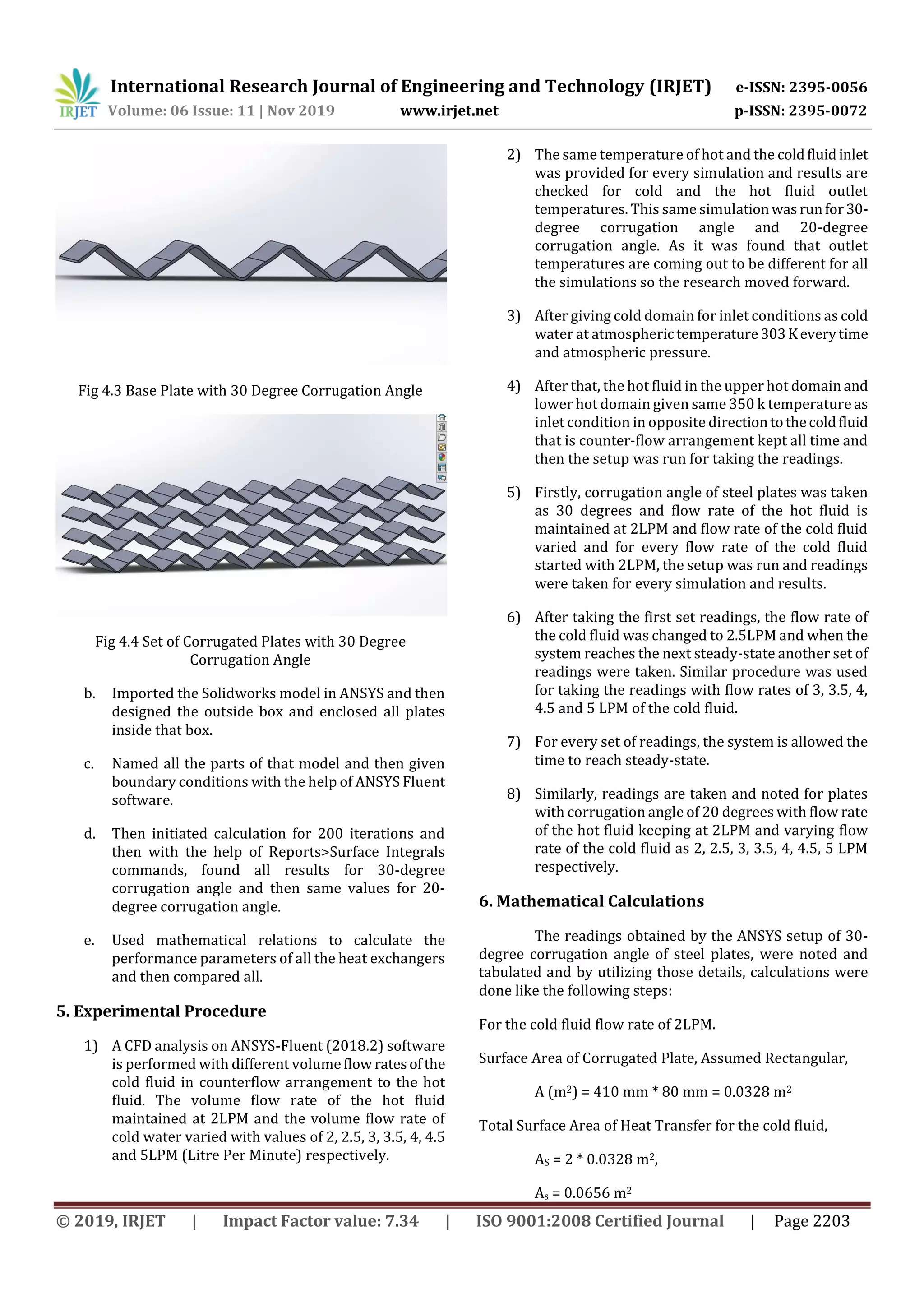
Fig 4.3 Base Plate with 30 Degree Corrugation Angle
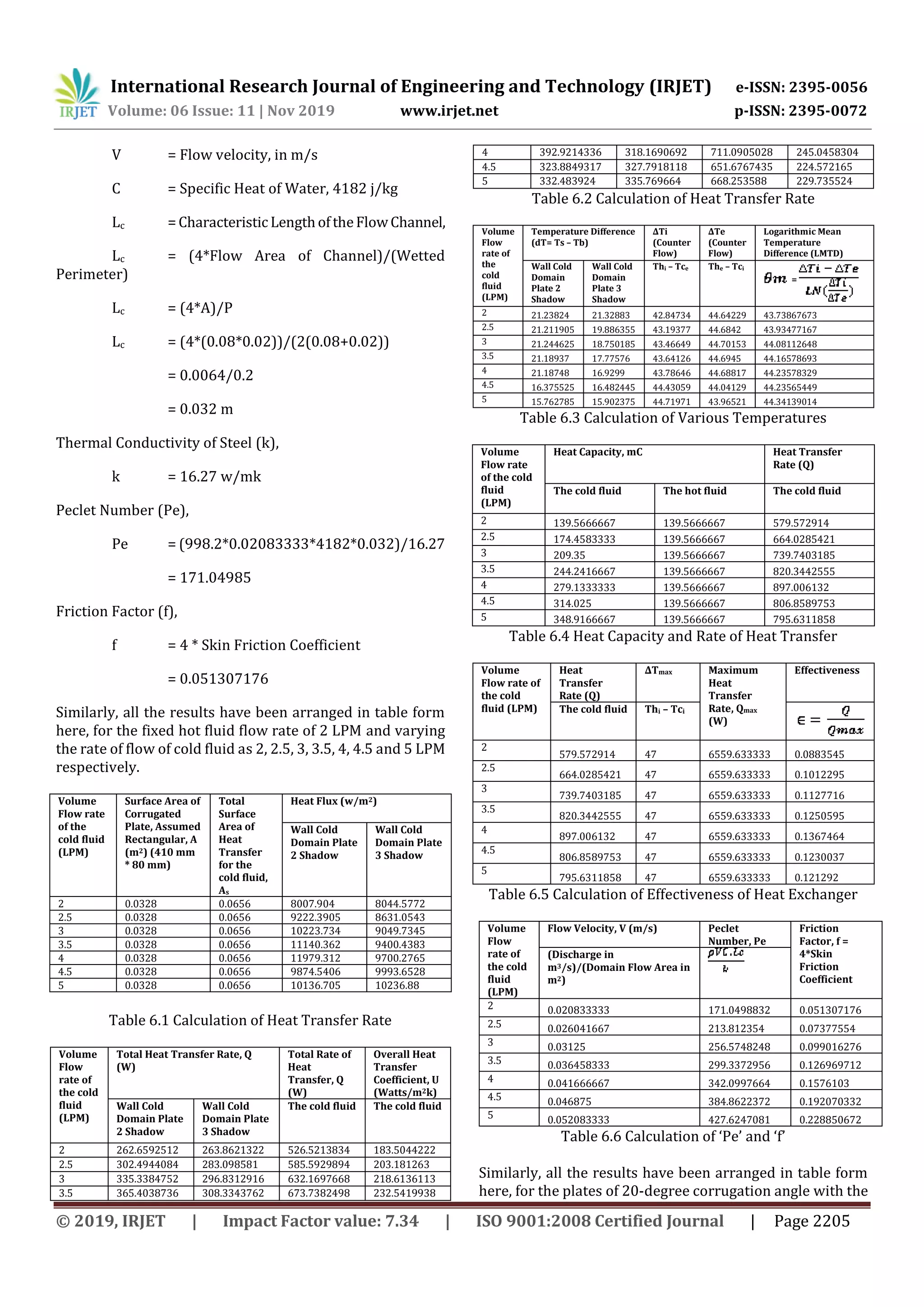
Fig 4.4 Set of Corrugated Plates with 30 Degree
Corrugation Angle
b. Imported the Solidworks model in ANSYS and then
designed the outside box and enclosed all plates
inside that box.
c. Named all the parts of that model and then given
boundary conditions with the help of ANSYS Fluent
software.
d. Then initiated calculation for 200 iterations and
then with the help of Reports>Surface Integrals
commands, found all results for 30-degree
corrugation angle and then same values for 20-
degree corrugation angle.
e. Used mathematical relations to calculate the
performance parameters of all the heat exchangers
and then compared all.
5. Experimental Procedure
1) A CFD analysis on ANSYS-Fluent (2018.2) software
is performed with different volume flow ratesofthe
cold fluid in counterflow arrangement to the hot
fluid. The volume flow rate of the hot fluid
maintained at 2LPM and the volume flow rate of
cold water varied with values of 2, 2.5, 3, 3.5, 4, 4.5
and 5LPM (Litre Per Minute) respectively.
2) The same temperature of hot and the coldfluidinlet
was provided for every simulation and results are
checked for cold and the hot fluid outlet
temperatures. This same simulationwasrunfor30-
degree corrugation angle and 20-degree
corrugation angle. As it was found that outlet
temperatures are coming out to be different for all
the simulations so the research moved forward.
3) After giving cold domain for inlet conditions as cold
water at atmospherictemperature303Keverytime
and atmospheric pressure.
4) After that, the hot fluid in the upper hot domain and
lower hot domain given same 350 k temperature as
inlet condition in opposite directiontothecoldfluid
that is counter-flow arrangement kept all time and
then the setup was run for taking the readings.
5) Firstly, corrugation angle of steel plates was taken
as 30 degrees and flow rate of the hot fluid is
maintained at 2LPM and flow rate of the cold fluid
varied and for every flow rate of the cold fluid
started with 2LPM, the setup was run and readings
were taken for every simulation and results.
6) After taking the first set readings, the flow rate of
the cold fluid was changed to 2.5LPM and when the
system reaches the next steady-state another set of
readings were taken. Similar procedure was used
for taking the readings with flow rates of 3, 3.5, 4,
4.5 and 5 LPM of the cold fluid.
7) For every set of readings, the system is allowed the
time to reach steady-state.
8) Similarly, readings are taken and noted for plates
with corrugation angle of 20 degrees with flow rate
of the hot fluid keeping at 2LPM and varying flow
rate of the cold fluid as 2, 2.5, 3, 3.5, 4, 4.5, 5 LPM
respectively.
6. Mathematical Calculations
The readings obtained by the ANSYS setup of 30-
degree corrugation angle of steel plates, were noted and
tabulated and by utilizing those details, calculations were
done like the following steps:
For the cold fluid flow rate of 2LPM.
Surface Area of Corrugated Plate, Assumed Rectangular,
A (m2) = 410 mm * 80 mm = 0.0328 m2
Total Surface Area of Heat Transfer for the cold fluid,
AS = 2 * 0.0328 m2,
As = 0.0656 m2
International Research Journal of Engineering and Technology (IRJET) e-ISSN: 2395-0056
Volume: 06 Issue: 11 | Nov 2019 www.irjet.net p-ISSN: 2395-0072
© 2019, IRJET | Impact Factor value: 7.34 | ISO 9001:2008 Certified Journal | Page 2204
Total Heat Transfer Rate, Q(W)fromWall ColdDomainPlate
2 Shadow = Heat Flux * Area
= 8007.904 * 0.0328
= 262.6592512 W
Total Heat Transfer Rate, Q(W)fromWall ColdDomainPlate
3 Shadow = Heat Flux * Area
= 8044.5772* 0.0328
= 263.86213216 W
Total rate of heat transfer to the cold fluid,
Q = 262.6592 + 263.8621 = 526.52138336 W
Wall Temperature for Wall Cold Domain Plate 2 Shadow,
Ts = 326.31457 k
Wall Temperature for Wall Cold Domain Plate 3 Shadow,
Ts = 326.40516 k
Bulk Mean Temperature,
Tb = Average of (Temperature of the cold fluid Inlet &
Temperature of the cold fluid Outlet)
Tb = Avg (Tci, Tce) = (303 + 307.1526) ÷ 2 = 305.07633 k
Temperature Difference (dT= Ts – Tb) for Wall Cold Domain
Plate 2 Shadow = 326.31457 – 305.07633
= 21.23824 k
Similarly,
dT for Wall Cold Domain Plate 3 Shadow = 21.32883 k
∆Ti (Counter Flow) = Thi – Tce
= 350 – 307.15266
= 42.84734 k
∆Te (Counter Flow) = The – Tci
= 347.64229 – 303
= 44.64229 k
Logarithmic Mean Temperature Difference (LMTD),
θm = = 43.7386 k
Heat Capacity, for the cold fluid,
mC = 0.033333333 kg/s * 4187 j/kg.k
= 139.5666667
Heat Capacity, for the cold fluid,
mC = 0.033333333 kg/s * 4187 j/kg.k
= 139.5666667
Heat Transfer Rate (Q),
Q = mC * (Tce – Tci)
= 139.5666667 * (307.15266 – 303)
= 579.572914 W
Overall Heat Transfer Coefficient (U),
U = Q/(As*θm ) Watts/m2k
∆Tmax = Thi – Tci = 47 k
Maximum Heat Transfer Rate (Qmax),
Qmax = mCmin * ∆Tmax W
= 6559.633333 W
Effectiveness (∈),
∈ = Q/Qmax
= 0.088354468
Flow Velocity (V),
V = (Discharge in m3/s)/(Domain Flow Area
in m2)
= 0.0000333333/(0.08*0.02)
= 0.020833333 m/s
Peclet Number (Pe),
Pe = Re * Pr
= [ρVLc/μ] * [μC/k]
= ρVC.Lc/k
Where,
Re = ρVLc/μ (Reynold’s Number)
Pr = μC/k (Prandtl Number)
ρ = density of water,
= 998.2 kg/m3 (from Ansys)
International Research Journal of Engineering and Technology (IRJET) e-ISSN: 2395-0056
Volume: 06 Issue: 11 | Nov 2019 www.irjet.net p-ISSN: 2395-0072
© 2019, IRJET | Impact Factor value: 7.34 | ISO 9001:2008 Certified Journal | Page 2205
V = Flow velocity, in m/s
C = Specific Heat of Water, 4182 j/kg
Lc =Characteristic LengthoftheFlowChannel,
Lc = (4*Flow Area of Channel)/(Wetted
Perimeter)
Lc = (4*A)/P
Lc = (4*(0.08*0.02))/(2(0.08+0.02))
= 0.0064/0.2
= 0.032 m
Thermal Conductivity of Steel (k),
k = 16.27 w/mk
Peclet Number (Pe),
Pe = (998.2*0.02083333*4182*0.032)/16.27
= 171.04985
Friction Factor (f),
f = 4 * Skin Friction Coefficient
= 0.051307176
Similarly, all the results have been arranged in table form
here, for the fixed hot fluid flow rate of 2 LPM and varying
the rate of flow of cold fluid as 2, 2.5, 3, 3.5, 4, 4.5 and 5 LPM
respectively.
Volume
Flow rate
of the
cold fluid
(LPM)
Surface Area of
Corrugated
Plate, Assumed
Rectangular, A
(m2) (410 mm
* 80 mm)
Total
Surface
Area of
Heat
Transfer
for the
cold fluid,
As
Heat Flux (w/m2)
Wall Cold
Domain Plate
2 Shadow
Wall Cold
Domain Plate
3 Shadow
2 0.0328 0.0656 8007.904 8044.5772
2.5 0.0328 0.0656 9222.3905 8631.0543
3 0.0328 0.0656 10223.734 9049.7345
3.5 0.0328 0.0656 11140.362 9400.4383
4 0.0328 0.0656 11979.312 9700.2765
4.5 0.0328 0.0656 9874.5406 9993.6528
5 0.0328 0.0656 10136.705 10236.88
Table 6.1 Calculation of Heat Transfer Rate
Volume
Flow
rate of
the cold
fluid
(LPM)
Total Heat Transfer Rate, Q
(W)
Total Rate of
Heat
Transfer, Q
(W)
Overall Heat
Transfer
Coefficient, U
(Watts/m2k)
Wall Cold
Domain Plate
2 Shadow
Wall Cold
Domain Plate
3 Shadow
The cold fluid The cold fluid
2 262.6592512 263.8621322 526.5213834 183.5044222
2.5 302.4944084 283.098581 585.5929894 203.181263
3 335.3384752 296.8312916 632.1697668 218.6136113
3.5 365.4038736 308.3343762 673.7382498 232.5419938
4 392.9214336 318.1690692 711.0905028 245.0458304
4.5 323.8849317 327.7918118 651.6767435 224.572165
5 332.483924 335.769664 668.253588 229.735524
Table 6.2 Calculation of Heat Transfer Rate
Volume
Flow
rate of
the
cold
fluid
(LPM)
Temperature Difference
(dT= Ts – Tb)
∆Ti
(Counter
Flow)
∆Te
(Counter
Flow)
Logarithmic Mean
Temperature
Difference (LMTD)
Wall Cold
Domain
Plate 2
Shadow
Wall Cold
Domain
Plate 3
Shadow
Thi – Tce The – Tci
=
2 21.23824 21.32883 42.84734 44.64229 43.73867673
2.5 21.211905 19.886355 43.19377 44.6842 43.93477167
3 21.244625 18.750185 43.46649 44.70153 44.08112648
3.5 21.18937 17.77576 43.64126 44.6945 44.16578693
4 21.18748 16.9299 43.78646 44.68817 44.23578329
4.5 16.375525 16.482445 44.43059 44.04129 44.23565449
5 15.762785 15.902375 44.71971 43.96521 44.34139014
Table 6.3 Calculation of Various Temperatures
Volume
Flow rate
of the cold
fluid
(LPM)
Heat Capacity, mC Heat Transfer
Rate (Q)
The cold fluid The hot fluid The cold fluid
2 139.5666667 139.5666667 579.572914
2.5 174.4583333 139.5666667 664.0285421
3 209.35 139.5666667 739.7403185
3.5 244.2416667 139.5666667 820.3442555
4 279.1333333 139.5666667 897.006132
4.5 314.025 139.5666667 806.8589753
5 348.9166667 139.5666667 795.6311858
Table 6.4 Heat Capacity and Rate of Heat Transfer
Volume
Flow rate of
the cold
fluid (LPM)
Heat
Transfer
Rate (Q)
∆Tmax Maximum
Heat
Transfer
Rate, Qmax
(W)
Effectiveness
The cold fluid Thi – Tci
2
579.572914 47 6559.633333 0.0883545
2.5
664.0285421 47 6559.633333 0.1012295
3
739.7403185 47 6559.633333 0.1127716
3.5
820.3442555 47 6559.633333 0.1250595
4
897.006132 47 6559.633333 0.1367464
4.5
806.8589753 47 6559.633333 0.1230037
5
795.6311858 47 6559.633333 0.121292
Table 6.5 Calculation of Effectiveness of Heat Exchanger
Volume
Flow
rate of
the cold
fluid
(LPM)
Flow Velocity, V (m/s) Peclet
Number, Pe
Friction
Factor, f =
4*Skin
Friction
Coefficient
(Discharge in
m3/s)/(Domain Flow Area in
m2)
2 0.020833333 171.0498832 0.051307176
2.5 0.026041667 213.812354 0.07377554
3 0.03125 256.5748248 0.099016276
3.5 0.036458333 299.3372956 0.126969712
4 0.041666667 342.0997664 0.1576103
4.5 0.046875 384.8622372 0.192070332
5 0.052083333 427.6247081 0.228850672
Table 6.6 Calculation of ‘Pe’ and ‘f’
Similarly, all the results have been arranged in table form
here, for the plates of 20-degree corrugation angle with the
International Research Journal of Engineering and Technology (IRJET) e-ISSN: 2395-0056
Volume: 06 Issue: 11 | Nov 2019 www.irjet.net p-ISSN: 2395-0072
© 2019, IRJET | Impact Factor value: 7.34 | ISO 9001:2008 Certified Journal | Page 2206
fixed hot fluid flow rate of 2 LPM and varying the rateofflow
of cold fluid as 2, 2.5, 3, 3.5, 4, 4.5 and 5 LPM respectively.
Volume
Flow rate
of the
cold fluid
(LPM)
Surface Area of
Corrugated
Plate, Assumed
Rectangular, A
(m2) (410 mm
* 80 mm)
Total
Surface
Area of
Heat
Transfer
for the
cold fluid,
As
Heat Flux (w/m2)
Wall Cold
Domain Plate
2 Shadow
Wall Cold
Domain Plate
3 Shadow
2 0.0328 0.0656 8154.8537 8078.1639
2.5 0.0328 0.0656 8732.4448 8642.2739
3 0.0328 0.0656 9144.0175 9042.8587
3.5 0.0328 0.0656 9511.3509 9400.438
4 0.0328 0.0656 9818.658 9699.6827
4.5 0.0328 0.0656 10085.207 9958.3969
5 0.0328 0.0656 10319.149 10184.262
Table 6.7 Calculation of Heat Transfer Rate
Volume
Flow
rate of
the cold
fluid
(LPM)
Total Heat Transfer Rate, Q
(W)
Total Rate of
Heat
Transfer, Q
(W)
Overall Heat
Transfer
Coefficient, U
(Watts/m2k)
Wall Cold
Domain Plate
2 Shadow
Wall Cold
Domain Plate
3 Shadow
The cold fluid The cold fluid
2 267.4792014 264.9637759 532.4429773 184.5418811
2.5 286.4241894 283.4665839 569.8907734 196.5977601
3 299.923774 296.6057654 596.5295394 207.0418566
3.5 311.9723095 308.3343664 620.3066759 214.4987685
4 322.0519824 318.1495926 640.201575 221.0101503
4.5 330.7947896 326.6354183 657.4302079 226.6694652
5 338.4680872 334.0437936 672.5118808 230.8425856
Table 6.8 Calculation of Heat Transfer Rate
Volume
Flow
rate of
the
cold
fluid
(LPM)
Temperature Difference
(dT= Ts – Tb)
∆Ti
(Counter
Flow)
∆Te
(Counter
Flow)
Logarithmic Mean
Temperature
Difference (LMTD)
Wall Cold
Domain
Plate 2
Shadow
Wall Cold
Domain
Plate 3
Shadow
Thi – Tce The – Tci
=
2 21.333225 21.466385 42.84119 45.14275 43.9819338
2.5 19.97272 20.13398 43.37422 45.0129 44.18849607
3 18.879235 19.066925 43.76341 44.07851 43.92077162
3.5 18.03686 18.24117 44.17124 43.99623 44.0836771
4 17.26584 17.48339 44.38806 43.92697 44.15711377
4.5 16.58339 16.81705 44.56138 43.86701 44.21328625
5 16.126935 16.376755 45.01235 43.81293 44.40994055
Table 6.9 Calculation of Various Temperatures
Volume
Flow rate
of the cold
fluid
(LPM)
Heat Capacity, mC Heat Transfer
Rate (Q)
The cold fluid The hot fluid The cold fluid
2 139.5666667 139.5666667 580.431249
2.5 174.4583333 139.5666667 632.5475358
3 209.35 139.5666667 677.5801165
3.5 244.2416667 139.5666667 690.901057
4 279.1333333 139.5666667 729.0795187
4.5 314.025 139.5666667 765.7876455
5 348.9166667 139.5666667 693.5242125
Table 6.10 Heat Capacity and Rate of Heat Transfer
Volume
Flow rate of
the cold
fluid (LPM)
Heat
Transfer
Rate (Q)
∆Tmax Maximum
Heat
Transfer
Rate, Qmax
(W)
Effectiveness
The cold fluid Thi – Tci
2 580.431249 47 6559.63333 0.08848532
2.5 632.5475358 47 6559.63333 0.09643032
3 677.5801165 47 6559.63333 0.10329543
3.5 690.901057 47 6559.63333 0.10532617
4 729.0795187 47 6559.63333 0.11114638
4.5 765.7876455 47 6559.63333 0.11674245
5 693.5242125 47 6559.63333 0.10572606
Table 6.11 Calculation of Effectiveness of Heat Exchanger
Volume
Flow
rate of
the cold
fluid
(LPM)
Flow Velocity, V (m/s) Peclet
Number, Pe
Friction
Factor, f =
4*Skin
Friction
Coefficient
(Discharge in
m3/s)/(Domain Flow Area in
m2)
2 0.020833333 171.0498832 0.050458148
2.5 0.026041667 213.812354 0.072233812
3 0.03125 256.5748248 0.096598248
3.5 0.036458333 299.3372956 0.123913084
4 0.041666667 342.0997664 0.15343964
4.5 0.046875 384.8622372 0.18576196
5 0.052083333 427.6247081 0.220710644
Table 6.12 Calculation of ‘Pe’ and ‘f’
7. Results Comparison and Discussion
CFD Results of Corrugated Plate Heat Exchanger with
different volume flow rates of the cold fluid & constant
volume flow rate of the hot fluid as 2 LPM.
SN
Volume Flow Rate
of The Cold fluid
(LPM)
Heat Transfer Rate for
30 Degree
Corrugation Angle
Heat Transfer Rate
for 20 Degree
Corrugation Angle
1 2 579.572914 580.431249
2 2.5 664.0285421 632.5475358
3 3 739.7403185 677.5801165
4 3.5 820.3442555 690.901057
5 4 897.006132 729.0795187
6 4.5 806.8589753 765.7876455
7 5 795.6311858 693.5242125
Table 7.1 Variation of Heat Transfer Rate with Coolant
Flow Rate
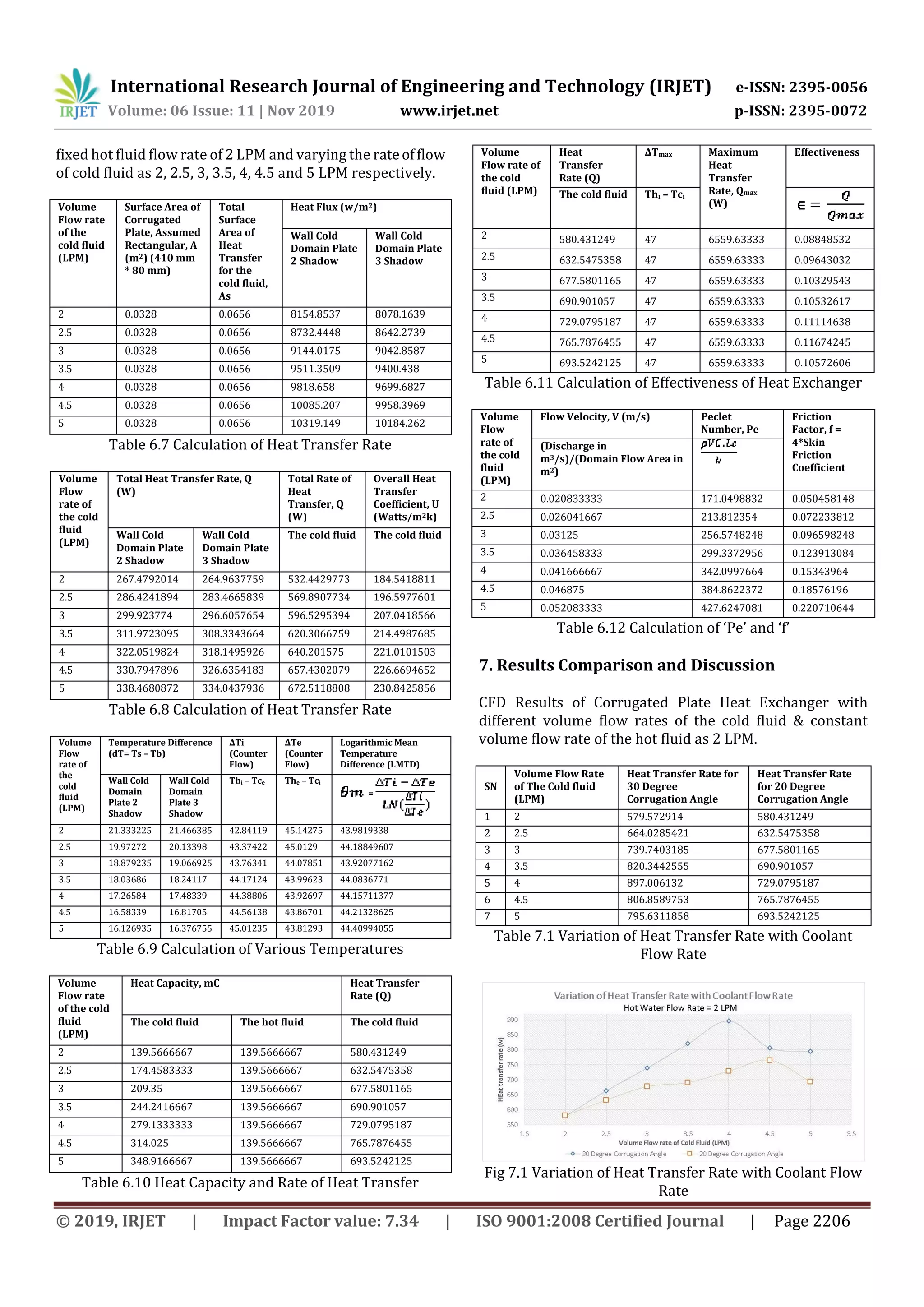
Fig 7.1 Variation of Heat Transfer Rate with Coolant Flow
Rate
International Research Journal of Engineering and Technology (IRJET) e-ISSN: 2395-0056
Volume: 06 Issue: 11 | Nov 2019 www.irjet.net p-ISSN: 2395-0072
© 2019, IRJET | Impact Factor value: 7.34 | ISO 9001:2008 Certified Journal | Page 2207
Based on the data 30-degree corrugation angle is
giving the best result for the heat transfer. 30-degree
corrugation angle favors the heat transfer till coolant flow
rate of 4 LPM and then shows the drop whereas 20-degree
corrugation angle shows the steady growth with the coolant
flow rate till 4.5 LPM then drops but for optimum result 30-
degree corrugation angle with 4 LPM of coolant flow rate is
suggested here which gives highest rate of heat transfer of
897.0061 Watt.
SN
Volume
Flow Rate
of the cold
fluid (LPM)
Surface Heat Transfer
Coefficient (w/m2k) for
30 Degree Corrugation
Angle
Surface Heat Transfer
Coefficient (w/m2k) for
20 Degree Corrugation
Angle
1 2 212.1259 214.49905
2 2.5 245.85618 240.11064
3 3 273.31394 260.78038
4 3.5 299.53821 279.728
5 4 323.19576 296.55612
6 4.5 307.92197 311.96456
7 5 325.09376 326.1789
Table 7.2 Variation of Heat Transfer Coefficient with
Coolant Flow Rate
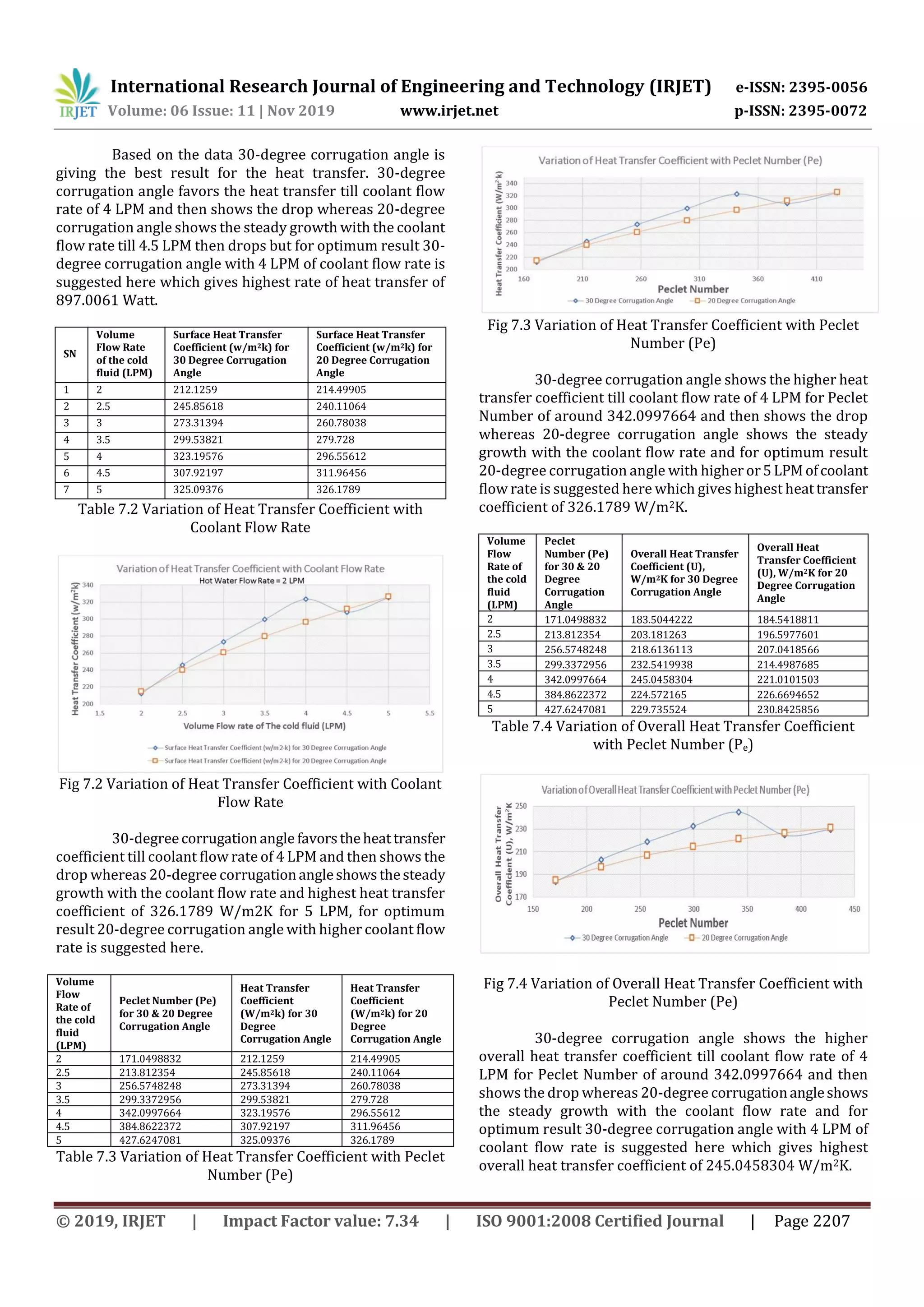
Fig 7.2 Variation of Heat Transfer Coefficient with Coolant
Flow Rate
30-degreecorrugationangle favorstheheattransfer
coefficient till coolant flow rate of 4 LPM and then shows the
drop whereas 20-degree corrugationangleshowsthesteady
growth with the coolant flow rate and highest heat transfer
coefficient of 326.1789 W/m2K for 5 LPM, for optimum
result 20-degree corrugation angle with higher coolant flow
rate is suggested here.
Volume
Flow
Rate of
the cold
fluid
(LPM)
Peclet Number (Pe)
for 30 & 20 Degree
Corrugation Angle
Heat Transfer
Coefficient
(W/m2k) for 30
Degree
Corrugation Angle
Heat Transfer
Coefficient
(W/m2k) for 20
Degree
Corrugation Angle
2 171.0498832 212.1259 214.49905
2.5 213.812354 245.85618 240.11064
3 256.5748248 273.31394 260.78038
3.5 299.3372956 299.53821 279.728
4 342.0997664 323.19576 296.55612
4.5 384.8622372 307.92197 311.96456
5 427.6247081 325.09376 326.1789
Table 7.3 Variation of Heat Transfer Coefficient with Peclet
Number (Pe)
Fig 7.3 Variation of Heat Transfer Coefficient with Peclet
Number (Pe)
30-degree corrugation angle shows the higher heat
transfer coefficient till coolant flow rate of 4 LPM for Peclet
Number of around 342.0997664 and then shows the drop
whereas 20-degree corrugation angle shows the steady
growth with the coolant flow rate and for optimum result
20-degree corrugation angle with higher or5LPMofcoolant
flow rate is suggested here which gives highest heattransfer
coefficient of 326.1789 W/m2K.
Volume
Flow
Rate of
the cold
fluid
(LPM)
Peclet
Number (Pe)
for 30 & 20
Degree
Corrugation
Angle
Overall Heat Transfer
Coefficient (U),
W/m2K for 30 Degree
Corrugation Angle
Overall Heat
Transfer Coefficient
(U), W/m2K for 20
Degree Corrugation
Angle
2 171.0498832 183.5044222 184.5418811
2.5 213.812354 203.181263 196.5977601
3 256.5748248 218.6136113 207.0418566
3.5 299.3372956 232.5419938 214.4987685
4 342.0997664 245.0458304 221.0101503
4.5 384.8622372 224.572165 226.6694652
5 427.6247081 229.735524 230.8425856
Table 7.4 Variation of Overall Heat Transfer Coefficient
with Peclet Number (Pe)
Fig 7.4 Variation of Overall Heat Transfer Coefficient with
Peclet Number (Pe)
30-degree corrugation angle shows the higher
overall heat transfer coefficient till coolant flow rate of 4
LPM for Peclet Number of around 342.0997664 and then
shows the drop whereas 20-degree corrugationangleshows
the steady growth with the coolant flow rate and for
optimum result 30-degree corrugation angle with 4 LPM of
coolant flow rate is suggested here which gives highest
overall heat transfer coefficient of 245.0458304 W/m2K.
International Research Journal of Engineering and Technology (IRJET) e-ISSN: 2395-0056
Volume: 06 Issue: 11 | Nov 2019 www.irjet.net p-ISSN: 2395-0072
© 2019, IRJET | Impact Factor value: 7.34 | ISO 9001:2008 Certified Journal | Page 2208
Volume
Flow
Rate of
the cold
fluid
(LPM)
Peclet Number
(Pe) for 30- & 20-
Degree
Corrugation
Angle
Nusselt Number
(Nu) for 30 Degree
Corrugation Angle
Nusselt Number
(Nu) for 20 Degree
Corrugation Angle
2 171.0498832 353.28514 353.38593
2.5 213.812354 395.88882 394.98385
3 256.5748248 430.65335 428.41646
3.5 299.3372956 461.81447 459.07676
4 342.0997664 490.25598 486.31426
4.5 384.8622372 521.37007 511.10883
5 427.6247081 547.60664 533.81186
Table 7.5 Variation of Nusselt Number (Nu) with Peclet
Number (Pe)
Fig 7.5 Variation of Nusselt Number (Nu) with Peclet
Number (Pe)
30-degree corrugation angle & 20-degree
corrugation angle both are showing the steady growth with
the coolant flow rate and for optimum result 30-degree
corrugation angle with higher coolant flow rate is suggested
here which gives highest Nusselt Number(Nu)of547.60664
and Peclet Number (Pe) of 427.6247081.
SN
Volume
Flow Rate
of the cold
fluid (LPM)
Pressure Drop in the cold
fluid for 30 Degree
Corrugation Angle
Pressure Drop in the cold
fluid for 20 Degree
Corrugation Angle
1 2 3.5961163 3.9677907
2 2.5 5.2447381 5.7949247
3 3 7.1503347 7.9051784
4 3.5 9.3269869 10.309905
5 4 11.783925 13.005095
6 4.5 14.55938 15.996585
7 5 17.646032 19.27589
Table 7.6 Variation of Pressure Drop with Coolant Flow
Rate
Fig 7.6 Variation of Pressure Drop with Coolant Flow Rate
30-degree corrugation angle & 20-degree
corrugation angle both are showing the steady growth in
Pressure Drop with the coolant flow rate and for optimum
result 30-degree corrugation angle with lower coolant flow
rate is suggested for lower pressure drop ie for requirement
of lesser pumping power.
Volume Flow
Rate of the
cold fluid
(LPM)
Peclet Number (Pe)
for 30 & 20 Degree
Corrugation Angle
Friction Factor
(f) for 30 Degree
Corrugation
Angle
Friction Factor
(f) for 20 Degree
Corrugation
Angle
2 171.0498832 0.051307176 0.050458148
2.5 213.812354 0.07377554 0.072233812
3 256.5748248 0.099016276 0.096598248
3.5 299.3372956 0.126969712 0.123913084
4 342.0997664 0.1576103 0.15343964
4.5 384.8622372 0.192070332 0.18576196
5 427.6247081 0.228850672 0.220710644
Table 7.7 Variation of Friction Factor (f) with Peclet
Number (Pe)
Fig 7.7 Variation of Friction Factor (f) with Peclet Number
(Pe)
Here 20-degree corrugation angle should be
preferred for lower friction factor ie minimum losses in
pumping power.
SN
Volume
Flow Rate
of the cold
fluid (LPM)
Effectiveness = (Q/Qmax)
for 30 Degree
Corrugation Angle
Effectiveness = (Q/Qmax) for
20 Degree Corrugation
Angle
1 2 0.088354468 0.088485319
2 2.5 0.101229521 0.096430319
3 3 0.112771596 0.103295426
4 3.5 0.125059468 0.10532617
5 4 0.136746383 0.111146383
6 4.5 0.12300367 0.116742447
7 5 0.121292021 0.105726064
Table 7.8 Variation of Effectiveness with Coolant Flow Rate
Fig 7.8 Variation of Effectiveness with Coolant Flow Rate
International Research Journal of Engineering and Technology (IRJET) e-ISSN: 2395-0056
Volume: 06 Issue: 11 | Nov 2019 www.irjet.net p-ISSN: 2395-0072
© 2019, IRJET | Impact Factor value: 7.34 | ISO 9001:2008 Certified Journal | Page 2209
Effectiveness of heat exchanger is showing growth
with 30-degree corrugation angle and highest effectiveness
at coolant flow rate of 4 LPM.
SN
Volume Flow Rate
of the cold fluid
(LPM)
LMTD for 30 Degree
Corrugation Angle
LMTD for 20 Degree
Corrugation Angle
1 2 43.73867673 43.9819338
2 2.5 43.93477167 44.18849607
3 3 44.08112648 43.92077162
4 3.5 44.16578693 44.0836771
5 4 44.23578329 44.15711377
6 4.5 44.23565449 44.21328625
7 5 44.34139014 44.40994055
Table 7.9 Variation of LMTD with Coolant Flow Rate
Fig 7.9 Variation of LMTD with Coolant Flow Rate
20-degree corrugation angle is showing zig zag
trend in LMTD (Logarithmic Mean Temperature Difference)
with coolant flow rate whereas 30-degree corrugationangle
is showing steady growth rate with a little dropat4.5LPM of
coolant flow rate. For the optimum result from 3 LPM to 4.5
LPM, 30-degree corrugation angle should be preferred
whereas for highest value of LMTD, 20-degree corrugation
angle with 5 LPM of coolant flow rate should be preferred.
8. CONCLUSIONS
It has been observed in above study that 30-degree
corrugation angle with 4 LPM of coolant flow rate gives
highest rate of heat transfer of 897.0061 Watt, 20-degree
corrugation angle shows the steady growth with the coolant
flow rate and gives highest heat transfer coefficient of
326.1789 W/m2K for 5 LPM, and for the optimum result20-
degree corrugation angle with higher coolant flow rate is
suggested here. Where 20-degree corrugation angle with
higher or 5 LPM of coolant flow rate is suggested here which
gives highest heat transfer coefficient of 326.1789 W/m2K.
On in other hand 30-degree corrugation angle with
4 LPM of coolant flow rate is suggested here which gives
highest overall heat transfer coefficient of 245.0458304
W/m2K.
Results show that 30-degree corrugationangle with
higher coolant flow rate gives highest Nusselt Number (Nu)
of 547.60664 and Peclet Number (Pe) of 427.6247081.
Whereas 30-degree corrugation angle with lower
coolant flow rate gives lower pressure drop that is for
requirement of lesser pumping power 30-degree of
corrugation angle would be better to prefer. In another
perspective20-degreecorrugationangleshouldbepreferred
for lower friction factor that is minimum losses in pumping
power.
Effectiveness of heat exchanger is showing growth
with 30-degree corrugation angle and we get highest
effectiveness at coolant flow rate of 4 LPM. For the optimum
result of LMTD, from 3 LPM to 4.5 LPM, 30-degree
corrugation angle should be preferred whereas for the
highest value of LMTD, 20-degree corrugation angle with 5
LPM of coolant flow rate should be preferred.
Results for pressure drop were compared with the
experimental results obtained in the research work of S.D.
Pandey, V.K. Nema [18]. We found that in our research work
that pressure drop for 2 LPM volume flow rate of the cold
fluid and hot fluid was obtained as 3.59 to 3.96 Pa with the
total range of pressure drop as 3.59 Pa to 19.27 Pa whereas
in case of experiment with nanofluid[18]itsrangewas12Pa
to 160 Pa. We know that the pressure drop is responsiblefor
the consumption of power, so in place of using nanofluid,
only water could be used for better results along with the
passive way to improve the rate of heat transfer that is by
improving the area of heat transfer and changing the
corrugation angle of sheet.
8. Future Scope
It has been observed that still whole surface of corrugated
plate is not being used for the heat transfer by observing the
stream lines which are not completely in contact with
corrugated steel plates and to avoid this,onecanalsochange
angle of corrugation as 25-degree, 40-degree, 45-degree or
50-degree for corrugated plates. One can also take the
corrugation profile as pure Sine Curve and then compare
with the results of different angles. In this research work as
we have found all the results for various coolant flow rates
by keeping the the hot fluid flow rate constant as 2 LPM, so
there is scope for variation in the hot fluid flow rate for
better results. If the corrugated plate material is changed as
copper then due to more thermal conductivitythanthesteel,
there would be greater rate of heat transfer and also the
effectiveness will be higher.
REFERENCES
[1] A.E. Bergles, Recent development in convective heat
transfer augmentation, Appl. Mech.Rev.26(1973)675–682.
[2] A.S. Ahuja, Augmentation of heat transport in laminar
flow of polystyrene suspension: I. Experimental and results,
J. Appl. Phys. 46 (8) (1975) 3408– 3416.
[3] S.U.S. Choi, Developments and Application of Non-
Newtonian Flows, vol. 66, ASME FED V.231/ MD-V, New
York, 1995, pp. 99–105.
International Research Journal of Engineering and Technology (IRJET) e-ISSN: 2395-0056
Volume: 06 Issue: 11 | Nov 2019 www.irjet.net p-ISSN: 2395-0072
© 2019, IRJET | Impact Factor value: 7.34 | ISO 9001:2008 Certified Journal | Page 2210
[4] Xiang-Qi Wang, A.S. Mujumdar, Heat transfer
characteristics of nanofluids: a review, Int. J. Therm. Sci. 46
(2007) 1–19.
[5] S. Zeinali Heris, M. Nasr Esfahany, S.Gh. Etemad,
Numerical investigationofnanofluidlaminarconvectiveheat
transfer through circular tube, J. Numer. Heat Transfer, Part
A: Appl. 52 (2007) 1043–1058.
[6] S. Lee, S.U.S. Choi, S. Li, J.A. Eastman, Measuring thermal
conductivity of fluids containing oxide nanoparticles, J. Heat
Transfer 121 (1999) 280–289.
[7] Y. Xuan, Q. Li, Heat transfer enhancement of nanofluids,
Int. J. Heat Fluid Flow 21 (2000) 58–64.
[8] D. Wen, Y. Ding, Experimental investigation into
convective heat transfer of nanofluids at the entranceregion
under laminar flow conditions, Int. J. Heat Mass Transfer 47
(2004) 5181–5188.
[9] S.J. Palm, G. Roy, C.T. Nguyen, Heat transferenhancement
in a radial flow cooling system using nanofluids, in:
Proceeding of the ICHMT Inter. Symp. Advance Comp. Heat
Transfer, Norway, CHT-04-121, 2004.
[10] N. Putra, W. Roetzel, S.K. Das, Natural convection of
nanofluids, Heat Mass Transfer 39 (8) (2003) 775–784.
[11] M.N. Pantzali, A.G. Kanaris, K.D. Antoniadis, A.A. Mouza,
S.V. Paras, Effect of nanofluids on the performance of a
miniature plate heat exchanger with modulated surface, Int.
J. Heat Fluid Flow 30 (2009) 691–699.
[12] Y. Ding, H. Alias, D. Wen, R.A. Williams, Heat transfer of
aqueous suspensions of carbonnanotubes(CNTnanofluids),
Int. J. Heat Mass Transfer 49 (1–2) (2006) 240–245.
[13] B. Farajollahi, S.Gh. Etemad, M. Hojjat, Heat transfer of
nanofluids in a shell and tube heat exchanger, Int. J. Heat
Mass Transfer 53 (2010) 12–17.
[14] M.N. Pantzali, A.A. Mouza, S.V. Paras, Investigating the
efficacy of nanofluids as coolants in plate heat exchangers
(PHE), Chem. Eng. Sci. 64 (14) (2009) 3290– 3300.
[15] M.H. Fard, M.R. Talaie, S. Nasr, Numerical and
experimental investigation of heat transfer of ZnO/water
nanofluid in the concentric tube and plate heat exchangers,
Therm. Sci. 15 (1) (2011) 183–194.
[16] A. Zamzamian, S.N. Oskouie, A. Doosthoseini, A. Joneidi,
M. Pazouki, Experimental investigation of forced convective
heat transfer coefficient in nanofluids of Al(2)O(3)/EG and
CuO/EG in a double pipe and plate heat exchangers under
turbulent flow, Exp. Therm. Fluid Sci. 35 (3) (2011) 495–
502.
[17] Y.H. Kwon, D. Kim, C.G. Li, J.K. Lee, D.S. Hong, J.G. Lee,
S.H. Lee, Y.H. Cho, S.H. Kim, Heat transfer and pressure drop
characteristics of nanofluids in a plate heat exchanger, J.
Nanosci. Nanotechnol. 11 (7) (2011) 5769–5774.
[18] S.D. Pandey, V.K. Nema, Experimental analysis of heat
transfer and friction factor of nanofluid as a coolant in a
corrugated plate heat exchanger, Experimental Thermal and
Fluid Science 38 (2012) 248–256.

IRJET- Thermal Analysis of Corrugated Plate Heat Exchanger by using Ansys Software through FEA Method

  • 1.
    International Research Journalof Engineering and Technology (IRJET) e-ISSN: 2395-0056 Volume: 06 Issue: 11 | Nov 2019 www.irjet.net p-ISSN: 2395-0072 © 2019, IRJET | Impact Factor value: 7.34 | ISO 9001:2008 Certified Journal | Page 2200 THERMAL ANALYSIS OF CORRUGATED PLATE HEAT EXCHANGER BY USING ANSYS SOFTWARE THROUGH FEA METHOD Moh Shahid Khan1, Animesh Singhai2 1MTech Scholar, Department of Mechanical Engineering, TITR, Bhopal, India 2Professor, Department of Mechanical Engineering, TITR, Bhopal, India ---------------------------------------------------------------------***---------------------------------------------------------------------- Abstract –The effects of nanofluid that is Al2O3 in waterin a counter flow corrugated plate heat exchanger were investigated through an experiment by Shive Dayal Pandey and V. K. Nema. It had been discovered that the heat transfer characteristics improve with the decrease in nanofluid concentration. Power consumption and heat transfer rates were lower for water compared to the nanofluid. For a given heat load the nanofluid needed the lower rate of flow, however, suffered a higher pressure drop than that for water. For a given pumping power additional heat mightberemoved by the nanofluids relative to water, though the most heat transfer rate was found with very cheap concentration of nanofluids. Correlation equations were obtained for the Nusselt number and the Friction factor for both water andthe nanofluid. N. Putra, W. Roetzel and S.K. Das showed that natural convection heat transfer by applying nanofluid of Al2O3/water and CuO/water was not up to the mark as compared to the base fluid. Also, they found that this might result in too many factors like the sinkingof nanoparticlesand speed distinction between nanoparticles and base fluid. Considering these facts, I concluded that becauseofadditional drop-in pressure just in case of nanofluid, there is additional pumping power needed thus in place of nanofluid solelywater is being thought-about for experiment. There is a passive methodology to extend the heat transfer by increasing the amount of heat transfer thatistestedherethroughANSYSFEA methodology. Corrugated plate heat exchanger with the counterflow has been studied along with the arrangement of the hot fluid (water) on either side of the cold fluid channelfor various volume flow rates of the cold fluid (water) along with 30-degree of corrugation angle and 20-degree of corrugation angle. The setup was run through ANSYS Fluent and the reports were observed and compared for the optimumresults. Key Words: Heat Exchanger, Nanofluid, Heat Transfer, Thermal Energy, Effectiveness,PassiveMethods,Corrugated Plate. 1. INTRODUCTION Heat exchanger is a device which is used to transfer heat between two fluids at different temperature either by direct contact or indirect contact with the help of a separating wall made up of a highly conductive material. These are widely used in various industries, vehicles, engines etc and domestic applications as well. Global warming is a phenomenon which has made us realize the need for optimum usage of everything that we have. Every researcher is putting their efforts in the field of energy- saving and finding some ways that we can follow to make it reality. Utilizing thermal energy in an efficientmanneris our prime focus here. Heat exchangers have already been one of the most talked topics among the researchers so a lot of work has been done in this field already and this research work is also aimed to acknowledge their efforts in this field. There are two ways to improve the rate of heat transfer by active methods and passive methods. Active methods need someenergyinputtoachievehigher efficiency and it has limitations to do it whereas passive methods don’t need any energy input so researchers are more concerned about these methods. It has also many constraints but still lots of scope to achieve higher efficiency for heat exchanging process. Technical constraints which are responsible forthe improvement in the rate of heat transfer are surface area and overall heat transfer coefficient. Ourfocusistostudythe relations and key features which can improve the rate of heat transfer by improving the heat transfer coefficient. 2. Literature Survey The performance of heat exchangers may be improved by heat transfer improvement techniques for playing a particular heat-transfer duty. Improvement of the heat transfer allows the scale of the heat exchanger to be considerably shrunken. Many researchers have done their experiments and analysis over the factors which are responsible for improvement of heat transfer rate and the same has been discussed and reviewed here in this section. Fluids, like water and engine oil, have poor heat transfer performance and so, high compactness and effectiveness of heat transfer systems are necessary to realize the desired heat transfer. Among the efforts for improvement of heat transfer, the applying of additives to liquids is critical [1,2]. The word nanofluid can bedefined as a suspension of nano-sized solid particles in typical fluids; such fluids embrace increased heat transfer characteristics, like convective heat transfer. This hefty increase in heat transfer could result in remittent energy expenditure and raw material-input, also reduces the size of the apparatus and consequently reduces expenses and exaggeratessystem potency.
  • 2.
    International Research Journalof Engineering and Technology (IRJET) e-ISSN: 2395-0056 Volume: 06 Issue: 11 | Nov 2019 www.irjet.net p-ISSN: 2395-0072 © 2019, IRJET | Impact Factor value: 7.34 | ISO 9001:2008 Certified Journal | Page 2201 Primarily Choi [3] used the nanometer-sized particles in the typical fluids and showed improvement in heat transfer characteristics. The majority of experimental studies on the applying of nanofluidsatsingle-phaseforcedconvectiveheat transfer are involved with streamline flow principally in outwardly heated circular tubes or micro-channels. Among the varied sorts of nanofluids used, metal oxideswithpartial volume concentrations are the foremost common, most likely because of their cheaper price [4]. Studies on heat transfer of suspension of metal oxides in fluids were restricted to suspensions with millimeter or micron-sized particles. Such giant particles could cause severe issues in heat transfer instrumentation. specifically, giant particles tend to quickly settle out of suspension and thereby passing through micro channels causes severe wearing and increase the pressure drop significantly [5]. Experimental investigation performed on the suspension of 4 percentage volume & 35 nm sized particles of CuO in ethylene glycol resulted in high improvement in the thermal physical phenomenon [6]. The investigation of 35 nm-sized Cu/deionized water nanofluid flowing during a tube with constant wall heat flux showed the improvement in Nusselt number compared to pure water for identical rate of flow by increasing the volume fractionofnanoparticlesfrom0.5% to 1.2% [7]. In another study, Al2O3/water nanofluid heat transfer in streamline flow underneath constant wall heat flux and reported a rise in the nanofluid heat transfer constant with Reynold’s number and nanoparticle concentration significantly within the entrance region in which thermal developing length for nanofluid was larger than in case of pure water. Wen and dingdong [8]. The numerical investigation for heat transfer of Al2O3/ethylene glycol and Al2O3/waternanofluidsduringa radial flow system showed improvement in heat transfer rate. Conjointly, researchers showed that wall shear stress improved with concentration and Reynold’s number [9]. It had been reported by Putra et al. [10], that natural convection heat transfer by applying nanofluid of Al2O3/water and CuO/water was not up to the mark as compared to the base fluid and all over that this might result in too many factors like the sinking of nanoparticles and speed distinction between nanoparticles and base fluid. Thermo-physical properties of CuO nanofluid were measured and investigatedtheperformanceofnanofluid and compared it to the base fluid (i.e., water) by Pantzali et al. [11]. The performance of a nanofluid containing carbon nanotubes resulted in improvement of the heat transfer which was observed as 3.5 times higher than the base fluid, which was studied by Ding et al. [12]. Experimentation withAl2O3 andTiO2asnanofluids along with a shell and tube exchanging device [13] has shown that there's anoptimumvolumeconcentrationfor the maximum value of overall heat transfer coefficient. This optimum value of concentration differs fluid to fluid. Thermo-physical properties are altered by the addition of nanoparticles, and fluid viscosity and the nature of flow, are the crucial parameters for determining the effectualness of nanofluid [14]. Further, the heat transfer rate and heat transfer constant during a PHE are above those use base fluid [15]. The work on two nanofluids specifically, Al2O3/EG and CuO/EG having concentrations 0.1, 0.5, and 1 percent respectively [16] have shown that theheattransferconstant or coefficient will increase with temperature and concentration each. Al2O3/water of 6 volume percentageconcentration in a fluid with Reynold’s number greater than 100 but lesser than 500, temperature greaterthan20˚Cbutlesserthan40˚C resulted that the performance of the PHE at a given rate of flow didn't improve with the fluid [17]. Shive Dayal Pandey,V.K. Nema[18]:Theeffectsof nanofluid that is Al2O3 in water two, three and four vol.% and water as coolants on heat transfer,resistancelosses,and loss of available energy during a counter flow corrugated plate device were by experimentation investigated. The desired properties of the nanofluid were measured. It had been determined that the heat transfer characteristics improve with the increase in Reynolds- and Peclet-number and with the decrease in nanofluid concentration. For a given heat load, the desired pumping power exaggerated with the increase in nanofluid concentration. Each power consumption and heat transferrateswerelowerforwater as compared to the nanofluid for flow rates of 2–5 LPM for hot and cold fluids. Further, for a given heat load the nanofluid needed a lower rate of flow however suffered a higher pressure drop than that for water. 3. Observations Shive Dayal Pandey andV.K. Nema improvedrateof heat transfer by using Nano Fluid (Al2O3 in Water) but having more pressure drop consequently more power consumption and more wear friction factor. N. Putra, W. and Roetzel, S.K. Das showed that natural convection heat transfer by applying nanofluid of Al2O3/water and CuO/water was not up to the mark as compared to the base fluid.
  • 3.
    International Research Journalof Engineering and Technology (IRJET) e-ISSN: 2395-0056 Volume: 06 Issue: 11 | Nov 2019 www.irjet.net p-ISSN: 2395-0072 © 2019, IRJET | Impact Factor value: 7.34 | ISO 9001:2008 Certified Journal | Page 2202 Also, this might result in too many factors like the sinking of nanoparticles and speed distinction between nanoparticles and base fluid. Mainly researches on heat transfer coefficients are found for an unvarying wall temperature or an unvarying heat flux. The condition of constant wall temperature is idealized in heat exchangers with natural action like condensers. The boundary condition of constant heat flux finds application in electricallyheatedtubesandnuclearfuel components. However, the case of liquid-liquid heat exchange has not been studied well. In case the use of nanofluid for increasing the heat transfer rate by enhancement of the thermal conductivity of fluid has given better result, but when observed closely then found that there is more drop in fluid pressure from the inlet to outlet that means there is greater resistancetoflowduetoincrease in friction which will damage thewallsoftheheatexchanger, so in the long term it will not be good enough where we need to keep our system wear less also. In current work fluid to fluid heat exchange is taken into thought and analysed. Overall heat transfer coefficient is taken into consideration based on the ANSYS result and our calculation. ANSYS results were used to determine effectiveness, overall heat transfer coefficient, and also LMTD for counter flow Heat Exchanger. Results are compared and validated by the CFD analysis of the same with the help of ANSYS Fluent software between nanofluid and water with the changingcorrugation angle as 30 degrees and 20 degrees. 3. Highlights  Collected the CFD data pertaining to heat transfer and fluid flow in a corrugated plate heat exchanger with different corrugation angle.  Flow rate of Cold Fluid varies from 2 to 5 LPM  Constant flow rate of Hot Fluid 2 LPM  Counter Flow arrangement of fluid flow  Cold Fluid flowing through the inner channel and  Hot Fluid flowing through the annulus  Once Corrugation Angle kept 30Degreeandthen20 Degree 4. Methodology This lesson deals with the process methodology for calculating effectiveness, LMTD and overall heat transfer coefficient formulas used in calculation given in this part. Mathematical calculation and value gained for Corrugated Steel Plate counterflow, with corrugation angle of 30 degree and 20 degree have been discussed here in this lesson. The present work is to identify the effect of corrugated plate in place of simple plane steel plate forheattransfer withsimple water, not with nanofluid which was used for heat transfer by Shive Dayal Pandey, V.K. Nema [18] to increase thermal conductivity. And then we will compare the results of nanofluid and water in counter-flow heat exchanger. Fig 4.1 Methodology Flow Chart The complete methodologyincludessomestepswhichareas follows. a. Designing 4 corrugated plates of 30-degree corrugation angle and 20-degree corrugation angle having plate thickness 1mm and 20 mm apart from each other, with the help of Solidworks Designing Software. SN Parameter Value 1 Length of the test section L 350 mm 2 Width of the test section W 80 mm 3 Gap between two corrugated plates H 20 mm 4 Total height of the test section 120 mm 5 Developed length of the corrugated plate 410 mm 6 Corrugation angle 30 Table 4.1 Design Parameters of Corrugated Plate Heat Exchanger Fig 4.2 20-Degree Corrugation Angle
  • 4.
    International Research Journalof Engineering and Technology (IRJET) e-ISSN: 2395-0056 Volume: 06 Issue: 11 | Nov 2019 www.irjet.net p-ISSN: 2395-0072 © 2019, IRJET | Impact Factor value: 7.34 | ISO 9001:2008 Certified Journal | Page 2203 Fig 4.3 Base Plate with 30 Degree Corrugation Angle Fig 4.4 Set of Corrugated Plates with 30 Degree Corrugation Angle b. Imported the Solidworks model in ANSYS and then designed the outside box and enclosed all plates inside that box. c. Named all the parts of that model and then given boundary conditions with the help of ANSYS Fluent software. d. Then initiated calculation for 200 iterations and then with the help of Reports>Surface Integrals commands, found all results for 30-degree corrugation angle and then same values for 20- degree corrugation angle. e. Used mathematical relations to calculate the performance parameters of all the heat exchangers and then compared all. 5. Experimental Procedure 1) A CFD analysis on ANSYS-Fluent (2018.2) software is performed with different volume flow ratesofthe cold fluid in counterflow arrangement to the hot fluid. The volume flow rate of the hot fluid maintained at 2LPM and the volume flow rate of cold water varied with values of 2, 2.5, 3, 3.5, 4, 4.5 and 5LPM (Litre Per Minute) respectively. 2) The same temperature of hot and the coldfluidinlet was provided for every simulation and results are checked for cold and the hot fluid outlet temperatures. This same simulationwasrunfor30- degree corrugation angle and 20-degree corrugation angle. As it was found that outlet temperatures are coming out to be different for all the simulations so the research moved forward. 3) After giving cold domain for inlet conditions as cold water at atmospherictemperature303Keverytime and atmospheric pressure. 4) After that, the hot fluid in the upper hot domain and lower hot domain given same 350 k temperature as inlet condition in opposite directiontothecoldfluid that is counter-flow arrangement kept all time and then the setup was run for taking the readings. 5) Firstly, corrugation angle of steel plates was taken as 30 degrees and flow rate of the hot fluid is maintained at 2LPM and flow rate of the cold fluid varied and for every flow rate of the cold fluid started with 2LPM, the setup was run and readings were taken for every simulation and results. 6) After taking the first set readings, the flow rate of the cold fluid was changed to 2.5LPM and when the system reaches the next steady-state another set of readings were taken. Similar procedure was used for taking the readings with flow rates of 3, 3.5, 4, 4.5 and 5 LPM of the cold fluid. 7) For every set of readings, the system is allowed the time to reach steady-state. 8) Similarly, readings are taken and noted for plates with corrugation angle of 20 degrees with flow rate of the hot fluid keeping at 2LPM and varying flow rate of the cold fluid as 2, 2.5, 3, 3.5, 4, 4.5, 5 LPM respectively. 6. Mathematical Calculations The readings obtained by the ANSYS setup of 30- degree corrugation angle of steel plates, were noted and tabulated and by utilizing those details, calculations were done like the following steps: For the cold fluid flow rate of 2LPM. Surface Area of Corrugated Plate, Assumed Rectangular, A (m2) = 410 mm * 80 mm = 0.0328 m2 Total Surface Area of Heat Transfer for the cold fluid, AS = 2 * 0.0328 m2, As = 0.0656 m2
  • 5.
    International Research Journalof Engineering and Technology (IRJET) e-ISSN: 2395-0056 Volume: 06 Issue: 11 | Nov 2019 www.irjet.net p-ISSN: 2395-0072 © 2019, IRJET | Impact Factor value: 7.34 | ISO 9001:2008 Certified Journal | Page 2204 Total Heat Transfer Rate, Q(W)fromWall ColdDomainPlate 2 Shadow = Heat Flux * Area = 8007.904 * 0.0328 = 262.6592512 W Total Heat Transfer Rate, Q(W)fromWall ColdDomainPlate 3 Shadow = Heat Flux * Area = 8044.5772* 0.0328 = 263.86213216 W Total rate of heat transfer to the cold fluid, Q = 262.6592 + 263.8621 = 526.52138336 W Wall Temperature for Wall Cold Domain Plate 2 Shadow, Ts = 326.31457 k Wall Temperature for Wall Cold Domain Plate 3 Shadow, Ts = 326.40516 k Bulk Mean Temperature, Tb = Average of (Temperature of the cold fluid Inlet & Temperature of the cold fluid Outlet) Tb = Avg (Tci, Tce) = (303 + 307.1526) ÷ 2 = 305.07633 k Temperature Difference (dT= Ts – Tb) for Wall Cold Domain Plate 2 Shadow = 326.31457 – 305.07633 = 21.23824 k Similarly, dT for Wall Cold Domain Plate 3 Shadow = 21.32883 k ∆Ti (Counter Flow) = Thi – Tce = 350 – 307.15266 = 42.84734 k ∆Te (Counter Flow) = The – Tci = 347.64229 – 303 = 44.64229 k Logarithmic Mean Temperature Difference (LMTD), θm = = 43.7386 k Heat Capacity, for the cold fluid, mC = 0.033333333 kg/s * 4187 j/kg.k = 139.5666667 Heat Capacity, for the cold fluid, mC = 0.033333333 kg/s * 4187 j/kg.k = 139.5666667 Heat Transfer Rate (Q), Q = mC * (Tce – Tci) = 139.5666667 * (307.15266 – 303) = 579.572914 W Overall Heat Transfer Coefficient (U), U = Q/(As*θm ) Watts/m2k ∆Tmax = Thi – Tci = 47 k Maximum Heat Transfer Rate (Qmax), Qmax = mCmin * ∆Tmax W = 6559.633333 W Effectiveness (∈), ∈ = Q/Qmax = 0.088354468 Flow Velocity (V), V = (Discharge in m3/s)/(Domain Flow Area in m2) = 0.0000333333/(0.08*0.02) = 0.020833333 m/s Peclet Number (Pe), Pe = Re * Pr = [ρVLc/μ] * [μC/k] = ρVC.Lc/k Where, Re = ρVLc/μ (Reynold’s Number) Pr = μC/k (Prandtl Number) ρ = density of water, = 998.2 kg/m3 (from Ansys)
  • 6.
    International Research Journalof Engineering and Technology (IRJET) e-ISSN: 2395-0056 Volume: 06 Issue: 11 | Nov 2019 www.irjet.net p-ISSN: 2395-0072 © 2019, IRJET | Impact Factor value: 7.34 | ISO 9001:2008 Certified Journal | Page 2205 V = Flow velocity, in m/s C = Specific Heat of Water, 4182 j/kg Lc =Characteristic LengthoftheFlowChannel, Lc = (4*Flow Area of Channel)/(Wetted Perimeter) Lc = (4*A)/P Lc = (4*(0.08*0.02))/(2(0.08+0.02)) = 0.0064/0.2 = 0.032 m Thermal Conductivity of Steel (k), k = 16.27 w/mk Peclet Number (Pe), Pe = (998.2*0.02083333*4182*0.032)/16.27 = 171.04985 Friction Factor (f), f = 4 * Skin Friction Coefficient = 0.051307176 Similarly, all the results have been arranged in table form here, for the fixed hot fluid flow rate of 2 LPM and varying the rate of flow of cold fluid as 2, 2.5, 3, 3.5, 4, 4.5 and 5 LPM respectively. Volume Flow rate of the cold fluid (LPM) Surface Area of Corrugated Plate, Assumed Rectangular, A (m2) (410 mm * 80 mm) Total Surface Area of Heat Transfer for the cold fluid, As Heat Flux (w/m2) Wall Cold Domain Plate 2 Shadow Wall Cold Domain Plate 3 Shadow 2 0.0328 0.0656 8007.904 8044.5772 2.5 0.0328 0.0656 9222.3905 8631.0543 3 0.0328 0.0656 10223.734 9049.7345 3.5 0.0328 0.0656 11140.362 9400.4383 4 0.0328 0.0656 11979.312 9700.2765 4.5 0.0328 0.0656 9874.5406 9993.6528 5 0.0328 0.0656 10136.705 10236.88 Table 6.1 Calculation of Heat Transfer Rate Volume Flow rate of the cold fluid (LPM) Total Heat Transfer Rate, Q (W) Total Rate of Heat Transfer, Q (W) Overall Heat Transfer Coefficient, U (Watts/m2k) Wall Cold Domain Plate 2 Shadow Wall Cold Domain Plate 3 Shadow The cold fluid The cold fluid 2 262.6592512 263.8621322 526.5213834 183.5044222 2.5 302.4944084 283.098581 585.5929894 203.181263 3 335.3384752 296.8312916 632.1697668 218.6136113 3.5 365.4038736 308.3343762 673.7382498 232.5419938 4 392.9214336 318.1690692 711.0905028 245.0458304 4.5 323.8849317 327.7918118 651.6767435 224.572165 5 332.483924 335.769664 668.253588 229.735524 Table 6.2 Calculation of Heat Transfer Rate Volume Flow rate of the cold fluid (LPM) Temperature Difference (dT= Ts – Tb) ∆Ti (Counter Flow) ∆Te (Counter Flow) Logarithmic Mean Temperature Difference (LMTD) Wall Cold Domain Plate 2 Shadow Wall Cold Domain Plate 3 Shadow Thi – Tce The – Tci = 2 21.23824 21.32883 42.84734 44.64229 43.73867673 2.5 21.211905 19.886355 43.19377 44.6842 43.93477167 3 21.244625 18.750185 43.46649 44.70153 44.08112648 3.5 21.18937 17.77576 43.64126 44.6945 44.16578693 4 21.18748 16.9299 43.78646 44.68817 44.23578329 4.5 16.375525 16.482445 44.43059 44.04129 44.23565449 5 15.762785 15.902375 44.71971 43.96521 44.34139014 Table 6.3 Calculation of Various Temperatures Volume Flow rate of the cold fluid (LPM) Heat Capacity, mC Heat Transfer Rate (Q) The cold fluid The hot fluid The cold fluid 2 139.5666667 139.5666667 579.572914 2.5 174.4583333 139.5666667 664.0285421 3 209.35 139.5666667 739.7403185 3.5 244.2416667 139.5666667 820.3442555 4 279.1333333 139.5666667 897.006132 4.5 314.025 139.5666667 806.8589753 5 348.9166667 139.5666667 795.6311858 Table 6.4 Heat Capacity and Rate of Heat Transfer Volume Flow rate of the cold fluid (LPM) Heat Transfer Rate (Q) ∆Tmax Maximum Heat Transfer Rate, Qmax (W) Effectiveness The cold fluid Thi – Tci 2 579.572914 47 6559.633333 0.0883545 2.5 664.0285421 47 6559.633333 0.1012295 3 739.7403185 47 6559.633333 0.1127716 3.5 820.3442555 47 6559.633333 0.1250595 4 897.006132 47 6559.633333 0.1367464 4.5 806.8589753 47 6559.633333 0.1230037 5 795.6311858 47 6559.633333 0.121292 Table 6.5 Calculation of Effectiveness of Heat Exchanger Volume Flow rate of the cold fluid (LPM) Flow Velocity, V (m/s) Peclet Number, Pe Friction Factor, f = 4*Skin Friction Coefficient (Discharge in m3/s)/(Domain Flow Area in m2) 2 0.020833333 171.0498832 0.051307176 2.5 0.026041667 213.812354 0.07377554 3 0.03125 256.5748248 0.099016276 3.5 0.036458333 299.3372956 0.126969712 4 0.041666667 342.0997664 0.1576103 4.5 0.046875 384.8622372 0.192070332 5 0.052083333 427.6247081 0.228850672 Table 6.6 Calculation of ‘Pe’ and ‘f’ Similarly, all the results have been arranged in table form here, for the plates of 20-degree corrugation angle with the
  • 7.
    International Research Journalof Engineering and Technology (IRJET) e-ISSN: 2395-0056 Volume: 06 Issue: 11 | Nov 2019 www.irjet.net p-ISSN: 2395-0072 © 2019, IRJET | Impact Factor value: 7.34 | ISO 9001:2008 Certified Journal | Page 2206 fixed hot fluid flow rate of 2 LPM and varying the rateofflow of cold fluid as 2, 2.5, 3, 3.5, 4, 4.5 and 5 LPM respectively. Volume Flow rate of the cold fluid (LPM) Surface Area of Corrugated Plate, Assumed Rectangular, A (m2) (410 mm * 80 mm) Total Surface Area of Heat Transfer for the cold fluid, As Heat Flux (w/m2) Wall Cold Domain Plate 2 Shadow Wall Cold Domain Plate 3 Shadow 2 0.0328 0.0656 8154.8537 8078.1639 2.5 0.0328 0.0656 8732.4448 8642.2739 3 0.0328 0.0656 9144.0175 9042.8587 3.5 0.0328 0.0656 9511.3509 9400.438 4 0.0328 0.0656 9818.658 9699.6827 4.5 0.0328 0.0656 10085.207 9958.3969 5 0.0328 0.0656 10319.149 10184.262 Table 6.7 Calculation of Heat Transfer Rate Volume Flow rate of the cold fluid (LPM) Total Heat Transfer Rate, Q (W) Total Rate of Heat Transfer, Q (W) Overall Heat Transfer Coefficient, U (Watts/m2k) Wall Cold Domain Plate 2 Shadow Wall Cold Domain Plate 3 Shadow The cold fluid The cold fluid 2 267.4792014 264.9637759 532.4429773 184.5418811 2.5 286.4241894 283.4665839 569.8907734 196.5977601 3 299.923774 296.6057654 596.5295394 207.0418566 3.5 311.9723095 308.3343664 620.3066759 214.4987685 4 322.0519824 318.1495926 640.201575 221.0101503 4.5 330.7947896 326.6354183 657.4302079 226.6694652 5 338.4680872 334.0437936 672.5118808 230.8425856 Table 6.8 Calculation of Heat Transfer Rate Volume Flow rate of the cold fluid (LPM) Temperature Difference (dT= Ts – Tb) ∆Ti (Counter Flow) ∆Te (Counter Flow) Logarithmic Mean Temperature Difference (LMTD) Wall Cold Domain Plate 2 Shadow Wall Cold Domain Plate 3 Shadow Thi – Tce The – Tci = 2 21.333225 21.466385 42.84119 45.14275 43.9819338 2.5 19.97272 20.13398 43.37422 45.0129 44.18849607 3 18.879235 19.066925 43.76341 44.07851 43.92077162 3.5 18.03686 18.24117 44.17124 43.99623 44.0836771 4 17.26584 17.48339 44.38806 43.92697 44.15711377 4.5 16.58339 16.81705 44.56138 43.86701 44.21328625 5 16.126935 16.376755 45.01235 43.81293 44.40994055 Table 6.9 Calculation of Various Temperatures Volume Flow rate of the cold fluid (LPM) Heat Capacity, mC Heat Transfer Rate (Q) The cold fluid The hot fluid The cold fluid 2 139.5666667 139.5666667 580.431249 2.5 174.4583333 139.5666667 632.5475358 3 209.35 139.5666667 677.5801165 3.5 244.2416667 139.5666667 690.901057 4 279.1333333 139.5666667 729.0795187 4.5 314.025 139.5666667 765.7876455 5 348.9166667 139.5666667 693.5242125 Table 6.10 Heat Capacity and Rate of Heat Transfer Volume Flow rate of the cold fluid (LPM) Heat Transfer Rate (Q) ∆Tmax Maximum Heat Transfer Rate, Qmax (W) Effectiveness The cold fluid Thi – Tci 2 580.431249 47 6559.63333 0.08848532 2.5 632.5475358 47 6559.63333 0.09643032 3 677.5801165 47 6559.63333 0.10329543 3.5 690.901057 47 6559.63333 0.10532617 4 729.0795187 47 6559.63333 0.11114638 4.5 765.7876455 47 6559.63333 0.11674245 5 693.5242125 47 6559.63333 0.10572606 Table 6.11 Calculation of Effectiveness of Heat Exchanger Volume Flow rate of the cold fluid (LPM) Flow Velocity, V (m/s) Peclet Number, Pe Friction Factor, f = 4*Skin Friction Coefficient (Discharge in m3/s)/(Domain Flow Area in m2) 2 0.020833333 171.0498832 0.050458148 2.5 0.026041667 213.812354 0.072233812 3 0.03125 256.5748248 0.096598248 3.5 0.036458333 299.3372956 0.123913084 4 0.041666667 342.0997664 0.15343964 4.5 0.046875 384.8622372 0.18576196 5 0.052083333 427.6247081 0.220710644 Table 6.12 Calculation of ‘Pe’ and ‘f’ 7. Results Comparison and Discussion CFD Results of Corrugated Plate Heat Exchanger with different volume flow rates of the cold fluid & constant volume flow rate of the hot fluid as 2 LPM. SN Volume Flow Rate of The Cold fluid (LPM) Heat Transfer Rate for 30 Degree Corrugation Angle Heat Transfer Rate for 20 Degree Corrugation Angle 1 2 579.572914 580.431249 2 2.5 664.0285421 632.5475358 3 3 739.7403185 677.5801165 4 3.5 820.3442555 690.901057 5 4 897.006132 729.0795187 6 4.5 806.8589753 765.7876455 7 5 795.6311858 693.5242125 Table 7.1 Variation of Heat Transfer Rate with Coolant Flow Rate Fig 7.1 Variation of Heat Transfer Rate with Coolant Flow Rate
  • 8.
    International Research Journalof Engineering and Technology (IRJET) e-ISSN: 2395-0056 Volume: 06 Issue: 11 | Nov 2019 www.irjet.net p-ISSN: 2395-0072 © 2019, IRJET | Impact Factor value: 7.34 | ISO 9001:2008 Certified Journal | Page 2207 Based on the data 30-degree corrugation angle is giving the best result for the heat transfer. 30-degree corrugation angle favors the heat transfer till coolant flow rate of 4 LPM and then shows the drop whereas 20-degree corrugation angle shows the steady growth with the coolant flow rate till 4.5 LPM then drops but for optimum result 30- degree corrugation angle with 4 LPM of coolant flow rate is suggested here which gives highest rate of heat transfer of 897.0061 Watt. SN Volume Flow Rate of the cold fluid (LPM) Surface Heat Transfer Coefficient (w/m2k) for 30 Degree Corrugation Angle Surface Heat Transfer Coefficient (w/m2k) for 20 Degree Corrugation Angle 1 2 212.1259 214.49905 2 2.5 245.85618 240.11064 3 3 273.31394 260.78038 4 3.5 299.53821 279.728 5 4 323.19576 296.55612 6 4.5 307.92197 311.96456 7 5 325.09376 326.1789 Table 7.2 Variation of Heat Transfer Coefficient with Coolant Flow Rate Fig 7.2 Variation of Heat Transfer Coefficient with Coolant Flow Rate 30-degreecorrugationangle favorstheheattransfer coefficient till coolant flow rate of 4 LPM and then shows the drop whereas 20-degree corrugationangleshowsthesteady growth with the coolant flow rate and highest heat transfer coefficient of 326.1789 W/m2K for 5 LPM, for optimum result 20-degree corrugation angle with higher coolant flow rate is suggested here. Volume Flow Rate of the cold fluid (LPM) Peclet Number (Pe) for 30 & 20 Degree Corrugation Angle Heat Transfer Coefficient (W/m2k) for 30 Degree Corrugation Angle Heat Transfer Coefficient (W/m2k) for 20 Degree Corrugation Angle 2 171.0498832 212.1259 214.49905 2.5 213.812354 245.85618 240.11064 3 256.5748248 273.31394 260.78038 3.5 299.3372956 299.53821 279.728 4 342.0997664 323.19576 296.55612 4.5 384.8622372 307.92197 311.96456 5 427.6247081 325.09376 326.1789 Table 7.3 Variation of Heat Transfer Coefficient with Peclet Number (Pe) Fig 7.3 Variation of Heat Transfer Coefficient with Peclet Number (Pe) 30-degree corrugation angle shows the higher heat transfer coefficient till coolant flow rate of 4 LPM for Peclet Number of around 342.0997664 and then shows the drop whereas 20-degree corrugation angle shows the steady growth with the coolant flow rate and for optimum result 20-degree corrugation angle with higher or5LPMofcoolant flow rate is suggested here which gives highest heattransfer coefficient of 326.1789 W/m2K. Volume Flow Rate of the cold fluid (LPM) Peclet Number (Pe) for 30 & 20 Degree Corrugation Angle Overall Heat Transfer Coefficient (U), W/m2K for 30 Degree Corrugation Angle Overall Heat Transfer Coefficient (U), W/m2K for 20 Degree Corrugation Angle 2 171.0498832 183.5044222 184.5418811 2.5 213.812354 203.181263 196.5977601 3 256.5748248 218.6136113 207.0418566 3.5 299.3372956 232.5419938 214.4987685 4 342.0997664 245.0458304 221.0101503 4.5 384.8622372 224.572165 226.6694652 5 427.6247081 229.735524 230.8425856 Table 7.4 Variation of Overall Heat Transfer Coefficient with Peclet Number (Pe) Fig 7.4 Variation of Overall Heat Transfer Coefficient with Peclet Number (Pe) 30-degree corrugation angle shows the higher overall heat transfer coefficient till coolant flow rate of 4 LPM for Peclet Number of around 342.0997664 and then shows the drop whereas 20-degree corrugationangleshows the steady growth with the coolant flow rate and for optimum result 30-degree corrugation angle with 4 LPM of coolant flow rate is suggested here which gives highest overall heat transfer coefficient of 245.0458304 W/m2K.
  • 9.
    International Research Journalof Engineering and Technology (IRJET) e-ISSN: 2395-0056 Volume: 06 Issue: 11 | Nov 2019 www.irjet.net p-ISSN: 2395-0072 © 2019, IRJET | Impact Factor value: 7.34 | ISO 9001:2008 Certified Journal | Page 2208 Volume Flow Rate of the cold fluid (LPM) Peclet Number (Pe) for 30- & 20- Degree Corrugation Angle Nusselt Number (Nu) for 30 Degree Corrugation Angle Nusselt Number (Nu) for 20 Degree Corrugation Angle 2 171.0498832 353.28514 353.38593 2.5 213.812354 395.88882 394.98385 3 256.5748248 430.65335 428.41646 3.5 299.3372956 461.81447 459.07676 4 342.0997664 490.25598 486.31426 4.5 384.8622372 521.37007 511.10883 5 427.6247081 547.60664 533.81186 Table 7.5 Variation of Nusselt Number (Nu) with Peclet Number (Pe) Fig 7.5 Variation of Nusselt Number (Nu) with Peclet Number (Pe) 30-degree corrugation angle & 20-degree corrugation angle both are showing the steady growth with the coolant flow rate and for optimum result 30-degree corrugation angle with higher coolant flow rate is suggested here which gives highest Nusselt Number(Nu)of547.60664 and Peclet Number (Pe) of 427.6247081. SN Volume Flow Rate of the cold fluid (LPM) Pressure Drop in the cold fluid for 30 Degree Corrugation Angle Pressure Drop in the cold fluid for 20 Degree Corrugation Angle 1 2 3.5961163 3.9677907 2 2.5 5.2447381 5.7949247 3 3 7.1503347 7.9051784 4 3.5 9.3269869 10.309905 5 4 11.783925 13.005095 6 4.5 14.55938 15.996585 7 5 17.646032 19.27589 Table 7.6 Variation of Pressure Drop with Coolant Flow Rate Fig 7.6 Variation of Pressure Drop with Coolant Flow Rate 30-degree corrugation angle & 20-degree corrugation angle both are showing the steady growth in Pressure Drop with the coolant flow rate and for optimum result 30-degree corrugation angle with lower coolant flow rate is suggested for lower pressure drop ie for requirement of lesser pumping power. Volume Flow Rate of the cold fluid (LPM) Peclet Number (Pe) for 30 & 20 Degree Corrugation Angle Friction Factor (f) for 30 Degree Corrugation Angle Friction Factor (f) for 20 Degree Corrugation Angle 2 171.0498832 0.051307176 0.050458148 2.5 213.812354 0.07377554 0.072233812 3 256.5748248 0.099016276 0.096598248 3.5 299.3372956 0.126969712 0.123913084 4 342.0997664 0.1576103 0.15343964 4.5 384.8622372 0.192070332 0.18576196 5 427.6247081 0.228850672 0.220710644 Table 7.7 Variation of Friction Factor (f) with Peclet Number (Pe) Fig 7.7 Variation of Friction Factor (f) with Peclet Number (Pe) Here 20-degree corrugation angle should be preferred for lower friction factor ie minimum losses in pumping power. SN Volume Flow Rate of the cold fluid (LPM) Effectiveness = (Q/Qmax) for 30 Degree Corrugation Angle Effectiveness = (Q/Qmax) for 20 Degree Corrugation Angle 1 2 0.088354468 0.088485319 2 2.5 0.101229521 0.096430319 3 3 0.112771596 0.103295426 4 3.5 0.125059468 0.10532617 5 4 0.136746383 0.111146383 6 4.5 0.12300367 0.116742447 7 5 0.121292021 0.105726064 Table 7.8 Variation of Effectiveness with Coolant Flow Rate Fig 7.8 Variation of Effectiveness with Coolant Flow Rate
  • 10.
    International Research Journalof Engineering and Technology (IRJET) e-ISSN: 2395-0056 Volume: 06 Issue: 11 | Nov 2019 www.irjet.net p-ISSN: 2395-0072 © 2019, IRJET | Impact Factor value: 7.34 | ISO 9001:2008 Certified Journal | Page 2209 Effectiveness of heat exchanger is showing growth with 30-degree corrugation angle and highest effectiveness at coolant flow rate of 4 LPM. SN Volume Flow Rate of the cold fluid (LPM) LMTD for 30 Degree Corrugation Angle LMTD for 20 Degree Corrugation Angle 1 2 43.73867673 43.9819338 2 2.5 43.93477167 44.18849607 3 3 44.08112648 43.92077162 4 3.5 44.16578693 44.0836771 5 4 44.23578329 44.15711377 6 4.5 44.23565449 44.21328625 7 5 44.34139014 44.40994055 Table 7.9 Variation of LMTD with Coolant Flow Rate Fig 7.9 Variation of LMTD with Coolant Flow Rate 20-degree corrugation angle is showing zig zag trend in LMTD (Logarithmic Mean Temperature Difference) with coolant flow rate whereas 30-degree corrugationangle is showing steady growth rate with a little dropat4.5LPM of coolant flow rate. For the optimum result from 3 LPM to 4.5 LPM, 30-degree corrugation angle should be preferred whereas for highest value of LMTD, 20-degree corrugation angle with 5 LPM of coolant flow rate should be preferred. 8. CONCLUSIONS It has been observed in above study that 30-degree corrugation angle with 4 LPM of coolant flow rate gives highest rate of heat transfer of 897.0061 Watt, 20-degree corrugation angle shows the steady growth with the coolant flow rate and gives highest heat transfer coefficient of 326.1789 W/m2K for 5 LPM, and for the optimum result20- degree corrugation angle with higher coolant flow rate is suggested here. Where 20-degree corrugation angle with higher or 5 LPM of coolant flow rate is suggested here which gives highest heat transfer coefficient of 326.1789 W/m2K. On in other hand 30-degree corrugation angle with 4 LPM of coolant flow rate is suggested here which gives highest overall heat transfer coefficient of 245.0458304 W/m2K. Results show that 30-degree corrugationangle with higher coolant flow rate gives highest Nusselt Number (Nu) of 547.60664 and Peclet Number (Pe) of 427.6247081. Whereas 30-degree corrugation angle with lower coolant flow rate gives lower pressure drop that is for requirement of lesser pumping power 30-degree of corrugation angle would be better to prefer. In another perspective20-degreecorrugationangleshouldbepreferred for lower friction factor that is minimum losses in pumping power. Effectiveness of heat exchanger is showing growth with 30-degree corrugation angle and we get highest effectiveness at coolant flow rate of 4 LPM. For the optimum result of LMTD, from 3 LPM to 4.5 LPM, 30-degree corrugation angle should be preferred whereas for the highest value of LMTD, 20-degree corrugation angle with 5 LPM of coolant flow rate should be preferred. Results for pressure drop were compared with the experimental results obtained in the research work of S.D. Pandey, V.K. Nema [18]. We found that in our research work that pressure drop for 2 LPM volume flow rate of the cold fluid and hot fluid was obtained as 3.59 to 3.96 Pa with the total range of pressure drop as 3.59 Pa to 19.27 Pa whereas in case of experiment with nanofluid[18]itsrangewas12Pa to 160 Pa. We know that the pressure drop is responsiblefor the consumption of power, so in place of using nanofluid, only water could be used for better results along with the passive way to improve the rate of heat transfer that is by improving the area of heat transfer and changing the corrugation angle of sheet. 8. Future Scope It has been observed that still whole surface of corrugated plate is not being used for the heat transfer by observing the stream lines which are not completely in contact with corrugated steel plates and to avoid this,onecanalsochange angle of corrugation as 25-degree, 40-degree, 45-degree or 50-degree for corrugated plates. One can also take the corrugation profile as pure Sine Curve and then compare with the results of different angles. In this research work as we have found all the results for various coolant flow rates by keeping the the hot fluid flow rate constant as 2 LPM, so there is scope for variation in the hot fluid flow rate for better results. If the corrugated plate material is changed as copper then due to more thermal conductivitythanthesteel, there would be greater rate of heat transfer and also the effectiveness will be higher. REFERENCES [1] A.E. Bergles, Recent development in convective heat transfer augmentation, Appl. Mech.Rev.26(1973)675–682. [2] A.S. Ahuja, Augmentation of heat transport in laminar flow of polystyrene suspension: I. Experimental and results, J. Appl. Phys. 46 (8) (1975) 3408– 3416. [3] S.U.S. Choi, Developments and Application of Non- Newtonian Flows, vol. 66, ASME FED V.231/ MD-V, New York, 1995, pp. 99–105.
  • 11.
    International Research Journalof Engineering and Technology (IRJET) e-ISSN: 2395-0056 Volume: 06 Issue: 11 | Nov 2019 www.irjet.net p-ISSN: 2395-0072 © 2019, IRJET | Impact Factor value: 7.34 | ISO 9001:2008 Certified Journal | Page 2210 [4] Xiang-Qi Wang, A.S. Mujumdar, Heat transfer characteristics of nanofluids: a review, Int. J. Therm. Sci. 46 (2007) 1–19. [5] S. Zeinali Heris, M. Nasr Esfahany, S.Gh. Etemad, Numerical investigationofnanofluidlaminarconvectiveheat transfer through circular tube, J. Numer. Heat Transfer, Part A: Appl. 52 (2007) 1043–1058. [6] S. Lee, S.U.S. Choi, S. Li, J.A. Eastman, Measuring thermal conductivity of fluids containing oxide nanoparticles, J. Heat Transfer 121 (1999) 280–289. [7] Y. Xuan, Q. Li, Heat transfer enhancement of nanofluids, Int. J. Heat Fluid Flow 21 (2000) 58–64. [8] D. Wen, Y. Ding, Experimental investigation into convective heat transfer of nanofluids at the entranceregion under laminar flow conditions, Int. J. Heat Mass Transfer 47 (2004) 5181–5188. [9] S.J. Palm, G. Roy, C.T. Nguyen, Heat transferenhancement in a radial flow cooling system using nanofluids, in: Proceeding of the ICHMT Inter. Symp. Advance Comp. Heat Transfer, Norway, CHT-04-121, 2004. [10] N. Putra, W. Roetzel, S.K. Das, Natural convection of nanofluids, Heat Mass Transfer 39 (8) (2003) 775–784. [11] M.N. Pantzali, A.G. Kanaris, K.D. Antoniadis, A.A. Mouza, S.V. Paras, Effect of nanofluids on the performance of a miniature plate heat exchanger with modulated surface, Int. J. Heat Fluid Flow 30 (2009) 691–699. [12] Y. Ding, H. Alias, D. Wen, R.A. Williams, Heat transfer of aqueous suspensions of carbonnanotubes(CNTnanofluids), Int. J. Heat Mass Transfer 49 (1–2) (2006) 240–245. [13] B. Farajollahi, S.Gh. Etemad, M. Hojjat, Heat transfer of nanofluids in a shell and tube heat exchanger, Int. J. Heat Mass Transfer 53 (2010) 12–17. [14] M.N. Pantzali, A.A. Mouza, S.V. Paras, Investigating the efficacy of nanofluids as coolants in plate heat exchangers (PHE), Chem. Eng. Sci. 64 (14) (2009) 3290– 3300. [15] M.H. Fard, M.R. Talaie, S. Nasr, Numerical and experimental investigation of heat transfer of ZnO/water nanofluid in the concentric tube and plate heat exchangers, Therm. Sci. 15 (1) (2011) 183–194. [16] A. Zamzamian, S.N. Oskouie, A. Doosthoseini, A. Joneidi, M. Pazouki, Experimental investigation of forced convective heat transfer coefficient in nanofluids of Al(2)O(3)/EG and CuO/EG in a double pipe and plate heat exchangers under turbulent flow, Exp. Therm. Fluid Sci. 35 (3) (2011) 495– 502. [17] Y.H. Kwon, D. Kim, C.G. Li, J.K. Lee, D.S. Hong, J.G. Lee, S.H. Lee, Y.H. Cho, S.H. Kim, Heat transfer and pressure drop characteristics of nanofluids in a plate heat exchanger, J. Nanosci. Nanotechnol. 11 (7) (2011) 5769–5774. [18] S.D. Pandey, V.K. Nema, Experimental analysis of heat transfer and friction factor of nanofluid as a coolant in a corrugated plate heat exchanger, Experimental Thermal and Fluid Science 38 (2012) 248–256.