











Marketing Trends You Can’t Afford To Ignore
Seattle MarketMix 2013
“I don’t set trends. I just find out what they are and
                      exploit them.”

                       Dick Clark
“Trends, like horses, are easier to ride in the
           direction they are going.”

                  John Naisbitt
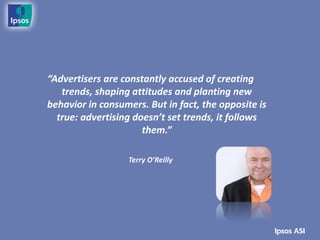
“Advertisers are constantly accused of creating
   trends, shaping attitudes and planting new
behavior in consumers. But in fact, the opposite is
  true: advertising doesn’t set trends, it follows
                      them.”

                  Terry O’Reilly
Secrets
of Effective Advertising
Increased understanding of why audiences are
using social media
Fact.


MARKETING IS A CONVERSATION.
Fact.


TV IS DEAD.
Fact.


PARTICIPATION IS KING.
But.


ARE THEY?
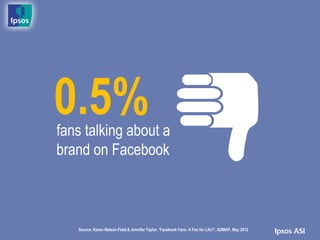
0.5%
fans talking about a
brand on Facebook


   Source: Karen Nelson-Field & Jennifer Taylor, ‘Facebook Fans: A Fan for Life?’, ADMAP, May 2012
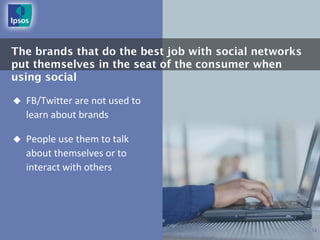
The brands that do the best job with social networks
put themselves in the seat of the consumer when
using social

   FB/Twitter are not used to
    learn about brands

   People use them to talk
    about themselves or to
    interact with others


                                                       12
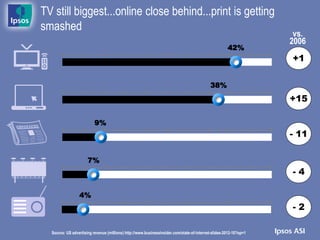
TV still biggest...online close behind...print is getting
smashed
                                                                                                                    vs.
                                                                                                                   2006
                                                                                                     42%
                                                                                                                   +1

                                                                                           38%
                                                                                                                   +15

                          9%
                                                                                                                   - 11

                      7%
                                                                                                                   -4

                 4%
                                                                                                                   -2

  Source: US advertising revenue (millions) http://www.businessinsider.com/state-of-internet-slides-2012-10?op=1
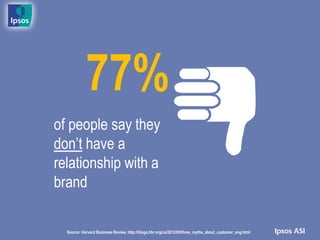
77%
of people say they
don’t have a
relationship with a
brand

  Source: Harvard Business Review, http://blogs.hbr.org/cs/2012/05/three_myths_about_customer_eng.html
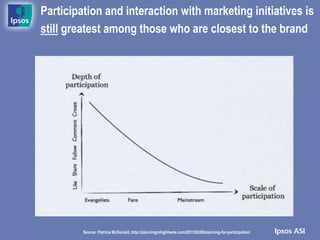
Participation and interaction with marketing initiatives is
still greatest among those who are closest to the brand


         Source: Patricia McDonald, http://planninginhighheels.com/2011/02/08/planning-for-participation/
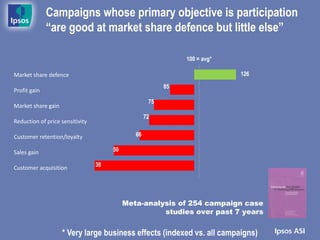
Campaigns whose primary objective is participation
              “are good at market share defence but little else”

                                                              100 = avg*

Market share defence                                                       126

                                                         85
Profit gain
                                                    75
Market share gain
                                                   72
Reduction of price sensitivity

Customer retention/loyalty                    66

Sales gain                            50

Customer acquisition             38


                                           Meta-analysis of 254 campaign case
                                                     studies over past 7 years


                    * Very large business effects (indexed vs. all campaigns)
Implications


    Develop consumer opportunities to interact
     for those who want it
     Leverage brand evangelists
    Reach everyone else through TV
     To signpost, ignite, fuel, explain
   Sole focus just on participation won’t grow
    your brand
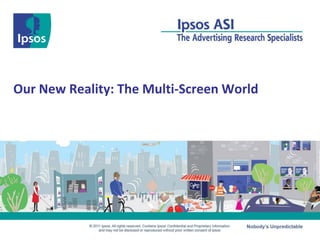
Our New Reality: The Multi-Screen World
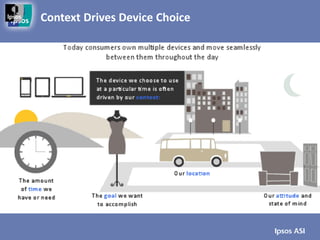
Context Drives Device Choice
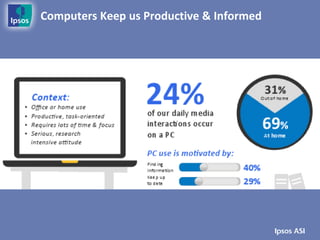
Computers Keep us Productive & Informed
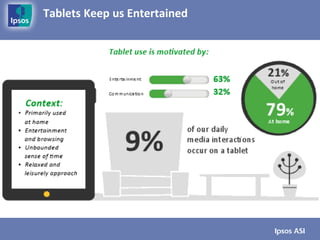
Tablets Keep us Entertained
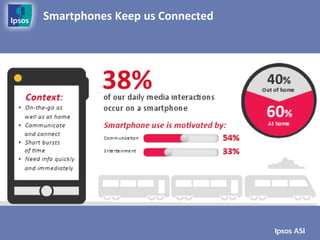
Smartphones Keep us Connected
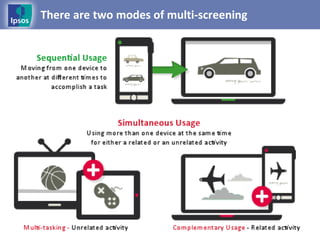
There are two modes of multi-screening
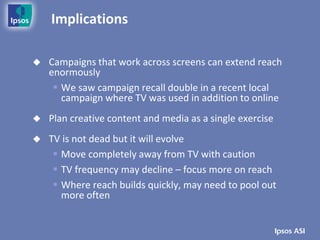
Implications

   Campaigns that work across screens can extend reach
    enormously
      We saw campaign recall double in a recent local
       campaign where TV was used in addition to online
   Plan creative content and media as a single exercise
   TV is not dead but it will evolve
      Move completely away from TV with caution
      TV frequency may decline – focus more on reach
      Where reach builds quickly, may need to pool out
       more often
Ever Increasing Importance of Big Creative Ideas
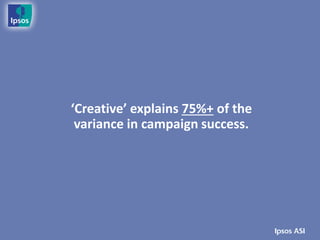
‘Creative’ explains 75%+ of the
 variance in campaign success.
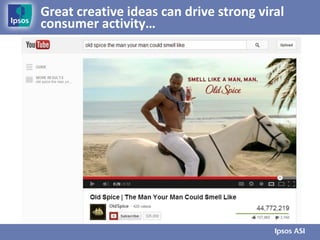
Great creative ideas can drive strong viral
consumer activity…
…and not just for the global P&G Brands
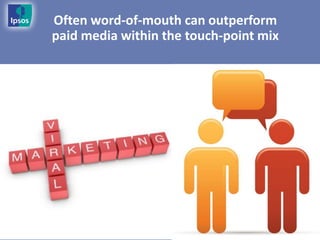
Often word-of-mouth can outperform
paid media within the touch-point mix
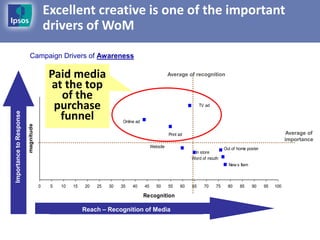
Excellent creative is one of the important
                                         drivers of WoM
                           Campaign Drivers of Awareness

                                          Paid media                                              Average of recognition

                                           at the top
                                             of the
                                           purchase                                                               TV ad

                                             funnel
Importance to Response


                                                                       Online ad
                         magnitude


                                                                                                  Print ad                                                      Average of
                                                                                                                                                               importance
                                                                                        Website                                Out of home poster
                                                                                                              In store
                                                                                                             Word of mouth
                                                                                                                                 New s Item


                                     0    5   10   15   20   25   30   35   40     45      50     55    60   65     70    75     80    85     90    95   100

                                                                                   Recognition

                                                        Reach – Recognition of Media
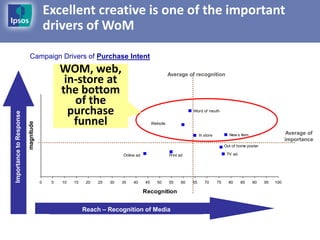
Excellent creative is one of the important
                                         drivers of WoM

                          Campaign Drivers of Purchase Intent
                                              WOM, web,                                            Average of recognition
                                               in-store at
                                              the bottom
                                                 of the
                                                purchase                                                       Word of mouth
Importance to Response


                                                 funnel
                         magnitude


                                                                                         Website

                                                                                                                    In store          New s Item                     Average of
                                                                                                                                                                    importance
                                                                                                                                    Out of home poster

                                                                        Online ad                  Print ad                          TV ad


                                     0    5   10   15    20   25   30   35   40     45      50     55     60   65      70      75     80     85    90    95   100

                                                                                    Recognition


                                                        Reach – Recognition of Media
Effective Ads typically have:


Interest Value

A differentiating   and relevant message
Simple storylines

An immediately clear connection with the brand
   Branding that’s subtle, insistent, integrated
   Brand as hero, as a part of our lives
Effective Ads: Interest Value
   Interest value is subjective, unique to the individual.
    Memorable ads have something that helps them stand out
    from the crowd and gain attention. And the tactics keep
    changing.
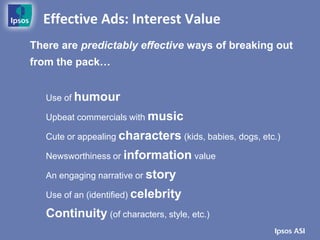
Effective Ads: Interest Value
There are predictably effective ways of breaking out
from the pack…


   Use of humour

   Upbeat commercials with music

   Cute or appealing characters (kids, babies, dogs, etc.)

   Newsworthiness or information value

   An engaging narrative or story

   Use of an (identified) celebrity

   Continuity (of characters, style, etc.)
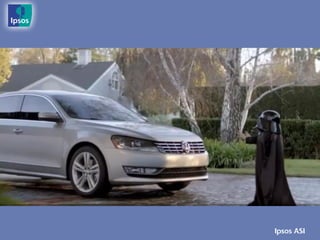
…and now….a contest with prizes for the first person to identify the
           next brands by the following images…..
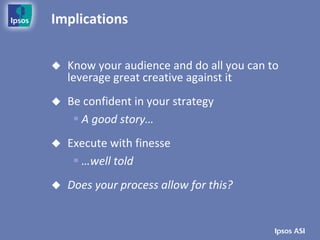
Implications


   Know your audience and do all you can to
    leverage great creative against it
   Be confident in your strategy
      A good story…
   Execute with finesse
      …well told
   Does your process allow for this?
The Irrational Consumer
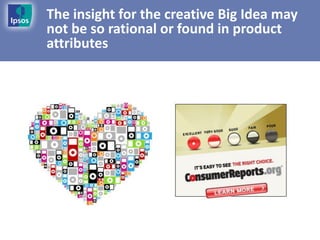
The insight for the creative Big Idea may
not be so rational or found in product
attributes
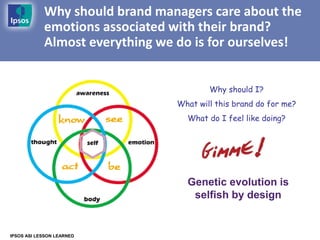
Why should brand managers care about the
            emotions associated with their brand?
            Almost everything we do is for ourselves!


                                         Why should I?
                                 What will this brand do for me?
                                   What do I feel like doing?


                                   Genetic evolution is
                                    selfish by design


IPSOS ASI LESSON LEARNED
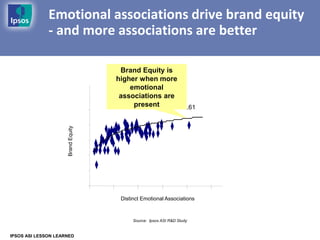
Emotional associations drive brand equity
              - and more associations are better

                                     Brand Equity is
                                    higher when more
                                        emotional
                                     associations are
                                         present      R = .61
                     Brand Equity


                                     Distinct Emotional Associations


                                          Source: Ipsos ASI R&D Study


IPSOS ASI LESSON LEARNED
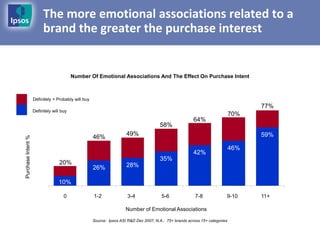
The more emotional associations related to a
                         brand the greater the purchase interest


                                          Number Of Emotional Associations And The Effect On Purchase Intent


                    Definitely + Probably will buy
                                                                                                                                    77%
                    Definitely will buy
                                                                                                                              70%
                                                                                                         64%
                                                                                       58%
                                                                      49%                                                           59%
                                                     46%
Purchase Intent %


                                                                                                                              46%
                                                                                                         42%
                                                                                       35%
                                  20%                                 28%
                                                     26%

                                  10%

                                     0               1-2               3-4              5-6               7-8             9-10      11+

                                                                      Number of Emotional Associations

                                                     Source: Ipsos ASI R&D Dec 2007, N.A.: 75+ brands across 15+ categories
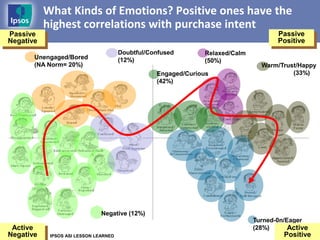
What Kinds of Emotions? Positive ones have the
           highest correlations with purchase intent
Passive                                                                              Passive
Negative                                                                             Positive
                                       Doubtful/Confused       Relaxed/Calm
       Unengaged/Bored                 (12%)                   (50%)
       (NA Norm= 20%)                                                           Warm/Trust/Happy
                                                  Engaged/Curious                        (33%)
                                                  (42%)


                               Negative (12%)
                                                                              Turned-0n/Eager
 Active                                                                       (28%)      Active
Negative    IPSOS ASI LESSON LEARNED                                                   Positive
Marketers need to build emotional
        associations on to the brand


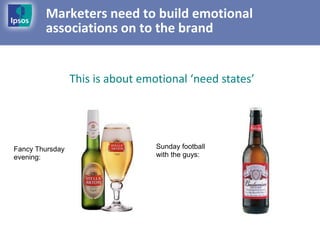
                 This is about emotional ‘need states’


Fancy Thursday                    Sunday football
evening:                          with the guys:
Because we change moods/needs every day, it is
            difficult to segment, and define the right message
            to an individual, for the right mood.


          Brand Managers must “paint” their brand with emotional
                associations and expected emotional pay-offs.


IPSOS ASI LESSON LEARNED
Implications
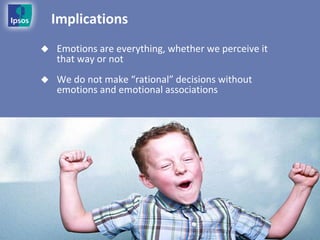
   Emotions are everything, whether we perceive it
    that way or not
   We do not make “rational” decisions without
    emotions and emotional associations
Identifying Message Receptivity & Leveraging
Need States
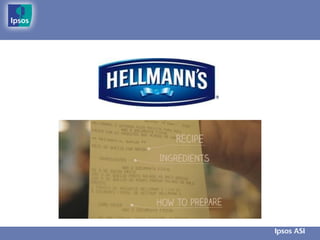
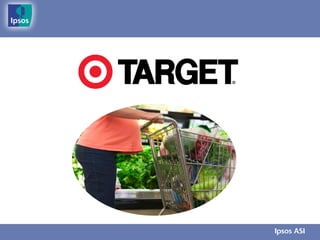
Timing is everything
Fast Flat Shoe Inserts
Implications


   Define the relevant need states for your
    product and service and market to those
    needs
   Leverage customer databases to support
    mass customization
New Ways of Going Green: Profiting Through
Encouraging Consumers to Buy Less
Print Less
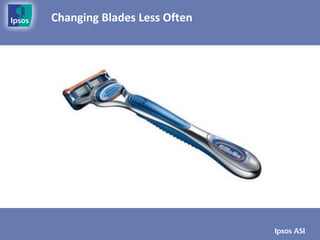
Changing Blades Less Often
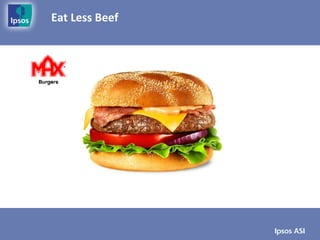
Eat Less Beef
Implications


    Buying less may seem counter intuitive
     but:
     It can pay major dividends in
       customer loyalty
     Offer up highly relevant
       differentiating positioning
Consumer Media Research is Becoming More
Important
This is the
kind of media
   planning
  above and
    beyond
consumption
and audience
measurement
   (ratings).
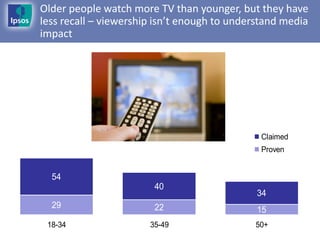
Older people watch more TV than younger, but they have
less recall – viewership isn’t enough to understand media
impact


                                              Claimed
                                              Proven


  54
                        40
                                              34
  29                    22                    15
 18-34                 35-49                 50+
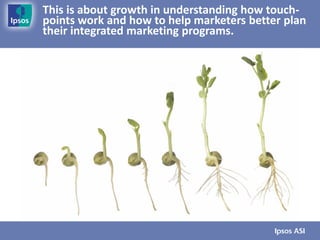
This is about growth in understanding how touch-
points work and how to help marketers better plan
their integrated marketing programs.
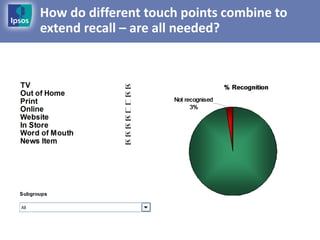
How do different touch points combine to
extend recall – are all needed?
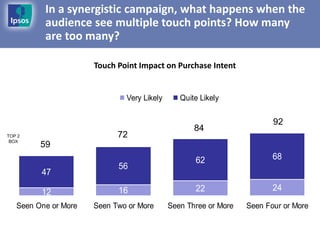
In a synergistic campaign, what happens when the
          audience see multiple touch points? How many
          are too many?

                      Touch Point Impact on Purchase Intent


                              Very Likely      Quite Likely


                                                                        92
                                                   84
TOP 2                       72
 BOX
         59
                                                   62                   68
                            56
         47

         12                 16                     22                   24
   Seen One or More   Seen Two or More      Seen Three or More   Seen Four or More
Implications

   Media buys can be impacted by the nature of the
    audience

   Where is the brand at in its evolution? Different touch
    points impact different metrics

   Synergy extends impact with exposure to multiple
    campaign media
We Will Use New Methods to Understand Our
Audiences
The New Normal


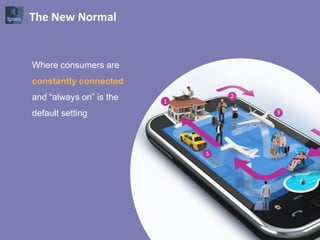
Where consumers are
constantly connected
and “always on” is the
default setting


                         69
The New Normal


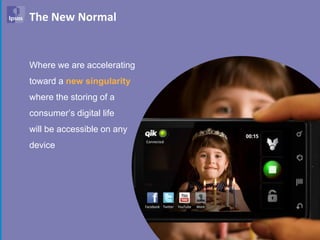
Where we are accelerating
toward a new singularity
where the storing of a
consumer’s digital life
will be accessible on any
device


                            70
The New Normal


Where we are moving towards
a culture where information
about most things becomes
readily available


                              71
The New Normal


And where personalization of
the digital landscape via
devices and apps will continue
to grow quickly


                                 72
TODAY’S CONSUMERS ARE DIFFERENT


We have to engage them in
ways that capitalize on and

mimic their lives in a digital
world


                                  73
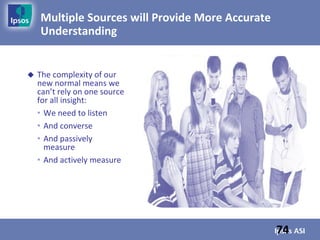
Multiple Sources will Provide More Accurate
    Understanding


   The complexity of our
    new normal means we
    can’t rely on one source
    for all insight:
    • We need to listen
    • And converse
    • And passively
      measure
    • And actively measure


                                                  74
we need to
think differently
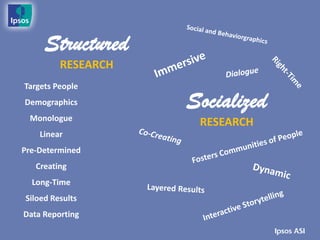
Structured
         RESEARCH
Targets People
Demographics        Socialized
 Monologue
                     RESEARCH
    Linear
Pre-Determined
   Creating
  Long-Time
Siloed Results
Data Reporting
Implication


   Getting the right person at the right time
   Reliance on smaller samples
   More “just in time” research vs. bigger ongoing
    studies
   Passive observation
   Tagging digital activity to more quickly and easily
    find those who have been exposed
   Quality implications
   More qualitative
Consumers Continue to Evolve
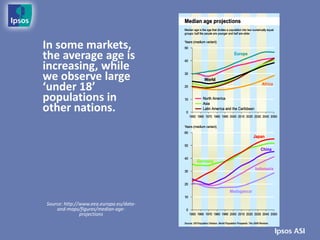
In some markets,
the average age is
increasing, while
we observe large
‘under 18’
populations in
other nations.


Source: http://www.eea.europa.eu/data-
    and-maps/figures/median-age-
               projections
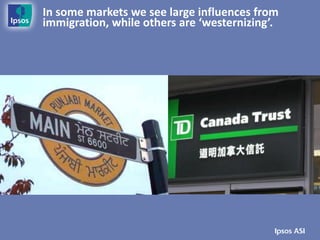
In some markets we see large influences from
immigration, while others are ‘westernizing’.
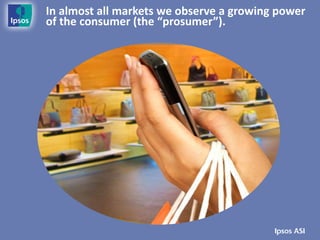
In almost all markets we observe a growing power
of the consumer (the “prosumer”).
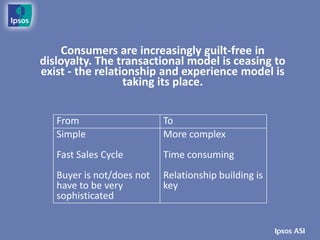
Consumers are increasingly guilt-free in
disloyalty. The transactional model is ceasing to
exist - the relationship and experience model is
                  taking its place.


   From                    To
   Simple                  More complex
   Fast Sales Cycle        Time consuming
   Buyer is not/does not   Relationship building is
   have to be very         key
   sophisticated
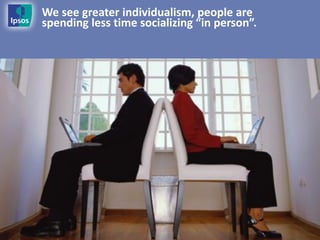
We see greater individualism, people are
spending less time socializing “in person”.
Screen time is growing and personal care
(health) is declining
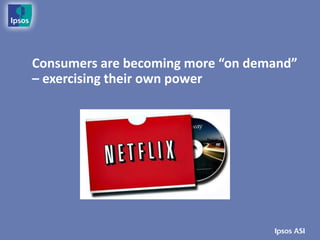
Consumers are becoming more “on demand”
– exercising their own power
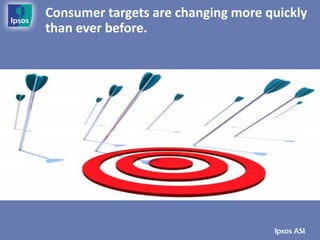
Consumer targets are changing more quickly
than ever before.
The Implication: we need to be more savvy about
how we market our businesses and who we are
marketing to
Questions?
Thank you!

Ipsos ASI's Top 10 Trends for 2013

  • 1.
    Marketing Trends YouCan’t Afford To Ignore Seattle MarketMix 2013
  • 2.
    “I don’t settrends. I just find out what they are and exploit them.” Dick Clark
  • 3.
    “Trends, like horses,are easier to ride in the direction they are going.” John Naisbitt
  • 4.
    “Advertisers are constantlyaccused of creating trends, shaping attitudes and planting new behavior in consumers. But in fact, the opposite is true: advertising doesn’t set trends, it follows them.” Terry O’Reilly
  • 5.
  • 6.
    Increased understanding ofwhy audiences are using social media
  • 7.
    Fact. MARKETING IS ACONVERSATION.
  • 8.
  • 9.
  • 10.
  • 11.
    0.5% fans talking abouta brand on Facebook Source: Karen Nelson-Field & Jennifer Taylor, ‘Facebook Fans: A Fan for Life?’, ADMAP, May 2012
  • 12.
    The brands thatdo the best job with social networks put themselves in the seat of the consumer when using social  FB/Twitter are not used to learn about brands  People use them to talk about themselves or to interact with others 12
  • 13.
    TV still biggest...onlineclose behind...print is getting smashed vs. 2006 42% +1 38% +15 9% - 11 7% -4 4% -2 Source: US advertising revenue (millions) http://www.businessinsider.com/state-of-internet-slides-2012-10?op=1
  • 14.
    77% of people saythey don’t have a relationship with a brand Source: Harvard Business Review, http://blogs.hbr.org/cs/2012/05/three_myths_about_customer_eng.html
  • 15.
    Participation and interactionwith marketing initiatives is still greatest among those who are closest to the brand Source: Patricia McDonald, http://planninginhighheels.com/2011/02/08/planning-for-participation/
  • 16.
    Campaigns whose primaryobjective is participation “are good at market share defence but little else” 100 = avg* Market share defence 126 85 Profit gain 75 Market share gain 72 Reduction of price sensitivity Customer retention/loyalty 66 Sales gain 50 Customer acquisition 38 Meta-analysis of 254 campaign case studies over past 7 years * Very large business effects (indexed vs. all campaigns)
  • 17.
    Implications  Develop consumer opportunities to interact for those who want it  Leverage brand evangelists  Reach everyone else through TV  To signpost, ignite, fuel, explain  Sole focus just on participation won’t grow your brand
  • 18.
    Our New Reality:The Multi-Screen World
  • 19.
  • 20.
    Computers Keep usProductive & Informed
  • 21.
    Tablets Keep usEntertained
  • 22.
  • 23.
    There are twomodes of multi-screening
  • 24.
    Implications  Campaigns that work across screens can extend reach enormously  We saw campaign recall double in a recent local campaign where TV was used in addition to online  Plan creative content and media as a single exercise  TV is not dead but it will evolve  Move completely away from TV with caution  TV frequency may decline – focus more on reach  Where reach builds quickly, may need to pool out more often
  • 25.
    Ever Increasing Importanceof Big Creative Ideas
  • 26.
    ‘Creative’ explains 75%+of the variance in campaign success.
  • 27.
    Great creative ideascan drive strong viral consumer activity…
  • 28.
    …and not justfor the global P&G Brands
  • 29.
    Often word-of-mouth canoutperform paid media within the touch-point mix
  • 30.
    Excellent creative isone of the important drivers of WoM Campaign Drivers of Awareness Paid media Average of recognition at the top of the purchase TV ad funnel Importance to Response Online ad magnitude Print ad Average of importance Website Out of home poster In store Word of mouth New s Item 0 5 10 15 20 25 30 35 40 45 50 55 60 65 70 75 80 85 90 95 100 Recognition Reach – Recognition of Media
  • 31.
    Excellent creative isone of the important drivers of WoM Campaign Drivers of Purchase Intent WOM, web, Average of recognition in-store at the bottom of the purchase Word of mouth Importance to Response funnel magnitude Website In store New s Item Average of importance Out of home poster Online ad Print ad TV ad 0 5 10 15 20 25 30 35 40 45 50 55 60 65 70 75 80 85 90 95 100 Recognition Reach – Recognition of Media
  • 32.
    Effective Ads typicallyhave: Interest Value A differentiating and relevant message Simple storylines An immediately clear connection with the brand  Branding that’s subtle, insistent, integrated  Brand as hero, as a part of our lives
  • 33.
    Effective Ads: InterestValue  Interest value is subjective, unique to the individual. Memorable ads have something that helps them stand out from the crowd and gain attention. And the tactics keep changing.
  • 34.
    Effective Ads: InterestValue There are predictably effective ways of breaking out from the pack… Use of humour Upbeat commercials with music Cute or appealing characters (kids, babies, dogs, etc.) Newsworthiness or information value An engaging narrative or story Use of an (identified) celebrity Continuity (of characters, style, etc.)
  • 35.
    …and now….a contestwith prizes for the first person to identify the next brands by the following images…..
  • 40.
    Implications  Know your audience and do all you can to leverage great creative against it  Be confident in your strategy  A good story…  Execute with finesse  …well told  Does your process allow for this?
  • 41.
  • 42.
    The insight forthe creative Big Idea may not be so rational or found in product attributes
  • 43.
    Why should brandmanagers care about the emotions associated with their brand? Almost everything we do is for ourselves! Why should I? What will this brand do for me? What do I feel like doing? Genetic evolution is selfish by design IPSOS ASI LESSON LEARNED
  • 44.
    Emotional associations drivebrand equity - and more associations are better Brand Equity is higher when more emotional associations are present R = .61 Brand Equity Distinct Emotional Associations Source: Ipsos ASI R&D Study IPSOS ASI LESSON LEARNED
  • 45.
    The more emotionalassociations related to a brand the greater the purchase interest Number Of Emotional Associations And The Effect On Purchase Intent Definitely + Probably will buy 77% Definitely will buy 70% 64% 58% 49% 59% 46% Purchase Intent % 46% 42% 35% 20% 28% 26% 10% 0 1-2 3-4 5-6 7-8 9-10 11+ Number of Emotional Associations Source: Ipsos ASI R&D Dec 2007, N.A.: 75+ brands across 15+ categories
  • 46.
    What Kinds ofEmotions? Positive ones have the highest correlations with purchase intent Passive Passive Negative Positive Doubtful/Confused Relaxed/Calm Unengaged/Bored (12%) (50%) (NA Norm= 20%) Warm/Trust/Happy Engaged/Curious (33%) (42%) Negative (12%) Turned-0n/Eager Active (28%) Active Negative IPSOS ASI LESSON LEARNED Positive
  • 47.
    Marketers need tobuild emotional associations on to the brand This is about emotional ‘need states’ Fancy Thursday Sunday football evening: with the guys:
  • 48.
    Because we changemoods/needs every day, it is difficult to segment, and define the right message to an individual, for the right mood. Brand Managers must “paint” their brand with emotional associations and expected emotional pay-offs. IPSOS ASI LESSON LEARNED
  • 49.
    Implications  Emotions are everything, whether we perceive it that way or not  We do not make “rational” decisions without emotions and emotional associations
  • 50.
    Identifying Message Receptivity& Leveraging Need States
  • 51.
  • 52.
  • 55.
    Implications  Define the relevant need states for your product and service and market to those needs  Leverage customer databases to support mass customization
  • 56.
    New Ways ofGoing Green: Profiting Through Encouraging Consumers to Buy Less
  • 57.
  • 58.
  • 59.
  • 60.
    Implications  Buying less may seem counter intuitive but:  It can pay major dividends in customer loyalty  Offer up highly relevant differentiating positioning
  • 61.
    Consumer Media Researchis Becoming More Important
  • 62.
    This is the kindof media planning above and beyond consumption and audience measurement (ratings).
  • 63.
    Older people watchmore TV than younger, but they have less recall – viewership isn’t enough to understand media impact Claimed Proven 54 40 34 29 22 15 18-34 35-49 50+
  • 64.
    This is aboutgrowth in understanding how touch- points work and how to help marketers better plan their integrated marketing programs.
  • 65.
    How do differenttouch points combine to extend recall – are all needed?
  • 66.
    In a synergisticcampaign, what happens when the audience see multiple touch points? How many are too many? Touch Point Impact on Purchase Intent Very Likely Quite Likely 92 84 TOP 2 72 BOX 59 62 68 56 47 12 16 22 24 Seen One or More Seen Two or More Seen Three or More Seen Four or More
  • 67.
    Implications  Media buys can be impacted by the nature of the audience  Where is the brand at in its evolution? Different touch points impact different metrics  Synergy extends impact with exposure to multiple campaign media
  • 68.
    We Will UseNew Methods to Understand Our Audiences
  • 69.
    The New Normal Whereconsumers are constantly connected and “always on” is the default setting 69
  • 70.
    The New Normal Wherewe are accelerating toward a new singularity where the storing of a consumer’s digital life will be accessible on any device 70
  • 71.
    The New Normal Wherewe are moving towards a culture where information about most things becomes readily available 71
  • 72.
    The New Normal Andwhere personalization of the digital landscape via devices and apps will continue to grow quickly 72
  • 73.
    TODAY’S CONSUMERS AREDIFFERENT We have to engage them in ways that capitalize on and mimic their lives in a digital world 73
  • 74.
    Multiple Sources willProvide More Accurate Understanding  The complexity of our new normal means we can’t rely on one source for all insight: • We need to listen • And converse • And passively measure • And actively measure 74
  • 75.
    we need to thinkdifferently
  • 76.
    Structured RESEARCH Targets People Demographics Socialized Monologue RESEARCH Linear Pre-Determined Creating Long-Time Siloed Results Data Reporting
  • 77.
    Implication  Getting the right person at the right time  Reliance on smaller samples  More “just in time” research vs. bigger ongoing studies  Passive observation  Tagging digital activity to more quickly and easily find those who have been exposed  Quality implications  More qualitative
  • 78.
  • 79.
    In some markets, theaverage age is increasing, while we observe large ‘under 18’ populations in other nations. Source: http://www.eea.europa.eu/data- and-maps/figures/median-age- projections
  • 80.
    In some marketswe see large influences from immigration, while others are ‘westernizing’.
  • 81.
    In almost allmarkets we observe a growing power of the consumer (the “prosumer”).
  • 82.
    Consumers are increasinglyguilt-free in disloyalty. The transactional model is ceasing to exist - the relationship and experience model is taking its place. From To Simple More complex Fast Sales Cycle Time consuming Buyer is not/does not Relationship building is have to be very key sophisticated
  • 83.
    We see greaterindividualism, people are spending less time socializing “in person”.
  • 84.
    Screen time isgrowing and personal care (health) is declining
  • 85.
    Consumers are becomingmore “on demand” – exercising their own power
  • 86.
    Consumer targets arechanging more quickly than ever before.
  • 87.
    The Implication: weneed to be more savvy about how we market our businesses and who we are marketing to
  • 88.
  • 89.