Ms.Nikethana R Nair, M.Sc (OBG), MBA (HA), M.Ṣc (Psy)M.Phil (HHSM),
Nursing Superintendent,
Meenakshi Mission Hospital & Research Center - Madurai
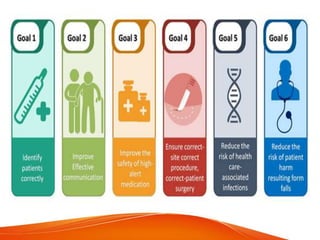
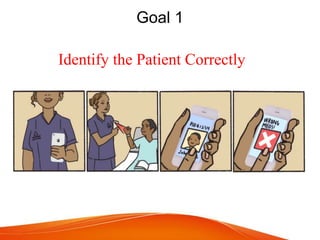
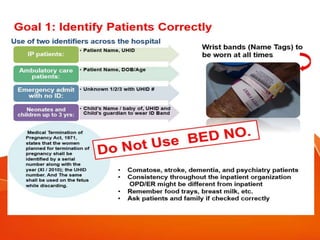
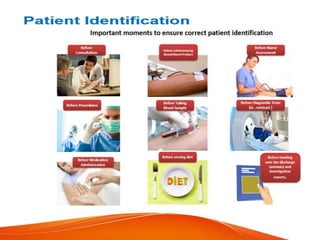
Goal 1
Identify the Patient Correctly
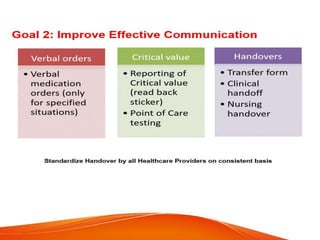
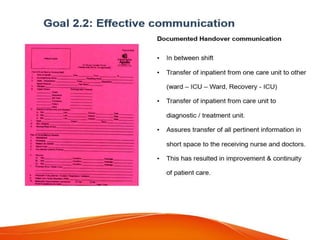
Goal 2
Improve Effective Communication
Other Documents....
• Adverse event data are tracked and used to
identify improvements for hand over
communications.
• Handover between patients and families
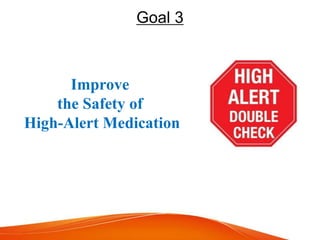
Goal 3
Improve
the Safety of
High-Alert Medication
High alert medications are those medications involved in a high percentage of
errors/sentinel events, medications that carry a higher risk for adverse outcomes
as well as look- alike / sound alike medications.
•Chemotherapeutics
•All Narcotic Drugs – Fentanyl patches & Injections, Inj. Pethidine, Morphine
injections & Tablets, Pentazocine injection
•Concentrated electrolytes – I.V. KCL 2mEq/ml or more concentrated, I.V. Potassium
Phosphate, I.V. Nacl (more than 0.9%), I.V. Mg Sulphate (50% or more concentrated)
•Mg sulfate is stored in 3 to 10 ampules for managing pre eclampsia
•Look Alike/ Sound Alike drugs – Staff should know all drugs in LASA
•Narrow Therapeutic Index drugs – I.V. Phenytoin, I.V. Aminophylline, Inj.
Tacrolimus, Inj. Digoxin, Tab. Lithium carbonate
•Anticoagulants – I.V. Heparin, Tab. Acenocoumarol (Acitrom), Tab. Warfarin
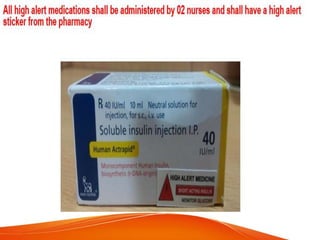
•Insulins
•Antipsychotics – Inj. Haloperidol
•Anesthetic – Inj. Ketamine Hydrochloride (All CCU) kept under double lock
Cont....
• High alert sticker for all high alert medications
• Double lock for Narcotics and high concentrated electrolytes
• Key custodian
• Tall Man lettering for LASA labels
• Store LASA drugs in separate racks - Segregation
• Color coding for insulin storage
• Concentrated electrolytes are stored only in the specific areas
• Independent Double check and double sign
• Replace the empty ampoules of narcotics
• Wastage of narcotics should be discarded in the presence of doctor
and obtain doctor’s signature
• HAM monitoring
• Adverse events to be reported
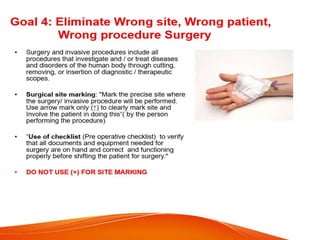
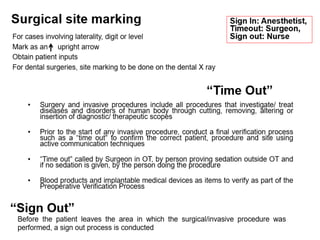
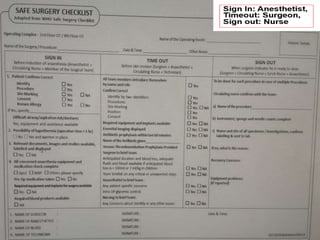
Goal 4
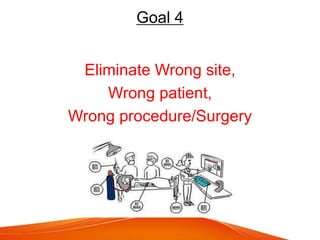
Eliminate Wrong site,
Wrong patient,
Wrong procedure/Surgery
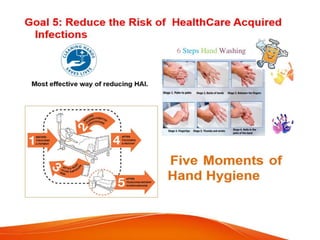
Goal 5
Reduce the risk of Healthcare
Acquired
Infections
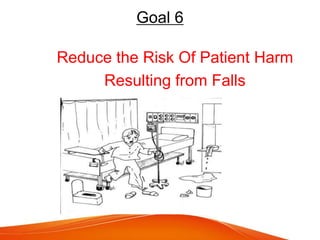
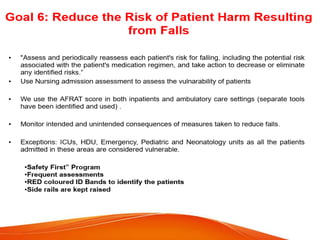
Goal 6
Reduce the Risk Of Patient Harm
Resulting from Falls
CARE OF PATIENT
Patient safety is a new
healthcare discipline that
emphasizes the reporting,
analysis, and prevention of
medical error that often lead to
adverse healthcare events.

Who & When
For safety of the patient vulnerability
assessment should be done for all the
patients at the time of admission
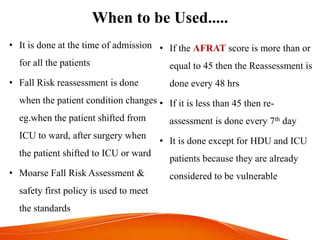
When to be Used.....
• If the AFRAT score is more than or
equal to 45 then the Reassessment is
done every 48 hrs
• If it is less than 45 then re-
assessment is done every 7th day
• It is done except for HDU and ICU
patients because they are already
considered to be vulnerable
• It is done at the time of admission
for all the patients
• Fall Risk reassessment is done
when the patient condition changes
eg.when the patient shifted from
ICU to ward, after surgery when
the patient shifted to ICU or ward
• Moarse Fall Risk Assessment &
safety first policy is used to meet
the standards
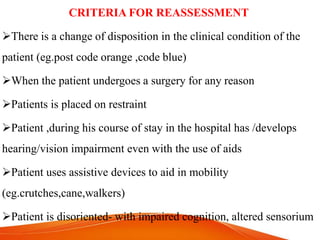
CRITERIA FOR REASSESSMENT
There is a change of disposition in the clinical condition of the
patient (eg.post code orange ,code blue)
When the patient undergoes a surgery for any reason
Patients is placed on restraint
Patient ,during his course of stay in the hospital has /develops
hearing/vision impairment even with the use of aids
Patient uses assistive devices to aid in mobility
(eg.crutches,cane,walkers)
Patient is disoriented- with impaired cognition, altered sensorium
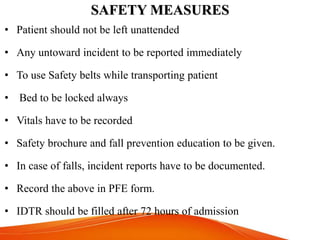
SAFETY MEASURES
• Patient should not be left unattended
• Any untoward incident to be reported immediately
• To use Safety belts while transporting patient
• Bed to be locked always
• Vitals have to be recorded
• Safety brochure and fall prevention education to be given.
• In case of falls, incident reports have to be documented.
• Record the above in PFE form.
• IDTR should be filled after 72 hours of admission
Cont....
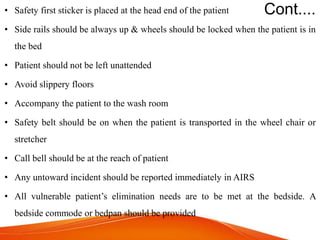
• Safety first sticker is placed at the head end of the patient
• Side rails should be always up & wheels should be locked when the patient is in
the bed
• Patient should not be left unattended
• Avoid slippery floors
• Accompany the patient to the wash room
• Safety belt should be on when the patient is transported in the wheel chair or
stretcher
• Call bell should be at the reach of patient
• Any untoward incident should be reported immediately in AIRS
• All vulnerable patient’s elimination needs are to be met at the bedside. A
bedside commode or bedpan should be provided
IPSG.ppt
IPSG.ppt

IPSG.ppt

  • 1.
    Ms.Nikethana R Nair,M.Sc (OBG), MBA (HA), M.Ṣc (Psy)M.Phil (HHSM), Nursing Superintendent, Meenakshi Mission Hospital & Research Center - Madurai
  • 3.
    Goal 1 Identify thePatient Correctly
  • 6.
  • 10.
    Other Documents.... • Adverseevent data are tracked and used to identify improvements for hand over communications. • Handover between patients and families
  • 11.
    Goal 3 Improve the Safetyof High-Alert Medication
  • 12.
    High alert medicationsare those medications involved in a high percentage of errors/sentinel events, medications that carry a higher risk for adverse outcomes as well as look- alike / sound alike medications. •Chemotherapeutics •All Narcotic Drugs – Fentanyl patches & Injections, Inj. Pethidine, Morphine injections & Tablets, Pentazocine injection •Concentrated electrolytes – I.V. KCL 2mEq/ml or more concentrated, I.V. Potassium Phosphate, I.V. Nacl (more than 0.9%), I.V. Mg Sulphate (50% or more concentrated) •Mg sulfate is stored in 3 to 10 ampules for managing pre eclampsia •Look Alike/ Sound Alike drugs – Staff should know all drugs in LASA •Narrow Therapeutic Index drugs – I.V. Phenytoin, I.V. Aminophylline, Inj. Tacrolimus, Inj. Digoxin, Tab. Lithium carbonate •Anticoagulants – I.V. Heparin, Tab. Acenocoumarol (Acitrom), Tab. Warfarin •Insulins •Antipsychotics – Inj. Haloperidol •Anesthetic – Inj. Ketamine Hydrochloride (All CCU) kept under double lock
  • 13.
    Cont.... • High alertsticker for all high alert medications • Double lock for Narcotics and high concentrated electrolytes • Key custodian • Tall Man lettering for LASA labels • Store LASA drugs in separate racks - Segregation • Color coding for insulin storage • Concentrated electrolytes are stored only in the specific areas • Independent Double check and double sign • Replace the empty ampoules of narcotics • Wastage of narcotics should be discarded in the presence of doctor and obtain doctor’s signature • HAM monitoring • Adverse events to be reported
  • 15.
    Goal 4 Eliminate Wrongsite, Wrong patient, Wrong procedure/Surgery
  • 19.
    Goal 5 Reduce therisk of Healthcare Acquired Infections
  • 21.
    Goal 6 Reduce theRisk Of Patient Harm Resulting from Falls
  • 22.
    CARE OF PATIENT Patientsafety is a new healthcare discipline that emphasizes the reporting, analysis, and prevention of medical error that often lead to adverse healthcare events.
  • 23.
    Who & When Forsafety of the patient vulnerability assessment should be done for all the patients at the time of admission
  • 24.
    When to beUsed..... • If the AFRAT score is more than or equal to 45 then the Reassessment is done every 48 hrs • If it is less than 45 then re- assessment is done every 7th day • It is done except for HDU and ICU patients because they are already considered to be vulnerable • It is done at the time of admission for all the patients • Fall Risk reassessment is done when the patient condition changes eg.when the patient shifted from ICU to ward, after surgery when the patient shifted to ICU or ward • Moarse Fall Risk Assessment & safety first policy is used to meet the standards
  • 26.
    CRITERIA FOR REASSESSMENT Thereis a change of disposition in the clinical condition of the patient (eg.post code orange ,code blue) When the patient undergoes a surgery for any reason Patients is placed on restraint Patient ,during his course of stay in the hospital has /develops hearing/vision impairment even with the use of aids Patient uses assistive devices to aid in mobility (eg.crutches,cane,walkers) Patient is disoriented- with impaired cognition, altered sensorium
  • 27.
    SAFETY MEASURES • Patientshould not be left unattended • Any untoward incident to be reported immediately • To use Safety belts while transporting patient • Bed to be locked always • Vitals have to be recorded • Safety brochure and fall prevention education to be given. • In case of falls, incident reports have to be documented. • Record the above in PFE form. • IDTR should be filled after 72 hours of admission
  • 28.
    Cont.... • Safety firststicker is placed at the head end of the patient • Side rails should be always up & wheels should be locked when the patient is in the bed • Patient should not be left unattended • Avoid slippery floors • Accompany the patient to the wash room • Safety belt should be on when the patient is transported in the wheel chair or stretcher • Call bell should be at the reach of patient • Any untoward incident should be reported immediately in AIRS • All vulnerable patient’s elimination needs are to be met at the bedside. A bedside commode or bedpan should be provided