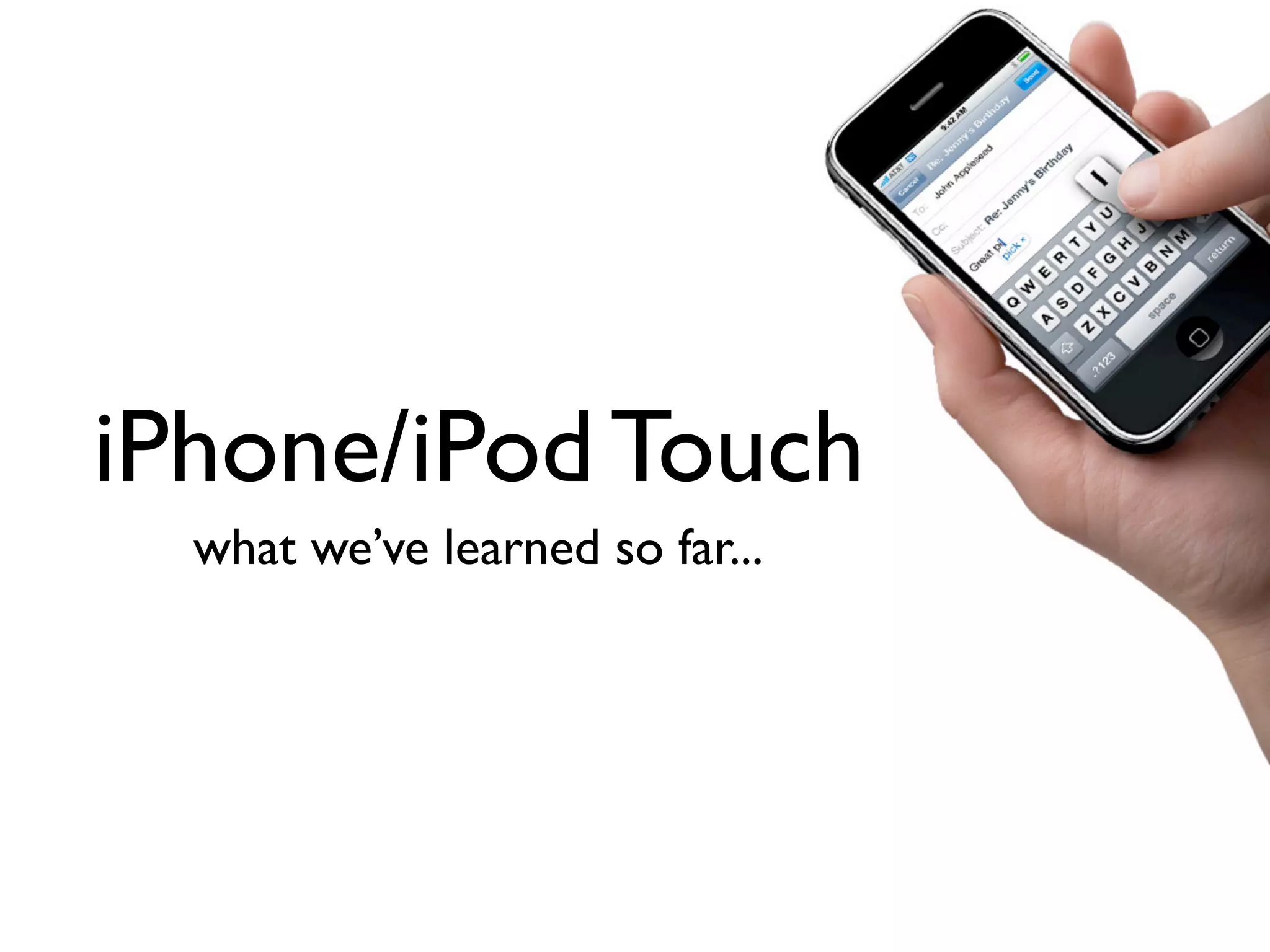



iPhone/iPod Touch
  what we’ve learned so far...
History
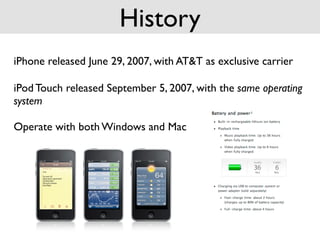
iPhone released June 29, 2007, with AT&T as exclusive carrier

iPod Touch released September 5, 2007, with the same operating
system

Operate with both Windows and Mac
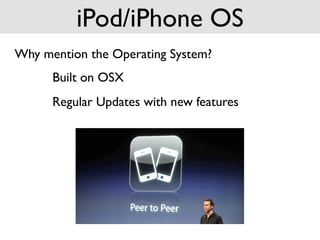
iPod/iPhone OS
Why mention the Operating System?
      Built on OSX
      Regular Updates with new features
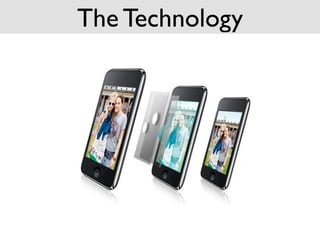
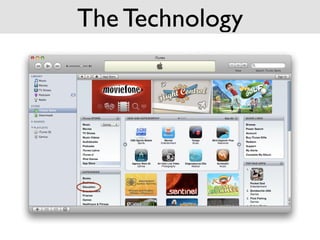
The Technology
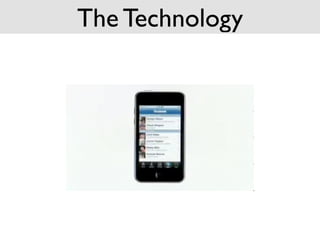
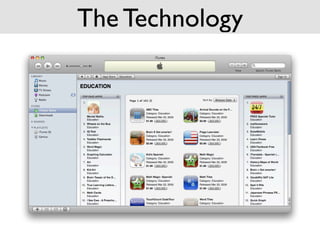
The Technology
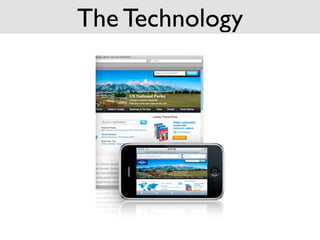
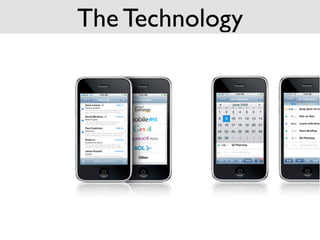
The Technology
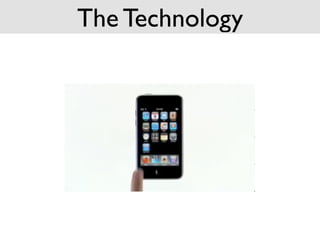
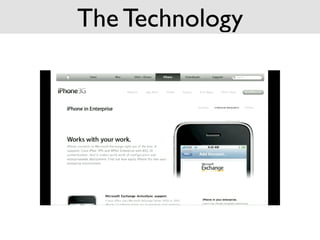
The Technology
The Technology
The Technology
The Technology
The Technology
The Technology
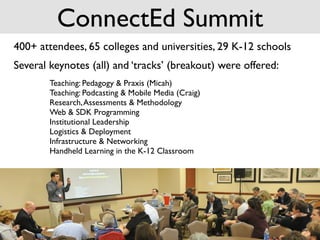
ConnectEd Summit
400+ attendees, 65 colleges and universities, 29 K-12 schools
Several keynotes (all) and ‘tracks’ (breakout) were offered:
        Teaching: Pedagogy & Praxis (Micah)
        Teaching: Podcasting & Mobile Media (Craig)
        Research, Assessments & Methodology
        Web & SDK Programming
        Institutional Leadership
        Logistics & Deployment
        Infrastructure & Networking
        Handheld Learning in the K-12 Classroom
What We Learned
A variety of disciplines were present

The hard questions are being asked (“Is this a fad?” “What
problems do you have in class?” “What is the purpose of mobile
tech in the classroom?”)

400 iPods and iPhones take down a wireless network pretty fast

Apple is committed to iPhone/Touch in the education sector
ConnectEd Summit
      Eric Mazur
Classroom Use
As a ‘clicker’ - a student response system

Mobile access to course content (Blackboard/LMS)

Search during discussions (Pubsearch)

Podcasts

Calculator/Unit Conversion

Flashcard utilities

Language learning
Classroom Use
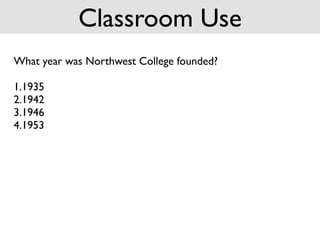
What year was Northwest College founded?

1.1935
2.1942
3.1946
4.1953
Pilot Study
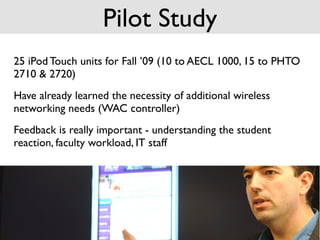
25 iPod Touch units for Fall ’09 (10 to AECL 1000, 15 to PHTO
2710 & 2720)
Have already learned the necessity of additional wireless
networking needs (WAC controller)
Feedback is really important - understanding the student
reaction, faculty workload, IT staff
Future Use?
Other areas that might make use of iPhone/Touch technology:
   Nursing (anatomy, medical records)
   Music (multi-track recording, phone ‘instruments’)
   Art courses
   Chemistry (interactive periodic tables, molecular
   structures)
   Elementary Education (a host of math and language
   apps)
   Biology (www.biocourseware.com)
Future Use?

iPod Touch Presentation

  • 1.
    iPhone/iPod Touch what we’ve learned so far...
  • 2.
    History iPhone released June29, 2007, with AT&T as exclusive carrier iPod Touch released September 5, 2007, with the same operating system Operate with both Windows and Mac
  • 3.
    iPod/iPhone OS Why mentionthe Operating System? Built on OSX Regular Updates with new features
  • 4.
  • 5.
  • 6.
  • 7.
  • 8.
  • 9.
  • 10.
  • 11.
  • 12.
  • 13.
    ConnectEd Summit 400+ attendees,65 colleges and universities, 29 K-12 schools Several keynotes (all) and ‘tracks’ (breakout) were offered: Teaching: Pedagogy & Praxis (Micah) Teaching: Podcasting & Mobile Media (Craig) Research, Assessments & Methodology Web & SDK Programming Institutional Leadership Logistics & Deployment Infrastructure & Networking Handheld Learning in the K-12 Classroom
  • 14.
    What We Learned Avariety of disciplines were present The hard questions are being asked (“Is this a fad?” “What problems do you have in class?” “What is the purpose of mobile tech in the classroom?”) 400 iPods and iPhones take down a wireless network pretty fast Apple is committed to iPhone/Touch in the education sector
  • 16.
  • 17.
    Classroom Use As a‘clicker’ - a student response system Mobile access to course content (Blackboard/LMS) Search during discussions (Pubsearch) Podcasts Calculator/Unit Conversion Flashcard utilities Language learning
  • 18.
    Classroom Use What yearwas Northwest College founded? 1.1935 2.1942 3.1946 4.1953
  • 19.
    Pilot Study 25 iPodTouch units for Fall ’09 (10 to AECL 1000, 15 to PHTO 2710 & 2720) Have already learned the necessity of additional wireless networking needs (WAC controller) Feedback is really important - understanding the student reaction, faculty workload, IT staff
  • 20.
    Future Use? Other areasthat might make use of iPhone/Touch technology: Nursing (anatomy, medical records) Music (multi-track recording, phone ‘instruments’) Art courses Chemistry (interactive periodic tables, molecular structures) Elementary Education (a host of math and language apps) Biology (www.biocourseware.com)
  • 21.