Reflection and Critical Thinking as Philosophical
Tools (Reflection and Critical Thinking)
Warm-Up: Rethinking
Beliefs
• Have you ever changed your mind about
something important? Why?
• What caused you to reconsider your belief
or decision?
➤ Share brief insights. Highlight how
reflection and critical thinking influence
changes in beliefs.
What is Reflection?
Reflection:
Thinking deeply about
one’s experiences, actions,
or beliefs.
Levels of Reflection:
• Surface-level: Reactions or
preferences
• Deep-level: Questioning
assumptions and finding
meaning
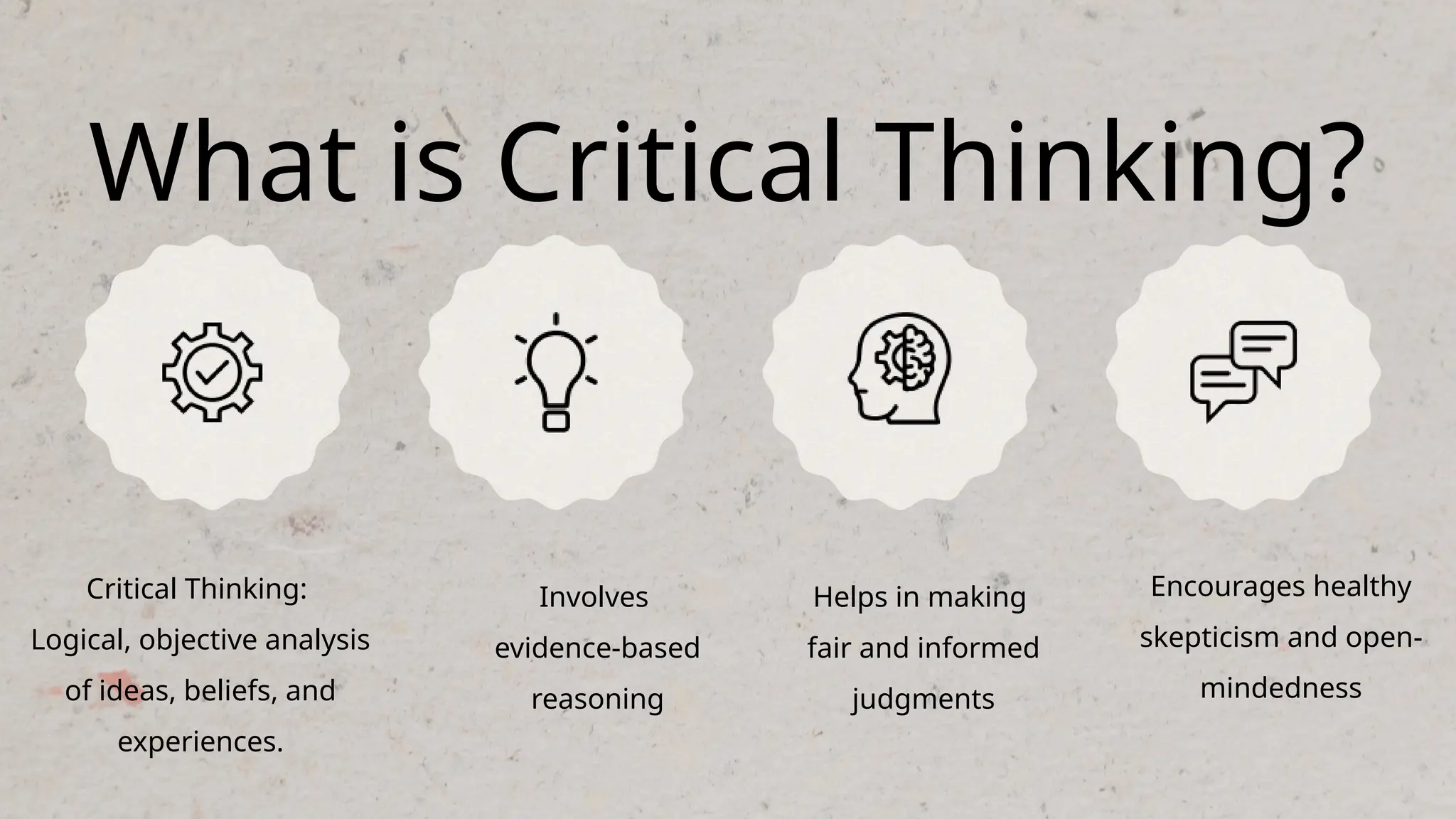
What is Critical Thinking?
Critical Thinking:
Logical, objective analysis
of ideas, beliefs, and
experiences.
Involves
evidence-based
reasoning
Helps in making
fair and informed
judgments
Encourages healthy
skepticism and open-
mindedness
Everyday Examples of Reflection &
Critical Thinking
• Social Media: Do I believe everything I see
or read?
• Academic Choices: Am I pursuing what I
truly want?
• Friendships: Should I speak out or stay
silent in conflict?
• ➤ These situations require reflection and
reasoned thinking.
Ethical Dilemma for Class Discussion
A friend cheats on a test and asks you not to
tell. What should you do?
➤ Reflect individually and discuss as a class
using moral reasoning.
Deepening Reflection Through
Dialogue
• Dialogue refines our reasoning and ideas
• Listening to others brings deeper
understanding
• Helps build empathy and shared insight
➤ Dialogue is not debate—it is collaboration
toward truth.
Activity 1. Reflect on a Recent
Decision
Guide Questions:
• What was the decision?
• How did you make it?
• Did you consider other perspectives?
• What role did logic, emotion, or reflection
play?
Thank YOU!

L5-REFLECTION AND CRITICAL THINKING.pptx

  • 1.
    Reflection and CriticalThinking as Philosophical Tools (Reflection and Critical Thinking)
  • 2.
    Warm-Up: Rethinking Beliefs • Haveyou ever changed your mind about something important? Why? • What caused you to reconsider your belief or decision? ➤ Share brief insights. Highlight how reflection and critical thinking influence changes in beliefs.
  • 3.
    What is Reflection? Reflection: Thinkingdeeply about one’s experiences, actions, or beliefs. Levels of Reflection: • Surface-level: Reactions or preferences • Deep-level: Questioning assumptions and finding meaning
  • 4.
    What is CriticalThinking? Critical Thinking: Logical, objective analysis of ideas, beliefs, and experiences. Involves evidence-based reasoning Helps in making fair and informed judgments Encourages healthy skepticism and open- mindedness
  • 5.
    Everyday Examples ofReflection & Critical Thinking • Social Media: Do I believe everything I see or read? • Academic Choices: Am I pursuing what I truly want? • Friendships: Should I speak out or stay silent in conflict? • ➤ These situations require reflection and reasoned thinking.
  • 6.
    Ethical Dilemma forClass Discussion A friend cheats on a test and asks you not to tell. What should you do? ➤ Reflect individually and discuss as a class using moral reasoning.
  • 7.
    Deepening Reflection Through Dialogue •Dialogue refines our reasoning and ideas • Listening to others brings deeper understanding • Helps build empathy and shared insight ➤ Dialogue is not debate—it is collaboration toward truth.
  • 8.
    Activity 1. Reflecton a Recent Decision Guide Questions: • What was the decision? • How did you make it? • Did you consider other perspectives? • What role did logic, emotion, or reflection play?
  • 9.