

IP LICENSING Mrs.Annamma Samuel HEAD-Research ALTACIT GLOBAL
WHAT IS LICENSING LICENSE is an agreement between the owner of the IP right (LICENSOR) and another person (LICENSEE) in which the licensor permits the licensee to use the IP right in the manner and for the time period specified in the agreement. ONLY RIGHT TO  USE  (NOT OWN) THE RIGHTS  ONLY IN A  SPECIFIC MANNER
CATEGORIES OF LICENSING EXCLUSIVE SOLE NON-EXCLUSIVE
WHY SHOULD CONSIDER LICENSING INCOME NEW MARKETS MARKETING TOOL
EFFECTIVE IP LICENSE Licensor must have ownership of relevant IP IP must be protected by Law License must specify what rights with respect to IP it grants to the licensee Payment/other assets given in exchange of license.
HOW TO DEVELOP A PROPER LICENSING STRATEGY  PROTECT YOUR IP RIGHTS DEPOSIT AND REGISTER, IF POSSIBLE  KEEP CONFIDENTIAL INFORMATION SECRET PLACE NOTICE ON THE WORKS
FIND RIGHT LICENSEE LOOK FOR POTENTIAL USERS  INTERNET, LICENSING ORGANIZATIONS, SPECIALIZED MERCHANDISINGCOMPANIES TRUSTWORTHY AND DILIGENT PARTNER
ASSESS FOREIGN MARKETS THE LICENSEE WILL BE RESPONSIBLE FOR LOCAL MANUFACTURE, LOCALIZATION, LOGISTICS AND DISTRIBUTION PROTECT YOUR IP IN THE RELEVANT MARKETS  IP RIGHTS ARE TERRITORIAL  INTERNATIONAL TREATIES DIFFERENCES IN NATIONAL IP LAWS
PRESERVE CONTROL OVER THE COMMERCIAL USE OF YOUR WORKS LICENSEE MUST PLACE IP NOTICE REQUIRE SAMPLES OF THE PRODUCTS  QUALITY ARTWORK DESIGN TRADEMARK
LIMIT, AS MUCH AS POSSIBLE, THE SCOPE OF THE LICENSE NO ASSIGNMENT OF RIGHTS ONLY NON-EXCLUSIVE LICENSES LIMITED IN THEIR SCOPE TO THE  SPECIFIC NEEDS  AND INTERESTS OF THE LICENSEE (INTENDED BUSINESS GOAL)
DRAFT A SOLID LICENSE AGREEMENT CONTENT IN WRITTEN + SIGNED IN MANY COUNTRIES: MUST BE REGISTERED WITH THE NATIONAL IP OFFICE IN ORDER TO BE OPPOSABLE TO THIRD PARTIES
NEGOTIATE FAIR COMPENSATION FEE ROYALTY
LICENSING CONTRACT Parties:  Who will be bound by it Subject matter : What exactly is being licensed Goods : Types of products/services the IP right will be used for Targeted Use :  manufacture and/or distribution of the goods sale of those goods  use on corresponding packaging and advertising materials use for advertising campaign, Internet
TERRITORY TERM CONDITIONS  AFTER  TERMINATION
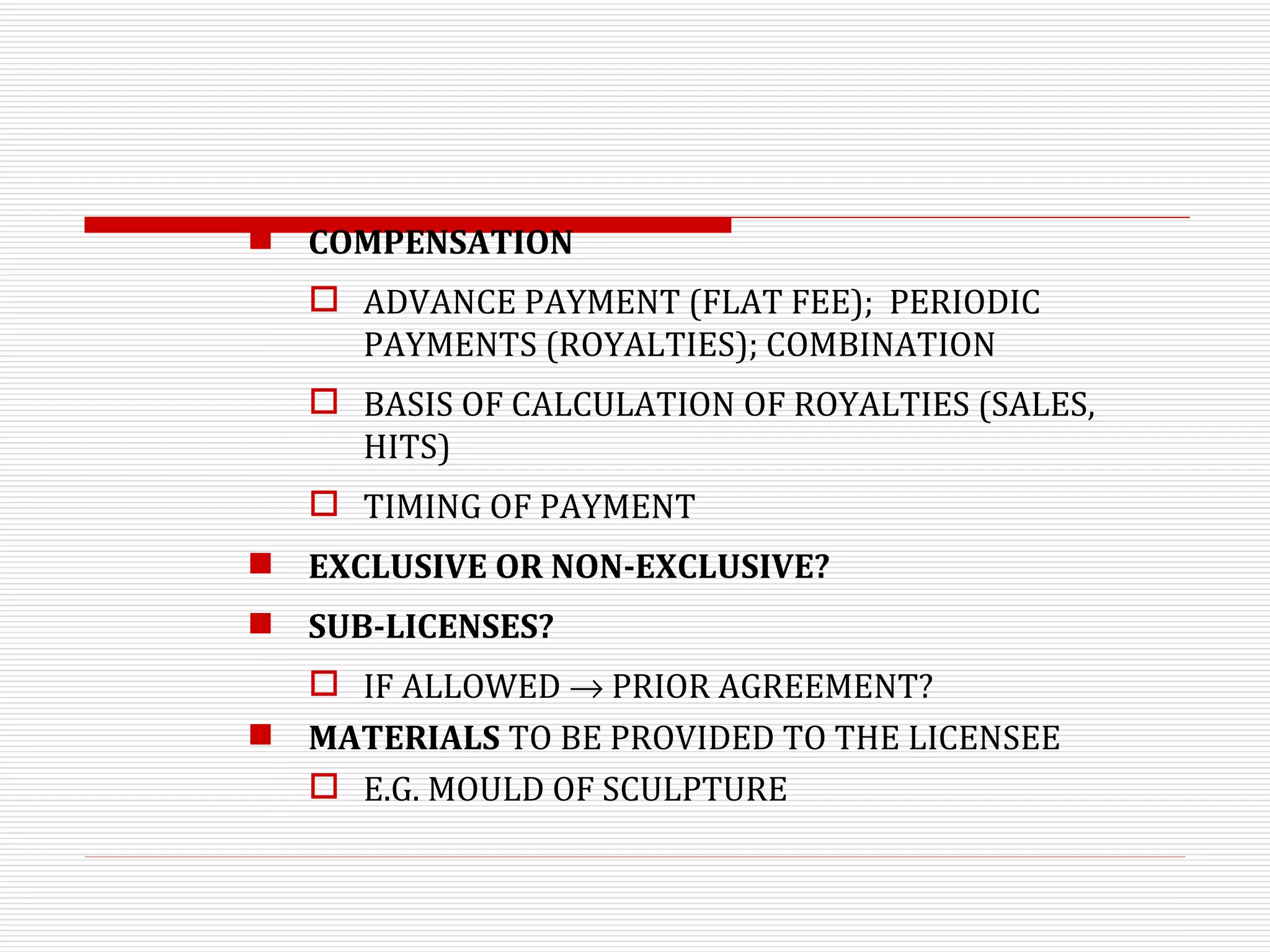
COMPENSATION ADVANCE PAYMENT (FLAT FEE);  PERIODIC PAYMENTS (ROYALTIES); COMBINATION BASIS OF CALCULATION OF ROYALTIES (SALES, HITS) TIMING OF PAYMENT EXCLUSIVE OR NON-EXCLUSIVE? SUB-LICENSES? IF ALLOWED    PRIOR AGREEMENT? MATERIALS  TO BE PROVIDED TO THE LICENSEE E.G. MOULD OF SCULPTURE
REQUIREMENTS AS TO THE USE OF THE WORK REQUIREMENTS AS TO THE COMMERCIALIZATION OF THE PRODUCTS  REQUIREMENTS AS TO PUBLICITY AND PROMOTION
THIRD PARTY INFRINGEMENTS INDEMNIFICATION CLAUSE GENERAL CLAUSES
Types of LICENSING Technology transfer Trademark licensing Copyright licensing Franchising
TECHNOLOGY LICENSING May involve number of patents May include different IP rights
CASE STUDY Croatian Pharmaceutical Co,PLIVA Antibiotic “AZYTHROMYCIN” PLIVA lacked the manufacturing capacity, capital to commercialise and expertise to commercialise  the product. PLIVA licensed the patent.
TRADEMARK LICENSING Trademarks Act 1999 Permitted use Registered user Principle of Quality Control Both registered and unregistered user should manufacture the goods only in accordance  with specifications, formulae and standards of quality .
FRANCHISING FRANCHISING IS A CONTRACTUAL ARRANGEMENT UNDER WHICH AN ENTREPRENEUR (FRANCHISOR), WHO HAS DEVELOPED A  SYSTEM FOR CONDUCTING A PARTICULAR BUSINESS , ALLOWS OTHER ENTREPRENEURS (FRANCHISEES) TO USE THAT SYSTEM IN ACCORDANCE WITH  PRESCRIPTIONS  OF THE FRANCHISOR, IN EXCHANGE FOR A  FEE .
FRANCHISOR : lends his trademark or trade name and a business system;  FRANCHISEE : pays a royalty and often an initial fee for the right to do business under the franchisor's name and system.  IP is central to franchising trademarks trade names industrials designs trade secrets
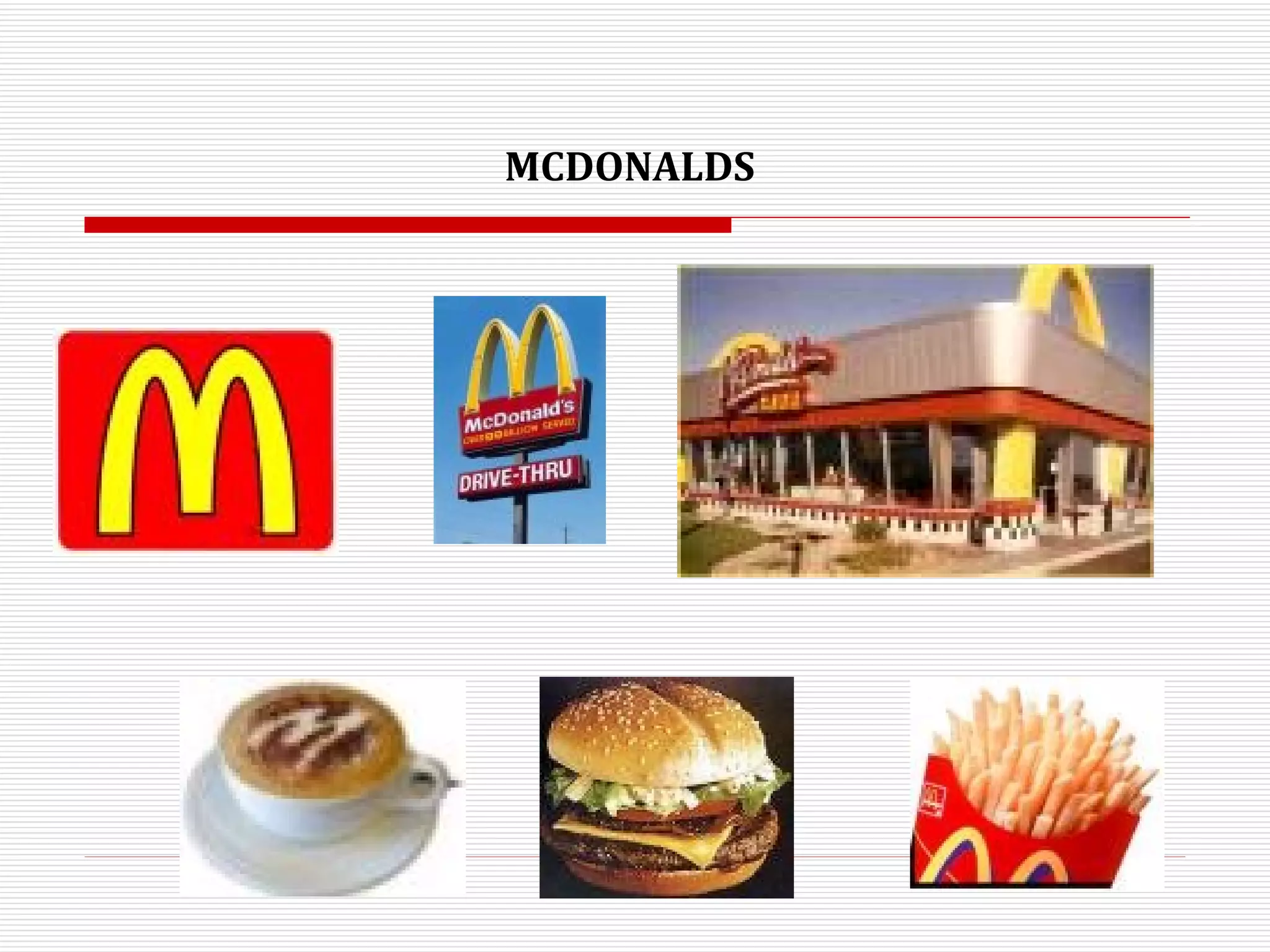
MCDONALDS
70% of McDonald's worldwide restaurant businesses are owned and operated by independent businessmen and women, the franchisees Right to use the trademarks, signs, equipment, formulas and specifications for menu items, methods of operation, inventory control, marketing, etc.
9 months full-time  training Uniformity : standard branding, menus, design layouts, administration systems Passion for enhancing and protecting the McDonald’s  brand Quality control  tests
THANK YOU FOR YOUR ATTENTION! QUESTIONS?

Ip licensing

  • 1.
    IP LICENSING Mrs.AnnammaSamuel HEAD-Research ALTACIT GLOBAL
  • 2.
    WHAT IS LICENSINGLICENSE is an agreement between the owner of the IP right (LICENSOR) and another person (LICENSEE) in which the licensor permits the licensee to use the IP right in the manner and for the time period specified in the agreement. ONLY RIGHT TO USE (NOT OWN) THE RIGHTS ONLY IN A SPECIFIC MANNER
  • 3.
    CATEGORIES OF LICENSINGEXCLUSIVE SOLE NON-EXCLUSIVE
  • 4.
    WHY SHOULD CONSIDERLICENSING INCOME NEW MARKETS MARKETING TOOL
  • 5.
    EFFECTIVE IP LICENSELicensor must have ownership of relevant IP IP must be protected by Law License must specify what rights with respect to IP it grants to the licensee Payment/other assets given in exchange of license.
  • 6.
    HOW TO DEVELOPA PROPER LICENSING STRATEGY PROTECT YOUR IP RIGHTS DEPOSIT AND REGISTER, IF POSSIBLE KEEP CONFIDENTIAL INFORMATION SECRET PLACE NOTICE ON THE WORKS
  • 7.
    FIND RIGHT LICENSEELOOK FOR POTENTIAL USERS INTERNET, LICENSING ORGANIZATIONS, SPECIALIZED MERCHANDISINGCOMPANIES TRUSTWORTHY AND DILIGENT PARTNER
  • 8.
    ASSESS FOREIGN MARKETSTHE LICENSEE WILL BE RESPONSIBLE FOR LOCAL MANUFACTURE, LOCALIZATION, LOGISTICS AND DISTRIBUTION PROTECT YOUR IP IN THE RELEVANT MARKETS IP RIGHTS ARE TERRITORIAL INTERNATIONAL TREATIES DIFFERENCES IN NATIONAL IP LAWS
  • 9.
    PRESERVE CONTROL OVERTHE COMMERCIAL USE OF YOUR WORKS LICENSEE MUST PLACE IP NOTICE REQUIRE SAMPLES OF THE PRODUCTS QUALITY ARTWORK DESIGN TRADEMARK
  • 10.
    LIMIT, AS MUCHAS POSSIBLE, THE SCOPE OF THE LICENSE NO ASSIGNMENT OF RIGHTS ONLY NON-EXCLUSIVE LICENSES LIMITED IN THEIR SCOPE TO THE SPECIFIC NEEDS AND INTERESTS OF THE LICENSEE (INTENDED BUSINESS GOAL)
  • 11.
    DRAFT A SOLIDLICENSE AGREEMENT CONTENT IN WRITTEN + SIGNED IN MANY COUNTRIES: MUST BE REGISTERED WITH THE NATIONAL IP OFFICE IN ORDER TO BE OPPOSABLE TO THIRD PARTIES
  • 12.
  • 13.
    LICENSING CONTRACT Parties: Who will be bound by it Subject matter : What exactly is being licensed Goods : Types of products/services the IP right will be used for Targeted Use : manufacture and/or distribution of the goods sale of those goods use on corresponding packaging and advertising materials use for advertising campaign, Internet
  • 14.
    TERRITORY TERM CONDITIONS AFTER TERMINATION
  • 15.
    COMPENSATION ADVANCE PAYMENT(FLAT FEE); PERIODIC PAYMENTS (ROYALTIES); COMBINATION BASIS OF CALCULATION OF ROYALTIES (SALES, HITS) TIMING OF PAYMENT EXCLUSIVE OR NON-EXCLUSIVE? SUB-LICENSES? IF ALLOWED  PRIOR AGREEMENT? MATERIALS TO BE PROVIDED TO THE LICENSEE E.G. MOULD OF SCULPTURE
  • 16.
    REQUIREMENTS AS TOTHE USE OF THE WORK REQUIREMENTS AS TO THE COMMERCIALIZATION OF THE PRODUCTS REQUIREMENTS AS TO PUBLICITY AND PROMOTION
  • 17.
    THIRD PARTY INFRINGEMENTSINDEMNIFICATION CLAUSE GENERAL CLAUSES
  • 18.
    Types of LICENSINGTechnology transfer Trademark licensing Copyright licensing Franchising
  • 19.
    TECHNOLOGY LICENSING Mayinvolve number of patents May include different IP rights
  • 20.
    CASE STUDY CroatianPharmaceutical Co,PLIVA Antibiotic “AZYTHROMYCIN” PLIVA lacked the manufacturing capacity, capital to commercialise and expertise to commercialise the product. PLIVA licensed the patent.
  • 21.
    TRADEMARK LICENSING TrademarksAct 1999 Permitted use Registered user Principle of Quality Control Both registered and unregistered user should manufacture the goods only in accordance with specifications, formulae and standards of quality .
  • 22.
    FRANCHISING FRANCHISING ISA CONTRACTUAL ARRANGEMENT UNDER WHICH AN ENTREPRENEUR (FRANCHISOR), WHO HAS DEVELOPED A SYSTEM FOR CONDUCTING A PARTICULAR BUSINESS , ALLOWS OTHER ENTREPRENEURS (FRANCHISEES) TO USE THAT SYSTEM IN ACCORDANCE WITH PRESCRIPTIONS OF THE FRANCHISOR, IN EXCHANGE FOR A FEE .
  • 23.
    FRANCHISOR : lendshis trademark or trade name and a business system; FRANCHISEE : pays a royalty and often an initial fee for the right to do business under the franchisor's name and system. IP is central to franchising trademarks trade names industrials designs trade secrets
  • 24.
  • 25.
    70% of McDonald'sworldwide restaurant businesses are owned and operated by independent businessmen and women, the franchisees Right to use the trademarks, signs, equipment, formulas and specifications for menu items, methods of operation, inventory control, marketing, etc.
  • 26.
    9 months full-time training Uniformity : standard branding, menus, design layouts, administration systems Passion for enhancing and protecting the McDonald’s brand Quality control tests
  • 27.
    THANK YOU FORYOUR ATTENTION! QUESTIONS?