IP Licensing
IP Licensing
Module-IV
Licensing
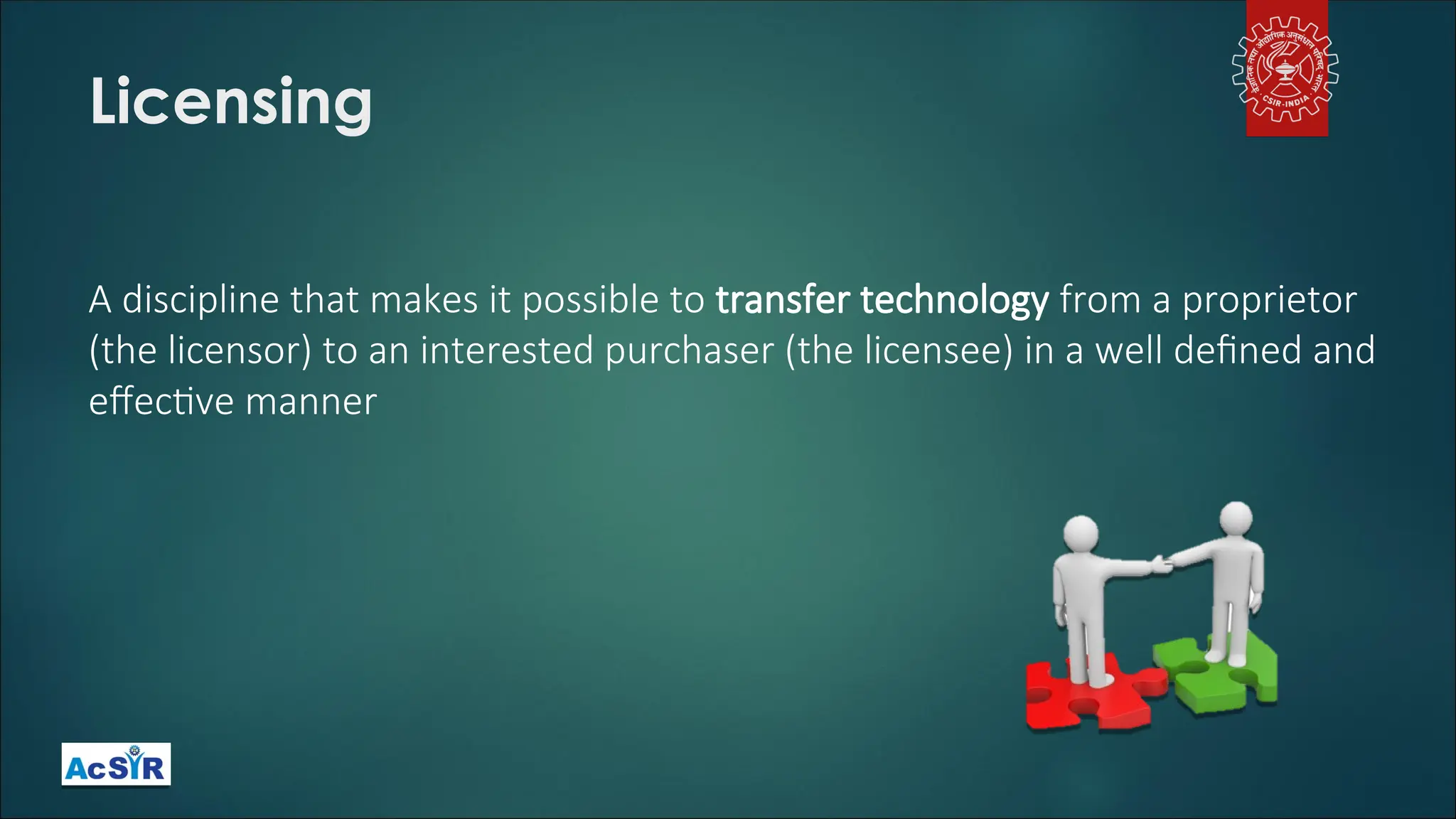
A discipline that makes it possible to transfer technology from a proprietor
(the licensor) to an interested purchaser (the licensee) in a well defined and
effective manner
Intellectual Property Rights
 Patent
 Trade Secret
 Know-how
 Show-how
 Trademarks
 Copyright
Emerging Trends
 Technology development time decreasing
 Technology development costs increasing
 Growing importance of alliances
 Regulatory environment becoming more stringent
Global Issues
 Knowledge moves quickly around the world
 Increase in industrial/academic Linkage
 Trade agreements
 New trading blocks
 Patent harmonization
Why Interest in IP
 Value in intangible assets
 IP protection adds value and increases lifetime of that value
 Enhance the Image of the company
 Communication between lab and marketplace
 Speeds movement of technology to products
How IP Moves to the Marketplace
 Idea >> concept >> reduction to practice >> prototype >> scale-up
>> productization
 Direct application by IP owner
 Sale of IP to another entity who then productizes
 License of IP to licensee(s)
 Public disclosure of IP
Rights under a License
 To make
 To use
 To disclose to others
 by publication
 in a marketed product
 in a service manual
 as a sub-license to a third party
 to lease
 To sell
Types of Licenses
 Exclusive - there can only be one licensee; the licensor has no
rights to exploit the technology/product
 Sole - exclusive but for the licensor; i.e., the licensor has rights to
exploit the technology/product
- Spin-off
 Non-exclusive - there is no limit to the number of potential
licensees
Types of Licenses
 Irrevocable/Revocable for cause
 Territory: World-wide/Limited to named geographic regions
 Field of use: Market-specific
 Royalty-bearing/Royalty-free
Why License?
Why License?
The Licensor’s reasons might include:
 to make money
 to help sell products, services, equipment
 to obtain technology via grantback
 to secure a market
 to settle a patent dispute
 cross-licensing of other, existing technology
 rights to future technology
Why License?
 to acquire marketing strength, capital and market assets or an interest in
them.

 to reduce capital requirements for reaching a market
 to adapt a product to a local market
 to reach fields of use outside the licensor’s normal purview
 to avoid waste of by-product technology
 to profit from residual value in an old technology
 to fulfill local laws
 to avoid antitrust/anti-competition or trade regulation problems
Why License?
The Licensee’s reasons might include:
 to obtain rights to technology
 to supplement the licensee’s R&D
 to obtain continuing access to technical help
 to benefit from the good reputation of the licensor by gaining ability to use its
trademark
 to obtain quick entry without cost and technology risks
 to obtain access to the licensor’s facilities
Why Foreign License?
Advantages/practicality of foreign licensing over direct sales or export might include:
 tariff regulations
 taxes
 potential nationalization
 political instability
 capital to start foreign production
 foreign patent laws
 availability of materials and staff
 quick return to licensor
 access to/acceptance with foreign markets
Why NOT to license
 To avoid risk of establishing a future competitor
 To make potentially bigger profits from direct sales… at higher risk and capital
cost
 To retain direct control over product liability exposure
 To retain direct control over product quality
 To retain direct control over know-how dissemination
Agreements - Why They are
Needed
 To clarify a win-win relationship
 To clarify intentions
 To provide a written statement
 To state what each party can and cannot do
 To describe tasks, budget, deliverables, responsibilities
 To protect against changes in involved personnel
 To refer to when there are misunderstandings and disagreements
Module-IV IP licensing document nml jamshdpur.ppt

Module-IV IP licensing document nml jamshdpur.ppt

  • 1.
  • 2.
    Licensing A discipline thatmakes it possible to transfer technology from a proprietor (the licensor) to an interested purchaser (the licensee) in a well defined and effective manner
  • 3.
    Intellectual Property Rights IntellectualProperty Rights  Patent  Trade Secret  Know-how  Show-how  Trademarks  Copyright
  • 4.
    Emerging Trends  Technologydevelopment time decreasing  Technology development costs increasing  Growing importance of alliances  Regulatory environment becoming more stringent
  • 5.
    Global Issues  Knowledgemoves quickly around the world  Increase in industrial/academic Linkage  Trade agreements  New trading blocks  Patent harmonization
  • 6.
    Why Interest inIP  Value in intangible assets  IP protection adds value and increases lifetime of that value  Enhance the Image of the company  Communication between lab and marketplace  Speeds movement of technology to products
  • 7.
    How IP Movesto the Marketplace  Idea >> concept >> reduction to practice >> prototype >> scale-up >> productization  Direct application by IP owner  Sale of IP to another entity who then productizes  License of IP to licensee(s)  Public disclosure of IP
  • 8.
    Rights under aLicense  To make  To use  To disclose to others  by publication  in a marketed product  in a service manual  as a sub-license to a third party  to lease  To sell
  • 9.
    Types of Licenses Exclusive - there can only be one licensee; the licensor has no rights to exploit the technology/product  Sole - exclusive but for the licensor; i.e., the licensor has rights to exploit the technology/product - Spin-off  Non-exclusive - there is no limit to the number of potential licensees
  • 10.
    Types of Licenses Irrevocable/Revocable for cause  Territory: World-wide/Limited to named geographic regions  Field of use: Market-specific  Royalty-bearing/Royalty-free
  • 11.
    Why License? Why License? TheLicensor’s reasons might include:  to make money  to help sell products, services, equipment  to obtain technology via grantback  to secure a market  to settle a patent dispute  cross-licensing of other, existing technology  rights to future technology
  • 12.
    Why License?  toacquire marketing strength, capital and market assets or an interest in them.  to reduce capital requirements for reaching a market  to adapt a product to a local market  to reach fields of use outside the licensor’s normal purview  to avoid waste of by-product technology  to profit from residual value in an old technology  to fulfill local laws  to avoid antitrust/anti-competition or trade regulation problems
  • 13.
    Why License? The Licensee’sreasons might include:  to obtain rights to technology  to supplement the licensee’s R&D  to obtain continuing access to technical help  to benefit from the good reputation of the licensor by gaining ability to use its trademark  to obtain quick entry without cost and technology risks  to obtain access to the licensor’s facilities
  • 14.
    Why Foreign License? Advantages/practicalityof foreign licensing over direct sales or export might include:  tariff regulations  taxes  potential nationalization  political instability  capital to start foreign production  foreign patent laws  availability of materials and staff  quick return to licensor  access to/acceptance with foreign markets
  • 15.
    Why NOT tolicense  To avoid risk of establishing a future competitor  To make potentially bigger profits from direct sales… at higher risk and capital cost  To retain direct control over product liability exposure  To retain direct control over product quality  To retain direct control over know-how dissemination
  • 16.
    Agreements - WhyThey are Needed  To clarify a win-win relationship  To clarify intentions  To provide a written statement  To state what each party can and cannot do  To describe tasks, budget, deliverables, responsibilities  To protect against changes in involved personnel  To refer to when there are misunderstandings and disagreements