ERIKA PERDOMO
 STEFANY ENCISO
NATALY CABRERA
LICENSING
                    What is?

 Is based on a contractual relationship between the
 licensor an the licensee.

 Licensing can be a very effective way for the
 internationalization of the activities of small and
 medium enterprises.
Characteristics
  A license may be granted by a party (licensor) to
  another party (licensee) as an element of an agreement
  between those parties
1. Term: many licenses are valid for a particular length
   of time. This protects the licensor should the value of
   the license increase, or market conditions change. It
   also preserves enforceability by ensuring that no
   license extends beyond the term of the agreement.
2. Territory: a license may stipulate what territory the
    rights pertain to.
3. A licensor may grant permission to a licensee to
    distribute products under a trademark.
4. The assignment of a license often depends on
    specific contractual terms.
5. A licensor may grant a permission to a licensee to
    copy and distribute copyrighted works such as "art"
TYPES OF LICENSING
 LICENSING AGREEMENTS: The arrengaments
  between the licensor and the licensee are typically
  laid out in a legal document known as a Licensing
  Agreement.

Types of Licensing Agreement:
 Concerning an existing technology/product.
 The making of provisions for technology sharing
  as it evolves during the lifetime of the agreement.
 LICENSING OF PATENTS: Involves granting another
 entity the right to use an original process or type of
 equipment.
EXAMPLES
 A greeting card company can obtain a license to use
 image Hannah Montana or The Simpsons, characters
 on greetin cards.
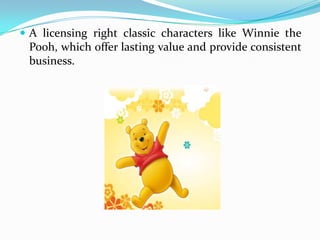
 A licensing right classic characters like Winnie the
 Pooh, which offer lasting value and provide consistent
 business.
 Board games from popular companies such as Hasbro
 are often licensed from their creators.
Advantages
• Appealing to small companies that lack resources
due to low risk and capital commitment, while
maintaining improved delivery and service levels in
local markets.

• Fast market access and more importantly the ability
to circumvent barriers to foreign entry that have
been imposed through quotas, high tariffs, or
limited licensing to local firms.
• Adequate marketing information and control through
access to low-cost information about local market
performance and competitive reactions, as soon as the
licensed product enters the local market.

• Ability to take advantage of the possession of a
patented product that is subject to rapid technological
changes while it is otherwise unprofitable to
simultaneously exploit along multiple markets.
Disadvantages
• Potential creation of future competitors, through
disclosure of accumulated knowledge and experience
when the license contract ceases.


• Passive interaction with local market, leading to
limited market learning.
• Limited flexibility to apply sophisticated technology
and marketing advances at a later stage.


• Limited profit potential in case the product is more
successful than initially thought.


• Policing the implementation of the licensing
agreement is either inefficient or very expensive.
LICENSING

LICENSING

  • 1.
    ERIKA PERDOMO STEFANYENCISO NATALY CABRERA
  • 2.
    LICENSING What is?  Is based on a contractual relationship between the licensor an the licensee. Licensing can be a very effective way for the internationalization of the activities of small and medium enterprises.
  • 3.
    Characteristics Alicense may be granted by a party (licensor) to another party (licensee) as an element of an agreement between those parties 1. Term: many licenses are valid for a particular length of time. This protects the licensor should the value of the license increase, or market conditions change. It also preserves enforceability by ensuring that no license extends beyond the term of the agreement.
  • 4.
    2. Territory: alicense may stipulate what territory the rights pertain to. 3. A licensor may grant permission to a licensee to distribute products under a trademark. 4. The assignment of a license often depends on specific contractual terms. 5. A licensor may grant a permission to a licensee to copy and distribute copyrighted works such as "art"
  • 5.
    TYPES OF LICENSING LICENSING AGREEMENTS: The arrengaments between the licensor and the licensee are typically laid out in a legal document known as a Licensing Agreement. Types of Licensing Agreement:  Concerning an existing technology/product.  The making of provisions for technology sharing as it evolves during the lifetime of the agreement.
  • 6.
     LICENSING OFPATENTS: Involves granting another entity the right to use an original process or type of equipment.
  • 7.
    EXAMPLES  A greetingcard company can obtain a license to use image Hannah Montana or The Simpsons, characters on greetin cards.
  • 8.
     A licensingright classic characters like Winnie the Pooh, which offer lasting value and provide consistent business.
  • 9.
     Board gamesfrom popular companies such as Hasbro are often licensed from their creators.
  • 10.
    Advantages • Appealing tosmall companies that lack resources due to low risk and capital commitment, while maintaining improved delivery and service levels in local markets. • Fast market access and more importantly the ability to circumvent barriers to foreign entry that have been imposed through quotas, high tariffs, or limited licensing to local firms.
  • 11.
    • Adequate marketinginformation and control through access to low-cost information about local market performance and competitive reactions, as soon as the licensed product enters the local market. • Ability to take advantage of the possession of a patented product that is subject to rapid technological changes while it is otherwise unprofitable to simultaneously exploit along multiple markets.
  • 12.
    Disadvantages • Potential creationof future competitors, through disclosure of accumulated knowledge and experience when the license contract ceases. • Passive interaction with local market, leading to limited market learning.
  • 13.
    • Limited flexibilityto apply sophisticated technology and marketing advances at a later stage. • Limited profit potential in case the product is more successful than initially thought. • Policing the implementation of the licensing agreement is either inefficient or very expensive.