Downloaded 15 times


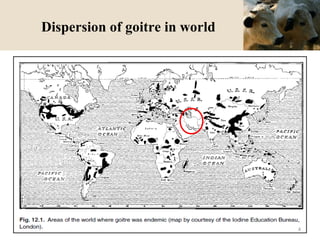
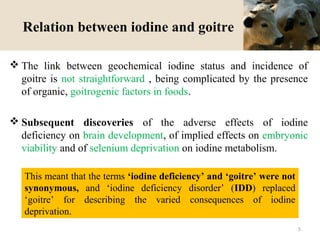
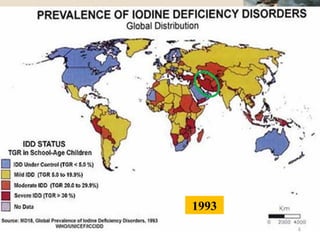
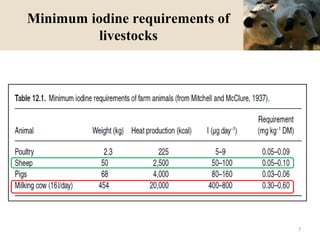
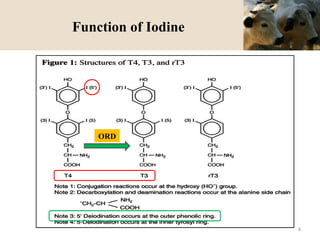
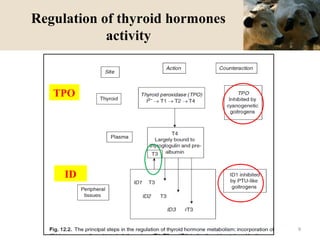
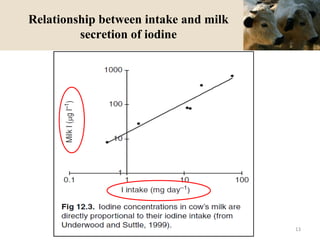
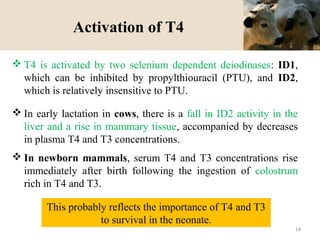
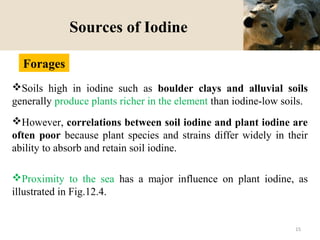
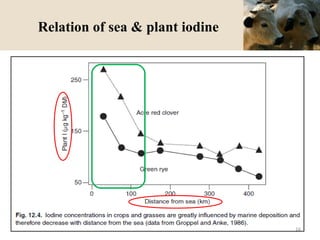
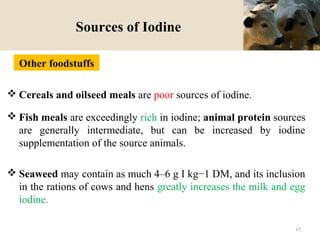
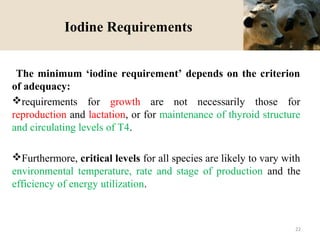
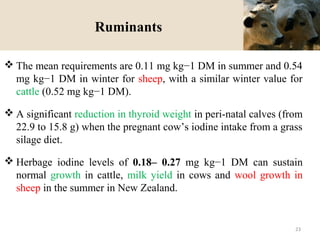
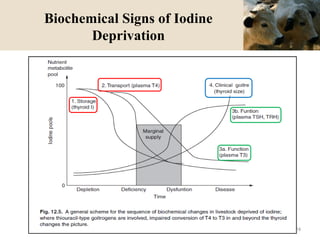
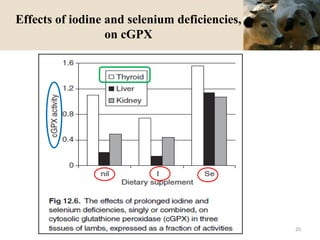
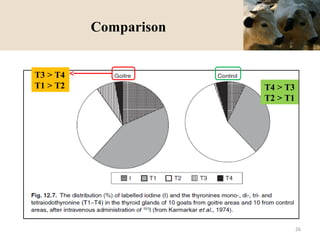
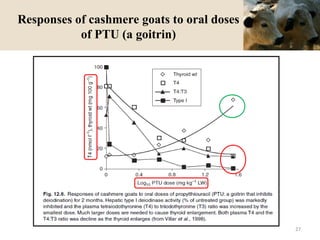
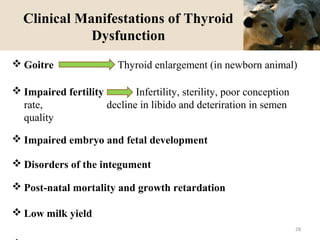
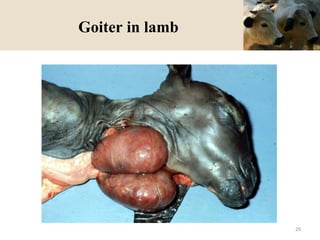
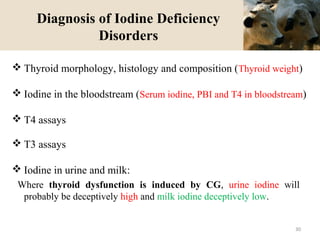
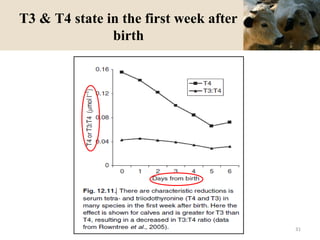
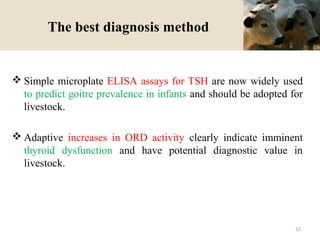
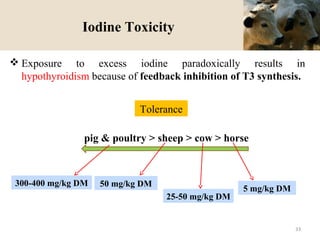


1. Iodine plays an essential role in ruminant nutrition as it is required for the production of thyroid hormones which regulate growth, metabolism and reproduction. 2. Iodine deficiency can cause goiter and other iodine deficiency disorders (IDDs) through insufficient production of thyroid hormones. Diagnosis of IDDs involves measuring iodine levels in blood, urine and milk as well as examining thyroid morphology and hormone levels. 3. Ruminants obtain iodine from plants, soil, water and feed sources. Requirements vary depending on factors like climate and production stage but average 0.11 mg/kg DM in summer and 0.54 mg/kg DM in winter for sheep.


![Polymer [ बहुलक ] Chemistry Notes PDF - Irfanullah Mehar - JJ Sir Chemistry.pdf](https://cdn.slidesharecdn.com/ss_thumbnails/polymerchemistrynotespdf-irfanullahmehar-jjsirchemistry-260210172118-3f9b37f7-thumbnail.jpg?width=640&height=640&fit=bounds)


