DV1000.2

Investor Discipline

I.

Humans Are Not Wired for Disciplined Investing

II.

Many Investors Follow Their Emotions

III.

Reacting Can Hurt Performance

IV.

Markets Have Rewarded Discipline

V.

Focus on What You Can Control
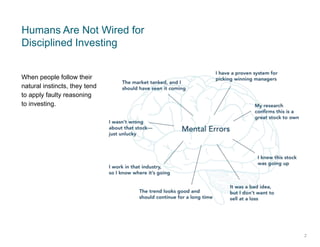
Humans Are Not Wired for
Disciplined Investing

When people follow their
natural instincts, they tend
to apply faulty reasoning
to investing.

2
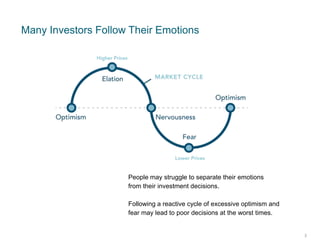
Many Investors Follow Their Emotions

People may struggle to separate their emotions
from their investment decisions.
Following a reactive cycle of excessive optimism and
fear may lead to poor decisions at the worst times.

3
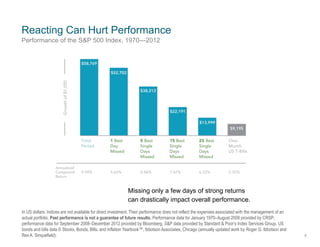
Reacting Can Hurt Performance
Performance of the S&P 500 Index, 1970---2012

Missing only a few days of strong returns
can drastically impact overall performance.
In US dollars. Indices are not available for direct investment. Their performance does not reflect the expenses associated with the management of an
actual portfolio. Past performance is not a guarantee of future results. Performance data for January 1970–August 2008 provided by CRSP;
performance data for September 2008–December 2012 provided by Bloomberg. S&P data provided by Standard & Poor’s Index Services Group. US
bonds and bills data © Stocks, Bonds, Bills, and Inflation Yearbook™, Ibbotson Associates, Chicago (annually updated work by Roger G. Ibbotson and
Rex A. Sinquefield).

4
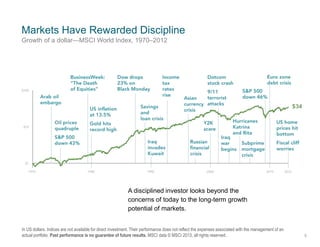
Markets Have Rewarded Discipline
Growth of a dollar—MSCI World Index, 1970–2012

A disciplined investor looks beyond the
concerns of today to the long-term growth
potential of markets.
In US dollars. Indices are not available for direct investment. Their performance does not reflect the expenses associated with the management of an
actual portfolio. Past performance is no guarantee of future results. MSCI data © MSCI 2013, all rights reserved.

5
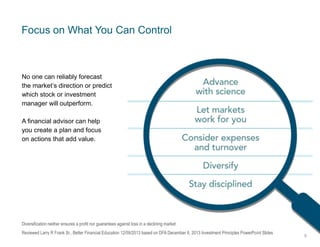
Focus on What You Can Control

No one can reliably forecast
the market’s direction or predict
which stock or investment
manager will outperform.
A financial advisor can help
you create a plan and focus
on actions that add value.

Diversification neither ensures a profit nor guarantees against loss in a declining market .
Reviewed Larry R Frank Sr., Better Financial Education 12/09/2013 based on DFA December 6, 2013 Investment Principles PowerPoint Slides

6

Investor discipline

  • 1.
    DV1000.2 Investor Discipline I. Humans AreNot Wired for Disciplined Investing II. Many Investors Follow Their Emotions III. Reacting Can Hurt Performance IV. Markets Have Rewarded Discipline V. Focus on What You Can Control
  • 2.
    Humans Are NotWired for Disciplined Investing When people follow their natural instincts, they tend to apply faulty reasoning to investing. 2
  • 3.
    Many Investors FollowTheir Emotions People may struggle to separate their emotions from their investment decisions. Following a reactive cycle of excessive optimism and fear may lead to poor decisions at the worst times. 3
  • 4.
    Reacting Can HurtPerformance Performance of the S&P 500 Index, 1970---2012 Missing only a few days of strong returns can drastically impact overall performance. In US dollars. Indices are not available for direct investment. Their performance does not reflect the expenses associated with the management of an actual portfolio. Past performance is not a guarantee of future results. Performance data for January 1970–August 2008 provided by CRSP; performance data for September 2008–December 2012 provided by Bloomberg. S&P data provided by Standard & Poor’s Index Services Group. US bonds and bills data © Stocks, Bonds, Bills, and Inflation Yearbook™, Ibbotson Associates, Chicago (annually updated work by Roger G. Ibbotson and Rex A. Sinquefield). 4
  • 5.
    Markets Have RewardedDiscipline Growth of a dollar—MSCI World Index, 1970–2012 A disciplined investor looks beyond the concerns of today to the long-term growth potential of markets. In US dollars. Indices are not available for direct investment. Their performance does not reflect the expenses associated with the management of an actual portfolio. Past performance is no guarantee of future results. MSCI data © MSCI 2013, all rights reserved. 5
  • 6.
    Focus on WhatYou Can Control No one can reliably forecast the market’s direction or predict which stock or investment manager will outperform. A financial advisor can help you create a plan and focus on actions that add value. Diversification neither ensures a profit nor guarantees against loss in a declining market . Reviewed Larry R Frank Sr., Better Financial Education 12/09/2013 based on DFA December 6, 2013 Investment Principles PowerPoint Slides 6