Download to read offline
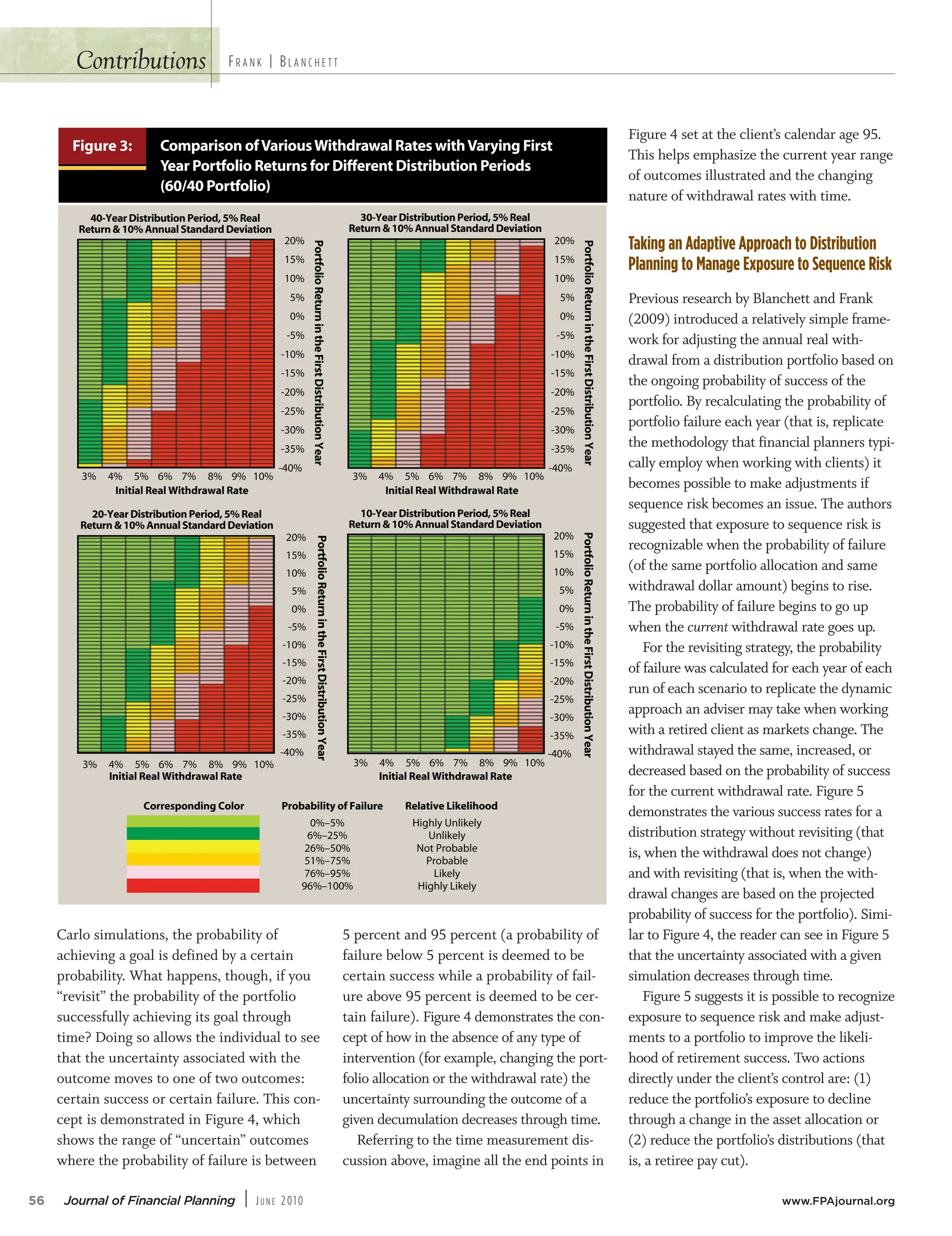
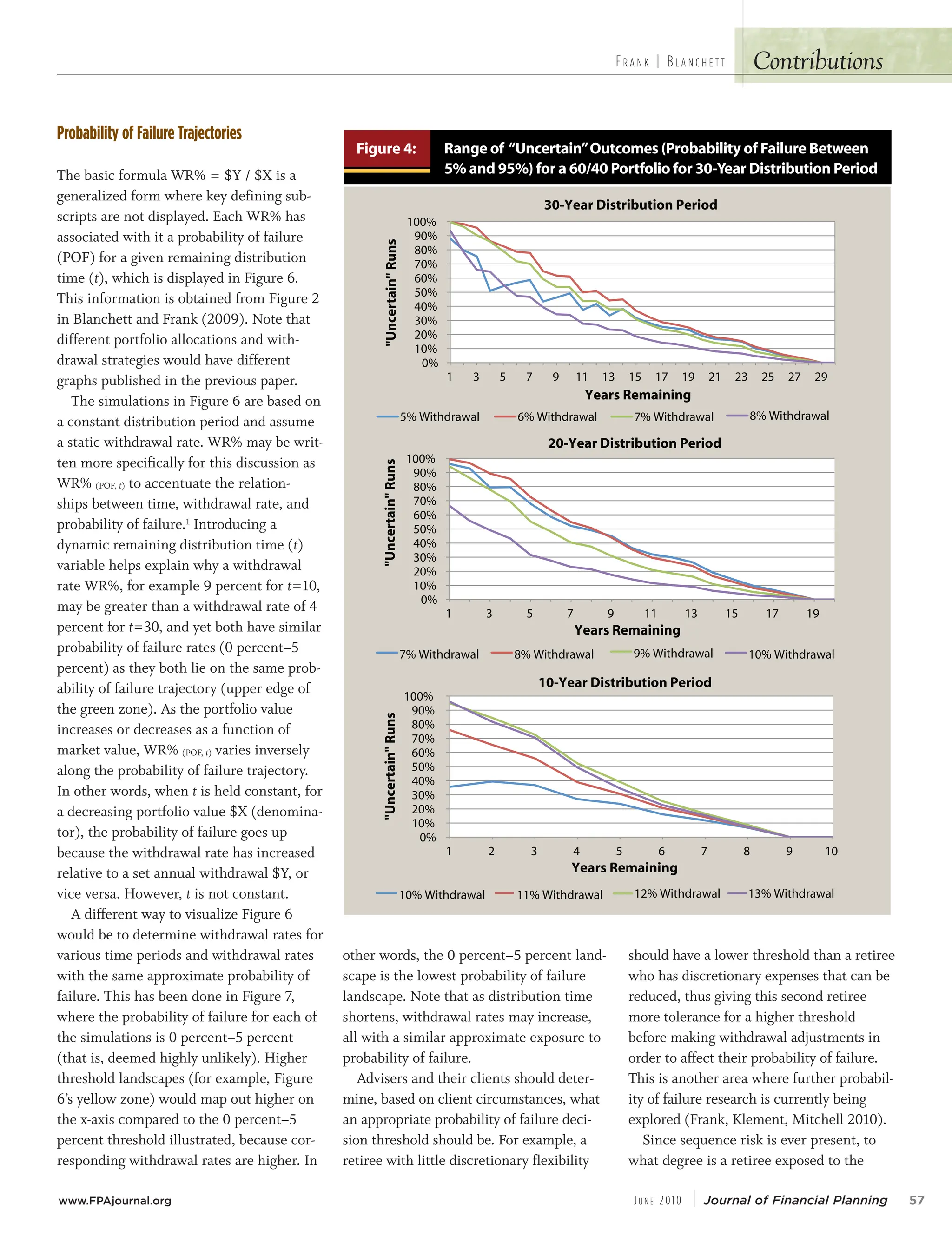
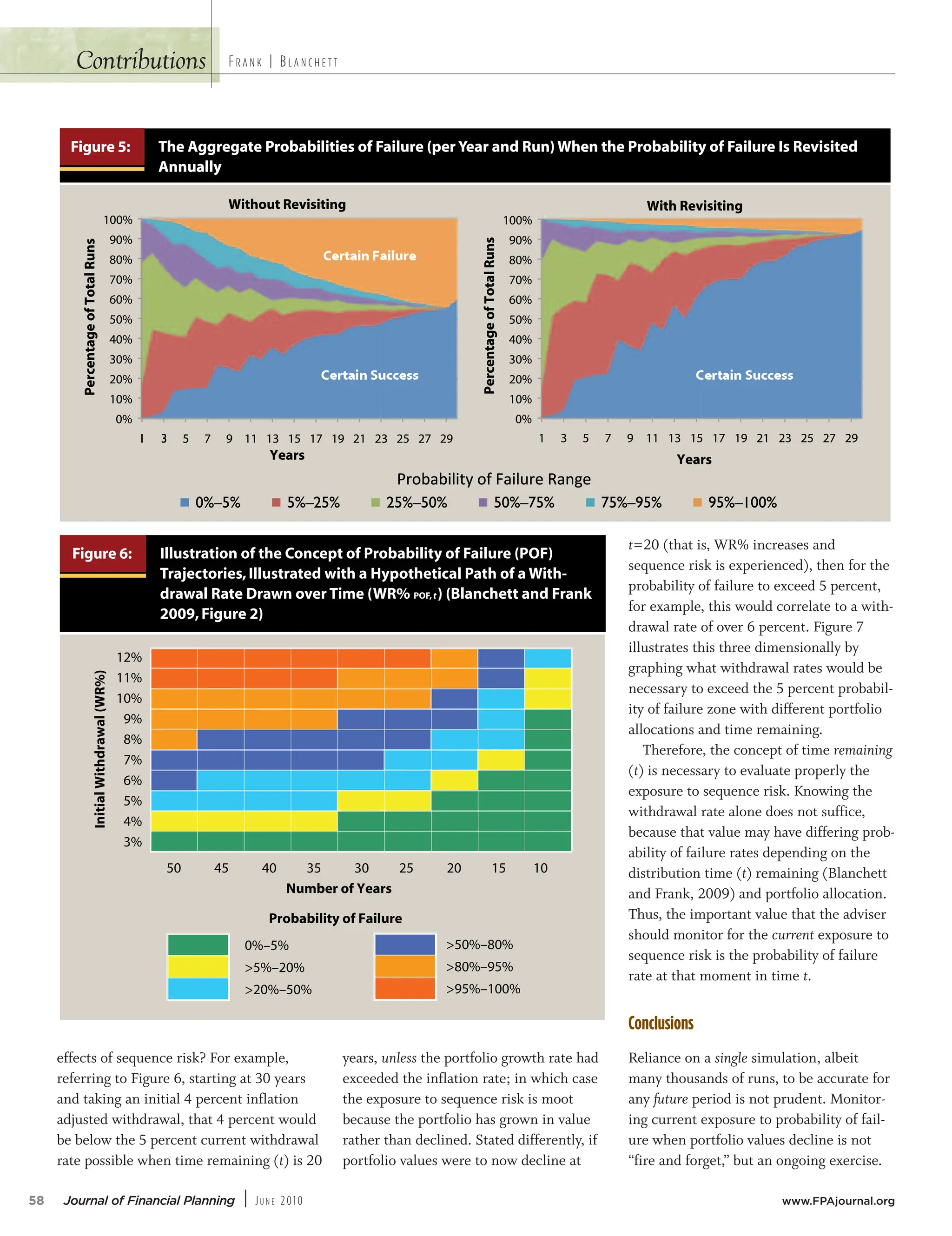

The Dynamic Implications of Sequence Risk on a Distribution Portfolio Executive Summary • While a distribution portfolio’s exposure to sequence risk changes over time, sequence risk never really goes away unless the withdrawal rate is constrained considerably. • A practical method for advisers to measure this exposure to sequence risk is through evaluation of the current probability of failure rate. • The fundamental withdrawal rate formula is portfolio value ($X) times a withdrawal rate (WR%) to equal the annual distribution amount ($Y). Therefore WR% = $Y / $X. Because sequence risk relates to the order of returns, especially negative returns, when the portfolio value ($X) decreases, the inverse relationship increases the withdrawal rate (WR%), which results in an increased probability of failure. • The distribution period should be measured primarily from a fixed target end date rather than from the date of retirement (that is, based on life expectancy). This establishes a continuously reducing period of remaining years that reflects the distribution period likely to be experienced by retirees. • This paper will discuss three methods advisers may use to evaluate the exposure of a portfolio to sequence risk: • Adjust WR% as market return trends suggest • Adjust portfolio allocation to mitigate exposure to negative market returns as market trends suggest • Start with a reduced WR% to reduce exposure to the impact of declining markets on the probability of failure • Reliance on a single simulation to be accurate for a lengthy distribution period is not prudent. Rather, the current likelihood of failure should be reviewed regularly to ensure the withdrawal is still prudent. Note: This is the third of ten research papers, in an evolving series, that have been published that sought to transition retirement income planning from a paradigm that developed in the 1990’s to a more science-based, statistical approach possible today with advances in both software and programming since then. Link to paper archive: The Dynamic Implications of Sequence Risk on a Distribution Portfolio https://www.financialplanningassociation.org/sites/default/files/2021-10/JUN10%20JFP%20Frank%20and%20Blanchett%20PDF.pdf


