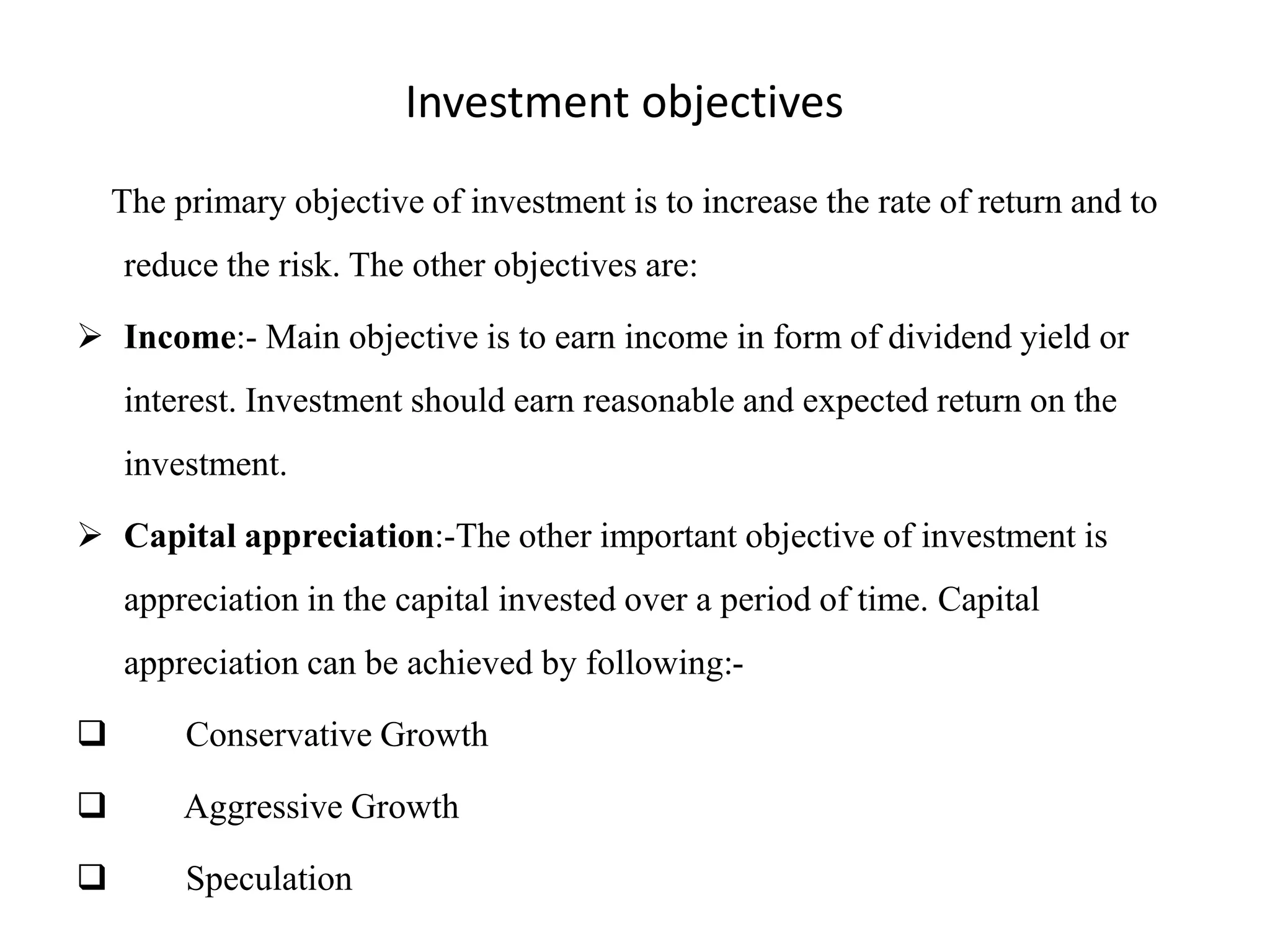
Investment objectives
The primary objective of investment is to increase the rate of return and to
reduce the risk. The other objectives are:
 Income:- Main objective is to earn income in form of dividend yield or
interest. Investment should earn reasonable and expected return on the
investment.
 Capital appreciation:-The other important objective of investment is
appreciation in the capital invested over a period of time. Capital
appreciation can be achieved by following:-
 Conservative Growth
 Aggressive Growth
 Speculation
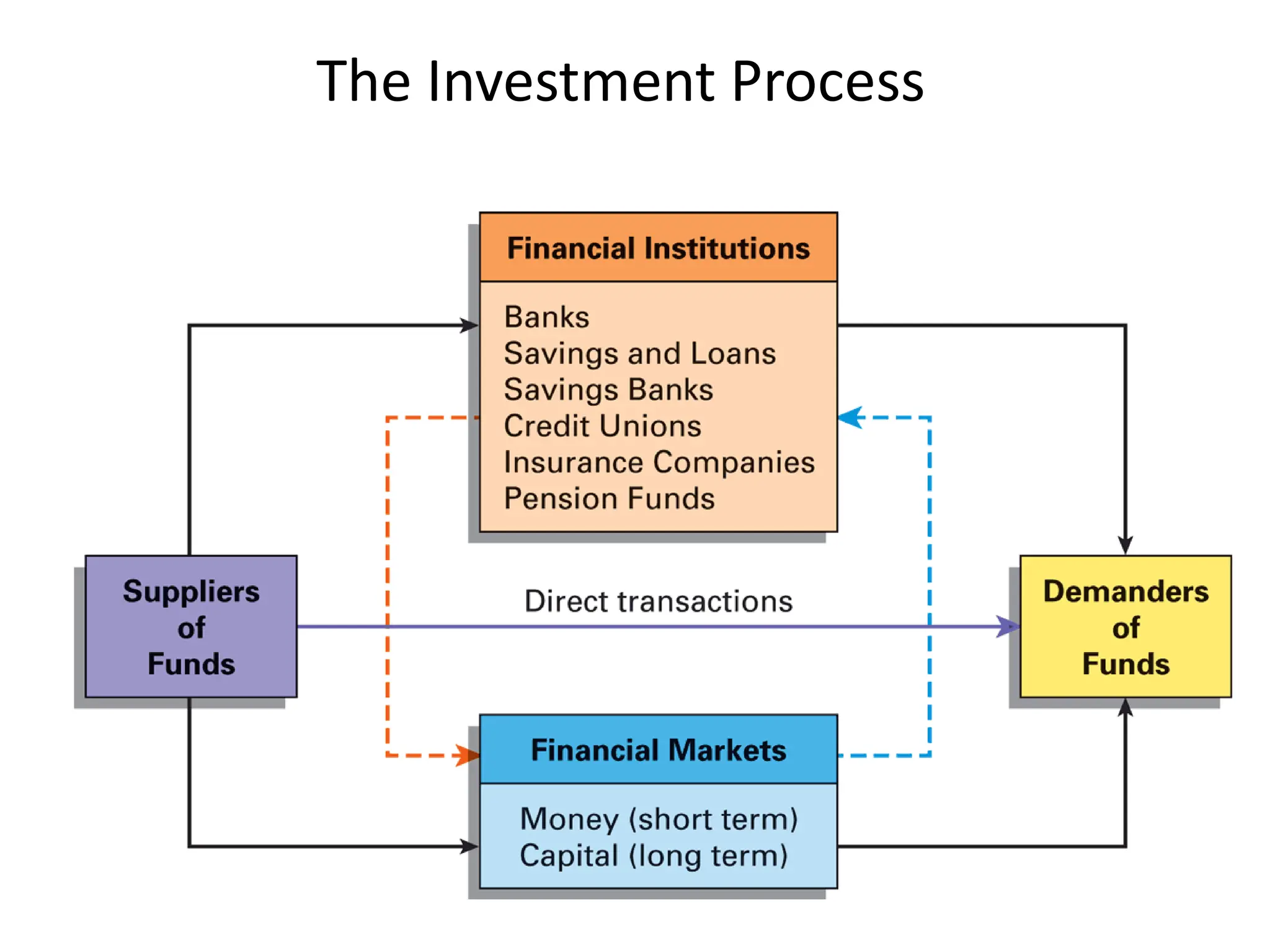
The Investment Process
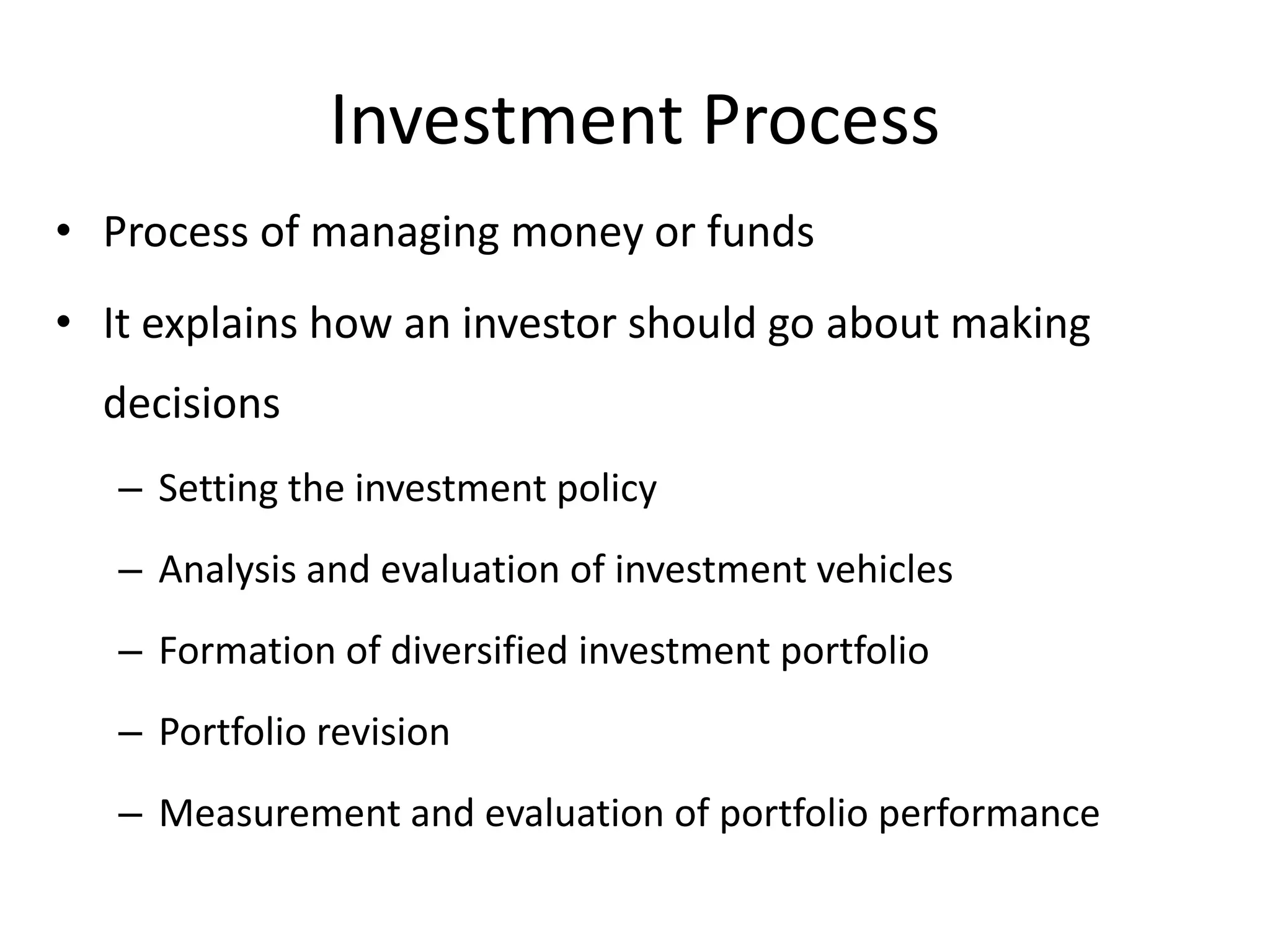
Investment Process
• Process of managing money or funds
• It explains how an investor should go about making
decisions
– Setting the investment policy
– Analysis and evaluation of investment vehicles
– Formation of diversified investment portfolio
– Portfolio revision
– Measurement and evaluation of portfolio performance
 Forms Of Return :- The returns expected from securities may be of two types :-
 Periodical Cash Receipts
 Capital Gain
 Safety and Security Of Funds:- Another important consideration in making investment
is that fund so invested should be safe and secure . The investment should be capable for
redemption as and when due.
 Liquidity:- Before making the investment, the investor should consider the degree of
liquidity require. Certain securities are capable of being sold in the readily available
market and some securities may not be so liquid.
 Tax considerations:- Before making the investment, investors should also take into
consideration the provisions of income tax, capital gain tax and wealth tax to minimize
his tax burden and avail all tax exemptions available to him.
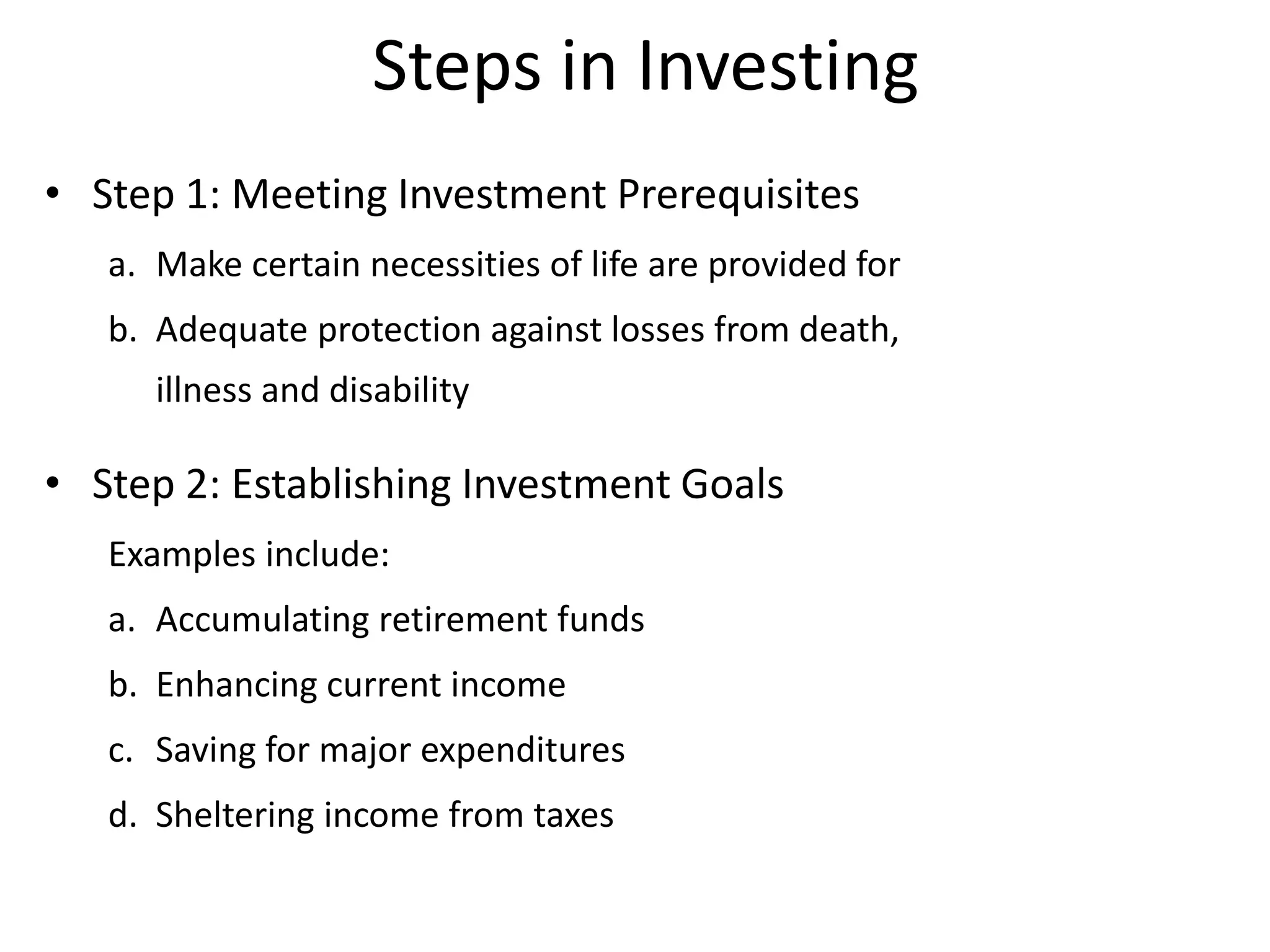
Steps in Investing
• Step 1: Meeting Investment Prerequisites
a. Make certain necessities of life are provided for
b. Adequate protection against losses from death,
illness and disability
• Step 2: Establishing Investment Goals
Examples include:
a. Accumulating retirement funds
b. Enhancing current income
c. Saving for major expenditures
d. Sheltering income from taxes
Steps in Investing (cont'd)
• Step 3: Adopting an Investment Plan
a. Develop a written investment plan
b. Specify target date and risk tolerance for each goal
• Step 4: Evaluating Investment Vehicles
a. Assess potential return and risk
b. Chapter 4 will cover risk in detail
• Step 5: Selecting Suitable Investments
a. Research and gather information on
specific investments
b. Make investment selections
Copyright © 2005 Pearson Addison-Wesley.
All rights reserved.
1-6
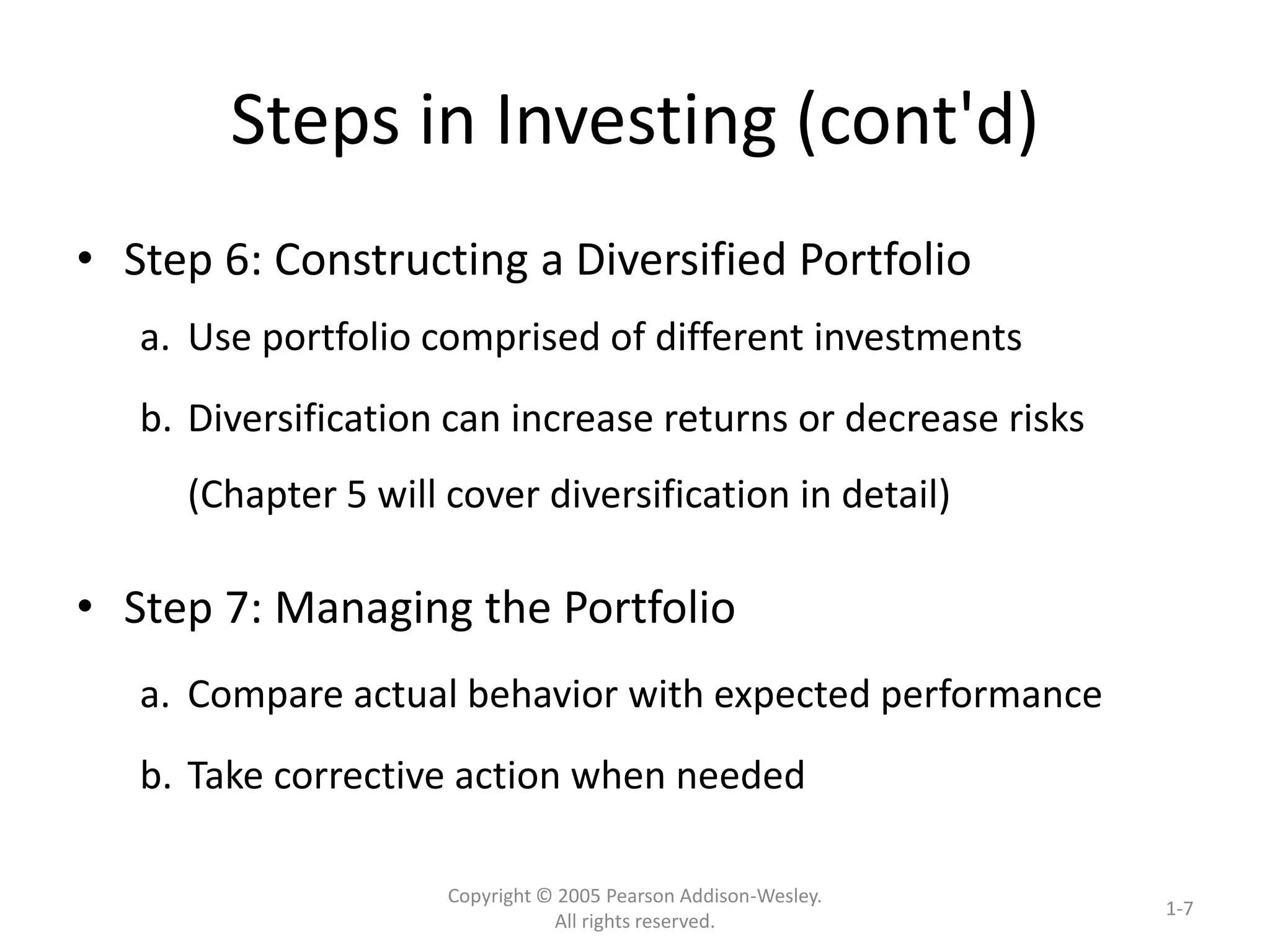
Steps in Investing (cont'd)
• Step 6: Constructing a Diversified Portfolio
a. Use portfolio comprised of different investments
b. Diversification can increase returns or decrease risks
(Chapter 5 will cover diversification in detail)
• Step 7: Managing the Portfolio
a. Compare actual behavior with expected performance
b. Take corrective action when needed
Copyright © 2005 Pearson Addison-Wesley.
All rights reserved.
1-7

Investment Objective.pptx

  • 1.
    Investment objectives The primaryobjective of investment is to increase the rate of return and to reduce the risk. The other objectives are:  Income:- Main objective is to earn income in form of dividend yield or interest. Investment should earn reasonable and expected return on the investment.  Capital appreciation:-The other important objective of investment is appreciation in the capital invested over a period of time. Capital appreciation can be achieved by following:-  Conservative Growth  Aggressive Growth  Speculation
  • 2.
  • 3.
    Investment Process • Processof managing money or funds • It explains how an investor should go about making decisions – Setting the investment policy – Analysis and evaluation of investment vehicles – Formation of diversified investment portfolio – Portfolio revision – Measurement and evaluation of portfolio performance
  • 4.
     Forms OfReturn :- The returns expected from securities may be of two types :-  Periodical Cash Receipts  Capital Gain  Safety and Security Of Funds:- Another important consideration in making investment is that fund so invested should be safe and secure . The investment should be capable for redemption as and when due.  Liquidity:- Before making the investment, the investor should consider the degree of liquidity require. Certain securities are capable of being sold in the readily available market and some securities may not be so liquid.  Tax considerations:- Before making the investment, investors should also take into consideration the provisions of income tax, capital gain tax and wealth tax to minimize his tax burden and avail all tax exemptions available to him.
  • 5.
    Steps in Investing •Step 1: Meeting Investment Prerequisites a. Make certain necessities of life are provided for b. Adequate protection against losses from death, illness and disability • Step 2: Establishing Investment Goals Examples include: a. Accumulating retirement funds b. Enhancing current income c. Saving for major expenditures d. Sheltering income from taxes
  • 6.
    Steps in Investing(cont'd) • Step 3: Adopting an Investment Plan a. Develop a written investment plan b. Specify target date and risk tolerance for each goal • Step 4: Evaluating Investment Vehicles a. Assess potential return and risk b. Chapter 4 will cover risk in detail • Step 5: Selecting Suitable Investments a. Research and gather information on specific investments b. Make investment selections Copyright © 2005 Pearson Addison-Wesley. All rights reserved. 1-6
  • 7.
    Steps in Investing(cont'd) • Step 6: Constructing a Diversified Portfolio a. Use portfolio comprised of different investments b. Diversification can increase returns or decrease risks (Chapter 5 will cover diversification in detail) • Step 7: Managing the Portfolio a. Compare actual behavior with expected performance b. Take corrective action when needed Copyright © 2005 Pearson Addison-Wesley. All rights reserved. 1-7