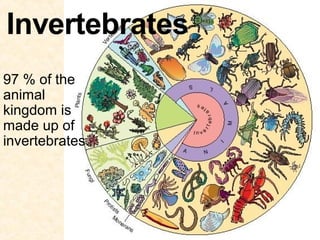
97 % of the
animal
kingdom is
made up of
invertebrates.
Invertebrates are animals
that
do not have backbones.
They can be found
everywhere.
Some invertebrates have an
exoskeleton or a shell to
protect their bodies, but
some invertebrates just have
a soft body.
They have joined
legs.
They have
exoskeletons to
protect their body.
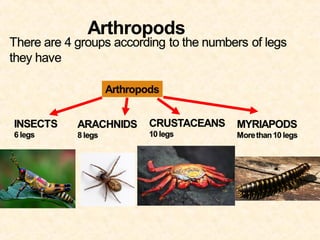
They have two or
more segments
(body parts).
Largest group of
arthropods.
3 pairs of legs.
3 main body part
sections.
2 pairs of eyes
2 antennae.
They have mouths.
Spiders, mites and
ticks.
4 pairs of legs
Their body is
divided into two
parts: head and
abdomen
Most live on land.
Some live in fresh
water.
They spin silk to
make traps for prey.
(spider web)
SPIDER
MITES
(ácaros)
TICKS
(garrapatas)
They have five
pairs of legs.
They live near or
on the ocean floor.
They live on land
and in water.
They have
antennae.
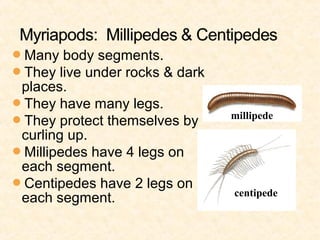
Many body segments.
They live under rocks & dark
places.
They have many legs.
They protect themselves by
curling up.
Millipedes have 4 legs on
each segment.
Centipedes have 2 legs on
each segment.
millipede
centipede
They look like plants but
they are animals.
Sponges stay fixed in
one place. They cannot
move.
They have no mouth,
stomachs, or other
organs
Most live in oceans
They stink a lot
They have tentacles
They have a mouth
Some are poisonous.
In warm water corals
can grow and even
make islands.
jellyfish
Sea anemone
coral
They have bodies with at least 5
sections
They have many feet feet to walk
along the ocean
They use tubes to catch food.
They can grow back
parts if they lose
them.
Some worms can
grow up to 30
METERS in length.
Earthworms have got
hairs to help them go
through the dirt!!!
Flatworm
Segmented
Roundworms
They live on land and
in fresh or salt water.
All molluscs have
soft muscular boides
Nearly all molluscs
have a shell.
Snails have a single
shell and a muscular
foot.
A clam has two
shells joined together.
squid
snail
Octopus
No shell
Snail – 1 shell
Clam – 2 shells
Internal shell

Invertebrates modificado

  • 1.
    97 % ofthe animal kingdom is made up of invertebrates.
  • 2.
    Invertebrates are animals that donot have backbones. They can be found everywhere. Some invertebrates have an exoskeleton or a shell to protect their bodies, but some invertebrates just have a soft body.
  • 3.
    They have joined legs. Theyhave exoskeletons to protect their body. They have two or more segments (body parts).
  • 5.
    Largest group of arthropods. 3pairs of legs. 3 main body part sections. 2 pairs of eyes 2 antennae. They have mouths.
  • 6.
    Spiders, mites and ticks. 4pairs of legs Their body is divided into two parts: head and abdomen Most live on land. Some live in fresh water. They spin silk to make traps for prey. (spider web) SPIDER MITES (ácaros) TICKS (garrapatas)
  • 7.
    They have five pairsof legs. They live near or on the ocean floor. They live on land and in water. They have antennae.
  • 8.
    Many body segments. Theylive under rocks & dark places. They have many legs. They protect themselves by curling up. Millipedes have 4 legs on each segment. Centipedes have 2 legs on each segment. millipede centipede
  • 9.
    They look likeplants but they are animals. Sponges stay fixed in one place. They cannot move. They have no mouth, stomachs, or other organs Most live in oceans They stink a lot
  • 10.
    They have tentacles Theyhave a mouth Some are poisonous. In warm water corals can grow and even make islands. jellyfish Sea anemone coral
  • 11.
    They have bodieswith at least 5 sections They have many feet feet to walk along the ocean They use tubes to catch food.
  • 12.
    They can growback parts if they lose them. Some worms can grow up to 30 METERS in length. Earthworms have got hairs to help them go through the dirt!!! Flatworm Segmented Roundworms
  • 13.
    They live onland and in fresh or salt water. All molluscs have soft muscular boides Nearly all molluscs have a shell. Snails have a single shell and a muscular foot. A clam has two shells joined together. squid snail Octopus No shell Snail – 1 shell Clam – 2 shells Internal shell