Optimus Energy introduction to solar in the Philippines.
ELECTRICITY IN THE
PHILIPPINES.
• The Philippines has one of the highest costs of
energy in the world.
• Electricity prices have risen on average by 12.5%
per year over the last 20yrs.
• With economic growth expected to outstrip
increases in capacity, it is widely expected that
electricity prices will continue to rise sharply in the
short to medium term.
WHAT IS THE RISK FOR
INDUSTRY?
• Reduced competitiveness compared to other
manufacturing hubs in the ASEAN due to
electricity prices.
• Reduced output due to downtime derived
from increased black outs particularly in
summer months.
WHAT IS THE RISK FOR
HOMEOWNERS
• Continued exposure to increasing energy
prices creating increased pressure on
household budgets.
• Demand continually outstripping supply
creates a situation for more brown outs/
black outs.
OPTIONS!
• Reduce Energy Consumption.
• Reuse Energy Where Possible.
• Replace The Remainder With Solar.
WHY SOLAR?
• Solar Works During Peak Times.
• Solar Costs Less Than Other Alternatives.
• Photovoltaic Solar Is a Globally Proven
Technology.
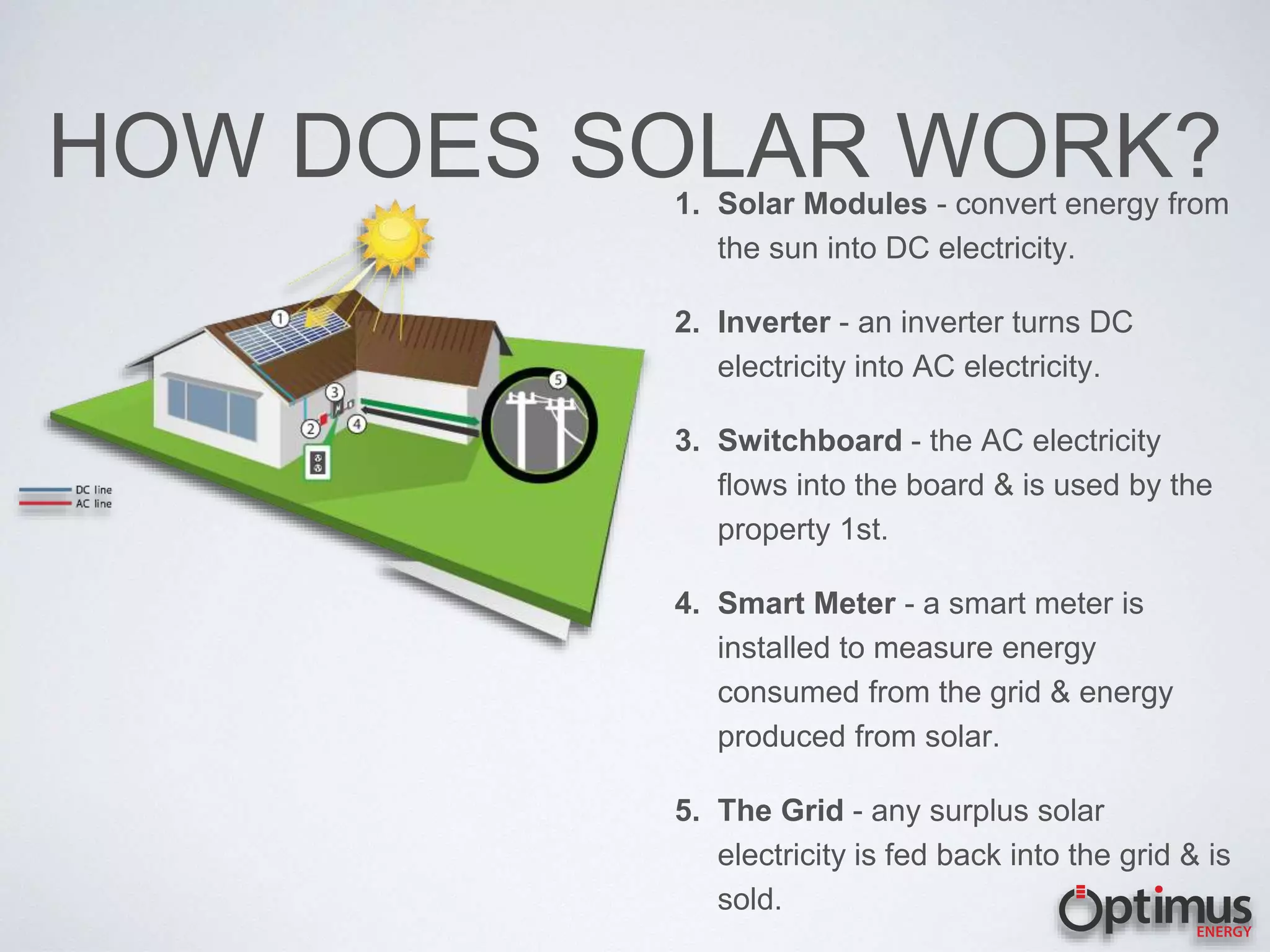
HOW DOES SOLAR WORK?1. Solar Modules - convert energy from
the sun into DC electricity.
2. Inverter - an inverter turns DC
electricity into AC electricity.
3. Switchboard - the AC electricity
flows into the board & is used by the
property 1st.
4. Smart Meter - a smart meter is
installed to measure energy
consumed from the grid & energy
produced from solar.
5. The Grid - any surplus solar
electricity is fed back into the grid & is
sold.
HOW DOES OFF GRID
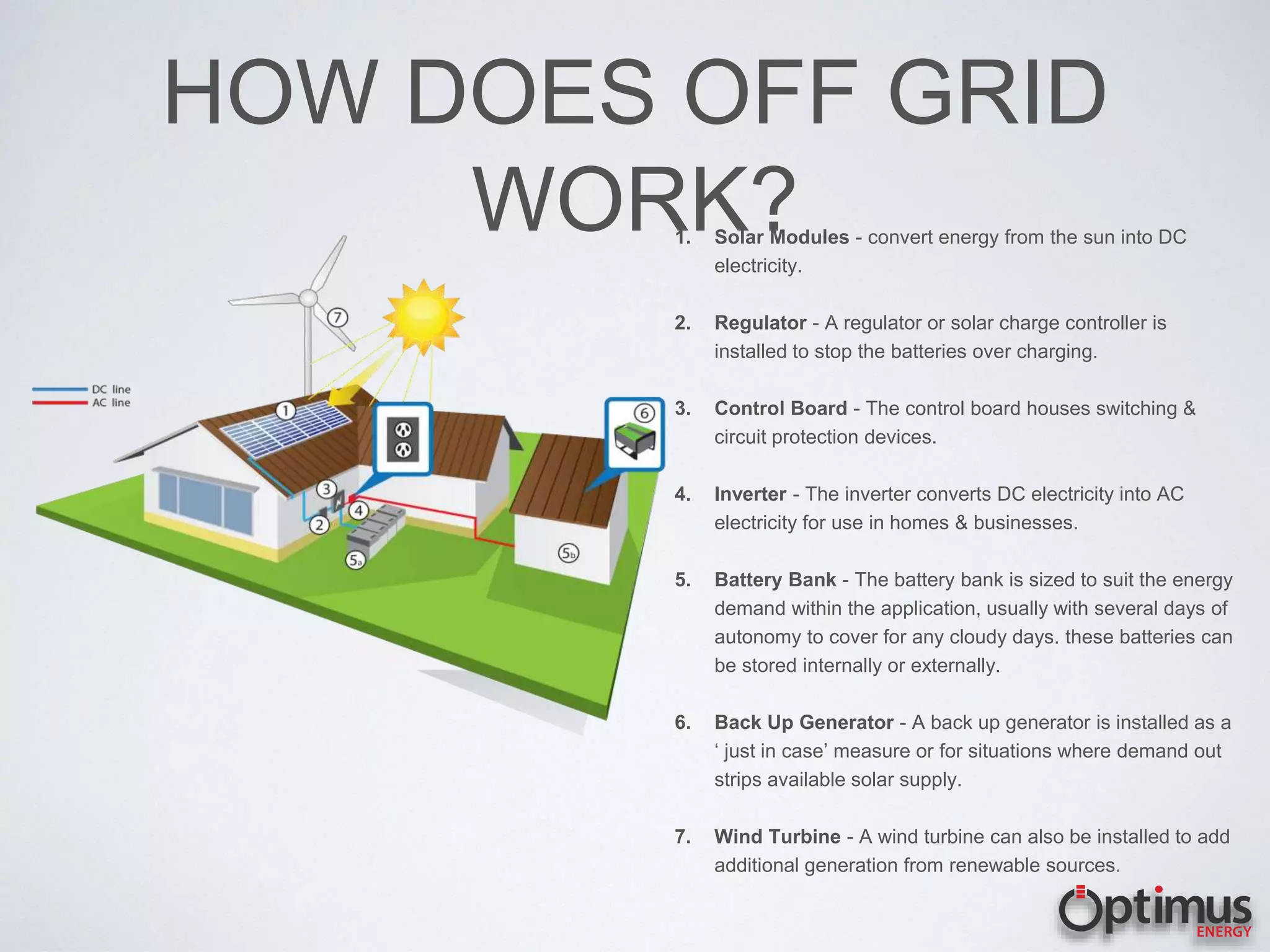
WORK?1. Solar Modules - convert energy from the sun into DC
electricity.
2. Regulator - A regulator or solar charge controller is
installed to stop the batteries over charging.
3. Control Board - The control board houses switching &
circuit protection devices.
4. Inverter - The inverter converts DC electricity into AC
electricity for use in homes & businesses.
5. Battery Bank - The battery bank is sized to suit the energy
demand within the application, usually with several days of
autonomy to cover for any cloudy days. these batteries can
be stored internally or externally.
6. Back Up Generator - A back up generator is installed as a
‘ just in case’ measure or for situations where demand out
strips available solar supply.
7. Wind Turbine - A wind turbine can also be installed to add
additional generation from renewable sources.
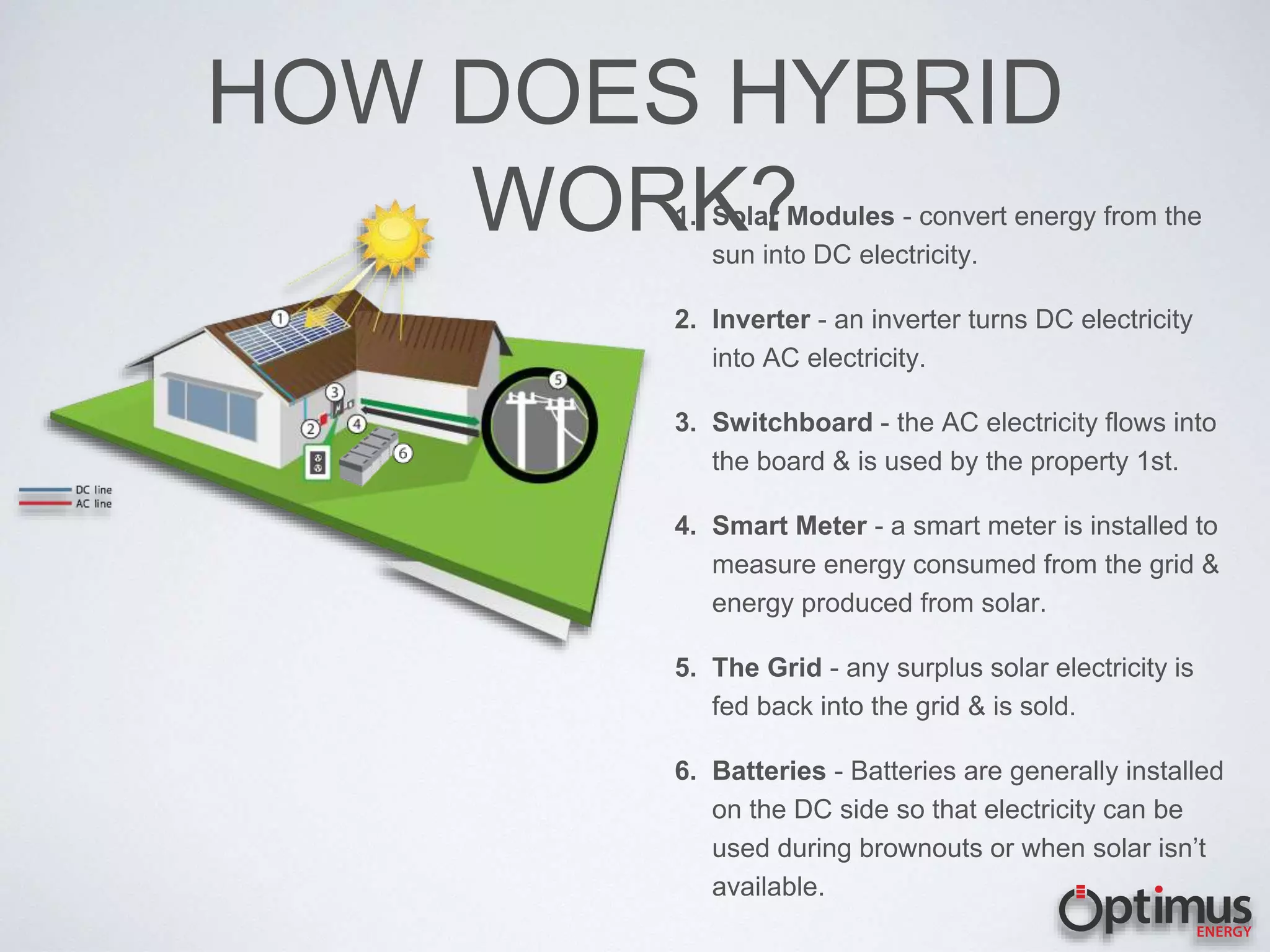
HOW DOES HYBRID
WORK?1. Solar Modules - convert energy from the
sun into DC electricity.
2. Inverter - an inverter turns DC electricity
into AC electricity.
3. Switchboard - the AC electricity flows into
the board & is used by the property 1st.
4. Smart Meter - a smart meter is installed to
measure energy consumed from the grid &
energy produced from solar.
5. The Grid - any surplus solar electricity is
fed back into the grid & is sold.
6. Batteries - Batteries are generally installed
on the DC side so that electricity can be
used during brownouts or when solar isn’t
available.
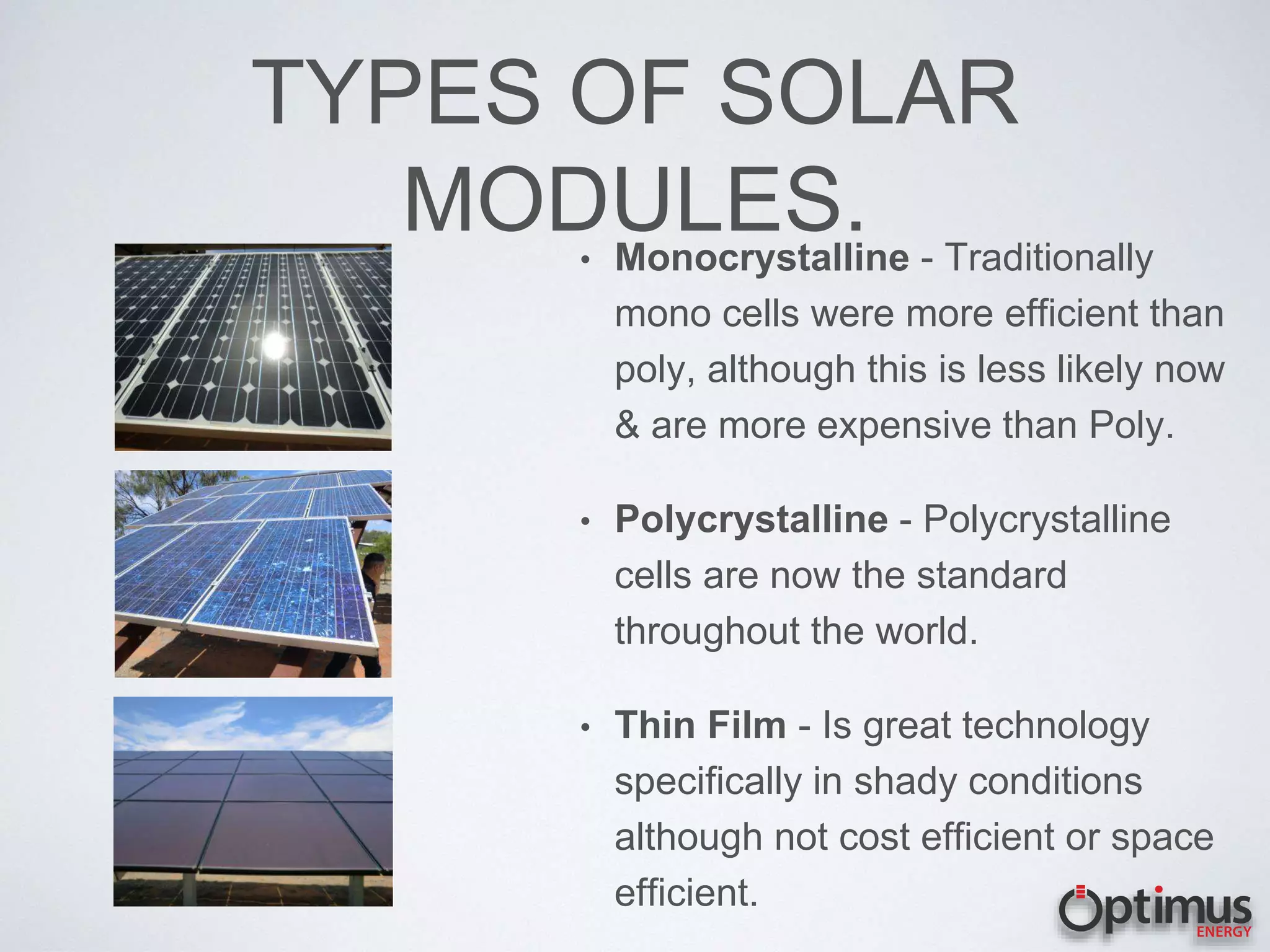
TYPES OF SOLAR
MODULES.• Monocrystalline - Traditionally
mono cells were more efficient than
poly, although this is less likely now
& are more expensive than Poly.
• Polycrystalline - Polycrystalline
cells are now the standard
throughout the world.
• Thin Film - Is great technology
specifically in shady conditions
although not cost efficient or space
efficient.
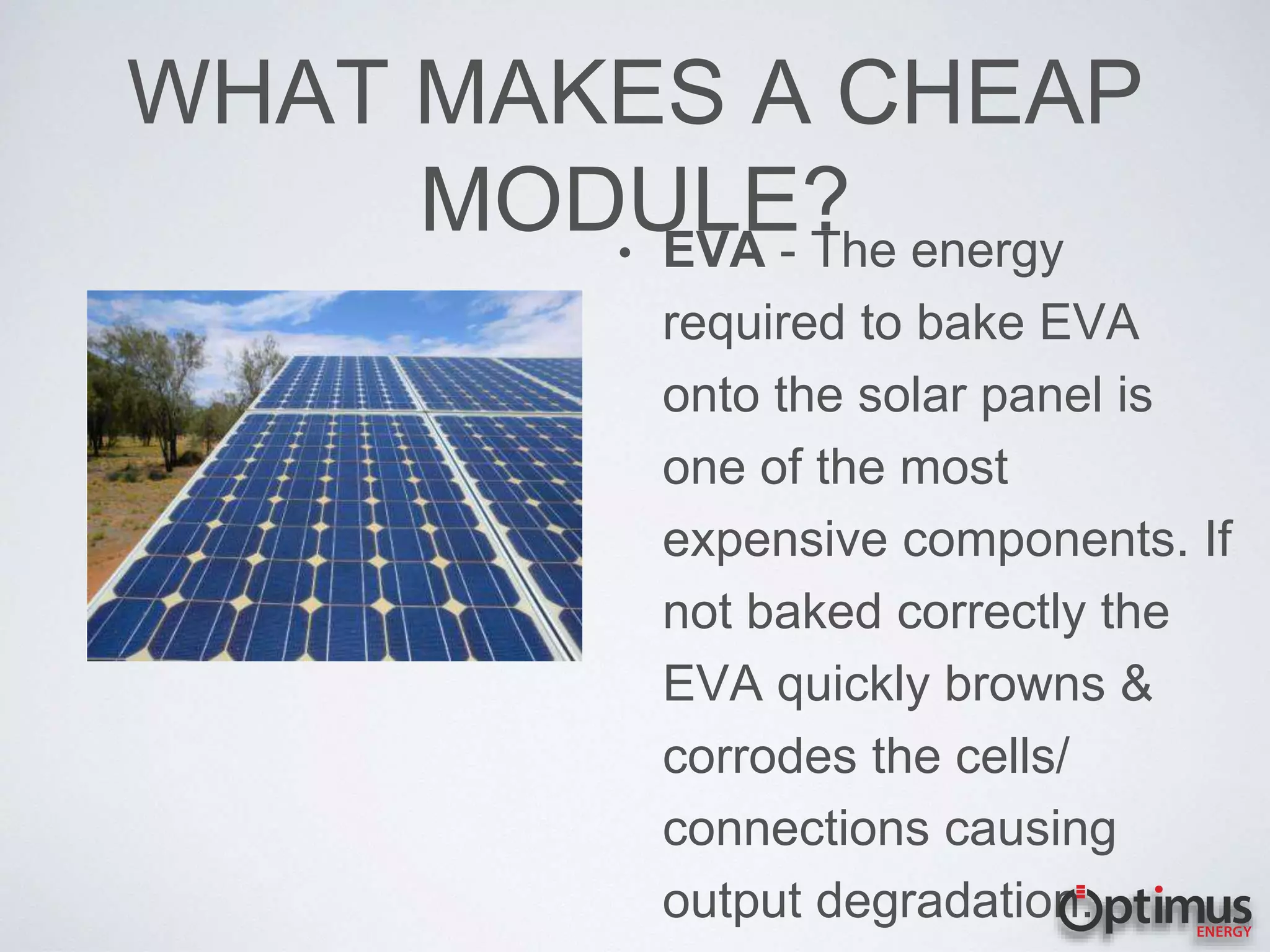
WHAT MAKES A CHEAP
MODULE?• EVA - The energy
required to bake EVA
onto the solar panel is
one of the most
expensive components. If
not baked correctly the
EVA quickly browns &
corrodes the cells/
connections causing
output degradation.
WHAT MAKES A GOOD
MODULE?
• Bloomberg Tier 1 rating.
• Linear warranty
• Positive Tolerance
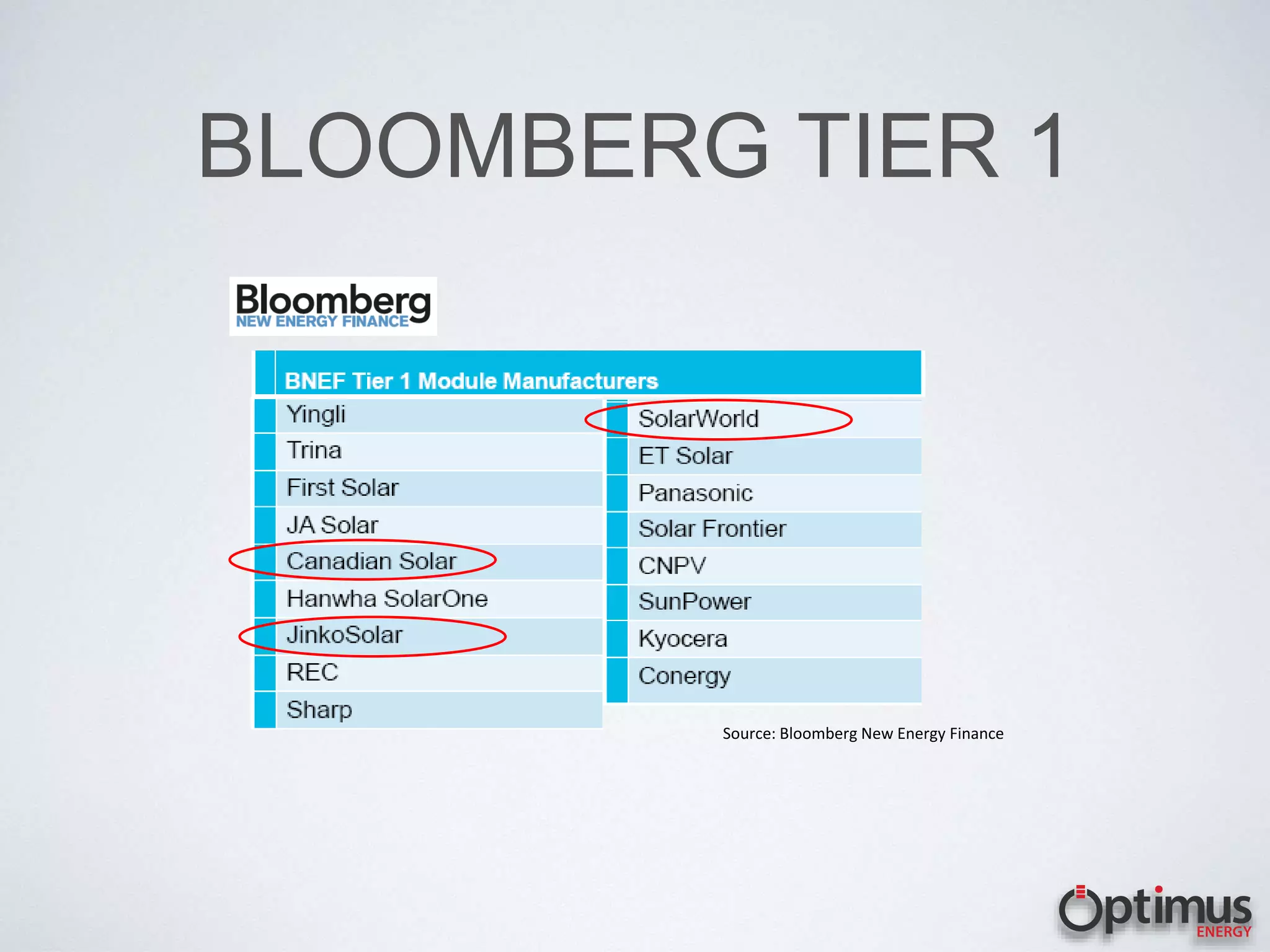
BLOOMBERG TIER 1
Source: Bloomberg New Energy Finance
WHAT MAKES TIER 1?
• A company that manufactures it’s products under it’s own
brand.
• A company that has developed at least 5 multi megawatt
projects in the previous quarter.
• These multi megawatt projects must of been funded by at
least 5 independent banks (non development).
• The company must have not entered into any bankruptcy
proceedings.
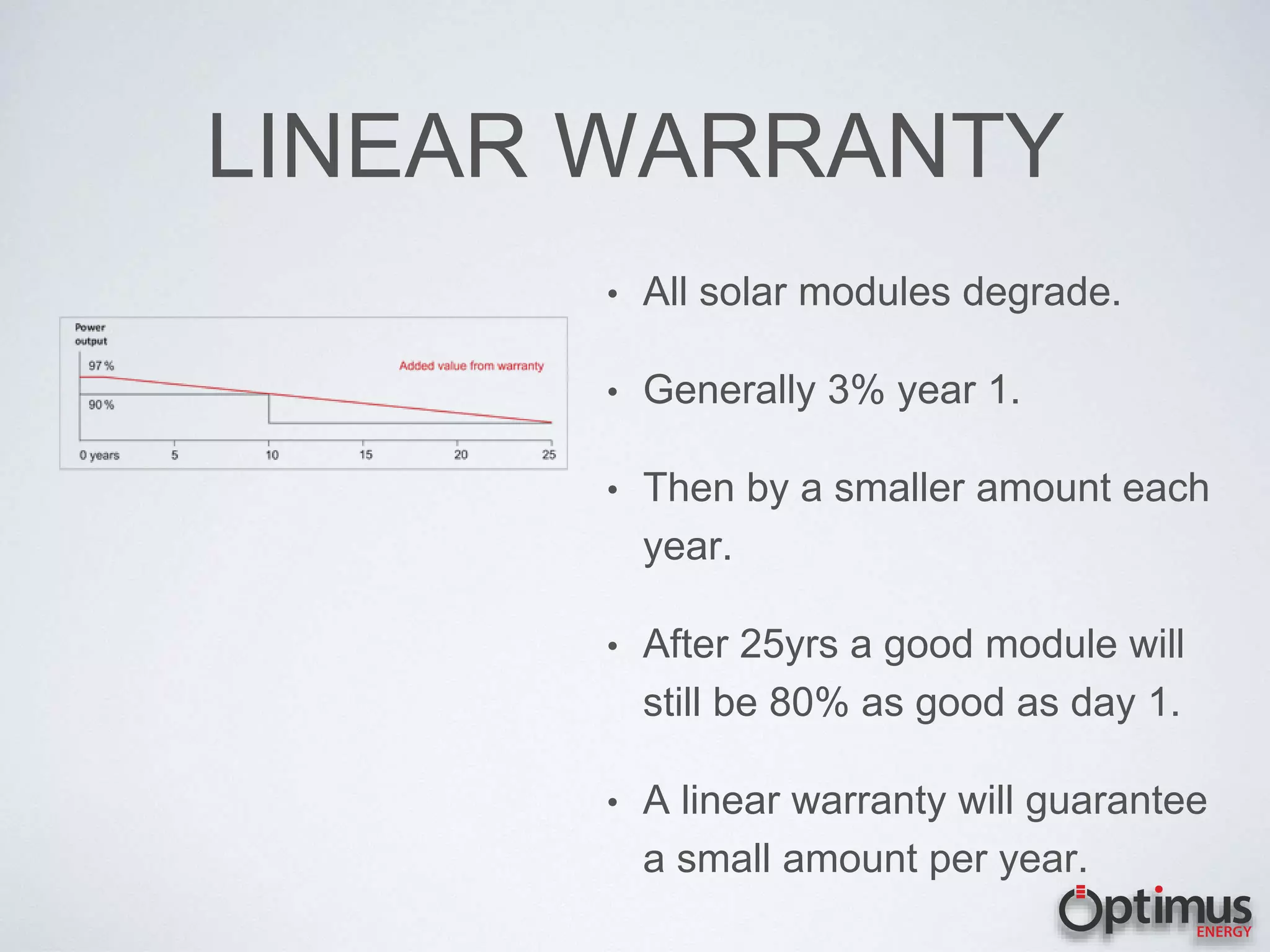
LINEAR WARRANTY
• All solar modules degrade.
• Generally 3% year 1.
• Then by a smaller amount each
year.
• After 25yrs a good module will
still be 80% as good as day 1.
• A linear warranty will guarantee
a small amount per year.
POSITIVE TOLERANCE
• No module is generally exactly it’s rated
power.
• Standard modules have a +/- tolerance
meaning that you might get 253w or 247w
(from a 250w)
• A good module will always be + only. 250-
253w
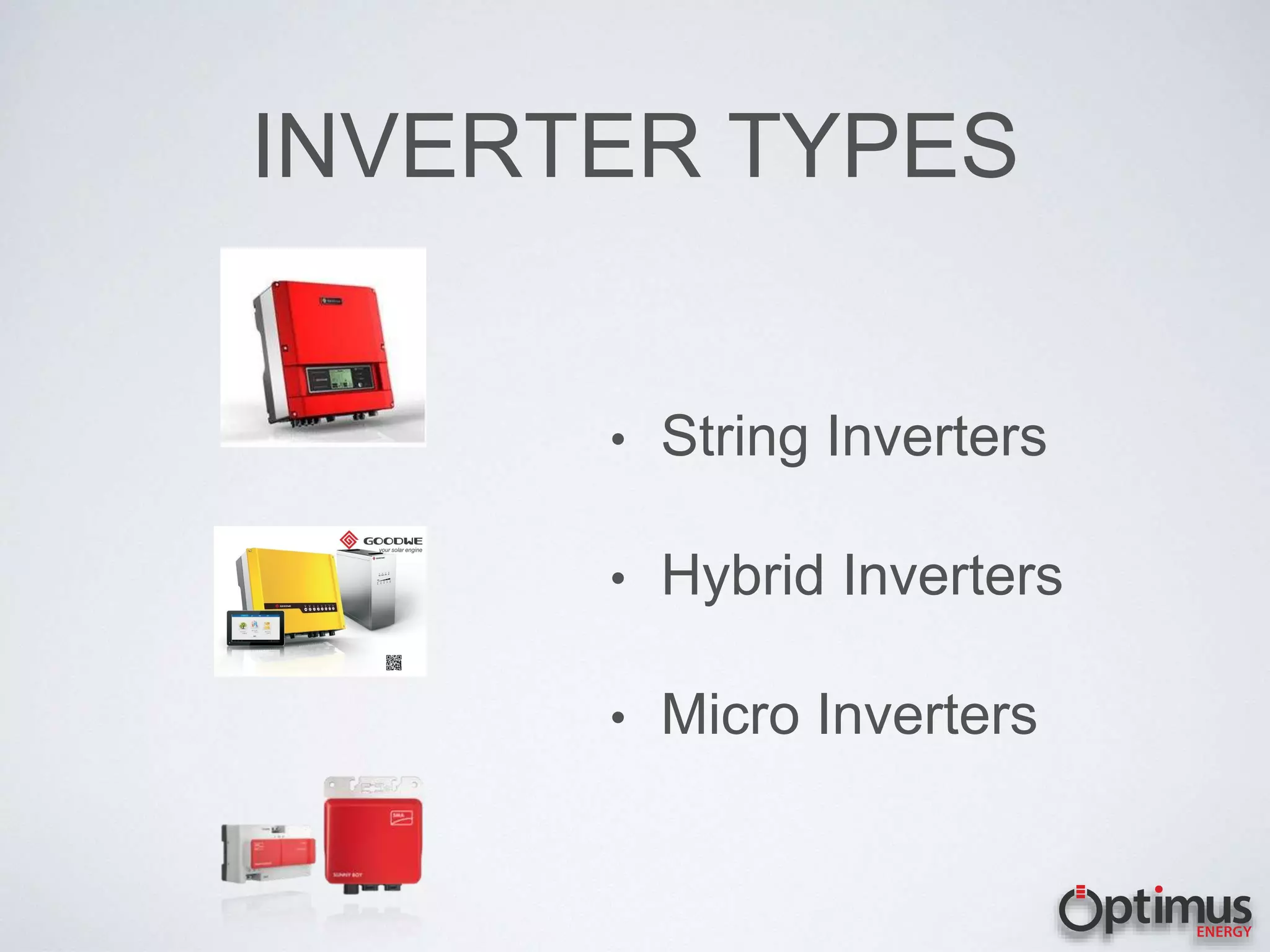
INVERTER TYPES
• String Inverters
• Hybrid Inverters
• Micro Inverters
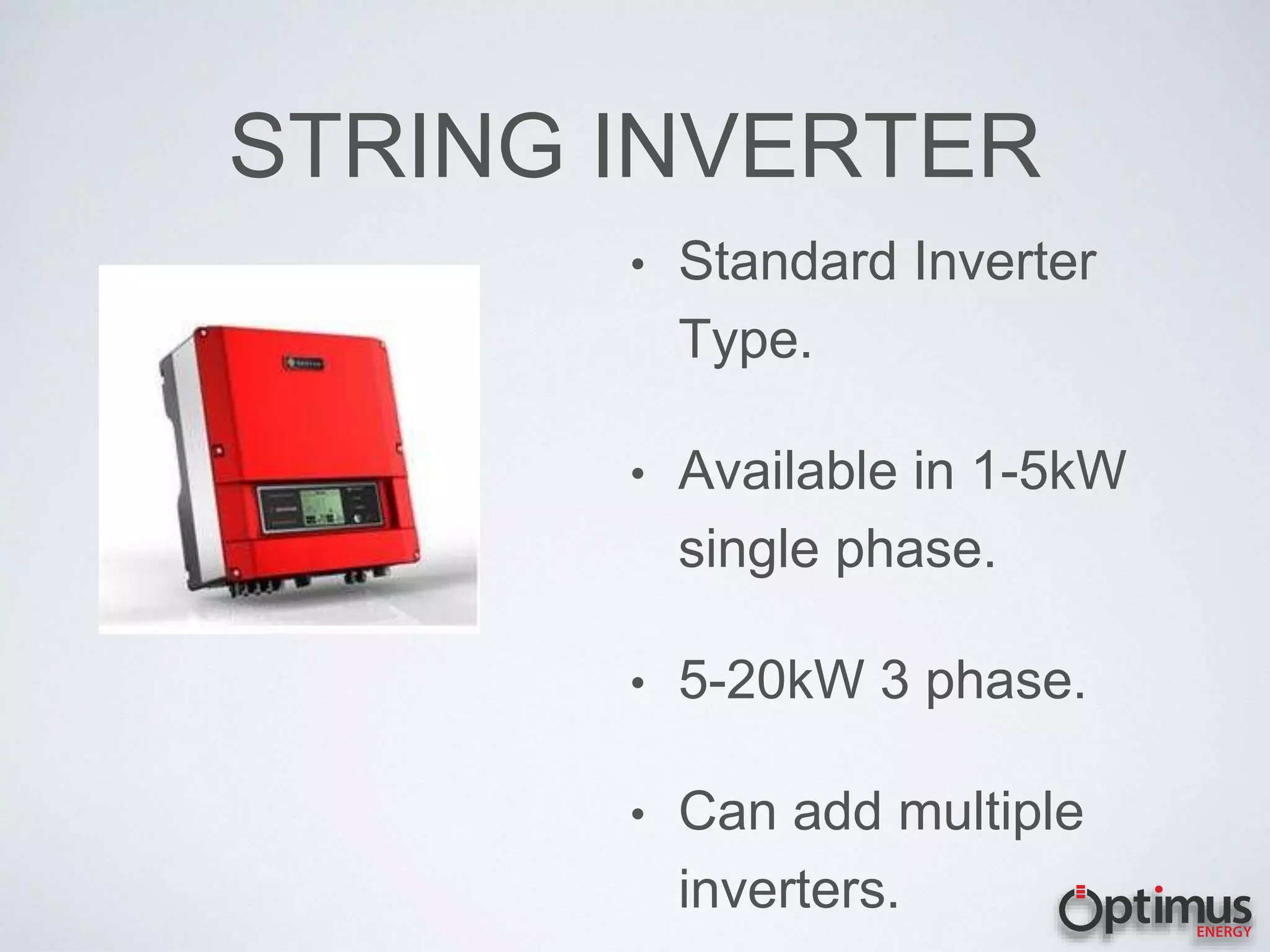
STRING INVERTER
• Standard Inverter
Type.
• Available in 1-5kW
single phase.
• 5-20kW 3 phase.
• Can add multiple
inverters.
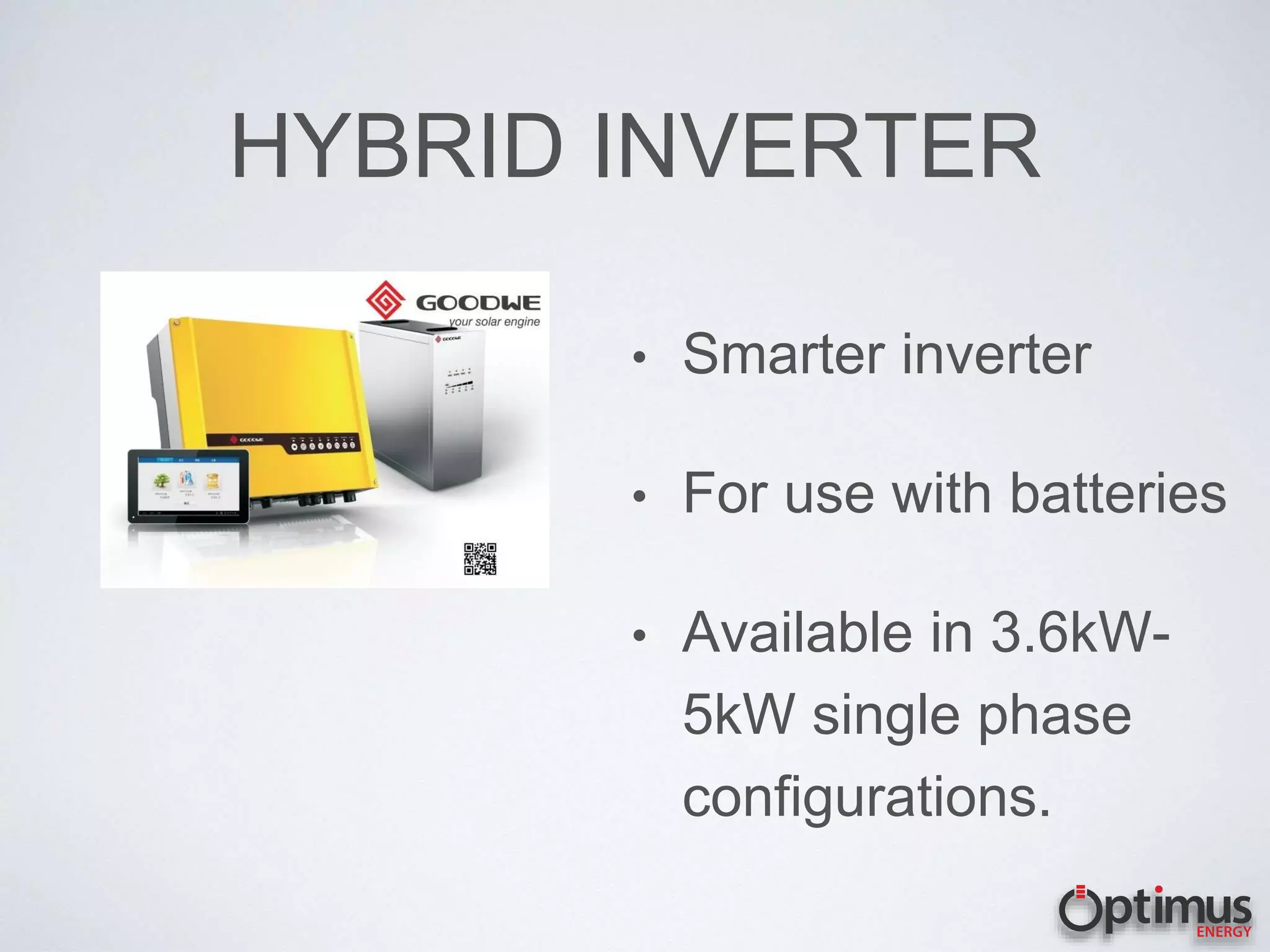
HYBRID INVERTER
• Smarter inverter
• For use with batteries
• Available in 3.6kW-
5kW single phase
configurations.
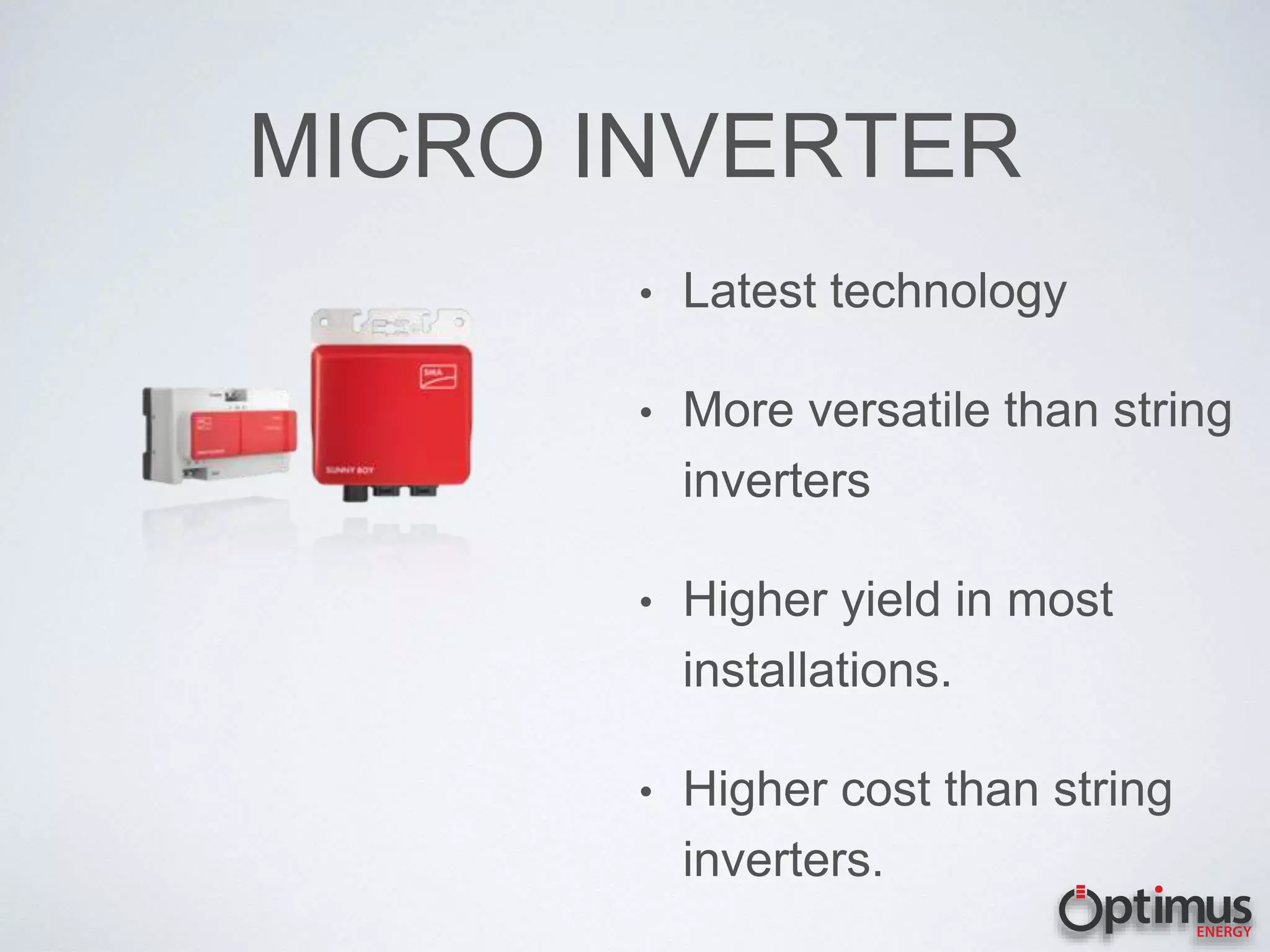
MICRO INVERTER
• Latest technology
• More versatile than string
inverters
• Higher yield in most
installations.
• Higher cost than string
inverters.
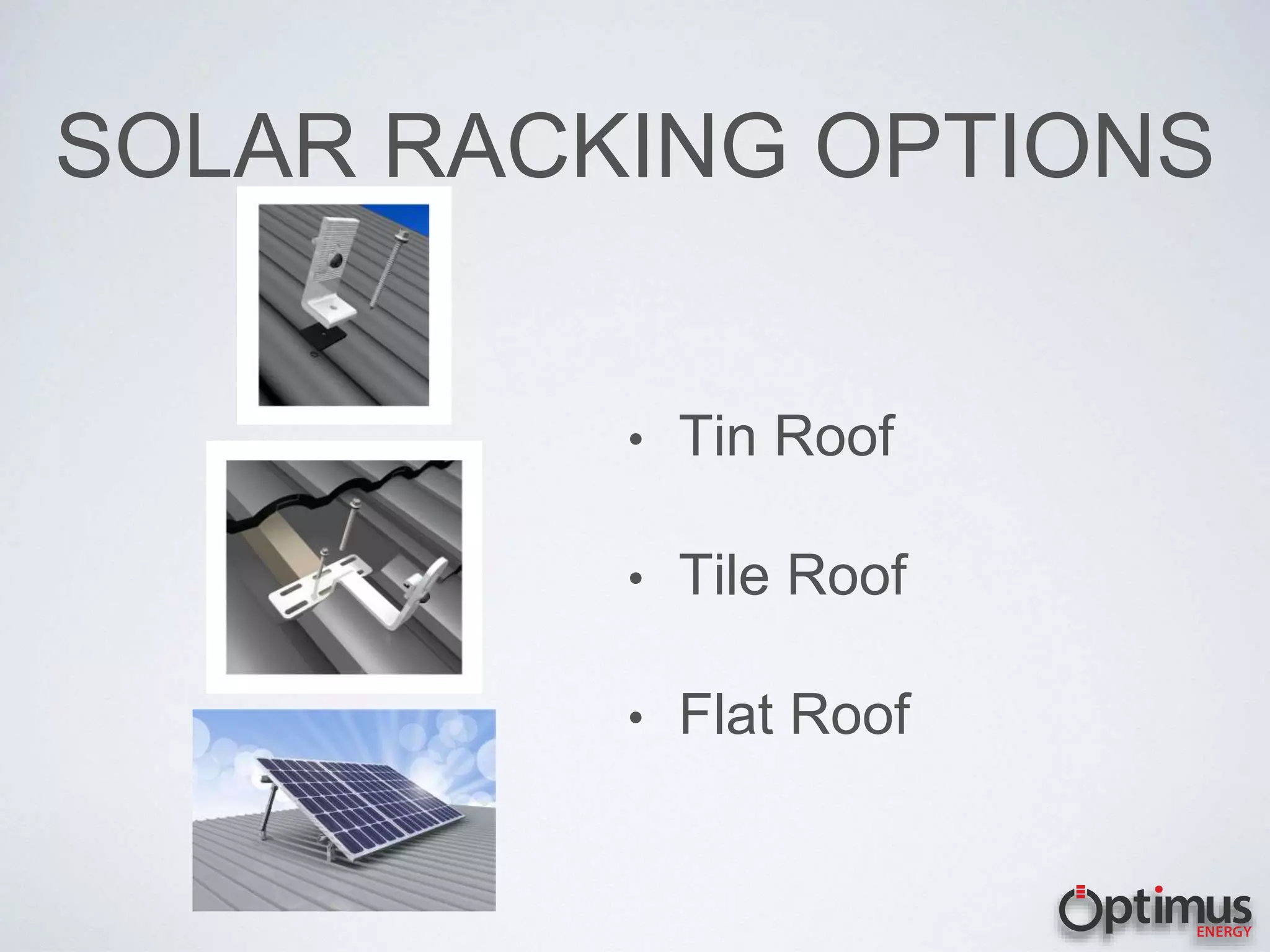
SOLAR RACKING OPTIONS
• Tin Roof
• Tile Roof
• Flat Roof
QUESTION TIME?

Introduction to Solar in the Philippines

  • 1.
    Optimus Energy introductionto solar in the Philippines.
  • 2.
    ELECTRICITY IN THE PHILIPPINES. •The Philippines has one of the highest costs of energy in the world. • Electricity prices have risen on average by 12.5% per year over the last 20yrs. • With economic growth expected to outstrip increases in capacity, it is widely expected that electricity prices will continue to rise sharply in the short to medium term.
  • 3.
    WHAT IS THERISK FOR INDUSTRY? • Reduced competitiveness compared to other manufacturing hubs in the ASEAN due to electricity prices. • Reduced output due to downtime derived from increased black outs particularly in summer months.
  • 4.
    WHAT IS THERISK FOR HOMEOWNERS • Continued exposure to increasing energy prices creating increased pressure on household budgets. • Demand continually outstripping supply creates a situation for more brown outs/ black outs.
  • 5.
    OPTIONS! • Reduce EnergyConsumption. • Reuse Energy Where Possible. • Replace The Remainder With Solar.
  • 6.
    WHY SOLAR? • SolarWorks During Peak Times. • Solar Costs Less Than Other Alternatives. • Photovoltaic Solar Is a Globally Proven Technology.
  • 7.
    HOW DOES SOLARWORK?1. Solar Modules - convert energy from the sun into DC electricity. 2. Inverter - an inverter turns DC electricity into AC electricity. 3. Switchboard - the AC electricity flows into the board & is used by the property 1st. 4. Smart Meter - a smart meter is installed to measure energy consumed from the grid & energy produced from solar. 5. The Grid - any surplus solar electricity is fed back into the grid & is sold.
  • 8.
    HOW DOES OFFGRID WORK?1. Solar Modules - convert energy from the sun into DC electricity. 2. Regulator - A regulator or solar charge controller is installed to stop the batteries over charging. 3. Control Board - The control board houses switching & circuit protection devices. 4. Inverter - The inverter converts DC electricity into AC electricity for use in homes & businesses. 5. Battery Bank - The battery bank is sized to suit the energy demand within the application, usually with several days of autonomy to cover for any cloudy days. these batteries can be stored internally or externally. 6. Back Up Generator - A back up generator is installed as a ‘ just in case’ measure or for situations where demand out strips available solar supply. 7. Wind Turbine - A wind turbine can also be installed to add additional generation from renewable sources.
  • 9.
    HOW DOES HYBRID WORK?1.Solar Modules - convert energy from the sun into DC electricity. 2. Inverter - an inverter turns DC electricity into AC electricity. 3. Switchboard - the AC electricity flows into the board & is used by the property 1st. 4. Smart Meter - a smart meter is installed to measure energy consumed from the grid & energy produced from solar. 5. The Grid - any surplus solar electricity is fed back into the grid & is sold. 6. Batteries - Batteries are generally installed on the DC side so that electricity can be used during brownouts or when solar isn’t available.
  • 10.
    TYPES OF SOLAR MODULES.•Monocrystalline - Traditionally mono cells were more efficient than poly, although this is less likely now & are more expensive than Poly. • Polycrystalline - Polycrystalline cells are now the standard throughout the world. • Thin Film - Is great technology specifically in shady conditions although not cost efficient or space efficient.
  • 11.
    WHAT MAKES ACHEAP MODULE?• EVA - The energy required to bake EVA onto the solar panel is one of the most expensive components. If not baked correctly the EVA quickly browns & corrodes the cells/ connections causing output degradation.
  • 12.
    WHAT MAKES AGOOD MODULE? • Bloomberg Tier 1 rating. • Linear warranty • Positive Tolerance
  • 13.
    BLOOMBERG TIER 1 Source:Bloomberg New Energy Finance
  • 14.
    WHAT MAKES TIER1? • A company that manufactures it’s products under it’s own brand. • A company that has developed at least 5 multi megawatt projects in the previous quarter. • These multi megawatt projects must of been funded by at least 5 independent banks (non development). • The company must have not entered into any bankruptcy proceedings.
  • 15.
    LINEAR WARRANTY • Allsolar modules degrade. • Generally 3% year 1. • Then by a smaller amount each year. • After 25yrs a good module will still be 80% as good as day 1. • A linear warranty will guarantee a small amount per year.
  • 16.
    POSITIVE TOLERANCE • Nomodule is generally exactly it’s rated power. • Standard modules have a +/- tolerance meaning that you might get 253w or 247w (from a 250w) • A good module will always be + only. 250- 253w
  • 17.
    INVERTER TYPES • StringInverters • Hybrid Inverters • Micro Inverters
  • 18.
    STRING INVERTER • StandardInverter Type. • Available in 1-5kW single phase. • 5-20kW 3 phase. • Can add multiple inverters.
  • 19.
    HYBRID INVERTER • Smarterinverter • For use with batteries • Available in 3.6kW- 5kW single phase configurations.
  • 20.
    MICRO INVERTER • Latesttechnology • More versatile than string inverters • Higher yield in most installations. • Higher cost than string inverters.
  • 21.
    SOLAR RACKING OPTIONS •Tin Roof • Tile Roof • Flat Roof
  • 22.