Introduction to Social Media
Alexandra Tan
alexandra.tan@gmail.com
Digital & Social Media Specialist
Agenda
• Social Media Network
landscape

• Why your business needs to be
on Social Media? 

• Best Practices on Organic and
Paid reach 

• How and what to measure on
Social Media?

• Social Media platform
integration for app developers.
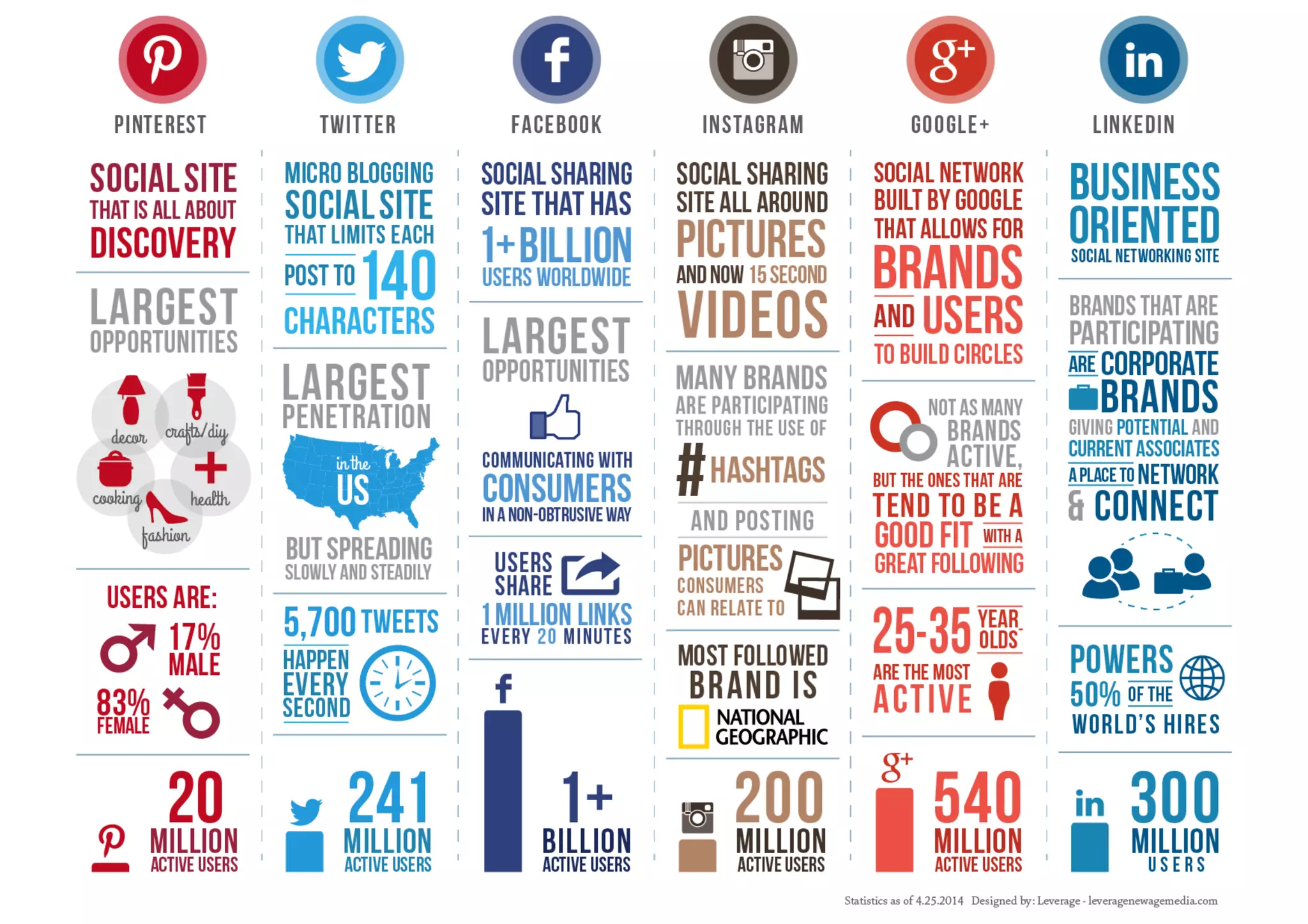
Social Media Network Landscape
Why your business needs to be on 

Social Media?
• Brand building 

Create brand awareness and build identity
• Engage with your customer 

Keep top of mind in your customers and influence buying
behaviours
• Obtain customer insights

Provides true insights of your customer which allow you to
carve out relevant marketing strategy
• Deliver real-time customer service

Delight your customers with quick help
Things To Consider Before Leaping Into 

Social Media
• What do you want to get out from social media and how will
you measure success? ROI? Brand building? Lead generation?
• Research and choose the right social media networks. Find out
where your customers or potential customers are.
• Do you have internal resources
• i) for content creation, planning and scheduling?
• ii) to manage your brands on all social media networks?
• iii) community management?
• What will you do when there is a PR crisis?
Best Practices on Organic and Paid reach 

on Social Media Network
What are Organic and Paid Distributions?
• Organic distribution is when your content were shown to
people through unpaid channel,
• example: Facebook Page, Twitter account
• Paid distribution is when your content were shown to
people through paid channel
• example: Facebook Ads, Twitter Sponsored ads
Facebook Pages
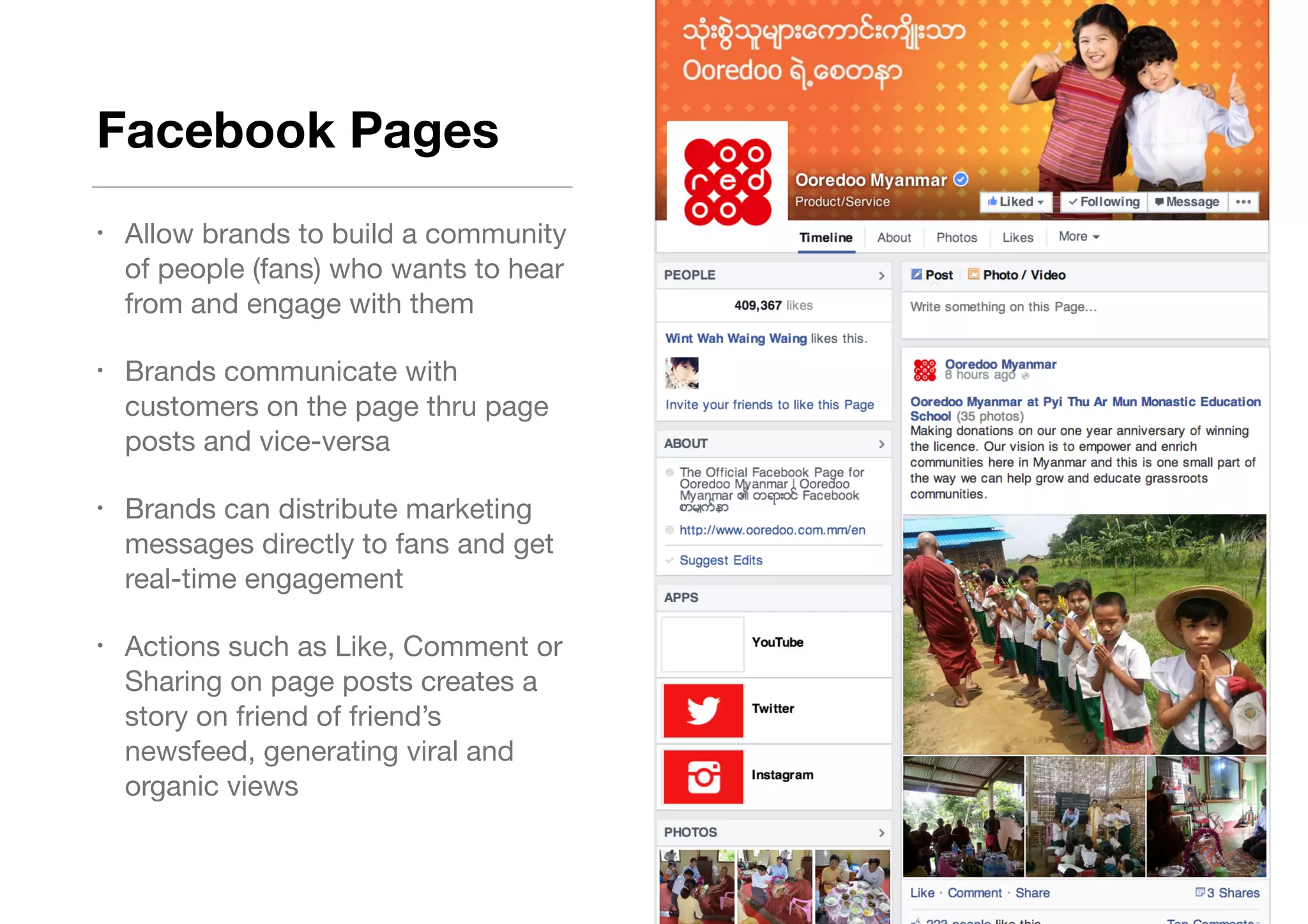
• Allow brands to build a community
of people (fans) who wants to hear
from and engage with them 

• Brands communicate with
customers on the page thru page
posts and vice-versa

• Brands can distribute marketing
messages directly to fans and get
real-time engagement

• Actions such as Like, Comment or
Sharing on page posts creates a
story on friend of friend’s
newsfeed, generating viral and
organic views
Social Media Content Best Practices
• How to increase organic engagement? 

• post original and relevant contents 

• be authenthic, use your brand’s personality when posting

• target your content to the relevant demography

• keep a content calendar, when and what to post with clear KPIs

• keep it short and sweet (140 char)

• photos get most engagement than video and text (varies by culture and country)

• respond to comments, engage with your fans

• posting frequencies: 1x per day on Facebook, multiple (varies by social netculture and
country)

• use maximum of 2 Hashtags per tweet on Twitter

• Test and optimise your social media content strategy
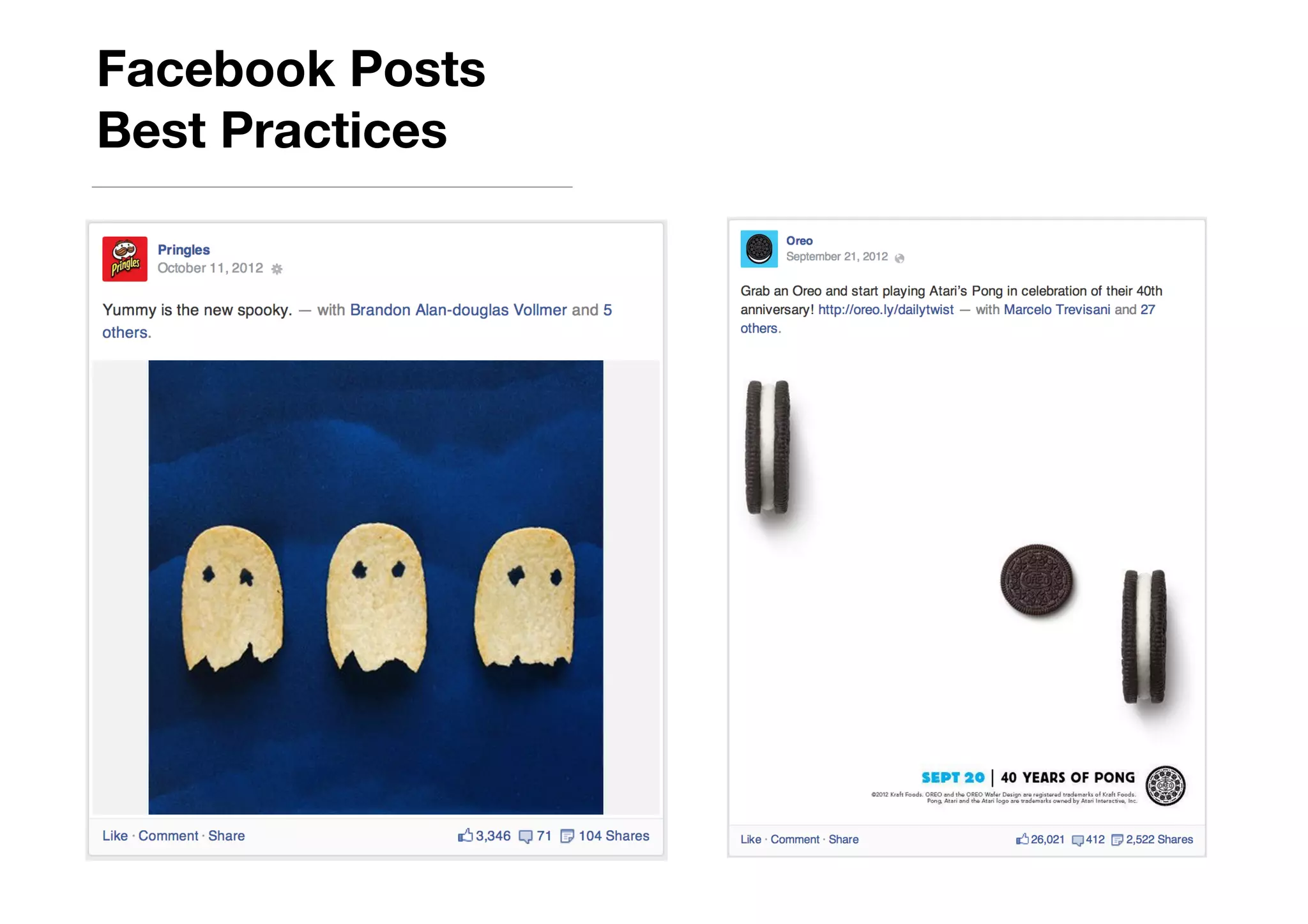
Facebook Posts 

Best Practices
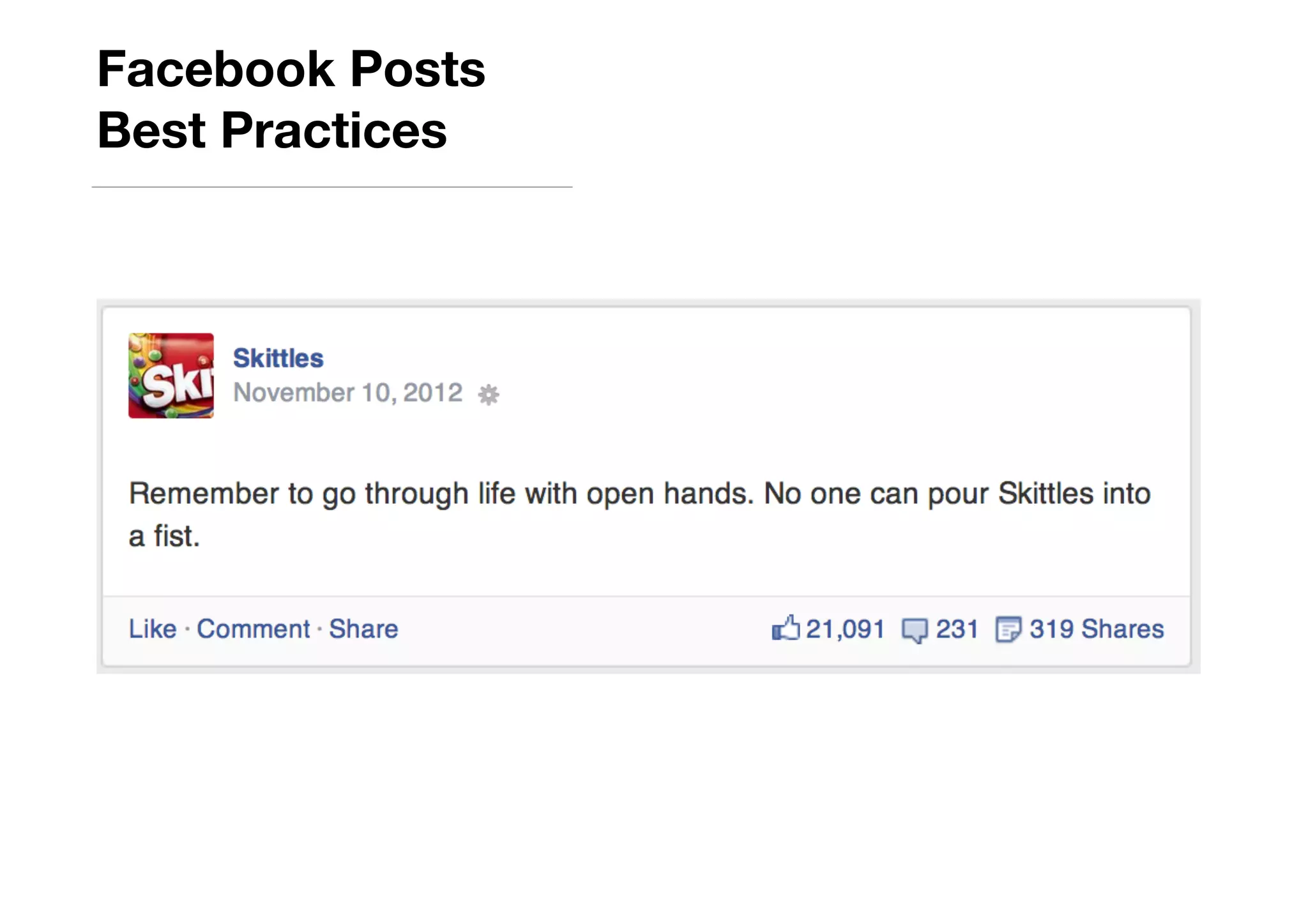
Facebook Posts 

Best Practices
Facebook Ads
• Advantages:
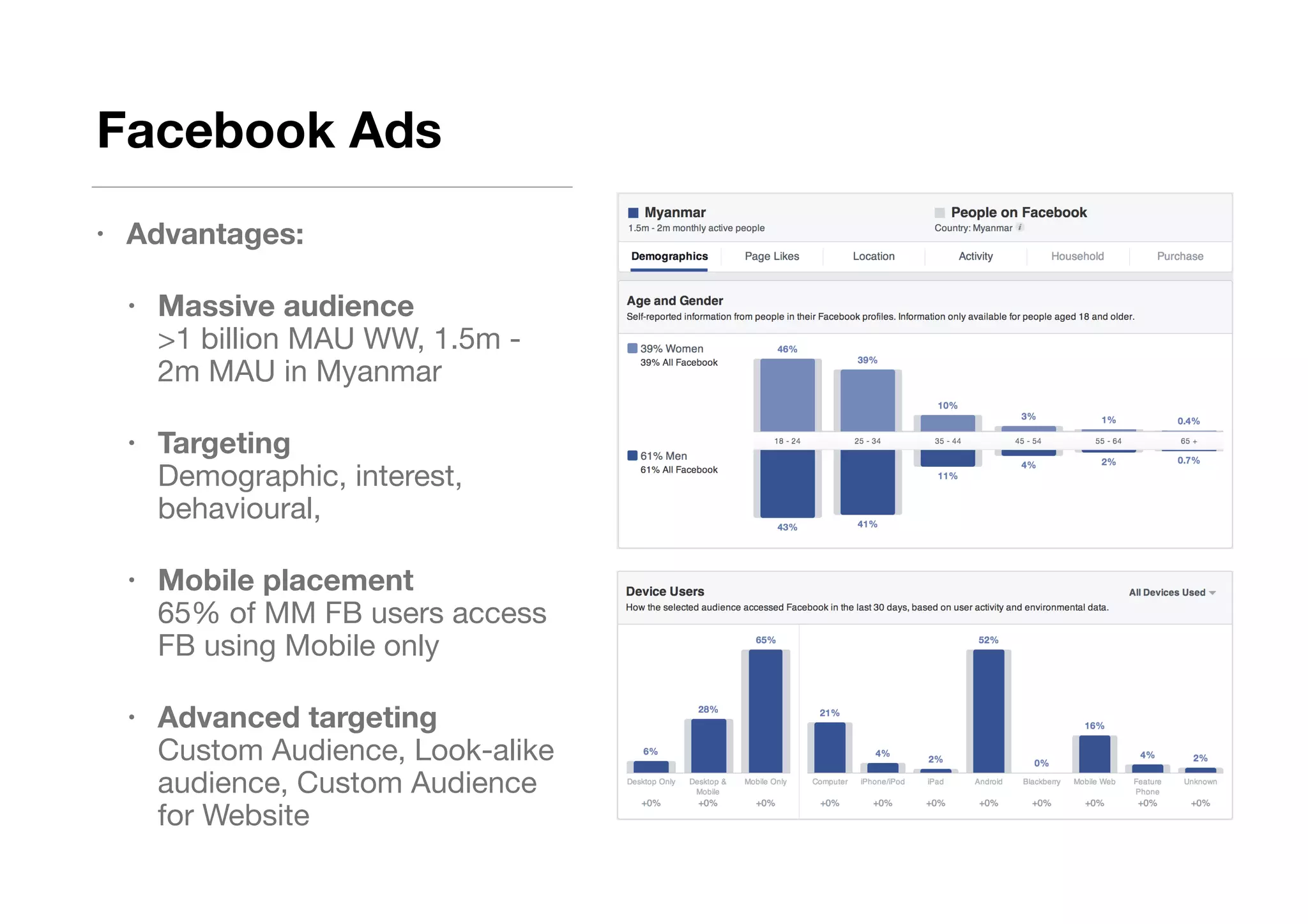
• Massive audience 

>1 billion MAU WW, 1.5m -
2m MAU in Myanmar

• Targeting

Demographic, interest,
behavioural, 

• Mobile placement

65% of MM FB users access
FB using Mobile only

• Advanced targeting

Custom Audience, Look-alike
audience, Custom Audience
for Website
Facebook Ads
Facebook Ads
• When to use which ad types? 

• Create awareness or communicating
• Page Post Engagement

• Event Responses

• Building fan base
• Page Likes

• Drive website traffic
• Clicks to Website

• Conversions
• Website Conversions

• App Installs

• Drive foot traffic to store
• Offer claims
Facebook Ads 

Best Practices
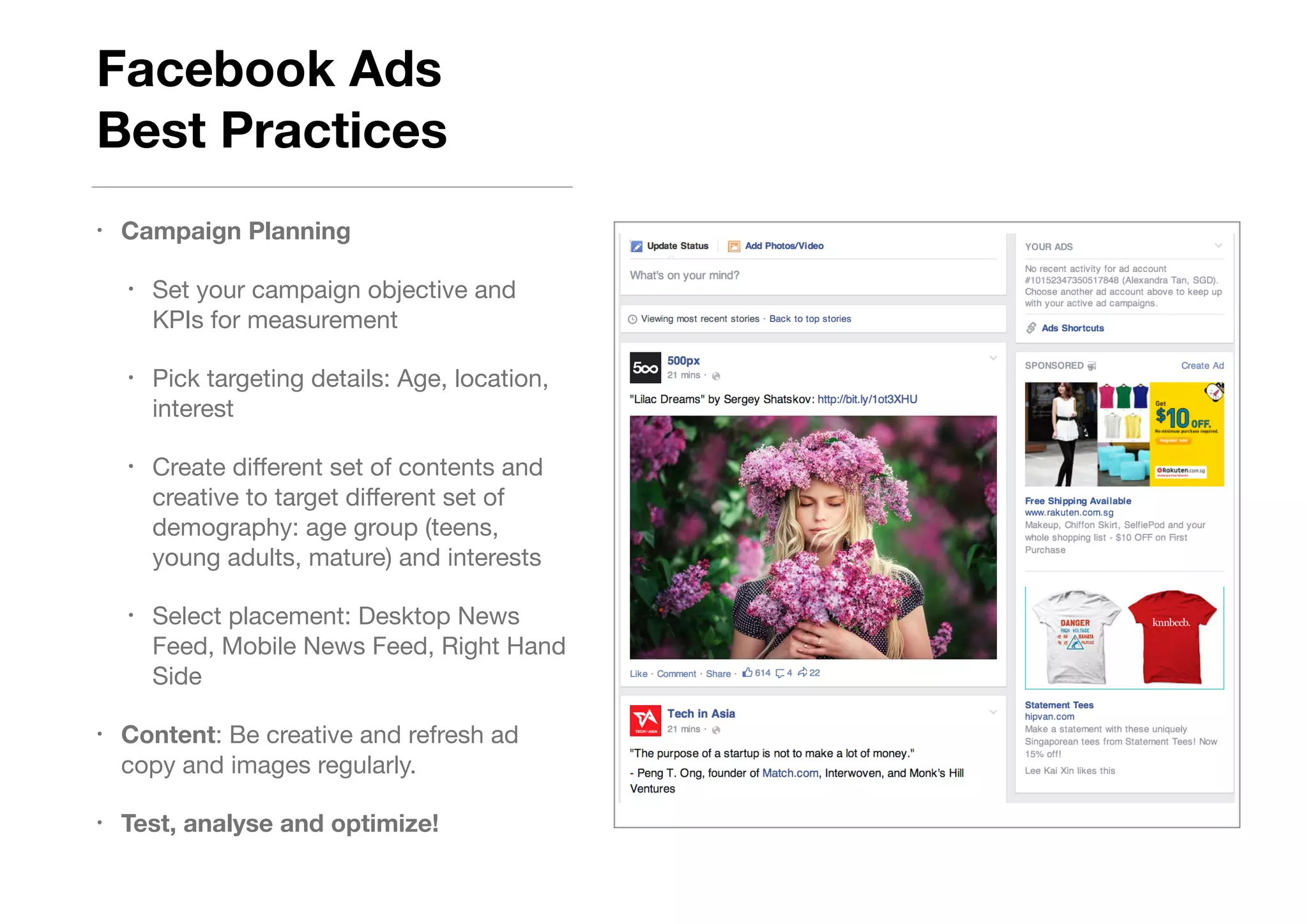
• Campaign Planning
• Set your campaign objective and
KPIs for measurement

• Pick targeting details: Age, location,
interest

• Create different set of contents and
creative to target different set of
demography: age group (teens,
young adults, mature) and interests

• Select placement: Desktop News
Feed, Mobile News Feed, Right Hand
Side

• Content: Be creative and refresh ad
copy and images regularly. 

• Test, analyse and optimize!
How to measure Social Media success?
• Regardless of channel, your Social Media KPIs should be aligned with your
business goals.
• If your business goal is to increase sales by X% in 2014, your content and ads
should be designed with that in mind. Number of fans, engagement, retweets,
followers are not business goals.
• Social Network like Facebook and Google provides brands with tools to track leads
and conversions which you can use to attribute your social media effort back to
sales.
• There are also 3rd party platform that brands can engage to track KPIs across
social media networks. i.e. Hootsuite Media
• Leverage Facebook Preferred Marketing Developers’s technology to help you
manage and optimise your social media activities. 

www.facebook-pmdcenter.com
Social Media Platform Integration for 

App Developers
• Social Media networks offer developers with tools to integrate their
apps with the platform, whether it’s to login to a site/app, interact with
other users using shared information or to communicate with followers.
• Facebook Developers: developers.facebook.com
• Twitter Developers: dev.twitter.com/
• Advantages of integration
• Get access to a huge distribution channel instantly, i.e. a billion users
on Facebook
• Quickly build out your app without having to reinvent the wheel, i.e.
Facebook Login and Payment solutions
• Personalise your app according to Facebook users’ shared
information i.e. interest, check-in location, name,
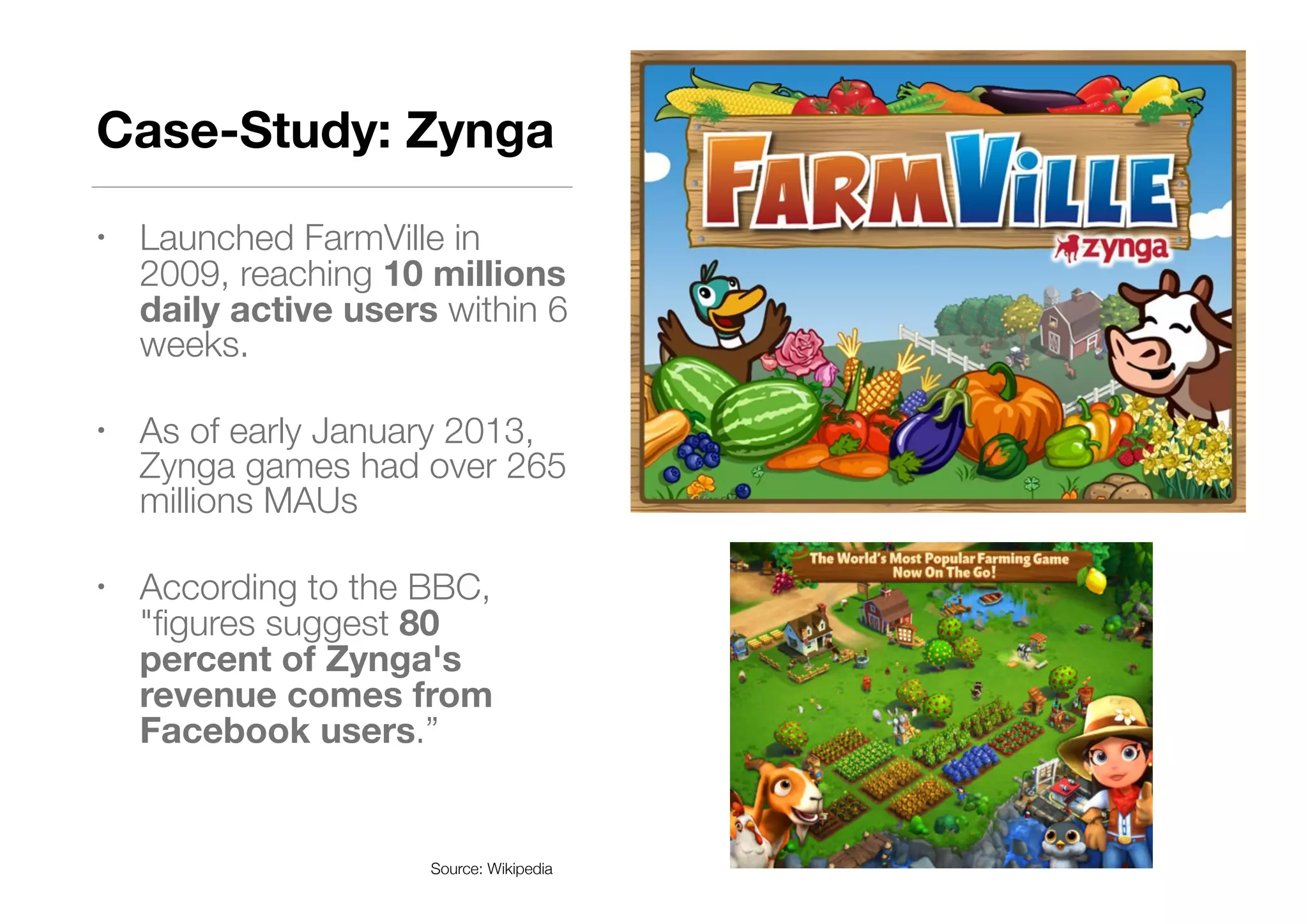
Case-Study: Zynga
• Launched FarmVille in
2009, reaching 10 millions
daily active users within 6
weeks.
• As of early January 2013,
Zynga games had over 265
millions MAUs
• According to the BBC,
"figures suggest 80
percent of Zynga's
revenue comes from
Facebook users.”
Source: Wikipedia
Case-Study:
tripadvisor.com
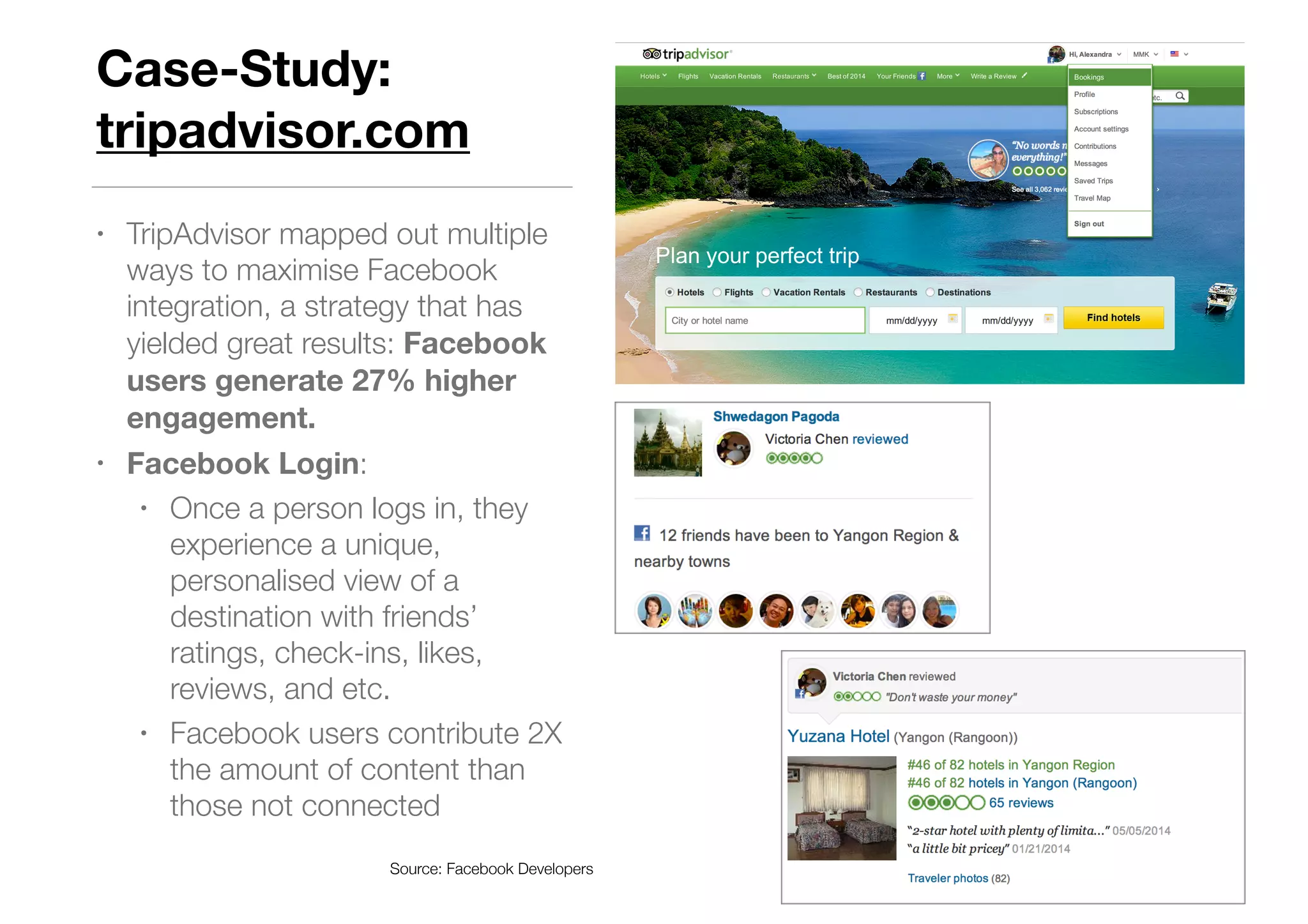
• TripAdvisor mapped out multiple
ways to maximise Facebook
integration, a strategy that has
yielded great results: Facebook
users generate 27% higher
engagement.
• Facebook Login:
• Once a person logs in, they
experience a unique,
personalised view of a
destination with friends’
ratings, check-ins, likes,
reviews, and etc.
• Facebook users contribute 2X
the amount of content than
those not connected
Source: Facebook Developers

Introduction to social media by Alex

  • 1.
    Introduction to SocialMedia Alexandra Tan alexandra.tan@gmail.com Digital & Social Media Specialist
  • 2.
    Agenda • Social MediaNetwork landscape • Why your business needs to be on Social Media? • Best Practices on Organic and Paid reach • How and what to measure on Social Media? • Social Media platform integration for app developers.
  • 3.
  • 5.
    Why your businessneeds to be on 
 Social Media? • Brand building 
 Create brand awareness and build identity • Engage with your customer 
 Keep top of mind in your customers and influence buying behaviours • Obtain customer insights
 Provides true insights of your customer which allow you to carve out relevant marketing strategy • Deliver real-time customer service
 Delight your customers with quick help
  • 6.
    Things To ConsiderBefore Leaping Into 
 Social Media • What do you want to get out from social media and how will you measure success? ROI? Brand building? Lead generation? • Research and choose the right social media networks. Find out where your customers or potential customers are. • Do you have internal resources • i) for content creation, planning and scheduling? • ii) to manage your brands on all social media networks? • iii) community management? • What will you do when there is a PR crisis?
  • 7.
    Best Practices onOrganic and Paid reach 
 on Social Media Network
  • 8.
    What are Organicand Paid Distributions? • Organic distribution is when your content were shown to people through unpaid channel, • example: Facebook Page, Twitter account • Paid distribution is when your content were shown to people through paid channel • example: Facebook Ads, Twitter Sponsored ads
  • 9.
    Facebook Pages • Allowbrands to build a community of people (fans) who wants to hear from and engage with them • Brands communicate with customers on the page thru page posts and vice-versa • Brands can distribute marketing messages directly to fans and get real-time engagement • Actions such as Like, Comment or Sharing on page posts creates a story on friend of friend’s newsfeed, generating viral and organic views
  • 10.
    Social Media ContentBest Practices • How to increase organic engagement? • post original and relevant contents • be authenthic, use your brand’s personality when posting • target your content to the relevant demography • keep a content calendar, when and what to post with clear KPIs • keep it short and sweet (140 char) • photos get most engagement than video and text (varies by culture and country) • respond to comments, engage with your fans • posting frequencies: 1x per day on Facebook, multiple (varies by social netculture and country) • use maximum of 2 Hashtags per tweet on Twitter • Test and optimise your social media content strategy
  • 11.
  • 12.
  • 13.
    Facebook Ads • Advantages: •Massive audience 
 >1 billion MAU WW, 1.5m - 2m MAU in Myanmar • Targeting
 Demographic, interest, behavioural, • Mobile placement
 65% of MM FB users access FB using Mobile only • Advanced targeting
 Custom Audience, Look-alike audience, Custom Audience for Website
  • 14.
  • 15.
    Facebook Ads • Whento use which ad types? • Create awareness or communicating • Page Post Engagement • Event Responses • Building fan base • Page Likes • Drive website traffic • Clicks to Website • Conversions • Website Conversions • App Installs • Drive foot traffic to store • Offer claims
  • 16.
    Facebook Ads 
 BestPractices • Campaign Planning • Set your campaign objective and KPIs for measurement • Pick targeting details: Age, location, interest • Create different set of contents and creative to target different set of demography: age group (teens, young adults, mature) and interests • Select placement: Desktop News Feed, Mobile News Feed, Right Hand Side • Content: Be creative and refresh ad copy and images regularly. • Test, analyse and optimize!
  • 17.
    How to measureSocial Media success? • Regardless of channel, your Social Media KPIs should be aligned with your business goals. • If your business goal is to increase sales by X% in 2014, your content and ads should be designed with that in mind. Number of fans, engagement, retweets, followers are not business goals. • Social Network like Facebook and Google provides brands with tools to track leads and conversions which you can use to attribute your social media effort back to sales. • There are also 3rd party platform that brands can engage to track KPIs across social media networks. i.e. Hootsuite Media • Leverage Facebook Preferred Marketing Developers’s technology to help you manage and optimise your social media activities. 
 www.facebook-pmdcenter.com
  • 18.
    Social Media PlatformIntegration for 
 App Developers • Social Media networks offer developers with tools to integrate their apps with the platform, whether it’s to login to a site/app, interact with other users using shared information or to communicate with followers. • Facebook Developers: developers.facebook.com • Twitter Developers: dev.twitter.com/ • Advantages of integration • Get access to a huge distribution channel instantly, i.e. a billion users on Facebook • Quickly build out your app without having to reinvent the wheel, i.e. Facebook Login and Payment solutions • Personalise your app according to Facebook users’ shared information i.e. interest, check-in location, name,
  • 19.
    Case-Study: Zynga • LaunchedFarmVille in 2009, reaching 10 millions daily active users within 6 weeks. • As of early January 2013, Zynga games had over 265 millions MAUs • According to the BBC, "figures suggest 80 percent of Zynga's revenue comes from Facebook users.” Source: Wikipedia
  • 20.
    Case-Study: tripadvisor.com • TripAdvisor mappedout multiple ways to maximise Facebook integration, a strategy that has yielded great results: Facebook users generate 27% higher engagement. • Facebook Login: • Once a person logs in, they experience a unique, personalised view of a destination with friends’ ratings, check-ins, likes, reviews, and etc. • Facebook users contribute 2X the amount of content than those not connected Source: Facebook Developers