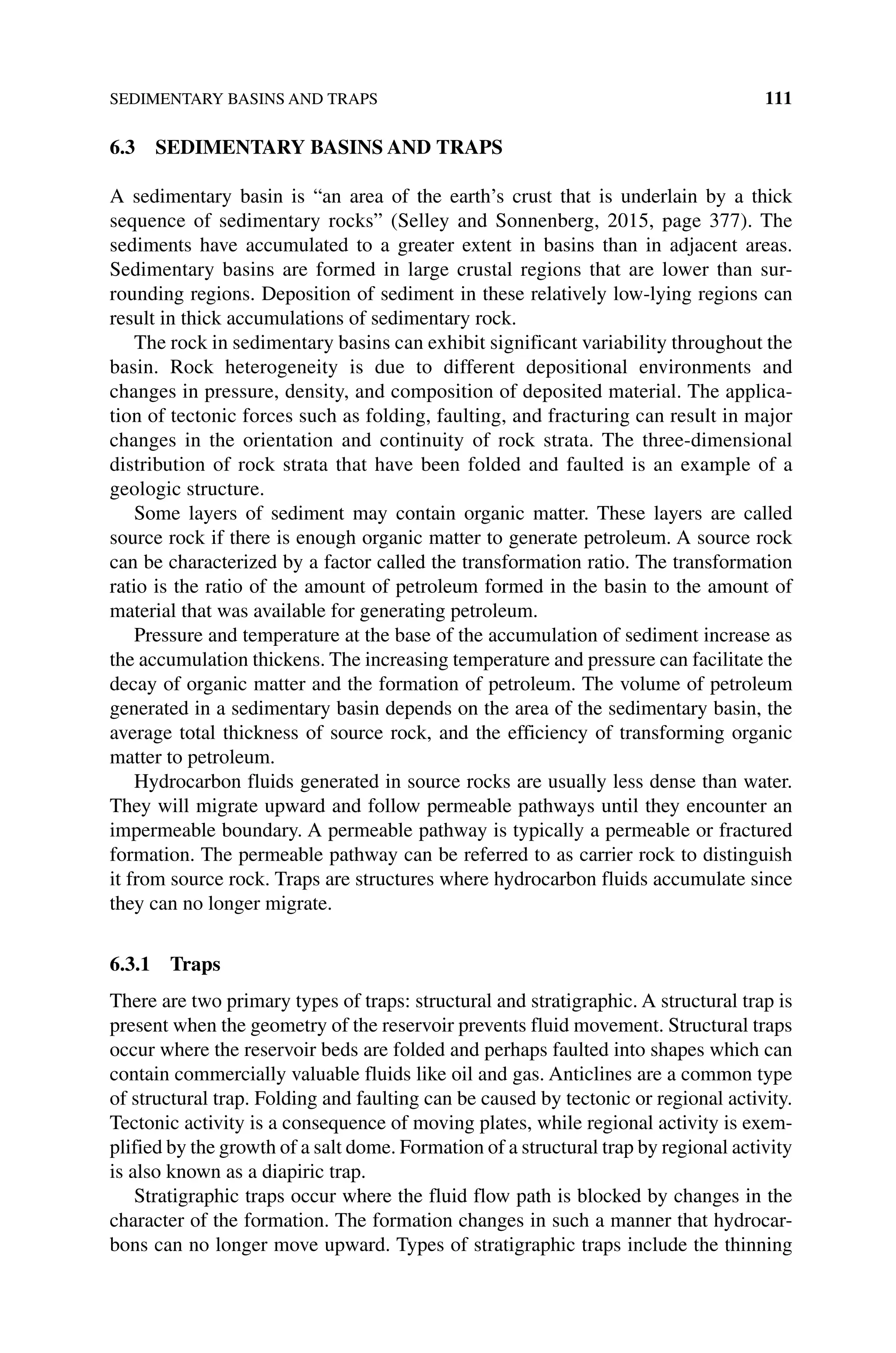
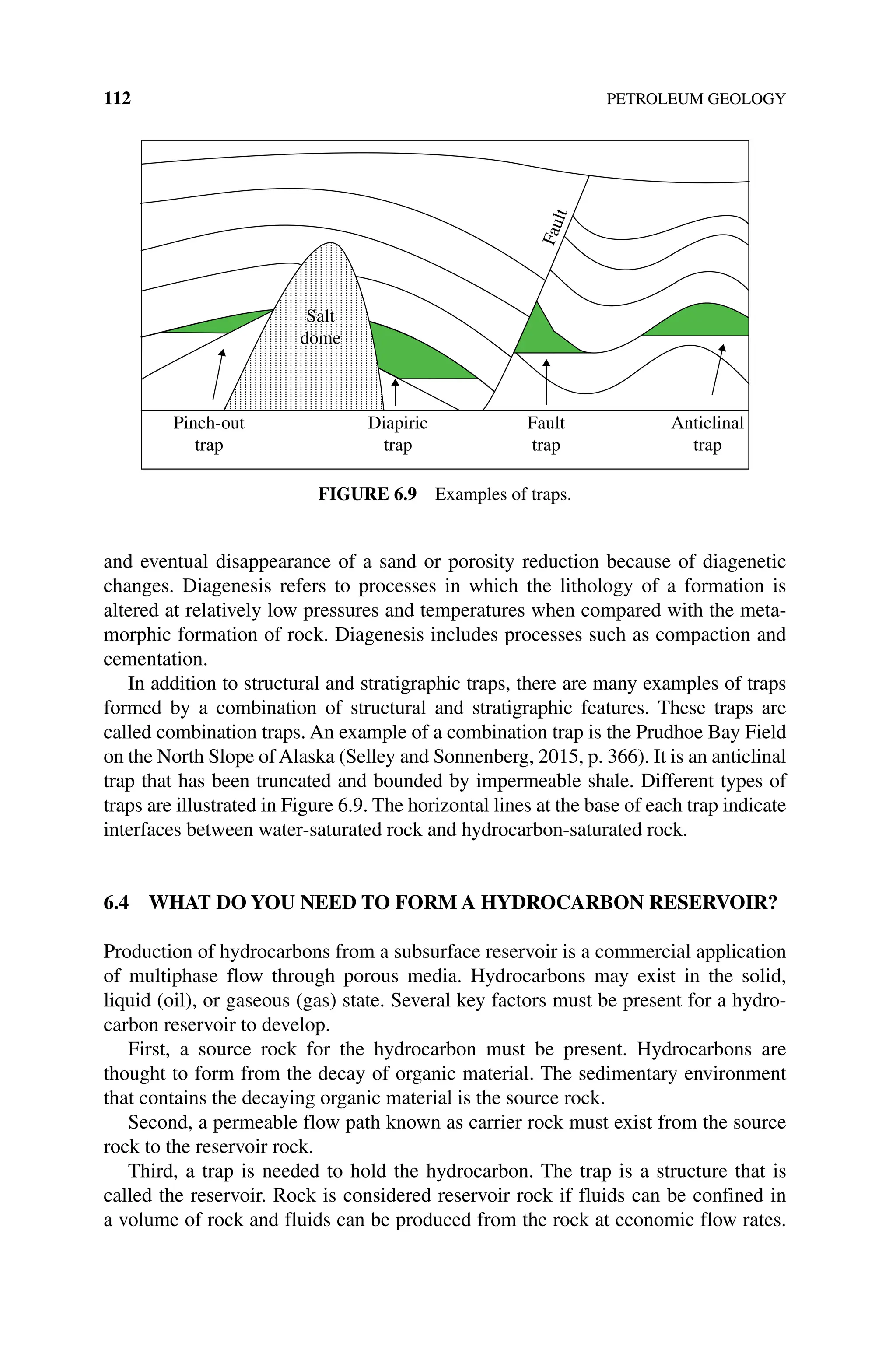
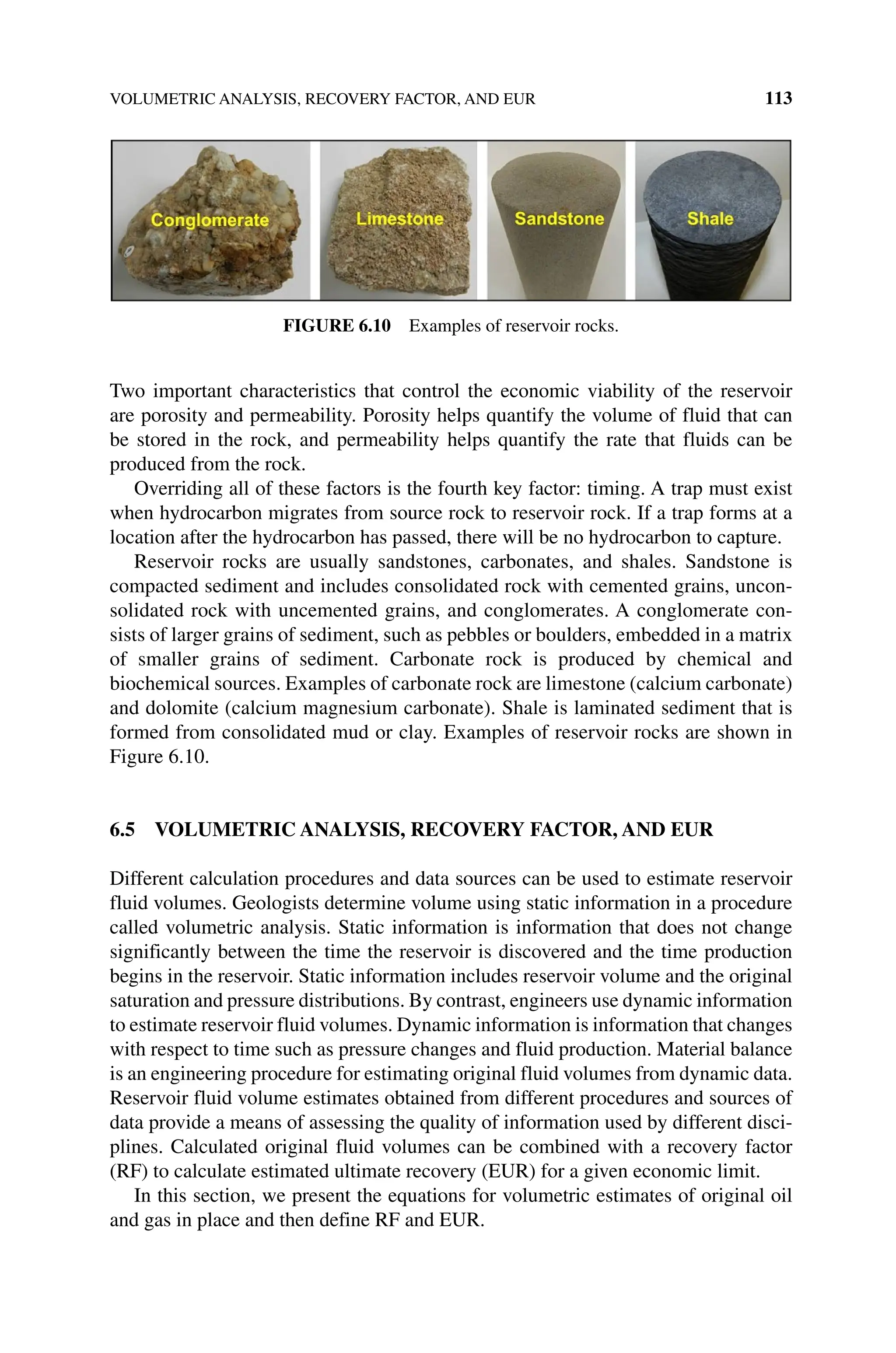
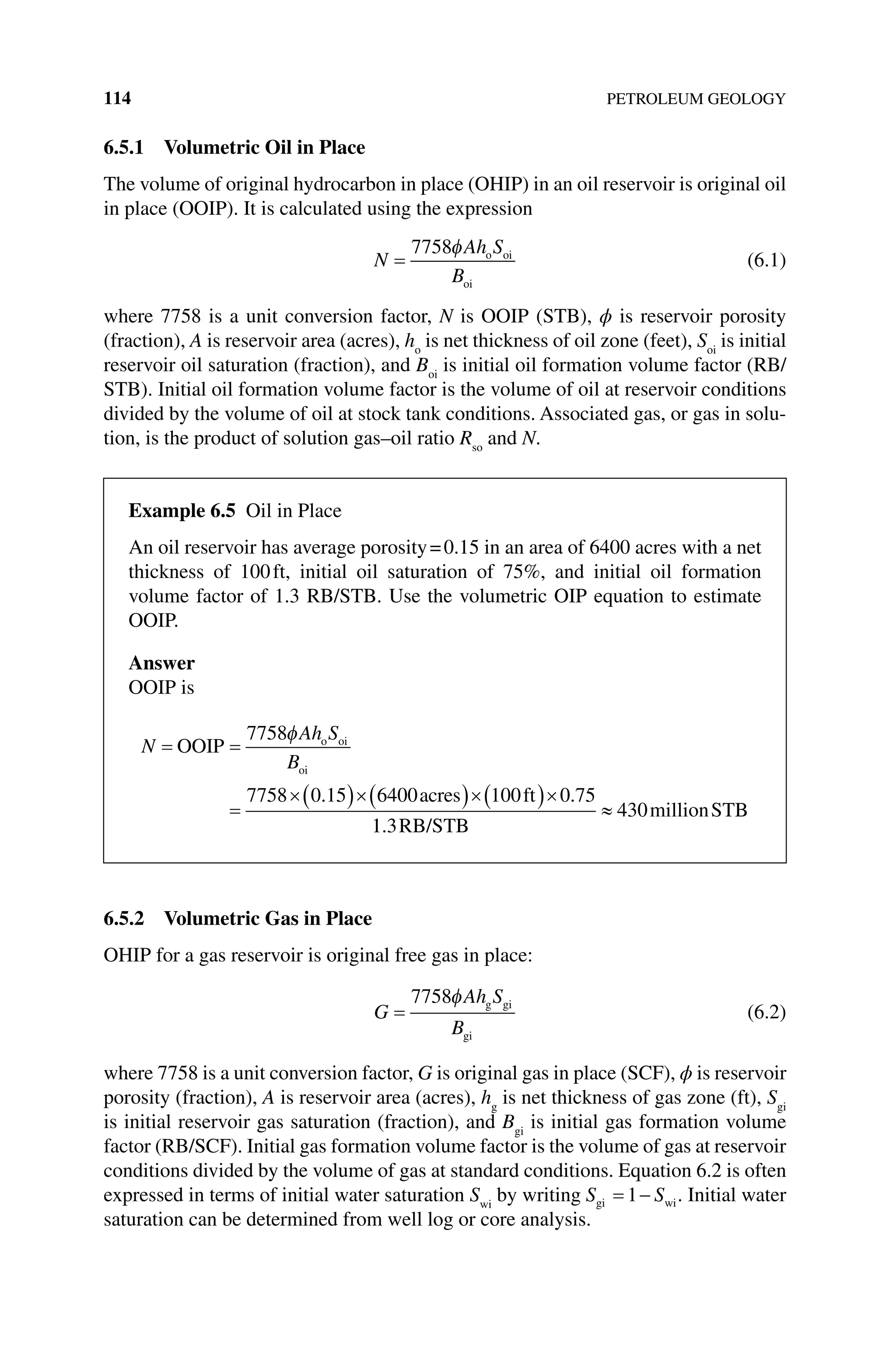
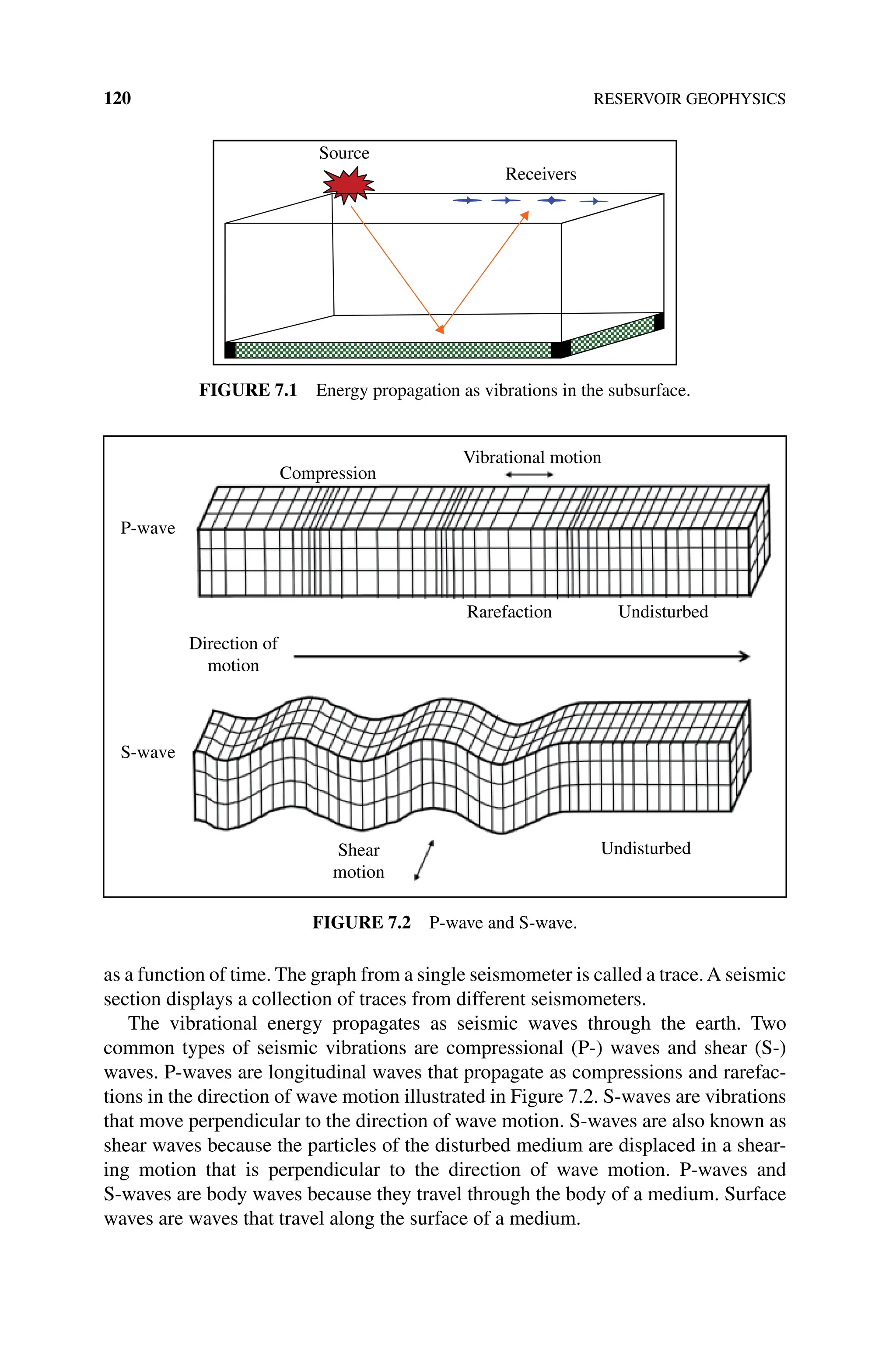
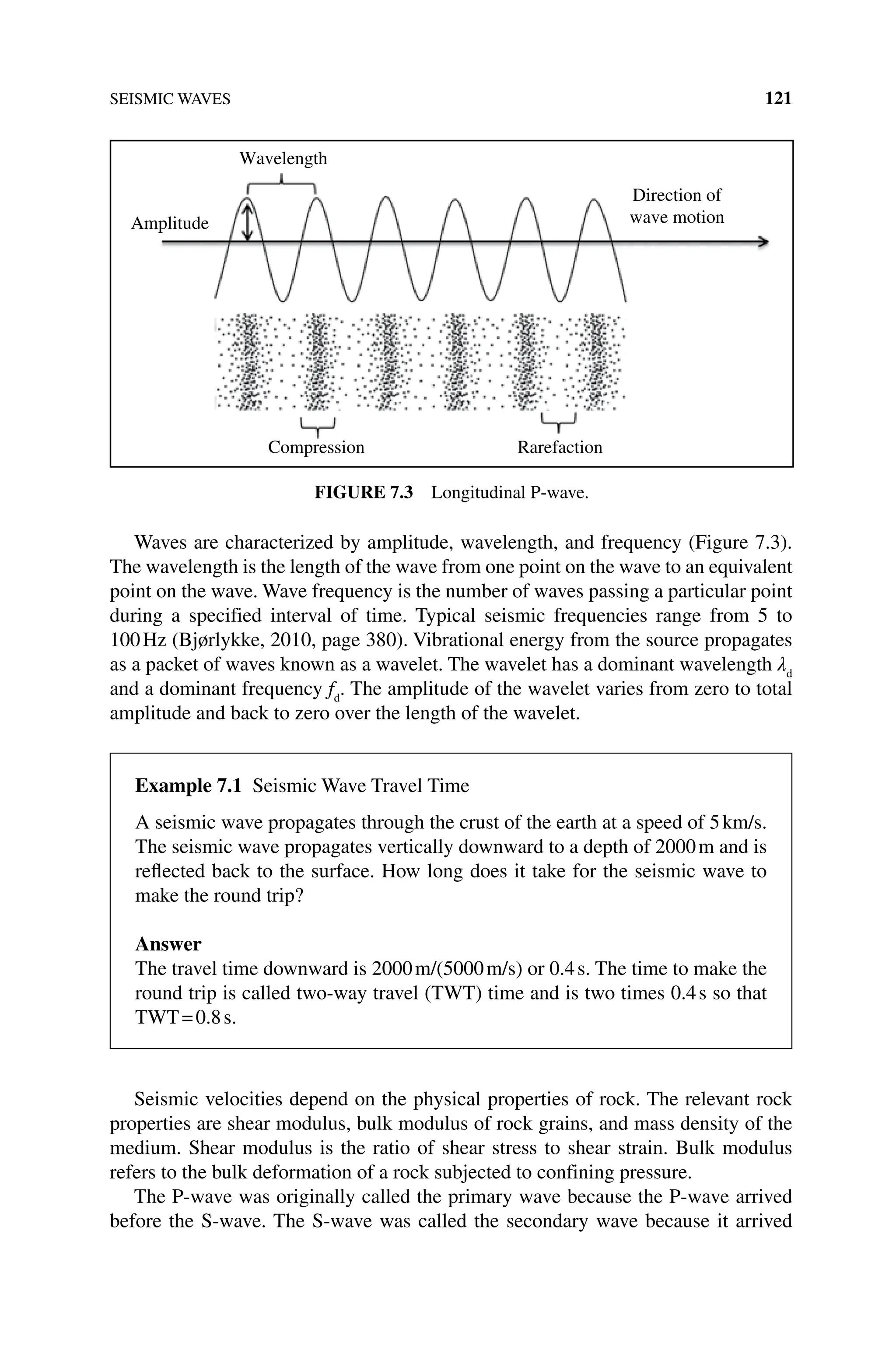
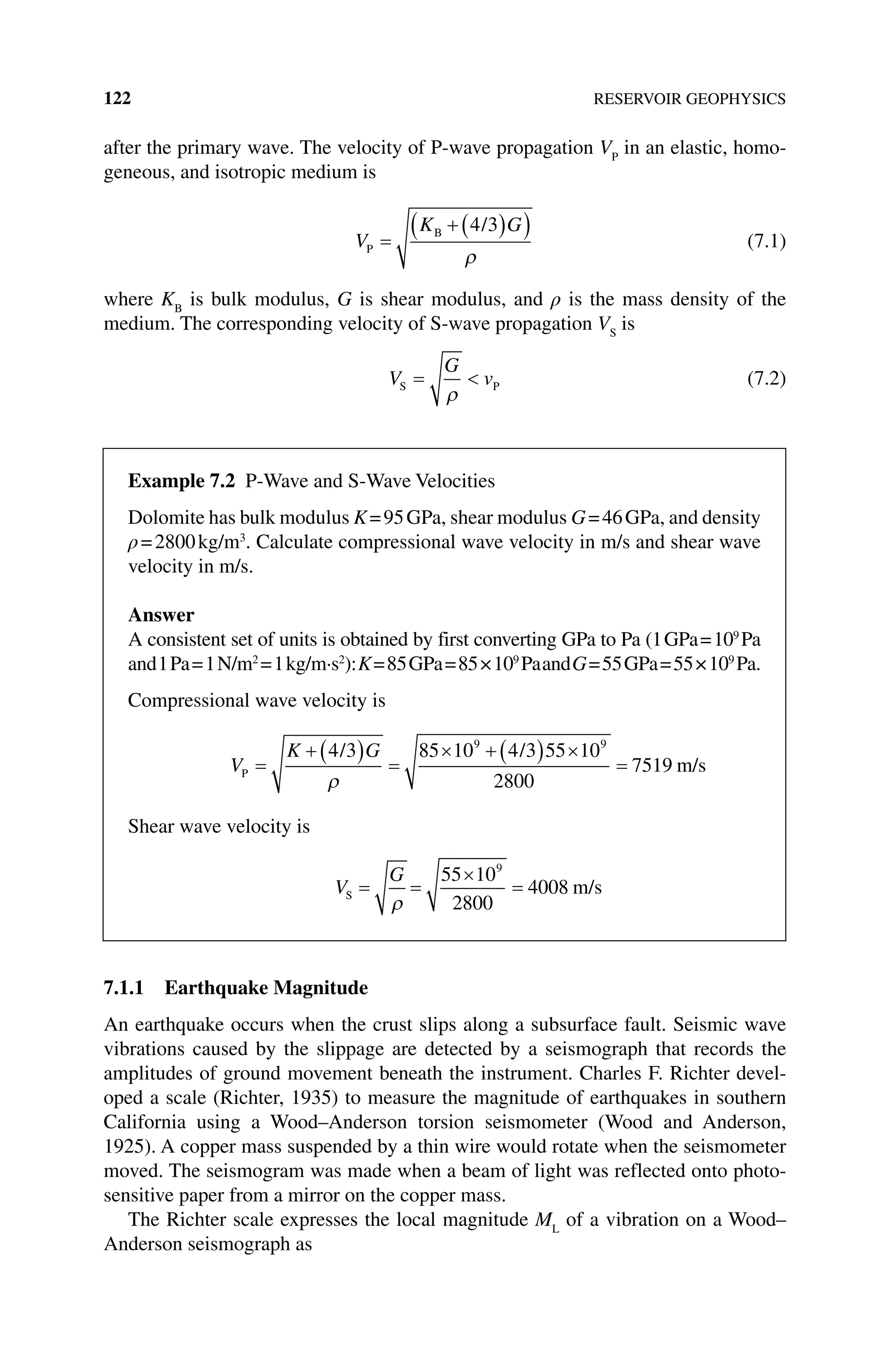
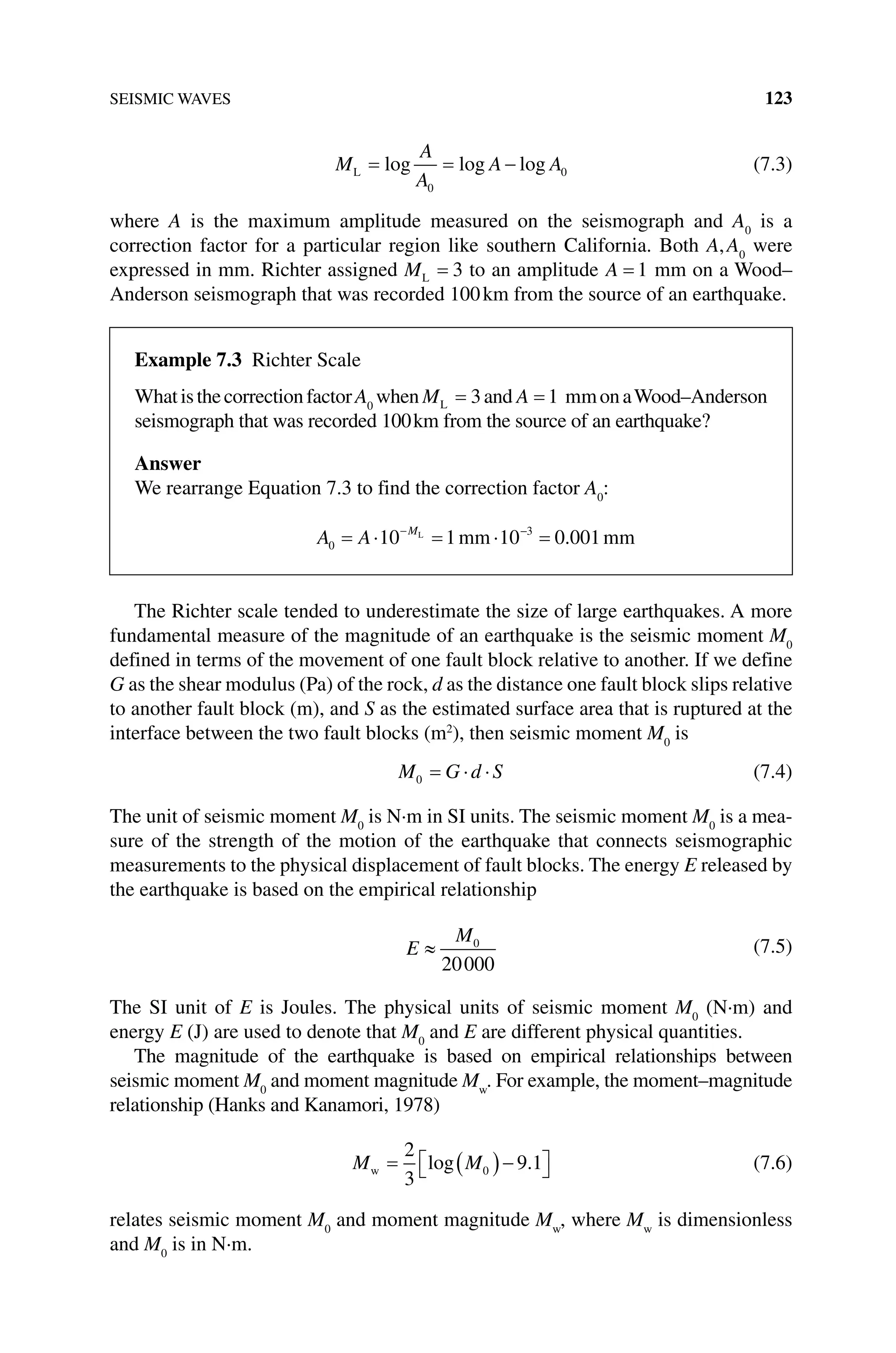
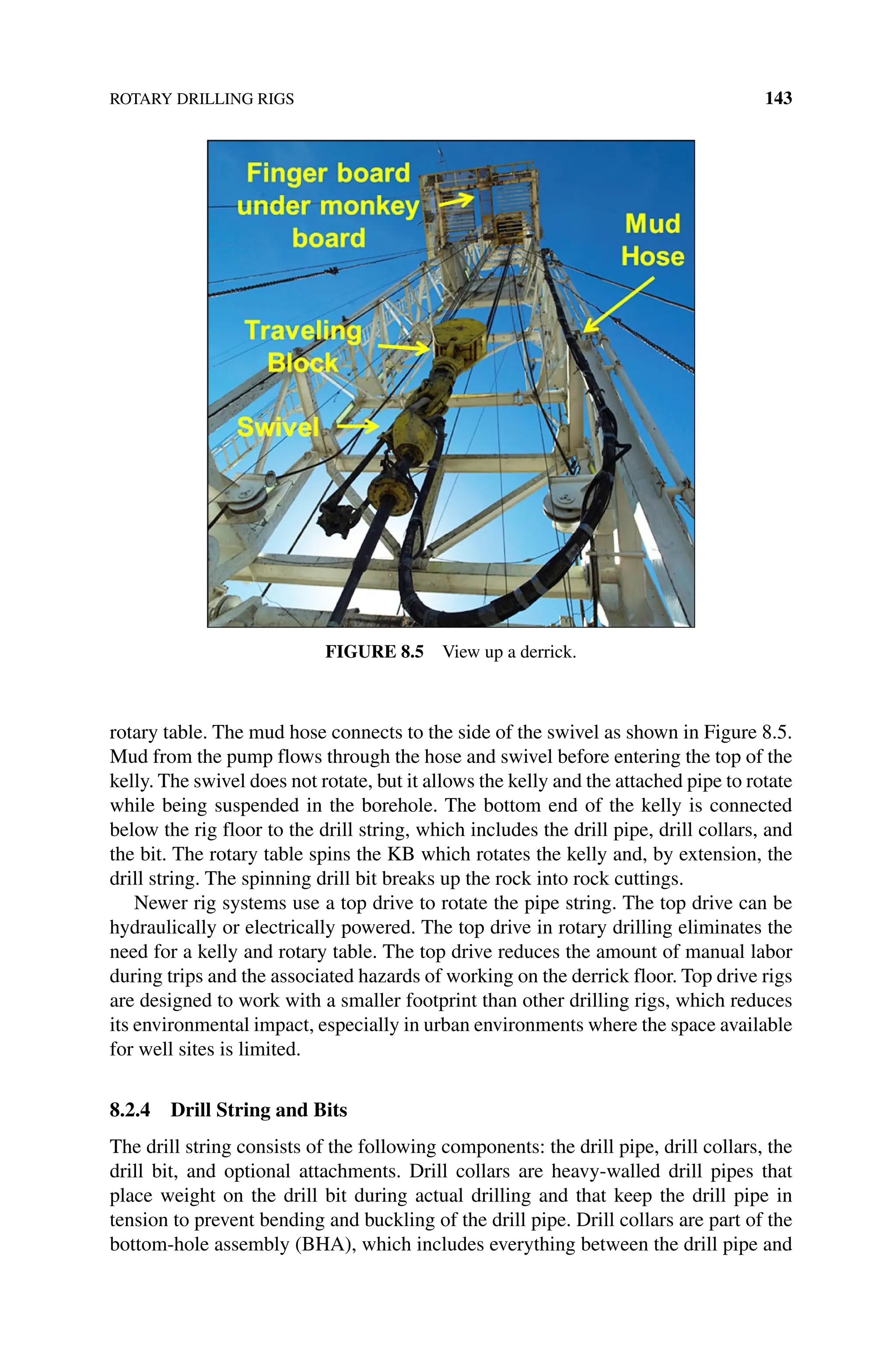
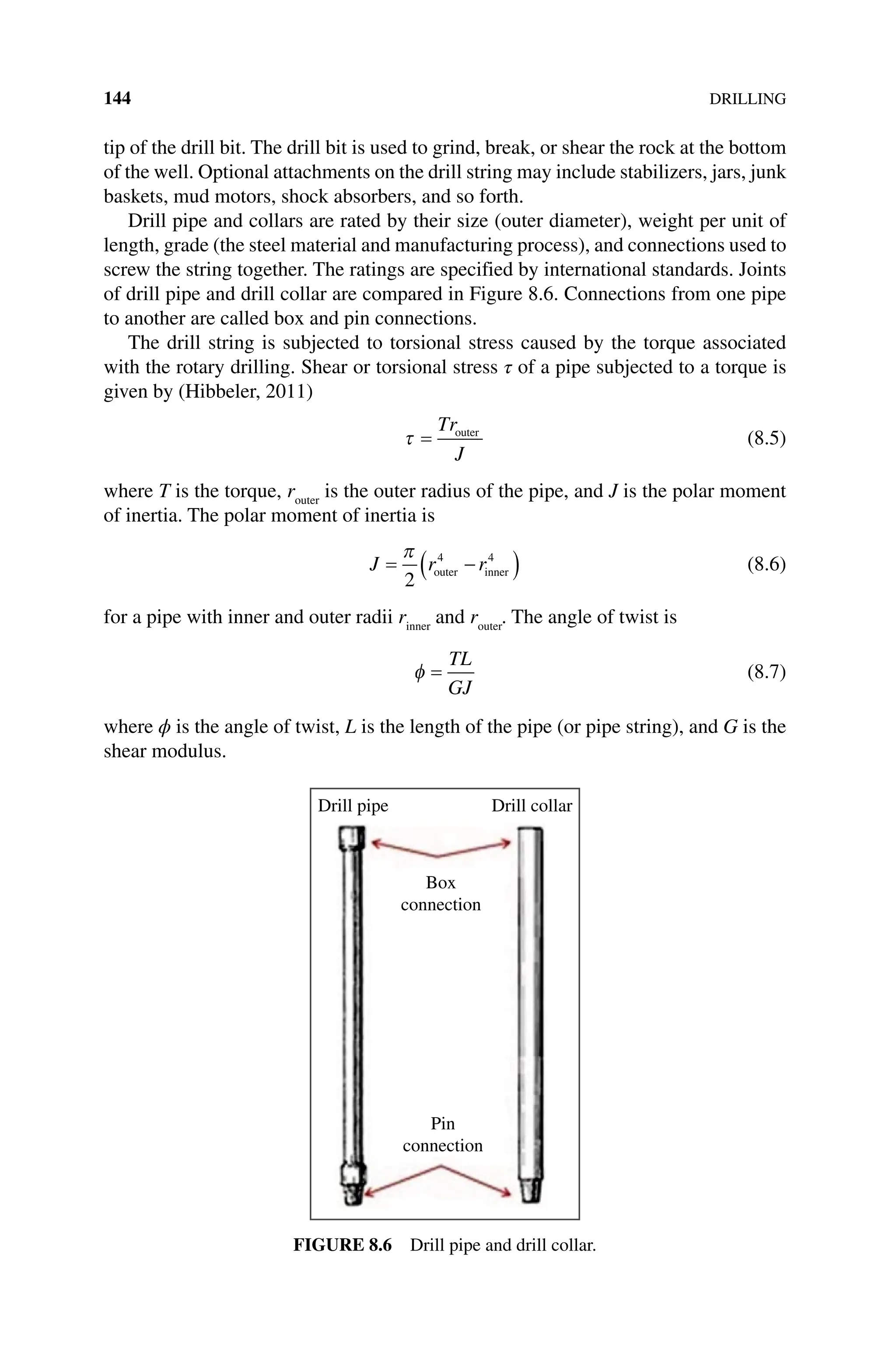
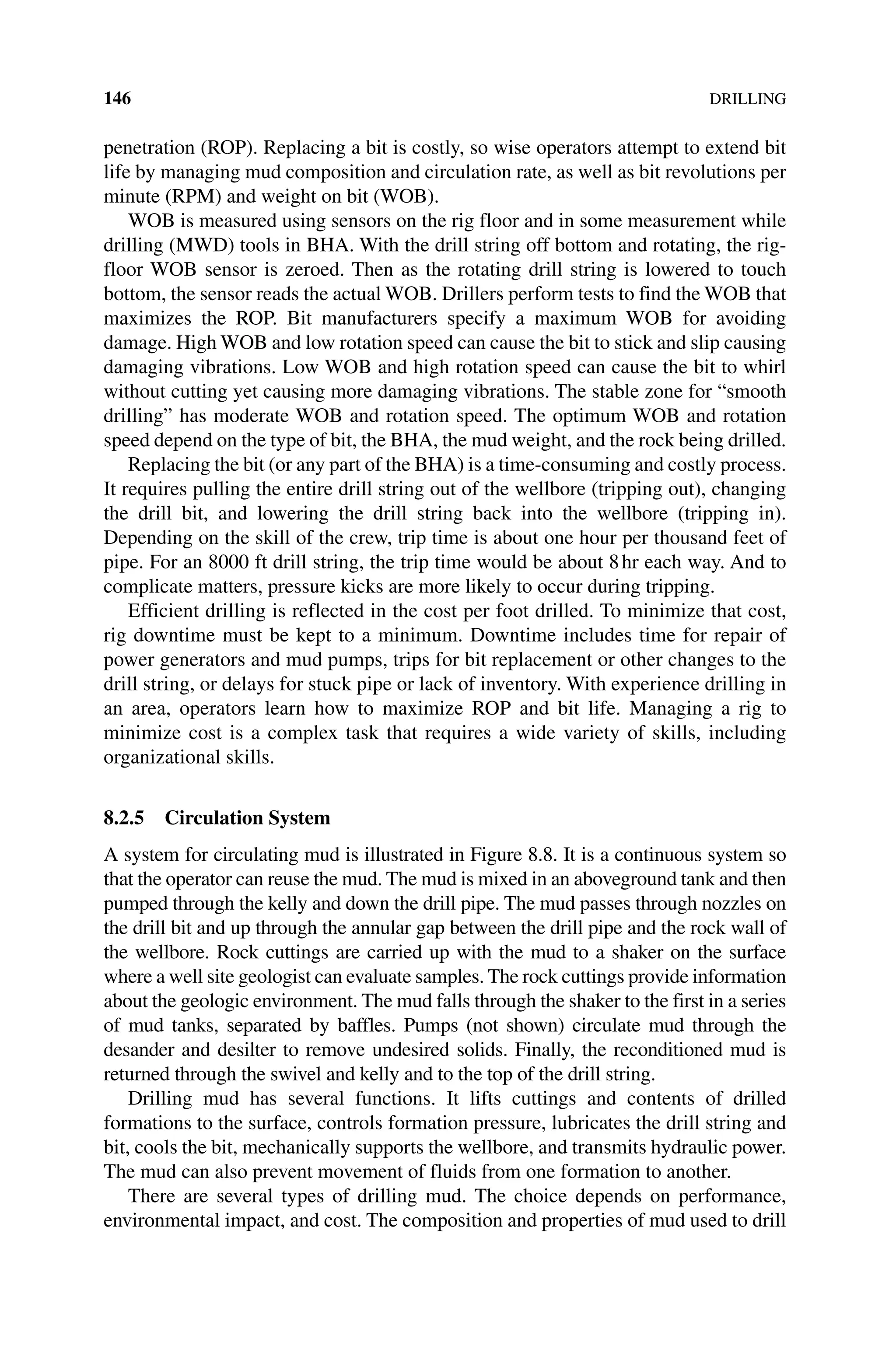
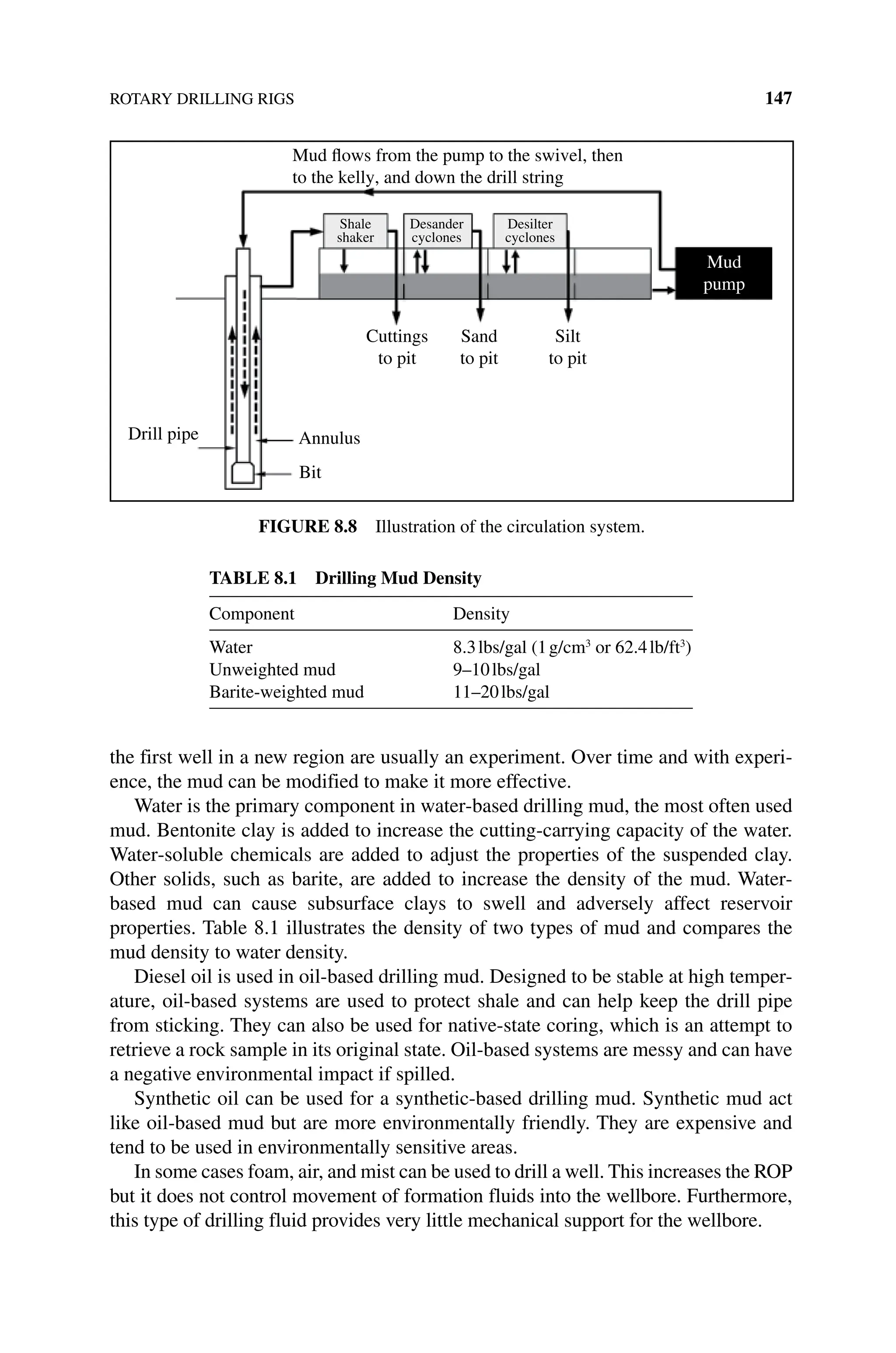
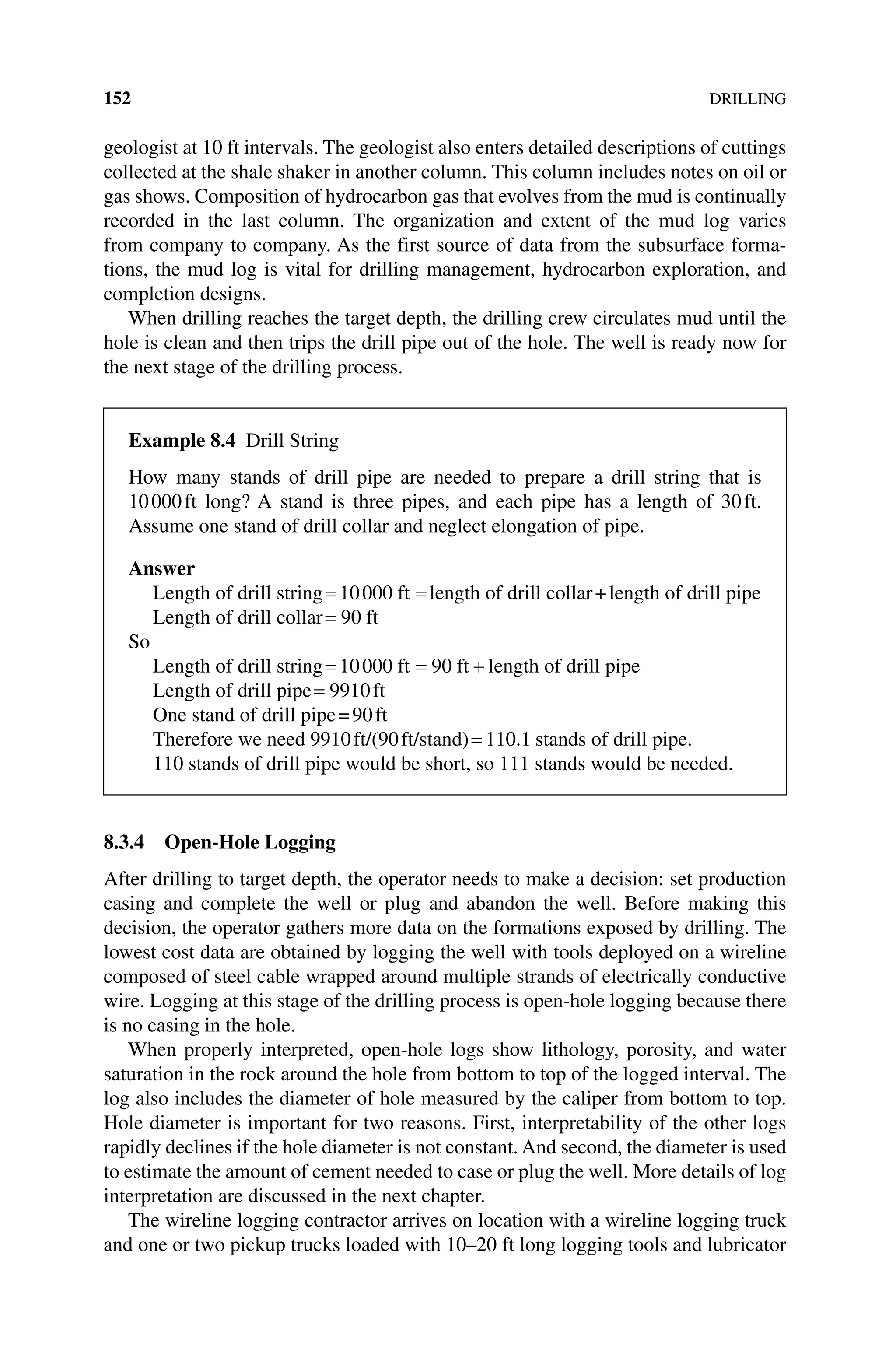
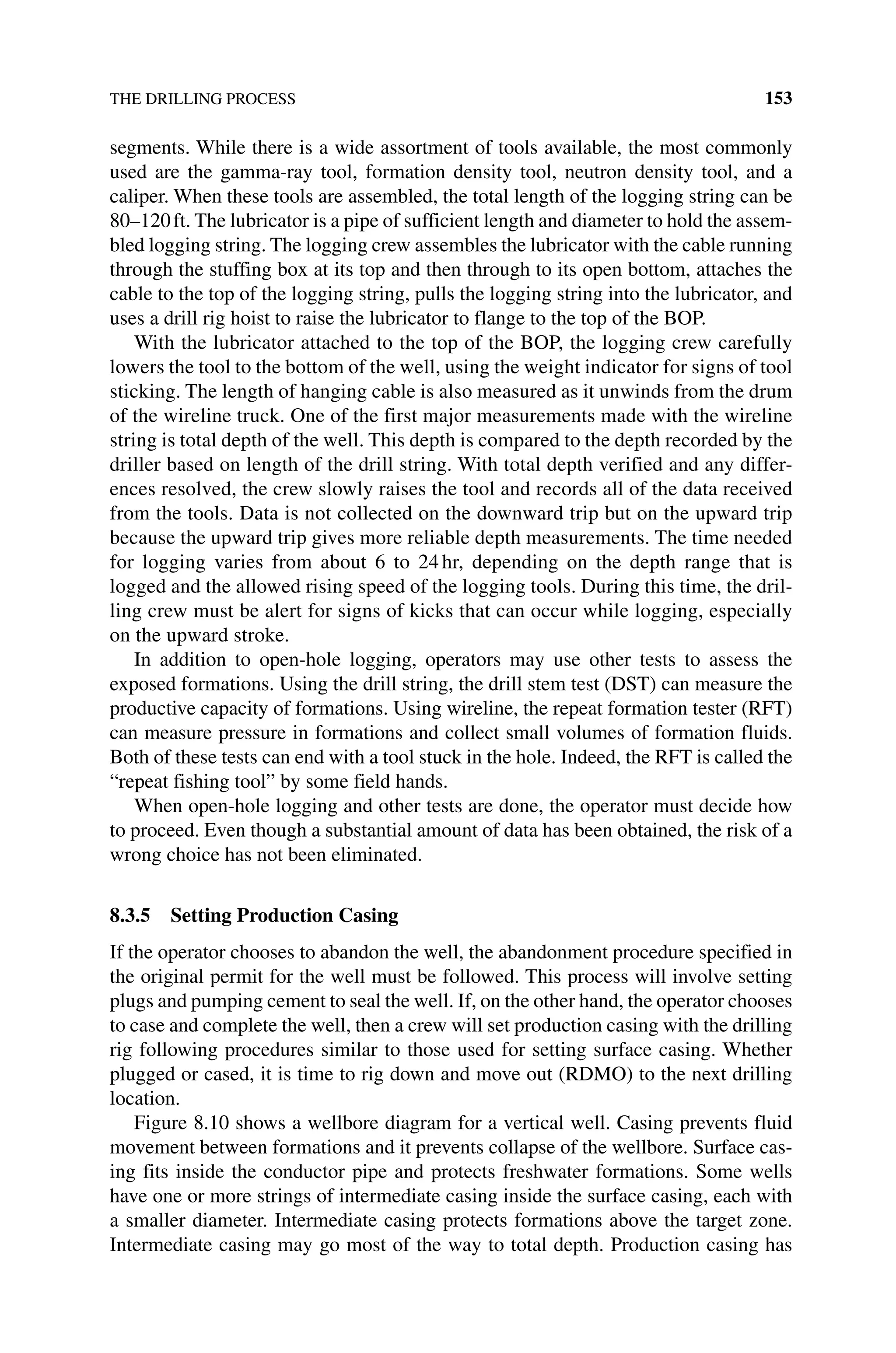
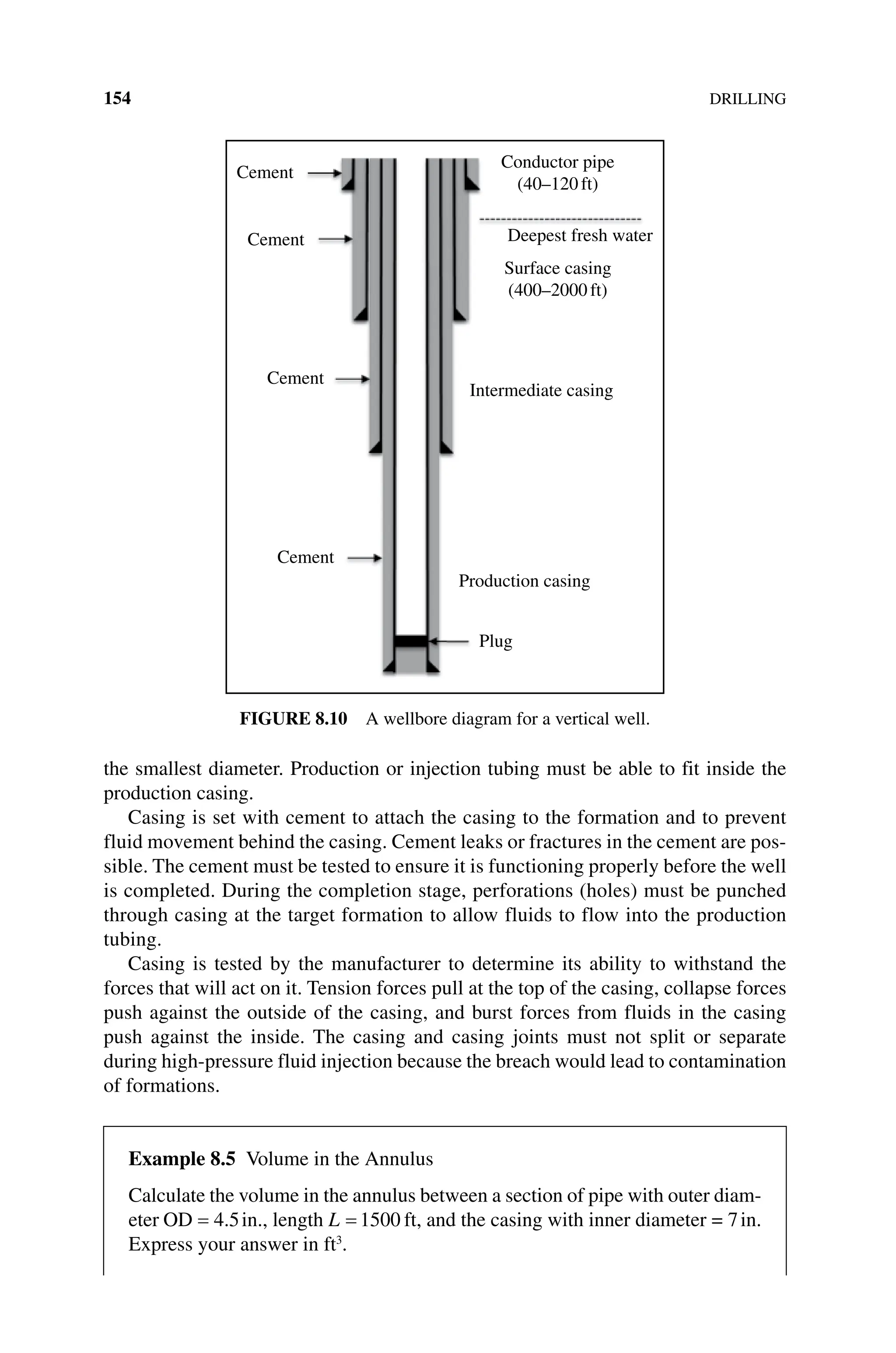
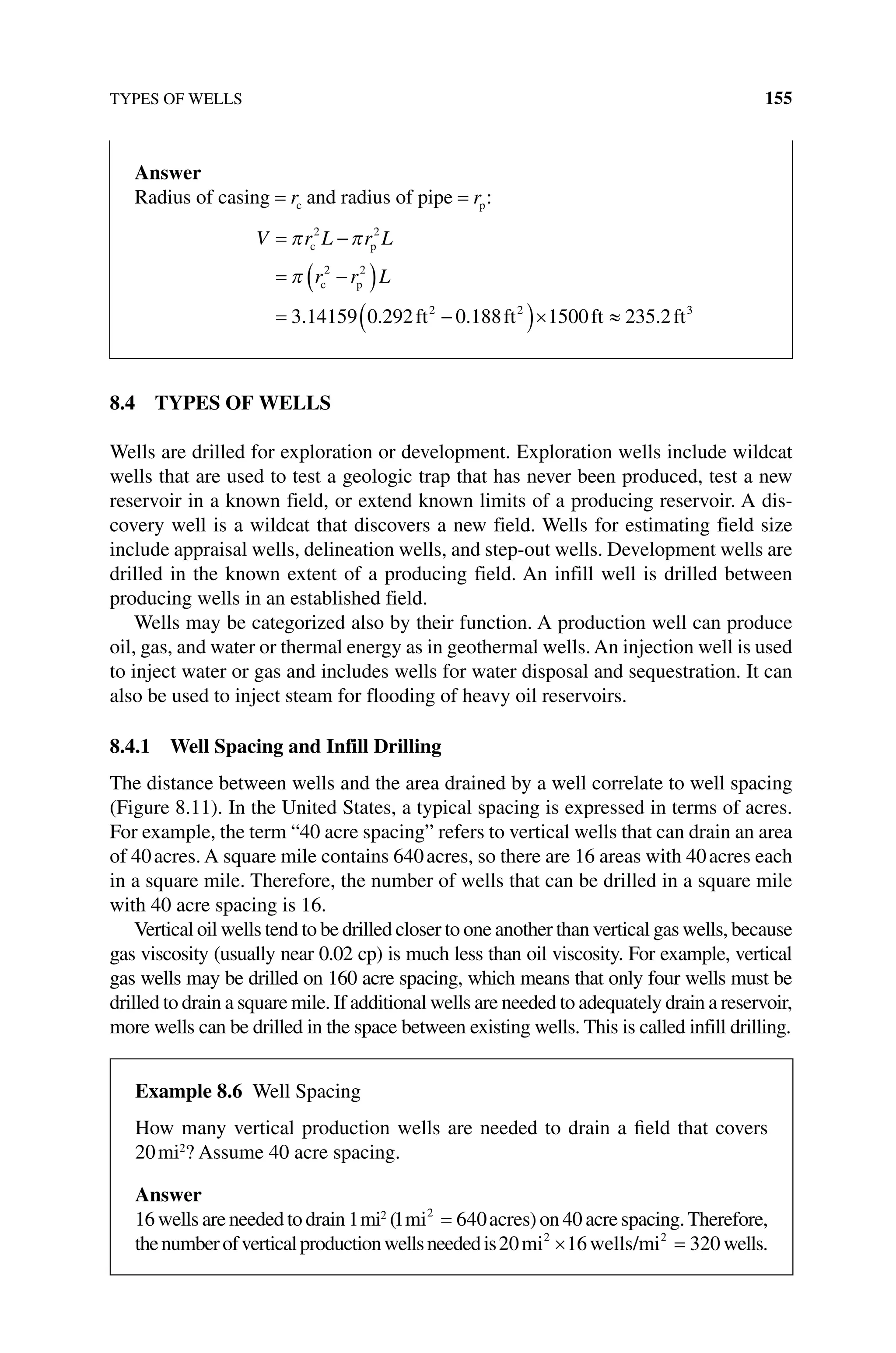
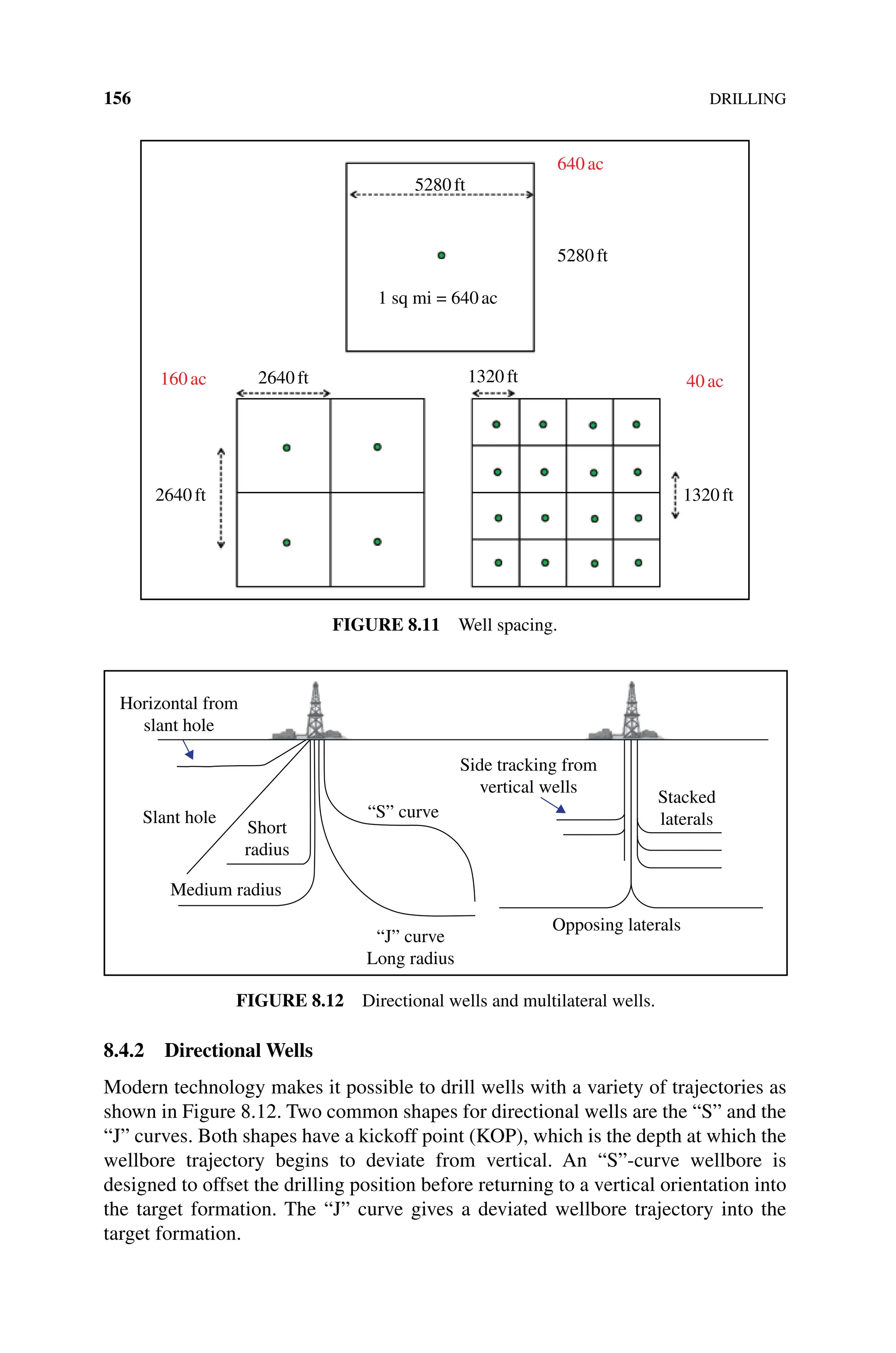
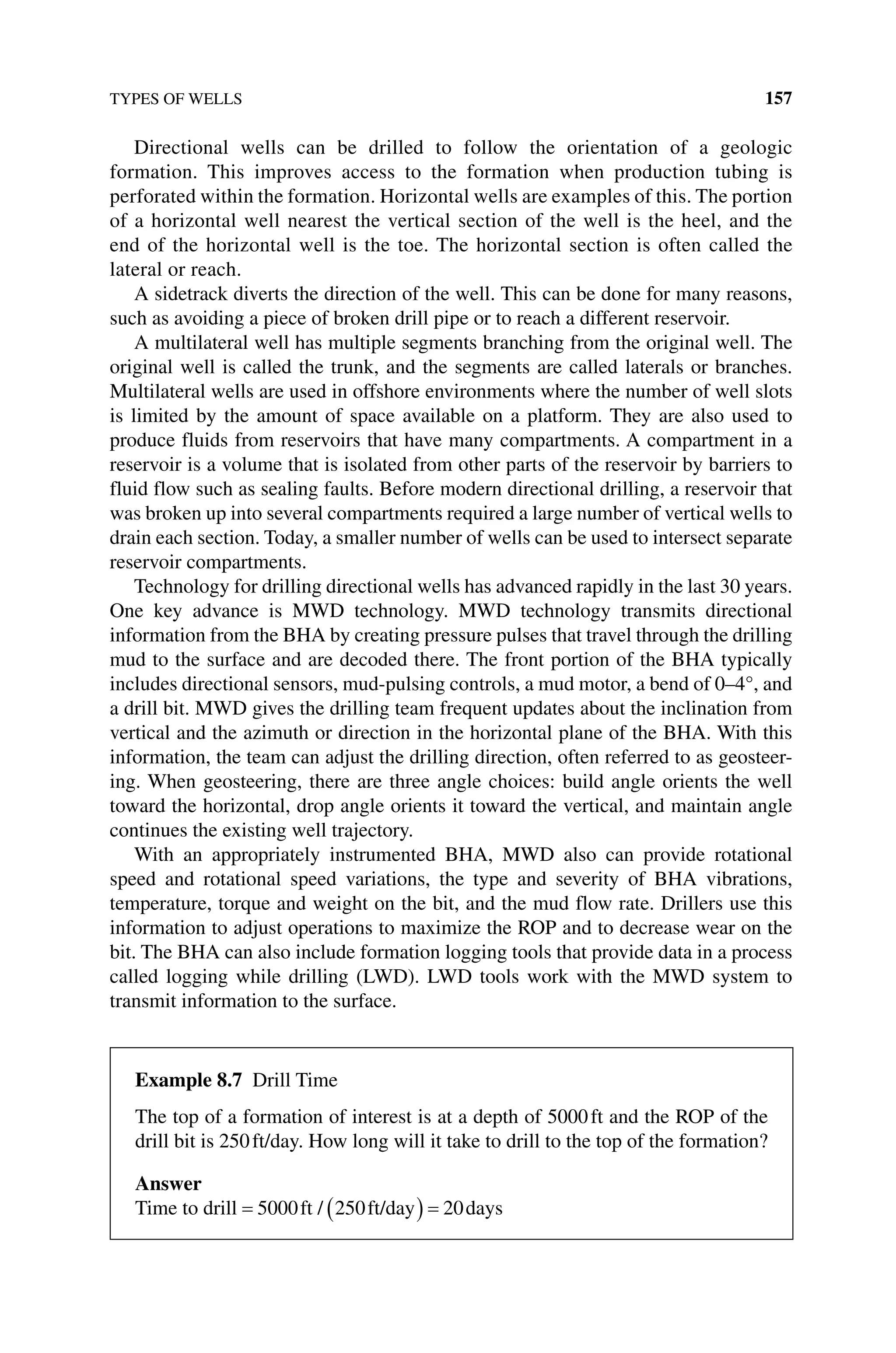
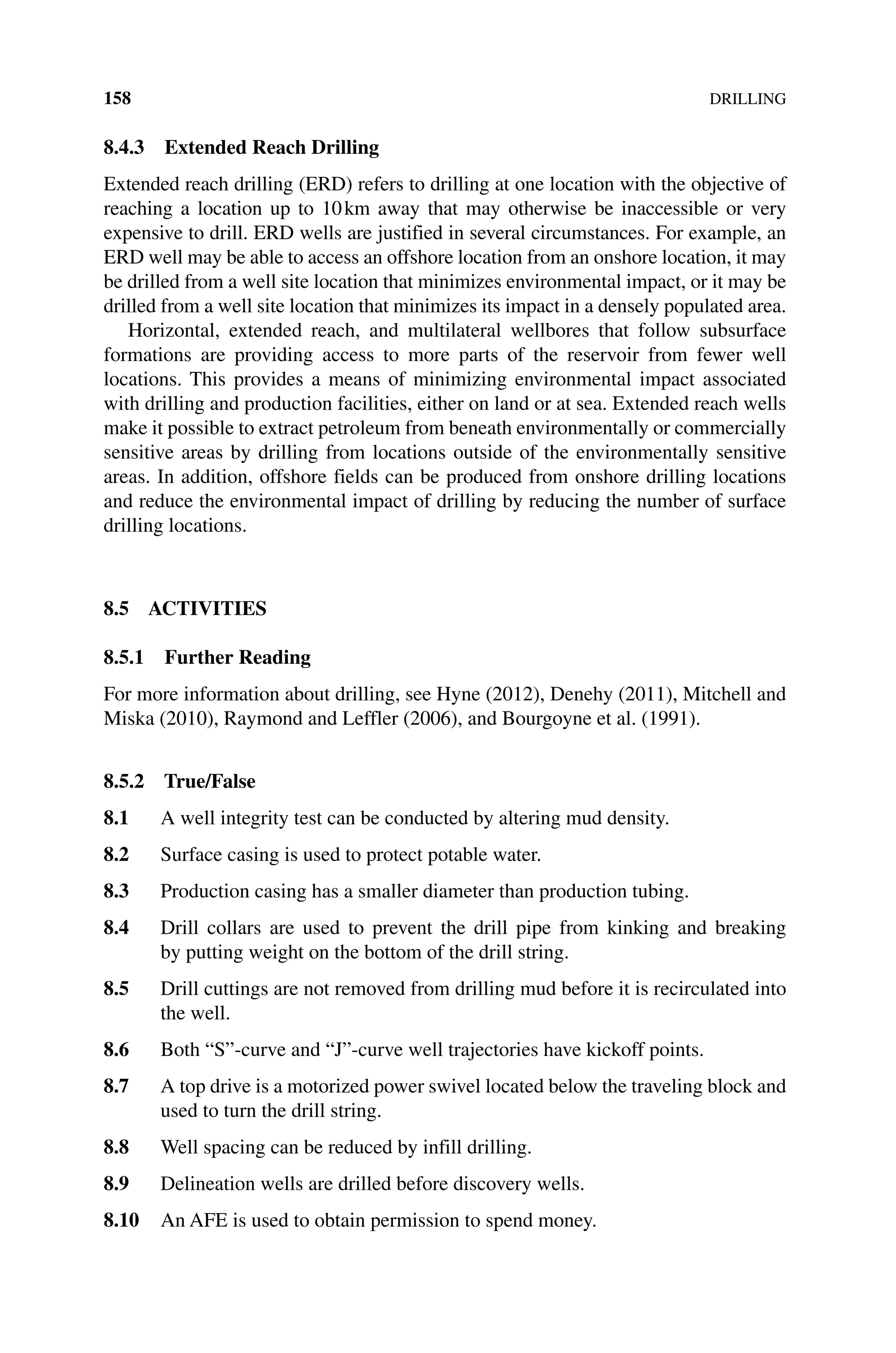
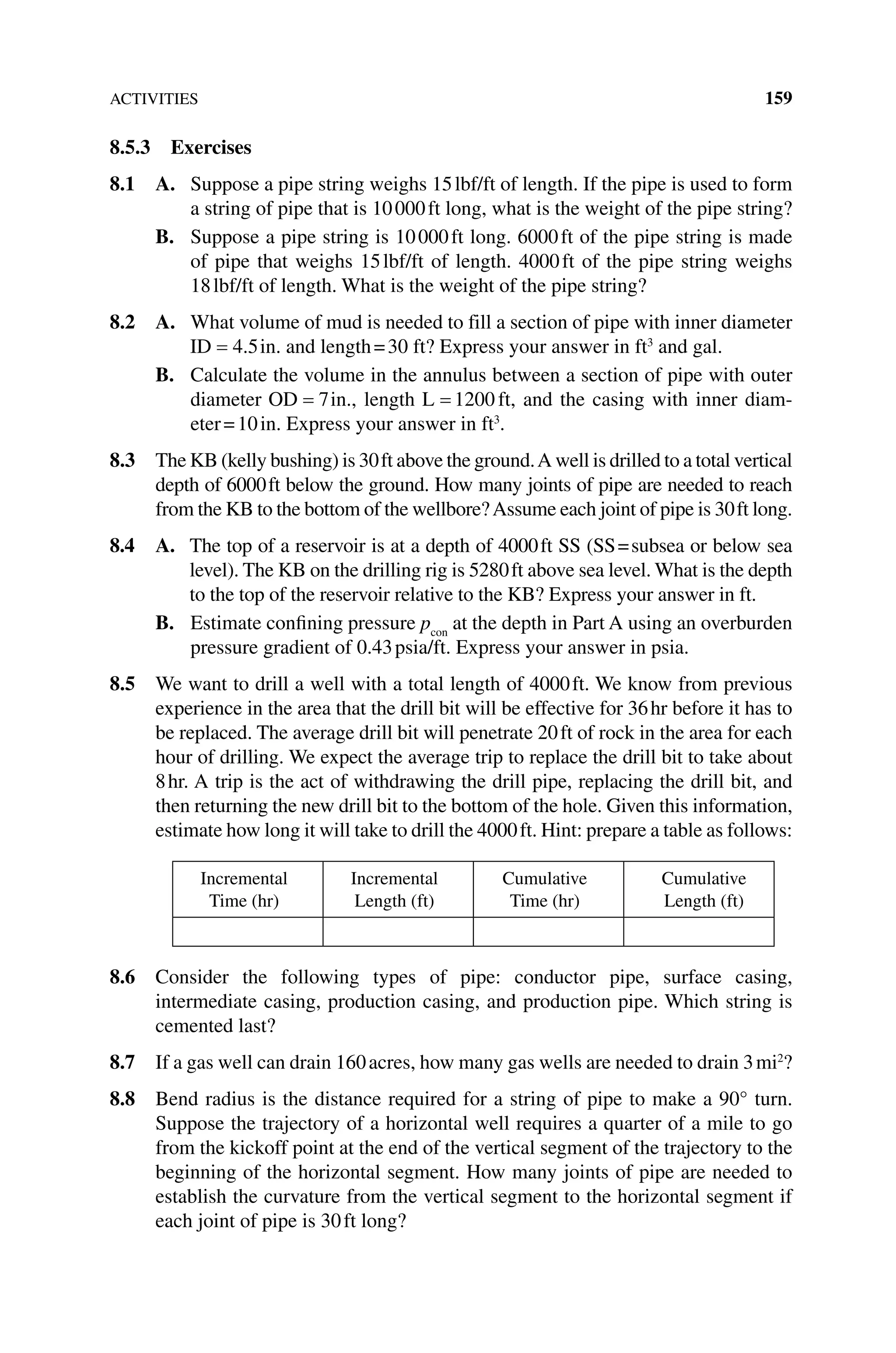
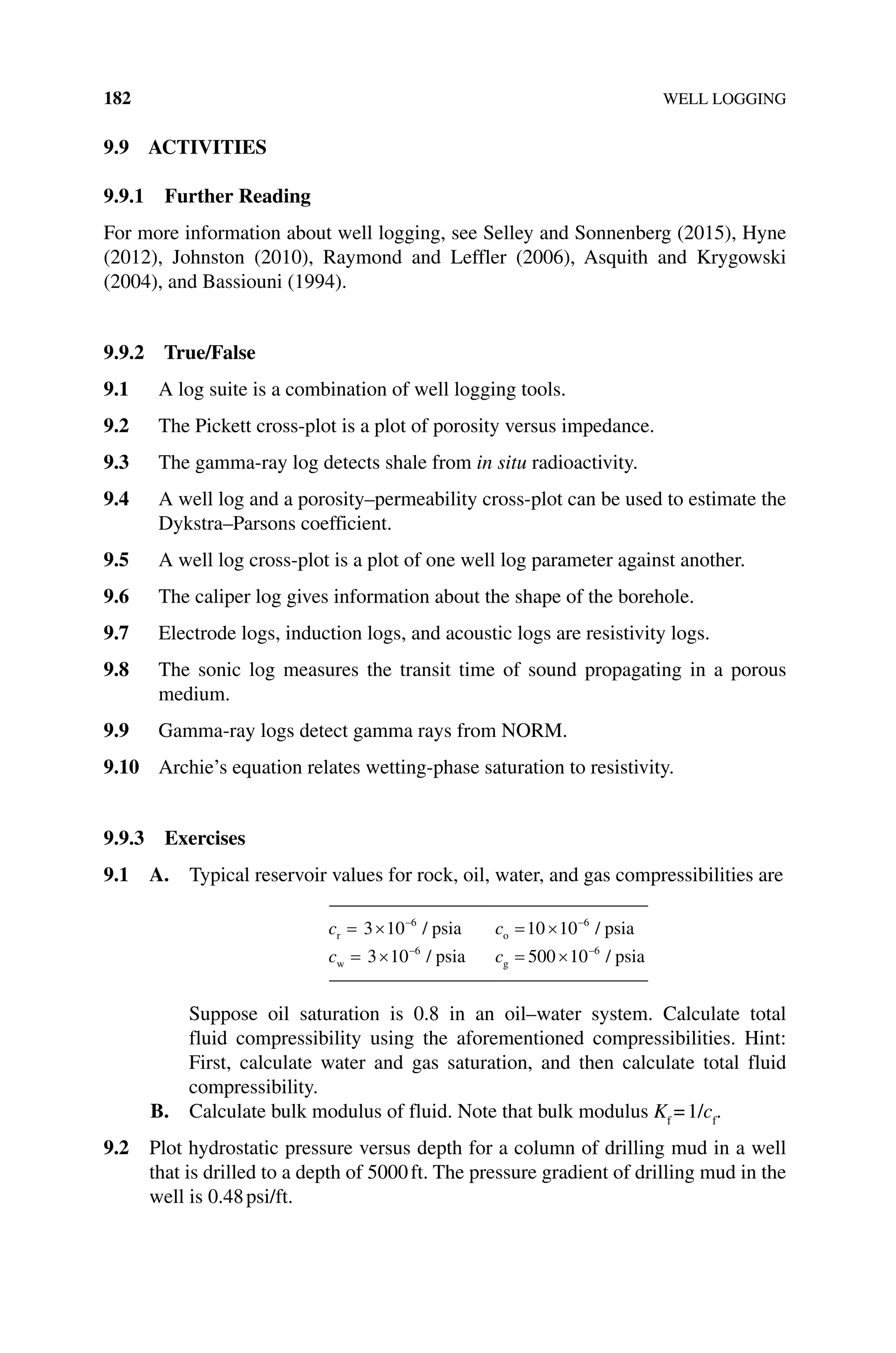
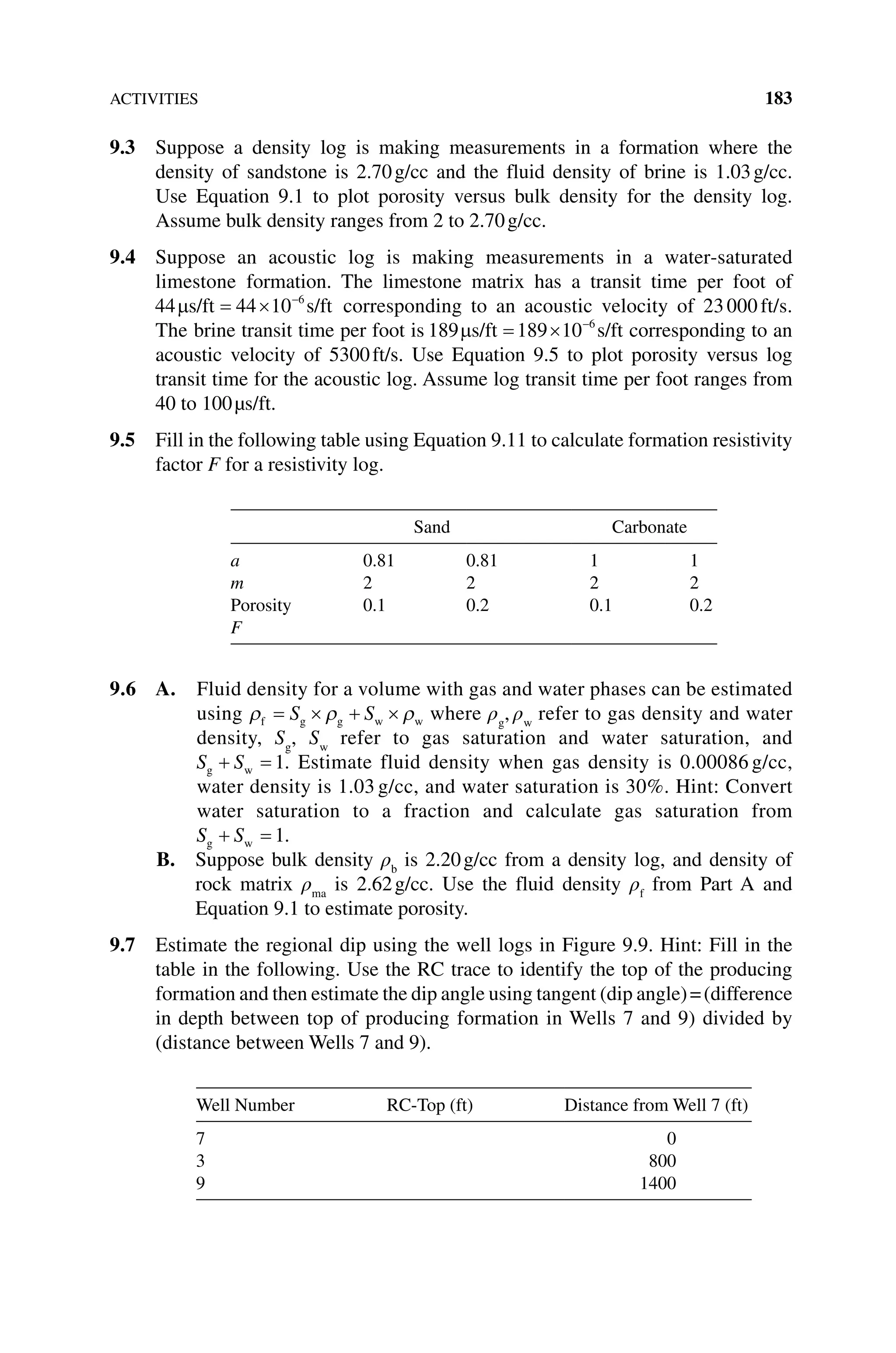
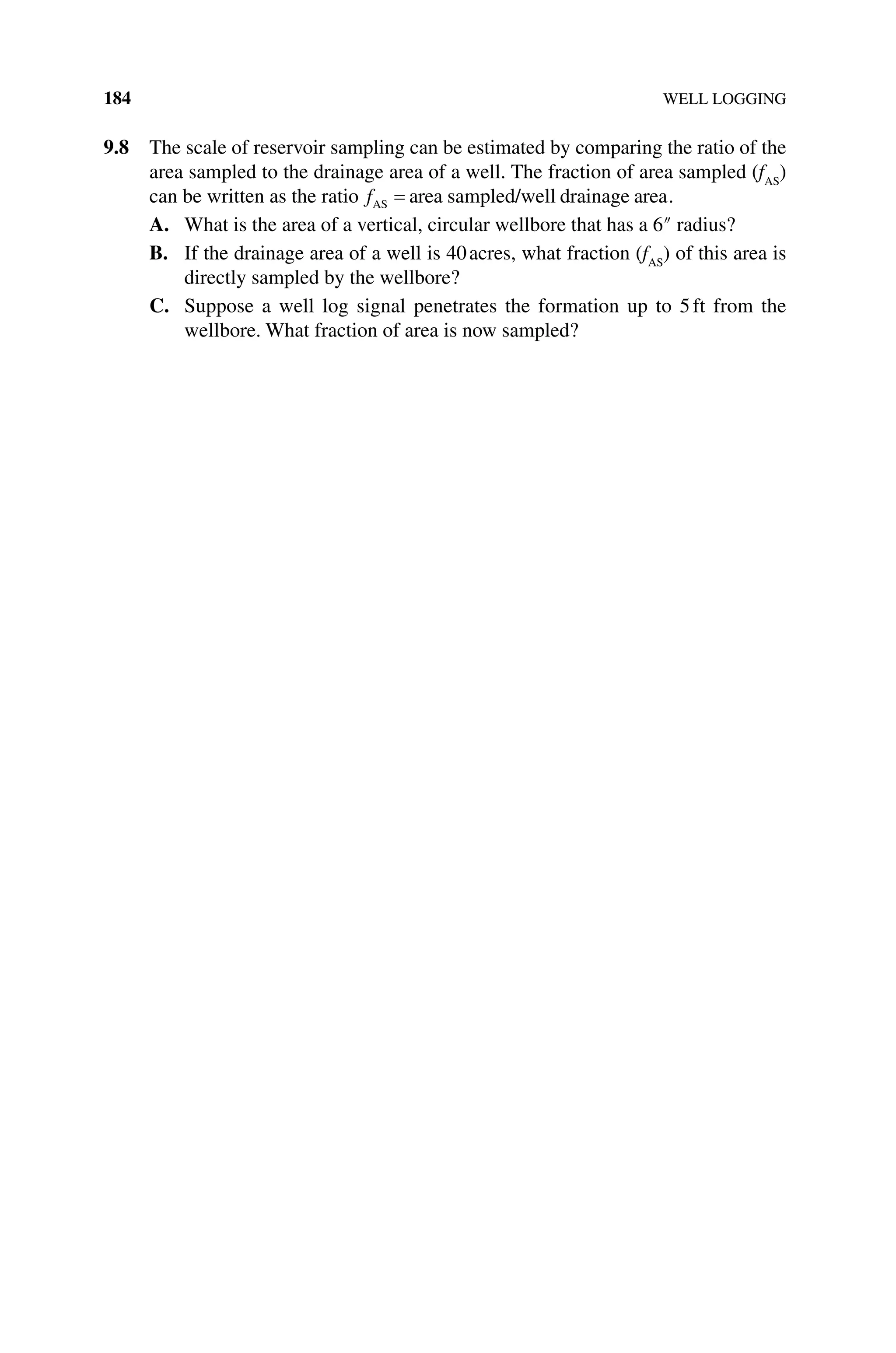
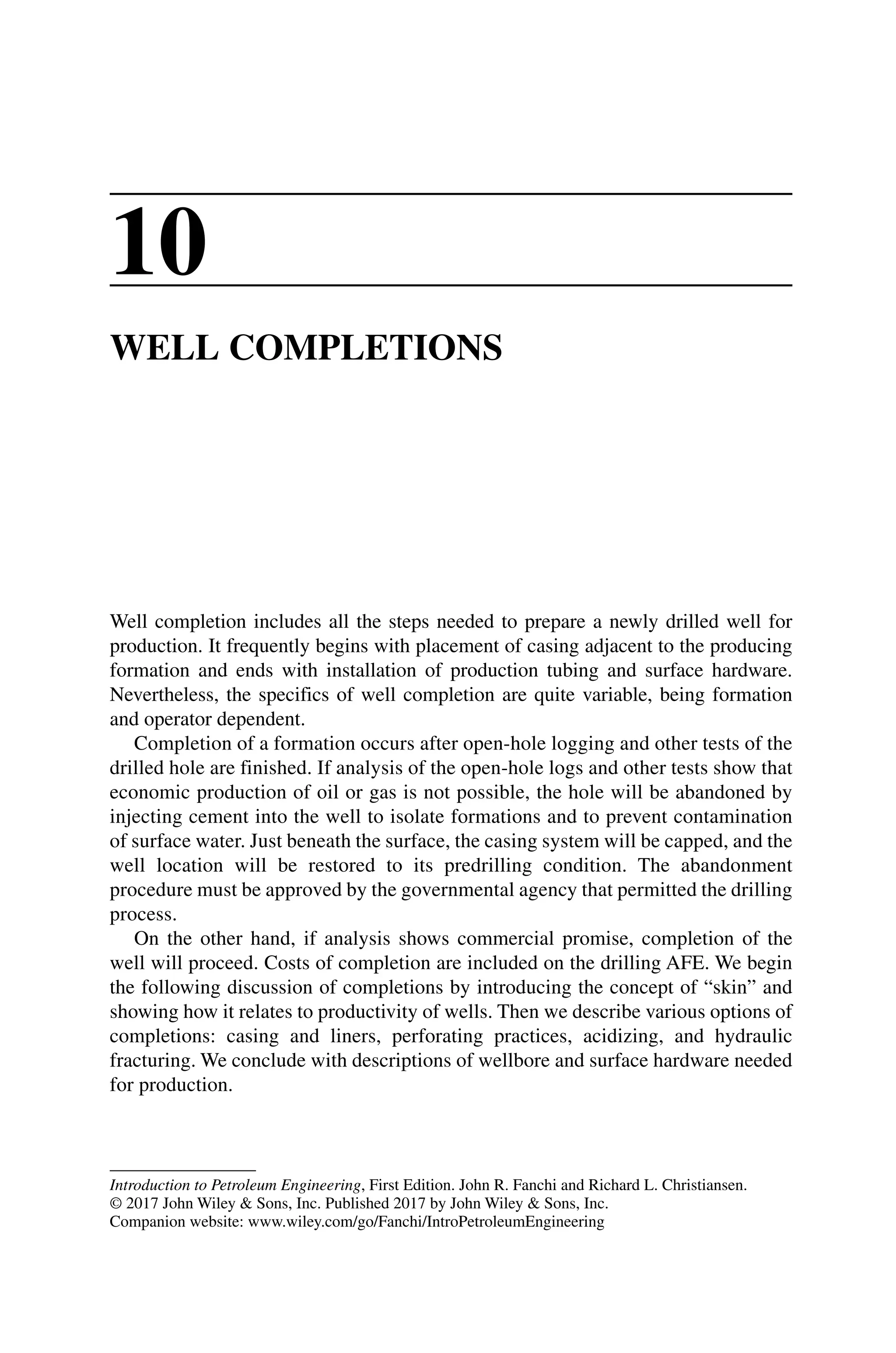
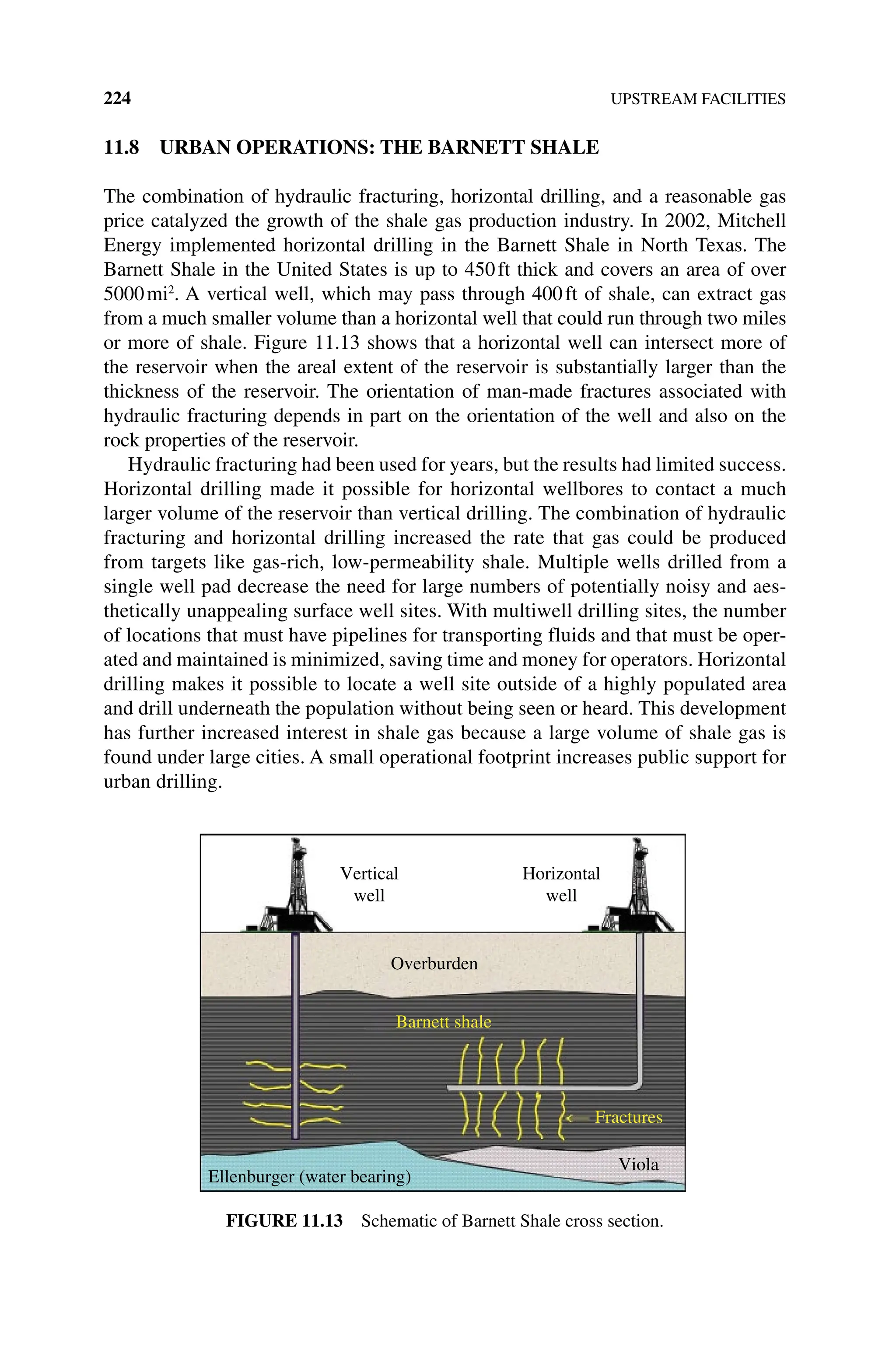
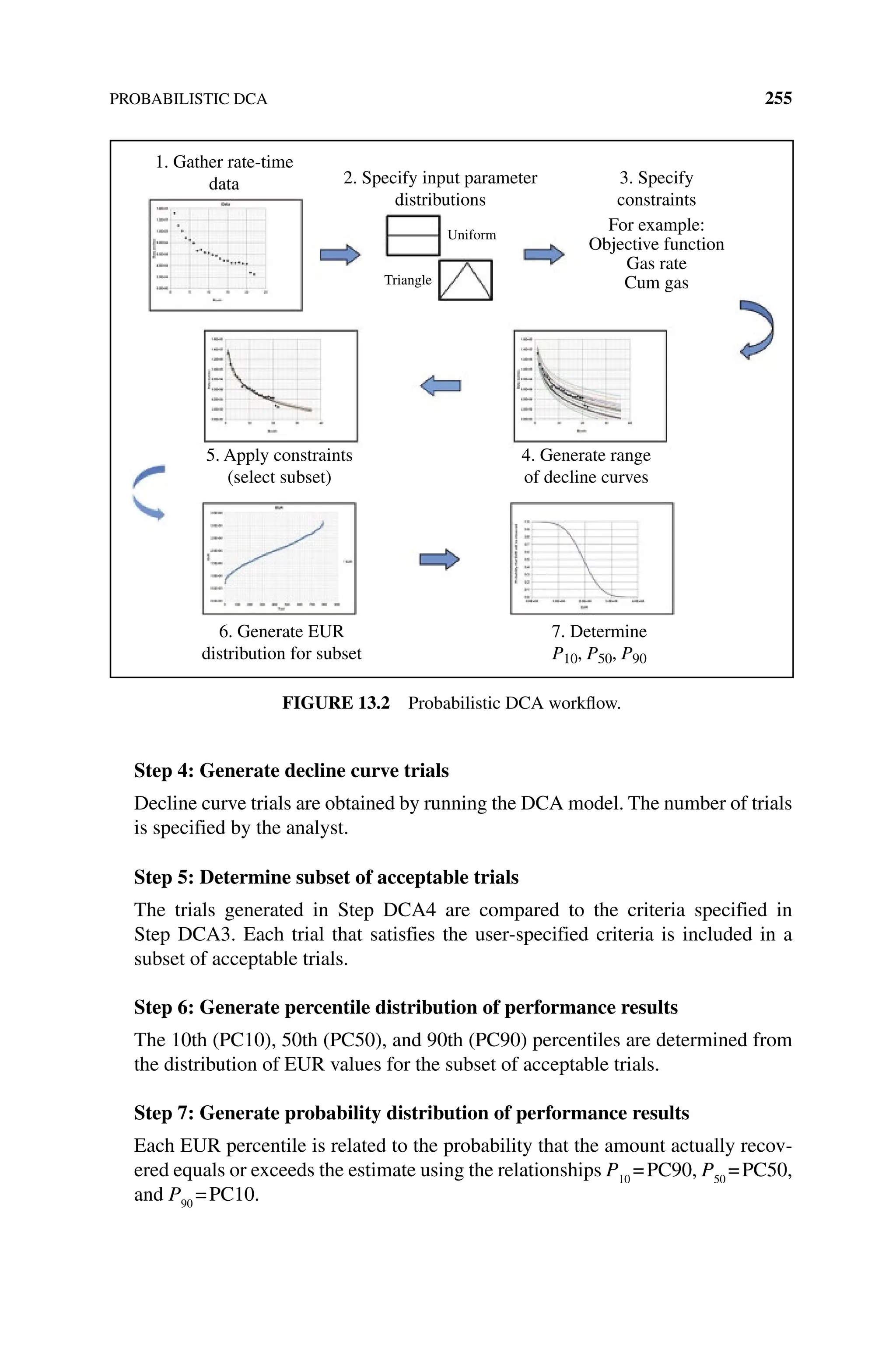
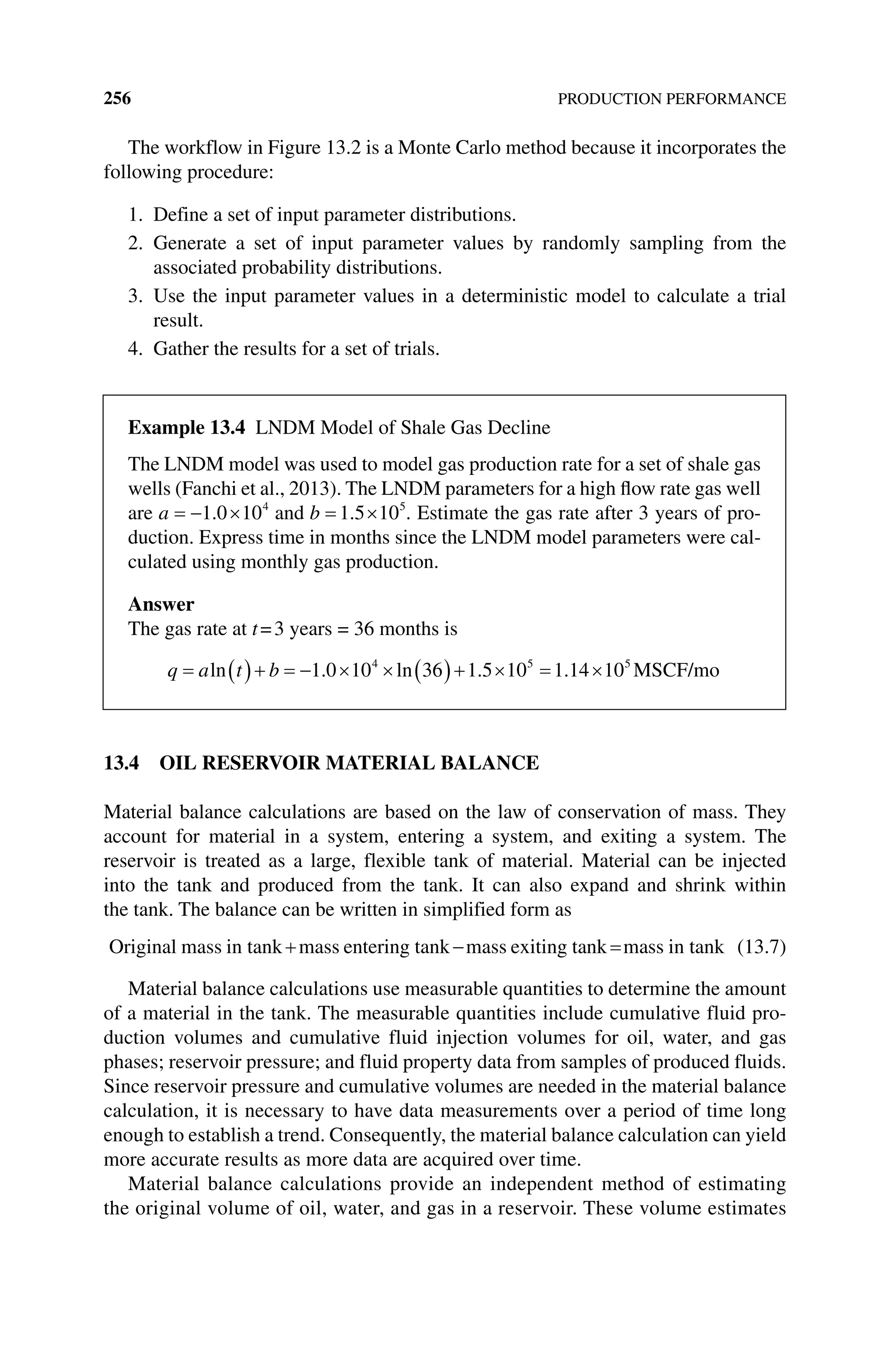
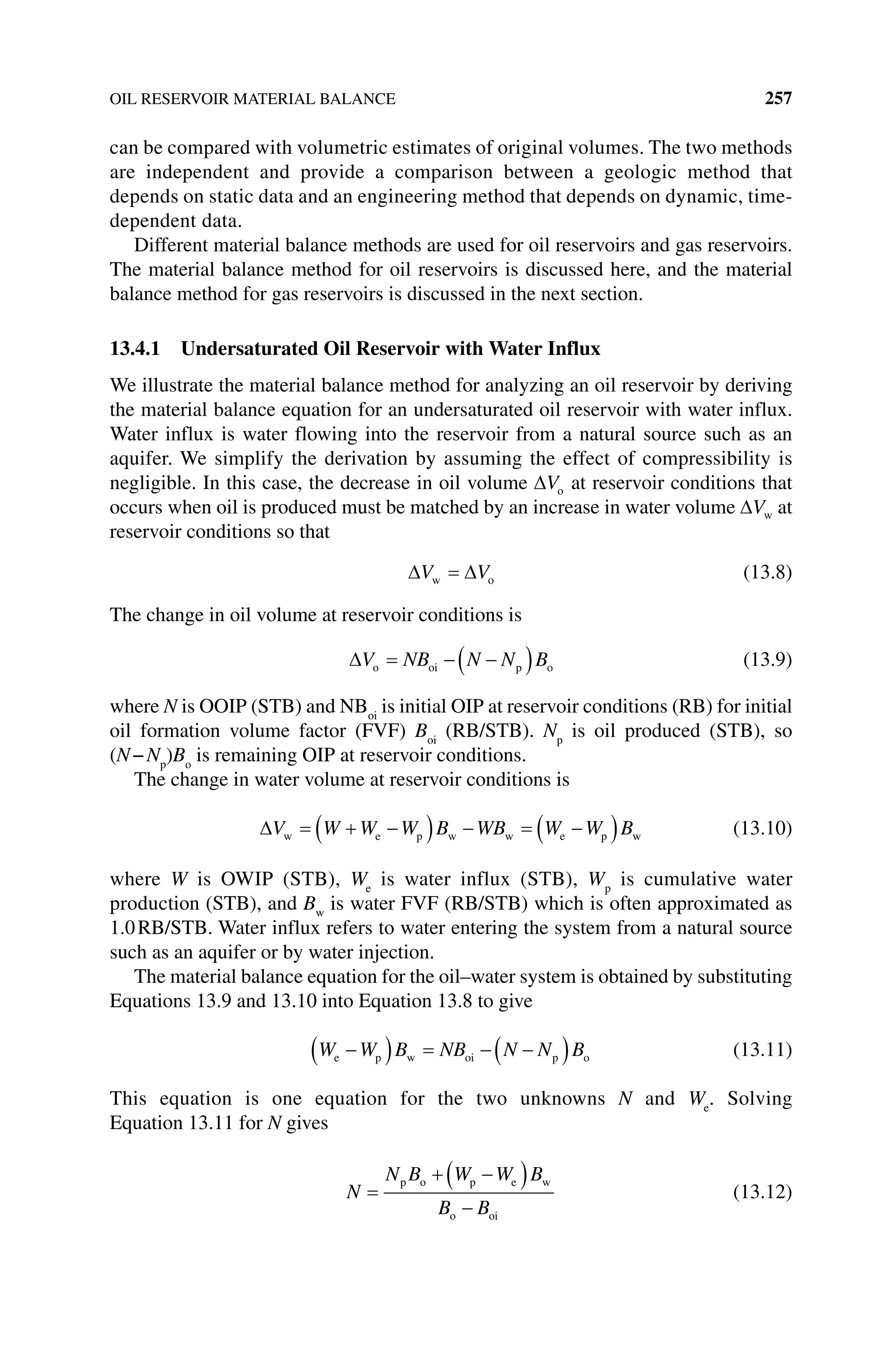
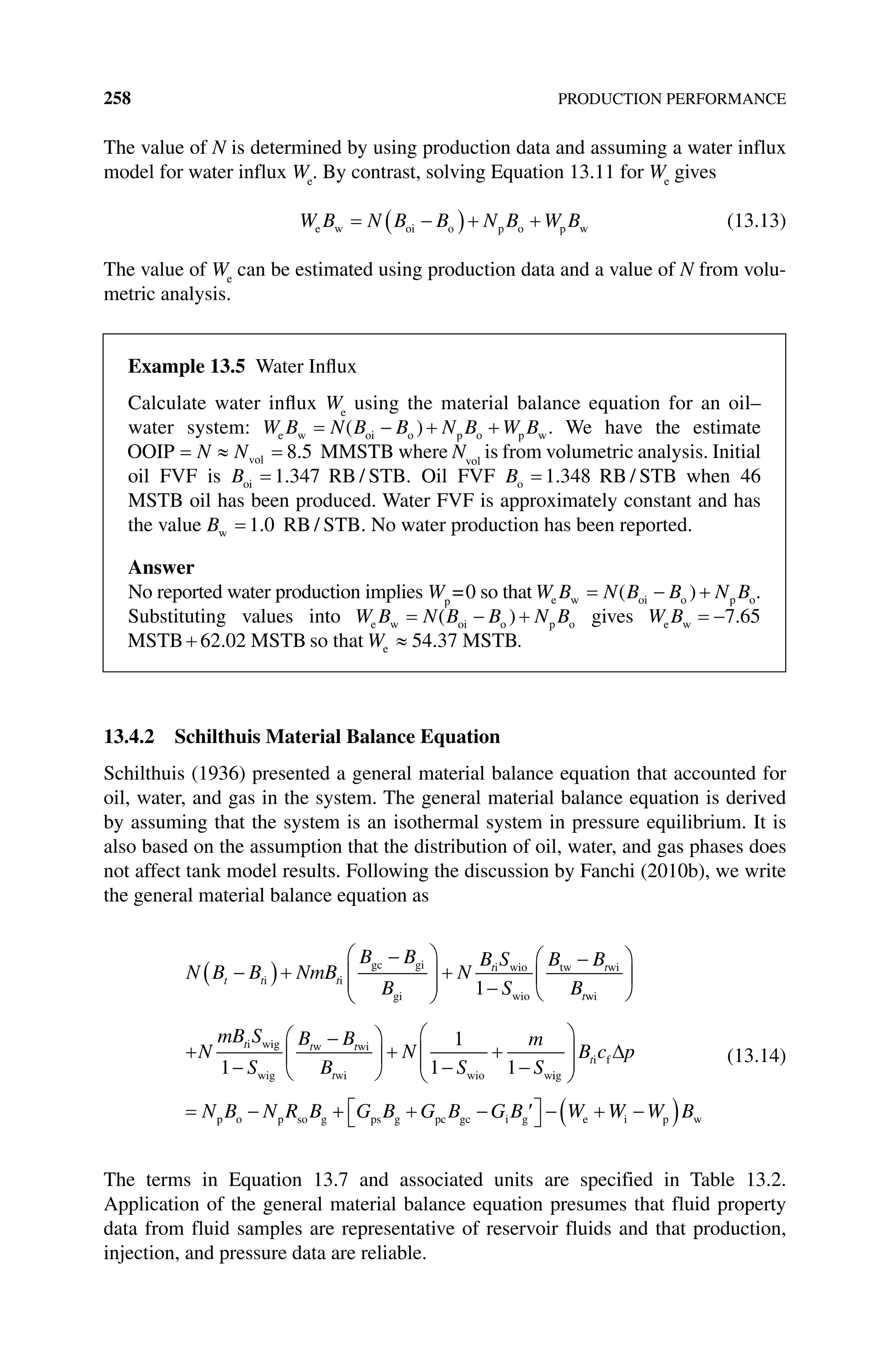
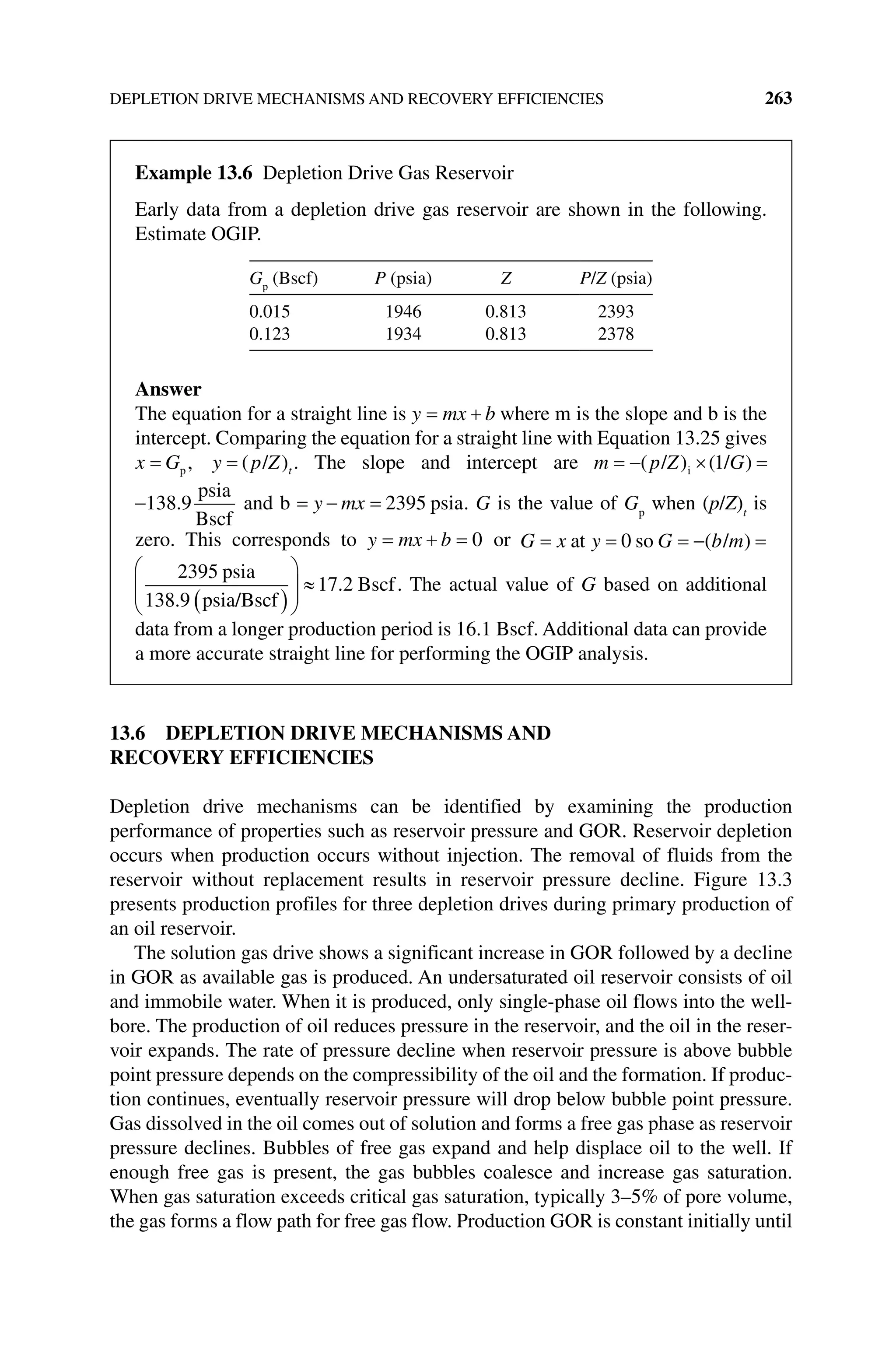
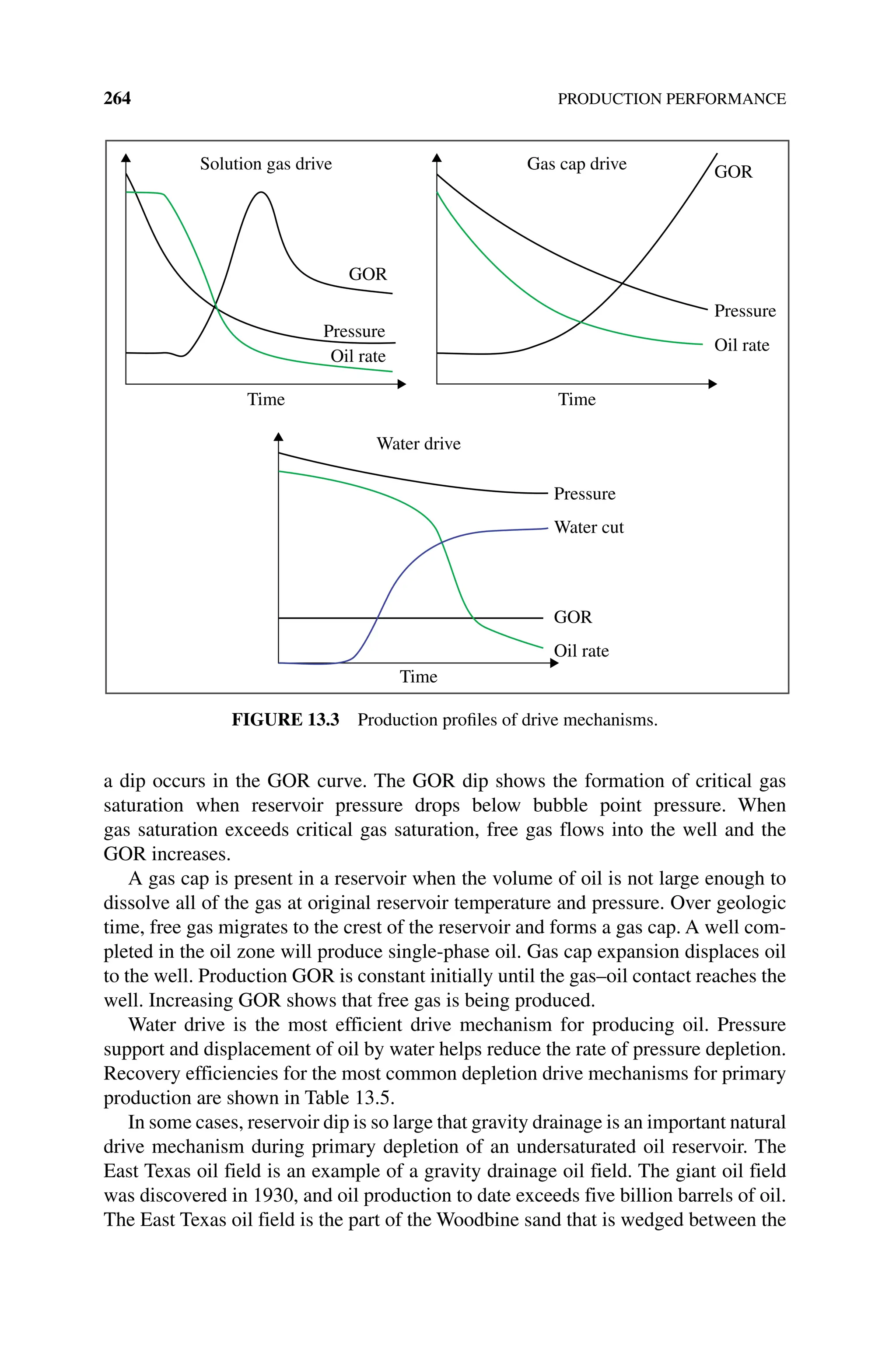
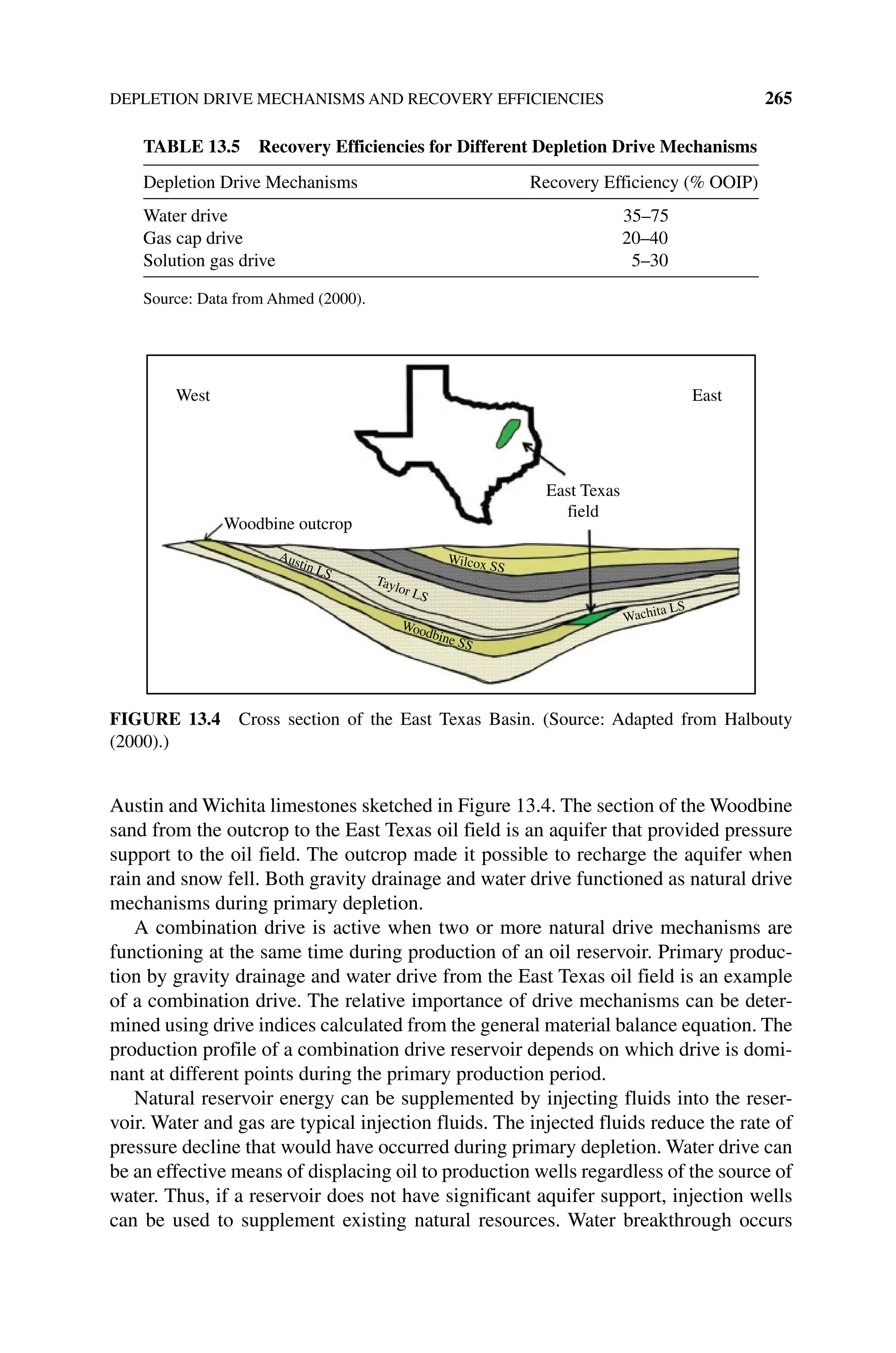
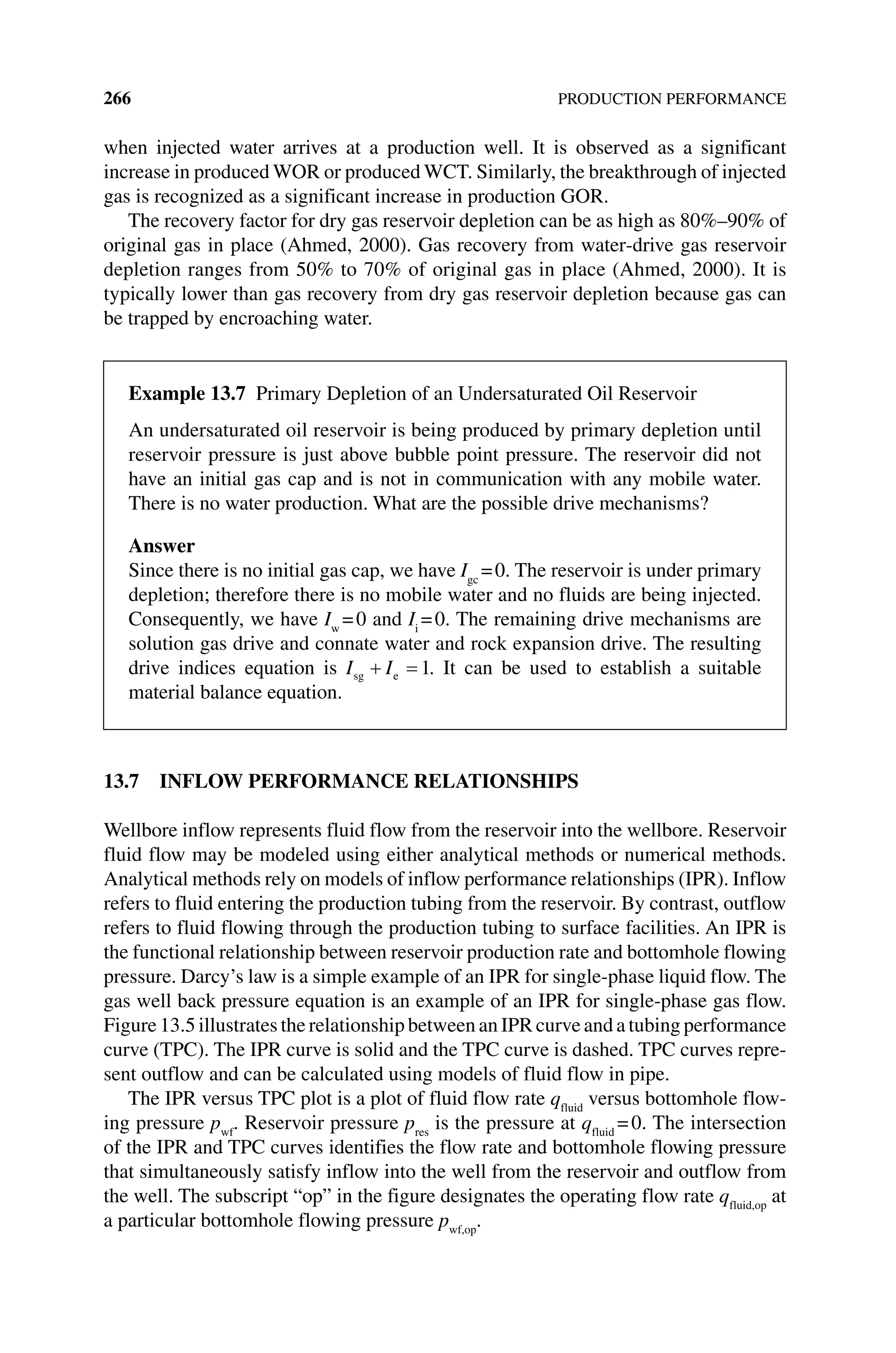
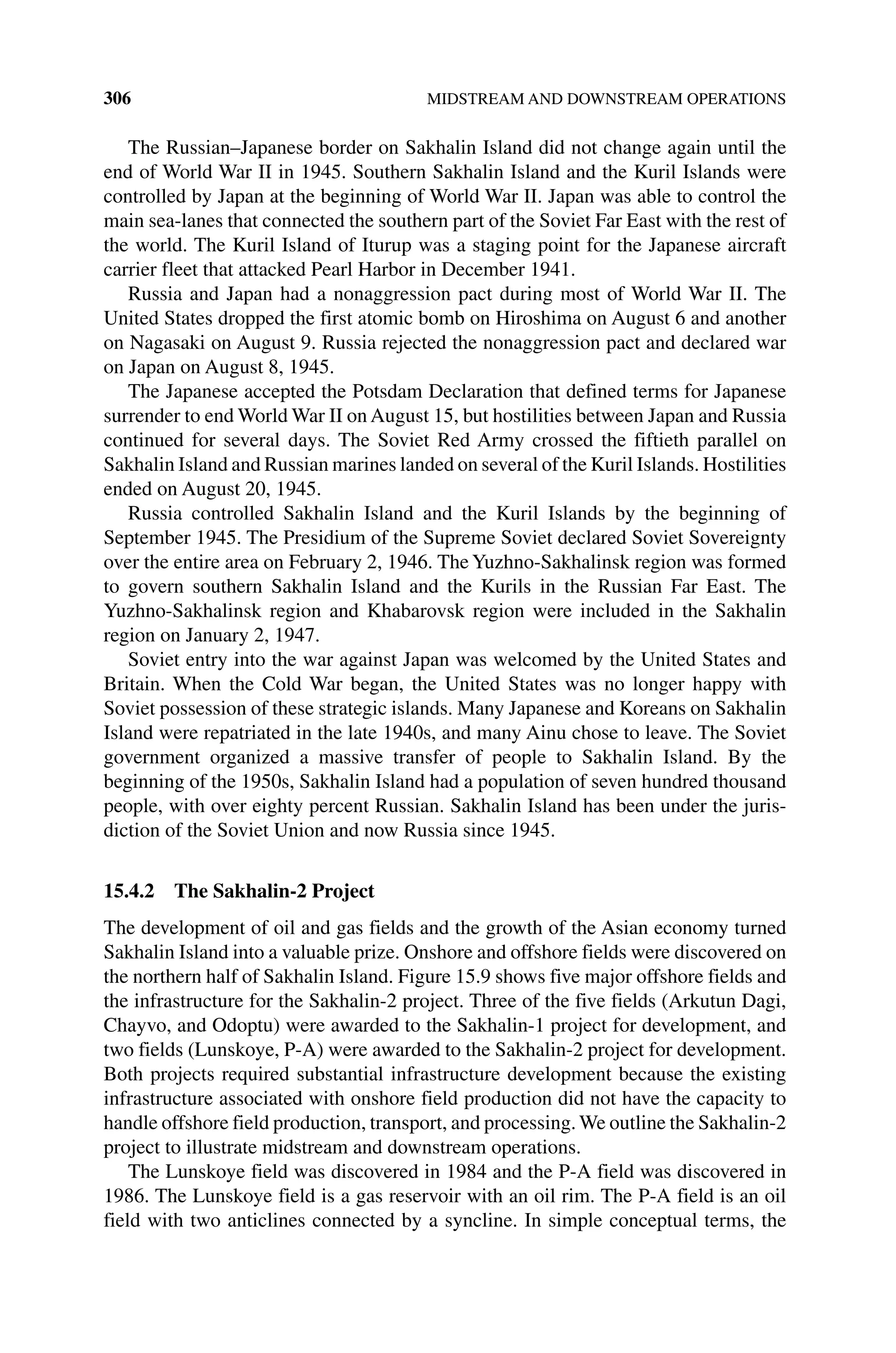
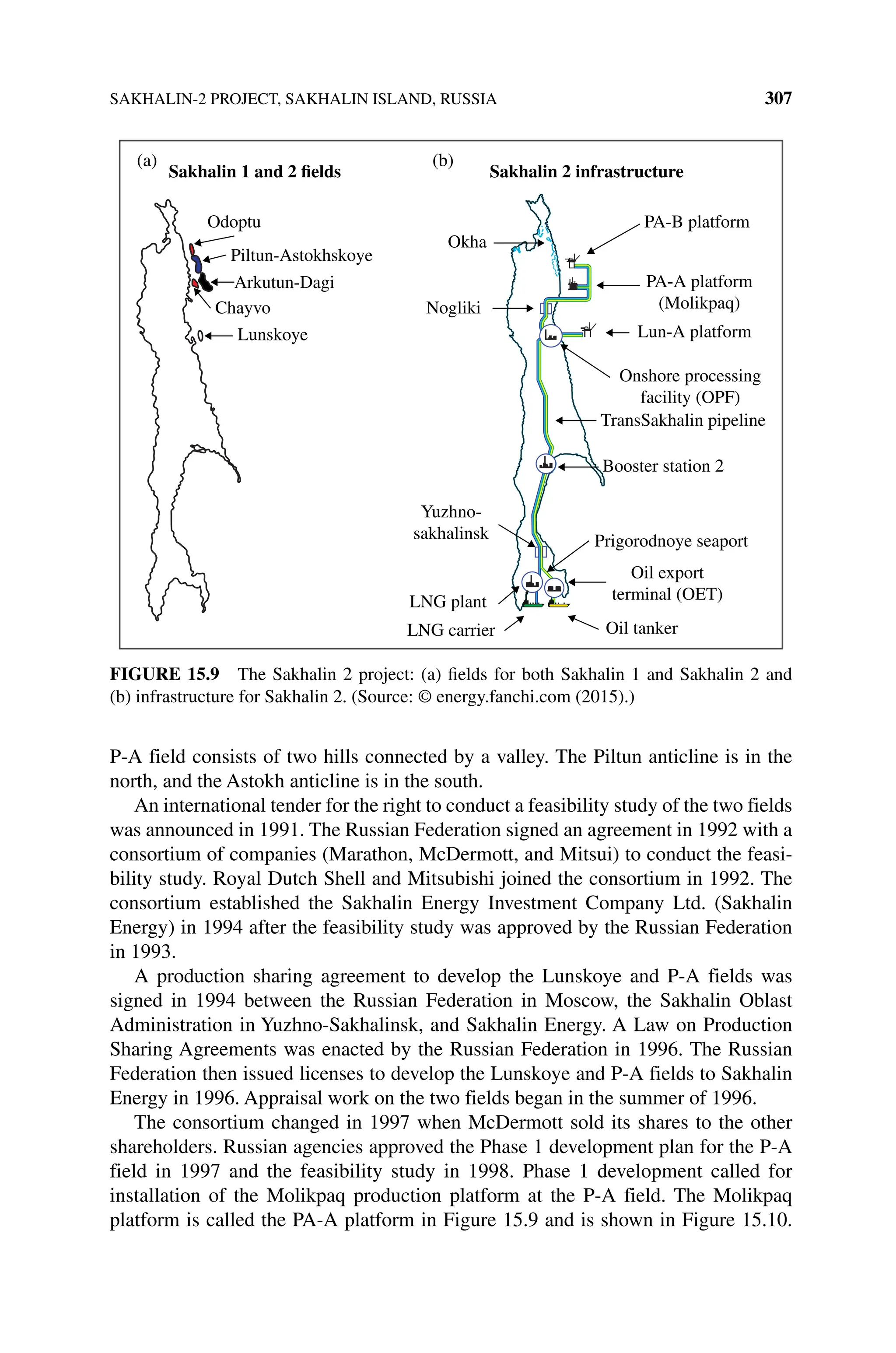
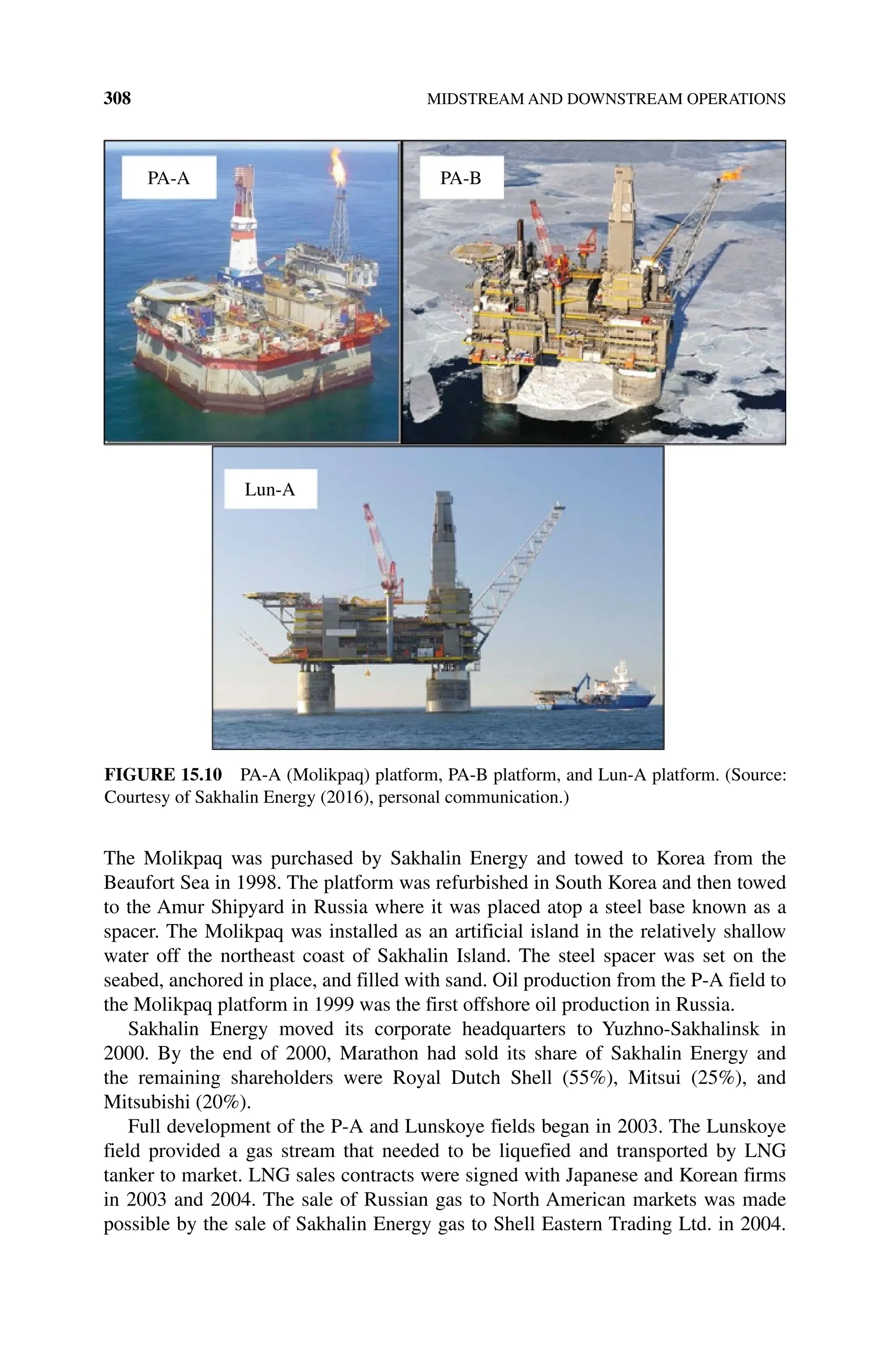
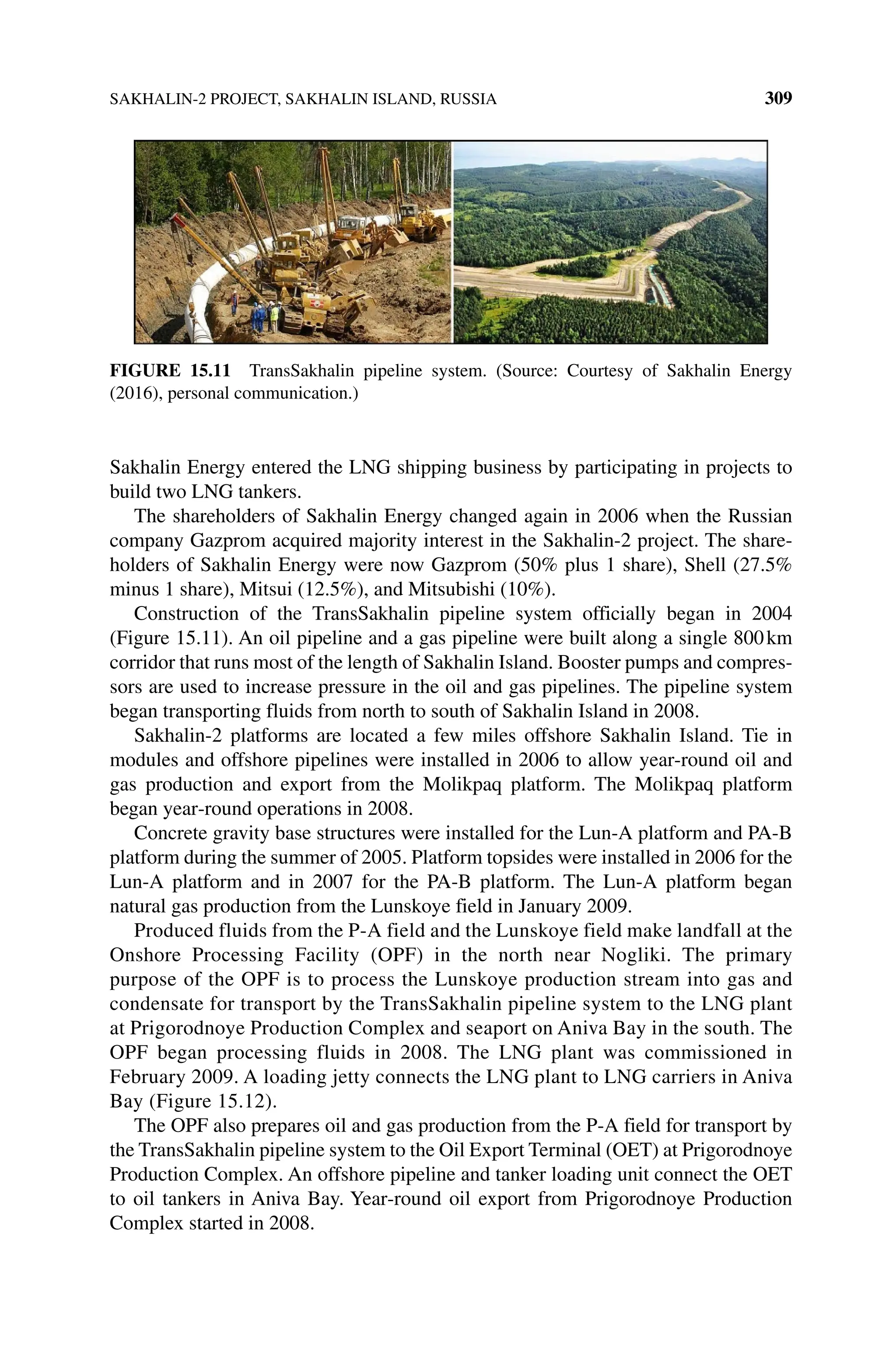
Introduction to Petroleum Engineering
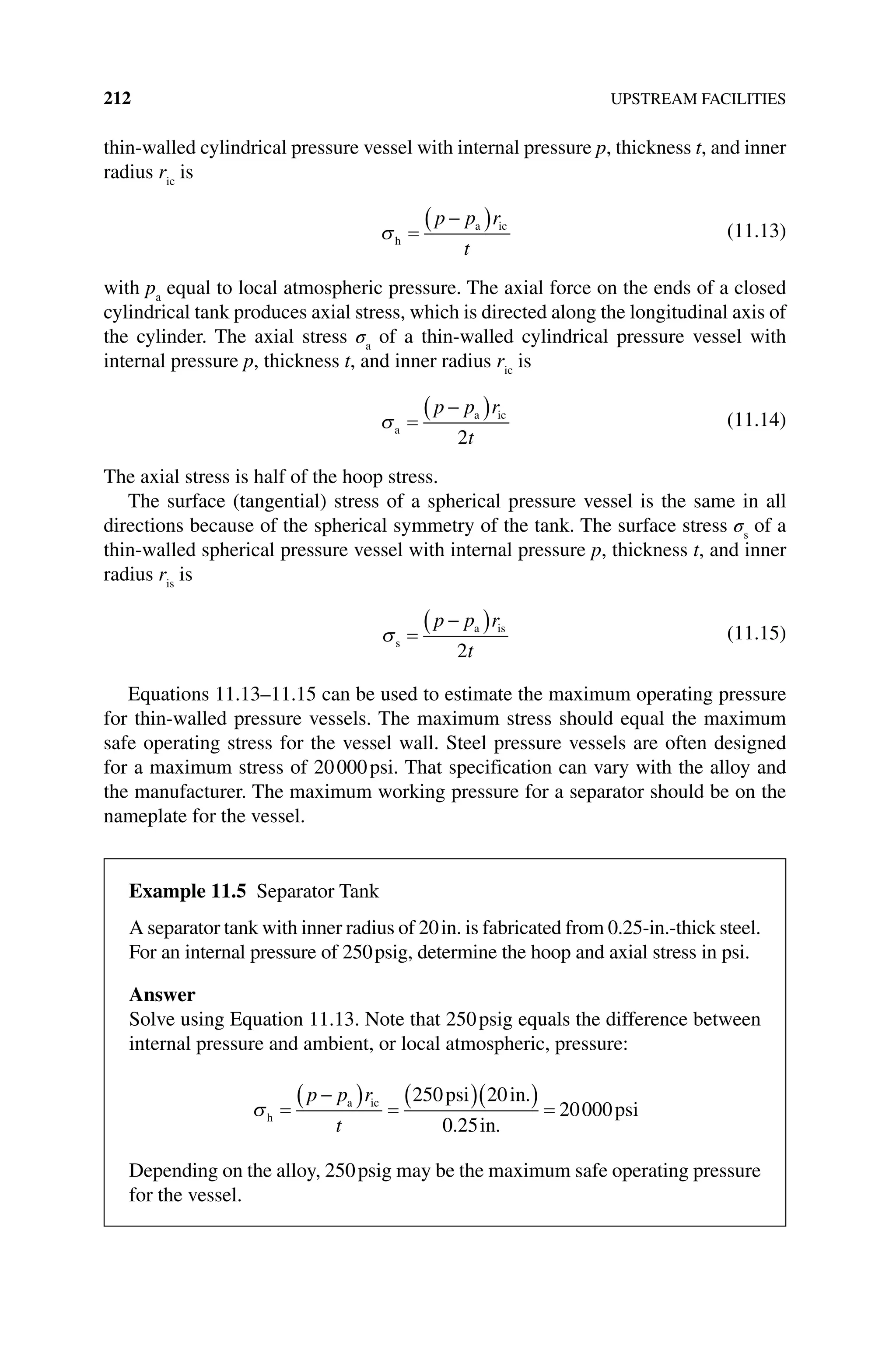
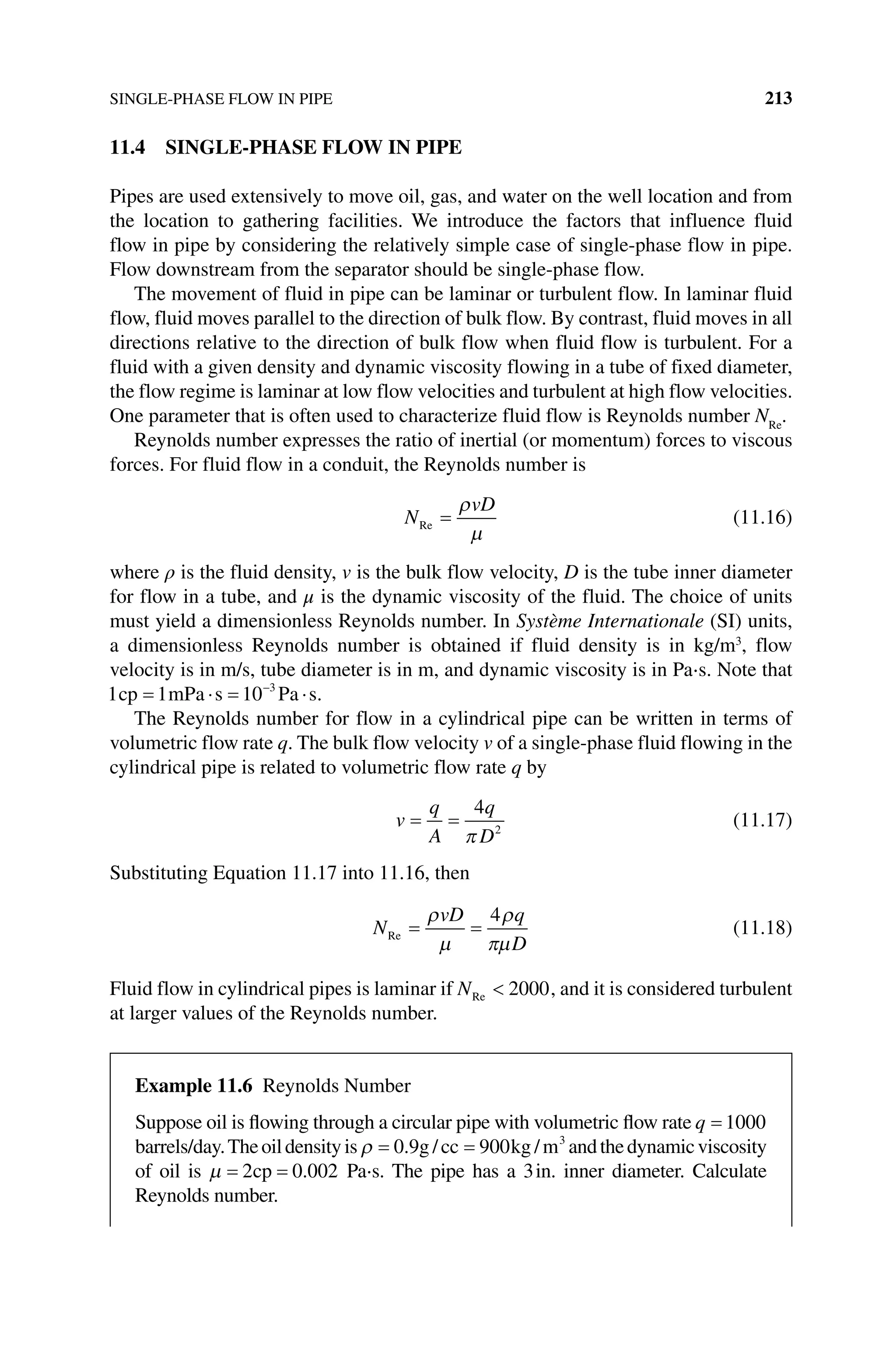
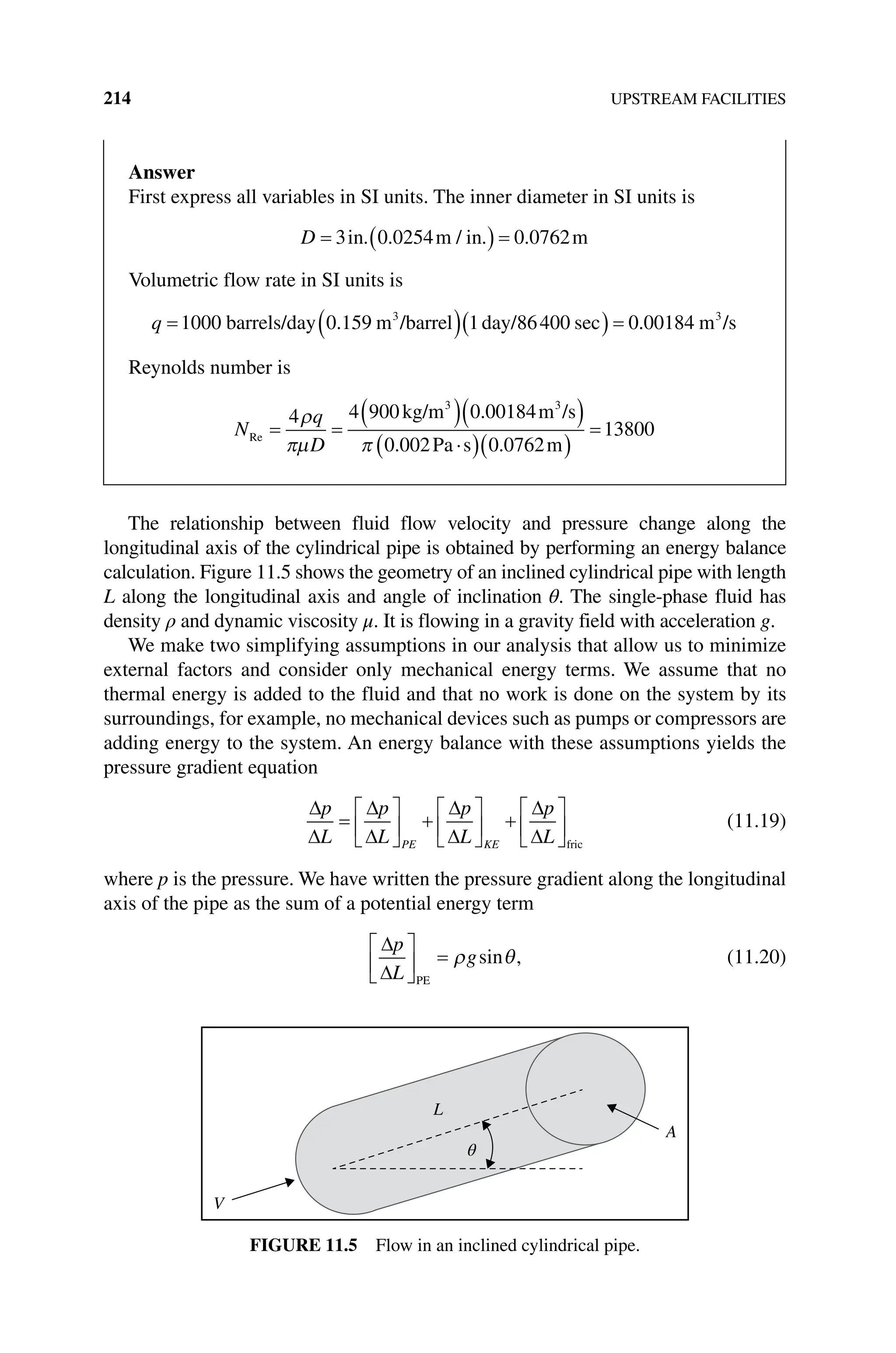
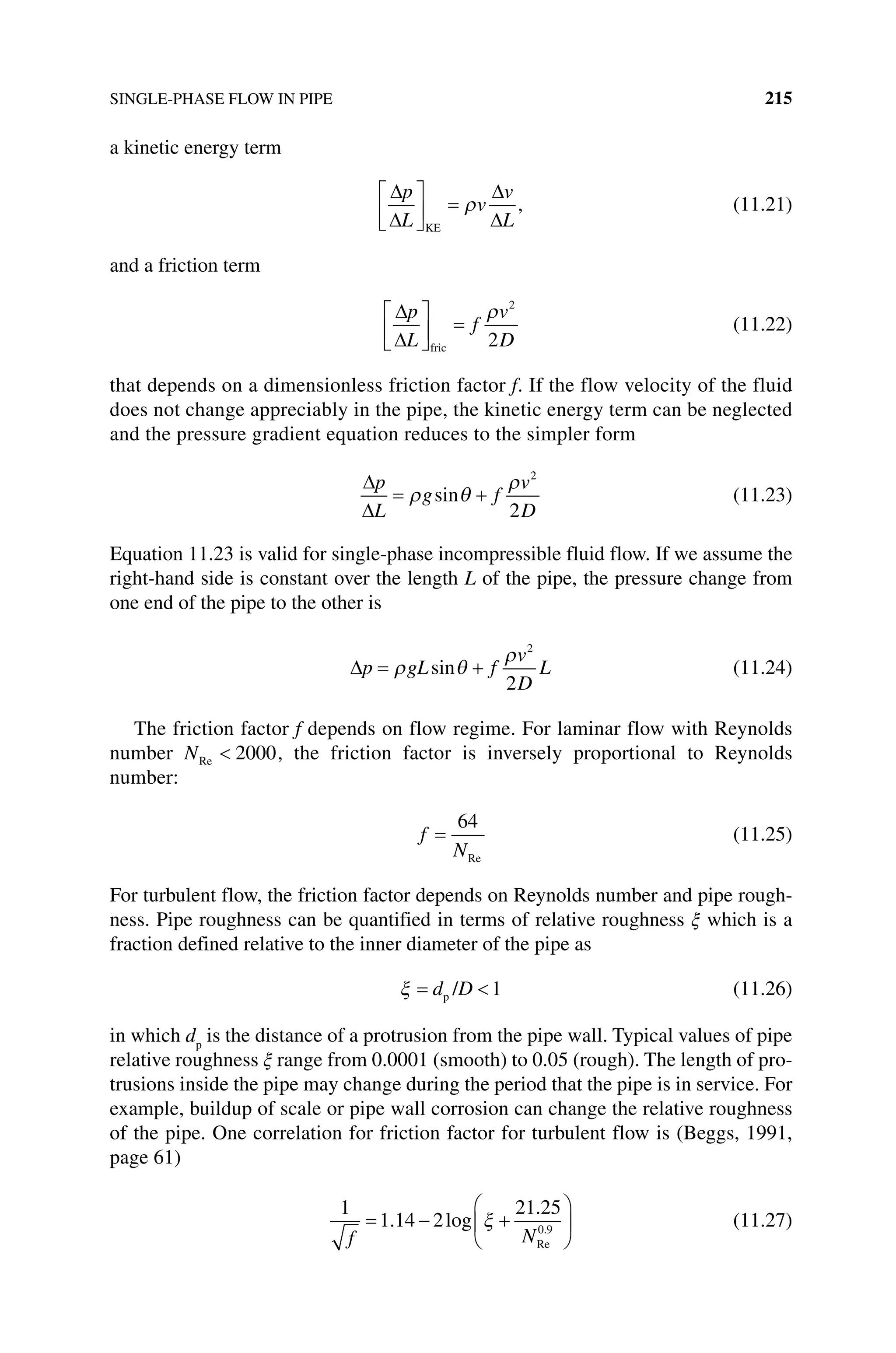
Introduction to
Petroleum
Engineering
John R. Fanchi
and
Richard L. Christiansen
Copyright © 2017 by John Wiley & Sons, Inc. All rights reserved
Published by John Wiley & Sons, Inc., Hoboken, New Jersey
Published simultaneously in Canada
No part of this publication may be reproduced, stored in a retrieval system, or transmitted in any form
or by any means, electronic, mechanical, photocopying, recording, scanning, or otherwise, except as
permitted under Section 107 or 108 of the 1976 United States Copyright Act, without either the prior
written permission of the Publisher, or authorization through payment of the appropriate per‐copy fee
to the Copyright Clearance Center, Inc., 222 Rosewood Drive, Danvers, MA 01923, (978) 750‐8400,
fax (978) 750‐4470, or on the web at www.copyright.com. Requests to the Publisher for
permission should be addressed to the Permissions Department, John Wiley & Sons, Inc.,
111 River Street, Hoboken, NJ 07030, (201) 748‐6011, fax (201) 748‐6008, or online at
http://www.wiley.com/go/permissions.
Limit of Liability/Disclaimer of Warranty: While the publisher and author have used their best efforts
in preparing this book, they make no representations or warranties with respect to the accuracy or
completeness of the contents of this book and specifically disclaim any implied warranties of
merchantability or fitness for a particular purpose. No warranty may be created or extended by sales
representatives or written sales materials. The advice and strategies contained herein may not be suitable
for your situation. You should consult with a professional where appropriate. Neither the publisher nor
author shall be liable for any loss of profit or any other commercial damages, including but not limited to
special, incidental, consequential, or other damages.
For general information on our other products and services or for technical support, please contact our
Customer Care Department within the United States at (800) 762‐2974, outside the United States at
(317) 572‐3993 or fax (317) 572‐4002.
Wiley also publishes its books in a variety of electronic formats. Some content that appears in print may
not be available in electronic formats. For more information about Wiley products, visit our web site at
www.wiley.com.
Library of Congress Cataloging‐in‐Publication Data:
Names: Fanchi, John R., author. | Christiansen, Richard L. (Richard Lee), author.
Title: Introduction to petroleum engineering / by John R. Fanchi and Richard L. Christiansen.
Description: Hoboken, New Jersey : John Wiley & Sons, Inc., [2017] | Includes bibliographical
references and index.
Identifiers: LCCN 2016019048| ISBN 9781119193449 (cloth) | ISBN 9781119193647 (epdf) |
ISBN 9781119193616 (epub)
Subjects: LCSH: Petroleum engineering.
Classification: LCC TN870 .F327 2017 | DDC 622/.3382–dc23
LC record available at https://lccn.loc.gov/2016019048
Printed in the United States of America
10 9 8 7 6 5 4 3 2 1
Contents
About the Authors xiii
Preface xv
About the Companion Website xvi
1 Introduction 1
1.1 What is Petroleum Engineering? 1
1.1.1 Alternative Energy Opportunities 3
1.1.2 Oil and Gas Units 3
1.1.3 Production Performance Ratios 4
1.1.4 Classification of Oil and Gas 4
1.2 Life Cycle of a Reservoir 6
1.3 Reservoir Management 9
1.3.1 Recovery Efficiency 9
1.4 Petroleum Economics 11
1.4.1 The Price of Oil 14
1.4.2 How Does Oil Price Affect Oil Recovery? 14
1.4.3 How High Can Oil Prices Go? 15
1.5 Petroleum and the Environment 16
1.5.1 Anthropogenic Climate Change 16
1.5.2 Environmental Issues 19
1.6 Activities 20
1.6.1 Further Reading 20
1.6.2 True/False 21
1.6.3 Exercises 21
viContents
2	The Future of Energy 23
2.1 Global Oil and Gas Production and Consumption 23
2.2 Resources and Reserves 24
2.2.1 Reserves 27
2.3 Oil and Gas Resources 29
2.3.1 Coal Gas 29
2.3.2 Gas Hydrates 31
2.3.3 Tight Gas Sands, Shale Gas, and Shale Oil 31
2.3.4 Tar Sands 33
2.4 Global Distribution of Oil and Gas Reserves 34
2.5 Peak Oil 36
2.5.1 World Oil Production Rate Peak 37
2.5.2 World Per Capita Oil Production Rate Peak 37
2.6 Future Energy Options 39
2.6.1 Goldilocks Policy for Energy Transition 39
2.7 Activities 42
2.7.1 Further Reading 42
2.7.2 True/False 42
2.7.3 Exercises 42
3 Properties of Reservoir Fluids 45
3.1 Origin 45
3.2 Classification 47
3.3 Definitions 51
3.4 Gas Properties 54
3.5 Oil Properties 55
3.6 Water Properties 60
3.7	Sources of Fluid Data 61
3.7.1 Constant Composition Expansion 61
3.7.2 Differential Liberation 62
3.7.3	Separator Test 62
3.8 Applications of Fluid Properties 63
3.9 Activities 64
3.9.1 Further Reading 64
3.9.2 True/False 64
3.9.3 Exercises 64
4 Properties of Reservoir Rock 67
4.1 Porosity 67
4.1.1 Compressibility of Pore Volume 69
4.1.2	Saturation 70
4.1.3 Volumetric Analysis 71
Contents vii
4.2 Permeability 71
4.2.1 Pressure Dependence of Permeability 73
4.2.2	Superficial Velocity and Interstitial Velocity 74
4.2.3 Radial Flow of Liquids 74
4.2.4 Radial Flow of Gases 75
4.3 Reservoir Heterogeneity and Permeability 76
4.3.1 Parallel Configuration 76
4.3.2	Series Configuration 76
4.3.3 Dykstra–Parsons Coefficient 77
4.4 Directional Permeability 79
4.5 Activities 80
4.5.1 Further Reading 80
4.5.2 True/False 80
4.5.3 Exercises 80
5 Multiphase Flow 83
5.1 Interfacial Tension, Wettability, and Capillary Pressure 83
5.2 Fluid Distribution and Capillary Pressure 86
5.3 Relative Permeability 88
5.4 Mobility and Fractional Flow 90
5.5 One‐dimensional Water-oil Displacement 91
5.6 Well Productivity 95
5.7 Activities 97
5.7.1 Further Reading 97
5.7.2 True/False 97
5.7.3 Exercises 98
6 Petroleum Geology 101
6.1 Geologic History of the Earth 101
6.1.1 Formation of the Rocky Mountains 106
6.2 Rocks and Formations 107
6.2.1 Formations 108
6.3	Sedimentary Basins and Traps 111
6.3.1 Traps 111
6.4 What Do You Need to form a Hydrocarbon Reservoir? 112
6.5 Volumetric Analysis, Recovery Factor, and EUR 113
6.5.1 Volumetric Oil in Place 114
6.5.2 Volumetric Gas in Place 114
6.5.3 Recovery Factor and Estimated Ultimate Recovery 115
6.6 Activities 115
6.6.1 Further Reading 115
6.6.2 True/False 116
6.6.3 Exercises 116
viiiContents
7 Reservoir Geophysics 119
7.1	Seismic Waves 119
7.1.1 Earthquake Magnitude 122
7.2 Acoustic Impedance and Reflection Coefficients 124
7.3	Seismic Resolution 126
7.3.1 Vertical Resolution 126
7.3.2 Lateral Resolution 127
7.3.3 Exploration Geophysics and Reservoir Geophysics 128
7.4	Seismic Data Acquisition, Processing, and Interpretation 129
7.4.1 Data Acquisition 129
7.4.2 Data Processing 130
7.4.3 Data Interpretation 130
7.5 Petroelastic Model 131
7.5.1 IFM Velocities 131
7.5.2 IFM Moduli 132
7.6 Geomechanical Model 133
7.7 Activities 135
7.7.1 Further Reading 135
7.7.2 True/False 135
7.7.3 Exercises 135
8 Drilling 137
8.1 Drilling Rights 137
8.2 Rotary Drilling Rigs 138
8.2.1 Power Systems 139
8.2.2 Hoisting System 141
8.2.3 Rotation System 141
8.2.4 Drill String and Bits 143
8.2.5 Circulation System 146
8.2.6 Well Control System 148
8.3 The Drilling Process 149
8.3.1 Planning 149
8.3.2	Site Preparation 150
8.3.3 Drilling 151
8.3.4 Open‐Hole Logging 152
8.3.5	Setting Production Casing 153
8.4 Types of Wells 155
8.4.1 Well Spacing and Infill Drilling 155
8.4.2 Directional Wells 156
8.4.3 Extended Reach Drilling 158
8.5 Activities 158
8.5.1 Further Reading 158
8.5.2 True/False 158
8.5.3 Exercises 159
Contents ix
9 Well Logging 161
9.1 Logging Environment 161
9.1.1 Wellbore and Formation 162
9.1.2 Open or Cased? 163
9.1.3 Depth of Investigation 164
9.2 Lithology Logs 164
9.2.1 Gamma‐Ray Logs 164
9.2.2	Spontaneous Potential Logs 165
9.2.3 Photoelectric Log 167
9.3 Porosity Logs 167
9.3.1 Density Logs 167
9.3.2 Acoustic Logs 168
9.3.3	Neutron Logs 169
9.4 Resistivity Logs 170
9.5 Other Types of Logs 174
9.5.1 Borehole Imaging 174
9.5.2	Spectral Gamma‐Ray Logs 174
9.5.3 Dipmeter Logs 174
9.6 Log Calibration with Formation Samples 175
9.6.1 Mud Logs 175
9.6.2 Whole Core 175
9.6.3	Sidewall Core 176
9.7 Measurement While Drilling and Logging
While Drilling176
9.8 Reservoir Characterization Issues 177
9.8.1 Well Log Legacy 177
9.8.2 Cutoffs 177
9.8.3 Cross‐Plots 178
9.8.4 Continuity of Formations between Wells 178
9.8.5 Log Suites 179
9.8.6	Scales of Reservoir Information 180
9.9 Activities 182
9.9.1 Further Reading 182
9.9.2 True/False 182
9.9.3 Exercises 182
10 Well Completions 185
10.1	Skin 186
10.2 Production Casing and Liners 188
10.3 Perforating 189
10.4 Acidizing 192
10.5 Hydraulic Fracturing 193
10.5.1 Horizontal Wells 201
10.6 Wellbore and Surface Hardware 202
xContents
10.7 Activities 203
10.7.1 Further Reading 203
10.7.2 True/False 203
10.7.3 Exercises 204
11 Upstream Facilities 205
11.1 Onshore Facilities 205
11.2 Flash Calculation for Separators 208
11.3 Pressure Rating for Separators 211
11.4	Single‐Phase Flow in Pipe 213
11.5 Multiphase Flow in Pipe 216
11.5.1 Modeling Multiphase Flow in Pipes 217
11.6 Well Patterns 218
11.6.1 Intelligent Wells and Intelligent Fields 219
11.7 Offshore Facilities 221
11.8 Urban Operations: The Barnett Shale 224
11.9 Activities 225
11.9.1 Further Reading 225
11.9.2 True/False 225
11.9.3 Exercises 225
12	Transient Well Testing 227
12.1 Pressure Transient Testing 227
12.1.1 Flow Regimes 228
12.1.2 Types of Pressure Transient Tests 228
12.2 Oil Well Pressure Transient Testing 229
12.2.1 Pressure Buildup Test 232
12.2.2 Interpreting Pressure Transient Tests 235
12.2.3 Radius of Investigation of a Liquid Well 237
12.3 Gas Well Pressure Transient Testing 237
12.3.1 Diffusivity Equation 238
12.3.2 Pressure Buildup Test in a Gas Well 238
12.3.3 Radius of Investigation 239
12.3.4 Pressure Drawdown Test and the Reservoir Limit Test 240
12.3.5 Rate Transient Analysis 241
12.3.6 Two‐Rate Test 242
12.4 Gas Well Deliverability 242
12.4.1 The SBA Method 244
12.4.2 The LIT Method 245
12.5	Summary of Transient Well Testing 246
12.6 Activities 246
12.6.1 Further Reading 246
12.6.2 True/False 246
12.6.3 Exercises 247
Contents xi
13 Production Performance 249
13.1 Field Performance Data 249
13.1.1 Bubble Mapping 250
13.2 Decline Curve Analysis 251
13.2.1 Alternative DCA Models 253
13.3 Probabilistic DCA 254
13.4 Oil Reservoir Material Balance 256
13.4.1 Undersaturated Oil Reservoir with Water Influx 257
13.4.2	Schilthuis Material Balance Equation 258
13.5 Gas Reservoir Material Balance 261
13.5.1 Depletion Drive Gas Reservoir 262
13.6 Depletion Drive Mechanisms and Recovery Efficiencies 263
13.7 Inflow Performance Relationships 266
13.8 Activities 267
13.8.1 Further Reading 267
13.8.2 True/False 267
13.8.3 Exercises 268
14 Reservoir Performance 271
14.1 Reservoir Flow Simulators 271
14.1.1 Flow Units 272
14.1.2 Reservoir Characterization Using Flow Units 272
14.2 Reservoir Flow Modeling Workflows 274
14.3 Performance of Conventional Oil and Gas Reservoirs 276
14.3.1 Wilmington Field, California: Immiscible
Displacement by Water Flooding 277
14.3.2 Prudhoe Bay Field, Alaska: Water Flood,
Gas Cycling, and Miscible Gas Injection 278
14.4 Performance of an Unconventional Reservoir 280
14.4.1 Barnett Shale, Texas: Shale Gas Production 280
14.5 Performance of Geothermal Reservoirs 285
14.6 Activities 287
14.6.1 Further Reading 287
14.6.2 True/False 287
14.6.3 Exercises 288
15 Midstream and Downstream Operations 291
15.1 The Midstream Sector 291
15.2 The Downstream Sector: Refineries 294
15.2.1	Separation 295
15.2.2 Conversion 299
15.2.3 Purification 300
15.2.4 Refinery Maintenance 300
xiiContents
15.3 The Downstream Sector: Natural Gas Processing Plants 300
15.4	Sakhalin‐2 Project, Sakhalin Island, Russia 301
15.4.1 History of Sakhalin Island 302
15.4.2 The Sakhalin‐2 Project 306
15.5 Activities 310
15.5.1 Further Reading 310
15.5.2 True/False 310
15.5.3 Exercises 311
Appendix Unit Conversion Factors 313
References 317
Index327
ABOUT THE AUTHORS
John R. Fanchi
John R. Fanchi is a professor in the Department of Engineering and Energy Institute
at Texas Christian University in Fort Worth, Texas. He holds the Ross B. Matthews
Professorship in Petroleum Engineering and teaches courses in energy and engi-
neering. Before this appointment, he taught petroleum and energy engineering
courses at the Colorado School of Mines and worked in the technology centers of
four energy companies (Chevron, Marathon, Cities Service, and Getty). He is a
Distinguished Member of the Society of Petroleum Engineers and coedited the
General Engineering volume of the Petroleum Engineering Handbook published by
the Society of Petroleum Engineers. He is the author of numerous books, including
Energy in the 21st Century, 3rd Edition (World Scientific, 2013); Integrated Reservoir
Asset Management (Elsevier, 2010); Principles of Applied Reservoir Simulation, 3rd
Edition (Elsevier, 2006); Math Refresher for Scientists and Engineers, 3rd Edition
(Wiley, 2006); Energy: Technology and Directions for the Future (Elsevier‐Academic
Press, 2004); Shared Earth Modeling (Elsevier, 2002); Integrated Flow Modeling
(Elsevier, 2000); and Parametrized Relativistic Quantum Theory (Kluwer, 1993).
Richard L. Christiansen
Richard L. Christiansen is an adjunct professor of chemical engineering at the
University of Utah in Salt Lake City. There, he teaches a reservoir engineering course
as well as an introductory course for petroleum engineering. Previously, he engaged
in all aspects of petroleum engineering as the engineer for a small oil and gas explo-
ration company in Utah. As a member of the Petroleum Engineering faculty at the
Colorado School of Mines from 1990 until 2006, he taught a variety of courses,
including multiphase flow in wells, flow through porous media, enhanced oil
xiv ABOUT THE AUTHORS
recovery, and phase behavior. His research experiences include multiphase flow in
rock, fractures, and wells; natural gas hydrates; and high‐pressure gas flooding. He
is the author of Two‐Phase Flow in Porous Media (2008) that demonstrates funda-
mentals of relative permeability and capillary pressure. From 1980 to 1990, he
worked on high‐pressure gas flooding at the technology center for Marathon Oil
Company in Colorado. He earned his Ph.D. in chemical engineering at the University
of Wisconsin in 1980.
PREFACE
Introduction to Petroleum Engineering introduces people with technical backgrounds
to petroleum engineering. The book presents fundamental terminology and concepts
from geology, geophysics, petrophysics, drilling, production, and reservoir engi-
neering. It covers upstream, midstream, and downstream operations. Exercises at the
end of each chapter are designed to highlight and reinforce material in the chapter
and encourage the reader to develop a deeper understanding of the material.
Introduction to Petroleum Engineering is suitable for science and engineering
students, practicing scientists and engineers, continuing education classes, industry
short courses, or self‐study. The material in Introduction to Petroleum Engineering
has been used in upper‐level undergraduate and introductory graduate‐level courses
for engineering and earth science majors. It is especially useful for geoscientists and
mechanical, electrical, environmental, and chemical engineers who would like to
learn more about the engineering technology needed to produce oil and gas.
Our colleagues in industry and academia and students in multidisciplinary classes
helped us identify material that should be understood by people with a range of
technical backgrounds. We thank Helge Alsleben, Bill Eustes, Jim Gilman, Pradeep
Kaul, Don Mims, Wayne Pennington, and Rob Sutton for comments on specific
chapters and Kathy Fanchi for helping prepare this manuscript.
John R. Fanchi, Ph.D.
Richard L. Christiansen, Ph.D.
June 2016
ABOUT THE COMPANION WEBSITE
This book is accompanied by a companion website:
www.wiley.com/go/Fanchi/IntroPetroleumEngineering
The website includes:
• Solution manual for instructors only
Introduction to Petroleum Engineering, First Edition. John R. Fanchi and Richard L. Christiansen.
© 2017 John Wiley  Sons, Inc. Published 2017 by John Wiley  Sons, Inc.
Companion website: www.wiley.com/go/Fanchi/IntroPetroleumEngineering
1
INTRODUCTION
The global economy is based on an infrastructure that depends on the consumption
of petroleum (Fanchi and Fanchi, 2016). Petroleum is a mixture of hydrocarbon
­
molecules and inorganic impurities that can exist in the solid, liquid (oil), or gas
phase. Our purpose here is to introduce you to the terminology and techniques used
in petroleum engineering. Petroleum engineering is concerned with the production of
petroleum from subsurface reservoirs. This chapter describes the role of petroleum
engineering in the production of oil and gas and provides a view of oil and gas
­
production from the perspective of a decision maker.
1.1 WHAT IS PETROLEUM ENGINEERING?
A typical workflow for designing, implementing, and executing a project to produce
hydrocarbons must fulfill several functions. The workflow must make it possible to
identify project opportunities; generate and evaluate alternatives; select and design the
desired alternative; implement the alternative; operate the alternative over the life of the
project, including abandonment; and then evaluate the success of the project so lessons
can be learned and applied to future projects. People with skills from many disciplines
are involved in the workflow. For example, petroleum geologists and geophysicists use
technology to provide a description of hydrocarbon‐bearing reservoir rock (Raymond
and Leffler, 2006; Hyne, 2012). Petroleum engineers acquire and apply knowledge
of the behavior of oil, water, and gas in porous rock to extract hydrocarbons.
2INTRODUCTION
Some companies form asset management teams composed of people with different
backgrounds. The asset management team is assigned primary responsibility for devel-
oping and implementing a particular project.
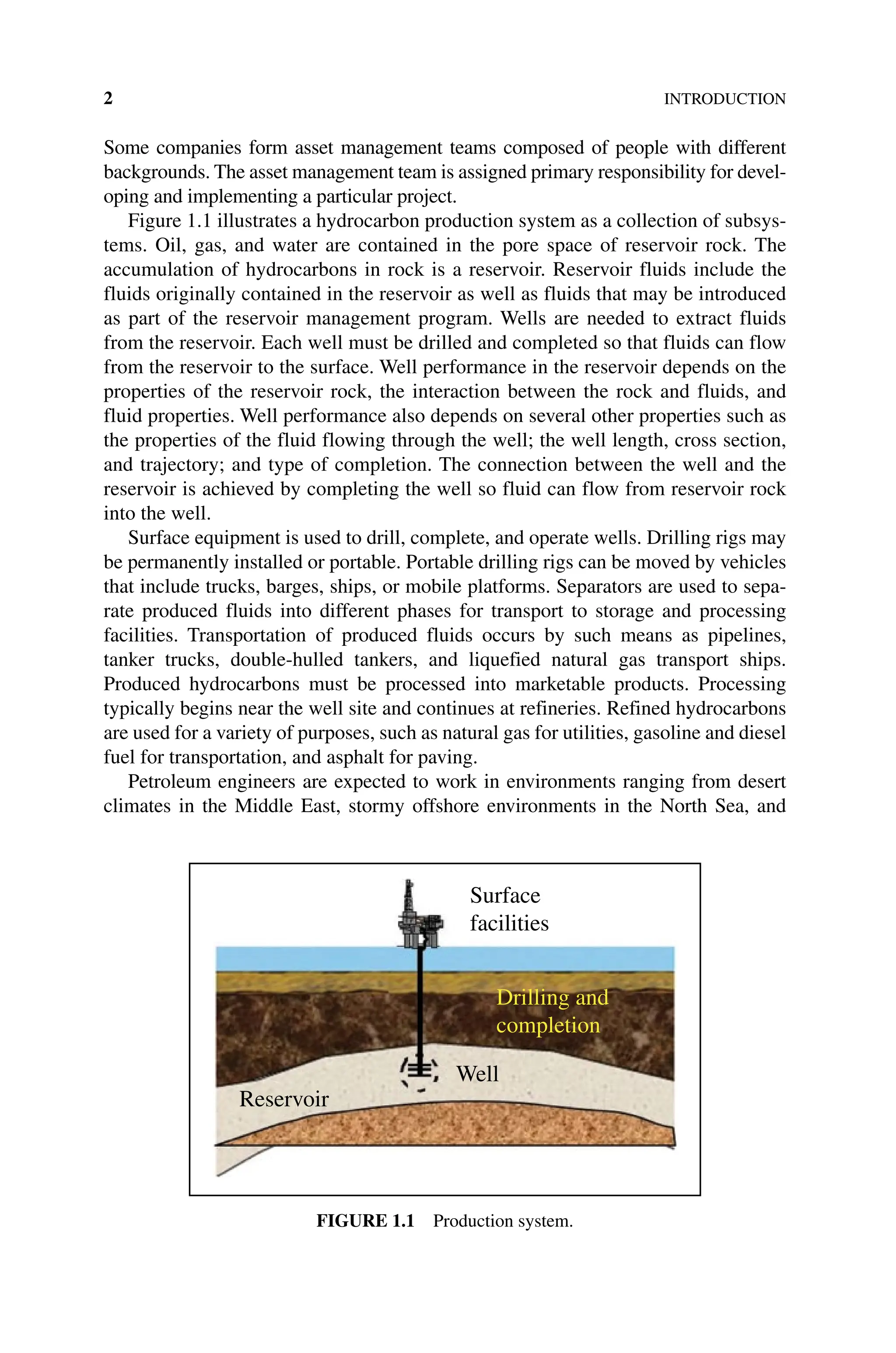
Figure 1.1 illustrates a hydrocarbon production system as a collection of subsys-
tems. Oil, gas, and water are contained in the pore space of reservoir rock. The
accumulation of hydrocarbons in rock is a reservoir. Reservoir fluids include the
fluids originally contained in the reservoir as well as fluids that may be introduced
as part of the reservoir management program. Wells are needed to extract fluids
from the reservoir. Each well must be drilled and completed so that fluids can flow
from the reservoir to the surface. Well performance in the reservoir depends on the
properties of the reservoir rock, the interaction between the rock and fluids, and
fluid properties. Well performance also depends on several other properties such as
the properties of the fluid flowing through the well; the well length, cross section,
and trajectory; and type of completion. The connection between the well and the
reservoir is achieved by completing the well so fluid can flow from reservoir rock
into the well.
Surface equipment is used to drill, complete, and operate wells. Drilling rigs may
be permanently installed or portable. Portable drilling rigs can be moved by vehicles
that include trucks, barges, ships, or mobile platforms. Separators are used to sepa-
rate produced fluids into different phases for transport to storage and processing
facilities. Transportation of produced fluids occurs by such means as pipelines,
tanker trucks, double‐hulled tankers, and liquefied natural gas transport ships.
Produced hydrocarbons must be processed into marketable products. Processing
­
typically begins near the well site and continues at refineries. Refined hydrocarbons
are used for a variety of purposes, such as natural gas for utilities, gasoline and diesel
fuel for transportation, and asphalt for paving.
Petroleum engineers are expected to work in environments ranging from desert
climates in the Middle East, stormy offshore environments in the North Sea, and
Surface
facilities
Reservoir
Well
Drilling and
completion
Figure 1.1 Production system.
WHAT IS PETROLEUM ENGINEERING? 3
arctic climates inAlaska and Siberia to deepwater environments in the Gulf of Mexico
and off the coast of WestAfrica. They tend to specialize in one of three ­subdisciplines:
drilling engineering, production engineering, and reservoir engineering. Drilling
engineers are responsible for drilling and completing wells. Production engineers
manage fluid flow between the reservoir and the well. Reservoir engineers seek to
optimize hydrocarbon production using an understanding of fluid flow in the reser-
voir, well placement, well rates, and recovery techniques. The Society of Petroleum
Engineers (SPE) is the largest professional society for petroleum engineers. A key
function of the society is to disseminate information about the industry.
1.1.1 Alternative Energy Opportunities
Petroleum engineering principles can be applied to subsurface resources other than
oil and gas (Fanchi, 2010). Examples include geothermal energy, geologic sequestra-
tion of gas, and compressed air energy storage (CAES). Geothermal energy can be
obtained from temperature gradients between the shallow ground and surface,
­
subsurface hot water, hot rock several kilometers below the Earth’s surface, and
magma. Geologic sequestration is the capture, separation, and long‐term storage of
greenhouse gases or other gas pollutants in a subsurface environment such as a res-
ervoir, aquifer, or coal seam. CAES is an example of a large‐scale energy storage
technology that is designed to transfer off‐peak energy from primary power plants to
peak demand periods. The Huntorf CAES facility in Germany and the McIntosh
CAES facility in Alabama store gas in salt caverns. Off‐peak energy is used to pump
air underground and compress it in a salt cavern. The compressed air is produced
during periods of peak energy demand to drive a turbine and generate additional
electrical power.
1.1.2 Oil and Gas Units
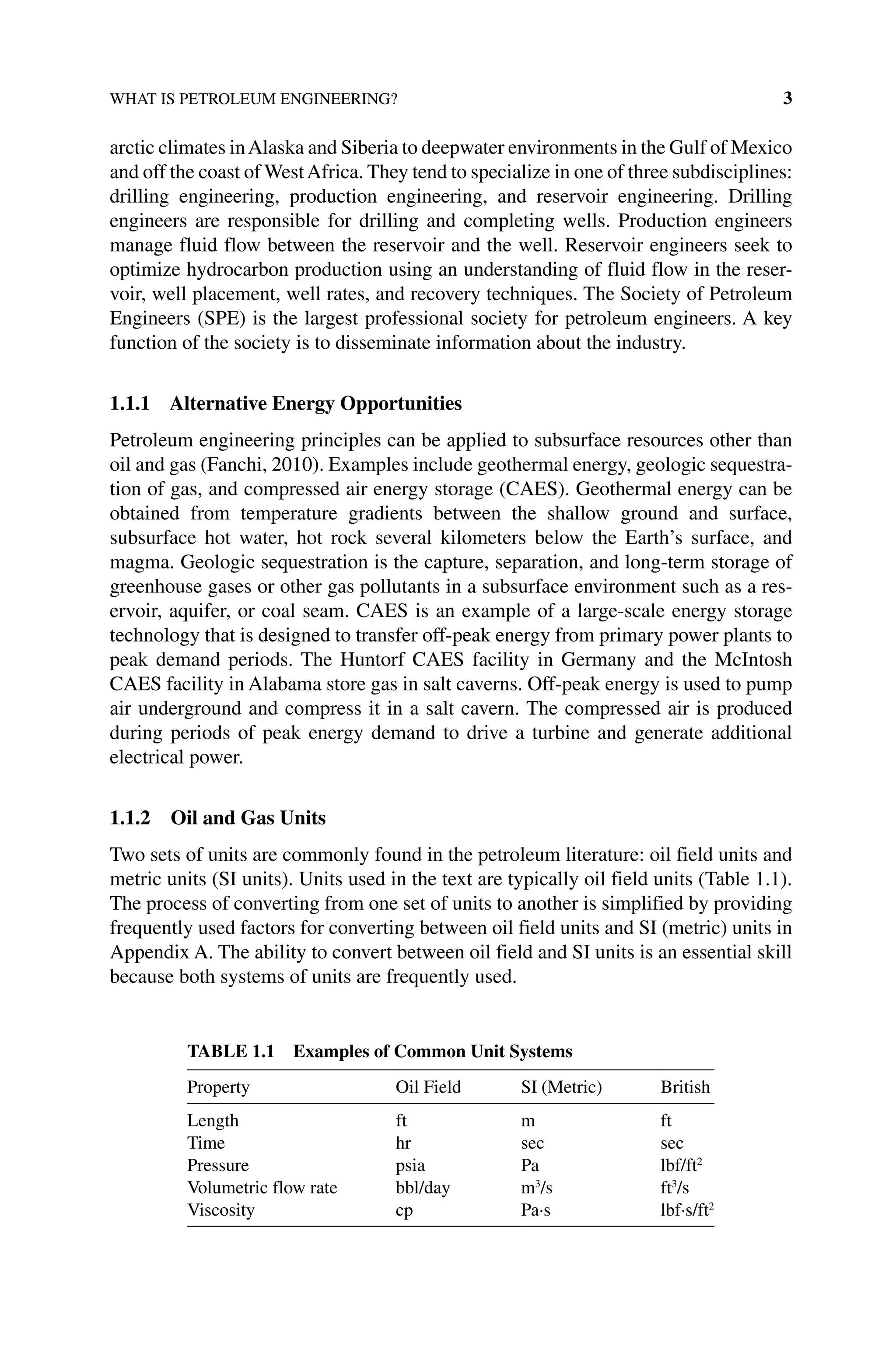
Two sets of units are commonly found in the petroleum literature: oil field units and
metric units (SI units). Units used in the text are typically oil field units (Table 1.1).
The process of converting from one set of units to another is simplified by providing
frequently used factors for converting between oil field units and SI (metric) units in
Appendix A. The ability to convert between oil field and SI units is an essential skill
because both systems of units are frequently used.
Table 1.1 Examples of Common Unit Systems
Property Oil Field SI (Metric) British
Length ft m ft
Time hr sec sec
Pressure psia Pa lbf/ft2
Volumetric flow rate bbl/day m3
/s ft3
/s
Viscosity cp Pa∙s lbf∙s/ft2
4INTRODUCTION
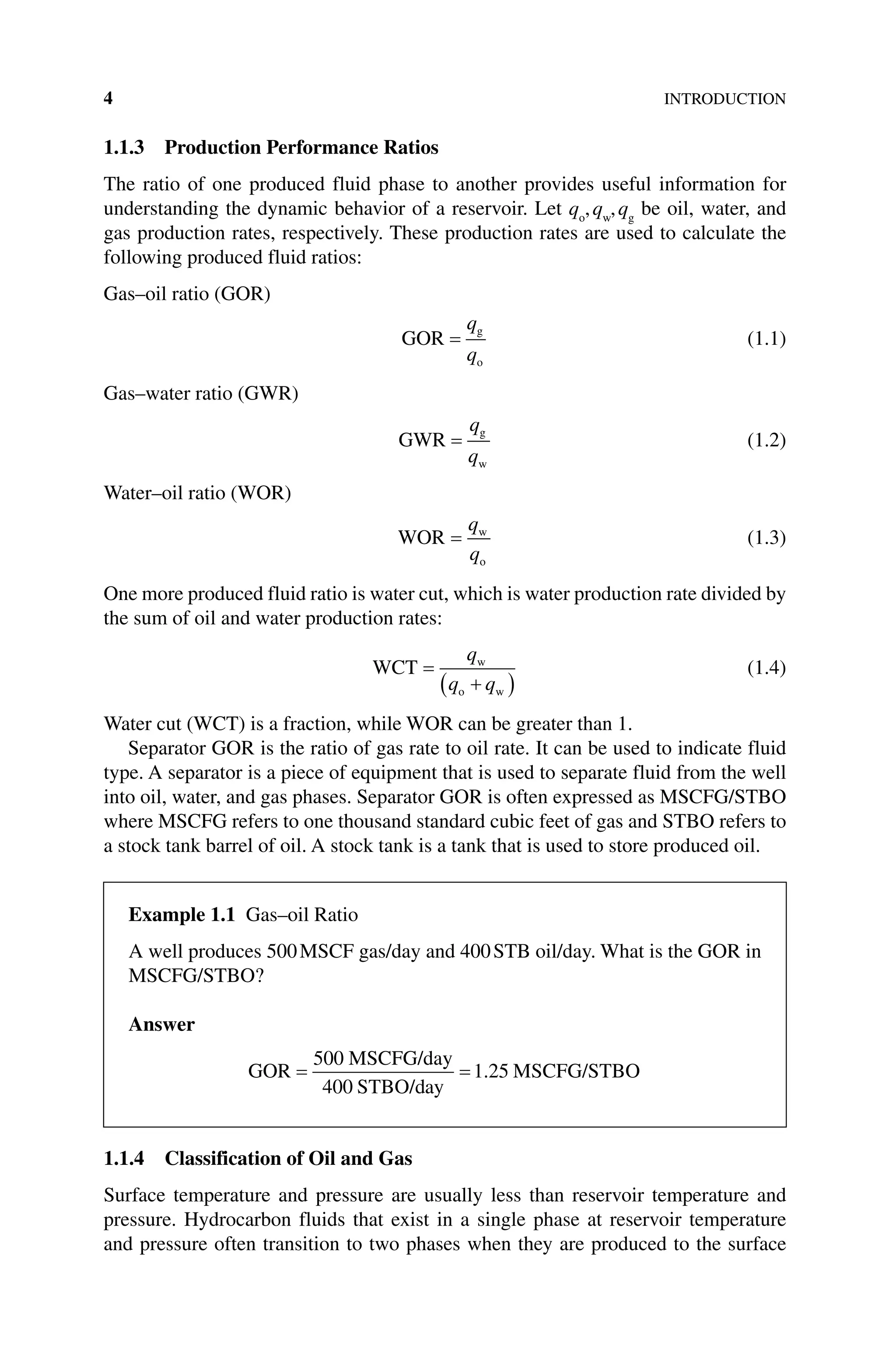
1.1.3 Production Performance Ratios
The ratio of one produced fluid phase to another provides useful information for
understanding the dynamic behavior of a reservoir. Let qo
,qw
,qg
be oil, water, and
gas production rates, respectively. These production rates are used to calculate the
following produced fluid ratios:
Gas–oil ratio (GOR)
GOR g
o
q
q
(1.1)
Gas–water ratio (GWR)
GWR g
w
q
q
(1.2)
Water–oil ratio (WOR)
WOR w
o
q
q
(1.3)
One more produced fluid ratio is water cut, which is water production rate divided by
the sum of oil and water production rates:
WCT w
o w
q
q q
(1.4)
Water cut (WCT) is a fraction, while WOR can be greater than 1.
Separator GOR is the ratio of gas rate to oil rate. It can be used to indicate fluid
type. A separator is a piece of equipment that is used to separate fluid from the well
into oil, water, and gas phases. Separator GOR is often expressed as MSCFG/STBO
where MSCFG refers to one thousand standard cubic feet of gas and STBO refers to
a stock tank barrel of oil. A stock tank is a tank that is used to store produced oil.
1.1.4 Classification of Oil and Gas
Surface temperature and pressure are usually less than reservoir temperature and
pressure. Hydrocarbon fluids that exist in a single phase at reservoir temperature
and pressure often transition to two phases when they are produced to the surface
Example 1.1 Gas–oil Ratio
A well produces 500MSCF gas/day and 400STB oil/day. What is the GOR in
MSCFG/STBO?
Answer
GOR
MSCFG/day
STBO/day
MSCFG/STBO
500
400
1 25
.
WHAT IS PETROLEUM ENGINEERING? 5
where the temperature and pressure are lower. There are a variety of terms for
describing hydrocarbon fluids at surface conditions. Natural gas is a hydrocarbon
mixture in the gaseous state at surface conditions. Crude oil is a hydrocarbon mixture
in the liquid state at surface conditions. Heavy oils do not contain much gas in solu-
tion at reservoir conditions and have a relatively large molecular weight. By contrast,
light oils typically contain a large amount of gas in solution at reservoir conditions
and have a relatively small molecular weight.
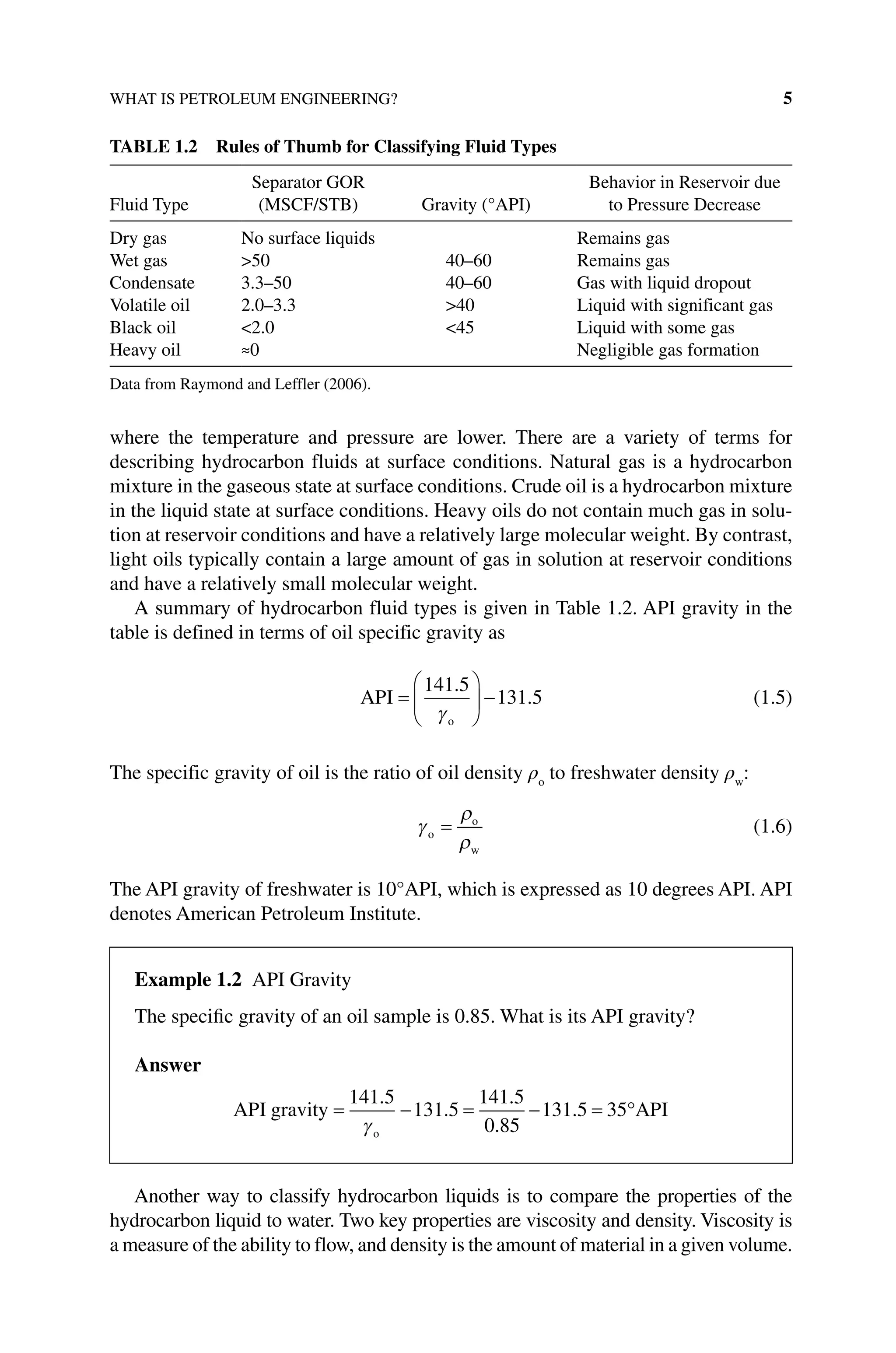
A summary of hydrocarbon fluid types is given in Table 1.2. API gravity in the
table is defined in terms of oil specific gravity as
API
o
141 5
131 5
.
. (1.5)
The specific gravity of oil is the ratio of oil density ρo
to freshwater density ρw
:
o
o
w
(1.6)
The API gravity of freshwater is 10°API, which is expressed as 10 degrees API. API
denotes American Petroleum Institute.
Another way to classify hydrocarbon liquids is to compare the properties of the
hydrocarbon liquid to water. Two key properties are viscosity and density. Viscosity is
a measure of the ability to flow, and density is the amount of material in a given volume.
Table 1.2 Rules of Thumb for Classifying Fluid Types
Fluid Type
Separator GOR
(MSCF/STB) Gravity (°API)
Behavior in Reservoir due
to Pressure Decrease
Dry gas No surface liquids Remains gas
Wet gas 50 40–60 Remains gas
Condensate 3.3–50 40–60 Gas with liquid dropout
Volatile oil 2.0–3.3 40 Liquid with significant gas
Black oil 2.0 45 Liquid with some gas
Heavy oil ≈0 Negligible gas formation
Data from Raymond and Leffler (2006).
Example 1.2 Api Gravity
The specific gravity of an oil sample is 0.85. What is its API gravity?
Answer
API gravity API
o
141 5
131 5
141 5
0 85
131 5 35
.
.
.
.
.
6INTRODUCTION
Water viscosity is 1cp (centipoise) and water density is 1g/cc (gram per cubic
­
centimeter) at 60°F. A liquid with smaller viscosity than water flows more easily
than water. Gas viscosity is much less than water viscosity. Tar, on the other hand,
has very high viscosity relative to water.
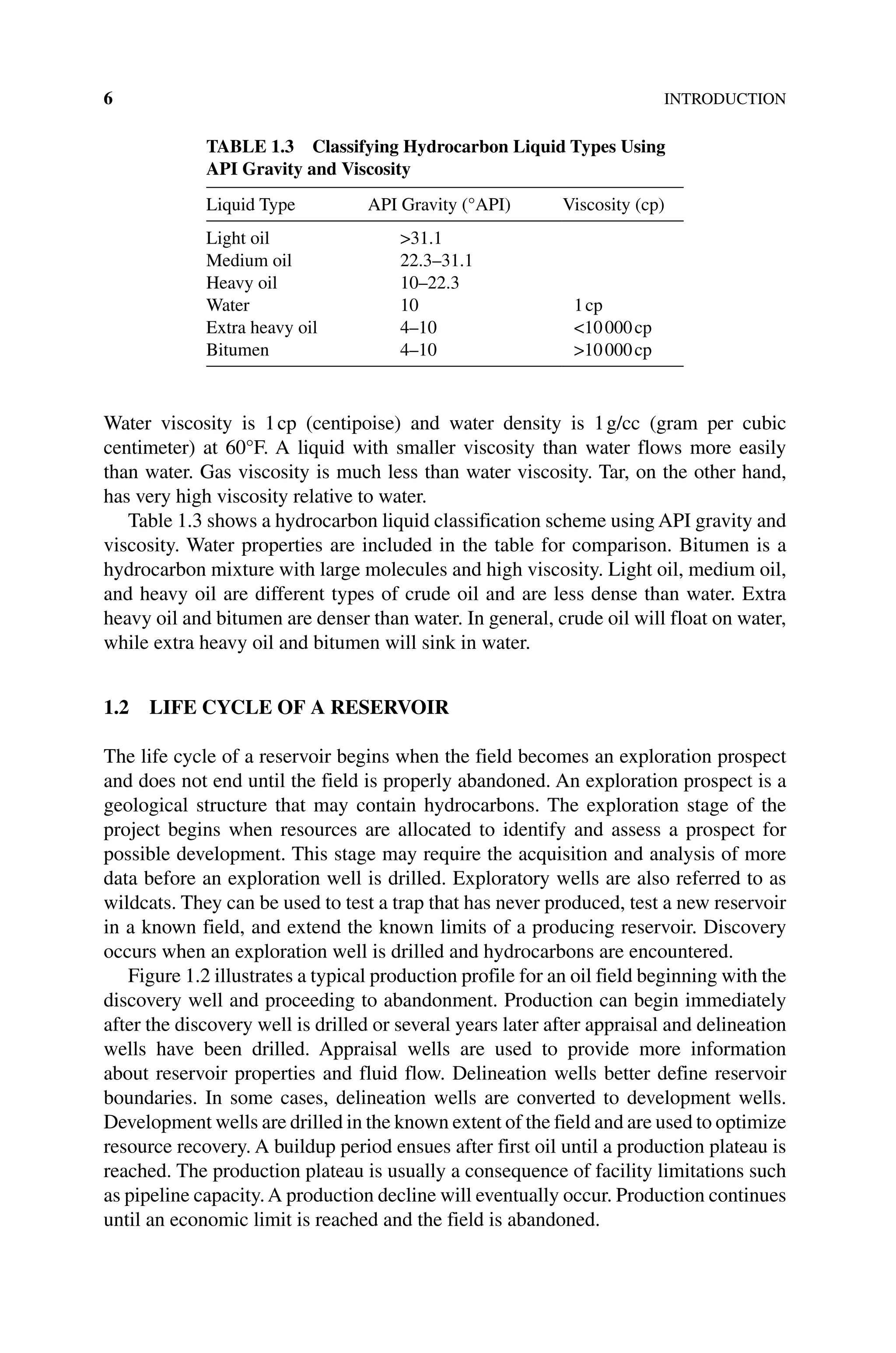
Table 1.3 shows a hydrocarbon liquid classification scheme using API gravity and
viscosity. Water properties are included in the table for comparison. Bitumen is a
hydrocarbon mixture with large molecules and high viscosity. Light oil, medium oil,
and heavy oil are different types of crude oil and are less dense than water. Extra
heavy oil and bitumen are denser than water. In general, crude oil will float on water,
while extra heavy oil and bitumen will sink in water.
1.2 LIFE CYCLE OF A RESERVOIR
The life cycle of a reservoir begins when the field becomes an exploration prospect
and does not end until the field is properly abandoned. An exploration prospect is a
geological structure that may contain hydrocarbons. The exploration stage of the
project begins when resources are allocated to identify and assess a prospect for
­
possible development. This stage may require the acquisition and analysis of more
data before an exploration well is drilled. Exploratory wells are also referred to as
wildcats. They can be used to test a trap that has never produced, test a new reservoir
in a known field, and extend the known limits of a producing reservoir. Discovery
occurs when an exploration well is drilled and hydrocarbons are encountered.
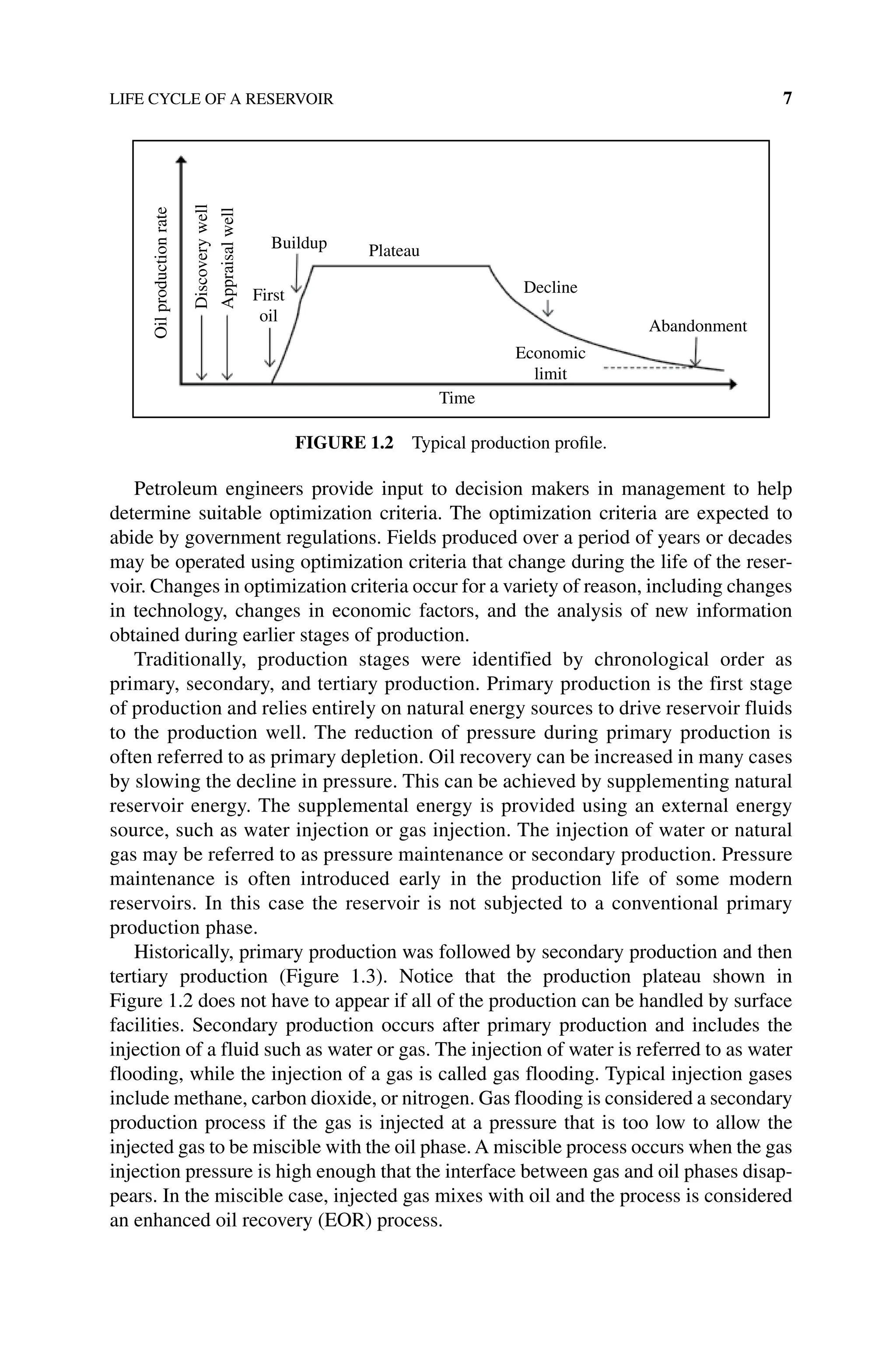
Figure 1.2 illustrates a typical production profile for an oil field beginning with the
discovery well and proceeding to abandonment. Production can begin immediately
after the discovery well is drilled or several years later after appraisal and delineation
wells have been drilled. Appraisal wells are used to provide more information
about reservoir properties and fluid flow. Delineation wells better define reservoir
boundaries. In some cases, delineation wells are converted to development wells.
Development wells are drilled in the known extent of the field and are used to ­optimize
resource recovery. A buildup period ensues after first oil until a production plateau is
reached. The production plateau is usually a consequence of facility limitations such
as pipeline capacity.A production decline will eventually occur. Production ­continues
until an economic limit is reached and the field is abandoned.
Table 1.3 Classifying Hydrocarbon Liquid Types Using
API Gravity and Viscosity
Liquid Type API Gravity (°API) Viscosity (cp)
Light oil 31.1
Medium oil 22.3–31.1
Heavy oil 10–22.3
Water 10 1cp
Extra heavy oil 4–10 10000cp
Bitumen 4–10 10000cp
LIFE CYCLE OF A RESERVOIR 7
Petroleum engineers provide input to decision makers in management to help
determine suitable optimization criteria. The optimization criteria are expected to
abide by government regulations. Fields produced over a period of years or decades
may be operated using optimization criteria that change during the life of the reser-
voir. Changes in optimization criteria occur for a variety of reason, including changes
in technology, changes in economic factors, and the analysis of new information
obtained during earlier stages of production.
Traditionally, production stages were identified by chronological order as
­
primary, secondary, and tertiary production. Primary production is the first stage
of production and relies entirely on natural energy sources to drive reservoir fluids
to the production well. The reduction of pressure during primary production is
often referred to as primary depletion. Oil recovery can be increased in many cases
by slowing the decline in pressure. This can be achieved by supplementing natural
reservoir energy. The supplemental energy is provided using an external energy
source, such as water injection or gas injection. The injection of water or natural
gas may be referred to as pressure maintenance or secondary production. Pressure
maintenance is often introduced early in the production life of some modern
­
reservoirs. In this case the reservoir is not subjected to a conventional primary
­production phase.
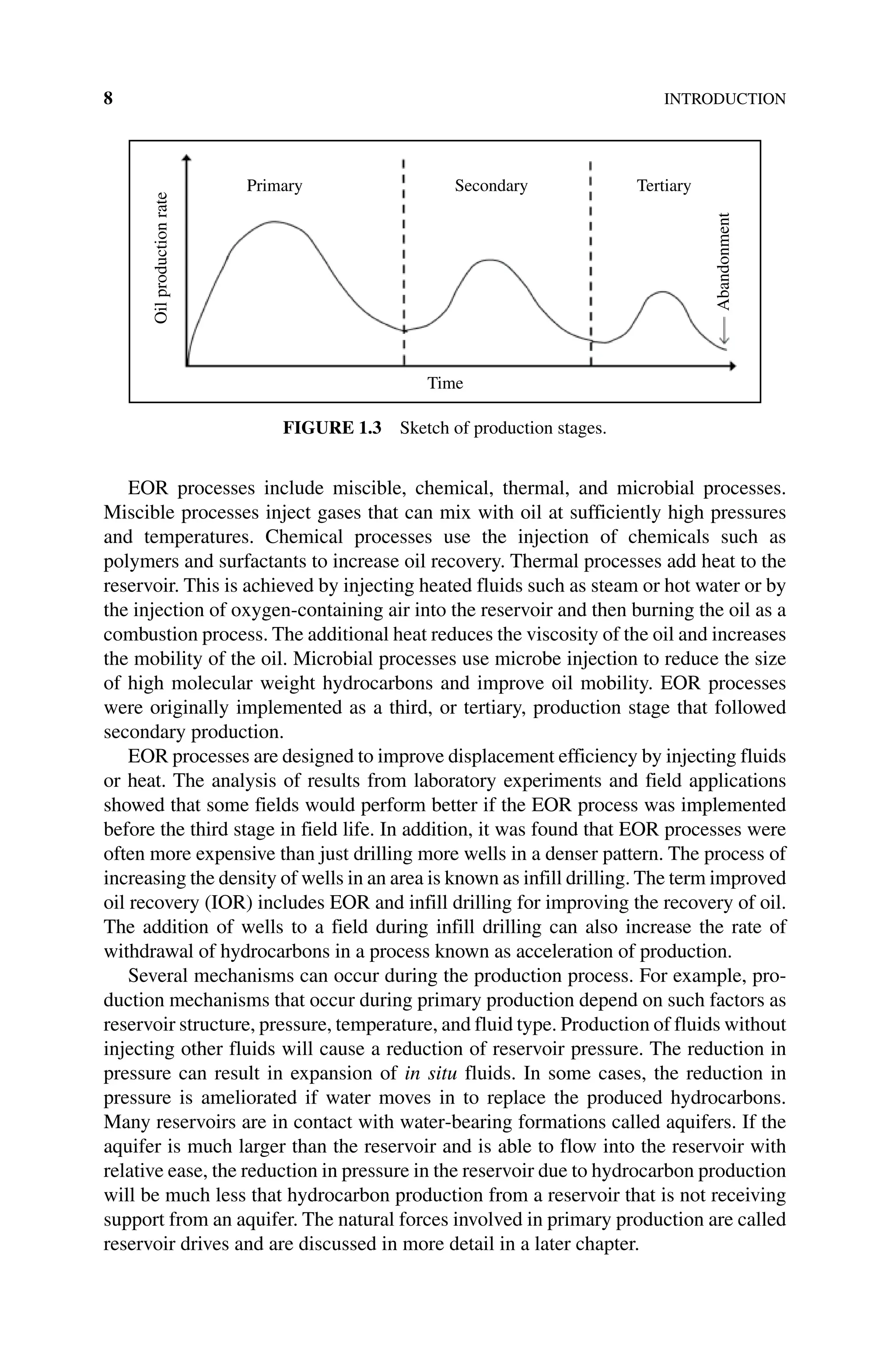
Historically, primary production was followed by secondary production and then
tertiary production (Figure 1.3). Notice that the production plateau shown in
Figure 1.2 does not have to appear if all of the production can be handled by surface
facilities. Secondary production occurs after primary production and includes the
injection of a fluid such as water or gas. The injection of water is referred to as water
flooding, while the injection of a gas is called gas flooding. Typical injection gases
include methane, carbon dioxide, or nitrogen. Gas flooding is considered a secondary
production process if the gas is injected at a pressure that is too low to allow the
injected gas to be miscible with the oil phase.A miscible process occurs when the gas
injection pressure is high enough that the interface between gas and oil phases disap-
pears. In the miscible case, injected gas mixes with oil and the process is considered
an enhanced oil recovery (EOR) process.
Buildup
Appraisal
well
Discovery
well
Oil
production
rate
First
oil
Plateau
Decline
Abandonment
Economic
limit
Time
Figure 1.2 Typical production profile.
8INTRODUCTION
EOR processes include miscible, chemical, thermal, and microbial processes.
Miscible processes inject gases that can mix with oil at sufficiently high pressures
and temperatures. Chemical processes use the injection of chemicals such as
­
polymers and surfactants to increase oil recovery. Thermal processes add heat to the
reservoir. This is achieved by injecting heated fluids such as steam or hot water or by
the injection of oxygen‐containing air into the reservoir and then burning the oil as a
combustion process. The additional heat reduces the viscosity of the oil and increases
the mobility of the oil. Microbial processes use microbe injection to reduce the size
of high molecular weight hydrocarbons and improve oil mobility. EOR processes
were originally implemented as a third, or tertiary, production stage that followed
secondary production.
EOR processes are designed to improve displacement efficiency by injecting fluids
or heat. The analysis of results from laboratory experiments and field applications
showed that some fields would perform better if the EOR process was implemented
before the third stage in field life. In addition, it was found that EOR processes were
often more expensive than just drilling more wells in a denser pattern. The process of
increasing the density of wells in an area is known as infill drilling. The term improved
oil recovery (IOR) includes EOR and infill drilling for improving the recovery of oil.
The addition of wells to a field during infill drilling can also increase the rate of
­
withdrawal of hydrocarbons in a process known as acceleration of production.
Several mechanisms can occur during the production process. For example, pro-
duction mechanisms that occur during primary production depend on such factors as
reservoir structure, pressure, temperature, and fluid type. Production of fluids without
injecting other fluids will cause a reduction of reservoir pressure. The reduction in
pressure can result in expansion of in situ fluids. In some cases, the reduction in
pressure is ameliorated if water moves in to replace the produced hydrocarbons.
Many reservoirs are in contact with water‐bearing formations called aquifers. If the
aquifer is much larger than the reservoir and is able to flow into the reservoir with
relative ease, the reduction in pressure in the reservoir due to hydrocarbon production
will be much less that hydrocarbon production from a reservoir that is not receiving
support from an aquifer. The natural forces involved in primary production are called
reservoir drives and are discussed in more detail in a later chapter.
Primary
Oil
production
rate
Secondary
Time
Tertiary
Abandonment
Figure 1.3 Sketch of production stages.
RESERVOIR MANAGEMENT 9
1.3 RESERVOIR MANAGEMENT
One definition of reservoir management says that the primary objective of reservoir
management is to determine the optimum operating conditions needed to maximize the
economic recovery of a subsurface resource.This is achieved by using available resources
to accomplish two competing objectives: optimizing recovery from a reservoir while
simultaneously minimizing capital investments and operating expenses. As an example,
consider the development of an oil reservoir. It is possible to maximize recovery from the
reservoir by drilling a large number of wells, but the cost would be excessive. On the
other hand, drilling a single well would provide some of the oil but would make it very
difficult to recover a significant fraction of the oil in a reasonable time frame. Reservoir
management is a process for balancing competing objectives to achieve the key objective.
An alternate definition (Saleri, 2002) says that reservoir management is a continuous
process designed to optimize the interaction between data and decision making. Both def-
initions describe a dynamic process that is intended to integrate information from multiple
disciplines to optimize reservoir performance. The process should ­
recognize uncertainty
resulting from our inability to completely characterize the ­
reservoir and fluid flow
processes. The reservoir management definitions given ­
earlier can be interpreted to cover
themanagementofhydrocarbonreservoirsaswellasotherreservoirsystems.Forexample,
a geothermal reservoir is essentially ­
operated by producing fluid from a geological
formation. The management of the geothermal reservoir is a reservoir management task.
It may be necessary to modify a reservoir management plan based on new
information obtained during the life of the reservoir.A plan should be flexible enough
to accommodate changes in economic, technological, and environmental factors.
Furthermore, the plan is expected to address all relevant operating issues, including
governmental regulations. Reservoir management plans are developed using input
from many disciplines, as we see in later chapters.
1.3.1 Recovery Efficiency
An important objective of reservoir management is to optimize recovery from a
resource. The amount of resource recovered relative to the amount of resource
­
originally in place is defined by comparing initial and final in situ fluid volumes.
Example 1.3 Gas Recovery
The original gas in place (OGIP) of a gas reservoir is 5trillion ft3
(TCF). How
much gas can be recovered (in TCF) if recovery from analogous fields is
­
between 70 and 90% of OGIP?
Answer
Two estimates are possible: a lower estimate and an upper estimate.
The lower estimate of gas recovery is 0 70 5 3 5
. .
TCF TCF.
The upper estimate of gas recovery is 0 90 5 4 5
. .
TCF TCF.
10INTRODUCTION
The ratio of fluid volume remaining in the reservoir after production to the fluid
volume originally in place is recovery efficiency. Recovery efficiency can be
expressed as a fraction or a percentage.An estimate of recovery efficiency is obtained
by considering the factors that contribute to the recovery of a subsurface fluid:
­
displacement efficiency and volumetric sweep efficiency.
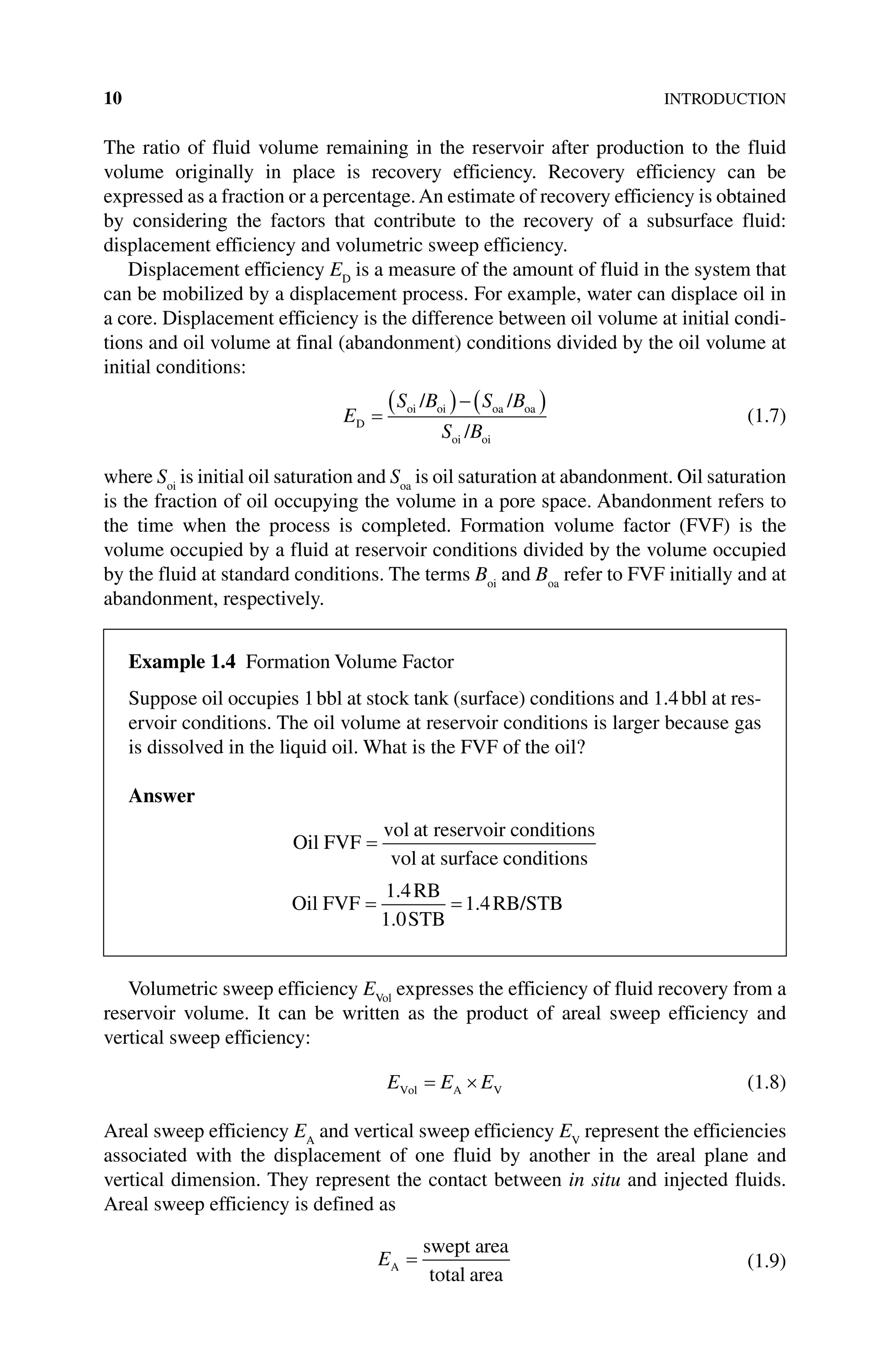
Displacement efficiency ED
is a measure of the amount of fluid in the system that
can be mobilized by a displacement process. For example, water can displace oil in
a core. Displacement efficiency is the difference between oil volume at initial condi-
tions and oil volume at final (abandonment) conditions divided by the oil volume at
initial conditions:
E
S B S B
S B
D
oi oi oa oa
oi oi
/ /
/
(1.7)
where Soi
is initial oil saturation and Soa
is oil saturation at abandonment. Oil saturation
is the fraction of oil occupying the volume in a pore space. Abandonment refers to
the time when the process is completed. Formation volume factor (FVF) is the
volume occupied by a fluid at reservoir conditions divided by the volume occupied
by the fluid at standard conditions. The terms Boi
and Boa
refer to FVF initially and at
abandonment, respectively.
Volumetric sweep efficiency EVol
expresses the efficiency of fluid recovery from a
reservoir volume. It can be written as the product of areal sweep efficiency and
vertical sweep efficiency:
E E E
Vol A V (1.8)
Areal sweep efficiency EA
and vertical sweep efficiency EV
represent the efficiencies
associated with the displacement of one fluid by another in the areal plane and
vertical dimension. They represent the contact between in situ and injected fluids.
Areal sweep efficiency is defined as
EA
swept area
total area
(1.9)
Example 1.4 Formation Volume Factor
Suppose oil occupies 1bbl at stock tank (surface) conditions and 1.4bbl at res-
ervoir conditions. The oil volume at reservoir conditions is larger because gas
is dissolved in the liquid oil. What is the FVF of the oil?
Answer
Oil FVF
vol at reservoir conditions
vol at surface conditions
Oil FVF
RB
STB
RB/STB
1 4
1 0
1 4
.
.
.
PETROLEUM ECONOMICS 11
and vertical sweep efficiency is defined as
EV
swept net thickness
total net thickness
(1.10)
Recovery efficiency RE is the product of displacement efficiency and volumetric
sweep efficiency:
RE D Vol D A V
E E E E E (1.11)
Displacement efficiency, areal sweep efficiency, vertical sweep efficiency, and
recovery efficiency are fractions that vary from 0 to 1. Each of the efficiencies that
contribute to recovery efficiency can be relatively large and still yield a recovery
efficiency that is relatively small. Reservoir management often focuses on finding the
efficiency factor that can be improved by the application of technology.
1.4 PETROLEUM ECONOMICS
The decision to develop a petroleum reservoir is a business decision that requires an
analysis of project economics. A prediction of cash flow from a project is obtained
by combining a prediction of fluid production volume with a forecast of fluid price.
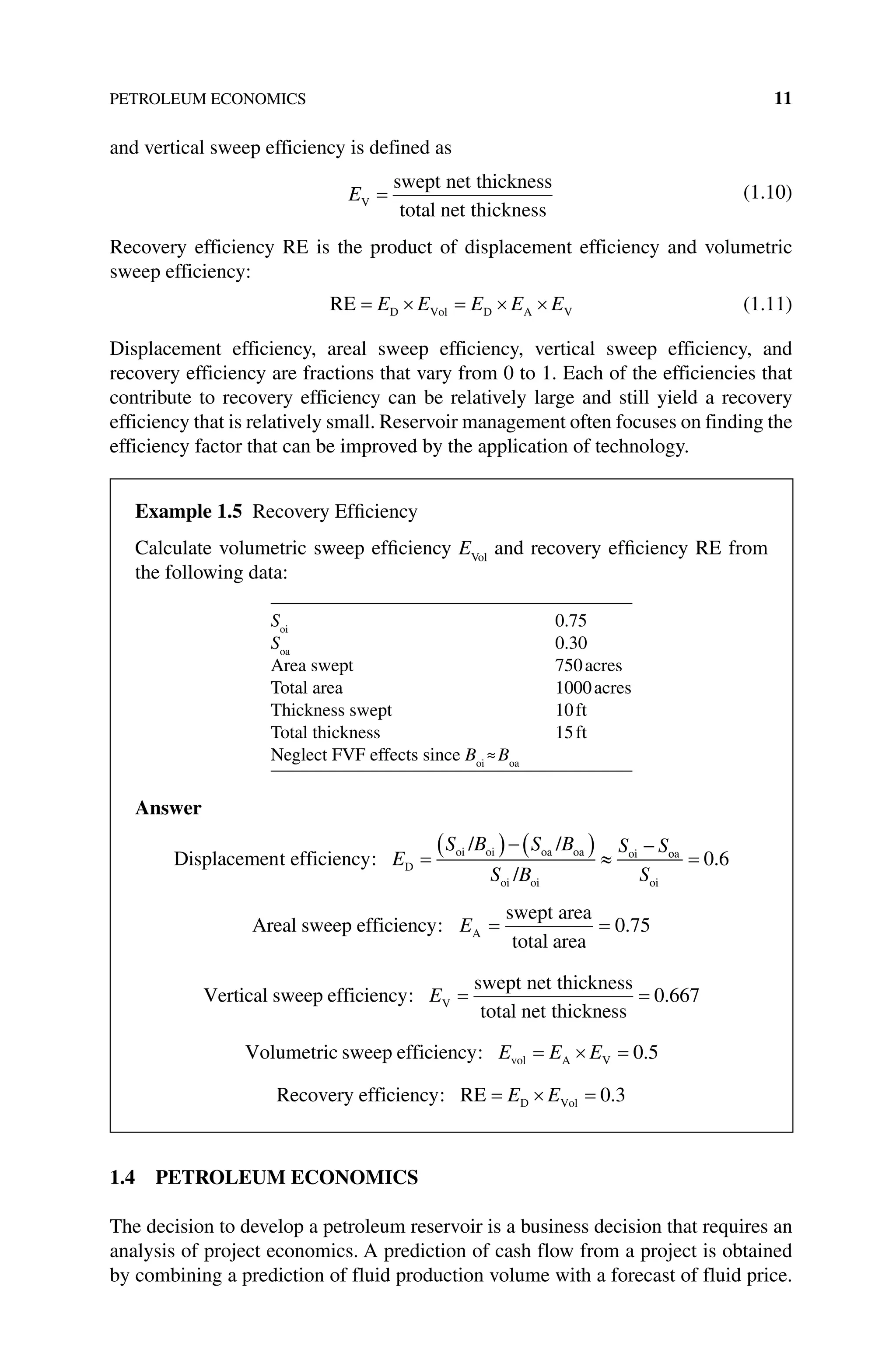
Example 1.5 Recovery Efficiency
Calculate volumetric sweep efficiency EVol
and recovery efficiency RE from
the following data:
Soi
0.75
Soa
0.30
Area swept 750acres
Total area 1000acres
Thickness swept 10ft
Total thickness 15ft
Neglect FVF effects since Boi
≈Boa
Answer
Displacement efficiency
/ /
/
D
oi oi oa oa
oi oi
oi
: E
S B S B
S B
S So
oa
oi
S
0 6
.
Areal efficiency
swept area
total area
sweep A
: .
E 0 75
Vertical sweep efficiency
swept net thickness
total net thickn
V
: E
e
ess
0 667
.
Volumetric sweep efficiency vol A V
: .
E E E 0 5
Recovery efficiency RE D Vol
: .
E E 0 3
12INTRODUCTION
Production volume is predicted using engineering calculations, while fluid price
­
estimates are obtained using economic models. The calculation of cash flow for
­
different scenarios can be used to compare the economic value of competing reser-
voir development concepts.
Cash flow is an example of an economic measure of investment worth. Economic
measures have several characteristics. An economic measure should be consistent
with the goals of the organization. It should be easy to understand and apply so that
it can be used for cost‐effective decision making. Economic measures that can be
quantified permit alternatives to be compared and ranked.
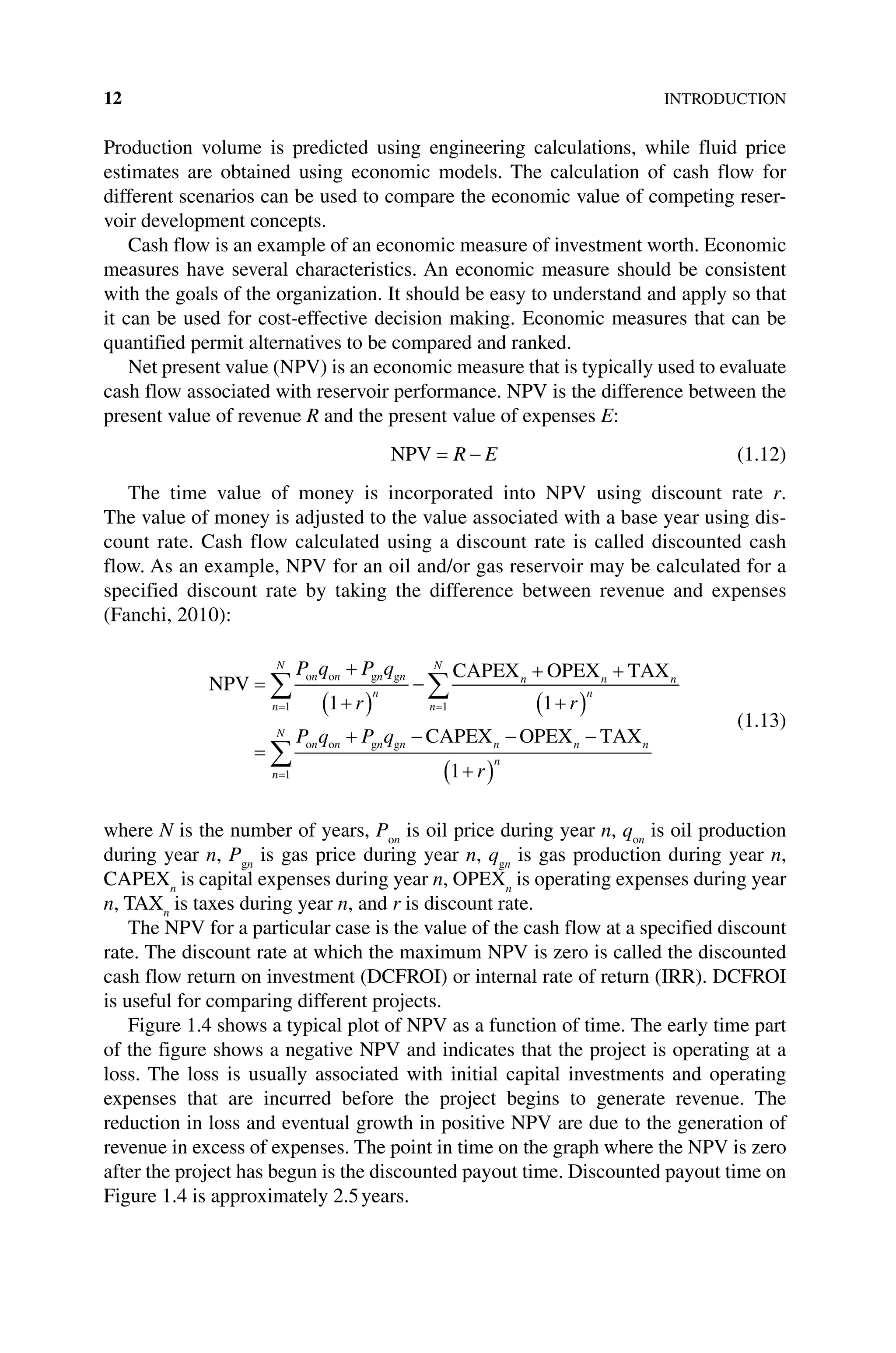
Net present value (NPV) is an economic measure that is typically used to evaluate
cash flow associated with reservoir performance. NPV is the difference between the
present value of revenue R and the present value of expenses E:
NPV R E (1.12)
The time value of money is incorporated into NPV using discount rate r.
The value of money is adjusted to the value associated with a base year using dis-
count rate. Cash flow calculated using a discount rate is called discounted cash
flow. As an example, NPV for an oil and/or gas reservoir may be calculated for a
specified ­
discount rate by taking the difference between revenue and expenses
(Fanchi, 2010):
NPV
CAPEX OPEX TAX
o o g g
n
N
n n n n
n
n
N
n n n
n
P q P q
r r
1 1
1 1
n
n
N
n n n n n n n
n
P q P q
r
1 1
o o g g CAPEX OPEX TAX
(1.13)
where N is the number of years, Pon
is oil price during year n, qon
is oil production
during year n, Pgn
is gas price during year n, qgn
is gas production during year n,
CAPEXn
is capital expenses during year n, OPEXn
is operating expenses during year
n, TAXn
is taxes during year n, and r is discount rate.
The NPV for a particular case is the value of the cash flow at a specified discount
rate. The discount rate at which the maximum NPV is zero is called the discounted
cash flow return on investment (DCFROI) or internal rate of return (IRR). DCFROI
is useful for comparing different projects.
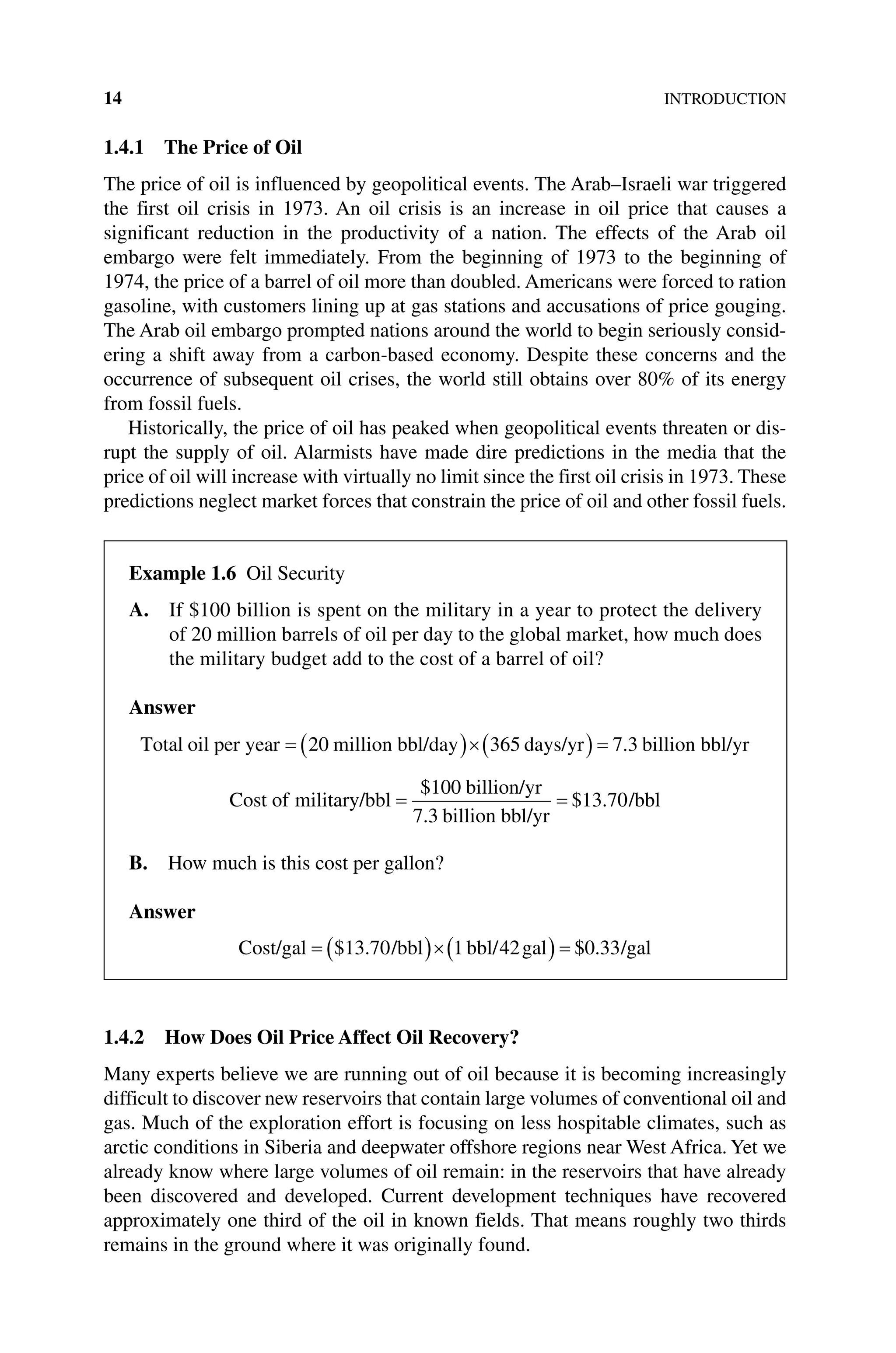
Figure 1.4 shows a typical plot of NPV as a function of time. The early time part
of the figure shows a negative NPV and indicates that the project is operating at a
loss. The loss is usually associated with initial capital investments and operating
expenses that are incurred before the project begins to generate revenue. The
reduction in loss and eventual growth in positive NPV are due to the generation of
revenue in excess of expenses. The point in time on the graph where the NPV is zero
after the project has begun is the discounted payout time. Discounted payout time on
Figure 1.4 is approximately 2.5years.
PETROLEUM ECONOMICS 13
Table 1.4 presents the definitions of several commonly used economic measures.
DCFROI and discounted payout time are measures of the economic viability of a project.
Another measure is the profit‐to‐investment (PI) ratio which is a measure of profit-
ability. It is defined as the total undiscounted cash flow without capital investment
divided by total investment. Unlike the DCFROI, the PI ratio does not take into
account the time value of money. Useful plots include a plot of NPV versus time and
a plot of NPV versus discount rate.
Production volumes and price forecasts are needed in the NPV calculation. The
input data used to prepare forecasts includes data that is not well known. Other pos-
sible sources of error exist. For example, the forecast calculation may not adequately
represent the behavior of the system throughout the duration of the forecast, or a
geopolitical event could change global economics. It is possible to quantify uncer-
tainty by making reasonable changes to input data used to calculate forecasts so that
a range of NPV results is provided. This process is illustrated in the discussion of
decline curve analysis in a later chapter.
Cash flow
80.00
60.00
40.00
20.00
NPV
($
millions)
0.00
–20.00
–40.00
Time (years)
1 2 3 4 5 6 7 8
NPV
Figure 1.4 Typical cash flow.
Table 1.4 Definitions of Selected Economic Measures
Economic Measure Definition
Discount rate Factor to adjust the value of money to a base year
Net present value (NPV) Value of cash flow at a specified discount rate
Discounted payout time Time when NPV=0
DCFROI or IRR Discount rate at which maximum NPV=0
Profit‐to‐investment (PI) ratio Undiscounted cash flow without capital investment
divided by total investment
14INTRODUCTION
1.4.1 The Price of Oil
The price of oil is influenced by geopolitical events. The Arab–Israeli war triggered
the first oil crisis in 1973. An oil crisis is an increase in oil price that causes a
significant reduction in the productivity of a nation. The effects of the Arab oil
embargo were felt immediately. From the beginning of 1973 to the beginning of
1974, the price of a barrel of oil more than doubled. Americans were forced to ration
gasoline, with customers lining up at gas stations and accusations of price gouging.
The Arab oil embargo prompted nations around the world to begin seriously consid-
ering a shift away from a carbon‐based economy. Despite these concerns and the
occurrence of subsequent oil crises, the world still obtains over 80% of its energy
from fossil fuels.
Historically, the price of oil has peaked when geopolitical events threaten or dis-
rupt the supply of oil. Alarmists have made dire predictions in the media that the
price of oil will increase with virtually no limit since the first oil crisis in 1973. These
predictions neglect market forces that constrain the price of oil and other fossil fuels.
1.4.2 How Does Oil Price Affect Oil Recovery?
Many experts believe we are running out of oil because it is becoming increasingly
difficult to discover new reservoirs that contain large volumes of conventional oil and
gas. Much of the exploration effort is focusing on less hospitable climates, such as
arctic conditions in Siberia and deepwater offshore regions near West Africa. Yet we
already know where large volumes of oil remain: in the reservoirs that have already
been discovered and developed. Current development techniques have recovered
approximately one third of the oil in known fields. That means roughly two thirds
remains in the ground where it was originally found.
Example 1.6 Oil Security
A. 
If $100 billion is spent on the military in a year to protect the delivery
of 20 million barrels of oil per day to the global market, how much does
the ­
military budget add to the cost of a barrel of oil?
Answer
Total oil per year million bbl/day days/yr billion
20 365 7 3
. b
bbl/yr
Cost of military/bbl
billion/yr
billion bbl/yr
/b
$
.
$ .
100
7 3
13 70 b
bl
B. How much is this cost per gallon?
Answer
Cost/gal /bbl bbl/ gal /gal
$ . $ .
13 70 1 42 0 33
PETROLEUM ECONOMICS 15
The efficiency of oil recovery depends on cost. Companies can produce much
more oil from existing reservoirs if they are willing to pay for it and if the market will
support that cost. Most oil‐producing companies choose to seek and produce less
expensive oil so they can compete in the international marketplace. Table 1.5
­
illustrates the sensitivity of oil‐producing techniques to the price of oil. Oil prices in
the table include prices in the original 1997 prices and inflation adjusted prices
to 2016. The actual inflation rate for oil prices depends on a number of factors, such
as size and availability of supply and demand.
Table 1.5 shows that more sophisticated technologies can be justified as the price of
oil increases. It also includes a price estimate for alternative energy sources, such as wind
and solar. Technological advances are helping wind and solar energy become economi-
cally competitive with oil and gas as energy sources for generating electricity. In some
cases there is overlap between one technology and another. For example, steam flooding
is an EOR process that can compete with conventional oil recovery techniques such as
water flooding, while chemical flooding is one of the most ­
expensive EOR processes.
1.4.3 How High Can Oil Prices Go?
In addition to relating recovery technology to oil price, Table 1.5 contains another
important point: the price of oil will not rise without limit. For the data given in the
table, we see that alternative energy sources become cost competitive when the price
of oil rises above 2016$101 per barrel. If the price of oil stays at 2016$101 per barrel
or higher for an extended period of time, energy consumers will begin to switch to
less expensive energy sources. This switch is known as product substitution. The
impact of price on consumer behavior is illustrated by consumers in European coun-
tries that pay much more for gasoline than consumers in the United States. Countries
such as Denmark, Germany, and Holland are rapidly developing wind energy as a
substitute to fossil fuels for generating electricity.
Historically, we have seen oil‐exporting countries try to maximize their income
and minimize competition from alternative energy and expensive oil recovery
­
technologies by supplying just enough oil to keep the price below the price needed to
justify product substitution. Saudi Arabia has used an increase in the supply of oil
to drive down the cost of oil. This creates problems for organizations that are
­
trying to develop more costly sources of oil, such as shale oil in the United States.
It also creates problems for oil‐exporting nations that are relying on a relatively high
oil price to fund their government spending.
Table 1.5 Sensitivity of Oil Recovery Technology to Oil Price
Oil Recovery Technology
Oil Price Range
1997$/bbl
2016$/bbl
5% Inflation
Conventional 15–25 38–63
Enhanced oil recovery (EOR) 20–40 51–101
Extra heavy oil (e.g., tar sands) 25–45 63–114
Alternative energy sources 40–60 101–152
16INTRODUCTION
Oil‐importing countries can attempt to minimize their dependence on imported
oil by developing technologies that reduce the cost of alternative energy. If an oil‐
importing country contains mature oil reservoirs, the development of relatively
­
inexpensive technologies for producing oil remaining in mature reservoirs or the
imposition of economic incentives to encourage domestic oil production can be used
to reduce the country’s dependence on imported oil.
1.5 PETROLEUM AND THE ENVIRONMENT
Fossil fuels—coal, oil, and natural gas—can harm the environment when they are
consumed. Surface mining of coal scars the environment until the land is reclaimed.
Oil pollutes everything it touches when it is spilled on land or at sea. Pictures of wild-
life covered in oil or natural gas appearing in drinking water have added to the public
perception of oil and gas as “dirty” energy sources. The combustion of fossil fuels
yields environmentally undesirable by‐products. It is tempting to conclude that fossil
fuels have always harmed the environment. However, if we look at the history of
energy consumption, we see that fossil fuels have a history of helping protect the
environment when they were first adopted by society as a major energy source.
Wood was the fuel of choice for most of human history and is still a significant
contributor to the global energy portfolio. The growth in demand for wood energy
associated with increasing population and technological advancements such as the
development of the steam engine raised concerns about deforestation and led to a
search for new source of fuel. The discovery of coal, a rock that burned, reduced the
demand for wood and helped save the forests.
Coal combustion was used as the primary energy source in industrialized societies
prior to 1850. Another fuel, whale oil, was used as an illuminant and joined coal as
part of the nineteenth‐century energy portfolio. Demand for whale oil motivated the
harvesting of whales for their oil and was leading to the extinction of whales. The dis-
covery that rock oil, what we now call crude oil, could also be used as an illuminant
provided a product that could be substituted for whale oil if there was enough rock oil
to meet growing demand. In 1861, the magazine Vanity Fair published a cartoon
showing whales at a Grand Ball celebrating the production of oil in Pennsylvania.
Improvements in drilling technology and the discovery of oil fields that could provide
large volumes of oil at high flow rates made oil less expensive than coal and whale oil.
From an environmental perspective, the substitution of rock oil for whale oil saved the
whales in the latter half of the nineteenth century. Today, concern about the harmful
environmental effects of fossil fuels, especially coal and oil, is motivating a transition
to more beneficial sources of energy. The basis for this concern is considered next.
1.5.1 Anthropogenic Climate Change
One environmental concern facing society today is anthropogenic climate change.
When a carbon‐based fuel burns in air, carbon reacts with oxygen and nitrogen in
the air to produce carbon dioxide (CO2
), carbon monoxide, and nitrogen oxides
PETROLEUM AND THE ENVIRONMENT 17
(often abbreviated as NOx). The by‐products of unconfined combustion, including
water vapor, are emitted into the atmosphere in gaseous form.
Some gaseous combustion by‐products are called greenhouse gases because they
absorb heat energy. Greenhouse gases include water vapor, carbon dioxide, methane,
and nitrous oxide. Greenhouse gas molecules can absorb infrared light. When a
greenhouse gas molecule in the atmosphere absorbs infrared light, the energy of the
absorbed photon of light is transformed into the kinetic energy of the gas molecule.
The associated increase in atmospheric temperature is the greenhouse effect illus-
trated in Figure 1.5.
Much of the solar energy arriving at the top of the atmosphere does not pass through
the atmosphere to the surface of the Earth. A study of the distribution of light energy
arriving at the surface of the Earth shows that energy from the sun at certain frequencies
(or, equivalently, wavelengths) is absorbed in the atmosphere. Several of the gaps are
associated with light absorption by a greenhouse gas molecule.
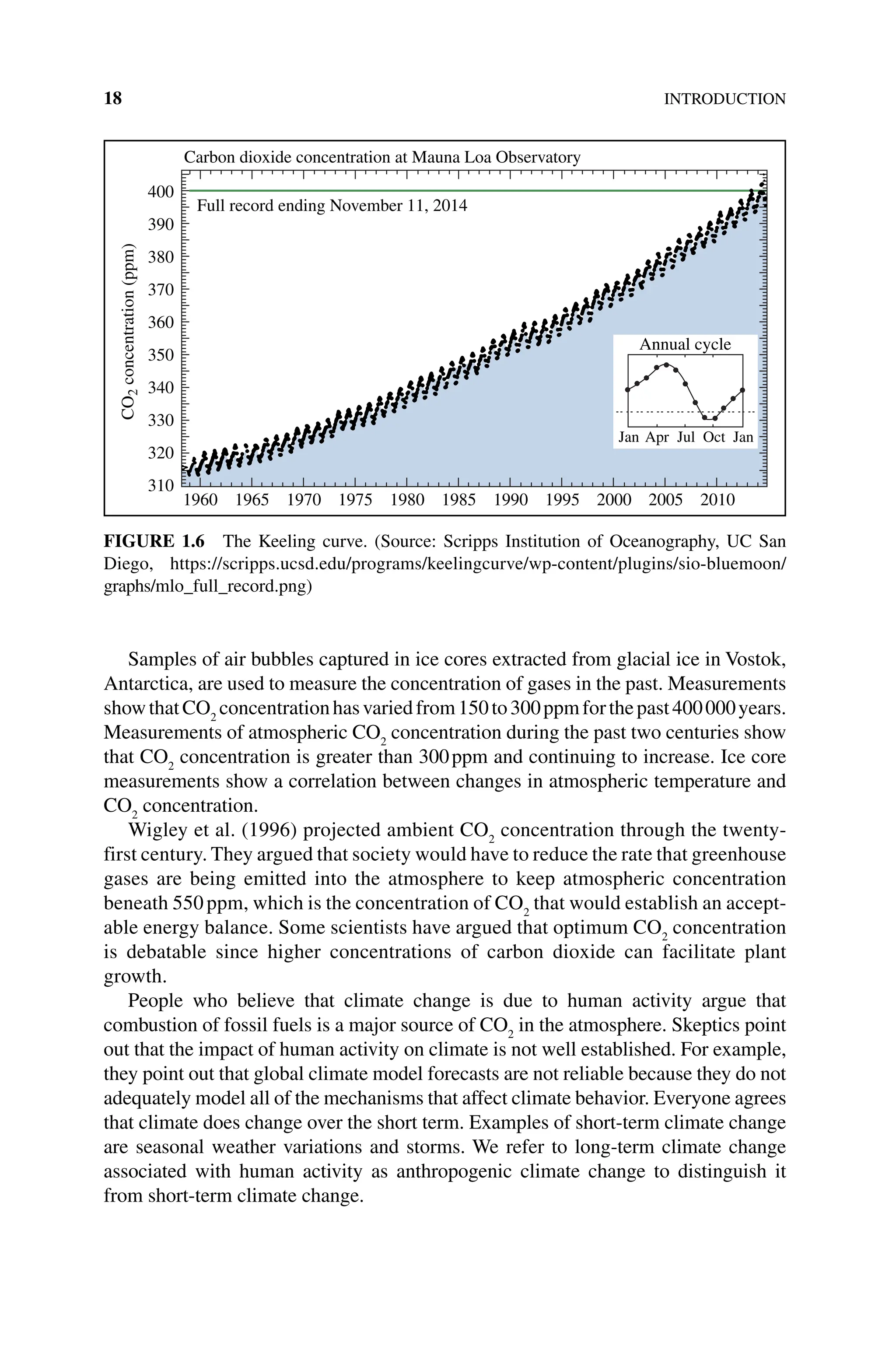
One way to measure the concentration of greenhouse gases is to measure the
concentration of a particular greenhouse gas. Charles David Keeling began
measuring atmospheric carbon dioxide concentration at the Mauna Loa Observatory
on the Big Island of Hawaii in 1958. Keeling observed a steady increase in carbon
dioxide concentration since he began his measurements. His curve, which is now
known as the Keeling curve, is shown in Figure 1.6. It exhibits an annual cycle in
carbon dioxide concentration overlaying an increasing average. The initial carbon
dioxide concentration was measured at a little over 310 parts per million. Today it
is approximately 400 parts per million. These measurements show that carbon
dioxide concentration in the atmosphere has been increasing since the middle of the
­twentieth century.
Reflected
Incident solar
radiation
‘‘Greenhouse’’
Gas absorbs and
re-emits IR
Infrared
radiation
Atmosphere
Figure 1.5 The greenhouse effect. (Source: Fanchi (2004). Reproduced with permission
of Elsevier Academic Press.)
18INTRODUCTION
Samples of air bubbles captured in ice cores extracted from glacial ice in Vostok,
Antarctica, are used to measure the concentration of gases in the past. Measurements
showthatCO2
concentrationhasvariedfrom150to300ppmforthepast400000years.
Measurements of atmospheric CO2
concentration during the past two centuries show
that CO2
concentration is greater than 300ppm and continuing to increase. Ice core
measurements show a correlation between changes in atmospheric temperature and
CO2
concentration.
Wigley et al. (1996) projected ambient CO2
concentration through the twenty‐
first century. They argued that society would have to reduce the rate that greenhouse
gases are being emitted into the atmosphere to keep atmospheric concentration
beneath 550ppm, which is the concentration of CO2
that would establish an accept-
able energy balance. Some scientists have argued that optimum CO2
concentration
is debatable since higher concentrations of carbon dioxide can facilitate plant
growth.
People who believe that climate change is due to human activity argue that
combustion of fossil fuels is a major source of CO2
in the atmosphere. Skeptics point
out that the impact of human activity on climate is not well established. For example,
they point out that global climate model forecasts are not reliable because they do not
adequately model all of the mechanisms that affect climate behavior. Everyone agrees
that climate does change over the short term. Examples of short‐term climate change
are seasonal weather variations and storms. We refer to long‐term climate change
associated with human activity as anthropogenic climate change to distinguish it
from short‐term climate change.
Carbon dioxide concentration at Mauna Loa Observatory
Full record ending November 11, 2014
400
390
380
370
CO
2
concentration
(ppm)
360
350
340
330
320
310
1960 1965 1970 1975 1980 1985 1990 1995 2000 2005 2010
Annual cycle
Jan Apr Jul Oct Jan
Figure 1.6 The Keeling curve. (Source: Scripps Institution of Oceanography, UC San
Diego, https://scripps.ucsd.edu/programs/keelingcurve/wp‐content/plugins/sio‐bluemoon/
graphs/mlo_full_record.png)
PETROLEUM AND THE ENVIRONMENT 19
Evidence that human activity is causing climate to change more than it would
­
naturally change has motivated international attempts by proponents of anthropo-
genic climate change to regulate greenhouse gas emissions and transition as quickly
as possible from fossil fuels to energy sources such as wind and solar. Skeptics typi-
cally argue that reducing our dependence on fossil fuels is important, but they believe
that the transition should occur over a period of time that does not significantly harm
the global economy. One method for reducing the emission of CO2
into the atmosphere
is to collect and store carbon dioxide in geologic formations in a process known as
CO2
sequestration. Recent research has suggested that large‐scale sequestration of
greenhouse gases could alter subsurface stress to cause fault slippage and seismic
activity at the surface.
1.5.2 Environmental Issues
Fossil fuel producers should be good stewards of the Earth. From a personal perspec-
tive, they share the environment with everyone else. From a business perspective,
failure to protect the environment can lead to lawsuits, fines, and additional regula-
tion. There are many examples of society imposing penalties on operators for
behavior that could harm the environment or already harmed the environment. A few
examples are discussed here.
Shell UK reached an agreement with the British government in 1995 to dispose an
oil storage platform called the Brent Spar in the deep waters of theAtlantic. The envi-
ronmental protection group Greenpeace and its allies were concerned that oil left in
the platform would leak into the Atlantic. Greenpeace challenged the Shell UK plan
by occupying the platform and supporting demonstrations that, in some cases,
became violent. Shell UK abandoned the plan to sink the Brent Spar in the Atlantic
and instead used the structure as a ferry quay. As a consequence of this incident,
­
governments throughout Europe changed their rules regulating disposal of offshore
facilities (Wilkinson, 1997; Offshore Staff, 1998).
Another example is shale oil and gas development in populated areas. Shale oil
and gas development requires implementation of a technique known as hydraulic
fracturing. The only way to obtain economic flow rates of oil and gas from shale is
to fracture the rock. The fractures provide flow paths from the shale to the well.
Hydraulic fracturing requires the injection of large volumes of water at pressures that
are large enough to break the shale. The injected water carries chemicals and small
solid objects called proppants that are used to prop open fractures when the ­fracturing
process is completed, and the well is converted from an injection well operating at
high pressure to a production well operating at much lower pressure.
Some environmental issues associated with hydraulic fracturing include meeting
the demand for water to conduct hydraulic fracture treatments and disposing
­
produced water containing pollutants. One solution is to recycle the water. Another
solution is to inject the produced water in disposal wells. Both the fracture process
and the water disposal process can result in vibrations in the Earth that can be mea-
sured as seismic events. The fracture process takes place near the depth of the shale
20INTRODUCTION
and is typically a very low magnitude seismic event known as a microseismic event.
Water injection into disposal wells can lead to seismic events, and possibly ­
earthquakes
that can be felt at the surface, in a process known as injection‐induced seismicity
(Rubinstein and Mahani, 2015; Weingarten et al., 2015). King (2012) has provided an
extensive review of hydraulic fracturing issues associated with oil and gas production
from shale. Concern about environmental effects has led some city, county, and state
governments in the United States to more closely regulate shale drilling and production.
Oil spills in marine environments can require expensive cleanup operations. Two
such oil spills were the grounding of the 1989 Exxon Valdez oil tanker in Alaska and
the 2010 explosion and sinking of the BP Deepwater Horizon offshore platform in
the Gulf of Mexico. Both incidents led to significant financial penalties, including
remediation costs, for the companies involved. In the case of the BP Deepwater
Horizon incident, 11 people lost their lives. The Exxon Valdez spill helped motivate
the passage of US government regulations requiring the use of double‐hulled tankers.
1.6 ACTIVITIES
1.6.1 Further Reading
For more information about petroleum in society, see Fanchi and Fanchi (2016),
Hyne (2012), Satter et al. (2008), Raymond and Leffler (2006), and Yergin (1992).
For more information about reservoir management and petroleum economics, see
Hyne (2012), Fanchi (2010), Satter et al. (2008), and Raymond and Leffler (2006).
Example 1.7 Environmental Cost
A. 
A project is expected to recover 500 million STB of oil. The project will
require installing an infrastructure (e.g., platforms, pipelines, etc.) that
costs $1.8 billion and another $2 billion in expenses (e.g., royalties, taxes,
operating costs). Breakeven occurs when revenue=expenses. Neglecting
the time value of money, what price of oil (in $/STB) is needed to achieve
breakeven? STB refers to stock tank barrel.
Answer
Total expenses=$3.8 billion
Oil price=$3.8 billion/0.5 billion STB=$7.6/STB
B. 
Suppose an unexpected environmental disaster occurs that adds another $20
billion to project cost. Neglecting the time value of money, what price of
oil (in $/STB) is needed to achieve breakeven?
Answer
Total expenses=$23.8billion
Oil price=$23.8billion/0.5billion STB=$47.6/STB
ACTIVITIES 21
1.6.2 True/False
1.1 A hydrocarbon reservoir must be able to trap and retain fluids.
1.2 API gravity is the weight of a hydrocarbon mixture.
1.3 Separator GOR is the ratio of gas rate to oil rate.
1.4 The first stage in the life of an oil or gas reservoir is exploration.
1.5	
Volumetric sweep efficiency is the product of areal sweep efficiency and dis-
placement efficiency.
1.6 Net present value is usually negative at the beginning of a project.
1.7 DCFROI is discounted cash flow return on interest.
1.8 Nitrogen is a greenhouse gas.
1.9 Water flooding is an EOR process.
1.10	
Geological sequestration of carbon dioxide in an aquifer is an EOR process.
1.6.3 Exercises
1.1 Suppose the density of oil is 48lb/ft3
and the density of water is 62.4lb/ft3
.
Calculate the specific gravity of oil γo
and its API gravity.
1.2 Estimate recovery efficiency when displacement efficiency is 30%, areal sweep
efficiency is 65%, and vertical sweep efficiency is 70%.
1.3 Calculate volumetric sweep efficiency EVol
and recovery efficiency RE
from the following data where displacement efficiency can be estimated as
E S S S
D oi or oi
/
( ) .
Initial oil saturation Soi
0.75
Residual oil saturation Sor
0.30
Area swept 480acres
Total area 640acres
Thickness swept 80ft
Total thickness 100ft
1.4 A. If the initial oil saturation of an oil reservoir is Soi
= 0.70 and the residual
oil saturation from water flooding a core sample in the laboratory is
Sor
= 0.30, ­
calculate the displacement efficiency ED
assuming displace-
ment efficiency can be estimated as E S S S
D oi or oi
/
( ) .
B. 
In actual floods, the residual oil ­
saturation measured in the laboratory is
seldom achieved. Suppose Sor
=0.35 in the field, and recalculate displace-
ment efficiency. Compare displacement efficiencies.
22INTRODUCTION
1.5 A. 
A project is expected to recover 200 million STB of oil. The project will
require installing an infrastructure (e.g., platforms, pipelines, etc.) that costs
$1.2billionandanother$0.8billioninexpenses(e.g.,royalties,taxes,operating
costs). Breakeven occurs when revenue=expenses. Neglecting the time value
of money, what price of oil (in $/STB) is needed to achieve breakeven?
B. 
Suppose a fire on the platform adds another $0.5 billion to project cost.
Neglecting the time value of money, what price of oil (in $/STB) is
needed to achieve breakeven?
1.6 A. 
The water cut of an oil well that produces 1000 STB oil per day is 25%.
What is the water production rate for the well? Express your answer in STB
water per day.
B. What is the WOR?
1.7 A. 
Fluid production from a well passes through a separator at the rate of
1200MSCF gas per day and 1000STB oil per day. What is the separator
GOR in MSCF/STB?
B. 
Based on this information, would you classify the fluid as black oil or
volatile oil?
1.8 A. How many acres are in 0.5mi2
?
B. 
If one gas well can drain 160acres, how many gas wells are needed to
drain 1mi2
?
1.9 A. 
A wellbore has a total depth of 10000ft. If it is full of water with a pressure
gradient of 0.433psia/ft, what is the pressure at the bottom of the wellbore?
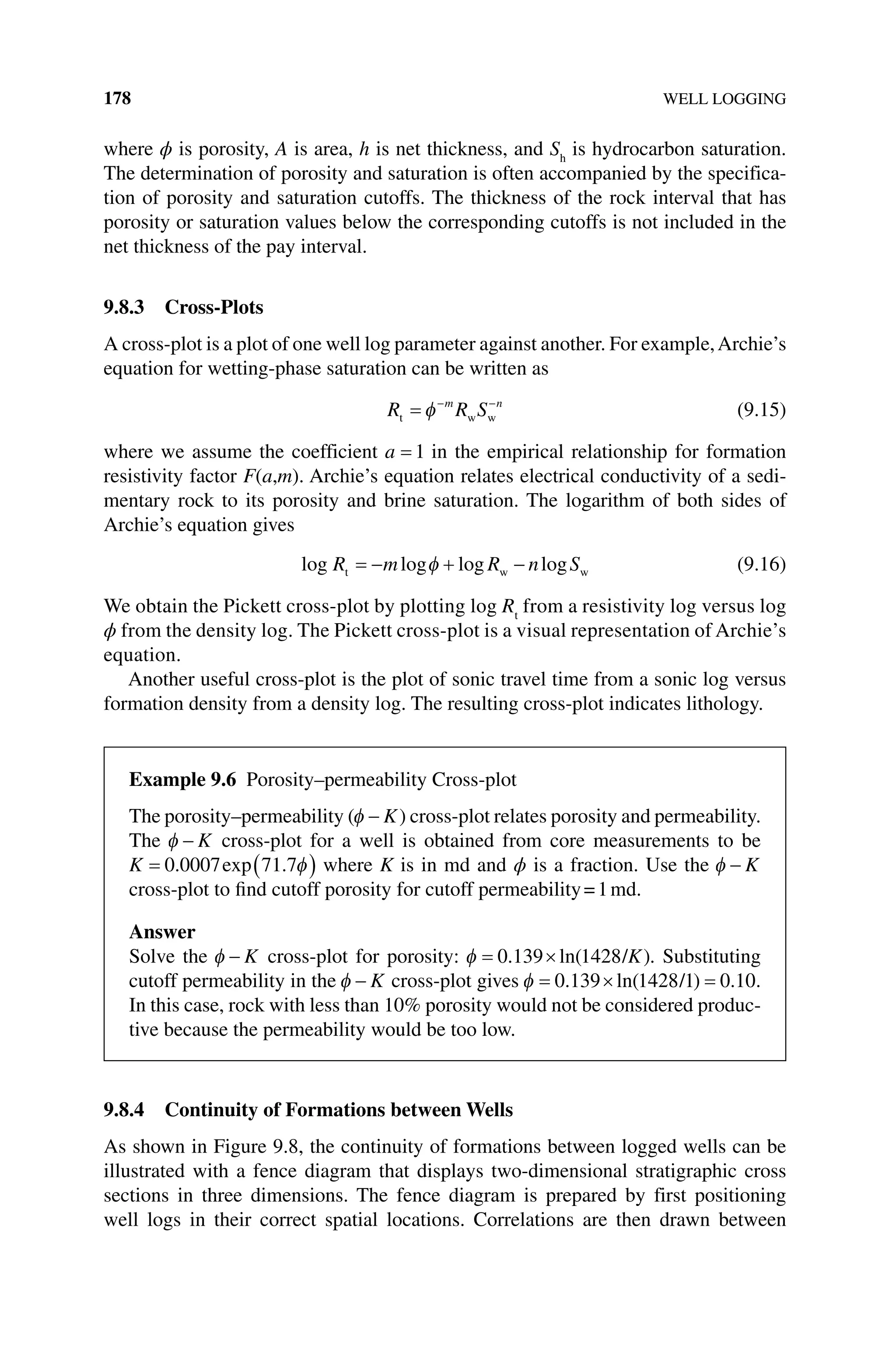
B. 
The pressure in a column of water is 1000psia at a depth of 2300ft. What
is the pressure at a shallower depth of 2200ft.? Assume the pressure gra-
dient of water is 0.433psia/ft. Express your answer in psia.
1.10 A. 
Primary recovery from an oil reservoir was 100 MMSTBO where 1
MMSTBO = 1 million STB of oil. A water flood was implemented
following primary recovery. Incremental recovery from the water flood
was 25% of original oil in place (OOIP). Total recovery (primary recovery
plus recovery from water flooding) was 50% of OOIP. How much oil (in
MMSTBO) was recovered by the water flood?
B. What was the OOIP (in MMSTBO)?
1.11 A. 
A core contains 25% water saturation and 75% oil saturation before it is
flooded. Core floods show that the injection of water into the core leaves
a residual oil saturation of 25%. If the same core is resaturated with oil
and then flooded with carbon dioxide, the residual oil saturation is 10%.
What is the ­
displacement efficiency of the water flood? Assume displace-
ment efficiency can be estimated as E S S S
D oi or oi
/
( ) .
B. What is the displacement efficiency of the carbon dioxide flood?
1.12 The revenue from gas produced by a well is $6 million per year. The gas drains an
area of 640 acres. Suppose you have 1 acre in the drainage area and are entitled to
25% of the revenue for your fraction of the drainage area, which is 1 acre/640
acres. How much revenue from the gas well is yours? Express your answer in $/yr.
Introduction to Petroleum Engineering, First Edition. John R. Fanchi and Richard L. Christiansen.
© 2017 John Wiley  Sons, Inc. Published 2017 by John Wiley  Sons, Inc.
Companion website: www.wiley.com/go/Fanchi/IntroPetroleumEngineering
2
THE FUTURE OF ENERGY
The global energy mix is in a period of transition from fossil fuels to more ­
sustainable
energy sources. Recognition that oil and gas are nonrenewable resources, increasing
demand for energy, concerns about the security of oil and gas supply, and possibility
of anthropogenic climate change are among the factors that are motivating changes
to the global energy mix. In this chapter, we describe the global distribution of oil and
gas production and consumption, introduce M. King Hubbert’s concept of peak oil,
and discuss the role oil and gas will play in the future energy mix.
2.1 GLOBAL OIL AND GAS PRODUCTION AND CONSUMPTION
The global distribution of oil and gas production and consumption is illustrated by
presenting the leading nations in production and consumption categories. Lists of top
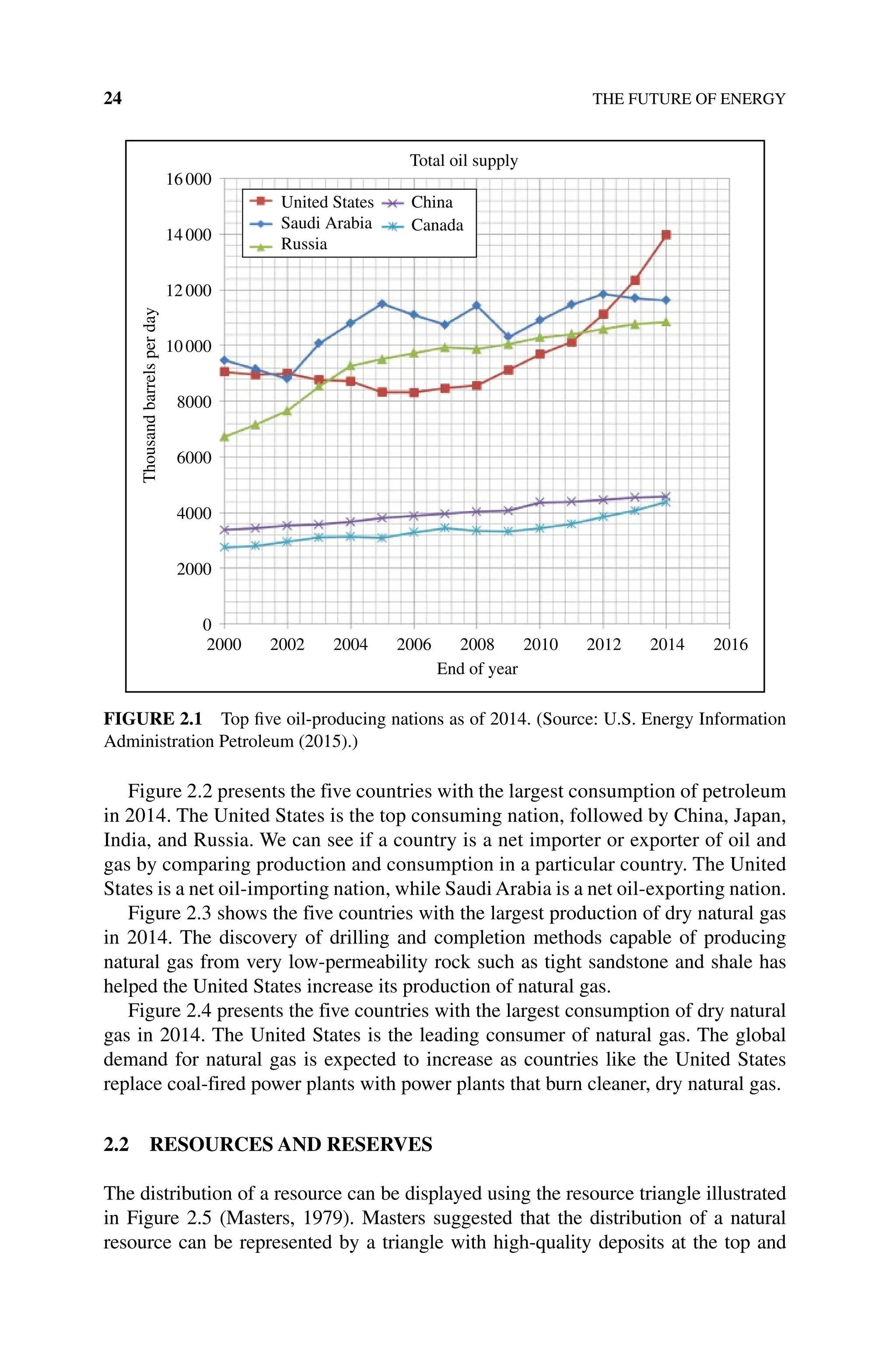
producing and consuming nations change from year to year. For example, Figure 2.1
shows the five countries with the largest production of oil in 2014. The United States
was the top producer in the 1980s, while production in Saudi Arabia was relatively
low. By the 1990s, Saudi Arabia replaced the United States as the top producing
country. The development of techniques for economically producing hydrocarbons
from shale, which is rock with very low permeability, made it possible for the United
States to become the top producing country in the 2010s.
24 THE FUTURE OF ENERGY
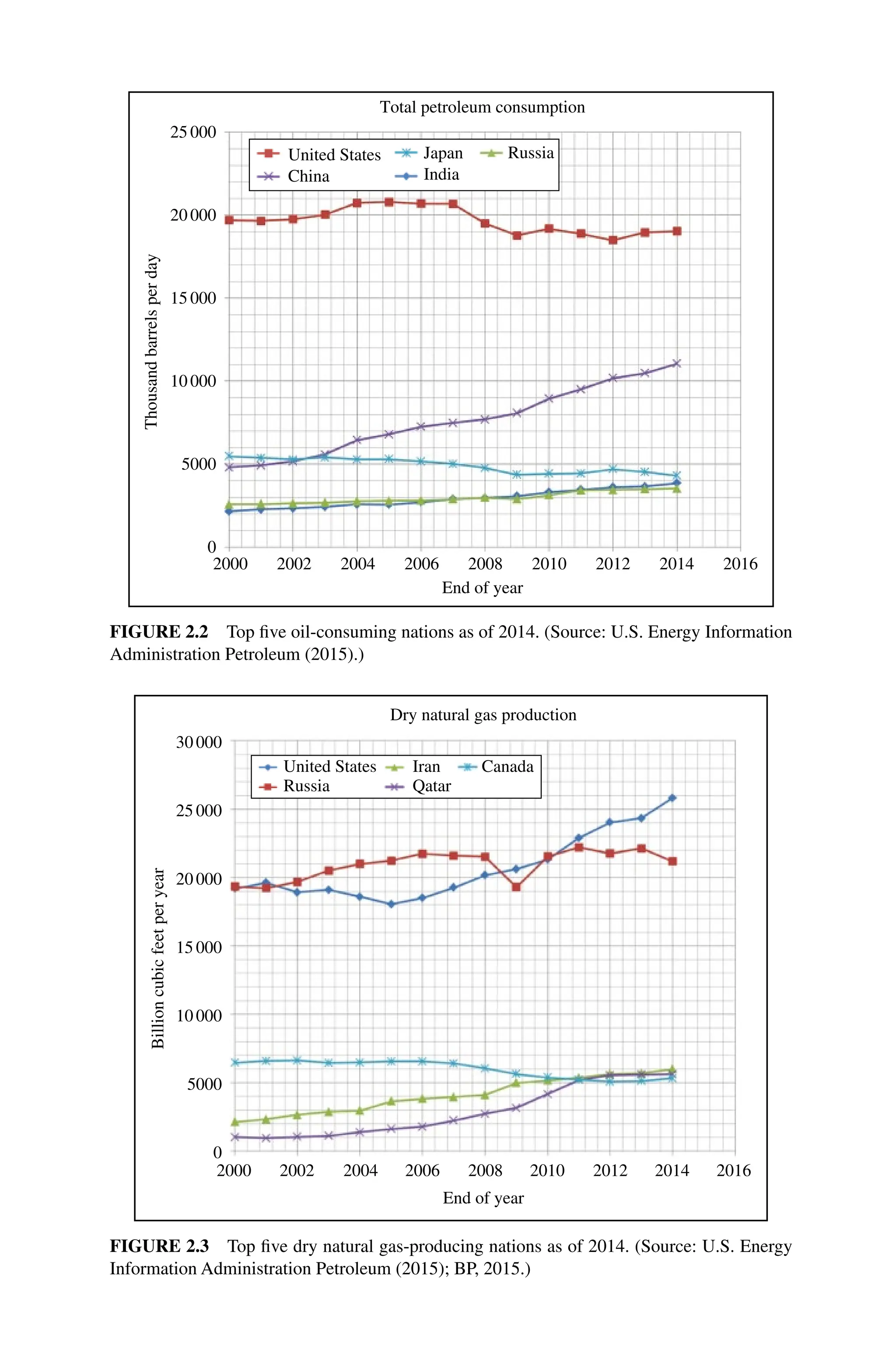
Figure 2.2 presents the five countries with the largest consumption of petroleum
in 2014. The United States is the top consuming nation, followed by China, Japan,
India, and Russia. We can see if a country is a net importer or exporter of oil and
gas by comparing production and consumption in a particular country. The United
States is a net oil‐importing nation, while Saudi Arabia is a net oil‐exporting nation.
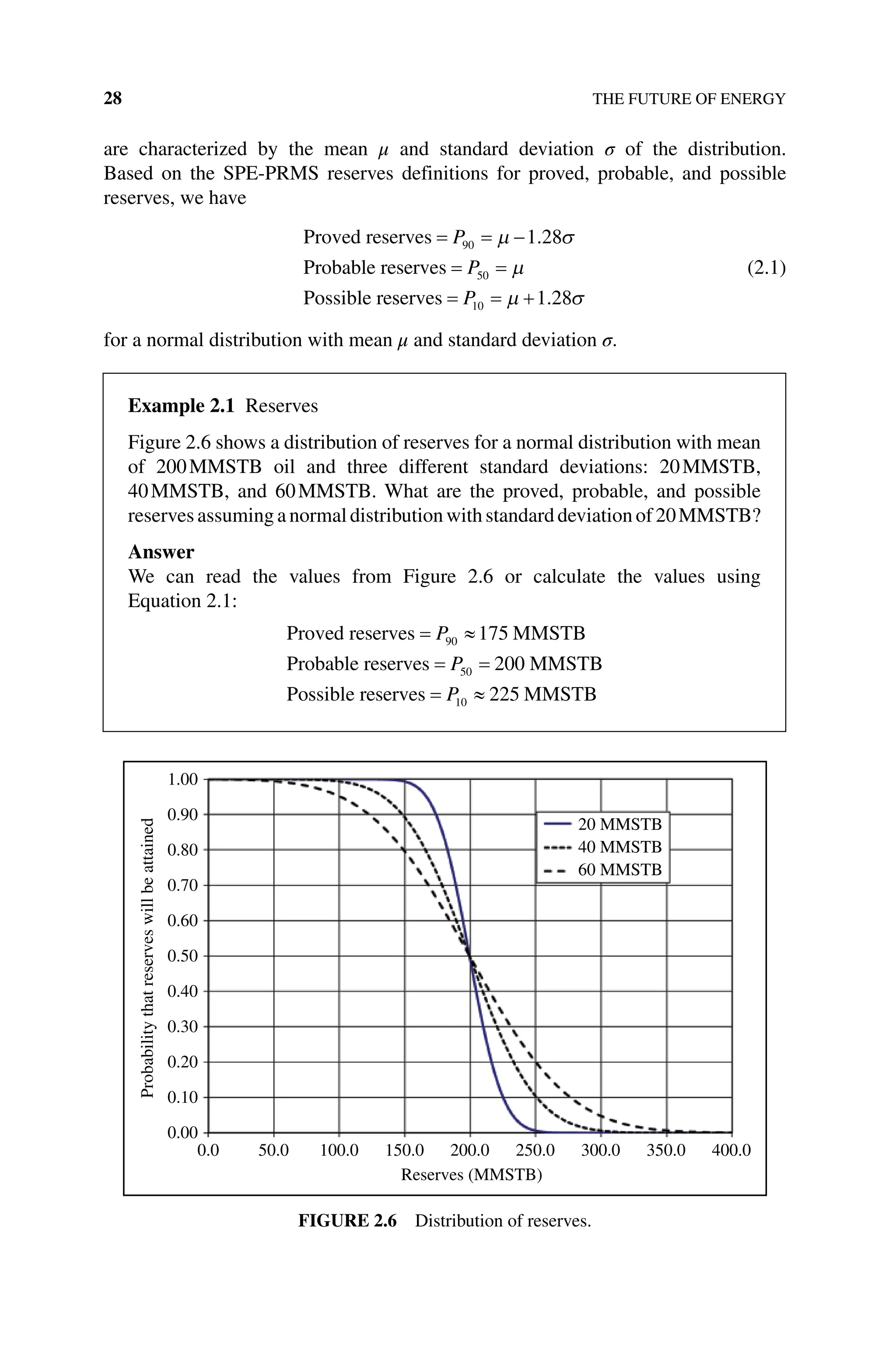
Figure 2.3 shows the five countries with the largest production of dry natural gas
in 2014. The discovery of drilling and completion methods capable of producing
natural gas from very low‐permeability rock such as tight sandstone and shale has
helped the United States increase its production of natural gas.
Figure 2.4 presents the five countries with the largest consumption of dry natural
gas in 2014. The United States is the leading consumer of natural gas. The global
demand for natural gas is expected to increase as countries like the United States
replace coal‐fired power plants with power plants that burn cleaner, dry natural gas.
2.2 RESOURCES AND RESERVES
The distribution of a resource can be displayed using the resource triangle illustrated
in Figure 2.5 (Masters, 1979). Masters suggested that the distribution of a natural
resource can be represented by a triangle with high‐quality deposits at the top and
Total oil supply
16000
14000
12000
10000
8000
6000
Thousand
barrels
per
day
4000
2000
2000 2002 2004 2006 2008
End of year
2010 2012 2014 2016
China
Canada
United States
Saudi Arabia
Russia
0
Figure 2.1 Top five oil‐producing nations as of 2014. (Source: U.S. Energy Information
Administration Petroleum (2015).)
Total petroleum consumption
25000
20000
15000
10000
Thousand
barrels
per
day
5000
2000 2002 2004 2006 2008
End of year
2010 2012 2014 2016
0
United States
China
Japan
India
Russia
Figure 2.2 Top five oil‐consuming nations as of 2014. (Source: U.S. Energy Information
Administration Petroleum (2015).)
Dry natural gas production
30000
25000
20000
15000
Billion
cubic
feet
per
year
10000
5000
2000 2002 2004 2006 2008 2010
End of year
2012 2014 2016
0
United States
Russia Qatar
Canada
Iran
Figure 2.3 Top five dry natural gas‐producing nations as of 2014. (Source: U.S. Energy
Information Administration Petroleum (2015); BP, 2015.)
26 THE FUTURE OF ENERGY
Dry natural gas consumption
30000
25000
20000
15000
10000
5000
2000 2002 2004 2006 2008
End of year
2010 2012 2014 2016
0
United States
Russia
China
Iran
Japan
Billion
cublic
feet
per
year
Figure 2.4 Top five dry natural gas‐consuming nations as of 2014. (Source: U.S. Energy
Information Administration Petroleum (2015); BP, 2015.)
High concentration
Easy to extract
Small amount
Low concentration
Difficult to extract
Large amount
Cost
of
extraction
Quality
of
resource
Figure 2.5 Illustration of a resource triangle.
RESOURCES AND RESERVES 27
lower‐quality deposits at the lower part of the triangle. A resource deposit at the top of
the triangle has a relatively large concentration of resource that is relatively inexpen-
sive to extract. A resource deposit at the lower part of the triangle has a lower
concentration of resource, so the extraction is more difficult or expensive. For example,
a large, shallow, light oil reservoir that is onshore would be at the top of the triangle,
while a small, deep, heavy oil reservoir in an offshore environment would be at the
base of the triangle. The amount of resource that is both easy to extract and has a high
concentration is expected to be small, while the amount of resource in a low‐
concentration deposit is difficult or expensive to extract and is expected to be large.
2.2.1 Reserves
Resource size tells us how much of a resource is present in a deposit. The amount of
the resource that can be extracted is discussed in terms of reserves. The definition of
reserves is presented in the Petroleum Reservoir Management System maintained by
the Society of Petroleum Engineers (SPE‐PRMS, 2011). Reserves classifications are
summarized in Table 2.1.
The probability distribution associated with the SPE‐PRMS reserves definitions
recognizes that there is a statistical distribution of resource deposits in nature. For
example, oil reservoirs vary in size from reservoirs with relatively small volumes of
oil to reservoirs containing relatively large volumes of oil. If we plot the volume of
oil in the reservoir versus the number of reservoirs with that volume, we can develop
a distribution of reservoirs as a function of size. This distribution can be represented
by a frequency distribution and can be interpreted as a probability distribution
of ­
reservoir size. If we combine reservoir size and recovery factor, we can obtain
a probability distribution of reserves. As an illustration, suppose we assume the
­
probability distribution of reserves is a normal distribution. Normal distributions
Table 2.1 SPE‐PRMS Reserves Definitions
Proved reserves Those quantities of petroleum, which by analysis of geoscience and
engineering data, can be estimated with reasonable certainty to be
commercially recoverable, from a given date forward, from known
reservoirs, and under defined economic conditions, operating
methods, and government regulations
There should be at least a 90% probability (P90
) that the quantities
actually recovered will equal or exceed the low estimate
Probable reserves Those additional reserves which analysis of geoscience and engineering
data indicate are less likely to be recovered than proved reserves but
more certain to be recovered than possible reserves
There should be at least a 50% probability (P50
) that the quantities
actually recovered will equal or exceed the best estimate
Possible reserves Those additional reserves which analysis of geoscience and engineering
data suggests are less likely to be recoverable than probable reserves
There should be at least a 10% probability (P10
) that the quantities
actually recovered will equal or exceed the high estimate
28 THE FUTURE OF ENERGY
are characterized by the mean μ and standard deviation σ of the distribution.
Based on the SPE‐PRMS reserves definitions for proved, probable, and possible
reserves, we have
Proved reserves
Probable reserves
Possible re
= = −
= =
P
P
90
50
1 28
µ
µ
. σ
s
serves = = +
P10 1 28
µ . σ
(2.1)
for a normal distribution with mean μ and standard deviation σ.
1.00
0.90
0.80
0.70
0.60
0.50
0.40
0.30
0.20
0.10
0.00
0.0 50.0 100.0 150.0 200.0 250.0 300.0 350.0 400.0
20 MMSTB
40 MMSTB
60 MMSTB
Probability
that
reserves
will
be
attained
Reserves (MMSTB)
Figure 2.6 Distribution of reserves.
Example 2.1 Reserves
Figure 2.6 shows a distribution of reserves for a normal distribution with mean
of 200MMSTB oil and three different standard deviations: 20MMSTB,
40MMSTB, and 60MMSTB. What are the proved, probable, and possible
reserves assuming a normal distribution with standard deviation of 20MMSTB?
Answer
We can read the values from Figure 2.6 or calculate the values using
Equation 2.1:
Proved reserves MMSTB
Probable reserves MMSTB
Po
= ≈
= =
P
P
90
50
175
200
s
ssible reserves MMSTB
= ≈
P10 225
OIL AND GAS RESOURCES 29
2.3 OIL AND GAS RESOURCES
Oil and gas resources may be characterized as conventional and unconventional
resources. Snyder and Seale (2011) defined conventional oil and gas resources as
formations that can be produced at economic flow rates or that produce economic
volumes of oil and gas without stimulation treatments or special recovery processes
and technologies. Unconventional oil and gas resources refer to formations that
cannot be produced at economic flow rates or do not produce economic volumes of
oil and gas without stimulation treatments or special recovery processes and technol-
ogies. Figure 2.7 presents a classification of oil and gas resources that is consistent
with these definitions. Following Fanchi and Fanchi (2016), more information about
several unconventional oil and gas resources near the base of the resource triangle in
Figure 2.7 is provided in the following text.
Large oil and gas fields can be characterized as giant or supergiant fields. A giant
oil field contains from 500 million barrels to 5 billion barrels of recoverable oil. Oil
fields with more than five billion barrels of recoverable oil are supergiant oil fields.
A giant gas field contains from 3 to 30 trillion ft3
of recoverable gas. Gas fields with
more than 30 trillion ft3
of recoverable gas are supergiant gas fields.
2.3.1 Coal Gas
Gas recovered from coalbeds is known as coal gas (Jenkins et al., 2007). The gas
can be present as liberated gas in the fracture system or as a monomolecular layer
on the internal surface of the coal matrix. The composition of coal gas is predomi-
nately methane but can also include constituents such as ethane, carbon dioxide,
nitrogen, and hydrogen (Mavor et al., 1999). Gas content in coal can range from
approximately 20 standard cubic feet (SCF) gas per ton of coal in the Powder River
High quality
Medium quality
Low perm oil Tight gas sands
Gas shales Heavy oil Coal gas
Gas hydrates Oil shales
Conventional:
Smaller volume
Easy to develop
Unconventional:
Larger volume
Difficult to develop
Figure 2.7 Resource triangle. (Source: Adapted from Snyder and Seale (2011) and
Holditch, 2007.)
30 THE FUTURE OF ENERGY
Basin of Wyoming (Mavor et al., 1999) to 600 SCF per ton in the Appalachian
Basin (Gaddy, 1999).
Coal gas was historically known as coalbed methane. The term coal gas is used to
better convey that gas from coalbeds is usually a mixture. Other terms for gas from
coal include coal seam methane, coal mine methane, and abandoned mine methane.
The practice of degasifying, or removing gas, from a coal seam was originally used
to improve coal miner safety. Today, people recognize that coal gas has commercial
value as a fuel.
Coal gas bound in the micropore structure of the coalbed can diffuse into the
natural fracture network when a pressure gradient exists between the matrix and the
fracture network. Fractures in coalbeds are called “cleats.” Flow in the fractures is
typically Darcy flow which implies that flow rate between two points A and B is pro-
portional to the change in pressure between the points.
The ability to flow between two points in a porous medium is characterized by a
property called permeability, and a unit of permeability is the darcy. It is named after
Henry Darcy, a nineteenth‐century French engineer. Permeability typically ranges
from1millidarcy=1md(or1.0×10−15
m2
) to1darcy=1D=1000md(or1.0×10−12
m2
)
for conventional oil and gas fields. Permeability in the cleat system typically ranges
from 0.1 to 50md.
Recovery of coal gas depends on three processes (Kuuskraa and Brandenburg,
1989). Gas recovery begins with desorption of gas from the internal surface to the
coal matrix and micropores. The gas then diffuses through the coal matrix and micro-
pores into the cleats. Finally, gas flows through the cleats to the production well. Gas
flow rate through the cleats depends on such factors as the pressure gradient in the
cleats, the density of cleats, and the distribution of cleats. The flow rate in cleats
obeys Darcy’s Law in many systems but may also depend on stress‐dependent per-
meability or gas slippage (the Klinkenberg effect).
The production performance of a well producing gas from a coalbed will
­
typically exhibit three stages. The well produces water from the cleat system in the
first production stage. The withdrawal of water reduces pressure in the cleat system
relative to the coal matrix and establishes a pressure gradient that allows coal gas
to flow into the cleat system. The gas production rate increases during the first
stage of cleat system dewatering and pressure depletion. The amount of water
­
produced during the second stage of production is relatively small compared to
gas production because there is more gas present in the cleat system relative to
­
mobile water. Consequently, the gas production rate peaks during the second stage
of production and gradually declines during the third stage of production as ­coalbed
pressure declines.
The injection of carbon dioxide into a coal seam can increase coal gas recovery
because carbon dioxide preferentially displaces methane in the coal matrix. The
displaced methane flows into the cleat system where it can be extracted by a pro-
duction well. The adsorption of carbon dioxide in the coal matrix can be used to
sequester, or store, carbon dioxide in the coal seam. Sequestration of carbon
dioxide in a coal seam is a way to reduce the amount of carbon dioxide emitted into
the atmosphere.
OIL AND GAS RESOURCES 31
2.3.2 Gas Hydrates
The entrapment of natural gas molecules in an ice‐like crystalline form of water at
very low temperatures forms an ice‐like solid called a gas hydrate. Gas hydrates are
also called clathrates, which is a chemical complex that is formed when one type of
molecule completely encloses another type of molecule in a lattice. In the case of gas
hydrates, hydrogen‐bonded water molecules form a cage‐like structure around low
molecular weight gas molecules such as methane, ethane, and carbon dioxide. For
more discussion of hydrate properties and technology, see Sloan (2006, 2007) and
references therein.
Gas hydrates have historically been a problem for oil and gas field operations. For
example, the existence of hydrates on the ocean floor can affect drilling operations in
deep water. The simultaneous flow of natural gas and water in tubing and pipelines
can result in the formation of gas hydrates that can impede or completely block the
flow of fluids through pipeline networks. The formation of hydrates can be inhibited
by heating the gas or treating the gas–water system with chemical inhibitors, but
these inhibition techniques increase operating costs.
Today, the energy industry recognizes that gas hydrates may have commercial
value as a clean energy resource or as a means of sequestering greenhouse gases. The
potential of gas hydrates as a source of methane or ethane is due to the relatively
large volume of gas contained in the gas hydrate complex. In particular, Makogon
et al. (1997) reported that 1m3
of gas hydrate contains 164.6m3
of methane. This is
equivalent to one barrel of gas hydrate containing 924ft3
of methane and is approxi-
mately six times as much gas as the gas contained in an unimpeded gas‐filled pore
system (Selley, 1998, page 25). The gas in gas hydrates occupies approximately 20%
of the volume of the gas hydrate complex. Water occupies the remaining 80% of the
gas hydrate complex volume.
Gas hydrates are naturally present in arctic sands, marine sands, and nonsand-
stone marine reservoirs. They are common in marine sediments on continental mar-
gins and below about 600ft in permafrost regions. Ruppel (2011) reported that
approximately 99% of gas hydrates occurs in the sediments of marine continental
margins. Methane hydrates form when both methane and water are present at appro-
priate pressure and temperature. The size of the hydrate resource is not well known.
Boswell (2009) said that gas hydrates may contain approximately 680000 trillion ft3
of methane. Development of technology for commercially producing the hydrate
resource is ongoing.
2.3.3 Tight Gas Sands, Shale Gas, and Shale Oil
Low‐permeability hydrocarbon resources include tight gas sands (Holditch, 2007)
and shale (Kuuskraa and Bank, 2003; King, 2012). Both tight gas sands and shale are
characterized by very low permeability. The permeability of tight gas sand is on the
order of microdarcies (1 microdarcy is 1 thousandth of a millidarcy), while the per-
meability of shale is on the order of nanodarcies (1 nanodarcy is 1 millionth of a
millidarcy).
Figure 2.8 Selection of shale plays in the contiguous United States. (Source: Adapted from U.S. Energy Information
Administration (August 18, 2015).)
OIL AND GAS RESOURCES 33
Economic production of hydrocarbons from shale or tight sand became possible
with the development of directional drilling and hydraulic fracturing technology.
Directional drilling is the ability to drill wells at angles that are not vertically down-
ward. Hydraulic fracturing is the creation of fractures in rock by injecting a water‐
based mixture into a formation at a pressure that exceeds the fracture pressure of the
formation. The orientation and length of the induced fracture depends on formation
characteristics such as thickness and stress. Once fractures have been created in the
formation, a proppant such as manmade pellets or coarse grain sand is injected into
the fracture to prevent it from closing, or healing, when injection pressure is removed.
The proppant keeps the fractures open enough to provide a higher permeability flow
path for fluid to flow to the production well.
Shales are typically rich in organic materials and often serve as source rock for
conventional oil and gas fields. Production of oil and gas from shale is considered
unconventional because shale functions as both the source rock and the reservoir.
Shale deposits can be found throughout the world. Figure 2.8 shows shale plays in
the contiguous United States. Shale gas deposits include the Barnett Shale in North
Texas and the Marcellus Shale in Pennsylvania. Shale oil deposits include the Bakken
Shale in North Dakota and the Eagle Ford Shale in South Texas.
Holditch (2013) and McGlade et al. (2013) provided estimates of the global
volume of unconventional gas resources. Table 2.2 summarizes their estimates of
technically recoverable reserves for coal gas, tight gas, and shale gas. The differences
in tight gas and shale gas estimates illustrate the range of uncertainty.
2.3.4 Tar Sands
Sand grains that are cemented together by tar or asphalt are called tar sands. Tar and
asphalt are highly viscous plastic or solid hydrocarbons. Extensive tar sand deposits
are found throughout the Rocky Mountain region of North America, as well as in
Example 2.2 The Darcy Unit
Express the following permeabilities in darcies: 1md, 1µd (microdarcy), and
1nd (nanodarcy).
Answer
1 1
1
1000
1 10 3
md md
D
md
D
= ×





 = × −
1 1 10
1
1000
1 10
3 6
µ µ µ
d d md/ d
D
md
D
= ×( )×





 = ×
− −
1 1 10
1
1000
1 10
6 9
nd nd md/nd
D
md
D
= ×( )×





 = ×
− −
34 THE FUTURE OF ENERGY
other parts of the world. Although difficult to produce, the volume of hydrocarbon in
tar sands has stimulated efforts to develop production techniques.
The hydrocarbon in tar sands can be extracted by mining when they are close
enough to the surface. Near-surface tar sands have been found in many locations
around the world. In locations where oil shale and tar sands are too deep to mine, it
is necessary to increase the mobility of the hydrocarbon.
An increase in permeability or a decrease in viscosity can increase mobility.
Increasing the temperature of high API gravity oil, tar, or asphalt can signifi-
cantly reduce viscosity. If there is enough permeability to allow injection,
steam or hot water can be used to increase formation temperature and reduce
hydrocarbon viscosity. In many cases, however, permeability is too low to
allow significant injection of a heated fluid. An alternative to fluid injection is
electromagnetic heating. Radio frequency heating has been used in Canada,
and electromagnetic heating techniques are being developed for other parts of
the world.
2.4 GLOBAL DISTRIBUTION OF OIL AND GAS RESERVES
The global distribution of oil and gas is illustrated by presenting the size of a nation’s
reserves. Table 2.3 lists 15 countries with the largest proved oil reserves and 15 coun-
tries with the largest proved gas reserves. National reserves are found by summing
the reserves for all of the reservoirs in the nation.
Table 2.4 shows the regional distribution of oil and natural gas reserves. It is
notable that the Middle East is at the top of both lists, and Europe is at the bottom
of both lists. Political instability in the Middle East, which is home to many oil and
gas exporting nations, has raised concerns about the stability of the supply. The
lack of oil and natural gas reserves means that Europeans cannot rely on oil and
natural gas as primary energy sources. Concerns about the security of their energy
supply and the impact of fossil fuel combustion on the environment have helped
motivate the European Union to become a leader in the development and installa-
tion of renewable energy facilities such as wind farms and solar plants. France has
adopted nuclear fission energy as its primary energy source for electricity genera-
tion and has enough installed nuclear fission capacity to export electricity to other
European nations.
Table 2.2 Global Estimate of Technically Recoverable Reserves of Unconventional
Gas Trillion Standard Cubic Feet
Source Coal Gas Tight Gas Shale Gas Total
Holditch (2013) 1453 43551 12637 57641
McGlade et al. (2013) 1384 1914 6823 10121
GLOBAL DISTRIBUTION OF OIL AND GAS RESERVES 35
Figure 2.9 shows that world proved crude oil and natural gas reserves have
increased from 2000 to 2014. Much of the recent increase in reserves is associated
with advances in technology that made the development of unconventional resources
economically viable.
Table 2.3 Nations with Largest Crude Oil and Natural Gas Proved Reserves in 2014
Crude Oil Reserves (Billion Barrels) Natural Gas Reserves (Trillion Cubic Feet)
World 1656 World 6972
Venezuela 298 Russia 1688
Saudi Arabia 268 Iran 1193
Canada 173 Qatar 885
Iran 157 United States 338
Iraq 140 Saudi Arabia 291
Kuwait 104 Turkmenistan 265
United Arab Emirates 98 United Arab Emirates 215
Russia 80 Venezuela 196
Libya 48 Nigeria 181
Nigeria 37 Algeria 159
United States 36 China 155
Kazakhstan 30 Iraq 112
Qatar 25 Indonesia 105
China 24 Mozambique 100
Brazil 15 Kazakhstan 85
Source: U.S. Energy Information Administration Petroleum (2015).
Table 2.4 Regional Distribution of Crude Oil and Natural Gas Proved
Reserves in 2014
Crude Oil Reserves (Billion Barrels) Natural Gas Reserves (Trillion Cubic Feet)
World 1656 World 6972
Middle East 804 Middle East 2813
Central and South America 328 Eurasia 2178
North America 220 Africa 606
Africa 127 Asia and Oceania 540
Eurasia 119 North America 422
Asia and Oceania 42 Central and South America 277
Europe 12 Europe 136
Source: U.S. Energy Information Administration Petroleum (2015).
36 THE FUTURE OF ENERGY
2.5 PEAK OIL
Efforts to change from an energy mix that depends on fossil fuels to a more sustain-
able energy mix are motivated by environmental concerns and by the concern that
oil production is finite and may soon be coming to an end. M. King Hubbert studied
the production of oil in the contiguous United States (excluding Alaska and Hawaii)
as a nonrenewable resource. Hubbert (1956) found that oil production in this limited
geographic region could be modeled as a function of time. The annual production
of oil increased steadily until a maximum was reached and then began to decline as it
became more difficult to find and produce. The maximum oil production is ­considered
a peak. Hubbert used his method to predict peak oil production in the contiguous
United States, which excludes Alaska and Hawaii. Hubbert predicted that the peak
would occur between 1965 and 1970. Hubbert then used the methodology that he
developed for the contiguous United States to predict the peak of global oil produc-
tion. He predicted that global oil production would peak around 2000 at a peak rate of
12–13 billion barrels per year or approximately 33–36 million barrels per day.
Crude oil production in the contiguous United States peaked at 9.4 million barrels
per day in 1970. A second peak for the United States occurred in 1988 when Alaskan
oil production peaked at 2.0 million barrels per day. The second peak is not consid-
ered the correct peak to compare to Hubbert’s prediction because Hubbert restricted
his analysis to the production from the contiguous United States. Many modern
experts consider the 1970 oil peak to be a validation of Hubbert’s methodology and
have tried to apply the methodology to global oil production. Analyses of historical
World proved reserves
2000 8000
7000
6000
5000
4000
3000
2000
1000
0
1800
1600
1400
1200
1000
800
600
400
200
0
2000 2002 2004 2006 2008 2010
End of year
Crude
oil,
billion
barrels
Natural
gas,
trillion
cubic
feet
Crude oil
Natural gas
2012 2014 2016
Figure 2.9 World proved reserves from 2000 to 2014. (Source: U.S. Energy Information
Administration Petroleum (2015).)
PEAK OIL 37
data using Hubbert’s methodology typically predict that world oil production will
peak in the first quarter of the twenty‐first century.
2.5.1 World Oil Production Rate Peak
Forecasts based on an analytical fit to historical data can be readily prepared using pub-
licly available data. Figure 2.10 shows a fit of world oil production rate (in millions of
barrels per day) from the US EIA database. Three fits are displayed. The fit labeled
“Gaussian Fit 2000” matches peak data at year 2000, the fit labeled “Gaussian Fit 2008”
matches peak data at year 2008, and the fit labeled “Gaussian Fit 2014” matches peak
data at year 2014. Each fit was designed to match the most recent part of the production
curve most accurately. The fits give oil production rate peaks between 2010 and 2030.
The increase in actual world oil production rate between 2000 and 2010 is due to a
change in infrastructure capacity in SaudiArabia.This period coincided with a significant
increase in oil price per barrel, which justified an increase in facilities needed to produce,
collect, and transport an additional one to two million barrels per day of oil. The increase
in actual world oil production rate since 2000 is largely due to an increase in oil produc-
tion from shale oil in the United States. Technological advances have added hydrocarbon
resources to the global energy mix and shifted the date when peak oil rate occurs.
2.5.2 World Per Capita Oil Production Rate Peak
The evidence for a peak in world oil production rate is inconclusive. On the other
hand, suppose we consider world per capita oil production rate, which is annual
world oil production rate divided by world population for that year. Figure 2.11
1940 1960
World
production
(MMB/d) 120
100
80
60
40
20
0
1980 2000 2020
Year
US EIA data Gaussian fit 2008 Gaussian fit 2014
Gaussian fit 2000
2040 2060 2080 2100
Figure 2.10 World oil production rate forecast using Gaussian curves.
38 THE FUTURE OF ENERGY
shows world per capita oil production rate (in barrels of oil produced per day per
person) for the period from 1960 through 2014.
Figure 2.11 shows two peaks in the 1970s. The first peak was at the time of the
first oil crisis, and the second peak occurred when Prudhoe Bay, Alaska, oil produc-
tion came online. World per capita oil production rate has been significantly below
the peak since the end of the 1970s. The increase in 2000 is largely due to the increase
in production in Saudi Arabia and the United States. It appears that world per capita
oil production rate peaked in the 1970s. We do not know if another higher peak is
possible given the continuing growth in world population.
World oil
production rate per
capita (barrels/day)
per person
World population
(thousands)
8000000
7000000
6000000
5000000
4000000
3000000
2000000
1000000
0
1.60E–02
1.40E–02
1.20E–02
1.00E–02
8.00E–03
6.00E–03
4.00E–03
2.00E–03
0.00E+00
1960 1970 1980 1990
Year
2000 2010 2020
Per capita rate World population
Figure 2.11 World per capita oil production rate through 2014.
Example 2.3 Future Power Demand
Assume 10 billion people will consume 200000MJ energy per person per year
in 2100. How many power plants will be needed to provide the energy consumed
each year? Assume an average power plant provides 1000MW power.
Answer
200000MJ/person/yr×(10×109
people)=2.0×10¹⁵
MJ/yr
Power in MW: (2.0×10¹⁵
MJ/yr)×(1yr/3.1536×107
s)≈6.34×10⁷
MW
Number of powerplants needed:
MW
MW/plant
pla
6 34 10
1000
63400
7
. ×
≈ n
nts
FUTURE ENERGY OPTIONS 39
2.6 FUTURE ENERGY OPTIONS
Future energy demand is expected to grow substantially as global population increases
and developing nations seek a higher quality of life (Fanchi and Fanchi, 2016). Social
concern about nuclear waste and proliferation of nuclear weapons is a significant
deterrent to reliance on nuclear fission power. These concerns are ­
alleviated to some
extent by the safety record of the modern nuclear power industry. Society’s inability
to resolve the issues associated with nuclear fusion makes fusion an unlikely contrib-
utor to the energy mix until at least the middle of the twenty‐first century. If nuclear
fusion power is allowed to develop and eventually becomes ­
commercially viable, it
could become the primary energy source. Until then, the feasible sources of energy for
use in the future energy mix are fossil fuels, nuclear fission, and renewable energy.
Concerns about the environmental impact of combustible fuels and security of the
energy supply are encouraging a movement away from fossil fuels. Political insta-
bility in countries that export oil and gas, the finite size of known oil and gas supplies,
increases in fossil fuel prices, and decreases in renewable energy costs, such as wind
energy costs, are motivating the adoption of renewable energy. On the other hand,
the development of technology that makes unconventional sources of fossil fuels
economically competitive is encouraging continued use of fossil fuels, especially as
the natural gas infrastructure is improved. These conflicting factors have an impact
on the rate of transition from fossil fuels to a sustainable energy mix. A key decision
facing society is to determine the rate of transition.
2.6.1 Goldilocks Policy for Energy Transition
Fanchi and Fanchi (2015) introduced a Goldilocks policy for determining the rate of
transition from one energy source to another. An appropriate rate can be estimated
using the historical energy consumption data from the United States shown in
Figure 2.12 (US EIA Annual Energy Review, 2001). The United States is a devel-
oped country with a history of energy transitions over the past few centuries.
The data in Figure 2.12 are presented in Figure 2.13 as the percent of total US
energy consumption by source. Wood was the principal energy source when the
United States was founded in the eighteenth century. Coal began to take over
the energy market in the first half of the nineteenth century and peaked in the
early twentieth century. Oil began to compete with coal during the latter half of
the nineteenth century and became the largest component of the energy mix by the
middle of the twentieth century. The period of time from the appearance of an
energy source in the market place to its peak can be seen in Figure 2.13 for coal
and oil. Historically, energy transition periods in the United States last approxi-
mately 60–70 years.
Our future energy mix depends on choices we make, which depends, in turn, on
energy policy. Several criteria need to be considered when establishing energy policy.
We need to consider the capacity of the energy mix, its cost, safety, reliability, and
effect on the environment. We need to know that the energy mix can meet our needs
(capacity) and be available when it is needed (reliability). The energy mix should
40 THE FUTURE OF ENERGY
have a negligible or positive effect on the environment, and it should be safe. When
we consider cost, we need to consider both tangible and intangible costs associated
with each component of the energy mix.
The transition from wood to coal and from coal to oil has been interpreted as a
trend toward decarbonization or the reduction in the relative amount of carbon in
100
1650 1700 1750 1800 1850
Year
1900 1950 2000
90
80
70
60
50
40
30
20
10
0
Total
Coal
Natural gas
Petroleum
Nuclear electric
Hydroelectric
Wood
Coal
Coal
Natural gas
Petroleum
Nuclear electric
Hydroelectric
Wood
Oil
Other renewable
%
of
total
US
energy
Figure 2.13 Coal and oil transition periods based on US energy consumption by source,
1650–2010 (%). (Source: Fanchi and Fanchi, 2015.)
100
Quads
1650 1700 1750 1800 1850
Year
1900 1950 2000
90
80
70
60
50
40
30
20
10
0
Total
Coal
Natural gas
Petroleum
Nuclear electric
Hydroelectric
Wood
Other renewable
Figure 2.12 US energy consumption by source, 1650–2010 (quadrillion BTU).
(Source: U.S. Energy Information Administration (2001).)
FUTURE ENERGY OPTIONS 41
combustible fuels. Figure 2.14 shows the fraction of annual energy consumption in
the United States since 1950. Fossil energy includes coal, oil, and natural gas; nuclear
energy refers to fission energy; and renewable energy includes hydroelectric, wind,
and solar. The next step in decarbonization would be a transition to natural gas.
A greater reliance on natural gas rather than wood, coal, or oil would reduce the
emission of greenhouse gases into the atmosphere.
The twenty‐first‐century energy mix will depend on technological advances,
including some advances that cannot be anticipated, and on choices made by society.
There are competing visions for reaching a sustainable energy mix. Some people see
an urgent need to replace fossil fuels with sustainable/renewable energy sources
because human activity is driving climate change. Others believe that it is necessary
to replace fossil fuels with sustainable/renewable energy sources, but the need is not
urgent. They argue that the economic health of society outweighs possible climate
effects. If the energy transition is too fast, it could significantly damage the global
economy. If the energy transition is too slow, damage to the environment could be
irreversible.
The “Goldilocks Policy for Energy Transition” is designed to establish a middle
ground between these competing visions. We need the duration of the energy
transition to be just right; that is, we need to adopt a reasonable plan of action that
reduces uncertainty with predictable public policy and reduces environmental impact.
Based on historical data, we could plan an energy transition to a sustainable
energy mix by the middle of the twenty‐first century. The European Union is
operating on this timetable with the EU Supergrid. In addition, natural gas could
0.9
0.8
0.7
0.6
0.5
0.4
0.3
0.2
0.1
0
1940 1960 1980 2000 2020
Year
Renewable
Fossil
Nuclear
1.0
Fraction
of
total
US
energy
consumption
Figure 2.14 Fraction of US annual energy consumption by source, 1950–2014.
(Source: U.S. Energy Information Administration (2015).)
42 THE FUTURE OF ENERGY
serve as a transition fuel because it is relatively abundant, continues the trend to
decarbonization, halves greenhouse gas emissions relative to oil and coal
combustion, and requires reasonably affordable infrastructure changes that take
advantage of available technology. A natural gas infrastructure would be a step
toward a hydrogen economy infrastructure in the event that hydrogen becomes
a viable energy carrier. The development of a game‐changing technology, such
as commercial nuclear fusion, would substantially accelerate the transition to a
­
sustainable energy mix.
The twenty‐first‐century energy mix will depend on technological advances,
including some advances that cannot be anticipated, and on choices made by society.
For the foreseeable future, oil and gas will continue to be a key source of energy in
the global energy mix as society makes a transition to a sustainable energy mix.
2.7 ACTIVITIES
2.7.1 Further Reading
For more discussion about the future of petroleum, see Fanchi and Fanchi (2016) and
Yergin (2011).
2.7.2 True/False
2.1 Gas hydrates are clathrates.
2.2 Shale gas is produced from reservoirs with high permeability.
2.3 Coal gas production requires gas desorption from the coal matrix.
2.4 Coal gas is primarily propane.
2.5 The first oil crisis began in 1973.
2.6 M. King Hubbert predicted that global oil production would peak between
1965 and 1970.
2.7 Per capita global oil production peaked by 1980.
2.8 Recovery factor is the fraction of original fluid in place that can be produced
from a reservoir.
2.9 Shale oil and gas are unconventional resources.
2.10 Probable reserves are more likely to be recoverable than possible reserves.
2.7.3 Exercises
2.1 Complete the table that follows and estimate proved, probable, and possible
reserves. Assume the reserves are normally distributed.
Hint: Reserves=OOIP times recovery factor.
ACTIVITIES 43
Model OOIP (MMSTB) Recovery Factor Reserves (MMSTB)
1 400 0.30
2 650 0.43
3 550 0.48
4 850 0.35
5 700 0.38
2.2 A. 
A geothermal power plant was able to provide 2000MWe (megawatts
electric) power when it began production. Twenty years later the plant is
only able to provide 1000MWe from the geothermal source. Assuming the
decline in power production is approximately linear, estimate the average
annual decline in power output (in MWe/yr).
B. 
Suppose the plant operator has decided to close the plant when the electric
power output declines to 10MWe. How many more years will the plant
operate if the decline in power output calculated in Part A continues?
2.3 A. 
A coal seam is 600ft wide, 1mile long, and 15ft thick. The volume occu-
pied by the fracture network is 1%. The volume of coal is the bulk volume
of the coal seam minus the fracture volume. What is the volume of coal in
the coal seam? Express your answer in ft3
.
B. 
If the density of coal is 1.7lbm/ft3
, how many tons of coal are in the coal
seam?
C. 
The gas content Gcoal
of gas in the coal matrix is 500SCF methane per ton
of coal. What is the total volume of methane contained in the coal seam?
Neglect any gas that may be in the fracture.
2.4 Porosity (fraction) is related to bulk density by ρ φ ρ φ ρ
b ma f
= − × + ×
( ) ( ) ( )
1
where bulk density ρb
is 2.40g/cc from the density log, density of rock matrix
ρma
is 2.70g/cc, and fluid density ρf
is 1.03g/cc for brine. Estimate porosity.
2.5 A. 
A news article reported that 535MMSCF gas could supply gas to 8150
homes for a year. Calculate the value of gas. Note: 1MMSCF=1 million
standard cubic feet.
Gas Volume (MSCF) Gas Price/Volume ($/MSCF) Value of Gas ($)
535000 2.50
535000 5.00
B. 
If the price of gas to the consumer is $5.00 per MSCF, how much does the
average home have to pay for gas each year?
Hint: First estimate the volume of gas in MSCF that is used by each
home each year, where 1MSCF=1000SCF.
2.6 Typical energy densities for coal, oil, and methane are shown in the table.
The relative value of the energy in each material can be estimated by using
44 THE FUTURE OF ENERGY
energy density to calculate the cost per unit of energy. Use the information in
the table and unit conversion factors to complete the table.
Fuel Price Energy Density $ per MJ
Coal $50 per tonne 42MJ/kg
Oil $60 per barrel 42000MJ/m3
Methane $3 per MSCF 38MJ/m3
2.7 Suppose Country A imports 55% of its oil. Of this amount, 24% is imported
from Region A. What is the percent of oil imported into Country A from
Region A?
2.8 A. 
A national oil company (NOC) reports that it has 700 billion bbl OOIP. The
resource is classified in the table that follows. Fill in the % OOIP column.
Classification Category Volume (billion bbl) % OOIP
Produced 99
Remaining proved 260
Probable 32
Possible 71
Contingent 238
B. 
How long can the NOC produce at a production capacity of 10 million
bbl/day using remaining proved reserves? Express your answer in years.
C. 
How long can the NOC produce at a production capacity of 15 million
bbl/day using remaining proved reserves? Express your answer in years.
2.9 Estimate the year when peak oil occurs using Gaussian fits to data for years
2000, 2008, and 2014 shown in Figure 2.10.
2.10 A. 
Use Figure 2.13 to estimate the length of time (in years) it took for the
transition from wood to coal.
B. 
Use Figure 2.13 to estimate the length of time (in years) it took for
the transition from coal to oil.
C. 
What will be the next transition and how long will it last?
Introduction to Petroleum Engineering, First Edition. John R. Fanchi and Richard L. Christiansen.
© 2017 John Wiley  Sons, Inc. Published 2017 by John Wiley  Sons, Inc.
Companion website: www.wiley.com/go/Fanchi/IntroPetroleumEngineering
3
PROPERTIES OF RESERVOIR FLUIDS
A key question to ask upon discovering oil and gas is, “How much is there?”
In addition to oil or gas, there will be water and probably some gas dissolved in the
­
liquids. Gas also may appear as a separate phase along with oil. Properties of these
fluids are used to determine their amounts in a formation and their fluid flow charac-
teristics. This chapter describes the origin and the common methods for classifying
oil and gas resources, introduces keywords and definitions of fluid properties,
­
provides methods for estimating fluid properties, and shows how these properties are
measured and used in petroleum engineering.
3.1 ORIGIN
The details of the formation of oil and gas are largely unknown. From about 1860
to 1960, some debate centered on whether these fluids derived from biological or
nonbiological sources. Geochemical analysis has uncovered many molecules in
oils that share structure with chemicals in living organisms. These molecules, or bio-
markers, are fossil remains of life from millions of years ago. Hence, it is generally
accepted that oil and gas have biological origin. Many geochemists around the world
continue to research the processes of oil and gas formation. Although the details are
still being determined, we can describe the process in broad‐brush terms.
46 PROPERTIES OF RESERVOIR FLUIDS
According to the “biogenic” theory, hydrocarbon gases and liquids found in forma-
tions today are the product of short‐ and long‐term processes that acted on remnants
of organisms such as algae and plankton that lived millions of years ago in aqueous
environments. Upon death, the organisms formed organic‐rich sediments. Oil and gas
were formed by bacterial action in the anaerobic conditions of the sediment and
subsequent thermal processes that occurred after the sediment was buried under many
additional layers of sediment. These thermal processes break larger organic molecules
into smaller molecules. Although some oil and gas may remain in the original sedi-
ment, which is also known as source rock, much of it has migrated upward as a result
of buoyancy effects. Some of the upward migrating fluid was trapped by impermeable
formations; the remainder continued migrating to the surface where it dissipated.
Accumulation of oil and gas in a trap forms a reservoir, which is the target of modern
exploration activities.
Much of the oil and gas that is produced from shales today is thought to be in the
original source rock. If the temperature of a shale formation is at least 200°F, the thermal
process of producing oil and gas, or “maturation,” from organic material in the shale is
ongoing to some extent. The rate of maturation increases with formation temperature,
which increases with depth at about 0.01–0.02°F per ft. Hence, a formation’s tempera-
ture could exceed 200°F even at 8000ft below the surface. As a result of increasing
maturation rate with depth, the size of the hydrocarbon molecules in oil decreases with
increasing depth. Thus, deep formations are more likely to contain gas and not oil.
The compositions of hydrocarbon resources are quite variable from location to
location around the world. Here are some interesting and unusual examples:
1. In the Athabasca oil sands of northern Alberta, the oil is usually called “tar.”
The density oil in the oil sands is greater than water density and its viscosity is
very high. Much of the oil produced from these sands is obtained by mining
and then transporting the oily sand to a central location for separation.
2. Gilsonite, which is mined from formations in northeastern Utah, is a solid with
a composition similar to the very largest molecules found in oils.
3. Natural gas hydrates are solids formed when water and gas mix at low temper-
atures and high pressures, such as in the oceans off the continental shelves
where natural gas that has seeped from subsurface formations is trapped on the
ocean floor.
4. A smelly wax mined from fractured formations, ozokerite is thought to be
­
produced by natural processes that have stripped away all but the waxy portion
of oils.
5. Gas associated with most coal formations was generated by thermal matura-
tion of the coal, which was formed from compressed plant matter. As a result,
the composition of “coalbed” gas differs from gases that originated from the
accumulation of algae and plankton in sediment.
6. Natural gases from formations in western Kansas and Oklahoma and northern
Texas contain up to 2% helium, which is extracted from the natural gas.The helium
is produced by alpha decay of radioactive minerals in the formations of that area.
CLASSIFICATION 47
There are many reasons for compositional variations such as those mentioned
­
earlier. First, the compositions of the fluids in the source rock depend on the organ-
isms that were present in the original sediment. Second, the processes of biological
and thermal maturation vary, depending on the type of organisms and temperature
history. Third, trapping processes vary, depending on geologic structures, properties
of those structures, and flux of water and other fluids through the structures. Given
all these variables, even oil samples taken from a single formation can vary with
depth and horizontal location. For example, exposure to an actively flowing aquifer
below an oil accumulation can produce compositional variations. A compositional
gradient, or variation of composition with spatial location, can also be induced by
thermal diffusion and gravity segregation.
3.2 CLASSIFICATION
Oils and gases can be classified in many ways. The most common of these are
­
summarized in this section.
Oils and gases are mixtures of predominantly hydrocarbon molecules with some
inorganic molecules, such as nitrogen, carbon dioxide, and hydrogen sulfide. Oils
and gases are called “sweet” if they contain only negligible amounts of sulfur com-
pounds such as hydrogen sulfide (H2
S) or mercaptans—organic molecules with a
sulfur–hydrogen functional group. If these fluids contain sulfur compounds such as
H2
S or a mercaptan, they are called “sour.”
Oils and gases are also classified by their specific gravities. For an oil, specific gravity
equals oil density divided by density of water at standard conditions. Heavy oils have
densities close to and even exceeding water density. Light oils are much less dense than
water. For gases, the reference density is that of air at standard ­
conditions. Gases can be
rich or lean, depending on the amount of hydrocarbon ­
molecules larger than methane.
Oil is also classified by the relative amounts of different kinds of hydrocarbon
molecules: paraffins, naphthenes, and aromatics. Paraffin molecules such as methane,
ethane, and propane have a single bond between carbon atoms and are considered
saturated hydrocarbons. Paraffins have the general chemical formula Cn
H2n+2
.
Naphthenes have the general chemical formula Cn
H2n
and are saturated hydrocarbons
with a ringed structure, as in cyclopentane. The term “saturated” indicates that all
carbon–carbon bonds are single bonds. By contrast, unsaturated hydrocarbons have
at least one double or triple bond. Aromatics are unsaturated hydrocarbons with a
ringed structure. Aromatics are relatively stable and unreactive because of their
unique ring structure. Benzene is a well‐known example of an aromatic.
Petroleum can exist in a reservoir as a gas, liquid, or solid, depending on fluid
composition, temperature, and pressure. Natural gas is typically methane with lesser
amounts of heavier hydrocarbon molecules like ethane, propane, and butanes. Oil is
a liquid mixture of some natural gas dissolved in greater amounts of heavier hydro-
carbons with carbon numbers up to about 60. The carbon number designates the
number of carbon atoms in the molecule. Asphaltenes and waxes, the largest hydro-
carbon molecules in oil, can precipitate as solids under some conditions.
48 PROPERTIES OF RESERVOIR FLUIDS
The gas–liquid–solid phase behavior of a petroleum sample is often shown in a
pressure–temperature (P–T) diagram. P–T diagrams are another tool for classifying
oil and gas. The P–T diagram is relatively simple for a single‐component system, as
shown in Figure 3.1 for ethane. The curve in Figure 3.1 is known as the vapor pressure
curve, and it ends at the right at the critical point for ethane.Above the vapor pressure
curve, ethane exists as a liquid; below the vapor pressure curve, it exists as a gas. At
80°F and 800psi, ethane is a liquid, while at 80°F and 300psi, it is a gas. If ethane
exists at a temperature and pressure above the critical point, there is no way to distin-
guish between liquid and gas, and it is called a supercritical fluid.
The P–T diagram for a two‐component system is more complex, as shown in
Figure 3.2 for a mixture of 59mol% ethane and 41mol% n‐heptane (which may also
be written as 59/41 mol% ethane/n‐heptane). For comparison, the vapor pressure
curves for pure ethane and pure n‐heptane are included in the figure. The curve con-
sisting of both the bubble‐point (BP) and dew‐point (DP) curves is termed the phase
envelope. The BP curve and the DP curve meet at the critical point. Anywhere inside
the phase envelope, there are two phases: gas and liquid. Only one phase exists
outside the phase envelope. Liquid exists in the P–T region above the BP curve.
Elsewhere outside the phase envelope, the fluid is a gas. For example, at 350°F and
200psia, the fluid is gaseous, while at 350°F and 1200psia, the fluid is liquid. If the
temperature is 400°F, the fluid is gaseous at both 200psia and also at 1200psia. How
do we know it is a gas at 400°F and 1200psia? If pressure on that fluid is reduced to
the phase envelope pressure, a droplet of dew forms. By contrast, at 300°F and
1200psia, the fluid is a liquid. If pressure on that fluid is reduced to the phase
envelope, a bubble of gas forms at the phase envelope pressure.
The P–T diagram for 59/41mol% ethane/n‐heptane is shown in Figure 3.3 without
the vapor pressure curves for ethane and n‐heptane. The highest temperature on the
phase envelope is called the cricondentherm. It appears in later discussions.
0
100
200
300
400
500
600
700
800
900
1000
0 20 40 60 80 100 120
Pressure
(psia)
Temperature (°F)
Liquid
Gas
Vapor pressure cure
Super
critical
Figure 3.1 P–T diagram for ethane.
CLASSIFICATION 49
P–T diagrams for oils and gases have shape and other features similar to the
­
diagram of Figure 3.3. Based on the P–T diagrams, five patterns of behavior are often
identified for these fluids. They are listed in Table 3.1. The separator is a piece of
equipment that is used to separate the fluid produced from the reservoir into distinct
fluid phases. In most of this text, we focus on black oils and dry gases because these
fluids are relatively easy to model and understand.
The P–T diagram can be used to anticipate phase behavior changes when pressure
changes. Consider a reservoir containing black oil. Reservoir pressure is initially greater
0
200
400
600
800
1000
1200
1400
0 100 200 300 400 500 600
Pressure
(psia)
Ethane
n-heptane
Critical point
BP
curve
D
P
c
u
r
v
e
Temperature (°F)
Figure 3.2 Comparison of vapor pressure curves for ethane and n‐heptane to the phase
envelope for a mixture of 59mol% ethane and 41mol% n‐heptane.
Pressure
(psia)
BP curve
D
P
c
u
r
v
e
0
200
400
600
800
1000
1200
1400
0 100 200 300 400 500
Temperature (°F)
CP
Liquid
Gas
Gas and liquid
Cricondentherm
Figure 3.3 Additional nomenclature for P–T diagrams using data for 59/41mol%
ethane/n‐heptane.
50 PROPERTIES OF RESERVOIR FLUIDS
than BP pressure, which is the pressure on the BP pressure curve at reservoir ­temperature.
Production of oil will result in the decline of reservoir pressure. Reservoir temperature
does not change significantly, if at all, and can be considered constant. When reservoir
pressure declines below BP pressure, the remaining hydrocarbon mixture enters the
two‐phase gas–oil region where both an oil phase and a gas phase coexist.
P–T diagrams provide a useful perspective for classifying hydrocarbon fluids,
but just small portions of the P–T diagram are measured for any particular oil or gas.
Another perspective for classification focuses on more easily observed properties:
gas–oil ratio, oil formation volume factor (FVF), stock tank gravity of separator oil,
and the color of separator liquid. Such a classification is shown in Table 3.2.
Table 3.2 Classification of Oils and Gases by Generally Available Properties
Gas–oil Ratio
(SCF/STB)
Formation Volume
Factor of Oil
(RB/STB)
Stock Tank Gravity
of Oil, °API
Color of Separator
Liquid
0
.
1000
.
2000
.
3000
.
4000
.
5000
.
.
.
50000
.
100000
.
150000
.
0.00
.
.
1.00
.
.
2.00
.
.
3.00
.
.
4.00
.
.
5.00
.
.
6.00
10
.
.
20
.
.
30
.
.
40
.
.
50
.
.
60
.
.
70
Black
.
.
Brown
.
.
Red
.
.
Orange
.
.
Yellow
.
.
Clear
Black oil
Volatile oil
Retrograde
gas
Wet
gas
Black oil
Volatile oil
Black oil
Volatile oil
Retrograde
or wet gas
Black oil
Volatile oil
Retrograde
gas
Wet gas
Table 3.1 Classifications of Oils and Gases Using Pressure–Temperature Diagrams
Fluid Type
Dominant
Phase in
Reservoir Reservoir Temperature
Phases at Separator
Pressure and
Temperature
Black oil Liquid Far to the left of the critical point Liquid and gas
Volatile oil Liquid Left of, but close to, the critical point Liquid and gas
Retrograde gas Gas Between critical point and
cricondentherm
Liquid and gas
Wet gas Gas Right of the cricondentherm Liquid and gas
Dry gas Gas Right of the cricondentherm Gas
DEFINITIONS 51
The dissolved gas–oil ratio is the volume of dissolved gas measured in standard
cubic feet (SCF) to the volume of oil measured in stock tank barrels (STB) as
obtained from surface separation equipment. The oil FVF is the corresponding
volume of oil at ­
reservoir conditions (RB for reservoir barrels) of temperature and
pressure divided by the stock tank volume of oil (STB). As fluids flow from the
­
reservoir to the ­
surface separator and stock tank, pressure and temperature decrease.
In response to decreasing pressure, gases bubble out of the oil phase, and the oil
volume decreases. Stock tank gravity is a measure of specific gravity. In Table 3.2,
it is reported in °API. The relation of °API to specific gravity is described in another
section of this chapter.
3.3 DEFINITIONS
In this section, we provide brief definitions and units for many of the fluid prop-
erties encountered in the oil and gas industry. Unit conversion factors are found in
Appendix A. In subsequent sections, we include examples of correlations for the
fluid properties most often needed by petroleum engineers.
Pressure. Fluid properties depend on pressure, temperature, and composition.
Pressure is defined as normal force divided by the area to which it is applied.
Some common units of pressure include pounds/in2
or psi, pascals (Newtons/m2
),
atmospheres, and bars.
Temperature. Temperature is a measure of the average kinetic energy of a system.
The most commonly used temperature scales are the Fahrenheit and Celsius scales.
The relationship between these scales is
T T
C F
= −
( )
5
9
32 (3.1)
where TC
and TF
are temperatures in degrees Celsius and degrees Fahrenheit,
respectively.
Some applications, such as equations of state, require the use of absolute temper-
ature expressed in Kelvin or Rankine degrees. The absolute temperature scale in
degrees Kelvin is related to the Celsius scale by
T T
K C
= + 273 (3.2)
where TK
is temperature in degrees Kelvin. The absolute temperature scale in degrees
Rankine is related to the Fahrenheit scale by
T T
R F
= + 460 (3.3)
where TR
is temperature in degrees Rankine.
52 PROPERTIES OF RESERVOIR FLUIDS
Composition. The composition of a fluid refers to the types and amounts of mole-
cules that comprise the fluid. Oil is a mixture of hydrocarbon compounds and minor
amounts of inorganic molecules such as carbon dioxide and nitrogen. In situ water
usually contains dissolved solids and dissolved gases.
The relative amount of each component in a mixture may be expressed in such
units as volume fraction, weight fraction, or molar fraction. The unit of concentration
should be clearly expressed to avoid errors. The elemental composition of oil is
­
primarily carbon (84–87% by mass) and hydrogen (11–14% by mass). Oil can con-
tain other elements as well, including sulfur, nitrogen, oxygen, and various metals.
The symbols xi
and yi
are often used to denote the mole fraction of component i in
the liquid and gas phases, respectively. The mole fraction of component i in a gas
mixture is the number of moles niV
of the component in the gas (vapor phase) divided
by the total number of moles in the gas phase:
y
n
n
i
i
j
j
N
=
=
∑
V
V
c
1
(3.4)
where Nc
is the number of components in the mixture.The mole fraction of ­component
i in an oil mixture xi
is similarly defined as the number of moles nis
of the component
in the liquid phase divided by the total number of moles in the liquid phase:
x
n
n
i
i
j
j
N
=
=
∑
L
L
c
1
(3.5)
Specific Gravity. Specific gravity is the ratio of the density of a fluid divided by
a reference density. Gas specific gravity is calculated at standard conditions using air
density as the reference density. Taking the ratio of gas density to a reference gas
density and canceling common terms, lets us write the specific gravity of gas as
γg
a gas
a air
a gas
= ≅
M
M
M
,
,
,
29
(3.6)
Example 3.1 Temperature of the Earth’s Crust
The temperature in some parts of the Earth’s crust increases by about 1°F for
every 100ft of depth. Estimate the temperature of the Earth at a depth of 8000ft.
Assume the temperature at the surface is 60°F. Express your answer in °F and °C.
Answer
Temp F ft
F
ft
F
= ° + ( )
°





 = °
60 8000
1
100
140
TC C
= −
( ) = °
5
9
140 32 60
DEFINITIONS 53
where Ma
is apparent molecular weight. Apparent molecular weight is calculated as
M y M
i
N
i i
a
c
=
=
∑
1
(3.7)
where Nc
is the number of components, yi
is the mole fraction of component i, and Mi
is the molecular weight of component i. Gas density is calculated from the ideal gas
equation of state as
ρ
γ
g
a gas g a air
= =
pM
RT
p M
RT
, ,
(3.8)
where p is the pressure, T is the absolute temperature, R is the gas constant, and mole
fraction n is the mass of gas mg
divided by the apparent molecular weight (or molar
mass) of gas.
Oil specific gravity is calculated at standard conditions using the density of
freshwater as the reference density. The American Petroleum Institute characterizes
oil in terms of API gravity. API gravity is calculated from oil specify gravity γo
at
standard temperature and pressure by the equation
° = −
API
o
141 5
131 5
.
.
γ
(3.9)
If specific gravity γo
greater than 1, the oil is denser than water and API less than 10.
If specific gravity γo
less than 1, the oil is less dense than water and API greater than
10. Heavy oils with API less than 20 do not contain much gas in solution and have a
relatively large molecular weight and specific gravity γo
. By contrast, light oils with
API greater than 30 typically contain a large amount of volatile hydrocarbons in
solution and have a relatively small molecular weight and specific gravity γo
. The
equation forAPI gravity shows that heavy oil has a relatively lowAPI gravity because
it has a large γo
, while light oils have a relatively high API gravity.
Gas–Liquid Ratio. The gas–liquid ratio (GLR) is the ratio of a volume of gas
divided by a volume of liquid at the same temperature and pressure. The choice of
GLR depends on the fluids in the reservoir. Two commonly used GLR are gas–oil
ratio (GOR) and gas–water ratio (GWR). The GWR is the ratio of gas volume to
water volume at the same temperature and pressure. GOR is the ratio of gas volume
to oil volume at the same temperature and pressure. The ratios can be calculated
using volume ratios or ratios of flow rates.
Viscosity. Viscosity is a measure of resistance of a fluid to shearing. Fluids like
honey and heavy oil have a very high viscosity, while fluids like water have a
relatively low viscosity. In the oil industry, viscosity is often expressed in centipoise,
which equals 0.01poise. One centipoise (1cp) equals 1 millipascal second
(1mPas=0.001Pas), which is the metric unit for viscosity.
Compressibility. Compressibility is a measure of the change in volume resulting
from the change in pressure applied to the system. The fractional volume change of
54 PROPERTIES OF RESERVOIR FLUIDS
a system is the ratio of the change in volume ΔV to the initial volume V. The fractional
volume change ΔV/V may be estimated from
∆
∆
V
V
c p
= − (3.10)
where c is the average compressibility of the system and Δp is the pressure change.
The minus sign is applied so that an increase in pressure (Δp0) will result in a
decrease in the volume of the system. Similarly, a decrease in pressure (Δp0) will
result in an increase in the volume of the system.
Formation Volume Factor. The volume of oil swells when gas is dissolved in the
oil. The FVF for oil, Bo
, expresses this swelling as a ratio of the swollen volume to
the volume of the oil phase at a reference condition, usually the stock tank pressure
and temperature. This ratio is expressed as reservoir volume divided by stock tank
volume. In this sense “reservoir” refers to pressure, temperature, and composition
that exist in a reservoir. An example of a unit for oil FVF in oil field units is RB/STB
where “RB” refers to reservoir barrels and STB refers to stock tank barrels or it could
be rm3
/sm3
for reservoir meters cubed per stock tank meters cubed in metric units.
For example, an FVF of 1.5RB/STB means that for every barrel of oil produced to
the stock tank, 1.5 barrels were taken from the reservoir. The 0.5 barrel volume
difference represents the volume of oil phase lost as volatile species escaped from the
liquid phase during the reduction in pressure from the reservoir up through the well
to the separator and stock tank.
Usually, most of the change in volume from stock tank to reservoir results from
the volume of gas dissolved in the oil. But pressure and temperature also play a role.
The increase in pressure from stock tank to reservoir compresses the oil a small
amount, while the increase in temperature from stock tank to reservoir thermally
expands the oil.
FVF for oil usually ranges from 1 to 2 RB/STB. FVF for water is usually about 1
RB/STB because gas is much less soluble in water than in oil. Gas FVF varies over a
wider range than oil FVF because gas volume is more sensitive to changes in pressure.
3.4 GAS PROPERTIES
Formation Volume Factor. For this text, we use the ideal gas law to estimate the
FVF Bg
for gas:
B
T R
p
g RB MCF
psia
/ .
( ) =
°
( )
( )
5 03 (3.11)
where the units of each variable Bg
, T, p are given in parentheses and MCF denotes
1000ft3
. The coefficient on the right‐hand side of the equation includes conversion
factors. For this correlation, the temperature in degrees Rankine is required.
To improve the estimate of Bg
, the real gas law should be used in place of the ideal
gas law.
OIL PROPERTIES 55
The real gas equation of state can be written in the form
Z
pV
nRT
= (3.12)
where Z is the dimensionless gas compressibility factor, R is the gas constant, and n
is the number of moles of gas in volume V at pressure p and temperature T. The gas
is an ideal gas if Z=1 and a real gas if ≠ 1
Z . Gas FVF for a given temperature
and pressure is calculated from the real gas equation of state as
B
p
Z T
ZT
p
g
sc
sc sc
reservoir volume
standard volume
= = (3.13)
The subscript sc denotes standard conditions (typically 60°F and 14.7psia).
Viscosity. The viscosity of gases at reservoir conditions usually ranges from
0.02 to 0.04cp. Correlations are available for more precise estimates. Viscosities of
gases are rarely measured for oil and gas applications—they are normally estimated
with correlations.
Heating Value. The heating value of a gas can be estimated from the composition
of the gas and heating values associated with each component of the gas. The heating
value of the mixture Hm
is defined as
H y H
i
N
i i
m
c
=
=
∑
1
(3.14)
where Nc
is the number of components, yi
is the mole fraction of component i, and Hi
is the heating value of component i. Heating values of individual components are
tabulated in reference handbooks. The heating value of a natural gas is often between
1000 and 1200 BTU/SCF where BTU refers to energy in British thermal units and
SCF refers to standard cubic feet of gas.
3.5 OIL PROPERTIES
Examples of correlations for estimating three properties of oils are provided in this
section: BP pressure, FVF, and viscosity. Many correlations have been published.
They often represent a particular geographic region or selection oil. The selection of
a correlation should take into account the source of the data that was used to prepare
the correlation. Correlations based on McCain (1990) are used here.
Bubble‐Point Pressure. If a container is filled partly with oil and the remainder
with gas, the amount of gas dissolved in the oil increases as pressure in the container
increases. As long as some gas phase remains in the container, the applied pressure
is the saturation pressure, and it is often called a BP pressure even though there may
be more than a tiny bubble of gas in the container. At pressures higher than
that needed to dissolve all the available gas in the container, the oil is considered
undersaturated. The BP pressure, or Pbp
in psi, can be related to the amount of gas in
56 PROPERTIES OF RESERVOIR FLUIDS
solution (Rs
in SCF/STB), gas gravity (γg
), temperature (T) in°F, and API gravity
(°API) with the following correlation:
pb A
= −
( )
18 2 1 4
. . (3.15)
with
A s
g
API
=








− ×°
R T
γ
0 83
0 00091 0 0125
10
.
. .
(3.16)
The plot in Figure 3.4 was created using the correlation of Equations 3.15 and 3.16
with the properties of Example 3.2 with Rs
varying from near 0 up to 350 SCF/STB.
Above the BP pressure of 1851psi, Rs
is constant at 350 SCF/STB.
Example 3.2 Bubble‐point Pressure
Calculate bubble‐point pressure for reservoir temperature of 220°F, oil gravity
of 35°API, and gas gravity of 0.68. The amount of gas dissolved in the oil is
350 SCF/STB.
Answer
Use Equations 3.15 and 3.16 with the values provided:
A
SCF/STB F API
=






°
( )− °
( )
350
0 68
10
0 83
0 00091 220 0 0125 35
.
.
. .
=
=103 11
.
Pb psi
= −
( ) =
18 2 103 11 1 4 1851
. . .
0
50
100
150
200
250
300
350
400
0 500 1000 1500 2000 2500 3000
Dissolved
gas
(SCF/STB)
Pressure (psi)
Figure 3.4 Demonstration of the correlation in Equations 3.15 and 3.16 with
­
properties from Example 3.2.
OIL PROPERTIES 57
Oil Formation Volume Factor. The FVF of oil at the BP pressure (Bob
in
RB/STB) can be estimated with the following correlation in terms of solution
GOR (Rs
in SCF/STB), gas gravity (γg
), oil specific gravity (not API gravity), and
temperature (T in °F):
Bob A
= +
0 98 0 00012 1 2
. . .
(3.17)
with
A T
s
g
o
=





 +
R
γ
γ
0 5
1 25
.
. (3.18)
The plot in Figure 3.5 shows results for the correlation of Equations 3.17 and 3.18
with the properties of the previous example. We consider Rs
varying from near 0 up
to 350 SCF/STB.
Oil FVF decreases because of compression of the oil above BP pressure. Oil FVF
Bo
at pressure p above BP pressure pb
is calculated as
B B B p p
o ob p o b
= + −
( )
δ (3.19)
where Bob
is oil FVF at BP pressure and δp
Bo
is the change in oil FVF above
BP pressure due to increasing pressure. The value of δp
Bo
for the oil FVF shown in
Figure 3.6 is approximately − × −
1 4 10 5
. RB/STB/psi for pressures greater than
BP pressure. The slope δp
Bo
is negative since oil FVF decreases as pressure increases
for pressures greater than BP pressure.
Example 3.3 Oil formation Volume Factor
Calculate formation volume factor for the same conditions as Example 3.2,
that is, reservoir temperature of 220°F, oil gravity of 35°API, gas gravity of
0.68, and 350 SCF/STB of dissolved gas.
Answer
First, convert 35°API to oil specific gravity, and then use Equations 3.17 and
3.18 with the appropriate values:
γo
API
=
° +
=
+
=
141 5
131 5
141 5
35 131 5
0 85
.
.
.
.
.
A SCF/STB
= ( )




 + ( ) =
350
0 68
0 85
1 25 220 588
0 5
.
.
.
.
Bob RB/STB
= + ( ) =
0 98 0 00012 588 1 23
1 2
. . .
.
58 PROPERTIES OF RESERVOIR FLUIDS
Viscosity. The following correlation for oil viscosity requires two steps. First, the
viscosity (cp) of “dead” oil is estimated from API gravity and temperature (°F):
log .
.
.
10
0 0251
0 564
1 73 3
10
µoD
API
+
( ) =
− ×°
T
(3.20)
Dead oil refers to oil that has little dissolved gas; it is equivalent to stock tank oil.
The second step accounts for the decrease in oil viscosity that occurs as gas dis-
solves into it:
1.080
1.100
1.120
1.140
1.160
1.180
1.200
1.220
1.240
0 500 1000 1500 2000 2500 3000
Oil
formation
volume
factor
(RB/STB)
Pressure (psi)
Figure 3.5 Demonstration of the correlation in Equations 3.17 and 3.19 with properties
from Examples 3.2 and 3.3.
0.00
0.20
0.40
0.60
0.80
1.00
1.20
1.40
1.60
1.80
0 500 1000 1500 2000 2500 3000
Oil
viscosity
(cp)
Pressure (psi)
Figure 3.6 Demonstration of the correlation in Equations 3.20 through 3.23 with
­
properties from Examples 3.4 and 3.5.
OIL PROPERTIES 59
µ µ
o oD
B
A
= (3.21)
with
A R
= +
( )
−
10 7 100
0 515
.
.
s (3.22)
B R
= +
( )
−
5 44 150
0 338
.
.
s (3.23)
where μoD
is dead oil viscosity calculated in the first step and Rs
is solution
GOR (SCF/STB). Oil with dissolved gas is often called “live” oil. Live oil and dead
oil have analogs in the world of carbonated beverages.
The plot in Figure 3.6 shows results for the correlation of Equations 3.20 through
3.23 with the properties of Examples 3.4 and 3.5. We consider Rs
varying from near
0 up to 350 SCF/STB.
Example 3.4 Dead Oil Viscosity
Calculate dead oil viscosity for a 35°API oil at 220°F.
Answer
Substitute values into Equation 3.20:
log . .
.
.
10
0 0251 35
0 564
1 73 3
10
220
0 46
µoD +
( ) =
( )
=
− ( )
µoD cp
= − =
10 1 1 90
0 46
.
.
Example 3.5 Live Oil Viscosity
Calculate live oil viscosity for a 35°API oil at 220°F with 350 SCF/STB of
­dissolved gas.
Answer
Combine the dead oil viscosity from the previous example with the above
values and Equations 3.21 through 3.23 to find live oil viscosity:
A = +
( ) =
−
10 7 350 100 0 46
0 515
. .
.
B = +
( ) =
−
5 44 350 150 0 67
0 338
. .
.
µ µ
o oD cp cp
= = ( )( ) =
A B
0 44 1 90 0 71
0 64
. . .
.
60 PROPERTIES OF RESERVOIR FLUIDS
Oil viscosity increases because of compression of the oil above BP pressure.
Oil viscosity μo
at pressure p above BP pressure pb
can be estimated using
µ µ δ µ
o ob p o b
= + −
( )
p p (3.24)
where μob
is live oil viscosity at BP pressure and δp
μo
is the change in oil viscosity
above BP pressure due to increasing pressure. The value of δp
μo
for the oil viscosity
shown in Figure 3.6 is approximately 8×10⁻⁵
cp/psi for pressures greater than BP
pressure. The value of the slope δp
μo
is positive since oil viscosity increases as
pressure increases for pressures greater than BP pressure.
3.6 WATER PROPERTIES
The presence of water in geologic formations means that the properties of water must
be considered. Water properties are discussed in this section.
Formation Volume Factor. The effects of pressure and temperature on the
volume of water very nearly cancel, so the FVF of water is approximately 1.0 RB/
STB for most reservoirs.
Viscosity. The viscosity of water depends on pressure, temperature, and compo-
sition. At reservoir conditions, water will contain dissolved solids (mostly salts) as
well as some dissolved hydrocarbon gases and small amounts (1000ppm) of other
hydrocarbons. The effects of temperature and composition on water viscosity at
14.7psi (1atm) of pressure are shown in Figure 3.7. Viscosity of pure water is near
1cp at room temperature, but it is much less at typical reservoir temperatures.
0.00
0.20
0.40
0.60
0.80
1.00
1.20
1.40
50 100 150 200 250 300 350 400 450
Viscosity
at
1
atm
(cp)
Temperature (°F)
0 wt% salts
10 wt% salts
20 wt% salts
Figure 3.7 Effect of temperature and dissolved salts on viscosity of water at 14.7psi (1atm).
SOURCES OF FLUID DATA 61
Viscosity of water increases by about 50% from 14.7psi (1atm) to 8000psi. The
effect of pressure on water viscosity can be estimated using the following correlation
with pressure in units of psi:
µ
µ
w
w atm
,
. . .
1
9 2
1 0 0 00004 3 1 10
= + + × −
P P (3.25)
3.7 SOURCES OF FLUID DATA
The best information about oil, gas, and water in a formation is obtained from fluid
samples that are representative of the original in situ fluids. A well should be
conditioned before sampling by producing sufficient fluid to flush any contaminating
drilling or completion fluids from the well.
Surface sampling at the separator is easier and less expensive than subsurface
­
sampling. For surface samples, the original in situ fluid is obtained by combining sep-
arator gas and separator oil samples at the appropriate GOR. The recombination step
assumes accurate measurements of flow data at the surface. Subsurface sampling from
a properly conditioned well avoids the recombination step, but is more difficult and
costly than surface sampling, and usually provides a smaller volume of sample fluid.
Once a sample has been acquired, it is necessary to verify the quality of the
sample. This can be done by compositional analysis and measurement of such
physical properties as density and molecular weight. Gas chromatography is the
most typical instrument for compositional analysis.
After sample integrity is verified, several procedures may be performed to measure
fluid properties that are suitable for reservoir engineering studies. The most common
procedures include the following tests: constant composition expansion (CCE),
differential liberation (DL), and separator tests.
3.7.1 Constant Composition Expansion
A CCE test provides information about pressure–volume behavior of a fluid without
changes in fluid composition. The CCE test begins with a sample of reservoir fluid
in a high‐pressure cell at reservoir temperature and at a pressure in excess of the res-
ervoir pressure. Traditionally, the cell contained oil and mercury. Pressure was altered
by changing the volume of mercury in the cell. Modern systems are designed to be
mercury‐free by replacing mercury with a piston. The piston is used to alter pressure
in the cell, as illustrated in Figure 3.8. The cell pressure is lowered in small incre-
ments, and the change in volume at each pressure is recorded. The procedure is
repeated until the cell pressure is reduced to a pressure that is considerably lower
than the saturation pressure. The original composition of the fluid in the cell does not
change at any time during the test because no material is removed from the cell. The
fluid may be either oil or a gas with condensate. If the fluid is oil, the saturation
pressure is the BP pressure. If the fluid is a gas with condensate, the saturation
pressure is the DP pressure.
62 PROPERTIES OF RESERVOIR FLUIDS
3.7.2 Differential Liberation
The DL test is used to determine the liberation of gas from live oil, that is, oil con-
taining dissolved gas. A live oil sample is placed in a PVT cell at reservoir tempera-
ture and BP pressure as in Figure 3.9. The pressure is lowered in small increments
and the evolved gas is removed at each stage. The volume of the evolved gas and the
volume of oil remaining in the cell are recorded. Oil viscosity is typically measured
in a DL test.
3.7.3 Separator Test
The separator test is used to study the behavior of a fluid as it flashes from reservoir
to surface conditions. A flash is the one‐step change from a relatively high‐pressure
and high‐temperature environment to a relatively low‐pressure and low‐temperature
environment. The primary difference between a flash and a differential process is the
magnitude of the pressure differential between stages. The pressure differential is
generally much smaller in the differential process than in the flash process.
Figure 3.10 illustrates a multistage flash where the input stream goes through
­
multiple flashes. Each flash has a different temperature and pressure relative to the
preceding flash.
The PVT cell in a separator test is charged with a carefully measured volume of
reservoir fluid at reservoir temperature and saturation pressure. The cell pressure and
temperature are then changed. Each change in pressure and temperature corresponds
to a separator stage, and one or more stages may be used in the test. The volume of
gas from each separation stage and the volume of the liquid remaining in the last
stage are measured.
Piston
Reduce
pressure
Step A
PA  Psat
V
B

V
A
V
C
=
V
sat

V
B
V
E

V
D
V
sat
V
D

V
sat
V
A
Step B
PB  Psat
Step C
PC = Psat
Step D
PD  Psat
Step E
PE  Psat
Reduce
pressure
Reduce
pressure
Reduce
pressure
Gas
Gas
Oil
Oil
Oil
Oil
Oil
Figure 3.8 Constant composition expansion.
APPLICATIONS OF FLUID PROPERTIES 63
3.8 APPLICATIONS OF FLUID PROPERTIES
Petroleum engineers use fluid properties in a variety of applications, including
­
volumetric estimation of oil and gas in place, material balances, well testing, and
reservoir modeling. For volumetric estimates, they use FVF. For material balances,
they use a combination of FVF, GOR, and fluid compressibilities. For well testing
and reservoir modeling, they use fluid viscosities in addition to the fluid properties
needed for the other applications.
Over the past 40 or 50 years, engineers have developed software for modeling of
reservoirs with the five types of hydrocarbon fluids described previously. These
models predict changes in reservoir pressures as fluids are produced from or injected
to the wells. Model predictions are compared to field observations, yielding insight
to guide future operations.
V
A
=
V
sat
V
B

V
sat
V
B

V
sat
V
B

V
sat
V
E

V
B

V
sat
Step A
PA = Psat
Step B
PB  Psat
Step C
PB  Psat
Step D
PB  Psat
Step E
PE  PB  Psat
Gas
Gas
Gas
Oil
Oil
Oil
Oil
Oil
Piston
Reduce
pressure
Reduce
pressure
All gas
out
Remove
gas
Figure 3.9 Differential liberation.
Gas (1) Gas (2)
Liquid (2)
Liquid (1)
Input
stream First stage
P1, T1
Second stage
P2, T2
Third stage
PST, TST
Stock tank gas
Stock tank oil
Figure 3.10 Multistage flash.
64 PROPERTIES OF RESERVOIR FLUIDS
Of these models, those for black oils and dry gas are the simplest. The pressure‐
dependent properties previously described for gas, oil, and water, including the
­
properties in Figures 3.4 through 3.6, are sufficient. If reliable fluid data are missing
for one or more of the reservoir fluids, fluid properties from analogous fields or from
correlations can be used.
3.9 ACTIVITIES
3.9.1 Further Reading
For more information about fluid properties, see Dandekar (2013), Satter et al.
(2008), Sutton (2006), Towler (2006), Ahmed (2000), and McCain (1990).
3.9.2 True/False
3.1 A black oil is always black in color.
3.2 Unlike a volatile oil, a black oil contains no gas.
3.3 Centipoise is a unit of viscosity.
3.4 Condensate exists in the liquid phase if reservoir pressure in a gas condensate
reservoir is greater than dew‐point pressure.
3.5 A hydrocarbon gas can have a dew‐point temperature but not a dew‐point pressure.
3.6 The mole fraction of methane is usually larger in oil reservoirs than in gas
reservoirs.
3.7 Most scientists believe that fossil fuels were formed from various biological
organisms that lived on the surface of the Earth millions of years ago.
3.8 The cricondentherm is the maximum pressure in the P–T diagram.
3.9 Oil and gas are carbon‐based materials.
3.10 Single‐phase oil becomes two‐phase gas/oil when pressure drops below the
bubble‐point pressure.
3.9.3 Exercises
3.1 A. 
The density of water is 1g/cc or 62.4lbm/cuft. The density of air is
0.0765lbm/cuft. What is the density of air in g/cc?
B. 
What is the density of gas in g/cc if the specific gravity of the gas is 0.7?
Hint: The specific gravity of gas is the density of gas divided by the
density of air, or γ ρ ρ
g g air
/
= .
3.2 Fluid density for a volume with oil and water phases can be estimated
using ρ ρ ρ
f o o w w
= × + ×
S S where ρo
,ρw
refer to oil density and water density,
So
,Sw
refer to oil saturation and water saturation, and S S
o w
+ = 1. Estimate
ACTIVITIES 65
fluid density when oil density is 0.9g/cc, water density is 1.03g/cc, and water
saturation is 30%.
Hint: Convert water saturation to a fraction and calculate oil saturation from
S S
o w
+ = 1.
3.3 A. 
Use the real gas law pV ZnRT
= to find a general expression for gas
formation volume factor Bg
. Use subscripts “s” and “r” to denote surface
conditions and reservoir conditions, respectively.
B. Calculate Bg
using {ps
=14.7psia, Ts
=60°F, Zs
=1} and {pr
=2175psia,
Tr
=140°F, Zr
=0.9}. Express Bg
as reservoir cubic feet per standard cubic
feet (RCF/SCF).
C. Calculate Bg
using {ps
=1atm, Ts
=20°C, Zs
=1} and {pr
=15MPa,
Tr
=60°C, Zr
=0.9}. Express Bg
as reservoir cubic meters per standard
cubic meter (Rm3
/Sm3
).
D. 
What is the difference between the calculation in Part B and the calculation
in Part C?
3.4 A. 
A well produces 1000 MSCF gas and 400 STB oil. What is the GOR in
MSCFG/STBO? Note: 1 MSCFG=1 MSCF gas and 1 STBO=1 STB oil.
B. 
Assuming all of the gas is solution gas (no free gas), is the oil a black oil
or a volatile oil?
3.5 Suppose bubble‐point pressure of oil is 2400psia in a reservoir with 70% oil
saturation and 30% irreducible water saturation. Is the reservoir saturated or
undersaturated at an initial reservoir pressure of 2515psia?
3.6 A set of saturated oil fluid property data is given below as a function of pressure
P. Bubble‐point pressure PBO is 2014.7psia. The undersaturated oil viscosity
MUO is approximated as a line with slope MUOSLP from bubble‐point
pressure (PBO) to reservoir pressure above PBO. The undersaturated oil
formation volume factor BO is approximated as a line with slope BOSLP from
bubble‐point pressure (PBO) to reservoir pressure above PBO.
A. Calculate oil viscosity MUO at 3000psia pressure.
B. Calculate oil formation volume factor BO at 3000psia pressure.
C. Calculate solution gas–oil ratio RSO at 3000psia pressure.
PBO (psia) MUOSLP (cp/psia) BOSLP (RB/STB/psia)
2014.7 0.000046 –2.3 ×10⁻⁵
P (psia) MUO (cp) BO (RB/STB) RSO (SCF/STB)
14.7 1.04 1.062 1
514.7 0.91 1.111 89
1014.7 0.83 1.192 208
1514.7 0.765 1.256 309
2014.7 0.695 1.32 392
2514.7 0.641 1.38 457
3014.7 0.594 1.426 521
4014.7 0.51 1.472 586
66 PROPERTIES OF RESERVOIR FLUIDS
3.7 Plot the saturated values of MUO, BO, and RSO in Exercise 3.6 as functions of P.
3.8 A. 
A gas sample has the composition shown in the following table. Estimate the
apparent molecular weight of the gas sample by completing the table.
The number of moles of each component is in weight/molecular weight.
The mole fraction of each component is the number of moles of the component
divided by the sum of the number of moles of each component. The apparent
­
molecular weight of each component is the mole fraction×molecular
weight of each ­
component. The sum of the apparent molecular weights of
the ­
components gives the apparent molecular weight of the mixture.
Component
Weight
(lbs)
Molecular
Weight
(lbs/lbmol)
Number of
Moles
Mole
Fraction
Apparent
Molecular Weight
(lbs/lbmol)
Methane (C1
) 20 16
Ethane (C2
) 6 30
Propane (C3
) 3 44
Sum
B. Calculate the specific gravity of the gas sample when the apparent molec-
ular weight of air is 29.
3.9 A. 
How much energy is in 1 MSCF gas? Assume the energy density is 1000
BTU/SCF. Express your answer in BTU, J, and kWh.
B. Suppose the efficiency of converting the energy in gas to electrical energy
is 50%. How much gas is needed to produce 1kWh of electrical energy?
C. 
If gas costs $7/MSCF, how much does it cost to produce 1kWh of
electrical energy?
3.10 A. 
Suppose the gas compressibility factor of a gas in a reservoir is 0.9 at a
­
temperature of 160°F and pressure of 3500psia. Calculate gas formation
volume factor at reservoir conditions assuming standard pressure is
14.7psia and standard temperature is 60°F.
B. 
Estimate original gas in place given
Net acre feet=1600acre‐ft (maps)
Initial water saturation=0.20(log data, cores)
Porosity=0.25 (log data, cores)
and
OGIP
NAF wi
gi
=
−
( )
7758
1 S
B
φ
where
OGIP=original gas in place, scf
7758=conversion factor, res bbl/acre‐ft
NAF=net acre feet, acre‐ft
Swi
=initial water saturation, fraction
Bgi
=gas FVF at initial pressure and temperature, res bbl/scf
ϕ=porosity, fraction
Introduction to Petroleum Engineering, First Edition. John R. Fanchi and Richard L. Christiansen.
© 2017 John Wiley  Sons, Inc. Published 2017 by John Wiley  Sons, Inc.
Companion website: www.wiley.com/go/Fanchi/IntroPetroleumEngineering
4
PROPERTIES OF RESERVOIR ROCK
Porosity and permeability are fundamental rock properties. Porosity is a measure of
the storage capacity of the rock and permeability is a measure of rock flow capacity.
Storage capacity tells us how much resource can be contained in the rock, and flow
capacity tells us how fast we can produce the resource. Porosity, permeability, and
associated topics are the subject of this chapter.
4.1 POROSITY
Consider a handful of sand that contains sand grains and space between grains.
The volume of the sand is the sum of the volume of the sand grains plus the volume
of space between grains. Figure 4.1 presents a sketch of a block of rock with grains
of sand filling the block and an example of Berea sandstone from Berea, Ohio. The
Berea sandstone image is a microscopic view of sandstone surface that has been
expanded 25 times. Rock grains and the space between grains, called pore space, are
visible in the image.
What is the difference between a handful of sand and a piece of sandstone?
The handful of sand consists of loose grains of sand. By contrast, grains in the sand-
stone are cemented together by minerals that have precipitated from the ­
mineral‐rich
water that has occupied the pore space over tens of thousands, perhaps millions, of
years. Furthermore, sandstone is typically composed of a variety of grain sizes.
Small grains can fill pore space between larger grains and reduce the porosity
68 PROPERTIES OF RESERVOIR ROCK
of sandstone. Some rocks have pore spaces that are not connected. Our interest
here is confined to connected pores that contribute to commercial storage and
flow capacity.
Bulk volume is the volume of the block shown in Figure 4.1. It includes both grain
volume and the volume of space between grains in the block. The bulk volume VB
of
the block is the product of area A in the horizontal plane and gross thickness H:
V AH
B = (4.1)
The volume of space between grains is called pore volume. Porosity ϕ is the ratio
of pore volume Vp
to bulk volume VB
:
φ =
V
V
p
B
(4.2)
Typically, 30–40% of the bulk volume of sand is open volume. Porosities of commer-
cially viable reservoir systems range from a few percent for shales and coals to about
50% for diatomaceous formations in California. The porosities of most conventional
oil and gas formations range from 15 to 25%. Porosities for a variety of media are
listed in Table 4.1.
Consider another example. A beaker contains 500ml of marbles. In terms of bulk
volume, the marbles occupy a bulk volume of 500ml. How much water must be
added to bring the water level to the top of the marbles? If 200ml must be added,
then the pore volume is 200ml and the porosity is 40%. What is the actual volume
of the marbles? That volume, typically referred to as grain volume for rocks, would
be 300ml. In summary, bulk volume VB
is the sum of grain volume VG
and pore
volume Vp
:
V V V
B G p
= + (4.3)
Area
Pore
Grain
H
Berea sandstone
microscope zoom 25×
Figure 4.1 Porous medium.
POROSITY 69
4.1.1 Compressibility of Pore Volume
The city of Long Beach, California, sank in the 1940s, 1950s, and 1960s as oil
and water were pumped from the underlying formations, most significantly the
Wilmington Oil Field. The extent of sinking, or subsidence, ranged from inches up
to 29ft. Considerable problems arose with damage to roads, buildings, and wells.
Extensive flooding occurred in the area. The cause of the subsidence was compres-
sion of the pore volume in the subsurface formations. Pore volume compression
coincided with extensive oil and water production and corresponding pressure
Table 4.1 Porosities of Media of Geologic Origin
Media Porosity (%)
Coal 2–3
Shale 5–10
Sandstones 25
Limestones 25
Dolomites 30
Loose sand (well sorted) 32–42
Diatomites 40–60
Example 4.1 Core Porosity
A sandstone core sample is cleanly cut and carefully measured in a laboratory.
The cylindrical core has a length of 3in. and a diameter of 0.75in. The core is
dried and weighed. The dried core weighs 125g. The core is then saturated
with freshwater. The water‐saturated core weighs 127.95g. Determine the
porosity of the sandstone core. Neglect the weight of air in the dried core and
assume the density of water is 1g/cc.
Answer
Bulk volume:
V r h
B
in
in in
cm
in
= = ×





 ( ) = ×
π 2
2
3
3 14159
0 75
2
3 1 325
2 54
1
.
. .
. . .
.
.






 =
3
21 7
. cc
Pore volume=mass of water in core divided by density of freshwater:
V
m
P
w
w
g g
g/cc
cc
= =
−
( ) =
ρ
127 95 125
1
2 95
.
.
Porosity=pore volume divided by bulk volume:
φ = = =
V
V
P
B
2 95
21 7
0 136
.
.
.
70 PROPERTIES OF RESERVOIR ROCK
reduction in producing formations. Starting in the mid‐1960s, oil producers were
required to inject about 1.05 barrels of water into the Wilmington Field for every
barrel of oil and water produced. The water injection stopped surface subsidence.
Most of the lost surface elevation has since been recovered.
Subsidence is a common problem in oil and gas operations, but it is usually much
less than the subsidence seen in the Long Beach area. The amount of subsidence
depends on rock strength and thickness of the producing formations. The strength of
the rock can be measured in terms of pore volume compressibility
c
V
V
p
p
f
p
=
1 ∆
∆
(4.4)
where Vp
is the pore volume and p is the pressure in the pore volume. Equation 4.4
can be rewritten as
∆ ∆
V c V p
p f p
= (4.5)
Pore volume compressibility is positive because the pore volume increases as
pressure in the pore volume increases. Alternatively, as pressure in the pore volume
decreases, the pore volume also decreases. We see from Equation 4.3 that a decrease
in pore volume leads to a corresponding decrease in bulk volume. Typically, pore
volume compressibility cf
, which is also referred to as formation compressibility,
ranges from about10 10 6
× –
psi–1
to 60 10 6
× –
psi–1
.
4.1.2 Saturation
Pore spaces in reservoir rock are occupied by fluid phases, including oil, water, and
gas phases. The fraction of the pore volume that is occupied by any phase is called
the saturation of that phase. For example, So
, Sw
, and Sg
are the saturations of oil,
water, and gas phases, respectively. Saturation can be expressed as a percentage or as
a fraction. For a reservoir with oil, water, and gas phases, the sum of the saturations
must satisfy the constraint
1 = + +
S S S
o w g (4.6)
since the sum of the pore space occupied by each phase must equal the total pore
space. If just oil and water are present in a reservoir, then gas saturation Sg = 0 and
1 = +
S S
o w (4.7)
Example 4.2 Core Saturation
A sandstone core is completely saturated with 2.95ml water. Oil is injected
into the core and 2.10ml of water is collected from the core. What are the oil
and water saturations in the core?
PERMEABILITY 71
4.1.3 Volumetric Analysis
The volume of oil in place Vo
in a reservoir with bulk volume VB
can be expressed
with quantities introduced in this chapter:
V V S
o B o
= φ (4.8)
If A is the areal extent of the reservoir and h its thickness, then
V Ah S
o o
= φ (4.9)
As written, Equations 4.8 and 4.9 give the volume of oil at reservoir conditions.
To obtain oil volume at stock tank conditions, the formation volume factor for oil
Bo
must be included:
V
Ah S
B
o
o
o
=
φ
(4.10)
4.2 PERMEABILITY
The concept of permeability was developed by Henry Darcy in the early 1800s while
studying the flow of water through sand filters for water purification. Darcy found
that flow rate is proportional to the pressure change between the inlet and outlet
of the porous medium. Darcy’s relationship between flow rate and pressure change,
now known as Darcy’s law, states that flow rate q of a fluid of viscosity μ is related
to pressure drop ∆p by the equation
q
kA
L
p
= –
µ
∆ (4.11)
Example 4.3 OIP in a Square Mile
In the Sanish field of North Dakota, the porosity is 0.06 and the oil saturation
is 75%. The formation is 30ft thick. What is the oil in place in STB in a square
mile? The oil formation volume factor is 1.5RB/STB.
Answer
V
Ah S
B
o
o
o
ft ft
RB STB
Bbl
ft
= =
( ) ( )( )( ) =
φ 5280 30 0 06 0 75
1 5
1
5 6
2
3
. .
. / .
4
4500000STB
Answer
Pore volume=initial volume of water=2.95ml
Oil saturation=2.10ml/2.95ml=0.712
Water saturation=(2.95ml–2.10ml)/2.95ml=0.288
Alternatively Sw
=1–So
=0.288
72 PROPERTIES OF RESERVOIR ROCK
where the terms of the physical system are defined in Figure 4.2. As defined by
Darcy, the terms in Equation 4.11 have the following units:
Term Description Units
q Flow rate cm3
/s
k Permeability darcies
A Cross‐sectional area cm2
−Δp Pressure drop atmospheres
μ Viscosity centipoise
L Length cm
Permeability units are called darcies. Most conventional reservoir applications
with sandstone and limestone use millidarcies (md) where 1darcy=1000md. In oil
field units, Equation 4.11 has the form
q
kA
L
p
= −0 001127
.
µ
∆ (4.12)
where the constant 0.001127 is the appropriate conversion factor and the units for
Equation 4.12 are the following:
Term Description Units
q Flow rate bbl/day
k Permeability millidarcies (md)
A Cross‐sectional area ft2
−Δp Pressure drop from inlet to outlet psi
μ Viscosity centipoise
L Length ft
Permeability is qualitatively proportional to the average cross‐sectional area of
pores in a porous material, and its dimensions are those of area. For example,
1darcy= × −
9 87 10 13 2
. m . Coarse‐grain sandstone might have a permeability of
Cylindrical
rock sample
Inlet
pressure
Outlet
pressure
Cross-
sectional
area A
Flow
rate q
Length L
Figure 4.2 Definition of terms for Darcy’s law.
PERMEABILITY 73
500md, while fine‐grain sandstone might have a permeability of just a few
­
millidarcies. Rough estimates of permeabilities for a variety of media are listed
in Table 4.2.
4.2.1 Pressure Dependence of Permeability
Rock above a formation is known as the overburden. Pore pressure decreases in the
formation as fluid is withdrawn from the formation during production. The weight of
the overburden compresses formation rock as pore pressure decreases. The decrease
in pore space due to compression leads to reduction in formation porosity and per-
meability. The rate of permeability decrease can be quite variable, depending on
the strength of the rock and the structure of pores. Figure 4.3 shows the change in
permeability for a reservoir with an initial pore pressure of 2500psi. As pressure
declines, the permeability decreases from the initial value of about 33md to about
26md at pore pressure of 1000psi.
Table 4.2 Examples of Permeability
Porous Medium Permeability
Coal 0.1–200md
Shale 0.005md
Loose sand (well sorted) 1–500md
Partially consolidated sandstone 0.2–2d
Consolidated sandstone 0.1–200md
Tight gas sandstone 0.01md
Limestone 0.1–200md
Diatomite 1–10md
Example 4.4 Flow Rate From Darcy’s Law
Assume the permeability of a cylindrical rock sample (often called a core)
is 150 md, the length of the core is 6 in., the diameter of the core is 1 in., the
pressure drop across the core is 20 psi, and the viscosity of brine passing
through the core is 1.03 cp. Use Darcy’s law to calculate the magnitude of
volumetric flow rate in bbl/day.
Answer
Cross‐sectional area of the core: A d
= =





 =
1
4
1
4
1
12
0 0054
2
2
2
π π ft ft
.
Volumetric flow rate through the core:
q =
( )( )
( )( )
( ) =
0 001127
150 0 0054
1 03 0 5
20 0 036
2
.
.
. .
.
md ft
cp ft
psi bbl
l day
/
74 PROPERTIES OF RESERVOIR ROCK
4.2.2 Superficial Velocity and Interstitial Velocity
Two types of velocities often appear in reservoir engineering discussions. Sometimes
called Darcy velocity, superficial velocity is the quotient of flow rate and cross‐
sectional area:
u
q
A
= (4.13)
The term “superficial” is a good descriptor for this velocity because it ignores
the effect of porosity. On the other hand, interstitial velocity does account for
porosity:
v
u q
A
= =
φ φ
(4.14)
Interstitial velocity is the average velocity of fluid moving through a porous rock.
Superficial velocity is much less than interstitial velocity.
4.2.3 Radial Flow of Liquids
Equations 4.11 and 4.12 describe flow rate for a linear geometry. For flow of a liquid,
such as oil, in radial geometry, Darcy’s law becomes
q
kh
B r r
p p
o
o o e w
e w
=
( )
( )
0 00708
.
ln /
µ
− (4.15)
50
40
30
Permeability
(md)
20
10
0
500 1000
Pore pressure (psi)
1500 2000 2500
Figure 4.3 Pressure dependence of permeability.
PERMEABILITY 75
The units for Equation 4.15 are as follows:
Term Description Units
qo
Flow rate STB/D
k Permeability Millidarcies (md)
h Thickness ft
pe
Pressure at external boundary psi
pw
Pressure in well (inside boundary) psi
μo
Viscosity Centipoise
Bo
Formation volume factor RB/STB
rw
Well radius (inside boundary) ft
re
Radius of external boundary ft
Switching from linear flow in Equation 4.12 to radial flow produced the constant
0.00708, which equals 2 0 001127
π × . . When pressure at the external boundary is
greater than well pressure, the flow rate is positive, corresponding to a producing well.
When pw
is greater than pe
, the flow rate is negative, corresponding to an injection well.
The external radius re
is frequently called the drainage radius of the well. The flow rate
in Equation 4.15 is less sensitive to an error in the estimate of re
than a similar error in a
parameter like permeability because the radial flow calculation depends on the logarithm
of re
. It is therefore possible to tolerate larger errors in re
than other flow parameters and
still obtain a reasonable value for radial flow rate. Usually, the drainage radius is equated
to the radius of a circle that has the same area as that based on well spacing. For example,
if there is one well centered on an area of 40 acres, the total area drained by that well in
square feet is ( )( ) .
40 43560 1 74 10
2 6 2
acres ft /acre ft
= × and the drainage radius is
re ft / ft
= × =
( . ) /
1 74 10 745
6 2 1 2
π . This estimate assumes that the well is centered in the
40‐acre area. Methods for noncentered wells are beyond the scope of this text.
4.2.4 Radial Flow of Gases
Darcy’s law for radial flow of gases is complicated by changes in gas viscosity and gas
formation volume factor with pressure. To manage these complications, a new property
was developed called real gas pseudopressure, m(p). The details of real gas pseudopres-
sure are beyond the scope of this text, but in short, m(p) is a pressure‐weighted average of
gas viscosity and gas compressibility factor z, which is defined for real gases as follows:
z
pV
nRT
= (4.16)
The compressibility factor z indicates departure from ideal gas behavior. For an ideal
gas, z equals unity. For real gases, z can be as low as about 0.3 and as high as 1.6. As
a result, Darcy’s law for radial flow of gases is as follows:
q
kh
T r r
m p m p
s =
( )
( )− ( )

 

0 703
.
ln
r e w
e w
/
(4.17)
76 PROPERTIES OF RESERVOIR ROCK
The units for Equation 4.17 are as follows:
Term Description Units
qs
Gas flow rate at standard conditions (60°F, 14.7psia) SCF/D
k Permeability Millidarcies (md)
h Thickness ft
m(pe
) Real gas pseudopressure at external boundary psi2
/cp
m(pw
) Pressure in well (inside boundary) psi2
/cp
Tr
Reservoir temperature °R (Rankine temperature)
rw
Well radius (inside boundary) ft
re
Radius of external boundary ft
4.3 RESERVOIR HETEROGENEITY AND PERMEABILITY
Rock formations are quite heterogeneous. In pieces of sandstone, bedding planes
are usually visible at a scale of 1–5mm, looking somewhat like the lines in a piece
of wood. These bedding planes are visible because of variations in grain size and
composition. These variations lead to variations in porosity and permeability. In
addition to these small‐scale variations, variations at larger scale also occur and are
often seen in road cuts through sedimentary formations. In this section, features of
permeability heterogeneity are considered.
4.3.1 Parallel Configuration
Consider linear flow through two parallel layers of porous material with permeabil-
ities, thicknesses, and length as shown in Figure 4.4. The inlet pressure is the same
for both layers. Similarly, the outlet pressure is the same for both layers. The total
flow rate is the sum of the flow rates for the two layers. Using Darcy’s law, we
­
calculate the average permeability for the two layers as
k
k h k h
h h
ave =
+
+
1 1 2 2
1 2
(4.18)
This result can be generalized to multiple layers as follows:
k
k h
h
i i i
i i
ave =
∑
∑
(4.19)
Equation 4.19 holds for linear and radial flow.
4.3.2 Series Configuration
Consider linear flow through two porous materials in series with permeabilities,
lengths, and thickness as shown in Figure 4.5. In this case, the flow rate is the
same in each serial segment. The total pressure drop is the sum of the pressure
RESERVOIR HETEROGENEITY AND PERMEABILITY 77
drop for each segment. Using Darcy’s law, it can be shown that the average
­permeability is
k
L L
L k L k
ave
/ /
=
+
+
1 2
1 1 2 2
(4.20)
Generalizing to multiple segments in series gives
k
L
L k
i i
i i i
ave
/
=
∑
∑
(4.21)
In the case of radial flow, beds in series are concentric rings around a wellbore
with radius rw
. The average permeability for a series of three beds is
k
r r
r r
k
r r
k
r r
k
ave
e w
e w
/
/ / /
=
( )
( ) +
( ) +
( )
ln
ln ln ln
2
3
2 1
2
1
1
(4.22)
4.3.3 Dykstra–Parsons Coefficient
The Dykstra–Parsons coefficient is one of several ways to characterize the heterogeneity
of permeability with a single number. Having a single number allows simple compari-
sons of permeability data from different wells, reservoirs, and even numerical models.
q1
q2
k1, h1
k2, h2
Inlet
Length L
Outlet
Figure 4.4 Flow through two layers of porous material.
q k1, L1 k2, L2
Inlet
Length L
Thickness, h
Outlet
Figure 4.5 Serial flow through two adjacent beds of porous material.
78 PROPERTIES OF RESERVOIR ROCK
Modern numerical models often incorporate randomly chosen permeabilities in an
effort to recreate reservoir behavior.With the Dykstra–Parsons coefficient, one can com-
pare the heterogeneity of the numerical model to that of the reservoir.
To calculate the Dykstra–Parsons coefficient VDP
, we must have a collection
of permeability data for multiple layers of the same thickness in a reservoir. For
example, we can determine permeability for each 2‐ft‐thick interval in a reservoir
that is 40 ft thick so that we have a set of 20 permeabilities. Then, VDP
can be
­
calculated as follows:
V
k
k
DP
A
H
= − −














1 exp ln (4.23)
where kA
is the arithmetic average
k
n
k
i
n
i
A =
=
∑
1
1
(4.24)
and kH
is the harmonic average
1 1 1
1
k n k
i
n
i
H
=
=
∑ (4.25)
For a reservoir with homogeneous permeability, VDP
is 0. With increasing heteroge-
neity, VDP
increases toward 1. In most cases, VDP
is between 0.3 and 0.9.
Example 4.5 Dykstra–Parsons
A. 
A reservoir has three layers with the following permeabilities from the
upper layer to the lower layer: 100 md, 5 md, and 25 md. What is the
arithmetic average of ­
permeability in md?
B. What is the harmonic average of permeability in md?
C. What is the Dykstra–Parsons coefficient?
Answer
A. k
n
k
i
n
i
A md
= = + +
( ) =
=
∑
1 1
3
100 5 25 43 3
1
. .
B.
1 1 1 1
3
1
100
1
5
1
25
12 0
1
k n k
k
i
n
i
H
H
or md
= = + +





 =
=
∑ . .
C. V
k
k
DP
A
H
= − −






















=
1 0 678
exp ln . .
DIRECTIONAL PERMEABILITY 79
4.4 DIRECTIONAL PERMEABILITY
In general, the value of permeability depends on direction.The directional dependence
of permeability is often represented in the {x, y, z} directions as {kx
, ky
, kz
}.
Permeability in a porous medium is considered isotropic if permeability does not
depend on direction so that k k k
x y z
= = , otherwise permeability is considered
anisotropic.
In many reservoirs, permeability in the horizontal plane (kx
= ky
) is about 10
times the permeability in the vertical direction kz
. This difference is usually more
pronounced in sandstones than in limestones, and it results from layering that is
visible in sandstones. Permeability parallel to the direction of deposition of the
layers is greater than permeability perpendicular to the direction of deposition of
the layers. In many sandstone reservoirs, the layers are horizontal or nearly so.
But in other sandstone reservoirs, the layers are inclined. Layer inclination
depends on the local depositional environment and geological events such as
folding and tectonic activity.
A medium is considered homogeneous if permeability is isotropic at a point
in the medium and the directional values of permeability do not change from
one position in the medium to another. If permeability varies from one point in
the medium to another, the medium is considered heterogeneous. Virtually all
reservoirs exhibit some degree of anisotropy and heterogeneity, but the flow
behavior in many reservoirs can be approximated as homogeneous and
isotropic.
The effect of the directional dependence of permeability on fluid flow is illus-
trated in Figure 4.6 (see also Fanchi, 2010). Part A is a sketch of the drainage area of
four production wells with isotropic permeability, and Part B is a sketch of the drain-
age area of four production wells with anisotropic permeability. Fluid flow into the
wells is radial in PartA, while it is elliptical in Part B with flow greater in the direction
of larger directional permeability.
Isotropic (kx = ky) Anisotropic (kx ≠ ky)
(a) (b)
Figure 4.6 Illustration of the effect of permeability dependence on direction (after
Fanchi, 2010).
80 PROPERTIES OF RESERVOIR ROCK
4.5 ACTIVITIES
4.5.1 Further Reading
For more information about rock properties, see Dandekar (2013), Mavko et al.
(2009), and Batzle (2006).
4.5.2 True/False
4.1 Permeability is a measure of the flow capacity of a porous medium.
4.2 The distribution of porosity is heterogeneous if porosity is the same every-
where in the reservoir.
4.3 An oil–water transition zone is usually thicker than a gas–oil transition zone.
4.4 Viscosity is used in Darcy’s law.
4.5 Interstitial velocity is less than superficial velocity.
4.6 Bulk volume is the sum of grain volume and pore volume.
4.7 The Dykstra–Parsons coefficient is dimensionless.
4.8 The oil–water contact is usually found above the gas–oil contact in a reservoir
with free gas, oil, and water.
4.9 The value of permeability depends on the direction of fluid flow.
4.10 Real gas pseudopressure has the unit of pressure, such as psia.
4.5.3 Exercises
4.1 Estimate volumetric flow rate using Darcy’s law. Assume the permeability in a
cylindrical core is 100md, the length of the core is 6 in, the diameter of the core
is 1in., the pressure drop across the core is 10psi, and the viscosity of liquid
passing through the core is 1.1cp. Express volumetric flow rate in bbl/day.
4.2 The pressure at an injection well is 2000psi and the pressure at a production
well is 1500psi. The injection well and production well are separated by a dis-
tance of 1000ft. The mobile fluid in the reservoir between the injection well
and the production well has a viscosity of 0.9cp. The net thickness of the res-
ervoir is 15ft and the effective width of the reservoir is 500ft. Use the linear
version of Darcy’s law to fill in the following table. Assume the formation
volume factor of the mobile fluid is 1RB/STB.
Permeability (md) Flow Rate from Injector to Producer (bbl/day)
1
10
100
1000
ACTIVITIES 81
4.3 A core sample is 3in. long. The flow path through the core can be observed by
injecting dye into the core and then slicing the core into thin sections which can
be studied under the microscope. Estimate the tortuosity of the core if the
length of the flow path is approximately 4in. and assume the flow path is con-
fined to flow along a two‐dimensional surface. Note: Tortuosity is the actual
length of the flow path divided by the length of a linear flow path.
4.4 A. 
The superficial velocity of a core is approximately 1ft/day. What is the
interstitial velocity if the core has 20% porosity?
B. 
Effective permeability to oil is 100md and absolute permeability is
200md. What is the relative permeability to oil?
4.5 Hall’s correlation relates porosity to formation compressibility using the
relation
cf =





× −
1 782
10
0 438
6
.
.
φ
where ϕ=porosity (fraction) and cf
=formation compressibility (1/psi). Use
Hall’s correlation to estimate formation compressibility at 18% porosity.
Remember to include units.
4.6 A reservoir has three layers. Each layer has a thickness of 1ft and the following
permeabilities:
Layer Permeability (md)
1 126
2 4
3 35
A. 
What is the arithmetic average of permeability?
B. 
What is the harmonic average of permeability?
C. 
Use these values to estimate the Dykstra–Parsons coefficient for a log-
normal permeability distribution.
4.7 A cylindrical sandstone core sample has a length of 3in. and a diameter of
0.5in. The core is dried and weighed. The dried core weighs 25.0g. The core is
then saturated with freshwater. The water‐saturated core weighs 27.5g. What is
the porosity of the sandstone core? Neglect the weight of air in the dried core
and assume the density of water is 1g/cc at laboratory temperature and pressure.
4.8 A. 
Suppose a well flows 600STBO/D at a pressure drawdown of 25psia.
Calculate the productivity index of the well. Recall that production rate is
equal to productivity index times pressure change.
B. 
What pressure drawdown is required to produce 100STBO/D if the pro-
ductivity index for a well is 0.23STBO/D/psi?
Introduction to Petroleum Engineering, First Edition. John R. Fanchi and Richard L. Christiansen.
© 2017 John Wiley  Sons, Inc. Published 2017 by John Wiley  Sons, Inc.
Companion website: www.wiley.com/go/Fanchi/IntroPetroleumEngineering
5
MULTIPHASE FLOW
Single‐phase flow refers to flow of a single fluid phase in rock. Other phases may be
present but are immobile. For example, single‐phase oil flows in undersaturated oil
reservoirs even though water is present at connate water saturation. Multiphase flow
refers to the simultaneous flow of two or more phases in the rock. The presence of
two or more flowing phases in a pore space affects the flow of each phase and also
the interaction between fluid and rock. To understand and manage multiphase flow
processes, reservoir engineers have identified properties that represent the interaction
between fluid phases flowing in the same pore space and the interaction between
rock and fluid phases. Rock–fluid properties and their application to multiphase flow
through rock are introduced in this chapter.
5.1 INTERFACIAL TENSION, WETTABILITY, AND
CAPILLARY PRESSURE
Reservoir rock may contain oil, gas, and water phases dispersed throughout the pore
space of the rock. The total surface area of these phases, including the solid surface
of the rock, is large. As a result, interactions between the rock surface and fluid
phases are important in understanding flow in the reservoir. Two surface properties
affect the distribution of fluid phases in a reservoir: interfacial tension (IFT) and
wettability.
84 MULTIPHASE FLOW
IFT has units of force per unit length, which is equivalent to energy per unit area.
IFT can refer to the force acting at the boundary of the interface between two phases or
to the energy needed to form the area within the boundary. IFT arises because of the
differences in molecular attractions that are experienced by molecules at the interface
between phases. Consider, for example, a water–oil interface. In water, molecules are
capable of hydrogen bonding with each other because of their polarity and shape. In
oil, molecules have little or no polarity, and bonding between molecules is weak. A
water molecule at the interface will feel strong attractive forces toward the other water
molecules in the water phase but not from the molecules in the oil phase.This difference
in attractions produces IFT. Some examples of IFT are listed in Table 5.1.
An important consequence of IFT is a difference in pressure between two adjacent
phases. That pressure difference is called capillary pressure pc
. It is proportional to
IFT and the inverse of curvature of the interface. For a spherical oil drop of radius r
surrounded by water, capillary pressure is the difference in pressure given by
p p p
r
cow o w
ow
= − =
2σ
(5.1)
where σow
is the oil–water IFT. Pressure inside the drop of oil is higher than pressure
in the surrounding water. Capillary pressure increases with decreasing size of pore
space. Shales have very small pores and capillary pressure can approach 1000psi.
Wettability is a result of the interactions between a solid surface and two adjacent
fluid phases as shown in Figure 5.1. The contact angle is the most fundamental
­
measure of wettability. Figure 5.1a shows water and oil in contact with a solid
­
surface. The surface is termed water wet because the contact angle is less than 90°.
In this competition for contact with the solid, the water is spreading over the solid.
Water is the wetting phase and oil is the nonwetting phase. If a droplet of water is
placed on a clean glass surface with surrounding air, its shape is similar to
Table 5.1 Examples of Interfacial Tension
Fluid Pair IFT Range (mN/m or dyne/cm)
Air–brine 72–100
Oil–brine 15–40
Gas–oil 35–65
Oil
Water wet
(a) (b)
Oil wet
Oil
Water Water
Solid Solid
Contact
angle, θ
Contact
angle, θ
Figure 5.1 Wettability of a surface in contact with two phases is measured by the
contact angle.
INTERFACIAL TENSION, WETTABILITY, AND CAPILLARY PRESSURE 85
Figure 5.1a—the water wets the glass. Figure 5.1b shows a droplet of water on a
­
surface that is oil wet. The oil almost lifts the water off the surface.
Values of contact angle for different wetting conditions are illustrated in Table 5.2
for oil and water in contact with a solid surface. Wettability can be changed by ­several
factors, including contact with drilling fluids, fluids on the rig floor, and contact of
the core with oxygen or water from the atmosphere.
Capillary pressure can be defined in terms of wetting and nonwetting phases as
p p p
c nw w
= − (5.2)
where pnw
is the pressure of the nonwetting phase and pw
is the pressure of the wetting
phase. In the case of a gas–water system, gas is the nonwetting phase and water is the
wetting phase. Capillary pressure in a reservoir is
p p p
r
c nw w
= − =
2σ θ
cos
(5.3)
where σ is the IFT between wetting and nonwetting phases, r is the pore radius of the
rock, and θ is the contact angle between rock and fluid in a consistent set of units.
Contact angle depends on the wettability of the rock. Equation 5.3 shows that
­
capillary pressure increases as pore radius decreases.
IFT and wettability are important because they determine the distribution of
phases in porous media, at the small scale of a rock sample, and at reservoir scale.
The distribution of phases at reservoir scale affects reservoir management. The
small‐scale phase distribution determines relative permeabilities, which affect fluid
flow in the reservoir and into the well.
Table 5.2 Wetting Condition and Contact Angle
Wetting Condition Contact Angle (°)
Strongly water wet 0–30
Moderately water wet 30–75
Neutrally wet 75–105
Moderately oil wet 105–150
Strongly oil wet 150–180
Example 5.1 Oil–water Capillary Pressure
Capillary pressure of an oil–water system pcow
is 35psia and water‐phase
pressure pw
is 2500psia. Assuming water is the wetting phase, calculate the
oil‐phase pressure.
Answer
p p p
o cow w psia
= + = 2535
86 MULTIPHASE FLOW
5.2 FLUID DISTRIBUTION AND CAPILLARY PRESSURE
Oil, gas, and water phases coexist in many hydrocarbon reservoirs. If these three phases
were in a bottle at rest on a table, they would segregate with the gas on top, the water
on bottom, and the oil between (provided that gas is least dense, water is most dense,
and oil density falls between the other two). The gas–oil boundary and the oil–water
boundary would be planar and well defined. In a reservoir, these same phases will seg-
regate, but not completely, and the boundaries between them will be very fuzzy. These
zones are known as transition zones. In an oil–water system, the transition zone sepa-
rates the water zone where only water flows from the oil zone where only oil flows.
Wells producing from transition zones typically produce two phases simultaneously.
Imagine that you and a pressure gauge could shrink to the scale of pores in a
­
reservoir that is saturated with oil and water. The less dense oil resides mostly in the
upper portion of the reservoir, and the more dense water is mostly in the lower
­
portion, but the segregation of these phases is not complete. If you were to measure
the pressure in immediately adjacent phases of oil and water, you will find a difference
that is termed the oil–water capillary pressure, pcow
:
p p p
cow o w
= − (5.4)
As explained in the previous section, this difference results from the curvature of the
interface between the phases. If you were to climb to a higher elevation in the reser-
voir, the pressure in the water phase would decrease at approximately 0.45psi/ft. The
pressure in the oil would decrease at a lower rate, perhaps 0.35psi/ft, because the oil
density is lower than the water density. Consequently, the capillary pressure increases
at a rate of 0.10psi/ft as you climb upward and decreases at the same rate as you
climb downward in the reservoir. In your up‐and‐down exploration, you will likely
find an elevation for which the capillary pressure is zero. Above that elevation, pcow
is
positive; below that elevation, it is negative. In Figure 5.2a, the linear relationship
between measured capillary pressure and elevation is shown. Figure 5.2b shows a
trend for water saturation that you might have seen in your exploration of the
­
reservoir. Clearly, the boundary between the oil and water is blurred.
Combining the observed capillary pressure and water saturation for each elevation
in Figure 5.2 will yield Figure 5.3. Such relationships are routinely measured for
rock samples taken from oil and gas reservoirs. The details of such measurements are
found elsewhere. After the relationship between capillary pressure and water satura-
tion has been measured, the distribution of fluids in a formation can be estimated.
The relationship between capillary pressure and fluid saturation depends on the
direction of change of saturation. Consider a rock sample that is initially saturated
with water. If oil is injected into the sample at increasing saturations, the “primary
drainage” trend in Figure 5.4 might be obtained. If water is next injected into the
sample, the “secondary imbibition” trend might be obtained.And finally, if oil is again
injected, one might obtain a trend like the “secondary drainage” trend in Figure 5.4.
The variation of the capillary pressure relationship with direction of saturation change
is termed hysteresis. Historically, drainage referred to decreasing saturation of the
wetting phase, and imbibition referred to increasing saturation of the wetting phase.
FLUID DISTRIBUTION AND CAPILLARY PRESSURE 87
500
400
300
200
100
0
–100
500
400
300
200
100
0
–100
–10 0 10 20 30 40 50 0.0 0.2 0.4 0.6
Water saturation
Capillary pressure (psi)
(a) (b)
Elevation
(ft)
Elevation
(ft)
0.8 1.0
Figure 5.2 Relationship between capillary pressure, water saturation, and elevation for a
hypothetical reservoir.
50
30
Capillary
pressure
(psi)
10
–10
0.0 0.2 0.4 0.6 0.8
Water saturation
1.0
Figure 5.3 Relationship between capillary pressure and saturation.
88 MULTIPHASE FLOW
5.3 RELATIVE PERMEABILITY
Darcy’s equation for calculating volumetric flow rate q through a linear, horizontal,
water‐saturated permeable material is proportional to pressure gradient:
q
kA p
x
w
w
= −0 001127
.
µ
∆
∆
(5.5)
The variables are expressed in the following units: volumetric flow rate q (bbl/day),
permeability k (md), cross‐sectional area A (ft2
), pressure p (psi), fluid viscosity μ
(cp), and length Δx (ft). We represent flow of water through a material that is not
entirely saturated with water by introducing a new term called water relative perme-
ability, as shown as follows:
q
kk S A p
x
w
rw w
w
= −
( )
0 001127
.
µ
∆
∆
(5.6)
Water relative permeability krw
(Sw
) is a dimensionless variable that depends on water
saturation. If the permeable material also contains some oil, then we can write a sim-
ilar expression for the oil flow rate using an oil relative permeability kro
(So
) that
depends on oil‐phase saturation:
q
kk S A p
x
o
ro o
o
= −
( )
0 001127
.
µ
∆
∆
(5.7)
20
10
0
–10
–20
0.00 0.20 0.40 0.60
Water saturation
Capillary
pressure
(psi)
0.80 1.00
Primary
drainage
Secondary
drainage
Secondary
imbibition
Figure 5.4 Hysteresis of capillary pressure.
RELATIVE PERMEABILITY 89
An example of oil and water relative permeabilities is shown in Figure 5.5. The
curves are not labeled. Which curve is water relative permeability and which is oil
relative permeability? Relative permeability of a phase increases as its saturation
increases. Therefore, the curve that rises with increasing water saturation is water
relative permeability, and the other curve is oil relative permeability.
According to the example in Figure 5.5, oil and water relative permeabilities are
defined for a range of water saturations from 15% up to 75%. Irreducible water
­saturation Swirr
is the endpoint of the water relative permeability curve at Sw = 15%.
Residual oil saturation Sor
is the endpoint of the oil relative permeability curve at
So = 25% which corresponds to Sw = 75% since S S
o w
+ = 1. Relative permeabilities
are less than one between the endpoints. At the endpoints, water relative permeability
goes to zero at Sw = 15%, and oil relative permeability goes to zero at Sw = 75%.
Relative permeabilities as defined by Equations 5.6 and 5.7 are less than one because
the capacity for flow of either phase is hindered by the presence of the other phase.
1.00
1.00
0.80
0.80
0.60
0.60
0.40
0.40
Water saturation
Water,
oil
relative
permeabilities
0.20
0.20
0.00
0.00
Figure 5.5 Example of water and oil relative permeabilities for a porous medium contain-
ing water and oil.
Example 5.2 Relative Permeability
Effective permeability of a phase is the relative permeability of the phase
times the absolute permeability of the porous medium. Suppose the effec-
tive permeability to air in a core is 200 md for single‐phase flow of air and
the relative permeability to water at 100% water saturation is 0.1. What is
the effective permeability of water in the core at 100% water saturation?
Use the effective permeability to air as the absolute permeability of the core.
Answer
k
k
rw
w
md
= =
200
0 1
. gives kw md
= 20 .
90 MULTIPHASE FLOW
5.4 MOBILITY AND FRACTIONAL FLOW
Equations 5.6 and 5.7 are the foundation for definitions of mobility, relative mobility,
mobility ratio, and fractional flow. Mobility for oil and water are defined as
λ
µ
o
ro o
o
=
( )
kk S
(5.8)
λ
µ
w
rw w
w
=
( )
kk S
(5.9)
Viscous oil typically has a low mobility relative to water and will flow with a lower
velocity than water when subjected to the same pressure gradient.
Relative mobilities are defined as follows:
λ
µ
ro
ro o
o
=
( )
k S
(5.10)
λ
µ
rw
rw w
w
=
( )
k S
(5.11)
Mobility ratio is used for assessing effectiveness of a displacement in porous
media. In general, mobility ratio is the mobility of the displacing fluid divided by the
mobility of the fluid being displaced. As an example, consider a water flood of an oil
reservoir. Water is injected into the reservoir to displace oil and provide pressure
support. In this case, the mobility ratio M is
M
kk S
kk S
k S
k S
=
( )
( )
=
( )
( )
rw or w
ro wirr o
rw or w
ro wirr o
/
/
/
/
µ
µ
µ
µ
(5.12)
If M is greater than 1, the displacement is “unfavorable” because a less mobile fluid
is being pushed by a more mobile fluid. In a “favorable” displacement, the ­
displacing
fluid is less mobile than the displaced fluid.
Water fractional flow is the fraction of water flowing through the reservoir during
a water–oil displacement process:
f
q
q q
w
w
w o
=
+
(5.13)
By contrast, water cut (WCT) introduced in Chapter 1 is the rate of water ­
produced
at the surface divided by total liquid production rate at the surface:
WCT w
w o surface
=
+






q
q q
(5.14)
WCT should not be confused with water fractional flow.
ONE‐DIMENSIONAL WATER-OIL DISPLACEMENT 91
Fractional flow of water depends on mobility ratio, buoyancy effects relative to
oil, and the gradients of capillary pressure between oil and water. Here, we neglect
buoyancy and capillary pressure effects. Substituting Equations 5.6 and 5.7 for water
and oil flow rates into Equation 5.13 gives
f
k S
k S
w
w
rw w
ro o
o
=
+
( )
( )
1
1
µ
µ
(5.15)
Thus, for a given pair of water and oil viscosities, fractional flow depends only on
water saturation through the saturation dependence of the relative permeabilities.
The fractional flow relationship for the relative permeabilities of Figure 5.5, with
water viscosity of 0.9cp and oil viscosity of 8.0cp, is shown in Figure 5.6.
5.5 ONE‐DIMENSIONAL WATER-OIL DISPLACEMENT
Fractional flow is a useful concept for modeling water–oil displacement in one
dimension. Although actual reservoirs are not one‐dimensional, understanding the
basics of displacements in one dimension is a good start on understanding more
1.00
1.00
0.80
0.80
0.60
0.60
0.40
0.40
Water saturation
Water
fractional
flow
0.20
0.20
0.00
0.00
Figure 5.6 Fractional flow for oil–water displacement with relative permeabilities shown
in Figure 5.5.
Example 5.3 Fractional Flow
A well produces 1000STB/day oil and 100STB/day water. What is the
fractional flow of water?
Answer
f
q
q q
w
w
w o
=
+
=
+
=
100
100 1000
0 091
.
92 MULTIPHASE FLOW
complex displacements. In some cases, such as direct line‐drive water floods, fluid
flow can be approximated as one‐dimensional linear flow from an injection well to a
production well. Figure 5.7 illustrates direct line‐drive well pattern. Rows of ­injectors
are alternately spaced between rows of producers.
Buckley and Leverett (1942) published a key idea for understanding one‐­
dimensional water–oil displacement. They showed that the velocity at which any
water saturation propagates through a porous medium during a water flood is propor-
tional to the slope of the fractional flow curve. For water saturations less than 20% in
Figure 5.6, the slope is relatively small. The slope increases as saturation increases to
about 35%, and then the slope decreases and approaches zero as water saturation
approaches 75%.
Ten years later, Welge (1952) published a method for using fractional flow curves
to predict results of water floods of oil reservoirs—again in one dimension. Welge’s
method starts with the saturation‐velocity idea of Buckley and Leverett. The outline
of Welge’s method is presented here. The starting saturation condition is initial water
saturation Swi
and the corresponding oil saturation S S
o wi
= −
1 . The method consists
of the following four steps:
1. Water fractional flow. Generate a water fractional flow curve from relative
­permeabilities and viscosities using Equation 5.15, which neglects gravitational
and capillary pressure effects.
2. Shock saturation. Construct the tangent to the water fractional flow curve from
the initial condition for fractional flow (fw = 0) and initial water saturation
(Swi
). The point of tangency to the fractional flow curve corresponds to the
water saturation Swf
and water fractional flow fwf
immediately behind the
­
saturation shock front.
3. Oil production at water breakthrough. Water breakthrough occurs when the
shock front reaches the producing well. To find oil production at breakthrough,
extrapolate the tangent found in step 2 to intersect with the line fw = 1.
Direct line-drive
pattern
a = distance between
neighboring wells
d = distance between
rows of wells
• denotes production
well
_ denotes injection well
• • • • •
_ _ _ _ _
• • • • •
_ _ _ _ _
• • • • •
Figure 5.7 Well locations in direct line‐drive pattern.
ONE‐DIMENSIONAL WATER-OIL DISPLACEMENT 93
The water saturation at the intersection is the average water saturation
behind the front. The pore volume of oil produced at breakthrough equals the
average water saturation minus the initial water saturation. The volume of
water injected equals the volume of oil recovered at breakthrough; it also
equals the inverse of the slope of the tangent.
4. Postbreakthrough production behavior. Construct a tangent to the water
fractional flow curve for water saturation greater than Swf
. The inverse of the
slope of this tangent is the pore volume of water injected Qwi
when the satura-
tion at the tangent point reaches the producing well. Extrapolate the tangent to
intersect with the line fw = 1. The water saturation at the intersection is the
average water saturation after injecting Qwi
pore volume of water. The pore
volume of oil produced Qop
equals the average water saturation minus the
initial water saturation Swi
. Repeat step 4 as desired to produce additional oil
recovery results.
Steps 2 and 3 are demonstrated in Figure 5.8.A tangent line is drawn from fw =0 0
.
at Swi = 0 15
. . The point of tangency is fwf = 0 78
. at Swf = 0 48
. . The tangent line
reaches fw = 1 0
. at Sw = 0 58
. . Average water saturation behind the flood front is 58%.
The pore volume of water injected and oil produced at water breakthrough are equal
and given by Q Q
wibt opbt
= = − =
0 58 0 15 0 43
. . . .
Step 4 is illustrated in Figure 5.9 for water saturation of 58%. A line is drawn
tangent to the fw
curve at Sw = 0 58
. . The slope of the dashed line in Figure 5.9 is 1.04.
The corresponding pore volume of water injected Qwi
is the inverse of the slope, so
Qwi = 0 96
. . The tangent line reaches fw = 1 0
. at Sw = 0 64
. . The average water satura-
tion behind the flood front is 0.64, and the pore volume of oil produced Qop
is
0 64 0 15 0 49
. . .
− = . Repeated application of step 4 generates a curve of oil production
with increasing water injection. Results are shown in Figure 5.10.
1.00
1.00
0.80
fwf = 0.78
Swf = 0.48
0.80
0.60
0.60
0.40
0.40
Water saturation
Water
fraction
flow
0.20
0.20
0.00
0.00
Sw,ave = 0.58
Figure 5.8 Application of Welge’s steps 2 and 3 to the fractional flow curve of Figure 5.6.
94 MULTIPHASE FLOW
Figure 5.10 shows that volume of oil recovered equals volume of water injected
up to the point of water breakthrough. After that point, continuing volumes of water
injected produce less and less oil. In other words, the water fractional flow keeps
increasing, while the oil fractional flow decreases. Considering economics of an
actual water flood, a point is reached where the value of the oil produced equals the
cost of water flood operations, including injection and disposal. Operations ­ordinarily
cease before that point.
Figure 5.11 shows the water saturation profile midway between the start of water
injection and water breakthrough. Normalized position in this figure ranges from 0 at
the inlet to 1 at the outlet. Normalized position is the distance of the flood front from
the injection well divided by the distance between injection well and production
well. The rapid increase in water saturation at normalized position of 0.5 is often
1.0
1.0
0.8
0.8
0.6
0.6
0.4
0.4
Water saturation
0.2
0.2
0.0
0.0
Water
fractional
flow
fw = 0.93
Sw = 0.58
Sw,ave = 0.64
Figure 5.9 Application of Welge’s step 4 to the fractional flow curve of Figure 5.6.
0.60
0.60
Water injected, pore volumes
0.80 1.00 1.20
0.50
0.40
0.40
Oil
produced,
pore
volumes
0.30
0.20
0.20
0.10
0.00
0.00
Water breakthrough
Figure 5.10 Oil production during water–oil displacement.
WELL PRODUCTIVITY 95
called a saturation shock or a shock front. Ahead of the shock front, water saturation
is constant and equal to initial water saturation Swi
. Behind the front, water saturation
gradually increases to S S
w or
= −
1 at the inlet position. Water breakthrough corre-
sponds to arrival of the front at the outlet position. After breakthrough, the saturation
profile continues to rise, asymptotically approaching S S
w or
= −
1 .
Welge’s method was primarily intended to provide a graphical means for
­
estimating oil production for water or gas flooding. Such an approach was satisfac-
tory at the time. Today, software is available that uses numerical techniques to apply
the Buckley–Leverett–Welge method.
5.6 WELL PRODUCTIVITY
Production of fluid from a well can be quantified using the concept of well produc-
tivity. Consider the case of radial flow into a vertical well. Volumetric flow rate qℓ
for
phase ℓ is proportional to pressure differential Δp so that
q PI p
 = ×∆ (5.16)
where the proportionality factor is the productivity index PI. The pressure differential
is the difference between reservoir pressure and flowing wellbore pressure, or
∆p p p
= −
res fwb (5.17)
The productivity index terms are illustrated in Figure 5.12. Fluid flows from the res-
ervoir, through perforations in the casing into the wellbore, and up the tubing to the
surface. The pressure differential is greater than zero (∆p  0) for production wells
and less than zero (∆p  0) for injection wells. In the case of fluid injection, the term
injectivity index is used.
1.00
1.00
0.80
Saturation
“shock”
0.80
0.60
0.60
0.40
0.40
Normalized position
Water
saturation
0.20
0.20
0.00
0.00
Figure 5.11 Water saturation profile when the front is halfway through the sample.
96 MULTIPHASE FLOW
The radial form of Darcy’s law can be used to write the productivity index (PI) for
radial flow into a vertical well as
PI
q
p
k h
B r r S
= =
( )+
( )

 
∆
0 00708
.
ln
e net
e w
/
µ
(5.18)
where the variables and associated units are tabulated as follows:
PI=productivity index (STB/D/psi)
q = volumetric flow rate of phase ℓ (STB/D)
∆p p p
= −
res fwb
pres = reservoir pressure (psi)
pfwb = flowing wellbore pressure (psi)
ke = effective permeability (md) = k k
r abs

kr = relative permeability of phase ℓ
kabs = absolute permeability (md)
hnet
= net thickness (ft)
μℓ
= viscosity of phase ℓ (cp)
B = FVF of phase ℓ (RB/STB)
Tubing
Casing
pres
pfwb
qℓ
Reservoir
Figure 5.12 Productivity index terms.
Example 5.4 Well PI
A 20psia pressure drawdown is required to produce 500STBO/day. Use well
PI to estimate the oil production rate at 10psia pressure drawdown.
Answer
PI
q
p
= = =
o STBO/day
psia
STBO/day/pisa
∆
500
20
25
Therefore
q PI p
o STBO/day/psia psia STBO/day
= × = ( )× =
∆ 25 10 250
ACTIVITIES 97
re = drainage radius (ft)
rw = wellbore radius (ft)
S=dimensionless skin
Effective permeability in Equation 5.18 incorporates relative permeability into
the calculation of flow rate and PI. Skin S is an indicator of formation damage in the
vicinity of the well. The well is damaged if S0 and stimulated if S0. Skin is
­
discussed in more detail in Chapter 12.
Productivity index is positive for both an injection well and a production well. We
can verify our sign conventions for pressure differential and flow rate by noting that
a production well has a positive pressure differential (∆p  0) and a positive flow rate
(q  0); hence the productivity index in Equation 5.18 is positive. Similarly, an
injection well has a negative pressure differential (∆p  0) and a negative flow rate
(q  0), so once again the productivity index in Equation 5.18 is positive.
5.7 ACTIVITIES
5.7.1 Further Reading
For more information about rock properties, see Dandekar (2013), Mavko et al.
(2009), and Batzle (2006).
5.7.2 True/False
5.1 The oil–water contact is usually found below the gas–oil contact in a reservoir
with mobile gas, oil, and water.
5.2 Water cut is water production rate at the surface divided by the sum of oil
­
production rate and water production rate at the surface.
5.3 A positive skin represents stimulation.
Example 5.5 Drainage Radius
Drainage radius can be estimated using well spacing, which is the area associ-
ated with a production well. For example, 16 equally spaced wells in a square
mile occupy an area of 40 acres. The well spacing is called 40‐acre spacing. We
can estimate the drainage radius by approximating the area as a circular area.
What is the drainage area of a well in a well pattern with 40‐acre spacing?
Answer
The drainage area Ad
assigned to the well is 40 acres ≈1742400 2
ft .
Drainage radius for a circular area is r
A
e
d
ft
≈ = ≈
π π
1742700
745 .
98 MULTIPHASE FLOW
5.4 Capillary pressure decreases when pore radius decreases.
5.5 Welge developed a method to use fractional flow curves to predict oil recovery
from a water flood.
5.6 A well producing from the transition zone between a water zone and a gas
zone will produce both water and oil.
5.7 Wettability is a measure of the ability of a liquid to maintain contact with a
solid surface.
5.8 The value of relative permeability to water krw
is must be in the range
≤ ≤
rw
0 1.0.
k
5.9 The rate of oil production during a water flood increases after water
breakthrough.
5.10 Mobility ratio is the mobility of the displacing fluid divided by the mobility of
the displaced fluid.
5.7.3 Exercises
5.1 Suppose the effective permeability to air in a core is 200md for single‐phase flow
of air and the relative permeability to water at 100% water saturation is 0.1. What
is the effective permeability of water in the core at 100% water ­
saturation? Use
the effective permeability to air as the absolute permeability of the core.
5.2 Capillary pressure for a gas–water system pcgw
is 10psia and water‐phase pressure
pw
is 2500psia. If water is the wetting phase, what is the gas‐phase pressure?
5.3 A well produces 100STB/day oil and 1000STB/day water. What is the
water cut?
5.4 Suppose a well originally produces 10000STBO/day at a pressure drawdown
of 10psia. The well PI declined 5% a year for the first 2 years of production.
What is the well PI at the end of year 2?
5.5 Consider the following oil–water relative permeability table:
Sw
krw
kro
0.30 0.000 1.000
0.35 0.005 0.590
0.40 0.010 0.320
0.45 0.017 0.180
0.50 0.023 0.080
0.55 0.034 0.030
0.60 0.045 0.010
0.65 0.064 0.005
0.70 0.083 0.001
0.80 0.120 0.000
ACTIVITIES 99
A. What is residual oil saturation (Sorw
)?
B. What is connate water saturation (Swc
)?
C. What is the relative permeability to oil at connate water saturation kro
(Swc
)?
D. What is the relative permeability to water at residual oil saturation krw
(Sorw
)?
E. Assume oil viscosity is 1.30 cp and water viscosity is 0.80 cp. Calculate
mobility ratio for water displacing oil in an oil–water system using the
data in the table and mobility ratio = λ λ µ
Displacing displaced rw orw w
/ / /
= ( )
( )
k S
ro wc o
( )
( / )
k S µ .
5.6 A well is producing oil in a field with 20‐acre well spacing. The oil has vis-
cosity 2.3cp and formation volume factor 1.25RB/STB. The net thickness of
the reservoir is 30ft and the effective permeability is 100md. The well radius is
4.5in. and the well has skin=0. What is the productivity index (PI) of the well
in STB/D/psi?
5.7 A. 
Interfacial tension (IFT) σ can be estimated using the Weinaug–Katz vari-
ation of the Macleod–Sugden correlation:
σ σ
ρ ρ
1 4
1
1 4
1
/ /
= = −






= =
∑ ∑
i
N
i
i
N
i i
c c
P x
M
y
M
chi
L
L
V
V
where σ is the interfacial tension (dyne/cm), Pchi
is an empirical parameter
known as the parachor of component i [(dynes/cm)1/4
/(g/cm3
)], ML
is the
molecular weight of liquid phase, MV
is the molecular weight of vapor
phase, ρL
is the liquid phase density (g/cm3
), ρV
is the vapor phase density
(g/cm3
), xi
is the mole fraction of component i in liquid phase, and yi
is the
mole fraction of component i in vapor phase. The parachor of component
i can be estimated using the molecular weight Mi
of component i and the
empirical regression equation (Fanchi, 1990):
P Mi
chi = +
10 0 2 92
. .
This procedure works reasonably well for molecular weights ranging from
100 to 500. Estimate the parachor for octane. The molecular weight of
octane (C8
H18
) is approximately 8 12 18 1 114
* *
+ = , and the density of
octane in the liquid state is approximately 0.7g/cc.
B. 
Estimate the contribution σi
of IFT for octane in a liquid mixture with
density 0.63g/cc and molecular weight 104. Assume there is no octane in
the vapor phase and the mole fraction of octane in the liquid phase is 0.9.
Introduction to Petroleum Engineering, First Edition. John R. Fanchi and Richard L. Christiansen.
© 2017 John Wiley  Sons, Inc. Published 2017 by John Wiley  Sons, Inc.
Companion website: www.wiley.com/go/Fanchi/IntroPetroleumEngineering
6
PETROLEUM GEOLOGY
The ability to manage subsurface resources depends in part on our knowledge of the
formation and evolution of the Earth. We describe the geologic history and structure
of the Earth and then present concepts from petroleum geology.
6.1 GEOLOGIC HISTORY OF THE EARTH
The age of the Earth is approximately 4.5 billion years old based on radioactive
dating of the oldest available rock samples. The cross section of the Earth’s interior
is subdivided into an inner core, the mantle, and the crust (Figure 6.1). Seismic mea-
surements have shown that the core consists of a crystalline inner core and a molten
outer core. The electric and magnetic properties of the Earth and the density of the
core provide evidence for identifying the metal as an alloy of iron and nickel. Iron is
the dominant constituent.
The density of rock in the mantle is greater than in the crust because the mantle
contains primarily basalt, a dark volcanic rock. Basalt is composed of magnesium
and iron silicates. Basalt at the surface of the mantle exists in a semimolten state.
This layer of semimolten basalt is called the asthenosphere. As we descend through
the mantle, the rigidity of the basalt increases until the mantle acquires a rigidity in
excess of the rigidity of steel.
102 PETROLEUM GEOLOGY
A relatively thin crust is above the mantle. Figure 6.2 is a sketch of the crust of the
Earth. The granitic continental crust is composed principally of silica and aluminum;
the oceanic crust contains silica and magnesia. Underlying the continental and
­
oceanic crusts is a layer of basalt. The boundary between the crustal basalt and the
semimolten basalt of the mantle is the Mohorovicic discontinuity, or Moho for short.
The combination of crust and solid basalt above the Moho is known as the ­lithosphere.
TheuppermantlebelowtheMohothatbehaveselasticallyispartofthe­lithosphere.The
asthenosphere is below the lithosphere and contains the part of the upper mantle that
is ductile. The lithosphere and asthenosphere are separated by the lithosphere–
asthenosphere boundary (LAB).
Crust Mantle
Outer core
Inner
core
Crust–mantle boundary
(Moho)
Figure 6.1 The interior of the Earth.
Crust
Mantle
Sea level
Moho
Continental crust
(granitic) Oceanic crust
(basaltic)
Asthenosphere
Figure 6.2 The lithosphere.
GEOLOGIC HISTORY OF THE EARTH 103
The history of the lithosphere depends on the dynamic relationship that exists bet-
ween the lithosphere and the asthenosphere. The lithosphere consists of a set of rigid
plates floating on the semimolten asthenosphere. Crustal plates move in relation to
one another at the rate of a few inches per year. Molten material in the asthenosphere
can enter the lithosphere through cracks between plates. This transfer of material can
be by violent volcanic eruptions, or it can be gradual through the extrusion of basaltic
lavas at the boundaries between plates.
Satellite measurements of the gravitational field of the Earth show boundaries
between continents and tremendous mountain ranges rising from ocean floors. The
shapes of the boundaries are suggestive of vast plates, as depicted in Figure 6.3. Only
the largest of the known plates are depicted in the figure. Many of these plates are
associated with continental land masses.
Oceanic mountain ranges are sources of basaltic extrusion and seafloor
spreading. As seafloors spread, the continental plates are forced to move.
Movement of continental plates is known as continental drift and was first
­
proposed by the German meteorologist Alfred Wegener (1880–1930 ce) in 1915.
A collision of two plates can form great mountain ranges, such as the Himalayas.
The boundary at the interface between two colliding plates is a convergent plate
boundary. Alternatively, a collision can deflect one plate beneath another. The
boundary where one plate is moving under another is a subduction zone. Material
in the subduction zone can be forced down through the Moho and into the semi-
molten asthenosphere. The separation of two plates by the extrusion of material at
the mid‐Atlantic Ridge is an example of seafloor spreading. Together, seafloor
spreading and subduction zones are the primary mechanisms for transferring
material between the crust and upper mantle.
Pacific
plate
Nazca
plate
South
American
plate
North
American
plate
African
plate
Eurasian
plate
Indo-Australian
plate
Antarctic
plate
Figure 6.3 Tectonic plates.
104 PETROLEUM GEOLOGY
The theory describing the movement of lithospheric plates is known as plate
­
tectonics. According to plate tectonics, the land masses of the Earth have been
moving for millions of years. Using radiometric dating and similarities in geologic
structures, a reconstruction of lithologic history is sketched in Figure 6.4 for the past
225 million years.
The movement of tectonic plates is responsible for much of the geologic hetero-
geneity that is found in hydrocarbon‐bearing reservoirs. The figure begins at the
time that all surface land masses were gathered into a single land mass known as
Pangaea. Pangaea was formed by the movement of tectonic plates, and the ongoing
movement of plates led to the breakup of the single land mass into the crustal
­
features we see today.
Table 6.1 is an abridged version of the geologic time scale beginning with the
formation of the Earth. The most encompassing period of time is the eon, which is
subdivided into eras and further subdivided into periods. The acronym MYBP stands
for millions of years before the present.The geologic time scale is from the Geological
Society of America (Gradstein et al., 2012; Cohen et al., 2015). Our understanding of
the chronology of the Earth is approximate.
200 MYA
65 MYA
225 MYA
Present
135 MYA
Pangaea
Laurasia
Equator Equator
Equator
Equator
Equator
Gondwana
Figure 6.4 Tectonic plate movement. (Source: U.S. Geological Survey Historical
(2013).)
GEOLOGIC HISTORY OF THE EARTH 105
TABLE 6.1 Geologic Time Scale
Eon Era Period Epoch
Approximate End
of Interval
(MYBP)
Phanerozoic
Cenozoic
Quaternary
Holocene (recent) 0.01
Pleistocene 2.6
Neogene
Pliocene 5.3
Miocene 23.0
Paleogene
Oligocene 33.9
Eocene 56.0
Paleocene 66.0
Mesozoic
Cretaceous 145
Jurassic 201
Triassic 252
Paleozoic
Permian 299
Carboniferous
Pennsylvanian 323
Mississippian 359
Devonian 419
Silurian 444
Ordovician 485
Cambrian 541
Precambrian
Proterozoic 2500
Archean 4000
Hadean 4600
Example 6.1 Plate Tectonics
The South American and African plates are about 4500mi apart. If they began
to separate from Pangaea about 225 million years ago, what is their rate of
­
separation? Express your answer in meters per year.
Answer
The rate of separation is estimated as the distance of separation divided by the
time it took to achieve the separation:
4500
225 10
5280
0 106
0 3048
0 032
6
mi
yr
ft
mi
ft
yr
m
ft
m
yr
×
× = × =
.
.
.
Human fingernails grow at approximately 2cm/yr=0.02m/yr.
106 PETROLEUM GEOLOGY
6.1.1 Formation of the Rocky Mountains
The movement of tectonic plates across the surface of the globe generated forces
powerful enough to form the structures we see today. We illustrate the concepts by
describing the formation of the Rocky Mountains.
Fossils of marine life—such as the spiral‐shaped, invertebrate ammonites—found
in the Rocky Mountains are evidence that the central plains of the United States and
the foothills of the Rocky Mountains were below sea level in the past. The Western
Interior Seaway, which is also known as the Cretaceous Sea or North American
Inland Sea, was a sea that extended from the Arctic Ocean through the Great Plains
of NorthAmerica and south to the Gulf of Mexico. The inland sea split NorthAmerica
into two land masses: Laramidia and Appalachia.
Scientists believe the Rocky Mountains were formed by the subduction of plates
beneath the western edge of the North American plate. The subduction created stress
that caused buckling of the North American plate along a line of weak rock that
­
paralleled the North American Inland Sea. The buckling uplifted the central part of
the United States and formed the Rocky Mountains. The flatirons and Red Rocks
near Denver, Colorado, show the degree of structural buckling.
The Rocky Mountains run north–south through much of North America and are
part of the North American plate. The shapes of fossilized leaves indicate that the
Rocky Mountains were once twice as high as they are today. The shape of leaf edges
in fossilized leaves can be used to estimate temperature and elevation. Edges of the
leaves of some plants are jagged at lower temperatures and smooth at higher temper-
atures. Since atmospheric temperature decreases as elevation above sea level
increases, we are more likely to find leaves with jagged edges at higher elevations
and cooler temperatures than leaves with smooth edges. Based on these observations
and the study of fossilized leaves, the elevation of the Rocky Mountains today
appears to be lower than it was in the past. The loss of material can be attributed to
weathering and erosion. Much of the eroded material was collected in valleys and
basins or was transported away from the region by rivers.
The Rocky Mountains have also been shaped by the movement of glaciers. A river
can carve a V‐shaped valley through mountains. A glacier moving through the
valley can carve out the sides of a V‐shaped valley so the valley acquires a U shape.
The glacier can move large boulders over great distances. When the glacier melts,
it leaves behind debris, such as boulders, that was carried by the glacier.
Example 6.2 Erosion
How long would it take to completely erode a mountain that is 1mi high?
Suppose the rate of erosion is 3mm per century. Express your answer in years.
Answer
Mountain height is 1mi=5280ft=1609m. The rate of erosion is 3mm per 100
years or 0.03mm per year. Thus, the time to erode a mile high mountain is
about 1609m/0.03mm/yr or 54 million years.
ROCKS AND FORMATIONS 107
6.2 ROCKS AND FORMATIONS
The three primary rock types are igneous, sedimentary, or metamorphic. Rocks can
transition from one rock type to another when the physical conditions change.
The transitions are part of the rock cycle shown in Figure 6.5. The rock cycle begins
with the formation of magma, or molten rock, in the mantle. Convection cells in the
mantle carry the magma toward the surface of the Earth where it encounters lower
temperatures and pressures. At sufficiently low temperature and pressure, the magma
cools and solidifies into igneous rock.
Igneous rock on the surface of the Earth is subjected to atmospheric conditions.
Erosion can break the igneous rock into smaller particles which can be transported
by wind, water, and ice. The particles can become finer as they collide with other
objects during the transport process. Eventually, the particles will be deposited when
the energy of the transporting agent dissipates.
The deposition of particles can lead to sizable accumulations of sediment. The loose
sediment is subjected to increasing temperature and pressure as it is buried beneath
additional layers of sediment. The combination of increased temperature, pressure, and
chemical processes can transform loose sediment into sedimentary rock. If the
­
sedimentary rocks are buried deep enough, they can encounter pressures and tempera-
tures that can change the character of the rock in a process called metamorphism. Given
enough time, pressure, and heat, rocks will melt and start the rock cycle again.
Sedimentary rocks are important because they are often the porous medium associ-
ated with commercially important reservoirs. The key attributes used to ­
classify
­
sedimentary rock are mineral composition, grain size and shape, color, and structure.
Rocks are composed of minerals. Each mineral is a naturally occurring, inorganic
solid with a specific chemical and crystalline structure. Mineralogy is the study of
the set of minerals within the rock. The source of the minerals, the rate of mineral
breakdown, and the environment of deposition are important factors to consider in
characterizing the geologic environment.
Grains which form sedimentary rocks are created by weathering processes at the
surface of the Earth. Weathering creates particles that can be practically any size,
Cool and solidify
Igneous rock
Erode, transport,
deposit, cement
Heat and melt
Metamorphic rock
Bury, apply
heat, pressure
Sedimentary rock
Magma
(molten rock)
Figure 6.5 The rock cycle.
108 PETROLEUM GEOLOGY
shape, or composition. A glacier may create and transport a boulder the size of a
house, while a desert wind might create a uniform bed of very fine sand. The parti-
cles, also known as sediments, are transported to the site of deposition. Particles
transported by wind or water roll and bump along the transport pathway. The edges
of a grain give information about the depositional environment.
Figure 6.6 illustrates different grain shapes. Grains with sharp edges probably did not
get transported very far, which suggests the grain was transported in a low‐energy environ-
ment such as a slow‐moving stream. Rounded grains suggest transport in a high‐energy
environment such as a fast‐moving stream. Rocks made up of rounded grains tend to have
larger permeability than rocks composed of grains that are flat or have sharp edges.
Sorting refers to the uniformity of grain size. The size of grains in well‐sorted rock
is relatively uniform, while there is considerable variation in grain size in poorly sorted
rock. Fluids will typically flow better through well‐sorted rock than poorly sorted rock.
The ability to flow is characterized by a rock property called permeability.
6.2.1 Formations
The environment where a rock is deposited is called the environment of deposition.
As the environment, such as a shoreline, moves from one location to another, it leaves
a laterally continuous progression of rock which is distinctive in character. If the
progression is large enough to be mapped, it can be called a formation.
Very angular Sub-angular Sub-rounded Well rounded
Figure 6.6 Grain shapes.
Example 6.3 Canyon Formation
It has taken the Colorado river about 8 million years to carve a mile deep canyon as
the surface of the Earth uplifted. Use this observation to estimate the rate of uplift of
the Earth’s surface at the Grand Canyon. Express your answer in inches per year.
Answer
Note: 1mi=5280ft and 1foot=12in.
The rate of uplift=(1mi)/(8×106
yr)=1.25×10⁻⁷
mi/yr.
Convert to in./yr: (1.25×10⁻⁷
mi/yr) (5280ft/mi) (12in./ft)=7.92×10−3
in./yr.
This is less than 1in. per century.
Convert to mm/yr: (7.92×10⁻³
in./yr) (2.54cm/in.) (10mm/cm)=0.2mm/yr.
ROCKS AND FORMATIONS 109
The mapping process is the point where geological and geophysical interpretations
have their greatest impact on the representation of the formation. Data is gathered
and plotted in their relative spatial locations as illustrated in Figure 6.7. An important
function of geologic maps is to present values for a spatially distributed property at
any point in a volume from a set of control point values. Control point values corre-
spond to property values measured at wells or determined by seismic methods that
apply to volume of interest. Control points can also be imposed by a modeler using
soft data such as seismic indications of structure boundaries. Once the set of control
points is determined and the corresponding data are specified, contours can be drawn.
The contouring step is a key point where geological interpretation is included in
our understanding of the formation. The following guidelines apply to contouring:
1. Contour lines do not branch.
2. Contour lines do not cross.
3. Contour lines either close or run off the map.
4. Steep slopes have close contour lines.
5. Gentle or flat slopes have contour lines that are far apart.
The first three of these guidelines are illustrated in Figure 6.8. Discontinuities
in contour lines are possible but need to be justified by the inferred existence of
geologic discontinuities such as faults and unconformities. While tedious, traditional
hand contouring can let a geologist imprint a vision on the data that many computer
algorithms will miss.
Formations are the basic descriptive unit for a sequence of sediments.The formation
is a mappable rock unit that was deposited under a dominant set of depositional con-
ditions at one time. Formations may consist of more than one rock type. The different
rock types are referred to as members if they are mappable within the formation.
The thickness of a formation is related to the length of time an environment was
in a particular location and how much subsidence was occurring during that period.
A formation can contain one or more layers of sedimentary rock. Each layer is
referred to as a stratum and has characteristics that distinguish it from other layers.
A stratigraphic column presents the column of layers, or strata.
Sedimentary layers are originally deposited in a time sequence. The uppermost
stratum is the youngest, and the lowermost stratum is the oldest. Missing layers, or
gaps, can occur in the stratigraphic column. A gap can occur when strata are exposed
(a) (b)
Figure 6.7 Preparing a map. (a) Gather data and place in spatial location and (b) contour data.
110 PETROLEUM GEOLOGY
to the atmosphere. The exposed strata can be removed by a mechanism such as
erosion. The strata can then be buried by later deposits of sediment.
Geologic units are often displayed using the stratigraphic column, structure map,
and isopach map. The structure map shows the surface of a stratum by presenting
contours of the depth to either the top or base of the stratum. An isopach map shows
the thickness of a rock unit.
The characteristics of a rock sequence depend on the depositional environment.
For example, sandstone may be deposited in either a fluvial (river) environment or
deltaic environment. The sandstone deposited in each environment has a distinct
character. Rocks in a fluvial environment can be deposited over great distances in a
meandering pattern, while rocks in a deltaic environment tend to be deposited in a
more compact location. The grain size of sand deposited in a fluvial environment
becomes finer at shallower depths in a process called fining upward, and a deposit of
coarser sand is at the base of the formation.
300
300
Contour lines should not branch
Contour lines should not cross
Contour lines should either close
or run off the map
300
300
300
300
300
300
400
Figure 6.8 Examples of contour tips.
Example 6.4 Net and Gross Thickness
A flow unit consists of 6ft of impermeable shale, 4ft of impermeable mud-
stone, 30ft of permeable sandstone, and 10ft of permeable conglomerate.
What is the net‐to‐gross ratio of the flow unit for a conventional reservoir?
Answer
Gross thickness=H=6ft+4ft+30ft+10ft=50ft.
Net thickness=h=30ft +10ft=40ft.
Net‐to‐gross ratio=h/H=40ft/50ft=0.80.
SEDIMENTARY BASINS AND TRAPS 111
6.3 SEDIMENTARY BASINS AND TRAPS
A sedimentary basin is “an area of the earth’s crust that is underlain by a thick
sequence of sedimentary rocks” (Selley and Sonnenberg, 2015, page 377). The
sediments have accumulated to a greater extent in basins than in adjacent areas.
Sedimentary basins are formed in large crustal regions that are lower than sur-
rounding regions. Deposition of sediment in these relatively low‐lying regions can
result in thick accumulations of sedimentary rock.
The rock in sedimentary basins can exhibit significant variability throughout the
basin. Rock heterogeneity is due to different depositional environments and
changes in pressure, density, and composition of deposited material. The applica-
tion of tectonic forces such as folding, faulting, and fracturing can result in major
changes in the orientation and continuity of rock strata. The three‐dimensional
distribution of rock strata that have been folded and faulted is an example of a
geologic structure.
Some layers of sediment may contain organic matter. These layers are called
source rock if there is enough organic matter to generate petroleum. A source rock
can be characterized by a factor called the transformation ratio. The transformation
ratio is the ratio of the amount of petroleum formed in the basin to the amount of
material that was available for generating petroleum.
Pressure and temperature at the base of the accumulation of sediment increase as
the accumulation thickens. The increasing temperature and pressure can facilitate the
decay of organic matter and the formation of petroleum. The volume of petroleum
generated in a sedimentary basin depends on the area of the sedimentary basin, the
average total thickness of source rock, and the efficiency of transforming organic
matter to petroleum.
Hydrocarbon fluids generated in source rocks are usually less dense than water.
They will migrate upward and follow permeable pathways until they encounter an
impermeable boundary. A permeable pathway is typically a permeable or fractured
formation. The permeable pathway can be referred to as carrier rock to distinguish
it from source rock. Traps are structures where hydrocarbon fluids accumulate since
they can no longer migrate.
6.3.1 Traps
There are two primary types of traps: structural and stratigraphic. A structural trap is
present when the geometry of the reservoir prevents fluid movement. Structural traps
occur where the reservoir beds are folded and perhaps faulted into shapes which can
contain commercially valuable fluids like oil and gas. Anticlines are a common type
of structural trap. Folding and faulting can be caused by tectonic or regional activity.
Tectonic activity is a consequence of moving plates, while regional activity is exem-
plified by the growth of a salt dome. Formation of a structural trap by regional activity
is also known as a diapiric trap.
Stratigraphic traps occur where the fluid flow path is blocked by changes in the
character of the formation. The formation changes in such a manner that hydrocar-
bons can no longer move upward. Types of stratigraphic traps include the thinning
112 PETROLEUM GEOLOGY
and eventual disappearance of a sand or porosity reduction because of diagenetic
changes. Diagenesis refers to processes in which the lithology of a formation is
altered at relatively low pressures and temperatures when compared with the meta-
morphic formation of rock. Diagenesis includes processes such as compaction and
cementation.
In addition to structural and stratigraphic traps, there are many examples of traps
formed by a combination of structural and stratigraphic features. These traps are
called combination traps. An example of a combination trap is the Prudhoe Bay Field
on the North Slope of Alaska (Selley and Sonnenberg, 2015, p. 366). It is an anticlinal
trap that has been truncated and bounded by impermeable shale. Different types of
traps are illustrated in Figure 6.9. The horizontal lines at the base of each trap indicate
interfaces between water‐saturated rock and hydrocarbon‐saturated rock.
6.4 WHAT DO YOU NEED TO FORM A HYDROCARBON RESERVOIR?
Production of hydrocarbons from a subsurface reservoir is a commercial application
of multiphase flow through porous media. Hydrocarbons may exist in the solid,
liquid (oil), or gaseous (gas) state. Several key factors must be present for a hydro-
carbon reservoir to develop.
First, a source rock for the hydrocarbon must be present. Hydrocarbons are
thought to form from the decay of organic material. The sedimentary environment
that contains the decaying organic material is the source rock.
Second, a permeable flow path known as carrier rock must exist from the source
rock to the reservoir rock.
Third, a trap is needed to hold the hydrocarbon. The trap is a structure that is
called the reservoir. Rock is considered reservoir rock if fluids can be confined in
a volume of rock and fluids can be produced from the rock at economic flow rates.
F
a
u
l
t
Salt
dome
Pinch-out
trap
Diapiric
trap
Fault
trap
Anticlinal
trap
Figure 6.9 Examples of traps.
VOLUMETRIC ANALYSIS, RECOVERY FACTOR, AND EUR 113
Two important characteristics that control the economic viability of the reservoir
are porosity and permeability. Porosity helps quantify the volume of fluid that can
be stored in the rock, and permeability helps quantify the rate that fluids can be
­
produced from the rock.
Overriding all of these factors is the fourth key factor: timing. A trap must exist
when hydrocarbon migrates from source rock to reservoir rock. If a trap forms at a
location after the hydrocarbon has passed, there will be no hydrocarbon to capture.
Reservoir rocks are usually sandstones, carbonates, and shales. Sandstone is
compacted sediment and includes consolidated rock with cemented grains, uncon-
solidated rock with uncemented grains, and conglomerates. A conglomerate con-
sists of larger grains of sediment, such as pebbles or boulders, embedded in a matrix
of smaller grains of sediment. Carbonate rock is produced by chemical and
biochemical sources. Examples of carbonate rock are limestone (calcium carbonate)
and dolomite (calcium magnesium carbonate). Shale is laminated sediment that is
formed from consolidated mud or clay. Examples of reservoir rocks are shown in
Figure 6.10.
6.5 VOLUMETRIC ANALYSIS, RECOVERY FACTOR, AND EUR
Different calculation procedures and data sources can be used to estimate reservoir
fluid volumes. Geologists determine volume using static information in a procedure
called volumetric analysis. Static information is information that does not change
significantly between the time the reservoir is discovered and the time production
begins in the reservoir. Static information includes reservoir volume and the original
saturation and pressure distributions. By contrast, engineers use dynamic information
to estimate reservoir fluid volumes. Dynamic information is information that changes
with respect to time such as pressure changes and fluid production. Material balance
is an engineering procedure for estimating original fluid volumes from dynamic data.
Reservoir fluid volume estimates obtained from different procedures and sources of
data provide a means of assessing the quality of information used by different disci-
plines. Calculated original fluid volumes can be combined with a recovery factor
(RF) to calculate estimated ultimate recovery (EUR) for a given economic limit.
In this section, we present the equations for volumetric estimates of original oil
and gas in place and then define RF and EUR.
Figure 6.10 Examples of reservoir rocks.
114 PETROLEUM GEOLOGY
6.5.1 Volumetric Oil in Place
The volume of original hydrocarbon in place (OHIP) in an oil reservoir is original oil
in place (OOIP). It is calculated using the expression
N
Ah S
B
=
7758φ o oi
oi
(6.1)
where 7758 is a unit conversion factor, N is OOIP (STB), ϕ is reservoir porosity
(fraction), A is reservoir area (acres), ho
is net thickness of oil zone (feet), Soi
is initial
reservoir oil saturation (fraction), and Boi
is initial oil formation volume factor (RB/
STB). Initial oil formation volume factor is the volume of oil at reservoir conditions
divided by the volume of oil at stock tank conditions. Associated gas, or gas in solu-
tion, is the product of solution gas–oil ratio Rso
and N.
6.5.2 Volumetric Gas in Place
OHIP for a gas reservoir is original free gas in place:
G
Ah S
B
=
7758φ g gi
gi
(6.2)
where 7758 is a unit conversion factor, G is original gas in place (SCF), ϕ is reservoir
porosity (fraction), A is reservoir area (acres), hg
is net thickness of gas zone (ft), Sgi
is initial reservoir gas saturation (fraction), and Bgi
is initial gas formation volume
factor (RB/SCF). Initial gas formation volume factor is the volume of gas at reservoir
conditions divided by the volume of gas at standard conditions. Equation 6.2 is often
expressed in terms of initial water saturation Swi
by writing S S
gi wi
= −
1 . Initial water
saturation can be determined from well log or core analysis.
Example 6.5 Oil in Place
An oil reservoir has average porosity=0.15 in an area of 6400 acres with a net
thickness of 100ft, initial oil saturation of 75%, and initial oil formation
volume factor of 1.3 RB/STB. Use the volumetric OIP equation to estimate
OOIP.
Answer
OOIP is
N
Ah S
B
= =
=
×( )×( )×( )×
OOIP
acres ft
o oi
oi
7758
7758 0 15 6400 100 0 75
φ
. .
1
1 3
430
. RB/STB
millionSTB
≈
ACTIVITIES 115
6.5.3 Recovery Factor and Estimated Ultimate Recovery
RF is the fraction of OHIP that can be produced from a reservoir. EUR is calculated
from RF and OHIP as
EUR OHIP RF
GRV NTG
RF
hi
hi
= × =
× × ×
×
φ S
B
(6.3)
where EUR is estimated ultimate recovery (standard conditions), OHIP is original
hydrocarbon in place (standard conditions), RF is recovery factor (fraction) to
economic limit, GRV is gross rock volume (reservoir conditions), φ is average
porosity in net pay (reservoir conditions), NTG is net‐to‐gross ratio (reservoir condi-
tions), Shi is initial average hydrocarbon saturation in net pay (reservoir conditions),
and Bhi
is initial hydrocarbon formation volume factor in a consistent set of units.
Formation volume factor is the ratio of reservoir volume to surface volume. The
product GRV NTG
× ×
φ is reservoir pore volume. The volume of fluid produced
from a reservoir is the product of RF and original fluid in place. For example, a 30%
oil RF means that 30% of the OOIP can be produced. It also implies that 70% of
OOIP will remain in the reservoir. EUR is the volume of fluid produced at a specified
economic limit.
6.6 ACTIVITIES
6.6.1 Further Reading
For more information about geology, see Selley and Sonnenberg (2015), Hyne
(2012), Bjørlykke (2010), Reynolds et al. (2008), and Gluyas and Swarbrick
(2004).
Example 6.6 Gas in Place
A well is draining a gas–water reservoir. The drainage area of the well is 160
acres and has a net thickness of 20ft. Initial properties are 15% porosity, 70% gas
saturation, and gas FVF of 0.0016 RB/SCF. What was the original gas in place
in the drainage area?
Answer
OGIP is
G
Ah S
B
= =
( )( )( )
7758 7758 0 15 160 20 0 70
0 0016
φ g gi
gi
acres ft
RB/SC
. .
. F
F
SCF
= ×
1 63 109
.
116 PETROLEUM GEOLOGY
6.6.2 True/False
6.1 The K–T boundary is the boundary between the Earth’s crust and mantle.
6.2 A hydrocarbon reservoir must be able to trap fluids.
6.3 Formation volume factor is the ratio of surface volume to reservoir volume.
6.4 Capillary pressure must be a positive value.
6.5 Porosity is the fraction of void space in rock.
6.6 The Paleocene epoch is part of the Mesozoic era.
6.7 Mountain ranges can be formed by the collision of tectonic plates.
6.8 Reservoirs are found in sedimentary basins.
6.9 Volumetric analysis depends on dynamic information.
6.10 A microdarcy is greater than a nanodarcy.
6.6.3 Exercises
6.1 The temperature in some parts of the Earth’s crust increases by about 1°F for
every 100ft of depth. Estimate the temperature of the Earth at a depth of 2mi.
Assume the temperature at the surface is 60°F. Express your answer in °C.
6.2 A. 
A formation contains 10ft of impermeable shale, 30ft of impermeable
­
mudstone, and 60ft of permeable sandstone. What is the gross thickness of
the formation?
B. What is the net‐to‐gross ratio of the formation?
6.3 A. 
Suppose a reservoir is 3mi long by 6mi wide and has an average gross
thickness of 40ft, a net‐to‐gross ratio of 0.7, and a porosity of 0.18. Well
logs show an average water saturation of 0.30. An oil sample has a
formation volume factor of 1.4 RB/STB. We can calculate original oil in
place (in STB) using the following procedure.
B. What is the bulk volume of the reservoir (in RB)?
C. Calculate the pore volume of pay in the reservoir (in RB) if porosity is
0.18 and net‐to‐gross ratio is 0.7.
D. If the reservoir has an oil saturation of 0.7, what is the volume of oil in the
reservoir (in RB)?
E. Calculate original oil in place (in STB).
6.4 Radiometric dating is accomplished using the age equation
t
t D
P
= +






half
ln
ln
2
1
where t is the age of the rock or mineral specimen, thalf
is the half‐life in years
of the parent isotope, P is the current number of atoms of the parent isotope,
ACTIVITIES 117
and D is the current number of atoms of a daughter product. Use the age
equation to fill in the following table for U‐238 half‐life of 4.5 billion years.
D/P Age t (billion years)
0.10
0.25
0.50
0.75
1.00
1.50
2.00
6.5 The European and North American plates separate at the rate of 1in. per year
in the vicinity of Iceland. How far apart would the two plates move in
10000years? Express your answer in feet.
6.6 Is the height of a transition zone greater for a reservoir with small pore throats
than large pore throats?
6.7 Assume a formation is approximately 3mi wide, 10mi long, and 30ft thick.
The porosity of the sand averages almost 40%. Considering this surface sand
body as a model of an underground reservoir, determine the volume of pore
space in bbl. Assume net‐to‐gross ratio=1.
6.8 An oil reservoir has average porosity = 0.23 in an area of 3200 acres with a
net thickness of 80 ft, an initial oil saturation of 70%, and an initial oil
formation volume factor of 1.4 RB/STB. Use the volumetric OIP equation to
estimate OOIP.
6.9 A. 
A reservoir is 3mi wide and 5mi long. What is the area of the reservoir in
acres?
B. 
The reservoir has a net thickness of 50ft and 10% porosity. The initial gas
saturation is 70% with a gas formation volume factor of 0.005RB/SCF.
What is the gas in place in SCF?
Introduction to Petroleum Engineering, First Edition. John R. Fanchi and Richard L. Christiansen.
© 2017 John Wiley  Sons, Inc. Published 2017 by John Wiley  Sons, Inc.
Companion website: www.wiley.com/go/Fanchi/IntroPetroleumEngineering
7
RESERVOIR GEOPHYSICS
A picture of the large‐scale structure of the reservoir can be obtained using vibrations
called seismic waves that propagate through the earth. The study of vibrations in the
earth is one aspect of geophysics, which is the study of the physical properties and
processes associated with the earth and surrounding space. This chapter reviews
the process for acquiring and analyzing vibrational data in porous media, discusses
the resolution of vibrational data, and introduces modern applications.
7.1 SEISMIC WAVES
Seismic waves are vibrations that propagate from a source and through the earth until
some of the vibrational energy is reflected back to the surface where it is detected by
receivers (Figure 7.1). Sources include explosions, mechanical vibrators created
by vibrating trucks, and expulsion of compressed air from seismic air guns in marine
environments.
Receivers include geophones on land and hydrophones offshore. A geophone
­
converts ground motion to a voltage, and a hydrophone is a microphone that detects
underwater sound. Receivers record travel time from the source to the receiver during
the data acquisition phase of a seismic survey.
Geophones and hydrophones are seismometers. A seismometer detects vibra-
tional energy and sends a record of the vibrations to a seismograph, which displays
the signal as a seismogram. The seismogram records the motion of the seismometer
120 RESERVOIR GEOPHYSICS
as a function of time. The graph from a single seismometer is called a trace.A seismic
section displays a collection of traces from different seismometers.
The vibrational energy propagates as seismic waves through the earth. Two
common types of seismic vibrations are compressional (P‐) waves and shear (S‐)
waves. P‐waves are longitudinal waves that propagate as compressions and rarefac-
tions in the direction of wave motion illustrated in Figure 7.2. S‐waves are vibrations
that move perpendicular to the direction of wave motion. S‐waves are also known as
shear waves because the particles of the disturbed medium are displaced in a shear-
ing motion that is perpendicular to the direction of wave motion. P‐waves and
S‐waves are body waves because they travel through the body of a medium. Surface
waves are waves that travel along the surface of a medium.
Source
Receivers
Figure 7.1 Energy propagation as vibrations in the subsurface.
Compression
P-wave
Direction of
motion
S-wave
Shear
motion
Undisturbed
Undisturbed
Rarefaction
Vibrational motion
Figure 7.2 P‐wave and S‐wave.
SEISMIC WAVES 121
Waves are characterized by amplitude, wavelength, and frequency (Figure 7.3).
The wavelength is the length of the wave from one point on the wave to an equivalent
point on the wave. Wave frequency is the number of waves passing a particular point
during a specified interval of time. Typical seismic frequencies range from 5 to
100Hz (Bjørlykke, 2010, page 380). Vibrational energy from the source propagates
as a packet of waves known as a wavelet. The wavelet has a dominant wavelength λd
and a dominant frequency fd
. The amplitude of the wavelet varies from zero to total
amplitude and back to zero over the length of the wavelet.
Seismic velocities depend on the physical properties of rock. The relevant rock
properties are shear modulus, bulk modulus of rock grains, and mass density of the
medium. Shear modulus is the ratio of shear stress to shear strain. Bulk modulus
refers to the bulk deformation of a rock subjected to confining pressure.
The P‐wave was originally called the primary wave because the P‐wave arrived
before the S‐wave. The S‐wave was called the secondary wave because it arrived
Wavelength
Amplitude
Compression Rarefaction
Direction of
wave motion
Figure 7.3 Longitudinal P‐wave.
Example 7.1 Seismic Wave Travel Time
A seismic wave propagates through the crust of the earth at a speed of 5km/s.
The seismic wave propagates vertically downward to a depth of 2000m and is
reflected back to the surface. How long does it take for the seismic wave to
make the round trip?
Answer
The travel time downward is 2000m/(5000m/s) or 0.4s. The time to make the
round trip is called two‐way travel (TWT) time and is two times 0.4s so that
TWT=0.8s.
122 RESERVOIR GEOPHYSICS
after the primary wave. The velocity of P‐wave propagation VP
in an elastic, homo-
geneous, and isotropic medium is
V
K G
P
B /
=
+ ( )
( )
4 3
ρ
(7.1)
where KB
is bulk modulus, G is shear modulus, and ρ is the mass density of the
medium. The corresponding velocity of S‐wave propagation VS
is
V
G
v
S P
= 
ρ
(7.2)
7.1.1 Earthquake Magnitude
An earthquake occurs when the crust slips along a subsurface fault. Seismic wave
vibrations caused by the slippage are detected by a seismograph that records the
amplitudes of ground movement beneath the instrument. Charles F. Richter devel-
oped a scale (Richter, 1935) to measure the magnitude of earthquakes in southern
California using a Wood–Anderson torsion seismometer (Wood and Anderson,
1925). A copper mass suspended by a thin wire would rotate when the seismometer
moved. The seismogram was made when a beam of light was reflected onto photo-
sensitive paper from a mirror on the copper mass.
The Richter scale expresses the local magnitude ML
of a vibration on a Wood–
Anderson seismograph as
Example 7.2 P‐Wave and S‐Wave Velocities
Dolomite has bulk modulus K=95GPa, shear modulus G=46GPa, and density
ρ=2800kg/m3
. Calculate compressional wave velocity in m/s and shear wave
velocity in m/s.
Answer
A consistent set of units is obtained by first converting GPa to Pa (1GPa=109
Pa
and1Pa=1N/m2
=1kg/m·s2
):K=85GPa=85×109
PaandG=55GPa=55×109
Pa.
Compressional wave velocity is
V
K G
P
/ /
m/s
=
+ ( ) =
× + ( ) ×
=
4 3 85 10 4 3 55 10
2800
7519
9 9
ρ
Shear wave velocity is
V
G
S m/s
= =
×
=
ρ
55 10
2800
4008
9
SEISMIC WAVES 123
M
A
A
A A
L = = −
log log log
0
0 (7.3)
where A is the maximum amplitude measured on the seismograph and A0
is a
correction factor for a particular region like southern California. Both A,A0
were
expressed in mm. Richter assigned ML = 3 to an amplitude A = 1 mm on a Wood–
Anderson seismograph that was recorded 100km from the source of an earthquake.
The Richter scale tended to underestimate the size of large earthquakes. A more
fundamental measure of the magnitude of an earthquake is the seismic moment M0
defined in terms of the movement of one fault block relative to another. If we define
G as the shear modulus (Pa) of the rock, d as the distance one fault block slips relative
to another fault block (m), and S as the estimated surface area that is ruptured at the
interface between the two fault blocks (m2
), then seismic moment M0
is
M G d S
0 = ⋅ ⋅ (7.4)
The unit of seismic moment M0
is N·m in SI units. The seismic moment M0
is a mea-
sure of the strength of the motion of the earthquake that connects seismographic
measurements to the physical displacement of fault blocks. The energy E released by
the earthquake is based on the empirical relationship
0
20000
M
E ≈ (7.5)
The SI unit of E is Joules. The physical units of seismic moment M0
(N·m) and
energy E (J) are used to denote that M0
and E are different physical quantities.
The magnitude of the earthquake is based on empirical relationships between
seismic moment M0
and moment magnitude Mw
. For example, the moment–magnitude
relationship (Hanks and Kanamori, 1978)
M M
w = ( )−

 

2
3
9 1
0
log . (7.6)
relates seismic moment M0
and moment magnitude Mw
, where Mw
is dimensionless
and M0
is in N·m.
Example 7.3 Richter Scale
WhatisthecorrectionfactorA0
when ML = 3and A = 1 mmonaWood–Anderson
seismograph that was recorded 100km from the source of an earthquake?
Answer
We rearrange Equation 7.3 to find the correction factor A0
:
A A M
0
3
10 1 10 0 001
= ⋅ = ⋅ =
− −
L
mm mm
.
124 RESERVOIR GEOPHYSICS
Table 7.1 presents a classification of earthquakes by magnitude. Moment
­
magnitudes can be negative. For example, Warpinski et al. (2012) pointed out that
microseismic events associated with fracturing operations in shale have negative
moment magnitudes on the order of −2 to −3. The fracturing operations are known
as hydraulic fracturing and are used to fracture very low permeability shale. The
fractures are kept open with proppants to provide higher permeability fluid flow
paths to the wellbore.
7.2 ACOUSTIC IMPEDANCE AND REFLECTION COEFFICIENTS
Seismic waves are detected at receivers after some of the vibrational energy of the
incident seismic wave is reflected by a geologic feature. Some of the vibrational
energy from the incident seismic wave is transmitted and some is reflected when the
incident seismic wave encounters a reflecting surface. Seismic reflection occurs
at the interface between two regions with different acoustic impedances. Acoustic
impedance Z is the product of bulk density and seismic wave velocity in a medium.
If the velocity is compressional (P‐wave) velocity, acoustic impedance of P‐wave
velocity is compressional impedance:
Z V
P B P
= ρ (7.7)
The bulk density of a rock–fluid system depends on rock matrix grain density ρm
,
fluid density ρf
, and porosity ϕ:
ρ φ ρ φρ
B m f
= −
( ) +
1 (7.8)
Fluid density for an oil–water–gas system is
ρ ρ ρ ρ
f o o w w g g
= + +
S S S (7.9)
where ρℓ
is fluid density of phase ℓ and Sℓ
is saturation of phase ℓ. Subscripts o, w, and
g stand for oil phase, water phase, and gas phase, respectively. Shear impedance is
acoustic impedance calculated using shear velocity:
Z V
S B S
= ρ (7.10)
Table 7.1 Classification of Earthquakes
Class Magnitude Comment
8.0 Great Can destroy communities near the epicenter
7.0–7.9 Major Serious damage
6.0–6.9 Strong Significant damage in populated areas
5.0–5.9 Moderate Slight damage to structures
4.0–4.9 Light Obvious vibrations
3.0–3.9 Minor Weak vibrations
2.0–2.9 Very minor Hardly felt
ACOUSTIC IMPEDANCE AND REFLECTION COEFFICIENTS 125
Figure 7.4 depicts an incident wave as a bold arrow directed downward in layer 1.
The energy in the incident wave is split between the reflected wave in layer 1 and
the transmitted wave in layer 2. The reflection coefficient RC at the interface bet-
ween layer 1 and layer 2 with acoustic impedances Z1
and Z2
, respectively, is the
dimensionless ratio
RC =
−
+
Z Z
Z Z
2 1
2 1
(7.11)
Equation 7.11 assumes zero offset between source and receiver. Offset is the ­
distance
between source and receiver. The zero offset reflection coefficient corresponds to an
incident plane wave propagating in a direction that is perpendicular to a horizontal
reflecting interface.
The seismic reflection coefficient RC is zero at the interface between two forma-
tions with equal acoustic impedances. Nonzero values of reflection coefficients
are obtained when an incident wave is reflected at an interface between two media
with different acoustic impedances. The acoustic impedance changes if there is a
change in either bulk density or wave velocity as the wave travels from one medium
into another.
Layer 1
Layer 2
Z1, ρB1, VP1
Z2, ρB2, VP2
Figure 7.4 Seismic attributes for reflection coefficient.
Example 7.4 Seismic Reflection Coefficient
Consider two rock layers with the following properties:
Upper layer 1 has density=2800kg/m3
and P‐wave velocity=3.0km/s.
Lower layer 2 has density=2600kg/m3
and P‐wave velocity=2.8km/s.
A. Calculate P‐wave acoustic impedance for each layer.
B. Calculate reflection coefficient for a downward wave reflected at the
interface between layers 1 and 2.
126 RESERVOIR GEOPHYSICS
7.3 SEISMIC RESOLUTION
Seismic wave reflecting surfaces are due to changes in acoustic impedance between
two adjacent media. Seismic resolution is the ability to distinguish between two
reflecting surfaces that are close together. The quality of seismic resolution depends
on the orientation of the reflecting surfaces and interference effects, as we discuss in
this section.
7.3.1 Vertical Resolution
Vertical resolution tells us how close two horizontal reflecting surfaces can be and still
beseparable.Thetworeflectingsurfacesarethetopandbottomofathinlayer.Maximum
vertical resolution is expressed in terms of the dominant wavelength of a seismic wavelet
λd
, which is the ratio of wavelet velocity vi
to the dominant ­
frequency fd
:
λd
i
d
i d
= =
v
f
v T (7.12)
The dominant period Td
is the inverse of dominant frequency fd
. As an illustration,
suppose the wavelet velocity is 10000ft/s and the dominant period is 40ms or 0.040s,
then the dominant frequency fd
is 25Hz and the dominant wavelength is 400ft.
Maximum vertical resolution δzV
is one fourth of the dominant wavelength λd
:
δ
λ
z
v
f
V
d i
d
= =
4 4
(7.13)
The maximum vertical resolution in the illustration earlier is approximately 100ft.
If the separation between two reflecting surfaces is less than the maximum vertical
resolution, it is difficult or impossible to distinguish each of the reflecting surfaces.
Answer
A. P‐wave acoustic impedance for upper layer
Z V
U P U
kg
m
km
s
kg
m
km
s
= ( ) = × =
ρ 2800 3 0 8400
3 3
.
and P‐wave acoustic impedance for lower layer
Z V
L P L
kg
m
km
s
kg
m
km
s
= ( ) = × =
ρ 2600 2 8 7280
3 3
.
B. Reflection coefficient
RC L U
L U
=
+
=
−
+
=
−
Z Z
Z Z
7280 8400
7280 8400
0 0714
− .
SEISMIC RESOLUTION 127
The maximum vertical resolution can be increased by reducing the dominant
­
frequency of the seismic wavelet.
7.3.2 Lateral Resolution
Lateral resolution is the ability to distinguish two points that are separated in the
­
lateral, or horizontal, plane. The maximum horizontal resolution is estimated by
­
considering constructive interference of waves from the Fresnel zone. A Fresnel zone
is the part of a reflecting surface that reflects seismic energy back to a detector.
The radius r of the Fresnel zone depends on the depth z from the reflecting interface
to the detector and the dominant wavelength λd
. A criterion based on analysis of
wave interference says that two reflective surfaces can be distinguished when they
are separated by a distance of at least ¼ wavelength. The geometry of the Fresnel
zone for a reflector–receiver system is illustrated in Figure 7.5.
The radius of the Fresnel zone for estimating the maximum horizontal ­resolution is
r = × =
1
2 2 4
λ λ
d d
(7.14)
The maximum ray path of a wave arriving at the detector from the Fresnel zone is
given by the Pythagorean relation
z r z
2 2
2
4
+ = +






λd
(7.15)
Expanding Equation 7.15 and solving for r gives
r
z
2
2
2 16
= +
λ λ
d d
(7.16)
Receiver
z
λd/2
λd
Horizontal
reflecting
surface
Figure 7.5 Geometry of Fresnel zone.
128 RESERVOIR GEOPHYSICS
Depth in terms of velocity and two‐way travel time Δt is z=vi
Δt/2, and the dominant
wavelength is related to dominant frequency by λd
=vi
/fd
. Substituting these relations
in Equation 7.16 gives
r
v t
f f
= +






i
d d
2
1
4 2
1 2
∆
/
(7.17)
The radius rF
of the first‐order Fresnel zone is obtained by keeping only first‐
order terms in dominant frequency to obtain an estimate of maximum horizontal
resolution δzH
:
r
v t
f
z
F
i
d
H
= =
2
∆
δ (7.18)
The Fresnel radius rF
is about 775ft for wavelet velocity of 10000ft/s, dominant
frequency of 25Hz, and two‐way travel time Δt of 0.6s. Thus, two horizontal fea-
tures can be resolved if they are separated by at least 775ft. If we increase the domi-
nant frequency, we can resolve horizontal features on a smaller separation because
the maximum horizontal resolution decreases.
7.3.3 Exploration Geophysics and Reservoir Geophysics
Historically, the primary role of geophysics in the oil and gas industry was explora-
tion. Today, geophysical technology has value during both the exploration and
development stages of the life of a reservoir. Exploration geophysics is used to pro-
vide a picture of subsurface geologic features such as stratigraphy and structure.
Reservoir geophysics is conducted in fields where wells have penetrated the target
Example 7.5 Seismic Resolution of Two Reflective Surfaces
A. 
A wave propagating at 1800m/s has a frequency of 60Hz. What is the
wavelength of the wave?
B. 
Assume two reflective surfaces can be distinguished when they are sep-
arated by a distance of at least ¼ wavelength. Use this criterion and the
wavelength in Part A to estimate the minimum separation needed to
distinguish two reflective surfaces.
Answer
A. λ = =
1800
60
30
m/s
Hz
m
B. Separation
m
m
= = =
λ
4
30
4
7 5
.
SEISMIC DATA ACQUISITION, PROCESSING, AND INTERPRETATION 129
horizon. The resolution associated with reservoir geophysics is more quantitative
than the resolution associated with exploration geophysics.
Wittick (2000) and Pennington (2001) observed that the difference in resolution
between exploration and reservoir geophysics is due to the role of calibration.
Ordinarily, no wells are available during the exploration process, so it is not possible
to calibrate seismic data measurements with well log measurements. By contrast,
well log data can be acquired during the development process to provide measure-
ments in the wellbore that can be used to calibrate seismic surveys conducted at the
surface. Consequently, reservoir geophysics can have more information available to
improve quantitative estimates of reservoir properties if appropriate well log data is
used to calibrate seismic data.
The process of using calibrated seismic information to predict reservoir prop-
erties is called seismic inversion. Seismic inversion is an attempt to correlate
seismic attributes like acoustic impedance to rock properties. Seismic attributes
are cross‐plotted against groupings of rock properties. Examples of cross‐plots
for a formation with permeability K, oil saturation So
, and net thickness hnet
include acoustic impedance versus porosity ϕ, seismic amplitude versus flow
capacity (Khnet
) or rock quality (ϕKhnet
), and seismic amplitude versus oil produc-
tive capacity (So
ϕKhnet
).
One of the first examples of seismic inversion that included a field test was provided
by De Buyl et al. (1988). They predicted reservoir properties at two wells using
seismic inversion and then compared actual results to predicted results. A similar
comparison was made between measurements at wells and predictions ­
prepared using
only well logs. Predictions made with seismic inversion were at least as accurate as
predictions made with well log data only and were more accurate in some cases.
7.4 SEISMIC DATA ACQUISITION, PROCESSING,
AND INTERPRETATION
Subsurface geologic features are mapped in reflection seismology by measuring the
time it takes an acoustic signal to travel from the source to a seismic reflector and
then to a receiver. Three steps are required to analyze seismic measurements: data
acquisition, data processing, and interpretation.
7.4.1 Data Acquisition
Seismic surveys are conducted to acquire seismic data. A 2‐D seismic survey uses a
vibrational source and a single line of receivers to prepare a cross‐sectional image
of the subsurface. A 3‐D seismic survey uses a line of sources with a 2‐D array of
receivers to prepare a 3‐D image of the subsurface.
The recorded seismic trace is a function of travel time and combines source signal
with the sequence of seismic reflectors known as reflectivity sequence. Reflectors
are determined by changes in acoustic impedance and the corresponding reflection
130 RESERVOIR GEOPHYSICS
coefficient. The seismic trace also includes noise, which is always present in realistic
data acquisition. In practice, traces from a single source are recorded at multiple
receivers. A family of seismic traces is called a gather.
Time‐lapse seismology, also known as 4‐D seismic, is the comparison of two 3‐D
seismic surveys taken in the same geographic location at different times. The fourth
dimension in 4‐D seismic is time. The difference between the two 3‐D seismic sur-
veys should show changes in the same rock volume due to changes resulting from
operations. The structure should be the same while the pressure and saturation
distributions change. Thus, 4‐D seismic can be used to identify the movement of
fluids between wells, improve the quality of reservoir characterization, and highlight
bypassed reserves in reservoirs where a signal can be detected.
7.4.2 Data Processing
Data processing is used to prepare seismic data for interpretation. One of the most
important data processing tasks is to transform travel time to depth. The time‐to‐
depth conversion makes it possible to view seismic traces as functions of depth and
compare them to geological and engineering measurements which are typically
expressed as functions of depth. The conversion of travel time measurements to
depths depends on the velocity of propagation of the acoustic signal through the
earth. Seismic velocity varies with depth and depends on the properties of the media
along the travel path. The collection of velocities used in the time‐to‐depth conversion
is called the velocity model, and the process is known as depth migration. If evidence
becomes available that suggests the velocity model needs to be changed, it may be
necessary to process seismic data again with the revised velocity model.
Vertical seismic profiles (VSP) or checkshots in wellbores can improve the quality
of velocity models. A checkshot is conducted by discharging a vibration source at the
surface and recording the seismic response in a borehole receiver. The checkshot is a
VSP with zero offset if the vibration source is vertically above the receiver. The
checkshot is a VSP with offset if the vibration source is offset relative to the receiver.
A reverse VSP is obtained by placing the source in the wellbore and the receiver
on the surface. The velocity model can be validated or refined by comparing well log
and core sample data to VSP and checkshot data.
Data processing is also used to maximize the signal to noise ratio of the seismic
data. There is always noise in seismic data. Noise arises from such sources as ground
roll, wind, vibrations from other operations, and interference with other seismic
waves that intersect the path of the signal. A variety of mathematical techniques have
been developed to maximize the signal and minimize the noise.
7.4.3 Data Interpretation
Seismic data that have been subjected to data processing are ready for interpretation.
Processed seismic data are reviewed in conjunction with data from other disciplines
to provide a better understanding of the fluid content, composition, extent, and geom-
etry of subsurface rock. Some applications of the interpretation process include
PETROELASTIC MODEL 131
development of geologic models, preparing an image of the geologic structure, iden-
tifying faults and folds, and designing wellbore trajectories.
7.5 PETROELASTIC MODEL
Seismic attributes can be related to one another using a petroelastic model. One
example of a petroelastic model, the integrated flow model (IFM) (Fanchi, 2009, 2010),
is used in reservoir simulation software to conduct studies of fluid flow in porous
media. The IFM is based on the assumptions that temperature does not significantly
affect rock properties, and rock properties are elastic. The elasticity assumption is rea-
sonable in regions where rock failure does not occur over the range of pressure and
temperature encountered during the life of a reservoir. The IFM is presented here.
7.5.1 IFM Velocities
The seismic attributes compressional velocity (VP
), shear velocity (VS
), and associated
acoustic impedances (ZP
,ZS
) are calculated in the IFM using the relations
V
S
S K
G
P = = +
*
*
, * *
*
ρ
4
3
(7.19)
V
G
S =
*
*
ρ
(7.20)
Z V Z V
P P S S
= =
ρ ρ
* , * (7.21)
where S* is stiffness, K* is bulk modulus, G* is shear modulus, and ρ* is bulk density.
Bulk density accounts for both pore volume occupied by fluids and volume of rock
grains in the bulk volume. The equation for bulk density is
ρ φ ρ φρ
* = −
( ) +
1 m f (7.22)
where ϕ is porosity, ρm
is rock matrix grain density, and ρf
is fluid density. Fluid
density for different fluids occupying pore space is
ρ ρ ρ ρ
f o o w w g g
= + +
S S S (7.23)
where ρℓ
is fluid density of phase ℓ and Sℓ
is saturation of phase ℓ. Subscripts o, w, and
g stand for oil, water, and gas, respectively.
The ratio VP
/VS
of compressional velocity to shear velocity is
V
V
K G
G
K
G
P
S
/
=
+ ( ) = +
* *
*
*
*
4 3 4
3
(7.24)
The ratio VP
/VS
is greater than 4 3
/ since the moduli K* and G* are greater than zero.
132 RESERVOIR GEOPHYSICS
Seismic velocities can be estimated from correlations that depend on rock type.
For example, Castagna et al. (1985) presented a correlation for seismic velocities in
sandstone. The velocities depend on porosity and clay content C:
V C
P = − −
5 81 9 42 2 21
. . .
φ (7.25)
and
V C
S = − −
3 89 7 07 2 04
. . .
φ (7.26)
where the seismic velocities are in km/s, C is expressed as the fraction of clay volume,
and porosity ϕ is a fraction.
7.5.2 IFM Moduli
Gassmann’s equation (Gassmann, 1951) was introduced to provide an estimate of
saturated bulk modulus, which is the bulk modulus of a rock saturated with fluids.
Gassmann’s equation is widely used in rock physics because it is relatively simple
and does not require much data. Saturated bulk modulus K* in the IFM is approxi-
mated as a form of Gassmann’s equation. It is given by
K K
K K
K K K K
* = +
−( )

 

( )+ −
( )−( )
IFM
IFM m
f m IFM m
/
/ / /
1
1
2
2
φ φ
(7.27)
where KIFM
is dry frame bulk modulus, Km
is rock matrix grain bulk modulus, and Kf
is fluid bulk modulus. The term “dry” means no fluid is present in the rock pore
space. The rock would not be considered “dry” if the pore space was filled with gas,
including air; instead, the rock would be considered gas saturated. The variables in
Equation 7.27 can change as reservoir conditions change.
Fluid bulk modulus is the inverse of fluid compressibility cf
:
K
c c S c S c S
f
f o o w w g g
= =
+ +
( )
1 1
(7.28)
where fluid compressibility is the saturation weighted average of phase compress-
ibility. The bulk modulus of rock saturated with pore fluid can be calculated in terms
of seismic velocities by rearranging Equations 7.19 and 7.20:
K V V
* = −






ρB P S
2 2
4
3
(7.29)
Similarly, effective shear modulus is
G V
* = ρB S
2
(7.30)
Saturated bulk modulus K* equals grain modulus Km
when porosity goes to zero.
GEOMECHANICAL MODEL 133
7.6 GEOMECHANICAL MODEL
The mechanical behavior of rocks in the subsurface can be modeled using geome-
chanical models. Parameters used in geomechanical modeling include Poisson’s
ratio (ν), Young’s modulus (E), uniaxial compaction (Δh), and horizontal stress
(σH
). This set of geomechanical parameters can be estimated using the IFM.
Poisson’s ratio and Young’s modulus depend on the frequency of the vibration.
Dynamic Poisson’s ratio and dynamic Young’s modulus are obtained from
­
measurements of compressional and shear velocities. Static Poisson’s ratio and
static Young’s modulus are measured in the laboratory using measurements on
cores. Static measurements more accurately represent mechanical properties
of reservoir rock. Consequently, it is worthwhile to be able to transform from
dynamic to static properties.
Dynamic Poisson’s ratio (νd
) is given in terms of compressional (P‐wave) velocity
and shear (S‐wave) velocity as
νd
P S
P S
=
−
−
0 5 2 2
2 2
. V V
V V
(7.31)
Once an estimate of dynamic Poisson’s ratio is known, it can be combined with shear
modulus to estimate dynamic Young’s modulus (Ed
):
E G
d d
= +
( )
2 1 ν * (7.32)
Static Poisson’s ratio (νs
) is calculated from dynamic Poisson’s ratio using the
algorithm
v a c
d
b
s = +
ν (7.33)
where a,b,c are dimensionless coefficients. Coefficients a,b are functions of effec-
tive pressure pe
, which can be estimated from the IFM as
p p p
e con
= −α (7.34)
where p is pore pressure. Confining pressure pcon
at depth z is estimated from the
overburden pressure gradient γOB
as
p z
con OB
= γ (7.35)
The Biot coefficient α is the ratio of the change in pore volume to the change in bulk
volume of a porous material in a dry or drained state (Mavko et al., 2009). The Biot
coefficient α is estimated in the IFM from the Geertsma–Skempton correction
α = −






1
K
K
IFM
m
(7.36)
Static Poisson’s ratio is equal to dynamic Poisson’s ratio when a b c
= = =
1 1 0
, , .
134 RESERVOIR GEOPHYSICS
Static Young’s modulus (Es
) is calculated from dynamic Young’s modulus using
the algorithm
E a E c
d
b
s = +
′ ′
′
(7.37)
where a′,b′ are dimensionless coefficients and c′ has the same unit as shear modulus.
If the functional dependence of a′,b′ on effective pressure pe
is not known, static
Young’s modulus is set equal to dynamic Young’s modulus when ′ ′ ′
= = =
a b c
1 1 0
, , .
Surface extension, compression, and reservoir compaction shown in the upper
half of Figure 7.6 occur when a reservoir is deformed. Deformation can occur when
reservoir fluids are withdrawn. The effects of deformation can be approximated
using the uniaxial compaction model sketched in the lower half of Figure 7.6.
Uniaxial compaction Δh is the compaction of an object along one axis and is esti-
mated in the IFM from static Poisson’s ratio as
∆h c h p p
=
+
−





 −
( )
1
3
1
1
ν
ν
φ φ
s
s
net init (7.38)
where ϕ is porosity, cϕ
is porosity compressibility, hnet
is net thickness, pinit
is initial
pore pressure, and p is pore pressure.
Horizontal stress in a formation is estimated in the IFM as
σH
s
s
con
=
−
−
( )+
ν
ν
α α
1
p p p (7.39)
for pore pressure p, confining pressure pcon
, static Poisson’s ratio νs
, and Biot coeffi-
cient α. Vertical stress in the formation is approximated as confining pressure pcon
.
Reservoir deformation
and compaction
Approximate as
uniaxial compaction
Surface extension
Compression
Reservoir
compaction
Deformed
Undeformed
L1
L2
p
Figure 7.6 Schematic of reservoir compaction features. (Source: Fanchi (2010).
Reproduced with permission of Elsevier‐Gulf Professional Publishing.)
ACTIVITIES 135
7.7 ACTIVITIES
7.7.1 Further Reading
For more information, see Selley and Sonnenberg (2015), Tiab and Donaldson
(2011), Johnston (2010), Bjørlykke (2010), Pennington (2007), Schön (1996), and
Sheriff (1992).
7.7.2 True/False
7.1 Seismic measurements use vibrations to provide images of the subsurface.
7.2 The S‐wave is faster than a P‐wave.
7.3 A single seismic survey is sufficient to perform time‐lapse seismic analysis.
7.4 Shear modulus is the ratio of shear strain to shear stress.
7.5 Compressional impedance is the product of bulk density and compressional
velocity.
7.6 The unit of strain is length.
7.7 Seismic resolution is the ability to distinguish between two features.
7.8 A velocity model is used to transform seismic travel time to depth.
7.9 The seismic reflection coefficient RC at the interface between two formations
with equal acoustic impedances is 0.
7.10 Gassmann’s equation can be used to estimate saturated bulk modulus.
7.7.3 Exercises
7.1 A sandstone sample has bulk modulus K=20.0GPa, shear modulus
G=19.9GPa, and density ρ=2500kg/m3
. Calculate compressional wave
velocity VP
in m/s and shear wave velocity VS
in m/s where
V
K G
V
G
P S
/
=
+ ( ) =
4 3
ρ ρ
;
To get velocity in m/s, express K and G in Pa and density in kg/m3
. Hint: first
convert GPa to Pa (1GPa=109
Pa and 1Pa=1N/m2
=1kg/m·s2
).
7.2 A shale sample has bulk modulus K=20.8GPa, shear modulus G=13.4GPa,
and density ρ=2600kg/m3
. Calculate compressional wave velocity VP
in m/s
and shear wave velocity VS
in m/s where
V
K G
V
G
P S
/
=
+ ( ) =
4 3
ρ ρ
;
136 RESERVOIR GEOPHYSICS
To get velocity in m/s, express K and G in Pa and density in kg/m3
. Hint: first
convert GPa to Pa (1GPa=109
Pa and 1Pa=1N/m2
=1kg/m·s2
).
7.3 A. 
Calculate the ratio of P‐wave velocity to S‐wave velocity (VP
/VS
) when
VP
=18736ft/s and VS
=10036ft/s.
B. How long does it take a P‐wave to travel 10000ft?
C. How long does it take an S‐wave to travel 10000ft?
D. 
What is the difference in arrival times between the P‐wave and S‐wave
travel times in Parts B and C?
7.4 A. 
Suppose the correlations V C
P 5 81 9 41 2 21
. . . and VS 3 89 7 07
. .
–2.04C can be used to estimate P‐wave velocity and S‐wave velocity for
a particular sandstone. The velocities are in km/s, porosity is a fraction,
and C is clay volume fraction. Estimate P‐wave velocity for sandstone
with 20% porosity and clay volume fraction C=0.05. Express your answer
in km/s.
B. 
Estimate S‐wave velocity for sandstone with 20% porosity and clay
volume fraction C=0.05. Express your answer in km/s.
C. Use Parts A and B to calculate the ratio of velocities VP
/VS
.
7.5 P‐wave velocity is VP
=12500ft/s in a medium. What is the two‐way travel
(TWT) time for the P‐wave to travel vertically downward from the surface to a
depth of 10000ft and then back to the surface?
7.6 Young’s modulus (E) and Poisson’s ratio (ν) are related to bulk modulus (K)
and shear modulus (G) by the equations K E/( ( ))
3 1 2 and G E/( )
2 2 .
Calculate bulk modulus (K) and shear modulus (G) when E=4.4×10⁶
psia
and ν=0.25.
7.7 BulkmodulusKandshearmodulusGarerelatedtoYoung’smodulusEandPoisson’s
ratio ν by the equations E KG K G
9 3
/( ) and (3K G
2 )/(2(3K+G)).
Suppose bulk modulus K=4.19×10⁶
psia and shear modulus G=2.28×10⁶
psia.
CalculateYoung’s modulus E and Poisson’s ratio ν.
7.8 Compressibility is the reciprocal of modulus. Calculate fluid compressibility
for brine that has a modulus of 2.97×10⁵
psia. Express your answer in psia−1
.
7.9 A. 
An earthquake is caused by the slippage of a fault block. The shear modulus
of the rock is 15GPa, and the fault block slips 1m relative to the adjacent fault
block. The ruptured area is 2650m2
. What is the seismic moment in N·m?
B. How much energy was released?
C. What is the moment magnitude of the earthquake?
Introduction to Petroleum Engineering, First Edition. John R. Fanchi and Richard L. Christiansen.
© 2017 John Wiley  Sons, Inc. Published 2017 by John Wiley  Sons, Inc.
Companion website: www.wiley.com/go/Fanchi/IntroPetroleumEngineering
8
DRILLING
Reservoir fluids are accessed by drilling a well and then preparing the well for the
production or injection of fluids. In this chapter, we discuss drilling rights and related
issues, describe rotary drilling rigs and the basics of the drilling process, and survey
different types of wells. Well completions are discussed in Chapter 10.
8.1 DRILLING RIGHTS
Extraction of oil and gas from a subsurface formation requires access to the resource.
Drilling is one step in that direction. But before drilling, an operator must have the
right to place equipment on the surface of the drilling site. In the United States,
­
mineral rights give access to subsurface minerals and fluids and allow reasonable
operations at the surface for extraction.
An operator in the United States must lease the mineral rights from the owner of
the rights before drilling begins. In exchange for the lease, the mineral rights owner
can receive an upfront bonus in addition to regular royalty payments for the minerals
as they are produced. An example of a royalty is 12.5% of gross revenue from
­
production minus taxes. The operator receives the right to explore and drill, produce
oil and gas, and sell produced oil and gas to the market.
US oil and gas leases include two or more terms. For example, a lease may have a
primary and secondary term. The primary term of the lease may be 1–5 years long
138DRILLING
and is considered the exploration period. The secondary term of the lease covers the
production period. If the lessee (the production company) does not do any drilling
during the primary term of the lease, the lease may expire and the lessee would have
to renegotiate to be allowed to produce the resource. If a government is the lessor, it
has the opportunity to sell the lease to a new company if the lease expires. Companies
typically prioritize projects based on terms of their leases. Leases may specify how
much fluid must be produced to constitute “production” to satisfy the legal agreement.
The cost for drilling and completing a well can be millions of US dollars. Financing
project costs often involve a joint operating agreement (JOA) with ­
multiple participants.
The JOA defines the rights and duties of each participant. It specifies the operator that
will be in charge of day‐to‐day operations and defines how production is to be shared.
The operator does not have to be a majority shareholder of the agreement.
Consider a situation where several operators produce from the same formation on
several adjacent leases. The operators could benefit financially in joining those sev-
eral leases into one unit with one operator. A big part of a unit agreement is prorating
production to the various members based on the fraction of reserves that is attributed
to each of the separate leases.
Outside the United States, the owners of mineral rights are normally the govern-
ments of the countries. The balance of control between governments and the multi-
national companies that aspire to extract oil and gas resources has been evolving
since the early twentieth century. Today, the countries exert much more control over
their mineral rights. The nature of agreements that moderate the balance of control
between owner and operator continues to evolve.
8.2 ROTARY DRILLING RIGS
Drilling rigs have changed extensively since the first commercial oil well in Titusville,
Pennsylvania, was drilled with a cable tool rig. Cable tool rigs lift and lower a bit to
pound a hole in rock formations. As needed, pounding would be stopped so water
and debris could be bailed from the hole with a “bailer” on a cable, and then the
pounding resumed. Cable tool rigs could routinely drill from 25ft per day up to 60ft
per day. Cable tool drilling, which is also known as percussion drilling, was used for
all US fields in the 1800s, but this method is slow, it does not prevent unstable rock
from collapsing into the wellbore, and it does not effectively control subsurface
pressure. Consequently, the uncontrolled production of fluids, known as a blowout,
was common.
Rotary drilling was introduced in the late nineteenth century and became the
­
primary drilling method by the early twentieth century. A modern rotary drilling rig
is shown in Figure 8.1. A rotary rig has several systems: a power system, a hoisting
system to raise and lower the drill pipe, a rotation system to rotate the drill pipe, and
a circulation system to circulate drilling fluid or “mud.” In addition, a rotary rig has
a system for controlling the well during emergencies.
Drilling rig personnel include the “company man” (operator representative), the
drilling contractor crew, and service personnel. The drilling contractor crew includes
a tool pusher, a driller, a derrickhand, and roughnecks who work as floorhands.
ROTARY DRILLING RIGS 139
The chain of command begins with the tool pusher and proceeds to the driller,
­
derrickhand, and floorhands. Service personnel include contractors who work with
drilling mud, drill bits, cement, casing, downhole tools, and so on.
The size of a rotary rig depends on the weight and power requirements associated
with the depth of the well. A larger rig is used for a deeper well. Onshore rigs can
either be moved in pieces and assembled on location or mounted on a truck. Offshore
rigs come in different forms depending on water depth. Barges can be used for shal-
low water or swamps. Jack‐ups can be used in water that is relatively shallow to a few
hundred feet of water. Semisubmersibles are used in a couple thousand feet of water.
Drillships are used in several thousand feet of water.
8.2.1 Power Systems
A variety of power systems are used on rigs, including mechanical systems, diesel‐
electric silicon‐controlled rectifiers (SCR), and AC systems. Using the oldest power
system, mechanical rigs have the internal combustion engine connected with clutches
and transmissions to the draw works, pumps, and so forth. Diesel‐electric SCR
Crown block
Derrick
Pipe
Drill floor
Monkey board
Traveling
block
Figure 8.1 Modern drilling rig.
140DRILLING
systems, which replaced most mechanical systems, use internal combustion engines
to generate electricity that is converted to DC with SCR. The DC electricity powers
motors to run the draw works, rotary table or top drive, pumps, and so on. Diesel‐
electric AC systems with variable frequency drives (VFD) are preplacing the SCR
systems. With VFD, motor control is superior to that with DC power. Instead of
diesel for fuel, some rigs may use natural gas, and some rigs in populated areas have
connected directly to the electric power grid.
Overall power efficiency of an engine can be calculated from the input power and
output shaft power. The shaft power Psp
is
P T
sp = ω (8.1)
where ω is the angular velocity of the shaft and T is the output torque. The overall
power efficiency ηsp
is
ηsp
power output
power input
= (8.2)
Power output is shaft power Psp
. Power input Pin
for internal combustion engines
depends on the rate of fuel consumption 
mf and the heating value of fuel H so that
P m H
in f
=  (8.3)
Therefore, the overall power efficiency is
η
ω
sp
sp
in f
= =
P
P
T
m H

(8.4)
Example 8.1 Shaft Power
A diesel engine rotates a shaft at 1000rev/min to provide an output torque of
1500ft⋅lbf. What is the shaft power in hp?
Answer
Angular velocity ω π π
= × = × =
2 2 1000 6283
RPM
rev rad
min min
Power output
P T
sp
rad
ft lbf
ft lbf
= =





× ⋅ = ×
⋅
ω 6283 1500 9 42 106
min
.
min
Psp
ft lbf hp
ft lbf
hp
= ×
⋅
×
⋅
=
9 42 10
1
33000
286
6
.
min
ROTARY DRILLING RIGS 141
8.2.2 Hoisting System
Figure 8.2 shows key components of the hoisting system. The hoisting system is used
mostly to move the strings of drill pipe or casing up and down in the wellbore. The der-
rick, or mast, provides tall, mechanical support. The cable from the spool in the draw
works loops over the crown block at the top of the derrick and under the traveling
block hanging below the crown block. The swivel underneath the traveling block can
be connected to the drill pipe. The weight of the string of drill pipe plus friction forces
on the pipe can be as much as one million pounds, all supported by the derrick.
To repair or replace parts of the drill string, the crew must hoist, or “trip,” it out of
the hole. During a trip, stands of pipe are stored between the derrick floor and the
monkey board, as shown in Figure 8.3. The monkey board is where the derrickhand
is stationed to guide the pipe. A stand of pipe is two or three pipe joints that are
screwed together. Two joints in a stand are referred to as “doubles.” Three joints in a
stand are “triples.” Double derricks are tall enough for “doubles,” and triple derricks
are tall enough for “triples.”
8.2.3 Rotation System
The schematic in Figure 8.4 shows key components of the rotary system. Cable from
the draw works runs through the crown block and traveling block and ends at the
anchor. The traveling block connects to the swivel, which connects to the kelly.
The kelly is a square or hexagonal pipe that mates with the kelly bushing (KB) on the
Crown block
Derrick
or
mast
“Fast line”
of hoisting
cable
“Dead line”
of hoisting
cable
Dead line anchor
Draw works
Rotary table with
kelly bushing
Traveling block
Swivel
Figure 8.2 Illustration of the hoisting system.
142DRILLING
Derrick
Monkey
board
Pipe in
rack
Figure 8.3 Derrick with pipe in rack.
Crown block
Traveling block
Swivel
Kelly
Rotary table with
kelly bushing
Drill string
Drill bit
Drill collars
Drill pipe
Draw works
Figure 8.4 Rotation system with a simplified hoisting system.
ROTARY DRILLING RIGS 143
rotary table. The mud hose connects to the side of the swivel as shown in Figure 8.5.
Mud from the pump flows through the hose and swivel before entering the top of the
kelly. The swivel does not rotate, but it allows the kelly and the attached pipe to rotate
while being suspended in the borehole. The bottom end of the kelly is connected
below the rig floor to the drill string, which includes the drill pipe, drill collars, and
the bit. The rotary table spins the KB which rotates the kelly and, by extension, the
drill string. The spinning drill bit breaks up the rock into rock cuttings.
Newer rig systems use a top drive to rotate the pipe string. The top drive can be
hydraulically or electrically powered. The top drive in rotary drilling eliminates the
need for a kelly and rotary table. The top drive reduces the amount of manual labor
during trips and the associated hazards of working on the derrick floor. Top drive rigs
are designed to work with a smaller footprint than other drilling rigs, which reduces
its environmental impact, especially in urban environments where the space available
for well sites is limited.
8.2.4 Drill String and Bits
The drill string consists of the following components: the drill pipe, drill collars, the
drill bit, and optional attachments. Drill collars are heavy‐walled drill pipes that
place weight on the drill bit during actual drilling and that keep the drill pipe in
tension to prevent bending and buckling of the drill pipe. Drill collars are part of the
bottom‐hole assembly (BHA), which includes everything between the drill pipe and
Figure 8.5 View up a derrick.
144DRILLING
tip of the drill bit. The drill bit is used to grind, break, or shear the rock at the bottom
of the well. Optional attachments on the drill string may include stabilizers, jars, junk
baskets, mud motors, shock absorbers, and so forth.
Drill pipe and collars are rated by their size (outer diameter), weight per unit of
length, grade (the steel material and manufacturing process), and connections used to
screw the string together. The ratings are specified by international standards. Joints
of drill pipe and drill collar are compared in Figure 8.6. Connections from one pipe
to another are called box and pin connections.
The drill string is subjected to torsional stress caused by the torque associated
with the rotary drilling. Shear or torsional stress τ of a pipe subjected to a torque is
given by (Hibbeler, 2011)
τ =
Tr
J
outer
(8.5)
where T is the torque, router
is the outer radius of the pipe, and J is the polar moment
of inertia. The polar moment of inertia is
J r r
= −
( )
π
2
4 4
outer inner (8.6)
for a pipe with inner and outer radii rinner
and router
. The angle of twist is
φ =
TL
GJ
(8.7)
where ϕ is the angle of twist, L is the length of the pipe (or pipe string), and G is the
shear modulus.
Drill pipe Drill collar
Box
connection
Pin
connection
Figure 8.6 Drill pipe and drill collar.
ROTARY DRILLING RIGS 145
Rotary bits are either roller‐cone (tricone) bits or drag bits. Materials used for
cutting surfaces of bits depend on what type of formation the drill bit will encounter.
Roller‐cone bits can have steel teeth or tungsten carbide buttons as shown in
Figure 8.7. Steel teeth are sufficient for softer formations, while tungsten carbide
buttons are used for harder formations. Diamond is used in two different forms for
drill bits: whole diamond and fused diamond grit, also known as polycrystalline dia-
mond compact (PDC). PDC bits have PDC discs bonded to tungsten carbide posts
mounted on the surface of a bit. PDC bits are good for drilling hard formations.
Diamond‐impregnated bits have whole diamonds bonded to the surface of a bit.
These bits can be used for the hardest formations.
In addition to cutting surfaces, bits must have nozzles for scouring cuttings from
the rock surface. The nozzles allow drilling fluids to pass through the drill string and
drill bit into the wellbore. Roller‐cone bits also have bearings. Bits operate in harsh
and abrasive conditions that produce significant wear to cutting surfaces, nozzles,
and bearings, eventually ending in bit failure as indicated by declining rate of
Pin
connection
Mud
nozzle or
jet
Leg
Cone
with
buttons
Figure 8.7 Roller‐cone or tricone drill bit.
Example 8.2 Torsion in a Drill String
Torsion in a drill string is caused by a twisting moment (aka rotary torque T).
Calculate the angle of twist (in degrees) for a 9.144m length of pipe subjected
to a rotary torque=5400 N m
⋅ . The shear modulus of elasticity is 75GPa, and
the polar moment of inertia of the drill string is1 0 10 5 4
. × −
m .
Answer
Angle of twist φ = =
⋅ ( )
× ×
( )
= ×
°
−
TL
GJ
5400 9 144
75 10 1 0 10
0 0658
360
2
9 5 4
N m m
Pa m
rad
.
.
.
π
π
= °
3 77
.
146DRILLING
­
penetration (ROP). Replacing a bit is costly, so wise operators attempt to extend bit
life by managing mud composition and circulation rate, as well as bit revolutions per
minute (RPM) and weight on bit (WOB).
WOB is measured using sensors on the rig floor and in some measurement while
drilling (MWD) tools in BHA. With the drill string off bottom and rotating, the rig‐
floor WOB sensor is zeroed. Then as the rotating drill string is lowered to touch
­
bottom, the sensor reads the actual WOB. Drillers perform tests to find the WOB that
maximizes the ROP. Bit manufacturers specify a maximum WOB for avoiding
damage. High WOB and low rotation speed can cause the bit to stick and slip causing
damaging vibrations. Low WOB and high rotation speed can cause the bit to whirl
without cutting yet causing more damaging vibrations. The stable zone for “smooth
drilling” has moderate WOB and rotation speed. The optimum WOB and rotation
speed depend on the type of bit, the BHA, the mud weight, and the rock being drilled.
Replacing the bit (or any part of the BHA) is a time‐consuming and costly ­
process.
It requires pulling the entire drill string out of the wellbore (tripping out), changing
the drill bit, and lowering the drill string back into the wellbore (tripping in).
Depending on the skill of the crew, trip time is about one hour per thousand feet of
pipe. For an 8000 ft drill string, the trip time would be about 8hr each way. And to
complicate matters, pressure kicks are more likely to occur during tripping.
Efficient drilling is reflected in the cost per foot drilled. To minimize that cost,
rig downtime must be kept to a minimum. Downtime includes time for repair of
power generators and mud pumps, trips for bit replacement or other changes to the
drill string, or delays for stuck pipe or lack of inventory. With experience drilling in
an area, operators learn how to maximize ROP and bit life. Managing a rig to
­
minimize cost is a complex task that requires a wide variety of skills, including
organizational skills.
8.2.5 Circulation System
A system for circulating mud is illustrated in Figure 8.8. It is a continuous system so
that the operator can reuse the mud. The mud is mixed in an aboveground tank and then
pumped through the kelly and down the drill pipe. The mud passes through nozzles on
the drill bit and up through the annular gap between the drill pipe and the rock wall of
the wellbore. Rock cuttings are carried up with the mud to a shaker on the surface
where a well site geologist can evaluate samples. The rock cuttings provide information
about the geologic environment. The mud falls through the shaker to the first in a series
of mud tanks, separated by baffles. Pumps (not shown) circulate mud through the
desander and desilter to remove undesired solids. Finally, the reconditioned mud is
returned through the swivel and kelly and to the top of the drill string.
Drilling mud has several functions. It lifts cuttings and contents of drilled
­
formations to the surface, controls formation pressure, lubricates the drill string and
bit, cools the bit, mechanically supports the wellbore, and transmits hydraulic power.
The mud can also prevent movement of fluids from one formation to another.
There are several types of drilling mud. The choice depends on performance,
environmental impact, and cost. The composition and properties of mud used to drill
ROTARY DRILLING RIGS 147
the first well in a new region are usually an experiment. Over time and with experi-
ence, the mud can be modified to make it more effective.
Water is the primary component in water‐based drilling mud, the most often used
mud. Bentonite clay is added to increase the cutting‐carrying capacity of the water.
Water‐soluble chemicals are added to adjust the properties of the suspended clay.
Other solids, such as barite, are added to increase the density of the mud. Water‐
based mud can cause subsurface clays to swell and adversely affect reservoir
­
properties. Table 8.1 illustrates the density of two types of mud and compares the
mud density to water density.
Diesel oil is used in oil‐based drilling mud. Designed to be stable at high temper-
ature, oil‐based systems are used to protect shale and can help keep the drill pipe
from sticking. They can also be used for native‐state coring, which is an attempt to
retrieve a rock sample in its original state. Oil‐based systems are messy and can have
a negative environmental impact if spilled.
Synthetic oil can be used for a synthetic‐based drilling mud. Synthetic mud act
like oil‐based mud but are more environmentally friendly. They are expensive and
tend to be used in environmentally sensitive areas.
In some cases foam, air, and mist can be used to drill a well. This increases the ROP
but it does not control movement of formation fluids into the wellbore. Furthermore,
this type of drilling fluid provides very little mechanical support for the wellbore.
Mud flows from the pump to the swivel, then
to the kelly, and down the drill string
Cuttings
to pit
Annulus
Mud
pump
Desilter
cyclones
Desander
cyclones
Shale
shaker
Bit
Drill pipe
Sand
to pit
Silt
to pit
Figure 8.8 Illustration of the circulation system.
Table 8.1 Drilling Mud Density
Component Density
Water 8.3lbs/gal (1g/cm3
or 62.4lb/ft3
)
Unweighted mud 9–10lbs/gal
Barite‐weighted mud 11–20lbs/gal
148DRILLING
In most drilling cases, the operator chooses to pump mud of density sufficient that
wellbore pressure exceeds formation pressure. This “overbalanced” condition pushes
wellbore fluids into the formation. Larger particles in the mud cannot penetrate the
pores of the formation, and so they collect on the wall of the bore forming mud cake.
Liquids and very small particles in the mud can penetrate the formation and can alter
the properties of the rock adjacent to the well. An operator may choose to drill under-
balanced by pumping low‐weight mud. In this case, formation fluids will move into
the wellbore. If mud weight is too low, a blowout or sloughing and collapse of the
formation can occur. If mud weight is too high, unintended fractures and mud loss
into the formation can occur.
If a well is left inactive or shut‐in, the solid particles in the drilling mud can settle
to the bottom of the well and may harden. This process is called “sagging.” If drill
pipe is still in place, the hardening mud may lead to sticking.
8.2.6 Well Control System
Mud of proper weight is the first defense against blowouts. Other parts of the well
control system are the blowout preventer (BOP), the kill line, and the choke line and
choke manifold. The BOP is used to shut in the well in emergencies. As shown in
Figure 8.9, the BOP is a stacked sequence of two to four hydraulically actuated
valves or preventers. The top preventer is an annular preventer, which functions
much like a rubber sleeve for measuring blood pressure. The annular preventer can
squeeze around the drill pipe or the kelly to close the annular space. The next pre-
venter is a pair of pipe rams that slide from opposite sides of the BOP to close around
a pipe. The half‐circle sealing elements on the pipe rams must have the same diam-
eter as the pipe in order to properly seal. Blind rams are designed to close an open
hole and cannot shut the well if the pipe is in the hole. The final preventer is a shear
ram. Shear rams are designed to cut any pipe in the hole and seal the well. The
­
drilling crew installs the BOP on top of the casing head, which is attached to the top
of the surface casing after it is cemented in place.
In addition to the BOP, a kill line and a choke line are connected at the wellhead.
The kill line can be used to perform well integrity tests and to inject high‐density
mud into the wellbore to block fluid flow up the wellbore. The choke line has a choke
Example 8.3 Mud Volume in Pipe
What volume of mud is needed to fill a section of pipe with inner diameter
ID = 3 5
. in. and length L = 6000ft? Express your answer in ft3
.
Answer
V r r
V r
L
L
= = = =
= = ( )
π
π
2
2 2
0 2917
2
0 1458
3 14159 0 1458
, . , .
. .
ID ft
ID
ft
ft 6
6000 400 9 3
ft ft
= .
THE DRILLING PROCESS 149
manifold with various chokes in line. The choke line can be used to control wells that
encounter higher pressures than the drilling fluid can contain. In this case, the well is
out of balance because the formation pressure exceeds the hydrostatic pressure
exerted by the drilling fluid and the chokes release pressurized fluids in a controlled
manner. To resume normal drilling, the drilling crew circulates heavier mud down the
drill pipe and up the annulus. The hydrostatic pressure exerted by the heavier mud
should exceed the formation pressure and normal drilling can resume.
8.3 THE DRILLING PROCESS
The process of drilling begins months, and often years, before a drilling rig arrives on
location. Here, the following five stages of the process will be considered: planning,
site preparation, drilling, open‐hole logging, and setting production casing. Planning
is the longest of these five stages, and open‐hole logging and setting of casing are the
shortest, often just 1–3 days for each.
8.3.1 Planning
Planning begins with identification of target formations and their depths. The data
used to identify the target could include data from offset (nearby) wells, seismic data,
and other geologic insight. The data from offset wells includes all the drilling,
­
logging, completion, and production records.
Well design starts after the target is selected. For some targets, a vertical well is
the correct choice; but for others, a directional well may be needed. That choice
depends on surface topography, surface buildings, lakes, and the subsurface
Annular BOP
Blind shear ram
Pipe ram
Kill line
Casing head
BOP
Figure 8.9 Blowout preventer.
150DRILLING
formations that will be penetrated. The design will include drilling and casing oper-
ations. An authorization for expenditure (AFE) is prepared after a detailed drilling
plan is complete. In general, the depth and complexity of the well will have the
greatest impact on total cost. Complexity refers to variations in formation properties
for each formation that is encountered during the drilling of the well. Completion
costs usually dominate the cost of drilling shallow wells. Completion and drilling
costs are often comparable for medium‐depth wells. The cost of drilling deep wells
is usually dominated by drilling costs. The AFE will include tangible and intangible
costs, dry hole costs, completed well costs, overhead charges, and contingencies.
With the AFE completed, the production company must obtain stakeholder
support from anyone involved with the well. Stakeholders include asset team mem-
bers, different levels of management within the company, other partners, royalty
owners, surface rights owners, regulators, public interest groups, and anyone that has
a say on what happens to the well. Different stakeholders have different concerns or
interests in the project that must be addressed. To obtain permission to drill in the
United States, an application for permission to drill must be submitted to proper
governing agencies, such as the federal government and the state agency regulating
oil and gas development. Getting that permission can be a slow and iterative process,
including site visits. Drilling operations must wait until permission is obtained.
Most production companies do not drill wells using their own personnel and
equipment, so they must find a drilling contractor. The drilling contract will specify
the start or spud date of the well and drilling costs. The drilling contractor will drill
the well according to contract specifications. There are three types of drilling
­
contracts. A turnkey contract will have a fixed price for drilling and equipping a well.
All of the risk in this case falls on the drilling contractor to meet the terms of the
contract. Footage contracts are based on cost per foot to a total depth (TD). In this
case, the production company and the drilling contractor share the risk of drilling the
well. Day‐rate contracts are based on cost per day to drill and complete the well, and
all risk falls on the production company.
8.3.2 Site Preparation
The next step after obtaining all permissions is to prepare a site for the drilling
­
operation. This step includes building a road to the location, clearing and building the
location, drilling for and setting conductor pipe, drilling mouse and rat holes, and
setting anchors (usually four) for supporting rigs.
The size of onshore locations varies from about 2 to 5 acres, largely depending on
the amount of room needed for equipment during completion operations. Topsoil on
location is pushed to one side and saved for later site restoration activities. Berms are
often built to control spills. One or two pits for used drilling and completion fluids
are excavated and lined as required by governing agencies.
Conductor pipe is the first and largest diameter casing to be cemented into place
for a well. It serves as a foundation for the start of the drilling operation. A small
drilling rig, often truck‐mounted, drills the hole and sets the casing. Conductor pipe
THE DRILLING PROCESS 151
diameter ranges from 18in. to more than 3ft; its length is 40–80ft. Two other smaller
holes, the rathole and the mousehole, are often drilled within 10ft of the conductor
hole. These holes are for temporary storage of pipe during the drilling process.
8.3.3 Drilling
After the location is fully prepared, the drilling rig, associated equipment, housing, and
materials are moved onto the location and “rigged up,” or MIRU for move in and rig
up. For remote areas, this move (or mobilization) may be 5–10% of the total well cost.
The first task for the drilling rig is to drill to the depth required for the surface
casing, usually 500–2000ft as specified by the agency that permitted the well.
The surface casing has two functions: first, it protects water in aquifers near the
­
surface from contamination; second, it provides mechanical support for the well. The
drilling fluid for the surface hole is typically freshwater. When the required depth is
reached, the surface casing is lowered into place and cemented by pumping cement
down the casing and up the annulus between the casing and the surrounding forma-
tions to the surface. The last step in cementing is to push a cement plug with drilling
fluid down the casing until it reaches the bottom of the casing.
After the cement has cured, a casing head is attached to the top of the surface
­
casing, and the BOP is attached to the top of the casing head. The BOP is used to shut
the well in emergencies.
To continue drilling, the drilling crew feeds the BHA and drill pipe through the
top of the BOP and into the surface casing, tripping down to the top of the cement
plug. The bit on the BHA must be small enough to enter the surface casing. After
starting circulation of drilling mud, the crew can drill through the plug and cement
and past the bottom of the surface casing.
For many wells, the next drilling objective is the depth of the target formation.
While drilling to this depth, the crew will adjust the composition of the mud as
needed to clean the hole and maintain pressure control. Throughout the drilling pro-
cess, a company employee submits daily reports to management of drilling activities
and costs. In some cases, the drilling plan may need adjustment if an unanticipated
event occurs.
At some point after setting surface casing, a separate contractor arrives on loca-
tion to create a continuous tabular record, or log, of the drilling process and results
for a well. This contractor is the mud logging company and its employee on location
is a mud logger, usually a geologist. The mud logger installs hardware and software
to monitor operations as requested by the production company. The hardware usually
includes computer displays of the log in the doghouse on the drilling rig, in the office
of the company employee, and in the mud logger’s workspace.
The mud log consists of four to six columns of information. In the first column of
the table, the ROP of the bit is recorded, typically in minutes per foot. Other operating
parameters (such as rotation rate, WOB, pumping rate, mud weight and viscosity,
and mud composition) are included as notes in this column. In a second column,
lithology (sandstone, shale, limestone, etc.) of cuttings are recorded by the on‐site
152DRILLING
geologist at 10 ft intervals. The geologist also enters detailed descriptions of cuttings
collected at the shale shaker in another column. This column includes notes on oil or
gas shows. Composition of hydrocarbon gas that evolves from the mud is continually
recorded in the last column. The organization and extent of the mud log varies
from company to company. As the first source of data from the subsurface forma-
tions, the mud log is vital for drilling management, hydrocarbon exploration, and
completion designs.
When drilling reaches the target depth, the drilling crew circulates mud until the
hole is clean and then trips the drill pipe out of the hole. The well is ready now for
the next stage of the drilling process.
8.3.4 Open‐Hole Logging
After drilling to target depth, the operator needs to make a decision: set production
casing and complete the well or plug and abandon the well. Before making this
decision, the operator gathers more data on the formations exposed by drilling. The
lowest cost data are obtained by logging the well with tools deployed on a wireline
composed of steel cable wrapped around multiple strands of electrically conductive
wire. Logging at this stage of the drilling process is open‐hole logging because there
is no casing in the hole.
When properly interpreted, open‐hole logs show lithology, porosity, and water
saturation in the rock around the hole from bottom to top of the logged interval. The
log also includes the diameter of hole measured by the caliper from bottom to top.
Hole diameter is important for two reasons. First, interpretability of the other logs
rapidly declines if the hole diameter is not constant. And second, the diameter is used
to estimate the amount of cement needed to case or plug the well. More details of log
interpretation are discussed in the next chapter.
The wireline logging contractor arrives on location with a wireline logging truck
and one or two pickup trucks loaded with 10–20 ft long logging tools and lubricator
Example 8.4 Drill String
How many stands of drill pipe are needed to prepare a drill string that is
10000ft long? A stand is three pipes, and each pipe has a length of 30ft.
Assume one stand of drill collar and neglect elongation of pipe.
Answer
Length of drill string
= =
10000 ft length of drill collar+length of drill pipe
Length of drill collar= 90 ft
So
Length of drill string= = +
10000 90
ft ft length of drill pipe
Length of drill pipe= 9910ft
One stand of drill pipe=90ft
Therefore we need 9910ft/(90ft/stand)= 110 1
. stands of drill pipe.
110 stands of drill pipe would be short, so 111 stands would be needed.
THE DRILLING PROCESS 153
segments. While there is a wide assortment of tools available, the most commonly
used are the gamma‐ray tool, formation density tool, neutron density tool, and a
­
caliper. When these tools are assembled, the total length of the logging string can be
80–120ft. The lubricator is a pipe of sufficient length and diameter to hold the assem-
bled logging string. The logging crew assembles the lubricator with the cable running
through the stuffing box at its top and then through to its open bottom, attaches the
cable to the top of the logging string, pulls the logging string into the lubricator, and
uses a drill rig hoist to raise the lubricator to flange to the top of the BOP.
With the lubricator attached to the top of the BOP, the logging crew carefully
lowers the tool to the bottom of the well, using the weight indicator for signs of tool
sticking. The length of hanging cable is also measured as it unwinds from the drum
of the wireline truck. One of the first major measurements made with the wireline
string is total depth of the well. This depth is compared to the depth recorded by the
driller based on length of the drill string. With total depth verified and any differ-
ences resolved, the crew slowly raises the tool and records all of the data received
from the tools. Data is not collected on the downward trip but on the upward trip
because the upward trip gives more reliable depth measurements. The time needed
for logging varies from about 6 to 24hr, depending on the depth range that is
logged and the allowed rising speed of the logging tools. During this time, the dril-
ling crew must be alert for signs of kicks that can occur while logging, especially
on the upward stroke.
In addition to open‐hole logging, operators may use other tests to assess the
exposed formations. Using the drill string, the drill stem test (DST) can measure the
productive capacity of formations. Using wireline, the repeat formation tester (RFT)
can measure pressure in formations and collect small volumes of formation fluids.
Both of these tests can end with a tool stuck in the hole. Indeed, the RFT is called the
“repeat fishing tool” by some field hands.
When open‐hole logging and other tests are done, the operator must decide how
to proceed. Even though a substantial amount of data has been obtained, the risk of a
wrong choice has not been eliminated.
8.3.5 Setting Production Casing
If the operator chooses to abandon the well, the abandonment procedure specified in
the original permit for the well must be followed. This process will involve setting
plugs and pumping cement to seal the well. If, on the other hand, the operator chooses
to case and complete the well, then a crew will set production casing with the drilling
rig following procedures similar to those used for setting surface casing. Whether
plugged or cased, it is time to rig down and move out (RDMO) to the next drilling
location.
Figure 8.10 shows a wellbore diagram for a vertical well. Casing prevents fluid
movement between formations and it prevents collapse of the wellbore. Surface cas-
ing fits inside the conductor pipe and protects freshwater formations. Some wells
have one or more strings of intermediate casing inside the surface casing, each with
a smaller diameter. Intermediate casing protects formations above the target zone.
Intermediate casing may go most of the way to total depth. Production casing has
154DRILLING
the smallest diameter. Production or injection tubing must be able to fit inside the
production casing.
Casing is set with cement to attach the casing to the formation and to prevent
fluid movement behind the casing. Cement leaks or fractures in the cement are pos-
sible. The cement must be tested to ensure it is functioning properly before the well
is completed. During the completion stage, perforations (holes) must be punched
through casing at the target formation to allow fluids to flow into the production
tubing.
Casing is tested by the manufacturer to determine its ability to withstand the
forces that will act on it. Tension forces pull at the top of the casing, collapse forces
push against the outside of the casing, and burst forces from fluids in the casing
push against the inside. The casing and casing joints must not split or separate
during high‐pressure fluid injection because the breach would lead to contamination
of formations.
Cement
Cement
Cement
Cement
Conductor pipe
(40–120ft)
Deepest fresh water
Surface casing
(400–2000ft)
Intermediate casing
Production casing
Plug
Figure 8.10 A wellbore diagram for a vertical well.
Example 8.5 Volume in the annulus
Calculate the volume in the annulus between a section of pipe with outer diam-
eter OD = 4 5
. in., length L = 1500 ft, and the casing with inner diameter = 7in.
Express your answer in ft3
.
TYPES OF WELLS 155
8.4 TYPES OF WELLS
Wells are drilled for exploration or development. Exploration wells include wildcat
wells that are used to test a geologic trap that has never been produced, test a new
reservoir in a known field, or extend known limits of a producing reservoir. A dis-
covery well is a wildcat that discovers a new field. Wells for estimating field size
include appraisal wells, delineation wells, and step‐out wells. Development wells are
drilled in the known extent of a producing field. An infill well is drilled between
­
producing wells in an established field.
Wells may be categorized also by their function. A production well can produce
oil, gas, and water or thermal energy as in geothermal wells. An injection well is used
to inject water or gas and includes wells for water disposal and sequestration. It can
also be used to inject steam for flooding of heavy oil reservoirs.
8.4.1 Well Spacing and Infill Drilling
The distance between wells and the area drained by a well correlate to well spacing
(Figure 8.11). In the United States, a typical spacing is expressed in terms of acres.
For example, the term “40 acre spacing” refers to vertical wells that can drain an area
of 40acres. A square mile contains 640acres, so there are 16 areas with 40acres each
in a square mile. Therefore, the number of wells that can be drilled in a square mile
with 40 acre spacing is 16.
Vertical oil wells tend to be drilled closer to one another than vertical gas wells, because
gas viscosity (usually near 0.02 cp) is much less than oil viscosity. For example, vertical
gas wells may be drilled on 160 acre spacing, which means that only four wells must be
drilled to drain a square mile. If additional wells are needed to adequately drain a reservoir,
more wells can be drilled in the space between existing wells. This is called infill drilling.
Answer
Radius of casing = rc and radius of pipe = rp:
V r L r L
r r L
= −
= −
( )
= −
( )×
π π
π
c p
c p
ft ft f
2 2
2 2
2 2
3 14159 0 292 0 188 1500
. . . t
t ft
≈ 235 2 3
.
Example 8.6 Well spacing
How many vertical production wells are needed to drain a field that covers
20mi2
? Assume 40 acre spacing.
Answer
16 wells are needed to drain 1mi2
(1 640
2
mi acres
= ) on 40 acre spacing.Therefore,
thenumberofverticalproductionwellsneededis20 16 320
2 2
mi wells/mi
× = wells.
156DRILLING
8.4.2 Directional Wells
Modern technology makes it possible to drill wells with a variety of trajectories as
shown in Figure 8.12. Two common shapes for directional wells are the “S” and the
“J” curves. Both shapes have a kickoff point (KOP), which is the depth at which the
wellbore trajectory begins to deviate from vertical. An “S”‐curve wellbore is
designed to offset the drilling position before returning to a vertical orientation into
the target formation. The “J” curve gives a deviated wellbore trajectory into the
target formation.
160ac 40ac
640ac
2640ft
2640ft
1320ft
1320ft
5280ft
1 sq mi = 640ac
5280ft
Figure 8.11 Well spacing.
Horizontal from
slant hole
Slant hole
Short
radius
Medium radius
Side tracking from
vertical wells
Opposing laterals
“S” curve
“J” curve
Long radius
Stacked
laterals
Figure 8.12 Directional wells and multilateral wells.
TYPES OF WELLS 157
Directional wells can be drilled to follow the orientation of a geologic
formation. This improves access to the formation when production tubing is
­perforated within the formation. Horizontal wells are examples of this. The ­portion
of a horizontal well nearest the vertical section of the well is the heel, and the
end of the horizontal well is the toe. The horizontal section is often called the
­
lateral or reach.
A sidetrack diverts the direction of the well. This can be done for many reasons,
such as avoiding a piece of broken drill pipe or to reach a different reservoir.
A multilateral well has multiple segments branching from the original well. The
original well is called the trunk, and the segments are called laterals or branches.
Multilateral wells are used in offshore environments where the number of well slots
is limited by the amount of space available on a platform. They are also used to
­
produce fluids from reservoirs that have many compartments. A compartment in a
reservoir is a volume that is isolated from other parts of the reservoir by barriers to
fluid flow such as sealing faults. Before modern directional drilling, a reservoir that
was broken up into several compartments required a large number of vertical wells to
drain each section. Today, a smaller number of wells can be used to intersect separate
reservoir compartments.
Technology for drilling directional wells has advanced rapidly in the last 30 years.
One key advance is MWD technology. MWD technology transmits directional
information from the BHA by creating pressure pulses that travel through the drilling
mud to the surface and are decoded there. The front portion of the BHA typically
includes directional sensors, mud‐pulsing controls, a mud motor, a bend of 0–4°, and
a drill bit. MWD gives the drilling team frequent updates about the inclination from
vertical and the azimuth or direction in the horizontal plane of the BHA. With this
information, the team can adjust the drilling direction, often referred to as geosteer-
ing. When geosteering, there are three angle choices: build angle orients the well
toward the horizontal, drop angle orients it toward the vertical, and maintain angle
continues the existing well trajectory.
With an appropriately instrumented BHA, MWD also can provide rotational
speed and rotational speed variations, the type and severity of BHA vibrations,
­
temperature, torque and weight on the bit, and the mud flow rate. Drillers use this
information to adjust operations to maximize the ROP and to decrease wear on the
bit. The BHA can also include formation logging tools that provide data in a process
called logging while drilling (LWD). LWD tools work with the MWD system to
transmit information to the surface.
Example 8.7 Drill time
The top of a formation of interest is at a depth of 5000ft and the ROP of the
drill bit is 250ft/day. How long will it take to drill to the top of the formation?
Answer
Time to drill = ( ) =
5000 250 20
ft ft/day days
/
158DRILLING
8.4.3 Extended Reach Drilling
Extended reach drilling (ERD) refers to drilling at one location with the objective of
reaching a location up to 10km away that may otherwise be inaccessible or very
expensive to drill. ERD wells are justified in several circumstances. For example, an
ERD well may be able to access an offshore location from an onshore location, it may
be drilled from a well site location that minimizes environmental impact, or it may be
drilled from a well site location that minimizes its impact in a densely ­
populated area.
Horizontal, extended reach, and multilateral wellbores that follow subsurface
­
formations are providing access to more parts of the reservoir from fewer well
­
locations. This provides a means of minimizing environmental impact associated
with drilling and production facilities, either on land or at sea. Extended reach wells
make it possible to extract petroleum from beneath environmentally or commercially
sensitive areas by drilling from locations outside of the environmentally sensitive
areas. In addition, ­
offshore fields can be produced from onshore drilling locations
and reduce the environmental impact of drilling by reducing the number of surface
drilling locations.
8.5 ACTIVITIES
8.5.1 Further Reading
For more information about drilling, see Hyne (2012), Denehy (2011), Mitchell and
Miska (2010), Raymond and Leffler (2006), and Bourgoyne et al. (1991).
8.5.2 True/False
8.1 A well integrity test can be conducted by altering mud density.
8.2 Surface casing is used to protect potable water.
8.3 Production casing has a smaller diameter than production tubing.
8.4 Drill collars are used to prevent the drill pipe from kinking and breaking
by putting weight on the bottom of the drill string.
8.5 Drill cuttings are not removed from drilling mud before it is recirculated into
the well.
8.6 Both “S”‐curve and “J”‐curve well trajectories have kickoff points.
8.7 A top drive is a motorized power swivel located below the traveling block and
used to turn the drill string.
8.8 Well spacing can be reduced by infill drilling.
8.9 Delineation wells are drilled before discovery wells.
8.10 An AFE is used to obtain permission to spend money.
ACTIVITIES 159
8.5.3 Exercises
8.1 A. 
Suppose a pipe string weighs 15lbf/ft of length. If the pipe is used to form
a string of pipe that is 10000ft long, what is the weight of the pipe string?
B. Suppose a pipe string is 10000ft long. 6000ft of the pipe string is made
of pipe that weighs 15lbf/ft of length. 4000ft of the pipe string weighs
18lbf/ft of length. What is the weight of the pipe string?
8.2 A. 
What volume of mud is needed to fill a section of pipe with inner diameter
ID = 4 5
. in. and length=30 ft? Express your answer in ft3
and gal.
B. Calculate the volume in the annulus between a section of pipe with outer
diameter OD = 7in., length L = 1200 ft, and the casing with inner diam-
eter=10in. Express your answer in ft3
.
8.3 The KB (kelly bushing) is 30ft above the ground.A well is drilled to a total vertical
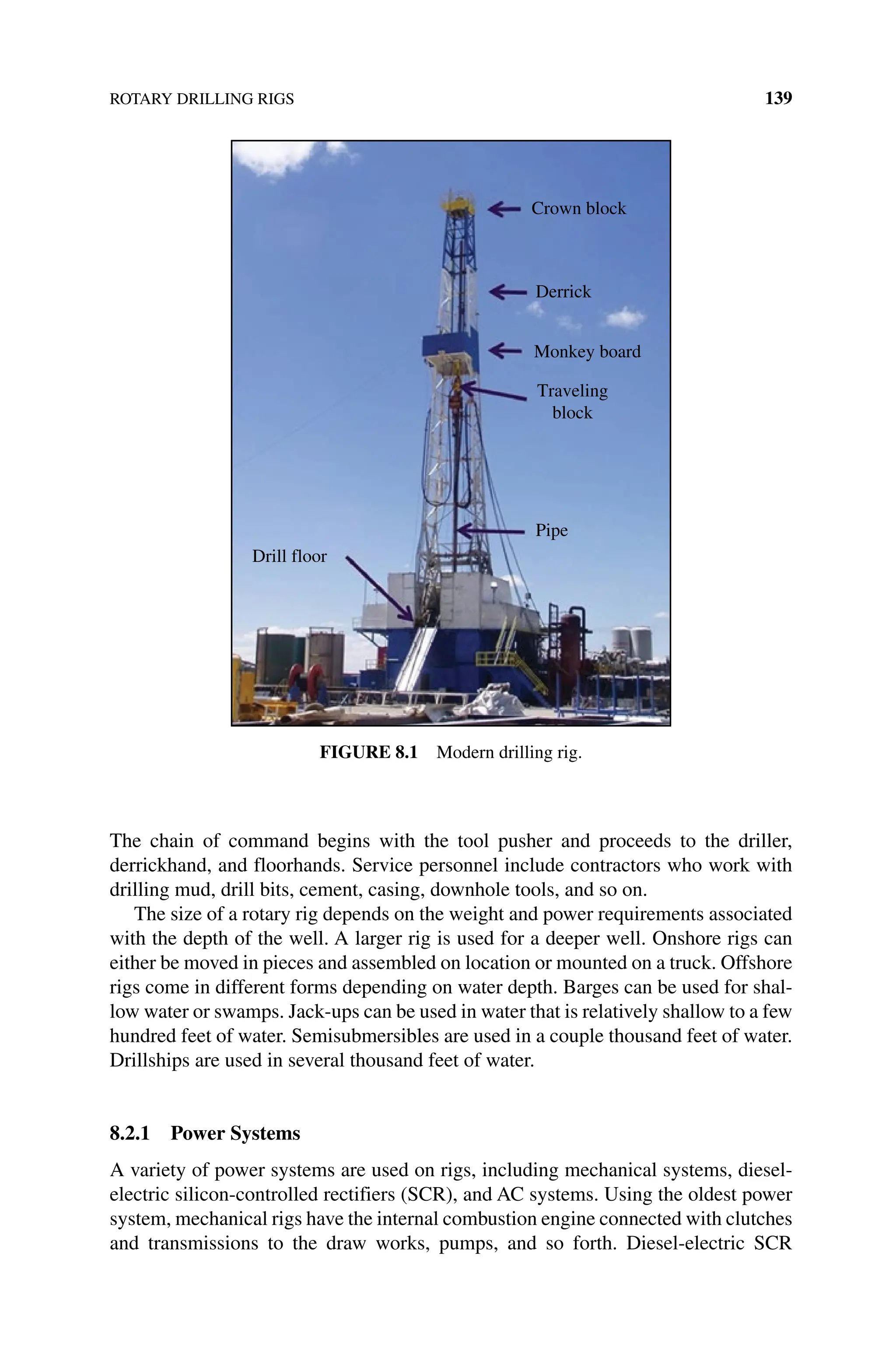
depth of 6000ft below the ground. How many joints of pipe are needed to reach
from the KB to the bottom of the wellbore?Assume each joint of pipe is 30ft long.
8.4 A. 
The top of a reservoir is at a depth of 4000ft SS (SS=subsea or below sea
level). The KB on the drilling rig is 5280ft above sea level. What is the depth
to the top of the reservoir relative to the KB? Express your answer in ft.
B. Estimate confining pressure pcon
at the depth in Part A using an overburden
pressure gradient of 0.43psia/ft. Express your answer in psia.
8.5 We want to drill a well with a total length of 4000ft. We know from previous
experience in the area that the drill bit will be effective for 36hr before it has to
be replaced. The average drill bit will penetrate 20ft of rock in the area for each
hour of drilling. We expect the average trip to replace the drill bit to take about
8hr. A trip is the act of withdrawing the drill pipe, replacing the drill bit, and
then returning the new drill bit to the bottom of the hole. Given this information,
estimate how long it will take to drill the 4000ft. Hint: prepare a table as follows:
Incremental
Time (hr)
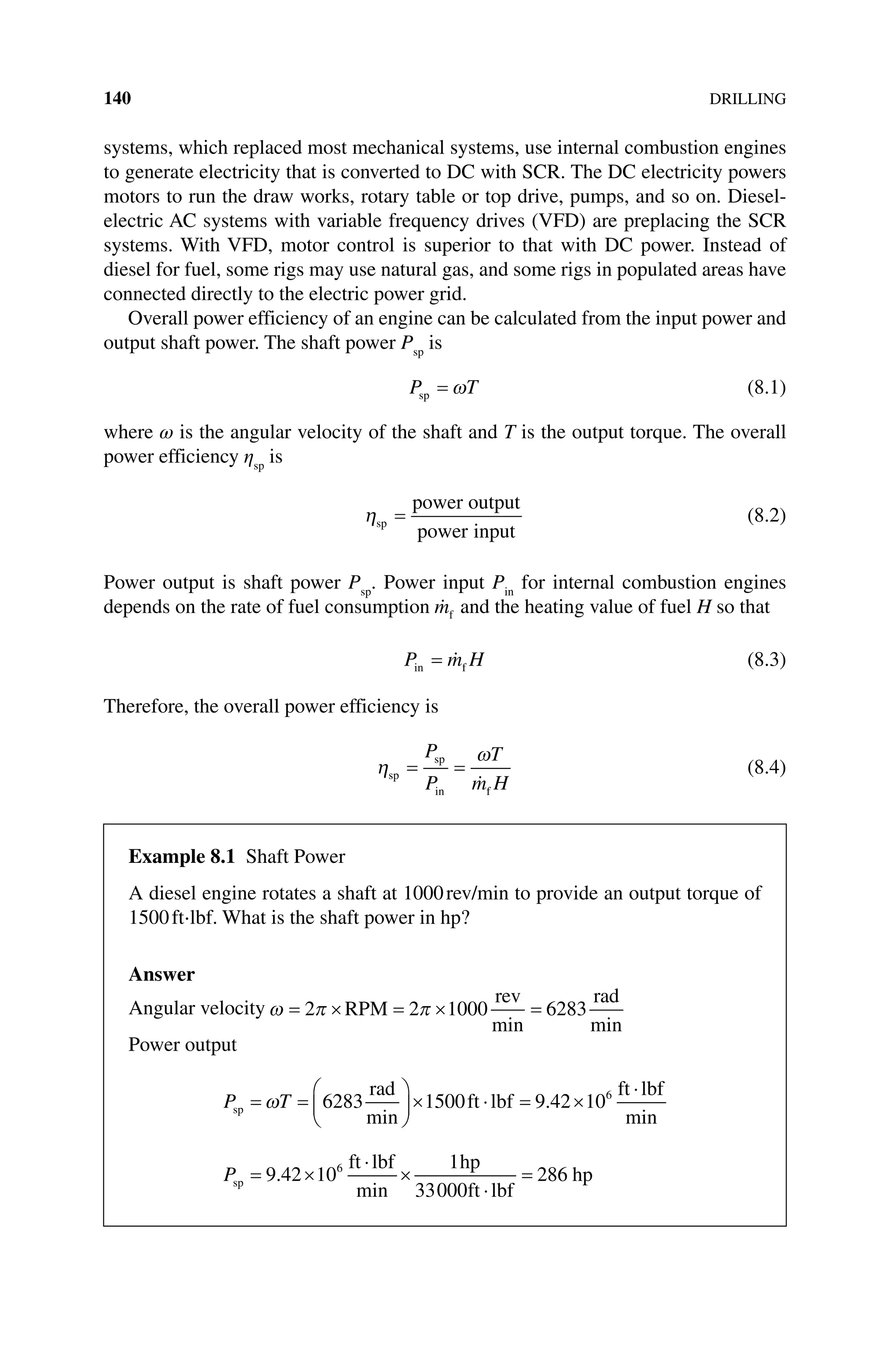
Incremental
Length (ft)
Cumulative
Time (hr)
Cumulative
Length (ft)
8.6 Consider the following types of pipe: conductor pipe, surface casing,
intermediate casing, production casing, and production pipe. Which string is
cemented last?
8.7 If a gas well can drain 160acres, how many gas wells are needed to drain 3mi2
?
8.8 Bend radius is the distance required for a string of pipe to make a 90° turn.
Suppose the trajectory of a horizontal well requires a quarter of a mile to go
from the kickoff point at the end of the vertical segment of the trajectory to the
beginning of the horizontal segment. How many joints of pipe are needed to
establish the curvature from the vertical segment to the horizontal segment if
each joint of pipe is 30ft long?
160DRILLING
8.9 Suppose a diesel engine rotates a shaft at 1100rev/min by consuming diesel at
a rate of 28gal/hr to provide an output torque of 1560ft·lbf. Assume the
density of diesel is 7.0lbm/gal with a heating value of 18000BTU/lbm.
A. What is the output power Psp
in hp?
B. What is the input power Pin
in hp?
C. What is the overall efficiency ηsp
of the engine?
8.10 A. 
Given the following information, calculate the number of joints of pipe
needed to complete the drill string:
Pipe weight 654lbf each
Pipe length 30ft each
Length of drill string 6000ft = 1828.8m
Number of joints of pipe
Total pipe weight lbf
B. Calculate the total pipe weight for the number of joints of pipe in Part A.
Express your answer in lbf.
C. Calculate the polar moment of inertia of the drill string
J r r
= −
( )
( )
π / outer inner
2 4 4
for outer radius=2.25in. and inner radius=1.75in.
Express your answer in m4
. Hint: first convert inches to m.
D. The rotary torque is 4000ft∙lbf. What is the rotary torque in N∙m?
E. Calculate the shear stressτ = Tr J
outer / . Express your answer in MPa.
F. Assume the elastic modulus E of drill string steel is 200GPa and its
Poisson’s ratio ν is 0.3. Calculate the shear modulus of elasticity
G E
= +
/( )
2 2ν . Express your answer in GPa.
G. Convert the length of drill string L to meters and use this result to ­calculate
the angle of twist ϕ in degrees, where φ = TL GJ
/( ).
H. What is the angle of twist per joint of pipe? Use result from Part A.
Introduction to Petroleum Engineering, First Edition. John R. Fanchi and Richard L. Christiansen.
© 2017 John Wiley  Sons, Inc. Published 2017 by John Wiley  Sons, Inc.
Companion website: www.wiley.com/go/Fanchi/IntroPetroleumEngineering
9
WELL LOGGING
Well logging is an important contributor to formation evaluation. The objectives of
formation evaluation include assessing resource size, supporting the placement of
wells, and interpreting reservoir performance during development. Well logs provide
valuable information about the formation within a few feet of the wellbore. Formation
data can be obtained by examining drill cuttings, core samples, and fluid properties.
Other information can be measured by instruments in a well logging tool that is
lowered into a wellbore. Logging tools can be designed to measure such physical
quantities as electromagnetic and sonic wave signals that pass through a section of
the formation and detect elementary particles emitted by formation rock. The data
are used to estimate formation properties. This chapter introduces the well logging
environment, describes different types of logs, explains why combinations of logs
are used, and discusses techniques and limitations of well log interpretation.
9.1 LOGGING ENVIRONMENT
A well log is produced by lowering an electric logging tool on a cable into a well
and measuring various responses on the instruments as the tool is raised back to the
surface. The tool instruments can measure temperature, wellbore diameter, electrical
resistivity, radioactivity, sonic vibrations, and more. The tool length varies from 40 to
140ft, depending on the logging plan.
162 WELL LOGGING
Logging measurements are recorded as a function of depth, as illustrated in
Figure 9.1. The left‐hand side of the figure illustrates a well log with two measurement
tracks and another with three measurement tracks. Both well logs have a track for
depth. The measurement tracks display measurement values relative to a scale that is
suitable for the measurement. More than one measurement may be displayed in each
measurement track. The header contains information about the well (such as name,
location, and owner), the logging run (such as date, logging company, and tool
description), and the scales for the measurement at the top of the tracks.
Performance of logging tools depends on the logging environment. The environ-
ment includes such factors as rock type and structure, fluids in the well and adjacent
formation, temperature and pressure. Some features of the logging environment are
discussed below.
9.1.1 Wellbore and Formation
The wellbore and adjacent formations are a complex setting for logging. The
desired borehole shape is a cylinder with diameter equal to or slightly larger than the
drill bit. In practice, the shape of the borehole may differ substantially from a cylinder
because of borehole wall collapse or the presence of cavities in the formation.
Wellbore roughness, or rugosity, is especially challenging for logging measurements.
The ­
caliper log measures the actual shape of the borehole using a caliper tool with
flexible arms that push against the borehole wall. The arms move in or out as the shape
of the borehole wall changes.
The caliper log has two main uses. First, it is an indicator of the quality of the
other logs. When the borehole diameter varies from the bit diameter, the quality of
the other logs rapidly declines. Second, the diameter in the caliper log is used to
estimate amount of cement needed to cement casing.
Header
Scale
Track
1
Track
2
Depth track
Scale
Header
Scale
Track
1
Track
2
Track
3
Scale Scale
Figure 9.1 Well log format.
LOGGING ENVIRONMENT 163
An idealized representation of the wellbore and formation is illustrated in
Figure 9.2. It is used to make analysis of well log response more tractable. The figure
shows four zones near the wellbore: the mud cake, the flushed zone, the zone of
transition, and the uninvaded zone. If pressure in the borehole during drilling is
greater than pressure in the formation, the pressure difference will drive drilling mud
into the permeable formation. Larger particles in the drilling mud will be filtered out
at the rock face of the borehole and create a mud cake adjacent to the borehole. The
liquid with any small particulates that pass through the mud cake is called the mud
filtrate. The mud cake can reduce the flow of fluids between the formation and the
well. The formation damage caused by mud cake and filtrate can be quantified by
well testing that yields a parameter called “skin.”
During drilling, portions of fluids originally in the flushed zone are displaced by
the invading mud filtrate and pushed into the transition zone. During logging, fluids
in the flushed zone include mud filtrate with any suspended solids, some native brine,
and any remaining oil and gas. Reservoir rock and fluid properties in the uninvaded
zone have not been altered from their original state by fluids from the drilling
operation.
9.1.2 Open or Cased?
Open‐hole logging refers to logging before setting casing in the well. Sidewall
­
coring, or the removal of a core of rock from the borehole wall, requires an uncased
hole. Most logging tools are designed for uncased holes. Open‐hole logging, which
is the most widely used logging method, makes it possible to assess the commercial
viability of a formation before spending the money to complete a well. Open‐hole
logs can be used to determine fluid contacts in a formation, obtain geological prop-
erties such as porosity and rock type, make pore pressure measurements, and obtain
Adjacent bed Borehole
Mud
cake
Flushed
zone
Zone of
transition
Adjacent bed
Uninvaded
zone
Uninvaded
zone
Figure 9.2 Schematic of invasion zones.
164 WELL LOGGING
reservoir fluid samples. Examples of open‐hole logs include resistivity logs, nuclear
logs, sonic logs, and borehole imaging.
Some tools are designed for cased‐hole logging. For example, cement‐bond logs
are used after setting casing to determine the quality of the bond between casing and
cement. If the bond is not sufficient, then remedial operations are needed before
proceeding with any completion operations. After the cement‐bond log, the next
cased‐hole log is a gamma radiation log for correlating depths of target formations
for completion operations in cased holes. Temperature logs and flow‐rate logs may
be used to identify sources of fluids in completed wells. A spinner flow meter can
measure flow rates at different locations in the wellbore. Carbon–oxygen logs use
gamma‐ray spectroscopy to measure carbon content in hydrocarbons and oxygen
content in water. A low carbon to oxygen ratio implies the presence of water, while a
high carbon to oxygen ratio implies the presence of hydrocarbons.
9.1.3 Depth of Investigation
Some logging tools measure properties in the first few inches of the formation, while
other tools measure properties deeper into the formation. This depth of investigation
is usually characterized as shallow, medium, or deep and can range from a few inches
to several feet. The lithology, or mineral composition, of the formation can be
determined by shallow measurements. One purpose of resistivity logs is to estimate
brine saturation in the formation, as an indication of the presence of oil and gas in the
formation. For these estimates to be useful, deep measurements that penetrate beyond
the transition zone are needed.
9.2 LITHOLOGY LOGS
Lithology logs indicate rock type. Most hydrocarbon accumulations are found in
sedimentary rocks. The most important conventional reservoir rocks are sedimentary
rocks classified as clastics and carbonates (Figure 9.3). A clastic rock is composed
of clasts, or fragments, of preexisting rocks or minerals. Sandstones are compacted
sediment, while shales or mudrock is laminated sediment. Carbonates are produced
by chemical and biochemical sources. A single well can encounter several different
types of rocks, as illustrated by the stratigraphic column in the figure. The strati-
graphic column depicts the layering of rock strata in a column of rock. We consider
three types of lithology logs in this section: the gamma‐ray log, the spontaneous
potential (SP) log, and the photoelectric effect (PE) log.
9.2.1 Gamma‐Ray Logs
A gamma‐ray tool detects gamma‐ray emissions from radioactive isotopes. Gamma‐
ray logs imply the presence of shale when there is a high gamma‐ray response. Clean
(shale‐free) sands or carbonates tend to have a low gamma‐ray response. Depth of
investigation is about 1.5ft.
LITHOLOGY LOGS 165
Natural radioactivity includes alpha, beta, and gamma rays. Alpha rays are helium
nuclei, beta rays are electrons, and gamma rays are photons. Alpha and beta rays are
low energy. Gamma rays emitted by nuclei have energies in the range from 103
eV
(electron volts) to 107
eV and can penetrate several feet of rock. Naturally occurring
radioactive materials (NORM) are minerals that contain radioactive isotopes of the
elements uranium, thorium, potassium, radium, and radon. The decay of naturally
occurring radioactive isotopes produces gamma rays.
Coals and evaporites, such as NaCl salt and anhydrites, usually emit low levels of
gamma radiation. Anhydrites are composed of anhydrous (water‐free) calcium sulfate
and are usually formed as an evaporite when a body of confined seawater evaporates.
Some of the highest levels of gamma radiation are observed in shales and potash
(potassium chloride). A segment of a gamma‐ray log is illustrated in Figure 9.4.
9.2.2 Spontaneous Potential Logs
The SP log is one of the oldest logging methods. The SP log is an electric log that
records the direct current (DC) voltage difference, or electrical potential, between
two electrodes. One electrode is grounded at the surface, and the other electrode
on the logging tool moves along the face of formations in the wellbore.
The range of the voltage on an SP logging track is typically up to 200mV. The SP
voltage for shales in a particular well is fairly constant and forms a “shale baseline”
for interpretation of the SP log for that well. The SP for shale‐free formations is
negative by 50–100mV relative to the shale baseline and forms a “sand baseline.”
These two boundaries provide a rule for interpolating the amount of clay or shale in
a formation based on its SP.
The SP results from diffusion processes in porous rock driven by differences in
the ionic composition of aqueous mud filtrate and in situ brine. As a result, the SP log
cannot function with air‐ or oil‐based drilling mud. In porous formations with less
Sedimentary
rock
Clastics Carbonates
Illustrative
stratigraphic column
Shale
Sandstone
Shale
Limestone
Shale
Shaly sand
Sandstone
Conglomerate
Shaly sand
Shale
Limestone
Dolomite
Evaporite
Figure 9.3 Common reservoir rock types and an illustrative stratigraphic column.
166 WELL LOGGING
clay or shale, the voltage is lower because the ions can diffuse more freely. Thus,
deflection of the SP from the shale baseline to lower voltage indicates increasing
permeability. If the concentration of salts dissolved in the mud filtrate equals the
concentration in the in situ brine, then the SP is zero. For most wells, the filtration
concentration is less than the in situ brine concentration, and the shale baseline is
more positive than the sand baseline. However, the shale baseline can drift as the
composition of the in situ brine changes. The change of temperature with depth can
also cause baseline drift.
An increase or decrease in the SP curve indicates the boundary between one rock
type and another. Boundaries between rock types that appear along the SP curve can be
used to estimate net and gross thickness of a log interval. In some cases, the shape of the
SP curve can yield information about the depositional environment when combined
with other logs. The shape of the SP curve is used for correlating structure among wells.
The presence of oil and natural gas in the pore space with formation water reduces
the number of ions in the pore space. Consequently, the SP curve changes value at the
hydrocarbon–water contact, that is, the boundary between rock filled with formation
water (the water zone) and rock containing both hydrocarbon and formation water
(the hydrocarbon zone).
Gamma (API units)
0 150
Clean
sand
4000
4010
4020
4030
Depth
(ft)
4040
4050
Shale
Shale
Figure 9.4 Illustration of gamma‐ray (GR) log response. Compare with the porosity logs
in Figure 9.5 and the resistivity logs in Figure 9.6.
POROSITY LOGS 167
9.2.3 Photoelectric Log
The PE gives another perspective on lithology. The PE refers to the absorption of a
low energy gamma ray by inner orbital atomic electrons. The extent of this absorption
varies with atomic number of the atom. The PE logging tool is part of the density
logging tool. The PE tool measures the absorption or falloff of low energy gamma‐
ray energy. The falloff in gamma‐ray energy is quantified as a PE factor (PEF). The
PEF depends primarily on the atomic number of the formation. Hydrocarbons and
water contribute very little to the PEF because their atomic numbers are low com-
pared to rocks in the formation. On the other hand, the atomic numbers of different
rock types can be correlated to PEF so that PEF serves as a good indicator of lithology
or rock type as listed in Table 9.1. PEF is not very sensitive to porosity. The PE log-
ging track is often scaled from 0 to 10 in units of barns per electron (b/e). A barn is a
measure of cross‐sectional area and 1 barn equals 10–28
m2
. Depth of investigation for
the PE logging tool is typically 1 to 2ft.
9.3 POROSITY LOGS
Porosity logs include density logs, acoustic logs, and neutron logs. These logs are
described in this section.
9.3.1 Density Logs
A density logging tool uses intermediate energy gamma rays emitted from a
­
radioactive source in the tool to induce Compton scattering in the formation. In this
process, gamma‐ray photons from the tool collide with electrons in the formation
Table 9.1 Photoelectric Factors
Lithology Approximate PEF (b/e)
Sandstone (quartz) 2
Dolomite 3
Shale 3.5
Salt 4.5
Limestone or anhydrite 5
Example 9.1 SP Log
On an SP log, if the shale baseline is +40mV and the sand baseline is −80mV,
what is the shale content of a formation with SP of −30mV?
Answer
Thedifferencebetweenbaselinesis40 80 120
mV mV mV
– ( )
− = .Thedifference
from the sand baseline to the formation SP is − − =
30 80 50
mV mV mV
– ( ) , so
the shale content is ( ) ( ) .
50 120 0 42
mV / mV = or 42%.
168 WELL LOGGING
and transfer some of their energy to the electrons. The remainder of the energy is
scattered as lower‐energy gamma‐ray photons. The density logging tool then detects
some of these scattered photons. The gamma‐ray count rate at the tool depends on
formation electron density, which is proportional to formation bulk density ρb
.
Combining ρb
from the density log with rock matrix density ρma
and fluid density
ρf
yields porosity ϕ:
φ
ρ ρ
ρ ρ
=
−
−
ma b
ma f
(9.1)
Formation bulk density ρb
can be obtained by rearranging Equation 9.1:
ρ φ ρ φρ
b ma f
= −
( ) +
1 (9.2)
Results of the density tool are presented in three tracks on a log: bulk density,
density correction, and porosity. The density correction track shows corrections to
the bulk density due to irregularities in wellbore diameter. It is an indication of the
quality of the bulk density response. For density corrections greater than 0.2 g/cm3
,
the bulk density values are suspect. The depth of investigation for the density tool is
typically 1–2ft.
9.3.2 Acoustic Logs
The elapsed time to propagate a sound wave from a source on a logging tool through
the formation and back to a receiver on the tool depends on formation porosity. The
tool that sends and receives sound waves is called an acoustic log or sonic log.
Sound waves are vibrations in a medium like air or rock. The speed of sound in a
medium depends on the density of the medium. In the case of rock, density depends
on the density of rock matrix and the density of the fluids occupying the pore space
in the rock. Fluid density is usually much smaller than matrix density. Consequently,
the bulk density of a formation with relatively large pore volume is less than the bulk
density of a formation with relatively small pore volume if the fluids in the pore
volume are the same in both formations.
Example 9.2 Density Log
A density log shows that the bulk density ρb
of a formation is 2.30g/cc. The
density of the rock matrix ρma
is 2.62g/cc and the density of the fluid ρf
in the
formation is 0.869g/cc. Calculate porosity.
Answer
Use φ
ρ ρ
ρ ρ
=
−
−
=
−
−
=
ma b
ma f
2 62 2 30
2 62 0 869
0 183
. .
. .
. or 18.3%
POROSITY LOGS 169
An estimate of the speed of sound v in a formation is given by Wyllie’s equation.
If we write the speed of sound in fluids occupying the pore volume of a rock as vf
and
the speed of sound in the rock matrix as vma
, Wyllie’s equation is
1 1
ν
φ
ν
φ
ν
= +
−
( )
f ma
(9.3)
where ϕ is rock porosity. We can write the speed of sound in each medium as the
distance traveled divided by the transit time. If we assume the distance traveled is the
same in each medium, then Wyllie’s equation can be written as
∆ ∆ ∆
t t t
= + −
( )
φ φ
f ma
1 (9.4)
where Δt is transit time in the bulk volume, Δtf
is transit time in the interstitial fluid,
and Δtma
is transit time in the rock matrix. Porosity in the bulk volume is obtained by
rearranging Equation 9.4:
φ =
−
−
∆ ∆
∆ ∆
t t
t t
ma
f ma
(9.5)
In addition to providing a measurement of porosity, acoustic logs can be used to
­
calibrate seismic measurements. The comparison of acoustic and seismic transit time
measurements in a formation can improve the accuracy of converting seismic transit
times to depths.
The depth of investigation for sonic logs is typically 1–4ft.
9.3.3 Neutron Logs
The neutron log provides information about the formation by emitting neutrons
from a radioactive source in the logging tool. The emitted neutrons lose energy as a
result of collisions with atomic nuclei in the formation to become slower thermal
neutrons. Slower neutrons can be captured by nuclei in the formation. Hydrogen
nuclei are especially effective at capturing thermal neutrons. Reservoir fluids (oil,
water, and hydrocarbon gas) contain hydrogen while formation rock usually does
not. Consequently, the detection of captured neutrons by the neutron logging tool
indicates porosity.
Example 9.3 Acoustic Log
An acoustic log measured the transit time of 75 75 10 6
µs s
= × −
in a formation.
The formation matrix has a transit time of 50 50 10 6
µs s
= × −
, and the fluid
transit time is 185 185 10 6
µs s
= × −
. Use Equation 9.5 to calculate porosity.
Answer
Use φ =
−
−
=
−
−
=
∆ ∆
∆ ∆
t t
t t
ma
f ma
75 50
185 50
0 185
. or 18.5%
170 WELL LOGGING
Pore space filled with natural gas has a relatively small hydrogen density com-
pared to liquid water and oil. Therefore, lower porosity on the neutron log can
­
indicate occupation of pore space by natural gas. Neutron and density porosity are
often plotted on the same track. Neutron porosity is typically higher than density
porosity except when natural gas occupies part of the pore space. In this case, neutron
porosity is less than density porosity. This “crossover” from above to below the
density porosity indicates the presence of natural gas and is illustrated in Figure 9.5.
9.4 RESISTIVITY LOGS
Formation resistivity is measured using resistivity logs. Rock grains in the formation are
usually nonconductive, so formation resistivity depends primarily on the electrical prop-
erties of the fluid contained in the pore space. Hydrocarbon fluids are usually highly
resistive because they do not contain ions in solution. Formation water, by contrast, con-
tains ions in solution that can support an electrical current and have relatively small
resistivity. Resistivity logs can be used to distinguish between brine and hydrocarbon
fluids in the pore spaces of the formation. A resistivity log is illustrated in Figure 9.6.
Conrad and Marcel Schlumberger and Henri Doll first applied resistivity logs to
the evaluation of a formation in 1927. The technology has evolved considerably
since then. Here we introduce electrical properties of the ionic environment, the rela-
tionship between formation resistivity and wetting‐phase saturation, and then discuss
two types of resistivity logs: electrode logs and inductions logs.
0.30 0.20 0.10
Porosity
0.00
4000
4010
4020
Cross-
over
Depth
(ft)
4030
4040
4050
Neutron
Density
Figure 9.5 Illustration of crossover of porosities from density and neutron logs. Compare
with the GR log in Figure 9.4 and the resistivity logs in Figure 9.6.
RESISTIVITY LOGS 171
In situ brine in a formation contains several inorganic salts that are ionized in
water. The presence of ions in brine greatly enhances electrical conductivity. Pure
water is a poor conductor of electricity. The presence of dissolved salts significantly
increases the conductivity of water. The conductance of a material is inversely
­
proportional to its resistance. Conductance S in siemens is given by
S R
=1/ (9.6)
where R is resistance in ohms. The units are related by 1 Siemen mho ohm
= =
1 1/ .
Resistance R (ohms) is the proportionality constant between voltage V (Volts) and
current I (Amperes) in the linear relationship
V IR
= (9.7)
where Equation 9.7 is Ohm’s law.
Resistivity is often used to quantify the ionic environment. If we consider a
­
uniform conducting medium with electrical resistance Re
(ohms), length L (m), and
cross‐sectional area A (m2
), resistivity of the conducting medium ρ (ohm⋅m) is
ρ = R
A
L
e (9.8)
4000
10 100 1000 10000
Zone of
filtrate
invasion
4010
4020
4030
Depth
(ft)
4040
4050
Resistivity (ohm·m)
Figure 9.6 Illustration of resistivity log. The three resistivity traces are for shallow,
medium, and deep resistivity measurements. Compare with the GR log in Figure 9.4 and the
porosity logs in Figure 9.5.
172 WELL LOGGING
Resistivity ρ (ohm⋅m) is inversely proportional to electrical conductivity σ
(mho/m S/m
= ):
σ ρ
=1/ (9.9)
where1 1 1
S/m siemen/m mho/m
= = .
A high conductivity fluid has low resistivity. By contrast, a low‐conductivity fluid
like oil or gas would have high resistivity. A tool that can measure formation resis-
tivity indicates the type of the fluid that is present in the pore space. Resistivity in
a pore space containing hydrocarbon fluid will be greater than resistivity in the
same pore space containing brine.
The resistivity R0
of a porous material saturated with an ionic solution is equal to
the resistivity Rw
of the ionic solution times the formation resistivity factor F of the
porous material, thus
R FR
0 = w (9.10)
Formation resistivity factor F is sometimes referred to as formation factor. It can be
estimated from the empirical relationship
F a m a m
,
( ) = −
φ (9.11)
where ϕ is porosity, m is cementation exponent, and a is tortuosity factor. The cemen-
tation exponent m depends on the degree of consolidation of the rock and varies
Example 9.4 Ohm’s Law, Resistivity, and Conductivity
A. 0.006C of charge moves through a circuit in 0.1s. What is the current?
B. A 6V battery supports a current in a circuit of 0.06A. Use Ohm’s law to
calculate the resistance of the circuit.
C. Suppose the circuit has a length of 1m and a cross‐sectional area of
1.8m2
. What is the resistivity of the circuit?
D. What is the electrical conductivity of the circuit?
Answer:
A. Current [Ampere]
[Coulomb]
[Second]
C
s
A
= = =
0 006
0 1
0 06
.
.
.
B. Ohm’s law:Voltage V I R
( ) = × = ( )× ( )
current resistance A ohm orV IR
= .
Calculate / 6 V/ 6 A ohm
R V I
= = =
0 0 100
.
C. ρ = = = ⋅
R
A
L
e ohm
m
m
ohm m
100
1 8
1
180
2
.
D. σ
ρ
= =
⋅
= =
1 1
180
0 0056 5 6
ohm m
mho/m mmho/m
. . where mmho=
milli‐mho
RESISTIVITY LOGS 173
from 1.14 to 2.52. Tortuosity factor a depends on pore geometry. Formation
­resistivity factor F(a,m) is plotted as a function of porosity for sands in Figure 9.7.
In the case of sands, the empirical parameters m and a vary from 1.14 to 2.52 and
from 0.35 to 4.78 (Bassiouni, 1994), respectively.
Archie’s equation is an empirical relationship for the formation resistivity Rt
of a
porous medium that is partially saturated by an electrically conducting wetting phase
with saturation Sw
. Archie’s equation is
R R S n
t w
= −
0 (9.12)
where the empirical parameter n is the saturation exponent. If the porous medium is
completely saturated by the wetting phase so that Sw = 1, then R R
t = 0 from Archie’s
equation. Archie’s equation for wetting‐phase saturation
S
FR
R
n
w
w
t
=






1/
(9.13)
is obtained by combining Equations 9.10 through 9.12. The wetting‐phase saturation
is often water saturation.
1000000
100000
10000
1000
100
10
1
0.00 0.10 0.20 0.30
Porosity (fraction)
Formation
factor
(F(a,m))
0.40 0.50
F(0.35, 1.14)
F(0.35, 2.52)
F(4.78, 1.14)
F(4.78, 2.52)
Figure 9.7 Sketch of formation resistivity factor for sands.
Example 9.5 Resistivity Log
A consolidated sandstone has tortuosity factor=0.81, cementation factor=2,
and formation factor=90. What is the porosity of the rock?
Answer
Solve F a m a m
( )
, = −
φ for φ = ( ) /
a F m
/ 1
to get φ = =
( . ) .
/
0 81 90 0 095
1 2
/
174 WELL LOGGING
There have been many variations in the design of resistivity logging tools. The
variations can be placed into two categories: electrode tools and induction tools.
Current from an electrode in an electrode tool travels through the formation and back
to another electrode. “laterolog” is the name for the modern variation of electrode
tools. By contrast, induction tools have two sets of wire coils: coils for generating
magnetic fields that induce current in the formation and coils for sensing the magnetic
field produced by the induced current in the formation. Historically, electrode
tools were used for water‐based drilling fluids, while induction tools were used for
oil‐based drilling fluids. Those restrictions have faded with modern designs. Some
laterologs can measure formation resistivity of cased holes.
The depth of investigation varies with the design of the electrodes in a laterolog
or design of the coils in an induction tool. Most tools can simultaneously measure
shallow, medium, and deep resistances as shown in Figure 9.6. Some tools, “array”
tools, report measurements at five depths from about 1 up to 7ft.
9.5 OTHER TYPES OF LOGS
In the previous sections, we have highlighted the most commonly used logs. A few
other logs are introduced here. These logs illustrate the variety of logs that are being
developed and used to meet industry challenges.
9.5.1 Borehole Imaging
Borehole imaging techniques are designed to produce centimeter‐scale images of the
rocks comprising the borehole wall. They include optical, acoustic, and electrical
imaging techniques. Consequently, borehole imaging is not used in a cased hole.
Borehole images can be used to identify fractures and fracture orientation, observe
structural and stratigraphic dip, detect breakouts in the borehole wall, analyze small‐
scale sedimentary features, and assess net pay in thin beds.
9.5.2 Spectral Gamma‐Ray Logs
Uranium, thorium, and potassium are the main sources of natural gamma radiation.
In the standard gamma‐ray logging tool, gamma rays from all three elements and any
other radioactive elements are combined. The energy, or wavelength, of gamma rays
from these elements differ and can be separately sensed. Spectral gamma‐ray sensors
can distinguish radiation from uranium, thorium, and potassium. This information
can be useful for analysis of some formations.
9.5.3 Dipmeter Logs
A dipmeter is designed to determine the direction and angle of dip of rock strata
­
adjacent to the borehole. The spatial orientation of a plane requires measuring
the elevation and geographical position of at least three points on the plane.
LOG CALIBRATION WITH FORMATION SAMPLES 175
The dipmeter logging tool uses three or more microresistivity sensors mounted
on ­
caliper arms to make measurements on different sides of the borehole wall.
Information recorded by the dipmeter logging tool is recombined by computer to
provide planar orientation including bedding dip. Acoustic and optical borehole
imaging tools can provide ­
similar information about bedding dip by providing
images of the borehole wall.
9.6 LOG CALIBRATION WITH FORMATION SAMPLES
Conclusions derived from logging data are subject to varying levels of error. To
reduce that error and build confidence in interpretations of logs, it is useful to com-
pare the logs to samples from the formation. The cuttings collected during the mud
logging process provide one set of samples. Other samples can be collected with
coring operations.
9.6.1 Mud Logs
The mud log is obtained during the drilling operation. It includes several tracks: rate
of penetration, depth, composition of gas liberated at the surface from the drilling
mud, plus word and strip chart descriptions of cutting samples.
The wellsite geologist (mud logger) usually collects samples of cuttings every
10ft of drill progress. The geologist examines the cuttings to determine lithology and
the presence of any oils for the formations in contact with the bit. To do this, the geol-
ogist must account for the travel or lag time from the bit to the shale shaker as the
mud carries the cuttings to the surface. These shale shaker samples can also contain
bits of rock from shallower formations. Consequently, the sample may not be entirely
representative of the environment encountered by the drill bit at a particular location,
but they are the first direct evidence of lithology obtained from the borehole. Part of
the duty of the mud logger is to identify the portion of the sample that was most
recently cut by the bit. These descriptions of samples, as well as the samples them-
selves, are routinely compared to open‐hole logs.
The rate of penetration track shows the amount of time it takes to drill through a
foot of rock and indicates the hardness of the formation. Rock hardness inferred from
the rate of penetration gives information about the rock type, which can be compared
to the lithology logs.
Oil and gas shows in the mud log can be compared to indications of hydrocarbon
in the porosity and resistivity logs.
9.6.2 Whole Core
Core samples are obtained by replacing the drill bit with a ring‐shaped coring bit.
The coring bit drills into the rock and captures a cylindrical volume of rock through
the hole in the bit. The rock sample is collected in a core barrel in the lower portion
of the bottom‐hole assembly (BHA). The need to replace the drill bit with a coring
bit, obtain a core, and then replace the coring bit with a drill bit to resume drilling
176 WELL LOGGING
means that coring is a time‐consuming and expensive process. Consequently, only a
few wells are cored. Cored wells are usually cored over a limited section of the well
where core samples can provide the most useful information.
Cores are especially useful for characterizing productive formations. Each core
from the formation is a small sample of reservoir rock. The core can be used to
determine important reservoir properties such as lithology, porosity, and perme-
ability. Core properties can be detrimentally modified during the coring process
because reduction in temperature and pressure as the core is lifted to the surface
alters core fluid content. Core samples may be obtained using a process known
as native‐state coring that is designed to keep core samples at original in situ
­
conditions. The more complicated native‐state coring process increases cost and
tends to limit native‐state coring to special situations.
Cores and any results of core analysis are routinely compared to open‐hole logs as
a way to improve interpretation of the logs.
9.6.3 Sidewall Core
Samples of formations can also be collected by devices lowered on a wireline. Some
of these devices use percussive means to drive a sampling cup into the formation.
Other devices use rotary saws for cutting samples. While percussive sampling is
faster, rotary cutting provides better samples.
9.7 MEASUREMENT WHILE DRILLING AND LOGGING
WHILE DRILLING
Measurement while drilling (MWD) refers to real‐time measurements of drilling
progress with sensors in the BHA. MWD allows better control of the drilling oper-
ation for reaching targets efficiently. Originally, MWD sensors measured drilling
direction only, but currently they can also measure weight on bit, torque, RPM, and
other drilling‐related parameters. Natural gamma‐ray logging sensors are included
in some MWD assemblies. All of this information is communicated to the surface
with pressure pulses in the drilling mud. Opening and closing a valve in the BHA
generates the pulses. Rates of 1–3 bits per second are common. A battery pack or
a small turbine driven by drilling mud provides electrical power for the MWD
equipment.
Over the years, more and more logging sensors have been included in BHAs,
which led to the coinage of the acronym LWD for logging while drilling. Many of the
logging tools available for open‐hole logging are available for LWD. Logging
information is communicated to the surface with pressure pulse systems in the MWD
assemblies. In some cases, logging information is stored in memory devices for later
retrieval. In place of mud pulse telemetry, some MWD and LWD operations use
electromagnetic systems that communicate at about 10 bits per second. MWD and
LWD depths are tied to driller depths. Drillers determine depths by summing the
lengths of drill pipe joints in the hole relative to the kelly bushing.
RESERVOIR CHARACTERIZATION ISSUES 177
9.8 RESERVOIR CHARACTERIZATION ISSUES
Well logs are a major source of data about the reservoir. Table 9.2 is a summary of
the principal applications of some widely used well logs. The columns in Table 9.2
show that well logs provide information about rock type, fluid content, porosity,
pressure prediction, and structural and sedimentary dip. This information is essential
for characterizing the reservoir. Some common reservoir characterization issues are
introduced below.
9.8.1 Well Log Legacy
Well logging technology has been changing for approximately a century. Well logs
acquired during that period of time represent a data legacy that has a value as intel-
lectual property because old well logs can still provide useful information about a
reservoir at the time the well log was acquired. In many cases, however, changes in
well logging tools required changes in analysis techniques.
9.8.2 Cutoffs
Well log measurements can provide information about reservoir rock over a
range of properties that includes economically producible pay zones and zones
that contribute very little oil and gas to the production stream. Reserves calcula-
tions are more accurate when the analysis of well logs includes only pay zones.
A well log cutoff specifies the minimum value of a measured property so that
unproductive rock volume does not get included in fluid in place and reserves
calculations.
We illustrate the use of cutoffs in the calculation of reserves by recalling that the
volume of reserves VR
is the product of original hydrocarbon in place and recovery
factor RF
. Therefore the volume of reserves VR
is
V AhS R
R h F
= φ (9.14)
Table 9.2 Principal Applications of Common Well Logs
Log Type Lithology Hydrocarbons Porosity Pressure Dip
Electric
SP X
Resistivity X X X
Radioactive
Gamma ray X
Neutron X X
Density X X
Sonic X X X X
Dipmeter X
Source: After Selley and Sonnenberg (2015), page 86.
178 WELL LOGGING
where ϕ is porosity, A is area, h is net thickness, and Sh
is hydrocarbon saturation.
The determination of porosity and saturation is often accompanied by the specifica-
tion of porosity and saturation cutoffs. The thickness of the rock interval that has
porosity or saturation values below the corresponding cutoffs is not included in the
net thickness of the pay interval.
9.8.3 Cross‐Plots
A cross‐plot is a plot of one well log parameter against another. For example,Archie’s
equation for wetting‐phase saturation can be written as
R R S
m n
t w w
= − −
φ (9.15)
where we assume the coefficient a = 1 in the empirical relationship for formation
resistivity factor F(a,m). Archie’s equation relates electrical conductivity of a sedi-
mentary rock to its porosity and brine saturation. The logarithm of both sides of
Archie’s equation gives
log log log log
R m R n S
t w w
= − + −
φ (9.16)
We obtain the Pickett cross‐plot by plotting log Rt
from a resistivity log versus log
ϕ from the density log. The Pickett cross‐plot is a visual representation of Archie’s
equation.
Another useful cross‐plot is the plot of sonic travel time from a sonic log versus
formation density from a density log. The resulting cross‐plot indicates lithology.
9.8.4 Continuity of Formations between Wells
As shown in Figure 9.8, the continuity of formations between logged wells can be
illustrated with a fence diagram that displays two‐dimensional stratigraphic cross
sections in three dimensions. The fence diagram is prepared by first positioning
well logs in their correct spatial locations. Correlations are then drawn between
Example 9.6 Porosity–permeability Cross‐plot
The porosity–permeability (φ − K) cross‐plot relates porosity and permeability.
The φ − K cross‐plot for a well is obtained from core measurements to be
K = ( )
0 0007 71 7
. exp . φ where K is in md and ϕ is a fraction. Use the φ − K
cross‐plot to find cutoff porosity for cutoff permeability=1md.
Answer
Solve the φ − K cross‐plot for porosity: φ = ×
0 139 1428
. ln( )
/K . Substituting
cutoff permeability in the φ − K cross‐plot gives φ = × =
0 139 1428 1 0 10
. ln .
( )
/ .
In this case, rock with less than 10% porosity would not be considered produc-
tive because the permeability would be too low.
RESERVOIR CHARACTERIZATION ISSUES 179
neighboring well logs to form two‐dimensional stratigraphic cross sections. The inter-
section of cross sections provides a three‐dimensional representation of reservoir
stratigraphy. Fence diagrams can show geologic discontinuities such as formation
pinch‐outs and unconformities. It must be remembered that stratigraphic sections
drawn between well log locations are extrapolations and may be incorrect.
9.8.5 Log Suites
It is often desirable to combine different and complementary logging tools in the
same logging run. An analysis of the combination of well logs makes it more likely
that the characterization of the reservoir is correct. For example, the neutron–density
logging tool combines a neutron logging tool and density logging tool. Both tools
provide information about formation porosity but respond differently to the presence
of hydrocarbon gas. The presence of hydrocarbon gas in the pore space increases the
density log porosity and decreases neutron log porosity.
The gamma‐ray logging tool can be included in a suite of well logging tools
because the gamma‐ray tool measures natural radioactivity. The gamma‐ray logging
tool can indicate shale content, identify lithology, correlate stratigraphic zones, and
correct porosity log measurements in shale‐bearing formations.
Figure 9.9 shows a combination of well logs for three wells: Wells 7, 3, and 9.
Wells 7 and 9 are dry holes, and Well 3 is an oil producer. Well 3 is in the center of a
line that extends from Well 7 to Well 9. The well logs in the figure are the SP log,
seismic reflection coefficients (RC), and the resistivity log. The SP log and resistivity
log are in arbitrary units. Depth is in feet.
Regional dip from Well 7 to Well 9 can be estimated by correlating the SP log and
seismic RC at the top of the productive interval (at a depth of ~8450ft). The resis-
tivity in the upper part of the productive interval in Well 3 decreases at about 8550ft.
Clean sand
Well 1
GR log
Well 2
GR log
Well 3
GR log
Well 2
GR log
Well 3
GR log
(a) (b)
Well 1
GR log
Figure 9.8 Illustration of a fence diagram showing correlation of a clean sand interval.
(a) The clean sand interval is indicated by the GR logs. (b) Fence diagram displaying clean
sand correlation.
180 WELL LOGGING
The decrease in resistivity in the lower part of the productive interval inWell 3 ­suggests
that there is an increase in conductivity, which can be interpreted as an increase in
water saturation. This indicates the presence of an oil–water contact (OWC).
9.8.6 Scales of Reservoir Information
Measured rock properties depend on the scale of the measuring technique. Porosity
is routinely measured in rock cores. The measured porosity applies to a relatively
small volume of the reservoir. By contrast, well logging tools can measure a few
inches to a few feet into the formation. Therefore, well logs provide rock properties
on a larger scale than rock cores. Figure 9.10 illustrates measurement techniques that
vary from centimeter scale for cores to decameter scale for seismic measurements.
Seismic surveys sample a large region of the subsurface, but surface seismic data
are considered “soft data” because seismic vibrations are detected at the surface after
Well 7
8400
8450
8500
Depth
8550
WOC
Top of formation
8600
Well 3 Well 9
SP = Spontaneous potential
RC = Seismic reflection coefficient
Res. = Resistivity
Well 7 - SP
Well 7 - RC
Well 7 - Res.
Well 3 - SP
Well 3 - RC
Well 3 - Res.
Well 9 - SP
Well 9 - RC
Well 9 - Res.
Figure 9.9 Combination of well logs (depth is in ft).
Example 9.7 Resistivity Log and OWC
Estimate the OWC using the well logs for Well 3 in Figure 9.9.
Answer
The SP trace indicates a permeable formation from 8450 to 8570ft. However
the resistivity trace indicates a drop in resistivity at 8550ft, suggesting the
presence of formation water that contains solution salts (ions). Therefore the
OWC in Well 3 appears to be between 8540 and 8550ft.
RESERVOIR CHARACTERIZATION ISSUES 181
propagating through many different media. Sonic logs can be used to calibrate sur-
face seismic data at a particular well location and improve our confidence in the
accuracy of the seismic measurements.
Figure 9.11 shows a scheme for classifying the scale of methods used in reservoir
characterization. The four scales range from microscale to gigascale. The data sam-
pling techniques shown in Figure 9.10 correspond to macroscale, megascale, and
gigascale. Microscale is the smallest scale and is exemplified by an examination of a
rock sample on the microscopic level. A thin section is a sliver of the rock surface
placed on a microscope slide. It is often viewed with a microscope that uses light
reflected from the surface of a rock rather than light that passes through the sliver of
a rock. Scanning electron microscopes can also be used to examine a porous medium
and can be placed in the microscale classification.
Centimeter scale Meter scale
Well core Electric log
Resistivity
Decameter scale
Well
S.P.
Seismic section
Figure 9.10 Range of data sampling techniques.
Microscale Macroscale Megascale Gigascale
S.P.
Well
Resistivity
Electric log
Thin section Well core Seismic section
Figure 9.11 Reservoir scales.
182 WELL LOGGING
9.9 ACTIVITIES
9.9.1 Further Reading
For more information about well logging, see Selley and Sonnenberg (2015), Hyne
(2012), Johnston (2010), Raymond and Leffler (2006), Asquith and Krygowski
(2004), and Bassiouni (1994).
9.9.2 True/False
9.1 A log suite is a combination of well logging tools.
9.2 The Pickett cross‐plot is a plot of porosity versus impedance.
9.3 The gamma‐ray log detects shale from in situ radioactivity.
9.4 A well log and a porosity–permeability cross‐plot can be used to estimate the
Dykstra–Parsons coefficient.
9.5 A well log cross‐plot is a plot of one well log parameter against another.
9.6 The caliper log gives information about the shape of the borehole.
9.7 Electrode logs, induction logs, and acoustic logs are resistivity logs.
9.8 The sonic log measures the transit time of sound propagating in a porous
medium.
9.9 Gamma‐ray logs detect gamma rays from NORM.
9.10 Archie’s equation relates wetting‐phase saturation to resistivity.
9.9.3 Exercises
9.1 A. 
Typical reservoir values for rock, oil, water, and gas compress­
ibilities are
cr psia
= × −
3 10 6
/ co psia
= × −
10 10 6
/
cw psia
= × −
3 10 6
/ cg psia
= × −
500 10 6
/
Suppose oil saturation is 0.8 in an oil–water system. Calculate total
fluid compressibility using the aforementioned compressibilities. Hint:
First, calculate water and gas saturation, and then calculate total fluid
compressibility.
B. Calculate bulk modulus of fluid. Note that bulk modulus Kf
=1/cf
.
9.2 Plot hydrostatic pressure versus depth for a column of drilling mud in a well
that is drilled to a depth of 5000ft. The pressure gradient of drilling mud in the
well is 0.48psi/ft.
ACTIVITIES 183
9.3 Suppose a density log is making measurements in a formation where the
density of sandstone is 2.70g/cc and the fluid density of brine is 1.03g/cc.
Use Equation 9.1 to plot porosity versus bulk density for the density log.
Assume bulk density ranges from 2 to 2.70g/cc.
9.4 Suppose an acoustic log is making measurements in a water‐saturated
limestone formation. The limestone matrix has a transit time per foot of
44 44 10 6
µs/ft s/ft
= × −
corresponding to an acoustic velocity of 23000ft/s.
The brine transit time per foot is 189 189 10 6
µs/ft s/ft
= × −
corresponding to an
acoustic velocity of 5300ft/s. Use Equation 9.5 to plot porosity versus log
transit time for the acoustic log. Assume log transit time per foot ranges from
40 to 100µs/ft.
9.5 Fill in the following table using Equation 9.11 to calculate formation resistivity
factor F for a resistivity log.
Sand Carbonate
a 0.81 0.81 1 1
m 2 2 2 2
Porosity 0.1 0.2 0.1 0.2
F
9.6 A. 
Fluid density for a volume with gas and water phases can be estimated
using ρ ρ ρ
f g g w w
= × + ×
S S where ρg
, ρw
refer to gas density and water
density, Sg
, Sw
refer to gas saturation and water saturation, and
S S
g w
+ = 1. Estimate fluid density when gas density is 0.00086 g/cc,
water density is 1.03 g/cc, and water saturation is 30%. Hint: Convert
water saturation to a fraction and calculate gas saturation from
S S
g w
+ = 1.
B. 
Suppose bulk density ρb
is 2.20g/cc from a density log, and density of
rock matrix ρma
is 2.62g/cc. Use the fluid density ρf
from Part A and
Equation 9.1 to estimate porosity.
9.7 Estimate the regional dip using the well logs in Figure 9.9. Hint: Fill in the
table in the following. Use the RC trace to identify the top of the producing
formation and then estimate the dip angle using tangent (dip angle)=(difference
in depth between top of producing formation in Wells 7 and 9) divided by
(distance between Wells 7 and 9).
Well Number RC‐Top (ft) Distance from Well 7 (ft)
7 0
3 800
9 1400
184 WELL LOGGING
9.8 The scale of reservoir sampling can be estimated by comparing the ratio of the
area sampled to the drainage area of a well. The fraction of area sampled (fAS
)
can be written as the ratio fAS area sampled/well drainage area
= .
A. What is the area of a vertical, circular wellbore that has a 6″ radius?
B. If the drainage area of a well is 40acres, what fraction (fAS
) of this area is
directly sampled by the wellbore?
C. Suppose a well log signal penetrates the formation up to 5ft from the
wellbore. What fraction of area is now sampled?
Introduction to Petroleum Engineering, First Edition. John R. Fanchi and Richard L. Christiansen.
© 2017 John Wiley  Sons, Inc. Published 2017 by John Wiley  Sons, Inc.
Companion website: www.wiley.com/go/Fanchi/IntroPetroleumEngineering
10
WELL COMPLETIONS
Well completion includes all the steps needed to prepare a newly drilled well for
­
production. It frequently begins with placement of casing adjacent to the producing
formation and ends with installation of production tubing and surface hardware.
Nevertheless, the specifics of well completion are quite variable, being formation
and operator dependent.
Completion of a formation occurs after open‐hole logging and other tests of the
drilled hole are finished. If analysis of the open‐hole logs and other tests show that
economic production of oil or gas is not possible, the hole will be abandoned by
injecting cement into the well to isolate formations and to prevent contamination
of surface water. Just beneath the surface, the casing system will be capped, and the
well location will be restored to its predrilling condition. The abandonment
procedure must be approved by the governmental agency that permitted the drilling
process.
On the other hand, if analysis shows commercial promise, completion of the
well will proceed. Costs of completion are included on the drilling AFE. We begin
the following discussion of completions by introducing the concept of “skin” and
­
showing how it relates to productivity of wells. Then we describe various options of
completions: casing and liners, perforating practices, acidizing, and hydraulic
­
fracturing. We conclude with descriptions of wellbore and surface hardware needed
for production.
186 WELL COMPLETIONS
10.1 SKIN
Fluids and particulates in the drilling mud invade the formation immediately around
the well during the drilling process. Drilling mud filtrate can change relative perme-
ability or lead to mineral precipitates and scale buildup as the filtrate reacts with
formation solids and native brine. Particulates in the drilling mud can plug pores in
the formation. The extent of invasion of fluids and particulates varies, but the general
result is reduced capacity for flow. Petroleum engineers refer to this as formation
damage, and they quantitatively describe the extent of permeability damage with a
dimensionless quantity “skin.” An objective of well completion is to reduce skin.
To explore the concept of skin, consider radial flow through a damage‐free
cylindrical zone of radius r around a well of radius rw
. Darcy’s law for state–state
radial flow is
p p
q B
kh
r
r
− =






w
o
w
141 2
.
ln
µ
(10.1)
The constant 141.2 in Equation 10.1 incorporates conversion factors so that field units
can be used for the various parameters. Specifically, pw
is the pressure (psi) at wellbore
radius rw
(ft), p is the pressure (psi) at radius r (ft), q is the liquid flow rate (STB/D), μ is
the viscosity (cp), Bo
is the formation volume factor (RB/STB), k is the permeability
(md), and h is the formation thickness (ft). Imagine that this cylindrical zone is now
damaged such that its permeability kd
is less than the undamaged ­
permeability k. The
pressure drop for the same flow rate q through the damaged zone is
p p
q B
k h
r
r
− =






wd
o
d w
141 2
.
ln
µ
(10.2)
Here, pwd
is wellbore pressure when the formation is damaged. The pressure drop
p−pwd
must be greater than p−pw
when kd
is less than k. In other words, pwd
must be
less than pw
. Solving the previous equations for the change in pressure as a result of
the change in permeability gives
p p
q B
k h
k
k
r
r
w wd
o
d d w
− = −












141 2
1
.
ln
µ
(10.3)
or
p p
q B
h
s
w wd
o
− =
141 2
2
. µ
π
(10.4)
in which the skin s is a dimensionless pressure drop given by the following
expression:
s
k
k
r
r
= −












d
d
w
1 ln (10.5)
SKIN 187
The radius rd
is the radius of the damaged zone. Equation 10.5 is Hawkin’s formula
for skin. It shows that skin depends on the change of permeability as well as the
size of the damaged zone relative to the well. Actual values of skin around wells are
usually found from analysis of well tests.
Our next objective is to describe how skin affects well productivity. Consider a
well in a large cylindrical zone of radius re
and thickness h. Here, re
is the drainage
radius and pave
is the average pressure in the zone. For example, re
is 745ft for a well
in a 40‐acre pattern. The difference in pressure between the average pressure of the
drainage zone and the well pressure is
p p
q B
kh
r
r
s
ave w
o e
w
− = − +






141 2 1
2
.
ln
µ
(10.6)
for steady‐state flow. The units are field units: pressure (psi), flow rate (STB/D),
­
viscosity (cp), formation volume factor (RB/STB), permeability (md), and formation
thickness (ft). Petroleum engineers often rearrange this equation to obtain an expres-
sion for productivity index J:
J
q
p p
kh
B
r
r
s
=
−
( )
=
− +






ave w
o
e
w
141 2
1
2
. ln
µ
(10.7)
Productivity index depends on properties and dimensions of the formation, fluid
properties, and skin. Productivity index is a handy term for comparing performances
of any group of wells. It should be clear that increasing skin will decrease produc-
tivity index. The magnitude of skin depends on the extent of near‐well damage.
Severe damage could translate to skin of about 20. Skin for mild damage might be
5 or so. Skin can be negative as noted in the discussion of hydraulic fracturing.
Negative skin corresponds to enhanced permeability in the near‐well region.
Example 10.1 Skin from Hawkin’s Formula
Use Hawkin’s formula to estimate the skin of a damaged zone around a well
with radius of 4in., k = 20md, and kd = 2 md. The damaged zone extends 2in.
beyond the radius of the well.
Answer
Substitute the physical values into Equation 10.5:
s = −











 =
20
2
1
6
4
3 6
md
md
in
in
ln
.
.
.
188 WELL COMPLETIONS
10.2 PRODUCTION CASING AND LINERS
Usually, the first task of completion is to install production casing or other hardware
in the well adjacent to the target formation. Casing is a pipe, usually steel, that
extends from the producing formation to the surface. Figure 8.10 illustrates the
placement of casing in a well. If the operator chooses to install casing, it is generally
cemented in place with the cement covering any open formations and continuing
upward to previously installed surface or intermediate casing. When cemented in
place, casing mechanically supports the formation surrounding the hole. Furthermore,
it allows for selective connection to the surrounding formation with perforations.
After the cement has set, a cement‐bond log is run on wireline to assess the quality
and location of cement in the annulus. Along with the cement‐bond sensor, the log-
ging assembly has a gamma sensor and a casing‐collar locator. The gamma response
is needed to correlate the collar‐depth chart to the formation intervals that will be
perforated later. In addition to the cement‐bond log, a cased and cemented well will
be pressure tested to assess mechanical integrity. The nature of the pressure tests
vary, but generally the wellhead equipment is tested to its maximum rated operating
pressure, and the casing is tested to the maximum pressure that is expected during the
remainder of completion operations.
If the producing formation is sufficiently strong, an operator may choose to leave
the hole open, without casing. All fluid production is commingled in an open hole.
A liner is an alternative between cemented casing and open hole. It is a steel pipe
that is perforated with slots or holes, and it is anchored to the bottom of surface
­
casing or intermediate casing. The liner extends downward through the producing
formation. A liner does not provide as much mechanical support as the support
provided by cemented casing, but the liner can catch solids that slough from the
wellbore. Undesirable portions of a formation can be isolated by placing a hole‐free
liner with packers. These packers have expandable sleeves that seal the annular gap
between the liner and the formation. The elastomeric sleeve can be expanded by a
variety of means, including rotation of the liner to actuate mechanical compression
of a sleeve against the formation.
Example 10.2 Productivity Index
CalculateJforthefollowingvalues:wellradius= 0 33
. ftandre = 745ft,formation
thickness h = 100ft, permeability = 8md, oil viscosity = 1 5
. cp, formation volume
factor Bo = 1 05
. RB/STB, and skin = 4 5
. .
Answer
Substitute the physical values into Equation 10.7:
J =
( )( )
( )( ) − +
8 100
141 2 1 5 1 05
745
0 33
1
2
4 5
md ft
cp RB/STB
ft
ft
. . . ln
.
.







= 0 31
. STB/ /psi
d
PERFORATING 189
Some hydrocarbon formations consist of poorly consolidated sand. This sand
can damage tubing or casing and can plug up surface equipment. To prevent produc-
tion of sand, a variety of screened liners are used, sometimes combined with a
“gravel pack” in the annular region between the liner and the formation. The
“gravel” ­
consists of sand that is about six times larger than the mean size of sand in
the formation.
Many coalbed methane wells are cased, cemented, and then perforated. Some
are completed with open holes. Some open holes are expanded by very high rate gas
­
production that blows coal fragments and powder out of the well and forms a
large cavity.
For oil and gas wells in shale formations, wells are usually drilled horizontally to
maximize contact between the well and the very‐low‐permeability formation. Some
operators case and cement the horizontals, and some case them without cementing.
10.3 PERFORATING
If a well is cased or lined and then cemented, the connection between the inside of
the casing and the surrounding formation is established by shooting holes through
the casing and cement and into the formation. In the 1930s and 1940s, perforations
were shot with large caliber bullets. But developments in high explosives during
World War II led to shaped charges for perforating. A few operators have used water
jets with abrasives to perforate casing.
A shaped charge for perforation consists of a cup‐shaped device with high
explosive between an outer metallic cup and an inner tungsten layer. The inner tung-
sten layer becomes a high‐speed metal jet when the explosive detonates. The metal
jet punches a hole through the casing and the cement and into the formation. This
tunnel in the formation is surrounded by a zone of crushed rock with the remains of
the metal jet at the end of the tunnel.
To prepare for perforating, the shaped‐charge cups are mounted on a steel strip or
tube in a spiral pattern with a detonator cord running from the top to the bottom of the
strip or tube. The detonator cord is wrapped to touch a primer on each cup. The strip
or tube is then mounted in a steel pipe, or hollow carrier, to complete the “gun.” At the
top of a gun, a blasting cap is connected to the detonation cord. The blasting cap can
be activated by an electric signal through wireline to the surface or by a pressure
switch. The length of perforation guns varies from 1ft to about 20ft, but guns can be
linked to form longer perforating assemblies. The diameter of guns ranges from about
2 to about 7in. Larger diameter guns can carry larger shaped charges.
Perforating guns can be lowered to the target formation on wireline or tubing.
Gravitational force is sufficient to pull the guns on wireline for vertical and modestly
deviated wells. For horizontal wells, tractors are often used to pull the guns on wire-
line. When using wireline, the gun assembly will normally include a casing‐collar
locator. The collar‐depth data from the locator on the gun is correlated to the collar
depths observed during cement‐bond logging, which are correlated with the gamma
log from the cement‐bond log to the open‐hole logs. With the gun at the correct
­
location, the wireline operator fires the shaped charges with an electric signal.
190 WELL COMPLETIONS
Before perforating a well, petroleum engineers are responsible for several design
decisions. They first need to determine what zone or zones will be perforated. That
decision depends on results from mud and open‐hole logs plus experience in neigh-
boring wells. They must also consider perforation hole size and length of penetration,
number of shots per foot, angular phasing (e.g., 30, 60, 90, or 180°) between adjacent
shots in the spiral of charges mounted in the gun, and gun length. Service companies
have fired charges and measured penetration length and hole diameter for many rock
samples. Service company personnel can provide support for estimating penetration
length and hole diameter for a specific formation with its unique mechanical
properties.
In 1997, Brooks published a method for predicting productivity of a perforated
vertical well as a function of perforation penetration length Lp
, perforation tunnel
diameter dp
, formation damage length Ld
, number of shots per foot n, the ratio of
horizontal to vertical permeability kh
/kv
, and the skin sp
of the perforations. Just a
­
portion of that method is described here. Brooks proposed a dimensionless
­description of perforations Npd
:
N
N
N
pd
pd
pd
=
1
2
(10.8)
with
N
L L n d
k k
pd
p d p
h v
1
3 2 1 2
5 8
=
−
( )
( )
/ /
/
/
(10.9)
N s
s
N
pd p
p
pd
2
1
1 1
1
= +
( ) +
+
( )








(10.10)
Brooks concluded that Npd ≥ 100 is an efficiently perforated well. For Npd  100,
efficiency of the perforation design can be increased by increasing penetration length
and shot density. For Npd  10, the perforation design is very inefficient. Brooks’
­
correlation for dimensionless productivity efficiency Npe
is
N N
pe pd
= − −
( )
( )
0 97 1 0 57 0 38
. exp . .
(10.11)
This correlation is shown in Figure 10.1. Use of Brooks’ method is demonstrated in
the following examples.
Example 10.3 Brooks’ Dimensionless Perforation Description, Npd
Calculate Npd
for the following values: perforation penetration length
Lp = 16in.; ­
perforation tunnel diameter dp = 0 4
. in.; formation damage length
Ld = 5in.; number of shots per foot n = 4 shots/ft; the ratio of horizontal to
vertical permeability k k
h v
/ = 5; and the perforation tunnel skin sp = 5.
PERFORATING 191
Brooks’ dimensionless perforation description in the previous example is now
used to estimate productivity efficiency.
1.0
0.8
0.6
0.4
Productivity
efficiency
N
pe
0.2
0.0
0.1 1 10
Npd
100 1000
Figure 10.1 Brooks’ correlation for productivity efficiency of perforations.
Answer
Substitute the physical values into Equations 10.9 and 10.10 and then Equation 10.8:
Npd
in. in four shots/ft in
1
3 2 1 2
5 8
16 5 0 4
5
0 49
=
−
( )( ) ( ) =
. . .
.
/ /
/
Npd2 5 1 1
5 1
0 49
79 5
= +
( ) +
+
( )







 =
.
.
Npd
= =
0 49
79 5
0 006
.
.
. .
Example 10.4 Brooks’ Productivity Efficiency, Npe
Calculate Npe
for Npd = 0 006
. .
Answer
Substitute Npd = 0 006
. into Equation 10.11:
Npe = − − ( )
( )
( )=
0 97 1 0 57 0 006 0 08
0 38
. exp . . .
.
According to Brooks, this perforation plan is very inefficient. It can be
improved by increasing penetration length and shot density and cleaning the
perforations to reduce tunnel skin.
192 WELL COMPLETIONS
10.4 ACIDIZING
The next step after perforating is to clear debris and other damage for a cased and
cemented hole. If reservoir pressure is sufficiently high, opening the well and starting
production may be enough to clear the perforations. Acidizing is another option for
cleaning perforations. At any time in the life of a well, acids can be used to remove
mineral deposits in the well and the near‐well region in the formation that are lim-
iting production rate.
Four acids are often used. Hydrochloric (HCl), formic, and acetic acids attack
carbonate minerals such as calcite (CaCO3
), dolomite (CaMg(CO3
)2
), and siderite
(FeCO3
). Mixtures of hydrochloric and hydrofluoric (HF) acids are used in
­
treatments of silicate minerals such as quartz, various feldspars, and clays. The
volumetric amount of mineral that can be consumed by these acids depends on
reaction stoichiometry and can be calculated. Tables 10.1 and 10.2 show the
results of these calculations. Volumetric dissolving power is the ratio of mineral
volume consumed per volume of acid solution. The volume of acid needed for a
treatment equals the volume of mineral to be removed divided by the volumetric
dissolving power for that acid and its concentration as demonstrated in the
­following example.
Table 10.1 Dissolving Power (Volume of Mineral per Volume of Acid Solution)
for Carbonate Minerals
Mineral Acid
Volumetric Dissolving Power
5wt% Acid 10wt% Acid 15wt% Acid 30wt% Acid
Calcium
carbonate
HCl 0.026 0.053 0.082 0.175
Formic 0.020 0.041 0.062 0.129
Acetic 0.016 0.031 0.047 0.096
Dolomite HCl 0.023 0.046 0.071 0.152
Formic 0.018 0.036 0.054 0.112
Acetic 0.014 0.027 0.041 0.083
Source: Adapted from Schecter (1992).
Table 10.2 Dissolving Power (Volume of Mineral per Volume of Acid Solution)
for Minerals in Sandstone
Mineral Acid
Volumetric Dissolving Power
2wt% Acid 3wt% Acid 4wt% Acid 6wt% Acid 8wt% Acid
Quartz HF 0.006 0.010 0.018 0.019 0.025
Albite HF 0.008 0.011 0.015 0.023 0.030
Source: Adapted from Schecter (1992).
HYDRAULIC FRACTURING 193
There are several complicating factors that should be considered in design of acid
treatments, especially in sandstone formations. For example, dissolution of iron rust in
the casing can lead to ferric hydroxide Fe(OH)3
precipitate in the formation. Acids can
interact with asphaltenes in the oil of the formation to produce sludges. Tests with
formation oil samples before an acid treatment are essential. If sludges form, then injec-
tion of an aromatic solvent to displace oil away from the near‐well region is an option.
In sandstone formations, precipitation of calcium fluoride can be avoided by a preflush
of hydrochloric acid to dissolve and displace any calcium carbonate in the near‐well
region. Precipitation of colloidal silica Si(OH)4
is another complication of sandstone
acidizing. To prevent significant precipitation of colloidal silica, some engineers recom-
mend injection of HF at a high rate followed by rapid production of the spent acid.
Historically, a typical acid treatment for sandstones was as follows: 50gal/ft 15%
HCl preflush, 50–200gal/ft of 3/12% HF/HCl (“mud acid”), and 200gal/ft brine
­
postflush; then immediate flow back. More recently, lower acid concentrations are being
used. It is believed that lower concentrations will lead to less precipitates and reduced
risk of unconsolidating the formation. In principle, testing of acids with reservoir rock
samples should help with design; but that probably does not happen very often.
10.5 HYDRAULIC FRACTURING
The goal of hydraulic fracturing or fracking is to increase the number and capacity of
flow paths between the wellbore and the surrounding formation. Fracking increases
oil or gas production to a well in the same way that a freeway increases traffic flow
Example 10.5 HCl Volume for Removing Calcium Carbonate
Estimate the volume of 15% HCl needed to remove calcium carbonate in the
­
perforated zone around a vertical well in sandstone formation with the follow-
ing properties: 18% porosity and 12% of grain volume is CaCO3
. The treatment
is to extend 1ft beyond well radius (0.33ft).
Answer
First, use volumetric relations to find the volume of CaCO3
within the treatment
radius per foot of formation:
Volume CaCO /ft
ft
t w CaCO
3
2 2
2 2 2
1
1 33 0 33 1 0
3
= −
( ) −
( )
= −
( ) −
π φ
π
r r f
. . .1
18 0 12 0 51 3
( )( ) =
. . ft /ft
Second, use the dissolving power of calcium carbonate from Table 10.1 for
15% HCl to find the acid treating rate:
Volume HCl/ft
ft /ft
ft /ft gal/ft
= = =
0 51
0 082
6 26 47
3
3
.
.
.
194 WELL COMPLETIONS
to or from a city. The flow capacity of the frack is related to the width of the fracture
and the permeability of the proppants that hold the fracture open. The permeability
of the proppants increases with size of the proppants and is roughly analogous to
speed on a freeway. The width of the fracture is analogous to the number of freeway
lanes. The desired flow capacity of a frack equals or slightly exceeds the flow
capacity of the surrounding formation, just as the needed freeway size relates to the
traffic capacity of the surrounding community.
In simple terms, fracking consists of pumping a slurry of liquid (usually water) and
solid proppant (sand or ceramic) into a well at sufficient rate that the bottom‐hole
pressure rises to the point of splitting and then propagating a fracture into the
formation. A fracking operation is shown in Figure 10.2. Storage containers shown in
the figure are needed to store injection liquids and proppant. Trucks are needed to
blend the mixture to form the slurry and pump the slurry into the well. The trucks
shown in the figure are backed up to the wellheads. The slurry must be injected with
enough pressure to work against stresses and strengths of the formation. Thus,
describing stresses in formations is a good starting point for understanding fracking.
Stress in the vertical direction σv
in a formation is a consequence of the weight of
overlying formations and can be estimated as follows:
σv = ρgh (10.12)
where ρ is the density of overburden rock, g is the gravitational acceleration, and h is
the depth to the formation. If a porous formation contains pressurized fluids, we can
think of an effective vertical stress as follows:
σ σ
ve v
= −α p (10.13)
in which p is the fluid pressure in the pores of the formation and α is Biot’s constant
with values ranging from 0.7 to 1.0. Biot’s constant approaches 1.0 for modest to
Figure 10.2 Hydraulic fracturing operation in Mansfield, Texas.
HYDRAULIC FRACTURING 195
high‐permeability rock. (This Biot refers to Maurice Anthony Biot who died in 1985
and is not the same as the namesake of the Biot number in heat transfer—that was
Jean‐Baptiste Biot who died in 1862.)
In addition to vertical stress, we need to describe stresses in the horizontal direc-
tions. In general, there are two horizontal stresses: the smaller horizontal stress is
minimum horizontal stress σhmin
, and the larger horizontal stress is maximum
horizontal stress σhmax
. Figure 10.3 shows the orientation of the three principal stresses
and a plan view of wellbore failure known as borehole breakout for a vertical well.
Borehole breakout occurs in the direction of minimum principal stress and can be
detected using a caliper log. The orientation of borehole breakout can be used to
­
indicate the orientation of principal horizontal stresses.
The effective horizontal stress can be found from the effective vertical stress using
Poisson’s ratio ν:
σ
ν
he
ve
=
−
σ
ν
1
(10.14)
Poisson’s ratio is the ratio of radial to axial strain for a cylindrical sample in tension.
For an incompressible material, Poisson’s ratio is 0.5. Poisson’s ratio is about 0.3 for
carbonates, about 0.2 for sandstones, and greater than 0.3 for shales. The actual
horizontal stress can be expressed using Biot’s constant:
σ σ α
h he
= + p (10.15)
This horizontal stress is the minimum horizontal stress, σhmin
. To find the maximum
horizontal stress, we need to include the additional component of tectonic stress:
σ σ σ
hmax hmin tectonic
= + (10.16)
The “plane” of a hydraulic fracture will be roughly perpendicular to the direction
of the smallest of these three stresses (σv
,σhmin
, and σhmax
), which is usually σhmin
.
The above relationships for stress provide first‐order estimates, but they are usually
on the low side. Applications of these relationships are demonstrated using exam-
ples. The first two examples show how to calculate the overburden stress gradient.
σhmin
σhmin
σhmin
σhmax
σhmax
σhmax
σv
Stress orientation Plan view
Figure 10.3 Orientation of three principal stresses and plan view of borehole breakout.
196 WELL COMPLETIONS
The following example shows how to calculate horizontal stresses.
Example 10.6 Density of Brine‐saturated Rock
Find the density of rock saturated with saline water. The water density is
65lbm
/ft3
, specific gravity of rock grains is 2.65, and rock porosity is 0.22.
Answer
Rock density is the weighted average of the water and grain densities:
ρRock m m m
lb /ft lb /ft lb
= ( )( )+ −
( )( )( )=
0 22 65 1 0 22 2 65 62 4 143
3 3
. . . . /
/ft3
Example 10.7 Overburden Stress Gradient
Find the overburden stress gradient if the overburden density is 160lbm
/ft3
. The
overburden stress gradient is σ ρ
v /h g
= . Express your result in psi/ft.
Answer
Substitute overburden density into σ ρ
v /h g
= and convert units:
σv m
m
f
lb /ft ft /s
lb ft /s
lb
h
=
( )( )




















160 32
32
3 2
2
1
1
144
1 11
2
2
ft
in
psi/ft
.
.





 =
Example 10.8 Suite of Stresses
Find the stresses in a sandstone layer at depth of 10000ft. Assume overburden
stress gradient is 1.0psi/ft, formation pressure is 4500psi, Biot’s constant is
0.95, Poisson’s ratio for the sandstone is 0.25, and the tectonic stress is 2000psi.
Answer
Apply Equations 10.12–10.16 with the physical values provided:
σv psi
=10000
σve psi psi psi
= − ( ) =
10000 0 95 4500 5725
.
σhe
psi
psi
=
( )
−
=
0 25 5725
1 0 25
1908
.
.
HYDRAULIC FRACTURING 197
During the fracking process, pressure measurements at the wellhead can provide
feedback on the above estimates of stress. One pressure value that may be observed
during preliminary stages of fracking is the frack closure pressure. It appears on the
pressure–time plot as a quick change of slope. The frack closure pressure is key to
selecting the type of proppant for a fracture. If the closure pressure exceeds the
strength of the proppant, the proppant will be crushed, and the benefit of the fracture
can be entirely lost. And if the proppant is sufficiently strong to prevent crushing,
embedment of proppant particles in the walls of the formation will reduce the ­fracture
benefit. Table 10.3 lists proppant categories and their approximate closure stress
limits. As there are many types of sand and ceramic proppants, the specific limita-
tions of a proppant should be known before using it in a frack.
Next, we consider fracture performance, its relation to conductivity of the fracture
and the formation to be fracked, and the length of the fracture. In 1960, McGuire and
Sikora published a short paper on this topic. They used an “electric analyzer” in their
predigital‐computer‐age effort to study productivity for a quadrant of a 40‐acre (1320ft
on a side) drainage area with a fracture on one side. The length of a side of the 40‐acre
quadrant is 1320 2 660
ft/ ft
= . Their Figure 2, which is reproduced in Figure 10.4,
shows the productivity benefits of fracturing on the vertical axis as a function of relative
conductivity of the fracture on the horizontal axis and the ratio R that equals fracture
length Lf
divided by quadrant side length Lq
, which is 660ft for a 40‐acre drainage area.
The axes and the parameter R in Figure 10.4 are defined by the following equations:
Vertical axis (left hand side):
Modified productivity index ratio
/
o q w
=
( )
( )




J
J L r
7 13
0 472
.
ln .





(10.17)
Horizontal axis:
Relative conductivity f
=
wk
k A
40
(10.18)
Table 10.3 Approximate Closure Pressure Limits for Proppant Categories
Proppant Closure Pressure Limit (psi) Temperature Limit (°F)
Sand 4000 NA
Resin‐coated sand 8000 250
Intermediate‐strength ceramic 10000 NA
High‐strength ceramic 12000 NA
σhmin h psi psi psi
= = + ( ) =
σ 1908 0 95 4500 6183
.
σhmax psi psi psi
= + =
6183 2000 8183
198 WELL COMPLETIONS
Value of R (right‐hand side of figure):
R
L
L
= f
q
(10.19)
The terms in the previous equations and associated units are defined as follows:
J = productivity index after fracking
Jo = productivity index before fracking
Lq = length of the side of the drainage quadrant, ft
rw = wellbore radius, ft
w = propped width of fracture, in.
kf = permeability of proppant, md
k = average formation permeability, md
A = well spacing, acres
Lf = fracture length from wellbore, ft
The vertical axis combines productivity index ratio with a geometric factor (shown in
brackets) that the authors added to scale the results to different drainage areas and well
diameters. According to the authors (McGuire and Sikora, 1960, page 2), the modified
productivity index ratio is “the ratio of generalized productivity indexes for fractured to
14
12
10
8
Modified
productivity
index
ratio
6
4
2
0
100 1000 10 000
Relative conductivity
100 000 1 000 000
0.1
0.2
0.3
0.4
0.5
0.6
0.7
0.8
0.9
R =1.0
Figure 10.4 Relationship between modified productivity index ratio and relative conduc-
tivity. (Source: Adapted from Figure 2 of McGuire and Sikora (1960).)
HYDRAULIC FRACTURING 199
unfractured cases multiplied by a scaling factor.” In addition, relative conductivity
“expresses the ability of the fracture to conduct fluid relative to that of the formation. It
is the ratio of two products—fracture permeability times fracture width divided by
formation permeability times the width of the drained area (­
drainage radius).” Relative
conductivity should be dimensionless. For convenience, the authors replaced drainage
radius with A where A is the spacing in acres. The constant 40 in Equation 10.18 is a
scaling factor. The magnitude of the scaling factor 40/A is 1 when A is 40 acres.
A key to using Figure 10.4 is strict compliance with the units specified earlier. Use
of Figure 10.4 is illustrated with the following examples. We begin by calculating
relative conductivity for a specified well pattern and formation.
The productivity index ratios for two different well radii are now compared.
Example 10.9 Relative Conductivity
Find the relative conductivity for a fracture in a 40‐acre pattern. The formation
­
permeability is 2md, the fracture permeability is 150 darcies, and the fracture
width is 0.3in.
Answer
Substitute the given values into the definition of relative conductivity using the
­specified units:
Relative conductivity
in md
md ac
f
= =
( )( )
( )
wk
k A
40 0 3 150000
2
40
40
. .
r
res
= 22500
Example 10.10 Productivity Index Ratio
A. 
Find the ratio of productivity indices for a reservoir with a 120‐ft fracture
half‐length using the relative conductivity and other input from the
previous example. The well radius rw
is 3in.
B. Repeat the preceding example with well radius rw
equal to 4in.
Answer
A. The ratio R L L
= = =
f q
/ /
120 660 0 18
. . For relative conductivity of
22 500, the reading on the vertical axis of Figure 10.4 is about 4.0,
so the ratio of productivity indices is 4.0. In other words, produc-
tivity after fracking is four times greater than the productivity of
the unfracked formation. Next, the productivity scaling term
7 13 0 472 7 13 0 472 660 0 25 1 00
. ln( . ) . ln ( . )( ) ( . ) .
/ / / ft / ft
q w
L r = ( ) = .
B. For L L
f q
/ = 0 18
. and relative conductivity of 22500, the reading on the
vertical axis of Figure 10.4 is still about 4.0. However, the productivity
scaling term is slightly different: 7 13 0 472 660 0 33 1 04
. ln(( . )( ) . ) .
/ ft /( ft) = .
So the ratio of ­
productivity indices is 4 0 1 04 3 8
. . .
/ = .
200 WELL COMPLETIONS
The procedure for estimating fracture length is illustrated by the following example.
The relative conductivity of a fracture depends on two things that a petroleum
engineer can control or influence during frack design: the permeability of the prop-
pant pack and the width of the fracture, which relates to the amount of proppant
placed in the fracture. The permeability of the proppant pack varies with size of the
proppant particles. The size range of proppant is expressed by mesh range. Table 10.4
gives opening sizes for a short list of mesh numbers. For a proppant in the 30–50 US
mesh range, its particles fall through a 30 US mesh sieve and are caught on a 50 US
mesh sieve; as a result its particles are smaller than 0.060cm and larger than 0.025cm.
Proppant pack porosities usually fall between 35 and 40%.
An engineer can estimate the permeability k(cm2
) of a clean proppant pack using
the average diameter d (cm) of the proppants and the porosity of the pack:
k
d
=
−
( )
1
150 1
3 2
2
φ
φ
(10.20)
Table 10.4 Sizes of Openings for a Range of US and Tyler Mesh Numbers
US Mesh Standard Tyler Mesh Standard Opening Size (cm)
12 10 0.170
14 12 0.140
16 14 0.118
18 16 0.100
20 20 0.085
30 28 0.060
40 35 0.043
50 48 0.030
60 60 0.025
70 65 0.021
80 80 0.018
100 100 0.015
Example 10.11 Fracture Length
If the relative conductivity of a fracture is 1000in., what length should be spec-
ified for the fracture?
Answer
For this low relative conductivity, the ratio of productivity indices is about 1.8
for L L
f q
/ = 0 1
. , and it is very insensitive to increasing fracture length. Rather
than worry about fracture length, it would be better to find how to increase
relative conductivity—either by making a wider fracture or providing for
higher fracture permeability. If relative conductivity could be increased to
10000in., then Lf
/Lq
as high as 0.4 could make sense, allowing for a ratio of
productivity indices as high as about 5.6.
HYDRAULIC FRACTURING 201
In a fracture, the proppant pack may include contaminating particulates of various
sizes plus any remaining fracturing fluids that will decrease permeability below that
of the previous equation. Permeability will also decrease if proppants break under
stress, if proppant is embedded in fracture walls, and if fracture walls spall in the
presence of liquids. As a result, the actual permeability of proppant in a fracture
will be lower than the estimate from the previous equation.
The mass of proppant in a fracture typically ranges from 50000 to 500000pounds.
This mass mp
relates to the size of the fracture and properties of the proppant pack:
m Aw L wh
ee
p p p
= −
( ) = −
( )
ρ φ ρ φ
1 1 (10.21)
where ρp
is the density of proppant particles, A is the fracture area, w is the fracture
width, ϕ is the porosity of the pack, Lee
is the end‐to‐end length of the fracture, and h
is the fracture height. The units for Equation 10.21 can be any consistent set of units.
10.5.1 Horizontal Wells
Horizontal wells in very‐low‐permeability formations such as shales are typically
cased, cemented, and fracked with 10 or more stages starting at the “toe” of the well
and working back to the “heel” where the well bends up to the surface. In each stage,
the casing must be perforated, then the formation is fracked, and finally a plug is
placed in the casing on the heel side of the perforations to isolate the fracked interval
from the next stage. To efficiently finish all these stages, service companies have
developed hardware and methods to cycle quickly from perforating to fracking and
to plugging. In some methods, the casing or liner is not cemented. In other methods,
ball‐drop plugs are combined with the casing to isolate one frack stage from another.
No doubt, fracking technology will continue to evolve.
The permeability of shale formations is in the range of microdarcies and lower.
With such low permeability, the relative conductivity (defined in Eq. 10.18) of the
propped fracture can be increased with smaller fracture permeability.
Example 10.12 Proppant Permeability
Find the permeability of a proppant pack with porosity of 0.38 and average
particle diameter of 0.063cm.
Answer
k =
( ) ( )
−
( )
= × −
1
150
0 38 0 063
1 0 38
3 78 10
3 2
2
6 2
. .
.
.
cm
cm
Using the unit conversion 1darcy = 9 87 10 9 2
. × −
cm , we obtain proppant perme-
ability k = 383 darcies.
202 WELL COMPLETIONS
10.6 WELLBORE AND SURFACE HARDWARE
All of the previous sections deal with connecting the formation to the wellbore.
In addition, wellbore and surface hardware are needed to complete the well and then
produce oil, gas, and associated water. Wellbore hardware includes production
­
tubing, nipples, subsurface safety valves, packers, and pumping equipment. Surface
hardware includes the wellhead, the Christmas tree, a pump driver, a separator,
storage tanks, and pipelines. In the following discussion, we briefly describe produc-
tion tubing systems and then pumping or artificial lift systems and introduce surface
facilities.
Production tubing consists of many 30 to 40‐foot lengths of pipe joined together.
Production tubing extends from the wellhead at the surface to the producing zone.
The weight of the tubing is supported by the wellhead. A short piece of pipe, or
landing nipple, is placed at or near the lower end of the tubing. The inside dimensions
of the landing nipple are machined to fit with tools and other hardware used during
workovers and other operations later in the life of the well. A packer may be installed
at the lower end of the tubing to seal the annular gap between the tubing and the
­
casing. In some wells, subsurface safety valves are installed in the tubing near the
surface so that fluid flow can be stopped in the event of damage to surface valves and
other equipment.
Pumping, or “artificial lift,” equipment is needed in many wells to lift liquids to
the surface because reservoir pressure is not sufficient on its own. Common methods
for artificial lift include sucker rod pumps, electric submersible pumps (ESP), gas
lift, or progressive cavity pumps (PCPs). These four methods are described here.
The rocking motion of a pump jack (also known as horsehead, nodding donkey,
grasshopper, etc.) is often encountered in oil country. The pump jack raises and
lowers the sucker rod that drives a piston pump near the bottom of the tubing.
In ESP, multiple impellers are mounted on a shaft driven by an electric motor.
Power for the motor is provided by an electric cable that runs along the side of the
tubing to the surface. Submersible pumps can be used in oil or gas wells to pump
liquid volumes at high rates. They are also common in coal gas production, offshore
production, and environmentally sensitive areas where the footprint of surface
­
facilities needs to be minimized.
In some wells, gas is injected at the surface into the tubing–casing annulus. The
gas flows through “gas‐lift” valves into the tubing to help lift the liquid to the surface.
The gas mixes with the liquid (oil or water) and reduces the density of the gas–liquid
mixture. If the density is low enough, the reservoir pressure may be able to push the
mixture to the surface.
Invented by Rene Moineau in 1930, PCPs consist of a helical steel shaft or rotor
that fits inside a helical rubber stator. When the rotor turns, cavities between the rotor
and stator advance along their axis. Liquid inside the cavities is forced toward the
surface. A PCP mounted near the end of production tubing is typically driven by a
motor mounted on the wellhead and connected to the PCP rotor by a steel shaft.
Although PCPs are used to lift liquids to the surface, they also function as downhole
motors in drilling operations.
ACTIVITIES 203
As noted previously, surface facilities of a well consist of the wellhead, the
Christmas tree, a pump driver, a separator, storage tanks, and pipelines. Pump drivers
were described earlier. The wellhead provides mechanical support for the casing and
tubing and access through valves to annular spaces between successive casing strings
and tubing. The Christmas tree is bolted to the top of the wellhead and is connected
to the tubing. It is used to control fluids produced from the tubing. The Christmas tree
usually splits into two or more branches adorned with valves and pressure gauges.
Oil and gas wells produce oil, water, and gas in varying quantities and ratios. For
example, some gas wells produce gas with a little condensate and some water, while
other gas wells produce a lot of water. Connected to the Christmas tree, separators
must cope with the challenges of separating these fluids. Most separators operate at
100–200psi and depend on the differences in density among phases to separate the
fluids by gravity segregation. To facilitate separation of oil and water and to prevent
formation of ice and gas hydrates, most separators are heated, especially in cold
weather. Effluent gas from the separator passes through a backpressure regulator that
keeps pressure constant in the separator. Fluid levels in a separator are maintained
with level‐control valves. At least two flow lines leave a separator: one carries gas to
a central gas plant, the other carries liquids. For small rates of liquid flow, the liquids
line goes to storage tanks at the well site. For high liquid rates, the liquids line goes
to a central processing facility. As needed, trucks can unload liquid from storage
tanks on location.
10.7 ACTIVITIES
10.7.1 Further Reading
For more information about completions, see Economides et al. (2013), Hyne (2012),
Denehy (2011), van Dyke (1997), Brooks (1997), Schecter (1992), and McGuire and
Sikora (1960).
10.7.2 True/False
10.1 Skin can be negative or positive with units of feet.
10.2 Skin depends on the depth of penetration of formation damage.
10.3 Production tubing is routinely cemented to the borehole wall.
10.4 Liners extend from the surface down to the depth of the producing formation.
10.5 The number of shots per foot equals the number of shaped charges per foot.
10.6 If Brooks’ Npd
is 40 for a perforation plan, the design can be improved by
selecting shaped charges that will give more penetration.
10.7 Perforating guns are commonly used to punch holes in tubing.
10.8 Acetic acid is used for treatments of silicate minerals.
204 WELL COMPLETIONS
10.9 The permeability of a propped fracture increases with size of the proppant.
10.10 A drilling AFE does not include costs for completion.
10.7.3 Exercises
10.1 Estimate the skin for a well if the damaged zone extends 4in. beyond the
radius of the well, which is 3in. The native formation permeability is 10md,
and the permeability of the damaged zone is 3md.
10.2 Find the productivity index for a well with the following properties: well
radius = 4in. and re = 550 ft; formation thickness h = 20ft; permeability
= 15md; oil viscosity = 0 95
. cp; formation volume factor Bo = 1 55
. RB/STB;
and skin = 6.
10.3 Use the following values to find Brooks’ Npd
: perforation penetration length
Lp =20in.; perforation tunnel diameter dp = 0 3
. in.; formation damage length
Ld = 4in.; number of shots per foot n = 4/ft; the ratio of horizontal to vertical
permeability k k
h v
/ = 10; and the perforation tunnel skin sp = 2.
10.4 For a particular perforation plan, Brooks’ Npd = 150. What should be done to
improve the plan?
10.5 Find the McGuire–Sikora relative conductivity for a fracture in an 80‐acre
pattern. The formation permeability is 0.01md, the fracture permeability is
50d, and the fracture width is 0.2in.
10.6 Find the parameter R used in Figure 10.4 for a fracture in an 80‐acre pattern.
The length of the fracture from the wellbore is 220ft.
10.7 Referring to Figure 10.4, if R is 0.3 and the relative conductivity is 50000,
find the ratio of productivity indices J/Jo
. The well drains a 40‐acre pattern
and the radius of the well is 4in.
10.8 Estimate the permeability of a frack filled with 100 US mesh proppant. The
porosity is 36%.
Introduction to Petroleum Engineering, First Edition. John R. Fanchi and Richard L. Christiansen.
© 2017 John Wiley  Sons, Inc. Published 2017 by John Wiley  Sons, Inc.
Companion website: www.wiley.com/go/Fanchi/IntroPetroleumEngineering
11
UPSTREAM FACILITIES
The oil and gas industry can be divided into upstream, midstream, and downstream
sectors. The upstream sector includes operations intended to find, discover, and
produce oil and gas. The downstream sector consists of crude oil refining, natural
gas processing, and marketing and distributing products derived from crude oil and
natural gas. The midstream sector connects the upstream and downstream sectors
and includes transportation, storage, and wholesale marketing of hydrocarbons.
Upstream facilities are needed for managing fluid production and preparing it for
transportation. These facilities are described here.
11.1 ONSHORE FACILITIES
Fluid flow through the top of the well is controlled by a Christmas tree, which is
installed on top of the wellhead. The Christmas tree is a collection of valves and
fittings to control fluid flow. The wellhead is used to control pressure and support
casing and tubing. It consists of the casing head and tubing head. Figure 11.1
illustrates a Christmas tree and wellhead.
The flowline connects the wellhead assembly to the separator. The flowline can be
buried to reduce seasonal temperature variations and protect the line from weather
and wildlife.
206 UPSTREAM FACILITIES
Fluids flow from the wellhead assembly to separation and storage facilities.
Separators are used to separate gas, oil, and water phases based on fluid density. If
gas, oil, and water phases are in a vertical column, the gas phase will be at the top of
the column, the water phase will be at the bottom of the column, and the oil phase is
between the gas phase and water phase. Separators take advantage of gravity segre-
gation to separate the fluids after production.
A two‐phase separator will be used if one liquid phase and one gas phase are
being produced. The liquid phase can be oil or water. If water, oil, and gas are being
produced simultaneously, a three‐phase separator is needed. The three‐phase sepa-
rator has separate outlets for oil, water, and gas. The gas outlet is near the top of the
separator, while the water outlet is near the bottom of the separator.
In some instances oil and water will mix and create an emulsion. A chemical
emulsion breaker can be used to separate oil and water. A chemical analysis of pro-
duced water can determine the compounds dissolved in the water phase. A heater
treater is a separator that uses heat to separate oil and water.
The process of treating produced fluids starts at the wellhead where they are pro-
duced (Figure 11.2). The fluids flow through pipes to a separator where the different
phases are separated. Each fluid phase is then moved to its own treatment equipment
where it is measured, tested, treated, and/or gathered for transport to another facility.
If chemical flooding is used in the system, then the produced fluid will typically
be an oil–chemical emulsion that must be broken. Once broken, the oil and chemicals
are separated out into tanks where they can be tested, the oil can be collected for the
next step in the production process, and the chemicals can be reused. Chemical
flooding is complex and expensive.
Other equipment includes dehydrators (for removing water vapor from gas), oil and
water storage tanks, flowlines, wellheads, compressors, and automation equipment.
Automation equipment is used to monitor and, in some cases, control wells. On‐site
storage tanks store produced oil and water until the liquids can be transported away
Pressure gauge
Wing valve
Wing
Flow line
Wellhead
Casing head
Tubing head
Master valve
Swab valve
Figure 11.1 Christmas tree and wellhead.
ONSHORE FACILITIES 207
from the field. A tank battery is a collection of storage tanks at a field. Gas from the
separator is usually routed to a flowline or compressor. The compressor boosts the
pressure of the gas so that it can be injected into a flowline.
A central processing unit, or gathering center, is a location for collecting fluids
from multiple wells. The fluids produced from all connected wells flow through
gathering center separator(s) and into commingled storage tanks. The gathering
center can save money on processing fluids, but it can reduce the operator’s ability to
analyze production from each individual well.
Surface facilities such as drilling rigs, storage tanks, and compressor stations are
needed to drill, complete, and operate wells. The surface area required for installing
all of the facilities needed to develop a resource is called the footprint. The size of the
footprint has an impact on project economics and environmental impact. As a rule, it
is desirable to minimize the size of the footprint.
Drilling rigs may be moved from one location to another on trucks, ships, or off-
shore platforms; or drilling rigs may be permanently installed at specified locations.
The facilities may be located in desert climates in the Middle East, stormy offshore
environments in the North Sea, arctic climates in Alaska and Siberia, and deepwater
environments in the Gulf of Mexico and off the coast of West Africa.
Pump
Separator
Storage tanks
Figure 11.2 Oilfield production equipment.
Example 11.1 Pipeline Capacity
A. 
A gathering center receives oil from 16 wells. Each well can produce up
to 5000bbl liquid per day per well. Maximum liquid flow rate is the flow
rate when all wells are producing at capacity. What is the maximum liquid
flow rate?
B. 
The pipeline from the gathering center to a processing facility can carry
50000bbl liquid per day. Can all of the wells produce at maximum liquid
flow capacity?
208 UPSTREAM FACILITIES
11.2 FLASH CALCULATION FOR SEPARATORS
The fluid stream produced from a well enters a separator where the fluid phases
­
separate. The focus of this section is the separation of the gas phase and the liquid
hydrocarbon phase. The compositions and volumes of the gas and liquid phases can
be estimated with a flash calculation. Flash calculations are also used in models of
many gas plant and refinery operations, as well as in compositional ­
reservoir models.
To understand a flash calculation, consider adding F total moles of a mixture of
hydrocarbons to a vessel operating at temperature T and pressure P in Figure 11.3.
The mole fraction for each component in F is zi
where the subscript i denotes compo-
nent i. In the vessel, the mixture, or feed, equilibrates to yield a gas of molar amount
G with mole fractions yi
and a liquid of molar amount L with mole fractions xi
.
The number of moles in the feed must equal the sum of the moles in the gas and
liquid phases. The total mole balance is
F G L (11.1)
Similarly, the moles of component i in the feed must equal the sum of the
moles of component i in the gas and liquid phases. The component balance for
component i is
z F y G x L
i i i (11.2)
At equilibrium, the ratio of yi
to xi
is the k‐value:
k
y
x
i
i
i
(11.3)
Feed
(F, zi)
Gas
(G, yi)
Liquid
(L, xi)
Figure 11.3 Sketch and nomenclature for flash calculation.
Answer
A. 16 5000 80000
wells bbl/day/well bbl/day.
B. 
No. The pipeline would have to be expanded or production from the wells
must be limited to 50000bbl liquid per day.
FLASH CALCULATION FOR SEPARATORS 209
The k‐value depends on temperature, pressure, and composition. For low pressures
(100psi), k‐values are equal to the ratio of vapor pressure to total pressure:
k P P
i vapi / . Components with high vapor pressures will have higher k‐values, while
components with lower vapor pressure have lower k‐values. For higher pressures,
equations of state can be used for accurate estimates of k‐values. The ideal gas law
is an example of an equation of state. Charts and tables of k‐values are found in
some reference books. The Wilson equation is often used for qualitative estimates
of k‐values at pressure P and temperature T:
k
P
P
T
T
i i
ci ci
exp .
5 37 1 1 (11.4)
with critical pressure Pci
, critical temperature Tci
, and acentric factor ωi
for component i.
Temperatures for Equation 11.4 must be absolute temperatures.
Rearranging Equation 11.3, the mole fraction yi
of component i in the gas phase
can be written as
y k x
i i i (11.5)
Using this expression in Equation 11.2 gives
z F k x G x L k G L x
i i i i i i (11.6)
The mole fraction xi
of component i in the liquid phase is
x
z F
k G L
i
i
i
(11.7)
Example 11.2 Estimate k‐value for Methane
Estimate the k‐value for methane at 100°F and 150 psia. Use Pc 666 psia,
Tc 117 F, and 0 010
. .
Answer
First convert from Fahrenheit to absolute temperatures in degrees Rankine:
T 100 460 560
F R
Tci F R
117 460 343
Now, find kmethane
:
kmethane
psia
psia
R
R
666
150
5 37 1 0 010 1
343
560
exp . . 36 3
.
210 UPSTREAM FACILITIES
The sum of xi
for all n components in the liquid phase must equal unity; therefore
i
n
i
i
z F
k G L
1
1 (11.8)
For convenience, we set F 1 so that G and L become fractions of total feed moles
in the gas and the liquid phases. As such, G L 1. Equation 11.8 becomes
i
n
i
i
z
k G
1 1 1
1 (11.9)
A flash calculation consists of finding the value for G that satisfies the
previous equation for a given set of feed compositions zi
and k‐values. In solving
Equation 11.9, we are finding the composition of the liquid phase, because each
member of the sum is xi
. We calculate the composition of the gas phase yi
using
Equation 11.5.
When a mixture of hydrocarbons is placed in a vessel at low pressure, the mixture
could be entirely in the vapor phase. In this case, the flash calculation would fail.
Similarly, at a high pressure, the mixture could be entirely liquid and the flash calcu-
lation would fail. If the following two conditions are met, the mixture exists as two
phases and the flash calculation will not fail:
i
n
i i
z k
1
1 (11.10)
and
i
n
i
i
z
k
1
1 (11.11)
Example 11.3 Two‐phase Check for Flash Calculation
A mixture of methane, propane, and normal pentane equilibrates in a vessel at
100°F and 150psia. With feed mole fractions and k‐values from the Wilson
equation in the following table, will the mixture be one phase or separate into
two phases?
Component Mole Fraction k‐Value
Methane 0.55 36.3
Propane 0.30 1.3
Normal pentane 0.15 0.1
Answer
Substituting mole fractions and k‐values from the previous table into Equations
11.10 and 11.11 yields 20.4 and 1.8, respectively. Hence, the mixture will
separate into two phases, gas and liquid.
PRESSURE RATING FOR SEPARATORS 211
11.3 PRESSURE RATING FOR SEPARATORS
Separators and storage tanks on well locations are usually cylindrical in shape.
Storage tanks at refineries are mostly cylindrical, but some are spherical. These tanks
may be considered thin‐walled pressure vessels (Hibbeler, 2011) when the thickness
t of the wall is small relative to the inner radius of the cylinder ric
or sphere ris
. The
thin‐walled criterion may be written as
t
r
t
r
ic is
or
0 1 0 1
. . (11.12)
The principal stresses in thin‐walled pressure vessels are hoop (circumferential)
stress and axial (longitudinal) stress when the external pressure is small relative to
the internal pressure from a filled container (see Figure 11.4). The hoop stress σh
of a
t
ric
p
σa
σh
σh
σa
Figure 11.4 Stresses on a thin‐walled cylindrical pressure vessel.
Example 11.4 Flash Calculation
Complete the flash calculation for the mixture in the previous example. Verify
that G 0 89
. .
Answer
Use the kernel of Equation 11.9 to find the mole fractions xi
in the liquid
phase. Then use Equation 11.4 to find mole fractions yi
in the gas phase.
Vary G from 0.88 to 0.90 until the sums of xi
and yi
are both equal to 1.000.
Component
Mole
Fraction zi
k‐Value
x
z
k G
i
i
i
1 1 y k x
i i i
Methane 0.55 36.3 0.02 0.62
Propane 0.30 1.3 0.24 0.31
Normal pentane 0.15 0.1 0.74 0.07
212 UPSTREAM FACILITIES
thin‐walled cylindrical pressure vessel with internal pressure p, thickness t, and inner
radius ric
is
h
a ic
p p r
t
(11.13)
with pa
equal to local atmospheric pressure. The axial force on the ends of a closed
cylindrical tank produces axial stress, which is directed along the longitudinal axis of
the cylinder. The axial stress σa
of a thin‐walled cylindrical pressure vessel with
internal pressure p, thickness t, and inner radius ric
is
a
a ic
p p r
t
2
(11.14)
The axial stress is half of the hoop stress.
The surface (tangential) stress of a spherical pressure vessel is the same in all
directions because of the spherical symmetry of the tank. The surface stress σs
of a
thin‐walled spherical pressure vessel with internal pressure p, thickness t, and inner
radius ris
is
s
a is
p p r
t
2
(11.15)
Equations 11.13–11.15 can be used to estimate the maximum operating pressure
for thin‐walled pressure vessels. The maximum stress should equal the maximum
safe operating stress for the vessel wall. Steel pressure vessels are often designed
for a maximum stress of 20000psi. That specification can vary with the alloy and
the manufacturer. The maximum working pressure for a separator should be on the
nameplate for the vessel.
Example 11.5 Separator Tank
A separator tank with inner radius of 20in. is fabricated from 0.25‐in.‐thick steel.
For an internal pressure of 250psig, determine the hoop and axial stress in psi.
Answer
Solve using Equation 11.13. Note that 250psig equals the difference between
internal pressure and ambient, or local atmospheric, pressure:
h
a ic psi in
in
psi
p p r
t
250 20
0 25
20000
.
. .
Depending on the alloy, 250psig may be the maximum safe operating pressure
for the vessel.
SINGLE‐PHASE FLOW IN PIPE 213
11.4 SINGLE‐PHASE FLOW IN PIPE
Pipes are used extensively to move oil, gas, and water on the well location and from
the location to gathering facilities. We introduce the factors that influence fluid
flow in pipe by considering the relatively simple case of single‐phase flow in pipe.
Flow downstream from the separator should be single‐phase flow.
The movement of fluid in pipe can be laminar or turbulent flow. In laminar fluid
flow, fluid moves parallel to the direction of bulk flow. By contrast, fluid moves in all
directions relative to the direction of bulk flow when fluid flow is turbulent. For a
fluid with a given density and dynamic viscosity flowing in a tube of fixed diameter,
the flow regime is laminar at low flow velocities and turbulent at high flow velocities.
One parameter that is often used to characterize fluid flow is Reynolds number NRe
.
Reynolds number expresses the ratio of inertial (or momentum) forces to viscous
forces. For fluid flow in a conduit, the Reynolds number is
N
vD
Re (11.16)
where ρ is the fluid density, v is the bulk flow velocity, D is the tube inner diameter
for flow in a tube, and μ is the dynamic viscosity of the fluid. The choice of units
must yield a dimensionless Reynolds number. In Système Internationale (SI) units,
a dimensionless Reynolds number is obtained if fluid density is in kg/m3
, flow
velocity is in m/s, tube diameter is in m, and dynamic viscosity is in Pa⋅s. Note that
1 1 10 3
cp mPa s Pa s.
The Reynolds number for flow in a cylindrical pipe can be written in terms of
­
volumetric flow rate q. The bulk flow velocity v of a single‐phase fluid flowing in the
cylindrical pipe is related to volumetric flow rate q by
v
q
A
q
D
4
2
(11.17)
Substituting Equation 11.17 into 11.16, then
N
vD q
D
Re
4
(11.18)
Fluid flow in cylindrical pipes is laminar if NRe 2000, and it is considered turbulent
at larger values of the Reynolds number.
Example 11.6 Reynolds Number
Suppose oil is flowing through a circular pipe with volumetric flow rate q 1000
­barrels/day.Theoildensityis 0 9 900 3
. / /
g cc kg m andthedynamic­viscosity
of oil is 2 0 002
cp . Pa⋅s. The pipe has a 3in. inner diameter. Calculate
Reynolds number.
214 UPSTREAM FACILITIES
The relationship between fluid flow velocity and pressure change along the
longitudinal axis of the cylindrical pipe is obtained by performing an energy balance
calculation. Figure 11.5 shows the geometry of an inclined cylindrical pipe with length
L along the longitudinal axis and angle of inclination θ. The single‐phase fluid has
density ρ and dynamic viscosity μ. It is flowing in a gravity field with acceleration g.
We make two simplifying assumptions in our analysis that allow us to minimize
external factors and consider only mechanical energy terms. We assume that no
thermal energy is added to the fluid and that no work is done on the system by its
surroundings, for example, no mechanical devices such as pumps or compressors are
adding energy to the system. An energy balance with these assumptions yields the
pressure gradient equation
p
L
p
L
p
L
p
L
PE KE fric
(11.19)
where p is the pressure. We have written the pressure gradient along the longitudinal
axis of the pipe as the sum of a potential energy term
p
L
g
PE
,
sin (11.20)
V
L
A
θ
Figure 11.5 Flow in an inclined cylindrical pipe.
Answer
First express all variables in SI units. The inner diameter in SI units is
D 3 0 0254 0 0762
in m in m
. . / . .
Volumetric flow rate in SI units is
q 1000 0 159 1 86400 0 00184
3 3
barrels/day m /barrel day/ m
. sec . /
/s
Reynolds number is
N
q
D
Re
kg/m m /s
Pa s m
4 4 900 0 00184
0 002 0 0762
1
3 3
.
. .
3
3800
SINGLE‐PHASE FLOW IN PIPE 215
a kinetic energy term
p
L
v
v
L
KE
, (11.21)
and a friction term
p
L
f
v
D
fric
2
2
(11.22)
that depends on a dimensionless friction factor f. If the flow velocity of the fluid
does not change appreciably in the pipe, the kinetic energy term can be neglected
and the pressure gradient equation reduces to the simpler form
p
L
g f
v
D
sin
2
2
(11.23)
Equation 11.23 is valid for single‐phase incompressible fluid flow. If we assume the
right‐hand side is constant over the length L of the pipe, the pressure change from
one end of the pipe to the other is
p gL f
v
D
L
sin
2
2
(11.24)
The friction factor f depends on flow regime. For laminar flow with Reynolds
number NRe 2000, the friction factor is inversely proportional to Reynolds
number:
f
N
64
Re
(11.25)
For turbulent flow, the friction factor depends on Reynolds number and pipe rough-
ness. Pipe roughness can be quantified in terms of relative roughness ξ which is a
fraction defined relative to the inner diameter of the pipe as
d D
p / 1 (11.26)
in which dp
is the distance of a protrusion from the pipe wall. Typical values of pipe
relative roughness ξ range from 0.0001 (smooth) to 0.05 (rough). The length of pro-
trusions inside the pipe may change during the period that the pipe is in service. For
example, buildup of scale or pipe wall corrosion can change the relative roughness
of the pipe. One correlation for friction factor for turbulent flow is (Beggs, 1991,
page 61)
1
1 14 2
21 25
0 9
f N
. log
.
.
Re
(11.27)
216 UPSTREAM FACILITIES
11.5 MULTIPHASE FLOW IN PIPE
The description of single‐phase fluid flow in pipes presented earlier is relatively
simple compared to multiphase flow. In particular, two‐phase flow is characterized
by the presence of flow regimes or flow patterns. The flow pattern represents the
physical distribution of gas and liquid phases in the flow conduit. Forces that
influence the distribution of phases include buoyancy, turbulence, inertia, and surface
tension. The relative magnitude of these forces depends on flow rate, the diameter of
the conduit, its inclination, and the fluid properties of the flowing phases.
Flow regimes for vertical flow are usually represented by four flow regimes (Brill,
1987; Brill and Mukherjee, 1999): bubble flow, slug flow, churn flow, and annular
flow. Figure 11.6 illustrates the four flow regimes. Bubble flow is the movement of
gas bubbles in a continuous liquid phase. Slug flow is the movement of slug units;
each slug unit consists of a gas pocket, a film of liquid surrounding the gas pocket
that is moving downward relative to the gas pocket, and a liquid slug with distributed
gas bubbles between two gas pockets. Churn flow is the chaotic movement of
Bubble flow Slug flow Churn flow Annular flow
Figure 11.6 Flow regimes for vertical two‐phase flow. (Source: Brill and Mukherjee (1999).)
Example 11.7 Friction Factor
Calculate friction factor for fluid flowing through a pipe. Assume the relative
­
roughness of the pipe wall is 0.00014 and Reynolds number=13800.
Answer
Friction factor is calculated from Equation 11.27:
1
1 14 2 0 00014
21 25
13800
0 9
f
. log .
.
.
Solving gives f 0 0287
. .
MULTIPHASE FLOW IN PIPE 217
distorted gas pockets and liquid slugs. Annular flow is the upward movement of
a continuous gas phase in the center of the conduit with an annular film of liquid
flowing upward between the central gas phase and the wall of the conduit and with
dispersed liquid droplets being lifted by the gas phase.
Following Beggs and Brill (1973), Brill and Mukherjee (1999) represent multi-
phase flow in horizontal conduits using the seven flow regimes shown in Figure 11.7.
These flow regimes are not universally accepted. For example, the set of flow regimes
used by Petalas and Aziz (2000) to model multiphase flow in pipes includes dis-
persed bubble flow, stratified flow, annular‐mist flow, bubble flow, intermittent flow,
and froth flow. Froth flow was described as a transition zone between dispersed
bubble flow and annular‐mist flow and between annular‐mist flow and slug flow.
11.5.1 Modeling Multiphase Flow in Pipes
The identification of qualitative flow regimes discussed earlier influences the
structure of analytical and numerical models used to quantify multiphase flow in
pipes. The flow regimes are used to construct flow regime maps, also called flow
pattern maps, which are log-log plots of superficial gas velocity versus superficial
liquid velocity. Figure 11.8 illustrates a flow pattern map.
Historically, predictions of multiphase flow in pipes began in the 1950s when
investigators used data from laboratory test facilities and, to a lesser extent, field data
to prepare empirical flow pattern maps (Brill, 1987; Brill and Arirachakaran, 1992).
Early models of multiphase flow were extrapolations of single‐phase flow models.
Single‐phase terms in the pressure gradient equation introduced earlier were replaced
with mixture variables. Thus, the terms in the pressure gradient equation for single‐
phase flow given by Equation 11.19 become
p
L
g
PE
m sin (11.28)
for potential energy,
p
L
v
v
L
KE
m m
m
(11.29)
Segregated
Intermittent
Distributed
Plug
Bubble
Mist
Slug
Stratified
Wavy
Annular
Figure 11.7 Flow regimes for horizontal two‐phase flow. (Source: Brill and Mukherjee (1999).)
218 UPSTREAM FACILITIES
for kinetic energy, and
p
L
f
v
D
fric
m m
2
2
(11.30)
for friction. The subscript m attached to variables on the right‐hand side of
Equations 11.28 through 11.30 denotes that the associated variable is calculated
for a mixture.
Models based on mixture variables are called homogeneous models. In addition
to homogeneous models, two other approaches are often used: empirical correlations
and mechanistic models. Empirical correlations depend on fitting experimental data
and field data to models that contain groups of physical parameters. The empirical
correlations approach can yield useful and accurate results quickly, but does not
provide a scientific basis for extrapolation to significantly different systems. By
contrast, mechanistic models are based on physical mechanisms that describe all
significant flow mechanisms. Modern mechanistic modeling still requires some
empiricism to determine poorly known or difficult to measure parameters.
Homogeneous models do not account for slip between fluid phases. Drift‐flux
models are designed to model slip between fluid phases flowing in a pipe, as well as
model countercurrent flow. Countercurrent flow is the movement of heavy and
light phases in opposite directions when fluid flow is slow or there is no net fluid
flow in the pipe.
11.6 WELL PATTERNS
The effectiveness of a hydrocarbon recovery process depends on many factors,
including factors that are beyond our control, such as depth, structure, and fluid type.
Other factors that influence efficiency can be controlled, however. They include the
Superficial
liquid
velocity
Dispersed bubble
Intermittent
Stratified
smooth
Stratified
wavy
Annular
Superficial gas
velocity
Figure 11.8 Illustration of a flow pattern map. (Source: Brill and Arirachakaran (1992).)
WELL PATTERNS 219
number and type of wells, well rates, and well locations. The distribution of wells is
known as the well pattern. The selection of a development plan depends on a
comparison of the economics of alternative development concepts. Reservoir flow
models are especially useful tools for performing these studies.
In many reservoirs, an injection program is used to push oil from injection wells
to producing wells. In many reservoirs, the injected fluid is water, which is immis-
cible with the oil. Immiscible fluid displacement between one injection well and
one production well is the simplest pattern involving injection and production
wells. A variety of other patterns may be defined. Some examples are shown in
Figure 11.9. A representative pattern element for the five‐spot pattern is identified
using shaded wells.
The ratio of the number of producing wells to the number of injection wells is
shown in Table 11.1 for common well patterns. The patterns in Table 11.1 and
Figure 11.9 are symmetric patterns that are especially effective for reservoirs with
relatively small dip and large areal extent. The injectors and producers are gener-
ally interspersed. Other patterns in which injectors and producers are grouped
together may be needed for reservoirs with significant dip. For example,
a peripheral or flank injection pattern may be needed to effectively flood an
­anticlinal reservoir.
In addition to reservoir geometry and the displacement process, the well pattern
depends on the distribution and orientation of existing production wells and the
desired spacing of wells. Wells may be oriented vertically, horizontally, or at some
deviation angle between horizontal and vertical. The orientation of a well depends on
such reservoir features as formation orientation and, if fractures are present, fracture
orientation. For example, if a reservoir contains many fractures that are oriented in a
particular direction, recovery is often optimized by drilling a horizontal well in a
direction that intersects as many fractures as possible. Recovery is optimized because
recovery from fractured reservoirs usually occurs by producing fluid that flows from
the matrix into the fractures and then to the wellbore.
Well spacing depends on the area being drained by a production well. A reduction
in well spacing requires an increase in the density of production wells. The density
of production wells is the number of production wells in a specified area. Well density
can be increased by drilling additional wells in the space between wells in a process
called infill drilling.
11.6.1 Intelligent Wells and Intelligent Fields
It is often necessary in the management of a modern reservoir to alter the completion
interval in a well. These adjustments are needed to modify producing well fluid ratios
such as water-oil ratio or gas-oil ratio. One way to minimize the cost associated with
completion interval adjustments is to design a well that can change the completion
interval automatically. This is an example of an “intelligent well.”
Intelligent wells are designed to give an operator remote control of subsurface
well characteristics such as completion interval. In addition, intelligent wells are
being designed to provide information to the operator using downhole measurements
220 UPSTREAM FACILITIES
of physical properties such as pressure, temperature, and seismic vibrations. One
goal of intelligent well technology is to convey a stream of continuous and real‐time
information to the operator who can monitor and make adjustments as needed to
achieve reservoir management objectives.
Direct line-drive pattern
a = distance between
neighboring wells
d = distance between rows
of wells
• Denotes production well
(a)
(b)
(c)
Denotes injection well
• • • • •
• • • • •
• • • • •
Staggered line-drive
pattern
a = distance between
neighboring wells
d = distance between
rows of wells
• Denotes production well
Denotes injection well
• • • • •
• • • • •
• • • • •
Five-spot pattern
d = distance between
neighboring producers
= distance between
neighboring injectors
• Denotes production well
Denotes injection well
• • •
• •
• • •
• •
• • •
Figure 11.9 (a) Well locations in direct line‐drive pattern. (b) Well locations in staggered
line‐drive pattern. (c) Well locations in five‐spot pattern.
OFFSHORE FACILITIES 221
Intelligent wells can be found in an intelligent field (i‐field). An i‐field is an
integrated operation that uses improved information and computer technology to
operate a field.The operation uses supervisory control and data acquisition (SCADA),
which is computer technology designed to monitor the field. Operators are able to
use the technology to respond to changing conditions in real time. Capital investment
in i‐field technology can be larger than in fields without i‐field technology, but a
good design can result in a decrease in operating expenses by increasing automation
of a field and allow remote control of a field in a difficult environment. The desired
result is less direct human intervention.
11.7 OFFSHORE FACILITIES
Hydrocarbon production using offshore drilling rigs in shallow water began in the
early twentieth century. Today there are many types of offshore platforms as shown
in Figure 11.10. Drilling jack‐up rigs can be installed in varying depths of water.
Jack‐up rigs can be floated to drilling locations where the legs are lowered to the
seabed. Fixed platforms are set on steel jackets that sit on the seabed. Pilings ham-
mered into rock beneath the seafloor can be used to support the jacket and platform.
A compliant tower has a platform set atop a scaffold. A bottom‐setting platform in
dry dock is shown in Figure 11.11. The platform has a derrick and must be used in
relatively shallow water.
Wellheads can be installed on the seabed. Fluid produced through subsea well-
heads is routed to either a platform or through flowlines in a riser to a floating rig or
ship. If well depths are beyond the reach of human divers, remotely operated vehicles
(ROVs) must be used to install and maintain equipment.
The definition of deep water for classifying production of oil and gas in
­
deepwater conditions depends on the operator. Seitz and Yanosek (2015) defined
­
deepwater production as production in water depths greater than 450m ( 1500ft).
Subsea completions can be used in deep water. Subsea facilities in deep water are
maintained using ROVs.
A key factor in selecting an offshore platform is water depth. Gravity‐based plat-
forms can be used in up to 1000ft of water. Steel jacket platforms are typically used
in up to 1500ft of water depth. Compliant towers can be used at up to 3000ft. Tension
leg platforms can be used at depths of up to 5000ft. Production spars can be used at
TABLE 11.1 Producer‐to‐Injector Ratios for Common Well Patterns
Well Pattern Producer‐to‐Injector Ratio
Four‐spot 2
Five‐spot 1
Direct line drive 1
Staggered line drive 1
Seven‐spot 1/2
Nine‐spot 1/3
222 UPSTREAM FACILITIES
depths of up to 7500ft, and floating production offloading (FPO) vessels and subsea
completions can be used at arbitrary depths. ROV technology imposes a practical
limit on depth since ROVs may be the only way to access equipment on the seabed.
Offshore drilling has many similarities to onshore drilling. Both use rotary dril-
ling technology, and a top drive can be used on an offshore rig. The top drive rotates
the drill string and is attached to the traveling block so it can move up and down as
Jack-up
platform
Fixed
platform
Compliant
tower
Semi-
submersible
platform
Tension
leg
platform
Spar
platform
Figure 11.10 Examples of offshore platforms.
Figure 11.11 Offshore platform in dry dock, Galveston, Texas. Source: energy.fanchi.
com (2003).
OFFSHORE FACILITIES 223
pipe is raised and lowered. A key difference between onshore and offshore drilling is
the limited amount of space offshore for operations, such as storing pipe, installing
wellheads with BOP stacks, and storing drilling mud in tanks. Offshore rigs are often
supported by service vessels and helicopters. Helicopters can transport personnel,
and service vessels are typically used to transport supplies and equipment to and
from the platform.
Platforms often include a derrick, crane, deck, modules, and sometimes a helipad
(Figure 11.12). Prefabricated modules contain offices, crew quarters, control rooms,
and heavy equipment. They can be added and removed as needed. Drillships have
derricks aligned over moon pools in the center of the ship. The moon pool is an
opening in the hull that provides access to the water beneath the ship from the
drill floor. Drillships are mobile drilling platforms and are especially useful for
exploratory drilling.
Derrick
Flare boom
Crane
Helipad
Modules
Jacket
Figure 11.12 Key components of an offshore platform.
Example 11.8 Platform Extent
An oil reservoir is 30km long and 20km wide. Can a single platform be used
to develop a field this size? Assume that extended reach drilling is limited to
10km.
Answer
A single platform cannot develop the field. The areal reach of the platform is a
circular area with a 10km radius. Other alternatives must be considered to
reach the undeveloped parts of the field. For example, a second platform, a
satellite platform, or subsea templates connected back to the platform with
pipelines are options to consider.
224 UPSTREAM FACILITIES
11.8 URBAN OPERATIONS: THE BARNETT SHALE
The combination of hydraulic fracturing, horizontal drilling, and a reasonable gas
price catalyzed the growth of the shale gas production industry. In 2002, Mitchell
Energy implemented horizontal drilling in the Barnett Shale in North Texas. The
Barnett Shale in the United States is up to 450ft thick and covers an area of over
5000mi2
. A vertical well, which may pass through 400ft of shale, can extract gas
from a much smaller volume than a horizontal well that could run through two miles
or more of shale. Figure 11.13 shows that a horizontal well can intersect more of
the reservoir when the areal extent of the reservoir is substantially larger than the
thickness of the reservoir. The orientation of man‐made fractures associated with
hydraulic fracturing depends in part on the orientation of the well and also on the
rock properties of the reservoir.
Hydraulic fracturing had been used for years, but the results had limited ­success.
Horizontal drilling made it possible for horizontal wellbores to contact a much
larger volume of the reservoir than vertical drilling. The combination of hydraulic
fracturing and horizontal drilling increased the rate that gas could be produced
from targets like gas‐rich, low‐permeability shale. Multiple wells drilled from a
single well pad decrease the need for large numbers of potentially noisy and aes-
thetically unappealing surface well sites. With multiwell drilling sites, the number
of locations that must have pipelines for transporting fluids and that must be oper-
ated and maintained is minimized, saving time and money for operators. Horizontal
drilling makes it possible to locate a well site outside of a highly populated area
and drill underneath the population without being seen or heard. This development
has further increased interest in shale gas because a large volume of shale gas is
found under large cities. A small operational footprint increases public support for
urban drilling.
Vertical
well
Horizontal
well
Overburden
Barnett shale
Fractures
Viola
Ellenburger (water bearing)
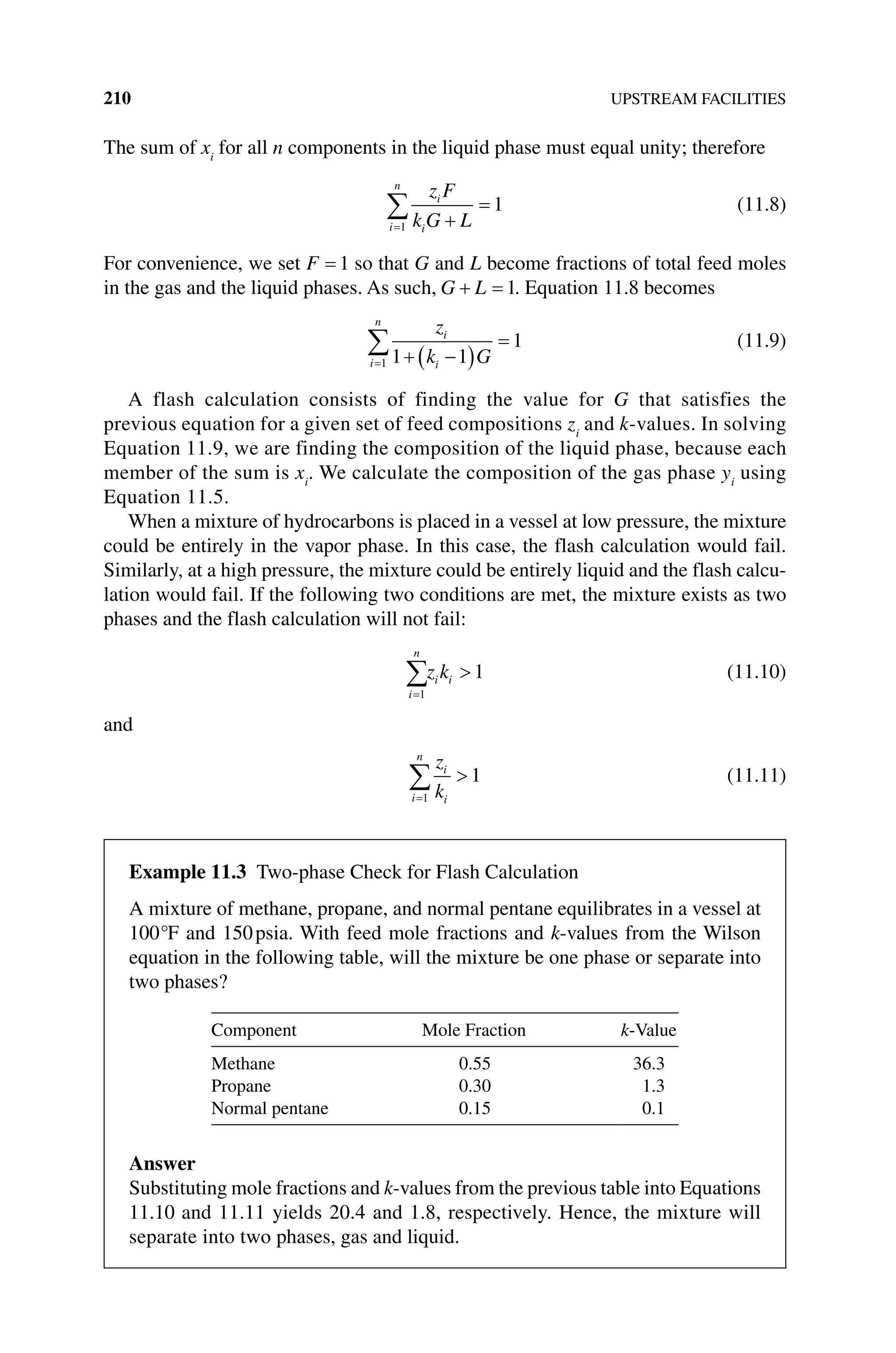
Figure 11.13 Schematic of Barnett Shale cross section.
ACTIVITIES 225
11.9 ACTIVITIES
11.9.1 Further Reading
For more information about surface facilities, see Hyne (2012), Raymond and Leffler
(2006), and van Dyke (1997).
11.9.2 True/False
11.1 A semisubmersible is a deepwater drilling platform that floats on pontoons.
11.2 Dynamic positioning is used to keep an offshore drilling rig on station by
computer.
11.3 A barge, jack‐up, or semisubmersible is often used to work over deepwater
wells.
11.4 In a two‐phase separator, gas rises to the top of the separator while the liquid
falls to the bottom.
11.5 The wellhead includes the casing head, tubing head, and conductor pipe.
11.6 Helipads are required on all offshore platforms.
11.7 Oil and gas storage tanks are considered pressure vessels.
11.8 Crude oil is converted into transportation fuel at the separator.
11.9 Fluid flow in pipe depends on the friction of the pipe.
11.10 Reynolds number is the dimensionless ratio of inertial forces to viscous forces.
11.9.3 Exercises
11.1 Estimate the k‐value for propane at 100°F and 150psia. Use Pc 616 psia,
Tc F
206 , and 0 15
. .
11.2 Perform the two‐phase check on a mixture with 80mol% methane, 15mol%
propane, and 5mol% n‐pentane using the k‐values in Example 11.3 for 100°F
and 150 psia.
11.3 Perform the two‐phase check on a mixture with 1mol% methane, 9mol%
propane, and 90mol% n‐pentane using the k‐values in Example 11.3 for
100°F and 150 psia.
11.4 A spherical gas tank is fabricated by bolting two 0.5‐in.‐thick steel hemi-
spheres together. If the gas is at a pressure of 500psi, determine the inner and
outer radii of the spherical tank if the maximum allowed surface stress is
10ksi (1 1000
ksi psi).
11.5 Calculate the volume in a section of cylindrical pipe with inner diameter
ID 6 in. and length L 30 ft. Express your answer in ft3
.
226 UPSTREAM FACILITIES
11.6 A. 
A platform can drill up to 32 wells with a production capacity of
12000bbl liquid/day/well. What is the maximum liquid flow rate
­
possible if all wells are producing at full capacity?
B. 
The pipeline from the platform to a gathering center onshore can carry
400000bbl liquid/day. Can the platform produce at full liquid flow
capacity?
11.7 Suppose water is flowing through a circular pipe with volumetric flow rate
q 1000 barrels/day. The water density is 1 1000 3
g/cc kg/m and the
dynamic viscosity of water is 1 0 001
cp . Pa⋅s. The pipe length is 8000ft
and has a 5 in. inner diameter. Calculate Reynolds number.
11.8 Calculate friction factor for fluid flowing through a pipe.Assume the relative
roughness of the pipe wall is 0.000144 and Reynolds number=18400.
11.9 A. 
A cylindrical steel pipe with 48 in. inner diameter is 0.25in. thick. The
pipe carries water under an internal pressure p 50psi. The circumfer-
ential stress in the steel is S pd t
/2 where p is internal pressure, d is
inner diameter of pipe, and t is pipe thickness. Calculate circumferential
stress in the steel S.
B. 
If the pressure is raised to 100psi in the 48‐in. inner‐diameter steel pipe,
what thickness of steel would be required for an allowable circumferen-
tial stress S 10000psi? Hint: Solve S pd t
/2 for t.
C. Do you need to replace the steel pipe?
11.10 A. 
Suppose 100000 gallons of oil are spilled at sea. How many barrels of
oil were spilled?
B. 
If the oil has a specific gravity of 0.9, determine the mass of oil spilled.
Express your answer in kg and lbm. Hint: Find density of oil ρo
from
oil specific gravity γo
and water density ρw
(1 1000 3
g/cc kg/m ), where
o w o. Mass of oil spilled=volume spilled  ×  density.
C. 
Estimate the area covered by the spill if the thickness of the spill is
1mm. Express your answer in m2
, km2
, mi2
, and acres. Use area covered
by spill=volume spilled/thickness of spill.
Introduction to Petroleum Engineering, First Edition. John R. Fanchi and Richard L. Christiansen.
© 2017 John Wiley  Sons, Inc. Published 2017 by John Wiley  Sons, Inc.
Companion website: www.wiley.com/go/Fanchi/IntroPetroleumEngineering
12
TRANSIENT WELL TESTING
Transient well tests measure changes in reservoir pressure associated with changes in
well rates. Measurement and analysis of the time‐dependent pressure response can
provide information about reservoir structure and the expected flow performance of
the reservoir. Transient well tests often motivate changes in the way the well is oper-
ated or the field is managed. This chapter discusses a selection of transient well tests
for oil wells and gas wells and illustrates how transient well test information is used.
12.1 PRESSURE TRANSIENT TESTING
Pressure transient testing (PTT) is a widely used method for obtaining information
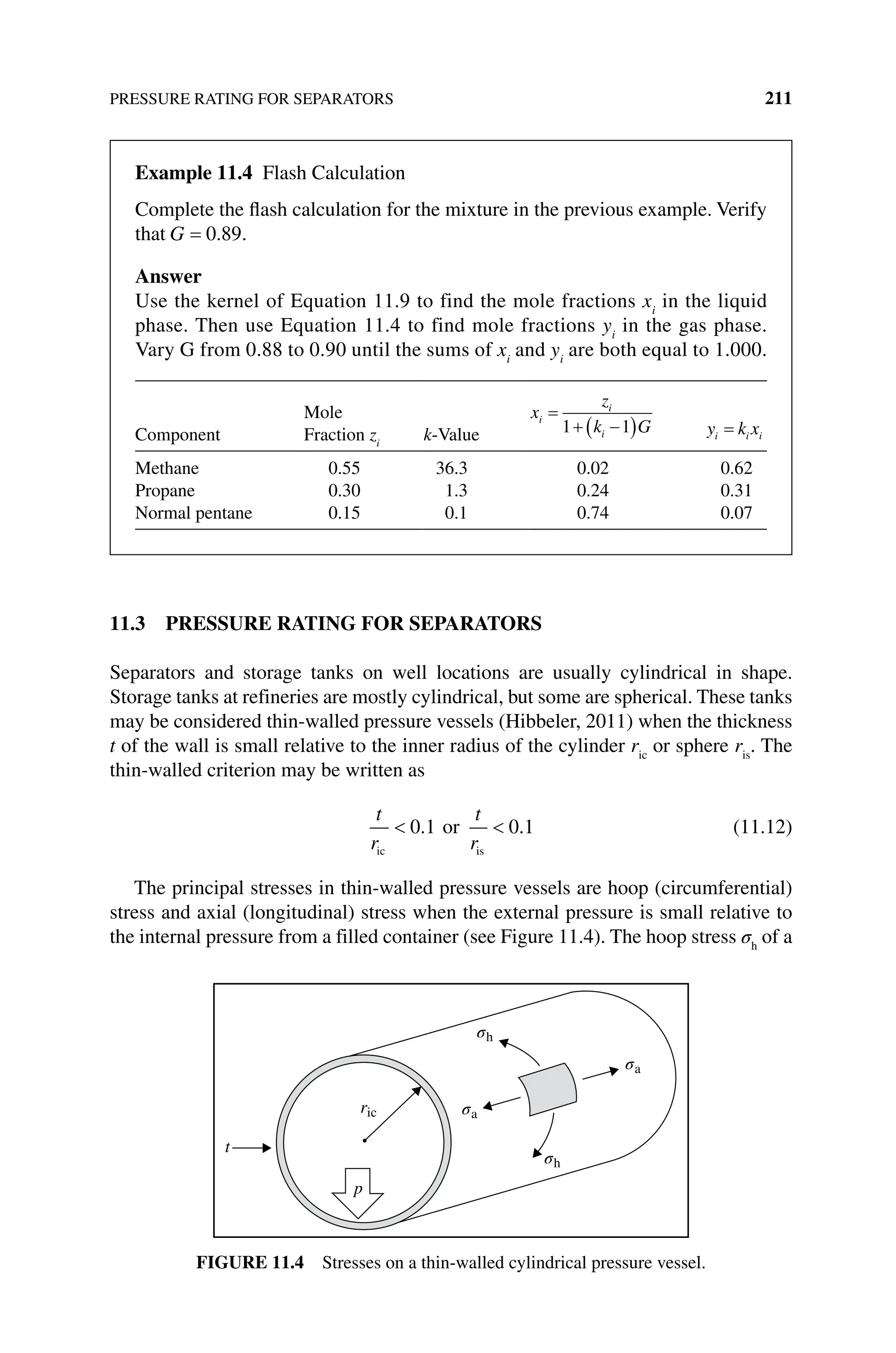
about the reservoir far from the well. The PTT method relies on measuring the
changes in pressure at the wellbore as a function of time that accompany fluid flow
rate changes in the wellbore. Changes in pressure are known as pressure transients.
For example, the flow rate at a production or injection well can be increased or
decreased. Pressure gauges measure the resulting pressure changes as a function of
time. Plots of pressure and a time derivative of pressure as functions of time are
­
prepared. The interpretation of these plots gives information about fluid flow through
different parts of the reservoir.
A pressure transient test can be used to estimate flow capacity (permeability times
thickness) at the well, average reservoir pressure in the drainage area of the well, the
distance to reservoir boundaries and faults from the well, and formation damage in
228 TRANSIENT WELL TESTING
the vicinity of the well. Flow capacity and formation damage measurements indicate
the quality of a completion. Some pressure transient tests provide fluid samples that
are suitable for measuring fluid properties.
The integration of information from PTT with data from other sources can be used
to help characterize the reservoir. For example, flow rate changes at one well can lead
to pressure changes that can be observed at another well if the reservoir does not have
an impermeable barrier between the two wells. This gives an idea about the conti-
nuity of the flow path between the two wells. Another example of integrating data is
the combination of PTT flow capacity with formation thickness. In this case, an
estimate of formation permeability in the region of the well investigated by the
pressure transient test is estimated by dividing flow capacity from the pressure
transient test by the net thickness of the formation from a well log.
12.1.1 Flow Regimes
Figure 12.1 displays different flow regimes at the well resulting from a rate change.
The circle on the well pressure axis is initial pressure pi
. The early time response is
dominated by wellbore and near‐wellbore effects. Wellbore effects are associated
with the volume of the wellbore, while near‐wellbore effects are associated with the
quality of the borehole wall. The wellbore volume is known as wellbore storage, and
the quality of the borehole wall is quantified by a variable known as skin.
The transition region is the period of time between wellbore‐dominated flow and
the infinite‐acting region. The infinite‐acting region is the period of time when the
pressure response behaves as if it is not affected by either the wellbore (inner
boundary) or outer boundary.A departure from the trend set during the infinite‐­
acting
region indicates that the pressure transient is being affected by the reservoir boundary.
12.1.2 Types of Pressure Transient Tests
Well flow rate can be either increased or decreased in both production wells and
injection wells. Consequently, the four possible types of pressure transient tests
Time
Early
time
response
Transition
region
Infinite-acting
region
Boundary
effects
Well
pressure
Figure 12.1 Flow regimes.
OIL WELL PRESSURE TRANSIENT TESTING 229
­
associated with rate changes in production and injection wells are summarized in
Table 12.1. Wellbore pressure is lower than formation pressure in production wells.
If the production well is shut in, the pressure in the wellbore will increase.
The corresponding PTT is called a pressure buildup (PBU) test. If the production
flow rate is increased, the wellbore pressure will decrease. In this case, the
corresponding PTT is called a pressure drawdown test.
In the case of injection wells, the wellbore pressure is higher than formation
pressure. If the injection well is shut in, the pressure in the wellbore will decrease,
and the corresponding PTT is called a pressure falloff test. By contrast, an injectivity
test is run by increasing the injection rate and monitoring the associated increase in
wellbore pressure. Injectivity tests can be run to confirm that an injection well can
achieve a desired injection rate.
Many transient well tests are distinguished by the way flow rate is changed.
Flow rate can be changed incrementally or in abrupt steps. A decrease from the exist-
ing flow rate to shut‐in is an abrupt change in rate and occurs in PBU and pressure
falloff tests. On the other hand, incremental changes from one rate to another are
used in gas well deliverability tests. Deliverability tests in gas wells provide
information about the flow capacity of gas wells and are discussed later.
Tests designed to measure the change in pressure at one well as a result of
an incremental change in rate at another well are called pressure pulse tests or inter-
ference tests. In this case, a change in flow rate at one well can induce a change in
pressure at another well if the wells are in pressure communication. Pressure
­
communication ­
between wells means that a pressure change at one well can be
detected at another well.
12.2 OIL WELL PRESSURE TRANSIENT TESTING
The behavior of a pressure transient induced in the formation by a change in flow rate
is modeled using the diffusivity equation for a single‐phase liquid in a homogeneous
medium. The diffusivity equation in radial coordinates is the partial differential
equation
2
2
1
p
r r
p
r
p
t
D D D D
(12.1)
Table 12.1 Types of Pressure Transient Test
Well Type Change in Flow Rate Pressure Transient Test
Production well Decrease Pressure buildup
Increase Pressure drawdown
Injection well Decrease Pressure falloff
Increase Injectivity
230 TRANSIENT WELL TESTING
where p is the fluid pressure, rD
is the dimensionless radius, and tD
is the dimension-
less time. Dimensionless radius is defined as
r
r
r
D
w
(12.2)
where r is the radial distance from the well (ft) and rw
is the well radius (ft).
Dimensionless time is defined in terms of a group of parameters, namely,
t
kt
c r
D
T i w
0 000264 2
. (12.3)
where k is the permeability (md), t is the time (hr), ϕ is the porosity (fraction), μ is
the viscosity of the mobile, single‐phase liquid (cp), and cT
is the total compress-
ibility (psia−1
). The group of parameters k/ϕμcT
is called the diffusivity coefficient.
The subscript i is used to show that liquid viscosity μ and total compressibility cT
are
evaluated at initial pressure. Dimensionless radius increases as radial distance
increases, and dimensionless time increases as time increases.
The diffusivity equation is based on several assumptions: the equation applies to
single‐phase flow of a slightly compressible liquid; the liquid flows in the
horizontal, radial direction only; and changes in formation and liquid properties are
negligible. In practice, formation and liquid properties do depend on pressure and
can experience slight changes as pressure changes. As a matter of consistency,
initial values are used to analyze pressure transient tests. The horizontal flow
assumption implies that gravity effects are neglected. In addition, it is assumed
that flow rate is proportional to pressure gradient so that Darcy’s law applies.
A consequence of the assumptions is that the well is able to produce or inject liquid
throughout the thickness of the formation so that flow is only along the radial
direction. Total system compressibility is
c c c S c S c S
T r o o w w g g (12.4)
where cr
is the rock compressibility and fluid‐phase compressibility is the saturation‐
weighted average of oil‐, water‐, and gas‐phase compressibilities.
The following discussion applies to any well satisfying the previous assumptions.
In our case, we focus on PTT of oil wells, but similar techniques can be applied to
PTT of water wells. Gas wells are discussed in later sections.
The diffusivity equation is solved by treating the well as a line source with constant
flow rate. The line source assumption implies that the volume of a real well does not
have a significant impact on our model of the pressure transient test. In general, this
is a reasonable assumption because wells are usually only a few inches in diameter
and the pressure transient test can probe the reservoir to a radial distance of hundreds
of feet. The volume of the well does impact early time pressure response, as noted
previously, and must be considered when interpreting PTT results.
Solutions of the diffusivity equation depend on the specified boundary conditions.
During the infinite‐acting time, flow in a reservoir behaves as if it does not have an
outer boundary and the reservoir can be treated like an infinite reservoir. The solution
OIL WELL PRESSURE TRANSIENT TESTING 231
of the diffusivity equation for flow of oil in a porous medium with outer boundary
at rD
→ is
p r t
r
t
D D D
D
D
, Ei
1
2 4
2
(12.5)
The term Ei(⋯) is the exponential integral
Ei x
e
u
du
x
u
(12.6)
Dimensionless pressure pD
in oil field units is
p
kh
qB
p p
D i wf
141 2
.
(12.7)
where k is the permeability (md), h is the thickness (ft), q is the flow rate (STB/d), B
is the formation volume factor (RB/STB), μ is the viscosity (cp), pi
is the initial
­
reservoir pressure (psia), and pwf
is the well flowing pressure (psia).
Equation 12.5 is valid from the outer diameter of the well at dimensionless radius
rD
=1 to the outer boundary of the reservoir at rD
→ . If we use an approximation of
the exponential integral solution that is valid when t r
D D
/ 2
10 at rD
=1 and express
variables in oil field units, we obtain
p p
qB
kh
t
k
c r
S
wf i
T w
162 6 0 87 3 23
2
. log log . . (12.8)
Skin typically ranges from −5S50. A positive value of skin S indicates well
damage. If skin S is negative, it suggests that the well is stimulated.
Example 12.1 Dimensionless Time
Calculate dimensionless time given the following data: wellbore radius
rw
=0.25ft, permeability k=150md, time t=2hr, porosity ϕ=0.14, initial
liquid viscosity μ=0.9cp, and initial total compressibility cT
=8×10⁻⁶
psia−1
.
Answer
Solve t
kt
c r
D
T i w
0 000264 2
. using the previous data:
tD
md hr
ft
0.9cp /psia
0 000264
150 2
0 14 8 10 0 25
1 2
6 2
.
. .
. 6
6 106
232 TRANSIENT WELL TESTING
12.2.1 Pressure Buildup Test
The concepts of pressure transient test analysis can be exhibited by outlining the
analysis for the PBU test. The PBU test measures the pressure response at the well
when the well is shut in after the well has been producing. It is necessary to have an
average flow rate for the production period. Flow rates in real wells tend to fluctuate.
An average flow rate q is determined by producing the well for a period tF
; thus
q
t
STB D
cumulative production STB
F
/ (12.9)
After the well is shut in, the elapsed time measured from shut‐in is denoted Δt.
Bottom‐hole pressure is recorded as a function of time during the shut‐in period.
The PBU test is analyzed using the superposition principle. The superposition
principle says that the total pressure change at the location of the shut‐in well is
equivalent to a linear sum of the changes in pressure at two wells: the actual well and
an imaginary well. Both the actual well and imaginary well are located at the same
location. The pressure change at the real well is due to the production rate q for the
entire period of the test plus the production rate −q from the imaginary, or image,
well for the shut‐in period of the test. The rates for the PBU test are shown in
Figure 12.2. The solid line in the figure is the total rate obtained by adding the rates of
the real well and the image well.
Dimensionless pressure is a linear function of the logarithm of time during the
infinite‐acting time period as in Equation 12.8; thus
p t
D D constant
1
2
ln (12.10)
Applying the superposition principle and using oil field units give the shut‐in pressure
at the well pws
(psia) as
Time
Actual rate
tF Δt
Q
–Q
0
Well
rate
Figure 12.2 Rates for the PBU test.
OIL WELL PRESSURE TRANSIENT TESTING 233
p p
qB
kh
p t t p t
ws i D F D D D
141 2
. (12.11)
where pi
is the initial reservoir pressure (psia), q is the stabilized flow rate (STB/D),
B is the formation volume factor (RB/STB), μ is the viscosity (cp), k is the
­permeability (md), and h is the net thickness (ft). The term p t t
D F D
( )
[ ] is
­
dimensionless pressure evaluated at dimensionless time [ ]
t t
F D, and the term
pD
(ΔtD
) is dimensionless pressure evaluated at dimensionless time ΔtD
. Dimensionless
pressure in Equation 12.11 is replaced by Equation 12.10 to obtain
p p m t
ws i H
log (12.12)
where tH
is the dimensionless Horner time:
t
t t
t
H
F
(12.13)
The hour is the unit of both times tF
,Δt to be consistent with the unit of time used in
the dimensionless time calculation. The variable m is given by
m
qB
kh
162 6
. (12.14)
The unit of m is psia per log cycle when pressure is in psia, q is stabilized flow rate
(STB/D), B is formation volume factor (RB/STB), μ is viscosity (cp), k is perme-
ability (md), and h is net thickness (ft). The concept of log cycle is clarified later.
Equation 12.12 is the equation of a straight line if we plot pws
versus the logarithm
of Horner time on a semilogarithmic plot. The slope of the straight line is −m.
An example of the semilogarithmic plot for a PBU test is shown in Figure 12.3.
The plot is called a Horner plot.
The early time behavior of a Horner plot is displayed at large Horner times on
the right‐hand side of the plot. Later times correspond to smaller Horner times on
the left‐hand side of the plot. The wellbore storage effect appears as the rapid increase
of shut‐in pressure at early times in Figure 12.3 and does not end until Horner
time≈25. The infinite‐acting period appears as the straight line in the Horner time
Example 12.2 Horner Time
A well flows for 8hr with a stabilized rate before being shut in. Calculate
Horner time at a shut‐in time of 12hr.
Answer
The previous data gives Horner time t
t t
t
H
F 8 12
12
1 667
. .
234 TRANSIENT WELL TESTING
ranges from ~25 to ~4. The slope of the straight line drawn through the infinite‐­
acting period is the slope m where m has units of psia/log cycle. The value of m is the
difference in pressure over a log cycle. In Figure 12.3, the slope m is approximately
0.8psia/log cycle for the log cycle between Horner time=10 and 100. In this PBU
example, a reservoir boundary effect is observed for Horner times less than 4 when
the slope of the infinite‐acting line changes.
The flow capacity in the region of investigation of the transient well test is obtained
by rearranging Equation 12.14 to obtain
kh
qB
m
162 6
. (12.15)
The slope m is obtained from the Horner plot. Net formation thickness h obtained
from a well log can be used with the flow capacity kh from Equation 12.15 to estimate
permeability in the region of investigation. The permeability estimate from transient
well testing represents a larger sample volume than laboratory measurements of
­
permeability using cores.
Dimensionless skin factor S can be estimated from the Horner plot as
S
p p t
m
k
c r
1 151 3 23
1
2
. log .
hr wf F
T w
(12.16)
where pwf
(tF
) is the well flowing pressure at the end of the stabilized flow period tF
and p1hr
is the pressure of the infinite‐acting period at shut‐in time Δt=1hr. It is often
necessary to extrapolate the straight line drawn through the infinite‐acting period to
the Horner time at shut‐in time Δt=1 to determine p1hr
.
4000
Horner plot
Horner time
1 10 100 1000
Shut
in
pressure
(psia)
3999
3998
3997
3996
3995
3994
3993
3992
3991
3990
m = Slope of line
Figure 12.3 Horner plot.
OIL WELL PRESSURE TRANSIENT TESTING 235
12.2.2 Interpreting Pressure Transient Tests
Pressure transient tests can give insight into flow patterns within the reservoir. Some
common flow patterns are illustrated in Figure 12.4: radial flow in a horizontal plane,
linear flow in a vertical plane, and spherical flow. Flow rate depends on the difference
in pressure between the well and the reservoir, and the arrows in the figure indicate
the direction of flow.
Flow patterns can be inferred from a log–log diagnostic plot. This plot is prepared
by plotting pressure versus time on a log–log scale. It also presents a plot of a
function known as the pressure derivative as a function of time on a log–log scale.
The “pressure derivative” function is the product of shut‐in time Δt and the
derivative of pressure with respect to shut‐in time, namely, Δt⋅dp/d(Δt) or dp/d
ln(Δt). The pressure derivative is a more sensitive indicator of reservoir and flow
characteristics than the pressure response.
Linear flow
Spherical flow
Radial flow
Figure 12.4 Common flow patterns.
Example 12.3 Permeability from the Horner Plot
Calculate the permeability of a drainage area based on a pressure buildup test
in an oil well with the following data: flow rate q=78STB/day, oil formation
volume factor B=1.13RB/STB, oil viscosity μ=0.7cp, formation thickness
h=24ft, and Horner plot slope m=10psia/log cycle.
Answer
Solve kh
qB
m
162 6
. for permeability; thus
k
qB
mh
162 6 162 6
78 1 13 0 7
10 24
42
. .
. .
md
236 TRANSIENT WELL TESTING
An example of a log–log diagnostic plot is presented in Figure 12.5 for a partially
completed well. The flow pattern for a partial completion is presented as the spherical
flow pattern in Figure 12.4. The spherical flow pattern appears after the wellbore
storage pressure response. The pressure response does not show as much structure as
the pressure derivative response labeled dp/d ln(Δt). The spherical flow pattern does
not continue until the end of the test. At some point in time spherical flow changes to
radial flow as fluid flow encounters the upper and lower boundaries of the reservoir.
The radial flow pattern appears as the pressure derivative response with a zero slope.
Figure 12.6 illustrates the slope of the pressure derivative curve on a log–log
­
diagnostic plot for wellbore storage, linear flow, radial flow, and spherical flow. PTT
analysts look for these slopes when they are interpreting PTT results.
dp/d ln (Δt)
Log Δt
Spherical flow
–1/2 slope
Radial flow
Zero slope
Partial
completion
Log
(p
or
dp/d
ln
(Δt))
Pressure
Figure 12.5 Log–log diagnostic plot of partially completed well.
Linear flow
Positive half slope
Radial flow
Zero slope
Spherical flow
Negative half slope
Wellbore storage
Unit slope
log Δt
log
dp/d
(ln
Δt)
Figure 12.6 Slopes of flow patterns on a log–log plot.
GAS WELL PRESSURE TRANSIENT TESTING 237
12.2.3 Radius of Investigation of a Liquid Well
The change in pressure induced by a change in flow rate at the well travels through
the reservoir at a rate that is a function of the properties of reservoir rock and fluid.
The distance traveled by the pressure transient away from the wellbore depends on
the elapsed time following the change in flow rate. This distance is known as radius
of investigation. The Horner analysis of a PBU test gives the following equation
for radius of investigation:
r
k t
c
inv
T
0 029
. (12.17)
where radius of investigation rinv
is in feet, Δt is the shut‐in time (hr), k is the perme-
ability (md), ϕ is the porosity (fraction), μ is the viscosity (cp) of the mobile liquid
phase, and cT
is the total compressibility (1/psia).
Radius of investigation is an approximation of the distance traveled by the pressure
transient. This can be useful in reservoir characterization because it can be used to
estimate the distance to a feature in the reservoir that causes a change in the slope
of the pressure measured at the well. The shut‐in time corresponding to the change
in slope can be used to estimate the distance to the feature that caused the change in
slope. Features that can change the slope of the pressure response include no‐flow
barriers such as sealing faults or permeability pinch‐outs. The radius of investigation
gives information about the distance to the feature. The interpretation of the feature
should be consistent with all available data.
12.3 GAS WELL PRESSURE TRANSIENT TESTING
PTT of a gas well relies on the same general principles as PTT of an oil well.
Gas flow rate is changed, and the resulting change in pressure at the well is recorded
as a function of time. Results of gas well PTT can be used for two purposes:
to ­
determine reservoir characteristics and to determine gas well deliverability.
Example 12.4 Oil Well Radius of Investigation
Calculate radius of investigation of a pressure buildup (PBU) test in an oil well
when the shut‐in time (∆t) is 24hr. Use the following data: permeability
k=150md, porosity ϕ=0.14, initial liquid viscosity μ=0.9cp, and initial total
compressibility cT
=8×10⁻⁶
psia−1
.
Answer
r
k t
c
inv
T
md hr
cp /psi
0 029 0 029
150 24
0 14 0 90 8 0 10 16
. .
. . . a
a
1733ft
238 TRANSIENT WELL TESTING
Gas well deliverability tests are discussed in the next section, and PTT for charac-
terizing gas flow in the reservoir is discussed here. Conversion factors correspond
to standard temperature 60°F=520°R and standard pressure 14.7psia.
12.3.1 Diffusivity Equation
The starting point of gas well PTT is a diffusivity equation. Pressure was the
dependent function in the diffusivity equation for oil well PTT. By contrast, the
­
diffusivity equation for gas well PTT must account for nonlinear gas properties.
This can be done by expressing the diffusivity equation for gas flow in terms of real
gas pseudopressure m(p) (psia2
/cp), which is defined as
m p
p
Z
dp
p
p
2
ref
(12.18)
where pref
is the reference pressure (psia), p′ is the dummy variable (psia), Z is the
real gas compressibility factor (fraction), and μ is the gas viscosity (cp). Real gas
pseudopressure m(p) accounts for the pressure dependence of Z and μ.
The diffusivity equation for single‐phase gas flow in the radial direction is
2
2
1
m p
r r
m p
r
m p
t
D D D D
(12.19)
Dimensionless radius and dimensionless time are defined as
r
r
r
t
kt
c r
D
w
D
T i w
; .
0 000264 2
(12.20)
where r is the radial distance from the well (ft), rw
is the well radius (ft), k is the
­permeability (md), t is the time (hr), ϕ is the porosity (fraction), μ is the gas viscosity
(cp), and cT
is the total compressibility (psia−1
). The subscript i shows that gas vis-
cosity μ and total compressibility cT
are evaluated at initial pressure. Total system
compressibility is
c c c S c S c S
T r o o w w g g (12.21)
where cr
is the rock compressibility and fluid‐phase compressibility is the saturation‐
weighted average of oil‐, water‐, and gas‐phase compressibilities. If all three phases
are present, the diffusivity equation for single‐phase gas flow is based on the assump-
tion that gas is the only mobile phase.
12.3.2 Pressure Buildup Test in a Gas Well
We illustrate analysis of gas well PTT by analyzing a PBU test in a gas well. A gas
flow rate is maintained at a stabilized rate for a duration tF
. The well is shut in after
the stabilized flow period, and the pressure response at the well is recorded as a
function of shut‐in time Δt. The superposition principle is combined with the
GAS WELL PRESSURE TRANSIENT TESTING 239
­
observation that dimensionless real gas pseudopressure increases linearly with
the logarithm of time during the infinite‐acting period to find the solution of the real
gas diffusivity equation as
m p m p
qT
kh
kt
c r
S
ws i
T w
1637
3 23 0 869
2
log . .
S S D q
(12.22)
where m(pws
) is the dimensionless real gas pseudopressure evaluated at well shut‐in
pressure pws
, m(pi
) is the dimensionless real gas pseudopressure evaluated at initial
pressure pi
, q is the surface flow rate of gas (MSCF/D), T is the reservoir temperature
(°R), k is the permeability (md), h is the formation thickness (ft), S is the skin (dimen-
sionless), and D is the non‐Darcy flow coefficient ((MSCF/D)−1
). The skin factor S is
the skin factor S characterizing formation damage plus a factor proportional to gas
rate q that accounts for turbulent gas flow at high flow rates. Application of these
equations to the PBU case gives
m p m p
qT
kh
t
ws i H
1637 log (12.23)
where tH
is the dimensionless Horner time:
t
t t
t
H
F
(12.24)
Results of the buildup test are analyzed by first plotting m(pws
) versus Horner time
(tF
+Δt)/Δt on a semilogarithmic Horner plot. Flow capacity
kh
qT
m
1637 (12.25)
is estimated from the slope m of the Horner plot. The slope m should not be confused
with real gas pseudopressure m(p). The skin factor S is given by
S
m p m p
m
k
c r
1 151 3 23
1
2
. log .
hr wf
T w
(12.26)
where m(p1hr
) is real gas pseudopressure extrapolated to a shut‐in pressure of 1hr.
12.3.3 Radius of Investigation
The radius of investigation rinv
for a PBU test in a gas well is an estimate of the
­
distance the pressure transient moves away from the well during shut‐in time Δt. It is
estimated using
r
k t
c
inv
T
0 0325
. (12.27)
240 TRANSIENT WELL TESTING
for rinv
≤re
where rinv
is the radius of investigation (ft), re
is the drainage radius (ft), k
is the permeability (md), Δt is the shut‐in time (hr), ϕ is the porosity (fraction), μ is
the gas viscosity (cp), and cT
is the total compressibility (1/psia). The radius
of ­
investigation for gas wells has the same functional dependence as the radius of
­
investigation for oil wells, but the coefficient is larger for a gas well than an oil well.
12.3.4 Pressure Drawdown Test and the Reservoir Limit Test
A procedure that is analogous to the PBU test analysis is used to analyze pressure
drawdown tests in gas wells. The drawdown test measures pressure response to a
gas flow rate q for a gas well that was shut in long enough to achieve a static pressure,
that is, a pressure that does not change. The change in real gas pseudopressure is
m p m p m p
qT
kh
kt
c r
S
i wf
T w
1637 3 23 0 869
2
log . .
S S D q
(12.28)
where t is the time the well is flowing at rate q. Results of the drawdown test are ana-
lyzed by first plotting Δm(p) versus log t. Flow capacity
kh
qT
m
1637 (12.29)
is estimated from the slope m.
Example 12.5 Gas Well Radius of Investigation
Calculate radius of investigation of a pressure buildup (PBU) test in a shale gas
well when the elapsed time (t) is 1, 7, 30, and 365 days. Use the following data:
permeability k=0.0001md, porosity ϕ=0.05, initial gas viscosity μ=0.02cp,
and initial total compressibility cT
=1×10⁻⁴
per psia.
Answer
Radius of investigation at 1day=24hr:
r
k t
c
inv
t
md hr
cp
0 0325 0 0325
0 0001 24
0 05 0 02 1 0 10
. .
.
. . . 4
4
5
/ psia
ft
Radius of investigation at 7days=168hr is 13ft.
Radius of investigation at 30days=720hr is 28ft.
Radius of investigation at 365days=8760hr is 96ft.
Notice that radius investigated in shale by a PBU test is relatively short even
after a relatively long elapsed time.
GAS WELL PRESSURE TRANSIENT TESTING 241
The pressure drawdown test can be used to estimate the limits of a gas reservoir.
The reservoir limit test is a pressure drawdown test that continues until pseudosteady‐
state (PSS) gas flow is achieved. The beginning of PSS flow begins at time
t
c A
k
s
T
380 (12.30)
where ts
is the stabilization time in hr, ϕ is the porosity (fraction), μ is the gas ­viscosity
(cp), cT
is the total compressibility (psia−1
), k is the permeability (md), and A is the
drainage area of the well in ft2
. The drainage area for a radial system may be approx-
imated as a circular area A=πre
2
where re
is the drainage radius. Stabilization time ts
is an approximation because drainage radius re
is not well known.
12.3.5 Rate Transient Analysis
Rate transient analysis (RTA) uses flow rate and flowing wellbore pressure to fore-
cast production rate for very low‐permeability reservoirs. RTA is a mechanistic
method that combines Darcy’s law, an equation of state, and material balance to
derive solutions that depend on different boundary conditions. The boundary
­
conditions represent different well orientations and reservoir geometries. The solu-
tion that best matches production data is used to calculate reservoir characteristics
Example 12.6 Gas Well Stabilization Time
A. 
Stabilization time is inversely proportional to permeability. Assume stabi-
lization time in a conventional 10md gas reservoir is 1hr. How long is
stabilization time in a tight gas reservoir with 1microdarcy=0.001md
permeability?
B. 
How long is stabilization time in a shale gas reservoir with 1nanodarcy
=1×10⁻⁶
md permeability?
Answer
A. If we assume all other factors are equal, we have the relationship
t k t k
s conventional s tight gas
md hr
10
Stabilization time in a tight gas reservoir is 10000hr.
B. If we assume all other factors are equal, we have the relationship
t k t k
s conventional s shale gas
md hr
10
Stabilization time in the shale gas reservoir is 10millionhr.
These results show that stabilization time is most practical in conven-
tional gas reservoirs.
242 TRANSIENT WELL TESTING
such as permeability and original gas in place. The quality of the match depends on
the quality of data, which can be affected by noise in the data and the frequency of
data sampling. Data noise is introduced by mechanisms that are not included in RTA,
such as multiphase flow, interference from other wells, and the allocation of rates to
different geologic layers.
Stabilization time and radius of investigation depend on permeability. Tight gas
reservoirs and gas shales have permeabilities that are orders of magnitude smaller
than conventional gas reservoirs. It is often too expensive to conduct a pressure
transient test in a tight gas well or shale gas well until the reservoir boundary is
reached because the stabilization time is too long or the radius of investigation is too
short for a realistic well test duration.
12.3.6 Two‐Rate Test
The turbulence factor D is determined by conducting two transient well tests at two
different flow rates {q1
, q2
}. Each test yields a skin value S S
1 2
, . The two equations
for skin are solved for the two unknowns S and D in the expression S S D q
given flow rates {q1
, q2
} and skins S S
1 2
, .
12.4 GAS WELL DELIVERABILITY
The gas well deliverability test is used to predict gas flow rate as reservoir pressure
declines (Canadian Energy Resources Conservation Board, 1975; Beggs, 1984;
Ahmed, 2000; Lee, 2007). The result of a deliverability test is a relationship between
pressure measurements and corresponding flow rates.
Changes in gas flow rate cause changes in pressure measured at the well. The
choice of a deliverability test depends on the length of time needed to stabilize
pressure changes. Stabilized reservoir pressure pr
is obtained by shutting in the well
until reservoir pressure stops changing. Stabilization time is estimated as
t
r
kp
s
e
r
1000
2
(12.31)
where the variables are stabilization time ts
(hr), stabilized reservoir pressure pr
(psia), porosity ϕ (fraction), gas viscosity μ at pr
(cp), outer radius of drainage area re
(ft), and effective permeability k (md). Stabilization time ts
increases as reservoir per-
meability decreases.
Gas deliverability tests for a single well include the conventional backpressure
test, the isochronal test, and the modified isochronal test. The conventional back-
pressure test consists of a few equal duration flow periods. The test begins at res-
ervoir pressure pres
. A reasonable number of flow periods is four, as shown in
Figure 12.7. The flow rate is increased from one production period to the next.
The flow rate is maintained in each flow period until the flowing pressure at the
well stabilizes. The pressure at the well does not return to pres
until the test is
completed.
GAS WELL DELIVERABILITY 243
The isochronal test can be conducted more quickly than the conventional
­
backpressure test and is especially useful in low‐permeability reservoirs with long
stabilization times. The isochronal test also uses equal duration flow periods, and the
flow rate is increased from one production period to the next. The difference between
the isochronal test and the conventional backpressure test is the shut‐in period that
follows each flow period shown in Figure 12.8. The shut‐in period provides time for
the pressure in the well to return to pres
observed at the beginning of the test. An
extended flow rate is maintained after the last equal duration flow period.
Production time is lost during the isochronal test while the well is shut in.
Another approach, the modified isochronal test, is faster but less accurate than
the isochronal test. In this case, the flow periods and shut‐in periods are the same
length of time, as shown in Figure 12.9. The shut‐in periods are too short in the
modified isochronal test to allow shut‐in pressures to return to the pressure pres
at
the beginning of the test.
Flow rate
q
Pressure
p
pres
p1 p2 p3 p4
q1 q2 q3 q4
t
Figure 12.7 Conventional backpressure test.
Flow rate
q
Extend
q
Pressure
p
pres
p1 p2 p3 p4
q1 q2 q3 q4
t
Figure 12.8 Isochronal test.
244 TRANSIENT WELL TESTING
Two methods can be used to evaluate gas deliverability tests: simplified backpres-
sure analysis (SBA) and laminar–inertial–turbulent (LIT) analysis. The SBA method
uses pressures, while the LIT method uses real gas pseudopressures. According
to Lee (2007, page 758), the SBA method is valid at low pressures (2000psia).
The LIT method is valid for all pressures.
12.4.1 The SBA Method
The SBA method uses the backpressure equation
q C p p C p
n n
sc r wf
2 2 2
(12.32)
where C and n are empirical parameters, qsc
is the gas flow rate at standard conditions
(MMSCFD), pr
is the stabilized reservoir pressure (psia), and pwf
is the flowing well
pressure (psia). The logarithm of the backpressure equation for measurement i yields
log log log
q n p C
i
sci
2
(12.33)
A plot of logqsci
versus log(Δp2
)i
yields a straight line. The values of C and n are
determined by using least squares analysis to fit Equation 12.33 to deliverability test
data. The slope of the line is n and the intercept is log C. The absolute open flow
(AOF) of a gas well is the rate at flowing well pressure pwf
=0.
Extend
q
Flow rate
q
Pressure
p
pres
p1 p2 p3 p4
q1 q2 q3 q4
t
Figure 12.9 Modified isochronal test.
Example 12.7 SBA Method
Application of the SBA method to data from a gas well deliverability test gives
C=5.89×10⁻²
and n=0.3477. Estimate the AOF for the well at stabilized
­
reservoir pressure equal to 1815psia. The deliverability test uses well rates in
MMSCFG/day.
GAS WELL DELIVERABILITY 245
12.4.2 The LIT Method
Any gas well deliverability test can be analyzed using the LIT method. Deliverability
test data are fit to the LIT equation
m p m p m aq bq
r wf sc sc
2
(12.34)
where qsc
is the gas flow rate at standard conditions (MMSCFD), m(pr
) is the real gas
pseudopressure corresponding to pr
(psia2
/cp), and m(pwf
) is the real gas pseudopres-
sure corresponding to pwf
(psia2
/cp). The term aqsc
represents uniform laminar flow.
More chaotic inertial and turbulent flow is represented by the term bqsc
2
. Equation
12.34 can be rearranged to give
m
q
bq a
i
sci
sci (12.35)
for each measurement i. This is a straight line with slope b and intercept a when
we plot Δmi
/qsci
versus qsci
. Least squares analysis of deliverability test data yields
values of a and b. The quadratic formula is used to rearrange Equation 12.34 to
express flow rate qsc
as
q
a a b m
b
sc
2
4
2
(12.36)
in terms of real gas pseudopressure and empirical parameters a, b. The condition for
determining AOF using the LIT method is m p
( )
wf 0.
Answer
The AOF is the rate when pwf
=0psia so that
q C p p C p
n n
sc r wf r MM
2 2 2 2 0 3477
5 89 10 1815 1815 10 9
. .
.
S
SCFG/day
Example 12.8 Lit Method
Application of the LIT method to data from a gas well deliverability test gives
a=3.19×10⁻⁶
psia2
/cp/MMSCFD and b=1.64×10⁻⁶
psia2
/cp/(MMSCFD2
).
Estimate the AOF for the well at pr
=1948psia with pseudopressure m(pr
)=
3.13×10⁸
psia2
/cp. The deliverability test uses well rates in MMSCFG/day.
Answer
The AOF is the rate when m(pwf
)=0psia2
/cp so that
q
a a bm p
b
sc
r
MMSCFG/day
2
4
2
12 9
.
246 TRANSIENT WELL TESTING
12.5 SUMMARY OF TRANSIENT WELL TESTING
Transient well tests can provide information about individual well performance,
wellbore damage, reservoir pressure, reservoir fluid flow capacity, and forecasts of
fluid production. PTT can be used to estimate reservoir permeability, well skin, the
distance to reservoir boundaries, structural discontinuities, and communication
­
between wells. Deliverability tests provide a relationship between flow rate and
flowing wellbore pressure and can be used to estimate AOF rate.
Many transient well tests are performed on a single well, while others require
changing rates or monitoring pressures in two or more wells. The wells can have dif-
ferent orientations and can be in many different geologic environments including
both conventional and unconventional reservoirs. The number of transient well tests
is limited by factors such as cost and the desire to continue production without
interruption.
Transient well test validity depends on the quality of measured production data as
well as data used in the calculations, such as fluid property data, rock compress-
ibility, formation thickness, and porosity. One way to improve the interpretation of
transient well tests is to compare transient well test results with geological and geo-
physical models of the reservoir. There should be consistency in the interpretations.
12.6 ACTIVITIES
12.6.1 Further Reading
For more information about transient well testing, see Economides et al. (2013),
Satter et al. (2008), Horne (1995), Earlougher (1977), and Matthews and Russell
(1967).
12.6.2 True/False
12.1 The LIT test is the laminar–inertial–turbulent gas deliverability test.
12.2 The falloff test measures pressure increase after an injection well is shut in.
12.3 The buildup test measures pressure increases after a producing well has
been shut in.
12.4 Pressure communication between wells means that a pressure change at one
well can be detected at another well.
12.5 Pressure buildup and pressure drawdown tests are conducted in production
wells.
12.6 The diagnostic analysis of a transient well test begins by plotting pressure
versus time on a Cartesian plot.
12.7 Horner time has the unit of time.
ACTIVITIES 247
12.8 A positive skin represents stimulation.
12.9 The wellbore storage effect is due to the volume of the wellbore.
12.10 Radius of investigation is proportional to permeability.
12.6.3 Exercises
12.1 Calculate Horner time for each of the shut‐in times shown in the following
table. The well is allowed to flow for 8hr before being shut in.
Shut‐In Time (hr) Horner Time
1
12
24
36
12.2 What is the radius of investigation of a pressure buildup (PBU) test in an oil
well when elapsed time (Δt) is 25hr? Use the pressure buildup data in the
­following table.
r
k t
c
inv
t
0 029
.
Pressure Buildup Test
Production time (tF
) 100.0hr
Initial pressure (pi
) 2300psi
Initial time 0.0hr
Reservoir temperature (T) 180.0°F
Porosity (ϕ) 0.18
Thickness (h) 24.0ft
Total compressibility (ct
) 1.0×10⁻⁵
psia−1
Viscosity (μ) 0.90cp
Formation volume factor (B) 1.30RB/STB
Well flow rate (q) 180.0STB/D
Fluid type Liquid
Permeability (k) 150md
12.3 A. 
The mapped boundary closest to a well is approximately 1500ft away
from the well. Use the information in Exercise 12.2 to calculate the
minimum time (in hr) needed to investigate this distance using a PBU test.
B. Is 25hr of shut‐in time enough time to see the boundary effect?
12.4 A. Use the Horner plot in Figure 12.3 to find the slope m.
B. Use the pressure buildup data in the following table and slope m to
­
calculate flow capacity kh=permeability×thickness.
C. Use kh to calculate k.
248 TRANSIENT WELL TESTING
Pressure Buildup Test
Production time (tF
) 24.0hr
Initial pressure (pi
) 4000psi
Initial time 0.0hr
Reservoir temperature (T) 160.0°F
Porosity (ϕ) 0.22
Thickness (h) 120.0ft
Total compressibility (ct
) 6.0×10⁻⁶
/psia
Viscosity (μ) 0.695cp
Formation volume factor (B) 1.32RB/STB
Well flow rate (q) 100.0STB/D
Fluid type Liquid
12.5 A. 
Well PI=well productivity index=flow rate divided by pressure draw-
down. Suppose the well originally produces 10000 STBO/day at a
pressure drawdown of 10psia. What is well PI?
B. The well PI declined 4% a year for the first three years of production.
What is the well PI at the end of year 3?
C. The well PI at the beginning of year 4 is 750 STBO/day/psia. A well test
showed an increase in skin and the skin is positive. Does the well need a
workover (Y or N)?
Introduction to Petroleum Engineering, First Edition. John R. Fanchi and Richard L. Christiansen.
© 2017 John Wiley  Sons, Inc. Published 2017 by John Wiley  Sons, Inc.
Companion website: www.wiley.com/go/Fanchi/IntroPetroleumEngineering
13
PRODUCTION PERFORMANCE
Production can begin as soon as wells are completed and surface facilities are
installed. Production performance is evaluated using a variety of techniques. It is first
necessary to acquire field performance data. Data is used to estimate reserves and
forecast reservoir performance. Some production performance evaluation techniques
include bubble mapping, decline curve analysis, and material balance analysis. They
are discussed here.
13.1 FIELD PERFORMANCE DATA
A database should include as much data as possible about field performance. Sources
of field performance data include seismic surveys, core analysis (geological and
petrophysical), well logging, pressure transient analysis, production and injection
monitoring, and tracer surveys. Production and injection data include fluid rates and
volumes for all wells. Data can be collected in a room full of boxes on shelves or
digitized in a computer‐based system. The database needs to be accessible and can
exist in many forms.
Data are needed to describe and manage the reservoir. Seismic data is a source
of data about reservoir structure. It can be calibrated by well data, which includes
well logs and core data. The framework of the reservoir can be inferred from well
data that has been correlated between wells and takes into account the prevailing
250 PRODUCTION PERFORMANCE
depositional model. The reservoir framework and structure should be consistent.
Flow tests on cores give information about permeability. Well logs are a primary
source of information about net pay, fluid contacts, porosity, and water saturation. In
some cases, data from different scales provide information about the same feature.
Data from multiple sources must be consistent from one source to another.
For example, well log and seismic data provide information about the depths of
fluid contacts. If there is a difference between the two sources of data, they must be
reconciled. Similarly, differences between permeability from flow tests in cores and
permeability from transient well tests may have to be reconciled.
Field performance data is acquired from a variety of sources. Seismic data is
acquired from seismic surveys by geophysicists. Well logs are typically acquired and
analyzed by geoscientists and engineers. The database should include well pressure
measurements and data characterizing the performance of surface and subsurface
equipment. Subsurface equipment includes casing, tubing, subsea templates, and
electric submersible pumps (ESPs). Surface equipment includes well heads, flow
lines, separators, compressors, and other facilities like offshore platforms.
Data needs to be trustworthy. In some cases it is possible to ascertain the uncer-
tainty associated with data. For example, multiple measurements of properties such
as porosity and permeability can be used to conduct a statistical analysis if the data
is available. It is a significant challenge to maintain a complete, up‐to‐date, and accu-
rate database.
13.1.1 Bubble Mapping
Bubble mapping can be applied to spatially distributed variables such as flow rates,
reservoir pressures, fluid and rock properties, and cumulative production. It is a
procedure that provides a visual comparison of spatially distributed variables in an
Example 13.1 Well PI and Workover Analysis
A. 
Suppose a well originally produces 10000 STBO/day at a pressure draw-
down of 10psia. What is the well PI?
B. 
The well PI declined 5% a year for the first 2 years of production. What is
the well PI at the end of year 2?
C. 
The well PI at the beginning of year 3 is 750 STBO/day/psia. A well test
showed an increase in skin and the skin is positive. Does the well need a
workover?
Answer
A. PI
STBO/day
psia
STBO/day
psia
10000
10
1000
B. 1000 1 0 05 1 0 05 902 5
STBO/day
psia
STBO/day
psia
. . .
C. Yes. S0 implies that well stimulation could improve flow.
DECLINE CURVE ANALYSIS 251
area of interest. For example, cumulative oil production for a well at a particular
point in time can be plotted as a circle (or bubble) centered on the well location
­
displayed on a map. If this is done for several wells as in Figure 13.1, the resulting
map will provide a graphic comparison of the relative amount of cumulative oil pro-
duction at each well. The location of wells in the figure is specified in terms of the I,
J indices. The radius of the circle indicates the magnitude of the variable. In our
example, a large circle indicates large cumulative oil production relative to other
wells with smaller circles.
Bubble maps can be used to look for trends in the distribution of a variable. For
example, if a small bubble representing the gas production rate at a well is surrounded
by a set of large bubbles in an area, the small bubble may represent an anomalous
measurement or a well that is damaged. In this case, a workover could increase the
gas production rate at the well.
13.2 DECLINE CURVE ANALYSIS
Decline curve analysis (DCA) is an empirical technique for predicting oil or gas
well production (Arps, 1945; Towler, 2002; Economides et al., 2013). The tech-
nique fits a curve to measurements of flow rate as a function of time. Some reser-
voirs, such as oil reservoirs with strong water influx, have enough energy to sustain
relatively constant oil production rate for an extended period of time. As a rule,
production flow rate declines with time once a well is completed and production
begins.
An exponential equation has been used to predict future production by fitting the
exponential equation to historical decline rates for many production wells. Although
the exponential equation provides a good fit of production rate as a function of
time for some wells, a hyperbolic equation provides a better fit of the decline in
J=1
2
3
4
I=1 2 3 4
Figure 13.1 Illustration of a bubble map.
252 PRODUCTION PERFORMANCE
production rate as a function of time for other wells. The following equation includes
both exponential and hyperbolic relationships (Arps, 1945):
dq
dt
aqn 1
(13.1)
The equation assumes that flowing pressure is constant and factors a and n are empir-
ically determined constants. The empirical constant n ranges from 0 to 1. The process
of fitting Equation 13.1 to production rate data is called DCA.
The shape of the decline curve depends on the value of n as shown in Table 13.1.
The term qi
is initial rate.
The unknown parameters in the decline curves are determined by fitting the
decline curves to historical data. For example, the natural logarithm of the exponential
decline curve is
ln ln
q q at
i (13.2)
Equation 13.2 is the equation of a straight line y=mx+b with slope m and ­
intercept b
if we define the independent variable x as time t and the dependent variable y as lnq.
In this case, the term lnqi
is the intercept b, and the slope m of the straight line is –a.
Total production in a time interval is called cumulative production for that time
interval. Cumulative production for each of the decline curves in Table 13.1 can be
calculated analytically. Rate is integrated with respect to time from initial rate qi
at
time t=0 to rate q at time t. As an illustration, cumulative production Np
for the
exponential decline equation is
N qdt
q q
a
t
p
i
0
(13.3)
Rearranging Equation 13.2 gives the decline factor a for the exponential
decline case:
a
t
q
q
1
ln
i
(13.4)
Future production is estimated by extrapolating the decline curve to a specified final
rate. The final rate is usually determined as the lowest rate that is still economically
viable. For this reason, the specified final rate is called economic rate or abandon-
ment rate. Reserves are the difference between cumulative production at abandon-
ment and current cumulative production.
Table 13.1 Arps Decline Curves
Decline Curve n Index
Exponential 0 q q e at
i
Hyperbolic 0n1 q nat q
n n
i
Parabolic 1 q at q
1 1
i
DECLINE CURVE ANALYSIS 253
13.2.1 Alternative DCA Models
The Arps exponential model does not always adequately model the decline rate of
unconventional reservoir production. Valkó and Lee (2010) introduced the stretched
exponential decline model (SEDM) into DCA as a generalization of the Arps
exponential model. The SEDM is based on the idea that several decaying systems
comprise a single decaying system (Phillips, 1996; Johnston, 2006). If we think of
production from a reservoir as a collection of decaying systems in a single decaying
system, such as declining production from multiple zones, then SEDM can be
viewed as a model of the decline in flow rate. The SEDM has three parameters qi
, τ,
n (or a, b, c):
q q
t
a
t
b
n c
i exp exp (13.5)
Parameter qi
is flow rate at initial time t. The Arps exponential decline model is the
special case with n=1.
A second decline curve model is based on the logarithmic relationship between
pressure and time in a radial flow system. The logarithmic decline model with param-
eters a and b is
q a t b
ln (13.6)
It is referred to as the LNDM model.
Example 13.2 Exponential Decline of Oil Rate
A. 
The initial oil rate of an oil well is 4800 STB/day. The rate declines to
3700 STB/day after two years of continuous production. Assume the
decline is exponential. What is the decline factor?
B. 
When will the oil rate decline to 100 STB/day? Express your answer in
years after the beginning of production.
Answer
A. Rearrange q q e at
i to estimate decline factor a:
a
t
q
q
1 1
2
3700
4800
0 130
ln ln . /
i
yr
B. 
Find the time when rate declines to 100 STB/day from the initial rate of
4800 STB/day:
t
a
q
q
1 1
0 130
100
4800
29 7
ln
.
ln .
i
yr
254 PRODUCTION PERFORMANCE
13.3 PROBABILISTIC DCA
The probabilistic estimate of reserves is a Monte Carlo procedure that uses the work-
flow outlined in Figure 13.2 (Fanchi et al., 2013). Each step of the probabilistic DCA
method in Figure 13.2 is briefly described in the following text.
Step 1: Gather rate‐time data
Acquire production rate as a function of time. Remove significant shut‐in periods
so rate‐time data represents continuous production.
Step 2: Select a DCA model and specify input parameter distributions
The number of input parameters depends on the DCA model chosen. The
SEDM model requires three parameters, and the LNDM model requires two
parameters. Parameter distributions may be either uniform or triangle
distributions.
Step 3: Specify constraints
Available rate‐time production history is used to decide which DCA trials are
acceptable. Every DCA model run that uses a complete set of model input param-
eters constitutes a trial. The results of each trial are then compared to user‐speci-
fied criteria. Criteria options include an objective function, rate at the end of
history, and cumulative production at the end of history. The objective function
quantifies the quality of the match by comparing the difference between model
rates and observed rates. Objective functions with smaller values are considered
better matches than objective functions with larger values because uncertainty
has been reduced and ­
forecasts are more closely grouped together.
Example 13.3 Sedm Model of Shale Gas Decline
The SEDM model was used to model gas production rate for a shale gas well. The
SEDM parameters for decline in shale gas rate for this well are
qi MSCF/month
8 104
, 0 3
. month, and n 0 2
. . Estimate the gas rate after
3 years of production. Express time in months since the SEDM model parame-
ters were calculated using monthly gas production.
Answer
The gas rate at t=3 years = 36 months is
q q
t
n
i exp exp
.
.
8 10
36
0 3
4
0 2
5
5911 MSCF/mo
PROBABILISTIC DCA 255
Step 4: Generate decline curve trials
Decline curve trials are obtained by running the DCA model. The number of trials
is specified by the analyst.
Step 5: Determine subset of acceptable trials
The trials generated in Step DCA4 are compared to the criteria specified in
Step DCA3. Each trial that satisfies the user‐specified criteria is included in a
subset of acceptable trials.
Step 6: Generate percentile distribution of performance results
The 10th (PC10), 50th (PC50), and 90th (PC90) percentiles are determined from
the distribution of EUR values for the subset of acceptable trials.
Step 7: Generate probability distribution of performance results
Each EUR percentile is related to the probability that the amount actually recov-
ered equals or exceeds the estimate using the relationships P10
=PC90, P50
=PC50,
and P90
=PC10.
1. Gather rate-time
data 2. Specify input parameter
distributions
3. Specify
constraints
5. Apply constraints
(select subset)
4. Generate range
of decline curves
6. Generate EUR
distribution for subset
For example:
Objective function
Gas rate
Cum gas
Uniform
Triangle
7. Determine
P10, P50, P90
Figure 13.2 Probabilistic DCA workflow.
256 PRODUCTION PERFORMANCE
The workflow in Figure 13.2 is a Monte Carlo method because it incorporates the
following procedure:
1. Define a set of input parameter distributions.
2. Generate a set of input parameter values by randomly sampling from the
­
associated probability distributions.
3. Use the input parameter values in a deterministic model to calculate a trial
result.
4. Gather the results for a set of trials.
13.4 OIL RESERVOIR MATERIAL BALANCE
Material balance calculations are based on the law of conservation of mass. They
account for material in a system, entering a system, and exiting a system. The
­
reservoir is treated as a large, flexible tank of material. Material can be injected
into the tank and produced from the tank. It can also expand and shrink within
the tank. The balance can be written in simplified form as
Original mass in tank mass entering tank mass exiting tank mass in t
tank (13.7)
Material balance calculations use measurable quantities to determine the amount
of a material in the tank. The measurable quantities include cumulative fluid pro-
duction volumes and cumulative fluid injection volumes for oil, water, and gas
phases; reservoir pressure; and fluid property data from samples of produced fluids.
Since reservoir pressure and cumulative volumes are needed in the material balance
calculation, it is necessary to have data measurements over a period of time long
enough to establish a trend. Consequently, the material balance calculation can yield
more accurate results as more data are acquired over time.
Material balance calculations provide an independent method of estimating
the original volume of oil, water, and gas in a reservoir. These volume estimates
Example 13.4 LNDM Model of Shale Gas Decline
The LNDM model was used to model gas production rate for a set of shale gas
wells (Fanchi et al., 2013). The LNDM parameters for a high flow rate gas well
are a 1 0 104
. and b 1 5 105
. . Estimate the gas rate after 3 years of pro-
duction. Express time in months since the LNDM model parameters were cal-
culated using monthly gas production.
Answer
The gas rate at t=3 years = 36 months is
q a t b
ln . ln . .
1 0 10 36 1 5 10 1 14 10
4 5 5
MSCF/mo
OIL RESERVOIR MATERIAL BALANCE 257
can be compared with volumetric estimates of original volumes. The two methods
are independent and provide a comparison between a geologic method that
depends on static data and an engineering method that depends on dynamic, time‐
dependent data.
Different material balance methods are used for oil reservoirs and gas reservoirs.
The material balance method for oil reservoirs is discussed here, and the material
balance method for gas reservoirs is discussed in the next section.
13.4.1 Undersaturated Oil Reservoir with Water Influx
We illustrate the material balance method for analyzing an oil reservoir by deriving
the material balance equation for an undersaturated oil reservoir with water influx.
Water influx is water flowing into the reservoir from a natural source such as an
aquifer. We simplify the derivation by assuming the effect of compressibility is
negligible. In this case, the decrease in oil volume o
V at reservoir conditions that
occurs when oil is produced must be matched by an increase in water volume w
V at
reservoir conditions so that
V V
w o (13.8)
The change in oil volume at reservoir conditions is
V NB N N B
o oi p o (13.9)
where N is OOIP (STB) and NBoi
is initial OIP at reservoir conditions (RB) for initial
oil formation volume factor (FVF) Boi
(RB/STB). Np
is oil produced (STB), so
(N−Np
)Bo
is remaining OIP at reservoir conditions.
The change in water volume at reservoir conditions is
V W W W B WB W W B
w e p w w e p w (13.10)
where W is OWIP (STB), We
is water influx (STB), Wp
is cumulative water
­
production (STB), and Bw
is water FVF (RB/STB) which is often approximated as
1.0RB/STB. Water influx refers to water entering the system from a natural source
such as an aquifer or by water injection.
The material balance equation for the oil–water system is obtained by substituting
Equations 13.9 and 13.10 into Equation 13.8 to give
W W B NB N N B
e p w oi p o (13.11)
This equation is one equation for the two unknowns N and We
. Solving
Equation 13.11 for N gives
N
N B W W B
B B
p o p e w
o oi
(13.12)
258 PRODUCTION PERFORMANCE
The value of N is determined by using production data and assuming a water influx
model for water influx We
. By contrast, solving Equation 13.11 for We
gives
W B N B B N B W B
e w oi o p o p w (13.13)
The value of We
can be estimated using production data and a value of N from volu-
metric analysis.
13.4.2 Schilthuis Material Balance Equation
Schilthuis (1936) presented a general material balance equation that accounted for
oil, water, and gas in the system. The general material balance equation is derived
by assuming that the system is an isothermal system in pressure equilibrium. It is
also based on the assumption that the distribution of oil, water, and gas phases does
not affect tank model results. Following the discussion by Fanchi (2010b), we write
the general material balance equation as
N B B NmB
B B
B
N
B S
S
B B
B
t t t
t t
t
i i
gc gi
gi
i wio
wio
tw wi
1 w
wi
i wig
wig
w wi
wi wio w
N
mB S
S
B B
B
N
S
m
S
t t t
t
1
1
1 1 i
ig
i f
p o p so g ps g pc gc i g e
B c p
N B N R B G B G B G B W
t
W
W W B
i p w
(13.14)
The terms in Equation 13.7 and associated units are specified in Table 13.2.
Application of the general material balance equation presumes that fluid property
data from fluid samples are representative of reservoir fluids and that production,
injection, and pressure data are reliable.
Example 13.5 Water Influx
Calculate water influx We
using the material balance equation for an oil–
water system: W B N B B N B W B
e w oi o p o p w
( ) . We have the estimate
OOIP MMSTB
vol
N N 8 5
. where Nvol
is from volumetric analysis. Initial
oil FVF is Boi RB STB
1 347
. / . Oil FVF Bo RB STB
1 348
. / when 46
MSTB oil has been produced. Water FVF is approximately constant and has
the value Bw RB STB
1 0
. / . No water production has been reported.
Answer
No reported water production implies Wp
=0 so that W B N B B N B
e w oi o p o
( ) .
Substituting values into W B N B B N B
e w oi o p o
( ) gives W B
e w 7 65
.
MSTB MSTB
62 02
. so that e 54.37 MSTB
W .
OIL RESERVOIR MATERIAL BALANCE 259
The physical significance of the terms in the general material balance equation is
displayed by first defining the terms
D B B
D mB
B B
B
D
B S
S
B B
t t
t
t t
o i
go i
gc gi
gi
w
i wio
wio
w
,
,
1
t
t
t
t t t
t
B
D
mB S
S
B B
B
D
wi
wi
gw
i wig
wig
w wi
wi
r
,
,
1
1
1 S
S
m
S
B c p
t
wio wig
i f
1
(13.15)
Table 13.2 Nomenclature for the General Material Balance Equation
Bg
Gas formation volume factor (FVF) (RB/SCF)
Bgc
Gas cap FVF (RB/SCF)
Bg
′ Injected gas FVF (RB/SCF)
Bo
Oil FVF (RB/STB)
Bt
Bo
+(Rsi
−Rso
)Bg
=composite oil FVF (RB/STB)
Bti
Initial value of Bt
(RB/STB)
Btw
Bw
+(Rswi
−Rsw
)Bg
=composite water FVF (RB/STB)
Bw
Water FVF (RB/STB)
cf
Formation (rock) compressibility (1/psia)
G Initial gas in place (SCF)
Gi
Cumulative gas injected (SCF)
Gpc
Cumulative gas cap gas produced (SCF)
Gps
Cumulative solution gas produced as evolved gas (SCF)
m Ratio of gas reservoir volume to oil reservoir volume
N Initial oil in place (STB)
Np
Cumulative oil produced (STB)
Rso
Solution gas–oil ratio (SCF/STB)
Rsi
Initial solution gas–oil ratio (SCF/STB)
Rsw
Solution gas–water ratio (SCF/STB)
Rswi
Initial solution gas–water ratio (SCF/STB)
Sg
Gas saturation (fraction)
So
Oil saturation (fraction)
Sw
Water saturation (fraction)
Swi
Initial water saturation (fraction)
Swig
Initial water saturation in gas cap (fraction)
Swio
Initial water saturation in oil zone (fraction)
We
Cumulative water influx (STB)
Wi
Cumulative water injected (STB)
Wp
Cumulative water produced (STB)
Δp pi
−p=reservoir pressure change (psia)
pi
Initial reservoir pressure (psia)
p Reservoir pressure corresponding to a cumulative fluid value (psia)
260 PRODUCTION PERFORMANCE
Given these definitions, the general material balance equation has the form
N D D D D D N B N R B
G B G B G B
g
o go w gw r p o p so
ps g pc gc i g W
W W W B
e i p w
(13.16)
Changes in fluid volume in the reservoir are represented by the terms on the left‐hand
side of Equation 13.16. Fluid production and injection are represented by the terms
on the right‐hand side. The physical significance of each term is summarized in
Table 13.3.
The relative importance of different drive mechanisms can be estimated by
rearranging the general material balance equation. Indices for different drive
mechanisms are shown in Table 13.4 relative to the hydrocarbon production DHC
defined by
D N B G B G N R B
HC p o pc gc ps p so g (13.17)
The sum of the drive indices shown in Table 13.4 equals one, thus
I I I I I
sg gc w i e 1 (13.18)
Equation 13.18 can be derived by rearranging Equation 13.14. A comparison of the
magnitudes of the drive indices indicates which drive is dominating the performance
of the reservoir.
We can illustrate the value of the drive indices by considering an undersaturated
oil reservoir that is attached to an aquifer. The reservoir is in the primary produc-
tion stage, that is, the reservoir is being produced and no fluids are being injected.
What drive mechanisms do we need to consider? The undersaturated oil reservoir
does not have a gas cap, so m=0. Furthermore, no fluids are being injected.
Table 13.3 Physical Significance of Material Balance Terms
Term Physical Significance
NDo
Change in volume of initial oil and associated gas
NDgo
Change in volume of free gas
N(Dw
+Dgw
) Change in volume of initial connate water
NDr
Change in formation pore volume
Np
Bo
Cumulative oil production
Np
Rso
Bg
Cumulative gas produced in solution with oil
Gps
Bg
Cumulative solution gas produced as evolved gas
Gpc
Bgc
Cumulative gas cap gas production
Gi
Bg
′ Cumulative gas injection
We
Bw
Cumulative water influx
Wi
Bw
Cumulative water injection
Wp
Bw
Cumulative water production
GAS RESERVOIR MATERIAL BALANCE 261
Therefore, the remaining possible drive mechanisms are solution gas drive, water
drive from aquifer influx, and connate water and rock expansion drive. More
information is needed to determine which drive is dominating flow. In addition, it
is possible that the relative importance of the drive mechanisms will change during
the life of the reservoir.
13.5 GAS RESERVOIR MATERIAL BALANCE
Material balance in a gas reservoir can be derived from the general material balance
equation as follows. Original gas in place G is expressed in terms of the variables in
Table 13.2 as
GB NmBt
gi i (13.19)
Combining Equation 13.19 with the general material balance equation gives
N B B GB
B B
B
N
B S
S
B B
B
t t
t t t
t
i gi
gc gi
gi
i wio
wio
w wi
w
1 i
i
gi wig
wig
w wi
wi
i
wio
gi
G
B S
S
B B
B
NB
S
GB
t t
t
t
1 1 1 S
c p
N B G B G B G B N R B W
wig
f
p o ps g pc gc i g p so g e W
W W B
i p w
(13.20)
Table 13.4 Drive Indices for the General Material Balance Equation
Drive Index
Solution gas I
ND
D
sg
o
HC
Gas cap I
ND
D
gc
go
HC
Water I
W W B
D
w
e p w
HC
Injected fluids I
W B G B
D
i
i g
HC
w i
Connate water and rock expansion I
N D D ND
D
e
w gw r
HC
262 PRODUCTION PERFORMANCE
A gas reservoir does not include an original oil phase, so N=0 and Np
=0. Substituting
N=0 and Np
=0 into Equation 13.20 gives
GB
B B
B
G
B S
S
B B
B
GB
t t
t
gi
gc gi
gi
gi wig
wig
w wi
wi
1
g
gi
wig
f
pc gc i g e i p w
1 S
c p
G B G B W W W B
(13.21)
We simplify Equation13.21further by recognizing that water compressibility and
formation compressibility are relatively small compared to gas compressibility.
Neglecting water and formation compressibility terms gives
G B B G B G B W W W B
g gi p g i g e i p w (13.22)
The subscript c denoting gas cap has been dropped since there is no oil in the
reservoir.
13.5.1 Depletion Drive Gas Reservoir
An important but relatively simple application of gas reservoir material balance is
the analysis of production from a gas reservoir containing only gas and irreducible
water. If we produce the gas reservoir without injection, the water influx, injection,
and production terms are zero, formation compressibility is negligible, and there is
no gas injection. The resulting material balance equation for the depletion drive gas
reservoir is
G B B G B
g gi p g (13.23)
where G is original free gas in place and Gp
is cumulative free gas produced.
Substituting the real gas law into gas FVF and rearranging gives
G
p Z
p Z
G
t
p
i
/
/
1 (13.24)
where p is reservoir pressure and Z is the real gas compressibility factor. Subscript t
indicates that p/Z should be calculated at time t corresponding to Gp
and subscript
i indicates that p/Z should be calculated at initial conditions. We can write Equation
13.24 in the form
p
Z
p
Z
p
Z G
G
t i
i
p
1
(13.25)
Equation 13.25 is a linear equation for (p/Z)t
when plotted versus Gp
. The original gas
in place G is the value of Gp
when (p/Z)t
is zero.
DEPLETION DRIVE MECHANISMS AND RECOVERY EFFICIENCIES 263
13.6 DEPLETION DRIVE MECHANISMS AND
RECOVERY EFFICIENCIES
Depletion drive mechanisms can be identified by examining the production
performance of properties such as reservoir pressure and GOR. Reservoir depletion
occurs when production occurs without injection. The removal of fluids from the
reservoir without replacement results in reservoir pressure decline. Figure 13.3
presents production profiles for three depletion drives during primary production of
an oil reservoir.
The solution gas drive shows a significant increase in GOR followed by a decline
in GOR as available gas is produced. An undersaturated oil reservoir consists of oil
and immobile water. When it is produced, only single‐phase oil flows into the well-
bore. The production of oil reduces pressure in the reservoir, and the oil in the reser-
voir expands. The rate of pressure decline when reservoir pressure is above bubble
point pressure depends on the compressibility of the oil and the formation. If produc-
tion continues, eventually reservoir pressure will drop below bubble point pressure.
Gas dissolved in the oil comes out of solution and forms a free gas phase as reservoir
pressure declines. Bubbles of free gas expand and help displace oil to the well. If
enough free gas is present, the gas bubbles coalesce and increase gas saturation.
When gas saturation exceeds critical gas saturation, typically 3–5% of pore volume,
the gas forms a flow path for free gas flow. Production GOR is constant initially until
Example 13.6 Depletion Drive Gas Reservoir
Early data from a depletion drive gas reservoir are shown in the following.
Estimate OGIP.
Gp
(Bscf) P (psia) Z P/Z (psia)
0.015 1946 0.813 2393
0.123 1934 0.813 2378
Answer
The equation for a straight line is y mx b where m is the slope and b is the
intercept. Comparing the equation for a straight line with Equation 13.25 gives
x G y p Z
p /
, ( )t . The slope and intercept are m p Z G
( ) ( )
/ /
i 1
138 9
.
psia
Bscf
and b y mx 2395 psia. G is the value of Gp
when (p/Z)t
is
zero. This corresponds to y mx b 0 or G x y G b m
at so /
0 ( )
2395
138 9
psia
psia/Bscf
17.2 Bscf
.
. The actual value of G based on additional
data from a longer production period is 16.1 Bscf. Additional data can provide
a more accurate straight line for performing the OGIP analysis.
264 PRODUCTION PERFORMANCE
a dip occurs in the GOR curve. The GOR dip shows the formation of critical gas
­
saturation when reservoir pressure drops below bubble point pressure. When
gas ­
saturation exceeds critical gas saturation, free gas flows into the well and the
GOR increases.
A gas cap is present in a reservoir when the volume of oil is not large enough to
dissolve all of the gas at original reservoir temperature and pressure. Over geologic
time, free gas migrates to the crest of the reservoir and forms a gas cap. A well com-
pleted in the oil zone will produce single‐phase oil. Gas cap expansion displaces oil
to the well. Production GOR is constant initially until the gas–oil contact reaches the
well. Increasing GOR shows that free gas is being produced.
Water drive is the most efficient drive mechanism for producing oil. Pressure
support and displacement of oil by water helps reduce the rate of pressure depletion.
Recovery efficiencies for the most common depletion drive mechanisms for primary
production are shown in Table 13.5.
In some cases, reservoir dip is so large that gravity drainage is an important natural
drive mechanism during primary depletion of an undersaturated oil reservoir. The
East Texas oil field is an example of a gravity drainage oil field. The giant oil field
was discovered in 1930, and oil production to date exceeds five billion barrels of oil.
The East Texas oil field is the part of the Woodbine sand that is wedged between the
Solution gas drive Gas cap drive GOR
GOR
Pressure
Pressure
Oil rate
Oil rate
Time Time
GOR
Pressure
Water cut
Water drive
Oil rate
Time
Figure 13.3 Production profiles of drive mechanisms.
DEPLETION DRIVE MECHANISMS AND RECOVERY EFFICIENCIES 265
Austin and Wichita limestones sketched in Figure 13.4. The section of the Woodbine
sand from the outcrop to the East Texas oil field is an aquifer that provided pressure
support to the oil field. The outcrop made it possible to recharge the aquifer when
rain and snow fell. Both gravity drainage and water drive functioned as natural drive
mechanisms during primary depletion.
A combination drive is active when two or more natural drive mechanisms are
functioning at the same time during production of an oil reservoir. Primary produc-
tion by gravity drainage and water drive from the East Texas oil field is an example
of a combination drive. The relative importance of drive mechanisms can be deter-
mined using drive indices calculated from the general material balance equation. The
production profile of a combination drive reservoir depends on which drive is domi-
nant at different points during the primary production period.
Natural reservoir energy can be supplemented by injecting fluids into the reser-
voir. Water and gas are typical injection fluids. The injected fluids reduce the rate of
pressure decline that would have occurred during primary depletion. Water drive can
be an effective means of displacing oil to production wells regardless of the source of
water. Thus, if a reservoir does not have significant aquifer support, injection wells
can be used to supplement existing natural resources. Water breakthrough occurs
Table 13.5 Recovery Efficiencies for Different Depletion Drive Mechanisms
Depletion Drive Mechanisms Recovery Efficiency (% OOIP)
Water drive 35–75
Gas cap drive 20–40
Solution gas drive 5–30
Source: Data from Ahmed (2000).
West East
East Texas
field
Woodbine outcrop
Wilcox SS
Taylor LS
Woodbine SS
Wachita LS
Austin LS
Figure 13.4 Cross section of the East Texas Basin. (Source: Adapted from Halbouty
(2000).)
266 PRODUCTION PERFORMANCE
when injected water arrives at a production well. It is observed as a significant
increase in produced WOR or produced WCT. Similarly, the breakthrough of injected
gas is recognized as a significant increase in production GOR.
The recovery factor for dry gas reservoir depletion can be as high as 80%–90% of
original gas in place (Ahmed, 2000). Gas recovery from water‐drive gas reservoir
depletion ranges from 50% to 70% of original gas in place (Ahmed, 2000). It is
typically lower than gas recovery from dry gas reservoir depletion because gas can
be trapped by encroaching water.
13.7 INFLOW PERFORMANCE RELATIONSHIPS
Wellbore inflow represents fluid flow from the reservoir into the wellbore. Reservoir
fluid flow may be modeled using either analytical methods or numerical methods.
Analytical methods rely on models of inflow performance relationships (IPR). Inflow
refers to fluid entering the production tubing from the reservoir. By contrast, outflow
refers to fluid flowing through the production tubing to surface facilities. An IPR is
the functional relationship between reservoir production rate and bottomhole flowing
pressure. Darcy’s law is a simple example of an IPR for single‐phase liquid flow. The
gas well back pressure equation is an example of an IPR for single‐phase gas flow.
Figure 13.5 illustrates the relationship between an IPR curve and a tubing performance
curve (TPC). The IPR curve is solid and the TPC curve is dashed. TPC curves repre-
sent outflow and can be calculated using models of fluid flow in pipe.
The IPR versus TPC plot is a plot of fluid flow rate qfluid
versus bottomhole flow-
ing pressure pwf
. Reservoir pressure pres
is the pressure at qfluid
=0. The intersection
of the IPR and TPC curves identifies the flow rate and bottomhole flowing pressure
that simultaneously satisfy inflow into the well from the reservoir and outflow from
the well. The subscript “op” in the figure designates the operating flow rate qfluid,op
at
a particular bottomhole flowing pressure pwf,op
.
Example 13.7 Primary Depletion of an Undersaturated Oil Reservoir
An undersaturated oil reservoir is being produced by primary depletion until
­
reservoir pressure is just above bubble point pressure. The reservoir did not
have an initial gas cap and is not in communication with any mobile water.
There is no water production. What are the possible drive mechanisms?
Answer
Since there is no initial gas cap, we have Igc
=0. The reservoir is under primary
depletion; therefore there is no mobile water and no fluids are being injected.
Consequently, we have Iw
=0 and Ii
=0. The remaining drive mechanisms are
­
solution gas drive and connate water and rock expansion drive. The resulting
drive indices equation is I I
sg e 1. It can be used to establish a suitable
material balance equation.
ACTIVITIES 267
13.8 ACTIVITIES
13.8.1 Further Reading
For more information about production evaluation techniques, see Economides et al.
(2013), Hyne (2012), Satter et al. (2008), and Craft et al. (1991).
13.8.2 True/False
13.1 Original fluids in place can be independently estimated using volumetric
analysis and material balance analysis.
13.2 Decline curve analysis is used to fit a curve to production rate data plotted as
a function of distance from the wellbore.
13.3 In a decline curve, production rate increases with time.
13.4 The Monte Carlo method can introduce uncertainty into decline curve
analysis.
13.5 The sum of material balance drive indices for an oil reservoir equals one.
13.6 Water flooding is a primary production mechanism.
13.7 The radius of the circle in a bubble map indicates the magnitude of the
variable.
13.8 The material balance method assumes that the change in reservoir pressure
depends on the volume of fluids entering and leaving the reservoir.
13.9 The IPR curve represents fluid flow from the reservoir into the wellbore.
13.10 The gas cap is gas dissolved in the oil phase.
IPR
(inflow)
TPC
(outflow)
pwf
pwf,op
pres
(pwf at qfluid = 0)
qfluid,op qfluid
Figure 13.5 Illustration of an IPR versus TPC plot.
268 PRODUCTION PERFORMANCE
13.8.3 Exercises
13.1 Prepare a bubble map for the following cumulative oil production data:
Location Oil
Well I J MMSTB
1 2 2 4.0
2 2 3 2.5
3 3 2 2.0
4 3 3 3.0
5 1 1 1.5
6 4 4 1.0
13.2 The equation q nat q
n n
i is a solution of dq dt aqn
/ 1
where a,qi
are
constants. What is the value of q at t=0?
13.3 A. 
Use the exponential decline equation q q e
i
at
to plot oil flow rate as a
function of time for a well that initially produces 12000 STB/day and has
a decline factor a=0.05 per year. Time should be expressed in years and
should range from 0 to 50 years. Use a logarithmic scale that ranges from
100 STB/day to 12000 STB/day.
B. When does flow rate drop below 1000 STB/day?
13.4 The initial gas rate of a gas well is 1000 MSCF/day. The rate declines to
700 MSCF/day after two years of continuous production. Assume the rate of
decline can be approximated by the exponential decline equation q q e
i
at
.
When will the gas rate be 50 MSCF/day? Express your answer in years after
the beginning of production.
13.5 The initial production rate of an oil well is 100 STB/month and has an initial
decline factor of 10% per year. Calculate flow rates using Arps’ decline model
for Arps’ n‐values of 0, 0.5, 1.0, and 2.0 at the following times: 1, 5, 10, 25,
50, and 100 years. Prepare semilog plots of rate versus time for all cases on
the same graph.
13.6 A. 
Well PI=well productivity index=flow rate divided by pressure draw-
down. Suppose the well originally produces 1000STBO/day at a pressure
drawdown of 20psia. What is the well PI?
B. 
The well PI declined 6% a year for the first 2years of production. What is
the well PI at the end of year 2?
C. 
The well PI at the beginning of year 3 is 35STBO/day/psia. A well test
showed an increase in skin and the skin is positive. Does the well need a
workover (Y or N)?
ACTIVITIES 269
13.7 The production history for a gas reservoir is the following:
Gp
(Bscf) p (psia) Z p/Z
0.015 1946 0.813 2393
0.123 1934 0.813 2378
0.312 1913 0.814 2350
0.652 1873 0.815 2297
1.382 1793 0.819 2190
2.21 1702 0.814 2091
2.973 1617 0.828 1953
3.355 1576 0.83 1898
4.092 1490 0.835 1783
4.447 1454 0.838 1734
4.822 1413 0.841 1679
Plot Gp
as a function of p/Z. The x‐axis variable should be p/Z on an x–y
coordinate system. Fit a trend line to the plot and determine OGIP.
13.8 A. Use volumetric analysis to estimate OOIP given the following data:
Bulk reservoir volume 9250 acre‐ft
Oil saturation 0.70
Porosity 0.228
Initial pressure P0
3935psia
Oil FVF at P0
is Boi
1.3473RB/STB
Water FVF is Bw
1.0RB/STB
B. 
Use the material balance equation for an undersaturated oil reservoir with
water influx to calculate original oil in place. In this case, assume no wa-
ter influx and use the following production data:
Time (days) Pressure (psia) Bo
(RB/STB) Np
(MSTB)
0 3935 1.3473 0
91 3898 1.3482 46
183 3897 1.3482 91
274 3895 1.3482 137
365 3892 1.3483 183
C. 
Use the material balance equation for an undersaturated oil reservoir with
water influx to calculate water influx We
assuming original oil in place is
the value obtained in Part A. The production data is given in Part B.
Introduction to Petroleum Engineering, First Edition. John R. Fanchi and Richard L. Christiansen.
© 2017 John Wiley  Sons, Inc. Published 2017 by John Wiley  Sons, Inc.
Companion website: www.wiley.com/go/Fanchi/IntroPetroleumEngineering
14
RESERVOIR PERFORMANCE
The commercial success of a reservoir development project is often determined by
the performance of a reservoir. In this chapter, we outline workflows used to under‑
stand reservoir performance and prepare forecasts using reservoir flow models and
then present several examples of reservoir performance.
14.1 RESERVOIR FLOW SIMULATORS
Decline curve analysis and material balance are two methods that are commonly
used to understand and predict reservoir performance. A more sophisticated analysis
of reservoir performance is provided using reservoir flow simulators. A reservoir
flow simulator is a computer program that is designed to solve equations based on the
physics and chemistry of fluid flow in porous media. Reservoir flow simulators
include computer algorithms that represent reservoir structure, rock properties,
fluid properties, interactions between rocks and fluids, and fluid flow in production
and injection wells. A reservoir flow model is the data entered into a reservoir
flow simulator.
Reservoirflowmodelstudiesareimportantwhensignificantreservoirmanagement
options are being considered. By studying a range of scenarios, the reservoir
management team can provide decision makers with information that can help
them decide how to commit limited resources to activities that can achieve
management objectives. These objectives may refer to the planning of a single well
272 RESERVOIR PERFORMANCE
or the development of a world‐class reservoir. The reservoir flow model must include
a representation of the reservoir, which often is based on reservoir characterization
using flow units.
14.1.1 Flow Units
Geological characterization of the reservoir begins by defining flow units. A flow
unit has been defined as “a volume of rock subdivided according to geological and
petrophysical properties that influence the flow of fluids through it” (Ebanks, 1987).
Geologic properties include the texture of the rock, mineral content, sedimentary
structure, location and type of bedding contacts, and location and distribution of per‑
meability barriers. Petrophysical properties include porosity and permeability
distributions, formation compressibility and moduli, and the distribution of fluid sat‑
urations. Ebanks and his colleagues refined the definition to state that a flow unit is
“a mappable portion of the total reservoir within which geological and petrophysical
properties that affect the flow of fluids are consistent and predictably different
from the properties of other reservoir rock volumes” (Ebanks et al., 1993, page 282).
They identified several characteristics of flow units.
A specified volume of the reservoir contains one or more rock types that are
­
reservoir quality and contain commercial fluids. The specified volume can also
include rock types that are not reservoir quality. For example, the reservoir volume
may include sandstone and conglomerate formations with layers of embedded shale.
Compared to sandstone and conglomerate permeabilities, the permeability of shale is
insignificant. Flow unit zones can be correlated and mapped at a scale that is
comparable to the distance between wells. Flow units in the specified volume may be
in communication with other flow units.
The initial identification of flow units in the reservoir is based on static data. Static
data is considered data that does not change significantly with time and includes the
structure of the reservoir. By contrast, dynamic data is data that changes with time
and includes flow rates and pressure. Flow units identified using static data can be
validated by comparing the identified flow units to dynamic data such as actual flow
measurements in flow tests. It may be necessary to modify the set of flow units to
assure consistency between static and dynamic data.
14.1.2 Reservoir Characterization Using Flow Units
Flow units can be used to characterize the reservoir. The goal is to produce field‐wide
maps of flow units and geologic regions. A stratigraphic and structural framework
provides a 3‐D representation of rock layers. Modern maps are prepared using
geologic modeling software. The resulting geologic or static reservoir model includes
a structure of the reservoir and rock properties distributed throughout the structure.
Rock properties are distributed by subdividing the 3‐D volume into many smaller
volumes called grid blocks, grid cells, or simply blocks or cells. Reservoir and
rock properties include elevations or structure tops, gross thickness, net to gross
RESERVOIR FLOW SIMULATORS 273
thickness, porosity, permeability, saturations, and numerical representations of
geologic features such as faults, fractures, and vugs. Each geologic model of
­
reservoir and rock properties is considered a realization of the reservoir. Other
­
realizations can be prepared by recognizing that the data is uncertain, and it is
­
possible to ­
construct other 3‐D models that are consistent with the range of uncer‑
tainty of the data.
Reservoir flow simulators are used to model fluid flow in the reservoir, which is
based on the geologic model. A numerical representation of the geologic model is
used in the reservoir flow simulator. Figure 14.1 illustrates the procedure for digi‑
tizing the reservoir. The upper figure is a plan view of a reservoir with four wells. The
lower figure shows a grid placed over the plan view. The dark blocks in the lower
figure are grid blocks, also known as grid cells, which do not contain pay. The other
blocks contain pay. Reservoir and fluid properties are provided for every grid block.
The reservoir simulator is designed to model flow between grid cells and into or out
of grid cells through wells.
Reservoir management is most effective when as much relevant data as possible
is collected and integrated into a reservoir management study. The preparation of a
reservoir flow model can help an asset management team coordinate the acquisition
of the resources needed to determine the optimum plan for operating a field. If reser‑
voir flow model performance is especially sensitive to a particular parameter, then a
plan should be made to minimize or quantify uncertainty in the parameter.
Production wells Injection
wells
No-flow nodes
Figure 14.1 Overlay of a reservoir grid.
274 RESERVOIR PERFORMANCE
14.2 RESERVOIR FLOW MODELING WORKFLOWS
Different workflows exist for designing, implementing, and executing reservoir pro‑
jects. Modern reservoir flow modeling relies on two types of workflows: green field
workflow and brown field workflow. Green fields include discovered, undeveloped
fields and fields that have been discovered and delineated but are undeveloped.
Brown fields are fields with significant development history. Both workflows are
intended to be systematic procedures for quantifying uncertainty.
The workflow for conducting a probabilistic forecast of green field performance using
a reservoir flow model is shown in Figure 14.2. The workflow begins by ­
gathering data
for the study. Key parameters and associated uncertainties are identified. For example, the
permeabilitydistributionandlocationoffluidcontactsmaynotbewellknown.Probability
Example 14.1 Grid Size
A. 
A geologic model is built using a grid with 300 cells in the x‐direction and
400 cells in the y‐direction based on seismic areal resolution and 100 cells
in the z‐direction based on well log analysis. How many grid cells are in
the static geologic model?
B. 
A flow model is upscaled from the geologic model using a grid with 150
cells in the x‐direction, 200 cells in the y‐direction, and 10 cells in the
z‑direction. How many grid cells are in the dynamic flow model?
Answer
A. Number of geologic model cells:
NB NX NY NZ
geo blocks.
= × × = × × =
300 400 100 12000000
B. Number of dynamic flow model cells:
NB NX NY NZ
flow blocks.
= × × = × × =
150 200 10 300000
Example 14.2 Grid Cell Size
A. 
Suppose a well is completed in a grid cell with the following properties:
Δx=Δy=100ft, net thickness=16ft, and porosity=0.14. What is the pore
volume of the grid cell in reservoir barrels? Note: 1bbl=5.6146cu ft.
B. 
If the well is producing 100 RB/day of fluid, what percentage of the grid
cell pore volume is being produced in a 5‐day timestep?
Answer
A. Cell pore volume is V x y z
p net
= ∆ ×∆ ×∆ ×φ,; therefore
Vp ft ft ft ft RB
= × × × = =
100 100 16 0 14 22400 3990
3
.
B. 
The amount of fluid produced from the cell is100 5 500
RB day days RB
/ × =
whichisapproximately12%ofcellporevolumeproducedduringthetimestep.
Gather data
Identify parameters
and uncertainties
Generate recovery
distribution
Cumulative oil (standard m
3
)
Generate production–injection
forecasts
20000
0.00
0.10
0.20
0.30
0.40
0.50
0.60
0.70
0.80
0.90
1.00
Probabillity
that
cum
oil
recorvery
will
be
observed
30000 40000 50000 60000
0
10000
20000
30000
Cumulative
oil
(standard
m
3
)
40000
50000
Thin
section
Well
core
S.P.
Electric
log
Seismic
section
Resistivity
Well
0 200 400 600 800
Time (days)
1000 1200
Green field
Figure 14.2 Green field flow modeling workflow.
276 RESERVOIR PERFORMANCE
distributions can be used to characterize parameter uncertainty. A set of production fore‑
casts is generated by sampling the probability distributions and developing a realization
of the reservoir for each set of sampled parameter values. Reservoir performance is cal‑
culated for each realization and a distribution of recovery results is prepared. In the case
of green fields, the results are relatively unconstrained by historical production.
The workflow for brown fields differs from the green field workflow because his‑
torical data is available to constrain the set of results used to generate a distribution of
recovery forecasts. Two brown field workflows are currently being used in industry:
deterministic reservoir forecasting and probabilistic reservoir forecasting. In deter‑
ministic reservoir forecasting, a single reservoir realization is selected and matched to
historical performance. The history match is used to calibrate the flow model before
the forecast is made. In probabilistic reservoir forecasting, a statistically significant
collection, or ensemble, of reservoir realizations is prepared. Dynamic models are run
for each possible realization, and the results of the dynamic model runs are then com‑
pared to historical performance of the reservoir. The workflow in Table 14.1 presents
the steps for conducting a probabilistic brown field flow modeling workflow.
14.3 PERFORMANCE OF CONVENTIONAL OIL AND GAS RESERVOIRS
We have introduced many factors that affect the performance of reservoirs in previous
chapters. For example, primary depletion of oil reservoirs depends on the natural
drive mechanisms discussed in Chapter 13. In this section we consider examples of
reservoir performance of conventional oil and gas reservoirs.
Table 14.1 Brown Field Flow Modeling Workflow
Step Task
B1 Gather data
B2 Identify key parameters and associated uncertainties
B3 Identify history match criteria and history match variables
B4 Generate forecast of field performance results
B5 Determine quality of history match
B6 Generate distribution of field performance results
B7 Verify workflow
Source: Fanchi (2010).
Example 14.3 Brown Field Model Reserves
Estimate P10
, P50
, P90
reserves for a brown field with a normal distribution of
reserves. The distribution has a mean of 255 MSTBO and a standard deviation
of 25 MSTBO.
Answer
Proved reserves MSTBO
= = − =
P90 1 28 223
µ σ
.
Probable reserves MSTBO
= = =
P50 255
µ
Possible reserves MSTBO
= = + =
P10 1 28 287
µ σ
.
PERFORMANCE OF CONVENTIONAL OIL AND GAS RESERVOIRS 277
14.3.1 Wilmington Field, California: Immiscible Displacement by
Water Flooding
A water flood uses injection wells to inject water into a reservoir. The injected water
provides pressure support and can displace oil.A pattern water flood uses injection and
production wells in a repeating pattern. The performance of the Wilmington Field in
California (see Figure 14.3) illustrates immiscible displacement by water flooding.
The Wilmington Field is in the Los Angeles Basin and was discovered in 1932 as
part of the development of the Torrance field. The Wilmington Field was first recog‑
nized as a separate field in 1936. The field is a northwest to southeast trending
­
anticline that is approximately 13mi. long and 3mi. wide. It is crosscut into fault
blocks that are vertically separated by normal faults that are perpendicular to the
long axis of the anticline. The southeastern part of the field is beneath Long Beach
Harbor and is called the Long Beach Unit (LBU). Otott and Clark (1996) reported
that the Wilmington Field contained approximately 8.8billion barrels of original
oil in place (OOIP). The OOIP of the LBU of the Wilmington Field is greater than
3billion barrels.
Seven stratigraphic zones have been identified between 2000 and 7500ft true
vertical depth subsea (TVDSS). From shallowest to deepest, the zones are the Tar,
Ranger, Upper Terminal, Lower Terminal, Union Pacific, Ford, and “237.”An uncon‑
formity lies above the Tar zone and another unconformity lies below the “237” zone.
The zones and some fault blocks are sketched in Figure 14.4 (Fanchi et al., 1983;
Clarke and Phillips, 2003).
The upper six zones consist of unconsolidated to poorly consolidated sandstones
interbedded with shales and exhibit high compaction characteristics. Surface
­
subsidence up to 29ft was observed as a result of producing the onshore part of the
North
Torrance
Los Angeles
Basin
California
Belmont
Offshore
Wilmington Field
Pacific
Ocean
Figure 14.3 Wilmington Field, California.
278 RESERVOIR PERFORMANCE
Wilmington Field (the non‐LBU area) by pressure depletion from 1936 to the 1950s.
The principal drive mechanism was solution gas drive. Some onshore areas subsided
below sea level but were protected by dikes. As a consequence of subsidence, the
LBU area could not be developed until an agreement was reached with governing
agencies that would prevent further subsidence. Water flooding was implemented in
the LBU area from the outset.
The relatively low API gravity (12–21°API) and high viscosity (15–70cp) of oil
in the Ranger zone implied that the mobility ratio for immiscible displacement of
oil by injected water would be unfavorable. A staggered line drive water flood with
10‐acre well spacing was implemented in the LBU Ranger zone. Peripheral water
flooding was used in other zones.
LBU wells were directionally drilled from nearby Pier J and four artificial islands.
The artificial islands were built in 1964 and were named after four astronauts that lost
their lives during the early years of US space exploration (Grissom, White, Chaffee, and
Freeman). Water injection rate was as high as 1 million barrels per day. Peak oil produc‑
tion rate was 150000 barrels of oil per day in 1969. Oil production rate decline combined
with water production rate increase has resulted in the need to provide ­
surface facilities
which have had to handle high water cuts (80–97%) in produced liquids for decades.
Several improved oil recovery techniques have been implemented since the 1990s.
For example, the first horizontal well project was conducted in the Fault Block I Tar
zone in 1993.A steam flood project was initiated in the Fault Block II Tar zone in 1995.
14.3.2 Prudhoe Bay Field, Alaska: Water Flood, Gas Cycling,
and Miscible Gas Injection
The performance of the Prudhoe Bay Field in Alaska (see Figure 14.5) is an example
of miscible displacement by gas flooding (Szabo and Meyers, 1993; Simon and
Petersen, 1997). Prudhoe Bay Field on the North Slope of Alaska was discovered in
1968. A confirmation well was drilled in 1969.
The main reservoir in the Prudhoe Bay Field is the Ivishak Sandstone in the
Sadlerochit Group. It is composed of sandstone and conglomerate. The field has a gas
cap above an oil zone (see Figure 14.6). The gas cap originally contained more than
Fault
block II
Fault
block III
Fault
block IV
Fault
block V
Tar
Ranger
Upper terminal
Lower terminal
Union pacific
Ford
“237”
Unconformity
Tar
Ranger
Upper Terminal
Lower Terminal
Union Pacific
Ford
“237”
Unconformity
West East
Figure 14.4 Illustration of Wilmington Field fault blocks and stratigraphic zones.
PERFORMANCE OF CONVENTIONAL OIL AND GAS RESERVOIRS 279
30 TCF gas and the oil zone originally contained more than 20 billion barrels of oil
with an average API gravity of approximately 28°API. A 20‐ to 60‐ft tar mat called the
Heavy Oil Tar (HOT) is at the base of the oil zone above the oil–water contact. Tar mats
are made up of high molecular weight, high viscosity hydrocarbons. They are often
found at the base of an oil column and function as low permeability zones that hinder
or prevent liquid flow. The tar mat at the base of the Prudhoe Bay Field oil zone blocked
aquifer influx, so gas cap expansion and gravity drainage were the dominant primary
recovery mechanisms. Pressure support to the field had to be provided by injection.
Prudhoe Bay Field was brought online in 1977 after the Trans Alaska Pipeline
System was built to transport oil from Prudhoe Bay to Valdez (see Figure 14.5). A pla‑
teau oil production rate of 1.5 MMSTB/D was reached in 1979 and was maintained
until 1988. Produced gas was reinjected into the gas cap to provide pressure support.
The production and reinjection of gas is called gas cycling. The reinjected gas contrib‑
uted to gas cap expansion. A Central Gas Facility was installed to separate natural gas
liquid from the produced gas stream in 1986. The natural gas liquid could be mixed
with produced oil and transported through the Trans Alaska Pipeline System.
Canada
Valdez
Pacific
Ocean
Prudhoe Bay
Trans Alaska
Pipeline
Russia
Alaska
Anchorage
Bering
Sea
Beaufort
Sea
Figure 14.5 Prudhoe Bay Field, Alaska.
Gas zone
Original GOC
Oil zone
Original OWC
Water zone
Tar mat
Figure 14.6 Schematic cross section of the Prudhoe Bay Field, Alaska.
280 RESERVOIR PERFORMANCE
Seawater injection commenced in 1984. The scope of the water flood was deter‑
mined by the character of the reservoir, aquifer strength in different parts of the res‑
ervoir, water sources, production performance, and the timing of gas sales. Water
flood infrastructure had to be built and included a seawater treatment plant, water
injection plants, and a network of seawater distribution pipelines.
The reinjection of hydrocarbon gas created an opportunity for implementing a
­
miscible gas injection project. Miscibility is achieved by injecting gas at a high
enough pressure that the interfacial tension between injected gas and oil is signifi‑
cantly reduced so that the gas and oil phases combine into a single phase. Miscibility
occurs when reservoir pressure is greater than minimum miscibility pressure (MMP)
of the system, which can be measured in the laboratory. Injected gas mixes with in
situ oil and swells the oil in a miscible process. A small‐scale pilot program was
conducted in 1982 to confirm the viability of miscible gas injection as an EOR
project. The large‐scale Prudhoe Bay Miscible Gas Project began in 1987 and was
subsequently expanded.
14.4 PERFORMANCE OF AN UNCONVENTIONAL RESERVOIR
In this section we consider examples of unconventional reservoir performance.
14.4.1 Barnett Shale, Texas: Shale Gas Production
Geologists discovered a shale outcrop near the Barnett Stream in San Saba County,
Texas, in the early twentieth century. The stream was named after John W. Barnett
who settled a large tract of land in central Texas. The thick, black, organic‐rich shale
Example 14.4 Production Stages
A. 
Primary recovery from an oil reservoir was 100 MMSTBO. A water flood
was implemented following primary recovery. Incremental recovery from
the water flood was 25% OOIP. Total recovery (primary recovery plus
recovery from water flooding) was 50% OOIP. How much oil (in
MMSTBO) was recovered by the water flood?
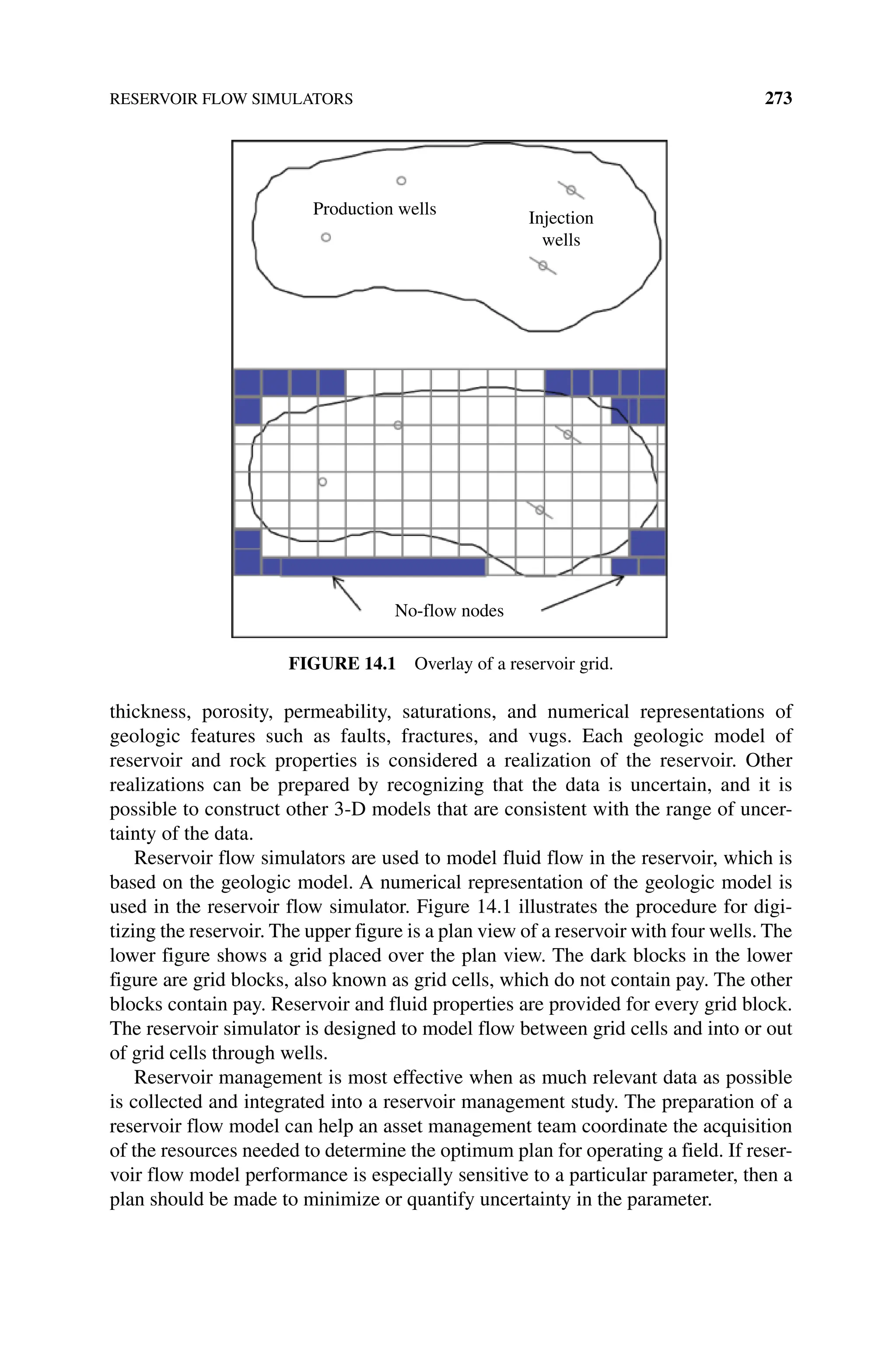
B. What was the OOIP (in MMSTBO)?
Answer
A. Total recovery (primary+water flood)=50% OOIP
Incremental water flood recovery=25% OOIP
Therefore primary recovery=total recovery–water flood recovery=25% OOIP
Water flood recovery=primary recovery=100MMSTBO
B. Primary recovery plus water flood recovery=200MMSTBO
Total recovery=200MMSTBO=0.5×OOIP
So OOIP=200MMSTBO/0.5=400MMSTBO
PERFORMANCE OF AN UNCONVENTIONAL RESERVOIR 281
was named the Barnett Shale. The Barnett Shale outcrop in San Saba County is
shown in Figure 14.7.
The Barnett Shale is part of the Fort Worth Basin. The shale is a very low perme‑
ability mud rock that is several hundred feet thick at depths of 5000–8000ft.
Commercial quantities of gas are being produced from the shale in several north
central Texas counties (Figure 14.8). Production was not economically feasible until
Mitchell Energy and Development Company (MEDC), led by George P. Mitchell,
combined directional drilling and hydraulic fracturing (Steward, 2013).
MEDC drilled the discovery well for the Newark East Field in the Barnett Shale in
1981. Vertical wells drilled and completed in the shale produce gas at relatively low
flow rates because shale permeability can be as small as 0.01md to 0.00001md in
unfractured shale (Arthur et al., 2009). By 1986, MEDC had shown that shale gas
production depended on establishing a large pressure difference between shale matrix
and fractures and the amount of source rock contacted by induced fractures. The use
of hydraulic fracturing in the completion process was the first major technological
breakthrough to increase flow rate. Hydraulic fracturing in a vertical well tends to cre‑
ate horizontal fractures and increases shale gas production rate. Directional drilling of
horizontal wells was the second major technological breakthrough to increase flow
rate. A horizontal test well was drilled in the Barnett Shale in 1981 by MEDC and the
Gas Research Institute (GRI). GRI administered research funding provided by a sur‑
charge on natural gas shipments through interstate pipelines. Directional drilling
made it possible to drill and complete thousands of feet of shale. Hydraulic fracturing
along segments of the horizontal well created vertical fractures in the shale. The
combination of directional drilling and hydraulic fracturing resulted in commercial
shale gas production rates. MEDC merged with Devon Energy in 2002.
North
Fort Worth Basin
South
County
Montague
Wise
Hood
Erath
Comanche
Mills
San
saba
Llano
Gillespie
Cretaceous
Cisco
Canyon
Strawn
Lower
Penn.
Barnett
Ellenberger
Muenster
Arch
Barnett
outcrops
Llano uplift
Parker
Figure 14.7 Cross section of the Fort Worth Basin.
282 RESERVOIR PERFORMANCE
Hydraulic fracturing is conducted in several stages (Arthur et al., 2009). Each stage
requires tens of thousands of barrels of water and has a length ranging from 1000 to
5000ft. Over 90% of the injected volume is water, approximately 9% of the injected
volume is proppant such as sand, and the remaining fraction of 1% is composed
of chemicals. The most common hydraulic fracturing technique used in the Barnett
Shale is “slickwater” hydraulic fracturing. “Slickwater” refers to the combination of
water and a friction‐reducing chemical additive that allows the water‐based fluid to be
pumped into the formation faster.
Drilling and completion issues were not the only challenges faced by operators in
the Barnett Shale. Some of the most productive areas of the Barnett Shale were
beneath the Dallas–Fort Worth Metroplex. Barnett Shale development required dril‑
ling in urban areas. The American Petroleum Institute issued ANSI–API Bulletin
100–3 on Community Engagement. Operators were advised to prepare communities
for exploration activities in their neighborhoods and minimize disruption to commu‑
nities in addition to managing resources (Donnelly, 2014).
The drilling process followed several steps: pad site development, rig setup, drilling,
completion and hydraulic fracturing, gas gathering, production, and abandonment. Site
preparation required acquiring right of way to pad sites in areas ranging from residen‑
tial to industrial. Road access was controlled because some roads could not handle the
weight of the equipment used in operations, while others handled too much day‐to‐day
traffic to allow field operations to proceed during regular working hours.
Clay
Montague
Cooke
Jack Denton
Wise
Palo
Pinto Parker Tarrant Dallas
Erath
Texas Hood Johnson Ellis
Figure 14.8 Development area of the Barnett Shale, Texas.
PERFORMANCE OF AN UNCONVENTIONAL RESERVOIR 283
The pad site had to be as small as possible in the urban area yet large enough to
accommodate operations that included rig setup, drilling, hydraulic fracturing,
storage tanks for produced liquids, and pipelines. Some sites included gathering
­
centers, gas compressors, and gas treatment facilities. Preparation included clearing
and grading the pad site. Barriers were erected to mitigate noise pollution and restrict
the view of operations. Figure 14.9 shows a drilling rig on a well pad and a barrier
designed to block the view of operations and reduce noise emanating from the
well pad. More aesthetically pleasing walls were erected on some pad sites where
large‐scale operations were completed.
Figure 14.9 Drilling rig on a shale development well pad.
284 RESERVOIR PERFORMANCE
Many wells were drilled at each pad site (Figure 14.10). Wellbore trajectories
were designed to contact the largest volume of stimulated rock. The size of the stim‑
ulated shale region can be estimated using measurements of microseismic events
associated with rock breaking as a result of hydraulic fracturing.
Produced gas from many Barnett Shale gas wells requires relatively little treatment
because it is dry and predominantly methane. A separator may be needed to separate
gas and liquids at some sites. Produced liquids are stored in storage tanks until they
are transported by truck away from the site. Produced gas is compressed at com‑
pressor stations and sent through flow lines to gas processor facilities. Figure 14.11
shows compressors, storage tanks, and noise mitigation barrier at a shale gas well
pad in Fort Worth area. Eventually the operation will be completed and well sites will
be abandoned. At that point, reclamation will be necessary.
Shale gas operators must also manage environmental issues that include produced
water handling, gas emissions, and injection‐induced seismicity (IIS). Drilling and
hydraulic fracturing operations typically use approximately three to five million
­
gallons of water per well. Water used for shale gas production operations in the Fort
Worth area has been estimated to be about 2% of total water use. Over a third of the
water injected into the well during hydraulic fracturing operations is returned with
produced gas as flowback water. Produced water is recycled or injected into the
water‐bearing Ellenberger limestone. The Ellenberger limestone is below the Barnett
Shale at a depth of approximately 10000–12000ft. The disposal wells are classified
Plan view
Well pad
Stimulated
region
Figure 14.10 Sketch of wellbore trajectories drilled from a shale development well pad.
Compressors Storage tanks
Figure 14.11 Surface equipment at a shale gas well pad.
PERFORMANCE OF GEOTHERMAL RESERVOIRS 285
as Class II disposal wells by the US Environmental Protection Agency. Class II
­
disposal wells inject produced water from oil and gas operation into subsurface
­sedimentary formations.
Wastewater disposal has been associated with earthquakes and is an example of
IIS. IIS is earthquake activity resulting from human activity. A significant increase in
low magnitude earthquake activity has been observed in regions where hydraulic
fracture operations in shale have been conducted. Microseismic events are associated
with hydraulic fractures. Larger magnitude earthquakes on the order of magnitude
3 appear to be correlated to wastewater injection into disposal wells at high flow rates
(Hornbach et al., 2015).
Gas emissions from shale gas production wells have been reported (King, 2012;
Jacobs, 2014). Gas leaks are associated with faulty well casing and poor cement jobs.
Cement may not uniformly fill the annulus of wells, especially directionally drilled
or horizontal wells. The result can be a flow path from the formation to shallower
formations, such as water‐bearing formations.
14.5 PERFORMANCE OF GEOTHERMAL RESERVOIRS
Exploration, drilling, and reservoir technology developed in the oil and gas industry
can be applied to the discovery, development, and management of geothermal
­
reservoirs. In this section we use reservoir management principles to understand the
relationship between a geothermal reservoir and a geothermal power plant on the Big
Island of Hawaii.
Geothermal reservoirs in the crust of the Earth are typically heated by magma
close to the surface. For example, the Hawaiian Islands were formed by the movement
of the Pacific plate over a fixed hotspot in the mantle. The hotspot is at the interface
between magma convection cells in the mantle. The Big Island of Hawaii is the
­
closest Hawaiian island to the hotspot and is the youngest of the Hawaiian Islands.
Kauai is farthest from the hotspot and is the oldest Hawaiian island. Fractures in the
crust carry magma from the hotspot to the surface and are sources of heat for water‐
bearing formations.
The Puna Geothermal Venture (PGV) uses geothermal power plants to extract
heat from geothermal reservoirs. PGV is located in the Puna district of the Big Island
(Figure 14.12). The town of Puna is southeast of the city of Hilo and east of the active
crater of the Kilauea Volcano. The dashed lines in Figure 14.12 bound the Kilauea
rim. Lava flows from Kilauea tend to move downstructure from the Kilauea crater
toward the coast along the Kilauea rim. PGV power plants are located at the easterly
base of the Kilauea rim.
PGV began commercial operation in 1993. Electrical power from the PGV power
plants is sold to Hawaii Electric Light Company. Two types of air‐cooled power
plants with a combined generating capacity of 38MW are installed at PGV: a
combined cycle system and a binary system.
Figure 14.13 illustrates key components of one of the power plants: an air‐cooled
binary geothermal power plant. Binary refers to the use of two fluids and air‐cooled
286 RESERVOIR PERFORMANCE
refers to the fluid used in the condenser. The production well produces hot fluid from
the geothermal reservoir. The produced fluid is the primary fluid entering the power
plant and a secondary fluid is the working fluid used to generate electricity. The
working fluid is a fluid with a lower boiling point than the primary fluid. Examples
of binary fluids include organic fluids such as isobutane, pentane, or a refrigerant.
Mauna Kea
Crater
Hilo
Puna
PGV
Hawaii
Kilauea
Rim
Kilauea
Crater
Mauna Loa
Crater
Figure 14.12 Puna Geothermal Venture (PGV), Hawaii and the main crater of the active
Kilauea Volcano (after Fanchi and Fanchi, 2016).
Turbine
Generator
Vaporizer
Preheater
Primary
fluid
flow
Production
well
Injection
well
Hot fluid Cooled fluid
Secondary
fluid
flow
Air-cooled
condenser
Figure 14.13 Schematic of an air‐cooled binary geothermal power plant.
ACTIVITIES 287
The working fluid is circulated through the preheater, vaporizer, turbine, and
­
condenser. The working fluid is warmed up in the preheater and vaporized in the
vaporizer. The high‐pressure working fluid vapor drives a turbine. Mechanical energy
from the turbine is transformed into electrical energy by the generator. The working
fluid vapor is condensed by the air‐cooled condenser and recycled through
the preheater.
Heat is transferred from the primary produced fluid to the working fluid in the
vaporizer and again in the preheater. The cooler primary fluid is injected into a
formation. If the formation is the geothermal reservoir, the cooler injected fluid can
reduce the temperature of the geothermal reservoir over time. A heat source like
the Hawaii hotspot provides geothermal heat to overcome the cooling effect of
reinjected fluid.
The PGV facility is located near residential communities. During the early days
of the venture, well failures and gas emissions resulted in serious health concerns.
Geothermal fluids are highly toxic and corrosive. Well failures can be caused by
­
corrosion of tubing and casing and exposure to excessive heat by encountering
magma or lava. A well failure can result in the emission of produced gases into the
environment. Emissions from geothermal water and steam include benzene, hydrogen
sulfide, ammonia, mercury vapor, methane and other hydrocarbons, carbon dioxide,
arsenic, radon, and radioactive materials that emit alpha and beta emissions. Several
of these chemicals can adversely affect human health. For example, hydrogen sulfide
can be fatal at 700ppm, and the PGV wells contained from 750 to 1100ppm.
Several practices have been implemented to protect the environment in response
to community concerns. The footprint, or areal size, of the facility has been mini‑
mized and the facility is surrounded by noise reduction enclosures. A closed system
is designed to reinject 100% of the produced geothermal fluid, and the entire system
is designed to achieve near‐zero emissions. Continuous monitoring systems have
been built to detect undesired emissions.
14.6 ACTIVITIES
14.6.1 Further Reading
For more information about reservoir flow modeling and reservoir performance, see
Gilman and Ozgen (2013), Fanchi (2010b), Satter et al. (2008), Carlson (2003), and
Towler (2002).
14.6.2 True/False
14.1 Geostatistics is a method for spatially distributing reservoir parameters.
14.2 Data preparation for a flow model study is usually the quickest and least
important step in the process.
14.3 A simulation study can help coordinate activities as a modeling team gathers
the resources it needs to determine the optimum plan for operating a field.
288 RESERVOIR PERFORMANCE
14.4 A reservoir flow model is a dynamic model.
14.5 History matching calibrates the reservoir flow model.
14.6 A reservoir flow model should not be used in the reservoir management
­
process if a field has no production history.
14.7 Depletion of the Wilmington Field caused subsidence in the Long Beach area.
14.8 History matching is an essential part of green field flow modeling.
14.9 A realization is one representation of reservoir geology.
14.10 From a business perspective, the objectives of a reservoir model study should
yield a solution to an economically important problem.
14.6.3 Exercises
14.1 A grid block in a reservoir flow model is 275ft wide in the x‐direction, is
275ft wide in the y‐direction, and has a gross thickness of 20ft. What is the
bulk volume of the grid block in cubic feet?
14.2 A. 
Suppose a well is completed in a grid block with the following prop‑
erties: length=width=100ft, net thickness=15ft, and porosity=0.25.
What is the pore volume of the grid block in reservoir barrels? Note:
1bbl=5.6146ft3
.
B. If the well is producing 500 RB/day of fluid, what percentage of the grid
block pore volume is being produced each day?
14.3 A. 
A reservoir is 10mi. long and 6mi. wide. Define a grid with
Δx=Δy=1/10mi. What is the number of grid blocks needed to cover the
areal extent of the reservoir?
B. If five model layers are used, what is the total number of grid blocks in
the model?
14.4 A. 
If initial oil saturation is 0.7, residual oil saturation is 0.25, and pore
volume is 961800 RB in a grid block, what is the volume of mobile oil
in the grid block? Express your answer in RB.
B. If a well produces 500 RB oil/day from the block, how long does it take
to produce all of the mobile oil in the grid block?
14.5 A. 
A geologic model is built using a grid with 300 blocks in the x‐direction
and 400 blocks in the y‐direction based on seismic areal resolution and
35 blocks in the z‐direction based on well log analysis. How many grid
blocks are in the static geologic model?
B. A flow model is upscaled from the geologic model using a grid with 150
blocks in the x‐direction, 200 blocks in the y‐direction, and 10 blocks in
the z‐direction. How many grid blocks are in the dynamic flow model?
ACTIVITIES 289
14.6 The standard deviation of a population σpop
with mean μ and N values {Xi
} is
σ µ
pop = −
=
∑
1 2
1
N
Xi
i
N
( ) . The standard deviation σsample
of N′ values in a sub­set
of values sampled from the population is σ µ
sample =
′
−
=
′
∑
1
1
2
1
N
Xi
i
N
−
( ) .
A. Estimate P10
, P50
, P90
reserves for a brown field model study. Assume
a normal distribution of reserves. The distribution has a mean of 303.1
MMSTBO and a population standard deviation σpop
=47.8MMSTBO.
B. Estimate P10
, P50
, P90
reserves for a brown field model study. Assume
a normal distribution of reserves. The distribution has a mean of 303.1
MMSTBO and a sample standard deviation σsample
=50.3MMSTBO.
Introduction to Petroleum Engineering, First Edition. John R. Fanchi and Richard L. Christiansen.
© 2017 John Wiley  Sons, Inc. Published 2017 by John Wiley  Sons, Inc.
Companion website: www.wiley.com/go/Fanchi/IntroPetroleumEngineering
15
MIDSTREAM AND DOWNSTREAM
OPERATIONS
The oil and gas industry can be separated into three sectors: upstream, midstream,
and downstream. The upstream sector includes the subsurface resource, its pro-
duction to the surface, and the basic facilities at the well location (such as wellhead,
separator, and storage tanks). The midstream sector connects the upstream and
downstream sectors, and it encompasses the transportation and storage of oil and gas
between upstream production operations and downstream refining and processing
operations. An alternative classification to the three‐sector system is to view the oil
and gas industry as two sectors: upstream and downstream. In the case of the two‐
sector system, the midstream sector is part of the downstream sector. We discussed
the upstream sector previously. The midstream and downstream sectors are discussed
in this chapter. We then present a case study to illustrate the effort that can be required
to create the infrastructure needed for midstream and downstream operations.
15.1 THE MIDSTREAM SECTOR
Midstream operations are designed to transport hydrocarbons from upstream
­
production operations to downstream refining and processing operations. Many
modes of transportation are used to transport oil and gas. They include pipelines,
tanker trucks and ships, and trains. The mode of transport depends on such factors as
safety, distance, and state of the fluid. For example, pipelines are often the first choice
292 MIDSTREAM AND DOWNSTREAM OPERATIONS
for transportation. But there are many obstacles to building a network of pipelines
capable of transporting produced hydrocarbons from upstream to downstream
operations.
Laying pipelines is a construction project that requires specialized heavy equip-
ment, as shown in Figure 15.1. Pipelines are used to transport fluids both onshore
and offshore. The transport distance can be a few miles to thousands of miles. A right
of way is required to lay pipelines, which involves negotiating with stakeholders that
control the right of way.
Pipelines that transport fluids over long distances usually need compressor
stations or pump stations to keep fluids moving. Gas compression can also maxi-
mize use of space in the pipeline by increasing the density of gas flowing through
the pipeline. A gas compressor is shown in Figure 15.2. The metal wall helps miti-
gate the amount of noise that reaches neighborhoods on the other side of the wall.
The number and location of compressor stations and pump stations depends on
distance traveled and terrain. Pipelines are built over several different types of ter-
rain, such as plains, mountain ranges, deserts, swamps, frozen tundra, and bodies
of water.
The type of terrain impacts construction and maintenance. Hostile environments
such as the desert, Arctic tundra, and North Sea increase the difficulty and cost of
constructing a pipeline. Maintenance is needed to prevent pipeline leaks. Pipelines
can leak if they crack or burst. Hydrocarbon leaks are harmful to the environment and
can impact community support for the pipeline.
Pipeline maintenance helps keep fluids moving efficiently. For example, gas
­
flowing in a pipeline can contain water dissolved in the gas phase. Pressure and tem-
perature conditions change over the length of the pipeline. Under some conditions,
Figure 15.1 Installing onshore pipelines. (Source: © energy.fanchi.com (2010).)
THE MIDSTREAM SECTOR 293
water can drop out of the gas phase and form a separate water phase that affects gas
flow along the pipeline. Pistonlike scrubbing devices called “pigs” are run through
pipelines to displace liquid phases to exit points along the pipeline route. Pipeline
pigs are driven by the flow of fluids in the pipeline. They remove unwanted debris
such as water and residual wax inside the pipeline. Intelligent pigs contain sensors
that can be used to inspect the internal pipeline walls and identify possible problems
such as corrosion.
Pipelines often pass through multiple jurisdictions. The route may be within a
nation or cross‐national borders. This introduces a geopolitical component to mid-
stream operations. It can also require security in regions of political instability.
The Henry Hub is an interstate pipeline interchange that is located in Vermilion
Parish, Louisiana, in the United States. The interchange is the delivery point for some
natural gas sales contracts. The price of gas in these contracts is based on the Henry
Hub benchmark price.
Other oil and gas transportation modes include trucks, trains, barges, and tankers.
Trucking is the most versatile form of transportation on land because trucks can
travel to virtually any land‐based destination. Transportation by rail can be a cost‐
effective and efficient mode of transporting large volumes of oil. Barges and tankers
transport oil and gas over bodies of water ranging from rivers to oceans.
Transportation requires moving a commodity from one point to another. It is often
necessary to provide facilities that gather and store fluids at the upstream site and
provide storage facilities at the downstream site. This requires gathering and
processing operations, as well as terminal developers and operators. Gathering lines
are smaller diameter pipelines that connect wells to larger diameter trunk lines. Large
volumes of gas and oil can be stored in spherical and cylindrical storage tanks, salt
caverns, and depleted reservoirs.
Stored gas is considered either base gas or working gas. Base gas is the amount of
gas that remains in the storage facility to maintain a safe operating pressure. Working
Figure 15.2 Gas compressor. (Source: © energy.fanchi.com (2015).)
294 MIDSTREAM AND DOWNSTREAM OPERATIONS
gas is the amount of gas that can be withdrawn from the storage facility for use. In
some cases, gas may need to be parked, that is, stored temporarily. Parking may be
used by a customer until a better price can be obtained for the customer’s gas.
Demand for gas is seasonal, which is another reason to store gas temporarily until
demand increases.
15.2 THE DOWNSTREAM SECTOR: REFINERIES
The downstream sector is closest to the consumer and encompasses natural gas
processing, oil refining, and distribution of products. Processing begins at the well
site where the produced wellstream is separated into oil, water, and gas phases.
Further processing at natural gas plants and oil refineries such as the refinery shown
in Figure 15.3 separates the hydrocarbon fluid into marketable products.
Products associated with refining and processing are shown in Table 15.1. An oil
refinery converts a typical barrel of crude oil into gasoline, diesel, jet fuel, liquefied
petroleum gas (LPG), heavy fuel oil, and other products. A natural gas processing
plant purifies natural gas and converts it into products such as LPG, liquefied natural
gas (LNG), and fuel gas for residential, commercial, and industrial use. The opera-
tion of refineries is discussed in this section, and natural gas processing plants are
discussed in the next section.
Figure 15.3 South Texas refinery. (Source: © energy.fanchi.com (2002).)
THE DOWNSTREAM SECTOR: REFINERIES 295
15.2.1 Separation
Refining changes crude oil into finished products using three major processes: separa-
tion, conversion, and purification processes. The first step in refining is separation with
one or more distillation towers. A distillation tower, which is also known as an atmo-
spheric crude fractionator, separates crude oil into mixtures of components based on the
boiling points of the mixtures. Figure 15.4 shows some distillation towers at a refinery.
Figure 15.5 is a schematic of a distillation tower system. A furnace is used as a
heat source to heat and vaporize liquid crude oil. The liquid phase that remains in the
lowermost section of the tower after heating is a mixture of components with the
highest boiling points, while the vapor phase that rises in the tower is a mixture of
components with lower boiling points. A table of boiling point (B.P.) ranges and
hydrocarbon components for several fractions is shown in Figure 15.5 (Olsen, 2014).
Each fraction is a mixture of hydrocarbon components that can be used to make
­
different products. For example, naphtha is used to make gasoline for vehicles and
kerosene is used to make jet fuel.
The temperature in the distillation tower is hottest in the lowermost section
because of the furnace. The hot vapor cools from approximately 700°F in the
Table 15.1 Downstream Sector Products
Liquefied petroleum gas (LPG) Asphalt
Liquefied natural gas (LNG) Synthetic rubber
Propane Plastics
Gasoline Lubricants
Diesel oil Pharmaceuticals
Jet fuel Fertilizers
Heating oil Pesticides
Other fuel oils Antifreeze
Figure 15.4 Distillation towers at a Texas refinery. (Source: © energy.fanchi.com (2015).)
296 MIDSTREAM AND DOWNSTREAM OPERATIONS
lowermost section of the tower to approximately 90°F in the uppermost section of the
tower as the vapor rises in the distillation tower. Each type of hydrocarbon compo-
nent condenses from the vapor to the liquid state in a temperature range that depends
on the boiling point of the molecule.
The boiling point for a hydrocarbon molecule typically increases as the number of
carbons in the molecule increases. The normal boiling points (measured at pressure
equal to 1.00atm) for straight chain, or normal, alkanes are shown in Figure 15.6
starting with methane and ending with normal triacontane, n‐C30
H62
. Crude distilla-
tion towers typically operate near 30psig, so the normal boiling points in Figure 15.6
do not precisely reflect volatility for the conditions in the tower, but they do reflect
relative volatility.
The decline in temperature from the lowermost section of the tower to the
uppermost section of the tower establishes sections of the tower with temperature
ranges that are suitable for collecting hydrocarbons that condense in the tempera-
ture range of a particular section. The liquid mixture collected at each section is
the product stream for that section. Product streams vary from high molecular
weight, viscous liquids at the base of the tower to low molecular weight gases at
the top of the tower.
We can model the separation of components that occurs in each section of the
tower with the flash calculation explained in Chapter 11. The flash calculation starts
with specification of feed composition and k‐values. The next step is the two‐phase
check, which determines if the feed will separate to gas and liquid phases for the
given k‐values. The final step is the flash calculation. These three steps are presented
for a five‐component system in the following examples.
Distillation
tower
Crude
oil
Furnace
Gases
Fraction Components
C1–C4
C6–C12
C10–C16
C14–C20
C20–C50
C20–C70
 C70
C5–C6 90–190
190–330
330–480
480–610
480–610
610–700
B.P. Range (°F)
Light naphtha
Heavy naphtha
Kerosene
Diesel oils
Lubricants
Fuel oil
Residue
Figure 15.5 Typical distillation tower fractions and components. (Source: © energy.fanchi.
com (2015).)
THE DOWNSTREAM SECTOR: REFINERIES 297
800
700
600
500
400
300
Normal
boiling
point
(K)
200
100
0
0 5 10
Carbon number of normal alkane
15 20 25 30
Figure 15.6 Normal boiling points for normal alkanes.
Example 15.1 Hydrocarbon k‐values
Calculate the k‐values for n‐C5
H12
, n‐C8
H18
, n‐C12
H26
, n‐C16
H34
, and n‐C20
H42
at
45psia and 330°F.
Answer
To estimate k‐values, critical temperature, critical pressure, and acentric factor
are needed for each component. Equation 11.4 gives satisfactory estimates for
k‐values as listed in the following table. Verification of these k‐values will be
left as an exercise at the end of the chapter.
Component Tc
(R) Pc
(psia) Acentric Factor (ω) k‐Value
n‐C5
H12
845.5 488.1 0.250 6.77
n‐C8
H18
1024.0 360.5 0.376 0.898
n‐C12
H26
1184.6 263.5 0.515 0.101
n‐C16
H34
1299.8 207.6 0.631 0.0162
n‐C20
H42
1388.5 173.7 0.731 0.00337
Example 15.2 Two‐phase Check
Complete the two‐phase check for the five‐component system of the previous
example at 45psia and 330°F with feed composition in the following table.
Answer
Use Equations 11.10 and 11.11 for the two‐phase check. Results are listed in
the ­
following table. The sums for zi
ki
and zi
/ki
both exceed unity, so this feed
298 MIDSTREAM AND DOWNSTREAM OPERATIONS
will split into gas and liquid phases. Verification of these checks is left as an
exercise at the end of the chapter.
Component Feed (zi
) k‐Value zi
ki
zi
/ki
n‐C5
H12
0.20 6.77 1.35 0.03
n‐C8
H18
0.20 0.898 0.18 0.22
n‐C12
H26
0.20 0.101 0.02 2.0
n‐C16
H34
0.20 0.0162 0.003 12.3
n‐C20
H42
0.20 0.00337 0.0007 59.3
Example 15.3 Flash Calculation at 330°F
Complete the flash calculation for the five‐component system of the previous
­
examples at 45psia and 330°F.
Answer
Use the kernel of the sum in Equation 11.9 to calculate mole fractions for the
liquid phase for a chosen value of G. Vary G until the sum of liquid mole frac-
tions equals unity. Results are listed in the following table for G=0.123. Use
Equation 11.5 to calculate the gas phase mole fractions. Verification of these
results is left as an exercise at the end of the chapter.
Component Feed (zi
) k‐Value xi
yi
n‐C5
H12
0.20 6.77 0.117 0.791
n‐C8
H18
0.20 0.898 0.202 0.182
n‐C12
H26
0.20 0.101 0.225 0.022
n‐C16
H34
0.20 0.0162 0.228 0.004
n‐C20
H42
0.20 0.00337 0.228 0.001
Example 15.4 Flash Calculation at 600°F
Perform a flash calculation for the five‐component system of the previous
examples at 45psia and 600°F.
Answer
Although the steps of both Examples 15.1 and 15.2 are needed, just the results
corresponding to Example 15.3 are shown in the following for a chosen value
of G=0.841. Verification of these results is left as an exercise at the end of the
THE DOWNSTREAM SECTOR: REFINERIES 299
Additional distillation of the bottom stream, or residue, from a crude distillation unit
as shown in Figure 15.5 is achieved by recognizing that the boiling point of a
hydrocarbon component decreases as pressure is lowered. Feeding the residue stream
into a vacuum distillation tower that operates at a much lower pressure allows
separation of components with lower boiling points.
15.2.2 Conversion
The separation process separates the crude oil into product streams that need to be
changed into mixtures that are suitable for the consumer. The process of converting
low‐value, high molecular weight hydrocarbon mixtures into high‐value, lower
molecular weight hydrocarbon products is known as the conversion process.
Conversion is achieved by breaking the hydrocarbon chains of higher molecular
weight molecules to produce hydrocarbon molecules with lower molecular weights.
High molecular weight hydrocarbon chains are broken in conversion units like
the fluidized catalytic cracker (FCC), the hydrocracker, and the delayed coker.
The FCC uses a catalyst to convert the high molecular weight product stream into
LPG, gasoline, and diesel. The hydrocracker also uses a catalyst at high temperature,
but the reactions are performed in the presence of high concentrations of hydrogen.
The input product stream flows over a fixed position catalyst in a hydrogen
­
environment. Product streams from the hydrocracker have low levels of sulfur.
The heaviest product from the distillation tower isVacuum Tower Bottoms (VTB),
which is also known as “resid” or residue. Resid would become a solid if allowed to
cool to ambient temperature. It is sometimes used as a blend component for the pav-
ing asphalt market. It is possible to convert VTB to more commercially valuable
products by breaking the high molecular weight hydrocarbon chains. This cannot be
achieved in the FCC because resid is too heavy and typically contains too many con-
taminants. The delayed coker is a conversion unit that uses high temperature to break
long carbon chains and convert resid to more valuable products.
Another function of the conversion process is to change the way carbon chains are
put together. For example, butane molecules are by‐products of some conversion
units. They can be combined to form larger, more commercially valuable, hydro-
carbon molecules in alkylation units.
The last stage of the conversion process is catalytic reforming. The reformer gen-
erates hydrogen and increases the octane number of components used in a gasoline
chapter. Notice that the fraction of feed moles in gas G is greater at 600°F than
it was in Example 15.3 which had the same feed at 330°F.
Component Feed (zi
) k‐Value xi
yi
n‐C5
H12
0.20 42.2 0.006 0.237
n‐C8
H18
0.20 10.3 0.023 0.234
n‐C12
H26
0.20 2.25 0.097 0.219
n‐C16
H34
0.20 0.636 0.288 0.183
n‐C20
H42
0.20 0.216 0.586 0.127
300 MIDSTREAM AND DOWNSTREAM OPERATIONS
blend. Octane is a saturated hydrocarbon with eight carbon atoms. By contrast,
octane number is a measure of the compression a fuel can withstand before it ignites.
A fuel with high octane number can be compressed more than a fuel with low octane
number before ignition. Fuels with high octane number are used in high‐performance
engines. Straight chain molecules (paraffins) have a relatively low octane number,
while hydrocarbon molecules with rings (aromatics) have a relatively high octane
number. The catalytic reformer uses a catalyst in the presence of hydrogen and high
temperature to reform paraffin molecules into aromatic molecules.
15.2.3 Purification
Purification is the last step in the refining process following separation and conversion.
The primary purpose of purification is to remove sulfur in a process called hydrotreat-
ing. Unfinished products are fed into a hydrotreater that contains a catalyst and
hydrogen in a high‐temperature, high‐pressure chamber. The catalyst increases the
chemical reaction rate for a reaction that removes sulfur from molecules in the input
stream. The primary product of the reaction is hydrogen sulfide, which is removed by
extraction in other units. The hydrogen sulfide is separated into elemental sulfur and
hydrogen using a desulfurization process. The recovered sulfur can be sold as a
refinery by‐product and the hydrogen can be used in a hydrocracker or hydrotreater.
15.2.4 Refinery Maintenance
Refinery operations can wear out equipment and consume chemical catalysts. The
catalysts need to be replaced and equipment needs to be repaired or replaced. New
equipment may have to be installed. Operators shut down the refinery twice a year to
allow time to maintain the refinery. Typically, maintenance periods are scheduled dur-
ing periods when demand for petroleum products is lowest. As a rule, summer driving
season and winter heating result in periods of high petroleum demand during the
summer and winter. That leaves spring and fall for refinery maintenance. Maintenance
periods can require shutting down a refinery for a few days to a few weeks.
15.3 THE DOWNSTREAM SECTOR: NATURAL GAS
PROCESSING PLANTS
The typical components of natural gas and natural gas products from natural gas
processing plants are presented in Table 15.2. Natural gas consists of hydrocarbon
and nonhydrocarbon gases. It also contains water vapor. Water and other impurities
must be removed from natural gas before it can be used. Natural gasoline is a mixture
of pentane plus smaller amounts of hydrocarbon molecules with more than five
carbon atoms. The hydrocarbon molecules in natural gasoline usually do not have
more than 10 carbon atoms.
Countries or operators with excess natural gas production may choose to ship gas
to distant markets as LNG. LNG consists mostly of methane plus very small amounts
of ethane, propane, and nitrogen. LNG is shipped in specialized tankers as a liquid at
SAKHALIN‐2 PROJECT, SAKHALIN ISLAND, RUSSIA 301
its normal boiling point of −259°F (−162°C). At its destination, LNG is vaporized
and heated to appropriate temperature for pipeline transport to industrial and residen-
tial markets.
LPG consists mostly of propane or butane or mixtures of the two. LPGs are often
used as transportation fuel and as heating fuel in remote locations. LPG must be
transported or stored in pressure vessels. Depending on composition, the required
pressure varies from about 40psi to almost 200psi at ambient temperatures.
Processing plant technology determines the quality of natural gas liquids (NGL)
recovered from the input gas stream. Table 15.3 shows the typical recoveries of gas
components at different NGL plants. A “lean oil” plant recovers 99% of butanes and
components with five or more carbons but is less efficient at recovering lower molec-
ular weight components (ethane and propane). Refrigeration plants use propane to
cool the input gas and recover more of the lower molecular weight components.
A cryogenic plant is a very low‐temperature facility and recovers more ethane than
the refrigeration plant.
15.4 SAKHALIN‐2 PROJECT, SAKHALIN ISLAND, RUSSIA
The Sakhalin‐2 project is operated by Sakhalin Energy and is dedicated to developing
two world‐class offshore fields: Lunskoye and Piltun‐Astokhskoye (P‐A). The infra-
structure for Sakhalin‐2 has largely been built in the twenty‐first century. An
Table 15.2 Typical Composition of Natural Gas Products
Component
Number of
C Atoms
Natural
Gas LNG
Residential
Gas LPG NGL
Methane 1 X X X
Ethane 2 X X X X
Propane 3 X X X X
Butanes 4 X X X
Pentanes 5 X X
Natural gasoline 5+ X X
Nonhydrocarbon gases
(CO2
, H2
O, H2
S, N2
, etc.)
X
Water X
Table 15.3 Typical Recovery of Components at Different NGL Plants
Component “Lean Oil” (%) Refrigeration (%) Cryogenic (%)
Ethane 15–30 80–85 85–90
Propane 65–75 100 100
Butane and isobutane 99 100 100
Pentanes 99 100 100
Natural gasoline 99 100 100
302 MIDSTREAM AND DOWNSTREAM OPERATIONS
understanding of the history of Sakhalin Island provides an important cultural perspec-
tive on the modern midstream and downstream Sakhalin‐2 sectors. We summarize the
history of Sakhalin Island (Vysokov, 1996) and then describe the Sakhalin‐2
infrastructure.
15.4.1 History of Sakhalin Island
The earliest inhabitants of southern Sakhalin Island, the Kuril Islands, and the north-
ernmost Japanese island of Hokkaido were people known as the Okhotsk culture
(Figure 15.7). Their economy was based on fishing, hunting, and shore gathering.
The earliest mention of the Okhotsk peoples was in an ancient Chinese geography
book called the Sengai‐kyo from the Khan dynasty sometime between 206b.c. and
a.d. 220. The Sengai‐kyo reported that the frontier of Japan in a.d. 0 extended as far
north as the Amur River.
The Nihon shoki, an ancient Japanese history book, described a battle that was
fought between a Japanese army and the local population at a big river that was
believed to be the Amur River in a.d. 658. Contact between the people of Sakhalin
Island and their Asian neighbors was not always hostile. Buddhism was brought to
Sakhalin Island in the thirteenth century by a Japanese monk. Matsumae, the Lord of
the northern frontier of Japan, sent explorers to Sakhalin Island in a.d. 1635. The
explorers mapped Sakhalin Island, the Kuril Islands, and Kamchatka.
Sakhalin
Island
0km 1,000km
China
A
m
u
r
R
i
v
e
r
R
u
s
s
i
a
Hokkaido
Japan
Kuril Islands
K
a
m
c
h
a
t
k
a
P
e
n
i
n
s
u
l
a
Sea of
Okhotsk
T
a
t
a
r
S
t
r
a
i
t
Sea of
Japan
Bering
Sea
Pacific
Ocean
Russia
Figure 15.7 Sakhalin Island region. (Source: © energy.fanchi.com (2015).)
SAKHALIN‐2 PROJECT, SAKHALIN ISLAND, RUSSIA 303
The Dutch sailor M.G. de Vries was the first European to explore Sakhalin Island
and the Kurils in 1643. His voyage put southern Sakhalin Island and the Kuril
Islands on European maps. Many of these early maps mistakenly connected Sakhalin
Island to the mainland by a narrow land bridge. This mistake was not corrected until
the mid‐1800s. A modern map of Sakhalin Island is shown in Figure 15.8.
Matsumae established the seaport of Ootomari on southern Sakhalin Island in
1679. Ootomari, which is now called Korsakov, was built as a trading post to control
commerce. It became the largest Japanese trading post on Sakhalin Island.
The first Russian expedition to sight Sakhalin Island was led by V.D. Poyarkov.
Poyarkov’s expedition reached the Amur River estuary in the autumn of 1644 and
spent the winter there. The next spring Poyarkov saw the western coast of Sakhalin
Island, but he never landed on Sakhalin Island.
Manchurian expansion prevented Russia from conquering Sakhalin Island in the
seventeenth and early eighteenth centuries. The people of Sakhalin Island were
trading and paying tribute to the Manchurian Emperor during this period. The
Chinese were enamored with furs from Sakhalin Island, especially sable, otter, and
fox. In exchange, Sakhalin Island received goods that required a warmer climate or
industrial processing.
The first armed confrontation between Russia and Japan was a conflict over
Sakhalin Island. Russians first visited Sakhalin Island in 1805. The Russian vessel
Nadezhda entered Aniva Bay at the southern end of Sakhalin Island. When the
Russians landed, they were met by the Japanese. A Russian diplomat, N.P. Rezanov,
failed to convince the Japanese to sign a trade treaty with Russia. Incensed by his
failure, he decided to force the Japanese off Sakhalin Island. A year later, in 1806 the
Russian frigate Yunona attacked the Ootomari trading post, looted the warehouses,
Okha
Nogliki
Sakhalin
Island
Yuzhno-
Sakhalinsk
Aniva Bay
Korsakov
Tatar
Strait
Alexandrovsk-
Sakhalinsky
Russia
Amur
River
Sea of
Okhotsk
Figure 15.8 Sakhalin Island. (Source: © energy.fanchi.com (2015).)
304 MIDSTREAM AND DOWNSTREAM OPERATIONS
and left them burning. Several Japanese residents were taken to Kamchatka as
­
prisoners. The Japanese returned to Sakhalin Island with a strengthened military
presence. In 1808, members of a Japanese expedition realized that Sakhalin Island
was an island.
Even though Sakhalin Island is one of the largest islands in the world, it only had
a few thousand people living on it when Russian colonization began in the nineteenth
century. A couple of thousand Ghilaks were hunting in the north, and a few hundred
Oroks led a nomadic life in the mountains. The largest race on Sakhalin Island was
the Ainu—a bearded people who also settled in the Kuril Islands.
The Ainu were scattered in a handful of southern settlements. They served a few
Japanese merchants who supplied them with corn, salt, and other necessities. In
exchange, the merchants took all the fish the Ainu could catch in the bays and river
mouths. The Ainu were left with just enough to survive. This servitude was typical
under both Chinese and Japanese domination.
Russians became a permanent part of Sakhalin Island population in the middle of
the nineteenth century. Russia established a military outpost while the Japanese built
fishing and trading villages. The two countries negotiated a treaty that gave Russia
the northern Kuril Islands and Japan the southern Kuril Islands. But the treaty did not
settle the issue of ownership of Sakhalin Island.
The Russian explorer G.I. Nevelskoy explored the eastern coast of Sakhalin Island
and the Amur Firth in 1849. The Amur Firth is a navigable strait between Sakhalin
Island and the Russian mainland. It is adjacent to the northern waters of the Tatar
Strait and was already well known to the Chinese and Japanese.
Russia attempted to consolidate its hold on Sakhalin Island by building military
posts and settlements. The early Russian settlers were either soldiers or exiles. The
first exiles were convicts sent to a penal colony in 1858. The Russian government
declared Sakhalin Island a place of penal servitude and exile in 1869. By the end of
the nineteenth century, Sakhalin Island had become home for many settlements of
Russian convicts that had served their sentences and migrants that had volunteered to
settle on Sakhalin Island.
Some were shipped two thousand miles down the Amur River from the Kara gold
mine. Those from Russia had to travel forty‐seven hundred miles to reach the eastern
mouth of the Amur. Most of the survivors of the journey suffered from scurvy. The
mortality rate in the first few years of colonization was ten percent. Conditions were
so bad that it caused a scandal in the press and the route was changed.
Settlers were sent to Odessa and through the Suez Canal. Even that route was
risky since travelers were exposed to disease like smallpox.
Americans began their expansion into the Far East in the 1840s and 1850s. The
US government sought to negotiate a treaty with the Japanese and failed. As a result,
an American military expedition was sent to Japan. This prompted the Russian
government to increase its military presence in southern Sakhalin Island.
The Russian military presence on Sakhalin Island grew significantly after the
Crimean War (1853–1856), in part as a response to the presence of an Anglo‐French
squadron patrolling Far Eastern waters. Russia was beginning to view Sakhalin
Island as a strategic asset on the Pacific. In addition, colonizing Sakhalin Island also
SAKHALIN‐2 PROJECT, SAKHALIN ISLAND, RUSSIA 305
helped Russia colonize Siberia. This gave Russia access to silver and gold in Siberia
and coal in Sakhalin Island.
Jurisdiction over Sakhalin Island was decided by the 1875 Treaty of Saint
Petersburg when Russia traded the northern Kurils to Japan in exchange for the rights
to Sakhalin Island. Hundreds of Ainu preferred Japanese rule and were allowed to
move to Hokkaido.
The Russian government needed people to work the mines. Convicts were
promised twenty acres of land once they finished their sentences in the mines at
Alexandrovsk, which is the northwest region of Sakhalin Island across from the
Amur River. Many lives were lost mining coal in the hostile environment, and
the coal on Sakhalin Island was inferior to coal from places like Newcastle
and Cardiff.
Freed prisoners were expected to raise all the food they would need, but the land
on most of Sakhalin Island required cultivation. The Russian government believed
that valleys would be better suited for farming than heavily forested mountains. The
Tym river valley in the northeast of Sakhalin was considered a promising locale for
farming. The Tym river valley extends to the Sea of Okhotsk and has marshy soil
during the summer. The summer is too short for oats to ripen, and only barley was
grown successfully. The subpolar climate and cold and fog from the Sea of Okhotsk
shortened the growing season. The discovery of oil and gas in the northeast provided
the only resource that could sustain a modern population.
Sakhalin Island continued to be a source of contention between Russia and Japan.
The Japanese took southern Sakhalin away from Russia in 1905 when they defeated
Russia in the Russo‐Japanese war. The Treaty of Portsmouth divided Sakhalin Island
into two regions at the fiftieth parallel. Sakhalin Island stopped being used as a penal
colony in 1906, partly because of resistance by Japan, and partly because it was not
considered an industrial or agricultural success.
The population of northern Sakhalin Island was less than ten thousand people in
the early 1900s. Immigration to Sakhalin Island became voluntary in 1906 when the
Russian Council of Ministers repealed penal servitude and exile in Sakhalin Island.
It became very difficult to get people to move to Sakhalin Island. The discovery of oil
and gas gave the region a natural resource with value.
Japanese firms began to show interest in Sakhalin Island around 1919, espe-
cially in the coal and oil deposits. The October Revolution in 1917 did not affect
Sakhalin Island until 1918. Soviets replaced Bolsheviks in seats of power by 1920.
The Soviets sought to prevent foreign economic supremacy by resisting free com-
petition of capital practiced by the Japanese, Americans, and British. Within a
month, a Japanese military detachment occupied Alexandrovsk and took control of
northern Sakhalin Island.
Japanese businessmen had a special interest in Sakhalin Island oil. Economic
assimilation began as soon as the Japanese military established control. Both the
Soviets and Americans protested the occupation, but northern Sakhalin Island
remained under Japanese rule for five years. Finally, in January 1925, Russia and
Japan signed a treaty that saw the Japanese army withdraw from northern Sakhalin
Island in exchange for petroleum concessions.
306 MIDSTREAM AND DOWNSTREAM OPERATIONS
The Russian–Japanese border on Sakhalin Island did not change again until the
end of World War II in 1945. Southern Sakhalin Island and the Kuril Islands were
controlled by Japan at the beginning of World War II. Japan was able to control the
main sea‐lanes that connected the southern part of the Soviet Far East with the rest of
the world. The Kuril Island of Iturup was a staging point for the Japanese aircraft
carrier fleet that attacked Pearl Harbor in December 1941.
Russia and Japan had a nonaggression pact during most of World War II. The
United States dropped the first atomic bomb on Hiroshima on August 6 and another
on Nagasaki on August 9. Russia rejected the nonaggression pact and declared war
on Japan on August 8, 1945.
The Japanese accepted the Potsdam Declaration that defined terms for Japanese
surrender to end World War II on August 15, but hostilities between Japan and Russia
continued for several days. The Soviet Red Army crossed the fiftieth parallel on
Sakhalin Island and Russian marines landed on several of the Kuril Islands. Hostilities
ended on August 20, 1945.
Russia controlled Sakhalin Island and the Kuril Islands by the beginning of
September 1945. The Presidium of the Supreme Soviet declared Soviet Sovereignty
over the entire area on February 2, 1946. TheYuzhno‐Sakhalinsk region was formed
to govern southern Sakhalin Island and the Kurils in the Russian Far East. The
Yuzhno‐Sakhalinsk region and Khabarovsk region were included in the Sakhalin
region on January 2, 1947.
Soviet entry into the war against Japan was welcomed by the United States and
Britain. When the Cold War began, the United States was no longer happy with
Soviet possession of these strategic islands. Many Japanese and Koreans on Sakhalin
Island were repatriated in the late 1940s, and many Ainu chose to leave. The Soviet
government organized a massive transfer of people to Sakhalin Island. By the
beginning of the 1950s, Sakhalin Island had a population of seven hundred thousand
people, with over eighty percent Russian. Sakhalin Island has been under the juris-
diction of the Soviet Union and now Russia since 1945.
15.4.2 The Sakhalin‐2 Project
The development of oil and gas fields and the growth of the Asian economy turned
Sakhalin Island into a valuable prize. Onshore and offshore fields were discovered on
the northern half of Sakhalin Island. Figure 15.9 shows five major offshore fields and
the infrastructure for the Sakhalin‐2 project. Three of the five fields (Arkutun Dagi,
Chayvo, and Odoptu) were awarded to the Sakhalin‐1 project for development, and
two fields (Lunskoye, P‐A) were awarded to the Sakhalin‐2 project for development.
Both projects required substantial infrastructure development because the existing
infrastructure associated with onshore field production did not have the capacity to
handle offshore field production, transport, and processing. We outline the Sakhalin‐2
project to illustrate midstream and downstream operations.
The Lunskoye field was discovered in 1984 and the P‐A field was discovered in
1986. The Lunskoye field is a gas reservoir with an oil rim. The P‐A field is an oil
field with two anticlines connected by a syncline. In simple conceptual terms, the
SAKHALIN‐2 PROJECT, SAKHALIN ISLAND, RUSSIA 307
P‐A field consists of two hills connected by a valley. The Piltun anticline is in the
north, and the Astokh anticline is in the south.
An international tender for the right to conduct a feasibility study of the two fields
was announced in 1991. The Russian Federation signed an agreement in 1992 with a
consortium of companies (Marathon, McDermott, and Mitsui) to conduct the feasi-
bility study. Royal Dutch Shell and Mitsubishi joined the consortium in 1992. The
consortium established the Sakhalin Energy Investment Company Ltd. (Sakhalin
Energy) in 1994 after the feasibility study was approved by the Russian Federation
in 1993.
A production sharing agreement to develop the Lunskoye and P‐A fields was
signed in 1994 between the Russian Federation in Moscow, the Sakhalin Oblast
Administration in Yuzhno‐Sakhalinsk, and Sakhalin Energy. A Law on Production
Sharing Agreements was enacted by the Russian Federation in 1996. The Russian
Federation then issued licenses to develop the Lunskoye and P‐A fields to Sakhalin
Energy in 1996. Appraisal work on the two fields began in the summer of 1996.
The consortium changed in 1997 when McDermott sold its shares to the other
shareholders. Russian agencies approved the Phase 1 development plan for the P‐A
field in 1997 and the feasibility study in 1998. Phase 1 development called for
installation of the Molikpaq production platform at the P‐A field. The Molikpaq
platform is called the PA‐A platform in Figure 15.9 and is shown in Figure 15.10.
Sakhalin 1 and 2 fields Sakhalin 2 infrastructure
Odoptu
Piltun-Astokhskoye
Arkutun-Dagi
Chayvo
Lunskoye
(a) (b)
Okha
PA-B platform
Lun-A platform
Onshore processing
facility (OPF)
TransSakhalin pipeline
Booster station 2
Prigorodnoye seaport
Oil export
terminal (OET)
PA-A platform
(Molikpaq)
Nogliki
Oil tanker
LNG carrier
LNG plant
Yuzhno-
sakhalinsk
Figure 15.9 The Sakhalin 2 project: (a) fields for both Sakhalin 1 and Sakhalin 2 and
(b) infrastructure for Sakhalin 2. (Source: © energy.fanchi.com (2015).)
308 MIDSTREAM AND DOWNSTREAM OPERATIONS
The Molikpaq was purchased by Sakhalin Energy and towed to Korea from the
Beaufort Sea in 1998. The platform was refurbished in South Korea and then towed
to the Amur Shipyard in Russia where it was placed atop a steel base known as a
spacer. The Molikpaq was installed as an artificial island in the relatively shallow
water off the northeast coast of Sakhalin Island. The steel spacer was set on the
seabed, anchored in place, and filled with sand. Oil production from the P‐A field to
the Molikpaq platform in 1999 was the first offshore oil production in Russia.
Sakhalin Energy moved its corporate headquarters to Yuzhno‐Sakhalinsk in
2000. By the end of 2000, Marathon had sold its share of Sakhalin Energy and
the remaining shareholders were Royal Dutch Shell (55%), Mitsui (25%), and
Mitsubishi (20%).
Full development of the P‐A and Lunskoye fields began in 2003. The Lunskoye
field provided a gas stream that needed to be liquefied and transported by LNG
tanker to market. LNG sales contracts were signed with Japanese and Korean firms
in 2003 and 2004. The sale of Russian gas to North American markets was made
possible by the sale of Sakhalin Energy gas to Shell Eastern Trading Ltd. in 2004.
PA-A PA-B
Lun-A
Figure 15.10 PA‐A (Molikpaq) platform, PA‐B platform, and Lun‐A platform. (Source:
Courtesy of Sakhalin Energy (2016), personal communication.)
SAKHALIN‐2 PROJECT, SAKHALIN ISLAND, RUSSIA 309
Sakhalin Energy entered the LNG shipping business by participating in projects to
build two LNG tankers.
The shareholders of Sakhalin Energy changed again in 2006 when the Russian
company Gazprom acquired majority interest in the Sakhalin‐2 project. The share-
holders of Sakhalin Energy were now Gazprom (50% plus 1 share), Shell (27.5%
minus 1 share), Mitsui (12.5%), and Mitsubishi (10%).
Construction of the TransSakhalin pipeline system officially began in 2004
(Figure 15.11). An oil pipeline and a gas pipeline were built along a single 800km
corridor that runs most of the length of Sakhalin Island. Booster pumps and compres-
sors are used to increase pressure in the oil and gas pipelines. The pipeline system
began transporting fluids from north to south of Sakhalin Island in 2008.
Sakhalin‐2 platforms are located a few miles offshore Sakhalin Island. Tie in
modules and offshore pipelines were installed in 2006 to allow year‐round oil and
gas production and export from the Molikpaq platform. The Molikpaq platform
began year‐round operations in 2008.
Concrete gravity base structures were installed for the Lun‐A platform and PA‐B
platform during the summer of 2005. Platform topsides were installed in 2006 for the
Lun‐A platform and in 2007 for the PA‐B platform. The Lun‐A platform began
natural gas production from the Lunskoye field in January 2009.
Produced fluids from the P‐A field and the Lunskoye field make landfall at the
Onshore Processing Facility (OPF) in the north near Nogliki. The primary
purpose of the OPF is to process the Lunskoye production stream into gas and
condensate for transport by the TransSakhalin pipeline system to the LNG plant
at Prigorodnoye Production Complex and seaport on Aniva Bay in the south. The
OPF began processing fluids in 2008. The LNG plant was commissioned in
February 2009. A loading jetty connects the LNG plant to LNG carriers in Aniva
Bay (Figure 15.12).
The OPF also prepares oil and gas production from the P‐A field for transport by
the TransSakhalin pipeline system to the Oil Export Terminal (OET) at Prigorodnoye
Production Complex. An offshore pipeline and tanker loading unit connect the OET
to oil tankers in Aniva Bay. Year‐round oil export from Prigorodnoye Production
Complex started in 2008.
Figure 15.11 TransSakhalin pipeline system. (Source: Courtesy of Sakhalin Energy
(2016), personal communication.)
310 MIDSTREAM AND DOWNSTREAM OPERATIONS
15.5 ACTIVITIES
15.5.1 Further Reading
For more information, see Hyne (2012), Raymond and Leffler (2006), and van Dyke
(1997).
15.5.2 True/False
15.1 Gas compression can maximize use of pipeline space by increasing the density
of gas flowing through the pipeline.
15.2 Pipeline pigs are driven by the flow of fluids in the pipeline.
15.3 The Henry Hub is an interstate pipeline interchange that is located in Cushing,
Oklahoma.
15.4 Working gas is the amount of stored gas that is kept in the storage facility to
maintain a safe pressure.
15.5 Gas that is stored temporarily is called parked gas.
15.6 A distillation tower separates crude oil into mixtures of components based on
the boiling points of the mixtures.
15.7 Naphtha is used to make gasoline for jet fuel.
15.8 The conversion process changes high molecular weight hydrocarbon mixtures
into lower molecular weight hydrocarbon products.
Figure 15.12 LNG carrier in Aniva Bay. (Source: Courtesy of Sakhalin Energy (2016),
personal communication.)
ACTIVITIES 311
15.9 The lightest product from the distillation tower is Vacuum Tower Bottoms
(VTB), or “resid.”
15.10 Refrigeration and cryogenics are liquefaction processes.
15.5.3 Exercises
15.1 The density of oil is 900kg/m3
. What is the pressure (in Pa) at the bottom of a
cylindrical storage tank containing a column of oil that is 10m high? Assume
the pressure of air at the top of the oil is 1atm and the acceleration of gravity
is 9.8m/s2
. Recall that 1atm=1.01×10⁵
  Pa.
15.2 A. The height h of the liquid level in a cylindrical tank with a 50ft radius
above the midpoint of a circular valve with radius 0.25ft is 50ft. What is
the speed of the liquid flowing from the tank (in ft/s)? Assume the
acceleration of gravity is 32ft/s2
and that the potential energy at an eleva-
tion of 50ft equals the kinetic energy of liquid flowing from the tank.
B. 
How fast does the liquid level change in the tank compared to flow from
the tank?
15.3 A. 
A cylindrical steel pipe with 24‐in. inner diameter is 0.10in. thick. The
pipe carries oil under an internal pressure p 60 psi. The circumferential
(hoop) stress in the steel is S pd t
/2 , where p is the internal pressure, d
is the inner diameter of pipe, and t is the pipe thickness. Calculate cir-
cumferential stress S in the steel.
B. 
If the pressure is raised to 100psi in the 24‐in. inner diameter steel pipe,
what thickness of steel would be required for an allowable circumferen-
tial stress S 10000 psi?
Hint: solve S pd t
/2 for t.
C. Do you need to replace the steel pipe?
15.4 Verify the k‐value calculation in Example 15.1.
15.5 Verify the two‐phase check in Example 15.2.
15.6 Verify the flash calculation in Example 15.3.
15.7 Verify the flash calculation in Example 15.4.
Introduction to Petroleum Engineering, First Edition. John R. Fanchi and Richard L. Christiansen.
© 2017 John Wiley  Sons, Inc. Published 2017 by John Wiley  Sons, Inc.
Companion website: www.wiley.com/go/Fanchi/IntroPetroleumEngineering
TIME
1hour=1hr=3600s
1day=8.64×10⁴
s
1year=1yr=3.1536×10⁷
s
LENGTH
1foot=1ft=0.3048m
1kilometer=1km=1000m
1mile=1mi=1.609km
1cm=10−2
m
VELOCITY
1foot per second=0.3048m/s
1kilometer per hour=1kph=1000m/hr=0.278m/s
1mile per hour=1mph=1.609km/hr=1609m/hr=0.447m/s
UNIT CONVERSION FACTORS1
1
Adapted from Fanchi (2010), Appendix A .
Appendix
314 UNIT CONVERSION FACTORS
AREA
1square foot=1ft2
=0.0929m2
1square mile=1mi2
=2.589km2
=2.589×10⁶
m2
1square mile=1mi2
=640acres
1acre=1ac=4047m2
1hectare=1ha=1.0×10⁴
m2
1millidarcy=1md=0.986923×10⁻¹⁵
m2
1darcy=1000md=0.986923×10⁻¹²
m2
1barn=1.0×10⁻²⁴
cm2
=1.0×10⁻²⁸
m2
VOLUME
1liter=1L=0.001m3
1cubic foot=1ft3
=2.83×10⁻²
m3
1standard cubic foot=1SCF=1ft3
at standard conditions
1acre‐foot=1ac‐ft=1233.5m3
1barrel=1bbl=0.1589m3
1gallon (US liquid)=1gal=3.785×10⁻³
m3
1barrel=42gallons=0.1589m3
1barrel=5.6148ft3
1gallon=3.788liters
1cm3
=1cc=10−6
m3
1cm3
=3.534×10⁻⁵
ft3
MASS
1gram=1g=0.001kg
1pound (avoirdupois)=1lb (avdp)=1lbm=0.453592kg
1tonne=1000kg
MASS DENSITY
1g/cm3
=1000kg/m3
FORCE
1pound‐force=1lbf=4.4482N
PRESSURE
1pascal=1Pa=1N/m2
=1kg/m⋅s2
1megapascal=1MPa=106
Pa
1gigapascal=1GPa=109
Pa
UNIT CONVERSION FACTORS 315
1pound‐force per square inch=1psi=6894.8Pa
1atmosphere=1atm=1.01325×10⁵
Pa
1atmosphere=1atm=14.7psi
1bar=14.5psi=0.1MPa
1MPa=145psi
ENERGY
1megajoule=1MJ=1.0×10⁶
J
1gigajoule=1GJ=1.0×10⁹
J
1exajoule=1EJ=1.0×10¹⁸
J
1eV=1.6022×10⁻¹⁹
J
1MeV=106
eV=1.6022×10⁻¹³
J
1erg=10−7
J
1BTU=1055J
1ft⋅lbf=0.7376J
1calorie (thermochemical)=1cal=4.184J
1kilocalorie=1kcal=1000calories=4.184×10³
J
1Calorie=1000calories=4.184×10³
J
1kilowatt‐hour=1kW⋅h=1kW⋅1hr=3.6×10⁶
J
1quad=1quadrillion BTU=1.0×10¹⁵
BTU=1.055×10¹⁸
J
1quad=2.93×10¹¹
kW⋅h=1.055×10¹²
MJ
1quad=1.055exajoule=1.055EJ
1barrel of oil equivalent=1BOE=5.8×10⁶
BTU=6.12×10⁹
J
1quad=1.72×10⁸
BOE=172×106
BOE
ENERGY DENSITY
1BTU/lbm=2326J/kg
1BTU/SCF=3.73×104
J/m3
POWER
1watt=1W=1J/s
1megawatt=106
W=106
J/s
1kilowatt‐hour per year=1kW⋅h/yr=0.114W=0.114J/s
1horsepower=1hp=745.7W
1hp=33000ft·lbf/min
VISCOSITY
1centipoise=1cp=0.001Pa·s
1mPa·s=0.001Pa·s=1cp=10−3
Pa·s
1poise=100cp=0.1Pa·s
316 UNIT CONVERSION FACTORS
RADIOACTIVITY
1curie=1Ci=3.7×10¹⁰
decays/s
1roentgen=1R=2.58×10⁻⁴
C/kg
1radiation absorbed dose=1rad=100erg/g=0.01J/kg
1gray=1Gy=1J/kg
100rems=1sievert=1Sv
TEMPERATURE
Kelvin to centigrade: °C=°K−273.15
Centigrade to fahrenheit: °F=(9/5)°C+32
Rankine to fahrenheit: °F=°R−460
Rankine to kelvin: °K=(5/9)°R
VOLUMETRIC FLOW RATE
1cm3
/s=1cc/s=10−6
m3
/s
1cm3
/s=3.053ft3
/day=0.5437bbl/day
1bbl/day=1.839cm3
/s
Introduction to Petroleum Engineering, First Edition. John R. Fanchi and Richard L. Christiansen.
© 2017 John Wiley  Sons, Inc. Published 2017 by John Wiley  Sons, Inc.
Companion website: www.wiley.com/go/Fanchi/IntroPetroleumEngineering
References
Ahmed, T. (2000): Reservoir Engineering Handbook, Houston, TX: Gulf Publishing.
Alvarez, W. and C. Zimmer (1997): T. Rex and the Crater of Doom, Princeton, NJ: Princeton
University Press.
Amyx, J.W., D.H. Bass, and R.L. Whiting (1960): Petroleum Reservoir Engineering, New
York: McGraw‐Hill.
Arps, J.J. (1945): “Analysis of Decline Curves,” Transactions of AIME, 160, 228–247.
Arthur, J.D., B. Bohm, and D. Cornue (2009): Evaluating Implications of Hydraulic Fracturing
in Shale Gas Reservoirs, Paper SPE 122931, Richardson, TX: Society of Petroleum
Engineers.
Asquith, G. and D. Krygowski (2004): Basic Well Log Analysis, Second Edition, Tulsa, OK:
American Association of Petroleum Geologists.
Barree, R.D. and M.W. Conway (March 2005): “Beyond Beta Factors: A Model for Darcy,
Forchheimer, and Trans‐Forchheimer Flow in Porous Media,” Journal of Petroleum
Technology, 57 (3), 43–45.
Bassiouni, Z. (1994): Theory, Measurement, and Interpretation of Well Logs, SPE Textbook
Series 4, Richardson, TX: Society of Petroleum Engineers.
Batycky, R.P., M.R. Thiele, K.H. Coats, A. Grindheim, D. Ponting, J.E. Killough, T. Settari,
L.K. Thomas, J. Wallis, J.W. Watts, and C.H. Whitson (2007): “Chapter 17: Reservoir
Simulation,” Petroleum Engineering Handbook, Volume 5: Reservoir Engineering and
Petrophysics, Edited by E.D. Holstein, Richardson, TX: Society of Petroleum Engineers;
Editor‐In‐Chief L.W. Lake.
318References
Batzle, M. (2006): “Chapter 13: Rock Properties,” Petroleum Engineering Handbook,
Volume 1: General Engineering, Edited by J.R. Fanchi, Richardson, TX: Society of
Petroleum Engineers; Editor‐In‐Chief L.W. Lake.
Bear, J. (1972): Dynamics of Fluids in Porous Media, New York: Elsevier.
Beggs, H.D. (1984): Gas Production Operations, Tulsa, OK: OGCI Publications.
Beggs, H.D. (1991): Production Optimization Using Nodal Analysis, Tulsa, OK: OGCI
Publications.
Beggs, H.D. and J.P. Brill (May 1973): “A Study of Two‐Phase Flow in Inclined Pipes,”
Journal of Petroleum Technology, 255, 607–617.
Bjørlykke, K. (2010): Petroleum Geoscience, Berlin: Springer‐Verlag.
Boswell, R. (August 2009): “Is Gas Hydrate Energy Within Reach?” Science, 325 (5943),
957–958.
Bourgoyne, A.T. Jr., K.K. Milheim, M.E. Chenevert, and F.S. Young, Jr. (1991): Applied
Drilling Engineering, Richardson, TX: Society of Petroleum Engineers.
BP (2015): BP Statistical Review of World Energy 2015, http://www.bp.com/en/global/corporate/
energy‐economics/statistical‐review‐of‐world‐energy.html, accessed August 17, 2015.
Brill, J.P. (January 1987): “Multiphase Flow in Wells,” Journal of Petroleum Technology, 39
(1), 15–21.
Brill, J.P. and S.J. Arirachakaran (May 1992): “State of the Art in Multiphase Flow,” Journal
of Petroleum Technology, 44 (5), 538–541.
Brill, J.P. and H. Mukherjee (1999): Multiphase Flow in Wells, SPE Monograph #17,
Richardson, TX: Society of Petroleum Engineers.
Brooks, J.E. (1997): “A Simple Method for Estimating Well Productivity,” Paper SPE 38148,
Richardson, TX, Society of Petroleum Engineers.
Brundtland, G. (1987): Our Common Future, Oxford: Oxford University Press.
Buckley, S.E. and M.C. Leverett (1942): “Mechanisms of Fluid Displacement in Sands,”
Transactions of the AIME, 146, 107–116.
de Buyl, M., T. Guidish, and F. Bell (1988): “Reservoir Description from Seismic Lithologic
Parameter Estimation,” Journal of Petroleum Technology, 40 (4), 475–482.
Canadian Energy Resources Conservation Board (1975): Theory and Practice of the Testing of
Gas Wells, Third Edition, Calgary: Energy Resources Conservation Board.
Carlson, M.R. (2003): Practical Reservoir Simulation, Tulsa, OK: PennWell.
Castagna,J.P.,M.L.Batzle,andR.L.Eastwood(1985):“RelationshipsbetweenCompressional‐
wave and Shear‐wave Velocities in Clastic Silicate Rocks,” Geophysics, 50, 571–581.
Christiansen, R.L. (2006): “Chapter 15: Relative Permeability and Capillary Pressure,”
Petroleum Engineering Handbook, Volume 1: General Engineering, Edited by J.R. Fanchi,
Richardson, TX: Society of Petroleum Engineers; Editor‐In‐Chief L.W. Lake.
Clarke, D.D. and C.C. Phillips (2003): “Chapter 3: Three‐dimensional Geologic Modeling and
Horizontal Drilling Bring More Oil Out of theWilmington Oil Field of Southern California,”
Horizontal Wells: Focus on the Reservoir, AAPG Methods in Exploration, No. 14, Edited
by T.R. Carr, E.P. Mason, and C.T. Feazel, Tulsa, OK: American Association of Petroleum
Geology, pp. 27–47.
Cohen, R. (2000): History of Life, Third Edition, Malden, MA: Blackwell Scientific.
Cohen, K.M., S. Finney, and P.L. Gibbard (2015): International Chronostratigraphic Chart,
International Commission on Stratigraphy, www.stratigraphy.org, accessed December 7, 2015.
References 319
Craft, B.C. and M.F. Hawkins, revised by R.E. Terry (1991): Applied Petroleum Reservoir
Engineering, Second Edition, Englewood Cliffs, NJ: Prentice‐Hall.
Dahlberg, E.C. (1975): “Relative Effectiveness of Geologists and Computers in Mapping
Potential Hydrocarbon Exploration Targets,” Mathematical Geology, 7, 373–394.
Dake, L.P. (2001): The Practice of Reservoir Engineering, Revised Edition, Amsterdam:
Elsevier.
Dandekar, A.Y. (2013): Petroleum Reservoir Rock and Fluid Properties, Second Edition, Boca
Raton, FL: CRC Press.
Denehy, D. (2011): Fundamentals of Petroleum, Fifth Edition, Austin, TX: Petroleum
Extension Service (PETEX).
Donnely, J. (September 2014): “Community Engagement,” Journal of Petroleum Technology,
66 (9), 18.
Dorn, G.A. (September 1998): “Modern 3‐D Seismic Interpretation,” The Leading Edge, 17,
Tulsa, OK: Society of Exploration Geophysicists, 1262–1283.
van Dyke, K. (1997): Fundamentals of Petroleum, Fourth Edition, Austin, TX: Petroleum
Extension Service (PETEX).
Earlougher, R.C., Jr. (1977): Advances in Well Test Analysis, Richardson, TX: Society of
Petroleum Engineers.
Ebanks, W.J., Jr. (1987): “Flow Unit Concept – Integrated Approach to Reservoir Description
for Engineering Projects,” paper presented at the AAPG Annual Meeting, Los Angeles,
CA, USA, AAPG Bulletin, 71 (5), 551–552.
Ebanks, W.J., Jr., M.H. Scheihing, and C.D. Atkinson (1993): “Flow Units for Reservoir
Characterization,” Development Geology Reference Manual, Edited by D. Morton‐
Thompson and A.M. Woods, AAPG Methods in Exploration Series, Number 10, Tulsa,
OK: American Association of Petroleum Geologists, pp. 282–285.
Economides, M.J., A.D. Hill, C. Ehlig‐Economides, and D. Zhu (2013): Petroleum Production
Systems, Second Edition, Upper Saddle River, NJ: Prentice‐Hall.
Ertekin, T., J.H. Abou‐Kassem, and G.R. King (2001): Basic Applied Reservoir Simulation,
Richardson, TX: Society of Petroleum Engineers.
Fancher, G.H. and J.A. Lewis (1933): “Flow of Simple Fluids through Porous Materials,”
Industrial  Engineering Chemistry, 25, 1139–1147.
Fanchi, J.R. (1990): “Calculation of Parachors for Compositional Simulation: An Update,”
Society of Petroleum Engineers Reservoir Engineering, 5 (3), 433–436.
Fanchi, J.R. (2004): Energy: Technology and Directions for the Future, Boston, MA:
Elsevier‐Academic Press.
Fanchi, J.R. (2006): Math Refresher for Scientists and Engineers, Third Edition, New York:
John Wiley  Sons.
Fanchi, J.R. (2009): “Embedding a Petroelastic Model in a Multipurpose Flow Simulator to
Enhance the Value of 4D Seismic,” SPE Reservoir Simulation Symposium, the Woodlands,
TX, USA, February 2–4, 2009, subsequently published in SPE Reservoir Evaluation and
Engineering Journal, 13 (February 2010), 37–43.
Fanchi, J.R. (2010): Integrated Reservoir Asset Management, Burlington, MA: Elsevier‐Gulf
Professional Publishing.
Fanchi, J.R. (2011a): “Flow Modeling Workflow: I. Green Fields,” Journal of Petroleum
Science and Engineering 79, 54–57.
320References
Fanchi, J.R. (2011b): “Flow Modeling Workflow: II. Brown Fields,” Journal of Petroleum
Science and Engineering 79, 58–63.
Fanchi, J.R. and C.J. Fanchi (2015): “The Role of Oil and Natural Gas in the Global Energy
Mix,” Volume 3: Oil and Natural Gas, in Compendium of Energy Science and Technology
(12 Volumes), Edited by R. Prasad, S. Kumar, and U.C. Sharma. New Delhi: Studium Press.
Fanchi, J.R. and C.J. Fanchi (2016): Energy in the 21st Century, Fourth Edition; Singapore:
World Scientific.
Fanchi, J.R., N.C. Duane, C.J. Hill, and H.B. Carroll, Jr. (1983): “An Evaluation of the
Wilmington Field Micellar‐Polymer Project,” Report DOE/BC/10033‐8, Bartlesville, OK:
U.S. Department of Energy.
Fanchi, J.R., M.J. Cooksey, K.M. Lehman, A. Smith, A.C. Fanchi, and C.J. Fanchi (September
2013):“Probabilistic Decline Curve Analysis of Barnett, Fayetteville, Haynesville, and
Woodford Gas Shales,” Journal of Petroleum Science and Engineering 109, 308–311.
Gaddy, D.E. (April 1999): “Coalbed Methane Production Shows Wide Range of Variability,”
Oil  Gas Journal, 97 (17), 41–42.
Gassmann, F. (1951): “Elastic Waves through a Packing of Spheres,” Geophysics, 16,
673–685.
Gilman, J.R. and C. Ozgen (2013): Reservoir Simulation: History Matching and Forecasting,
Richardson, TX: Society of Petroleum Engineers.
Gluyas, J. and R. Swarbrick (2004): Petroleum Geoscience, Malden, MA: Blackwell
Publishing.
Govier, G.W., Editor (1978): Theory and Practice of the Testing of Gas Wells, Calgary: Energy
Resources Conservation Board.
Gradstein, F.M., J.G. Ogg, M.D. Schmitz, (2012): The Geologic Time Scale 2012, Boston,
MA: Elsevier.
Gunter, G.W., J.M. Finneran, D.J. Hartmann, and J.D. Miller (1997): Early Determination of
Reservoir Flow Units Using an Integrated Petrophysical Method, Paper SPE 38679,
Richardson, TX: Society of Petroleum Engineers.
Halbouty, M.T. (2000): “Exploration into the New Milennium,” presented to the Second
Wallace E. Pratt Memorial Conference on Petroleum Provinces of the 21st Century, San
Diego, CA, USA, January 12–15, 2000; Tulsa, OK: American Association of Petroleum
Geologists, http://archives.datapages.com/data/bulletns/1999/12dec/2033/images/halbouty.
pdf, accessed May 12, 2016.
Haldorsen, H.H. and L.W. Lake (1989): “A New Approach to Shale Management in Field‐
Scale Models,” Reservoir Characterization 2, SPE Reprint Series #27, Richardson, TX:
Society of Petroleum Engineers.
Hanks, T.C. and H. Kanamori (1978): “A Moment Magnitude Scale,” Journal of Geophysical
Research, 84, 2348–2350.
Hibbeler, R.C. (2011): Mechanics of Materials, Eighth Edition, Boston, MA: Prentice Hall.
Hirsche, K., J. Porter‐Hirsche, L. Mewhort, and R. Davis (March 1997): “The Use and Abuse
of Geostatistics,” The Leading Edge, 16 (3), 253–260.
Holditch, S.A. (2007): “Chapter 7: Tight Gas Reservoirs,” Petroleum Engineering Handbook,
Volume 6: Emerging and Peripheral Technologies, Edited by H.R. Warner, Jr., Richardson,
TX: Society of Petroleum Engineers; Editor‐In‐Chief L.W. Lake.
Holditch, S.A. (2013): “Unconventional Oil and Gas Resource Development – Let’s Do It
Right,” Journal of Unconventional Oil and Gas Resources, 1–2, 2–8.
References 321
Hornbach, M.J., H.R. DeShon, W.L. Ellsworth, B.W. Stump, C. Hayward, C. Frohlich, H.R.
Oldham, J.E. Olson, M.B. Magnani, C. Brokaw, and J.H. Luetgert (2015): “Causal Factors
for Seismicity near Azle, Texas,” Nature Communications, 6, 6728.
Horne, R.N. (1995): Modern Well Test Analysis, Palo Alto, CA: Petroway.
Hubbert, M.K. (1956): “Nuclear Energy and the Fossil Fuels,” American Petroleum Institute
Drilling and Production Practice, Proceedings of the Spring Meeting, San Antonio,
pp. 7–25.
Hyne, N.J. (2012): Nontechnical Guide to Petroleum Geology, Exploration, Drilling 
Production, Third Edition, Tulsa, OK: PennWell.
IER Levelized Costs, 2011, “Levelized Cost of New Electricity Generating Technologies,”
Annual Energy Outlook, http://instituteforenergyresearch.org/analysis/levelized‐cost‐of‐
new‐electricity‐generating‐technologies/, accessed June 4, 2012.
Jacobs, T. (2014): “Studying the Source of Methane Migration into Groundwater,” Journal of
Petroleum Technology, 66 (12), 42–51.
Jenkins, C., D. Freyder, J. Smith, and G. Starley (2007): “Chapter 6: Coalbed Methane”
Petroleum Engineering Handbook, Volume 6: Emerging and Peripheral Technologies,
Edited by H.R. Warner, Jr., Richardson, TX: Society of Petroleum Engineers; Editor‐In‐
Chief L.W. Lake.
Johnston, D.C. (2006): “Stretched Exponential Relaxation Arising from a Continuous Sum of
Exponential Decays,” Physical Review B, 74, 184430.
Johnston, D.H., Editor (2010): Methods and Applications in Reservoir Geophysics, Tulsa, OK:
Society of Exploration Geophysics.
Kelkar, M. (2000): “Application of Geostatistics for Reservoir Characterization – Accomplish
ments and Challenges,” Journal of Canadian Petroleum Technology, 59, 25–29.
King, G.R. (2012): “Hydraulic Fracturing 101: What Every Representative, Environmentalist,
Regulator, Reporter, Investor, University Researcher, Neighbor and Engineer Should Know
About Estimating Frac Risk and Improving Frac Performance in Unconventional Gas and
Oil Wells,” Paper SPE 152596, first presented at the SPE Hydraulic Fracturing Technology
Conference, February 6–8, 2012, The Woodlands, TX, USA.
King, G.R., W. David, T. Tokar, W. Pope, S.K. Newton, J. Wadowsky, M.A. Williams,
R. Murdoch, and M. Humphrey (April 2002): “Takula Field: Data Acquisition,
Interpretation, and Integration for Improved Simulation and Reservoir Management,” SPE
Reservoir Evaluation  Engineering, 5 (2), 135–145.
Kuuskraa, V.A. and C.F. Brandenburg (October 1989): “Coalbed Methane Sparks a New
Energy Industry,” Oil  Gas Journal, 87 (41), 49.
Kuuskraa, V.A. and G.C. Bank (December 2003): “Gas from Tight Sands, Shales a Growing
Share of U.S. Supply,” Oil  Gas Journal, 101 (47), 34–43.
Lake, L.W. (1989): Enhanced Oil Recovery, Englewood Cliffs, NJ: Prentice Hall.
Lake, L.W. and J.L. Jensen (1989): “A Review of Heterogeneity Measures Used in
Reservoir Characterization,” Paper SPE 20156, Richardson, TX: Society of Petroleum
Engineers.
Lee, J. (2007): “Chapter 8: Fluid Flow through Permeable Media,” Petroleum Engineering
Handbook, Volume 5: Reservoir Engineering and Petrophysics, Edited by E.D. Holstein,
Richardson, TX: Society of Petroleum Engineers; Editor‐In‐Chief L.W. Lake.
Levin, H.L. (1991): The Earth Through Time, Fourth Edition, New York: Saunders College
Publishing.
322References
Makogon, Y.F., W.A. Dunlap, and S.A. Holditch (1997): “Recent Research on Properties of
Gas Hydrates,” Paper OTC 8299, presented at the 1997 Offshore Technology Conference,
Houston, TX, USA, May 5–8, Richardson, TX: Society of Petroleum Engineers.
Masters, J.A. (1979): “Deep Basin Gas Trap, Western Canada,” The American Association of
Petroleum Geologists Bulletin, 63 (2), 152–181.
Mattax, C.C. and R.L. Dalton (1990): Reservoir Simulation, SPE Monograph #13, Richardson,
TX: Society of Petroleum Engineers.
Matthews, C.S. and D.G. Russell (1967): Pressure Buildup and FlowTests inWells, Richardson,
TX: Society of Petroleum Engineers.
Mavko, G., T. Mukerji, and J. Dvorkin (2009): The Rock Physics Handbook, Second Edition,
Cambridge, UK: Cambridge University Press.
Mavor, M., T. Pratt, and R. DeBruyn (April 1999): “Study Quantifies Powder River Coal Seam
Properties,” Oil  Gas Journal, 97 (17), 35–40.
McCain, W.D., Jr. (1990): The Properties of Petroleum Fluids, Second Edition, Tulsa, OK:
PennWell.
McGlade, V.A., J. Speirs, and S. Sorrell (2013): “Unconventional Gas – A Review of Regional
and Global Resource,” Energy, 55, 571–584.
McGuire, W.J. and V.J. Sikora, (October 1960): “The Effect of Vertical Fractures on Well
Productivity,” Journal of Petroleum Technology, 12 (10), 72–74.
Mitchell, R.F. and S.Z. Miska (2010): Fundamentals of Drilling Engineering, Richardson,
TX: Society of Petroleum Engineers.
Offshore Staff (September 1998): “Refurbishment/Abandonment,” Offshore Magazine, pp.
148 and 186.
Olsen, T. (May 2014): “An Oil Refinery Walk‐Through,” Chemical Engineering Progress,
34–40, http://www.aiche.org/resources/publications/cep/2014/may/oil‐refinery‐walk‐through,
accessed May 12, 2016.
Otott, G.E. Jr. and D.D. Clark (1996): “History of the Wilmington Field – 1986–1996,” in Old
Oil Fields and New Life: A Visit to the Giants of the Los Angeles Basin, Bakersfield, CA:
AAPG Pacific Section (2007), pp. 17–22, http://www.searchanddiscovery.com/
documents/2007/07014priority/fields%20of%20la%20basin/17.pdf, accessed September
28, 2015.
Peaceman, D.W. (June 1978): “Interpretation of Well‐Block Pressures in Numerical Reservoir
Simulation,” Society of Petroleum Engineering Journal, 18 (3), 183–194.
Peaceman, D.W. (June 1983): “Interpretation of Well‐Block Pressures in Numerical Reservoir
Simulation with Non‐square Grid Blocks and Anisotropic Permeability,” Society of
Petroleum Engineering Journal, 23, 531–543.
Pedersen, K.S., A. Fredenslund, and P. Thomassen (1989): Properties of Oil and Natural
Gases, Houston, TX: Gulf Publishing.
Pennington, W.D. (2001): “Reservoir Geophysics,” Geophysics, 66, 25–30.
Pennington, W.D. (2007): “Chapter 1: Reservoir Geophysics,” Petroleum Engineering
Handbook, Volume 6: Emerging and Peripheral Technologies, Edited by H.R. Warner, Jr.,
Richardson, TX: Society of Petroleum Engineers; Editor‐In‐Chief L.W. Lake.
Petalas, N. and K. Aziz (June 2000): “A Mechanistic Model for Multiphase Flow in Pipes,”
Journal of Canadian Petroleum Technology, 23 (3), 43–55.
Phillips, J.C. (1996): “Stretched Exponential Relaxation in Molecular and Electronic Glasses,”
Reports of Progress in Physics, 59, 1133–1207.
References 323
Pletcher, J.L. (February 2002): “Improvements to Reservoir Material Balance Methods,” SPE
Reservoir Evaluation  Engineering, 5 (1), 49–59.
Press, F. and R. Siever (2001): Understanding Earth, Third Edition, San Francisco, CA: W.H.
Freeman and Company.
Raymond, M.S. and W.L. Leffler (2006): Oil and Gas Production in Nontechnical Language,
Tulsa, OK: PennWell.
Raza, S.H. (1992): “Data Acquisition and Analysis for Efficient Reservoir Management,”
Journal of Petroleum Technology, 44 (4), 466–468.
Reynolds, S.J., J.K. Johnson, M.M. Kelly, P.J. Morin, and C.M. Carter (2008): Exploring
Geology, Boston, MA: McGraw‐Hill.
Richardson, J.G., J.B. Sangree, and R.M. Sneider (1987): “Applications of Geophysics to
Geologic Models and to Reservoir Descriptions,” Journal of Petroleum Technology, 39 (7),
753–755.
Richter, C.F. (January 1935): “An Instrumental Earthquake Magnitude Scale,” Bulletin of the
Seismological Society of America, 25 (1), 1–32.
Ridley, M. (1996): Evolution, Second Edition, Cambridge, MA: Blackwell Science.
Rubinstein, J.L. and A.B. Mahani (July/August 2015): “Myths and Facts on Wastewater
Injection, Hydraulic Fracturing, Enhanced Oil Recovery, and Induced Seismicity,”
Seismological Research Letters, 86 (4), 1–8
Ruppel, C. D. (2011): “Methane Hydrates and Contemporary Climate Change,” Nature
Education Knowledge, 3 (10), 29.
Saleri, N.G. (2002): “‘Learning’ Reservoirs: Adapting to Disruptive Technologies,” Journal of
Petroleum Technology, 54 (3), 57–60.
Saleri, N.G. (2005): “Reservoir Management Tenets: Why They Matter to Sustainable
Supplies,” Journal of Petroleum Technology, 57 (1), 28–30.
Satter,A., G.M. Iqbal, and J.L. Buchwalter (2008): Practical Enhanced Reservoir Engineering,
Tulsa, OK: PennWell.
Schecter, R.S. (1992): “Chapter 3: Chemical and Mechanical Properties of Injected Fluids,”
Oil Well Stimulation, Englewood Cliffs, NJ, Prentice Hall.
Schilthuis, R.D. (1936): “Active Oil and Reservoir Energy,” Transactions of the AIME,
118, 33 ff.
Schön, J.H. (1996): Physical Properties of Rocks: Fundamentals and Principles of
Petrophysics, Volume 18, New York: Elsevier.
Seitz, T. and K. Yanosek (March2015): “Management: Navigating in Deep Water: Greater
Rewards through Narrower Focus”, Journal of Petroleum Technology, 67 (3), 82.
Selley, R.C. (1998): Elements of Petroleum Geology, Second Edition, San Diego, CA:
Academic Press.
Selley, R.C. and S.A. Sonnenberg (2015): Elements of Petroleum Geology, Third Edition, San
Diego, CA: Academic Press.
Sheriff, R.E. (1992): Reservoir Geophysics, Investigations in Geophysics, Number 7, Tulsa,
OK: Society of Exploration Geophysicists.
Simon,A.D. and E.J. Petersen (1997): Reservoir Management of the Prudhoe Bay Field, Paper
SPE 38847, Richardson, TX: Society of Petroleum Engineers.
Sloan, E.D. (2006): “Chapter 11: Phase Behavior of H2
O+Hydrocarbon Systems,” Petroleum
Engineering Handbook,Volume 1: General Engineering, Edited by J.R. Fanchi, Richardson,
TX: Society of Petroleum Engineers; Editor‐In‐Chief L.W. Lake.
324References
Sloan, E.D. (2007): “Chapter 11: Hydrate Emerging Technologies,” Petroleum Engineering
Handbook, Volume 6: Emerging and Peripheral Technologies, Edited by H.R. Warner, Jr.,
Richardson, TX: Society of Petroleum Engineers; Editor‐In‐Chief L.W. Lake.
Snyder, D.J. and R. Seale (2011): “Optimization of Completions in Unconventional Reservoirs
for Ultimate Recovery Case Studies,” Paper SPE 143066, Richardson, TX: Society of
Petroleum Engineers.
SPE‐PRMS (2011): “SPE/WPC/AAPG/SPEE Petroleum Resources Management System,”
Richardson, TX: Society of Petroleum Engineers, http://www.spe.org/spe‐app/spe/
industry/reserves/accessed July 15, 2015.
Steward, D.B. (2013): “George P. Mitchell and the Barnett Shale,” Journal of Petroleum
Technology, 65 (11), 58–68.
Stone, H.L. (1973): “Estimation of Three‐Phase Relative Permeability and Residual Oil Data,”
Journal of Canadian Petroleum Technology, 12 (4), 53ff.
Sutton, R.P. (2006): “Chapter 6: Oil System Correlations,” Petroleum Engineering Handbook,
Volume 1: General Engineering, Edited by J.R. Fanchi, Richardson, TX: Society of
Petroleum Engineers; Editor‐In‐Chief L.W. Lake.
Szabo, D.J. and K.O. Meyers (1993): Prudhoe Bay: Development History and Future Potential,
Paper SPE 25053, Richardson, TX: Society of Petroleum Engineers.
Tatham, R.H. and M.D. McCormack (1991): Multicomponent Seismology in Petroleum
Exploration, Tulsa, OK: Society of Exploration Geophysicists.
Tearpock, D.J. and J.C. Brenneke (December 2001): “Multidisciplinary Teams, Integrated
Software for Shared Earth Modeling Key EP Success,” Oil and Gas Journal, 99 (50),
84–88.
Telford, W.M., L.P. Geldart, and R.E. Sheriff (1990): Applied Geophysics, Second Edition,
New York: Cambridge University Press.
Terry, R.E., M.J. Michnick, and S. Vossoughi (1981): Manual for Tracer Test Design
and Evaluation, Institute of Mineral Resources Research, University of Kansas,
Lawrence, KS.
Tiab, D. and E.C. Donaldson (2011): Petrophysics, Third Edition, Boston, MA: Elsevier.
Toronyi, R.M. and N.G. Saleri (1989): “Engineering Control in Reservoir Simulation: Part II,”
Paper SPE 17937, Richardson, TX: Society of Petroleum Engineers.
Towler, B.F. (2002): Fundamental Principles of Reservoir Engineering SPE Textbook Series,
Volume 8, Richardson, TX: Society of Petroleum Engineers.
Towler, B.F. (2006): “Chapter 5: Gas Properties,” Petroleum Engineering Handbook,Volume 1:
General Engineering, Edited by J.R. Fanchi, Richardson, TX: Society of Petroleum
Engineers; Editor‐In‐Chief L.W. Lake.
United States Geological Survey (USGS) (2013): Historical, USGS, http://pubs.usgs.gov/gip/
dynamic/historical.html, accessed April 23, 2016.
US EIA (2001): Annual Energy Review, Appendix F, United States Energy Information
Agency, http://www.eia.doe.gov/, accessed April 8, 2016.
US EIA (2011): Shale Gas Map, United States Energy Information Agency, http://www.eia.
gov/oil_gas/rpd/shale_gas.jpg, accessed August 18, 2015.
US EIA (2013): Petroleum: United States Energy Information Agency, http://www.eia.gov/
cfapps/ipdbproject/iedindex3.cfm?tid=5pid=5aid=2cid=regionssyid=1980eyid=
2010unit=TBPD, accessed August 17, 2015.
References 325
US EIA (2015): US Annual Energy Overview, United States Energy Information Agency,
http://www.eia.gov/beta/MER/?tbl=T01.01#/?f=Astart=1949end=2014charted=4‐
6‐7‐14, accessed August 18, 2015.
Valkó, P.P. and W.J. Lee (2010): A Better Way to Forecast Production from Unconventional
Gas Wells, Paper SPE 134231, Richardson, TX: Society of Petroleum Engineers.
Vysokov, M.S. (1996): A Brief History of Sakhalin and the Kurils, Yuzhno‐Sakhalinsk:
Sakhalin Book Publishing House/LIK.
Walker, G.J. and H.S. Lane (2007): Assessing the Accuracy of History Match Predictions and
the Impact of Time‐Lapse Seismic Data: A Case Study for the Harding Reservoir, Paper
SPE 106019, Richardson, TX: Society of Petroleum Engineers.
Wang, Z. (2000): “Dynamic versus Static Elastic Properties of Reservoir Rocks,” Seismic and
Acoustic Velocities in Reservoir Rocks, Volume 3, Recent Developments, Edited by Z. Wang
and A. Nur. Tulsa, OK: Society of Exploration Geophysicists, pp. 145–158.
Warpinski, N.R., J. Du, and U. Zimmer (2012): “Measurements of Hydraulic‐Fracture‐Induced
Seismicity in Gas Shales,” SPE Production  Operations Journal, 27, 240–252.
Weingarten, M., S. Ge, J.W. Godt, B.A. Bekins, and J.L. Rubinstein (June 2015): “High‐rate
Injection is Associated with the Increase in U.S. Mid‐continent Seismicity,” Science, 348
(6241), 1336–1340.
Welge, H. (1952): “A Simplified Method for Computing Oil Recoveries by Gas or Water
Drive,” Transactions American Institute of Mechanical Engineers, 195, 91–98.
Westlake, D.W.S. (1999): “Bioremediation, Regulatory Agencies, and Public Acceptance of
this Technology,” Journal of Canadian Petroleum Technology, 38, 48–50.
Wigley, T.M.L., R. Richels, and J.A. Edmonds (January 1996): “Economic and Environmental
Choices in the Stabilization of Atmospheric CO2
Concentrations,” Nature, 379, 240–243.
Wilkinson, A.J. (September 1997): “Improving Risk‐Based Communications and Decision
Making,” Journal of Petroleum Technology, 49 (9), 936–943.
Williams, M.A., J.F. Keating, and M.F. Barghouty (April 1998): “The Stratigraphic Method:
A Structured Approach to History‐Matching Complex Simulation Models,” SPE Reservoir
Evaluation and Engineering Journal, 1 (2), 169–176.
Williams, M.C., V.L. Leighton, A.A. Vassilou, H. Tan, T. Nemeth, V.D. Cox, and D.L. Howlett
(1997): “Crosswell Seismic Imaging:A Technology Whose Time Has Come?” The Leading
Edge, 16 (3), 285–291.
Wilson, M.J. and J.D. Frederick (1999): Environmental Engineering for Exploration and
Production Activities, SPE Monograph Series, Richardson, TX: Society of Petroleum
Engineers.
Wittick, T. (July 2000): “Exploration vs. Development Geophysics: Why is Development
Geophysics so much more Quantitative?” Oil and Gas Journal, 98 (31), 29–32.
Wood, H.O. and J.A. Anderson (1925): “Description and Theory of the Torsion Seismometer,”
Bulletin of the Seismological Society of America, 15, 1–14.
Yellig, W.F. and R.S. Metcalfe (1980) “Determination and Prediction of CO2
Minimum
Miscibility Pressures,” Society of Petroleum Engineers Journal, 32(1): 160–168.
Yergin, D. (1992): The Prize, New York: Simon and Schuster.
Yergin, D. (2011): The Quest: Energy, Security, and the Remaking of the Modern World, New
York: Penguin.
Introduction to Petroleum Engineering, First Edition. John R. Fanchi and Richard L. Christiansen.
© 2017 John Wiley  Sons, Inc. Published 2017 by John Wiley  Sons, Inc.
Companion website: www.wiley.com/go/Fanchi/IntroPetroleumEngineering
INDEX
absolute permeability, 81, 89, 96, 98
accumulation, 2, 46, 47, 111
acoustic
impedance, 124–126, 129, 131, 135
log, 167–169, 182, 183
acidizing, 185, 193
AFE see authorization for expenditure (AFE)
algorithm, 133
allocation, 242
annular BOP, 149
annulus, 149, 151, 154, 159, 188, 202, 285
anthropogenic climate change, 16, 18, 19, 23
API, 5, 6, 21, 34, 53, 56–57, 278, 279, 282
aquifer, 3, 8, 21, 47, 257, 260, 261, 265,
279, 280
Archie, 173, 178, 182
areal sweep efficiency, 10, 11, 21
artificial lift, 202
asphaltenes, 193
authorization for expenditure (AFE), 150,
158, 185, 204
axial stress, 212
Barnett shale, 33
basin, 111
BHA see bottom‐hole assembly
black oil , 5, 22, 49, 50, 64, 65
blind ram, 148
blowout preventer (BOP), 148, 149, 151,
153, 223
BOP see blowout preventer
borehole breakout, 195
borehole imaging, 164, 174, 175
bottom‐hole assembly (BHA), 143, 146,
151, 157, 175, 176
boundaries, 6, 86, 103, 109, 165, 227,
236, 246
boundary conditions, 230, 241
breakthrough, 92–95, 98, 265,
266, 281
brown field, 274, 276, 289
bubble map, 249, 267, 268
bubble point pressure, 50, 61, 62, 64, 65,
263, 264, 266
Buckley–Leverett, 92, 95
328INDEX
bulk
density, 43, 124, 125, 131, 135, 168, 183
modulus, 121, 122, 131, 132, 135,
136, 182
volume, 43, 68–71, 116, 131, 133,
169, 288
cable tool, 138
CAES, 3
calibration, 129
caliper log, 162, 182, 195
CAPEX, 12
capillary pressure, 84–87, 91, 92
carbonates, 113, 164, 195
Cartesian, 246
cased‐hole logging, 164
cash flow, 11–13, 21
casing
head, 148, 151, 205
intermediate, 153, 154, 159, 188
production, 149, 152–154, 158, 159, 188,
surface, 148, 151, 153, 154, 158,
159, 188
cell, 61, 62, 274
cement, 139, 151–154, 162, 164, 185, 188,
189, 285
cementation exponent, 172
checkshot, 130
chemical, 8, 15, 31, 47, 107, 113, 164,
206, 282, 300
Christmas tree, 202, 203, 205
circulation, 138, 146, 151
circumferential stress, 226, 311
clastics, 164
climate change, 16, 18, 19, 23, 41
coalbed methane, 30, 189
combination trap, 112
completion, 2, 24, 61, 149, 150, 152, 154,
164, 185, 186, 188, 204, 219, 228,
236, 281, 282
compositional reservoir models, 208
compressed air energy storage, 3
compressibility
defined, 53
factor, 55, 66, 75, 238, 262
fluid, defined, 132
compressional velocity, 131, 135
compressor station, 207, 284, 292
computer program, 271
concentration, 17, 18, 27, 52, 166, 192
condensate, 61, 64, 203, 309
conductor pipe, 150, 153, 159, 225
conglomerate, 110, 113, 165, 272, 279
conservation of mass, 256
constant composition expansion, 61, 62
contact angle, 84, 85
contour, 109
contract, 150
conventional, 7, 14, 15, 29, 30, 33, 68, 72,
110, 164, 241–243, 246, 276
core
analysis, 114, 176, 249
ice, 18
sample, 21, 69, 81, 130, 161, 175, 176
sidewall, 176
whole, 175
crane, 223
cricondentherm, 48, 50, 64
critical point, 48, 50
cross‐section, 2, 72, 74, 88, 101, 129, 167,
171, 172, 178, 179
crown block, 141
cubic, 4, 6, 9, 29, 31, 35, 43, 51, 54, 55,
65, 288
cuttings, 143, 145–147, 151, 152, 158,
161, 175
cylindrical, 69, 73, 80, 81, 175, 187, 188,
195, 211–214, 225, 226, 293, 311
Darcy unit defined, 30
Darcy’s law, 30, 71–77, 80, 96, 186, 230,
241, 266
data
acquisition, 119, 129, 221
interpretation (seismic), 130
processing (seismic), 129, 130,
dead line anchor, 141
dead oil, 58, 59
decline curve analysis, 13, 249,
252–254, 267
delineation well, 6, 155
deliverability, 229, 237, 238, 242, 244–246
density
defined, 5
log, 43, 167, 168, 178, 179, 183
well, defined, 219
INDEX 329
depth migration, 130
depth of investigation, 164, 168,
169, 174
derrick, 139, 141, 143, 221, 223
deterministic, 256, 276
development well, 6
deviated well, 156, 189
dew point pressure, 61, 64
differential liberation, 61, 62
diffusivity equation, 229–231, 238, 239
digitize, 249
dipmeter log, 175
directional drilling, 33, 157, 281
disciplines, 1, 9, 113, 130
discount rate, 12, 13
discovery well, 6, 155, 158, 281
displacement efficiency, 8, 10, 11, 21, 22
distillation, 295, 296, 299, 310, 311
downstream, 205, 213, 291–294, 301, 306
drainage
area, 22, 79, 97, 114, 184, 197, 198, 227,
235, 241, 242
radius, 75, 96, 97, 187, 199, 240, 241
drawdown, 96, 229, 240, 241, 248, 268
drawworks, 139–141
drill
bit, 139, 143–146, 157, 159, 162, 175
collar, 143, 144, 152
pipe, 138, 141, 143, 144, 146–149, 151,
152, 157, 159
stem test, 153
string, 141, 143, 144, 146, 152, 153,
160, 223
drilling
directional, 33, 157, 281
extended reach, 158, 223
mud, 139, 146–148, 151, 157, 158, 163,
165, 175, 176, 182, 186, 223
rights, 137
drive
combination, 265
connate water and rock expansion,
261, 266,
gas cap, 264–265
mechanisms, 260–266, 276
solution gas, 261, 263–266, 278
water, 261, 264, 265
dry gas, 49, 54, 266
Dykstra–Parsons coefficient, 77, 78, 80,
81, 182
dynamic model, 276, 288
earthquake magnitude, 122
economics, 11, 13, 20, 94, 207, 219
effective
permeability, 89, 96, 98, 99, 242
pressure, 133
electric submersible pump (ESP), 202, 250
electrode log, 170
elevation, 70, 86, 87, 106, 174, 311
emulsion, 206
engine, 16, 139, 140, 160
enhanced oil recovery, 7
environment (and petroleum), 16
equation of state, 53, 55, 209, 241
equilibrium, 208, 258
estimated ultimate recovery (EUR), 113,
115, 255
expenses, 9. 12, 20, 22, 221
exploration geophysics, 128
exploration well, 6
extended reach drilling (ERD), 158, 223
facilities
offshore, 19, 221
onshore, 205
processing, 2
storage, 206, 293
surface, 2, 7, 202, 203, 207, 225, 249,
266, 278,
falloff, 167, 226, 246
fault, 19, 122, 123, 136, 277
fault block, 123, 136, 277
feed, 208, 210
fence diagram, 178, 179
fishing, 153, 302, 304
flash, defined, 62
flash calculation, 208, 210, 211, 296,
298, 311
floating production offloading (FPO), 222
flow
capacity, 67, 68, 80, 129, 194, 207,
226–229, 234, 246, 247
multiphase, 83, 112, 216–217, 242
regime, 213, 215–217, 228
unit, 110, 272
330INDEX
flowline, 205, 207
fluid
classification, 4–6, 47–50
contacts, 163, 250, 274
distribution, 86
movement, 111, 153, 154
properties, 2, 45, 51, 61, 63, 64,
83, 161, 163, 187, 216, 228,
271, 273
type, 4, 5, 8, 218
flux, 47, 218
formation
damage, 97, 163, 186, 190, 203, 204,
227, 228, 239
volume factor, defined, 10
fractional flow, 90–94, 97
fracture, 19, 29, 30, 33, 43, 123, 194,
197–201, 204, 219, 285
fracture length, 197, 198, 200
frequency, dominant, 121, 126–128
Fresnel
radius, 128
zone, 127, 128
friction factor, 215, 216, 226
gamma ray, 164, 165, 167, 168, 170, 171,
174, 176, 179, 182
gas cap, 259, 260, 262, 264, 266, 267,
278, 279
gas hydrates, 31, 46, 203
gas‐liquid ratio, 53
gas‐oil ratio (GOR), 4, 5, 21, 22, 50, 51,
53, 57, 59, 61, 63, 65, 114, 219, 259,
263, 264, 266
gas‐water ratio (GWR), 4, 53, 259
Gassmann, F., 132, 135
geologic model, 131, 273, 274, 288
geology, 101, 115, 288
geomechanical model, 133geometry, 74,
111, 127, 130, 172, 214, 219
geophysics, 119, 128
geosteering, 157
geothermal, 3, 9, 43, 155, 285–287
Goldilocks, 39, 41
GOR see gas‐oil ratio (GOR)
gradient
compositional, 47
pressure, 22, 30, 88, 90, 133, 159,
182, 214, 215, 217, 230
temperature, 3
grain
density, 124, 131
modulus, 132
volume, 68, 80, 193
gravity drainage, 264, 265, 279
green field, 274, 276, 288
greenhouse, 3, 17–19, 21, 31, 41, 42
gross thickness, 68, 116, 166, 272, 288
GWR see gas‐water ratio (GWR)
heating value, 55, 140, 160
heavy oil, 6, 27, 53, 155
heterogeneity, 76–79, 104, 111
historical data, 36, 41, 252, 276
hoisting, 138, 141
hoop stress, 211, 212
horizontal well, 157, 159, 189, 219,
224, 278, 281, 285
Horner
plot, 233–235, 239, 247
time, 233, 234, 239, 246, 247
Hubbert, M.K., 23, 35, 36, 42
hydrates, 29, 31, 42
hydraulic fracturing, 19, 20, 33, 124,
185, 187, 193, 224, 281–284
hysteresis, 86
IFM, 131‐134
igneous, 107
immiscible, 219, 277, 278
improved oil recovery, 278
incompressible, 195, 215
induction log, 182
infill
drilling, 8, 155, 158, 219
well, 155
inflow performance relationship,
266, 267
influx, 251, 257–262, 269, 279
integration, 228
interfacial tension, 83–85, 99, 280
interstitial velocity, 74, 81
IPR see inflow performance relationship
irreducible, 65, 262
isothermal, 258
intelligent
field, 221
well, 219, 220
joint, 159, 160
INDEX 331
k‐value, 209, 210, 225, 296–299, 311
kelly, 142, 143, 146–148,
kelly bushing (KB), 141–143, 176
kick, 16
kickoff point (KOP), 156, 158–159
kill line, 148–149
Klinkenberg, 30
laboratory measurements, 234
lag time, 175
laminar‐intertial‐turbulent (LIT), 244–246
lateral resolution, 127
life cycle, 6
limestone, 72, 113, 151, 183, 284
liner, 188, 189, 201
lithology log, 164, 175
lithosphere, 102, 103
live oil, 59, 60, 62
log(s)
acoustic, 167–169, 182, 183
borehole imaging, 164, 174–175
correlation, 178–179
cross‐plot, 178
cutoff, 177–178
density, 43, 167–168, 178–179, 183
dipmeter, 174–175, 177
gamma‐ray, 164–165, 174, 176, 179, 182
legacy, 177
lithology, 164, 175
mud, 151–152, 175
neutron, 167, 169–170, 179
photoelectric, 164, 167
porosity, 166–167, 171, 179
resistivity, 166, 170–171, 173–174,
180, 182–183
spontaneous potential, 164, 165, 180
suite, 182
logging
environment, 161, 162
while drilling (LWD), 157, 176
longitudinal stress, 211
Macleod–Sugden, 99, 198, 204
mapping, 109, 250
mast, 141
material
balance, 63, 241, 249, 256–258, 260–262,
265–267, 269, 271
balance equation, 257, 258, 260–262,
265, 266, 269
matrix, 29, 30, 42, 43, 113, 124, 131, 132,
168, 169, 183, 219, 281
McGuire, V.J., 197–198, 203–204
measurement while drilling (MWD), 146,
157, 176
metamorphic, 107, 112
microbial, 8
midstream, 205, 291, 293, 301, 306
minimum miscibility pressure (MMP), 280
miscibility, 7, 8, 278, 280
miscible, 278, 280
mobility, defined, 90
mobility ratio, 90, 91, 99, 278
mole fraction, 53, 55, 64, 99, 208–211, 298
molecular weight, 5, 8, 31, 53, 61, 66, 99,
279, 296, 299, 301, 310
Molikpaq, 307–309
momentum, 213
monkey board, 141
Monte Carlo, 254, 256, 267
mud
cake, 148, 163
density, 147, 158
volume, 148
weight, 146, 148, 151
multilateral well, 157, 158
net present value (NPV), 12, 13
neutron, 153, 167, 169, 170, 179
neutron log, 167, 169, 170, 179
nonlinear, 238
normal distribution, 27, 28, 276, 289
NPV see net present value (NPV)
objective function, 254
objectives, 9, 161, 220, 271, 288
offshore platforms, 207, 221, 225, 250
oil productive capacity, 129
oil‐water, 80, 84–86, 91, 97–99, 124, 180,
182, 257, 258, 279
open‐hole logging, 149, 152, 153, 176, 185
operating expenses (OPEX), 9, 12, 21
overbalanced, 148
overburden, 73, 133, 159, 194, 196
Pangaea, 104
parachor, 99
PBU, 232–234, 237, 240, 247
PDC bit, 145
peak oil, 23, 36, 37, 44
332INDEX
perforating, 185, 189, 190, 192, 201
perforations, 95, 154, 188–192, 201
permeability
anisotropic, 79
defined, 71
directional, 79
heterogeneity, 76
homogeneous, 78
horizontal, defined, 79
isotropic, 79
relative, 88, 89, 96–99
vertical, defined, 79
petroelastic model, 131
phase
behavior, 48, 49
envelope, 48, 49
PI, 13, 248
pipe
stand of, 141, 152
string, 143–144, 159
stuck, 146
pipeline, 6, 31, 207, 208, 226, 292, 293,
301, 309, 310
pipe ram, 148
plate tectonics, 104
platform, 19, 20, 22, 157, 221, 223, 225,
226, 307–309
Poisson’s ratio, 133, 134, 136, 160, 195, 196
pore
pressure, 73, 133, 134, 163
radius, 85, 97
volume, 68–70, 80, 93, 115, 116, 131,
133, 168, 169, 260, 263, 274, 288
porosity
compressibility, 134
defined, 68
power, 3, 24, 38, 39, 43, 138–140, 146, 158,
160, 176, 192, 193, 285, 286, 305
prediction, 11, 36, 177
pressure
buildup, 229, 232, 235, 237–240,
246–248
control, 151
derivative, 235, 236
drawdown, 81, 96, 98, 229, 240, 241, 246,
248, 250, 268
maintenance, 7
pulse, 157, 176, 229
transient test, 227–230, 232, 235, 237, 242
probabilistic, 254, 274, 276
probability distribution, 27, 256, 274
production sharing agreement, 307
production stages
primary, 7, 8, 260, 263–265, 267
secondary, 7, 8
tertiary, 7, 8
productivity index, 81, 95–97, 187–188,
197–199, 204, 248, 268
progressive cavity pump, 202
proppant, 33, 194, 197, 198, 200, 201,
204, 282
Prudhoe Bay, 38, 112, 278–280
P‐T diagram, 48–50, 64
pump, 3, 143, 148, 194, 202, 203, 292
Puna Geothermal Venture, 285, 286
P‐wave, 120, 121, 124, 125, 133, 135, 136
radial
coordinates, 229
flow, 75–77, 95, 96, 186, 235, 236, 253
radius of investigation, 237, 239, 240,
242, 247
rate of penetration (ROP), 146, 147, 151,
157, 175
real gas pseudopressure, 75, 238–240,
244, 245
realizations, 273, 276
recovery efficiency, 10, 11, 21
recovery factor, 27, 42, 113, 115, 177, 266
refineries, 2, 211, 294
refining, 205, 291, 294, 295, 300
reflection coefficient, 124, 125, 129,
135, 179
regression, 99
relative
mobility, 90
permeability, 81, 186
reliability, 40
remotely operated vehicle (ROV), 221, 222
repeat formation test (RFT), 153
reserves, 27, 28, 33, 34, 42, 44, 130, 138,
177, 249, 254, 276, 289
reserves definitions, 27, 28
reservoir
characterization, 130, 177, 181, 237, 272
engineering, 3, 61, 74
geophysics, 128
heterogeneity, 76
INDEX 333
limits test, 241
management, 2, 9, 11, 20, 27, 85, 220,
271, 273, 285, 288
scale, 85
simulation, 131
structure, 8, 227, 249, 271
resistivity
defined, 171
factor, 172, 173, 178, 183
resolution
horizontal, 127–128
lateral, 126
seismic, 126, 128, 135, 274, 288
vertical, 126
resource triangle, 24, 26, 29
retrograde gas, 50
revenue, 12, 20, 22, 137
Reynolds number, 213–216, 225, 226
Richter scale, 122, 123
risk, 150, 153, 193
rock
cycle, 107
quality, 129
rotary
drilling, 137, 138, 143, 144, 222
table, 140, 143
roughness, 162, 215, 216, 226
S‐wave, 120–122, 133, 135, 136
Sakhalin Island, 301–306, 308, 309
Sakhalin‐2, 301, 306, 309
sandstone
Berea, 67–68
consolidated, 73, 173, 277,
defined, 67–68, 113
tight, 24, 29, 31, 33–34, 73, 241–242
saturation
constraint, 70
defined, 70
pressure, 55, 61, 62
SCADA, 221
Schilthuis material balance, 258
seal, 148, 153, 188, 202
sedimentary, 107, 109, 164–165, 174,
177–178
basin, 111, 112, 116
formation, 76, 285
seismic
inversion, 129
methods, 109
waves, 119, 120, 130
sensitivity, 15
separator
described, 2, 4, 49
flash calculation, 208
fluid density, 206
GOR, 4, 5, 21, 22
liquid color, 50
phases, 50
pressure rating, 211
test, 61, 62
sequestration, 3, 19, 21, 155
shaft, 140, 160, 202
shaft power, 140
shale
Barnett, 33, 224, 280–282, 284
baseline, 165–166
defined, 113
gas, 33, 224, 240–242, 254, 256, 281,
284, 285
permeability, 73
photoelectric factor, 167
Poisson’s ratio, 195
porosity, 69
oil, 15, 19, 33, 37
shaker, 146, 147, 152, 175
shear
modulus, 121–123, 131–133, 135, 136,
144, 145, 160
velocity, 124, 131
wave, 120, 122, 135
sidetrack, 157
simulation, 287
simulator, 271, 273
site preparation, 149–150, 282
skin, 99, 190–191, 203–204, 228, 231, 234,
239, 242, 246–248, 250, 268
defined, 186–188
formation damage, 163
Hawkin’s formula, 187
interpretation, 96–97
Sikora, V.J., 197–198, 203–204
slickwater, 282
slippage, 19, 30, 122, 136
sonic, 161, 164, 168, 169, 178, 182
sour, 47
SP log, 164, 165, 167, 179
spacing, 97, 155, 158, 199, 219
334INDEX
specific gravity, 5, 21, 47, 51–53, 57, 64,
66, 196, 226
stability, 34
stabilization time, 241–243
stabilized rate, 233, 238
standard deviation, 28, 276, 289
stiffness, 131
stimulation, 29, 97, 247, 250
storage
capacity, 67
tank, 202, 203, 206, 207, 211, 225,
283, 284, 291, 293, 311
strain
axial, 195
shear, 121, 135
stratigraphic column, 109, 110, 164
stratigraphic trap, 111, 112
stratigraphy, 128, 179
stress, 19, 30, 33, 106, 201
axial, 212
circumferential, 211, 226, 311
hoop, 211–212, 311
horizontal, 132, 134, 195–196
shear, 121, 135, 160
torsional, 144
vertical, 134, 194–195
structural trap, 111
structures, 47, 106, 111, 124, 309
subsidence, 69, 70, 109, 277, 278, 288
superficial velocity, 74, 80, 81
superposition principle, 232, 233, 238
sustainable energy, 23, 36, 39, 41–42
sweep efficiency, 10, 21
sweet, 47
swivel, 141, 143, 146, 158
tank model, 258
tanker, 2, 20, 291, 308, 309
tar sands, 15, 33, 34
team, 2, 150, 157, 271, 273, 287
tectonics, 103
tectonic plates, 104, 106, 116
temperature scales, 51
thermal, 8, 46, 47, 155, 169, 214
tight gas, 31, 33, 241, 242
time‐lapse, 135
top drive, 140, 143, 158, 222
torsion, 122
tortuosity, 81, 172, 173
transition zone, 80, 86, 98, 117, 163,
164, 217
traps, 111, 112
traveling block, 158, 223
travel time, 178
triangle distribution, 254
tubing, 31, 95, 154, 157, 158, 185, 189, 202,
203, 205, 250, 266, 287
tubing head, 205
tubing performance curve (TPC),
266, 267
uncertainty, 9, 13, 33, 41, 250, 254, 267,
273, 274
unconventional, 29, 33, 34, 39, 42, 246,
253, 280
underbalanced, 148
undersaturated, 55, 65, 83, 257, 260, 263,
264, 266, 269
uniaxial compaction, 134
upstream, 205, 291–293
validity, 246
valve, 176, 311
vapor pressure, 48, 49, 209
vertical seismic profile (VSP), 130
vertical sweep efficiency, 10, 11, 21
viscosity
defined, 5, 53
gas, 6, 75, 155, 238, 240–242
oil, 58–60
units, 3
water, 60
volatile oil, 22, 64, 65
volumetric sweep efficiency, 10, 11, 21
waterflood
defined, 7
Prudhoe Bay, 278
Wilmington Field, 277
water‐oil ratio (WOR), 4, 22, 219, 266
wavelength
defined, 121
dominant, 121, 126, 127
wave propagation, 121
waxes, 47
weight on bit (WOB), 146, 151, 176
Weinaug–Katz, 99
Welge, H., 92–95, 98
INDEX 335
well
control, 148
density, 219
horizontal, 157, 159, 189, 201, 219, 224,
278, 281, 285
integrity, 148, 158
pattern, 92, 97, 199, 219
productivity, 95, 187, 248, 268
spacing, 75, 97, 99, 155, 198, 219, 278
wellbore
diagram, 153
storage, 228, 233, 236, 247
wellhead, 148, 197, 202, 203, 205, 206,
225, 291
wet gas, 5, 50
wettability, 83–85
wildcat, 155
Wilmington, 69, 70, 278, 288
workflow, 254, 256, 274, 276
workover, 1, 225, 248, 250,
251, 268
Wyllie, 169
Young’s modulus, 133, 134, 136

Introduction to Petroleum Engineering by John R. Fanchi.pdf

  • 1.
  • 2.
    Introduction to Petroleum Engineering John R.Fanchi and Richard L. Christiansen
  • 3.
    Copyright © 2017by John Wiley & Sons, Inc. All rights reserved Published by John Wiley & Sons, Inc., Hoboken, New Jersey Published simultaneously in Canada No part of this publication may be reproduced, stored in a retrieval system, or transmitted in any form or by any means, electronic, mechanical, photocopying, recording, scanning, or otherwise, except as permitted under Section 107 or 108 of the 1976 United States Copyright Act, without either the prior written permission of the Publisher, or authorization through payment of the appropriate per‐copy fee to the Copyright Clearance Center, Inc., 222 Rosewood Drive, Danvers, MA 01923, (978) 750‐8400, fax (978) 750‐4470, or on the web at www.copyright.com. Requests to the Publisher for permission should be addressed to the Permissions Department, John Wiley & Sons, Inc., 111 River Street, Hoboken, NJ 07030, (201) 748‐6011, fax (201) 748‐6008, or online at http://www.wiley.com/go/permissions. Limit of Liability/Disclaimer of Warranty: While the publisher and author have used their best efforts in preparing this book, they make no representations or warranties with respect to the accuracy or completeness of the contents of this book and specifically disclaim any implied warranties of merchantability or fitness for a particular purpose. No warranty may be created or extended by sales representatives or written sales materials. The advice and strategies contained herein may not be suitable for your situation. You should consult with a professional where appropriate. Neither the publisher nor author shall be liable for any loss of profit or any other commercial damages, including but not limited to special, incidental, consequential, or other damages. For general information on our other products and services or for technical support, please contact our Customer Care Department within the United States at (800) 762‐2974, outside the United States at (317) 572‐3993 or fax (317) 572‐4002. Wiley also publishes its books in a variety of electronic formats. Some content that appears in print may not be available in electronic formats. For more information about Wiley products, visit our web site at www.wiley.com. Library of Congress Cataloging‐in‐Publication Data: Names: Fanchi, John R., author. | Christiansen, Richard L. (Richard Lee), author. Title: Introduction to petroleum engineering / by John R. Fanchi and Richard L. Christiansen. Description: Hoboken, New Jersey : John Wiley & Sons, Inc., [2017] | Includes bibliographical references and index. Identifiers: LCCN 2016019048| ISBN 9781119193449 (cloth) | ISBN 9781119193647 (epdf) | ISBN 9781119193616 (epub) Subjects: LCSH: Petroleum engineering. Classification: LCC TN870 .F327 2017 | DDC 622/.3382–dc23 LC record available at https://lccn.loc.gov/2016019048 Printed in the United States of America 10 9 8 7 6 5 4 3 2 1
  • 4.
    Contents About the Authorsxiii Preface xv About the Companion Website xvi 1 Introduction 1 1.1 What is Petroleum Engineering? 1 1.1.1 Alternative Energy Opportunities 3 1.1.2 Oil and Gas Units 3 1.1.3 Production Performance Ratios 4 1.1.4 Classification of Oil and Gas 4 1.2 Life Cycle of a Reservoir 6 1.3 Reservoir Management 9 1.3.1 Recovery Efficiency 9 1.4 Petroleum Economics 11 1.4.1 The Price of Oil 14 1.4.2 How Does Oil Price Affect Oil Recovery? 14 1.4.3 How High Can Oil Prices Go? 15 1.5 Petroleum and the Environment 16 1.5.1 Anthropogenic Climate Change 16 1.5.2 Environmental Issues 19 1.6 Activities 20 1.6.1 Further Reading 20 1.6.2 True/False 21 1.6.3 Exercises 21
  • 5.
    viContents 2 The Future ofEnergy 23 2.1 Global Oil and Gas Production and Consumption 23 2.2 Resources and Reserves 24 2.2.1 Reserves 27 2.3 Oil and Gas Resources 29 2.3.1 Coal Gas 29 2.3.2 Gas Hydrates 31 2.3.3 Tight Gas Sands, Shale Gas, and Shale Oil 31 2.3.4 Tar Sands 33 2.4 Global Distribution of Oil and Gas Reserves 34 2.5 Peak Oil 36 2.5.1 World Oil Production Rate Peak 37 2.5.2 World Per Capita Oil Production Rate Peak 37 2.6 Future Energy Options 39 2.6.1 Goldilocks Policy for Energy Transition 39 2.7 Activities 42 2.7.1 Further Reading 42 2.7.2 True/False 42 2.7.3 Exercises 42 3 Properties of Reservoir Fluids 45 3.1 Origin 45 3.2 Classification 47 3.3 Definitions 51 3.4 Gas Properties 54 3.5 Oil Properties 55 3.6 Water Properties 60 3.7 Sources of Fluid Data 61 3.7.1 Constant Composition Expansion 61 3.7.2 Differential Liberation 62 3.7.3 Separator Test 62 3.8 Applications of Fluid Properties 63 3.9 Activities 64 3.9.1 Further Reading 64 3.9.2 True/False 64 3.9.3 Exercises 64 4 Properties of Reservoir Rock 67 4.1 Porosity 67 4.1.1 Compressibility of Pore Volume 69 4.1.2 Saturation 70 4.1.3 Volumetric Analysis 71
  • 6.
    Contents vii 4.2 Permeability71 4.2.1 Pressure Dependence of Permeability 73 4.2.2 Superficial Velocity and Interstitial Velocity 74 4.2.3 Radial Flow of Liquids 74 4.2.4 Radial Flow of Gases 75 4.3 Reservoir Heterogeneity and Permeability 76 4.3.1 Parallel Configuration 76 4.3.2 Series Configuration 76 4.3.3 Dykstra–Parsons Coefficient 77 4.4 Directional Permeability 79 4.5 Activities 80 4.5.1 Further Reading 80 4.5.2 True/False 80 4.5.3 Exercises 80 5 Multiphase Flow 83 5.1 Interfacial Tension, Wettability, and Capillary Pressure 83 5.2 Fluid Distribution and Capillary Pressure 86 5.3 Relative Permeability 88 5.4 Mobility and Fractional Flow 90 5.5 One‐dimensional Water-oil Displacement 91 5.6 Well Productivity 95 5.7 Activities 97 5.7.1 Further Reading 97 5.7.2 True/False 97 5.7.3 Exercises 98 6 Petroleum Geology 101 6.1 Geologic History of the Earth 101 6.1.1 Formation of the Rocky Mountains 106 6.2 Rocks and Formations 107 6.2.1 Formations 108 6.3 Sedimentary Basins and Traps 111 6.3.1 Traps 111 6.4 What Do You Need to form a Hydrocarbon Reservoir? 112 6.5 Volumetric Analysis, Recovery Factor, and EUR 113 6.5.1 Volumetric Oil in Place 114 6.5.2 Volumetric Gas in Place 114 6.5.3 Recovery Factor and Estimated Ultimate Recovery 115 6.6 Activities 115 6.6.1 Further Reading 115 6.6.2 True/False 116 6.6.3 Exercises 116
  • 7.
    viiiContents 7 Reservoir Geophysics119 7.1 Seismic Waves 119 7.1.1 Earthquake Magnitude 122 7.2 Acoustic Impedance and Reflection Coefficients 124 7.3 Seismic Resolution 126 7.3.1 Vertical Resolution 126 7.3.2 Lateral Resolution 127 7.3.3 Exploration Geophysics and Reservoir Geophysics 128 7.4 Seismic Data Acquisition, Processing, and Interpretation 129 7.4.1 Data Acquisition 129 7.4.2 Data Processing 130 7.4.3 Data Interpretation 130 7.5 Petroelastic Model 131 7.5.1 IFM Velocities 131 7.5.2 IFM Moduli 132 7.6 Geomechanical Model 133 7.7 Activities 135 7.7.1 Further Reading 135 7.7.2 True/False 135 7.7.3 Exercises 135 8 Drilling 137 8.1 Drilling Rights 137 8.2 Rotary Drilling Rigs 138 8.2.1 Power Systems 139 8.2.2 Hoisting System 141 8.2.3 Rotation System 141 8.2.4 Drill String and Bits 143 8.2.5 Circulation System 146 8.2.6 Well Control System 148 8.3 The Drilling Process 149 8.3.1 Planning 149 8.3.2 Site Preparation 150 8.3.3 Drilling 151 8.3.4 Open‐Hole Logging 152 8.3.5 Setting Production Casing 153 8.4 Types of Wells 155 8.4.1 Well Spacing and Infill Drilling 155 8.4.2 Directional Wells 156 8.4.3 Extended Reach Drilling 158 8.5 Activities 158 8.5.1 Further Reading 158 8.5.2 True/False 158 8.5.3 Exercises 159
  • 8.
    Contents ix 9 WellLogging 161 9.1 Logging Environment 161 9.1.1 Wellbore and Formation 162 9.1.2 Open or Cased? 163 9.1.3 Depth of Investigation 164 9.2 Lithology Logs 164 9.2.1 Gamma‐Ray Logs 164 9.2.2 Spontaneous Potential Logs 165 9.2.3 Photoelectric Log 167 9.3 Porosity Logs 167 9.3.1 Density Logs 167 9.3.2 Acoustic Logs 168 9.3.3 Neutron Logs 169 9.4 Resistivity Logs 170 9.5 Other Types of Logs 174 9.5.1 Borehole Imaging 174 9.5.2 Spectral Gamma‐Ray Logs 174 9.5.3 Dipmeter Logs 174 9.6 Log Calibration with Formation Samples 175 9.6.1 Mud Logs 175 9.6.2 Whole Core 175 9.6.3 Sidewall Core 176 9.7 Measurement While Drilling and Logging While Drilling176 9.8 Reservoir Characterization Issues 177 9.8.1 Well Log Legacy 177 9.8.2 Cutoffs 177 9.8.3 Cross‐Plots 178 9.8.4 Continuity of Formations between Wells 178 9.8.5 Log Suites 179 9.8.6 Scales of Reservoir Information 180 9.9 Activities 182 9.9.1 Further Reading 182 9.9.2 True/False 182 9.9.3 Exercises 182 10 Well Completions 185 10.1 Skin 186 10.2 Production Casing and Liners 188 10.3 Perforating 189 10.4 Acidizing 192 10.5 Hydraulic Fracturing 193 10.5.1 Horizontal Wells 201 10.6 Wellbore and Surface Hardware 202
  • 9.
    xContents 10.7 Activities 203 10.7.1Further Reading 203 10.7.2 True/False 203 10.7.3 Exercises 204 11 Upstream Facilities 205 11.1 Onshore Facilities 205 11.2 Flash Calculation for Separators 208 11.3 Pressure Rating for Separators 211 11.4 Single‐Phase Flow in Pipe 213 11.5 Multiphase Flow in Pipe 216 11.5.1 Modeling Multiphase Flow in Pipes 217 11.6 Well Patterns 218 11.6.1 Intelligent Wells and Intelligent Fields 219 11.7 Offshore Facilities 221 11.8 Urban Operations: The Barnett Shale 224 11.9 Activities 225 11.9.1 Further Reading 225 11.9.2 True/False 225 11.9.3 Exercises 225 12 Transient Well Testing 227 12.1 Pressure Transient Testing 227 12.1.1 Flow Regimes 228 12.1.2 Types of Pressure Transient Tests 228 12.2 Oil Well Pressure Transient Testing 229 12.2.1 Pressure Buildup Test 232 12.2.2 Interpreting Pressure Transient Tests 235 12.2.3 Radius of Investigation of a Liquid Well 237 12.3 Gas Well Pressure Transient Testing 237 12.3.1 Diffusivity Equation 238 12.3.2 Pressure Buildup Test in a Gas Well 238 12.3.3 Radius of Investigation 239 12.3.4 Pressure Drawdown Test and the Reservoir Limit Test 240 12.3.5 Rate Transient Analysis 241 12.3.6 Two‐Rate Test 242 12.4 Gas Well Deliverability 242 12.4.1 The SBA Method 244 12.4.2 The LIT Method 245 12.5 Summary of Transient Well Testing 246 12.6 Activities 246 12.6.1 Further Reading 246 12.6.2 True/False 246 12.6.3 Exercises 247
  • 10.
    Contents xi 13 ProductionPerformance 249 13.1 Field Performance Data 249 13.1.1 Bubble Mapping 250 13.2 Decline Curve Analysis 251 13.2.1 Alternative DCA Models 253 13.3 Probabilistic DCA 254 13.4 Oil Reservoir Material Balance 256 13.4.1 Undersaturated Oil Reservoir with Water Influx 257 13.4.2 Schilthuis Material Balance Equation 258 13.5 Gas Reservoir Material Balance 261 13.5.1 Depletion Drive Gas Reservoir 262 13.6 Depletion Drive Mechanisms and Recovery Efficiencies 263 13.7 Inflow Performance Relationships 266 13.8 Activities 267 13.8.1 Further Reading 267 13.8.2 True/False 267 13.8.3 Exercises 268 14 Reservoir Performance 271 14.1 Reservoir Flow Simulators 271 14.1.1 Flow Units 272 14.1.2 Reservoir Characterization Using Flow Units 272 14.2 Reservoir Flow Modeling Workflows 274 14.3 Performance of Conventional Oil and Gas Reservoirs 276 14.3.1 Wilmington Field, California: Immiscible Displacement by Water Flooding 277 14.3.2 Prudhoe Bay Field, Alaska: Water Flood, Gas Cycling, and Miscible Gas Injection 278 14.4 Performance of an Unconventional Reservoir 280 14.4.1 Barnett Shale, Texas: Shale Gas Production 280 14.5 Performance of Geothermal Reservoirs 285 14.6 Activities 287 14.6.1 Further Reading 287 14.6.2 True/False 287 14.6.3 Exercises 288 15 Midstream and Downstream Operations 291 15.1 The Midstream Sector 291 15.2 The Downstream Sector: Refineries 294 15.2.1 Separation 295 15.2.2 Conversion 299 15.2.3 Purification 300 15.2.4 Refinery Maintenance 300
  • 11.
    xiiContents 15.3 The DownstreamSector: Natural Gas Processing Plants 300 15.4 Sakhalin‐2 Project, Sakhalin Island, Russia 301 15.4.1 History of Sakhalin Island 302 15.4.2 The Sakhalin‐2 Project 306 15.5 Activities 310 15.5.1 Further Reading 310 15.5.2 True/False 310 15.5.3 Exercises 311 Appendix Unit Conversion Factors 313 References 317 Index327
  • 12.
    ABOUT THE AUTHORS JohnR. Fanchi John R. Fanchi is a professor in the Department of Engineering and Energy Institute at Texas Christian University in Fort Worth, Texas. He holds the Ross B. Matthews Professorship in Petroleum Engineering and teaches courses in energy and engi- neering. Before this appointment, he taught petroleum and energy engineering courses at the Colorado School of Mines and worked in the technology centers of four energy companies (Chevron, Marathon, Cities Service, and Getty). He is a Distinguished Member of the Society of Petroleum Engineers and coedited the General Engineering volume of the Petroleum Engineering Handbook published by the Society of Petroleum Engineers. He is the author of numerous books, including Energy in the 21st Century, 3rd Edition (World Scientific, 2013); Integrated Reservoir Asset Management (Elsevier, 2010); Principles of Applied Reservoir Simulation, 3rd Edition (Elsevier, 2006); Math Refresher for Scientists and Engineers, 3rd Edition (Wiley, 2006); Energy: Technology and Directions for the Future (Elsevier‐Academic Press, 2004); Shared Earth Modeling (Elsevier, 2002); Integrated Flow Modeling (Elsevier, 2000); and Parametrized Relativistic Quantum Theory (Kluwer, 1993). Richard L. Christiansen Richard L. Christiansen is an adjunct professor of chemical engineering at the University of Utah in Salt Lake City. There, he teaches a reservoir engineering course as well as an introductory course for petroleum engineering. Previously, he engaged in all aspects of petroleum engineering as the engineer for a small oil and gas explo- ration company in Utah. As a member of the Petroleum Engineering faculty at the Colorado School of Mines from 1990 until 2006, he taught a variety of courses, including multiphase flow in wells, flow through porous media, enhanced oil
  • 13.
    xiv ABOUT THEAUTHORS recovery, and phase behavior. His research experiences include multiphase flow in rock, fractures, and wells; natural gas hydrates; and high‐pressure gas flooding. He is the author of Two‐Phase Flow in Porous Media (2008) that demonstrates funda- mentals of relative permeability and capillary pressure. From 1980 to 1990, he worked on high‐pressure gas flooding at the technology center for Marathon Oil Company in Colorado. He earned his Ph.D. in chemical engineering at the University of Wisconsin in 1980.
  • 14.
    PREFACE Introduction to PetroleumEngineering introduces people with technical backgrounds to petroleum engineering. The book presents fundamental terminology and concepts from geology, geophysics, petrophysics, drilling, production, and reservoir engi- neering. It covers upstream, midstream, and downstream operations. Exercises at the end of each chapter are designed to highlight and reinforce material in the chapter and encourage the reader to develop a deeper understanding of the material. Introduction to Petroleum Engineering is suitable for science and engineering students, practicing scientists and engineers, continuing education classes, industry short courses, or self‐study. The material in Introduction to Petroleum Engineering has been used in upper‐level undergraduate and introductory graduate‐level courses for engineering and earth science majors. It is especially useful for geoscientists and mechanical, electrical, environmental, and chemical engineers who would like to learn more about the engineering technology needed to produce oil and gas. Our colleagues in industry and academia and students in multidisciplinary classes helped us identify material that should be understood by people with a range of technical backgrounds. We thank Helge Alsleben, Bill Eustes, Jim Gilman, Pradeep Kaul, Don Mims, Wayne Pennington, and Rob Sutton for comments on specific chapters and Kathy Fanchi for helping prepare this manuscript. John R. Fanchi, Ph.D. Richard L. Christiansen, Ph.D. June 2016
  • 15.
    ABOUT THE COMPANIONWEBSITE This book is accompanied by a companion website: www.wiley.com/go/Fanchi/IntroPetroleumEngineering The website includes: • Solution manual for instructors only
  • 16.
    Introduction to PetroleumEngineering, First Edition. John R. Fanchi and Richard L. Christiansen. © 2017 John Wiley Sons, Inc. Published 2017 by John Wiley Sons, Inc. Companion website: www.wiley.com/go/Fanchi/IntroPetroleumEngineering 1 INTRODUCTION The global economy is based on an infrastructure that depends on the consumption of petroleum (Fanchi and Fanchi, 2016). Petroleum is a mixture of hydrocarbon ­ molecules and inorganic impurities that can exist in the solid, liquid (oil), or gas phase. Our purpose here is to introduce you to the terminology and techniques used in petroleum engineering. Petroleum engineering is concerned with the production of petroleum from subsurface reservoirs. This chapter describes the role of petroleum engineering in the production of oil and gas and provides a view of oil and gas ­ production from the perspective of a decision maker. 1.1 WHAT IS PETROLEUM ENGINEERING? A typical workflow for designing, implementing, and executing a project to produce hydrocarbons must fulfill several functions. The workflow must make it possible to identify project opportunities; generate and evaluate alternatives; select and design the desired alternative; implement the alternative; operate the alternative over the life of the project, including abandonment; and then evaluate the success of the project so lessons can be learned and applied to future projects. People with skills from many disciplines are involved in the workflow. For example, petroleum geologists and geophysicists use technology to provide a description of hydrocarbon‐bearing reservoir rock (Raymond and Leffler, 2006; Hyne, 2012). Petroleum engineers acquire and apply knowledge of the behavior of oil, water, and gas in porous rock to extract hydrocarbons.
  • 17.
    2INTRODUCTION Some companies formasset management teams composed of people with different backgrounds. The asset management team is assigned primary responsibility for devel- oping and implementing a particular project. Figure 1.1 illustrates a hydrocarbon production system as a collection of subsys- tems. Oil, gas, and water are contained in the pore space of reservoir rock. The accumulation of hydrocarbons in rock is a reservoir. Reservoir fluids include the fluids originally contained in the reservoir as well as fluids that may be introduced as part of the reservoir management program. Wells are needed to extract fluids from the reservoir. Each well must be drilled and completed so that fluids can flow from the reservoir to the surface. Well performance in the reservoir depends on the properties of the reservoir rock, the interaction between the rock and fluids, and fluid properties. Well performance also depends on several other properties such as the properties of the fluid flowing through the well; the well length, cross section, and trajectory; and type of completion. The connection between the well and the reservoir is achieved by completing the well so fluid can flow from reservoir rock into the well. Surface equipment is used to drill, complete, and operate wells. Drilling rigs may be permanently installed or portable. Portable drilling rigs can be moved by vehicles that include trucks, barges, ships, or mobile platforms. Separators are used to sepa- rate produced fluids into different phases for transport to storage and processing facilities. Transportation of produced fluids occurs by such means as pipelines, tanker trucks, double‐hulled tankers, and liquefied natural gas transport ships. Produced hydrocarbons must be processed into marketable products. Processing ­ typically begins near the well site and continues at refineries. Refined hydrocarbons are used for a variety of purposes, such as natural gas for utilities, gasoline and diesel fuel for transportation, and asphalt for paving. Petroleum engineers are expected to work in environments ranging from desert climates in the Middle East, stormy offshore environments in the North Sea, and Surface facilities Reservoir Well Drilling and completion Figure 1.1 Production system.
  • 18.
    WHAT IS PETROLEUMENGINEERING? 3 arctic climates inAlaska and Siberia to deepwater environments in the Gulf of Mexico and off the coast of WestAfrica. They tend to specialize in one of three ­subdisciplines: drilling engineering, production engineering, and reservoir engineering. Drilling engineers are responsible for drilling and completing wells. Production engineers manage fluid flow between the reservoir and the well. Reservoir engineers seek to optimize hydrocarbon production using an understanding of fluid flow in the reser- voir, well placement, well rates, and recovery techniques. The Society of Petroleum Engineers (SPE) is the largest professional society for petroleum engineers. A key function of the society is to disseminate information about the industry. 1.1.1 Alternative Energy Opportunities Petroleum engineering principles can be applied to subsurface resources other than oil and gas (Fanchi, 2010). Examples include geothermal energy, geologic sequestra- tion of gas, and compressed air energy storage (CAES). Geothermal energy can be obtained from temperature gradients between the shallow ground and surface, ­ subsurface hot water, hot rock several kilometers below the Earth’s surface, and magma. Geologic sequestration is the capture, separation, and long‐term storage of greenhouse gases or other gas pollutants in a subsurface environment such as a res- ervoir, aquifer, or coal seam. CAES is an example of a large‐scale energy storage technology that is designed to transfer off‐peak energy from primary power plants to peak demand periods. The Huntorf CAES facility in Germany and the McIntosh CAES facility in Alabama store gas in salt caverns. Off‐peak energy is used to pump air underground and compress it in a salt cavern. The compressed air is produced during periods of peak energy demand to drive a turbine and generate additional electrical power. 1.1.2 Oil and Gas Units Two sets of units are commonly found in the petroleum literature: oil field units and metric units (SI units). Units used in the text are typically oil field units (Table 1.1). The process of converting from one set of units to another is simplified by providing frequently used factors for converting between oil field units and SI (metric) units in Appendix A. The ability to convert between oil field and SI units is an essential skill because both systems of units are frequently used. Table 1.1 Examples of Common Unit Systems Property Oil Field SI (Metric) British Length ft m ft Time hr sec sec Pressure psia Pa lbf/ft2 Volumetric flow rate bbl/day m3 /s ft3 /s Viscosity cp Pa∙s lbf∙s/ft2
  • 19.
    4INTRODUCTION 1.1.3 Production PerformanceRatios The ratio of one produced fluid phase to another provides useful information for understanding the dynamic behavior of a reservoir. Let qo ,qw ,qg be oil, water, and gas production rates, respectively. These production rates are used to calculate the following produced fluid ratios: Gas–oil ratio (GOR) GOR g o q q (1.1) Gas–water ratio (GWR) GWR g w q q (1.2) Water–oil ratio (WOR) WOR w o q q (1.3) One more produced fluid ratio is water cut, which is water production rate divided by the sum of oil and water production rates: WCT w o w q q q (1.4) Water cut (WCT) is a fraction, while WOR can be greater than 1. Separator GOR is the ratio of gas rate to oil rate. It can be used to indicate fluid type. A separator is a piece of equipment that is used to separate fluid from the well into oil, water, and gas phases. Separator GOR is often expressed as MSCFG/STBO where MSCFG refers to one thousand standard cubic feet of gas and STBO refers to a stock tank barrel of oil. A stock tank is a tank that is used to store produced oil. 1.1.4 Classification of Oil and Gas Surface temperature and pressure are usually less than reservoir temperature and pressure. Hydrocarbon fluids that exist in a single phase at reservoir temperature and pressure often transition to two phases when they are produced to the surface Example 1.1 Gas–oil Ratio A well produces 500MSCF gas/day and 400STB oil/day. What is the GOR in MSCFG/STBO? Answer GOR MSCFG/day STBO/day MSCFG/STBO 500 400 1 25 .
  • 20.
    WHAT IS PETROLEUMENGINEERING? 5 where the temperature and pressure are lower. There are a variety of terms for describing hydrocarbon fluids at surface conditions. Natural gas is a hydrocarbon mixture in the gaseous state at surface conditions. Crude oil is a hydrocarbon mixture in the liquid state at surface conditions. Heavy oils do not contain much gas in solu- tion at reservoir conditions and have a relatively large molecular weight. By contrast, light oils typically contain a large amount of gas in solution at reservoir conditions and have a relatively small molecular weight. A summary of hydrocarbon fluid types is given in Table 1.2. API gravity in the table is defined in terms of oil specific gravity as API o 141 5 131 5 . . (1.5) The specific gravity of oil is the ratio of oil density ρo to freshwater density ρw : o o w (1.6) The API gravity of freshwater is 10°API, which is expressed as 10 degrees API. API denotes American Petroleum Institute. Another way to classify hydrocarbon liquids is to compare the properties of the hydrocarbon liquid to water. Two key properties are viscosity and density. Viscosity is a measure of the ability to flow, and density is the amount of material in a given volume. Table 1.2 Rules of Thumb for Classifying Fluid Types Fluid Type Separator GOR (MSCF/STB) Gravity (°API) Behavior in Reservoir due to Pressure Decrease Dry gas No surface liquids Remains gas Wet gas 50 40–60 Remains gas Condensate 3.3–50 40–60 Gas with liquid dropout Volatile oil 2.0–3.3 40 Liquid with significant gas Black oil 2.0 45 Liquid with some gas Heavy oil ≈0 Negligible gas formation Data from Raymond and Leffler (2006). Example 1.2 Api Gravity The specific gravity of an oil sample is 0.85. What is its API gravity? Answer API gravity API o 141 5 131 5 141 5 0 85 131 5 35 . . . . .
  • 21.
    6INTRODUCTION Water viscosity is1cp (centipoise) and water density is 1g/cc (gram per cubic ­ centimeter) at 60°F. A liquid with smaller viscosity than water flows more easily than water. Gas viscosity is much less than water viscosity. Tar, on the other hand, has very high viscosity relative to water. Table 1.3 shows a hydrocarbon liquid classification scheme using API gravity and viscosity. Water properties are included in the table for comparison. Bitumen is a hydrocarbon mixture with large molecules and high viscosity. Light oil, medium oil, and heavy oil are different types of crude oil and are less dense than water. Extra heavy oil and bitumen are denser than water. In general, crude oil will float on water, while extra heavy oil and bitumen will sink in water. 1.2 LIFE CYCLE OF A RESERVOIR The life cycle of a reservoir begins when the field becomes an exploration prospect and does not end until the field is properly abandoned. An exploration prospect is a geological structure that may contain hydrocarbons. The exploration stage of the project begins when resources are allocated to identify and assess a prospect for ­ possible development. This stage may require the acquisition and analysis of more data before an exploration well is drilled. Exploratory wells are also referred to as wildcats. They can be used to test a trap that has never produced, test a new reservoir in a known field, and extend the known limits of a producing reservoir. Discovery occurs when an exploration well is drilled and hydrocarbons are encountered. Figure 1.2 illustrates a typical production profile for an oil field beginning with the discovery well and proceeding to abandonment. Production can begin immediately after the discovery well is drilled or several years later after appraisal and delineation wells have been drilled. Appraisal wells are used to provide more information about reservoir properties and fluid flow. Delineation wells better define reservoir boundaries. In some cases, delineation wells are converted to development wells. Development wells are drilled in the known extent of the field and are used to ­optimize resource recovery. A buildup period ensues after first oil until a production plateau is reached. The production plateau is usually a consequence of facility limitations such as pipeline capacity.A production decline will eventually occur. Production ­continues until an economic limit is reached and the field is abandoned. Table 1.3 Classifying Hydrocarbon Liquid Types Using API Gravity and Viscosity Liquid Type API Gravity (°API) Viscosity (cp) Light oil 31.1 Medium oil 22.3–31.1 Heavy oil 10–22.3 Water 10 1cp Extra heavy oil 4–10 10000cp Bitumen 4–10 10000cp
  • 22.
    LIFE CYCLE OFA RESERVOIR 7 Petroleum engineers provide input to decision makers in management to help determine suitable optimization criteria. The optimization criteria are expected to abide by government regulations. Fields produced over a period of years or decades may be operated using optimization criteria that change during the life of the reser- voir. Changes in optimization criteria occur for a variety of reason, including changes in technology, changes in economic factors, and the analysis of new information obtained during earlier stages of production. Traditionally, production stages were identified by chronological order as ­ primary, secondary, and tertiary production. Primary production is the first stage of production and relies entirely on natural energy sources to drive reservoir fluids to the production well. The reduction of pressure during primary production is often referred to as primary depletion. Oil recovery can be increased in many cases by slowing the decline in pressure. This can be achieved by supplementing natural reservoir energy. The supplemental energy is provided using an external energy source, such as water injection or gas injection. The injection of water or natural gas may be referred to as pressure maintenance or secondary production. Pressure maintenance is often introduced early in the production life of some modern ­ reservoirs. In this case the reservoir is not subjected to a conventional primary ­production phase. Historically, primary production was followed by secondary production and then tertiary production (Figure 1.3). Notice that the production plateau shown in Figure 1.2 does not have to appear if all of the production can be handled by surface facilities. Secondary production occurs after primary production and includes the injection of a fluid such as water or gas. The injection of water is referred to as water flooding, while the injection of a gas is called gas flooding. Typical injection gases include methane, carbon dioxide, or nitrogen. Gas flooding is considered a secondary production process if the gas is injected at a pressure that is too low to allow the injected gas to be miscible with the oil phase.A miscible process occurs when the gas injection pressure is high enough that the interface between gas and oil phases disap- pears. In the miscible case, injected gas mixes with oil and the process is considered an enhanced oil recovery (EOR) process. Buildup Appraisal well Discovery well Oil production rate First oil Plateau Decline Abandonment Economic limit Time Figure 1.2 Typical production profile.
  • 23.
    8INTRODUCTION EOR processes includemiscible, chemical, thermal, and microbial processes. Miscible processes inject gases that can mix with oil at sufficiently high pressures and temperatures. Chemical processes use the injection of chemicals such as ­ polymers and surfactants to increase oil recovery. Thermal processes add heat to the reservoir. This is achieved by injecting heated fluids such as steam or hot water or by the injection of oxygen‐containing air into the reservoir and then burning the oil as a combustion process. The additional heat reduces the viscosity of the oil and increases the mobility of the oil. Microbial processes use microbe injection to reduce the size of high molecular weight hydrocarbons and improve oil mobility. EOR processes were originally implemented as a third, or tertiary, production stage that followed secondary production. EOR processes are designed to improve displacement efficiency by injecting fluids or heat. The analysis of results from laboratory experiments and field applications showed that some fields would perform better if the EOR process was implemented before the third stage in field life. In addition, it was found that EOR processes were often more expensive than just drilling more wells in a denser pattern. The process of increasing the density of wells in an area is known as infill drilling. The term improved oil recovery (IOR) includes EOR and infill drilling for improving the recovery of oil. The addition of wells to a field during infill drilling can also increase the rate of ­ withdrawal of hydrocarbons in a process known as acceleration of production. Several mechanisms can occur during the production process. For example, pro- duction mechanisms that occur during primary production depend on such factors as reservoir structure, pressure, temperature, and fluid type. Production of fluids without injecting other fluids will cause a reduction of reservoir pressure. The reduction in pressure can result in expansion of in situ fluids. In some cases, the reduction in pressure is ameliorated if water moves in to replace the produced hydrocarbons. Many reservoirs are in contact with water‐bearing formations called aquifers. If the aquifer is much larger than the reservoir and is able to flow into the reservoir with relative ease, the reduction in pressure in the reservoir due to hydrocarbon production will be much less that hydrocarbon production from a reservoir that is not receiving support from an aquifer. The natural forces involved in primary production are called reservoir drives and are discussed in more detail in a later chapter. Primary Oil production rate Secondary Time Tertiary Abandonment Figure 1.3 Sketch of production stages.
  • 24.
    RESERVOIR MANAGEMENT 9 1.3RESERVOIR MANAGEMENT One definition of reservoir management says that the primary objective of reservoir management is to determine the optimum operating conditions needed to maximize the economic recovery of a subsurface resource.This is achieved by using available resources to accomplish two competing objectives: optimizing recovery from a reservoir while simultaneously minimizing capital investments and operating expenses. As an example, consider the development of an oil reservoir. It is possible to maximize recovery from the reservoir by drilling a large number of wells, but the cost would be excessive. On the other hand, drilling a single well would provide some of the oil but would make it very difficult to recover a significant fraction of the oil in a reasonable time frame. Reservoir management is a process for balancing competing objectives to achieve the key objective. An alternate definition (Saleri, 2002) says that reservoir management is a continuous process designed to optimize the interaction between data and decision making. Both def- initions describe a dynamic process that is intended to integrate information from multiple disciplines to optimize reservoir performance. The process should ­ recognize uncertainty resulting from our inability to completely characterize the ­ reservoir and fluid flow processes. The reservoir management definitions given ­ earlier can be interpreted to cover themanagementofhydrocarbonreservoirsaswellasotherreservoirsystems.Forexample, a geothermal reservoir is essentially ­ operated by producing fluid from a geological formation. The management of the geothermal reservoir is a reservoir management task. It may be necessary to modify a reservoir management plan based on new information obtained during the life of the reservoir.A plan should be flexible enough to accommodate changes in economic, technological, and environmental factors. Furthermore, the plan is expected to address all relevant operating issues, including governmental regulations. Reservoir management plans are developed using input from many disciplines, as we see in later chapters. 1.3.1 Recovery Efficiency An important objective of reservoir management is to optimize recovery from a resource. The amount of resource recovered relative to the amount of resource ­ originally in place is defined by comparing initial and final in situ fluid volumes. Example 1.3 Gas Recovery The original gas in place (OGIP) of a gas reservoir is 5trillion ft3 (TCF). How much gas can be recovered (in TCF) if recovery from analogous fields is ­ between 70 and 90% of OGIP? Answer Two estimates are possible: a lower estimate and an upper estimate. The lower estimate of gas recovery is 0 70 5 3 5 . . TCF TCF. The upper estimate of gas recovery is 0 90 5 4 5 . . TCF TCF.
  • 25.
    10INTRODUCTION The ratio offluid volume remaining in the reservoir after production to the fluid volume originally in place is recovery efficiency. Recovery efficiency can be expressed as a fraction or a percentage.An estimate of recovery efficiency is obtained by considering the factors that contribute to the recovery of a subsurface fluid: ­ displacement efficiency and volumetric sweep efficiency. Displacement efficiency ED is a measure of the amount of fluid in the system that can be mobilized by a displacement process. For example, water can displace oil in a core. Displacement efficiency is the difference between oil volume at initial condi- tions and oil volume at final (abandonment) conditions divided by the oil volume at initial conditions: E S B S B S B D oi oi oa oa oi oi / / / (1.7) where Soi is initial oil saturation and Soa is oil saturation at abandonment. Oil saturation is the fraction of oil occupying the volume in a pore space. Abandonment refers to the time when the process is completed. Formation volume factor (FVF) is the volume occupied by a fluid at reservoir conditions divided by the volume occupied by the fluid at standard conditions. The terms Boi and Boa refer to FVF initially and at abandonment, respectively. Volumetric sweep efficiency EVol expresses the efficiency of fluid recovery from a reservoir volume. It can be written as the product of areal sweep efficiency and vertical sweep efficiency: E E E Vol A V (1.8) Areal sweep efficiency EA and vertical sweep efficiency EV represent the efficiencies associated with the displacement of one fluid by another in the areal plane and vertical dimension. They represent the contact between in situ and injected fluids. Areal sweep efficiency is defined as EA swept area total area (1.9) Example 1.4 Formation Volume Factor Suppose oil occupies 1bbl at stock tank (surface) conditions and 1.4bbl at res- ervoir conditions. The oil volume at reservoir conditions is larger because gas is dissolved in the liquid oil. What is the FVF of the oil? Answer Oil FVF vol at reservoir conditions vol at surface conditions Oil FVF RB STB RB/STB 1 4 1 0 1 4 . . .
  • 26.
    PETROLEUM ECONOMICS 11 andvertical sweep efficiency is defined as EV swept net thickness total net thickness (1.10) Recovery efficiency RE is the product of displacement efficiency and volumetric sweep efficiency: RE D Vol D A V E E E E E (1.11) Displacement efficiency, areal sweep efficiency, vertical sweep efficiency, and recovery efficiency are fractions that vary from 0 to 1. Each of the efficiencies that contribute to recovery efficiency can be relatively large and still yield a recovery efficiency that is relatively small. Reservoir management often focuses on finding the efficiency factor that can be improved by the application of technology. 1.4 PETROLEUM ECONOMICS The decision to develop a petroleum reservoir is a business decision that requires an analysis of project economics. A prediction of cash flow from a project is obtained by combining a prediction of fluid production volume with a forecast of fluid price. Example 1.5 Recovery Efficiency Calculate volumetric sweep efficiency EVol and recovery efficiency RE from the following data: Soi 0.75 Soa 0.30 Area swept 750acres Total area 1000acres Thickness swept 10ft Total thickness 15ft Neglect FVF effects since Boi ≈Boa Answer Displacement efficiency / / / D oi oi oa oa oi oi oi : E S B S B S B S So oa oi S 0 6 . Areal efficiency swept area total area sweep A : . E 0 75 Vertical sweep efficiency swept net thickness total net thickn V : E e ess 0 667 . Volumetric sweep efficiency vol A V : . E E E 0 5 Recovery efficiency RE D Vol : . E E 0 3
  • 27.
    12INTRODUCTION Production volume ispredicted using engineering calculations, while fluid price ­ estimates are obtained using economic models. The calculation of cash flow for ­ different scenarios can be used to compare the economic value of competing reser- voir development concepts. Cash flow is an example of an economic measure of investment worth. Economic measures have several characteristics. An economic measure should be consistent with the goals of the organization. It should be easy to understand and apply so that it can be used for cost‐effective decision making. Economic measures that can be quantified permit alternatives to be compared and ranked. Net present value (NPV) is an economic measure that is typically used to evaluate cash flow associated with reservoir performance. NPV is the difference between the present value of revenue R and the present value of expenses E: NPV R E (1.12) The time value of money is incorporated into NPV using discount rate r. The value of money is adjusted to the value associated with a base year using dis- count rate. Cash flow calculated using a discount rate is called discounted cash flow. As an example, NPV for an oil and/or gas reservoir may be calculated for a specified ­ discount rate by taking the difference between revenue and expenses (Fanchi, 2010): NPV CAPEX OPEX TAX o o g g n N n n n n n n N n n n n P q P q r r 1 1 1 1 n n N n n n n n n n n P q P q r 1 1 o o g g CAPEX OPEX TAX (1.13) where N is the number of years, Pon is oil price during year n, qon is oil production during year n, Pgn is gas price during year n, qgn is gas production during year n, CAPEXn is capital expenses during year n, OPEXn is operating expenses during year n, TAXn is taxes during year n, and r is discount rate. The NPV for a particular case is the value of the cash flow at a specified discount rate. The discount rate at which the maximum NPV is zero is called the discounted cash flow return on investment (DCFROI) or internal rate of return (IRR). DCFROI is useful for comparing different projects. Figure 1.4 shows a typical plot of NPV as a function of time. The early time part of the figure shows a negative NPV and indicates that the project is operating at a loss. The loss is usually associated with initial capital investments and operating expenses that are incurred before the project begins to generate revenue. The reduction in loss and eventual growth in positive NPV are due to the generation of revenue in excess of expenses. The point in time on the graph where the NPV is zero after the project has begun is the discounted payout time. Discounted payout time on Figure 1.4 is approximately 2.5years.
  • 28.
    PETROLEUM ECONOMICS 13 Table1.4 presents the definitions of several commonly used economic measures. DCFROI and discounted payout time are measures of the economic viability of a project. Another measure is the profit‐to‐investment (PI) ratio which is a measure of profit- ability. It is defined as the total undiscounted cash flow without capital investment divided by total investment. Unlike the DCFROI, the PI ratio does not take into account the time value of money. Useful plots include a plot of NPV versus time and a plot of NPV versus discount rate. Production volumes and price forecasts are needed in the NPV calculation. The input data used to prepare forecasts includes data that is not well known. Other pos- sible sources of error exist. For example, the forecast calculation may not adequately represent the behavior of the system throughout the duration of the forecast, or a geopolitical event could change global economics. It is possible to quantify uncer- tainty by making reasonable changes to input data used to calculate forecasts so that a range of NPV results is provided. This process is illustrated in the discussion of decline curve analysis in a later chapter. Cash flow 80.00 60.00 40.00 20.00 NPV ($ millions) 0.00 –20.00 –40.00 Time (years) 1 2 3 4 5 6 7 8 NPV Figure 1.4 Typical cash flow. Table 1.4 Definitions of Selected Economic Measures Economic Measure Definition Discount rate Factor to adjust the value of money to a base year Net present value (NPV) Value of cash flow at a specified discount rate Discounted payout time Time when NPV=0 DCFROI or IRR Discount rate at which maximum NPV=0 Profit‐to‐investment (PI) ratio Undiscounted cash flow without capital investment divided by total investment
  • 29.
    14INTRODUCTION 1.4.1 The Priceof Oil The price of oil is influenced by geopolitical events. The Arab–Israeli war triggered the first oil crisis in 1973. An oil crisis is an increase in oil price that causes a significant reduction in the productivity of a nation. The effects of the Arab oil embargo were felt immediately. From the beginning of 1973 to the beginning of 1974, the price of a barrel of oil more than doubled. Americans were forced to ration gasoline, with customers lining up at gas stations and accusations of price gouging. The Arab oil embargo prompted nations around the world to begin seriously consid- ering a shift away from a carbon‐based economy. Despite these concerns and the occurrence of subsequent oil crises, the world still obtains over 80% of its energy from fossil fuels. Historically, the price of oil has peaked when geopolitical events threaten or dis- rupt the supply of oil. Alarmists have made dire predictions in the media that the price of oil will increase with virtually no limit since the first oil crisis in 1973. These predictions neglect market forces that constrain the price of oil and other fossil fuels. 1.4.2 How Does Oil Price Affect Oil Recovery? Many experts believe we are running out of oil because it is becoming increasingly difficult to discover new reservoirs that contain large volumes of conventional oil and gas. Much of the exploration effort is focusing on less hospitable climates, such as arctic conditions in Siberia and deepwater offshore regions near West Africa. Yet we already know where large volumes of oil remain: in the reservoirs that have already been discovered and developed. Current development techniques have recovered approximately one third of the oil in known fields. That means roughly two thirds remains in the ground where it was originally found. Example 1.6 Oil Security A.  If $100 billion is spent on the military in a year to protect the delivery of 20 million barrels of oil per day to the global market, how much does the ­ military budget add to the cost of a barrel of oil? Answer Total oil per year million bbl/day days/yr billion 20 365 7 3 . b bbl/yr Cost of military/bbl billion/yr billion bbl/yr /b $ . $ . 100 7 3 13 70 b bl B. How much is this cost per gallon? Answer Cost/gal /bbl bbl/ gal /gal $ . $ . 13 70 1 42 0 33
  • 30.
    PETROLEUM ECONOMICS 15 Theefficiency of oil recovery depends on cost. Companies can produce much more oil from existing reservoirs if they are willing to pay for it and if the market will support that cost. Most oil‐producing companies choose to seek and produce less expensive oil so they can compete in the international marketplace. Table 1.5 ­ illustrates the sensitivity of oil‐producing techniques to the price of oil. Oil prices in the table include prices in the original 1997 prices and inflation adjusted prices to 2016. The actual inflation rate for oil prices depends on a number of factors, such as size and availability of supply and demand. Table 1.5 shows that more sophisticated technologies can be justified as the price of oil increases. It also includes a price estimate for alternative energy sources, such as wind and solar. Technological advances are helping wind and solar energy become economi- cally competitive with oil and gas as energy sources for generating electricity. In some cases there is overlap between one technology and another. For example, steam flooding is an EOR process that can compete with conventional oil recovery techniques such as water flooding, while chemical flooding is one of the most ­ expensive EOR processes. 1.4.3 How High Can Oil Prices Go? In addition to relating recovery technology to oil price, Table 1.5 contains another important point: the price of oil will not rise without limit. For the data given in the table, we see that alternative energy sources become cost competitive when the price of oil rises above 2016$101 per barrel. If the price of oil stays at 2016$101 per barrel or higher for an extended period of time, energy consumers will begin to switch to less expensive energy sources. This switch is known as product substitution. The impact of price on consumer behavior is illustrated by consumers in European coun- tries that pay much more for gasoline than consumers in the United States. Countries such as Denmark, Germany, and Holland are rapidly developing wind energy as a substitute to fossil fuels for generating electricity. Historically, we have seen oil‐exporting countries try to maximize their income and minimize competition from alternative energy and expensive oil recovery ­ technologies by supplying just enough oil to keep the price below the price needed to justify product substitution. Saudi Arabia has used an increase in the supply of oil to drive down the cost of oil. This creates problems for organizations that are ­ trying to develop more costly sources of oil, such as shale oil in the United States. It also creates problems for oil‐exporting nations that are relying on a relatively high oil price to fund their government spending. Table 1.5 Sensitivity of Oil Recovery Technology to Oil Price Oil Recovery Technology Oil Price Range 1997$/bbl 2016$/bbl 5% Inflation Conventional 15–25 38–63 Enhanced oil recovery (EOR) 20–40 51–101 Extra heavy oil (e.g., tar sands) 25–45 63–114 Alternative energy sources 40–60 101–152
  • 31.
    16INTRODUCTION Oil‐importing countries canattempt to minimize their dependence on imported oil by developing technologies that reduce the cost of alternative energy. If an oil‐ importing country contains mature oil reservoirs, the development of relatively ­ inexpensive technologies for producing oil remaining in mature reservoirs or the imposition of economic incentives to encourage domestic oil production can be used to reduce the country’s dependence on imported oil. 1.5 PETROLEUM AND THE ENVIRONMENT Fossil fuels—coal, oil, and natural gas—can harm the environment when they are consumed. Surface mining of coal scars the environment until the land is reclaimed. Oil pollutes everything it touches when it is spilled on land or at sea. Pictures of wild- life covered in oil or natural gas appearing in drinking water have added to the public perception of oil and gas as “dirty” energy sources. The combustion of fossil fuels yields environmentally undesirable by‐products. It is tempting to conclude that fossil fuels have always harmed the environment. However, if we look at the history of energy consumption, we see that fossil fuels have a history of helping protect the environment when they were first adopted by society as a major energy source. Wood was the fuel of choice for most of human history and is still a significant contributor to the global energy portfolio. The growth in demand for wood energy associated with increasing population and technological advancements such as the development of the steam engine raised concerns about deforestation and led to a search for new source of fuel. The discovery of coal, a rock that burned, reduced the demand for wood and helped save the forests. Coal combustion was used as the primary energy source in industrialized societies prior to 1850. Another fuel, whale oil, was used as an illuminant and joined coal as part of the nineteenth‐century energy portfolio. Demand for whale oil motivated the harvesting of whales for their oil and was leading to the extinction of whales. The dis- covery that rock oil, what we now call crude oil, could also be used as an illuminant provided a product that could be substituted for whale oil if there was enough rock oil to meet growing demand. In 1861, the magazine Vanity Fair published a cartoon showing whales at a Grand Ball celebrating the production of oil in Pennsylvania. Improvements in drilling technology and the discovery of oil fields that could provide large volumes of oil at high flow rates made oil less expensive than coal and whale oil. From an environmental perspective, the substitution of rock oil for whale oil saved the whales in the latter half of the nineteenth century. Today, concern about the harmful environmental effects of fossil fuels, especially coal and oil, is motivating a transition to more beneficial sources of energy. The basis for this concern is considered next. 1.5.1 Anthropogenic Climate Change One environmental concern facing society today is anthropogenic climate change. When a carbon‐based fuel burns in air, carbon reacts with oxygen and nitrogen in the air to produce carbon dioxide (CO2 ), carbon monoxide, and nitrogen oxides
  • 32.
    PETROLEUM AND THEENVIRONMENT 17 (often abbreviated as NOx). The by‐products of unconfined combustion, including water vapor, are emitted into the atmosphere in gaseous form. Some gaseous combustion by‐products are called greenhouse gases because they absorb heat energy. Greenhouse gases include water vapor, carbon dioxide, methane, and nitrous oxide. Greenhouse gas molecules can absorb infrared light. When a greenhouse gas molecule in the atmosphere absorbs infrared light, the energy of the absorbed photon of light is transformed into the kinetic energy of the gas molecule. The associated increase in atmospheric temperature is the greenhouse effect illus- trated in Figure 1.5. Much of the solar energy arriving at the top of the atmosphere does not pass through the atmosphere to the surface of the Earth. A study of the distribution of light energy arriving at the surface of the Earth shows that energy from the sun at certain frequencies (or, equivalently, wavelengths) is absorbed in the atmosphere. Several of the gaps are associated with light absorption by a greenhouse gas molecule. One way to measure the concentration of greenhouse gases is to measure the concentration of a particular greenhouse gas. Charles David Keeling began measuring atmospheric carbon dioxide concentration at the Mauna Loa Observatory on the Big Island of Hawaii in 1958. Keeling observed a steady increase in carbon dioxide concentration since he began his measurements. His curve, which is now known as the Keeling curve, is shown in Figure 1.6. It exhibits an annual cycle in carbon dioxide concentration overlaying an increasing average. The initial carbon dioxide concentration was measured at a little over 310 parts per million. Today it is approximately 400 parts per million. These measurements show that carbon dioxide concentration in the atmosphere has been increasing since the middle of the ­twentieth century. Reflected Incident solar radiation ‘‘Greenhouse’’ Gas absorbs and re-emits IR Infrared radiation Atmosphere Figure 1.5 The greenhouse effect. (Source: Fanchi (2004). Reproduced with permission of Elsevier Academic Press.)
  • 33.
    18INTRODUCTION Samples of airbubbles captured in ice cores extracted from glacial ice in Vostok, Antarctica, are used to measure the concentration of gases in the past. Measurements showthatCO2 concentrationhasvariedfrom150to300ppmforthepast400000years. Measurements of atmospheric CO2 concentration during the past two centuries show that CO2 concentration is greater than 300ppm and continuing to increase. Ice core measurements show a correlation between changes in atmospheric temperature and CO2 concentration. Wigley et al. (1996) projected ambient CO2 concentration through the twenty‐ first century. They argued that society would have to reduce the rate that greenhouse gases are being emitted into the atmosphere to keep atmospheric concentration beneath 550ppm, which is the concentration of CO2 that would establish an accept- able energy balance. Some scientists have argued that optimum CO2 concentration is debatable since higher concentrations of carbon dioxide can facilitate plant growth. People who believe that climate change is due to human activity argue that combustion of fossil fuels is a major source of CO2 in the atmosphere. Skeptics point out that the impact of human activity on climate is not well established. For example, they point out that global climate model forecasts are not reliable because they do not adequately model all of the mechanisms that affect climate behavior. Everyone agrees that climate does change over the short term. Examples of short‐term climate change are seasonal weather variations and storms. We refer to long‐term climate change associated with human activity as anthropogenic climate change to distinguish it from short‐term climate change. Carbon dioxide concentration at Mauna Loa Observatory Full record ending November 11, 2014 400 390 380 370 CO 2 concentration (ppm) 360 350 340 330 320 310 1960 1965 1970 1975 1980 1985 1990 1995 2000 2005 2010 Annual cycle Jan Apr Jul Oct Jan Figure 1.6 The Keeling curve. (Source: Scripps Institution of Oceanography, UC San Diego, https://scripps.ucsd.edu/programs/keelingcurve/wp‐content/plugins/sio‐bluemoon/ graphs/mlo_full_record.png)

  • 34.
    PETROLEUM AND THEENVIRONMENT 19 Evidence that human activity is causing climate to change more than it would ­ naturally change has motivated international attempts by proponents of anthropo- genic climate change to regulate greenhouse gas emissions and transition as quickly as possible from fossil fuels to energy sources such as wind and solar. Skeptics typi- cally argue that reducing our dependence on fossil fuels is important, but they believe that the transition should occur over a period of time that does not significantly harm the global economy. One method for reducing the emission of CO2 into the atmosphere is to collect and store carbon dioxide in geologic formations in a process known as CO2 sequestration. Recent research has suggested that large‐scale sequestration of greenhouse gases could alter subsurface stress to cause fault slippage and seismic activity at the surface. 1.5.2 Environmental Issues Fossil fuel producers should be good stewards of the Earth. From a personal perspec- tive, they share the environment with everyone else. From a business perspective, failure to protect the environment can lead to lawsuits, fines, and additional regula- tion. There are many examples of society imposing penalties on operators for behavior that could harm the environment or already harmed the environment. A few examples are discussed here. Shell UK reached an agreement with the British government in 1995 to dispose an oil storage platform called the Brent Spar in the deep waters of theAtlantic. The envi- ronmental protection group Greenpeace and its allies were concerned that oil left in the platform would leak into the Atlantic. Greenpeace challenged the Shell UK plan by occupying the platform and supporting demonstrations that, in some cases, became violent. Shell UK abandoned the plan to sink the Brent Spar in the Atlantic and instead used the structure as a ferry quay. As a consequence of this incident, ­ governments throughout Europe changed their rules regulating disposal of offshore facilities (Wilkinson, 1997; Offshore Staff, 1998). Another example is shale oil and gas development in populated areas. Shale oil and gas development requires implementation of a technique known as hydraulic fracturing. The only way to obtain economic flow rates of oil and gas from shale is to fracture the rock. The fractures provide flow paths from the shale to the well. Hydraulic fracturing requires the injection of large volumes of water at pressures that are large enough to break the shale. The injected water carries chemicals and small solid objects called proppants that are used to prop open fractures when the ­fracturing process is completed, and the well is converted from an injection well operating at high pressure to a production well operating at much lower pressure. Some environmental issues associated with hydraulic fracturing include meeting the demand for water to conduct hydraulic fracture treatments and disposing ­ produced water containing pollutants. One solution is to recycle the water. Another solution is to inject the produced water in disposal wells. Both the fracture process and the water disposal process can result in vibrations in the Earth that can be mea- sured as seismic events. The fracture process takes place near the depth of the shale
  • 35.
    20INTRODUCTION and is typicallya very low magnitude seismic event known as a microseismic event. Water injection into disposal wells can lead to seismic events, and possibly ­ earthquakes that can be felt at the surface, in a process known as injection‐induced seismicity (Rubinstein and Mahani, 2015; Weingarten et al., 2015). King (2012) has provided an extensive review of hydraulic fracturing issues associated with oil and gas production from shale. Concern about environmental effects has led some city, county, and state governments in the United States to more closely regulate shale drilling and production. Oil spills in marine environments can require expensive cleanup operations. Two such oil spills were the grounding of the 1989 Exxon Valdez oil tanker in Alaska and the 2010 explosion and sinking of the BP Deepwater Horizon offshore platform in the Gulf of Mexico. Both incidents led to significant financial penalties, including remediation costs, for the companies involved. In the case of the BP Deepwater Horizon incident, 11 people lost their lives. The Exxon Valdez spill helped motivate the passage of US government regulations requiring the use of double‐hulled tankers. 1.6 ACTIVITIES 1.6.1 Further Reading For more information about petroleum in society, see Fanchi and Fanchi (2016), Hyne (2012), Satter et al. (2008), Raymond and Leffler (2006), and Yergin (1992). For more information about reservoir management and petroleum economics, see Hyne (2012), Fanchi (2010), Satter et al. (2008), and Raymond and Leffler (2006). Example 1.7 Environmental Cost A.  A project is expected to recover 500 million STB of oil. The project will require installing an infrastructure (e.g., platforms, pipelines, etc.) that costs $1.8 billion and another $2 billion in expenses (e.g., royalties, taxes, operating costs). Breakeven occurs when revenue=expenses. Neglecting the time value of money, what price of oil (in $/STB) is needed to achieve breakeven? STB refers to stock tank barrel. Answer Total expenses=$3.8 billion Oil price=$3.8 billion/0.5 billion STB=$7.6/STB B.  Suppose an unexpected environmental disaster occurs that adds another $20 billion to project cost. Neglecting the time value of money, what price of oil (in $/STB) is needed to achieve breakeven? Answer Total expenses=$23.8billion Oil price=$23.8billion/0.5billion STB=$47.6/STB
  • 36.
    ACTIVITIES 21 1.6.2 True/False 1.1A hydrocarbon reservoir must be able to trap and retain fluids. 1.2 API gravity is the weight of a hydrocarbon mixture. 1.3 Separator GOR is the ratio of gas rate to oil rate. 1.4 The first stage in the life of an oil or gas reservoir is exploration. 1.5 Volumetric sweep efficiency is the product of areal sweep efficiency and dis- placement efficiency. 1.6 Net present value is usually negative at the beginning of a project. 1.7 DCFROI is discounted cash flow return on interest. 1.8 Nitrogen is a greenhouse gas. 1.9 Water flooding is an EOR process. 1.10 Geological sequestration of carbon dioxide in an aquifer is an EOR process. 1.6.3 Exercises 1.1 Suppose the density of oil is 48lb/ft3 and the density of water is 62.4lb/ft3 . Calculate the specific gravity of oil γo and its API gravity. 1.2 Estimate recovery efficiency when displacement efficiency is 30%, areal sweep efficiency is 65%, and vertical sweep efficiency is 70%. 1.3 Calculate volumetric sweep efficiency EVol and recovery efficiency RE from the following data where displacement efficiency can be estimated as E S S S D oi or oi / ( ) . Initial oil saturation Soi 0.75 Residual oil saturation Sor 0.30 Area swept 480acres Total area 640acres Thickness swept 80ft Total thickness 100ft 1.4 A. If the initial oil saturation of an oil reservoir is Soi = 0.70 and the residual oil saturation from water flooding a core sample in the laboratory is Sor = 0.30, ­ calculate the displacement efficiency ED assuming displace- ment efficiency can be estimated as E S S S D oi or oi / ( ) . B.  In actual floods, the residual oil ­ saturation measured in the laboratory is seldom achieved. Suppose Sor =0.35 in the field, and recalculate displace- ment efficiency. Compare displacement efficiencies.
  • 37.
    22INTRODUCTION 1.5 A.  A projectis expected to recover 200 million STB of oil. The project will require installing an infrastructure (e.g., platforms, pipelines, etc.) that costs $1.2billionandanother$0.8billioninexpenses(e.g.,royalties,taxes,operating costs). Breakeven occurs when revenue=expenses. Neglecting the time value of money, what price of oil (in $/STB) is needed to achieve breakeven? B.  Suppose a fire on the platform adds another $0.5 billion to project cost. Neglecting the time value of money, what price of oil (in $/STB) is needed to achieve breakeven? 1.6 A.  The water cut of an oil well that produces 1000 STB oil per day is 25%. What is the water production rate for the well? Express your answer in STB water per day. B. What is the WOR? 1.7 A.  Fluid production from a well passes through a separator at the rate of 1200MSCF gas per day and 1000STB oil per day. What is the separator GOR in MSCF/STB? B.  Based on this information, would you classify the fluid as black oil or volatile oil? 1.8 A. How many acres are in 0.5mi2 ? B.  If one gas well can drain 160acres, how many gas wells are needed to drain 1mi2 ? 1.9 A.  A wellbore has a total depth of 10000ft. If it is full of water with a pressure gradient of 0.433psia/ft, what is the pressure at the bottom of the wellbore? B.  The pressure in a column of water is 1000psia at a depth of 2300ft. What is the pressure at a shallower depth of 2200ft.? Assume the pressure gra- dient of water is 0.433psia/ft. Express your answer in psia. 1.10 A.  Primary recovery from an oil reservoir was 100 MMSTBO where 1 MMSTBO = 1 million STB of oil. A water flood was implemented following primary recovery. Incremental recovery from the water flood was 25% of original oil in place (OOIP). Total recovery (primary recovery plus recovery from water flooding) was 50% of OOIP. How much oil (in MMSTBO) was recovered by the water flood? B. What was the OOIP (in MMSTBO)? 1.11 A.  A core contains 25% water saturation and 75% oil saturation before it is flooded. Core floods show that the injection of water into the core leaves a residual oil saturation of 25%. If the same core is resaturated with oil and then flooded with carbon dioxide, the residual oil saturation is 10%. What is the ­ displacement efficiency of the water flood? Assume displace- ment efficiency can be estimated as E S S S D oi or oi / ( ) . B. What is the displacement efficiency of the carbon dioxide flood? 1.12 The revenue from gas produced by a well is $6 million per year. The gas drains an area of 640 acres. Suppose you have 1 acre in the drainage area and are entitled to 25% of the revenue for your fraction of the drainage area, which is 1 acre/640 acres. How much revenue from the gas well is yours? Express your answer in $/yr.
  • 38.
    Introduction to PetroleumEngineering, First Edition. John R. Fanchi and Richard L. Christiansen. © 2017 John Wiley Sons, Inc. Published 2017 by John Wiley Sons, Inc. Companion website: www.wiley.com/go/Fanchi/IntroPetroleumEngineering 2 THE FUTURE OF ENERGY The global energy mix is in a period of transition from fossil fuels to more ­ sustainable energy sources. Recognition that oil and gas are nonrenewable resources, increasing demand for energy, concerns about the security of oil and gas supply, and possibility of anthropogenic climate change are among the factors that are motivating changes to the global energy mix. In this chapter, we describe the global distribution of oil and gas production and consumption, introduce M. King Hubbert’s concept of peak oil, and discuss the role oil and gas will play in the future energy mix. 2.1 GLOBAL OIL AND GAS PRODUCTION AND CONSUMPTION The global distribution of oil and gas production and consumption is illustrated by presenting the leading nations in production and consumption categories. Lists of top producing and consuming nations change from year to year. For example, Figure 2.1 shows the five countries with the largest production of oil in 2014. The United States was the top producer in the 1980s, while production in Saudi Arabia was relatively low. By the 1990s, Saudi Arabia replaced the United States as the top producing country. The development of techniques for economically producing hydrocarbons from shale, which is rock with very low permeability, made it possible for the United States to become the top producing country in the 2010s.
  • 39.
    24 THE FUTUREOF ENERGY Figure 2.2 presents the five countries with the largest consumption of petroleum in 2014. The United States is the top consuming nation, followed by China, Japan, India, and Russia. We can see if a country is a net importer or exporter of oil and gas by comparing production and consumption in a particular country. The United States is a net oil‐importing nation, while Saudi Arabia is a net oil‐exporting nation. Figure 2.3 shows the five countries with the largest production of dry natural gas in 2014. The discovery of drilling and completion methods capable of producing natural gas from very low‐permeability rock such as tight sandstone and shale has helped the United States increase its production of natural gas. Figure 2.4 presents the five countries with the largest consumption of dry natural gas in 2014. The United States is the leading consumer of natural gas. The global demand for natural gas is expected to increase as countries like the United States replace coal‐fired power plants with power plants that burn cleaner, dry natural gas. 2.2 RESOURCES AND RESERVES The distribution of a resource can be displayed using the resource triangle illustrated in Figure 2.5 (Masters, 1979). Masters suggested that the distribution of a natural resource can be represented by a triangle with high‐quality deposits at the top and Total oil supply 16000 14000 12000 10000 8000 6000 Thousand barrels per day 4000 2000 2000 2002 2004 2006 2008 End of year 2010 2012 2014 2016 China Canada United States Saudi Arabia Russia 0 Figure 2.1 Top five oil‐producing nations as of 2014. (Source: U.S. Energy Information Administration Petroleum (2015).)
  • 40.
    Total petroleum consumption 25000 20000 15000 10000 Thousand barrels per day 5000 20002002 2004 2006 2008 End of year 2010 2012 2014 2016 0 United States China Japan India Russia Figure 2.2 Top five oil‐consuming nations as of 2014. (Source: U.S. Energy Information Administration Petroleum (2015).) Dry natural gas production 30000 25000 20000 15000 Billion cubic feet per year 10000 5000 2000 2002 2004 2006 2008 2010 End of year 2012 2014 2016 0 United States Russia Qatar Canada Iran Figure 2.3 Top five dry natural gas‐producing nations as of 2014. (Source: U.S. Energy Information Administration Petroleum (2015); BP, 2015.)
  • 41.
    26 THE FUTUREOF ENERGY Dry natural gas consumption 30000 25000 20000 15000 10000 5000 2000 2002 2004 2006 2008 End of year 2010 2012 2014 2016 0 United States Russia China Iran Japan Billion cublic feet per year Figure 2.4 Top five dry natural gas‐consuming nations as of 2014. (Source: U.S. Energy Information Administration Petroleum (2015); BP, 2015.) High concentration Easy to extract Small amount Low concentration Difficult to extract Large amount Cost of extraction Quality of resource Figure 2.5 Illustration of a resource triangle.
  • 42.
    RESOURCES AND RESERVES27 lower‐quality deposits at the lower part of the triangle. A resource deposit at the top of the triangle has a relatively large concentration of resource that is relatively inexpen- sive to extract. A resource deposit at the lower part of the triangle has a lower concentration of resource, so the extraction is more difficult or expensive. For example, a large, shallow, light oil reservoir that is onshore would be at the top of the triangle, while a small, deep, heavy oil reservoir in an offshore environment would be at the base of the triangle. The amount of resource that is both easy to extract and has a high concentration is expected to be small, while the amount of resource in a low‐ concentration deposit is difficult or expensive to extract and is expected to be large. 2.2.1 Reserves Resource size tells us how much of a resource is present in a deposit. The amount of the resource that can be extracted is discussed in terms of reserves. The definition of reserves is presented in the Petroleum Reservoir Management System maintained by the Society of Petroleum Engineers (SPE‐PRMS, 2011). Reserves classifications are summarized in Table 2.1. The probability distribution associated with the SPE‐PRMS reserves definitions recognizes that there is a statistical distribution of resource deposits in nature. For example, oil reservoirs vary in size from reservoirs with relatively small volumes of oil to reservoirs containing relatively large volumes of oil. If we plot the volume of oil in the reservoir versus the number of reservoirs with that volume, we can develop a distribution of reservoirs as a function of size. This distribution can be represented by a frequency distribution and can be interpreted as a probability distribution of ­ reservoir size. If we combine reservoir size and recovery factor, we can obtain a probability distribution of reserves. As an illustration, suppose we assume the ­ probability distribution of reserves is a normal distribution. Normal distributions Table 2.1 SPE‐PRMS Reserves Definitions Proved reserves Those quantities of petroleum, which by analysis of geoscience and engineering data, can be estimated with reasonable certainty to be commercially recoverable, from a given date forward, from known reservoirs, and under defined economic conditions, operating methods, and government regulations There should be at least a 90% probability (P90 ) that the quantities actually recovered will equal or exceed the low estimate Probable reserves Those additional reserves which analysis of geoscience and engineering data indicate are less likely to be recovered than proved reserves but more certain to be recovered than possible reserves There should be at least a 50% probability (P50 ) that the quantities actually recovered will equal or exceed the best estimate Possible reserves Those additional reserves which analysis of geoscience and engineering data suggests are less likely to be recoverable than probable reserves There should be at least a 10% probability (P10 ) that the quantities actually recovered will equal or exceed the high estimate
  • 43.
    28 THE FUTUREOF ENERGY are characterized by the mean μ and standard deviation σ of the distribution. Based on the SPE‐PRMS reserves definitions for proved, probable, and possible reserves, we have Proved reserves Probable reserves Possible re = = − = = P P 90 50 1 28 µ µ . σ s serves = = + P10 1 28 µ . σ (2.1) for a normal distribution with mean μ and standard deviation σ. 1.00 0.90 0.80 0.70 0.60 0.50 0.40 0.30 0.20 0.10 0.00 0.0 50.0 100.0 150.0 200.0 250.0 300.0 350.0 400.0 20 MMSTB 40 MMSTB 60 MMSTB Probability that reserves will be attained Reserves (MMSTB) Figure 2.6 Distribution of reserves. Example 2.1 Reserves Figure 2.6 shows a distribution of reserves for a normal distribution with mean of 200MMSTB oil and three different standard deviations: 20MMSTB, 40MMSTB, and 60MMSTB. What are the proved, probable, and possible reserves assuming a normal distribution with standard deviation of 20MMSTB? Answer We can read the values from Figure 2.6 or calculate the values using Equation 2.1: Proved reserves MMSTB Probable reserves MMSTB Po = ≈ = = P P 90 50 175 200 s ssible reserves MMSTB = ≈ P10 225
  • 44.
    OIL AND GASRESOURCES 29 2.3 OIL AND GAS RESOURCES Oil and gas resources may be characterized as conventional and unconventional resources. Snyder and Seale (2011) defined conventional oil and gas resources as formations that can be produced at economic flow rates or that produce economic volumes of oil and gas without stimulation treatments or special recovery processes and technologies. Unconventional oil and gas resources refer to formations that cannot be produced at economic flow rates or do not produce economic volumes of oil and gas without stimulation treatments or special recovery processes and technol- ogies. Figure 2.7 presents a classification of oil and gas resources that is consistent with these definitions. Following Fanchi and Fanchi (2016), more information about several unconventional oil and gas resources near the base of the resource triangle in Figure 2.7 is provided in the following text. Large oil and gas fields can be characterized as giant or supergiant fields. A giant oil field contains from 500 million barrels to 5 billion barrels of recoverable oil. Oil fields with more than five billion barrels of recoverable oil are supergiant oil fields. A giant gas field contains from 3 to 30 trillion ft3 of recoverable gas. Gas fields with more than 30 trillion ft3 of recoverable gas are supergiant gas fields. 2.3.1 Coal Gas Gas recovered from coalbeds is known as coal gas (Jenkins et al., 2007). The gas can be present as liberated gas in the fracture system or as a monomolecular layer on the internal surface of the coal matrix. The composition of coal gas is predomi- nately methane but can also include constituents such as ethane, carbon dioxide, nitrogen, and hydrogen (Mavor et al., 1999). Gas content in coal can range from approximately 20 standard cubic feet (SCF) gas per ton of coal in the Powder River High quality Medium quality Low perm oil Tight gas sands Gas shales Heavy oil Coal gas Gas hydrates Oil shales Conventional: Smaller volume Easy to develop Unconventional: Larger volume Difficult to develop Figure 2.7 Resource triangle. (Source: Adapted from Snyder and Seale (2011) and Holditch, 2007.)
  • 45.
    30 THE FUTUREOF ENERGY Basin of Wyoming (Mavor et al., 1999) to 600 SCF per ton in the Appalachian Basin (Gaddy, 1999). Coal gas was historically known as coalbed methane. The term coal gas is used to better convey that gas from coalbeds is usually a mixture. Other terms for gas from coal include coal seam methane, coal mine methane, and abandoned mine methane. The practice of degasifying, or removing gas, from a coal seam was originally used to improve coal miner safety. Today, people recognize that coal gas has commercial value as a fuel. Coal gas bound in the micropore structure of the coalbed can diffuse into the natural fracture network when a pressure gradient exists between the matrix and the fracture network. Fractures in coalbeds are called “cleats.” Flow in the fractures is typically Darcy flow which implies that flow rate between two points A and B is pro- portional to the change in pressure between the points. The ability to flow between two points in a porous medium is characterized by a property called permeability, and a unit of permeability is the darcy. It is named after Henry Darcy, a nineteenth‐century French engineer. Permeability typically ranges from1millidarcy=1md(or1.0×10−15 m2 ) to1darcy=1D=1000md(or1.0×10−12 m2 ) for conventional oil and gas fields. Permeability in the cleat system typically ranges from 0.1 to 50md. Recovery of coal gas depends on three processes (Kuuskraa and Brandenburg, 1989). Gas recovery begins with desorption of gas from the internal surface to the coal matrix and micropores. The gas then diffuses through the coal matrix and micro- pores into the cleats. Finally, gas flows through the cleats to the production well. Gas flow rate through the cleats depends on such factors as the pressure gradient in the cleats, the density of cleats, and the distribution of cleats. The flow rate in cleats obeys Darcy’s Law in many systems but may also depend on stress‐dependent per- meability or gas slippage (the Klinkenberg effect). The production performance of a well producing gas from a coalbed will ­ typically exhibit three stages. The well produces water from the cleat system in the first production stage. The withdrawal of water reduces pressure in the cleat system relative to the coal matrix and establishes a pressure gradient that allows coal gas to flow into the cleat system. The gas production rate increases during the first stage of cleat system dewatering and pressure depletion. The amount of water ­ produced during the second stage of production is relatively small compared to gas production because there is more gas present in the cleat system relative to ­ mobile water. Consequently, the gas production rate peaks during the second stage of production and gradually declines during the third stage of production as ­coalbed pressure declines. The injection of carbon dioxide into a coal seam can increase coal gas recovery because carbon dioxide preferentially displaces methane in the coal matrix. The displaced methane flows into the cleat system where it can be extracted by a pro- duction well. The adsorption of carbon dioxide in the coal matrix can be used to sequester, or store, carbon dioxide in the coal seam. Sequestration of carbon dioxide in a coal seam is a way to reduce the amount of carbon dioxide emitted into the atmosphere.
  • 46.
    OIL AND GASRESOURCES 31 2.3.2 Gas Hydrates The entrapment of natural gas molecules in an ice‐like crystalline form of water at very low temperatures forms an ice‐like solid called a gas hydrate. Gas hydrates are also called clathrates, which is a chemical complex that is formed when one type of molecule completely encloses another type of molecule in a lattice. In the case of gas hydrates, hydrogen‐bonded water molecules form a cage‐like structure around low molecular weight gas molecules such as methane, ethane, and carbon dioxide. For more discussion of hydrate properties and technology, see Sloan (2006, 2007) and references therein. Gas hydrates have historically been a problem for oil and gas field operations. For example, the existence of hydrates on the ocean floor can affect drilling operations in deep water. The simultaneous flow of natural gas and water in tubing and pipelines can result in the formation of gas hydrates that can impede or completely block the flow of fluids through pipeline networks. The formation of hydrates can be inhibited by heating the gas or treating the gas–water system with chemical inhibitors, but these inhibition techniques increase operating costs. Today, the energy industry recognizes that gas hydrates may have commercial value as a clean energy resource or as a means of sequestering greenhouse gases. The potential of gas hydrates as a source of methane or ethane is due to the relatively large volume of gas contained in the gas hydrate complex. In particular, Makogon et al. (1997) reported that 1m3 of gas hydrate contains 164.6m3 of methane. This is equivalent to one barrel of gas hydrate containing 924ft3 of methane and is approxi- mately six times as much gas as the gas contained in an unimpeded gas‐filled pore system (Selley, 1998, page 25). The gas in gas hydrates occupies approximately 20% of the volume of the gas hydrate complex. Water occupies the remaining 80% of the gas hydrate complex volume. Gas hydrates are naturally present in arctic sands, marine sands, and nonsand- stone marine reservoirs. They are common in marine sediments on continental mar- gins and below about 600ft in permafrost regions. Ruppel (2011) reported that approximately 99% of gas hydrates occurs in the sediments of marine continental margins. Methane hydrates form when both methane and water are present at appro- priate pressure and temperature. The size of the hydrate resource is not well known. Boswell (2009) said that gas hydrates may contain approximately 680000 trillion ft3 of methane. Development of technology for commercially producing the hydrate resource is ongoing. 2.3.3 Tight Gas Sands, Shale Gas, and Shale Oil Low‐permeability hydrocarbon resources include tight gas sands (Holditch, 2007) and shale (Kuuskraa and Bank, 2003; King, 2012). Both tight gas sands and shale are characterized by very low permeability. The permeability of tight gas sand is on the order of microdarcies (1 microdarcy is 1 thousandth of a millidarcy), while the per- meability of shale is on the order of nanodarcies (1 nanodarcy is 1 millionth of a millidarcy).
  • 47.
    Figure 2.8 Selectionof shale plays in the contiguous United States. (Source: Adapted from U.S. Energy Information Administration (August 18, 2015).)
  • 48.
    OIL AND GASRESOURCES 33 Economic production of hydrocarbons from shale or tight sand became possible with the development of directional drilling and hydraulic fracturing technology. Directional drilling is the ability to drill wells at angles that are not vertically down- ward. Hydraulic fracturing is the creation of fractures in rock by injecting a water‐ based mixture into a formation at a pressure that exceeds the fracture pressure of the formation. The orientation and length of the induced fracture depends on formation characteristics such as thickness and stress. Once fractures have been created in the formation, a proppant such as manmade pellets or coarse grain sand is injected into the fracture to prevent it from closing, or healing, when injection pressure is removed. The proppant keeps the fractures open enough to provide a higher permeability flow path for fluid to flow to the production well. Shales are typically rich in organic materials and often serve as source rock for conventional oil and gas fields. Production of oil and gas from shale is considered unconventional because shale functions as both the source rock and the reservoir. Shale deposits can be found throughout the world. Figure 2.8 shows shale plays in the contiguous United States. Shale gas deposits include the Barnett Shale in North Texas and the Marcellus Shale in Pennsylvania. Shale oil deposits include the Bakken Shale in North Dakota and the Eagle Ford Shale in South Texas. Holditch (2013) and McGlade et al. (2013) provided estimates of the global volume of unconventional gas resources. Table 2.2 summarizes their estimates of technically recoverable reserves for coal gas, tight gas, and shale gas. The differences in tight gas and shale gas estimates illustrate the range of uncertainty. 2.3.4 Tar Sands Sand grains that are cemented together by tar or asphalt are called tar sands. Tar and asphalt are highly viscous plastic or solid hydrocarbons. Extensive tar sand deposits are found throughout the Rocky Mountain region of North America, as well as in Example 2.2 The Darcy Unit Express the following permeabilities in darcies: 1md, 1µd (microdarcy), and 1nd (nanodarcy). Answer 1 1 1 1000 1 10 3 md md D md D = ×       = × − 1 1 10 1 1000 1 10 3 6 µ µ µ d d md/ d D md D = ×( )×       = × − − 1 1 10 1 1000 1 10 6 9 nd nd md/nd D md D = ×( )×       = × − −
  • 49.
    34 THE FUTUREOF ENERGY other parts of the world. Although difficult to produce, the volume of hydrocarbon in tar sands has stimulated efforts to develop production techniques. The hydrocarbon in tar sands can be extracted by mining when they are close enough to the surface. Near-surface tar sands have been found in many locations around the world. In locations where oil shale and tar sands are too deep to mine, it is necessary to increase the mobility of the hydrocarbon. An increase in permeability or a decrease in viscosity can increase mobility. Increasing the temperature of high API gravity oil, tar, or asphalt can signifi- cantly reduce viscosity. If there is enough permeability to allow injection, steam or hot water can be used to increase formation temperature and reduce hydrocarbon viscosity. In many cases, however, permeability is too low to allow significant injection of a heated fluid. An alternative to fluid injection is electromagnetic heating. Radio frequency heating has been used in Canada, and electromagnetic heating techniques are being developed for other parts of the world. 2.4 GLOBAL DISTRIBUTION OF OIL AND GAS RESERVES The global distribution of oil and gas is illustrated by presenting the size of a nation’s reserves. Table 2.3 lists 15 countries with the largest proved oil reserves and 15 coun- tries with the largest proved gas reserves. National reserves are found by summing the reserves for all of the reservoirs in the nation. Table 2.4 shows the regional distribution of oil and natural gas reserves. It is notable that the Middle East is at the top of both lists, and Europe is at the bottom of both lists. Political instability in the Middle East, which is home to many oil and gas exporting nations, has raised concerns about the stability of the supply. The lack of oil and natural gas reserves means that Europeans cannot rely on oil and natural gas as primary energy sources. Concerns about the security of their energy supply and the impact of fossil fuel combustion on the environment have helped motivate the European Union to become a leader in the development and installa- tion of renewable energy facilities such as wind farms and solar plants. France has adopted nuclear fission energy as its primary energy source for electricity genera- tion and has enough installed nuclear fission capacity to export electricity to other European nations. Table 2.2 Global Estimate of Technically Recoverable Reserves of Unconventional Gas Trillion Standard Cubic Feet Source Coal Gas Tight Gas Shale Gas Total Holditch (2013) 1453 43551 12637 57641 McGlade et al. (2013) 1384 1914 6823 10121
  • 50.
    GLOBAL DISTRIBUTION OFOIL AND GAS RESERVES 35 Figure 2.9 shows that world proved crude oil and natural gas reserves have increased from 2000 to 2014. Much of the recent increase in reserves is associated with advances in technology that made the development of unconventional resources economically viable. Table 2.3 Nations with Largest Crude Oil and Natural Gas Proved Reserves in 2014 Crude Oil Reserves (Billion Barrels) Natural Gas Reserves (Trillion Cubic Feet) World 1656 World 6972 Venezuela 298 Russia 1688 Saudi Arabia 268 Iran 1193 Canada 173 Qatar 885 Iran 157 United States 338 Iraq 140 Saudi Arabia 291 Kuwait 104 Turkmenistan 265 United Arab Emirates 98 United Arab Emirates 215 Russia 80 Venezuela 196 Libya 48 Nigeria 181 Nigeria 37 Algeria 159 United States 36 China 155 Kazakhstan 30 Iraq 112 Qatar 25 Indonesia 105 China 24 Mozambique 100 Brazil 15 Kazakhstan 85 Source: U.S. Energy Information Administration Petroleum (2015). Table 2.4 Regional Distribution of Crude Oil and Natural Gas Proved Reserves in 2014 Crude Oil Reserves (Billion Barrels) Natural Gas Reserves (Trillion Cubic Feet) World 1656 World 6972 Middle East 804 Middle East 2813 Central and South America 328 Eurasia 2178 North America 220 Africa 606 Africa 127 Asia and Oceania 540 Eurasia 119 North America 422 Asia and Oceania 42 Central and South America 277 Europe 12 Europe 136 Source: U.S. Energy Information Administration Petroleum (2015).
  • 51.
    36 THE FUTUREOF ENERGY 2.5 PEAK OIL Efforts to change from an energy mix that depends on fossil fuels to a more sustain- able energy mix are motivated by environmental concerns and by the concern that oil production is finite and may soon be coming to an end. M. King Hubbert studied the production of oil in the contiguous United States (excluding Alaska and Hawaii) as a nonrenewable resource. Hubbert (1956) found that oil production in this limited geographic region could be modeled as a function of time. The annual production of oil increased steadily until a maximum was reached and then began to decline as it became more difficult to find and produce. The maximum oil production is ­considered a peak. Hubbert used his method to predict peak oil production in the contiguous United States, which excludes Alaska and Hawaii. Hubbert predicted that the peak would occur between 1965 and 1970. Hubbert then used the methodology that he developed for the contiguous United States to predict the peak of global oil produc- tion. He predicted that global oil production would peak around 2000 at a peak rate of 12–13 billion barrels per year or approximately 33–36 million barrels per day. Crude oil production in the contiguous United States peaked at 9.4 million barrels per day in 1970. A second peak for the United States occurred in 1988 when Alaskan oil production peaked at 2.0 million barrels per day. The second peak is not consid- ered the correct peak to compare to Hubbert’s prediction because Hubbert restricted his analysis to the production from the contiguous United States. Many modern experts consider the 1970 oil peak to be a validation of Hubbert’s methodology and have tried to apply the methodology to global oil production. Analyses of historical World proved reserves 2000 8000 7000 6000 5000 4000 3000 2000 1000 0 1800 1600 1400 1200 1000 800 600 400 200 0 2000 2002 2004 2006 2008 2010 End of year Crude oil, billion barrels Natural gas, trillion cubic feet Crude oil Natural gas 2012 2014 2016 Figure 2.9 World proved reserves from 2000 to 2014. (Source: U.S. Energy Information Administration Petroleum (2015).)
  • 52.
    PEAK OIL 37 datausing Hubbert’s methodology typically predict that world oil production will peak in the first quarter of the twenty‐first century. 2.5.1 World Oil Production Rate Peak Forecasts based on an analytical fit to historical data can be readily prepared using pub- licly available data. Figure 2.10 shows a fit of world oil production rate (in millions of barrels per day) from the US EIA database. Three fits are displayed. The fit labeled “Gaussian Fit 2000” matches peak data at year 2000, the fit labeled “Gaussian Fit 2008” matches peak data at year 2008, and the fit labeled “Gaussian Fit 2014” matches peak data at year 2014. Each fit was designed to match the most recent part of the production curve most accurately. The fits give oil production rate peaks between 2010 and 2030. The increase in actual world oil production rate between 2000 and 2010 is due to a change in infrastructure capacity in SaudiArabia.This period coincided with a significant increase in oil price per barrel, which justified an increase in facilities needed to produce, collect, and transport an additional one to two million barrels per day of oil. The increase in actual world oil production rate since 2000 is largely due to an increase in oil produc- tion from shale oil in the United States. Technological advances have added hydrocarbon resources to the global energy mix and shifted the date when peak oil rate occurs. 2.5.2 World Per Capita Oil Production Rate Peak The evidence for a peak in world oil production rate is inconclusive. On the other hand, suppose we consider world per capita oil production rate, which is annual world oil production rate divided by world population for that year. Figure 2.11 1940 1960 World production (MMB/d) 120 100 80 60 40 20 0 1980 2000 2020 Year US EIA data Gaussian fit 2008 Gaussian fit 2014 Gaussian fit 2000 2040 2060 2080 2100 Figure 2.10 World oil production rate forecast using Gaussian curves.
  • 53.
    38 THE FUTUREOF ENERGY shows world per capita oil production rate (in barrels of oil produced per day per person) for the period from 1960 through 2014. Figure 2.11 shows two peaks in the 1970s. The first peak was at the time of the first oil crisis, and the second peak occurred when Prudhoe Bay, Alaska, oil produc- tion came online. World per capita oil production rate has been significantly below the peak since the end of the 1970s. The increase in 2000 is largely due to the increase in production in Saudi Arabia and the United States. It appears that world per capita oil production rate peaked in the 1970s. We do not know if another higher peak is possible given the continuing growth in world population. World oil production rate per capita (barrels/day) per person World population (thousands) 8000000 7000000 6000000 5000000 4000000 3000000 2000000 1000000 0 1.60E–02 1.40E–02 1.20E–02 1.00E–02 8.00E–03 6.00E–03 4.00E–03 2.00E–03 0.00E+00 1960 1970 1980 1990 Year 2000 2010 2020 Per capita rate World population Figure 2.11 World per capita oil production rate through 2014. Example 2.3 Future Power Demand Assume 10 billion people will consume 200000MJ energy per person per year in 2100. How many power plants will be needed to provide the energy consumed each year? Assume an average power plant provides 1000MW power. Answer 200000MJ/person/yr×(10×109 people)=2.0×10¹⁵ MJ/yr Power in MW: (2.0×10¹⁵ MJ/yr)×(1yr/3.1536×107 s)≈6.34×10⁷ MW Number of powerplants needed: MW MW/plant pla 6 34 10 1000 63400 7 . × ≈ n nts
  • 54.
    FUTURE ENERGY OPTIONS39 2.6 FUTURE ENERGY OPTIONS Future energy demand is expected to grow substantially as global population increases and developing nations seek a higher quality of life (Fanchi and Fanchi, 2016). Social concern about nuclear waste and proliferation of nuclear weapons is a significant deterrent to reliance on nuclear fission power. These concerns are ­ alleviated to some extent by the safety record of the modern nuclear power industry. Society’s inability to resolve the issues associated with nuclear fusion makes fusion an unlikely contrib- utor to the energy mix until at least the middle of the twenty‐first century. If nuclear fusion power is allowed to develop and eventually becomes ­ commercially viable, it could become the primary energy source. Until then, the feasible sources of energy for use in the future energy mix are fossil fuels, nuclear fission, and renewable energy. Concerns about the environmental impact of combustible fuels and security of the energy supply are encouraging a movement away from fossil fuels. Political insta- bility in countries that export oil and gas, the finite size of known oil and gas supplies, increases in fossil fuel prices, and decreases in renewable energy costs, such as wind energy costs, are motivating the adoption of renewable energy. On the other hand, the development of technology that makes unconventional sources of fossil fuels economically competitive is encouraging continued use of fossil fuels, especially as the natural gas infrastructure is improved. These conflicting factors have an impact on the rate of transition from fossil fuels to a sustainable energy mix. A key decision facing society is to determine the rate of transition. 2.6.1 Goldilocks Policy for Energy Transition Fanchi and Fanchi (2015) introduced a Goldilocks policy for determining the rate of transition from one energy source to another. An appropriate rate can be estimated using the historical energy consumption data from the United States shown in Figure 2.12 (US EIA Annual Energy Review, 2001). The United States is a devel- oped country with a history of energy transitions over the past few centuries. The data in Figure 2.12 are presented in Figure 2.13 as the percent of total US energy consumption by source. Wood was the principal energy source when the United States was founded in the eighteenth century. Coal began to take over the energy market in the first half of the nineteenth century and peaked in the early twentieth century. Oil began to compete with coal during the latter half of the nineteenth century and became the largest component of the energy mix by the middle of the twentieth century. The period of time from the appearance of an energy source in the market place to its peak can be seen in Figure 2.13 for coal and oil. Historically, energy transition periods in the United States last approxi- mately 60–70 years. Our future energy mix depends on choices we make, which depends, in turn, on energy policy. Several criteria need to be considered when establishing energy policy. We need to consider the capacity of the energy mix, its cost, safety, reliability, and effect on the environment. We need to know that the energy mix can meet our needs (capacity) and be available when it is needed (reliability). The energy mix should
  • 55.
    40 THE FUTUREOF ENERGY have a negligible or positive effect on the environment, and it should be safe. When we consider cost, we need to consider both tangible and intangible costs associated with each component of the energy mix. The transition from wood to coal and from coal to oil has been interpreted as a trend toward decarbonization or the reduction in the relative amount of carbon in 100 1650 1700 1750 1800 1850 Year 1900 1950 2000 90 80 70 60 50 40 30 20 10 0 Total Coal Natural gas Petroleum Nuclear electric Hydroelectric Wood Coal Coal Natural gas Petroleum Nuclear electric Hydroelectric Wood Oil Other renewable % of total US energy Figure 2.13 Coal and oil transition periods based on US energy consumption by source, 1650–2010 (%). (Source: Fanchi and Fanchi, 2015.) 100 Quads 1650 1700 1750 1800 1850 Year 1900 1950 2000 90 80 70 60 50 40 30 20 10 0 Total Coal Natural gas Petroleum Nuclear electric Hydroelectric Wood Other renewable Figure 2.12 US energy consumption by source, 1650–2010 (quadrillion BTU). (Source: U.S. Energy Information Administration (2001).)
  • 56.
    FUTURE ENERGY OPTIONS41 combustible fuels. Figure 2.14 shows the fraction of annual energy consumption in the United States since 1950. Fossil energy includes coal, oil, and natural gas; nuclear energy refers to fission energy; and renewable energy includes hydroelectric, wind, and solar. The next step in decarbonization would be a transition to natural gas. A greater reliance on natural gas rather than wood, coal, or oil would reduce the emission of greenhouse gases into the atmosphere. The twenty‐first‐century energy mix will depend on technological advances, including some advances that cannot be anticipated, and on choices made by society. There are competing visions for reaching a sustainable energy mix. Some people see an urgent need to replace fossil fuels with sustainable/renewable energy sources because human activity is driving climate change. Others believe that it is necessary to replace fossil fuels with sustainable/renewable energy sources, but the need is not urgent. They argue that the economic health of society outweighs possible climate effects. If the energy transition is too fast, it could significantly damage the global economy. If the energy transition is too slow, damage to the environment could be irreversible. The “Goldilocks Policy for Energy Transition” is designed to establish a middle ground between these competing visions. We need the duration of the energy transition to be just right; that is, we need to adopt a reasonable plan of action that reduces uncertainty with predictable public policy and reduces environmental impact. Based on historical data, we could plan an energy transition to a sustainable energy mix by the middle of the twenty‐first century. The European Union is operating on this timetable with the EU Supergrid. In addition, natural gas could 0.9 0.8 0.7 0.6 0.5 0.4 0.3 0.2 0.1 0 1940 1960 1980 2000 2020 Year Renewable Fossil Nuclear 1.0 Fraction of total US energy consumption Figure 2.14 Fraction of US annual energy consumption by source, 1950–2014. (Source: U.S. Energy Information Administration (2015).)
  • 57.
    42 THE FUTUREOF ENERGY serve as a transition fuel because it is relatively abundant, continues the trend to decarbonization, halves greenhouse gas emissions relative to oil and coal combustion, and requires reasonably affordable infrastructure changes that take advantage of available technology. A natural gas infrastructure would be a step toward a hydrogen economy infrastructure in the event that hydrogen becomes a viable energy carrier. The development of a game‐changing technology, such as commercial nuclear fusion, would substantially accelerate the transition to a ­ sustainable energy mix. The twenty‐first‐century energy mix will depend on technological advances, including some advances that cannot be anticipated, and on choices made by society. For the foreseeable future, oil and gas will continue to be a key source of energy in the global energy mix as society makes a transition to a sustainable energy mix. 2.7 ACTIVITIES 2.7.1 Further Reading For more discussion about the future of petroleum, see Fanchi and Fanchi (2016) and Yergin (2011). 2.7.2 True/False 2.1 Gas hydrates are clathrates. 2.2 Shale gas is produced from reservoirs with high permeability. 2.3 Coal gas production requires gas desorption from the coal matrix. 2.4 Coal gas is primarily propane. 2.5 The first oil crisis began in 1973. 2.6 M. King Hubbert predicted that global oil production would peak between 1965 and 1970. 2.7 Per capita global oil production peaked by 1980. 2.8 Recovery factor is the fraction of original fluid in place that can be produced from a reservoir. 2.9 Shale oil and gas are unconventional resources. 2.10 Probable reserves are more likely to be recoverable than possible reserves. 2.7.3 Exercises 2.1 Complete the table that follows and estimate proved, probable, and possible reserves. Assume the reserves are normally distributed. Hint: Reserves=OOIP times recovery factor.
  • 58.
    ACTIVITIES 43 Model OOIP(MMSTB) Recovery Factor Reserves (MMSTB) 1 400 0.30 2 650 0.43 3 550 0.48 4 850 0.35 5 700 0.38 2.2 A.  A geothermal power plant was able to provide 2000MWe (megawatts electric) power when it began production. Twenty years later the plant is only able to provide 1000MWe from the geothermal source. Assuming the decline in power production is approximately linear, estimate the average annual decline in power output (in MWe/yr). B.  Suppose the plant operator has decided to close the plant when the electric power output declines to 10MWe. How many more years will the plant operate if the decline in power output calculated in Part A continues? 2.3 A.  A coal seam is 600ft wide, 1mile long, and 15ft thick. The volume occu- pied by the fracture network is 1%. The volume of coal is the bulk volume of the coal seam minus the fracture volume. What is the volume of coal in the coal seam? Express your answer in ft3 . B.  If the density of coal is 1.7lbm/ft3 , how many tons of coal are in the coal seam? C.  The gas content Gcoal of gas in the coal matrix is 500SCF methane per ton of coal. What is the total volume of methane contained in the coal seam? Neglect any gas that may be in the fracture. 2.4 Porosity (fraction) is related to bulk density by ρ φ ρ φ ρ b ma f = − × + × ( ) ( ) ( ) 1 where bulk density ρb is 2.40g/cc from the density log, density of rock matrix ρma is 2.70g/cc, and fluid density ρf is 1.03g/cc for brine. Estimate porosity. 2.5 A.  A news article reported that 535MMSCF gas could supply gas to 8150 homes for a year. Calculate the value of gas. Note: 1MMSCF=1 million standard cubic feet. Gas Volume (MSCF) Gas Price/Volume ($/MSCF) Value of Gas ($) 535000 2.50 535000 5.00 B.  If the price of gas to the consumer is $5.00 per MSCF, how much does the average home have to pay for gas each year? Hint: First estimate the volume of gas in MSCF that is used by each home each year, where 1MSCF=1000SCF. 2.6 Typical energy densities for coal, oil, and methane are shown in the table. The relative value of the energy in each material can be estimated by using
  • 59.
    44 THE FUTUREOF ENERGY energy density to calculate the cost per unit of energy. Use the information in the table and unit conversion factors to complete the table. Fuel Price Energy Density $ per MJ Coal $50 per tonne 42MJ/kg Oil $60 per barrel 42000MJ/m3 Methane $3 per MSCF 38MJ/m3 2.7 Suppose Country A imports 55% of its oil. Of this amount, 24% is imported from Region A. What is the percent of oil imported into Country A from Region A? 2.8 A.  A national oil company (NOC) reports that it has 700 billion bbl OOIP. The resource is classified in the table that follows. Fill in the % OOIP column. Classification Category Volume (billion bbl) % OOIP Produced 99 Remaining proved 260 Probable 32 Possible 71 Contingent 238 B.  How long can the NOC produce at a production capacity of 10 million bbl/day using remaining proved reserves? Express your answer in years. C.  How long can the NOC produce at a production capacity of 15 million bbl/day using remaining proved reserves? Express your answer in years. 2.9 Estimate the year when peak oil occurs using Gaussian fits to data for years 2000, 2008, and 2014 shown in Figure 2.10. 2.10 A.  Use Figure 2.13 to estimate the length of time (in years) it took for the transition from wood to coal. B.  Use Figure 2.13 to estimate the length of time (in years) it took for the transition from coal to oil. C.  What will be the next transition and how long will it last?
  • 60.
    Introduction to PetroleumEngineering, First Edition. John R. Fanchi and Richard L. Christiansen. © 2017 John Wiley Sons, Inc. Published 2017 by John Wiley Sons, Inc. Companion website: www.wiley.com/go/Fanchi/IntroPetroleumEngineering 3 PROPERTIES OF RESERVOIR FLUIDS A key question to ask upon discovering oil and gas is, “How much is there?” In addition to oil or gas, there will be water and probably some gas dissolved in the ­ liquids. Gas also may appear as a separate phase along with oil. Properties of these fluids are used to determine their amounts in a formation and their fluid flow charac- teristics. This chapter describes the origin and the common methods for classifying oil and gas resources, introduces keywords and definitions of fluid properties, ­ provides methods for estimating fluid properties, and shows how these properties are measured and used in petroleum engineering. 3.1 ORIGIN The details of the formation of oil and gas are largely unknown. From about 1860 to 1960, some debate centered on whether these fluids derived from biological or nonbiological sources. Geochemical analysis has uncovered many molecules in oils that share structure with chemicals in living organisms. These molecules, or bio- markers, are fossil remains of life from millions of years ago. Hence, it is generally accepted that oil and gas have biological origin. Many geochemists around the world continue to research the processes of oil and gas formation. Although the details are still being determined, we can describe the process in broad‐brush terms.
  • 61.
    46 PROPERTIES OFRESERVOIR FLUIDS According to the “biogenic” theory, hydrocarbon gases and liquids found in forma- tions today are the product of short‐ and long‐term processes that acted on remnants of organisms such as algae and plankton that lived millions of years ago in aqueous environments. Upon death, the organisms formed organic‐rich sediments. Oil and gas were formed by bacterial action in the anaerobic conditions of the sediment and subsequent thermal processes that occurred after the sediment was buried under many additional layers of sediment. These thermal processes break larger organic molecules into smaller molecules. Although some oil and gas may remain in the original sedi- ment, which is also known as source rock, much of it has migrated upward as a result of buoyancy effects. Some of the upward migrating fluid was trapped by impermeable formations; the remainder continued migrating to the surface where it dissipated. Accumulation of oil and gas in a trap forms a reservoir, which is the target of modern exploration activities. Much of the oil and gas that is produced from shales today is thought to be in the original source rock. If the temperature of a shale formation is at least 200°F, the thermal process of producing oil and gas, or “maturation,” from organic material in the shale is ongoing to some extent. The rate of maturation increases with formation temperature, which increases with depth at about 0.01–0.02°F per ft. Hence, a formation’s tempera- ture could exceed 200°F even at 8000ft below the surface. As a result of increasing maturation rate with depth, the size of the hydrocarbon molecules in oil decreases with increasing depth. Thus, deep formations are more likely to contain gas and not oil. The compositions of hydrocarbon resources are quite variable from location to location around the world. Here are some interesting and unusual examples: 1. In the Athabasca oil sands of northern Alberta, the oil is usually called “tar.” The density oil in the oil sands is greater than water density and its viscosity is very high. Much of the oil produced from these sands is obtained by mining and then transporting the oily sand to a central location for separation. 2. Gilsonite, which is mined from formations in northeastern Utah, is a solid with a composition similar to the very largest molecules found in oils. 3. Natural gas hydrates are solids formed when water and gas mix at low temper- atures and high pressures, such as in the oceans off the continental shelves where natural gas that has seeped from subsurface formations is trapped on the ocean floor. 4. A smelly wax mined from fractured formations, ozokerite is thought to be ­ produced by natural processes that have stripped away all but the waxy portion of oils. 5. Gas associated with most coal formations was generated by thermal matura- tion of the coal, which was formed from compressed plant matter. As a result, the composition of “coalbed” gas differs from gases that originated from the accumulation of algae and plankton in sediment. 6. Natural gases from formations in western Kansas and Oklahoma and northern Texas contain up to 2% helium, which is extracted from the natural gas.The helium is produced by alpha decay of radioactive minerals in the formations of that area.
  • 62.
    CLASSIFICATION 47 There aremany reasons for compositional variations such as those mentioned ­ earlier. First, the compositions of the fluids in the source rock depend on the organ- isms that were present in the original sediment. Second, the processes of biological and thermal maturation vary, depending on the type of organisms and temperature history. Third, trapping processes vary, depending on geologic structures, properties of those structures, and flux of water and other fluids through the structures. Given all these variables, even oil samples taken from a single formation can vary with depth and horizontal location. For example, exposure to an actively flowing aquifer below an oil accumulation can produce compositional variations. A compositional gradient, or variation of composition with spatial location, can also be induced by thermal diffusion and gravity segregation. 3.2 CLASSIFICATION Oils and gases can be classified in many ways. The most common of these are ­ summarized in this section. Oils and gases are mixtures of predominantly hydrocarbon molecules with some inorganic molecules, such as nitrogen, carbon dioxide, and hydrogen sulfide. Oils and gases are called “sweet” if they contain only negligible amounts of sulfur com- pounds such as hydrogen sulfide (H2 S) or mercaptans—organic molecules with a sulfur–hydrogen functional group. If these fluids contain sulfur compounds such as H2 S or a mercaptan, they are called “sour.” Oils and gases are also classified by their specific gravities. For an oil, specific gravity equals oil density divided by density of water at standard conditions. Heavy oils have densities close to and even exceeding water density. Light oils are much less dense than water. For gases, the reference density is that of air at standard ­ conditions. Gases can be rich or lean, depending on the amount of hydrocarbon ­ molecules larger than methane. Oil is also classified by the relative amounts of different kinds of hydrocarbon molecules: paraffins, naphthenes, and aromatics. Paraffin molecules such as methane, ethane, and propane have a single bond between carbon atoms and are considered saturated hydrocarbons. Paraffins have the general chemical formula Cn H2n+2 . Naphthenes have the general chemical formula Cn H2n and are saturated hydrocarbons with a ringed structure, as in cyclopentane. The term “saturated” indicates that all carbon–carbon bonds are single bonds. By contrast, unsaturated hydrocarbons have at least one double or triple bond. Aromatics are unsaturated hydrocarbons with a ringed structure. Aromatics are relatively stable and unreactive because of their unique ring structure. Benzene is a well‐known example of an aromatic. Petroleum can exist in a reservoir as a gas, liquid, or solid, depending on fluid composition, temperature, and pressure. Natural gas is typically methane with lesser amounts of heavier hydrocarbon molecules like ethane, propane, and butanes. Oil is a liquid mixture of some natural gas dissolved in greater amounts of heavier hydro- carbons with carbon numbers up to about 60. The carbon number designates the number of carbon atoms in the molecule. Asphaltenes and waxes, the largest hydro- carbon molecules in oil, can precipitate as solids under some conditions.
  • 63.
    48 PROPERTIES OFRESERVOIR FLUIDS The gas–liquid–solid phase behavior of a petroleum sample is often shown in a pressure–temperature (P–T) diagram. P–T diagrams are another tool for classifying oil and gas. The P–T diagram is relatively simple for a single‐component system, as shown in Figure 3.1 for ethane. The curve in Figure 3.1 is known as the vapor pressure curve, and it ends at the right at the critical point for ethane.Above the vapor pressure curve, ethane exists as a liquid; below the vapor pressure curve, it exists as a gas. At 80°F and 800psi, ethane is a liquid, while at 80°F and 300psi, it is a gas. If ethane exists at a temperature and pressure above the critical point, there is no way to distin- guish between liquid and gas, and it is called a supercritical fluid. The P–T diagram for a two‐component system is more complex, as shown in Figure 3.2 for a mixture of 59mol% ethane and 41mol% n‐heptane (which may also be written as 59/41 mol% ethane/n‐heptane). For comparison, the vapor pressure curves for pure ethane and pure n‐heptane are included in the figure. The curve con- sisting of both the bubble‐point (BP) and dew‐point (DP) curves is termed the phase envelope. The BP curve and the DP curve meet at the critical point. Anywhere inside the phase envelope, there are two phases: gas and liquid. Only one phase exists outside the phase envelope. Liquid exists in the P–T region above the BP curve. Elsewhere outside the phase envelope, the fluid is a gas. For example, at 350°F and 200psia, the fluid is gaseous, while at 350°F and 1200psia, the fluid is liquid. If the temperature is 400°F, the fluid is gaseous at both 200psia and also at 1200psia. How do we know it is a gas at 400°F and 1200psia? If pressure on that fluid is reduced to the phase envelope pressure, a droplet of dew forms. By contrast, at 300°F and 1200psia, the fluid is a liquid. If pressure on that fluid is reduced to the phase envelope, a bubble of gas forms at the phase envelope pressure. The P–T diagram for 59/41mol% ethane/n‐heptane is shown in Figure 3.3 without the vapor pressure curves for ethane and n‐heptane. The highest temperature on the phase envelope is called the cricondentherm. It appears in later discussions. 0 100 200 300 400 500 600 700 800 900 1000 0 20 40 60 80 100 120 Pressure (psia) Temperature (°F) Liquid Gas Vapor pressure cure Super critical Figure 3.1 P–T diagram for ethane.
  • 64.
    CLASSIFICATION 49 P–T diagramsfor oils and gases have shape and other features similar to the ­ diagram of Figure 3.3. Based on the P–T diagrams, five patterns of behavior are often identified for these fluids. They are listed in Table 3.1. The separator is a piece of equipment that is used to separate the fluid produced from the reservoir into distinct fluid phases. In most of this text, we focus on black oils and dry gases because these fluids are relatively easy to model and understand. The P–T diagram can be used to anticipate phase behavior changes when pressure changes. Consider a reservoir containing black oil. Reservoir pressure is initially greater 0 200 400 600 800 1000 1200 1400 0 100 200 300 400 500 600 Pressure (psia) Ethane n-heptane Critical point BP curve D P c u r v e Temperature (°F) Figure 3.2 Comparison of vapor pressure curves for ethane and n‐heptane to the phase envelope for a mixture of 59mol% ethane and 41mol% n‐heptane. Pressure (psia) BP curve D P c u r v e 0 200 400 600 800 1000 1200 1400 0 100 200 300 400 500 Temperature (°F) CP Liquid Gas Gas and liquid Cricondentherm Figure 3.3 Additional nomenclature for P–T diagrams using data for 59/41mol% ethane/n‐heptane.
  • 65.
    50 PROPERTIES OFRESERVOIR FLUIDS than BP pressure, which is the pressure on the BP pressure curve at reservoir ­temperature. Production of oil will result in the decline of reservoir pressure. Reservoir temperature does not change significantly, if at all, and can be considered constant. When reservoir pressure declines below BP pressure, the remaining hydrocarbon mixture enters the two‐phase gas–oil region where both an oil phase and a gas phase coexist. P–T diagrams provide a useful perspective for classifying hydrocarbon fluids, but just small portions of the P–T diagram are measured for any particular oil or gas. Another perspective for classification focuses on more easily observed properties: gas–oil ratio, oil formation volume factor (FVF), stock tank gravity of separator oil, and the color of separator liquid. Such a classification is shown in Table 3.2. Table 3.2 Classification of Oils and Gases by Generally Available Properties Gas–oil Ratio (SCF/STB) Formation Volume Factor of Oil (RB/STB) Stock Tank Gravity of Oil, °API Color of Separator Liquid 0 . 1000 . 2000 . 3000 . 4000 . 5000 . . . 50000 . 100000 . 150000 . 0.00 . . 1.00 . . 2.00 . . 3.00 . . 4.00 . . 5.00 . . 6.00 10 . . 20 . . 30 . . 40 . . 50 . . 60 . . 70 Black . . Brown . . Red . . Orange . . Yellow . . Clear Black oil Volatile oil Retrograde gas Wet gas Black oil Volatile oil Black oil Volatile oil Retrograde or wet gas Black oil Volatile oil Retrograde gas Wet gas Table 3.1 Classifications of Oils and Gases Using Pressure–Temperature Diagrams Fluid Type Dominant Phase in Reservoir Reservoir Temperature Phases at Separator Pressure and Temperature Black oil Liquid Far to the left of the critical point Liquid and gas Volatile oil Liquid Left of, but close to, the critical point Liquid and gas Retrograde gas Gas Between critical point and cricondentherm Liquid and gas Wet gas Gas Right of the cricondentherm Liquid and gas Dry gas Gas Right of the cricondentherm Gas
  • 66.
    DEFINITIONS 51 The dissolvedgas–oil ratio is the volume of dissolved gas measured in standard cubic feet (SCF) to the volume of oil measured in stock tank barrels (STB) as obtained from surface separation equipment. The oil FVF is the corresponding volume of oil at ­ reservoir conditions (RB for reservoir barrels) of temperature and pressure divided by the stock tank volume of oil (STB). As fluids flow from the ­ reservoir to the ­ surface separator and stock tank, pressure and temperature decrease. In response to decreasing pressure, gases bubble out of the oil phase, and the oil volume decreases. Stock tank gravity is a measure of specific gravity. In Table 3.2, it is reported in °API. The relation of °API to specific gravity is described in another section of this chapter. 3.3 DEFINITIONS In this section, we provide brief definitions and units for many of the fluid prop- erties encountered in the oil and gas industry. Unit conversion factors are found in Appendix A. In subsequent sections, we include examples of correlations for the fluid properties most often needed by petroleum engineers. Pressure. Fluid properties depend on pressure, temperature, and composition. Pressure is defined as normal force divided by the area to which it is applied. Some common units of pressure include pounds/in2 or psi, pascals (Newtons/m2 ), atmospheres, and bars. Temperature. Temperature is a measure of the average kinetic energy of a system. The most commonly used temperature scales are the Fahrenheit and Celsius scales. The relationship between these scales is T T C F = − ( ) 5 9 32 (3.1) where TC and TF are temperatures in degrees Celsius and degrees Fahrenheit, respectively. Some applications, such as equations of state, require the use of absolute temper- ature expressed in Kelvin or Rankine degrees. The absolute temperature scale in degrees Kelvin is related to the Celsius scale by T T K C = + 273 (3.2) where TK is temperature in degrees Kelvin. The absolute temperature scale in degrees Rankine is related to the Fahrenheit scale by T T R F = + 460 (3.3) where TR is temperature in degrees Rankine.
  • 67.
    52 PROPERTIES OFRESERVOIR FLUIDS Composition. The composition of a fluid refers to the types and amounts of mole- cules that comprise the fluid. Oil is a mixture of hydrocarbon compounds and minor amounts of inorganic molecules such as carbon dioxide and nitrogen. In situ water usually contains dissolved solids and dissolved gases. The relative amount of each component in a mixture may be expressed in such units as volume fraction, weight fraction, or molar fraction. The unit of concentration should be clearly expressed to avoid errors. The elemental composition of oil is ­ primarily carbon (84–87% by mass) and hydrogen (11–14% by mass). Oil can con- tain other elements as well, including sulfur, nitrogen, oxygen, and various metals. The symbols xi and yi are often used to denote the mole fraction of component i in the liquid and gas phases, respectively. The mole fraction of component i in a gas mixture is the number of moles niV of the component in the gas (vapor phase) divided by the total number of moles in the gas phase: y n n i i j j N = = ∑ V V c 1 (3.4) where Nc is the number of components in the mixture.The mole fraction of ­component i in an oil mixture xi is similarly defined as the number of moles nis of the component in the liquid phase divided by the total number of moles in the liquid phase: x n n i i j j N = = ∑ L L c 1 (3.5) Specific Gravity. Specific gravity is the ratio of the density of a fluid divided by a reference density. Gas specific gravity is calculated at standard conditions using air density as the reference density. Taking the ratio of gas density to a reference gas density and canceling common terms, lets us write the specific gravity of gas as γg a gas a air a gas = ≅ M M M , , , 29 (3.6) Example 3.1 Temperature of the Earth’s Crust The temperature in some parts of the Earth’s crust increases by about 1°F for every 100ft of depth. Estimate the temperature of the Earth at a depth of 8000ft. Assume the temperature at the surface is 60°F. Express your answer in °F and °C. Answer Temp F ft F ft F = ° + ( ) °       = ° 60 8000 1 100 140 TC C = − ( ) = ° 5 9 140 32 60
  • 68.
    DEFINITIONS 53 where Ma isapparent molecular weight. Apparent molecular weight is calculated as M y M i N i i a c = = ∑ 1 (3.7) where Nc is the number of components, yi is the mole fraction of component i, and Mi is the molecular weight of component i. Gas density is calculated from the ideal gas equation of state as ρ γ g a gas g a air = = pM RT p M RT , , (3.8) where p is the pressure, T is the absolute temperature, R is the gas constant, and mole fraction n is the mass of gas mg divided by the apparent molecular weight (or molar mass) of gas. Oil specific gravity is calculated at standard conditions using the density of freshwater as the reference density. The American Petroleum Institute characterizes oil in terms of API gravity. API gravity is calculated from oil specify gravity γo at standard temperature and pressure by the equation ° = − API o 141 5 131 5 . . γ (3.9) If specific gravity γo greater than 1, the oil is denser than water and API less than 10. If specific gravity γo less than 1, the oil is less dense than water and API greater than 10. Heavy oils with API less than 20 do not contain much gas in solution and have a relatively large molecular weight and specific gravity γo . By contrast, light oils with API greater than 30 typically contain a large amount of volatile hydrocarbons in solution and have a relatively small molecular weight and specific gravity γo . The equation forAPI gravity shows that heavy oil has a relatively lowAPI gravity because it has a large γo , while light oils have a relatively high API gravity. Gas–Liquid Ratio. The gas–liquid ratio (GLR) is the ratio of a volume of gas divided by a volume of liquid at the same temperature and pressure. The choice of GLR depends on the fluids in the reservoir. Two commonly used GLR are gas–oil ratio (GOR) and gas–water ratio (GWR). The GWR is the ratio of gas volume to water volume at the same temperature and pressure. GOR is the ratio of gas volume to oil volume at the same temperature and pressure. The ratios can be calculated using volume ratios or ratios of flow rates. Viscosity. Viscosity is a measure of resistance of a fluid to shearing. Fluids like honey and heavy oil have a very high viscosity, while fluids like water have a relatively low viscosity. In the oil industry, viscosity is often expressed in centipoise, which equals 0.01poise. One centipoise (1cp) equals 1 millipascal second (1mPas=0.001Pas), which is the metric unit for viscosity. Compressibility. Compressibility is a measure of the change in volume resulting from the change in pressure applied to the system. The fractional volume change of
  • 69.
    54 PROPERTIES OFRESERVOIR FLUIDS a system is the ratio of the change in volume ΔV to the initial volume V. The fractional volume change ΔV/V may be estimated from ∆ ∆ V V c p = − (3.10) where c is the average compressibility of the system and Δp is the pressure change. The minus sign is applied so that an increase in pressure (Δp0) will result in a decrease in the volume of the system. Similarly, a decrease in pressure (Δp0) will result in an increase in the volume of the system. Formation Volume Factor. The volume of oil swells when gas is dissolved in the oil. The FVF for oil, Bo , expresses this swelling as a ratio of the swollen volume to the volume of the oil phase at a reference condition, usually the stock tank pressure and temperature. This ratio is expressed as reservoir volume divided by stock tank volume. In this sense “reservoir” refers to pressure, temperature, and composition that exist in a reservoir. An example of a unit for oil FVF in oil field units is RB/STB where “RB” refers to reservoir barrels and STB refers to stock tank barrels or it could be rm3 /sm3 for reservoir meters cubed per stock tank meters cubed in metric units. For example, an FVF of 1.5RB/STB means that for every barrel of oil produced to the stock tank, 1.5 barrels were taken from the reservoir. The 0.5 barrel volume difference represents the volume of oil phase lost as volatile species escaped from the liquid phase during the reduction in pressure from the reservoir up through the well to the separator and stock tank. Usually, most of the change in volume from stock tank to reservoir results from the volume of gas dissolved in the oil. But pressure and temperature also play a role. The increase in pressure from stock tank to reservoir compresses the oil a small amount, while the increase in temperature from stock tank to reservoir thermally expands the oil. FVF for oil usually ranges from 1 to 2 RB/STB. FVF for water is usually about 1 RB/STB because gas is much less soluble in water than in oil. Gas FVF varies over a wider range than oil FVF because gas volume is more sensitive to changes in pressure. 3.4 GAS PROPERTIES Formation Volume Factor. For this text, we use the ideal gas law to estimate the FVF Bg for gas: B T R p g RB MCF psia / . ( ) = ° ( ) ( ) 5 03 (3.11) where the units of each variable Bg , T, p are given in parentheses and MCF denotes 1000ft3 . The coefficient on the right‐hand side of the equation includes conversion factors. For this correlation, the temperature in degrees Rankine is required. To improve the estimate of Bg , the real gas law should be used in place of the ideal gas law.
  • 70.
    OIL PROPERTIES 55 Thereal gas equation of state can be written in the form Z pV nRT = (3.12) where Z is the dimensionless gas compressibility factor, R is the gas constant, and n is the number of moles of gas in volume V at pressure p and temperature T. The gas is an ideal gas if Z=1 and a real gas if ≠ 1 Z . Gas FVF for a given temperature and pressure is calculated from the real gas equation of state as B p Z T ZT p g sc sc sc reservoir volume standard volume = = (3.13) The subscript sc denotes standard conditions (typically 60°F and 14.7psia). Viscosity. The viscosity of gases at reservoir conditions usually ranges from 0.02 to 0.04cp. Correlations are available for more precise estimates. Viscosities of gases are rarely measured for oil and gas applications—they are normally estimated with correlations. Heating Value. The heating value of a gas can be estimated from the composition of the gas and heating values associated with each component of the gas. The heating value of the mixture Hm is defined as H y H i N i i m c = = ∑ 1 (3.14) where Nc is the number of components, yi is the mole fraction of component i, and Hi is the heating value of component i. Heating values of individual components are tabulated in reference handbooks. The heating value of a natural gas is often between 1000 and 1200 BTU/SCF where BTU refers to energy in British thermal units and SCF refers to standard cubic feet of gas. 3.5 OIL PROPERTIES Examples of correlations for estimating three properties of oils are provided in this section: BP pressure, FVF, and viscosity. Many correlations have been published. They often represent a particular geographic region or selection oil. The selection of a correlation should take into account the source of the data that was used to prepare the correlation. Correlations based on McCain (1990) are used here. Bubble‐Point Pressure. If a container is filled partly with oil and the remainder with gas, the amount of gas dissolved in the oil increases as pressure in the container increases. As long as some gas phase remains in the container, the applied pressure is the saturation pressure, and it is often called a BP pressure even though there may be more than a tiny bubble of gas in the container. At pressures higher than that needed to dissolve all the available gas in the container, the oil is considered undersaturated. The BP pressure, or Pbp in psi, can be related to the amount of gas in
  • 71.
    56 PROPERTIES OFRESERVOIR FLUIDS solution (Rs in SCF/STB), gas gravity (γg ), temperature (T) in°F, and API gravity (°API) with the following correlation: pb A = − ( ) 18 2 1 4 . . (3.15) with A s g API =         − ×° R T γ 0 83 0 00091 0 0125 10 . . . (3.16) The plot in Figure 3.4 was created using the correlation of Equations 3.15 and 3.16 with the properties of Example 3.2 with Rs varying from near 0 up to 350 SCF/STB. Above the BP pressure of 1851psi, Rs is constant at 350 SCF/STB. Example 3.2 Bubble‐point Pressure Calculate bubble‐point pressure for reservoir temperature of 220°F, oil gravity of 35°API, and gas gravity of 0.68. The amount of gas dissolved in the oil is 350 SCF/STB. Answer Use Equations 3.15 and 3.16 with the values provided: A SCF/STB F API =       ° ( )− ° ( ) 350 0 68 10 0 83 0 00091 220 0 0125 35 . . . . = =103 11 . Pb psi = − ( ) = 18 2 103 11 1 4 1851 . . . 0 50 100 150 200 250 300 350 400 0 500 1000 1500 2000 2500 3000 Dissolved gas (SCF/STB) Pressure (psi) Figure 3.4 Demonstration of the correlation in Equations 3.15 and 3.16 with ­ properties from Example 3.2.
  • 72.
    OIL PROPERTIES 57 OilFormation Volume Factor. The FVF of oil at the BP pressure (Bob in RB/STB) can be estimated with the following correlation in terms of solution GOR (Rs in SCF/STB), gas gravity (γg ), oil specific gravity (not API gravity), and temperature (T in °F): Bob A = + 0 98 0 00012 1 2 . . . (3.17) with A T s g o =       + R γ γ 0 5 1 25 . . (3.18) The plot in Figure 3.5 shows results for the correlation of Equations 3.17 and 3.18 with the properties of the previous example. We consider Rs varying from near 0 up to 350 SCF/STB. Oil FVF decreases because of compression of the oil above BP pressure. Oil FVF Bo at pressure p above BP pressure pb is calculated as B B B p p o ob p o b = + − ( ) δ (3.19) where Bob is oil FVF at BP pressure and δp Bo is the change in oil FVF above BP pressure due to increasing pressure. The value of δp Bo for the oil FVF shown in Figure 3.6 is approximately − × − 1 4 10 5 . RB/STB/psi for pressures greater than BP pressure. The slope δp Bo is negative since oil FVF decreases as pressure increases for pressures greater than BP pressure. Example 3.3 Oil formation Volume Factor Calculate formation volume factor for the same conditions as Example 3.2, that is, reservoir temperature of 220°F, oil gravity of 35°API, gas gravity of 0.68, and 350 SCF/STB of dissolved gas. Answer First, convert 35°API to oil specific gravity, and then use Equations 3.17 and 3.18 with the appropriate values: γo API = ° + = + = 141 5 131 5 141 5 35 131 5 0 85 . . . . . A SCF/STB = ( )      + ( ) = 350 0 68 0 85 1 25 220 588 0 5 . . . . Bob RB/STB = + ( ) = 0 98 0 00012 588 1 23 1 2 . . . .
  • 73.
    58 PROPERTIES OFRESERVOIR FLUIDS Viscosity. The following correlation for oil viscosity requires two steps. First, the viscosity (cp) of “dead” oil is estimated from API gravity and temperature (°F): log . . . 10 0 0251 0 564 1 73 3 10 µoD API + ( ) = − ×° T (3.20) Dead oil refers to oil that has little dissolved gas; it is equivalent to stock tank oil. The second step accounts for the decrease in oil viscosity that occurs as gas dis- solves into it: 1.080 1.100 1.120 1.140 1.160 1.180 1.200 1.220 1.240 0 500 1000 1500 2000 2500 3000 Oil formation volume factor (RB/STB) Pressure (psi) Figure 3.5 Demonstration of the correlation in Equations 3.17 and 3.19 with properties from Examples 3.2 and 3.3. 0.00 0.20 0.40 0.60 0.80 1.00 1.20 1.40 1.60 1.80 0 500 1000 1500 2000 2500 3000 Oil viscosity (cp) Pressure (psi) Figure 3.6 Demonstration of the correlation in Equations 3.20 through 3.23 with ­ properties from Examples 3.4 and 3.5.
  • 74.
    OIL PROPERTIES 59 µµ o oD B A = (3.21) with A R = + ( ) − 10 7 100 0 515 . . s (3.22) B R = + ( ) − 5 44 150 0 338 . . s (3.23) where μoD is dead oil viscosity calculated in the first step and Rs is solution GOR (SCF/STB). Oil with dissolved gas is often called “live” oil. Live oil and dead oil have analogs in the world of carbonated beverages. The plot in Figure 3.6 shows results for the correlation of Equations 3.20 through 3.23 with the properties of Examples 3.4 and 3.5. We consider Rs varying from near 0 up to 350 SCF/STB. Example 3.4 Dead Oil Viscosity Calculate dead oil viscosity for a 35°API oil at 220°F. Answer Substitute values into Equation 3.20: log . . . . 10 0 0251 35 0 564 1 73 3 10 220 0 46 µoD + ( ) = ( ) = − ( ) µoD cp = − = 10 1 1 90 0 46 . . Example 3.5 Live Oil Viscosity Calculate live oil viscosity for a 35°API oil at 220°F with 350 SCF/STB of ­dissolved gas. Answer Combine the dead oil viscosity from the previous example with the above values and Equations 3.21 through 3.23 to find live oil viscosity: A = + ( ) = − 10 7 350 100 0 46 0 515 . . . B = + ( ) = − 5 44 350 150 0 67 0 338 . . . µ µ o oD cp cp = = ( )( ) = A B 0 44 1 90 0 71 0 64 . . . .
  • 75.
    60 PROPERTIES OFRESERVOIR FLUIDS Oil viscosity increases because of compression of the oil above BP pressure. Oil viscosity μo at pressure p above BP pressure pb can be estimated using µ µ δ µ o ob p o b = + − ( ) p p (3.24) where μob is live oil viscosity at BP pressure and δp μo is the change in oil viscosity above BP pressure due to increasing pressure. The value of δp μo for the oil viscosity shown in Figure 3.6 is approximately 8×10⁻⁵ cp/psi for pressures greater than BP pressure. The value of the slope δp μo is positive since oil viscosity increases as pressure increases for pressures greater than BP pressure. 3.6 WATER PROPERTIES The presence of water in geologic formations means that the properties of water must be considered. Water properties are discussed in this section. Formation Volume Factor. The effects of pressure and temperature on the volume of water very nearly cancel, so the FVF of water is approximately 1.0 RB/ STB for most reservoirs. Viscosity. The viscosity of water depends on pressure, temperature, and compo- sition. At reservoir conditions, water will contain dissolved solids (mostly salts) as well as some dissolved hydrocarbon gases and small amounts (1000ppm) of other hydrocarbons. The effects of temperature and composition on water viscosity at 14.7psi (1atm) of pressure are shown in Figure 3.7. Viscosity of pure water is near 1cp at room temperature, but it is much less at typical reservoir temperatures. 0.00 0.20 0.40 0.60 0.80 1.00 1.20 1.40 50 100 150 200 250 300 350 400 450 Viscosity at 1 atm (cp) Temperature (°F) 0 wt% salts 10 wt% salts 20 wt% salts Figure 3.7 Effect of temperature and dissolved salts on viscosity of water at 14.7psi (1atm).
  • 76.
    SOURCES OF FLUIDDATA 61 Viscosity of water increases by about 50% from 14.7psi (1atm) to 8000psi. The effect of pressure on water viscosity can be estimated using the following correlation with pressure in units of psi: µ µ w w atm , . . . 1 9 2 1 0 0 00004 3 1 10 = + + × − P P (3.25) 3.7 SOURCES OF FLUID DATA The best information about oil, gas, and water in a formation is obtained from fluid samples that are representative of the original in situ fluids. A well should be conditioned before sampling by producing sufficient fluid to flush any contaminating drilling or completion fluids from the well. Surface sampling at the separator is easier and less expensive than subsurface ­ sampling. For surface samples, the original in situ fluid is obtained by combining sep- arator gas and separator oil samples at the appropriate GOR. The recombination step assumes accurate measurements of flow data at the surface. Subsurface sampling from a properly conditioned well avoids the recombination step, but is more difficult and costly than surface sampling, and usually provides a smaller volume of sample fluid. Once a sample has been acquired, it is necessary to verify the quality of the sample. This can be done by compositional analysis and measurement of such physical properties as density and molecular weight. Gas chromatography is the most typical instrument for compositional analysis. After sample integrity is verified, several procedures may be performed to measure fluid properties that are suitable for reservoir engineering studies. The most common procedures include the following tests: constant composition expansion (CCE), differential liberation (DL), and separator tests. 3.7.1 Constant Composition Expansion A CCE test provides information about pressure–volume behavior of a fluid without changes in fluid composition. The CCE test begins with a sample of reservoir fluid in a high‐pressure cell at reservoir temperature and at a pressure in excess of the res- ervoir pressure. Traditionally, the cell contained oil and mercury. Pressure was altered by changing the volume of mercury in the cell. Modern systems are designed to be mercury‐free by replacing mercury with a piston. The piston is used to alter pressure in the cell, as illustrated in Figure 3.8. The cell pressure is lowered in small incre- ments, and the change in volume at each pressure is recorded. The procedure is repeated until the cell pressure is reduced to a pressure that is considerably lower than the saturation pressure. The original composition of the fluid in the cell does not change at any time during the test because no material is removed from the cell. The fluid may be either oil or a gas with condensate. If the fluid is oil, the saturation pressure is the BP pressure. If the fluid is a gas with condensate, the saturation pressure is the DP pressure.
  • 77.
    62 PROPERTIES OFRESERVOIR FLUIDS 3.7.2 Differential Liberation The DL test is used to determine the liberation of gas from live oil, that is, oil con- taining dissolved gas. A live oil sample is placed in a PVT cell at reservoir tempera- ture and BP pressure as in Figure 3.9. The pressure is lowered in small increments and the evolved gas is removed at each stage. The volume of the evolved gas and the volume of oil remaining in the cell are recorded. Oil viscosity is typically measured in a DL test. 3.7.3 Separator Test The separator test is used to study the behavior of a fluid as it flashes from reservoir to surface conditions. A flash is the one‐step change from a relatively high‐pressure and high‐temperature environment to a relatively low‐pressure and low‐temperature environment. The primary difference between a flash and a differential process is the magnitude of the pressure differential between stages. The pressure differential is generally much smaller in the differential process than in the flash process. Figure 3.10 illustrates a multistage flash where the input stream goes through ­ multiple flashes. Each flash has a different temperature and pressure relative to the preceding flash. The PVT cell in a separator test is charged with a carefully measured volume of reservoir fluid at reservoir temperature and saturation pressure. The cell pressure and temperature are then changed. Each change in pressure and temperature corresponds to a separator stage, and one or more stages may be used in the test. The volume of gas from each separation stage and the volume of the liquid remaining in the last stage are measured. Piston Reduce pressure Step A PA Psat V B V A V C = V sat V B V E V D V sat V D V sat V A Step B PB Psat Step C PC = Psat Step D PD Psat Step E PE Psat Reduce pressure Reduce pressure Reduce pressure Gas Gas Oil Oil Oil Oil Oil Figure 3.8 Constant composition expansion.
  • 78.
    APPLICATIONS OF FLUIDPROPERTIES 63 3.8 APPLICATIONS OF FLUID PROPERTIES Petroleum engineers use fluid properties in a variety of applications, including ­ volumetric estimation of oil and gas in place, material balances, well testing, and reservoir modeling. For volumetric estimates, they use FVF. For material balances, they use a combination of FVF, GOR, and fluid compressibilities. For well testing and reservoir modeling, they use fluid viscosities in addition to the fluid properties needed for the other applications. Over the past 40 or 50 years, engineers have developed software for modeling of reservoirs with the five types of hydrocarbon fluids described previously. These models predict changes in reservoir pressures as fluids are produced from or injected to the wells. Model predictions are compared to field observations, yielding insight to guide future operations. V A = V sat V B V sat V B V sat V B V sat V E V B V sat Step A PA = Psat Step B PB Psat Step C PB Psat Step D PB Psat Step E PE PB Psat Gas Gas Gas Oil Oil Oil Oil Oil Piston Reduce pressure Reduce pressure All gas out Remove gas Figure 3.9 Differential liberation. Gas (1) Gas (2) Liquid (2) Liquid (1) Input stream First stage P1, T1 Second stage P2, T2 Third stage PST, TST Stock tank gas Stock tank oil Figure 3.10 Multistage flash.
  • 79.
    64 PROPERTIES OFRESERVOIR FLUIDS Of these models, those for black oils and dry gas are the simplest. The pressure‐ dependent properties previously described for gas, oil, and water, including the ­ properties in Figures 3.4 through 3.6, are sufficient. If reliable fluid data are missing for one or more of the reservoir fluids, fluid properties from analogous fields or from correlations can be used. 3.9 ACTIVITIES 3.9.1 Further Reading For more information about fluid properties, see Dandekar (2013), Satter et al. (2008), Sutton (2006), Towler (2006), Ahmed (2000), and McCain (1990). 3.9.2 True/False 3.1 A black oil is always black in color. 3.2 Unlike a volatile oil, a black oil contains no gas. 3.3 Centipoise is a unit of viscosity. 3.4 Condensate exists in the liquid phase if reservoir pressure in a gas condensate reservoir is greater than dew‐point pressure. 3.5 A hydrocarbon gas can have a dew‐point temperature but not a dew‐point pressure. 3.6 The mole fraction of methane is usually larger in oil reservoirs than in gas reservoirs. 3.7 Most scientists believe that fossil fuels were formed from various biological organisms that lived on the surface of the Earth millions of years ago. 3.8 The cricondentherm is the maximum pressure in the P–T diagram. 3.9 Oil and gas are carbon‐based materials. 3.10 Single‐phase oil becomes two‐phase gas/oil when pressure drops below the bubble‐point pressure. 3.9.3 Exercises 3.1 A.  The density of water is 1g/cc or 62.4lbm/cuft. The density of air is 0.0765lbm/cuft. What is the density of air in g/cc? B.  What is the density of gas in g/cc if the specific gravity of the gas is 0.7? Hint: The specific gravity of gas is the density of gas divided by the density of air, or γ ρ ρ g g air / = . 3.2 Fluid density for a volume with oil and water phases can be estimated using ρ ρ ρ f o o w w = × + × S S where ρo ,ρw refer to oil density and water density, So ,Sw refer to oil saturation and water saturation, and S S o w + = 1. Estimate
  • 80.
    ACTIVITIES 65 fluid densitywhen oil density is 0.9g/cc, water density is 1.03g/cc, and water saturation is 30%. Hint: Convert water saturation to a fraction and calculate oil saturation from S S o w + = 1. 3.3 A.  Use the real gas law pV ZnRT = to find a general expression for gas formation volume factor Bg . Use subscripts “s” and “r” to denote surface conditions and reservoir conditions, respectively. B. Calculate Bg using {ps =14.7psia, Ts =60°F, Zs =1} and {pr =2175psia, Tr =140°F, Zr =0.9}. Express Bg as reservoir cubic feet per standard cubic feet (RCF/SCF). C. Calculate Bg using {ps =1atm, Ts =20°C, Zs =1} and {pr =15MPa, Tr =60°C, Zr =0.9}. Express Bg as reservoir cubic meters per standard cubic meter (Rm3 /Sm3 ). D.  What is the difference between the calculation in Part B and the calculation in Part C? 3.4 A.  A well produces 1000 MSCF gas and 400 STB oil. What is the GOR in MSCFG/STBO? Note: 1 MSCFG=1 MSCF gas and 1 STBO=1 STB oil. B.  Assuming all of the gas is solution gas (no free gas), is the oil a black oil or a volatile oil? 3.5 Suppose bubble‐point pressure of oil is 2400psia in a reservoir with 70% oil saturation and 30% irreducible water saturation. Is the reservoir saturated or undersaturated at an initial reservoir pressure of 2515psia? 3.6 A set of saturated oil fluid property data is given below as a function of pressure P. Bubble‐point pressure PBO is 2014.7psia. The undersaturated oil viscosity MUO is approximated as a line with slope MUOSLP from bubble‐point pressure (PBO) to reservoir pressure above PBO. The undersaturated oil formation volume factor BO is approximated as a line with slope BOSLP from bubble‐point pressure (PBO) to reservoir pressure above PBO. A. Calculate oil viscosity MUO at 3000psia pressure. B. Calculate oil formation volume factor BO at 3000psia pressure. C. Calculate solution gas–oil ratio RSO at 3000psia pressure. PBO (psia) MUOSLP (cp/psia) BOSLP (RB/STB/psia) 2014.7 0.000046 –2.3 ×10⁻⁵ P (psia) MUO (cp) BO (RB/STB) RSO (SCF/STB) 14.7 1.04 1.062 1 514.7 0.91 1.111 89 1014.7 0.83 1.192 208 1514.7 0.765 1.256 309 2014.7 0.695 1.32 392 2514.7 0.641 1.38 457 3014.7 0.594 1.426 521 4014.7 0.51 1.472 586
  • 81.
    66 PROPERTIES OFRESERVOIR FLUIDS 3.7 Plot the saturated values of MUO, BO, and RSO in Exercise 3.6 as functions of P. 3.8 A.  A gas sample has the composition shown in the following table. Estimate the apparent molecular weight of the gas sample by completing the table. The number of moles of each component is in weight/molecular weight. The mole fraction of each component is the number of moles of the component divided by the sum of the number of moles of each component. The apparent ­ molecular weight of each component is the mole fraction×molecular weight of each ­ component. The sum of the apparent molecular weights of the ­ components gives the apparent molecular weight of the mixture. Component Weight (lbs) Molecular Weight (lbs/lbmol) Number of Moles Mole Fraction Apparent Molecular Weight (lbs/lbmol) Methane (C1 ) 20 16 Ethane (C2 ) 6 30 Propane (C3 ) 3 44 Sum B. Calculate the specific gravity of the gas sample when the apparent molec- ular weight of air is 29. 3.9 A.  How much energy is in 1 MSCF gas? Assume the energy density is 1000 BTU/SCF. Express your answer in BTU, J, and kWh. B. Suppose the efficiency of converting the energy in gas to electrical energy is 50%. How much gas is needed to produce 1kWh of electrical energy? C.  If gas costs $7/MSCF, how much does it cost to produce 1kWh of electrical energy? 3.10 A.  Suppose the gas compressibility factor of a gas in a reservoir is 0.9 at a ­ temperature of 160°F and pressure of 3500psia. Calculate gas formation volume factor at reservoir conditions assuming standard pressure is 14.7psia and standard temperature is 60°F. B.  Estimate original gas in place given Net acre feet=1600acre‐ft (maps) Initial water saturation=0.20(log data, cores) Porosity=0.25 (log data, cores) and OGIP NAF wi gi = − ( ) 7758 1 S B φ where OGIP=original gas in place, scf 7758=conversion factor, res bbl/acre‐ft NAF=net acre feet, acre‐ft Swi =initial water saturation, fraction Bgi =gas FVF at initial pressure and temperature, res bbl/scf ϕ=porosity, fraction
  • 82.
    Introduction to PetroleumEngineering, First Edition. John R. Fanchi and Richard L. Christiansen. © 2017 John Wiley Sons, Inc. Published 2017 by John Wiley Sons, Inc. Companion website: www.wiley.com/go/Fanchi/IntroPetroleumEngineering 4 PROPERTIES OF RESERVOIR ROCK Porosity and permeability are fundamental rock properties. Porosity is a measure of the storage capacity of the rock and permeability is a measure of rock flow capacity. Storage capacity tells us how much resource can be contained in the rock, and flow capacity tells us how fast we can produce the resource. Porosity, permeability, and associated topics are the subject of this chapter. 4.1 POROSITY Consider a handful of sand that contains sand grains and space between grains. The volume of the sand is the sum of the volume of the sand grains plus the volume of space between grains. Figure 4.1 presents a sketch of a block of rock with grains of sand filling the block and an example of Berea sandstone from Berea, Ohio. The Berea sandstone image is a microscopic view of sandstone surface that has been expanded 25 times. Rock grains and the space between grains, called pore space, are visible in the image. What is the difference between a handful of sand and a piece of sandstone? The handful of sand consists of loose grains of sand. By contrast, grains in the sand- stone are cemented together by minerals that have precipitated from the ­ mineral‐rich water that has occupied the pore space over tens of thousands, perhaps millions, of years. Furthermore, sandstone is typically composed of a variety of grain sizes. Small grains can fill pore space between larger grains and reduce the porosity
  • 83.
    68 PROPERTIES OFRESERVOIR ROCK of sandstone. Some rocks have pore spaces that are not connected. Our interest here is confined to connected pores that contribute to commercial storage and flow capacity. Bulk volume is the volume of the block shown in Figure 4.1. It includes both grain volume and the volume of space between grains in the block. The bulk volume VB of the block is the product of area A in the horizontal plane and gross thickness H: V AH B = (4.1) The volume of space between grains is called pore volume. Porosity ϕ is the ratio of pore volume Vp to bulk volume VB : φ = V V p B (4.2) Typically, 30–40% of the bulk volume of sand is open volume. Porosities of commer- cially viable reservoir systems range from a few percent for shales and coals to about 50% for diatomaceous formations in California. The porosities of most conventional oil and gas formations range from 15 to 25%. Porosities for a variety of media are listed in Table 4.1. Consider another example. A beaker contains 500ml of marbles. In terms of bulk volume, the marbles occupy a bulk volume of 500ml. How much water must be added to bring the water level to the top of the marbles? If 200ml must be added, then the pore volume is 200ml and the porosity is 40%. What is the actual volume of the marbles? That volume, typically referred to as grain volume for rocks, would be 300ml. In summary, bulk volume VB is the sum of grain volume VG and pore volume Vp : V V V B G p = + (4.3) Area Pore Grain H Berea sandstone microscope zoom 25× Figure 4.1 Porous medium.
  • 84.
    POROSITY 69 4.1.1 Compressibilityof Pore Volume The city of Long Beach, California, sank in the 1940s, 1950s, and 1960s as oil and water were pumped from the underlying formations, most significantly the Wilmington Oil Field. The extent of sinking, or subsidence, ranged from inches up to 29ft. Considerable problems arose with damage to roads, buildings, and wells. Extensive flooding occurred in the area. The cause of the subsidence was compres- sion of the pore volume in the subsurface formations. Pore volume compression coincided with extensive oil and water production and corresponding pressure Table 4.1 Porosities of Media of Geologic Origin Media Porosity (%) Coal 2–3 Shale 5–10 Sandstones 25 Limestones 25 Dolomites 30 Loose sand (well sorted) 32–42 Diatomites 40–60 Example 4.1 Core Porosity A sandstone core sample is cleanly cut and carefully measured in a laboratory. The cylindrical core has a length of 3in. and a diameter of 0.75in. The core is dried and weighed. The dried core weighs 125g. The core is then saturated with freshwater. The water‐saturated core weighs 127.95g. Determine the porosity of the sandstone core. Neglect the weight of air in the dried core and assume the density of water is 1g/cc. Answer Bulk volume: V r h B in in in cm in = = ×       ( ) = × π 2 2 3 3 14159 0 75 2 3 1 325 2 54 1 . . . . . . . .        = 3 21 7 . cc Pore volume=mass of water in core divided by density of freshwater: V m P w w g g g/cc cc = = − ( ) = ρ 127 95 125 1 2 95 . . Porosity=pore volume divided by bulk volume: φ = = = V V P B 2 95 21 7 0 136 . . .
  • 85.
    70 PROPERTIES OFRESERVOIR ROCK reduction in producing formations. Starting in the mid‐1960s, oil producers were required to inject about 1.05 barrels of water into the Wilmington Field for every barrel of oil and water produced. The water injection stopped surface subsidence. Most of the lost surface elevation has since been recovered. Subsidence is a common problem in oil and gas operations, but it is usually much less than the subsidence seen in the Long Beach area. The amount of subsidence depends on rock strength and thickness of the producing formations. The strength of the rock can be measured in terms of pore volume compressibility c V V p p f p = 1 ∆ ∆ (4.4) where Vp is the pore volume and p is the pressure in the pore volume. Equation 4.4 can be rewritten as ∆ ∆ V c V p p f p = (4.5) Pore volume compressibility is positive because the pore volume increases as pressure in the pore volume increases. Alternatively, as pressure in the pore volume decreases, the pore volume also decreases. We see from Equation 4.3 that a decrease in pore volume leads to a corresponding decrease in bulk volume. Typically, pore volume compressibility cf , which is also referred to as formation compressibility, ranges from about10 10 6 × – psi–1 to 60 10 6 × – psi–1 . 4.1.2 Saturation Pore spaces in reservoir rock are occupied by fluid phases, including oil, water, and gas phases. The fraction of the pore volume that is occupied by any phase is called the saturation of that phase. For example, So , Sw , and Sg are the saturations of oil, water, and gas phases, respectively. Saturation can be expressed as a percentage or as a fraction. For a reservoir with oil, water, and gas phases, the sum of the saturations must satisfy the constraint 1 = + + S S S o w g (4.6) since the sum of the pore space occupied by each phase must equal the total pore space. If just oil and water are present in a reservoir, then gas saturation Sg = 0 and 1 = + S S o w (4.7) Example 4.2 Core Saturation A sandstone core is completely saturated with 2.95ml water. Oil is injected into the core and 2.10ml of water is collected from the core. What are the oil and water saturations in the core?
  • 86.
    PERMEABILITY 71 4.1.3 VolumetricAnalysis The volume of oil in place Vo in a reservoir with bulk volume VB can be expressed with quantities introduced in this chapter: V V S o B o = φ (4.8) If A is the areal extent of the reservoir and h its thickness, then V Ah S o o = φ (4.9) As written, Equations 4.8 and 4.9 give the volume of oil at reservoir conditions. To obtain oil volume at stock tank conditions, the formation volume factor for oil Bo must be included: V Ah S B o o o = φ (4.10) 4.2 PERMEABILITY The concept of permeability was developed by Henry Darcy in the early 1800s while studying the flow of water through sand filters for water purification. Darcy found that flow rate is proportional to the pressure change between the inlet and outlet of the porous medium. Darcy’s relationship between flow rate and pressure change, now known as Darcy’s law, states that flow rate q of a fluid of viscosity μ is related to pressure drop ∆p by the equation q kA L p = – µ ∆ (4.11) Example 4.3 OIP in a Square Mile In the Sanish field of North Dakota, the porosity is 0.06 and the oil saturation is 75%. The formation is 30ft thick. What is the oil in place in STB in a square mile? The oil formation volume factor is 1.5RB/STB. Answer V Ah S B o o o ft ft RB STB Bbl ft = = ( ) ( )( )( ) = φ 5280 30 0 06 0 75 1 5 1 5 6 2 3 . . . / . 4 4500000STB Answer Pore volume=initial volume of water=2.95ml Oil saturation=2.10ml/2.95ml=0.712 Water saturation=(2.95ml–2.10ml)/2.95ml=0.288 Alternatively Sw =1–So =0.288
  • 87.
    72 PROPERTIES OFRESERVOIR ROCK where the terms of the physical system are defined in Figure 4.2. As defined by Darcy, the terms in Equation 4.11 have the following units: Term Description Units q Flow rate cm3 /s k Permeability darcies A Cross‐sectional area cm2 −Δp Pressure drop atmospheres μ Viscosity centipoise L Length cm Permeability units are called darcies. Most conventional reservoir applications with sandstone and limestone use millidarcies (md) where 1darcy=1000md. In oil field units, Equation 4.11 has the form q kA L p = −0 001127 . µ ∆ (4.12) where the constant 0.001127 is the appropriate conversion factor and the units for Equation 4.12 are the following: Term Description Units q Flow rate bbl/day k Permeability millidarcies (md) A Cross‐sectional area ft2 −Δp Pressure drop from inlet to outlet psi μ Viscosity centipoise L Length ft Permeability is qualitatively proportional to the average cross‐sectional area of pores in a porous material, and its dimensions are those of area. For example, 1darcy= × − 9 87 10 13 2 . m . Coarse‐grain sandstone might have a permeability of Cylindrical rock sample Inlet pressure Outlet pressure Cross- sectional area A Flow rate q Length L Figure 4.2 Definition of terms for Darcy’s law.
  • 88.
    PERMEABILITY 73 500md, whilefine‐grain sandstone might have a permeability of just a few ­ millidarcies. Rough estimates of permeabilities for a variety of media are listed in Table 4.2. 4.2.1 Pressure Dependence of Permeability Rock above a formation is known as the overburden. Pore pressure decreases in the formation as fluid is withdrawn from the formation during production. The weight of the overburden compresses formation rock as pore pressure decreases. The decrease in pore space due to compression leads to reduction in formation porosity and per- meability. The rate of permeability decrease can be quite variable, depending on the strength of the rock and the structure of pores. Figure 4.3 shows the change in permeability for a reservoir with an initial pore pressure of 2500psi. As pressure declines, the permeability decreases from the initial value of about 33md to about 26md at pore pressure of 1000psi. Table 4.2 Examples of Permeability Porous Medium Permeability Coal 0.1–200md Shale 0.005md Loose sand (well sorted) 1–500md Partially consolidated sandstone 0.2–2d Consolidated sandstone 0.1–200md Tight gas sandstone 0.01md Limestone 0.1–200md Diatomite 1–10md Example 4.4 Flow Rate From Darcy’s Law Assume the permeability of a cylindrical rock sample (often called a core) is 150 md, the length of the core is 6 in., the diameter of the core is 1 in., the pressure drop across the core is 20 psi, and the viscosity of brine passing through the core is 1.03 cp. Use Darcy’s law to calculate the magnitude of volumetric flow rate in bbl/day. Answer Cross‐sectional area of the core: A d = =       = 1 4 1 4 1 12 0 0054 2 2 2 π π ft ft . Volumetric flow rate through the core: q = ( )( ) ( )( ) ( ) = 0 001127 150 0 0054 1 03 0 5 20 0 036 2 . . . . . md ft cp ft psi bbl l day /
  • 89.
    74 PROPERTIES OFRESERVOIR ROCK 4.2.2 Superficial Velocity and Interstitial Velocity Two types of velocities often appear in reservoir engineering discussions. Sometimes called Darcy velocity, superficial velocity is the quotient of flow rate and cross‐ sectional area: u q A = (4.13) The term “superficial” is a good descriptor for this velocity because it ignores the effect of porosity. On the other hand, interstitial velocity does account for porosity: v u q A = = φ φ (4.14) Interstitial velocity is the average velocity of fluid moving through a porous rock. Superficial velocity is much less than interstitial velocity. 4.2.3 Radial Flow of Liquids Equations 4.11 and 4.12 describe flow rate for a linear geometry. For flow of a liquid, such as oil, in radial geometry, Darcy’s law becomes q kh B r r p p o o o e w e w = ( ) ( ) 0 00708 . ln / µ − (4.15) 50 40 30 Permeability (md) 20 10 0 500 1000 Pore pressure (psi) 1500 2000 2500 Figure 4.3 Pressure dependence of permeability.
  • 90.
    PERMEABILITY 75 The unitsfor Equation 4.15 are as follows: Term Description Units qo Flow rate STB/D k Permeability Millidarcies (md) h Thickness ft pe Pressure at external boundary psi pw Pressure in well (inside boundary) psi μo Viscosity Centipoise Bo Formation volume factor RB/STB rw Well radius (inside boundary) ft re Radius of external boundary ft Switching from linear flow in Equation 4.12 to radial flow produced the constant 0.00708, which equals 2 0 001127 π × . . When pressure at the external boundary is greater than well pressure, the flow rate is positive, corresponding to a producing well. When pw is greater than pe , the flow rate is negative, corresponding to an injection well. The external radius re is frequently called the drainage radius of the well. The flow rate in Equation 4.15 is less sensitive to an error in the estimate of re than a similar error in a parameter like permeability because the radial flow calculation depends on the logarithm of re . It is therefore possible to tolerate larger errors in re than other flow parameters and still obtain a reasonable value for radial flow rate. Usually, the drainage radius is equated to the radius of a circle that has the same area as that based on well spacing. For example, if there is one well centered on an area of 40 acres, the total area drained by that well in square feet is ( )( ) . 40 43560 1 74 10 2 6 2 acres ft /acre ft = × and the drainage radius is re ft / ft = × = ( . ) / 1 74 10 745 6 2 1 2 π . This estimate assumes that the well is centered in the 40‐acre area. Methods for noncentered wells are beyond the scope of this text. 4.2.4 Radial Flow of Gases Darcy’s law for radial flow of gases is complicated by changes in gas viscosity and gas formation volume factor with pressure. To manage these complications, a new property was developed called real gas pseudopressure, m(p). The details of real gas pseudopres- sure are beyond the scope of this text, but in short, m(p) is a pressure‐weighted average of gas viscosity and gas compressibility factor z, which is defined for real gases as follows: z pV nRT = (4.16) The compressibility factor z indicates departure from ideal gas behavior. For an ideal gas, z equals unity. For real gases, z can be as low as about 0.3 and as high as 1.6. As a result, Darcy’s law for radial flow of gases is as follows: q kh T r r m p m p s = ( ) ( )− ( )     0 703 . ln r e w e w / (4.17)
  • 91.
    76 PROPERTIES OFRESERVOIR ROCK The units for Equation 4.17 are as follows: Term Description Units qs Gas flow rate at standard conditions (60°F, 14.7psia) SCF/D k Permeability Millidarcies (md) h Thickness ft m(pe ) Real gas pseudopressure at external boundary psi2 /cp m(pw ) Pressure in well (inside boundary) psi2 /cp Tr Reservoir temperature °R (Rankine temperature) rw Well radius (inside boundary) ft re Radius of external boundary ft 4.3 RESERVOIR HETEROGENEITY AND PERMEABILITY Rock formations are quite heterogeneous. In pieces of sandstone, bedding planes are usually visible at a scale of 1–5mm, looking somewhat like the lines in a piece of wood. These bedding planes are visible because of variations in grain size and composition. These variations lead to variations in porosity and permeability. In addition to these small‐scale variations, variations at larger scale also occur and are often seen in road cuts through sedimentary formations. In this section, features of permeability heterogeneity are considered. 4.3.1 Parallel Configuration Consider linear flow through two parallel layers of porous material with permeabil- ities, thicknesses, and length as shown in Figure 4.4. The inlet pressure is the same for both layers. Similarly, the outlet pressure is the same for both layers. The total flow rate is the sum of the flow rates for the two layers. Using Darcy’s law, we ­ calculate the average permeability for the two layers as k k h k h h h ave = + + 1 1 2 2 1 2 (4.18) This result can be generalized to multiple layers as follows: k k h h i i i i i ave = ∑ ∑ (4.19) Equation 4.19 holds for linear and radial flow. 4.3.2 Series Configuration Consider linear flow through two porous materials in series with permeabilities, lengths, and thickness as shown in Figure 4.5. In this case, the flow rate is the same in each serial segment. The total pressure drop is the sum of the pressure
  • 92.
    RESERVOIR HETEROGENEITY ANDPERMEABILITY 77 drop for each segment. Using Darcy’s law, it can be shown that the average ­permeability is k L L L k L k ave / / = + + 1 2 1 1 2 2 (4.20) Generalizing to multiple segments in series gives k L L k i i i i i ave / = ∑ ∑ (4.21) In the case of radial flow, beds in series are concentric rings around a wellbore with radius rw . The average permeability for a series of three beds is k r r r r k r r k r r k ave e w e w / / / / = ( ) ( ) + ( ) + ( ) ln ln ln ln 2 3 2 1 2 1 1 (4.22) 4.3.3 Dykstra–Parsons Coefficient The Dykstra–Parsons coefficient is one of several ways to characterize the heterogeneity of permeability with a single number. Having a single number allows simple compari- sons of permeability data from different wells, reservoirs, and even numerical models. q1 q2 k1, h1 k2, h2 Inlet Length L Outlet Figure 4.4 Flow through two layers of porous material. q k1, L1 k2, L2 Inlet Length L Thickness, h Outlet Figure 4.5 Serial flow through two adjacent beds of porous material.
  • 93.
    78 PROPERTIES OFRESERVOIR ROCK Modern numerical models often incorporate randomly chosen permeabilities in an effort to recreate reservoir behavior.With the Dykstra–Parsons coefficient, one can com- pare the heterogeneity of the numerical model to that of the reservoir. To calculate the Dykstra–Parsons coefficient VDP , we must have a collection of permeability data for multiple layers of the same thickness in a reservoir. For example, we can determine permeability for each 2‐ft‐thick interval in a reservoir that is 40 ft thick so that we have a set of 20 permeabilities. Then, VDP can be ­ calculated as follows: V k k DP A H = − −               1 exp ln (4.23) where kA is the arithmetic average k n k i n i A = = ∑ 1 1 (4.24) and kH is the harmonic average 1 1 1 1 k n k i n i H = = ∑ (4.25) For a reservoir with homogeneous permeability, VDP is 0. With increasing heteroge- neity, VDP increases toward 1. In most cases, VDP is between 0.3 and 0.9. Example 4.5 Dykstra–Parsons A.  A reservoir has three layers with the following permeabilities from the upper layer to the lower layer: 100 md, 5 md, and 25 md. What is the arithmetic average of ­ permeability in md? B. What is the harmonic average of permeability in md? C. What is the Dykstra–Parsons coefficient? Answer A. k n k i n i A md = = + + ( ) = = ∑ 1 1 3 100 5 25 43 3 1 . . B. 1 1 1 1 3 1 100 1 5 1 25 12 0 1 k n k k i n i H H or md = = + +       = = ∑ . . C. V k k DP A H = − −                       = 1 0 678 exp ln . .
  • 94.
    DIRECTIONAL PERMEABILITY 79 4.4DIRECTIONAL PERMEABILITY In general, the value of permeability depends on direction.The directional dependence of permeability is often represented in the {x, y, z} directions as {kx , ky , kz }. Permeability in a porous medium is considered isotropic if permeability does not depend on direction so that k k k x y z = = , otherwise permeability is considered anisotropic. In many reservoirs, permeability in the horizontal plane (kx = ky ) is about 10 times the permeability in the vertical direction kz . This difference is usually more pronounced in sandstones than in limestones, and it results from layering that is visible in sandstones. Permeability parallel to the direction of deposition of the layers is greater than permeability perpendicular to the direction of deposition of the layers. In many sandstone reservoirs, the layers are horizontal or nearly so. But in other sandstone reservoirs, the layers are inclined. Layer inclination depends on the local depositional environment and geological events such as folding and tectonic activity. A medium is considered homogeneous if permeability is isotropic at a point in the medium and the directional values of permeability do not change from one position in the medium to another. If permeability varies from one point in the medium to another, the medium is considered heterogeneous. Virtually all reservoirs exhibit some degree of anisotropy and heterogeneity, but the flow behavior in many reservoirs can be approximated as homogeneous and isotropic. The effect of the directional dependence of permeability on fluid flow is illus- trated in Figure 4.6 (see also Fanchi, 2010). Part A is a sketch of the drainage area of four production wells with isotropic permeability, and Part B is a sketch of the drain- age area of four production wells with anisotropic permeability. Fluid flow into the wells is radial in PartA, while it is elliptical in Part B with flow greater in the direction of larger directional permeability. Isotropic (kx = ky) Anisotropic (kx ≠ ky) (a) (b) Figure 4.6 Illustration of the effect of permeability dependence on direction (after Fanchi, 2010).
  • 95.
    80 PROPERTIES OFRESERVOIR ROCK 4.5 ACTIVITIES 4.5.1 Further Reading For more information about rock properties, see Dandekar (2013), Mavko et al. (2009), and Batzle (2006). 4.5.2 True/False 4.1 Permeability is a measure of the flow capacity of a porous medium. 4.2 The distribution of porosity is heterogeneous if porosity is the same every- where in the reservoir. 4.3 An oil–water transition zone is usually thicker than a gas–oil transition zone. 4.4 Viscosity is used in Darcy’s law. 4.5 Interstitial velocity is less than superficial velocity. 4.6 Bulk volume is the sum of grain volume and pore volume. 4.7 The Dykstra–Parsons coefficient is dimensionless. 4.8 The oil–water contact is usually found above the gas–oil contact in a reservoir with free gas, oil, and water. 4.9 The value of permeability depends on the direction of fluid flow. 4.10 Real gas pseudopressure has the unit of pressure, such as psia. 4.5.3 Exercises 4.1 Estimate volumetric flow rate using Darcy’s law. Assume the permeability in a cylindrical core is 100md, the length of the core is 6 in, the diameter of the core is 1in., the pressure drop across the core is 10psi, and the viscosity of liquid passing through the core is 1.1cp. Express volumetric flow rate in bbl/day. 4.2 The pressure at an injection well is 2000psi and the pressure at a production well is 1500psi. The injection well and production well are separated by a dis- tance of 1000ft. The mobile fluid in the reservoir between the injection well and the production well has a viscosity of 0.9cp. The net thickness of the res- ervoir is 15ft and the effective width of the reservoir is 500ft. Use the linear version of Darcy’s law to fill in the following table. Assume the formation volume factor of the mobile fluid is 1RB/STB. Permeability (md) Flow Rate from Injector to Producer (bbl/day) 1 10 100 1000
  • 96.
    ACTIVITIES 81 4.3 Acore sample is 3in. long. The flow path through the core can be observed by injecting dye into the core and then slicing the core into thin sections which can be studied under the microscope. Estimate the tortuosity of the core if the length of the flow path is approximately 4in. and assume the flow path is con- fined to flow along a two‐dimensional surface. Note: Tortuosity is the actual length of the flow path divided by the length of a linear flow path. 4.4 A.  The superficial velocity of a core is approximately 1ft/day. What is the interstitial velocity if the core has 20% porosity? B.  Effective permeability to oil is 100md and absolute permeability is 200md. What is the relative permeability to oil? 4.5 Hall’s correlation relates porosity to formation compressibility using the relation cf =      × − 1 782 10 0 438 6 . . φ where ϕ=porosity (fraction) and cf =formation compressibility (1/psi). Use Hall’s correlation to estimate formation compressibility at 18% porosity. Remember to include units. 4.6 A reservoir has three layers. Each layer has a thickness of 1ft and the following permeabilities: Layer Permeability (md) 1 126 2 4 3 35 A.  What is the arithmetic average of permeability? B.  What is the harmonic average of permeability? C.  Use these values to estimate the Dykstra–Parsons coefficient for a log- normal permeability distribution. 4.7 A cylindrical sandstone core sample has a length of 3in. and a diameter of 0.5in. The core is dried and weighed. The dried core weighs 25.0g. The core is then saturated with freshwater. The water‐saturated core weighs 27.5g. What is the porosity of the sandstone core? Neglect the weight of air in the dried core and assume the density of water is 1g/cc at laboratory temperature and pressure. 4.8 A.  Suppose a well flows 600STBO/D at a pressure drawdown of 25psia. Calculate the productivity index of the well. Recall that production rate is equal to productivity index times pressure change. B.  What pressure drawdown is required to produce 100STBO/D if the pro- ductivity index for a well is 0.23STBO/D/psi?
  • 97.
    Introduction to PetroleumEngineering, First Edition. John R. Fanchi and Richard L. Christiansen. © 2017 John Wiley Sons, Inc. Published 2017 by John Wiley Sons, Inc. Companion website: www.wiley.com/go/Fanchi/IntroPetroleumEngineering 5 MULTIPHASE FLOW Single‐phase flow refers to flow of a single fluid phase in rock. Other phases may be present but are immobile. For example, single‐phase oil flows in undersaturated oil reservoirs even though water is present at connate water saturation. Multiphase flow refers to the simultaneous flow of two or more phases in the rock. The presence of two or more flowing phases in a pore space affects the flow of each phase and also the interaction between fluid and rock. To understand and manage multiphase flow processes, reservoir engineers have identified properties that represent the interaction between fluid phases flowing in the same pore space and the interaction between rock and fluid phases. Rock–fluid properties and their application to multiphase flow through rock are introduced in this chapter. 5.1 INTERFACIAL TENSION, WETTABILITY, AND CAPILLARY PRESSURE Reservoir rock may contain oil, gas, and water phases dispersed throughout the pore space of the rock. The total surface area of these phases, including the solid surface of the rock, is large. As a result, interactions between the rock surface and fluid phases are important in understanding flow in the reservoir. Two surface properties affect the distribution of fluid phases in a reservoir: interfacial tension (IFT) and wettability.
  • 98.
    84 MULTIPHASE FLOW IFThas units of force per unit length, which is equivalent to energy per unit area. IFT can refer to the force acting at the boundary of the interface between two phases or to the energy needed to form the area within the boundary. IFT arises because of the differences in molecular attractions that are experienced by molecules at the interface between phases. Consider, for example, a water–oil interface. In water, molecules are capable of hydrogen bonding with each other because of their polarity and shape. In oil, molecules have little or no polarity, and bonding between molecules is weak. A water molecule at the interface will feel strong attractive forces toward the other water molecules in the water phase but not from the molecules in the oil phase.This difference in attractions produces IFT. Some examples of IFT are listed in Table 5.1. An important consequence of IFT is a difference in pressure between two adjacent phases. That pressure difference is called capillary pressure pc . It is proportional to IFT and the inverse of curvature of the interface. For a spherical oil drop of radius r surrounded by water, capillary pressure is the difference in pressure given by p p p r cow o w ow = − = 2σ (5.1) where σow is the oil–water IFT. Pressure inside the drop of oil is higher than pressure in the surrounding water. Capillary pressure increases with decreasing size of pore space. Shales have very small pores and capillary pressure can approach 1000psi. Wettability is a result of the interactions between a solid surface and two adjacent fluid phases as shown in Figure 5.1. The contact angle is the most fundamental ­ measure of wettability. Figure 5.1a shows water and oil in contact with a solid ­ surface. The surface is termed water wet because the contact angle is less than 90°. In this competition for contact with the solid, the water is spreading over the solid. Water is the wetting phase and oil is the nonwetting phase. If a droplet of water is placed on a clean glass surface with surrounding air, its shape is similar to Table 5.1 Examples of Interfacial Tension Fluid Pair IFT Range (mN/m or dyne/cm) Air–brine 72–100 Oil–brine 15–40 Gas–oil 35–65 Oil Water wet (a) (b) Oil wet Oil Water Water Solid Solid Contact angle, θ Contact angle, θ Figure 5.1 Wettability of a surface in contact with two phases is measured by the contact angle.
  • 99.
    INTERFACIAL TENSION, WETTABILITY,AND CAPILLARY PRESSURE 85 Figure 5.1a—the water wets the glass. Figure 5.1b shows a droplet of water on a ­ surface that is oil wet. The oil almost lifts the water off the surface. Values of contact angle for different wetting conditions are illustrated in Table 5.2 for oil and water in contact with a solid surface. Wettability can be changed by ­several factors, including contact with drilling fluids, fluids on the rig floor, and contact of the core with oxygen or water from the atmosphere. Capillary pressure can be defined in terms of wetting and nonwetting phases as p p p c nw w = − (5.2) where pnw is the pressure of the nonwetting phase and pw is the pressure of the wetting phase. In the case of a gas–water system, gas is the nonwetting phase and water is the wetting phase. Capillary pressure in a reservoir is p p p r c nw w = − = 2σ θ cos (5.3) where σ is the IFT between wetting and nonwetting phases, r is the pore radius of the rock, and θ is the contact angle between rock and fluid in a consistent set of units. Contact angle depends on the wettability of the rock. Equation 5.3 shows that ­ capillary pressure increases as pore radius decreases. IFT and wettability are important because they determine the distribution of phases in porous media, at the small scale of a rock sample, and at reservoir scale. The distribution of phases at reservoir scale affects reservoir management. The small‐scale phase distribution determines relative permeabilities, which affect fluid flow in the reservoir and into the well. Table 5.2 Wetting Condition and Contact Angle Wetting Condition Contact Angle (°) Strongly water wet 0–30 Moderately water wet 30–75 Neutrally wet 75–105 Moderately oil wet 105–150 Strongly oil wet 150–180 Example 5.1 Oil–water Capillary Pressure Capillary pressure of an oil–water system pcow is 35psia and water‐phase pressure pw is 2500psia. Assuming water is the wetting phase, calculate the oil‐phase pressure. Answer p p p o cow w psia = + = 2535
  • 100.
    86 MULTIPHASE FLOW 5.2FLUID DISTRIBUTION AND CAPILLARY PRESSURE Oil, gas, and water phases coexist in many hydrocarbon reservoirs. If these three phases were in a bottle at rest on a table, they would segregate with the gas on top, the water on bottom, and the oil between (provided that gas is least dense, water is most dense, and oil density falls between the other two). The gas–oil boundary and the oil–water boundary would be planar and well defined. In a reservoir, these same phases will seg- regate, but not completely, and the boundaries between them will be very fuzzy. These zones are known as transition zones. In an oil–water system, the transition zone sepa- rates the water zone where only water flows from the oil zone where only oil flows. Wells producing from transition zones typically produce two phases simultaneously. Imagine that you and a pressure gauge could shrink to the scale of pores in a ­ reservoir that is saturated with oil and water. The less dense oil resides mostly in the upper portion of the reservoir, and the more dense water is mostly in the lower ­ portion, but the segregation of these phases is not complete. If you were to measure the pressure in immediately adjacent phases of oil and water, you will find a difference that is termed the oil–water capillary pressure, pcow : p p p cow o w = − (5.4) As explained in the previous section, this difference results from the curvature of the interface between the phases. If you were to climb to a higher elevation in the reser- voir, the pressure in the water phase would decrease at approximately 0.45psi/ft. The pressure in the oil would decrease at a lower rate, perhaps 0.35psi/ft, because the oil density is lower than the water density. Consequently, the capillary pressure increases at a rate of 0.10psi/ft as you climb upward and decreases at the same rate as you climb downward in the reservoir. In your up‐and‐down exploration, you will likely find an elevation for which the capillary pressure is zero. Above that elevation, pcow is positive; below that elevation, it is negative. In Figure 5.2a, the linear relationship between measured capillary pressure and elevation is shown. Figure 5.2b shows a trend for water saturation that you might have seen in your exploration of the ­ reservoir. Clearly, the boundary between the oil and water is blurred. Combining the observed capillary pressure and water saturation for each elevation in Figure 5.2 will yield Figure 5.3. Such relationships are routinely measured for rock samples taken from oil and gas reservoirs. The details of such measurements are found elsewhere. After the relationship between capillary pressure and water satura- tion has been measured, the distribution of fluids in a formation can be estimated. The relationship between capillary pressure and fluid saturation depends on the direction of change of saturation. Consider a rock sample that is initially saturated with water. If oil is injected into the sample at increasing saturations, the “primary drainage” trend in Figure 5.4 might be obtained. If water is next injected into the sample, the “secondary imbibition” trend might be obtained.And finally, if oil is again injected, one might obtain a trend like the “secondary drainage” trend in Figure 5.4. The variation of the capillary pressure relationship with direction of saturation change is termed hysteresis. Historically, drainage referred to decreasing saturation of the wetting phase, and imbibition referred to increasing saturation of the wetting phase.
  • 101.
    FLUID DISTRIBUTION ANDCAPILLARY PRESSURE 87 500 400 300 200 100 0 –100 500 400 300 200 100 0 –100 –10 0 10 20 30 40 50 0.0 0.2 0.4 0.6 Water saturation Capillary pressure (psi) (a) (b) Elevation (ft) Elevation (ft) 0.8 1.0 Figure 5.2 Relationship between capillary pressure, water saturation, and elevation for a hypothetical reservoir. 50 30 Capillary pressure (psi) 10 –10 0.0 0.2 0.4 0.6 0.8 Water saturation 1.0 Figure 5.3 Relationship between capillary pressure and saturation.
  • 102.
    88 MULTIPHASE FLOW 5.3RELATIVE PERMEABILITY Darcy’s equation for calculating volumetric flow rate q through a linear, horizontal, water‐saturated permeable material is proportional to pressure gradient: q kA p x w w = −0 001127 . µ ∆ ∆ (5.5) The variables are expressed in the following units: volumetric flow rate q (bbl/day), permeability k (md), cross‐sectional area A (ft2 ), pressure p (psi), fluid viscosity μ (cp), and length Δx (ft). We represent flow of water through a material that is not entirely saturated with water by introducing a new term called water relative perme- ability, as shown as follows: q kk S A p x w rw w w = − ( ) 0 001127 . µ ∆ ∆ (5.6) Water relative permeability krw (Sw ) is a dimensionless variable that depends on water saturation. If the permeable material also contains some oil, then we can write a sim- ilar expression for the oil flow rate using an oil relative permeability kro (So ) that depends on oil‐phase saturation: q kk S A p x o ro o o = − ( ) 0 001127 . µ ∆ ∆ (5.7) 20 10 0 –10 –20 0.00 0.20 0.40 0.60 Water saturation Capillary pressure (psi) 0.80 1.00 Primary drainage Secondary drainage Secondary imbibition Figure 5.4 Hysteresis of capillary pressure.
  • 103.
    RELATIVE PERMEABILITY 89 Anexample of oil and water relative permeabilities is shown in Figure 5.5. The curves are not labeled. Which curve is water relative permeability and which is oil relative permeability? Relative permeability of a phase increases as its saturation increases. Therefore, the curve that rises with increasing water saturation is water relative permeability, and the other curve is oil relative permeability. According to the example in Figure 5.5, oil and water relative permeabilities are defined for a range of water saturations from 15% up to 75%. Irreducible water ­saturation Swirr is the endpoint of the water relative permeability curve at Sw = 15%. Residual oil saturation Sor is the endpoint of the oil relative permeability curve at So = 25% which corresponds to Sw = 75% since S S o w + = 1. Relative permeabilities are less than one between the endpoints. At the endpoints, water relative permeability goes to zero at Sw = 15%, and oil relative permeability goes to zero at Sw = 75%. Relative permeabilities as defined by Equations 5.6 and 5.7 are less than one because the capacity for flow of either phase is hindered by the presence of the other phase. 1.00 1.00 0.80 0.80 0.60 0.60 0.40 0.40 Water saturation Water, oil relative permeabilities 0.20 0.20 0.00 0.00 Figure 5.5 Example of water and oil relative permeabilities for a porous medium contain- ing water and oil. Example 5.2 Relative Permeability Effective permeability of a phase is the relative permeability of the phase times the absolute permeability of the porous medium. Suppose the effec- tive permeability to air in a core is 200 md for single‐phase flow of air and the relative permeability to water at 100% water saturation is 0.1. What is the effective permeability of water in the core at 100% water saturation? Use the effective permeability to air as the absolute permeability of the core. Answer k k rw w md = = 200 0 1 . gives kw md = 20 .
  • 104.
    90 MULTIPHASE FLOW 5.4MOBILITY AND FRACTIONAL FLOW Equations 5.6 and 5.7 are the foundation for definitions of mobility, relative mobility, mobility ratio, and fractional flow. Mobility for oil and water are defined as λ µ o ro o o = ( ) kk S (5.8) λ µ w rw w w = ( ) kk S (5.9) Viscous oil typically has a low mobility relative to water and will flow with a lower velocity than water when subjected to the same pressure gradient. Relative mobilities are defined as follows: λ µ ro ro o o = ( ) k S (5.10) λ µ rw rw w w = ( ) k S (5.11) Mobility ratio is used for assessing effectiveness of a displacement in porous media. In general, mobility ratio is the mobility of the displacing fluid divided by the mobility of the fluid being displaced. As an example, consider a water flood of an oil reservoir. Water is injected into the reservoir to displace oil and provide pressure support. In this case, the mobility ratio M is M kk S kk S k S k S = ( ) ( ) = ( ) ( ) rw or w ro wirr o rw or w ro wirr o / / / / µ µ µ µ (5.12) If M is greater than 1, the displacement is “unfavorable” because a less mobile fluid is being pushed by a more mobile fluid. In a “favorable” displacement, the ­ displacing fluid is less mobile than the displaced fluid. Water fractional flow is the fraction of water flowing through the reservoir during a water–oil displacement process: f q q q w w w o = + (5.13) By contrast, water cut (WCT) introduced in Chapter 1 is the rate of water ­ produced at the surface divided by total liquid production rate at the surface: WCT w w o surface = +       q q q (5.14) WCT should not be confused with water fractional flow.
  • 105.
    ONE‐DIMENSIONAL WATER-OIL DISPLACEMENT91 Fractional flow of water depends on mobility ratio, buoyancy effects relative to oil, and the gradients of capillary pressure between oil and water. Here, we neglect buoyancy and capillary pressure effects. Substituting Equations 5.6 and 5.7 for water and oil flow rates into Equation 5.13 gives f k S k S w w rw w ro o o = + ( ) ( ) 1 1 µ µ (5.15) Thus, for a given pair of water and oil viscosities, fractional flow depends only on water saturation through the saturation dependence of the relative permeabilities. The fractional flow relationship for the relative permeabilities of Figure 5.5, with water viscosity of 0.9cp and oil viscosity of 8.0cp, is shown in Figure 5.6. 5.5 ONE‐DIMENSIONAL WATER-OIL DISPLACEMENT Fractional flow is a useful concept for modeling water–oil displacement in one dimension. Although actual reservoirs are not one‐dimensional, understanding the basics of displacements in one dimension is a good start on understanding more 1.00 1.00 0.80 0.80 0.60 0.60 0.40 0.40 Water saturation Water fractional flow 0.20 0.20 0.00 0.00 Figure 5.6 Fractional flow for oil–water displacement with relative permeabilities shown in Figure 5.5. Example 5.3 Fractional Flow A well produces 1000STB/day oil and 100STB/day water. What is the fractional flow of water? Answer f q q q w w w o = + = + = 100 100 1000 0 091 .
  • 106.
    92 MULTIPHASE FLOW complexdisplacements. In some cases, such as direct line‐drive water floods, fluid flow can be approximated as one‐dimensional linear flow from an injection well to a production well. Figure 5.7 illustrates direct line‐drive well pattern. Rows of ­injectors are alternately spaced between rows of producers. Buckley and Leverett (1942) published a key idea for understanding one‐­ dimensional water–oil displacement. They showed that the velocity at which any water saturation propagates through a porous medium during a water flood is propor- tional to the slope of the fractional flow curve. For water saturations less than 20% in Figure 5.6, the slope is relatively small. The slope increases as saturation increases to about 35%, and then the slope decreases and approaches zero as water saturation approaches 75%. Ten years later, Welge (1952) published a method for using fractional flow curves to predict results of water floods of oil reservoirs—again in one dimension. Welge’s method starts with the saturation‐velocity idea of Buckley and Leverett. The outline of Welge’s method is presented here. The starting saturation condition is initial water saturation Swi and the corresponding oil saturation S S o wi = − 1 . The method consists of the following four steps: 1. Water fractional flow. Generate a water fractional flow curve from relative ­permeabilities and viscosities using Equation 5.15, which neglects gravitational and capillary pressure effects. 2. Shock saturation. Construct the tangent to the water fractional flow curve from the initial condition for fractional flow (fw = 0) and initial water saturation (Swi ). The point of tangency to the fractional flow curve corresponds to the water saturation Swf and water fractional flow fwf immediately behind the ­ saturation shock front. 3. Oil production at water breakthrough. Water breakthrough occurs when the shock front reaches the producing well. To find oil production at breakthrough, extrapolate the tangent found in step 2 to intersect with the line fw = 1. Direct line-drive pattern a = distance between neighboring wells d = distance between rows of wells • denotes production well _ denotes injection well • • • • • _ _ _ _ _ • • • • • _ _ _ _ _ • • • • • Figure 5.7 Well locations in direct line‐drive pattern.
  • 107.
    ONE‐DIMENSIONAL WATER-OIL DISPLACEMENT93 The water saturation at the intersection is the average water saturation behind the front. The pore volume of oil produced at breakthrough equals the average water saturation minus the initial water saturation. The volume of water injected equals the volume of oil recovered at breakthrough; it also equals the inverse of the slope of the tangent. 4. Postbreakthrough production behavior. Construct a tangent to the water fractional flow curve for water saturation greater than Swf . The inverse of the slope of this tangent is the pore volume of water injected Qwi when the satura- tion at the tangent point reaches the producing well. Extrapolate the tangent to intersect with the line fw = 1. The water saturation at the intersection is the average water saturation after injecting Qwi pore volume of water. The pore volume of oil produced Qop equals the average water saturation minus the initial water saturation Swi . Repeat step 4 as desired to produce additional oil recovery results. Steps 2 and 3 are demonstrated in Figure 5.8.A tangent line is drawn from fw =0 0 . at Swi = 0 15 . . The point of tangency is fwf = 0 78 . at Swf = 0 48 . . The tangent line reaches fw = 1 0 . at Sw = 0 58 . . Average water saturation behind the flood front is 58%. The pore volume of water injected and oil produced at water breakthrough are equal and given by Q Q wibt opbt = = − = 0 58 0 15 0 43 . . . . Step 4 is illustrated in Figure 5.9 for water saturation of 58%. A line is drawn tangent to the fw curve at Sw = 0 58 . . The slope of the dashed line in Figure 5.9 is 1.04. The corresponding pore volume of water injected Qwi is the inverse of the slope, so Qwi = 0 96 . . The tangent line reaches fw = 1 0 . at Sw = 0 64 . . The average water satura- tion behind the flood front is 0.64, and the pore volume of oil produced Qop is 0 64 0 15 0 49 . . . − = . Repeated application of step 4 generates a curve of oil production with increasing water injection. Results are shown in Figure 5.10. 1.00 1.00 0.80 fwf = 0.78 Swf = 0.48 0.80 0.60 0.60 0.40 0.40 Water saturation Water fraction flow 0.20 0.20 0.00 0.00 Sw,ave = 0.58 Figure 5.8 Application of Welge’s steps 2 and 3 to the fractional flow curve of Figure 5.6.
  • 108.
    94 MULTIPHASE FLOW Figure5.10 shows that volume of oil recovered equals volume of water injected up to the point of water breakthrough. After that point, continuing volumes of water injected produce less and less oil. In other words, the water fractional flow keeps increasing, while the oil fractional flow decreases. Considering economics of an actual water flood, a point is reached where the value of the oil produced equals the cost of water flood operations, including injection and disposal. Operations ­ordinarily cease before that point. Figure 5.11 shows the water saturation profile midway between the start of water injection and water breakthrough. Normalized position in this figure ranges from 0 at the inlet to 1 at the outlet. Normalized position is the distance of the flood front from the injection well divided by the distance between injection well and production well. The rapid increase in water saturation at normalized position of 0.5 is often 1.0 1.0 0.8 0.8 0.6 0.6 0.4 0.4 Water saturation 0.2 0.2 0.0 0.0 Water fractional flow fw = 0.93 Sw = 0.58 Sw,ave = 0.64 Figure 5.9 Application of Welge’s step 4 to the fractional flow curve of Figure 5.6. 0.60 0.60 Water injected, pore volumes 0.80 1.00 1.20 0.50 0.40 0.40 Oil produced, pore volumes 0.30 0.20 0.20 0.10 0.00 0.00 Water breakthrough Figure 5.10 Oil production during water–oil displacement.
  • 109.
    WELL PRODUCTIVITY 95 calleda saturation shock or a shock front. Ahead of the shock front, water saturation is constant and equal to initial water saturation Swi . Behind the front, water saturation gradually increases to S S w or = − 1 at the inlet position. Water breakthrough corre- sponds to arrival of the front at the outlet position. After breakthrough, the saturation profile continues to rise, asymptotically approaching S S w or = − 1 . Welge’s method was primarily intended to provide a graphical means for ­ estimating oil production for water or gas flooding. Such an approach was satisfac- tory at the time. Today, software is available that uses numerical techniques to apply the Buckley–Leverett–Welge method. 5.6 WELL PRODUCTIVITY Production of fluid from a well can be quantified using the concept of well produc- tivity. Consider the case of radial flow into a vertical well. Volumetric flow rate qℓ for phase ℓ is proportional to pressure differential Δp so that q PI p  = ×∆ (5.16) where the proportionality factor is the productivity index PI. The pressure differential is the difference between reservoir pressure and flowing wellbore pressure, or ∆p p p = − res fwb (5.17) The productivity index terms are illustrated in Figure 5.12. Fluid flows from the res- ervoir, through perforations in the casing into the wellbore, and up the tubing to the surface. The pressure differential is greater than zero (∆p 0) for production wells and less than zero (∆p 0) for injection wells. In the case of fluid injection, the term injectivity index is used. 1.00 1.00 0.80 Saturation “shock” 0.80 0.60 0.60 0.40 0.40 Normalized position Water saturation 0.20 0.20 0.00 0.00 Figure 5.11 Water saturation profile when the front is halfway through the sample.
  • 110.
    96 MULTIPHASE FLOW Theradial form of Darcy’s law can be used to write the productivity index (PI) for radial flow into a vertical well as PI q p k h B r r S = = ( )+ ( )    ∆ 0 00708 . ln e net e w / µ (5.18) where the variables and associated units are tabulated as follows: PI=productivity index (STB/D/psi) q = volumetric flow rate of phase ℓ (STB/D) ∆p p p = − res fwb pres = reservoir pressure (psi) pfwb = flowing wellbore pressure (psi) ke = effective permeability (md) = k k r abs  kr = relative permeability of phase ℓ kabs = absolute permeability (md) hnet = net thickness (ft) μℓ = viscosity of phase ℓ (cp) B = FVF of phase ℓ (RB/STB) Tubing Casing pres pfwb qℓ Reservoir Figure 5.12 Productivity index terms. Example 5.4 Well PI A 20psia pressure drawdown is required to produce 500STBO/day. Use well PI to estimate the oil production rate at 10psia pressure drawdown. Answer PI q p = = = o STBO/day psia STBO/day/pisa ∆ 500 20 25 Therefore q PI p o STBO/day/psia psia STBO/day = × = ( )× = ∆ 25 10 250
  • 111.
    ACTIVITIES 97 re =drainage radius (ft) rw = wellbore radius (ft) S=dimensionless skin Effective permeability in Equation 5.18 incorporates relative permeability into the calculation of flow rate and PI. Skin S is an indicator of formation damage in the vicinity of the well. The well is damaged if S0 and stimulated if S0. Skin is ­ discussed in more detail in Chapter 12. Productivity index is positive for both an injection well and a production well. We can verify our sign conventions for pressure differential and flow rate by noting that a production well has a positive pressure differential (∆p 0) and a positive flow rate (q 0); hence the productivity index in Equation 5.18 is positive. Similarly, an injection well has a negative pressure differential (∆p 0) and a negative flow rate (q 0), so once again the productivity index in Equation 5.18 is positive. 5.7 ACTIVITIES 5.7.1 Further Reading For more information about rock properties, see Dandekar (2013), Mavko et al. (2009), and Batzle (2006). 5.7.2 True/False 5.1 The oil–water contact is usually found below the gas–oil contact in a reservoir with mobile gas, oil, and water. 5.2 Water cut is water production rate at the surface divided by the sum of oil ­ production rate and water production rate at the surface. 5.3 A positive skin represents stimulation. Example 5.5 Drainage Radius Drainage radius can be estimated using well spacing, which is the area associ- ated with a production well. For example, 16 equally spaced wells in a square mile occupy an area of 40 acres. The well spacing is called 40‐acre spacing. We can estimate the drainage radius by approximating the area as a circular area. What is the drainage area of a well in a well pattern with 40‐acre spacing? Answer The drainage area Ad assigned to the well is 40 acres ≈1742400 2 ft . Drainage radius for a circular area is r A e d ft ≈ = ≈ π π 1742700 745 .
  • 112.
    98 MULTIPHASE FLOW 5.4Capillary pressure decreases when pore radius decreases. 5.5 Welge developed a method to use fractional flow curves to predict oil recovery from a water flood. 5.6 A well producing from the transition zone between a water zone and a gas zone will produce both water and oil. 5.7 Wettability is a measure of the ability of a liquid to maintain contact with a solid surface. 5.8 The value of relative permeability to water krw is must be in the range ≤ ≤ rw 0 1.0. k 5.9 The rate of oil production during a water flood increases after water breakthrough. 5.10 Mobility ratio is the mobility of the displacing fluid divided by the mobility of the displaced fluid. 5.7.3 Exercises 5.1 Suppose the effective permeability to air in a core is 200md for single‐phase flow of air and the relative permeability to water at 100% water saturation is 0.1. What is the effective permeability of water in the core at 100% water ­ saturation? Use the effective permeability to air as the absolute permeability of the core. 5.2 Capillary pressure for a gas–water system pcgw is 10psia and water‐phase pressure pw is 2500psia. If water is the wetting phase, what is the gas‐phase pressure? 5.3 A well produces 100STB/day oil and 1000STB/day water. What is the water cut? 5.4 Suppose a well originally produces 10000STBO/day at a pressure drawdown of 10psia. The well PI declined 5% a year for the first 2 years of production. What is the well PI at the end of year 2? 5.5 Consider the following oil–water relative permeability table: Sw krw kro 0.30 0.000 1.000 0.35 0.005 0.590 0.40 0.010 0.320 0.45 0.017 0.180 0.50 0.023 0.080 0.55 0.034 0.030 0.60 0.045 0.010 0.65 0.064 0.005 0.70 0.083 0.001 0.80 0.120 0.000
  • 113.
    ACTIVITIES 99 A. Whatis residual oil saturation (Sorw )? B. What is connate water saturation (Swc )? C. What is the relative permeability to oil at connate water saturation kro (Swc )? D. What is the relative permeability to water at residual oil saturation krw (Sorw )? E. Assume oil viscosity is 1.30 cp and water viscosity is 0.80 cp. Calculate mobility ratio for water displacing oil in an oil–water system using the data in the table and mobility ratio = λ λ µ Displacing displaced rw orw w / / / = ( ) ( ) k S ro wc o ( ) ( / ) k S µ . 5.6 A well is producing oil in a field with 20‐acre well spacing. The oil has vis- cosity 2.3cp and formation volume factor 1.25RB/STB. The net thickness of the reservoir is 30ft and the effective permeability is 100md. The well radius is 4.5in. and the well has skin=0. What is the productivity index (PI) of the well in STB/D/psi? 5.7 A.  Interfacial tension (IFT) σ can be estimated using the Weinaug–Katz vari- ation of the Macleod–Sugden correlation: σ σ ρ ρ 1 4 1 1 4 1 / / = = −       = = ∑ ∑ i N i i N i i c c P x M y M chi L L V V where σ is the interfacial tension (dyne/cm), Pchi is an empirical parameter known as the parachor of component i [(dynes/cm)1/4 /(g/cm3 )], ML is the molecular weight of liquid phase, MV is the molecular weight of vapor phase, ρL is the liquid phase density (g/cm3 ), ρV is the vapor phase density (g/cm3 ), xi is the mole fraction of component i in liquid phase, and yi is the mole fraction of component i in vapor phase. The parachor of component i can be estimated using the molecular weight Mi of component i and the empirical regression equation (Fanchi, 1990): P Mi chi = + 10 0 2 92 . . This procedure works reasonably well for molecular weights ranging from 100 to 500. Estimate the parachor for octane. The molecular weight of octane (C8 H18 ) is approximately 8 12 18 1 114 * * + = , and the density of octane in the liquid state is approximately 0.7g/cc. B.  Estimate the contribution σi of IFT for octane in a liquid mixture with density 0.63g/cc and molecular weight 104. Assume there is no octane in the vapor phase and the mole fraction of octane in the liquid phase is 0.9.
  • 114.
    Introduction to PetroleumEngineering, First Edition. John R. Fanchi and Richard L. Christiansen. © 2017 John Wiley Sons, Inc. Published 2017 by John Wiley Sons, Inc. Companion website: www.wiley.com/go/Fanchi/IntroPetroleumEngineering 6 PETROLEUM GEOLOGY The ability to manage subsurface resources depends in part on our knowledge of the formation and evolution of the Earth. We describe the geologic history and structure of the Earth and then present concepts from petroleum geology. 6.1 GEOLOGIC HISTORY OF THE EARTH The age of the Earth is approximately 4.5 billion years old based on radioactive dating of the oldest available rock samples. The cross section of the Earth’s interior is subdivided into an inner core, the mantle, and the crust (Figure 6.1). Seismic mea- surements have shown that the core consists of a crystalline inner core and a molten outer core. The electric and magnetic properties of the Earth and the density of the core provide evidence for identifying the metal as an alloy of iron and nickel. Iron is the dominant constituent. The density of rock in the mantle is greater than in the crust because the mantle contains primarily basalt, a dark volcanic rock. Basalt is composed of magnesium and iron silicates. Basalt at the surface of the mantle exists in a semimolten state. This layer of semimolten basalt is called the asthenosphere. As we descend through the mantle, the rigidity of the basalt increases until the mantle acquires a rigidity in excess of the rigidity of steel.
  • 115.
    102 PETROLEUM GEOLOGY Arelatively thin crust is above the mantle. Figure 6.2 is a sketch of the crust of the Earth. The granitic continental crust is composed principally of silica and aluminum; the oceanic crust contains silica and magnesia. Underlying the continental and ­ oceanic crusts is a layer of basalt. The boundary between the crustal basalt and the semimolten basalt of the mantle is the Mohorovicic discontinuity, or Moho for short. The combination of crust and solid basalt above the Moho is known as the ­lithosphere. TheuppermantlebelowtheMohothatbehaveselasticallyispartofthe­lithosphere.The asthenosphere is below the lithosphere and contains the part of the upper mantle that is ductile. The lithosphere and asthenosphere are separated by the lithosphere– asthenosphere boundary (LAB). Crust Mantle Outer core Inner core Crust–mantle boundary (Moho) Figure 6.1 The interior of the Earth. Crust Mantle Sea level Moho Continental crust (granitic) Oceanic crust (basaltic) Asthenosphere Figure 6.2 The lithosphere.
  • 116.
    GEOLOGIC HISTORY OFTHE EARTH 103 The history of the lithosphere depends on the dynamic relationship that exists bet- ween the lithosphere and the asthenosphere. The lithosphere consists of a set of rigid plates floating on the semimolten asthenosphere. Crustal plates move in relation to one another at the rate of a few inches per year. Molten material in the asthenosphere can enter the lithosphere through cracks between plates. This transfer of material can be by violent volcanic eruptions, or it can be gradual through the extrusion of basaltic lavas at the boundaries between plates. Satellite measurements of the gravitational field of the Earth show boundaries between continents and tremendous mountain ranges rising from ocean floors. The shapes of the boundaries are suggestive of vast plates, as depicted in Figure 6.3. Only the largest of the known plates are depicted in the figure. Many of these plates are associated with continental land masses. Oceanic mountain ranges are sources of basaltic extrusion and seafloor spreading. As seafloors spread, the continental plates are forced to move. Movement of continental plates is known as continental drift and was first ­ proposed by the German meteorologist Alfred Wegener (1880–1930 ce) in 1915. A collision of two plates can form great mountain ranges, such as the Himalayas. The boundary at the interface between two colliding plates is a convergent plate boundary. Alternatively, a collision can deflect one plate beneath another. The boundary where one plate is moving under another is a subduction zone. Material in the subduction zone can be forced down through the Moho and into the semi- molten asthenosphere. The separation of two plates by the extrusion of material at the mid‐Atlantic Ridge is an example of seafloor spreading. Together, seafloor spreading and subduction zones are the primary mechanisms for transferring material between the crust and upper mantle. Pacific plate Nazca plate South American plate North American plate African plate Eurasian plate Indo-Australian plate Antarctic plate Figure 6.3 Tectonic plates.
  • 117.
    104 PETROLEUM GEOLOGY Thetheory describing the movement of lithospheric plates is known as plate ­ tectonics. According to plate tectonics, the land masses of the Earth have been moving for millions of years. Using radiometric dating and similarities in geologic structures, a reconstruction of lithologic history is sketched in Figure 6.4 for the past 225 million years. The movement of tectonic plates is responsible for much of the geologic hetero- geneity that is found in hydrocarbon‐bearing reservoirs. The figure begins at the time that all surface land masses were gathered into a single land mass known as Pangaea. Pangaea was formed by the movement of tectonic plates, and the ongoing movement of plates led to the breakup of the single land mass into the crustal ­ features we see today. Table 6.1 is an abridged version of the geologic time scale beginning with the formation of the Earth. The most encompassing period of time is the eon, which is subdivided into eras and further subdivided into periods. The acronym MYBP stands for millions of years before the present.The geologic time scale is from the Geological Society of America (Gradstein et al., 2012; Cohen et al., 2015). Our understanding of the chronology of the Earth is approximate. 200 MYA 65 MYA 225 MYA Present 135 MYA Pangaea Laurasia Equator Equator Equator Equator Equator Gondwana Figure 6.4 Tectonic plate movement. (Source: U.S. Geological Survey Historical (2013).)
  • 118.
    GEOLOGIC HISTORY OFTHE EARTH 105 TABLE 6.1 Geologic Time Scale Eon Era Period Epoch Approximate End of Interval (MYBP) Phanerozoic Cenozoic Quaternary Holocene (recent) 0.01 Pleistocene 2.6 Neogene Pliocene 5.3 Miocene 23.0 Paleogene Oligocene 33.9 Eocene 56.0 Paleocene 66.0 Mesozoic Cretaceous 145 Jurassic 201 Triassic 252 Paleozoic Permian 299 Carboniferous Pennsylvanian 323 Mississippian 359 Devonian 419 Silurian 444 Ordovician 485 Cambrian 541 Precambrian Proterozoic 2500 Archean 4000 Hadean 4600 Example 6.1 Plate Tectonics The South American and African plates are about 4500mi apart. If they began to separate from Pangaea about 225 million years ago, what is their rate of ­ separation? Express your answer in meters per year. Answer The rate of separation is estimated as the distance of separation divided by the time it took to achieve the separation: 4500 225 10 5280 0 106 0 3048 0 032 6 mi yr ft mi ft yr m ft m yr × × = × = . . . Human fingernails grow at approximately 2cm/yr=0.02m/yr.
  • 119.
    106 PETROLEUM GEOLOGY 6.1.1Formation of the Rocky Mountains The movement of tectonic plates across the surface of the globe generated forces powerful enough to form the structures we see today. We illustrate the concepts by describing the formation of the Rocky Mountains. Fossils of marine life—such as the spiral‐shaped, invertebrate ammonites—found in the Rocky Mountains are evidence that the central plains of the United States and the foothills of the Rocky Mountains were below sea level in the past. The Western Interior Seaway, which is also known as the Cretaceous Sea or North American Inland Sea, was a sea that extended from the Arctic Ocean through the Great Plains of NorthAmerica and south to the Gulf of Mexico. The inland sea split NorthAmerica into two land masses: Laramidia and Appalachia. Scientists believe the Rocky Mountains were formed by the subduction of plates beneath the western edge of the North American plate. The subduction created stress that caused buckling of the North American plate along a line of weak rock that ­ paralleled the North American Inland Sea. The buckling uplifted the central part of the United States and formed the Rocky Mountains. The flatirons and Red Rocks near Denver, Colorado, show the degree of structural buckling. The Rocky Mountains run north–south through much of North America and are part of the North American plate. The shapes of fossilized leaves indicate that the Rocky Mountains were once twice as high as they are today. The shape of leaf edges in fossilized leaves can be used to estimate temperature and elevation. Edges of the leaves of some plants are jagged at lower temperatures and smooth at higher temper- atures. Since atmospheric temperature decreases as elevation above sea level increases, we are more likely to find leaves with jagged edges at higher elevations and cooler temperatures than leaves with smooth edges. Based on these observations and the study of fossilized leaves, the elevation of the Rocky Mountains today appears to be lower than it was in the past. The loss of material can be attributed to weathering and erosion. Much of the eroded material was collected in valleys and basins or was transported away from the region by rivers. The Rocky Mountains have also been shaped by the movement of glaciers. A river can carve a V‐shaped valley through mountains. A glacier moving through the valley can carve out the sides of a V‐shaped valley so the valley acquires a U shape. The glacier can move large boulders over great distances. When the glacier melts, it leaves behind debris, such as boulders, that was carried by the glacier. Example 6.2 Erosion How long would it take to completely erode a mountain that is 1mi high? Suppose the rate of erosion is 3mm per century. Express your answer in years. Answer Mountain height is 1mi=5280ft=1609m. The rate of erosion is 3mm per 100 years or 0.03mm per year. Thus, the time to erode a mile high mountain is about 1609m/0.03mm/yr or 54 million years.
  • 120.
    ROCKS AND FORMATIONS107 6.2 ROCKS AND FORMATIONS The three primary rock types are igneous, sedimentary, or metamorphic. Rocks can transition from one rock type to another when the physical conditions change. The transitions are part of the rock cycle shown in Figure 6.5. The rock cycle begins with the formation of magma, or molten rock, in the mantle. Convection cells in the mantle carry the magma toward the surface of the Earth where it encounters lower temperatures and pressures. At sufficiently low temperature and pressure, the magma cools and solidifies into igneous rock. Igneous rock on the surface of the Earth is subjected to atmospheric conditions. Erosion can break the igneous rock into smaller particles which can be transported by wind, water, and ice. The particles can become finer as they collide with other objects during the transport process. Eventually, the particles will be deposited when the energy of the transporting agent dissipates. The deposition of particles can lead to sizable accumulations of sediment. The loose sediment is subjected to increasing temperature and pressure as it is buried beneath additional layers of sediment. The combination of increased temperature, pressure, and chemical processes can transform loose sediment into sedimentary rock. If the ­ sedimentary rocks are buried deep enough, they can encounter pressures and tempera- tures that can change the character of the rock in a process called metamorphism. Given enough time, pressure, and heat, rocks will melt and start the rock cycle again. Sedimentary rocks are important because they are often the porous medium associ- ated with commercially important reservoirs. The key attributes used to ­ classify ­ sedimentary rock are mineral composition, grain size and shape, color, and structure. Rocks are composed of minerals. Each mineral is a naturally occurring, inorganic solid with a specific chemical and crystalline structure. Mineralogy is the study of the set of minerals within the rock. The source of the minerals, the rate of mineral breakdown, and the environment of deposition are important factors to consider in characterizing the geologic environment. Grains which form sedimentary rocks are created by weathering processes at the surface of the Earth. Weathering creates particles that can be practically any size, Cool and solidify Igneous rock Erode, transport, deposit, cement Heat and melt Metamorphic rock Bury, apply heat, pressure Sedimentary rock Magma (molten rock) Figure 6.5 The rock cycle.
  • 121.
    108 PETROLEUM GEOLOGY shape,or composition. A glacier may create and transport a boulder the size of a house, while a desert wind might create a uniform bed of very fine sand. The parti- cles, also known as sediments, are transported to the site of deposition. Particles transported by wind or water roll and bump along the transport pathway. The edges of a grain give information about the depositional environment. Figure 6.6 illustrates different grain shapes. Grains with sharp edges probably did not get transported very far, which suggests the grain was transported in a low‐energy environ- ment such as a slow‐moving stream. Rounded grains suggest transport in a high‐energy environment such as a fast‐moving stream. Rocks made up of rounded grains tend to have larger permeability than rocks composed of grains that are flat or have sharp edges. Sorting refers to the uniformity of grain size. The size of grains in well‐sorted rock is relatively uniform, while there is considerable variation in grain size in poorly sorted rock. Fluids will typically flow better through well‐sorted rock than poorly sorted rock. The ability to flow is characterized by a rock property called permeability. 6.2.1 Formations The environment where a rock is deposited is called the environment of deposition. As the environment, such as a shoreline, moves from one location to another, it leaves a laterally continuous progression of rock which is distinctive in character. If the progression is large enough to be mapped, it can be called a formation. Very angular Sub-angular Sub-rounded Well rounded Figure 6.6 Grain shapes. Example 6.3 Canyon Formation It has taken the Colorado river about 8 million years to carve a mile deep canyon as the surface of the Earth uplifted. Use this observation to estimate the rate of uplift of the Earth’s surface at the Grand Canyon. Express your answer in inches per year. Answer Note: 1mi=5280ft and 1foot=12in. The rate of uplift=(1mi)/(8×106 yr)=1.25×10⁻⁷ mi/yr. Convert to in./yr: (1.25×10⁻⁷ mi/yr) (5280ft/mi) (12in./ft)=7.92×10−3 in./yr. This is less than 1in. per century. Convert to mm/yr: (7.92×10⁻³ in./yr) (2.54cm/in.) (10mm/cm)=0.2mm/yr.
  • 122.
    ROCKS AND FORMATIONS109 The mapping process is the point where geological and geophysical interpretations have their greatest impact on the representation of the formation. Data is gathered and plotted in their relative spatial locations as illustrated in Figure 6.7. An important function of geologic maps is to present values for a spatially distributed property at any point in a volume from a set of control point values. Control point values corre- spond to property values measured at wells or determined by seismic methods that apply to volume of interest. Control points can also be imposed by a modeler using soft data such as seismic indications of structure boundaries. Once the set of control points is determined and the corresponding data are specified, contours can be drawn. The contouring step is a key point where geological interpretation is included in our understanding of the formation. The following guidelines apply to contouring: 1. Contour lines do not branch. 2. Contour lines do not cross. 3. Contour lines either close or run off the map. 4. Steep slopes have close contour lines. 5. Gentle or flat slopes have contour lines that are far apart. The first three of these guidelines are illustrated in Figure 6.8. Discontinuities in contour lines are possible but need to be justified by the inferred existence of geologic discontinuities such as faults and unconformities. While tedious, traditional hand contouring can let a geologist imprint a vision on the data that many computer algorithms will miss. Formations are the basic descriptive unit for a sequence of sediments.The formation is a mappable rock unit that was deposited under a dominant set of depositional con- ditions at one time. Formations may consist of more than one rock type. The different rock types are referred to as members if they are mappable within the formation. The thickness of a formation is related to the length of time an environment was in a particular location and how much subsidence was occurring during that period. A formation can contain one or more layers of sedimentary rock. Each layer is referred to as a stratum and has characteristics that distinguish it from other layers. A stratigraphic column presents the column of layers, or strata. Sedimentary layers are originally deposited in a time sequence. The uppermost stratum is the youngest, and the lowermost stratum is the oldest. Missing layers, or gaps, can occur in the stratigraphic column. A gap can occur when strata are exposed (a) (b) Figure 6.7 Preparing a map. (a) Gather data and place in spatial location and (b) contour data.
  • 123.
    110 PETROLEUM GEOLOGY tothe atmosphere. The exposed strata can be removed by a mechanism such as erosion. The strata can then be buried by later deposits of sediment. Geologic units are often displayed using the stratigraphic column, structure map, and isopach map. The structure map shows the surface of a stratum by presenting contours of the depth to either the top or base of the stratum. An isopach map shows the thickness of a rock unit. The characteristics of a rock sequence depend on the depositional environment. For example, sandstone may be deposited in either a fluvial (river) environment or deltaic environment. The sandstone deposited in each environment has a distinct character. Rocks in a fluvial environment can be deposited over great distances in a meandering pattern, while rocks in a deltaic environment tend to be deposited in a more compact location. The grain size of sand deposited in a fluvial environment becomes finer at shallower depths in a process called fining upward, and a deposit of coarser sand is at the base of the formation. 300 300 Contour lines should not branch Contour lines should not cross Contour lines should either close or run off the map 300 300 300 300 300 300 400 Figure 6.8 Examples of contour tips. Example 6.4 Net and Gross Thickness A flow unit consists of 6ft of impermeable shale, 4ft of impermeable mud- stone, 30ft of permeable sandstone, and 10ft of permeable conglomerate. What is the net‐to‐gross ratio of the flow unit for a conventional reservoir? Answer Gross thickness=H=6ft+4ft+30ft+10ft=50ft. Net thickness=h=30ft +10ft=40ft. Net‐to‐gross ratio=h/H=40ft/50ft=0.80.
  • 124.
    SEDIMENTARY BASINS ANDTRAPS 111 6.3 SEDIMENTARY BASINS AND TRAPS A sedimentary basin is “an area of the earth’s crust that is underlain by a thick sequence of sedimentary rocks” (Selley and Sonnenberg, 2015, page 377). The sediments have accumulated to a greater extent in basins than in adjacent areas. Sedimentary basins are formed in large crustal regions that are lower than sur- rounding regions. Deposition of sediment in these relatively low‐lying regions can result in thick accumulations of sedimentary rock. The rock in sedimentary basins can exhibit significant variability throughout the basin. Rock heterogeneity is due to different depositional environments and changes in pressure, density, and composition of deposited material. The applica- tion of tectonic forces such as folding, faulting, and fracturing can result in major changes in the orientation and continuity of rock strata. The three‐dimensional distribution of rock strata that have been folded and faulted is an example of a geologic structure. Some layers of sediment may contain organic matter. These layers are called source rock if there is enough organic matter to generate petroleum. A source rock can be characterized by a factor called the transformation ratio. The transformation ratio is the ratio of the amount of petroleum formed in the basin to the amount of material that was available for generating petroleum. Pressure and temperature at the base of the accumulation of sediment increase as the accumulation thickens. The increasing temperature and pressure can facilitate the decay of organic matter and the formation of petroleum. The volume of petroleum generated in a sedimentary basin depends on the area of the sedimentary basin, the average total thickness of source rock, and the efficiency of transforming organic matter to petroleum. Hydrocarbon fluids generated in source rocks are usually less dense than water. They will migrate upward and follow permeable pathways until they encounter an impermeable boundary. A permeable pathway is typically a permeable or fractured formation. The permeable pathway can be referred to as carrier rock to distinguish it from source rock. Traps are structures where hydrocarbon fluids accumulate since they can no longer migrate. 6.3.1 Traps There are two primary types of traps: structural and stratigraphic. A structural trap is present when the geometry of the reservoir prevents fluid movement. Structural traps occur where the reservoir beds are folded and perhaps faulted into shapes which can contain commercially valuable fluids like oil and gas. Anticlines are a common type of structural trap. Folding and faulting can be caused by tectonic or regional activity. Tectonic activity is a consequence of moving plates, while regional activity is exem- plified by the growth of a salt dome. Formation of a structural trap by regional activity is also known as a diapiric trap. Stratigraphic traps occur where the fluid flow path is blocked by changes in the character of the formation. The formation changes in such a manner that hydrocar- bons can no longer move upward. Types of stratigraphic traps include the thinning
  • 125.
    112 PETROLEUM GEOLOGY andeventual disappearance of a sand or porosity reduction because of diagenetic changes. Diagenesis refers to processes in which the lithology of a formation is altered at relatively low pressures and temperatures when compared with the meta- morphic formation of rock. Diagenesis includes processes such as compaction and cementation. In addition to structural and stratigraphic traps, there are many examples of traps formed by a combination of structural and stratigraphic features. These traps are called combination traps. An example of a combination trap is the Prudhoe Bay Field on the North Slope of Alaska (Selley and Sonnenberg, 2015, p. 366). It is an anticlinal trap that has been truncated and bounded by impermeable shale. Different types of traps are illustrated in Figure 6.9. The horizontal lines at the base of each trap indicate interfaces between water‐saturated rock and hydrocarbon‐saturated rock. 6.4 WHAT DO YOU NEED TO FORM A HYDROCARBON RESERVOIR? Production of hydrocarbons from a subsurface reservoir is a commercial application of multiphase flow through porous media. Hydrocarbons may exist in the solid, liquid (oil), or gaseous (gas) state. Several key factors must be present for a hydro- carbon reservoir to develop. First, a source rock for the hydrocarbon must be present. Hydrocarbons are thought to form from the decay of organic material. The sedimentary environment that contains the decaying organic material is the source rock. Second, a permeable flow path known as carrier rock must exist from the source rock to the reservoir rock. Third, a trap is needed to hold the hydrocarbon. The trap is a structure that is called the reservoir. Rock is considered reservoir rock if fluids can be confined in a volume of rock and fluids can be produced from the rock at economic flow rates. F a u l t Salt dome Pinch-out trap Diapiric trap Fault trap Anticlinal trap Figure 6.9 Examples of traps.
  • 126.
    VOLUMETRIC ANALYSIS, RECOVERYFACTOR, AND EUR 113 Two important characteristics that control the economic viability of the reservoir are porosity and permeability. Porosity helps quantify the volume of fluid that can be stored in the rock, and permeability helps quantify the rate that fluids can be ­ produced from the rock. Overriding all of these factors is the fourth key factor: timing. A trap must exist when hydrocarbon migrates from source rock to reservoir rock. If a trap forms at a location after the hydrocarbon has passed, there will be no hydrocarbon to capture. Reservoir rocks are usually sandstones, carbonates, and shales. Sandstone is compacted sediment and includes consolidated rock with cemented grains, uncon- solidated rock with uncemented grains, and conglomerates. A conglomerate con- sists of larger grains of sediment, such as pebbles or boulders, embedded in a matrix of smaller grains of sediment. Carbonate rock is produced by chemical and biochemical sources. Examples of carbonate rock are limestone (calcium carbonate) and dolomite (calcium magnesium carbonate). Shale is laminated sediment that is formed from consolidated mud or clay. Examples of reservoir rocks are shown in Figure 6.10. 6.5 VOLUMETRIC ANALYSIS, RECOVERY FACTOR, AND EUR Different calculation procedures and data sources can be used to estimate reservoir fluid volumes. Geologists determine volume using static information in a procedure called volumetric analysis. Static information is information that does not change significantly between the time the reservoir is discovered and the time production begins in the reservoir. Static information includes reservoir volume and the original saturation and pressure distributions. By contrast, engineers use dynamic information to estimate reservoir fluid volumes. Dynamic information is information that changes with respect to time such as pressure changes and fluid production. Material balance is an engineering procedure for estimating original fluid volumes from dynamic data. Reservoir fluid volume estimates obtained from different procedures and sources of data provide a means of assessing the quality of information used by different disci- plines. Calculated original fluid volumes can be combined with a recovery factor (RF) to calculate estimated ultimate recovery (EUR) for a given economic limit. In this section, we present the equations for volumetric estimates of original oil and gas in place and then define RF and EUR. Figure 6.10 Examples of reservoir rocks.
  • 127.
    114 PETROLEUM GEOLOGY 6.5.1Volumetric Oil in Place The volume of original hydrocarbon in place (OHIP) in an oil reservoir is original oil in place (OOIP). It is calculated using the expression N Ah S B = 7758φ o oi oi (6.1) where 7758 is a unit conversion factor, N is OOIP (STB), ϕ is reservoir porosity (fraction), A is reservoir area (acres), ho is net thickness of oil zone (feet), Soi is initial reservoir oil saturation (fraction), and Boi is initial oil formation volume factor (RB/ STB). Initial oil formation volume factor is the volume of oil at reservoir conditions divided by the volume of oil at stock tank conditions. Associated gas, or gas in solu- tion, is the product of solution gas–oil ratio Rso and N. 6.5.2 Volumetric Gas in Place OHIP for a gas reservoir is original free gas in place: G Ah S B = 7758φ g gi gi (6.2) where 7758 is a unit conversion factor, G is original gas in place (SCF), ϕ is reservoir porosity (fraction), A is reservoir area (acres), hg is net thickness of gas zone (ft), Sgi is initial reservoir gas saturation (fraction), and Bgi is initial gas formation volume factor (RB/SCF). Initial gas formation volume factor is the volume of gas at reservoir conditions divided by the volume of gas at standard conditions. Equation 6.2 is often expressed in terms of initial water saturation Swi by writing S S gi wi = − 1 . Initial water saturation can be determined from well log or core analysis. Example 6.5 Oil in Place An oil reservoir has average porosity=0.15 in an area of 6400 acres with a net thickness of 100ft, initial oil saturation of 75%, and initial oil formation volume factor of 1.3 RB/STB. Use the volumetric OIP equation to estimate OOIP. Answer OOIP is N Ah S B = = = ×( )×( )×( )× OOIP acres ft o oi oi 7758 7758 0 15 6400 100 0 75 φ . . 1 1 3 430 . RB/STB millionSTB ≈
  • 128.
    ACTIVITIES 115 6.5.3 RecoveryFactor and Estimated Ultimate Recovery RF is the fraction of OHIP that can be produced from a reservoir. EUR is calculated from RF and OHIP as EUR OHIP RF GRV NTG RF hi hi = × = × × × × φ S B (6.3) where EUR is estimated ultimate recovery (standard conditions), OHIP is original hydrocarbon in place (standard conditions), RF is recovery factor (fraction) to economic limit, GRV is gross rock volume (reservoir conditions), φ is average porosity in net pay (reservoir conditions), NTG is net‐to‐gross ratio (reservoir condi- tions), Shi is initial average hydrocarbon saturation in net pay (reservoir conditions), and Bhi is initial hydrocarbon formation volume factor in a consistent set of units. Formation volume factor is the ratio of reservoir volume to surface volume. The product GRV NTG × × φ is reservoir pore volume. The volume of fluid produced from a reservoir is the product of RF and original fluid in place. For example, a 30% oil RF means that 30% of the OOIP can be produced. It also implies that 70% of OOIP will remain in the reservoir. EUR is the volume of fluid produced at a specified economic limit. 6.6 ACTIVITIES 6.6.1 Further Reading For more information about geology, see Selley and Sonnenberg (2015), Hyne (2012), Bjørlykke (2010), Reynolds et al. (2008), and Gluyas and Swarbrick (2004). Example 6.6 Gas in Place A well is draining a gas–water reservoir. The drainage area of the well is 160 acres and has a net thickness of 20ft. Initial properties are 15% porosity, 70% gas saturation, and gas FVF of 0.0016 RB/SCF. What was the original gas in place in the drainage area? Answer OGIP is G Ah S B = = ( )( )( ) 7758 7758 0 15 160 20 0 70 0 0016 φ g gi gi acres ft RB/SC . . . F F SCF = × 1 63 109 .
  • 129.
    116 PETROLEUM GEOLOGY 6.6.2True/False 6.1 The K–T boundary is the boundary between the Earth’s crust and mantle. 6.2 A hydrocarbon reservoir must be able to trap fluids. 6.3 Formation volume factor is the ratio of surface volume to reservoir volume. 6.4 Capillary pressure must be a positive value. 6.5 Porosity is the fraction of void space in rock. 6.6 The Paleocene epoch is part of the Mesozoic era. 6.7 Mountain ranges can be formed by the collision of tectonic plates. 6.8 Reservoirs are found in sedimentary basins. 6.9 Volumetric analysis depends on dynamic information. 6.10 A microdarcy is greater than a nanodarcy. 6.6.3 Exercises 6.1 The temperature in some parts of the Earth’s crust increases by about 1°F for every 100ft of depth. Estimate the temperature of the Earth at a depth of 2mi. Assume the temperature at the surface is 60°F. Express your answer in °C. 6.2 A.  A formation contains 10ft of impermeable shale, 30ft of impermeable ­ mudstone, and 60ft of permeable sandstone. What is the gross thickness of the formation? B. What is the net‐to‐gross ratio of the formation? 6.3 A.  Suppose a reservoir is 3mi long by 6mi wide and has an average gross thickness of 40ft, a net‐to‐gross ratio of 0.7, and a porosity of 0.18. Well logs show an average water saturation of 0.30. An oil sample has a formation volume factor of 1.4 RB/STB. We can calculate original oil in place (in STB) using the following procedure. B. What is the bulk volume of the reservoir (in RB)? C. Calculate the pore volume of pay in the reservoir (in RB) if porosity is 0.18 and net‐to‐gross ratio is 0.7. D. If the reservoir has an oil saturation of 0.7, what is the volume of oil in the reservoir (in RB)? E. Calculate original oil in place (in STB). 6.4 Radiometric dating is accomplished using the age equation t t D P = +       half ln ln 2 1 where t is the age of the rock or mineral specimen, thalf is the half‐life in years of the parent isotope, P is the current number of atoms of the parent isotope,
  • 130.
    ACTIVITIES 117 and Dis the current number of atoms of a daughter product. Use the age equation to fill in the following table for U‐238 half‐life of 4.5 billion years. D/P Age t (billion years) 0.10 0.25 0.50 0.75 1.00 1.50 2.00 6.5 The European and North American plates separate at the rate of 1in. per year in the vicinity of Iceland. How far apart would the two plates move in 10000years? Express your answer in feet. 6.6 Is the height of a transition zone greater for a reservoir with small pore throats than large pore throats? 6.7 Assume a formation is approximately 3mi wide, 10mi long, and 30ft thick. The porosity of the sand averages almost 40%. Considering this surface sand body as a model of an underground reservoir, determine the volume of pore space in bbl. Assume net‐to‐gross ratio=1. 6.8 An oil reservoir has average porosity = 0.23 in an area of 3200 acres with a net thickness of 80 ft, an initial oil saturation of 70%, and an initial oil formation volume factor of 1.4 RB/STB. Use the volumetric OIP equation to estimate OOIP. 6.9 A.  A reservoir is 3mi wide and 5mi long. What is the area of the reservoir in acres? B.  The reservoir has a net thickness of 50ft and 10% porosity. The initial gas saturation is 70% with a gas formation volume factor of 0.005RB/SCF. What is the gas in place in SCF?
  • 131.
    Introduction to PetroleumEngineering, First Edition. John R. Fanchi and Richard L. Christiansen. © 2017 John Wiley Sons, Inc. Published 2017 by John Wiley Sons, Inc. Companion website: www.wiley.com/go/Fanchi/IntroPetroleumEngineering 7 RESERVOIR GEOPHYSICS A picture of the large‐scale structure of the reservoir can be obtained using vibrations called seismic waves that propagate through the earth. The study of vibrations in the earth is one aspect of geophysics, which is the study of the physical properties and processes associated with the earth and surrounding space. This chapter reviews the process for acquiring and analyzing vibrational data in porous media, discusses the resolution of vibrational data, and introduces modern applications. 7.1 SEISMIC WAVES Seismic waves are vibrations that propagate from a source and through the earth until some of the vibrational energy is reflected back to the surface where it is detected by receivers (Figure 7.1). Sources include explosions, mechanical vibrators created by vibrating trucks, and expulsion of compressed air from seismic air guns in marine environments. Receivers include geophones on land and hydrophones offshore. A geophone ­ converts ground motion to a voltage, and a hydrophone is a microphone that detects underwater sound. Receivers record travel time from the source to the receiver during the data acquisition phase of a seismic survey. Geophones and hydrophones are seismometers. A seismometer detects vibra- tional energy and sends a record of the vibrations to a seismograph, which displays the signal as a seismogram. The seismogram records the motion of the seismometer
  • 132.
    120 RESERVOIR GEOPHYSICS asa function of time. The graph from a single seismometer is called a trace.A seismic section displays a collection of traces from different seismometers. The vibrational energy propagates as seismic waves through the earth. Two common types of seismic vibrations are compressional (P‐) waves and shear (S‐) waves. P‐waves are longitudinal waves that propagate as compressions and rarefac- tions in the direction of wave motion illustrated in Figure 7.2. S‐waves are vibrations that move perpendicular to the direction of wave motion. S‐waves are also known as shear waves because the particles of the disturbed medium are displaced in a shear- ing motion that is perpendicular to the direction of wave motion. P‐waves and S‐waves are body waves because they travel through the body of a medium. Surface waves are waves that travel along the surface of a medium. Source Receivers Figure 7.1 Energy propagation as vibrations in the subsurface. Compression P-wave Direction of motion S-wave Shear motion Undisturbed Undisturbed Rarefaction Vibrational motion Figure 7.2 P‐wave and S‐wave.
  • 133.
    SEISMIC WAVES 121 Wavesare characterized by amplitude, wavelength, and frequency (Figure 7.3). The wavelength is the length of the wave from one point on the wave to an equivalent point on the wave. Wave frequency is the number of waves passing a particular point during a specified interval of time. Typical seismic frequencies range from 5 to 100Hz (Bjørlykke, 2010, page 380). Vibrational energy from the source propagates as a packet of waves known as a wavelet. The wavelet has a dominant wavelength λd and a dominant frequency fd . The amplitude of the wavelet varies from zero to total amplitude and back to zero over the length of the wavelet. Seismic velocities depend on the physical properties of rock. The relevant rock properties are shear modulus, bulk modulus of rock grains, and mass density of the medium. Shear modulus is the ratio of shear stress to shear strain. Bulk modulus refers to the bulk deformation of a rock subjected to confining pressure. The P‐wave was originally called the primary wave because the P‐wave arrived before the S‐wave. The S‐wave was called the secondary wave because it arrived Wavelength Amplitude Compression Rarefaction Direction of wave motion Figure 7.3 Longitudinal P‐wave. Example 7.1 Seismic Wave Travel Time A seismic wave propagates through the crust of the earth at a speed of 5km/s. The seismic wave propagates vertically downward to a depth of 2000m and is reflected back to the surface. How long does it take for the seismic wave to make the round trip? Answer The travel time downward is 2000m/(5000m/s) or 0.4s. The time to make the round trip is called two‐way travel (TWT) time and is two times 0.4s so that TWT=0.8s.
  • 134.
    122 RESERVOIR GEOPHYSICS afterthe primary wave. The velocity of P‐wave propagation VP in an elastic, homo- geneous, and isotropic medium is V K G P B / = + ( ) ( ) 4 3 ρ (7.1) where KB is bulk modulus, G is shear modulus, and ρ is the mass density of the medium. The corresponding velocity of S‐wave propagation VS is V G v S P = ρ (7.2) 7.1.1 Earthquake Magnitude An earthquake occurs when the crust slips along a subsurface fault. Seismic wave vibrations caused by the slippage are detected by a seismograph that records the amplitudes of ground movement beneath the instrument. Charles F. Richter devel- oped a scale (Richter, 1935) to measure the magnitude of earthquakes in southern California using a Wood–Anderson torsion seismometer (Wood and Anderson, 1925). A copper mass suspended by a thin wire would rotate when the seismometer moved. The seismogram was made when a beam of light was reflected onto photo- sensitive paper from a mirror on the copper mass. The Richter scale expresses the local magnitude ML of a vibration on a Wood– Anderson seismograph as Example 7.2 P‐Wave and S‐Wave Velocities Dolomite has bulk modulus K=95GPa, shear modulus G=46GPa, and density ρ=2800kg/m3 . Calculate compressional wave velocity in m/s and shear wave velocity in m/s. Answer A consistent set of units is obtained by first converting GPa to Pa (1GPa=109 Pa and1Pa=1N/m2 =1kg/m·s2 ):K=85GPa=85×109 PaandG=55GPa=55×109 Pa. Compressional wave velocity is V K G P / / m/s = + ( ) = × + ( ) × = 4 3 85 10 4 3 55 10 2800 7519 9 9 ρ Shear wave velocity is V G S m/s = = × = ρ 55 10 2800 4008 9
  • 135.
    SEISMIC WAVES 123 M A A AA L = = − log log log 0 0 (7.3) where A is the maximum amplitude measured on the seismograph and A0 is a correction factor for a particular region like southern California. Both A,A0 were expressed in mm. Richter assigned ML = 3 to an amplitude A = 1 mm on a Wood– Anderson seismograph that was recorded 100km from the source of an earthquake. The Richter scale tended to underestimate the size of large earthquakes. A more fundamental measure of the magnitude of an earthquake is the seismic moment M0 defined in terms of the movement of one fault block relative to another. If we define G as the shear modulus (Pa) of the rock, d as the distance one fault block slips relative to another fault block (m), and S as the estimated surface area that is ruptured at the interface between the two fault blocks (m2 ), then seismic moment M0 is M G d S 0 = ⋅ ⋅ (7.4) The unit of seismic moment M0 is N·m in SI units. The seismic moment M0 is a mea- sure of the strength of the motion of the earthquake that connects seismographic measurements to the physical displacement of fault blocks. The energy E released by the earthquake is based on the empirical relationship 0 20000 M E ≈ (7.5) The SI unit of E is Joules. The physical units of seismic moment M0 (N·m) and energy E (J) are used to denote that M0 and E are different physical quantities. The magnitude of the earthquake is based on empirical relationships between seismic moment M0 and moment magnitude Mw . For example, the moment–magnitude relationship (Hanks and Kanamori, 1978) M M w = ( )−     2 3 9 1 0 log . (7.6) relates seismic moment M0 and moment magnitude Mw , where Mw is dimensionless and M0 is in N·m. Example 7.3 Richter Scale WhatisthecorrectionfactorA0 when ML = 3and A = 1 mmonaWood–Anderson seismograph that was recorded 100km from the source of an earthquake? Answer We rearrange Equation 7.3 to find the correction factor A0 : A A M 0 3 10 1 10 0 001 = ⋅ = ⋅ = − − L mm mm .
  • 136.
    124 RESERVOIR GEOPHYSICS Table7.1 presents a classification of earthquakes by magnitude. Moment ­ magnitudes can be negative. For example, Warpinski et al. (2012) pointed out that microseismic events associated with fracturing operations in shale have negative moment magnitudes on the order of −2 to −3. The fracturing operations are known as hydraulic fracturing and are used to fracture very low permeability shale. The fractures are kept open with proppants to provide higher permeability fluid flow paths to the wellbore. 7.2 ACOUSTIC IMPEDANCE AND REFLECTION COEFFICIENTS Seismic waves are detected at receivers after some of the vibrational energy of the incident seismic wave is reflected by a geologic feature. Some of the vibrational energy from the incident seismic wave is transmitted and some is reflected when the incident seismic wave encounters a reflecting surface. Seismic reflection occurs at the interface between two regions with different acoustic impedances. Acoustic impedance Z is the product of bulk density and seismic wave velocity in a medium. If the velocity is compressional (P‐wave) velocity, acoustic impedance of P‐wave velocity is compressional impedance: Z V P B P = ρ (7.7) The bulk density of a rock–fluid system depends on rock matrix grain density ρm , fluid density ρf , and porosity ϕ: ρ φ ρ φρ B m f = − ( ) + 1 (7.8) Fluid density for an oil–water–gas system is ρ ρ ρ ρ f o o w w g g = + + S S S (7.9) where ρℓ is fluid density of phase ℓ and Sℓ is saturation of phase ℓ. Subscripts o, w, and g stand for oil phase, water phase, and gas phase, respectively. Shear impedance is acoustic impedance calculated using shear velocity: Z V S B S = ρ (7.10) Table 7.1 Classification of Earthquakes Class Magnitude Comment 8.0 Great Can destroy communities near the epicenter 7.0–7.9 Major Serious damage 6.0–6.9 Strong Significant damage in populated areas 5.0–5.9 Moderate Slight damage to structures 4.0–4.9 Light Obvious vibrations 3.0–3.9 Minor Weak vibrations 2.0–2.9 Very minor Hardly felt
  • 137.
    ACOUSTIC IMPEDANCE ANDREFLECTION COEFFICIENTS 125 Figure 7.4 depicts an incident wave as a bold arrow directed downward in layer 1. The energy in the incident wave is split between the reflected wave in layer 1 and the transmitted wave in layer 2. The reflection coefficient RC at the interface bet- ween layer 1 and layer 2 with acoustic impedances Z1 and Z2 , respectively, is the dimensionless ratio RC = − + Z Z Z Z 2 1 2 1 (7.11) Equation 7.11 assumes zero offset between source and receiver. Offset is the ­ distance between source and receiver. The zero offset reflection coefficient corresponds to an incident plane wave propagating in a direction that is perpendicular to a horizontal reflecting interface. The seismic reflection coefficient RC is zero at the interface between two forma- tions with equal acoustic impedances. Nonzero values of reflection coefficients are obtained when an incident wave is reflected at an interface between two media with different acoustic impedances. The acoustic impedance changes if there is a change in either bulk density or wave velocity as the wave travels from one medium into another. Layer 1 Layer 2 Z1, ρB1, VP1 Z2, ρB2, VP2 Figure 7.4 Seismic attributes for reflection coefficient. Example 7.4 Seismic Reflection Coefficient Consider two rock layers with the following properties: Upper layer 1 has density=2800kg/m3 and P‐wave velocity=3.0km/s. Lower layer 2 has density=2600kg/m3 and P‐wave velocity=2.8km/s. A. Calculate P‐wave acoustic impedance for each layer. B. Calculate reflection coefficient for a downward wave reflected at the interface between layers 1 and 2.
  • 138.
    126 RESERVOIR GEOPHYSICS 7.3SEISMIC RESOLUTION Seismic wave reflecting surfaces are due to changes in acoustic impedance between two adjacent media. Seismic resolution is the ability to distinguish between two reflecting surfaces that are close together. The quality of seismic resolution depends on the orientation of the reflecting surfaces and interference effects, as we discuss in this section. 7.3.1 Vertical Resolution Vertical resolution tells us how close two horizontal reflecting surfaces can be and still beseparable.Thetworeflectingsurfacesarethetopandbottomofathinlayer.Maximum vertical resolution is expressed in terms of the dominant wavelength of a seismic wavelet λd , which is the ratio of wavelet velocity vi to the dominant ­ frequency fd : λd i d i d = = v f v T (7.12) The dominant period Td is the inverse of dominant frequency fd . As an illustration, suppose the wavelet velocity is 10000ft/s and the dominant period is 40ms or 0.040s, then the dominant frequency fd is 25Hz and the dominant wavelength is 400ft. Maximum vertical resolution δzV is one fourth of the dominant wavelength λd : δ λ z v f V d i d = = 4 4 (7.13) The maximum vertical resolution in the illustration earlier is approximately 100ft. If the separation between two reflecting surfaces is less than the maximum vertical resolution, it is difficult or impossible to distinguish each of the reflecting surfaces. Answer A. P‐wave acoustic impedance for upper layer Z V U P U kg m km s kg m km s = ( ) = × = ρ 2800 3 0 8400 3 3 . and P‐wave acoustic impedance for lower layer Z V L P L kg m km s kg m km s = ( ) = × = ρ 2600 2 8 7280 3 3 . B. Reflection coefficient RC L U L U = + = − + = − Z Z Z Z 7280 8400 7280 8400 0 0714 − .
  • 139.
    SEISMIC RESOLUTION 127 Themaximum vertical resolution can be increased by reducing the dominant ­ frequency of the seismic wavelet. 7.3.2 Lateral Resolution Lateral resolution is the ability to distinguish two points that are separated in the ­ lateral, or horizontal, plane. The maximum horizontal resolution is estimated by ­ considering constructive interference of waves from the Fresnel zone. A Fresnel zone is the part of a reflecting surface that reflects seismic energy back to a detector. The radius r of the Fresnel zone depends on the depth z from the reflecting interface to the detector and the dominant wavelength λd . A criterion based on analysis of wave interference says that two reflective surfaces can be distinguished when they are separated by a distance of at least ¼ wavelength. The geometry of the Fresnel zone for a reflector–receiver system is illustrated in Figure 7.5. The radius of the Fresnel zone for estimating the maximum horizontal ­resolution is r = × = 1 2 2 4 λ λ d d (7.14) The maximum ray path of a wave arriving at the detector from the Fresnel zone is given by the Pythagorean relation z r z 2 2 2 4 + = +       λd (7.15) Expanding Equation 7.15 and solving for r gives r z 2 2 2 16 = + λ λ d d (7.16) Receiver z λd/2 λd Horizontal reflecting surface Figure 7.5 Geometry of Fresnel zone.
  • 140.
    128 RESERVOIR GEOPHYSICS Depthin terms of velocity and two‐way travel time Δt is z=vi Δt/2, and the dominant wavelength is related to dominant frequency by λd =vi /fd . Substituting these relations in Equation 7.16 gives r v t f f = +       i d d 2 1 4 2 1 2 ∆ / (7.17) The radius rF of the first‐order Fresnel zone is obtained by keeping only first‐ order terms in dominant frequency to obtain an estimate of maximum horizontal resolution δzH : r v t f z F i d H = = 2 ∆ δ (7.18) The Fresnel radius rF is about 775ft for wavelet velocity of 10000ft/s, dominant frequency of 25Hz, and two‐way travel time Δt of 0.6s. Thus, two horizontal fea- tures can be resolved if they are separated by at least 775ft. If we increase the domi- nant frequency, we can resolve horizontal features on a smaller separation because the maximum horizontal resolution decreases. 7.3.3 Exploration Geophysics and Reservoir Geophysics Historically, the primary role of geophysics in the oil and gas industry was explora- tion. Today, geophysical technology has value during both the exploration and development stages of the life of a reservoir. Exploration geophysics is used to pro- vide a picture of subsurface geologic features such as stratigraphy and structure. Reservoir geophysics is conducted in fields where wells have penetrated the target Example 7.5 Seismic Resolution of Two Reflective Surfaces A.  A wave propagating at 1800m/s has a frequency of 60Hz. What is the wavelength of the wave? B.  Assume two reflective surfaces can be distinguished when they are sep- arated by a distance of at least ¼ wavelength. Use this criterion and the wavelength in Part A to estimate the minimum separation needed to distinguish two reflective surfaces. Answer A. λ = = 1800 60 30 m/s Hz m B. Separation m m = = = λ 4 30 4 7 5 .
  • 141.
    SEISMIC DATA ACQUISITION,PROCESSING, AND INTERPRETATION 129 horizon. The resolution associated with reservoir geophysics is more quantitative than the resolution associated with exploration geophysics. Wittick (2000) and Pennington (2001) observed that the difference in resolution between exploration and reservoir geophysics is due to the role of calibration. Ordinarily, no wells are available during the exploration process, so it is not possible to calibrate seismic data measurements with well log measurements. By contrast, well log data can be acquired during the development process to provide measure- ments in the wellbore that can be used to calibrate seismic surveys conducted at the surface. Consequently, reservoir geophysics can have more information available to improve quantitative estimates of reservoir properties if appropriate well log data is used to calibrate seismic data. The process of using calibrated seismic information to predict reservoir prop- erties is called seismic inversion. Seismic inversion is an attempt to correlate seismic attributes like acoustic impedance to rock properties. Seismic attributes are cross‐plotted against groupings of rock properties. Examples of cross‐plots for a formation with permeability K, oil saturation So , and net thickness hnet include acoustic impedance versus porosity ϕ, seismic amplitude versus flow capacity (Khnet ) or rock quality (ϕKhnet ), and seismic amplitude versus oil produc- tive capacity (So ϕKhnet ). One of the first examples of seismic inversion that included a field test was provided by De Buyl et al. (1988). They predicted reservoir properties at two wells using seismic inversion and then compared actual results to predicted results. A similar comparison was made between measurements at wells and predictions ­ prepared using only well logs. Predictions made with seismic inversion were at least as accurate as predictions made with well log data only and were more accurate in some cases. 7.4 SEISMIC DATA ACQUISITION, PROCESSING, AND INTERPRETATION Subsurface geologic features are mapped in reflection seismology by measuring the time it takes an acoustic signal to travel from the source to a seismic reflector and then to a receiver. Three steps are required to analyze seismic measurements: data acquisition, data processing, and interpretation. 7.4.1 Data Acquisition Seismic surveys are conducted to acquire seismic data. A 2‐D seismic survey uses a vibrational source and a single line of receivers to prepare a cross‐sectional image of the subsurface. A 3‐D seismic survey uses a line of sources with a 2‐D array of receivers to prepare a 3‐D image of the subsurface. The recorded seismic trace is a function of travel time and combines source signal with the sequence of seismic reflectors known as reflectivity sequence. Reflectors are determined by changes in acoustic impedance and the corresponding reflection
  • 142.
    130 RESERVOIR GEOPHYSICS coefficient.The seismic trace also includes noise, which is always present in realistic data acquisition. In practice, traces from a single source are recorded at multiple receivers. A family of seismic traces is called a gather. Time‐lapse seismology, also known as 4‐D seismic, is the comparison of two 3‐D seismic surveys taken in the same geographic location at different times. The fourth dimension in 4‐D seismic is time. The difference between the two 3‐D seismic sur- veys should show changes in the same rock volume due to changes resulting from operations. The structure should be the same while the pressure and saturation distributions change. Thus, 4‐D seismic can be used to identify the movement of fluids between wells, improve the quality of reservoir characterization, and highlight bypassed reserves in reservoirs where a signal can be detected. 7.4.2 Data Processing Data processing is used to prepare seismic data for interpretation. One of the most important data processing tasks is to transform travel time to depth. The time‐to‐ depth conversion makes it possible to view seismic traces as functions of depth and compare them to geological and engineering measurements which are typically expressed as functions of depth. The conversion of travel time measurements to depths depends on the velocity of propagation of the acoustic signal through the earth. Seismic velocity varies with depth and depends on the properties of the media along the travel path. The collection of velocities used in the time‐to‐depth conversion is called the velocity model, and the process is known as depth migration. If evidence becomes available that suggests the velocity model needs to be changed, it may be necessary to process seismic data again with the revised velocity model. Vertical seismic profiles (VSP) or checkshots in wellbores can improve the quality of velocity models. A checkshot is conducted by discharging a vibration source at the surface and recording the seismic response in a borehole receiver. The checkshot is a VSP with zero offset if the vibration source is vertically above the receiver. The checkshot is a VSP with offset if the vibration source is offset relative to the receiver. A reverse VSP is obtained by placing the source in the wellbore and the receiver on the surface. The velocity model can be validated or refined by comparing well log and core sample data to VSP and checkshot data. Data processing is also used to maximize the signal to noise ratio of the seismic data. There is always noise in seismic data. Noise arises from such sources as ground roll, wind, vibrations from other operations, and interference with other seismic waves that intersect the path of the signal. A variety of mathematical techniques have been developed to maximize the signal and minimize the noise. 7.4.3 Data Interpretation Seismic data that have been subjected to data processing are ready for interpretation. Processed seismic data are reviewed in conjunction with data from other disciplines to provide a better understanding of the fluid content, composition, extent, and geom- etry of subsurface rock. Some applications of the interpretation process include
  • 143.
    PETROELASTIC MODEL 131 developmentof geologic models, preparing an image of the geologic structure, iden- tifying faults and folds, and designing wellbore trajectories. 7.5 PETROELASTIC MODEL Seismic attributes can be related to one another using a petroelastic model. One example of a petroelastic model, the integrated flow model (IFM) (Fanchi, 2009, 2010), is used in reservoir simulation software to conduct studies of fluid flow in porous media. The IFM is based on the assumptions that temperature does not significantly affect rock properties, and rock properties are elastic. The elasticity assumption is rea- sonable in regions where rock failure does not occur over the range of pressure and temperature encountered during the life of a reservoir. The IFM is presented here. 7.5.1 IFM Velocities The seismic attributes compressional velocity (VP ), shear velocity (VS ), and associated acoustic impedances (ZP ,ZS ) are calculated in the IFM using the relations V S S K G P = = + * * , * * * ρ 4 3 (7.19) V G S = * * ρ (7.20) Z V Z V P P S S = = ρ ρ * , * (7.21) where S* is stiffness, K* is bulk modulus, G* is shear modulus, and ρ* is bulk density. Bulk density accounts for both pore volume occupied by fluids and volume of rock grains in the bulk volume. The equation for bulk density is ρ φ ρ φρ * = − ( ) + 1 m f (7.22) where ϕ is porosity, ρm is rock matrix grain density, and ρf is fluid density. Fluid density for different fluids occupying pore space is ρ ρ ρ ρ f o o w w g g = + + S S S (7.23) where ρℓ is fluid density of phase ℓ and Sℓ is saturation of phase ℓ. Subscripts o, w, and g stand for oil, water, and gas, respectively. The ratio VP /VS of compressional velocity to shear velocity is V V K G G K G P S / = + ( ) = + * * * * * 4 3 4 3 (7.24) The ratio VP /VS is greater than 4 3 / since the moduli K* and G* are greater than zero.
  • 144.
    132 RESERVOIR GEOPHYSICS Seismicvelocities can be estimated from correlations that depend on rock type. For example, Castagna et al. (1985) presented a correlation for seismic velocities in sandstone. The velocities depend on porosity and clay content C: V C P = − − 5 81 9 42 2 21 . . . φ (7.25) and V C S = − − 3 89 7 07 2 04 . . . φ (7.26) where the seismic velocities are in km/s, C is expressed as the fraction of clay volume, and porosity ϕ is a fraction. 7.5.2 IFM Moduli Gassmann’s equation (Gassmann, 1951) was introduced to provide an estimate of saturated bulk modulus, which is the bulk modulus of a rock saturated with fluids. Gassmann’s equation is widely used in rock physics because it is relatively simple and does not require much data. Saturated bulk modulus K* in the IFM is approxi- mated as a form of Gassmann’s equation. It is given by K K K K K K K K * = + −( )     ( )+ − ( )−( ) IFM IFM m f m IFM m / / / / 1 1 2 2 φ φ (7.27) where KIFM is dry frame bulk modulus, Km is rock matrix grain bulk modulus, and Kf is fluid bulk modulus. The term “dry” means no fluid is present in the rock pore space. The rock would not be considered “dry” if the pore space was filled with gas, including air; instead, the rock would be considered gas saturated. The variables in Equation 7.27 can change as reservoir conditions change. Fluid bulk modulus is the inverse of fluid compressibility cf : K c c S c S c S f f o o w w g g = = + + ( ) 1 1 (7.28) where fluid compressibility is the saturation weighted average of phase compress- ibility. The bulk modulus of rock saturated with pore fluid can be calculated in terms of seismic velocities by rearranging Equations 7.19 and 7.20: K V V * = −       ρB P S 2 2 4 3 (7.29) Similarly, effective shear modulus is G V * = ρB S 2 (7.30) Saturated bulk modulus K* equals grain modulus Km when porosity goes to zero.
  • 145.
    GEOMECHANICAL MODEL 133 7.6GEOMECHANICAL MODEL The mechanical behavior of rocks in the subsurface can be modeled using geome- chanical models. Parameters used in geomechanical modeling include Poisson’s ratio (ν), Young’s modulus (E), uniaxial compaction (Δh), and horizontal stress (σH ). This set of geomechanical parameters can be estimated using the IFM. Poisson’s ratio and Young’s modulus depend on the frequency of the vibration. Dynamic Poisson’s ratio and dynamic Young’s modulus are obtained from ­ measurements of compressional and shear velocities. Static Poisson’s ratio and static Young’s modulus are measured in the laboratory using measurements on cores. Static measurements more accurately represent mechanical properties of reservoir rock. Consequently, it is worthwhile to be able to transform from dynamic to static properties. Dynamic Poisson’s ratio (νd ) is given in terms of compressional (P‐wave) velocity and shear (S‐wave) velocity as νd P S P S = − − 0 5 2 2 2 2 . V V V V (7.31) Once an estimate of dynamic Poisson’s ratio is known, it can be combined with shear modulus to estimate dynamic Young’s modulus (Ed ): E G d d = + ( ) 2 1 ν * (7.32) Static Poisson’s ratio (νs ) is calculated from dynamic Poisson’s ratio using the algorithm v a c d b s = + ν (7.33) where a,b,c are dimensionless coefficients. Coefficients a,b are functions of effec- tive pressure pe , which can be estimated from the IFM as p p p e con = −α (7.34) where p is pore pressure. Confining pressure pcon at depth z is estimated from the overburden pressure gradient γOB as p z con OB = γ (7.35) The Biot coefficient α is the ratio of the change in pore volume to the change in bulk volume of a porous material in a dry or drained state (Mavko et al., 2009). The Biot coefficient α is estimated in the IFM from the Geertsma–Skempton correction α = −       1 K K IFM m (7.36) Static Poisson’s ratio is equal to dynamic Poisson’s ratio when a b c = = = 1 1 0 , , .
  • 146.
    134 RESERVOIR GEOPHYSICS StaticYoung’s modulus (Es ) is calculated from dynamic Young’s modulus using the algorithm E a E c d b s = + ′ ′ ′ (7.37) where a′,b′ are dimensionless coefficients and c′ has the same unit as shear modulus. If the functional dependence of a′,b′ on effective pressure pe is not known, static Young’s modulus is set equal to dynamic Young’s modulus when ′ ′ ′ = = = a b c 1 1 0 , , . Surface extension, compression, and reservoir compaction shown in the upper half of Figure 7.6 occur when a reservoir is deformed. Deformation can occur when reservoir fluids are withdrawn. The effects of deformation can be approximated using the uniaxial compaction model sketched in the lower half of Figure 7.6. Uniaxial compaction Δh is the compaction of an object along one axis and is esti- mated in the IFM from static Poisson’s ratio as ∆h c h p p = + −       − ( ) 1 3 1 1 ν ν φ φ s s net init (7.38) where ϕ is porosity, cϕ is porosity compressibility, hnet is net thickness, pinit is initial pore pressure, and p is pore pressure. Horizontal stress in a formation is estimated in the IFM as σH s s con = − − ( )+ ν ν α α 1 p p p (7.39) for pore pressure p, confining pressure pcon , static Poisson’s ratio νs , and Biot coeffi- cient α. Vertical stress in the formation is approximated as confining pressure pcon . Reservoir deformation and compaction Approximate as uniaxial compaction Surface extension Compression Reservoir compaction Deformed Undeformed L1 L2 p Figure 7.6 Schematic of reservoir compaction features. (Source: Fanchi (2010). Reproduced with permission of Elsevier‐Gulf Professional Publishing.)
  • 147.
    ACTIVITIES 135 7.7 ACTIVITIES 7.7.1Further Reading For more information, see Selley and Sonnenberg (2015), Tiab and Donaldson (2011), Johnston (2010), Bjørlykke (2010), Pennington (2007), Schön (1996), and Sheriff (1992). 7.7.2 True/False 7.1 Seismic measurements use vibrations to provide images of the subsurface. 7.2 The S‐wave is faster than a P‐wave. 7.3 A single seismic survey is sufficient to perform time‐lapse seismic analysis. 7.4 Shear modulus is the ratio of shear strain to shear stress. 7.5 Compressional impedance is the product of bulk density and compressional velocity. 7.6 The unit of strain is length. 7.7 Seismic resolution is the ability to distinguish between two features. 7.8 A velocity model is used to transform seismic travel time to depth. 7.9 The seismic reflection coefficient RC at the interface between two formations with equal acoustic impedances is 0. 7.10 Gassmann’s equation can be used to estimate saturated bulk modulus. 7.7.3 Exercises 7.1 A sandstone sample has bulk modulus K=20.0GPa, shear modulus G=19.9GPa, and density ρ=2500kg/m3 . Calculate compressional wave velocity VP in m/s and shear wave velocity VS in m/s where V K G V G P S / = + ( ) = 4 3 ρ ρ ; To get velocity in m/s, express K and G in Pa and density in kg/m3 . Hint: first convert GPa to Pa (1GPa=109 Pa and 1Pa=1N/m2 =1kg/m·s2 ). 7.2 A shale sample has bulk modulus K=20.8GPa, shear modulus G=13.4GPa, and density ρ=2600kg/m3 . Calculate compressional wave velocity VP in m/s and shear wave velocity VS in m/s where V K G V G P S / = + ( ) = 4 3 ρ ρ ;
  • 148.
    136 RESERVOIR GEOPHYSICS Toget velocity in m/s, express K and G in Pa and density in kg/m3 . Hint: first convert GPa to Pa (1GPa=109 Pa and 1Pa=1N/m2 =1kg/m·s2 ). 7.3 A.  Calculate the ratio of P‐wave velocity to S‐wave velocity (VP /VS ) when VP =18736ft/s and VS =10036ft/s. B. How long does it take a P‐wave to travel 10000ft? C. How long does it take an S‐wave to travel 10000ft? D. What is the difference in arrival times between the P‐wave and S‐wave travel times in Parts B and C? 7.4 A.  Suppose the correlations V C P 5 81 9 41 2 21 . . . and VS 3 89 7 07 . . –2.04C can be used to estimate P‐wave velocity and S‐wave velocity for a particular sandstone. The velocities are in km/s, porosity is a fraction, and C is clay volume fraction. Estimate P‐wave velocity for sandstone with 20% porosity and clay volume fraction C=0.05. Express your answer in km/s. B. Estimate S‐wave velocity for sandstone with 20% porosity and clay volume fraction C=0.05. Express your answer in km/s. C. Use Parts A and B to calculate the ratio of velocities VP /VS . 7.5 P‐wave velocity is VP =12500ft/s in a medium. What is the two‐way travel (TWT) time for the P‐wave to travel vertically downward from the surface to a depth of 10000ft and then back to the surface? 7.6 Young’s modulus (E) and Poisson’s ratio (ν) are related to bulk modulus (K) and shear modulus (G) by the equations K E/( ( )) 3 1 2 and G E/( ) 2 2 . Calculate bulk modulus (K) and shear modulus (G) when E=4.4×10⁶ psia and ν=0.25. 7.7 BulkmodulusKandshearmodulusGarerelatedtoYoung’smodulusEandPoisson’s ratio ν by the equations E KG K G 9 3 /( ) and (3K G 2 )/(2(3K+G)). Suppose bulk modulus K=4.19×10⁶ psia and shear modulus G=2.28×10⁶ psia. CalculateYoung’s modulus E and Poisson’s ratio ν. 7.8 Compressibility is the reciprocal of modulus. Calculate fluid compressibility for brine that has a modulus of 2.97×10⁵ psia. Express your answer in psia−1 . 7.9 A.  An earthquake is caused by the slippage of a fault block. The shear modulus of the rock is 15GPa, and the fault block slips 1m relative to the adjacent fault block. The ruptured area is 2650m2 . What is the seismic moment in N·m? B. How much energy was released? C. What is the moment magnitude of the earthquake?
  • 149.
    Introduction to PetroleumEngineering, First Edition. John R. Fanchi and Richard L. Christiansen. © 2017 John Wiley Sons, Inc. Published 2017 by John Wiley Sons, Inc. Companion website: www.wiley.com/go/Fanchi/IntroPetroleumEngineering 8 DRILLING Reservoir fluids are accessed by drilling a well and then preparing the well for the production or injection of fluids. In this chapter, we discuss drilling rights and related issues, describe rotary drilling rigs and the basics of the drilling process, and survey different types of wells. Well completions are discussed in Chapter 10. 8.1 DRILLING RIGHTS Extraction of oil and gas from a subsurface formation requires access to the resource. Drilling is one step in that direction. But before drilling, an operator must have the right to place equipment on the surface of the drilling site. In the United States, ­ mineral rights give access to subsurface minerals and fluids and allow reasonable operations at the surface for extraction. An operator in the United States must lease the mineral rights from the owner of the rights before drilling begins. In exchange for the lease, the mineral rights owner can receive an upfront bonus in addition to regular royalty payments for the minerals as they are produced. An example of a royalty is 12.5% of gross revenue from ­ production minus taxes. The operator receives the right to explore and drill, produce oil and gas, and sell produced oil and gas to the market. US oil and gas leases include two or more terms. For example, a lease may have a primary and secondary term. The primary term of the lease may be 1–5 years long
  • 150.
    138DRILLING and is consideredthe exploration period. The secondary term of the lease covers the production period. If the lessee (the production company) does not do any drilling during the primary term of the lease, the lease may expire and the lessee would have to renegotiate to be allowed to produce the resource. If a government is the lessor, it has the opportunity to sell the lease to a new company if the lease expires. Companies typically prioritize projects based on terms of their leases. Leases may specify how much fluid must be produced to constitute “production” to satisfy the legal agreement. The cost for drilling and completing a well can be millions of US dollars. Financing project costs often involve a joint operating agreement (JOA) with ­ multiple participants. The JOA defines the rights and duties of each participant. It specifies the operator that will be in charge of day‐to‐day operations and defines how production is to be shared. The operator does not have to be a majority shareholder of the agreement. Consider a situation where several operators produce from the same formation on several adjacent leases. The operators could benefit financially in joining those sev- eral leases into one unit with one operator. A big part of a unit agreement is prorating production to the various members based on the fraction of reserves that is attributed to each of the separate leases. Outside the United States, the owners of mineral rights are normally the govern- ments of the countries. The balance of control between governments and the multi- national companies that aspire to extract oil and gas resources has been evolving since the early twentieth century. Today, the countries exert much more control over their mineral rights. The nature of agreements that moderate the balance of control between owner and operator continues to evolve. 8.2 ROTARY DRILLING RIGS Drilling rigs have changed extensively since the first commercial oil well in Titusville, Pennsylvania, was drilled with a cable tool rig. Cable tool rigs lift and lower a bit to pound a hole in rock formations. As needed, pounding would be stopped so water and debris could be bailed from the hole with a “bailer” on a cable, and then the pounding resumed. Cable tool rigs could routinely drill from 25ft per day up to 60ft per day. Cable tool drilling, which is also known as percussion drilling, was used for all US fields in the 1800s, but this method is slow, it does not prevent unstable rock from collapsing into the wellbore, and it does not effectively control subsurface pressure. Consequently, the uncontrolled production of fluids, known as a blowout, was common. Rotary drilling was introduced in the late nineteenth century and became the ­ primary drilling method by the early twentieth century. A modern rotary drilling rig is shown in Figure 8.1. A rotary rig has several systems: a power system, a hoisting system to raise and lower the drill pipe, a rotation system to rotate the drill pipe, and a circulation system to circulate drilling fluid or “mud.” In addition, a rotary rig has a system for controlling the well during emergencies. Drilling rig personnel include the “company man” (operator representative), the drilling contractor crew, and service personnel. The drilling contractor crew includes a tool pusher, a driller, a derrickhand, and roughnecks who work as floorhands.
  • 151.
    ROTARY DRILLING RIGS139 The chain of command begins with the tool pusher and proceeds to the driller, ­ derrickhand, and floorhands. Service personnel include contractors who work with drilling mud, drill bits, cement, casing, downhole tools, and so on. The size of a rotary rig depends on the weight and power requirements associated with the depth of the well. A larger rig is used for a deeper well. Onshore rigs can either be moved in pieces and assembled on location or mounted on a truck. Offshore rigs come in different forms depending on water depth. Barges can be used for shal- low water or swamps. Jack‐ups can be used in water that is relatively shallow to a few hundred feet of water. Semisubmersibles are used in a couple thousand feet of water. Drillships are used in several thousand feet of water. 8.2.1 Power Systems A variety of power systems are used on rigs, including mechanical systems, diesel‐ electric silicon‐controlled rectifiers (SCR), and AC systems. Using the oldest power system, mechanical rigs have the internal combustion engine connected with clutches and transmissions to the draw works, pumps, and so forth. Diesel‐electric SCR Crown block Derrick Pipe Drill floor Monkey board Traveling block Figure 8.1 Modern drilling rig.
  • 152.
    140DRILLING systems, which replacedmost mechanical systems, use internal combustion engines to generate electricity that is converted to DC with SCR. The DC electricity powers motors to run the draw works, rotary table or top drive, pumps, and so on. Diesel‐ electric AC systems with variable frequency drives (VFD) are preplacing the SCR systems. With VFD, motor control is superior to that with DC power. Instead of diesel for fuel, some rigs may use natural gas, and some rigs in populated areas have connected directly to the electric power grid. Overall power efficiency of an engine can be calculated from the input power and output shaft power. The shaft power Psp is P T sp = ω (8.1) where ω is the angular velocity of the shaft and T is the output torque. The overall power efficiency ηsp is ηsp power output power input = (8.2) Power output is shaft power Psp . Power input Pin for internal combustion engines depends on the rate of fuel consumption  mf and the heating value of fuel H so that P m H in f =  (8.3) Therefore, the overall power efficiency is η ω sp sp in f = = P P T m H  (8.4) Example 8.1 Shaft Power A diesel engine rotates a shaft at 1000rev/min to provide an output torque of 1500ft⋅lbf. What is the shaft power in hp? Answer Angular velocity ω π π = × = × = 2 2 1000 6283 RPM rev rad min min Power output P T sp rad ft lbf ft lbf = =      × ⋅ = × ⋅ ω 6283 1500 9 42 106 min . min Psp ft lbf hp ft lbf hp = × ⋅ × ⋅ = 9 42 10 1 33000 286 6 . min
  • 153.
    ROTARY DRILLING RIGS141 8.2.2 Hoisting System Figure 8.2 shows key components of the hoisting system. The hoisting system is used mostly to move the strings of drill pipe or casing up and down in the wellbore. The der- rick, or mast, provides tall, mechanical support. The cable from the spool in the draw works loops over the crown block at the top of the derrick and under the traveling block hanging below the crown block. The swivel underneath the traveling block can be connected to the drill pipe. The weight of the string of drill pipe plus friction forces on the pipe can be as much as one million pounds, all supported by the derrick. To repair or replace parts of the drill string, the crew must hoist, or “trip,” it out of the hole. During a trip, stands of pipe are stored between the derrick floor and the monkey board, as shown in Figure 8.3. The monkey board is where the derrickhand is stationed to guide the pipe. A stand of pipe is two or three pipe joints that are screwed together. Two joints in a stand are referred to as “doubles.” Three joints in a stand are “triples.” Double derricks are tall enough for “doubles,” and triple derricks are tall enough for “triples.” 8.2.3 Rotation System The schematic in Figure 8.4 shows key components of the rotary system. Cable from the draw works runs through the crown block and traveling block and ends at the anchor. The traveling block connects to the swivel, which connects to the kelly. The kelly is a square or hexagonal pipe that mates with the kelly bushing (KB) on the Crown block Derrick or mast “Fast line” of hoisting cable “Dead line” of hoisting cable Dead line anchor Draw works Rotary table with kelly bushing Traveling block Swivel Figure 8.2 Illustration of the hoisting system.
  • 154.
    142DRILLING Derrick Monkey board Pipe in rack Figure 8.3Derrick with pipe in rack. Crown block Traveling block Swivel Kelly Rotary table with kelly bushing Drill string Drill bit Drill collars Drill pipe Draw works Figure 8.4 Rotation system with a simplified hoisting system.
  • 155.
    ROTARY DRILLING RIGS143 rotary table. The mud hose connects to the side of the swivel as shown in Figure 8.5. Mud from the pump flows through the hose and swivel before entering the top of the kelly. The swivel does not rotate, but it allows the kelly and the attached pipe to rotate while being suspended in the borehole. The bottom end of the kelly is connected below the rig floor to the drill string, which includes the drill pipe, drill collars, and the bit. The rotary table spins the KB which rotates the kelly and, by extension, the drill string. The spinning drill bit breaks up the rock into rock cuttings. Newer rig systems use a top drive to rotate the pipe string. The top drive can be hydraulically or electrically powered. The top drive in rotary drilling eliminates the need for a kelly and rotary table. The top drive reduces the amount of manual labor during trips and the associated hazards of working on the derrick floor. Top drive rigs are designed to work with a smaller footprint than other drilling rigs, which reduces its environmental impact, especially in urban environments where the space available for well sites is limited. 8.2.4 Drill String and Bits The drill string consists of the following components: the drill pipe, drill collars, the drill bit, and optional attachments. Drill collars are heavy‐walled drill pipes that place weight on the drill bit during actual drilling and that keep the drill pipe in tension to prevent bending and buckling of the drill pipe. Drill collars are part of the bottom‐hole assembly (BHA), which includes everything between the drill pipe and Figure 8.5 View up a derrick.
  • 156.
    144DRILLING tip of thedrill bit. The drill bit is used to grind, break, or shear the rock at the bottom of the well. Optional attachments on the drill string may include stabilizers, jars, junk baskets, mud motors, shock absorbers, and so forth. Drill pipe and collars are rated by their size (outer diameter), weight per unit of length, grade (the steel material and manufacturing process), and connections used to screw the string together. The ratings are specified by international standards. Joints of drill pipe and drill collar are compared in Figure 8.6. Connections from one pipe to another are called box and pin connections. The drill string is subjected to torsional stress caused by the torque associated with the rotary drilling. Shear or torsional stress τ of a pipe subjected to a torque is given by (Hibbeler, 2011) τ = Tr J outer (8.5) where T is the torque, router is the outer radius of the pipe, and J is the polar moment of inertia. The polar moment of inertia is J r r = − ( ) π 2 4 4 outer inner (8.6) for a pipe with inner and outer radii rinner and router . The angle of twist is φ = TL GJ (8.7) where ϕ is the angle of twist, L is the length of the pipe (or pipe string), and G is the shear modulus. Drill pipe Drill collar Box connection Pin connection Figure 8.6 Drill pipe and drill collar.
  • 157.
    ROTARY DRILLING RIGS145 Rotary bits are either roller‐cone (tricone) bits or drag bits. Materials used for cutting surfaces of bits depend on what type of formation the drill bit will encounter. Roller‐cone bits can have steel teeth or tungsten carbide buttons as shown in Figure 8.7. Steel teeth are sufficient for softer formations, while tungsten carbide buttons are used for harder formations. Diamond is used in two different forms for drill bits: whole diamond and fused diamond grit, also known as polycrystalline dia- mond compact (PDC). PDC bits have PDC discs bonded to tungsten carbide posts mounted on the surface of a bit. PDC bits are good for drilling hard formations. Diamond‐impregnated bits have whole diamonds bonded to the surface of a bit. These bits can be used for the hardest formations. In addition to cutting surfaces, bits must have nozzles for scouring cuttings from the rock surface. The nozzles allow drilling fluids to pass through the drill string and drill bit into the wellbore. Roller‐cone bits also have bearings. Bits operate in harsh and abrasive conditions that produce significant wear to cutting surfaces, nozzles, and bearings, eventually ending in bit failure as indicated by declining rate of Pin connection Mud nozzle or jet Leg Cone with buttons Figure 8.7 Roller‐cone or tricone drill bit. Example 8.2 Torsion in a Drill String Torsion in a drill string is caused by a twisting moment (aka rotary torque T). Calculate the angle of twist (in degrees) for a 9.144m length of pipe subjected to a rotary torque=5400 N m ⋅ . The shear modulus of elasticity is 75GPa, and the polar moment of inertia of the drill string is1 0 10 5 4 . × − m . Answer Angle of twist φ = = ⋅ ( ) × × ( ) = × ° − TL GJ 5400 9 144 75 10 1 0 10 0 0658 360 2 9 5 4 N m m Pa m rad . . . π π = ° 3 77 .
  • 158.
    146DRILLING ­ penetration (ROP). Replacinga bit is costly, so wise operators attempt to extend bit life by managing mud composition and circulation rate, as well as bit revolutions per minute (RPM) and weight on bit (WOB). WOB is measured using sensors on the rig floor and in some measurement while drilling (MWD) tools in BHA. With the drill string off bottom and rotating, the rig‐ floor WOB sensor is zeroed. Then as the rotating drill string is lowered to touch ­ bottom, the sensor reads the actual WOB. Drillers perform tests to find the WOB that maximizes the ROP. Bit manufacturers specify a maximum WOB for avoiding damage. High WOB and low rotation speed can cause the bit to stick and slip causing damaging vibrations. Low WOB and high rotation speed can cause the bit to whirl without cutting yet causing more damaging vibrations. The stable zone for “smooth drilling” has moderate WOB and rotation speed. The optimum WOB and rotation speed depend on the type of bit, the BHA, the mud weight, and the rock being drilled. Replacing the bit (or any part of the BHA) is a time‐consuming and costly ­ process. It requires pulling the entire drill string out of the wellbore (tripping out), changing the drill bit, and lowering the drill string back into the wellbore (tripping in). Depending on the skill of the crew, trip time is about one hour per thousand feet of pipe. For an 8000 ft drill string, the trip time would be about 8hr each way. And to complicate matters, pressure kicks are more likely to occur during tripping. Efficient drilling is reflected in the cost per foot drilled. To minimize that cost, rig downtime must be kept to a minimum. Downtime includes time for repair of power generators and mud pumps, trips for bit replacement or other changes to the drill string, or delays for stuck pipe or lack of inventory. With experience drilling in an area, operators learn how to maximize ROP and bit life. Managing a rig to ­ minimize cost is a complex task that requires a wide variety of skills, including organizational skills. 8.2.5 Circulation System A system for circulating mud is illustrated in Figure 8.8. It is a continuous system so that the operator can reuse the mud. The mud is mixed in an aboveground tank and then pumped through the kelly and down the drill pipe. The mud passes through nozzles on the drill bit and up through the annular gap between the drill pipe and the rock wall of the wellbore. Rock cuttings are carried up with the mud to a shaker on the surface where a well site geologist can evaluate samples. The rock cuttings provide information about the geologic environment. The mud falls through the shaker to the first in a series of mud tanks, separated by baffles. Pumps (not shown) circulate mud through the desander and desilter to remove undesired solids. Finally, the reconditioned mud is returned through the swivel and kelly and to the top of the drill string. Drilling mud has several functions. It lifts cuttings and contents of drilled ­ formations to the surface, controls formation pressure, lubricates the drill string and bit, cools the bit, mechanically supports the wellbore, and transmits hydraulic power. The mud can also prevent movement of fluids from one formation to another. There are several types of drilling mud. The choice depends on performance, environmental impact, and cost. The composition and properties of mud used to drill
  • 159.
    ROTARY DRILLING RIGS147 the first well in a new region are usually an experiment. Over time and with experi- ence, the mud can be modified to make it more effective. Water is the primary component in water‐based drilling mud, the most often used mud. Bentonite clay is added to increase the cutting‐carrying capacity of the water. Water‐soluble chemicals are added to adjust the properties of the suspended clay. Other solids, such as barite, are added to increase the density of the mud. Water‐ based mud can cause subsurface clays to swell and adversely affect reservoir ­ properties. Table 8.1 illustrates the density of two types of mud and compares the mud density to water density. Diesel oil is used in oil‐based drilling mud. Designed to be stable at high temper- ature, oil‐based systems are used to protect shale and can help keep the drill pipe from sticking. They can also be used for native‐state coring, which is an attempt to retrieve a rock sample in its original state. Oil‐based systems are messy and can have a negative environmental impact if spilled. Synthetic oil can be used for a synthetic‐based drilling mud. Synthetic mud act like oil‐based mud but are more environmentally friendly. They are expensive and tend to be used in environmentally sensitive areas. In some cases foam, air, and mist can be used to drill a well. This increases the ROP but it does not control movement of formation fluids into the wellbore. Furthermore, this type of drilling fluid provides very little mechanical support for the wellbore. Mud flows from the pump to the swivel, then to the kelly, and down the drill string Cuttings to pit Annulus Mud pump Desilter cyclones Desander cyclones Shale shaker Bit Drill pipe Sand to pit Silt to pit Figure 8.8 Illustration of the circulation system. Table 8.1 Drilling Mud Density Component Density Water 8.3lbs/gal (1g/cm3 or 62.4lb/ft3 ) Unweighted mud 9–10lbs/gal Barite‐weighted mud 11–20lbs/gal
  • 160.
    148DRILLING In most drillingcases, the operator chooses to pump mud of density sufficient that wellbore pressure exceeds formation pressure. This “overbalanced” condition pushes wellbore fluids into the formation. Larger particles in the mud cannot penetrate the pores of the formation, and so they collect on the wall of the bore forming mud cake. Liquids and very small particles in the mud can penetrate the formation and can alter the properties of the rock adjacent to the well. An operator may choose to drill under- balanced by pumping low‐weight mud. In this case, formation fluids will move into the wellbore. If mud weight is too low, a blowout or sloughing and collapse of the formation can occur. If mud weight is too high, unintended fractures and mud loss into the formation can occur. If a well is left inactive or shut‐in, the solid particles in the drilling mud can settle to the bottom of the well and may harden. This process is called “sagging.” If drill pipe is still in place, the hardening mud may lead to sticking. 8.2.6 Well Control System Mud of proper weight is the first defense against blowouts. Other parts of the well control system are the blowout preventer (BOP), the kill line, and the choke line and choke manifold. The BOP is used to shut in the well in emergencies. As shown in Figure 8.9, the BOP is a stacked sequence of two to four hydraulically actuated valves or preventers. The top preventer is an annular preventer, which functions much like a rubber sleeve for measuring blood pressure. The annular preventer can squeeze around the drill pipe or the kelly to close the annular space. The next pre- venter is a pair of pipe rams that slide from opposite sides of the BOP to close around a pipe. The half‐circle sealing elements on the pipe rams must have the same diam- eter as the pipe in order to properly seal. Blind rams are designed to close an open hole and cannot shut the well if the pipe is in the hole. The final preventer is a shear ram. Shear rams are designed to cut any pipe in the hole and seal the well. The ­ drilling crew installs the BOP on top of the casing head, which is attached to the top of the surface casing after it is cemented in place. In addition to the BOP, a kill line and a choke line are connected at the wellhead. The kill line can be used to perform well integrity tests and to inject high‐density mud into the wellbore to block fluid flow up the wellbore. The choke line has a choke Example 8.3 Mud Volume in Pipe What volume of mud is needed to fill a section of pipe with inner diameter ID = 3 5 . in. and length L = 6000ft? Express your answer in ft3 . Answer V r r V r L L = = = = = = ( ) π π 2 2 2 0 2917 2 0 1458 3 14159 0 1458 , . , . . . ID ft ID ft ft 6 6000 400 9 3 ft ft = .
  • 161.
    THE DRILLING PROCESS149 manifold with various chokes in line. The choke line can be used to control wells that encounter higher pressures than the drilling fluid can contain. In this case, the well is out of balance because the formation pressure exceeds the hydrostatic pressure exerted by the drilling fluid and the chokes release pressurized fluids in a controlled manner. To resume normal drilling, the drilling crew circulates heavier mud down the drill pipe and up the annulus. The hydrostatic pressure exerted by the heavier mud should exceed the formation pressure and normal drilling can resume. 8.3 THE DRILLING PROCESS The process of drilling begins months, and often years, before a drilling rig arrives on location. Here, the following five stages of the process will be considered: planning, site preparation, drilling, open‐hole logging, and setting production casing. Planning is the longest of these five stages, and open‐hole logging and setting of casing are the shortest, often just 1–3 days for each. 8.3.1 Planning Planning begins with identification of target formations and their depths. The data used to identify the target could include data from offset (nearby) wells, seismic data, and other geologic insight. The data from offset wells includes all the drilling, ­ logging, completion, and production records. Well design starts after the target is selected. For some targets, a vertical well is the correct choice; but for others, a directional well may be needed. That choice depends on surface topography, surface buildings, lakes, and the subsurface Annular BOP Blind shear ram Pipe ram Kill line Casing head BOP Figure 8.9 Blowout preventer.
  • 162.
    150DRILLING formations that willbe penetrated. The design will include drilling and casing oper- ations. An authorization for expenditure (AFE) is prepared after a detailed drilling plan is complete. In general, the depth and complexity of the well will have the greatest impact on total cost. Complexity refers to variations in formation properties for each formation that is encountered during the drilling of the well. Completion costs usually dominate the cost of drilling shallow wells. Completion and drilling costs are often comparable for medium‐depth wells. The cost of drilling deep wells is usually dominated by drilling costs. The AFE will include tangible and intangible costs, dry hole costs, completed well costs, overhead charges, and contingencies. With the AFE completed, the production company must obtain stakeholder support from anyone involved with the well. Stakeholders include asset team mem- bers, different levels of management within the company, other partners, royalty owners, surface rights owners, regulators, public interest groups, and anyone that has a say on what happens to the well. Different stakeholders have different concerns or interests in the project that must be addressed. To obtain permission to drill in the United States, an application for permission to drill must be submitted to proper governing agencies, such as the federal government and the state agency regulating oil and gas development. Getting that permission can be a slow and iterative process, including site visits. Drilling operations must wait until permission is obtained. Most production companies do not drill wells using their own personnel and equipment, so they must find a drilling contractor. The drilling contract will specify the start or spud date of the well and drilling costs. The drilling contractor will drill the well according to contract specifications. There are three types of drilling ­ contracts. A turnkey contract will have a fixed price for drilling and equipping a well. All of the risk in this case falls on the drilling contractor to meet the terms of the contract. Footage contracts are based on cost per foot to a total depth (TD). In this case, the production company and the drilling contractor share the risk of drilling the well. Day‐rate contracts are based on cost per day to drill and complete the well, and all risk falls on the production company. 8.3.2 Site Preparation The next step after obtaining all permissions is to prepare a site for the drilling ­ operation. This step includes building a road to the location, clearing and building the location, drilling for and setting conductor pipe, drilling mouse and rat holes, and setting anchors (usually four) for supporting rigs. The size of onshore locations varies from about 2 to 5 acres, largely depending on the amount of room needed for equipment during completion operations. Topsoil on location is pushed to one side and saved for later site restoration activities. Berms are often built to control spills. One or two pits for used drilling and completion fluids are excavated and lined as required by governing agencies. Conductor pipe is the first and largest diameter casing to be cemented into place for a well. It serves as a foundation for the start of the drilling operation. A small drilling rig, often truck‐mounted, drills the hole and sets the casing. Conductor pipe
  • 163.
    THE DRILLING PROCESS151 diameter ranges from 18in. to more than 3ft; its length is 40–80ft. Two other smaller holes, the rathole and the mousehole, are often drilled within 10ft of the conductor hole. These holes are for temporary storage of pipe during the drilling process. 8.3.3 Drilling After the location is fully prepared, the drilling rig, associated equipment, housing, and materials are moved onto the location and “rigged up,” or MIRU for move in and rig up. For remote areas, this move (or mobilization) may be 5–10% of the total well cost. The first task for the drilling rig is to drill to the depth required for the surface casing, usually 500–2000ft as specified by the agency that permitted the well. The surface casing has two functions: first, it protects water in aquifers near the ­ surface from contamination; second, it provides mechanical support for the well. The drilling fluid for the surface hole is typically freshwater. When the required depth is reached, the surface casing is lowered into place and cemented by pumping cement down the casing and up the annulus between the casing and the surrounding forma- tions to the surface. The last step in cementing is to push a cement plug with drilling fluid down the casing until it reaches the bottom of the casing. After the cement has cured, a casing head is attached to the top of the surface ­ casing, and the BOP is attached to the top of the casing head. The BOP is used to shut the well in emergencies. To continue drilling, the drilling crew feeds the BHA and drill pipe through the top of the BOP and into the surface casing, tripping down to the top of the cement plug. The bit on the BHA must be small enough to enter the surface casing. After starting circulation of drilling mud, the crew can drill through the plug and cement and past the bottom of the surface casing. For many wells, the next drilling objective is the depth of the target formation. While drilling to this depth, the crew will adjust the composition of the mud as needed to clean the hole and maintain pressure control. Throughout the drilling pro- cess, a company employee submits daily reports to management of drilling activities and costs. In some cases, the drilling plan may need adjustment if an unanticipated event occurs. At some point after setting surface casing, a separate contractor arrives on loca- tion to create a continuous tabular record, or log, of the drilling process and results for a well. This contractor is the mud logging company and its employee on location is a mud logger, usually a geologist. The mud logger installs hardware and software to monitor operations as requested by the production company. The hardware usually includes computer displays of the log in the doghouse on the drilling rig, in the office of the company employee, and in the mud logger’s workspace. The mud log consists of four to six columns of information. In the first column of the table, the ROP of the bit is recorded, typically in minutes per foot. Other operating parameters (such as rotation rate, WOB, pumping rate, mud weight and viscosity, and mud composition) are included as notes in this column. In a second column, lithology (sandstone, shale, limestone, etc.) of cuttings are recorded by the on‐site
  • 164.
    152DRILLING geologist at 10ft intervals. The geologist also enters detailed descriptions of cuttings collected at the shale shaker in another column. This column includes notes on oil or gas shows. Composition of hydrocarbon gas that evolves from the mud is continually recorded in the last column. The organization and extent of the mud log varies from company to company. As the first source of data from the subsurface forma- tions, the mud log is vital for drilling management, hydrocarbon exploration, and completion designs. When drilling reaches the target depth, the drilling crew circulates mud until the hole is clean and then trips the drill pipe out of the hole. The well is ready now for the next stage of the drilling process. 8.3.4 Open‐Hole Logging After drilling to target depth, the operator needs to make a decision: set production casing and complete the well or plug and abandon the well. Before making this decision, the operator gathers more data on the formations exposed by drilling. The lowest cost data are obtained by logging the well with tools deployed on a wireline composed of steel cable wrapped around multiple strands of electrically conductive wire. Logging at this stage of the drilling process is open‐hole logging because there is no casing in the hole. When properly interpreted, open‐hole logs show lithology, porosity, and water saturation in the rock around the hole from bottom to top of the logged interval. The log also includes the diameter of hole measured by the caliper from bottom to top. Hole diameter is important for two reasons. First, interpretability of the other logs rapidly declines if the hole diameter is not constant. And second, the diameter is used to estimate the amount of cement needed to case or plug the well. More details of log interpretation are discussed in the next chapter. The wireline logging contractor arrives on location with a wireline logging truck and one or two pickup trucks loaded with 10–20 ft long logging tools and lubricator Example 8.4 Drill String How many stands of drill pipe are needed to prepare a drill string that is 10000ft long? A stand is three pipes, and each pipe has a length of 30ft. Assume one stand of drill collar and neglect elongation of pipe. Answer Length of drill string = = 10000 ft length of drill collar+length of drill pipe Length of drill collar= 90 ft So Length of drill string= = + 10000 90 ft ft length of drill pipe Length of drill pipe= 9910ft One stand of drill pipe=90ft Therefore we need 9910ft/(90ft/stand)= 110 1 . stands of drill pipe. 110 stands of drill pipe would be short, so 111 stands would be needed.
  • 165.
    THE DRILLING PROCESS153 segments. While there is a wide assortment of tools available, the most commonly used are the gamma‐ray tool, formation density tool, neutron density tool, and a ­ caliper. When these tools are assembled, the total length of the logging string can be 80–120ft. The lubricator is a pipe of sufficient length and diameter to hold the assem- bled logging string. The logging crew assembles the lubricator with the cable running through the stuffing box at its top and then through to its open bottom, attaches the cable to the top of the logging string, pulls the logging string into the lubricator, and uses a drill rig hoist to raise the lubricator to flange to the top of the BOP. With the lubricator attached to the top of the BOP, the logging crew carefully lowers the tool to the bottom of the well, using the weight indicator for signs of tool sticking. The length of hanging cable is also measured as it unwinds from the drum of the wireline truck. One of the first major measurements made with the wireline string is total depth of the well. This depth is compared to the depth recorded by the driller based on length of the drill string. With total depth verified and any differ- ences resolved, the crew slowly raises the tool and records all of the data received from the tools. Data is not collected on the downward trip but on the upward trip because the upward trip gives more reliable depth measurements. The time needed for logging varies from about 6 to 24hr, depending on the depth range that is logged and the allowed rising speed of the logging tools. During this time, the dril- ling crew must be alert for signs of kicks that can occur while logging, especially on the upward stroke. In addition to open‐hole logging, operators may use other tests to assess the exposed formations. Using the drill string, the drill stem test (DST) can measure the productive capacity of formations. Using wireline, the repeat formation tester (RFT) can measure pressure in formations and collect small volumes of formation fluids. Both of these tests can end with a tool stuck in the hole. Indeed, the RFT is called the “repeat fishing tool” by some field hands. When open‐hole logging and other tests are done, the operator must decide how to proceed. Even though a substantial amount of data has been obtained, the risk of a wrong choice has not been eliminated. 8.3.5 Setting Production Casing If the operator chooses to abandon the well, the abandonment procedure specified in the original permit for the well must be followed. This process will involve setting plugs and pumping cement to seal the well. If, on the other hand, the operator chooses to case and complete the well, then a crew will set production casing with the drilling rig following procedures similar to those used for setting surface casing. Whether plugged or cased, it is time to rig down and move out (RDMO) to the next drilling location. Figure 8.10 shows a wellbore diagram for a vertical well. Casing prevents fluid movement between formations and it prevents collapse of the wellbore. Surface cas- ing fits inside the conductor pipe and protects freshwater formations. Some wells have one or more strings of intermediate casing inside the surface casing, each with a smaller diameter. Intermediate casing protects formations above the target zone. Intermediate casing may go most of the way to total depth. Production casing has
  • 166.
    154DRILLING the smallest diameter.Production or injection tubing must be able to fit inside the production casing. Casing is set with cement to attach the casing to the formation and to prevent fluid movement behind the casing. Cement leaks or fractures in the cement are pos- sible. The cement must be tested to ensure it is functioning properly before the well is completed. During the completion stage, perforations (holes) must be punched through casing at the target formation to allow fluids to flow into the production tubing. Casing is tested by the manufacturer to determine its ability to withstand the forces that will act on it. Tension forces pull at the top of the casing, collapse forces push against the outside of the casing, and burst forces from fluids in the casing push against the inside. The casing and casing joints must not split or separate during high‐pressure fluid injection because the breach would lead to contamination of formations. Cement Cement Cement Cement Conductor pipe (40–120ft) Deepest fresh water Surface casing (400–2000ft) Intermediate casing Production casing Plug Figure 8.10 A wellbore diagram for a vertical well. Example 8.5 Volume in the annulus Calculate the volume in the annulus between a section of pipe with outer diam- eter OD = 4 5 . in., length L = 1500 ft, and the casing with inner diameter = 7in. Express your answer in ft3 .
  • 167.
    TYPES OF WELLS155 8.4 TYPES OF WELLS Wells are drilled for exploration or development. Exploration wells include wildcat wells that are used to test a geologic trap that has never been produced, test a new reservoir in a known field, or extend known limits of a producing reservoir. A dis- covery well is a wildcat that discovers a new field. Wells for estimating field size include appraisal wells, delineation wells, and step‐out wells. Development wells are drilled in the known extent of a producing field. An infill well is drilled between ­ producing wells in an established field. Wells may be categorized also by their function. A production well can produce oil, gas, and water or thermal energy as in geothermal wells. An injection well is used to inject water or gas and includes wells for water disposal and sequestration. It can also be used to inject steam for flooding of heavy oil reservoirs. 8.4.1 Well Spacing and Infill Drilling The distance between wells and the area drained by a well correlate to well spacing (Figure 8.11). In the United States, a typical spacing is expressed in terms of acres. For example, the term “40 acre spacing” refers to vertical wells that can drain an area of 40acres. A square mile contains 640acres, so there are 16 areas with 40acres each in a square mile. Therefore, the number of wells that can be drilled in a square mile with 40 acre spacing is 16. Vertical oil wells tend to be drilled closer to one another than vertical gas wells, because gas viscosity (usually near 0.02 cp) is much less than oil viscosity. For example, vertical gas wells may be drilled on 160 acre spacing, which means that only four wells must be drilled to drain a square mile. If additional wells are needed to adequately drain a reservoir, more wells can be drilled in the space between existing wells. This is called infill drilling. Answer Radius of casing = rc and radius of pipe = rp: V r L r L r r L = − = − ( ) = − ( )× π π π c p c p ft ft f 2 2 2 2 2 2 3 14159 0 292 0 188 1500 . . . t t ft ≈ 235 2 3 . Example 8.6 Well spacing How many vertical production wells are needed to drain a field that covers 20mi2 ? Assume 40 acre spacing. Answer 16 wells are needed to drain 1mi2 (1 640 2 mi acres = ) on 40 acre spacing.Therefore, thenumberofverticalproductionwellsneededis20 16 320 2 2 mi wells/mi × = wells.
  • 168.
    156DRILLING 8.4.2 Directional Wells Moderntechnology makes it possible to drill wells with a variety of trajectories as shown in Figure 8.12. Two common shapes for directional wells are the “S” and the “J” curves. Both shapes have a kickoff point (KOP), which is the depth at which the wellbore trajectory begins to deviate from vertical. An “S”‐curve wellbore is designed to offset the drilling position before returning to a vertical orientation into the target formation. The “J” curve gives a deviated wellbore trajectory into the target formation. 160ac 40ac 640ac 2640ft 2640ft 1320ft 1320ft 5280ft 1 sq mi = 640ac 5280ft Figure 8.11 Well spacing. Horizontal from slant hole Slant hole Short radius Medium radius Side tracking from vertical wells Opposing laterals “S” curve “J” curve Long radius Stacked laterals Figure 8.12 Directional wells and multilateral wells.
  • 169.
    TYPES OF WELLS157 Directional wells can be drilled to follow the orientation of a geologic formation. This improves access to the formation when production tubing is ­perforated within the formation. Horizontal wells are examples of this. The ­portion of a horizontal well nearest the vertical section of the well is the heel, and the end of the horizontal well is the toe. The horizontal section is often called the ­ lateral or reach. A sidetrack diverts the direction of the well. This can be done for many reasons, such as avoiding a piece of broken drill pipe or to reach a different reservoir. A multilateral well has multiple segments branching from the original well. The original well is called the trunk, and the segments are called laterals or branches. Multilateral wells are used in offshore environments where the number of well slots is limited by the amount of space available on a platform. They are also used to ­ produce fluids from reservoirs that have many compartments. A compartment in a reservoir is a volume that is isolated from other parts of the reservoir by barriers to fluid flow such as sealing faults. Before modern directional drilling, a reservoir that was broken up into several compartments required a large number of vertical wells to drain each section. Today, a smaller number of wells can be used to intersect separate reservoir compartments. Technology for drilling directional wells has advanced rapidly in the last 30 years. One key advance is MWD technology. MWD technology transmits directional information from the BHA by creating pressure pulses that travel through the drilling mud to the surface and are decoded there. The front portion of the BHA typically includes directional sensors, mud‐pulsing controls, a mud motor, a bend of 0–4°, and a drill bit. MWD gives the drilling team frequent updates about the inclination from vertical and the azimuth or direction in the horizontal plane of the BHA. With this information, the team can adjust the drilling direction, often referred to as geosteer- ing. When geosteering, there are three angle choices: build angle orients the well toward the horizontal, drop angle orients it toward the vertical, and maintain angle continues the existing well trajectory. With an appropriately instrumented BHA, MWD also can provide rotational speed and rotational speed variations, the type and severity of BHA vibrations, ­ temperature, torque and weight on the bit, and the mud flow rate. Drillers use this information to adjust operations to maximize the ROP and to decrease wear on the bit. The BHA can also include formation logging tools that provide data in a process called logging while drilling (LWD). LWD tools work with the MWD system to transmit information to the surface. Example 8.7 Drill time The top of a formation of interest is at a depth of 5000ft and the ROP of the drill bit is 250ft/day. How long will it take to drill to the top of the formation? Answer Time to drill = ( ) = 5000 250 20 ft ft/day days /
  • 170.
    158DRILLING 8.4.3 Extended Reach Drilling Extendedreach drilling (ERD) refers to drilling at one location with the objective of reaching a location up to 10km away that may otherwise be inaccessible or very expensive to drill. ERD wells are justified in several circumstances. For example, an ERD well may be able to access an offshore location from an onshore location, it may be drilled from a well site location that minimizes environmental impact, or it may be drilled from a well site location that minimizes its impact in a densely ­ populated area. Horizontal, extended reach, and multilateral wellbores that follow subsurface ­ formations are providing access to more parts of the reservoir from fewer well ­ locations. This provides a means of minimizing environmental impact associated with drilling and production facilities, either on land or at sea. Extended reach wells make it possible to extract petroleum from beneath environmentally or commercially sensitive areas by drilling from locations outside of the environmentally sensitive areas. In addition, ­ offshore fields can be produced from onshore drilling locations and reduce the environmental impact of drilling by reducing the number of surface drilling locations. 8.5 ACTIVITIES 8.5.1 Further Reading For more information about drilling, see Hyne (2012), Denehy (2011), Mitchell and Miska (2010), Raymond and Leffler (2006), and Bourgoyne et al. (1991). 8.5.2 True/False 8.1 A well integrity test can be conducted by altering mud density. 8.2 Surface casing is used to protect potable water. 8.3 Production casing has a smaller diameter than production tubing. 8.4 Drill collars are used to prevent the drill pipe from kinking and breaking by putting weight on the bottom of the drill string. 8.5 Drill cuttings are not removed from drilling mud before it is recirculated into the well. 8.6 Both “S”‐curve and “J”‐curve well trajectories have kickoff points. 8.7 A top drive is a motorized power swivel located below the traveling block and used to turn the drill string. 8.8 Well spacing can be reduced by infill drilling. 8.9 Delineation wells are drilled before discovery wells. 8.10 An AFE is used to obtain permission to spend money.
  • 171.
    ACTIVITIES 159 8.5.3 Exercises 8.1 A. Suppose a pipe string weighs 15lbf/ft of length. If the pipe is used to form a string of pipe that is 10000ft long, what is the weight of the pipe string? B. Suppose a pipe string is 10000ft long. 6000ft of the pipe string is made of pipe that weighs 15lbf/ft of length. 4000ft of the pipe string weighs 18lbf/ft of length. What is the weight of the pipe string? 8.2 A. What volume of mud is needed to fill a section of pipe with inner diameter ID = 4 5 . in. and length=30 ft? Express your answer in ft3 and gal. B. Calculate the volume in the annulus between a section of pipe with outer diameter OD = 7in., length L = 1200 ft, and the casing with inner diam- eter=10in. Express your answer in ft3 . 8.3 The KB (kelly bushing) is 30ft above the ground.A well is drilled to a total vertical depth of 6000ft below the ground. How many joints of pipe are needed to reach from the KB to the bottom of the wellbore?Assume each joint of pipe is 30ft long. 8.4 A. The top of a reservoir is at a depth of 4000ft SS (SS=subsea or below sea level). The KB on the drilling rig is 5280ft above sea level. What is the depth to the top of the reservoir relative to the KB? Express your answer in ft. B. Estimate confining pressure pcon at the depth in Part A using an overburden pressure gradient of 0.43psia/ft. Express your answer in psia. 8.5 We want to drill a well with a total length of 4000ft. We know from previous experience in the area that the drill bit will be effective for 36hr before it has to be replaced. The average drill bit will penetrate 20ft of rock in the area for each hour of drilling. We expect the average trip to replace the drill bit to take about 8hr. A trip is the act of withdrawing the drill pipe, replacing the drill bit, and then returning the new drill bit to the bottom of the hole. Given this information, estimate how long it will take to drill the 4000ft. Hint: prepare a table as follows: Incremental Time (hr) Incremental Length (ft) Cumulative Time (hr) Cumulative Length (ft) 8.6 Consider the following types of pipe: conductor pipe, surface casing, intermediate casing, production casing, and production pipe. Which string is cemented last? 8.7 If a gas well can drain 160acres, how many gas wells are needed to drain 3mi2 ? 8.8 Bend radius is the distance required for a string of pipe to make a 90° turn. Suppose the trajectory of a horizontal well requires a quarter of a mile to go from the kickoff point at the end of the vertical segment of the trajectory to the beginning of the horizontal segment. How many joints of pipe are needed to establish the curvature from the vertical segment to the horizontal segment if each joint of pipe is 30ft long?
  • 172.
    160DRILLING 8.9 Suppose adiesel engine rotates a shaft at 1100rev/min by consuming diesel at a rate of 28gal/hr to provide an output torque of 1560ft·lbf. Assume the density of diesel is 7.0lbm/gal with a heating value of 18000BTU/lbm. A. What is the output power Psp in hp? B. What is the input power Pin in hp? C. What is the overall efficiency ηsp of the engine? 8.10 A. Given the following information, calculate the number of joints of pipe needed to complete the drill string: Pipe weight 654lbf each Pipe length 30ft each Length of drill string 6000ft = 1828.8m Number of joints of pipe Total pipe weight lbf B. Calculate the total pipe weight for the number of joints of pipe in Part A. Express your answer in lbf. C. Calculate the polar moment of inertia of the drill string J r r = − ( ) ( ) π / outer inner 2 4 4 for outer radius=2.25in. and inner radius=1.75in. Express your answer in m4 . Hint: first convert inches to m. D. The rotary torque is 4000ft∙lbf. What is the rotary torque in N∙m? E. Calculate the shear stressτ = Tr J outer / . Express your answer in MPa. F. Assume the elastic modulus E of drill string steel is 200GPa and its Poisson’s ratio ν is 0.3. Calculate the shear modulus of elasticity G E = + /( ) 2 2ν . Express your answer in GPa. G. Convert the length of drill string L to meters and use this result to ­calculate the angle of twist ϕ in degrees, where φ = TL GJ /( ). H. What is the angle of twist per joint of pipe? Use result from Part A.
  • 173.
    Introduction to PetroleumEngineering, First Edition. John R. Fanchi and Richard L. Christiansen. © 2017 John Wiley Sons, Inc. Published 2017 by John Wiley Sons, Inc. Companion website: www.wiley.com/go/Fanchi/IntroPetroleumEngineering 9 WELL LOGGING Well logging is an important contributor to formation evaluation. The objectives of formation evaluation include assessing resource size, supporting the placement of wells, and interpreting reservoir performance during development. Well logs provide valuable information about the formation within a few feet of the wellbore. Formation data can be obtained by examining drill cuttings, core samples, and fluid properties. Other information can be measured by instruments in a well logging tool that is lowered into a wellbore. Logging tools can be designed to measure such physical quantities as electromagnetic and sonic wave signals that pass through a section of the formation and detect elementary particles emitted by formation rock. The data are used to estimate formation properties. This chapter introduces the well logging environment, describes different types of logs, explains why combinations of logs are used, and discusses techniques and limitations of well log interpretation. 9.1 LOGGING ENVIRONMENT A well log is produced by lowering an electric logging tool on a cable into a well and measuring various responses on the instruments as the tool is raised back to the surface. The tool instruments can measure temperature, wellbore diameter, electrical resistivity, radioactivity, sonic vibrations, and more. The tool length varies from 40 to 140ft, depending on the logging plan.
  • 174.
    162 WELL LOGGING Loggingmeasurements are recorded as a function of depth, as illustrated in Figure 9.1. The left‐hand side of the figure illustrates a well log with two measurement tracks and another with three measurement tracks. Both well logs have a track for depth. The measurement tracks display measurement values relative to a scale that is suitable for the measurement. More than one measurement may be displayed in each measurement track. The header contains information about the well (such as name, location, and owner), the logging run (such as date, logging company, and tool description), and the scales for the measurement at the top of the tracks. Performance of logging tools depends on the logging environment. The environ- ment includes such factors as rock type and structure, fluids in the well and adjacent formation, temperature and pressure. Some features of the logging environment are discussed below. 9.1.1 Wellbore and Formation The wellbore and adjacent formations are a complex setting for logging. The desired borehole shape is a cylinder with diameter equal to or slightly larger than the drill bit. In practice, the shape of the borehole may differ substantially from a cylinder because of borehole wall collapse or the presence of cavities in the formation. Wellbore roughness, or rugosity, is especially challenging for logging measurements. The ­ caliper log measures the actual shape of the borehole using a caliper tool with flexible arms that push against the borehole wall. The arms move in or out as the shape of the borehole wall changes. The caliper log has two main uses. First, it is an indicator of the quality of the other logs. When the borehole diameter varies from the bit diameter, the quality of the other logs rapidly declines. Second, the diameter in the caliper log is used to estimate amount of cement needed to cement casing. Header Scale Track 1 Track 2 Depth track Scale Header Scale Track 1 Track 2 Track 3 Scale Scale Figure 9.1 Well log format.
  • 175.
    LOGGING ENVIRONMENT 163 Anidealized representation of the wellbore and formation is illustrated in Figure 9.2. It is used to make analysis of well log response more tractable. The figure shows four zones near the wellbore: the mud cake, the flushed zone, the zone of transition, and the uninvaded zone. If pressure in the borehole during drilling is greater than pressure in the formation, the pressure difference will drive drilling mud into the permeable formation. Larger particles in the drilling mud will be filtered out at the rock face of the borehole and create a mud cake adjacent to the borehole. The liquid with any small particulates that pass through the mud cake is called the mud filtrate. The mud cake can reduce the flow of fluids between the formation and the well. The formation damage caused by mud cake and filtrate can be quantified by well testing that yields a parameter called “skin.” During drilling, portions of fluids originally in the flushed zone are displaced by the invading mud filtrate and pushed into the transition zone. During logging, fluids in the flushed zone include mud filtrate with any suspended solids, some native brine, and any remaining oil and gas. Reservoir rock and fluid properties in the uninvaded zone have not been altered from their original state by fluids from the drilling operation. 9.1.2 Open or Cased? Open‐hole logging refers to logging before setting casing in the well. Sidewall ­ coring, or the removal of a core of rock from the borehole wall, requires an uncased hole. Most logging tools are designed for uncased holes. Open‐hole logging, which is the most widely used logging method, makes it possible to assess the commercial viability of a formation before spending the money to complete a well. Open‐hole logs can be used to determine fluid contacts in a formation, obtain geological prop- erties such as porosity and rock type, make pore pressure measurements, and obtain Adjacent bed Borehole Mud cake Flushed zone Zone of transition Adjacent bed Uninvaded zone Uninvaded zone Figure 9.2 Schematic of invasion zones.
  • 176.
    164 WELL LOGGING reservoirfluid samples. Examples of open‐hole logs include resistivity logs, nuclear logs, sonic logs, and borehole imaging. Some tools are designed for cased‐hole logging. For example, cement‐bond logs are used after setting casing to determine the quality of the bond between casing and cement. If the bond is not sufficient, then remedial operations are needed before proceeding with any completion operations. After the cement‐bond log, the next cased‐hole log is a gamma radiation log for correlating depths of target formations for completion operations in cased holes. Temperature logs and flow‐rate logs may be used to identify sources of fluids in completed wells. A spinner flow meter can measure flow rates at different locations in the wellbore. Carbon–oxygen logs use gamma‐ray spectroscopy to measure carbon content in hydrocarbons and oxygen content in water. A low carbon to oxygen ratio implies the presence of water, while a high carbon to oxygen ratio implies the presence of hydrocarbons. 9.1.3 Depth of Investigation Some logging tools measure properties in the first few inches of the formation, while other tools measure properties deeper into the formation. This depth of investigation is usually characterized as shallow, medium, or deep and can range from a few inches to several feet. The lithology, or mineral composition, of the formation can be determined by shallow measurements. One purpose of resistivity logs is to estimate brine saturation in the formation, as an indication of the presence of oil and gas in the formation. For these estimates to be useful, deep measurements that penetrate beyond the transition zone are needed. 9.2 LITHOLOGY LOGS Lithology logs indicate rock type. Most hydrocarbon accumulations are found in sedimentary rocks. The most important conventional reservoir rocks are sedimentary rocks classified as clastics and carbonates (Figure 9.3). A clastic rock is composed of clasts, or fragments, of preexisting rocks or minerals. Sandstones are compacted sediment, while shales or mudrock is laminated sediment. Carbonates are produced by chemical and biochemical sources. A single well can encounter several different types of rocks, as illustrated by the stratigraphic column in the figure. The strati- graphic column depicts the layering of rock strata in a column of rock. We consider three types of lithology logs in this section: the gamma‐ray log, the spontaneous potential (SP) log, and the photoelectric effect (PE) log. 9.2.1 Gamma‐Ray Logs A gamma‐ray tool detects gamma‐ray emissions from radioactive isotopes. Gamma‐ ray logs imply the presence of shale when there is a high gamma‐ray response. Clean (shale‐free) sands or carbonates tend to have a low gamma‐ray response. Depth of investigation is about 1.5ft.
  • 177.
    LITHOLOGY LOGS 165 Naturalradioactivity includes alpha, beta, and gamma rays. Alpha rays are helium nuclei, beta rays are electrons, and gamma rays are photons. Alpha and beta rays are low energy. Gamma rays emitted by nuclei have energies in the range from 103 eV (electron volts) to 107 eV and can penetrate several feet of rock. Naturally occurring radioactive materials (NORM) are minerals that contain radioactive isotopes of the elements uranium, thorium, potassium, radium, and radon. The decay of naturally occurring radioactive isotopes produces gamma rays. Coals and evaporites, such as NaCl salt and anhydrites, usually emit low levels of gamma radiation. Anhydrites are composed of anhydrous (water‐free) calcium sulfate and are usually formed as an evaporite when a body of confined seawater evaporates. Some of the highest levels of gamma radiation are observed in shales and potash (potassium chloride). A segment of a gamma‐ray log is illustrated in Figure 9.4. 9.2.2 Spontaneous Potential Logs The SP log is one of the oldest logging methods. The SP log is an electric log that records the direct current (DC) voltage difference, or electrical potential, between two electrodes. One electrode is grounded at the surface, and the other electrode on the logging tool moves along the face of formations in the wellbore. The range of the voltage on an SP logging track is typically up to 200mV. The SP voltage for shales in a particular well is fairly constant and forms a “shale baseline” for interpretation of the SP log for that well. The SP for shale‐free formations is negative by 50–100mV relative to the shale baseline and forms a “sand baseline.” These two boundaries provide a rule for interpolating the amount of clay or shale in a formation based on its SP. The SP results from diffusion processes in porous rock driven by differences in the ionic composition of aqueous mud filtrate and in situ brine. As a result, the SP log cannot function with air‐ or oil‐based drilling mud. In porous formations with less Sedimentary rock Clastics Carbonates Illustrative stratigraphic column Shale Sandstone Shale Limestone Shale Shaly sand Sandstone Conglomerate Shaly sand Shale Limestone Dolomite Evaporite Figure 9.3 Common reservoir rock types and an illustrative stratigraphic column.
  • 178.
    166 WELL LOGGING clayor shale, the voltage is lower because the ions can diffuse more freely. Thus, deflection of the SP from the shale baseline to lower voltage indicates increasing permeability. If the concentration of salts dissolved in the mud filtrate equals the concentration in the in situ brine, then the SP is zero. For most wells, the filtration concentration is less than the in situ brine concentration, and the shale baseline is more positive than the sand baseline. However, the shale baseline can drift as the composition of the in situ brine changes. The change of temperature with depth can also cause baseline drift. An increase or decrease in the SP curve indicates the boundary between one rock type and another. Boundaries between rock types that appear along the SP curve can be used to estimate net and gross thickness of a log interval. In some cases, the shape of the SP curve can yield information about the depositional environment when combined with other logs. The shape of the SP curve is used for correlating structure among wells. The presence of oil and natural gas in the pore space with formation water reduces the number of ions in the pore space. Consequently, the SP curve changes value at the hydrocarbon–water contact, that is, the boundary between rock filled with formation water (the water zone) and rock containing both hydrocarbon and formation water (the hydrocarbon zone). Gamma (API units) 0 150 Clean sand 4000 4010 4020 4030 Depth (ft) 4040 4050 Shale Shale Figure 9.4 Illustration of gamma‐ray (GR) log response. Compare with the porosity logs in Figure 9.5 and the resistivity logs in Figure 9.6.
  • 179.
    POROSITY LOGS 167 9.2.3Photoelectric Log The PE gives another perspective on lithology. The PE refers to the absorption of a low energy gamma ray by inner orbital atomic electrons. The extent of this absorption varies with atomic number of the atom. The PE logging tool is part of the density logging tool. The PE tool measures the absorption or falloff of low energy gamma‐ ray energy. The falloff in gamma‐ray energy is quantified as a PE factor (PEF). The PEF depends primarily on the atomic number of the formation. Hydrocarbons and water contribute very little to the PEF because their atomic numbers are low com- pared to rocks in the formation. On the other hand, the atomic numbers of different rock types can be correlated to PEF so that PEF serves as a good indicator of lithology or rock type as listed in Table 9.1. PEF is not very sensitive to porosity. The PE log- ging track is often scaled from 0 to 10 in units of barns per electron (b/e). A barn is a measure of cross‐sectional area and 1 barn equals 10–28 m2 . Depth of investigation for the PE logging tool is typically 1 to 2ft. 9.3 POROSITY LOGS Porosity logs include density logs, acoustic logs, and neutron logs. These logs are described in this section. 9.3.1 Density Logs A density logging tool uses intermediate energy gamma rays emitted from a ­ radioactive source in the tool to induce Compton scattering in the formation. In this process, gamma‐ray photons from the tool collide with electrons in the formation Table 9.1 Photoelectric Factors Lithology Approximate PEF (b/e) Sandstone (quartz) 2 Dolomite 3 Shale 3.5 Salt 4.5 Limestone or anhydrite 5 Example 9.1 SP Log On an SP log, if the shale baseline is +40mV and the sand baseline is −80mV, what is the shale content of a formation with SP of −30mV? Answer Thedifferencebetweenbaselinesis40 80 120 mV mV mV – ( ) − = .Thedifference from the sand baseline to the formation SP is − − = 30 80 50 mV mV mV – ( ) , so the shale content is ( ) ( ) . 50 120 0 42 mV / mV = or 42%.
  • 180.
    168 WELL LOGGING andtransfer some of their energy to the electrons. The remainder of the energy is scattered as lower‐energy gamma‐ray photons. The density logging tool then detects some of these scattered photons. The gamma‐ray count rate at the tool depends on formation electron density, which is proportional to formation bulk density ρb . Combining ρb from the density log with rock matrix density ρma and fluid density ρf yields porosity ϕ: φ ρ ρ ρ ρ = − − ma b ma f (9.1) Formation bulk density ρb can be obtained by rearranging Equation 9.1: ρ φ ρ φρ b ma f = − ( ) + 1 (9.2) Results of the density tool are presented in three tracks on a log: bulk density, density correction, and porosity. The density correction track shows corrections to the bulk density due to irregularities in wellbore diameter. It is an indication of the quality of the bulk density response. For density corrections greater than 0.2 g/cm3 , the bulk density values are suspect. The depth of investigation for the density tool is typically 1–2ft. 9.3.2 Acoustic Logs The elapsed time to propagate a sound wave from a source on a logging tool through the formation and back to a receiver on the tool depends on formation porosity. The tool that sends and receives sound waves is called an acoustic log or sonic log. Sound waves are vibrations in a medium like air or rock. The speed of sound in a medium depends on the density of the medium. In the case of rock, density depends on the density of rock matrix and the density of the fluids occupying the pore space in the rock. Fluid density is usually much smaller than matrix density. Consequently, the bulk density of a formation with relatively large pore volume is less than the bulk density of a formation with relatively small pore volume if the fluids in the pore volume are the same in both formations. Example 9.2 Density Log A density log shows that the bulk density ρb of a formation is 2.30g/cc. The density of the rock matrix ρma is 2.62g/cc and the density of the fluid ρf in the formation is 0.869g/cc. Calculate porosity. Answer Use φ ρ ρ ρ ρ = − − = − − = ma b ma f 2 62 2 30 2 62 0 869 0 183 . . . . . or 18.3%
  • 181.
    POROSITY LOGS 169 Anestimate of the speed of sound v in a formation is given by Wyllie’s equation. If we write the speed of sound in fluids occupying the pore volume of a rock as vf and the speed of sound in the rock matrix as vma , Wyllie’s equation is 1 1 ν φ ν φ ν = + − ( ) f ma (9.3) where ϕ is rock porosity. We can write the speed of sound in each medium as the distance traveled divided by the transit time. If we assume the distance traveled is the same in each medium, then Wyllie’s equation can be written as ∆ ∆ ∆ t t t = + − ( ) φ φ f ma 1 (9.4) where Δt is transit time in the bulk volume, Δtf is transit time in the interstitial fluid, and Δtma is transit time in the rock matrix. Porosity in the bulk volume is obtained by rearranging Equation 9.4: φ = − − ∆ ∆ ∆ ∆ t t t t ma f ma (9.5) In addition to providing a measurement of porosity, acoustic logs can be used to ­ calibrate seismic measurements. The comparison of acoustic and seismic transit time measurements in a formation can improve the accuracy of converting seismic transit times to depths. The depth of investigation for sonic logs is typically 1–4ft. 9.3.3 Neutron Logs The neutron log provides information about the formation by emitting neutrons from a radioactive source in the logging tool. The emitted neutrons lose energy as a result of collisions with atomic nuclei in the formation to become slower thermal neutrons. Slower neutrons can be captured by nuclei in the formation. Hydrogen nuclei are especially effective at capturing thermal neutrons. Reservoir fluids (oil, water, and hydrocarbon gas) contain hydrogen while formation rock usually does not. Consequently, the detection of captured neutrons by the neutron logging tool indicates porosity. Example 9.3 Acoustic Log An acoustic log measured the transit time of 75 75 10 6 µs s = × − in a formation. The formation matrix has a transit time of 50 50 10 6 µs s = × − , and the fluid transit time is 185 185 10 6 µs s = × − . Use Equation 9.5 to calculate porosity. Answer Use φ = − − = − − = ∆ ∆ ∆ ∆ t t t t ma f ma 75 50 185 50 0 185 . or 18.5%
  • 182.
    170 WELL LOGGING Porespace filled with natural gas has a relatively small hydrogen density com- pared to liquid water and oil. Therefore, lower porosity on the neutron log can ­ indicate occupation of pore space by natural gas. Neutron and density porosity are often plotted on the same track. Neutron porosity is typically higher than density porosity except when natural gas occupies part of the pore space. In this case, neutron porosity is less than density porosity. This “crossover” from above to below the density porosity indicates the presence of natural gas and is illustrated in Figure 9.5. 9.4 RESISTIVITY LOGS Formation resistivity is measured using resistivity logs. Rock grains in the formation are usually nonconductive, so formation resistivity depends primarily on the electrical prop- erties of the fluid contained in the pore space. Hydrocarbon fluids are usually highly resistive because they do not contain ions in solution. Formation water, by contrast, con- tains ions in solution that can support an electrical current and have relatively small resistivity. Resistivity logs can be used to distinguish between brine and hydrocarbon fluids in the pore spaces of the formation. A resistivity log is illustrated in Figure 9.6. Conrad and Marcel Schlumberger and Henri Doll first applied resistivity logs to the evaluation of a formation in 1927. The technology has evolved considerably since then. Here we introduce electrical properties of the ionic environment, the rela- tionship between formation resistivity and wetting‐phase saturation, and then discuss two types of resistivity logs: electrode logs and inductions logs. 0.30 0.20 0.10 Porosity 0.00 4000 4010 4020 Cross- over Depth (ft) 4030 4040 4050 Neutron Density Figure 9.5 Illustration of crossover of porosities from density and neutron logs. Compare with the GR log in Figure 9.4 and the resistivity logs in Figure 9.6.
  • 183.
    RESISTIVITY LOGS 171 Insitu brine in a formation contains several inorganic salts that are ionized in water. The presence of ions in brine greatly enhances electrical conductivity. Pure water is a poor conductor of electricity. The presence of dissolved salts significantly increases the conductivity of water. The conductance of a material is inversely ­ proportional to its resistance. Conductance S in siemens is given by S R =1/ (9.6) where R is resistance in ohms. The units are related by 1 Siemen mho ohm = = 1 1/ . Resistance R (ohms) is the proportionality constant between voltage V (Volts) and current I (Amperes) in the linear relationship V IR = (9.7) where Equation 9.7 is Ohm’s law. Resistivity is often used to quantify the ionic environment. If we consider a ­ uniform conducting medium with electrical resistance Re (ohms), length L (m), and cross‐sectional area A (m2 ), resistivity of the conducting medium ρ (ohm⋅m) is ρ = R A L e (9.8) 4000 10 100 1000 10000 Zone of filtrate invasion 4010 4020 4030 Depth (ft) 4040 4050 Resistivity (ohm·m) Figure 9.6 Illustration of resistivity log. The three resistivity traces are for shallow, medium, and deep resistivity measurements. Compare with the GR log in Figure 9.4 and the porosity logs in Figure 9.5.
  • 184.
    172 WELL LOGGING Resistivityρ (ohm⋅m) is inversely proportional to electrical conductivity σ (mho/m S/m = ): σ ρ =1/ (9.9) where1 1 1 S/m siemen/m mho/m = = . A high conductivity fluid has low resistivity. By contrast, a low‐conductivity fluid like oil or gas would have high resistivity. A tool that can measure formation resis- tivity indicates the type of the fluid that is present in the pore space. Resistivity in a pore space containing hydrocarbon fluid will be greater than resistivity in the same pore space containing brine. The resistivity R0 of a porous material saturated with an ionic solution is equal to the resistivity Rw of the ionic solution times the formation resistivity factor F of the porous material, thus R FR 0 = w (9.10) Formation resistivity factor F is sometimes referred to as formation factor. It can be estimated from the empirical relationship F a m a m , ( ) = − φ (9.11) where ϕ is porosity, m is cementation exponent, and a is tortuosity factor. The cemen- tation exponent m depends on the degree of consolidation of the rock and varies Example 9.4 Ohm’s Law, Resistivity, and Conductivity A. 0.006C of charge moves through a circuit in 0.1s. What is the current? B. A 6V battery supports a current in a circuit of 0.06A. Use Ohm’s law to calculate the resistance of the circuit. C. Suppose the circuit has a length of 1m and a cross‐sectional area of 1.8m2 . What is the resistivity of the circuit? D. What is the electrical conductivity of the circuit? Answer: A. Current [Ampere] [Coulomb] [Second] C s A = = = 0 006 0 1 0 06 . . . B. Ohm’s law:Voltage V I R ( ) = × = ( )× ( ) current resistance A ohm orV IR = . Calculate / 6 V/ 6 A ohm R V I = = = 0 0 100 . C. ρ = = = ⋅ R A L e ohm m m ohm m 100 1 8 1 180 2 . D. σ ρ = = ⋅ = = 1 1 180 0 0056 5 6 ohm m mho/m mmho/m . . where mmho= milli‐mho
  • 185.
    RESISTIVITY LOGS 173 from1.14 to 2.52. Tortuosity factor a depends on pore geometry. Formation ­resistivity factor F(a,m) is plotted as a function of porosity for sands in Figure 9.7. In the case of sands, the empirical parameters m and a vary from 1.14 to 2.52 and from 0.35 to 4.78 (Bassiouni, 1994), respectively. Archie’s equation is an empirical relationship for the formation resistivity Rt of a porous medium that is partially saturated by an electrically conducting wetting phase with saturation Sw . Archie’s equation is R R S n t w = − 0 (9.12) where the empirical parameter n is the saturation exponent. If the porous medium is completely saturated by the wetting phase so that Sw = 1, then R R t = 0 from Archie’s equation. Archie’s equation for wetting‐phase saturation S FR R n w w t =       1/ (9.13) is obtained by combining Equations 9.10 through 9.12. The wetting‐phase saturation is often water saturation. 1000000 100000 10000 1000 100 10 1 0.00 0.10 0.20 0.30 Porosity (fraction) Formation factor (F(a,m)) 0.40 0.50 F(0.35, 1.14) F(0.35, 2.52) F(4.78, 1.14) F(4.78, 2.52) Figure 9.7 Sketch of formation resistivity factor for sands. Example 9.5 Resistivity Log A consolidated sandstone has tortuosity factor=0.81, cementation factor=2, and formation factor=90. What is the porosity of the rock? Answer Solve F a m a m ( ) , = − φ for φ = ( ) / a F m / 1 to get φ = = ( . ) . / 0 81 90 0 095 1 2 /
  • 186.
    174 WELL LOGGING Therehave been many variations in the design of resistivity logging tools. The variations can be placed into two categories: electrode tools and induction tools. Current from an electrode in an electrode tool travels through the formation and back to another electrode. “laterolog” is the name for the modern variation of electrode tools. By contrast, induction tools have two sets of wire coils: coils for generating magnetic fields that induce current in the formation and coils for sensing the magnetic field produced by the induced current in the formation. Historically, electrode tools were used for water‐based drilling fluids, while induction tools were used for oil‐based drilling fluids. Those restrictions have faded with modern designs. Some laterologs can measure formation resistivity of cased holes. The depth of investigation varies with the design of the electrodes in a laterolog or design of the coils in an induction tool. Most tools can simultaneously measure shallow, medium, and deep resistances as shown in Figure 9.6. Some tools, “array” tools, report measurements at five depths from about 1 up to 7ft. 9.5 OTHER TYPES OF LOGS In the previous sections, we have highlighted the most commonly used logs. A few other logs are introduced here. These logs illustrate the variety of logs that are being developed and used to meet industry challenges. 9.5.1 Borehole Imaging Borehole imaging techniques are designed to produce centimeter‐scale images of the rocks comprising the borehole wall. They include optical, acoustic, and electrical imaging techniques. Consequently, borehole imaging is not used in a cased hole. Borehole images can be used to identify fractures and fracture orientation, observe structural and stratigraphic dip, detect breakouts in the borehole wall, analyze small‐ scale sedimentary features, and assess net pay in thin beds. 9.5.2 Spectral Gamma‐Ray Logs Uranium, thorium, and potassium are the main sources of natural gamma radiation. In the standard gamma‐ray logging tool, gamma rays from all three elements and any other radioactive elements are combined. The energy, or wavelength, of gamma rays from these elements differ and can be separately sensed. Spectral gamma‐ray sensors can distinguish radiation from uranium, thorium, and potassium. This information can be useful for analysis of some formations. 9.5.3 Dipmeter Logs A dipmeter is designed to determine the direction and angle of dip of rock strata ­ adjacent to the borehole. The spatial orientation of a plane requires measuring the elevation and geographical position of at least three points on the plane.
  • 187.
    LOG CALIBRATION WITHFORMATION SAMPLES 175 The dipmeter logging tool uses three or more microresistivity sensors mounted on ­ caliper arms to make measurements on different sides of the borehole wall. Information recorded by the dipmeter logging tool is recombined by computer to provide planar orientation including bedding dip. Acoustic and optical borehole imaging tools can provide ­ similar information about bedding dip by providing images of the borehole wall. 9.6 LOG CALIBRATION WITH FORMATION SAMPLES Conclusions derived from logging data are subject to varying levels of error. To reduce that error and build confidence in interpretations of logs, it is useful to com- pare the logs to samples from the formation. The cuttings collected during the mud logging process provide one set of samples. Other samples can be collected with coring operations. 9.6.1 Mud Logs The mud log is obtained during the drilling operation. It includes several tracks: rate of penetration, depth, composition of gas liberated at the surface from the drilling mud, plus word and strip chart descriptions of cutting samples. The wellsite geologist (mud logger) usually collects samples of cuttings every 10ft of drill progress. The geologist examines the cuttings to determine lithology and the presence of any oils for the formations in contact with the bit. To do this, the geol- ogist must account for the travel or lag time from the bit to the shale shaker as the mud carries the cuttings to the surface. These shale shaker samples can also contain bits of rock from shallower formations. Consequently, the sample may not be entirely representative of the environment encountered by the drill bit at a particular location, but they are the first direct evidence of lithology obtained from the borehole. Part of the duty of the mud logger is to identify the portion of the sample that was most recently cut by the bit. These descriptions of samples, as well as the samples them- selves, are routinely compared to open‐hole logs. The rate of penetration track shows the amount of time it takes to drill through a foot of rock and indicates the hardness of the formation. Rock hardness inferred from the rate of penetration gives information about the rock type, which can be compared to the lithology logs. Oil and gas shows in the mud log can be compared to indications of hydrocarbon in the porosity and resistivity logs. 9.6.2 Whole Core Core samples are obtained by replacing the drill bit with a ring‐shaped coring bit. The coring bit drills into the rock and captures a cylindrical volume of rock through the hole in the bit. The rock sample is collected in a core barrel in the lower portion of the bottom‐hole assembly (BHA). The need to replace the drill bit with a coring bit, obtain a core, and then replace the coring bit with a drill bit to resume drilling
  • 188.
    176 WELL LOGGING meansthat coring is a time‐consuming and expensive process. Consequently, only a few wells are cored. Cored wells are usually cored over a limited section of the well where core samples can provide the most useful information. Cores are especially useful for characterizing productive formations. Each core from the formation is a small sample of reservoir rock. The core can be used to determine important reservoir properties such as lithology, porosity, and perme- ability. Core properties can be detrimentally modified during the coring process because reduction in temperature and pressure as the core is lifted to the surface alters core fluid content. Core samples may be obtained using a process known as native‐state coring that is designed to keep core samples at original in situ ­ conditions. The more complicated native‐state coring process increases cost and tends to limit native‐state coring to special situations. Cores and any results of core analysis are routinely compared to open‐hole logs as a way to improve interpretation of the logs. 9.6.3 Sidewall Core Samples of formations can also be collected by devices lowered on a wireline. Some of these devices use percussive means to drive a sampling cup into the formation. Other devices use rotary saws for cutting samples. While percussive sampling is faster, rotary cutting provides better samples. 9.7 MEASUREMENT WHILE DRILLING AND LOGGING WHILE DRILLING Measurement while drilling (MWD) refers to real‐time measurements of drilling progress with sensors in the BHA. MWD allows better control of the drilling oper- ation for reaching targets efficiently. Originally, MWD sensors measured drilling direction only, but currently they can also measure weight on bit, torque, RPM, and other drilling‐related parameters. Natural gamma‐ray logging sensors are included in some MWD assemblies. All of this information is communicated to the surface with pressure pulses in the drilling mud. Opening and closing a valve in the BHA generates the pulses. Rates of 1–3 bits per second are common. A battery pack or a small turbine driven by drilling mud provides electrical power for the MWD equipment. Over the years, more and more logging sensors have been included in BHAs, which led to the coinage of the acronym LWD for logging while drilling. Many of the logging tools available for open‐hole logging are available for LWD. Logging information is communicated to the surface with pressure pulse systems in the MWD assemblies. In some cases, logging information is stored in memory devices for later retrieval. In place of mud pulse telemetry, some MWD and LWD operations use electromagnetic systems that communicate at about 10 bits per second. MWD and LWD depths are tied to driller depths. Drillers determine depths by summing the lengths of drill pipe joints in the hole relative to the kelly bushing.
  • 189.
    RESERVOIR CHARACTERIZATION ISSUES177 9.8 RESERVOIR CHARACTERIZATION ISSUES Well logs are a major source of data about the reservoir. Table 9.2 is a summary of the principal applications of some widely used well logs. The columns in Table 9.2 show that well logs provide information about rock type, fluid content, porosity, pressure prediction, and structural and sedimentary dip. This information is essential for characterizing the reservoir. Some common reservoir characterization issues are introduced below. 9.8.1 Well Log Legacy Well logging technology has been changing for approximately a century. Well logs acquired during that period of time represent a data legacy that has a value as intel- lectual property because old well logs can still provide useful information about a reservoir at the time the well log was acquired. In many cases, however, changes in well logging tools required changes in analysis techniques. 9.8.2 Cutoffs Well log measurements can provide information about reservoir rock over a range of properties that includes economically producible pay zones and zones that contribute very little oil and gas to the production stream. Reserves calcula- tions are more accurate when the analysis of well logs includes only pay zones. A well log cutoff specifies the minimum value of a measured property so that unproductive rock volume does not get included in fluid in place and reserves calculations. We illustrate the use of cutoffs in the calculation of reserves by recalling that the volume of reserves VR is the product of original hydrocarbon in place and recovery factor RF . Therefore the volume of reserves VR is V AhS R R h F = φ (9.14) Table 9.2 Principal Applications of Common Well Logs Log Type Lithology Hydrocarbons Porosity Pressure Dip Electric SP X Resistivity X X X Radioactive Gamma ray X Neutron X X Density X X Sonic X X X X Dipmeter X Source: After Selley and Sonnenberg (2015), page 86.
  • 190.
    178 WELL LOGGING whereϕ is porosity, A is area, h is net thickness, and Sh is hydrocarbon saturation. The determination of porosity and saturation is often accompanied by the specifica- tion of porosity and saturation cutoffs. The thickness of the rock interval that has porosity or saturation values below the corresponding cutoffs is not included in the net thickness of the pay interval. 9.8.3 Cross‐Plots A cross‐plot is a plot of one well log parameter against another. For example,Archie’s equation for wetting‐phase saturation can be written as R R S m n t w w = − − φ (9.15) where we assume the coefficient a = 1 in the empirical relationship for formation resistivity factor F(a,m). Archie’s equation relates electrical conductivity of a sedi- mentary rock to its porosity and brine saturation. The logarithm of both sides of Archie’s equation gives log log log log R m R n S t w w = − + − φ (9.16) We obtain the Pickett cross‐plot by plotting log Rt from a resistivity log versus log ϕ from the density log. The Pickett cross‐plot is a visual representation of Archie’s equation. Another useful cross‐plot is the plot of sonic travel time from a sonic log versus formation density from a density log. The resulting cross‐plot indicates lithology. 9.8.4 Continuity of Formations between Wells As shown in Figure 9.8, the continuity of formations between logged wells can be illustrated with a fence diagram that displays two‐dimensional stratigraphic cross sections in three dimensions. The fence diagram is prepared by first positioning well logs in their correct spatial locations. Correlations are then drawn between Example 9.6 Porosity–permeability Cross‐plot The porosity–permeability (φ − K) cross‐plot relates porosity and permeability. The φ − K cross‐plot for a well is obtained from core measurements to be K = ( ) 0 0007 71 7 . exp . φ where K is in md and ϕ is a fraction. Use the φ − K cross‐plot to find cutoff porosity for cutoff permeability=1md. Answer Solve the φ − K cross‐plot for porosity: φ = × 0 139 1428 . ln( ) /K . Substituting cutoff permeability in the φ − K cross‐plot gives φ = × = 0 139 1428 1 0 10 . ln . ( ) / . In this case, rock with less than 10% porosity would not be considered produc- tive because the permeability would be too low.
  • 191.
    RESERVOIR CHARACTERIZATION ISSUES179 neighboring well logs to form two‐dimensional stratigraphic cross sections. The inter- section of cross sections provides a three‐dimensional representation of reservoir stratigraphy. Fence diagrams can show geologic discontinuities such as formation pinch‐outs and unconformities. It must be remembered that stratigraphic sections drawn between well log locations are extrapolations and may be incorrect. 9.8.5 Log Suites It is often desirable to combine different and complementary logging tools in the same logging run. An analysis of the combination of well logs makes it more likely that the characterization of the reservoir is correct. For example, the neutron–density logging tool combines a neutron logging tool and density logging tool. Both tools provide information about formation porosity but respond differently to the presence of hydrocarbon gas. The presence of hydrocarbon gas in the pore space increases the density log porosity and decreases neutron log porosity. The gamma‐ray logging tool can be included in a suite of well logging tools because the gamma‐ray tool measures natural radioactivity. The gamma‐ray logging tool can indicate shale content, identify lithology, correlate stratigraphic zones, and correct porosity log measurements in shale‐bearing formations. Figure 9.9 shows a combination of well logs for three wells: Wells 7, 3, and 9. Wells 7 and 9 are dry holes, and Well 3 is an oil producer. Well 3 is in the center of a line that extends from Well 7 to Well 9. The well logs in the figure are the SP log, seismic reflection coefficients (RC), and the resistivity log. The SP log and resistivity log are in arbitrary units. Depth is in feet. Regional dip from Well 7 to Well 9 can be estimated by correlating the SP log and seismic RC at the top of the productive interval (at a depth of ~8450ft). The resis- tivity in the upper part of the productive interval in Well 3 decreases at about 8550ft. Clean sand Well 1 GR log Well 2 GR log Well 3 GR log Well 2 GR log Well 3 GR log (a) (b) Well 1 GR log Figure 9.8 Illustration of a fence diagram showing correlation of a clean sand interval. (a) The clean sand interval is indicated by the GR logs. (b) Fence diagram displaying clean sand correlation.
  • 192.
    180 WELL LOGGING Thedecrease in resistivity in the lower part of the productive interval inWell 3 ­suggests that there is an increase in conductivity, which can be interpreted as an increase in water saturation. This indicates the presence of an oil–water contact (OWC). 9.8.6 Scales of Reservoir Information Measured rock properties depend on the scale of the measuring technique. Porosity is routinely measured in rock cores. The measured porosity applies to a relatively small volume of the reservoir. By contrast, well logging tools can measure a few inches to a few feet into the formation. Therefore, well logs provide rock properties on a larger scale than rock cores. Figure 9.10 illustrates measurement techniques that vary from centimeter scale for cores to decameter scale for seismic measurements. Seismic surveys sample a large region of the subsurface, but surface seismic data are considered “soft data” because seismic vibrations are detected at the surface after Well 7 8400 8450 8500 Depth 8550 WOC Top of formation 8600 Well 3 Well 9 SP = Spontaneous potential RC = Seismic reflection coefficient Res. = Resistivity Well 7 - SP Well 7 - RC Well 7 - Res. Well 3 - SP Well 3 - RC Well 3 - Res. Well 9 - SP Well 9 - RC Well 9 - Res. Figure 9.9 Combination of well logs (depth is in ft). Example 9.7 Resistivity Log and OWC Estimate the OWC using the well logs for Well 3 in Figure 9.9. Answer The SP trace indicates a permeable formation from 8450 to 8570ft. However the resistivity trace indicates a drop in resistivity at 8550ft, suggesting the presence of formation water that contains solution salts (ions). Therefore the OWC in Well 3 appears to be between 8540 and 8550ft.
  • 193.
    RESERVOIR CHARACTERIZATION ISSUES181 propagating through many different media. Sonic logs can be used to calibrate sur- face seismic data at a particular well location and improve our confidence in the accuracy of the seismic measurements. Figure 9.11 shows a scheme for classifying the scale of methods used in reservoir characterization. The four scales range from microscale to gigascale. The data sam- pling techniques shown in Figure 9.10 correspond to macroscale, megascale, and gigascale. Microscale is the smallest scale and is exemplified by an examination of a rock sample on the microscopic level. A thin section is a sliver of the rock surface placed on a microscope slide. It is often viewed with a microscope that uses light reflected from the surface of a rock rather than light that passes through the sliver of a rock. Scanning electron microscopes can also be used to examine a porous medium and can be placed in the microscale classification. Centimeter scale Meter scale Well core Electric log Resistivity Decameter scale Well S.P. Seismic section Figure 9.10 Range of data sampling techniques. Microscale Macroscale Megascale Gigascale S.P. Well Resistivity Electric log Thin section Well core Seismic section Figure 9.11 Reservoir scales.
  • 194.
    182 WELL LOGGING 9.9 ACTIVITIES 9.9.1Further Reading For more information about well logging, see Selley and Sonnenberg (2015), Hyne (2012), Johnston (2010), Raymond and Leffler (2006), Asquith and Krygowski (2004), and Bassiouni (1994). 9.9.2 True/False 9.1 A log suite is a combination of well logging tools. 9.2 The Pickett cross‐plot is a plot of porosity versus impedance. 9.3 The gamma‐ray log detects shale from in situ radioactivity. 9.4 A well log and a porosity–permeability cross‐plot can be used to estimate the Dykstra–Parsons coefficient. 9.5 A well log cross‐plot is a plot of one well log parameter against another. 9.6 The caliper log gives information about the shape of the borehole. 9.7 Electrode logs, induction logs, and acoustic logs are resistivity logs. 9.8 The sonic log measures the transit time of sound propagating in a porous medium. 9.9 Gamma‐ray logs detect gamma rays from NORM. 9.10 Archie’s equation relates wetting‐phase saturation to resistivity. 9.9.3 Exercises 9.1 A.  Typical reservoir values for rock, oil, water, and gas compress­ ibilities are cr psia = × − 3 10 6 / co psia = × − 10 10 6 / cw psia = × − 3 10 6 / cg psia = × − 500 10 6 / Suppose oil saturation is 0.8 in an oil–water system. Calculate total fluid compressibility using the aforementioned compressibilities. Hint: First, calculate water and gas saturation, and then calculate total fluid compressibility. B. Calculate bulk modulus of fluid. Note that bulk modulus Kf =1/cf . 9.2 Plot hydrostatic pressure versus depth for a column of drilling mud in a well that is drilled to a depth of 5000ft. The pressure gradient of drilling mud in the well is 0.48psi/ft.
  • 195.
    ACTIVITIES 183 9.3 Supposea density log is making measurements in a formation where the density of sandstone is 2.70g/cc and the fluid density of brine is 1.03g/cc. Use Equation 9.1 to plot porosity versus bulk density for the density log. Assume bulk density ranges from 2 to 2.70g/cc. 9.4 Suppose an acoustic log is making measurements in a water‐saturated limestone formation. The limestone matrix has a transit time per foot of 44 44 10 6 µs/ft s/ft = × − corresponding to an acoustic velocity of 23000ft/s. The brine transit time per foot is 189 189 10 6 µs/ft s/ft = × − corresponding to an acoustic velocity of 5300ft/s. Use Equation 9.5 to plot porosity versus log transit time for the acoustic log. Assume log transit time per foot ranges from 40 to 100µs/ft. 9.5 Fill in the following table using Equation 9.11 to calculate formation resistivity factor F for a resistivity log. Sand Carbonate a 0.81 0.81 1 1 m 2 2 2 2 Porosity 0.1 0.2 0.1 0.2 F 9.6 A.  Fluid density for a volume with gas and water phases can be estimated using ρ ρ ρ f g g w w = × + × S S where ρg , ρw refer to gas density and water density, Sg , Sw refer to gas saturation and water saturation, and S S g w + = 1. Estimate fluid density when gas density is 0.00086 g/cc, water density is 1.03 g/cc, and water saturation is 30%. Hint: Convert water saturation to a fraction and calculate gas saturation from S S g w + = 1. B.  Suppose bulk density ρb is 2.20g/cc from a density log, and density of rock matrix ρma is 2.62g/cc. Use the fluid density ρf from Part A and Equation 9.1 to estimate porosity. 9.7 Estimate the regional dip using the well logs in Figure 9.9. Hint: Fill in the table in the following. Use the RC trace to identify the top of the producing formation and then estimate the dip angle using tangent (dip angle)=(difference in depth between top of producing formation in Wells 7 and 9) divided by (distance between Wells 7 and 9). Well Number RC‐Top (ft) Distance from Well 7 (ft) 7 0 3 800 9 1400
  • 196.
    184 WELL LOGGING 9.8The scale of reservoir sampling can be estimated by comparing the ratio of the area sampled to the drainage area of a well. The fraction of area sampled (fAS ) can be written as the ratio fAS area sampled/well drainage area = . A. What is the area of a vertical, circular wellbore that has a 6″ radius? B. If the drainage area of a well is 40acres, what fraction (fAS ) of this area is directly sampled by the wellbore? C. Suppose a well log signal penetrates the formation up to 5ft from the wellbore. What fraction of area is now sampled?
  • 197.
    Introduction to PetroleumEngineering, First Edition. John R. Fanchi and Richard L. Christiansen. © 2017 John Wiley Sons, Inc. Published 2017 by John Wiley Sons, Inc. Companion website: www.wiley.com/go/Fanchi/IntroPetroleumEngineering 10 WELL COMPLETIONS Well completion includes all the steps needed to prepare a newly drilled well for ­ production. It frequently begins with placement of casing adjacent to the producing formation and ends with installation of production tubing and surface hardware. Nevertheless, the specifics of well completion are quite variable, being formation and operator dependent. Completion of a formation occurs after open‐hole logging and other tests of the drilled hole are finished. If analysis of the open‐hole logs and other tests show that economic production of oil or gas is not possible, the hole will be abandoned by injecting cement into the well to isolate formations and to prevent contamination of surface water. Just beneath the surface, the casing system will be capped, and the well location will be restored to its predrilling condition. The abandonment procedure must be approved by the governmental agency that permitted the drilling process. On the other hand, if analysis shows commercial promise, completion of the well will proceed. Costs of completion are included on the drilling AFE. We begin the following discussion of completions by introducing the concept of “skin” and ­ showing how it relates to productivity of wells. Then we describe various options of completions: casing and liners, perforating practices, acidizing, and hydraulic ­ fracturing. We conclude with descriptions of wellbore and surface hardware needed for production.
  • 198.
    186 WELL COMPLETIONS 10.1SKIN Fluids and particulates in the drilling mud invade the formation immediately around the well during the drilling process. Drilling mud filtrate can change relative perme- ability or lead to mineral precipitates and scale buildup as the filtrate reacts with formation solids and native brine. Particulates in the drilling mud can plug pores in the formation. The extent of invasion of fluids and particulates varies, but the general result is reduced capacity for flow. Petroleum engineers refer to this as formation damage, and they quantitatively describe the extent of permeability damage with a dimensionless quantity “skin.” An objective of well completion is to reduce skin. To explore the concept of skin, consider radial flow through a damage‐free cylindrical zone of radius r around a well of radius rw . Darcy’s law for state–state radial flow is p p q B kh r r − =       w o w 141 2 . ln µ (10.1) The constant 141.2 in Equation 10.1 incorporates conversion factors so that field units can be used for the various parameters. Specifically, pw is the pressure (psi) at wellbore radius rw (ft), p is the pressure (psi) at radius r (ft), q is the liquid flow rate (STB/D), μ is the viscosity (cp), Bo is the formation volume factor (RB/STB), k is the permeability (md), and h is the formation thickness (ft). Imagine that this cylindrical zone is now damaged such that its permeability kd is less than the undamaged ­ permeability k. The pressure drop for the same flow rate q through the damaged zone is p p q B k h r r − =       wd o d w 141 2 . ln µ (10.2) Here, pwd is wellbore pressure when the formation is damaged. The pressure drop p−pwd must be greater than p−pw when kd is less than k. In other words, pwd must be less than pw . Solving the previous equations for the change in pressure as a result of the change in permeability gives p p q B k h k k r r w wd o d d w − = −             141 2 1 . ln µ (10.3) or p p q B h s w wd o − = 141 2 2 . µ π (10.4) in which the skin s is a dimensionless pressure drop given by the following expression: s k k r r = −             d d w 1 ln (10.5)
  • 199.
    SKIN 187 The radiusrd is the radius of the damaged zone. Equation 10.5 is Hawkin’s formula for skin. It shows that skin depends on the change of permeability as well as the size of the damaged zone relative to the well. Actual values of skin around wells are usually found from analysis of well tests. Our next objective is to describe how skin affects well productivity. Consider a well in a large cylindrical zone of radius re and thickness h. Here, re is the drainage radius and pave is the average pressure in the zone. For example, re is 745ft for a well in a 40‐acre pattern. The difference in pressure between the average pressure of the drainage zone and the well pressure is p p q B kh r r s ave w o e w − = − +       141 2 1 2 . ln µ (10.6) for steady‐state flow. The units are field units: pressure (psi), flow rate (STB/D), ­ viscosity (cp), formation volume factor (RB/STB), permeability (md), and formation thickness (ft). Petroleum engineers often rearrange this equation to obtain an expres- sion for productivity index J: J q p p kh B r r s = − ( ) = − +       ave w o e w 141 2 1 2 . ln µ (10.7) Productivity index depends on properties and dimensions of the formation, fluid properties, and skin. Productivity index is a handy term for comparing performances of any group of wells. It should be clear that increasing skin will decrease produc- tivity index. The magnitude of skin depends on the extent of near‐well damage. Severe damage could translate to skin of about 20. Skin for mild damage might be 5 or so. Skin can be negative as noted in the discussion of hydraulic fracturing. Negative skin corresponds to enhanced permeability in the near‐well region. Example 10.1 Skin from Hawkin’s Formula Use Hawkin’s formula to estimate the skin of a damaged zone around a well with radius of 4in., k = 20md, and kd = 2 md. The damaged zone extends 2in. beyond the radius of the well. Answer Substitute the physical values into Equation 10.5: s = −             = 20 2 1 6 4 3 6 md md in in ln . . .
  • 200.
    188 WELL COMPLETIONS 10.2PRODUCTION CASING AND LINERS Usually, the first task of completion is to install production casing or other hardware in the well adjacent to the target formation. Casing is a pipe, usually steel, that extends from the producing formation to the surface. Figure 8.10 illustrates the placement of casing in a well. If the operator chooses to install casing, it is generally cemented in place with the cement covering any open formations and continuing upward to previously installed surface or intermediate casing. When cemented in place, casing mechanically supports the formation surrounding the hole. Furthermore, it allows for selective connection to the surrounding formation with perforations. After the cement has set, a cement‐bond log is run on wireline to assess the quality and location of cement in the annulus. Along with the cement‐bond sensor, the log- ging assembly has a gamma sensor and a casing‐collar locator. The gamma response is needed to correlate the collar‐depth chart to the formation intervals that will be perforated later. In addition to the cement‐bond log, a cased and cemented well will be pressure tested to assess mechanical integrity. The nature of the pressure tests vary, but generally the wellhead equipment is tested to its maximum rated operating pressure, and the casing is tested to the maximum pressure that is expected during the remainder of completion operations. If the producing formation is sufficiently strong, an operator may choose to leave the hole open, without casing. All fluid production is commingled in an open hole. A liner is an alternative between cemented casing and open hole. It is a steel pipe that is perforated with slots or holes, and it is anchored to the bottom of surface ­ casing or intermediate casing. The liner extends downward through the producing formation. A liner does not provide as much mechanical support as the support provided by cemented casing, but the liner can catch solids that slough from the wellbore. Undesirable portions of a formation can be isolated by placing a hole‐free liner with packers. These packers have expandable sleeves that seal the annular gap between the liner and the formation. The elastomeric sleeve can be expanded by a variety of means, including rotation of the liner to actuate mechanical compression of a sleeve against the formation. Example 10.2 Productivity Index CalculateJforthefollowingvalues:wellradius= 0 33 . ftandre = 745ft,formation thickness h = 100ft, permeability = 8md, oil viscosity = 1 5 . cp, formation volume factor Bo = 1 05 . RB/STB, and skin = 4 5 . . Answer Substitute the physical values into Equation 10.7: J = ( )( ) ( )( ) − + 8 100 141 2 1 5 1 05 745 0 33 1 2 4 5 md ft cp RB/STB ft ft . . . ln . .        = 0 31 . STB/ /psi d
  • 201.
    PERFORATING 189 Some hydrocarbonformations consist of poorly consolidated sand. This sand can damage tubing or casing and can plug up surface equipment. To prevent produc- tion of sand, a variety of screened liners are used, sometimes combined with a “gravel pack” in the annular region between the liner and the formation. The “gravel” ­ consists of sand that is about six times larger than the mean size of sand in the formation. Many coalbed methane wells are cased, cemented, and then perforated. Some are completed with open holes. Some open holes are expanded by very high rate gas ­ production that blows coal fragments and powder out of the well and forms a large cavity. For oil and gas wells in shale formations, wells are usually drilled horizontally to maximize contact between the well and the very‐low‐permeability formation. Some operators case and cement the horizontals, and some case them without cementing. 10.3 PERFORATING If a well is cased or lined and then cemented, the connection between the inside of the casing and the surrounding formation is established by shooting holes through the casing and cement and into the formation. In the 1930s and 1940s, perforations were shot with large caliber bullets. But developments in high explosives during World War II led to shaped charges for perforating. A few operators have used water jets with abrasives to perforate casing. A shaped charge for perforation consists of a cup‐shaped device with high explosive between an outer metallic cup and an inner tungsten layer. The inner tung- sten layer becomes a high‐speed metal jet when the explosive detonates. The metal jet punches a hole through the casing and the cement and into the formation. This tunnel in the formation is surrounded by a zone of crushed rock with the remains of the metal jet at the end of the tunnel. To prepare for perforating, the shaped‐charge cups are mounted on a steel strip or tube in a spiral pattern with a detonator cord running from the top to the bottom of the strip or tube. The detonator cord is wrapped to touch a primer on each cup. The strip or tube is then mounted in a steel pipe, or hollow carrier, to complete the “gun.” At the top of a gun, a blasting cap is connected to the detonation cord. The blasting cap can be activated by an electric signal through wireline to the surface or by a pressure switch. The length of perforation guns varies from 1ft to about 20ft, but guns can be linked to form longer perforating assemblies. The diameter of guns ranges from about 2 to about 7in. Larger diameter guns can carry larger shaped charges. Perforating guns can be lowered to the target formation on wireline or tubing. Gravitational force is sufficient to pull the guns on wireline for vertical and modestly deviated wells. For horizontal wells, tractors are often used to pull the guns on wire- line. When using wireline, the gun assembly will normally include a casing‐collar locator. The collar‐depth data from the locator on the gun is correlated to the collar depths observed during cement‐bond logging, which are correlated with the gamma log from the cement‐bond log to the open‐hole logs. With the gun at the correct ­ location, the wireline operator fires the shaped charges with an electric signal.
  • 202.
    190 WELL COMPLETIONS Beforeperforating a well, petroleum engineers are responsible for several design decisions. They first need to determine what zone or zones will be perforated. That decision depends on results from mud and open‐hole logs plus experience in neigh- boring wells. They must also consider perforation hole size and length of penetration, number of shots per foot, angular phasing (e.g., 30, 60, 90, or 180°) between adjacent shots in the spiral of charges mounted in the gun, and gun length. Service companies have fired charges and measured penetration length and hole diameter for many rock samples. Service company personnel can provide support for estimating penetration length and hole diameter for a specific formation with its unique mechanical properties. In 1997, Brooks published a method for predicting productivity of a perforated vertical well as a function of perforation penetration length Lp , perforation tunnel diameter dp , formation damage length Ld , number of shots per foot n, the ratio of horizontal to vertical permeability kh /kv , and the skin sp of the perforations. Just a ­ portion of that method is described here. Brooks proposed a dimensionless ­description of perforations Npd : N N N pd pd pd = 1 2 (10.8) with N L L n d k k pd p d p h v 1 3 2 1 2 5 8 = − ( ) ( ) / / / / (10.9) N s s N pd p p pd 2 1 1 1 1 = + ( ) + + ( )         (10.10) Brooks concluded that Npd ≥ 100 is an efficiently perforated well. For Npd 100, efficiency of the perforation design can be increased by increasing penetration length and shot density. For Npd 10, the perforation design is very inefficient. Brooks’ ­ correlation for dimensionless productivity efficiency Npe is N N pe pd = − − ( ) ( ) 0 97 1 0 57 0 38 . exp . . (10.11) This correlation is shown in Figure 10.1. Use of Brooks’ method is demonstrated in the following examples. Example 10.3 Brooks’ Dimensionless Perforation Description, Npd Calculate Npd for the following values: perforation penetration length Lp = 16in.; ­ perforation tunnel diameter dp = 0 4 . in.; formation damage length Ld = 5in.; number of shots per foot n = 4 shots/ft; the ratio of horizontal to vertical permeability k k h v / = 5; and the perforation tunnel skin sp = 5.
  • 203.
    PERFORATING 191 Brooks’ dimensionlessperforation description in the previous example is now used to estimate productivity efficiency. 1.0 0.8 0.6 0.4 Productivity efficiency N pe 0.2 0.0 0.1 1 10 Npd 100 1000 Figure 10.1 Brooks’ correlation for productivity efficiency of perforations. Answer Substitute the physical values into Equations 10.9 and 10.10 and then Equation 10.8: Npd in. in four shots/ft in 1 3 2 1 2 5 8 16 5 0 4 5 0 49 = − ( )( ) ( ) = . . . . / / / Npd2 5 1 1 5 1 0 49 79 5 = + ( ) + + ( )         = . . Npd = = 0 49 79 5 0 006 . . . . Example 10.4 Brooks’ Productivity Efficiency, Npe Calculate Npe for Npd = 0 006 . . Answer Substitute Npd = 0 006 . into Equation 10.11: Npe = − − ( ) ( ) ( )= 0 97 1 0 57 0 006 0 08 0 38 . exp . . . . According to Brooks, this perforation plan is very inefficient. It can be improved by increasing penetration length and shot density and cleaning the perforations to reduce tunnel skin.
  • 204.
    192 WELL COMPLETIONS 10.4ACIDIZING The next step after perforating is to clear debris and other damage for a cased and cemented hole. If reservoir pressure is sufficiently high, opening the well and starting production may be enough to clear the perforations. Acidizing is another option for cleaning perforations. At any time in the life of a well, acids can be used to remove mineral deposits in the well and the near‐well region in the formation that are lim- iting production rate. Four acids are often used. Hydrochloric (HCl), formic, and acetic acids attack carbonate minerals such as calcite (CaCO3 ), dolomite (CaMg(CO3 )2 ), and siderite (FeCO3 ). Mixtures of hydrochloric and hydrofluoric (HF) acids are used in ­ treatments of silicate minerals such as quartz, various feldspars, and clays. The volumetric amount of mineral that can be consumed by these acids depends on reaction stoichiometry and can be calculated. Tables 10.1 and 10.2 show the results of these calculations. Volumetric dissolving power is the ratio of mineral volume consumed per volume of acid solution. The volume of acid needed for a treatment equals the volume of mineral to be removed divided by the volumetric dissolving power for that acid and its concentration as demonstrated in the ­following example. Table 10.1 Dissolving Power (Volume of Mineral per Volume of Acid Solution) for Carbonate Minerals Mineral Acid Volumetric Dissolving Power 5wt% Acid 10wt% Acid 15wt% Acid 30wt% Acid Calcium carbonate HCl 0.026 0.053 0.082 0.175 Formic 0.020 0.041 0.062 0.129 Acetic 0.016 0.031 0.047 0.096 Dolomite HCl 0.023 0.046 0.071 0.152 Formic 0.018 0.036 0.054 0.112 Acetic 0.014 0.027 0.041 0.083 Source: Adapted from Schecter (1992). Table 10.2 Dissolving Power (Volume of Mineral per Volume of Acid Solution) for Minerals in Sandstone Mineral Acid Volumetric Dissolving Power 2wt% Acid 3wt% Acid 4wt% Acid 6wt% Acid 8wt% Acid Quartz HF 0.006 0.010 0.018 0.019 0.025 Albite HF 0.008 0.011 0.015 0.023 0.030 Source: Adapted from Schecter (1992).
  • 205.
    HYDRAULIC FRACTURING 193 Thereare several complicating factors that should be considered in design of acid treatments, especially in sandstone formations. For example, dissolution of iron rust in the casing can lead to ferric hydroxide Fe(OH)3 precipitate in the formation. Acids can interact with asphaltenes in the oil of the formation to produce sludges. Tests with formation oil samples before an acid treatment are essential. If sludges form, then injec- tion of an aromatic solvent to displace oil away from the near‐well region is an option. In sandstone formations, precipitation of calcium fluoride can be avoided by a preflush of hydrochloric acid to dissolve and displace any calcium carbonate in the near‐well region. Precipitation of colloidal silica Si(OH)4 is another complication of sandstone acidizing. To prevent significant precipitation of colloidal silica, some engineers recom- mend injection of HF at a high rate followed by rapid production of the spent acid. Historically, a typical acid treatment for sandstones was as follows: 50gal/ft 15% HCl preflush, 50–200gal/ft of 3/12% HF/HCl (“mud acid”), and 200gal/ft brine ­ postflush; then immediate flow back. More recently, lower acid concentrations are being used. It is believed that lower concentrations will lead to less precipitates and reduced risk of unconsolidating the formation. In principle, testing of acids with reservoir rock samples should help with design; but that probably does not happen very often. 10.5 HYDRAULIC FRACTURING The goal of hydraulic fracturing or fracking is to increase the number and capacity of flow paths between the wellbore and the surrounding formation. Fracking increases oil or gas production to a well in the same way that a freeway increases traffic flow Example 10.5 HCl Volume for Removing Calcium Carbonate Estimate the volume of 15% HCl needed to remove calcium carbonate in the ­ perforated zone around a vertical well in sandstone formation with the follow- ing properties: 18% porosity and 12% of grain volume is CaCO3 . The treatment is to extend 1ft beyond well radius (0.33ft). Answer First, use volumetric relations to find the volume of CaCO3 within the treatment radius per foot of formation: Volume CaCO /ft ft t w CaCO 3 2 2 2 2 2 1 1 33 0 33 1 0 3 = − ( ) − ( ) = − ( ) − π φ π r r f . . .1 18 0 12 0 51 3 ( )( ) = . . ft /ft Second, use the dissolving power of calcium carbonate from Table 10.1 for 15% HCl to find the acid treating rate: Volume HCl/ft ft /ft ft /ft gal/ft = = = 0 51 0 082 6 26 47 3 3 . . .
  • 206.
    194 WELL COMPLETIONS toor from a city. The flow capacity of the frack is related to the width of the fracture and the permeability of the proppants that hold the fracture open. The permeability of the proppants increases with size of the proppants and is roughly analogous to speed on a freeway. The width of the fracture is analogous to the number of freeway lanes. The desired flow capacity of a frack equals or slightly exceeds the flow capacity of the surrounding formation, just as the needed freeway size relates to the traffic capacity of the surrounding community. In simple terms, fracking consists of pumping a slurry of liquid (usually water) and solid proppant (sand or ceramic) into a well at sufficient rate that the bottom‐hole pressure rises to the point of splitting and then propagating a fracture into the formation. A fracking operation is shown in Figure 10.2. Storage containers shown in the figure are needed to store injection liquids and proppant. Trucks are needed to blend the mixture to form the slurry and pump the slurry into the well. The trucks shown in the figure are backed up to the wellheads. The slurry must be injected with enough pressure to work against stresses and strengths of the formation. Thus, describing stresses in formations is a good starting point for understanding fracking. Stress in the vertical direction σv in a formation is a consequence of the weight of overlying formations and can be estimated as follows: σv = ρgh (10.12) where ρ is the density of overburden rock, g is the gravitational acceleration, and h is the depth to the formation. If a porous formation contains pressurized fluids, we can think of an effective vertical stress as follows: σ σ ve v = −α p (10.13) in which p is the fluid pressure in the pores of the formation and α is Biot’s constant with values ranging from 0.7 to 1.0. Biot’s constant approaches 1.0 for modest to Figure 10.2 Hydraulic fracturing operation in Mansfield, Texas.
  • 207.
    HYDRAULIC FRACTURING 195 high‐permeabilityrock. (This Biot refers to Maurice Anthony Biot who died in 1985 and is not the same as the namesake of the Biot number in heat transfer—that was Jean‐Baptiste Biot who died in 1862.) In addition to vertical stress, we need to describe stresses in the horizontal direc- tions. In general, there are two horizontal stresses: the smaller horizontal stress is minimum horizontal stress σhmin , and the larger horizontal stress is maximum horizontal stress σhmax . Figure 10.3 shows the orientation of the three principal stresses and a plan view of wellbore failure known as borehole breakout for a vertical well. Borehole breakout occurs in the direction of minimum principal stress and can be detected using a caliper log. The orientation of borehole breakout can be used to ­ indicate the orientation of principal horizontal stresses. The effective horizontal stress can be found from the effective vertical stress using Poisson’s ratio ν: σ ν he ve = − σ ν 1 (10.14) Poisson’s ratio is the ratio of radial to axial strain for a cylindrical sample in tension. For an incompressible material, Poisson’s ratio is 0.5. Poisson’s ratio is about 0.3 for carbonates, about 0.2 for sandstones, and greater than 0.3 for shales. The actual horizontal stress can be expressed using Biot’s constant: σ σ α h he = + p (10.15) This horizontal stress is the minimum horizontal stress, σhmin . To find the maximum horizontal stress, we need to include the additional component of tectonic stress: σ σ σ hmax hmin tectonic = + (10.16) The “plane” of a hydraulic fracture will be roughly perpendicular to the direction of the smallest of these three stresses (σv ,σhmin , and σhmax ), which is usually σhmin . The above relationships for stress provide first‐order estimates, but they are usually on the low side. Applications of these relationships are demonstrated using exam- ples. The first two examples show how to calculate the overburden stress gradient. σhmin σhmin σhmin σhmax σhmax σhmax σv Stress orientation Plan view Figure 10.3 Orientation of three principal stresses and plan view of borehole breakout.
  • 208.
    196 WELL COMPLETIONS Thefollowing example shows how to calculate horizontal stresses. Example 10.6 Density of Brine‐saturated Rock Find the density of rock saturated with saline water. The water density is 65lbm /ft3 , specific gravity of rock grains is 2.65, and rock porosity is 0.22. Answer Rock density is the weighted average of the water and grain densities: ρRock m m m lb /ft lb /ft lb = ( )( )+ − ( )( )( )= 0 22 65 1 0 22 2 65 62 4 143 3 3 . . . . / /ft3 Example 10.7 Overburden Stress Gradient Find the overburden stress gradient if the overburden density is 160lbm /ft3 . The overburden stress gradient is σ ρ v /h g = . Express your result in psi/ft. Answer Substitute overburden density into σ ρ v /h g = and convert units: σv m m f lb /ft ft /s lb ft /s lb h = ( )( )                     160 32 32 3 2 2 1 1 144 1 11 2 2 ft in psi/ft . .       = Example 10.8 Suite of Stresses Find the stresses in a sandstone layer at depth of 10000ft. Assume overburden stress gradient is 1.0psi/ft, formation pressure is 4500psi, Biot’s constant is 0.95, Poisson’s ratio for the sandstone is 0.25, and the tectonic stress is 2000psi. Answer Apply Equations 10.12–10.16 with the physical values provided: σv psi =10000 σve psi psi psi = − ( ) = 10000 0 95 4500 5725 . σhe psi psi = ( ) − = 0 25 5725 1 0 25 1908 . .
  • 209.
    HYDRAULIC FRACTURING 197 Duringthe fracking process, pressure measurements at the wellhead can provide feedback on the above estimates of stress. One pressure value that may be observed during preliminary stages of fracking is the frack closure pressure. It appears on the pressure–time plot as a quick change of slope. The frack closure pressure is key to selecting the type of proppant for a fracture. If the closure pressure exceeds the strength of the proppant, the proppant will be crushed, and the benefit of the fracture can be entirely lost. And if the proppant is sufficiently strong to prevent crushing, embedment of proppant particles in the walls of the formation will reduce the ­fracture benefit. Table 10.3 lists proppant categories and their approximate closure stress limits. As there are many types of sand and ceramic proppants, the specific limita- tions of a proppant should be known before using it in a frack. Next, we consider fracture performance, its relation to conductivity of the fracture and the formation to be fracked, and the length of the fracture. In 1960, McGuire and Sikora published a short paper on this topic. They used an “electric analyzer” in their predigital‐computer‐age effort to study productivity for a quadrant of a 40‐acre (1320ft on a side) drainage area with a fracture on one side. The length of a side of the 40‐acre quadrant is 1320 2 660 ft/ ft = . Their Figure 2, which is reproduced in Figure 10.4, shows the productivity benefits of fracturing on the vertical axis as a function of relative conductivity of the fracture on the horizontal axis and the ratio R that equals fracture length Lf divided by quadrant side length Lq , which is 660ft for a 40‐acre drainage area. The axes and the parameter R in Figure 10.4 are defined by the following equations: Vertical axis (left hand side): Modified productivity index ratio / o q w = ( ) ( )     J J L r 7 13 0 472 . ln .      (10.17) Horizontal axis: Relative conductivity f = wk k A 40 (10.18) Table 10.3 Approximate Closure Pressure Limits for Proppant Categories Proppant Closure Pressure Limit (psi) Temperature Limit (°F) Sand 4000 NA Resin‐coated sand 8000 250 Intermediate‐strength ceramic 10000 NA High‐strength ceramic 12000 NA σhmin h psi psi psi = = + ( ) = σ 1908 0 95 4500 6183 . σhmax psi psi psi = + = 6183 2000 8183
  • 210.
    198 WELL COMPLETIONS Valueof R (right‐hand side of figure): R L L = f q (10.19) The terms in the previous equations and associated units are defined as follows: J = productivity index after fracking Jo = productivity index before fracking Lq = length of the side of the drainage quadrant, ft rw = wellbore radius, ft w = propped width of fracture, in. kf = permeability of proppant, md k = average formation permeability, md A = well spacing, acres Lf = fracture length from wellbore, ft The vertical axis combines productivity index ratio with a geometric factor (shown in brackets) that the authors added to scale the results to different drainage areas and well diameters. According to the authors (McGuire and Sikora, 1960, page 2), the modified productivity index ratio is “the ratio of generalized productivity indexes for fractured to 14 12 10 8 Modified productivity index ratio 6 4 2 0 100 1000 10 000 Relative conductivity 100 000 1 000 000 0.1 0.2 0.3 0.4 0.5 0.6 0.7 0.8 0.9 R =1.0 Figure 10.4 Relationship between modified productivity index ratio and relative conduc- tivity. (Source: Adapted from Figure 2 of McGuire and Sikora (1960).)
  • 211.
    HYDRAULIC FRACTURING 199 unfracturedcases multiplied by a scaling factor.” In addition, relative conductivity “expresses the ability of the fracture to conduct fluid relative to that of the formation. It is the ratio of two products—fracture permeability times fracture width divided by formation permeability times the width of the drained area (­ drainage radius).” Relative conductivity should be dimensionless. For convenience, the authors replaced drainage radius with A where A is the spacing in acres. The constant 40 in Equation 10.18 is a scaling factor. The magnitude of the scaling factor 40/A is 1 when A is 40 acres. A key to using Figure 10.4 is strict compliance with the units specified earlier. Use of Figure 10.4 is illustrated with the following examples. We begin by calculating relative conductivity for a specified well pattern and formation. The productivity index ratios for two different well radii are now compared. Example 10.9 Relative Conductivity Find the relative conductivity for a fracture in a 40‐acre pattern. The formation ­ permeability is 2md, the fracture permeability is 150 darcies, and the fracture width is 0.3in. Answer Substitute the given values into the definition of relative conductivity using the ­specified units: Relative conductivity in md md ac f = = ( )( ) ( ) wk k A 40 0 3 150000 2 40 40 . . r res = 22500 Example 10.10 Productivity Index Ratio A.  Find the ratio of productivity indices for a reservoir with a 120‐ft fracture half‐length using the relative conductivity and other input from the previous example. The well radius rw is 3in. B. Repeat the preceding example with well radius rw equal to 4in. Answer A. The ratio R L L = = = f q / / 120 660 0 18 . . For relative conductivity of 22 500, the reading on the vertical axis of Figure 10.4 is about 4.0, so the ratio of productivity indices is 4.0. In other words, produc- tivity after fracking is four times greater than the productivity of the unfracked formation. Next, the productivity scaling term 7 13 0 472 7 13 0 472 660 0 25 1 00 . ln( . ) . ln ( . )( ) ( . ) . / / / ft / ft q w L r = ( ) = . B. For L L f q / = 0 18 . and relative conductivity of 22500, the reading on the vertical axis of Figure 10.4 is still about 4.0. However, the productivity scaling term is slightly different: 7 13 0 472 660 0 33 1 04 . ln(( . )( ) . ) . / ft /( ft) = . So the ratio of ­ productivity indices is 4 0 1 04 3 8 . . . / = .
  • 212.
    200 WELL COMPLETIONS Theprocedure for estimating fracture length is illustrated by the following example. The relative conductivity of a fracture depends on two things that a petroleum engineer can control or influence during frack design: the permeability of the prop- pant pack and the width of the fracture, which relates to the amount of proppant placed in the fracture. The permeability of the proppant pack varies with size of the proppant particles. The size range of proppant is expressed by mesh range. Table 10.4 gives opening sizes for a short list of mesh numbers. For a proppant in the 30–50 US mesh range, its particles fall through a 30 US mesh sieve and are caught on a 50 US mesh sieve; as a result its particles are smaller than 0.060cm and larger than 0.025cm. Proppant pack porosities usually fall between 35 and 40%. An engineer can estimate the permeability k(cm2 ) of a clean proppant pack using the average diameter d (cm) of the proppants and the porosity of the pack: k d = − ( ) 1 150 1 3 2 2 φ φ (10.20) Table 10.4 Sizes of Openings for a Range of US and Tyler Mesh Numbers US Mesh Standard Tyler Mesh Standard Opening Size (cm) 12 10 0.170 14 12 0.140 16 14 0.118 18 16 0.100 20 20 0.085 30 28 0.060 40 35 0.043 50 48 0.030 60 60 0.025 70 65 0.021 80 80 0.018 100 100 0.015 Example 10.11 Fracture Length If the relative conductivity of a fracture is 1000in., what length should be spec- ified for the fracture? Answer For this low relative conductivity, the ratio of productivity indices is about 1.8 for L L f q / = 0 1 . , and it is very insensitive to increasing fracture length. Rather than worry about fracture length, it would be better to find how to increase relative conductivity—either by making a wider fracture or providing for higher fracture permeability. If relative conductivity could be increased to 10000in., then Lf /Lq as high as 0.4 could make sense, allowing for a ratio of productivity indices as high as about 5.6.
  • 213.
    HYDRAULIC FRACTURING 201 Ina fracture, the proppant pack may include contaminating particulates of various sizes plus any remaining fracturing fluids that will decrease permeability below that of the previous equation. Permeability will also decrease if proppants break under stress, if proppant is embedded in fracture walls, and if fracture walls spall in the presence of liquids. As a result, the actual permeability of proppant in a fracture will be lower than the estimate from the previous equation. The mass of proppant in a fracture typically ranges from 50000 to 500000pounds. This mass mp relates to the size of the fracture and properties of the proppant pack: m Aw L wh ee p p p = − ( ) = − ( ) ρ φ ρ φ 1 1 (10.21) where ρp is the density of proppant particles, A is the fracture area, w is the fracture width, ϕ is the porosity of the pack, Lee is the end‐to‐end length of the fracture, and h is the fracture height. The units for Equation 10.21 can be any consistent set of units. 10.5.1 Horizontal Wells Horizontal wells in very‐low‐permeability formations such as shales are typically cased, cemented, and fracked with 10 or more stages starting at the “toe” of the well and working back to the “heel” where the well bends up to the surface. In each stage, the casing must be perforated, then the formation is fracked, and finally a plug is placed in the casing on the heel side of the perforations to isolate the fracked interval from the next stage. To efficiently finish all these stages, service companies have developed hardware and methods to cycle quickly from perforating to fracking and to plugging. In some methods, the casing or liner is not cemented. In other methods, ball‐drop plugs are combined with the casing to isolate one frack stage from another. No doubt, fracking technology will continue to evolve. The permeability of shale formations is in the range of microdarcies and lower. With such low permeability, the relative conductivity (defined in Eq. 10.18) of the propped fracture can be increased with smaller fracture permeability. Example 10.12 Proppant Permeability Find the permeability of a proppant pack with porosity of 0.38 and average particle diameter of 0.063cm. Answer k = ( ) ( ) − ( ) = × − 1 150 0 38 0 063 1 0 38 3 78 10 3 2 2 6 2 . . . . cm cm Using the unit conversion 1darcy = 9 87 10 9 2 . × − cm , we obtain proppant perme- ability k = 383 darcies.
  • 214.
    202 WELL COMPLETIONS 10.6WELLBORE AND SURFACE HARDWARE All of the previous sections deal with connecting the formation to the wellbore. In addition, wellbore and surface hardware are needed to complete the well and then produce oil, gas, and associated water. Wellbore hardware includes production ­ tubing, nipples, subsurface safety valves, packers, and pumping equipment. Surface hardware includes the wellhead, the Christmas tree, a pump driver, a separator, storage tanks, and pipelines. In the following discussion, we briefly describe produc- tion tubing systems and then pumping or artificial lift systems and introduce surface facilities. Production tubing consists of many 30 to 40‐foot lengths of pipe joined together. Production tubing extends from the wellhead at the surface to the producing zone. The weight of the tubing is supported by the wellhead. A short piece of pipe, or landing nipple, is placed at or near the lower end of the tubing. The inside dimensions of the landing nipple are machined to fit with tools and other hardware used during workovers and other operations later in the life of the well. A packer may be installed at the lower end of the tubing to seal the annular gap between the tubing and the ­ casing. In some wells, subsurface safety valves are installed in the tubing near the surface so that fluid flow can be stopped in the event of damage to surface valves and other equipment. Pumping, or “artificial lift,” equipment is needed in many wells to lift liquids to the surface because reservoir pressure is not sufficient on its own. Common methods for artificial lift include sucker rod pumps, electric submersible pumps (ESP), gas lift, or progressive cavity pumps (PCPs). These four methods are described here. The rocking motion of a pump jack (also known as horsehead, nodding donkey, grasshopper, etc.) is often encountered in oil country. The pump jack raises and lowers the sucker rod that drives a piston pump near the bottom of the tubing. In ESP, multiple impellers are mounted on a shaft driven by an electric motor. Power for the motor is provided by an electric cable that runs along the side of the tubing to the surface. Submersible pumps can be used in oil or gas wells to pump liquid volumes at high rates. They are also common in coal gas production, offshore production, and environmentally sensitive areas where the footprint of surface ­ facilities needs to be minimized. In some wells, gas is injected at the surface into the tubing–casing annulus. The gas flows through “gas‐lift” valves into the tubing to help lift the liquid to the surface. The gas mixes with the liquid (oil or water) and reduces the density of the gas–liquid mixture. If the density is low enough, the reservoir pressure may be able to push the mixture to the surface. Invented by Rene Moineau in 1930, PCPs consist of a helical steel shaft or rotor that fits inside a helical rubber stator. When the rotor turns, cavities between the rotor and stator advance along their axis. Liquid inside the cavities is forced toward the surface. A PCP mounted near the end of production tubing is typically driven by a motor mounted on the wellhead and connected to the PCP rotor by a steel shaft. Although PCPs are used to lift liquids to the surface, they also function as downhole motors in drilling operations.
  • 215.
    ACTIVITIES 203 As notedpreviously, surface facilities of a well consist of the wellhead, the Christmas tree, a pump driver, a separator, storage tanks, and pipelines. Pump drivers were described earlier. The wellhead provides mechanical support for the casing and tubing and access through valves to annular spaces between successive casing strings and tubing. The Christmas tree is bolted to the top of the wellhead and is connected to the tubing. It is used to control fluids produced from the tubing. The Christmas tree usually splits into two or more branches adorned with valves and pressure gauges. Oil and gas wells produce oil, water, and gas in varying quantities and ratios. For example, some gas wells produce gas with a little condensate and some water, while other gas wells produce a lot of water. Connected to the Christmas tree, separators must cope with the challenges of separating these fluids. Most separators operate at 100–200psi and depend on the differences in density among phases to separate the fluids by gravity segregation. To facilitate separation of oil and water and to prevent formation of ice and gas hydrates, most separators are heated, especially in cold weather. Effluent gas from the separator passes through a backpressure regulator that keeps pressure constant in the separator. Fluid levels in a separator are maintained with level‐control valves. At least two flow lines leave a separator: one carries gas to a central gas plant, the other carries liquids. For small rates of liquid flow, the liquids line goes to storage tanks at the well site. For high liquid rates, the liquids line goes to a central processing facility. As needed, trucks can unload liquid from storage tanks on location. 10.7 ACTIVITIES 10.7.1 Further Reading For more information about completions, see Economides et al. (2013), Hyne (2012), Denehy (2011), van Dyke (1997), Brooks (1997), Schecter (1992), and McGuire and Sikora (1960). 10.7.2 True/False 10.1 Skin can be negative or positive with units of feet. 10.2 Skin depends on the depth of penetration of formation damage. 10.3 Production tubing is routinely cemented to the borehole wall. 10.4 Liners extend from the surface down to the depth of the producing formation. 10.5 The number of shots per foot equals the number of shaped charges per foot. 10.6 If Brooks’ Npd is 40 for a perforation plan, the design can be improved by selecting shaped charges that will give more penetration. 10.7 Perforating guns are commonly used to punch holes in tubing. 10.8 Acetic acid is used for treatments of silicate minerals.
  • 216.
    204 WELL COMPLETIONS 10.9The permeability of a propped fracture increases with size of the proppant. 10.10 A drilling AFE does not include costs for completion. 10.7.3 Exercises 10.1 Estimate the skin for a well if the damaged zone extends 4in. beyond the radius of the well, which is 3in. The native formation permeability is 10md, and the permeability of the damaged zone is 3md. 10.2 Find the productivity index for a well with the following properties: well radius = 4in. and re = 550 ft; formation thickness h = 20ft; permeability = 15md; oil viscosity = 0 95 . cp; formation volume factor Bo = 1 55 . RB/STB; and skin = 6. 10.3 Use the following values to find Brooks’ Npd : perforation penetration length Lp =20in.; perforation tunnel diameter dp = 0 3 . in.; formation damage length Ld = 4in.; number of shots per foot n = 4/ft; the ratio of horizontal to vertical permeability k k h v / = 10; and the perforation tunnel skin sp = 2. 10.4 For a particular perforation plan, Brooks’ Npd = 150. What should be done to improve the plan? 10.5 Find the McGuire–Sikora relative conductivity for a fracture in an 80‐acre pattern. The formation permeability is 0.01md, the fracture permeability is 50d, and the fracture width is 0.2in. 10.6 Find the parameter R used in Figure 10.4 for a fracture in an 80‐acre pattern. The length of the fracture from the wellbore is 220ft. 10.7 Referring to Figure 10.4, if R is 0.3 and the relative conductivity is 50000, find the ratio of productivity indices J/Jo . The well drains a 40‐acre pattern and the radius of the well is 4in. 10.8 Estimate the permeability of a frack filled with 100 US mesh proppant. The porosity is 36%.
  • 217.
    Introduction to PetroleumEngineering, First Edition. John R. Fanchi and Richard L. Christiansen. © 2017 John Wiley Sons, Inc. Published 2017 by John Wiley Sons, Inc. Companion website: www.wiley.com/go/Fanchi/IntroPetroleumEngineering 11 UPSTREAM FACILITIES The oil and gas industry can be divided into upstream, midstream, and downstream sectors. The upstream sector includes operations intended to find, discover, and produce oil and gas. The downstream sector consists of crude oil refining, natural gas processing, and marketing and distributing products derived from crude oil and natural gas. The midstream sector connects the upstream and downstream sectors and includes transportation, storage, and wholesale marketing of hydrocarbons. Upstream facilities are needed for managing fluid production and preparing it for transportation. These facilities are described here. 11.1 ONSHORE FACILITIES Fluid flow through the top of the well is controlled by a Christmas tree, which is installed on top of the wellhead. The Christmas tree is a collection of valves and fittings to control fluid flow. The wellhead is used to control pressure and support casing and tubing. It consists of the casing head and tubing head. Figure 11.1 illustrates a Christmas tree and wellhead. The flowline connects the wellhead assembly to the separator. The flowline can be buried to reduce seasonal temperature variations and protect the line from weather and wildlife.
  • 218.
    206 UPSTREAM FACILITIES Fluidsflow from the wellhead assembly to separation and storage facilities. Separators are used to separate gas, oil, and water phases based on fluid density. If gas, oil, and water phases are in a vertical column, the gas phase will be at the top of the column, the water phase will be at the bottom of the column, and the oil phase is between the gas phase and water phase. Separators take advantage of gravity segre- gation to separate the fluids after production. A two‐phase separator will be used if one liquid phase and one gas phase are being produced. The liquid phase can be oil or water. If water, oil, and gas are being produced simultaneously, a three‐phase separator is needed. The three‐phase sepa- rator has separate outlets for oil, water, and gas. The gas outlet is near the top of the separator, while the water outlet is near the bottom of the separator. In some instances oil and water will mix and create an emulsion. A chemical emulsion breaker can be used to separate oil and water. A chemical analysis of pro- duced water can determine the compounds dissolved in the water phase. A heater treater is a separator that uses heat to separate oil and water. The process of treating produced fluids starts at the wellhead where they are pro- duced (Figure 11.2). The fluids flow through pipes to a separator where the different phases are separated. Each fluid phase is then moved to its own treatment equipment where it is measured, tested, treated, and/or gathered for transport to another facility. If chemical flooding is used in the system, then the produced fluid will typically be an oil–chemical emulsion that must be broken. Once broken, the oil and chemicals are separated out into tanks where they can be tested, the oil can be collected for the next step in the production process, and the chemicals can be reused. Chemical flooding is complex and expensive. Other equipment includes dehydrators (for removing water vapor from gas), oil and water storage tanks, flowlines, wellheads, compressors, and automation equipment. Automation equipment is used to monitor and, in some cases, control wells. On‐site storage tanks store produced oil and water until the liquids can be transported away Pressure gauge Wing valve Wing Flow line Wellhead Casing head Tubing head Master valve Swab valve Figure 11.1 Christmas tree and wellhead.
  • 219.
    ONSHORE FACILITIES 207 fromthe field. A tank battery is a collection of storage tanks at a field. Gas from the separator is usually routed to a flowline or compressor. The compressor boosts the pressure of the gas so that it can be injected into a flowline. A central processing unit, or gathering center, is a location for collecting fluids from multiple wells. The fluids produced from all connected wells flow through gathering center separator(s) and into commingled storage tanks. The gathering center can save money on processing fluids, but it can reduce the operator’s ability to analyze production from each individual well. Surface facilities such as drilling rigs, storage tanks, and compressor stations are needed to drill, complete, and operate wells. The surface area required for installing all of the facilities needed to develop a resource is called the footprint. The size of the footprint has an impact on project economics and environmental impact. As a rule, it is desirable to minimize the size of the footprint. Drilling rigs may be moved from one location to another on trucks, ships, or off- shore platforms; or drilling rigs may be permanently installed at specified locations. The facilities may be located in desert climates in the Middle East, stormy offshore environments in the North Sea, arctic climates in Alaska and Siberia, and deepwater environments in the Gulf of Mexico and off the coast of West Africa. Pump Separator Storage tanks Figure 11.2 Oilfield production equipment. Example 11.1 Pipeline Capacity A.  A gathering center receives oil from 16 wells. Each well can produce up to 5000bbl liquid per day per well. Maximum liquid flow rate is the flow rate when all wells are producing at capacity. What is the maximum liquid flow rate? B.  The pipeline from the gathering center to a processing facility can carry 50000bbl liquid per day. Can all of the wells produce at maximum liquid flow capacity?
  • 220.
    208 UPSTREAM FACILITIES 11.2FLASH CALCULATION FOR SEPARATORS The fluid stream produced from a well enters a separator where the fluid phases ­ separate. The focus of this section is the separation of the gas phase and the liquid hydrocarbon phase. The compositions and volumes of the gas and liquid phases can be estimated with a flash calculation. Flash calculations are also used in models of many gas plant and refinery operations, as well as in compositional ­ reservoir models. To understand a flash calculation, consider adding F total moles of a mixture of hydrocarbons to a vessel operating at temperature T and pressure P in Figure 11.3. The mole fraction for each component in F is zi where the subscript i denotes compo- nent i. In the vessel, the mixture, or feed, equilibrates to yield a gas of molar amount G with mole fractions yi and a liquid of molar amount L with mole fractions xi . The number of moles in the feed must equal the sum of the moles in the gas and liquid phases. The total mole balance is F G L (11.1) Similarly, the moles of component i in the feed must equal the sum of the moles of component i in the gas and liquid phases. The component balance for component i is z F y G x L i i i (11.2) At equilibrium, the ratio of yi to xi is the k‐value: k y x i i i (11.3) Feed (F, zi) Gas (G, yi) Liquid (L, xi) Figure 11.3 Sketch and nomenclature for flash calculation. Answer A. 16 5000 80000 wells bbl/day/well bbl/day. B.  No. The pipeline would have to be expanded or production from the wells must be limited to 50000bbl liquid per day.
  • 221.
    FLASH CALCULATION FORSEPARATORS 209 The k‐value depends on temperature, pressure, and composition. For low pressures (100psi), k‐values are equal to the ratio of vapor pressure to total pressure: k P P i vapi / . Components with high vapor pressures will have higher k‐values, while components with lower vapor pressure have lower k‐values. For higher pressures, equations of state can be used for accurate estimates of k‐values. The ideal gas law is an example of an equation of state. Charts and tables of k‐values are found in some reference books. The Wilson equation is often used for qualitative estimates of k‐values at pressure P and temperature T: k P P T T i i ci ci exp . 5 37 1 1 (11.4) with critical pressure Pci , critical temperature Tci , and acentric factor ωi for component i. Temperatures for Equation 11.4 must be absolute temperatures. Rearranging Equation 11.3, the mole fraction yi of component i in the gas phase can be written as y k x i i i (11.5) Using this expression in Equation 11.2 gives z F k x G x L k G L x i i i i i i (11.6) The mole fraction xi of component i in the liquid phase is x z F k G L i i i (11.7) Example 11.2 Estimate k‐value for Methane Estimate the k‐value for methane at 100°F and 150 psia. Use Pc 666 psia, Tc 117 F, and 0 010 . . Answer First convert from Fahrenheit to absolute temperatures in degrees Rankine: T 100 460 560 F R Tci F R 117 460 343 Now, find kmethane : kmethane psia psia R R 666 150 5 37 1 0 010 1 343 560 exp . . 36 3 .
  • 222.
    210 UPSTREAM FACILITIES Thesum of xi for all n components in the liquid phase must equal unity; therefore i n i i z F k G L 1 1 (11.8) For convenience, we set F 1 so that G and L become fractions of total feed moles in the gas and the liquid phases. As such, G L 1. Equation 11.8 becomes i n i i z k G 1 1 1 1 (11.9) A flash calculation consists of finding the value for G that satisfies the previous equation for a given set of feed compositions zi and k‐values. In solving Equation 11.9, we are finding the composition of the liquid phase, because each member of the sum is xi . We calculate the composition of the gas phase yi using Equation 11.5. When a mixture of hydrocarbons is placed in a vessel at low pressure, the mixture could be entirely in the vapor phase. In this case, the flash calculation would fail. Similarly, at a high pressure, the mixture could be entirely liquid and the flash calcu- lation would fail. If the following two conditions are met, the mixture exists as two phases and the flash calculation will not fail: i n i i z k 1 1 (11.10) and i n i i z k 1 1 (11.11) Example 11.3 Two‐phase Check for Flash Calculation A mixture of methane, propane, and normal pentane equilibrates in a vessel at 100°F and 150psia. With feed mole fractions and k‐values from the Wilson equation in the following table, will the mixture be one phase or separate into two phases? Component Mole Fraction k‐Value Methane 0.55 36.3 Propane 0.30 1.3 Normal pentane 0.15 0.1 Answer Substituting mole fractions and k‐values from the previous table into Equations 11.10 and 11.11 yields 20.4 and 1.8, respectively. Hence, the mixture will separate into two phases, gas and liquid.
  • 223.
    PRESSURE RATING FORSEPARATORS 211 11.3 PRESSURE RATING FOR SEPARATORS Separators and storage tanks on well locations are usually cylindrical in shape. Storage tanks at refineries are mostly cylindrical, but some are spherical. These tanks may be considered thin‐walled pressure vessels (Hibbeler, 2011) when the thickness t of the wall is small relative to the inner radius of the cylinder ric or sphere ris . The thin‐walled criterion may be written as t r t r ic is or 0 1 0 1 . . (11.12) The principal stresses in thin‐walled pressure vessels are hoop (circumferential) stress and axial (longitudinal) stress when the external pressure is small relative to the internal pressure from a filled container (see Figure 11.4). The hoop stress σh of a t ric p σa σh σh σa Figure 11.4 Stresses on a thin‐walled cylindrical pressure vessel. Example 11.4 Flash Calculation Complete the flash calculation for the mixture in the previous example. Verify that G 0 89 . . Answer Use the kernel of Equation 11.9 to find the mole fractions xi in the liquid phase. Then use Equation 11.4 to find mole fractions yi in the gas phase. Vary G from 0.88 to 0.90 until the sums of xi and yi are both equal to 1.000. Component Mole Fraction zi k‐Value x z k G i i i 1 1 y k x i i i Methane 0.55 36.3 0.02 0.62 Propane 0.30 1.3 0.24 0.31 Normal pentane 0.15 0.1 0.74 0.07
  • 224.
    212 UPSTREAM FACILITIES thin‐walledcylindrical pressure vessel with internal pressure p, thickness t, and inner radius ric is h a ic p p r t (11.13) with pa equal to local atmospheric pressure. The axial force on the ends of a closed cylindrical tank produces axial stress, which is directed along the longitudinal axis of the cylinder. The axial stress σa of a thin‐walled cylindrical pressure vessel with internal pressure p, thickness t, and inner radius ric is a a ic p p r t 2 (11.14) The axial stress is half of the hoop stress. The surface (tangential) stress of a spherical pressure vessel is the same in all directions because of the spherical symmetry of the tank. The surface stress σs of a thin‐walled spherical pressure vessel with internal pressure p, thickness t, and inner radius ris is s a is p p r t 2 (11.15) Equations 11.13–11.15 can be used to estimate the maximum operating pressure for thin‐walled pressure vessels. The maximum stress should equal the maximum safe operating stress for the vessel wall. Steel pressure vessels are often designed for a maximum stress of 20000psi. That specification can vary with the alloy and the manufacturer. The maximum working pressure for a separator should be on the nameplate for the vessel. Example 11.5 Separator Tank A separator tank with inner radius of 20in. is fabricated from 0.25‐in.‐thick steel. For an internal pressure of 250psig, determine the hoop and axial stress in psi. Answer Solve using Equation 11.13. Note that 250psig equals the difference between internal pressure and ambient, or local atmospheric, pressure: h a ic psi in in psi p p r t 250 20 0 25 20000 . . . Depending on the alloy, 250psig may be the maximum safe operating pressure for the vessel.
  • 225.
    SINGLE‐PHASE FLOW INPIPE 213 11.4 SINGLE‐PHASE FLOW IN PIPE Pipes are used extensively to move oil, gas, and water on the well location and from the location to gathering facilities. We introduce the factors that influence fluid flow in pipe by considering the relatively simple case of single‐phase flow in pipe. Flow downstream from the separator should be single‐phase flow. The movement of fluid in pipe can be laminar or turbulent flow. In laminar fluid flow, fluid moves parallel to the direction of bulk flow. By contrast, fluid moves in all directions relative to the direction of bulk flow when fluid flow is turbulent. For a fluid with a given density and dynamic viscosity flowing in a tube of fixed diameter, the flow regime is laminar at low flow velocities and turbulent at high flow velocities. One parameter that is often used to characterize fluid flow is Reynolds number NRe . Reynolds number expresses the ratio of inertial (or momentum) forces to viscous forces. For fluid flow in a conduit, the Reynolds number is N vD Re (11.16) where ρ is the fluid density, v is the bulk flow velocity, D is the tube inner diameter for flow in a tube, and μ is the dynamic viscosity of the fluid. The choice of units must yield a dimensionless Reynolds number. In Système Internationale (SI) units, a dimensionless Reynolds number is obtained if fluid density is in kg/m3 , flow velocity is in m/s, tube diameter is in m, and dynamic viscosity is in Pa⋅s. Note that 1 1 10 3 cp mPa s Pa s. The Reynolds number for flow in a cylindrical pipe can be written in terms of ­ volumetric flow rate q. The bulk flow velocity v of a single‐phase fluid flowing in the cylindrical pipe is related to volumetric flow rate q by v q A q D 4 2 (11.17) Substituting Equation 11.17 into 11.16, then N vD q D Re 4 (11.18) Fluid flow in cylindrical pipes is laminar if NRe 2000, and it is considered turbulent at larger values of the Reynolds number. Example 11.6 Reynolds Number Suppose oil is flowing through a circular pipe with volumetric flow rate q 1000 ­barrels/day.Theoildensityis 0 9 900 3 . / / g cc kg m andthedynamic­viscosity of oil is 2 0 002 cp . Pa⋅s. The pipe has a 3in. inner diameter. Calculate Reynolds number.
  • 226.
    214 UPSTREAM FACILITIES Therelationship between fluid flow velocity and pressure change along the longitudinal axis of the cylindrical pipe is obtained by performing an energy balance calculation. Figure 11.5 shows the geometry of an inclined cylindrical pipe with length L along the longitudinal axis and angle of inclination θ. The single‐phase fluid has density ρ and dynamic viscosity μ. It is flowing in a gravity field with acceleration g. We make two simplifying assumptions in our analysis that allow us to minimize external factors and consider only mechanical energy terms. We assume that no thermal energy is added to the fluid and that no work is done on the system by its surroundings, for example, no mechanical devices such as pumps or compressors are adding energy to the system. An energy balance with these assumptions yields the pressure gradient equation p L p L p L p L PE KE fric (11.19) where p is the pressure. We have written the pressure gradient along the longitudinal axis of the pipe as the sum of a potential energy term p L g PE , sin (11.20) V L A θ Figure 11.5 Flow in an inclined cylindrical pipe. Answer First express all variables in SI units. The inner diameter in SI units is D 3 0 0254 0 0762 in m in m . . / . . Volumetric flow rate in SI units is q 1000 0 159 1 86400 0 00184 3 3 barrels/day m /barrel day/ m . sec . / /s Reynolds number is N q D Re kg/m m /s Pa s m 4 4 900 0 00184 0 002 0 0762 1 3 3 . . . 3 3800
  • 227.
    SINGLE‐PHASE FLOW INPIPE 215 a kinetic energy term p L v v L KE , (11.21) and a friction term p L f v D fric 2 2 (11.22) that depends on a dimensionless friction factor f. If the flow velocity of the fluid does not change appreciably in the pipe, the kinetic energy term can be neglected and the pressure gradient equation reduces to the simpler form p L g f v D sin 2 2 (11.23) Equation 11.23 is valid for single‐phase incompressible fluid flow. If we assume the right‐hand side is constant over the length L of the pipe, the pressure change from one end of the pipe to the other is p gL f v D L sin 2 2 (11.24) The friction factor f depends on flow regime. For laminar flow with Reynolds number NRe 2000, the friction factor is inversely proportional to Reynolds number: f N 64 Re (11.25) For turbulent flow, the friction factor depends on Reynolds number and pipe rough- ness. Pipe roughness can be quantified in terms of relative roughness ξ which is a fraction defined relative to the inner diameter of the pipe as d D p / 1 (11.26) in which dp is the distance of a protrusion from the pipe wall. Typical values of pipe relative roughness ξ range from 0.0001 (smooth) to 0.05 (rough). The length of pro- trusions inside the pipe may change during the period that the pipe is in service. For example, buildup of scale or pipe wall corrosion can change the relative roughness of the pipe. One correlation for friction factor for turbulent flow is (Beggs, 1991, page 61) 1 1 14 2 21 25 0 9 f N . log . . Re (11.27)
  • 228.
    216 UPSTREAM FACILITIES 11.5MULTIPHASE FLOW IN PIPE The description of single‐phase fluid flow in pipes presented earlier is relatively simple compared to multiphase flow. In particular, two‐phase flow is characterized by the presence of flow regimes or flow patterns. The flow pattern represents the physical distribution of gas and liquid phases in the flow conduit. Forces that influence the distribution of phases include buoyancy, turbulence, inertia, and surface tension. The relative magnitude of these forces depends on flow rate, the diameter of the conduit, its inclination, and the fluid properties of the flowing phases. Flow regimes for vertical flow are usually represented by four flow regimes (Brill, 1987; Brill and Mukherjee, 1999): bubble flow, slug flow, churn flow, and annular flow. Figure 11.6 illustrates the four flow regimes. Bubble flow is the movement of gas bubbles in a continuous liquid phase. Slug flow is the movement of slug units; each slug unit consists of a gas pocket, a film of liquid surrounding the gas pocket that is moving downward relative to the gas pocket, and a liquid slug with distributed gas bubbles between two gas pockets. Churn flow is the chaotic movement of Bubble flow Slug flow Churn flow Annular flow Figure 11.6 Flow regimes for vertical two‐phase flow. (Source: Brill and Mukherjee (1999).) Example 11.7 Friction Factor Calculate friction factor for fluid flowing through a pipe. Assume the relative ­ roughness of the pipe wall is 0.00014 and Reynolds number=13800. Answer Friction factor is calculated from Equation 11.27: 1 1 14 2 0 00014 21 25 13800 0 9 f . log . . . Solving gives f 0 0287 . .
  • 229.
    MULTIPHASE FLOW INPIPE 217 distorted gas pockets and liquid slugs. Annular flow is the upward movement of a continuous gas phase in the center of the conduit with an annular film of liquid flowing upward between the central gas phase and the wall of the conduit and with dispersed liquid droplets being lifted by the gas phase. Following Beggs and Brill (1973), Brill and Mukherjee (1999) represent multi- phase flow in horizontal conduits using the seven flow regimes shown in Figure 11.7. These flow regimes are not universally accepted. For example, the set of flow regimes used by Petalas and Aziz (2000) to model multiphase flow in pipes includes dis- persed bubble flow, stratified flow, annular‐mist flow, bubble flow, intermittent flow, and froth flow. Froth flow was described as a transition zone between dispersed bubble flow and annular‐mist flow and between annular‐mist flow and slug flow. 11.5.1 Modeling Multiphase Flow in Pipes The identification of qualitative flow regimes discussed earlier influences the structure of analytical and numerical models used to quantify multiphase flow in pipes. The flow regimes are used to construct flow regime maps, also called flow pattern maps, which are log-log plots of superficial gas velocity versus superficial liquid velocity. Figure 11.8 illustrates a flow pattern map. Historically, predictions of multiphase flow in pipes began in the 1950s when investigators used data from laboratory test facilities and, to a lesser extent, field data to prepare empirical flow pattern maps (Brill, 1987; Brill and Arirachakaran, 1992). Early models of multiphase flow were extrapolations of single‐phase flow models. Single‐phase terms in the pressure gradient equation introduced earlier were replaced with mixture variables. Thus, the terms in the pressure gradient equation for single‐ phase flow given by Equation 11.19 become p L g PE m sin (11.28) for potential energy, p L v v L KE m m m (11.29) Segregated Intermittent Distributed Plug Bubble Mist Slug Stratified Wavy Annular Figure 11.7 Flow regimes for horizontal two‐phase flow. (Source: Brill and Mukherjee (1999).)
  • 230.
    218 UPSTREAM FACILITIES forkinetic energy, and p L f v D fric m m 2 2 (11.30) for friction. The subscript m attached to variables on the right‐hand side of Equations 11.28 through 11.30 denotes that the associated variable is calculated for a mixture. Models based on mixture variables are called homogeneous models. In addition to homogeneous models, two other approaches are often used: empirical correlations and mechanistic models. Empirical correlations depend on fitting experimental data and field data to models that contain groups of physical parameters. The empirical correlations approach can yield useful and accurate results quickly, but does not provide a scientific basis for extrapolation to significantly different systems. By contrast, mechanistic models are based on physical mechanisms that describe all significant flow mechanisms. Modern mechanistic modeling still requires some empiricism to determine poorly known or difficult to measure parameters. Homogeneous models do not account for slip between fluid phases. Drift‐flux models are designed to model slip between fluid phases flowing in a pipe, as well as model countercurrent flow. Countercurrent flow is the movement of heavy and light phases in opposite directions when fluid flow is slow or there is no net fluid flow in the pipe. 11.6 WELL PATTERNS The effectiveness of a hydrocarbon recovery process depends on many factors, including factors that are beyond our control, such as depth, structure, and fluid type. Other factors that influence efficiency can be controlled, however. They include the Superficial liquid velocity Dispersed bubble Intermittent Stratified smooth Stratified wavy Annular Superficial gas velocity Figure 11.8 Illustration of a flow pattern map. (Source: Brill and Arirachakaran (1992).)
  • 231.
    WELL PATTERNS 219 numberand type of wells, well rates, and well locations. The distribution of wells is known as the well pattern. The selection of a development plan depends on a comparison of the economics of alternative development concepts. Reservoir flow models are especially useful tools for performing these studies. In many reservoirs, an injection program is used to push oil from injection wells to producing wells. In many reservoirs, the injected fluid is water, which is immis- cible with the oil. Immiscible fluid displacement between one injection well and one production well is the simplest pattern involving injection and production wells. A variety of other patterns may be defined. Some examples are shown in Figure 11.9. A representative pattern element for the five‐spot pattern is identified using shaded wells. The ratio of the number of producing wells to the number of injection wells is shown in Table 11.1 for common well patterns. The patterns in Table 11.1 and Figure 11.9 are symmetric patterns that are especially effective for reservoirs with relatively small dip and large areal extent. The injectors and producers are gener- ally interspersed. Other patterns in which injectors and producers are grouped together may be needed for reservoirs with significant dip. For example, a peripheral or flank injection pattern may be needed to effectively flood an ­anticlinal reservoir. In addition to reservoir geometry and the displacement process, the well pattern depends on the distribution and orientation of existing production wells and the desired spacing of wells. Wells may be oriented vertically, horizontally, or at some deviation angle between horizontal and vertical. The orientation of a well depends on such reservoir features as formation orientation and, if fractures are present, fracture orientation. For example, if a reservoir contains many fractures that are oriented in a particular direction, recovery is often optimized by drilling a horizontal well in a direction that intersects as many fractures as possible. Recovery is optimized because recovery from fractured reservoirs usually occurs by producing fluid that flows from the matrix into the fractures and then to the wellbore. Well spacing depends on the area being drained by a production well. A reduction in well spacing requires an increase in the density of production wells. The density of production wells is the number of production wells in a specified area. Well density can be increased by drilling additional wells in the space between wells in a process called infill drilling. 11.6.1 Intelligent Wells and Intelligent Fields It is often necessary in the management of a modern reservoir to alter the completion interval in a well. These adjustments are needed to modify producing well fluid ratios such as water-oil ratio or gas-oil ratio. One way to minimize the cost associated with completion interval adjustments is to design a well that can change the completion interval automatically. This is an example of an “intelligent well.” Intelligent wells are designed to give an operator remote control of subsurface well characteristics such as completion interval. In addition, intelligent wells are being designed to provide information to the operator using downhole measurements
  • 232.
    220 UPSTREAM FACILITIES ofphysical properties such as pressure, temperature, and seismic vibrations. One goal of intelligent well technology is to convey a stream of continuous and real‐time information to the operator who can monitor and make adjustments as needed to achieve reservoir management objectives. Direct line-drive pattern a = distance between neighboring wells d = distance between rows of wells • Denotes production well (a) (b) (c) Denotes injection well • • • • • • • • • • • • • • • Staggered line-drive pattern a = distance between neighboring wells d = distance between rows of wells • Denotes production well Denotes injection well • • • • • • • • • • • • • • • Five-spot pattern d = distance between neighboring producers = distance between neighboring injectors • Denotes production well Denotes injection well • • • • • • • • • • • • • Figure 11.9 (a) Well locations in direct line‐drive pattern. (b) Well locations in staggered line‐drive pattern. (c) Well locations in five‐spot pattern.
  • 233.
    OFFSHORE FACILITIES 221 Intelligentwells can be found in an intelligent field (i‐field). An i‐field is an integrated operation that uses improved information and computer technology to operate a field.The operation uses supervisory control and data acquisition (SCADA), which is computer technology designed to monitor the field. Operators are able to use the technology to respond to changing conditions in real time. Capital investment in i‐field technology can be larger than in fields without i‐field technology, but a good design can result in a decrease in operating expenses by increasing automation of a field and allow remote control of a field in a difficult environment. The desired result is less direct human intervention. 11.7 OFFSHORE FACILITIES Hydrocarbon production using offshore drilling rigs in shallow water began in the early twentieth century. Today there are many types of offshore platforms as shown in Figure 11.10. Drilling jack‐up rigs can be installed in varying depths of water. Jack‐up rigs can be floated to drilling locations where the legs are lowered to the seabed. Fixed platforms are set on steel jackets that sit on the seabed. Pilings ham- mered into rock beneath the seafloor can be used to support the jacket and platform. A compliant tower has a platform set atop a scaffold. A bottom‐setting platform in dry dock is shown in Figure 11.11. The platform has a derrick and must be used in relatively shallow water. Wellheads can be installed on the seabed. Fluid produced through subsea well- heads is routed to either a platform or through flowlines in a riser to a floating rig or ship. If well depths are beyond the reach of human divers, remotely operated vehicles (ROVs) must be used to install and maintain equipment. The definition of deep water for classifying production of oil and gas in ­ deepwater conditions depends on the operator. Seitz and Yanosek (2015) defined ­ deepwater production as production in water depths greater than 450m ( 1500ft). Subsea completions can be used in deep water. Subsea facilities in deep water are maintained using ROVs. A key factor in selecting an offshore platform is water depth. Gravity‐based plat- forms can be used in up to 1000ft of water. Steel jacket platforms are typically used in up to 1500ft of water depth. Compliant towers can be used at up to 3000ft. Tension leg platforms can be used at depths of up to 5000ft. Production spars can be used at TABLE 11.1 Producer‐to‐Injector Ratios for Common Well Patterns Well Pattern Producer‐to‐Injector Ratio Four‐spot 2 Five‐spot 1 Direct line drive 1 Staggered line drive 1 Seven‐spot 1/2 Nine‐spot 1/3
  • 234.
    222 UPSTREAM FACILITIES depthsof up to 7500ft, and floating production offloading (FPO) vessels and subsea completions can be used at arbitrary depths. ROV technology imposes a practical limit on depth since ROVs may be the only way to access equipment on the seabed. Offshore drilling has many similarities to onshore drilling. Both use rotary dril- ling technology, and a top drive can be used on an offshore rig. The top drive rotates the drill string and is attached to the traveling block so it can move up and down as Jack-up platform Fixed platform Compliant tower Semi- submersible platform Tension leg platform Spar platform Figure 11.10 Examples of offshore platforms. Figure 11.11 Offshore platform in dry dock, Galveston, Texas. Source: energy.fanchi. com (2003).
  • 235.
    OFFSHORE FACILITIES 223 pipeis raised and lowered. A key difference between onshore and offshore drilling is the limited amount of space offshore for operations, such as storing pipe, installing wellheads with BOP stacks, and storing drilling mud in tanks. Offshore rigs are often supported by service vessels and helicopters. Helicopters can transport personnel, and service vessels are typically used to transport supplies and equipment to and from the platform. Platforms often include a derrick, crane, deck, modules, and sometimes a helipad (Figure 11.12). Prefabricated modules contain offices, crew quarters, control rooms, and heavy equipment. They can be added and removed as needed. Drillships have derricks aligned over moon pools in the center of the ship. The moon pool is an opening in the hull that provides access to the water beneath the ship from the drill floor. Drillships are mobile drilling platforms and are especially useful for exploratory drilling. Derrick Flare boom Crane Helipad Modules Jacket Figure 11.12 Key components of an offshore platform. Example 11.8 Platform Extent An oil reservoir is 30km long and 20km wide. Can a single platform be used to develop a field this size? Assume that extended reach drilling is limited to 10km. Answer A single platform cannot develop the field. The areal reach of the platform is a circular area with a 10km radius. Other alternatives must be considered to reach the undeveloped parts of the field. For example, a second platform, a satellite platform, or subsea templates connected back to the platform with pipelines are options to consider.
  • 236.
    224 UPSTREAM FACILITIES 11.8URBAN OPERATIONS: THE BARNETT SHALE The combination of hydraulic fracturing, horizontal drilling, and a reasonable gas price catalyzed the growth of the shale gas production industry. In 2002, Mitchell Energy implemented horizontal drilling in the Barnett Shale in North Texas. The Barnett Shale in the United States is up to 450ft thick and covers an area of over 5000mi2 . A vertical well, which may pass through 400ft of shale, can extract gas from a much smaller volume than a horizontal well that could run through two miles or more of shale. Figure 11.13 shows that a horizontal well can intersect more of the reservoir when the areal extent of the reservoir is substantially larger than the thickness of the reservoir. The orientation of man‐made fractures associated with hydraulic fracturing depends in part on the orientation of the well and also on the rock properties of the reservoir. Hydraulic fracturing had been used for years, but the results had limited ­success. Horizontal drilling made it possible for horizontal wellbores to contact a much larger volume of the reservoir than vertical drilling. The combination of hydraulic fracturing and horizontal drilling increased the rate that gas could be produced from targets like gas‐rich, low‐permeability shale. Multiple wells drilled from a single well pad decrease the need for large numbers of potentially noisy and aes- thetically unappealing surface well sites. With multiwell drilling sites, the number of locations that must have pipelines for transporting fluids and that must be oper- ated and maintained is minimized, saving time and money for operators. Horizontal drilling makes it possible to locate a well site outside of a highly populated area and drill underneath the population without being seen or heard. This development has further increased interest in shale gas because a large volume of shale gas is found under large cities. A small operational footprint increases public support for urban drilling. Vertical well Horizontal well Overburden Barnett shale Fractures Viola Ellenburger (water bearing) Figure 11.13 Schematic of Barnett Shale cross section.
  • 237.
    ACTIVITIES 225 11.9 ACTIVITIES 11.9.1Further Reading For more information about surface facilities, see Hyne (2012), Raymond and Leffler (2006), and van Dyke (1997). 11.9.2 True/False 11.1 A semisubmersible is a deepwater drilling platform that floats on pontoons. 11.2 Dynamic positioning is used to keep an offshore drilling rig on station by computer. 11.3 A barge, jack‐up, or semisubmersible is often used to work over deepwater wells. 11.4 In a two‐phase separator, gas rises to the top of the separator while the liquid falls to the bottom. 11.5 The wellhead includes the casing head, tubing head, and conductor pipe. 11.6 Helipads are required on all offshore platforms. 11.7 Oil and gas storage tanks are considered pressure vessels. 11.8 Crude oil is converted into transportation fuel at the separator. 11.9 Fluid flow in pipe depends on the friction of the pipe. 11.10 Reynolds number is the dimensionless ratio of inertial forces to viscous forces. 11.9.3 Exercises 11.1 Estimate the k‐value for propane at 100°F and 150psia. Use Pc 616 psia, Tc F 206 , and 0 15 . . 11.2 Perform the two‐phase check on a mixture with 80mol% methane, 15mol% propane, and 5mol% n‐pentane using the k‐values in Example 11.3 for 100°F and 150 psia. 11.3 Perform the two‐phase check on a mixture with 1mol% methane, 9mol% propane, and 90mol% n‐pentane using the k‐values in Example 11.3 for 100°F and 150 psia. 11.4 A spherical gas tank is fabricated by bolting two 0.5‐in.‐thick steel hemi- spheres together. If the gas is at a pressure of 500psi, determine the inner and outer radii of the spherical tank if the maximum allowed surface stress is 10ksi (1 1000 ksi psi). 11.5 Calculate the volume in a section of cylindrical pipe with inner diameter ID 6 in. and length L 30 ft. Express your answer in ft3 .
  • 238.
    226 UPSTREAM FACILITIES 11.6A.  A platform can drill up to 32 wells with a production capacity of 12000bbl liquid/day/well. What is the maximum liquid flow rate ­ possible if all wells are producing at full capacity? B.  The pipeline from the platform to a gathering center onshore can carry 400000bbl liquid/day. Can the platform produce at full liquid flow capacity? 11.7 Suppose water is flowing through a circular pipe with volumetric flow rate q 1000 barrels/day. The water density is 1 1000 3 g/cc kg/m and the dynamic viscosity of water is 1 0 001 cp . Pa⋅s. The pipe length is 8000ft and has a 5 in. inner diameter. Calculate Reynolds number. 11.8 Calculate friction factor for fluid flowing through a pipe.Assume the relative roughness of the pipe wall is 0.000144 and Reynolds number=18400. 11.9 A.  A cylindrical steel pipe with 48 in. inner diameter is 0.25in. thick. The pipe carries water under an internal pressure p 50psi. The circumfer- ential stress in the steel is S pd t /2 where p is internal pressure, d is inner diameter of pipe, and t is pipe thickness. Calculate circumferential stress in the steel S. B.  If the pressure is raised to 100psi in the 48‐in. inner‐diameter steel pipe, what thickness of steel would be required for an allowable circumferen- tial stress S 10000psi? Hint: Solve S pd t /2 for t. C. Do you need to replace the steel pipe? 11.10 A.  Suppose 100000 gallons of oil are spilled at sea. How many barrels of oil were spilled? B.  If the oil has a specific gravity of 0.9, determine the mass of oil spilled. Express your answer in kg and lbm. Hint: Find density of oil ρo from oil specific gravity γo and water density ρw (1 1000 3 g/cc kg/m ), where o w o. Mass of oil spilled=volume spilled  ×  density. C.  Estimate the area covered by the spill if the thickness of the spill is 1mm. Express your answer in m2 , km2 , mi2 , and acres. Use area covered by spill=volume spilled/thickness of spill.
  • 239.
    Introduction to PetroleumEngineering, First Edition. John R. Fanchi and Richard L. Christiansen. © 2017 John Wiley Sons, Inc. Published 2017 by John Wiley Sons, Inc. Companion website: www.wiley.com/go/Fanchi/IntroPetroleumEngineering 12 TRANSIENT WELL TESTING Transient well tests measure changes in reservoir pressure associated with changes in well rates. Measurement and analysis of the time‐dependent pressure response can provide information about reservoir structure and the expected flow performance of the reservoir. Transient well tests often motivate changes in the way the well is oper- ated or the field is managed. This chapter discusses a selection of transient well tests for oil wells and gas wells and illustrates how transient well test information is used. 12.1 PRESSURE TRANSIENT TESTING Pressure transient testing (PTT) is a widely used method for obtaining information about the reservoir far from the well. The PTT method relies on measuring the changes in pressure at the wellbore as a function of time that accompany fluid flow rate changes in the wellbore. Changes in pressure are known as pressure transients. For example, the flow rate at a production or injection well can be increased or decreased. Pressure gauges measure the resulting pressure changes as a function of time. Plots of pressure and a time derivative of pressure as functions of time are ­ prepared. The interpretation of these plots gives information about fluid flow through different parts of the reservoir. A pressure transient test can be used to estimate flow capacity (permeability times thickness) at the well, average reservoir pressure in the drainage area of the well, the distance to reservoir boundaries and faults from the well, and formation damage in
  • 240.
    228 TRANSIENT WELLTESTING the vicinity of the well. Flow capacity and formation damage measurements indicate the quality of a completion. Some pressure transient tests provide fluid samples that are suitable for measuring fluid properties. The integration of information from PTT with data from other sources can be used to help characterize the reservoir. For example, flow rate changes at one well can lead to pressure changes that can be observed at another well if the reservoir does not have an impermeable barrier between the two wells. This gives an idea about the conti- nuity of the flow path between the two wells. Another example of integrating data is the combination of PTT flow capacity with formation thickness. In this case, an estimate of formation permeability in the region of the well investigated by the pressure transient test is estimated by dividing flow capacity from the pressure transient test by the net thickness of the formation from a well log. 12.1.1 Flow Regimes Figure 12.1 displays different flow regimes at the well resulting from a rate change. The circle on the well pressure axis is initial pressure pi . The early time response is dominated by wellbore and near‐wellbore effects. Wellbore effects are associated with the volume of the wellbore, while near‐wellbore effects are associated with the quality of the borehole wall. The wellbore volume is known as wellbore storage, and the quality of the borehole wall is quantified by a variable known as skin. The transition region is the period of time between wellbore‐dominated flow and the infinite‐acting region. The infinite‐acting region is the period of time when the pressure response behaves as if it is not affected by either the wellbore (inner boundary) or outer boundary.A departure from the trend set during the infinite‐­ acting region indicates that the pressure transient is being affected by the reservoir boundary. 12.1.2 Types of Pressure Transient Tests Well flow rate can be either increased or decreased in both production wells and injection wells. Consequently, the four possible types of pressure transient tests Time Early time response Transition region Infinite-acting region Boundary effects Well pressure Figure 12.1 Flow regimes.
  • 241.
    OIL WELL PRESSURETRANSIENT TESTING 229 ­ associated with rate changes in production and injection wells are summarized in Table 12.1. Wellbore pressure is lower than formation pressure in production wells. If the production well is shut in, the pressure in the wellbore will increase. The corresponding PTT is called a pressure buildup (PBU) test. If the production flow rate is increased, the wellbore pressure will decrease. In this case, the corresponding PTT is called a pressure drawdown test. In the case of injection wells, the wellbore pressure is higher than formation pressure. If the injection well is shut in, the pressure in the wellbore will decrease, and the corresponding PTT is called a pressure falloff test. By contrast, an injectivity test is run by increasing the injection rate and monitoring the associated increase in wellbore pressure. Injectivity tests can be run to confirm that an injection well can achieve a desired injection rate. Many transient well tests are distinguished by the way flow rate is changed. Flow rate can be changed incrementally or in abrupt steps. A decrease from the exist- ing flow rate to shut‐in is an abrupt change in rate and occurs in PBU and pressure falloff tests. On the other hand, incremental changes from one rate to another are used in gas well deliverability tests. Deliverability tests in gas wells provide information about the flow capacity of gas wells and are discussed later. Tests designed to measure the change in pressure at one well as a result of an incremental change in rate at another well are called pressure pulse tests or inter- ference tests. In this case, a change in flow rate at one well can induce a change in pressure at another well if the wells are in pressure communication. Pressure ­ communication ­ between wells means that a pressure change at one well can be detected at another well. 12.2 OIL WELL PRESSURE TRANSIENT TESTING The behavior of a pressure transient induced in the formation by a change in flow rate is modeled using the diffusivity equation for a single‐phase liquid in a homogeneous medium. The diffusivity equation in radial coordinates is the partial differential equation 2 2 1 p r r p r p t D D D D (12.1) Table 12.1 Types of Pressure Transient Test Well Type Change in Flow Rate Pressure Transient Test Production well Decrease Pressure buildup Increase Pressure drawdown Injection well Decrease Pressure falloff Increase Injectivity
  • 242.
    230 TRANSIENT WELLTESTING where p is the fluid pressure, rD is the dimensionless radius, and tD is the dimension- less time. Dimensionless radius is defined as r r r D w (12.2) where r is the radial distance from the well (ft) and rw is the well radius (ft). Dimensionless time is defined in terms of a group of parameters, namely, t kt c r D T i w 0 000264 2 . (12.3) where k is the permeability (md), t is the time (hr), ϕ is the porosity (fraction), μ is the viscosity of the mobile, single‐phase liquid (cp), and cT is the total compress- ibility (psia−1 ). The group of parameters k/ϕμcT is called the diffusivity coefficient. The subscript i is used to show that liquid viscosity μ and total compressibility cT are evaluated at initial pressure. Dimensionless radius increases as radial distance increases, and dimensionless time increases as time increases. The diffusivity equation is based on several assumptions: the equation applies to single‐phase flow of a slightly compressible liquid; the liquid flows in the horizontal, radial direction only; and changes in formation and liquid properties are negligible. In practice, formation and liquid properties do depend on pressure and can experience slight changes as pressure changes. As a matter of consistency, initial values are used to analyze pressure transient tests. The horizontal flow assumption implies that gravity effects are neglected. In addition, it is assumed that flow rate is proportional to pressure gradient so that Darcy’s law applies. A consequence of the assumptions is that the well is able to produce or inject liquid throughout the thickness of the formation so that flow is only along the radial direction. Total system compressibility is c c c S c S c S T r o o w w g g (12.4) where cr is the rock compressibility and fluid‐phase compressibility is the saturation‐ weighted average of oil‐, water‐, and gas‐phase compressibilities. The following discussion applies to any well satisfying the previous assumptions. In our case, we focus on PTT of oil wells, but similar techniques can be applied to PTT of water wells. Gas wells are discussed in later sections. The diffusivity equation is solved by treating the well as a line source with constant flow rate. The line source assumption implies that the volume of a real well does not have a significant impact on our model of the pressure transient test. In general, this is a reasonable assumption because wells are usually only a few inches in diameter and the pressure transient test can probe the reservoir to a radial distance of hundreds of feet. The volume of the well does impact early time pressure response, as noted previously, and must be considered when interpreting PTT results. Solutions of the diffusivity equation depend on the specified boundary conditions. During the infinite‐acting time, flow in a reservoir behaves as if it does not have an outer boundary and the reservoir can be treated like an infinite reservoir. The solution
  • 243.
    OIL WELL PRESSURETRANSIENT TESTING 231 of the diffusivity equation for flow of oil in a porous medium with outer boundary at rD → is p r t r t D D D D D , Ei 1 2 4 2 (12.5) The term Ei(⋯) is the exponential integral Ei x e u du x u (12.6) Dimensionless pressure pD in oil field units is p kh qB p p D i wf 141 2 . (12.7) where k is the permeability (md), h is the thickness (ft), q is the flow rate (STB/d), B is the formation volume factor (RB/STB), μ is the viscosity (cp), pi is the initial ­ reservoir pressure (psia), and pwf is the well flowing pressure (psia). Equation 12.5 is valid from the outer diameter of the well at dimensionless radius rD =1 to the outer boundary of the reservoir at rD → . If we use an approximation of the exponential integral solution that is valid when t r D D / 2 10 at rD =1 and express variables in oil field units, we obtain p p qB kh t k c r S wf i T w 162 6 0 87 3 23 2 . log log . . (12.8) Skin typically ranges from −5S50. A positive value of skin S indicates well damage. If skin S is negative, it suggests that the well is stimulated. Example 12.1 Dimensionless Time Calculate dimensionless time given the following data: wellbore radius rw =0.25ft, permeability k=150md, time t=2hr, porosity ϕ=0.14, initial liquid viscosity μ=0.9cp, and initial total compressibility cT =8×10⁻⁶ psia−1 . Answer Solve t kt c r D T i w 0 000264 2 . using the previous data: tD md hr ft 0.9cp /psia 0 000264 150 2 0 14 8 10 0 25 1 2 6 2 . . . . 6 6 106
  • 244.
    232 TRANSIENT WELLTESTING 12.2.1 Pressure Buildup Test The concepts of pressure transient test analysis can be exhibited by outlining the analysis for the PBU test. The PBU test measures the pressure response at the well when the well is shut in after the well has been producing. It is necessary to have an average flow rate for the production period. Flow rates in real wells tend to fluctuate. An average flow rate q is determined by producing the well for a period tF ; thus q t STB D cumulative production STB F / (12.9) After the well is shut in, the elapsed time measured from shut‐in is denoted Δt. Bottom‐hole pressure is recorded as a function of time during the shut‐in period. The PBU test is analyzed using the superposition principle. The superposition principle says that the total pressure change at the location of the shut‐in well is equivalent to a linear sum of the changes in pressure at two wells: the actual well and an imaginary well. Both the actual well and imaginary well are located at the same location. The pressure change at the real well is due to the production rate q for the entire period of the test plus the production rate −q from the imaginary, or image, well for the shut‐in period of the test. The rates for the PBU test are shown in Figure 12.2. The solid line in the figure is the total rate obtained by adding the rates of the real well and the image well. Dimensionless pressure is a linear function of the logarithm of time during the infinite‐acting time period as in Equation 12.8; thus p t D D constant 1 2 ln (12.10) Applying the superposition principle and using oil field units give the shut‐in pressure at the well pws (psia) as Time Actual rate tF Δt Q –Q 0 Well rate Figure 12.2 Rates for the PBU test.
  • 245.
    OIL WELL PRESSURETRANSIENT TESTING 233 p p qB kh p t t p t ws i D F D D D 141 2 . (12.11) where pi is the initial reservoir pressure (psia), q is the stabilized flow rate (STB/D), B is the formation volume factor (RB/STB), μ is the viscosity (cp), k is the ­permeability (md), and h is the net thickness (ft). The term p t t D F D ( ) [ ] is ­ dimensionless pressure evaluated at dimensionless time [ ] t t F D, and the term pD (ΔtD ) is dimensionless pressure evaluated at dimensionless time ΔtD . Dimensionless pressure in Equation 12.11 is replaced by Equation 12.10 to obtain p p m t ws i H log (12.12) where tH is the dimensionless Horner time: t t t t H F (12.13) The hour is the unit of both times tF ,Δt to be consistent with the unit of time used in the dimensionless time calculation. The variable m is given by m qB kh 162 6 . (12.14) The unit of m is psia per log cycle when pressure is in psia, q is stabilized flow rate (STB/D), B is formation volume factor (RB/STB), μ is viscosity (cp), k is perme- ability (md), and h is net thickness (ft). The concept of log cycle is clarified later. Equation 12.12 is the equation of a straight line if we plot pws versus the logarithm of Horner time on a semilogarithmic plot. The slope of the straight line is −m. An example of the semilogarithmic plot for a PBU test is shown in Figure 12.3. The plot is called a Horner plot. The early time behavior of a Horner plot is displayed at large Horner times on the right‐hand side of the plot. Later times correspond to smaller Horner times on the left‐hand side of the plot. The wellbore storage effect appears as the rapid increase of shut‐in pressure at early times in Figure 12.3 and does not end until Horner time≈25. The infinite‐acting period appears as the straight line in the Horner time Example 12.2 Horner Time A well flows for 8hr with a stabilized rate before being shut in. Calculate Horner time at a shut‐in time of 12hr. Answer The previous data gives Horner time t t t t H F 8 12 12 1 667 . .
  • 246.
    234 TRANSIENT WELLTESTING ranges from ~25 to ~4. The slope of the straight line drawn through the infinite‐­ acting period is the slope m where m has units of psia/log cycle. The value of m is the difference in pressure over a log cycle. In Figure 12.3, the slope m is approximately 0.8psia/log cycle for the log cycle between Horner time=10 and 100. In this PBU example, a reservoir boundary effect is observed for Horner times less than 4 when the slope of the infinite‐acting line changes. The flow capacity in the region of investigation of the transient well test is obtained by rearranging Equation 12.14 to obtain kh qB m 162 6 . (12.15) The slope m is obtained from the Horner plot. Net formation thickness h obtained from a well log can be used with the flow capacity kh from Equation 12.15 to estimate permeability in the region of investigation. The permeability estimate from transient well testing represents a larger sample volume than laboratory measurements of ­ permeability using cores. Dimensionless skin factor S can be estimated from the Horner plot as S p p t m k c r 1 151 3 23 1 2 . log . hr wf F T w (12.16) where pwf (tF ) is the well flowing pressure at the end of the stabilized flow period tF and p1hr is the pressure of the infinite‐acting period at shut‐in time Δt=1hr. It is often necessary to extrapolate the straight line drawn through the infinite‐acting period to the Horner time at shut‐in time Δt=1 to determine p1hr . 4000 Horner plot Horner time 1 10 100 1000 Shut in pressure (psia) 3999 3998 3997 3996 3995 3994 3993 3992 3991 3990 m = Slope of line Figure 12.3 Horner plot.
  • 247.
    OIL WELL PRESSURETRANSIENT TESTING 235 12.2.2 Interpreting Pressure Transient Tests Pressure transient tests can give insight into flow patterns within the reservoir. Some common flow patterns are illustrated in Figure 12.4: radial flow in a horizontal plane, linear flow in a vertical plane, and spherical flow. Flow rate depends on the difference in pressure between the well and the reservoir, and the arrows in the figure indicate the direction of flow. Flow patterns can be inferred from a log–log diagnostic plot. This plot is prepared by plotting pressure versus time on a log–log scale. It also presents a plot of a function known as the pressure derivative as a function of time on a log–log scale. The “pressure derivative” function is the product of shut‐in time Δt and the derivative of pressure with respect to shut‐in time, namely, Δt⋅dp/d(Δt) or dp/d ln(Δt). The pressure derivative is a more sensitive indicator of reservoir and flow characteristics than the pressure response. Linear flow Spherical flow Radial flow Figure 12.4 Common flow patterns. Example 12.3 Permeability from the Horner Plot Calculate the permeability of a drainage area based on a pressure buildup test in an oil well with the following data: flow rate q=78STB/day, oil formation volume factor B=1.13RB/STB, oil viscosity μ=0.7cp, formation thickness h=24ft, and Horner plot slope m=10psia/log cycle. Answer Solve kh qB m 162 6 . for permeability; thus k qB mh 162 6 162 6 78 1 13 0 7 10 24 42 . . . . md
  • 248.
    236 TRANSIENT WELLTESTING An example of a log–log diagnostic plot is presented in Figure 12.5 for a partially completed well. The flow pattern for a partial completion is presented as the spherical flow pattern in Figure 12.4. The spherical flow pattern appears after the wellbore storage pressure response. The pressure response does not show as much structure as the pressure derivative response labeled dp/d ln(Δt). The spherical flow pattern does not continue until the end of the test. At some point in time spherical flow changes to radial flow as fluid flow encounters the upper and lower boundaries of the reservoir. The radial flow pattern appears as the pressure derivative response with a zero slope. Figure 12.6 illustrates the slope of the pressure derivative curve on a log–log ­ diagnostic plot for wellbore storage, linear flow, radial flow, and spherical flow. PTT analysts look for these slopes when they are interpreting PTT results. dp/d ln (Δt) Log Δt Spherical flow –1/2 slope Radial flow Zero slope Partial completion Log (p or dp/d ln (Δt)) Pressure Figure 12.5 Log–log diagnostic plot of partially completed well. Linear flow Positive half slope Radial flow Zero slope Spherical flow Negative half slope Wellbore storage Unit slope log Δt log dp/d (ln Δt) Figure 12.6 Slopes of flow patterns on a log–log plot.
  • 249.
    GAS WELL PRESSURETRANSIENT TESTING 237 12.2.3 Radius of Investigation of a Liquid Well The change in pressure induced by a change in flow rate at the well travels through the reservoir at a rate that is a function of the properties of reservoir rock and fluid. The distance traveled by the pressure transient away from the wellbore depends on the elapsed time following the change in flow rate. This distance is known as radius of investigation. The Horner analysis of a PBU test gives the following equation for radius of investigation: r k t c inv T 0 029 . (12.17) where radius of investigation rinv is in feet, Δt is the shut‐in time (hr), k is the perme- ability (md), ϕ is the porosity (fraction), μ is the viscosity (cp) of the mobile liquid phase, and cT is the total compressibility (1/psia). Radius of investigation is an approximation of the distance traveled by the pressure transient. This can be useful in reservoir characterization because it can be used to estimate the distance to a feature in the reservoir that causes a change in the slope of the pressure measured at the well. The shut‐in time corresponding to the change in slope can be used to estimate the distance to the feature that caused the change in slope. Features that can change the slope of the pressure response include no‐flow barriers such as sealing faults or permeability pinch‐outs. The radius of investigation gives information about the distance to the feature. The interpretation of the feature should be consistent with all available data. 12.3 GAS WELL PRESSURE TRANSIENT TESTING PTT of a gas well relies on the same general principles as PTT of an oil well. Gas flow rate is changed, and the resulting change in pressure at the well is recorded as a function of time. Results of gas well PTT can be used for two purposes: to ­ determine reservoir characteristics and to determine gas well deliverability. Example 12.4 Oil Well Radius of Investigation Calculate radius of investigation of a pressure buildup (PBU) test in an oil well when the shut‐in time (∆t) is 24hr. Use the following data: permeability k=150md, porosity ϕ=0.14, initial liquid viscosity μ=0.9cp, and initial total compressibility cT =8×10⁻⁶ psia−1 . Answer r k t c inv T md hr cp /psi 0 029 0 029 150 24 0 14 0 90 8 0 10 16 . . . . . a a 1733ft
  • 250.
    238 TRANSIENT WELLTESTING Gas well deliverability tests are discussed in the next section, and PTT for charac- terizing gas flow in the reservoir is discussed here. Conversion factors correspond to standard temperature 60°F=520°R and standard pressure 14.7psia. 12.3.1 Diffusivity Equation The starting point of gas well PTT is a diffusivity equation. Pressure was the dependent function in the diffusivity equation for oil well PTT. By contrast, the ­ diffusivity equation for gas well PTT must account for nonlinear gas properties. This can be done by expressing the diffusivity equation for gas flow in terms of real gas pseudopressure m(p) (psia2 /cp), which is defined as m p p Z dp p p 2 ref (12.18) where pref is the reference pressure (psia), p′ is the dummy variable (psia), Z is the real gas compressibility factor (fraction), and μ is the gas viscosity (cp). Real gas pseudopressure m(p) accounts for the pressure dependence of Z and μ. The diffusivity equation for single‐phase gas flow in the radial direction is 2 2 1 m p r r m p r m p t D D D D (12.19) Dimensionless radius and dimensionless time are defined as r r r t kt c r D w D T i w ; . 0 000264 2 (12.20) where r is the radial distance from the well (ft), rw is the well radius (ft), k is the ­permeability (md), t is the time (hr), ϕ is the porosity (fraction), μ is the gas viscosity (cp), and cT is the total compressibility (psia−1 ). The subscript i shows that gas vis- cosity μ and total compressibility cT are evaluated at initial pressure. Total system compressibility is c c c S c S c S T r o o w w g g (12.21) where cr is the rock compressibility and fluid‐phase compressibility is the saturation‐ weighted average of oil‐, water‐, and gas‐phase compressibilities. If all three phases are present, the diffusivity equation for single‐phase gas flow is based on the assump- tion that gas is the only mobile phase. 12.3.2 Pressure Buildup Test in a Gas Well We illustrate analysis of gas well PTT by analyzing a PBU test in a gas well. A gas flow rate is maintained at a stabilized rate for a duration tF . The well is shut in after the stabilized flow period, and the pressure response at the well is recorded as a function of shut‐in time Δt. The superposition principle is combined with the
  • 251.
    GAS WELL PRESSURETRANSIENT TESTING 239 ­ observation that dimensionless real gas pseudopressure increases linearly with the logarithm of time during the infinite‐acting period to find the solution of the real gas diffusivity equation as m p m p qT kh kt c r S ws i T w 1637 3 23 0 869 2 log . . S S D q (12.22) where m(pws ) is the dimensionless real gas pseudopressure evaluated at well shut‐in pressure pws , m(pi ) is the dimensionless real gas pseudopressure evaluated at initial pressure pi , q is the surface flow rate of gas (MSCF/D), T is the reservoir temperature (°R), k is the permeability (md), h is the formation thickness (ft), S is the skin (dimen- sionless), and D is the non‐Darcy flow coefficient ((MSCF/D)−1 ). The skin factor S is the skin factor S characterizing formation damage plus a factor proportional to gas rate q that accounts for turbulent gas flow at high flow rates. Application of these equations to the PBU case gives m p m p qT kh t ws i H 1637 log (12.23) where tH is the dimensionless Horner time: t t t t H F (12.24) Results of the buildup test are analyzed by first plotting m(pws ) versus Horner time (tF +Δt)/Δt on a semilogarithmic Horner plot. Flow capacity kh qT m 1637 (12.25) is estimated from the slope m of the Horner plot. The slope m should not be confused with real gas pseudopressure m(p). The skin factor S is given by S m p m p m k c r 1 151 3 23 1 2 . log . hr wf T w (12.26) where m(p1hr ) is real gas pseudopressure extrapolated to a shut‐in pressure of 1hr. 12.3.3 Radius of Investigation The radius of investigation rinv for a PBU test in a gas well is an estimate of the ­ distance the pressure transient moves away from the well during shut‐in time Δt. It is estimated using r k t c inv T 0 0325 . (12.27)
  • 252.
    240 TRANSIENT WELLTESTING for rinv ≤re where rinv is the radius of investigation (ft), re is the drainage radius (ft), k is the permeability (md), Δt is the shut‐in time (hr), ϕ is the porosity (fraction), μ is the gas viscosity (cp), and cT is the total compressibility (1/psia). The radius of ­ investigation for gas wells has the same functional dependence as the radius of ­ investigation for oil wells, but the coefficient is larger for a gas well than an oil well. 12.3.4 Pressure Drawdown Test and the Reservoir Limit Test A procedure that is analogous to the PBU test analysis is used to analyze pressure drawdown tests in gas wells. The drawdown test measures pressure response to a gas flow rate q for a gas well that was shut in long enough to achieve a static pressure, that is, a pressure that does not change. The change in real gas pseudopressure is m p m p m p qT kh kt c r S i wf T w 1637 3 23 0 869 2 log . . S S D q (12.28) where t is the time the well is flowing at rate q. Results of the drawdown test are ana- lyzed by first plotting Δm(p) versus log t. Flow capacity kh qT m 1637 (12.29) is estimated from the slope m. Example 12.5 Gas Well Radius of Investigation Calculate radius of investigation of a pressure buildup (PBU) test in a shale gas well when the elapsed time (t) is 1, 7, 30, and 365 days. Use the following data: permeability k=0.0001md, porosity ϕ=0.05, initial gas viscosity μ=0.02cp, and initial total compressibility cT =1×10⁻⁴ per psia. Answer Radius of investigation at 1day=24hr: r k t c inv t md hr cp 0 0325 0 0325 0 0001 24 0 05 0 02 1 0 10 . . . . . . 4 4 5 / psia ft Radius of investigation at 7days=168hr is 13ft. Radius of investigation at 30days=720hr is 28ft. Radius of investigation at 365days=8760hr is 96ft. Notice that radius investigated in shale by a PBU test is relatively short even after a relatively long elapsed time.
  • 253.
    GAS WELL PRESSURETRANSIENT TESTING 241 The pressure drawdown test can be used to estimate the limits of a gas reservoir. The reservoir limit test is a pressure drawdown test that continues until pseudosteady‐ state (PSS) gas flow is achieved. The beginning of PSS flow begins at time t c A k s T 380 (12.30) where ts is the stabilization time in hr, ϕ is the porosity (fraction), μ is the gas ­viscosity (cp), cT is the total compressibility (psia−1 ), k is the permeability (md), and A is the drainage area of the well in ft2 . The drainage area for a radial system may be approx- imated as a circular area A=πre 2 where re is the drainage radius. Stabilization time ts is an approximation because drainage radius re is not well known. 12.3.5 Rate Transient Analysis Rate transient analysis (RTA) uses flow rate and flowing wellbore pressure to fore- cast production rate for very low‐permeability reservoirs. RTA is a mechanistic method that combines Darcy’s law, an equation of state, and material balance to derive solutions that depend on different boundary conditions. The boundary ­ conditions represent different well orientations and reservoir geometries. The solu- tion that best matches production data is used to calculate reservoir characteristics Example 12.6 Gas Well Stabilization Time A.  Stabilization time is inversely proportional to permeability. Assume stabi- lization time in a conventional 10md gas reservoir is 1hr. How long is stabilization time in a tight gas reservoir with 1microdarcy=0.001md permeability? B.  How long is stabilization time in a shale gas reservoir with 1nanodarcy =1×10⁻⁶ md permeability? Answer A. If we assume all other factors are equal, we have the relationship t k t k s conventional s tight gas md hr 10 Stabilization time in a tight gas reservoir is 10000hr. B. If we assume all other factors are equal, we have the relationship t k t k s conventional s shale gas md hr 10 Stabilization time in the shale gas reservoir is 10millionhr. These results show that stabilization time is most practical in conven- tional gas reservoirs.
  • 254.
    242 TRANSIENT WELLTESTING such as permeability and original gas in place. The quality of the match depends on the quality of data, which can be affected by noise in the data and the frequency of data sampling. Data noise is introduced by mechanisms that are not included in RTA, such as multiphase flow, interference from other wells, and the allocation of rates to different geologic layers. Stabilization time and radius of investigation depend on permeability. Tight gas reservoirs and gas shales have permeabilities that are orders of magnitude smaller than conventional gas reservoirs. It is often too expensive to conduct a pressure transient test in a tight gas well or shale gas well until the reservoir boundary is reached because the stabilization time is too long or the radius of investigation is too short for a realistic well test duration. 12.3.6 Two‐Rate Test The turbulence factor D is determined by conducting two transient well tests at two different flow rates {q1 , q2 }. Each test yields a skin value S S 1 2 , . The two equations for skin are solved for the two unknowns S and D in the expression S S D q given flow rates {q1 , q2 } and skins S S 1 2 , . 12.4 GAS WELL DELIVERABILITY The gas well deliverability test is used to predict gas flow rate as reservoir pressure declines (Canadian Energy Resources Conservation Board, 1975; Beggs, 1984; Ahmed, 2000; Lee, 2007). The result of a deliverability test is a relationship between pressure measurements and corresponding flow rates. Changes in gas flow rate cause changes in pressure measured at the well. The choice of a deliverability test depends on the length of time needed to stabilize pressure changes. Stabilized reservoir pressure pr is obtained by shutting in the well until reservoir pressure stops changing. Stabilization time is estimated as t r kp s e r 1000 2 (12.31) where the variables are stabilization time ts (hr), stabilized reservoir pressure pr (psia), porosity ϕ (fraction), gas viscosity μ at pr (cp), outer radius of drainage area re (ft), and effective permeability k (md). Stabilization time ts increases as reservoir per- meability decreases. Gas deliverability tests for a single well include the conventional backpressure test, the isochronal test, and the modified isochronal test. The conventional back- pressure test consists of a few equal duration flow periods. The test begins at res- ervoir pressure pres . A reasonable number of flow periods is four, as shown in Figure 12.7. The flow rate is increased from one production period to the next. The flow rate is maintained in each flow period until the flowing pressure at the well stabilizes. The pressure at the well does not return to pres until the test is completed.
  • 255.
    GAS WELL DELIVERABILITY243 The isochronal test can be conducted more quickly than the conventional ­ backpressure test and is especially useful in low‐permeability reservoirs with long stabilization times. The isochronal test also uses equal duration flow periods, and the flow rate is increased from one production period to the next. The difference between the isochronal test and the conventional backpressure test is the shut‐in period that follows each flow period shown in Figure 12.8. The shut‐in period provides time for the pressure in the well to return to pres observed at the beginning of the test. An extended flow rate is maintained after the last equal duration flow period. Production time is lost during the isochronal test while the well is shut in. Another approach, the modified isochronal test, is faster but less accurate than the isochronal test. In this case, the flow periods and shut‐in periods are the same length of time, as shown in Figure 12.9. The shut‐in periods are too short in the modified isochronal test to allow shut‐in pressures to return to the pressure pres at the beginning of the test. Flow rate q Pressure p pres p1 p2 p3 p4 q1 q2 q3 q4 t Figure 12.7 Conventional backpressure test. Flow rate q Extend q Pressure p pres p1 p2 p3 p4 q1 q2 q3 q4 t Figure 12.8 Isochronal test.
  • 256.
    244 TRANSIENT WELLTESTING Two methods can be used to evaluate gas deliverability tests: simplified backpres- sure analysis (SBA) and laminar–inertial–turbulent (LIT) analysis. The SBA method uses pressures, while the LIT method uses real gas pseudopressures. According to Lee (2007, page 758), the SBA method is valid at low pressures (2000psia). The LIT method is valid for all pressures. 12.4.1 The SBA Method The SBA method uses the backpressure equation q C p p C p n n sc r wf 2 2 2 (12.32) where C and n are empirical parameters, qsc is the gas flow rate at standard conditions (MMSCFD), pr is the stabilized reservoir pressure (psia), and pwf is the flowing well pressure (psia). The logarithm of the backpressure equation for measurement i yields log log log q n p C i sci 2 (12.33) A plot of logqsci versus log(Δp2 )i yields a straight line. The values of C and n are determined by using least squares analysis to fit Equation 12.33 to deliverability test data. The slope of the line is n and the intercept is log C. The absolute open flow (AOF) of a gas well is the rate at flowing well pressure pwf =0. Extend q Flow rate q Pressure p pres p1 p2 p3 p4 q1 q2 q3 q4 t Figure 12.9 Modified isochronal test. Example 12.7 SBA Method Application of the SBA method to data from a gas well deliverability test gives C=5.89×10⁻² and n=0.3477. Estimate the AOF for the well at stabilized ­ reservoir pressure equal to 1815psia. The deliverability test uses well rates in MMSCFG/day.
  • 257.
    GAS WELL DELIVERABILITY245 12.4.2 The LIT Method Any gas well deliverability test can be analyzed using the LIT method. Deliverability test data are fit to the LIT equation m p m p m aq bq r wf sc sc 2 (12.34) where qsc is the gas flow rate at standard conditions (MMSCFD), m(pr ) is the real gas pseudopressure corresponding to pr (psia2 /cp), and m(pwf ) is the real gas pseudopres- sure corresponding to pwf (psia2 /cp). The term aqsc represents uniform laminar flow. More chaotic inertial and turbulent flow is represented by the term bqsc 2 . Equation 12.34 can be rearranged to give m q bq a i sci sci (12.35) for each measurement i. This is a straight line with slope b and intercept a when we plot Δmi /qsci versus qsci . Least squares analysis of deliverability test data yields values of a and b. The quadratic formula is used to rearrange Equation 12.34 to express flow rate qsc as q a a b m b sc 2 4 2 (12.36) in terms of real gas pseudopressure and empirical parameters a, b. The condition for determining AOF using the LIT method is m p ( ) wf 0. Answer The AOF is the rate when pwf =0psia so that q C p p C p n n sc r wf r MM 2 2 2 2 0 3477 5 89 10 1815 1815 10 9 . . . S SCFG/day Example 12.8 Lit Method Application of the LIT method to data from a gas well deliverability test gives a=3.19×10⁻⁶ psia2 /cp/MMSCFD and b=1.64×10⁻⁶ psia2 /cp/(MMSCFD2 ). Estimate the AOF for the well at pr =1948psia with pseudopressure m(pr )= 3.13×10⁸ psia2 /cp. The deliverability test uses well rates in MMSCFG/day. Answer The AOF is the rate when m(pwf )=0psia2 /cp so that q a a bm p b sc r MMSCFG/day 2 4 2 12 9 .
  • 258.
    246 TRANSIENT WELLTESTING 12.5 SUMMARY OF TRANSIENT WELL TESTING Transient well tests can provide information about individual well performance, wellbore damage, reservoir pressure, reservoir fluid flow capacity, and forecasts of fluid production. PTT can be used to estimate reservoir permeability, well skin, the distance to reservoir boundaries, structural discontinuities, and communication ­ between wells. Deliverability tests provide a relationship between flow rate and flowing wellbore pressure and can be used to estimate AOF rate. Many transient well tests are performed on a single well, while others require changing rates or monitoring pressures in two or more wells. The wells can have dif- ferent orientations and can be in many different geologic environments including both conventional and unconventional reservoirs. The number of transient well tests is limited by factors such as cost and the desire to continue production without interruption. Transient well test validity depends on the quality of measured production data as well as data used in the calculations, such as fluid property data, rock compress- ibility, formation thickness, and porosity. One way to improve the interpretation of transient well tests is to compare transient well test results with geological and geo- physical models of the reservoir. There should be consistency in the interpretations. 12.6 ACTIVITIES 12.6.1 Further Reading For more information about transient well testing, see Economides et al. (2013), Satter et al. (2008), Horne (1995), Earlougher (1977), and Matthews and Russell (1967). 12.6.2 True/False 12.1 The LIT test is the laminar–inertial–turbulent gas deliverability test. 12.2 The falloff test measures pressure increase after an injection well is shut in. 12.3 The buildup test measures pressure increases after a producing well has been shut in. 12.4 Pressure communication between wells means that a pressure change at one well can be detected at another well. 12.5 Pressure buildup and pressure drawdown tests are conducted in production wells. 12.6 The diagnostic analysis of a transient well test begins by plotting pressure versus time on a Cartesian plot. 12.7 Horner time has the unit of time.
  • 259.
    ACTIVITIES 247 12.8 Apositive skin represents stimulation. 12.9 The wellbore storage effect is due to the volume of the wellbore. 12.10 Radius of investigation is proportional to permeability. 12.6.3 Exercises 12.1 Calculate Horner time for each of the shut‐in times shown in the following table. The well is allowed to flow for 8hr before being shut in. Shut‐In Time (hr) Horner Time 1 12 24 36 12.2 What is the radius of investigation of a pressure buildup (PBU) test in an oil well when elapsed time (Δt) is 25hr? Use the pressure buildup data in the ­following table. r k t c inv t 0 029 . Pressure Buildup Test Production time (tF ) 100.0hr Initial pressure (pi ) 2300psi Initial time 0.0hr Reservoir temperature (T) 180.0°F Porosity (ϕ) 0.18 Thickness (h) 24.0ft Total compressibility (ct ) 1.0×10⁻⁵ psia−1 Viscosity (μ) 0.90cp Formation volume factor (B) 1.30RB/STB Well flow rate (q) 180.0STB/D Fluid type Liquid Permeability (k) 150md 12.3 A.  The mapped boundary closest to a well is approximately 1500ft away from the well. Use the information in Exercise 12.2 to calculate the minimum time (in hr) needed to investigate this distance using a PBU test. B. Is 25hr of shut‐in time enough time to see the boundary effect? 12.4 A. Use the Horner plot in Figure 12.3 to find the slope m. B. Use the pressure buildup data in the following table and slope m to ­ calculate flow capacity kh=permeability×thickness. C. Use kh to calculate k.
  • 260.
    248 TRANSIENT WELLTESTING Pressure Buildup Test Production time (tF ) 24.0hr Initial pressure (pi ) 4000psi Initial time 0.0hr Reservoir temperature (T) 160.0°F Porosity (ϕ) 0.22 Thickness (h) 120.0ft Total compressibility (ct ) 6.0×10⁻⁶ /psia Viscosity (μ) 0.695cp Formation volume factor (B) 1.32RB/STB Well flow rate (q) 100.0STB/D Fluid type Liquid 12.5 A.  Well PI=well productivity index=flow rate divided by pressure draw- down. Suppose the well originally produces 10000 STBO/day at a pressure drawdown of 10psia. What is well PI? B. The well PI declined 4% a year for the first three years of production. What is the well PI at the end of year 3? C. The well PI at the beginning of year 4 is 750 STBO/day/psia. A well test showed an increase in skin and the skin is positive. Does the well need a workover (Y or N)?
  • 261.
    Introduction to PetroleumEngineering, First Edition. John R. Fanchi and Richard L. Christiansen. © 2017 John Wiley Sons, Inc. Published 2017 by John Wiley Sons, Inc. Companion website: www.wiley.com/go/Fanchi/IntroPetroleumEngineering 13 PRODUCTION PERFORMANCE Production can begin as soon as wells are completed and surface facilities are installed. Production performance is evaluated using a variety of techniques. It is first necessary to acquire field performance data. Data is used to estimate reserves and forecast reservoir performance. Some production performance evaluation techniques include bubble mapping, decline curve analysis, and material balance analysis. They are discussed here. 13.1 FIELD PERFORMANCE DATA A database should include as much data as possible about field performance. Sources of field performance data include seismic surveys, core analysis (geological and petrophysical), well logging, pressure transient analysis, production and injection monitoring, and tracer surveys. Production and injection data include fluid rates and volumes for all wells. Data can be collected in a room full of boxes on shelves or digitized in a computer‐based system. The database needs to be accessible and can exist in many forms. Data are needed to describe and manage the reservoir. Seismic data is a source of data about reservoir structure. It can be calibrated by well data, which includes well logs and core data. The framework of the reservoir can be inferred from well data that has been correlated between wells and takes into account the prevailing
  • 262.
    250 PRODUCTION PERFORMANCE depositionalmodel. The reservoir framework and structure should be consistent. Flow tests on cores give information about permeability. Well logs are a primary source of information about net pay, fluid contacts, porosity, and water saturation. In some cases, data from different scales provide information about the same feature. Data from multiple sources must be consistent from one source to another. For example, well log and seismic data provide information about the depths of fluid contacts. If there is a difference between the two sources of data, they must be reconciled. Similarly, differences between permeability from flow tests in cores and permeability from transient well tests may have to be reconciled. Field performance data is acquired from a variety of sources. Seismic data is acquired from seismic surveys by geophysicists. Well logs are typically acquired and analyzed by geoscientists and engineers. The database should include well pressure measurements and data characterizing the performance of surface and subsurface equipment. Subsurface equipment includes casing, tubing, subsea templates, and electric submersible pumps (ESPs). Surface equipment includes well heads, flow lines, separators, compressors, and other facilities like offshore platforms. Data needs to be trustworthy. In some cases it is possible to ascertain the uncer- tainty associated with data. For example, multiple measurements of properties such as porosity and permeability can be used to conduct a statistical analysis if the data is available. It is a significant challenge to maintain a complete, up‐to‐date, and accu- rate database. 13.1.1 Bubble Mapping Bubble mapping can be applied to spatially distributed variables such as flow rates, reservoir pressures, fluid and rock properties, and cumulative production. It is a procedure that provides a visual comparison of spatially distributed variables in an Example 13.1 Well PI and Workover Analysis A.  Suppose a well originally produces 10000 STBO/day at a pressure draw- down of 10psia. What is the well PI? B.  The well PI declined 5% a year for the first 2 years of production. What is the well PI at the end of year 2? C.  The well PI at the beginning of year 3 is 750 STBO/day/psia. A well test showed an increase in skin and the skin is positive. Does the well need a workover? Answer A. PI STBO/day psia STBO/day psia 10000 10 1000 B. 1000 1 0 05 1 0 05 902 5 STBO/day psia STBO/day psia . . . C. Yes. S0 implies that well stimulation could improve flow.
  • 263.
    DECLINE CURVE ANALYSIS251 area of interest. For example, cumulative oil production for a well at a particular point in time can be plotted as a circle (or bubble) centered on the well location ­ displayed on a map. If this is done for several wells as in Figure 13.1, the resulting map will provide a graphic comparison of the relative amount of cumulative oil pro- duction at each well. The location of wells in the figure is specified in terms of the I, J indices. The radius of the circle indicates the magnitude of the variable. In our example, a large circle indicates large cumulative oil production relative to other wells with smaller circles. Bubble maps can be used to look for trends in the distribution of a variable. For example, if a small bubble representing the gas production rate at a well is surrounded by a set of large bubbles in an area, the small bubble may represent an anomalous measurement or a well that is damaged. In this case, a workover could increase the gas production rate at the well. 13.2 DECLINE CURVE ANALYSIS Decline curve analysis (DCA) is an empirical technique for predicting oil or gas well production (Arps, 1945; Towler, 2002; Economides et al., 2013). The tech- nique fits a curve to measurements of flow rate as a function of time. Some reser- voirs, such as oil reservoirs with strong water influx, have enough energy to sustain relatively constant oil production rate for an extended period of time. As a rule, production flow rate declines with time once a well is completed and production begins. An exponential equation has been used to predict future production by fitting the exponential equation to historical decline rates for many production wells. Although the exponential equation provides a good fit of production rate as a function of time for some wells, a hyperbolic equation provides a better fit of the decline in J=1 2 3 4 I=1 2 3 4 Figure 13.1 Illustration of a bubble map.
  • 264.
    252 PRODUCTION PERFORMANCE productionrate as a function of time for other wells. The following equation includes both exponential and hyperbolic relationships (Arps, 1945): dq dt aqn 1 (13.1) The equation assumes that flowing pressure is constant and factors a and n are empir- ically determined constants. The empirical constant n ranges from 0 to 1. The process of fitting Equation 13.1 to production rate data is called DCA. The shape of the decline curve depends on the value of n as shown in Table 13.1. The term qi is initial rate. The unknown parameters in the decline curves are determined by fitting the decline curves to historical data. For example, the natural logarithm of the exponential decline curve is ln ln q q at i (13.2) Equation 13.2 is the equation of a straight line y=mx+b with slope m and ­ intercept b if we define the independent variable x as time t and the dependent variable y as lnq. In this case, the term lnqi is the intercept b, and the slope m of the straight line is –a. Total production in a time interval is called cumulative production for that time interval. Cumulative production for each of the decline curves in Table 13.1 can be calculated analytically. Rate is integrated with respect to time from initial rate qi at time t=0 to rate q at time t. As an illustration, cumulative production Np for the exponential decline equation is N qdt q q a t p i 0 (13.3) Rearranging Equation 13.2 gives the decline factor a for the exponential decline case: a t q q 1 ln i (13.4) Future production is estimated by extrapolating the decline curve to a specified final rate. The final rate is usually determined as the lowest rate that is still economically viable. For this reason, the specified final rate is called economic rate or abandon- ment rate. Reserves are the difference between cumulative production at abandon- ment and current cumulative production. Table 13.1 Arps Decline Curves Decline Curve n Index Exponential 0 q q e at i Hyperbolic 0n1 q nat q n n i Parabolic 1 q at q 1 1 i
  • 265.
    DECLINE CURVE ANALYSIS253 13.2.1 Alternative DCA Models The Arps exponential model does not always adequately model the decline rate of unconventional reservoir production. Valkó and Lee (2010) introduced the stretched exponential decline model (SEDM) into DCA as a generalization of the Arps exponential model. The SEDM is based on the idea that several decaying systems comprise a single decaying system (Phillips, 1996; Johnston, 2006). If we think of production from a reservoir as a collection of decaying systems in a single decaying system, such as declining production from multiple zones, then SEDM can be viewed as a model of the decline in flow rate. The SEDM has three parameters qi , τ, n (or a, b, c): q q t a t b n c i exp exp (13.5) Parameter qi is flow rate at initial time t. The Arps exponential decline model is the special case with n=1. A second decline curve model is based on the logarithmic relationship between pressure and time in a radial flow system. The logarithmic decline model with param- eters a and b is q a t b ln (13.6) It is referred to as the LNDM model. Example 13.2 Exponential Decline of Oil Rate A.  The initial oil rate of an oil well is 4800 STB/day. The rate declines to 3700 STB/day after two years of continuous production. Assume the decline is exponential. What is the decline factor? B.  When will the oil rate decline to 100 STB/day? Express your answer in years after the beginning of production. Answer A. Rearrange q q e at i to estimate decline factor a: a t q q 1 1 2 3700 4800 0 130 ln ln . / i yr B.  Find the time when rate declines to 100 STB/day from the initial rate of 4800 STB/day: t a q q 1 1 0 130 100 4800 29 7 ln . ln . i yr
  • 266.
    254 PRODUCTION PERFORMANCE 13.3PROBABILISTIC DCA The probabilistic estimate of reserves is a Monte Carlo procedure that uses the work- flow outlined in Figure 13.2 (Fanchi et al., 2013). Each step of the probabilistic DCA method in Figure 13.2 is briefly described in the following text. Step 1: Gather rate‐time data Acquire production rate as a function of time. Remove significant shut‐in periods so rate‐time data represents continuous production. Step 2: Select a DCA model and specify input parameter distributions The number of input parameters depends on the DCA model chosen. The SEDM model requires three parameters, and the LNDM model requires two parameters. Parameter distributions may be either uniform or triangle distributions. Step 3: Specify constraints Available rate‐time production history is used to decide which DCA trials are acceptable. Every DCA model run that uses a complete set of model input param- eters constitutes a trial. The results of each trial are then compared to user‐speci- fied criteria. Criteria options include an objective function, rate at the end of history, and cumulative production at the end of history. The objective function quantifies the quality of the match by comparing the difference between model rates and observed rates. Objective functions with smaller values are considered better matches than objective functions with larger values because uncertainty has been reduced and ­ forecasts are more closely grouped together. Example 13.3 Sedm Model of Shale Gas Decline The SEDM model was used to model gas production rate for a shale gas well. The SEDM parameters for decline in shale gas rate for this well are qi MSCF/month 8 104 , 0 3 . month, and n 0 2 . . Estimate the gas rate after 3 years of production. Express time in months since the SEDM model parame- ters were calculated using monthly gas production. Answer The gas rate at t=3 years = 36 months is q q t n i exp exp . . 8 10 36 0 3 4 0 2 5 5911 MSCF/mo
  • 267.
    PROBABILISTIC DCA 255 Step4: Generate decline curve trials Decline curve trials are obtained by running the DCA model. The number of trials is specified by the analyst. Step 5: Determine subset of acceptable trials The trials generated in Step DCA4 are compared to the criteria specified in Step DCA3. Each trial that satisfies the user‐specified criteria is included in a subset of acceptable trials. Step 6: Generate percentile distribution of performance results The 10th (PC10), 50th (PC50), and 90th (PC90) percentiles are determined from the distribution of EUR values for the subset of acceptable trials. Step 7: Generate probability distribution of performance results Each EUR percentile is related to the probability that the amount actually recov- ered equals or exceeds the estimate using the relationships P10 =PC90, P50 =PC50, and P90 =PC10. 1. Gather rate-time data 2. Specify input parameter distributions 3. Specify constraints 5. Apply constraints (select subset) 4. Generate range of decline curves 6. Generate EUR distribution for subset For example: Objective function Gas rate Cum gas Uniform Triangle 7. Determine P10, P50, P90 Figure 13.2 Probabilistic DCA workflow.
  • 268.
    256 PRODUCTION PERFORMANCE Theworkflow in Figure 13.2 is a Monte Carlo method because it incorporates the following procedure: 1. Define a set of input parameter distributions. 2. Generate a set of input parameter values by randomly sampling from the ­ associated probability distributions. 3. Use the input parameter values in a deterministic model to calculate a trial result. 4. Gather the results for a set of trials. 13.4 OIL RESERVOIR MATERIAL BALANCE Material balance calculations are based on the law of conservation of mass. They account for material in a system, entering a system, and exiting a system. The ­ reservoir is treated as a large, flexible tank of material. Material can be injected into the tank and produced from the tank. It can also expand and shrink within the tank. The balance can be written in simplified form as Original mass in tank mass entering tank mass exiting tank mass in t tank (13.7) Material balance calculations use measurable quantities to determine the amount of a material in the tank. The measurable quantities include cumulative fluid pro- duction volumes and cumulative fluid injection volumes for oil, water, and gas phases; reservoir pressure; and fluid property data from samples of produced fluids. Since reservoir pressure and cumulative volumes are needed in the material balance calculation, it is necessary to have data measurements over a period of time long enough to establish a trend. Consequently, the material balance calculation can yield more accurate results as more data are acquired over time. Material balance calculations provide an independent method of estimating the original volume of oil, water, and gas in a reservoir. These volume estimates Example 13.4 LNDM Model of Shale Gas Decline The LNDM model was used to model gas production rate for a set of shale gas wells (Fanchi et al., 2013). The LNDM parameters for a high flow rate gas well are a 1 0 104 . and b 1 5 105 . . Estimate the gas rate after 3 years of pro- duction. Express time in months since the LNDM model parameters were cal- culated using monthly gas production. Answer The gas rate at t=3 years = 36 months is q a t b ln . ln . . 1 0 10 36 1 5 10 1 14 10 4 5 5 MSCF/mo
  • 269.
    OIL RESERVOIR MATERIALBALANCE 257 can be compared with volumetric estimates of original volumes. The two methods are independent and provide a comparison between a geologic method that depends on static data and an engineering method that depends on dynamic, time‐ dependent data. Different material balance methods are used for oil reservoirs and gas reservoirs. The material balance method for oil reservoirs is discussed here, and the material balance method for gas reservoirs is discussed in the next section. 13.4.1 Undersaturated Oil Reservoir with Water Influx We illustrate the material balance method for analyzing an oil reservoir by deriving the material balance equation for an undersaturated oil reservoir with water influx. Water influx is water flowing into the reservoir from a natural source such as an aquifer. We simplify the derivation by assuming the effect of compressibility is negligible. In this case, the decrease in oil volume o V at reservoir conditions that occurs when oil is produced must be matched by an increase in water volume w V at reservoir conditions so that V V w o (13.8) The change in oil volume at reservoir conditions is V NB N N B o oi p o (13.9) where N is OOIP (STB) and NBoi is initial OIP at reservoir conditions (RB) for initial oil formation volume factor (FVF) Boi (RB/STB). Np is oil produced (STB), so (N−Np )Bo is remaining OIP at reservoir conditions. The change in water volume at reservoir conditions is V W W W B WB W W B w e p w w e p w (13.10) where W is OWIP (STB), We is water influx (STB), Wp is cumulative water ­ production (STB), and Bw is water FVF (RB/STB) which is often approximated as 1.0RB/STB. Water influx refers to water entering the system from a natural source such as an aquifer or by water injection. The material balance equation for the oil–water system is obtained by substituting Equations 13.9 and 13.10 into Equation 13.8 to give W W B NB N N B e p w oi p o (13.11) This equation is one equation for the two unknowns N and We . Solving Equation 13.11 for N gives N N B W W B B B p o p e w o oi (13.12)
  • 270.
    258 PRODUCTION PERFORMANCE Thevalue of N is determined by using production data and assuming a water influx model for water influx We . By contrast, solving Equation 13.11 for We gives W B N B B N B W B e w oi o p o p w (13.13) The value of We can be estimated using production data and a value of N from volu- metric analysis. 13.4.2 Schilthuis Material Balance Equation Schilthuis (1936) presented a general material balance equation that accounted for oil, water, and gas in the system. The general material balance equation is derived by assuming that the system is an isothermal system in pressure equilibrium. It is also based on the assumption that the distribution of oil, water, and gas phases does not affect tank model results. Following the discussion by Fanchi (2010b), we write the general material balance equation as N B B NmB B B B N B S S B B B t t t t t t i i gc gi gi i wio wio tw wi 1 w wi i wig wig w wi wi wio w N mB S S B B B N S m S t t t t 1 1 1 1 i ig i f p o p so g ps g pc gc i g e B c p N B N R B G B G B G B W t W W W B i p w (13.14) The terms in Equation 13.7 and associated units are specified in Table 13.2. Application of the general material balance equation presumes that fluid property data from fluid samples are representative of reservoir fluids and that production, injection, and pressure data are reliable. Example 13.5 Water Influx Calculate water influx We using the material balance equation for an oil– water system: W B N B B N B W B e w oi o p o p w ( ) . We have the estimate OOIP MMSTB vol N N 8 5 . where Nvol is from volumetric analysis. Initial oil FVF is Boi RB STB 1 347 . / . Oil FVF Bo RB STB 1 348 . / when 46 MSTB oil has been produced. Water FVF is approximately constant and has the value Bw RB STB 1 0 . / . No water production has been reported. Answer No reported water production implies Wp =0 so that W B N B B N B e w oi o p o ( ) . Substituting values into W B N B B N B e w oi o p o ( ) gives W B e w 7 65 . MSTB MSTB 62 02 . so that e 54.37 MSTB W .
  • 271.
    OIL RESERVOIR MATERIALBALANCE 259 The physical significance of the terms in the general material balance equation is displayed by first defining the terms D B B D mB B B B D B S S B B t t t t t o i go i gc gi gi w i wio wio w , , 1 t t t t t t t B D mB S S B B B D wi wi gw i wig wig w wi wi r , , 1 1 1 S S m S B c p t wio wig i f 1 (13.15) Table 13.2 Nomenclature for the General Material Balance Equation Bg Gas formation volume factor (FVF) (RB/SCF) Bgc Gas cap FVF (RB/SCF) Bg ′ Injected gas FVF (RB/SCF) Bo Oil FVF (RB/STB) Bt Bo +(Rsi −Rso )Bg =composite oil FVF (RB/STB) Bti Initial value of Bt (RB/STB) Btw Bw +(Rswi −Rsw )Bg =composite water FVF (RB/STB) Bw Water FVF (RB/STB) cf Formation (rock) compressibility (1/psia) G Initial gas in place (SCF) Gi Cumulative gas injected (SCF) Gpc Cumulative gas cap gas produced (SCF) Gps Cumulative solution gas produced as evolved gas (SCF) m Ratio of gas reservoir volume to oil reservoir volume N Initial oil in place (STB) Np Cumulative oil produced (STB) Rso Solution gas–oil ratio (SCF/STB) Rsi Initial solution gas–oil ratio (SCF/STB) Rsw Solution gas–water ratio (SCF/STB) Rswi Initial solution gas–water ratio (SCF/STB) Sg Gas saturation (fraction) So Oil saturation (fraction) Sw Water saturation (fraction) Swi Initial water saturation (fraction) Swig Initial water saturation in gas cap (fraction) Swio Initial water saturation in oil zone (fraction) We Cumulative water influx (STB) Wi Cumulative water injected (STB) Wp Cumulative water produced (STB) Δp pi −p=reservoir pressure change (psia) pi Initial reservoir pressure (psia) p Reservoir pressure corresponding to a cumulative fluid value (psia)
  • 272.
    260 PRODUCTION PERFORMANCE Giventhese definitions, the general material balance equation has the form N D D D D D N B N R B G B G B G B g o go w gw r p o p so ps g pc gc i g W W W W B e i p w (13.16) Changes in fluid volume in the reservoir are represented by the terms on the left‐hand side of Equation 13.16. Fluid production and injection are represented by the terms on the right‐hand side. The physical significance of each term is summarized in Table 13.3. The relative importance of different drive mechanisms can be estimated by rearranging the general material balance equation. Indices for different drive mechanisms are shown in Table 13.4 relative to the hydrocarbon production DHC defined by D N B G B G N R B HC p o pc gc ps p so g (13.17) The sum of the drive indices shown in Table 13.4 equals one, thus I I I I I sg gc w i e 1 (13.18) Equation 13.18 can be derived by rearranging Equation 13.14. A comparison of the magnitudes of the drive indices indicates which drive is dominating the performance of the reservoir. We can illustrate the value of the drive indices by considering an undersaturated oil reservoir that is attached to an aquifer. The reservoir is in the primary produc- tion stage, that is, the reservoir is being produced and no fluids are being injected. What drive mechanisms do we need to consider? The undersaturated oil reservoir does not have a gas cap, so m=0. Furthermore, no fluids are being injected. Table 13.3 Physical Significance of Material Balance Terms Term Physical Significance NDo Change in volume of initial oil and associated gas NDgo Change in volume of free gas N(Dw +Dgw ) Change in volume of initial connate water NDr Change in formation pore volume Np Bo Cumulative oil production Np Rso Bg Cumulative gas produced in solution with oil Gps Bg Cumulative solution gas produced as evolved gas Gpc Bgc Cumulative gas cap gas production Gi Bg ′ Cumulative gas injection We Bw Cumulative water influx Wi Bw Cumulative water injection Wp Bw Cumulative water production
  • 273.
    GAS RESERVOIR MATERIALBALANCE 261 Therefore, the remaining possible drive mechanisms are solution gas drive, water drive from aquifer influx, and connate water and rock expansion drive. More information is needed to determine which drive is dominating flow. In addition, it is possible that the relative importance of the drive mechanisms will change during the life of the reservoir. 13.5 GAS RESERVOIR MATERIAL BALANCE Material balance in a gas reservoir can be derived from the general material balance equation as follows. Original gas in place G is expressed in terms of the variables in Table 13.2 as GB NmBt gi i (13.19) Combining Equation 13.19 with the general material balance equation gives N B B GB B B B N B S S B B B t t t t t t i gi gc gi gi i wio wio w wi w 1 i i gi wig wig w wi wi i wio gi G B S S B B B NB S GB t t t t 1 1 1 S c p N B G B G B G B N R B W wig f p o ps g pc gc i g p so g e W W W B i p w (13.20) Table 13.4 Drive Indices for the General Material Balance Equation Drive Index Solution gas I ND D sg o HC Gas cap I ND D gc go HC Water I W W B D w e p w HC Injected fluids I W B G B D i i g HC w i Connate water and rock expansion I N D D ND D e w gw r HC
  • 274.
    262 PRODUCTION PERFORMANCE Agas reservoir does not include an original oil phase, so N=0 and Np =0. Substituting N=0 and Np =0 into Equation 13.20 gives GB B B B G B S S B B B GB t t t gi gc gi gi gi wig wig w wi wi 1 g gi wig f pc gc i g e i p w 1 S c p G B G B W W W B (13.21) We simplify Equation13.21further by recognizing that water compressibility and formation compressibility are relatively small compared to gas compressibility. Neglecting water and formation compressibility terms gives G B B G B G B W W W B g gi p g i g e i p w (13.22) The subscript c denoting gas cap has been dropped since there is no oil in the reservoir. 13.5.1 Depletion Drive Gas Reservoir An important but relatively simple application of gas reservoir material balance is the analysis of production from a gas reservoir containing only gas and irreducible water. If we produce the gas reservoir without injection, the water influx, injection, and production terms are zero, formation compressibility is negligible, and there is no gas injection. The resulting material balance equation for the depletion drive gas reservoir is G B B G B g gi p g (13.23) where G is original free gas in place and Gp is cumulative free gas produced. Substituting the real gas law into gas FVF and rearranging gives G p Z p Z G t p i / / 1 (13.24) where p is reservoir pressure and Z is the real gas compressibility factor. Subscript t indicates that p/Z should be calculated at time t corresponding to Gp and subscript i indicates that p/Z should be calculated at initial conditions. We can write Equation 13.24 in the form p Z p Z p Z G G t i i p 1 (13.25) Equation 13.25 is a linear equation for (p/Z)t when plotted versus Gp . The original gas in place G is the value of Gp when (p/Z)t is zero.
  • 275.
    DEPLETION DRIVE MECHANISMSAND RECOVERY EFFICIENCIES 263 13.6 DEPLETION DRIVE MECHANISMS AND RECOVERY EFFICIENCIES Depletion drive mechanisms can be identified by examining the production performance of properties such as reservoir pressure and GOR. Reservoir depletion occurs when production occurs without injection. The removal of fluids from the reservoir without replacement results in reservoir pressure decline. Figure 13.3 presents production profiles for three depletion drives during primary production of an oil reservoir. The solution gas drive shows a significant increase in GOR followed by a decline in GOR as available gas is produced. An undersaturated oil reservoir consists of oil and immobile water. When it is produced, only single‐phase oil flows into the well- bore. The production of oil reduces pressure in the reservoir, and the oil in the reser- voir expands. The rate of pressure decline when reservoir pressure is above bubble point pressure depends on the compressibility of the oil and the formation. If produc- tion continues, eventually reservoir pressure will drop below bubble point pressure. Gas dissolved in the oil comes out of solution and forms a free gas phase as reservoir pressure declines. Bubbles of free gas expand and help displace oil to the well. If enough free gas is present, the gas bubbles coalesce and increase gas saturation. When gas saturation exceeds critical gas saturation, typically 3–5% of pore volume, the gas forms a flow path for free gas flow. Production GOR is constant initially until Example 13.6 Depletion Drive Gas Reservoir Early data from a depletion drive gas reservoir are shown in the following. Estimate OGIP. Gp (Bscf) P (psia) Z P/Z (psia) 0.015 1946 0.813 2393 0.123 1934 0.813 2378 Answer The equation for a straight line is y mx b where m is the slope and b is the intercept. Comparing the equation for a straight line with Equation 13.25 gives x G y p Z p / , ( )t . The slope and intercept are m p Z G ( ) ( ) / / i 1 138 9 . psia Bscf and b y mx 2395 psia. G is the value of Gp when (p/Z)t is zero. This corresponds to y mx b 0 or G x y G b m at so / 0 ( ) 2395 138 9 psia psia/Bscf 17.2 Bscf . . The actual value of G based on additional data from a longer production period is 16.1 Bscf. Additional data can provide a more accurate straight line for performing the OGIP analysis.
  • 276.
    264 PRODUCTION PERFORMANCE adip occurs in the GOR curve. The GOR dip shows the formation of critical gas ­ saturation when reservoir pressure drops below bubble point pressure. When gas ­ saturation exceeds critical gas saturation, free gas flows into the well and the GOR increases. A gas cap is present in a reservoir when the volume of oil is not large enough to dissolve all of the gas at original reservoir temperature and pressure. Over geologic time, free gas migrates to the crest of the reservoir and forms a gas cap. A well com- pleted in the oil zone will produce single‐phase oil. Gas cap expansion displaces oil to the well. Production GOR is constant initially until the gas–oil contact reaches the well. Increasing GOR shows that free gas is being produced. Water drive is the most efficient drive mechanism for producing oil. Pressure support and displacement of oil by water helps reduce the rate of pressure depletion. Recovery efficiencies for the most common depletion drive mechanisms for primary production are shown in Table 13.5. In some cases, reservoir dip is so large that gravity drainage is an important natural drive mechanism during primary depletion of an undersaturated oil reservoir. The East Texas oil field is an example of a gravity drainage oil field. The giant oil field was discovered in 1930, and oil production to date exceeds five billion barrels of oil. The East Texas oil field is the part of the Woodbine sand that is wedged between the Solution gas drive Gas cap drive GOR GOR Pressure Pressure Oil rate Oil rate Time Time GOR Pressure Water cut Water drive Oil rate Time Figure 13.3 Production profiles of drive mechanisms.
  • 277.
    DEPLETION DRIVE MECHANISMSAND RECOVERY EFFICIENCIES 265 Austin and Wichita limestones sketched in Figure 13.4. The section of the Woodbine sand from the outcrop to the East Texas oil field is an aquifer that provided pressure support to the oil field. The outcrop made it possible to recharge the aquifer when rain and snow fell. Both gravity drainage and water drive functioned as natural drive mechanisms during primary depletion. A combination drive is active when two or more natural drive mechanisms are functioning at the same time during production of an oil reservoir. Primary produc- tion by gravity drainage and water drive from the East Texas oil field is an example of a combination drive. The relative importance of drive mechanisms can be deter- mined using drive indices calculated from the general material balance equation. The production profile of a combination drive reservoir depends on which drive is domi- nant at different points during the primary production period. Natural reservoir energy can be supplemented by injecting fluids into the reser- voir. Water and gas are typical injection fluids. The injected fluids reduce the rate of pressure decline that would have occurred during primary depletion. Water drive can be an effective means of displacing oil to production wells regardless of the source of water. Thus, if a reservoir does not have significant aquifer support, injection wells can be used to supplement existing natural resources. Water breakthrough occurs Table 13.5 Recovery Efficiencies for Different Depletion Drive Mechanisms Depletion Drive Mechanisms Recovery Efficiency (% OOIP) Water drive 35–75 Gas cap drive 20–40 Solution gas drive 5–30 Source: Data from Ahmed (2000). West East East Texas field Woodbine outcrop Wilcox SS Taylor LS Woodbine SS Wachita LS Austin LS Figure 13.4 Cross section of the East Texas Basin. (Source: Adapted from Halbouty (2000).)
  • 278.
    266 PRODUCTION PERFORMANCE wheninjected water arrives at a production well. It is observed as a significant increase in produced WOR or produced WCT. Similarly, the breakthrough of injected gas is recognized as a significant increase in production GOR. The recovery factor for dry gas reservoir depletion can be as high as 80%–90% of original gas in place (Ahmed, 2000). Gas recovery from water‐drive gas reservoir depletion ranges from 50% to 70% of original gas in place (Ahmed, 2000). It is typically lower than gas recovery from dry gas reservoir depletion because gas can be trapped by encroaching water. 13.7 INFLOW PERFORMANCE RELATIONSHIPS Wellbore inflow represents fluid flow from the reservoir into the wellbore. Reservoir fluid flow may be modeled using either analytical methods or numerical methods. Analytical methods rely on models of inflow performance relationships (IPR). Inflow refers to fluid entering the production tubing from the reservoir. By contrast, outflow refers to fluid flowing through the production tubing to surface facilities. An IPR is the functional relationship between reservoir production rate and bottomhole flowing pressure. Darcy’s law is a simple example of an IPR for single‐phase liquid flow. The gas well back pressure equation is an example of an IPR for single‐phase gas flow. Figure 13.5 illustrates the relationship between an IPR curve and a tubing performance curve (TPC). The IPR curve is solid and the TPC curve is dashed. TPC curves repre- sent outflow and can be calculated using models of fluid flow in pipe. The IPR versus TPC plot is a plot of fluid flow rate qfluid versus bottomhole flow- ing pressure pwf . Reservoir pressure pres is the pressure at qfluid =0. The intersection of the IPR and TPC curves identifies the flow rate and bottomhole flowing pressure that simultaneously satisfy inflow into the well from the reservoir and outflow from the well. The subscript “op” in the figure designates the operating flow rate qfluid,op at a particular bottomhole flowing pressure pwf,op . Example 13.7 Primary Depletion of an Undersaturated Oil Reservoir An undersaturated oil reservoir is being produced by primary depletion until ­ reservoir pressure is just above bubble point pressure. The reservoir did not have an initial gas cap and is not in communication with any mobile water. There is no water production. What are the possible drive mechanisms? Answer Since there is no initial gas cap, we have Igc =0. The reservoir is under primary depletion; therefore there is no mobile water and no fluids are being injected. Consequently, we have Iw =0 and Ii =0. The remaining drive mechanisms are ­ solution gas drive and connate water and rock expansion drive. The resulting drive indices equation is I I sg e 1. It can be used to establish a suitable material balance equation.
  • 279.
    ACTIVITIES 267 13.8 ACTIVITIES 13.8.1Further Reading For more information about production evaluation techniques, see Economides et al. (2013), Hyne (2012), Satter et al. (2008), and Craft et al. (1991). 13.8.2 True/False 13.1 Original fluids in place can be independently estimated using volumetric analysis and material balance analysis. 13.2 Decline curve analysis is used to fit a curve to production rate data plotted as a function of distance from the wellbore. 13.3 In a decline curve, production rate increases with time. 13.4 The Monte Carlo method can introduce uncertainty into decline curve analysis. 13.5 The sum of material balance drive indices for an oil reservoir equals one. 13.6 Water flooding is a primary production mechanism. 13.7 The radius of the circle in a bubble map indicates the magnitude of the variable. 13.8 The material balance method assumes that the change in reservoir pressure depends on the volume of fluids entering and leaving the reservoir. 13.9 The IPR curve represents fluid flow from the reservoir into the wellbore. 13.10 The gas cap is gas dissolved in the oil phase. IPR (inflow) TPC (outflow) pwf pwf,op pres (pwf at qfluid = 0) qfluid,op qfluid Figure 13.5 Illustration of an IPR versus TPC plot.
  • 280.
    268 PRODUCTION PERFORMANCE 13.8.3Exercises 13.1 Prepare a bubble map for the following cumulative oil production data: Location Oil Well I J MMSTB 1 2 2 4.0 2 2 3 2.5 3 3 2 2.0 4 3 3 3.0 5 1 1 1.5 6 4 4 1.0 13.2 The equation q nat q n n i is a solution of dq dt aqn / 1 where a,qi are constants. What is the value of q at t=0? 13.3 A.  Use the exponential decline equation q q e i at to plot oil flow rate as a function of time for a well that initially produces 12000 STB/day and has a decline factor a=0.05 per year. Time should be expressed in years and should range from 0 to 50 years. Use a logarithmic scale that ranges from 100 STB/day to 12000 STB/day. B. When does flow rate drop below 1000 STB/day? 13.4 The initial gas rate of a gas well is 1000 MSCF/day. The rate declines to 700 MSCF/day after two years of continuous production. Assume the rate of decline can be approximated by the exponential decline equation q q e i at . When will the gas rate be 50 MSCF/day? Express your answer in years after the beginning of production. 13.5 The initial production rate of an oil well is 100 STB/month and has an initial decline factor of 10% per year. Calculate flow rates using Arps’ decline model for Arps’ n‐values of 0, 0.5, 1.0, and 2.0 at the following times: 1, 5, 10, 25, 50, and 100 years. Prepare semilog plots of rate versus time for all cases on the same graph. 13.6 A.  Well PI=well productivity index=flow rate divided by pressure draw- down. Suppose the well originally produces 1000STBO/day at a pressure drawdown of 20psia. What is the well PI? B.  The well PI declined 6% a year for the first 2years of production. What is the well PI at the end of year 2? C.  The well PI at the beginning of year 3 is 35STBO/day/psia. A well test showed an increase in skin and the skin is positive. Does the well need a workover (Y or N)?
  • 281.
    ACTIVITIES 269 13.7 Theproduction history for a gas reservoir is the following: Gp (Bscf) p (psia) Z p/Z 0.015 1946 0.813 2393 0.123 1934 0.813 2378 0.312 1913 0.814 2350 0.652 1873 0.815 2297 1.382 1793 0.819 2190 2.21 1702 0.814 2091 2.973 1617 0.828 1953 3.355 1576 0.83 1898 4.092 1490 0.835 1783 4.447 1454 0.838 1734 4.822 1413 0.841 1679 Plot Gp as a function of p/Z. The x‐axis variable should be p/Z on an x–y coordinate system. Fit a trend line to the plot and determine OGIP. 13.8 A. Use volumetric analysis to estimate OOIP given the following data: Bulk reservoir volume 9250 acre‐ft Oil saturation 0.70 Porosity 0.228 Initial pressure P0 3935psia Oil FVF at P0 is Boi 1.3473RB/STB Water FVF is Bw 1.0RB/STB B.  Use the material balance equation for an undersaturated oil reservoir with water influx to calculate original oil in place. In this case, assume no wa- ter influx and use the following production data: Time (days) Pressure (psia) Bo (RB/STB) Np (MSTB) 0 3935 1.3473 0 91 3898 1.3482 46 183 3897 1.3482 91 274 3895 1.3482 137 365 3892 1.3483 183 C.  Use the material balance equation for an undersaturated oil reservoir with water influx to calculate water influx We assuming original oil in place is the value obtained in Part A. The production data is given in Part B.
  • 282.
    Introduction to PetroleumEngineering, First Edition. John R. Fanchi and Richard L. Christiansen. © 2017 John Wiley Sons, Inc. Published 2017 by John Wiley Sons, Inc. Companion website: www.wiley.com/go/Fanchi/IntroPetroleumEngineering 14 RESERVOIR PERFORMANCE The commercial success of a reservoir development project is often determined by the performance of a reservoir. In this chapter, we outline workflows used to under‑ stand reservoir performance and prepare forecasts using reservoir flow models and then present several examples of reservoir performance. 14.1 RESERVOIR FLOW SIMULATORS Decline curve analysis and material balance are two methods that are commonly used to understand and predict reservoir performance. A more sophisticated analysis of reservoir performance is provided using reservoir flow simulators. A reservoir flow simulator is a computer program that is designed to solve equations based on the physics and chemistry of fluid flow in porous media. Reservoir flow simulators include computer algorithms that represent reservoir structure, rock properties, fluid properties, interactions between rocks and fluids, and fluid flow in production and injection wells. A reservoir flow model is the data entered into a reservoir flow simulator. Reservoirflowmodelstudiesareimportantwhensignificantreservoirmanagement options are being considered. By studying a range of scenarios, the reservoir management team can provide decision makers with information that can help them decide how to commit limited resources to activities that can achieve management objectives. These objectives may refer to the planning of a single well
  • 283.
    272 RESERVOIR PERFORMANCE orthe development of a world‐class reservoir. The reservoir flow model must include a representation of the reservoir, which often is based on reservoir characterization using flow units. 14.1.1 Flow Units Geological characterization of the reservoir begins by defining flow units. A flow unit has been defined as “a volume of rock subdivided according to geological and petrophysical properties that influence the flow of fluids through it” (Ebanks, 1987). Geologic properties include the texture of the rock, mineral content, sedimentary structure, location and type of bedding contacts, and location and distribution of per‑ meability barriers. Petrophysical properties include porosity and permeability distributions, formation compressibility and moduli, and the distribution of fluid sat‑ urations. Ebanks and his colleagues refined the definition to state that a flow unit is “a mappable portion of the total reservoir within which geological and petrophysical properties that affect the flow of fluids are consistent and predictably different from the properties of other reservoir rock volumes” (Ebanks et al., 1993, page 282). They identified several characteristics of flow units. A specified volume of the reservoir contains one or more rock types that are ­ reservoir quality and contain commercial fluids. The specified volume can also include rock types that are not reservoir quality. For example, the reservoir volume may include sandstone and conglomerate formations with layers of embedded shale. Compared to sandstone and conglomerate permeabilities, the permeability of shale is insignificant. Flow unit zones can be correlated and mapped at a scale that is comparable to the distance between wells. Flow units in the specified volume may be in communication with other flow units. The initial identification of flow units in the reservoir is based on static data. Static data is considered data that does not change significantly with time and includes the structure of the reservoir. By contrast, dynamic data is data that changes with time and includes flow rates and pressure. Flow units identified using static data can be validated by comparing the identified flow units to dynamic data such as actual flow measurements in flow tests. It may be necessary to modify the set of flow units to assure consistency between static and dynamic data. 14.1.2 Reservoir Characterization Using Flow Units Flow units can be used to characterize the reservoir. The goal is to produce field‐wide maps of flow units and geologic regions. A stratigraphic and structural framework provides a 3‐D representation of rock layers. Modern maps are prepared using geologic modeling software. The resulting geologic or static reservoir model includes a structure of the reservoir and rock properties distributed throughout the structure. Rock properties are distributed by subdividing the 3‐D volume into many smaller volumes called grid blocks, grid cells, or simply blocks or cells. Reservoir and rock properties include elevations or structure tops, gross thickness, net to gross
  • 284.
    RESERVOIR FLOW SIMULATORS273 thickness, porosity, permeability, saturations, and numerical representations of geologic features such as faults, fractures, and vugs. Each geologic model of ­ reservoir and rock properties is considered a realization of the reservoir. Other ­ realizations can be prepared by recognizing that the data is uncertain, and it is ­ possible to ­ construct other 3‐D models that are consistent with the range of uncer‑ tainty of the data. Reservoir flow simulators are used to model fluid flow in the reservoir, which is based on the geologic model. A numerical representation of the geologic model is used in the reservoir flow simulator. Figure 14.1 illustrates the procedure for digi‑ tizing the reservoir. The upper figure is a plan view of a reservoir with four wells. The lower figure shows a grid placed over the plan view. The dark blocks in the lower figure are grid blocks, also known as grid cells, which do not contain pay. The other blocks contain pay. Reservoir and fluid properties are provided for every grid block. The reservoir simulator is designed to model flow between grid cells and into or out of grid cells through wells. Reservoir management is most effective when as much relevant data as possible is collected and integrated into a reservoir management study. The preparation of a reservoir flow model can help an asset management team coordinate the acquisition of the resources needed to determine the optimum plan for operating a field. If reser‑ voir flow model performance is especially sensitive to a particular parameter, then a plan should be made to minimize or quantify uncertainty in the parameter. Production wells Injection wells No-flow nodes Figure 14.1 Overlay of a reservoir grid.
  • 285.
    274 RESERVOIR PERFORMANCE 14.2RESERVOIR FLOW MODELING WORKFLOWS Different workflows exist for designing, implementing, and executing reservoir pro‑ jects. Modern reservoir flow modeling relies on two types of workflows: green field workflow and brown field workflow. Green fields include discovered, undeveloped fields and fields that have been discovered and delineated but are undeveloped. Brown fields are fields with significant development history. Both workflows are intended to be systematic procedures for quantifying uncertainty. The workflow for conducting a probabilistic forecast of green field performance using a reservoir flow model is shown in Figure 14.2. The workflow begins by ­ gathering data for the study. Key parameters and associated uncertainties are identified. For example, the permeabilitydistributionandlocationoffluidcontactsmaynotbewellknown.Probability Example 14.1 Grid Size A.  A geologic model is built using a grid with 300 cells in the x‐direction and 400 cells in the y‐direction based on seismic areal resolution and 100 cells in the z‐direction based on well log analysis. How many grid cells are in the static geologic model? B.  A flow model is upscaled from the geologic model using a grid with 150 cells in the x‐direction, 200 cells in the y‐direction, and 10 cells in the z‑direction. How many grid cells are in the dynamic flow model? Answer A. Number of geologic model cells: NB NX NY NZ geo blocks. = × × = × × = 300 400 100 12000000 B. Number of dynamic flow model cells: NB NX NY NZ flow blocks. = × × = × × = 150 200 10 300000 Example 14.2 Grid Cell Size A.  Suppose a well is completed in a grid cell with the following properties: Δx=Δy=100ft, net thickness=16ft, and porosity=0.14. What is the pore volume of the grid cell in reservoir barrels? Note: 1bbl=5.6146cu ft. B.  If the well is producing 100 RB/day of fluid, what percentage of the grid cell pore volume is being produced in a 5‐day timestep? Answer A. Cell pore volume is V x y z p net = ∆ ×∆ ×∆ ×φ,; therefore Vp ft ft ft ft RB = × × × = = 100 100 16 0 14 22400 3990 3 . B.  The amount of fluid produced from the cell is100 5 500 RB day days RB / × = whichisapproximately12%ofcellporevolumeproducedduringthetimestep.
  • 286.
    Gather data Identify parameters anduncertainties Generate recovery distribution Cumulative oil (standard m 3 ) Generate production–injection forecasts 20000 0.00 0.10 0.20 0.30 0.40 0.50 0.60 0.70 0.80 0.90 1.00 Probabillity that cum oil recorvery will be observed 30000 40000 50000 60000 0 10000 20000 30000 Cumulative oil (standard m 3 ) 40000 50000 Thin section Well core S.P. Electric log Seismic section Resistivity Well 0 200 400 600 800 Time (days) 1000 1200 Green field Figure 14.2 Green field flow modeling workflow.
  • 287.
    276 RESERVOIR PERFORMANCE distributionscan be used to characterize parameter uncertainty. A set of production fore‑ casts is generated by sampling the probability distributions and developing a realization of the reservoir for each set of sampled parameter values. Reservoir performance is cal‑ culated for each realization and a distribution of recovery results is prepared. In the case of green fields, the results are relatively unconstrained by historical production. The workflow for brown fields differs from the green field workflow because his‑ torical data is available to constrain the set of results used to generate a distribution of recovery forecasts. Two brown field workflows are currently being used in industry: deterministic reservoir forecasting and probabilistic reservoir forecasting. In deter‑ ministic reservoir forecasting, a single reservoir realization is selected and matched to historical performance. The history match is used to calibrate the flow model before the forecast is made. In probabilistic reservoir forecasting, a statistically significant collection, or ensemble, of reservoir realizations is prepared. Dynamic models are run for each possible realization, and the results of the dynamic model runs are then com‑ pared to historical performance of the reservoir. The workflow in Table 14.1 presents the steps for conducting a probabilistic brown field flow modeling workflow. 14.3 PERFORMANCE OF CONVENTIONAL OIL AND GAS RESERVOIRS We have introduced many factors that affect the performance of reservoirs in previous chapters. For example, primary depletion of oil reservoirs depends on the natural drive mechanisms discussed in Chapter 13. In this section we consider examples of reservoir performance of conventional oil and gas reservoirs. Table 14.1 Brown Field Flow Modeling Workflow Step Task B1 Gather data B2 Identify key parameters and associated uncertainties B3 Identify history match criteria and history match variables B4 Generate forecast of field performance results B5 Determine quality of history match B6 Generate distribution of field performance results B7 Verify workflow Source: Fanchi (2010). Example 14.3 Brown Field Model Reserves Estimate P10 , P50 , P90 reserves for a brown field with a normal distribution of reserves. The distribution has a mean of 255 MSTBO and a standard deviation of 25 MSTBO. Answer Proved reserves MSTBO = = − = P90 1 28 223 µ σ . Probable reserves MSTBO = = = P50 255 µ Possible reserves MSTBO = = + = P10 1 28 287 µ σ .
  • 288.
    PERFORMANCE OF CONVENTIONALOIL AND GAS RESERVOIRS 277 14.3.1 Wilmington Field, California: Immiscible Displacement by Water Flooding A water flood uses injection wells to inject water into a reservoir. The injected water provides pressure support and can displace oil.A pattern water flood uses injection and production wells in a repeating pattern. The performance of the Wilmington Field in California (see Figure 14.3) illustrates immiscible displacement by water flooding. The Wilmington Field is in the Los Angeles Basin and was discovered in 1932 as part of the development of the Torrance field. The Wilmington Field was first recog‑ nized as a separate field in 1936. The field is a northwest to southeast trending ­ anticline that is approximately 13mi. long and 3mi. wide. It is crosscut into fault blocks that are vertically separated by normal faults that are perpendicular to the long axis of the anticline. The southeastern part of the field is beneath Long Beach Harbor and is called the Long Beach Unit (LBU). Otott and Clark (1996) reported that the Wilmington Field contained approximately 8.8billion barrels of original oil in place (OOIP). The OOIP of the LBU of the Wilmington Field is greater than 3billion barrels. Seven stratigraphic zones have been identified between 2000 and 7500ft true vertical depth subsea (TVDSS). From shallowest to deepest, the zones are the Tar, Ranger, Upper Terminal, Lower Terminal, Union Pacific, Ford, and “237.”An uncon‑ formity lies above the Tar zone and another unconformity lies below the “237” zone. The zones and some fault blocks are sketched in Figure 14.4 (Fanchi et al., 1983; Clarke and Phillips, 2003). The upper six zones consist of unconsolidated to poorly consolidated sandstones interbedded with shales and exhibit high compaction characteristics. Surface ­ subsidence up to 29ft was observed as a result of producing the onshore part of the North Torrance Los Angeles Basin California Belmont Offshore Wilmington Field Pacific Ocean Figure 14.3 Wilmington Field, California.
  • 289.
    278 RESERVOIR PERFORMANCE WilmingtonField (the non‐LBU area) by pressure depletion from 1936 to the 1950s. The principal drive mechanism was solution gas drive. Some onshore areas subsided below sea level but were protected by dikes. As a consequence of subsidence, the LBU area could not be developed until an agreement was reached with governing agencies that would prevent further subsidence. Water flooding was implemented in the LBU area from the outset. The relatively low API gravity (12–21°API) and high viscosity (15–70cp) of oil in the Ranger zone implied that the mobility ratio for immiscible displacement of oil by injected water would be unfavorable. A staggered line drive water flood with 10‐acre well spacing was implemented in the LBU Ranger zone. Peripheral water flooding was used in other zones. LBU wells were directionally drilled from nearby Pier J and four artificial islands. The artificial islands were built in 1964 and were named after four astronauts that lost their lives during the early years of US space exploration (Grissom, White, Chaffee, and Freeman). Water injection rate was as high as 1 million barrels per day. Peak oil produc‑ tion rate was 150000 barrels of oil per day in 1969. Oil production rate decline combined with water production rate increase has resulted in the need to provide ­ surface facilities which have had to handle high water cuts (80–97%) in produced liquids for decades. Several improved oil recovery techniques have been implemented since the 1990s. For example, the first horizontal well project was conducted in the Fault Block I Tar zone in 1993.A steam flood project was initiated in the Fault Block II Tar zone in 1995. 14.3.2 Prudhoe Bay Field, Alaska: Water Flood, Gas Cycling, and Miscible Gas Injection The performance of the Prudhoe Bay Field in Alaska (see Figure 14.5) is an example of miscible displacement by gas flooding (Szabo and Meyers, 1993; Simon and Petersen, 1997). Prudhoe Bay Field on the North Slope of Alaska was discovered in 1968. A confirmation well was drilled in 1969. The main reservoir in the Prudhoe Bay Field is the Ivishak Sandstone in the Sadlerochit Group. It is composed of sandstone and conglomerate. The field has a gas cap above an oil zone (see Figure 14.6). The gas cap originally contained more than Fault block II Fault block III Fault block IV Fault block V Tar Ranger Upper terminal Lower terminal Union pacific Ford “237” Unconformity Tar Ranger Upper Terminal Lower Terminal Union Pacific Ford “237” Unconformity West East Figure 14.4 Illustration of Wilmington Field fault blocks and stratigraphic zones.
  • 290.
    PERFORMANCE OF CONVENTIONALOIL AND GAS RESERVOIRS 279 30 TCF gas and the oil zone originally contained more than 20 billion barrels of oil with an average API gravity of approximately 28°API. A 20‐ to 60‐ft tar mat called the Heavy Oil Tar (HOT) is at the base of the oil zone above the oil–water contact. Tar mats are made up of high molecular weight, high viscosity hydrocarbons. They are often found at the base of an oil column and function as low permeability zones that hinder or prevent liquid flow. The tar mat at the base of the Prudhoe Bay Field oil zone blocked aquifer influx, so gas cap expansion and gravity drainage were the dominant primary recovery mechanisms. Pressure support to the field had to be provided by injection. Prudhoe Bay Field was brought online in 1977 after the Trans Alaska Pipeline System was built to transport oil from Prudhoe Bay to Valdez (see Figure 14.5). A pla‑ teau oil production rate of 1.5 MMSTB/D was reached in 1979 and was maintained until 1988. Produced gas was reinjected into the gas cap to provide pressure support. The production and reinjection of gas is called gas cycling. The reinjected gas contrib‑ uted to gas cap expansion. A Central Gas Facility was installed to separate natural gas liquid from the produced gas stream in 1986. The natural gas liquid could be mixed with produced oil and transported through the Trans Alaska Pipeline System. Canada Valdez Pacific Ocean Prudhoe Bay Trans Alaska Pipeline Russia Alaska Anchorage Bering Sea Beaufort Sea Figure 14.5 Prudhoe Bay Field, Alaska. Gas zone Original GOC Oil zone Original OWC Water zone Tar mat Figure 14.6 Schematic cross section of the Prudhoe Bay Field, Alaska.
  • 291.
    280 RESERVOIR PERFORMANCE Seawaterinjection commenced in 1984. The scope of the water flood was deter‑ mined by the character of the reservoir, aquifer strength in different parts of the res‑ ervoir, water sources, production performance, and the timing of gas sales. Water flood infrastructure had to be built and included a seawater treatment plant, water injection plants, and a network of seawater distribution pipelines. The reinjection of hydrocarbon gas created an opportunity for implementing a ­ miscible gas injection project. Miscibility is achieved by injecting gas at a high enough pressure that the interfacial tension between injected gas and oil is signifi‑ cantly reduced so that the gas and oil phases combine into a single phase. Miscibility occurs when reservoir pressure is greater than minimum miscibility pressure (MMP) of the system, which can be measured in the laboratory. Injected gas mixes with in situ oil and swells the oil in a miscible process. A small‐scale pilot program was conducted in 1982 to confirm the viability of miscible gas injection as an EOR project. The large‐scale Prudhoe Bay Miscible Gas Project began in 1987 and was subsequently expanded. 14.4 PERFORMANCE OF AN UNCONVENTIONAL RESERVOIR In this section we consider examples of unconventional reservoir performance. 14.4.1 Barnett Shale, Texas: Shale Gas Production Geologists discovered a shale outcrop near the Barnett Stream in San Saba County, Texas, in the early twentieth century. The stream was named after John W. Barnett who settled a large tract of land in central Texas. The thick, black, organic‐rich shale Example 14.4 Production Stages A.  Primary recovery from an oil reservoir was 100 MMSTBO. A water flood was implemented following primary recovery. Incremental recovery from the water flood was 25% OOIP. Total recovery (primary recovery plus recovery from water flooding) was 50% OOIP. How much oil (in MMSTBO) was recovered by the water flood? B. What was the OOIP (in MMSTBO)? Answer A. Total recovery (primary+water flood)=50% OOIP Incremental water flood recovery=25% OOIP Therefore primary recovery=total recovery–water flood recovery=25% OOIP Water flood recovery=primary recovery=100MMSTBO B. Primary recovery plus water flood recovery=200MMSTBO Total recovery=200MMSTBO=0.5×OOIP So OOIP=200MMSTBO/0.5=400MMSTBO
  • 292.
    PERFORMANCE OF ANUNCONVENTIONAL RESERVOIR 281 was named the Barnett Shale. The Barnett Shale outcrop in San Saba County is shown in Figure 14.7. The Barnett Shale is part of the Fort Worth Basin. The shale is a very low perme‑ ability mud rock that is several hundred feet thick at depths of 5000–8000ft. Commercial quantities of gas are being produced from the shale in several north central Texas counties (Figure 14.8). Production was not economically feasible until Mitchell Energy and Development Company (MEDC), led by George P. Mitchell, combined directional drilling and hydraulic fracturing (Steward, 2013). MEDC drilled the discovery well for the Newark East Field in the Barnett Shale in 1981. Vertical wells drilled and completed in the shale produce gas at relatively low flow rates because shale permeability can be as small as 0.01md to 0.00001md in unfractured shale (Arthur et al., 2009). By 1986, MEDC had shown that shale gas production depended on establishing a large pressure difference between shale matrix and fractures and the amount of source rock contacted by induced fractures. The use of hydraulic fracturing in the completion process was the first major technological breakthrough to increase flow rate. Hydraulic fracturing in a vertical well tends to cre‑ ate horizontal fractures and increases shale gas production rate. Directional drilling of horizontal wells was the second major technological breakthrough to increase flow rate. A horizontal test well was drilled in the Barnett Shale in 1981 by MEDC and the Gas Research Institute (GRI). GRI administered research funding provided by a sur‑ charge on natural gas shipments through interstate pipelines. Directional drilling made it possible to drill and complete thousands of feet of shale. Hydraulic fracturing along segments of the horizontal well created vertical fractures in the shale. The combination of directional drilling and hydraulic fracturing resulted in commercial shale gas production rates. MEDC merged with Devon Energy in 2002. North Fort Worth Basin South County Montague Wise Hood Erath Comanche Mills San saba Llano Gillespie Cretaceous Cisco Canyon Strawn Lower Penn. Barnett Ellenberger Muenster Arch Barnett outcrops Llano uplift Parker Figure 14.7 Cross section of the Fort Worth Basin.
  • 293.
    282 RESERVOIR PERFORMANCE Hydraulicfracturing is conducted in several stages (Arthur et al., 2009). Each stage requires tens of thousands of barrels of water and has a length ranging from 1000 to 5000ft. Over 90% of the injected volume is water, approximately 9% of the injected volume is proppant such as sand, and the remaining fraction of 1% is composed of chemicals. The most common hydraulic fracturing technique used in the Barnett Shale is “slickwater” hydraulic fracturing. “Slickwater” refers to the combination of water and a friction‐reducing chemical additive that allows the water‐based fluid to be pumped into the formation faster. Drilling and completion issues were not the only challenges faced by operators in the Barnett Shale. Some of the most productive areas of the Barnett Shale were beneath the Dallas–Fort Worth Metroplex. Barnett Shale development required dril‑ ling in urban areas. The American Petroleum Institute issued ANSI–API Bulletin 100–3 on Community Engagement. Operators were advised to prepare communities for exploration activities in their neighborhoods and minimize disruption to commu‑ nities in addition to managing resources (Donnelly, 2014). The drilling process followed several steps: pad site development, rig setup, drilling, completion and hydraulic fracturing, gas gathering, production, and abandonment. Site preparation required acquiring right of way to pad sites in areas ranging from residen‑ tial to industrial. Road access was controlled because some roads could not handle the weight of the equipment used in operations, while others handled too much day‐to‐day traffic to allow field operations to proceed during regular working hours. Clay Montague Cooke Jack Denton Wise Palo Pinto Parker Tarrant Dallas Erath Texas Hood Johnson Ellis Figure 14.8 Development area of the Barnett Shale, Texas.
  • 294.
    PERFORMANCE OF ANUNCONVENTIONAL RESERVOIR 283 The pad site had to be as small as possible in the urban area yet large enough to accommodate operations that included rig setup, drilling, hydraulic fracturing, storage tanks for produced liquids, and pipelines. Some sites included gathering ­ centers, gas compressors, and gas treatment facilities. Preparation included clearing and grading the pad site. Barriers were erected to mitigate noise pollution and restrict the view of operations. Figure 14.9 shows a drilling rig on a well pad and a barrier designed to block the view of operations and reduce noise emanating from the well pad. More aesthetically pleasing walls were erected on some pad sites where large‐scale operations were completed. Figure 14.9 Drilling rig on a shale development well pad.
  • 295.
    284 RESERVOIR PERFORMANCE Manywells were drilled at each pad site (Figure 14.10). Wellbore trajectories were designed to contact the largest volume of stimulated rock. The size of the stim‑ ulated shale region can be estimated using measurements of microseismic events associated with rock breaking as a result of hydraulic fracturing. Produced gas from many Barnett Shale gas wells requires relatively little treatment because it is dry and predominantly methane. A separator may be needed to separate gas and liquids at some sites. Produced liquids are stored in storage tanks until they are transported by truck away from the site. Produced gas is compressed at com‑ pressor stations and sent through flow lines to gas processor facilities. Figure 14.11 shows compressors, storage tanks, and noise mitigation barrier at a shale gas well pad in Fort Worth area. Eventually the operation will be completed and well sites will be abandoned. At that point, reclamation will be necessary. Shale gas operators must also manage environmental issues that include produced water handling, gas emissions, and injection‐induced seismicity (IIS). Drilling and hydraulic fracturing operations typically use approximately three to five million ­ gallons of water per well. Water used for shale gas production operations in the Fort Worth area has been estimated to be about 2% of total water use. Over a third of the water injected into the well during hydraulic fracturing operations is returned with produced gas as flowback water. Produced water is recycled or injected into the water‐bearing Ellenberger limestone. The Ellenberger limestone is below the Barnett Shale at a depth of approximately 10000–12000ft. The disposal wells are classified Plan view Well pad Stimulated region Figure 14.10 Sketch of wellbore trajectories drilled from a shale development well pad. Compressors Storage tanks Figure 14.11 Surface equipment at a shale gas well pad.
  • 296.
    PERFORMANCE OF GEOTHERMALRESERVOIRS 285 as Class II disposal wells by the US Environmental Protection Agency. Class II ­ disposal wells inject produced water from oil and gas operation into subsurface ­sedimentary formations. Wastewater disposal has been associated with earthquakes and is an example of IIS. IIS is earthquake activity resulting from human activity. A significant increase in low magnitude earthquake activity has been observed in regions where hydraulic fracture operations in shale have been conducted. Microseismic events are associated with hydraulic fractures. Larger magnitude earthquakes on the order of magnitude 3 appear to be correlated to wastewater injection into disposal wells at high flow rates (Hornbach et al., 2015). Gas emissions from shale gas production wells have been reported (King, 2012; Jacobs, 2014). Gas leaks are associated with faulty well casing and poor cement jobs. Cement may not uniformly fill the annulus of wells, especially directionally drilled or horizontal wells. The result can be a flow path from the formation to shallower formations, such as water‐bearing formations. 14.5 PERFORMANCE OF GEOTHERMAL RESERVOIRS Exploration, drilling, and reservoir technology developed in the oil and gas industry can be applied to the discovery, development, and management of geothermal ­ reservoirs. In this section we use reservoir management principles to understand the relationship between a geothermal reservoir and a geothermal power plant on the Big Island of Hawaii. Geothermal reservoirs in the crust of the Earth are typically heated by magma close to the surface. For example, the Hawaiian Islands were formed by the movement of the Pacific plate over a fixed hotspot in the mantle. The hotspot is at the interface between magma convection cells in the mantle. The Big Island of Hawaii is the ­ closest Hawaiian island to the hotspot and is the youngest of the Hawaiian Islands. Kauai is farthest from the hotspot and is the oldest Hawaiian island. Fractures in the crust carry magma from the hotspot to the surface and are sources of heat for water‐ bearing formations. The Puna Geothermal Venture (PGV) uses geothermal power plants to extract heat from geothermal reservoirs. PGV is located in the Puna district of the Big Island (Figure 14.12). The town of Puna is southeast of the city of Hilo and east of the active crater of the Kilauea Volcano. The dashed lines in Figure 14.12 bound the Kilauea rim. Lava flows from Kilauea tend to move downstructure from the Kilauea crater toward the coast along the Kilauea rim. PGV power plants are located at the easterly base of the Kilauea rim. PGV began commercial operation in 1993. Electrical power from the PGV power plants is sold to Hawaii Electric Light Company. Two types of air‐cooled power plants with a combined generating capacity of 38MW are installed at PGV: a combined cycle system and a binary system. Figure 14.13 illustrates key components of one of the power plants: an air‐cooled binary geothermal power plant. Binary refers to the use of two fluids and air‐cooled
  • 297.
    286 RESERVOIR PERFORMANCE refersto the fluid used in the condenser. The production well produces hot fluid from the geothermal reservoir. The produced fluid is the primary fluid entering the power plant and a secondary fluid is the working fluid used to generate electricity. The working fluid is a fluid with a lower boiling point than the primary fluid. Examples of binary fluids include organic fluids such as isobutane, pentane, or a refrigerant. Mauna Kea Crater Hilo Puna PGV Hawaii Kilauea Rim Kilauea Crater Mauna Loa Crater Figure 14.12 Puna Geothermal Venture (PGV), Hawaii and the main crater of the active Kilauea Volcano (after Fanchi and Fanchi, 2016). Turbine Generator Vaporizer Preheater Primary fluid flow Production well Injection well Hot fluid Cooled fluid Secondary fluid flow Air-cooled condenser Figure 14.13 Schematic of an air‐cooled binary geothermal power plant.
  • 298.
    ACTIVITIES 287 The workingfluid is circulated through the preheater, vaporizer, turbine, and ­ condenser. The working fluid is warmed up in the preheater and vaporized in the vaporizer. The high‐pressure working fluid vapor drives a turbine. Mechanical energy from the turbine is transformed into electrical energy by the generator. The working fluid vapor is condensed by the air‐cooled condenser and recycled through the preheater. Heat is transferred from the primary produced fluid to the working fluid in the vaporizer and again in the preheater. The cooler primary fluid is injected into a formation. If the formation is the geothermal reservoir, the cooler injected fluid can reduce the temperature of the geothermal reservoir over time. A heat source like the Hawaii hotspot provides geothermal heat to overcome the cooling effect of reinjected fluid. The PGV facility is located near residential communities. During the early days of the venture, well failures and gas emissions resulted in serious health concerns. Geothermal fluids are highly toxic and corrosive. Well failures can be caused by ­ corrosion of tubing and casing and exposure to excessive heat by encountering magma or lava. A well failure can result in the emission of produced gases into the environment. Emissions from geothermal water and steam include benzene, hydrogen sulfide, ammonia, mercury vapor, methane and other hydrocarbons, carbon dioxide, arsenic, radon, and radioactive materials that emit alpha and beta emissions. Several of these chemicals can adversely affect human health. For example, hydrogen sulfide can be fatal at 700ppm, and the PGV wells contained from 750 to 1100ppm. Several practices have been implemented to protect the environment in response to community concerns. The footprint, or areal size, of the facility has been mini‑ mized and the facility is surrounded by noise reduction enclosures. A closed system is designed to reinject 100% of the produced geothermal fluid, and the entire system is designed to achieve near‐zero emissions. Continuous monitoring systems have been built to detect undesired emissions. 14.6 ACTIVITIES 14.6.1 Further Reading For more information about reservoir flow modeling and reservoir performance, see Gilman and Ozgen (2013), Fanchi (2010b), Satter et al. (2008), Carlson (2003), and Towler (2002). 14.6.2 True/False 14.1 Geostatistics is a method for spatially distributing reservoir parameters. 14.2 Data preparation for a flow model study is usually the quickest and least important step in the process. 14.3 A simulation study can help coordinate activities as a modeling team gathers the resources it needs to determine the optimum plan for operating a field.
  • 299.
    288 RESERVOIR PERFORMANCE 14.4A reservoir flow model is a dynamic model. 14.5 History matching calibrates the reservoir flow model. 14.6 A reservoir flow model should not be used in the reservoir management ­ process if a field has no production history. 14.7 Depletion of the Wilmington Field caused subsidence in the Long Beach area. 14.8 History matching is an essential part of green field flow modeling. 14.9 A realization is one representation of reservoir geology. 14.10 From a business perspective, the objectives of a reservoir model study should yield a solution to an economically important problem. 14.6.3 Exercises 14.1 A grid block in a reservoir flow model is 275ft wide in the x‐direction, is 275ft wide in the y‐direction, and has a gross thickness of 20ft. What is the bulk volume of the grid block in cubic feet? 14.2 A.  Suppose a well is completed in a grid block with the following prop‑ erties: length=width=100ft, net thickness=15ft, and porosity=0.25. What is the pore volume of the grid block in reservoir barrels? Note: 1bbl=5.6146ft3 . B. If the well is producing 500 RB/day of fluid, what percentage of the grid block pore volume is being produced each day? 14.3 A.  A reservoir is 10mi. long and 6mi. wide. Define a grid with Δx=Δy=1/10mi. What is the number of grid blocks needed to cover the areal extent of the reservoir? B. If five model layers are used, what is the total number of grid blocks in the model? 14.4 A.  If initial oil saturation is 0.7, residual oil saturation is 0.25, and pore volume is 961800 RB in a grid block, what is the volume of mobile oil in the grid block? Express your answer in RB. B. If a well produces 500 RB oil/day from the block, how long does it take to produce all of the mobile oil in the grid block? 14.5 A.  A geologic model is built using a grid with 300 blocks in the x‐direction and 400 blocks in the y‐direction based on seismic areal resolution and 35 blocks in the z‐direction based on well log analysis. How many grid blocks are in the static geologic model? B. A flow model is upscaled from the geologic model using a grid with 150 blocks in the x‐direction, 200 blocks in the y‐direction, and 10 blocks in the z‐direction. How many grid blocks are in the dynamic flow model?
  • 300.
    ACTIVITIES 289 14.6 Thestandard deviation of a population σpop with mean μ and N values {Xi } is σ µ pop = − = ∑ 1 2 1 N Xi i N ( ) . The standard deviation σsample of N′ values in a sub­set of values sampled from the population is σ µ sample = ′ − = ′ ∑ 1 1 2 1 N Xi i N − ( ) . A. Estimate P10 , P50 , P90 reserves for a brown field model study. Assume a normal distribution of reserves. The distribution has a mean of 303.1 MMSTBO and a population standard deviation σpop =47.8MMSTBO. B. Estimate P10 , P50 , P90 reserves for a brown field model study. Assume a normal distribution of reserves. The distribution has a mean of 303.1 MMSTBO and a sample standard deviation σsample =50.3MMSTBO.
  • 301.
    Introduction to PetroleumEngineering, First Edition. John R. Fanchi and Richard L. Christiansen. © 2017 John Wiley Sons, Inc. Published 2017 by John Wiley Sons, Inc. Companion website: www.wiley.com/go/Fanchi/IntroPetroleumEngineering 15 MIDSTREAM AND DOWNSTREAM OPERATIONS The oil and gas industry can be separated into three sectors: upstream, midstream, and downstream. The upstream sector includes the subsurface resource, its pro- duction to the surface, and the basic facilities at the well location (such as wellhead, separator, and storage tanks). The midstream sector connects the upstream and downstream sectors, and it encompasses the transportation and storage of oil and gas between upstream production operations and downstream refining and processing operations. An alternative classification to the three‐sector system is to view the oil and gas industry as two sectors: upstream and downstream. In the case of the two‐ sector system, the midstream sector is part of the downstream sector. We discussed the upstream sector previously. The midstream and downstream sectors are discussed in this chapter. We then present a case study to illustrate the effort that can be required to create the infrastructure needed for midstream and downstream operations. 15.1 THE MIDSTREAM SECTOR Midstream operations are designed to transport hydrocarbons from upstream ­ production operations to downstream refining and processing operations. Many modes of transportation are used to transport oil and gas. They include pipelines, tanker trucks and ships, and trains. The mode of transport depends on such factors as safety, distance, and state of the fluid. For example, pipelines are often the first choice
  • 302.
    292 MIDSTREAM ANDDOWNSTREAM OPERATIONS for transportation. But there are many obstacles to building a network of pipelines capable of transporting produced hydrocarbons from upstream to downstream operations. Laying pipelines is a construction project that requires specialized heavy equip- ment, as shown in Figure 15.1. Pipelines are used to transport fluids both onshore and offshore. The transport distance can be a few miles to thousands of miles. A right of way is required to lay pipelines, which involves negotiating with stakeholders that control the right of way. Pipelines that transport fluids over long distances usually need compressor stations or pump stations to keep fluids moving. Gas compression can also maxi- mize use of space in the pipeline by increasing the density of gas flowing through the pipeline. A gas compressor is shown in Figure 15.2. The metal wall helps miti- gate the amount of noise that reaches neighborhoods on the other side of the wall. The number and location of compressor stations and pump stations depends on distance traveled and terrain. Pipelines are built over several different types of ter- rain, such as plains, mountain ranges, deserts, swamps, frozen tundra, and bodies of water. The type of terrain impacts construction and maintenance. Hostile environments such as the desert, Arctic tundra, and North Sea increase the difficulty and cost of constructing a pipeline. Maintenance is needed to prevent pipeline leaks. Pipelines can leak if they crack or burst. Hydrocarbon leaks are harmful to the environment and can impact community support for the pipeline. Pipeline maintenance helps keep fluids moving efficiently. For example, gas ­ flowing in a pipeline can contain water dissolved in the gas phase. Pressure and tem- perature conditions change over the length of the pipeline. Under some conditions, Figure 15.1 Installing onshore pipelines. (Source: © energy.fanchi.com (2010).)
  • 303.
    THE MIDSTREAM SECTOR293 water can drop out of the gas phase and form a separate water phase that affects gas flow along the pipeline. Pistonlike scrubbing devices called “pigs” are run through pipelines to displace liquid phases to exit points along the pipeline route. Pipeline pigs are driven by the flow of fluids in the pipeline. They remove unwanted debris such as water and residual wax inside the pipeline. Intelligent pigs contain sensors that can be used to inspect the internal pipeline walls and identify possible problems such as corrosion. Pipelines often pass through multiple jurisdictions. The route may be within a nation or cross‐national borders. This introduces a geopolitical component to mid- stream operations. It can also require security in regions of political instability. The Henry Hub is an interstate pipeline interchange that is located in Vermilion Parish, Louisiana, in the United States. The interchange is the delivery point for some natural gas sales contracts. The price of gas in these contracts is based on the Henry Hub benchmark price. Other oil and gas transportation modes include trucks, trains, barges, and tankers. Trucking is the most versatile form of transportation on land because trucks can travel to virtually any land‐based destination. Transportation by rail can be a cost‐ effective and efficient mode of transporting large volumes of oil. Barges and tankers transport oil and gas over bodies of water ranging from rivers to oceans. Transportation requires moving a commodity from one point to another. It is often necessary to provide facilities that gather and store fluids at the upstream site and provide storage facilities at the downstream site. This requires gathering and processing operations, as well as terminal developers and operators. Gathering lines are smaller diameter pipelines that connect wells to larger diameter trunk lines. Large volumes of gas and oil can be stored in spherical and cylindrical storage tanks, salt caverns, and depleted reservoirs. Stored gas is considered either base gas or working gas. Base gas is the amount of gas that remains in the storage facility to maintain a safe operating pressure. Working Figure 15.2 Gas compressor. (Source: © energy.fanchi.com (2015).)
  • 304.
    294 MIDSTREAM ANDDOWNSTREAM OPERATIONS gas is the amount of gas that can be withdrawn from the storage facility for use. In some cases, gas may need to be parked, that is, stored temporarily. Parking may be used by a customer until a better price can be obtained for the customer’s gas. Demand for gas is seasonal, which is another reason to store gas temporarily until demand increases. 15.2 THE DOWNSTREAM SECTOR: REFINERIES The downstream sector is closest to the consumer and encompasses natural gas processing, oil refining, and distribution of products. Processing begins at the well site where the produced wellstream is separated into oil, water, and gas phases. Further processing at natural gas plants and oil refineries such as the refinery shown in Figure 15.3 separates the hydrocarbon fluid into marketable products. Products associated with refining and processing are shown in Table 15.1. An oil refinery converts a typical barrel of crude oil into gasoline, diesel, jet fuel, liquefied petroleum gas (LPG), heavy fuel oil, and other products. A natural gas processing plant purifies natural gas and converts it into products such as LPG, liquefied natural gas (LNG), and fuel gas for residential, commercial, and industrial use. The opera- tion of refineries is discussed in this section, and natural gas processing plants are discussed in the next section. Figure 15.3 South Texas refinery. (Source: © energy.fanchi.com (2002).)
  • 305.
    THE DOWNSTREAM SECTOR:REFINERIES 295 15.2.1 Separation Refining changes crude oil into finished products using three major processes: separa- tion, conversion, and purification processes. The first step in refining is separation with one or more distillation towers. A distillation tower, which is also known as an atmo- spheric crude fractionator, separates crude oil into mixtures of components based on the boiling points of the mixtures. Figure 15.4 shows some distillation towers at a refinery. Figure 15.5 is a schematic of a distillation tower system. A furnace is used as a heat source to heat and vaporize liquid crude oil. The liquid phase that remains in the lowermost section of the tower after heating is a mixture of components with the highest boiling points, while the vapor phase that rises in the tower is a mixture of components with lower boiling points. A table of boiling point (B.P.) ranges and hydrocarbon components for several fractions is shown in Figure 15.5 (Olsen, 2014). Each fraction is a mixture of hydrocarbon components that can be used to make ­ different products. For example, naphtha is used to make gasoline for vehicles and kerosene is used to make jet fuel. The temperature in the distillation tower is hottest in the lowermost section because of the furnace. The hot vapor cools from approximately 700°F in the Table 15.1 Downstream Sector Products Liquefied petroleum gas (LPG) Asphalt Liquefied natural gas (LNG) Synthetic rubber Propane Plastics Gasoline Lubricants Diesel oil Pharmaceuticals Jet fuel Fertilizers Heating oil Pesticides Other fuel oils Antifreeze Figure 15.4 Distillation towers at a Texas refinery. (Source: © energy.fanchi.com (2015).)
  • 306.
    296 MIDSTREAM ANDDOWNSTREAM OPERATIONS lowermost section of the tower to approximately 90°F in the uppermost section of the tower as the vapor rises in the distillation tower. Each type of hydrocarbon compo- nent condenses from the vapor to the liquid state in a temperature range that depends on the boiling point of the molecule. The boiling point for a hydrocarbon molecule typically increases as the number of carbons in the molecule increases. The normal boiling points (measured at pressure equal to 1.00atm) for straight chain, or normal, alkanes are shown in Figure 15.6 starting with methane and ending with normal triacontane, n‐C30 H62 . Crude distilla- tion towers typically operate near 30psig, so the normal boiling points in Figure 15.6 do not precisely reflect volatility for the conditions in the tower, but they do reflect relative volatility. The decline in temperature from the lowermost section of the tower to the uppermost section of the tower establishes sections of the tower with temperature ranges that are suitable for collecting hydrocarbons that condense in the tempera- ture range of a particular section. The liquid mixture collected at each section is the product stream for that section. Product streams vary from high molecular weight, viscous liquids at the base of the tower to low molecular weight gases at the top of the tower. We can model the separation of components that occurs in each section of the tower with the flash calculation explained in Chapter 11. The flash calculation starts with specification of feed composition and k‐values. The next step is the two‐phase check, which determines if the feed will separate to gas and liquid phases for the given k‐values. The final step is the flash calculation. These three steps are presented for a five‐component system in the following examples. Distillation tower Crude oil Furnace Gases Fraction Components C1–C4 C6–C12 C10–C16 C14–C20 C20–C50 C20–C70 C70 C5–C6 90–190 190–330 330–480 480–610 480–610 610–700 B.P. Range (°F) Light naphtha Heavy naphtha Kerosene Diesel oils Lubricants Fuel oil Residue Figure 15.5 Typical distillation tower fractions and components. (Source: © energy.fanchi. com (2015).)
  • 307.
    THE DOWNSTREAM SECTOR:REFINERIES 297 800 700 600 500 400 300 Normal boiling point (K) 200 100 0 0 5 10 Carbon number of normal alkane 15 20 25 30 Figure 15.6 Normal boiling points for normal alkanes. Example 15.1 Hydrocarbon k‐values Calculate the k‐values for n‐C5 H12 , n‐C8 H18 , n‐C12 H26 , n‐C16 H34 , and n‐C20 H42 at 45psia and 330°F. Answer To estimate k‐values, critical temperature, critical pressure, and acentric factor are needed for each component. Equation 11.4 gives satisfactory estimates for k‐values as listed in the following table. Verification of these k‐values will be left as an exercise at the end of the chapter. Component Tc (R) Pc (psia) Acentric Factor (ω) k‐Value n‐C5 H12 845.5 488.1 0.250 6.77 n‐C8 H18 1024.0 360.5 0.376 0.898 n‐C12 H26 1184.6 263.5 0.515 0.101 n‐C16 H34 1299.8 207.6 0.631 0.0162 n‐C20 H42 1388.5 173.7 0.731 0.00337 Example 15.2 Two‐phase Check Complete the two‐phase check for the five‐component system of the previous example at 45psia and 330°F with feed composition in the following table. Answer Use Equations 11.10 and 11.11 for the two‐phase check. Results are listed in the ­ following table. The sums for zi ki and zi /ki both exceed unity, so this feed
  • 308.
    298 MIDSTREAM ANDDOWNSTREAM OPERATIONS will split into gas and liquid phases. Verification of these checks is left as an exercise at the end of the chapter. Component Feed (zi ) k‐Value zi ki zi /ki n‐C5 H12 0.20 6.77 1.35 0.03 n‐C8 H18 0.20 0.898 0.18 0.22 n‐C12 H26 0.20 0.101 0.02 2.0 n‐C16 H34 0.20 0.0162 0.003 12.3 n‐C20 H42 0.20 0.00337 0.0007 59.3 Example 15.3 Flash Calculation at 330°F Complete the flash calculation for the five‐component system of the previous ­ examples at 45psia and 330°F. Answer Use the kernel of the sum in Equation 11.9 to calculate mole fractions for the liquid phase for a chosen value of G. Vary G until the sum of liquid mole frac- tions equals unity. Results are listed in the following table for G=0.123. Use Equation 11.5 to calculate the gas phase mole fractions. Verification of these results is left as an exercise at the end of the chapter. Component Feed (zi ) k‐Value xi yi n‐C5 H12 0.20 6.77 0.117 0.791 n‐C8 H18 0.20 0.898 0.202 0.182 n‐C12 H26 0.20 0.101 0.225 0.022 n‐C16 H34 0.20 0.0162 0.228 0.004 n‐C20 H42 0.20 0.00337 0.228 0.001 Example 15.4 Flash Calculation at 600°F Perform a flash calculation for the five‐component system of the previous examples at 45psia and 600°F. Answer Although the steps of both Examples 15.1 and 15.2 are needed, just the results corresponding to Example 15.3 are shown in the following for a chosen value of G=0.841. Verification of these results is left as an exercise at the end of the
  • 309.
    THE DOWNSTREAM SECTOR:REFINERIES 299 Additional distillation of the bottom stream, or residue, from a crude distillation unit as shown in Figure 15.5 is achieved by recognizing that the boiling point of a hydrocarbon component decreases as pressure is lowered. Feeding the residue stream into a vacuum distillation tower that operates at a much lower pressure allows separation of components with lower boiling points. 15.2.2 Conversion The separation process separates the crude oil into product streams that need to be changed into mixtures that are suitable for the consumer. The process of converting low‐value, high molecular weight hydrocarbon mixtures into high‐value, lower molecular weight hydrocarbon products is known as the conversion process. Conversion is achieved by breaking the hydrocarbon chains of higher molecular weight molecules to produce hydrocarbon molecules with lower molecular weights. High molecular weight hydrocarbon chains are broken in conversion units like the fluidized catalytic cracker (FCC), the hydrocracker, and the delayed coker. The FCC uses a catalyst to convert the high molecular weight product stream into LPG, gasoline, and diesel. The hydrocracker also uses a catalyst at high temperature, but the reactions are performed in the presence of high concentrations of hydrogen. The input product stream flows over a fixed position catalyst in a hydrogen ­ environment. Product streams from the hydrocracker have low levels of sulfur. The heaviest product from the distillation tower isVacuum Tower Bottoms (VTB), which is also known as “resid” or residue. Resid would become a solid if allowed to cool to ambient temperature. It is sometimes used as a blend component for the pav- ing asphalt market. It is possible to convert VTB to more commercially valuable products by breaking the high molecular weight hydrocarbon chains. This cannot be achieved in the FCC because resid is too heavy and typically contains too many con- taminants. The delayed coker is a conversion unit that uses high temperature to break long carbon chains and convert resid to more valuable products. Another function of the conversion process is to change the way carbon chains are put together. For example, butane molecules are by‐products of some conversion units. They can be combined to form larger, more commercially valuable, hydro- carbon molecules in alkylation units. The last stage of the conversion process is catalytic reforming. The reformer gen- erates hydrogen and increases the octane number of components used in a gasoline chapter. Notice that the fraction of feed moles in gas G is greater at 600°F than it was in Example 15.3 which had the same feed at 330°F. Component Feed (zi ) k‐Value xi yi n‐C5 H12 0.20 42.2 0.006 0.237 n‐C8 H18 0.20 10.3 0.023 0.234 n‐C12 H26 0.20 2.25 0.097 0.219 n‐C16 H34 0.20 0.636 0.288 0.183 n‐C20 H42 0.20 0.216 0.586 0.127
  • 310.
    300 MIDSTREAM ANDDOWNSTREAM OPERATIONS blend. Octane is a saturated hydrocarbon with eight carbon atoms. By contrast, octane number is a measure of the compression a fuel can withstand before it ignites. A fuel with high octane number can be compressed more than a fuel with low octane number before ignition. Fuels with high octane number are used in high‐performance engines. Straight chain molecules (paraffins) have a relatively low octane number, while hydrocarbon molecules with rings (aromatics) have a relatively high octane number. The catalytic reformer uses a catalyst in the presence of hydrogen and high temperature to reform paraffin molecules into aromatic molecules. 15.2.3 Purification Purification is the last step in the refining process following separation and conversion. The primary purpose of purification is to remove sulfur in a process called hydrotreat- ing. Unfinished products are fed into a hydrotreater that contains a catalyst and hydrogen in a high‐temperature, high‐pressure chamber. The catalyst increases the chemical reaction rate for a reaction that removes sulfur from molecules in the input stream. The primary product of the reaction is hydrogen sulfide, which is removed by extraction in other units. The hydrogen sulfide is separated into elemental sulfur and hydrogen using a desulfurization process. The recovered sulfur can be sold as a refinery by‐product and the hydrogen can be used in a hydrocracker or hydrotreater. 15.2.4 Refinery Maintenance Refinery operations can wear out equipment and consume chemical catalysts. The catalysts need to be replaced and equipment needs to be repaired or replaced. New equipment may have to be installed. Operators shut down the refinery twice a year to allow time to maintain the refinery. Typically, maintenance periods are scheduled dur- ing periods when demand for petroleum products is lowest. As a rule, summer driving season and winter heating result in periods of high petroleum demand during the summer and winter. That leaves spring and fall for refinery maintenance. Maintenance periods can require shutting down a refinery for a few days to a few weeks. 15.3 THE DOWNSTREAM SECTOR: NATURAL GAS PROCESSING PLANTS The typical components of natural gas and natural gas products from natural gas processing plants are presented in Table 15.2. Natural gas consists of hydrocarbon and nonhydrocarbon gases. It also contains water vapor. Water and other impurities must be removed from natural gas before it can be used. Natural gasoline is a mixture of pentane plus smaller amounts of hydrocarbon molecules with more than five carbon atoms. The hydrocarbon molecules in natural gasoline usually do not have more than 10 carbon atoms. Countries or operators with excess natural gas production may choose to ship gas to distant markets as LNG. LNG consists mostly of methane plus very small amounts of ethane, propane, and nitrogen. LNG is shipped in specialized tankers as a liquid at
  • 311.
    SAKHALIN‐2 PROJECT, SAKHALINISLAND, RUSSIA 301 its normal boiling point of −259°F (−162°C). At its destination, LNG is vaporized and heated to appropriate temperature for pipeline transport to industrial and residen- tial markets. LPG consists mostly of propane or butane or mixtures of the two. LPGs are often used as transportation fuel and as heating fuel in remote locations. LPG must be transported or stored in pressure vessels. Depending on composition, the required pressure varies from about 40psi to almost 200psi at ambient temperatures. Processing plant technology determines the quality of natural gas liquids (NGL) recovered from the input gas stream. Table 15.3 shows the typical recoveries of gas components at different NGL plants. A “lean oil” plant recovers 99% of butanes and components with five or more carbons but is less efficient at recovering lower molec- ular weight components (ethane and propane). Refrigeration plants use propane to cool the input gas and recover more of the lower molecular weight components. A cryogenic plant is a very low‐temperature facility and recovers more ethane than the refrigeration plant. 15.4 SAKHALIN‐2 PROJECT, SAKHALIN ISLAND, RUSSIA The Sakhalin‐2 project is operated by Sakhalin Energy and is dedicated to developing two world‐class offshore fields: Lunskoye and Piltun‐Astokhskoye (P‐A). The infra- structure for Sakhalin‐2 has largely been built in the twenty‐first century. An Table 15.2 Typical Composition of Natural Gas Products Component Number of C Atoms Natural Gas LNG Residential Gas LPG NGL Methane 1 X X X Ethane 2 X X X X Propane 3 X X X X Butanes 4 X X X Pentanes 5 X X Natural gasoline 5+ X X Nonhydrocarbon gases (CO2 , H2 O, H2 S, N2 , etc.) X Water X Table 15.3 Typical Recovery of Components at Different NGL Plants Component “Lean Oil” (%) Refrigeration (%) Cryogenic (%) Ethane 15–30 80–85 85–90 Propane 65–75 100 100 Butane and isobutane 99 100 100 Pentanes 99 100 100 Natural gasoline 99 100 100
  • 312.
    302 MIDSTREAM ANDDOWNSTREAM OPERATIONS understanding of the history of Sakhalin Island provides an important cultural perspec- tive on the modern midstream and downstream Sakhalin‐2 sectors. We summarize the history of Sakhalin Island (Vysokov, 1996) and then describe the Sakhalin‐2 infrastructure. 15.4.1 History of Sakhalin Island The earliest inhabitants of southern Sakhalin Island, the Kuril Islands, and the north- ernmost Japanese island of Hokkaido were people known as the Okhotsk culture (Figure 15.7). Their economy was based on fishing, hunting, and shore gathering. The earliest mention of the Okhotsk peoples was in an ancient Chinese geography book called the Sengai‐kyo from the Khan dynasty sometime between 206b.c. and a.d. 220. The Sengai‐kyo reported that the frontier of Japan in a.d. 0 extended as far north as the Amur River. The Nihon shoki, an ancient Japanese history book, described a battle that was fought between a Japanese army and the local population at a big river that was believed to be the Amur River in a.d. 658. Contact between the people of Sakhalin Island and their Asian neighbors was not always hostile. Buddhism was brought to Sakhalin Island in the thirteenth century by a Japanese monk. Matsumae, the Lord of the northern frontier of Japan, sent explorers to Sakhalin Island in a.d. 1635. The explorers mapped Sakhalin Island, the Kuril Islands, and Kamchatka. Sakhalin Island 0km 1,000km China A m u r R i v e r R u s s i a Hokkaido Japan Kuril Islands K a m c h a t k a P e n i n s u l a Sea of Okhotsk T a t a r S t r a i t Sea of Japan Bering Sea Pacific Ocean Russia Figure 15.7 Sakhalin Island region. (Source: © energy.fanchi.com (2015).)
  • 313.
    SAKHALIN‐2 PROJECT, SAKHALINISLAND, RUSSIA 303 The Dutch sailor M.G. de Vries was the first European to explore Sakhalin Island and the Kurils in 1643. His voyage put southern Sakhalin Island and the Kuril Islands on European maps. Many of these early maps mistakenly connected Sakhalin Island to the mainland by a narrow land bridge. This mistake was not corrected until the mid‐1800s. A modern map of Sakhalin Island is shown in Figure 15.8. Matsumae established the seaport of Ootomari on southern Sakhalin Island in 1679. Ootomari, which is now called Korsakov, was built as a trading post to control commerce. It became the largest Japanese trading post on Sakhalin Island. The first Russian expedition to sight Sakhalin Island was led by V.D. Poyarkov. Poyarkov’s expedition reached the Amur River estuary in the autumn of 1644 and spent the winter there. The next spring Poyarkov saw the western coast of Sakhalin Island, but he never landed on Sakhalin Island. Manchurian expansion prevented Russia from conquering Sakhalin Island in the seventeenth and early eighteenth centuries. The people of Sakhalin Island were trading and paying tribute to the Manchurian Emperor during this period. The Chinese were enamored with furs from Sakhalin Island, especially sable, otter, and fox. In exchange, Sakhalin Island received goods that required a warmer climate or industrial processing. The first armed confrontation between Russia and Japan was a conflict over Sakhalin Island. Russians first visited Sakhalin Island in 1805. The Russian vessel Nadezhda entered Aniva Bay at the southern end of Sakhalin Island. When the Russians landed, they were met by the Japanese. A Russian diplomat, N.P. Rezanov, failed to convince the Japanese to sign a trade treaty with Russia. Incensed by his failure, he decided to force the Japanese off Sakhalin Island. A year later, in 1806 the Russian frigate Yunona attacked the Ootomari trading post, looted the warehouses, Okha Nogliki Sakhalin Island Yuzhno- Sakhalinsk Aniva Bay Korsakov Tatar Strait Alexandrovsk- Sakhalinsky Russia Amur River Sea of Okhotsk Figure 15.8 Sakhalin Island. (Source: © energy.fanchi.com (2015).)
  • 314.
    304 MIDSTREAM ANDDOWNSTREAM OPERATIONS and left them burning. Several Japanese residents were taken to Kamchatka as ­ prisoners. The Japanese returned to Sakhalin Island with a strengthened military presence. In 1808, members of a Japanese expedition realized that Sakhalin Island was an island. Even though Sakhalin Island is one of the largest islands in the world, it only had a few thousand people living on it when Russian colonization began in the nineteenth century. A couple of thousand Ghilaks were hunting in the north, and a few hundred Oroks led a nomadic life in the mountains. The largest race on Sakhalin Island was the Ainu—a bearded people who also settled in the Kuril Islands. The Ainu were scattered in a handful of southern settlements. They served a few Japanese merchants who supplied them with corn, salt, and other necessities. In exchange, the merchants took all the fish the Ainu could catch in the bays and river mouths. The Ainu were left with just enough to survive. This servitude was typical under both Chinese and Japanese domination. Russians became a permanent part of Sakhalin Island population in the middle of the nineteenth century. Russia established a military outpost while the Japanese built fishing and trading villages. The two countries negotiated a treaty that gave Russia the northern Kuril Islands and Japan the southern Kuril Islands. But the treaty did not settle the issue of ownership of Sakhalin Island. The Russian explorer G.I. Nevelskoy explored the eastern coast of Sakhalin Island and the Amur Firth in 1849. The Amur Firth is a navigable strait between Sakhalin Island and the Russian mainland. It is adjacent to the northern waters of the Tatar Strait and was already well known to the Chinese and Japanese. Russia attempted to consolidate its hold on Sakhalin Island by building military posts and settlements. The early Russian settlers were either soldiers or exiles. The first exiles were convicts sent to a penal colony in 1858. The Russian government declared Sakhalin Island a place of penal servitude and exile in 1869. By the end of the nineteenth century, Sakhalin Island had become home for many settlements of Russian convicts that had served their sentences and migrants that had volunteered to settle on Sakhalin Island. Some were shipped two thousand miles down the Amur River from the Kara gold mine. Those from Russia had to travel forty‐seven hundred miles to reach the eastern mouth of the Amur. Most of the survivors of the journey suffered from scurvy. The mortality rate in the first few years of colonization was ten percent. Conditions were so bad that it caused a scandal in the press and the route was changed. Settlers were sent to Odessa and through the Suez Canal. Even that route was risky since travelers were exposed to disease like smallpox. Americans began their expansion into the Far East in the 1840s and 1850s. The US government sought to negotiate a treaty with the Japanese and failed. As a result, an American military expedition was sent to Japan. This prompted the Russian government to increase its military presence in southern Sakhalin Island. The Russian military presence on Sakhalin Island grew significantly after the Crimean War (1853–1856), in part as a response to the presence of an Anglo‐French squadron patrolling Far Eastern waters. Russia was beginning to view Sakhalin Island as a strategic asset on the Pacific. In addition, colonizing Sakhalin Island also
  • 315.
    SAKHALIN‐2 PROJECT, SAKHALINISLAND, RUSSIA 305 helped Russia colonize Siberia. This gave Russia access to silver and gold in Siberia and coal in Sakhalin Island. Jurisdiction over Sakhalin Island was decided by the 1875 Treaty of Saint Petersburg when Russia traded the northern Kurils to Japan in exchange for the rights to Sakhalin Island. Hundreds of Ainu preferred Japanese rule and were allowed to move to Hokkaido. The Russian government needed people to work the mines. Convicts were promised twenty acres of land once they finished their sentences in the mines at Alexandrovsk, which is the northwest region of Sakhalin Island across from the Amur River. Many lives were lost mining coal in the hostile environment, and the coal on Sakhalin Island was inferior to coal from places like Newcastle and Cardiff. Freed prisoners were expected to raise all the food they would need, but the land on most of Sakhalin Island required cultivation. The Russian government believed that valleys would be better suited for farming than heavily forested mountains. The Tym river valley in the northeast of Sakhalin was considered a promising locale for farming. The Tym river valley extends to the Sea of Okhotsk and has marshy soil during the summer. The summer is too short for oats to ripen, and only barley was grown successfully. The subpolar climate and cold and fog from the Sea of Okhotsk shortened the growing season. The discovery of oil and gas in the northeast provided the only resource that could sustain a modern population. Sakhalin Island continued to be a source of contention between Russia and Japan. The Japanese took southern Sakhalin away from Russia in 1905 when they defeated Russia in the Russo‐Japanese war. The Treaty of Portsmouth divided Sakhalin Island into two regions at the fiftieth parallel. Sakhalin Island stopped being used as a penal colony in 1906, partly because of resistance by Japan, and partly because it was not considered an industrial or agricultural success. The population of northern Sakhalin Island was less than ten thousand people in the early 1900s. Immigration to Sakhalin Island became voluntary in 1906 when the Russian Council of Ministers repealed penal servitude and exile in Sakhalin Island. It became very difficult to get people to move to Sakhalin Island. The discovery of oil and gas gave the region a natural resource with value. Japanese firms began to show interest in Sakhalin Island around 1919, espe- cially in the coal and oil deposits. The October Revolution in 1917 did not affect Sakhalin Island until 1918. Soviets replaced Bolsheviks in seats of power by 1920. The Soviets sought to prevent foreign economic supremacy by resisting free com- petition of capital practiced by the Japanese, Americans, and British. Within a month, a Japanese military detachment occupied Alexandrovsk and took control of northern Sakhalin Island. Japanese businessmen had a special interest in Sakhalin Island oil. Economic assimilation began as soon as the Japanese military established control. Both the Soviets and Americans protested the occupation, but northern Sakhalin Island remained under Japanese rule for five years. Finally, in January 1925, Russia and Japan signed a treaty that saw the Japanese army withdraw from northern Sakhalin Island in exchange for petroleum concessions.
  • 316.
    306 MIDSTREAM ANDDOWNSTREAM OPERATIONS The Russian–Japanese border on Sakhalin Island did not change again until the end of World War II in 1945. Southern Sakhalin Island and the Kuril Islands were controlled by Japan at the beginning of World War II. Japan was able to control the main sea‐lanes that connected the southern part of the Soviet Far East with the rest of the world. The Kuril Island of Iturup was a staging point for the Japanese aircraft carrier fleet that attacked Pearl Harbor in December 1941. Russia and Japan had a nonaggression pact during most of World War II. The United States dropped the first atomic bomb on Hiroshima on August 6 and another on Nagasaki on August 9. Russia rejected the nonaggression pact and declared war on Japan on August 8, 1945. The Japanese accepted the Potsdam Declaration that defined terms for Japanese surrender to end World War II on August 15, but hostilities between Japan and Russia continued for several days. The Soviet Red Army crossed the fiftieth parallel on Sakhalin Island and Russian marines landed on several of the Kuril Islands. Hostilities ended on August 20, 1945. Russia controlled Sakhalin Island and the Kuril Islands by the beginning of September 1945. The Presidium of the Supreme Soviet declared Soviet Sovereignty over the entire area on February 2, 1946. TheYuzhno‐Sakhalinsk region was formed to govern southern Sakhalin Island and the Kurils in the Russian Far East. The Yuzhno‐Sakhalinsk region and Khabarovsk region were included in the Sakhalin region on January 2, 1947. Soviet entry into the war against Japan was welcomed by the United States and Britain. When the Cold War began, the United States was no longer happy with Soviet possession of these strategic islands. Many Japanese and Koreans on Sakhalin Island were repatriated in the late 1940s, and many Ainu chose to leave. The Soviet government organized a massive transfer of people to Sakhalin Island. By the beginning of the 1950s, Sakhalin Island had a population of seven hundred thousand people, with over eighty percent Russian. Sakhalin Island has been under the juris- diction of the Soviet Union and now Russia since 1945. 15.4.2 The Sakhalin‐2 Project The development of oil and gas fields and the growth of the Asian economy turned Sakhalin Island into a valuable prize. Onshore and offshore fields were discovered on the northern half of Sakhalin Island. Figure 15.9 shows five major offshore fields and the infrastructure for the Sakhalin‐2 project. Three of the five fields (Arkutun Dagi, Chayvo, and Odoptu) were awarded to the Sakhalin‐1 project for development, and two fields (Lunskoye, P‐A) were awarded to the Sakhalin‐2 project for development. Both projects required substantial infrastructure development because the existing infrastructure associated with onshore field production did not have the capacity to handle offshore field production, transport, and processing. We outline the Sakhalin‐2 project to illustrate midstream and downstream operations. The Lunskoye field was discovered in 1984 and the P‐A field was discovered in 1986. The Lunskoye field is a gas reservoir with an oil rim. The P‐A field is an oil field with two anticlines connected by a syncline. In simple conceptual terms, the
  • 317.
    SAKHALIN‐2 PROJECT, SAKHALINISLAND, RUSSIA 307 P‐A field consists of two hills connected by a valley. The Piltun anticline is in the north, and the Astokh anticline is in the south. An international tender for the right to conduct a feasibility study of the two fields was announced in 1991. The Russian Federation signed an agreement in 1992 with a consortium of companies (Marathon, McDermott, and Mitsui) to conduct the feasi- bility study. Royal Dutch Shell and Mitsubishi joined the consortium in 1992. The consortium established the Sakhalin Energy Investment Company Ltd. (Sakhalin Energy) in 1994 after the feasibility study was approved by the Russian Federation in 1993. A production sharing agreement to develop the Lunskoye and P‐A fields was signed in 1994 between the Russian Federation in Moscow, the Sakhalin Oblast Administration in Yuzhno‐Sakhalinsk, and Sakhalin Energy. A Law on Production Sharing Agreements was enacted by the Russian Federation in 1996. The Russian Federation then issued licenses to develop the Lunskoye and P‐A fields to Sakhalin Energy in 1996. Appraisal work on the two fields began in the summer of 1996. The consortium changed in 1997 when McDermott sold its shares to the other shareholders. Russian agencies approved the Phase 1 development plan for the P‐A field in 1997 and the feasibility study in 1998. Phase 1 development called for installation of the Molikpaq production platform at the P‐A field. The Molikpaq platform is called the PA‐A platform in Figure 15.9 and is shown in Figure 15.10. Sakhalin 1 and 2 fields Sakhalin 2 infrastructure Odoptu Piltun-Astokhskoye Arkutun-Dagi Chayvo Lunskoye (a) (b) Okha PA-B platform Lun-A platform Onshore processing facility (OPF) TransSakhalin pipeline Booster station 2 Prigorodnoye seaport Oil export terminal (OET) PA-A platform (Molikpaq) Nogliki Oil tanker LNG carrier LNG plant Yuzhno- sakhalinsk Figure 15.9 The Sakhalin 2 project: (a) fields for both Sakhalin 1 and Sakhalin 2 and (b) infrastructure for Sakhalin 2. (Source: © energy.fanchi.com (2015).)
  • 318.
    308 MIDSTREAM ANDDOWNSTREAM OPERATIONS The Molikpaq was purchased by Sakhalin Energy and towed to Korea from the Beaufort Sea in 1998. The platform was refurbished in South Korea and then towed to the Amur Shipyard in Russia where it was placed atop a steel base known as a spacer. The Molikpaq was installed as an artificial island in the relatively shallow water off the northeast coast of Sakhalin Island. The steel spacer was set on the seabed, anchored in place, and filled with sand. Oil production from the P‐A field to the Molikpaq platform in 1999 was the first offshore oil production in Russia. Sakhalin Energy moved its corporate headquarters to Yuzhno‐Sakhalinsk in 2000. By the end of 2000, Marathon had sold its share of Sakhalin Energy and the remaining shareholders were Royal Dutch Shell (55%), Mitsui (25%), and Mitsubishi (20%). Full development of the P‐A and Lunskoye fields began in 2003. The Lunskoye field provided a gas stream that needed to be liquefied and transported by LNG tanker to market. LNG sales contracts were signed with Japanese and Korean firms in 2003 and 2004. The sale of Russian gas to North American markets was made possible by the sale of Sakhalin Energy gas to Shell Eastern Trading Ltd. in 2004. PA-A PA-B Lun-A Figure 15.10 PA‐A (Molikpaq) platform, PA‐B platform, and Lun‐A platform. (Source: Courtesy of Sakhalin Energy (2016), personal communication.)
  • 319.
    SAKHALIN‐2 PROJECT, SAKHALINISLAND, RUSSIA 309 Sakhalin Energy entered the LNG shipping business by participating in projects to build two LNG tankers. The shareholders of Sakhalin Energy changed again in 2006 when the Russian company Gazprom acquired majority interest in the Sakhalin‐2 project. The share- holders of Sakhalin Energy were now Gazprom (50% plus 1 share), Shell (27.5% minus 1 share), Mitsui (12.5%), and Mitsubishi (10%). Construction of the TransSakhalin pipeline system officially began in 2004 (Figure 15.11). An oil pipeline and a gas pipeline were built along a single 800km corridor that runs most of the length of Sakhalin Island. Booster pumps and compres- sors are used to increase pressure in the oil and gas pipelines. The pipeline system began transporting fluids from north to south of Sakhalin Island in 2008. Sakhalin‐2 platforms are located a few miles offshore Sakhalin Island. Tie in modules and offshore pipelines were installed in 2006 to allow year‐round oil and gas production and export from the Molikpaq platform. The Molikpaq platform began year‐round operations in 2008. Concrete gravity base structures were installed for the Lun‐A platform and PA‐B platform during the summer of 2005. Platform topsides were installed in 2006 for the Lun‐A platform and in 2007 for the PA‐B platform. The Lun‐A platform began natural gas production from the Lunskoye field in January 2009. Produced fluids from the P‐A field and the Lunskoye field make landfall at the Onshore Processing Facility (OPF) in the north near Nogliki. The primary purpose of the OPF is to process the Lunskoye production stream into gas and condensate for transport by the TransSakhalin pipeline system to the LNG plant at Prigorodnoye Production Complex and seaport on Aniva Bay in the south. The OPF began processing fluids in 2008. The LNG plant was commissioned in February 2009. A loading jetty connects the LNG plant to LNG carriers in Aniva Bay (Figure 15.12). The OPF also prepares oil and gas production from the P‐A field for transport by the TransSakhalin pipeline system to the Oil Export Terminal (OET) at Prigorodnoye Production Complex. An offshore pipeline and tanker loading unit connect the OET to oil tankers in Aniva Bay. Year‐round oil export from Prigorodnoye Production Complex started in 2008. Figure 15.11 TransSakhalin pipeline system. (Source: Courtesy of Sakhalin Energy (2016), personal communication.)
  • 320.
    310 MIDSTREAM ANDDOWNSTREAM OPERATIONS 15.5 ACTIVITIES 15.5.1 Further Reading For more information, see Hyne (2012), Raymond and Leffler (2006), and van Dyke (1997). 15.5.2 True/False 15.1 Gas compression can maximize use of pipeline space by increasing the density of gas flowing through the pipeline. 15.2 Pipeline pigs are driven by the flow of fluids in the pipeline. 15.3 The Henry Hub is an interstate pipeline interchange that is located in Cushing, Oklahoma. 15.4 Working gas is the amount of stored gas that is kept in the storage facility to maintain a safe pressure. 15.5 Gas that is stored temporarily is called parked gas. 15.6 A distillation tower separates crude oil into mixtures of components based on the boiling points of the mixtures. 15.7 Naphtha is used to make gasoline for jet fuel. 15.8 The conversion process changes high molecular weight hydrocarbon mixtures into lower molecular weight hydrocarbon products. Figure 15.12 LNG carrier in Aniva Bay. (Source: Courtesy of Sakhalin Energy (2016), personal communication.)
  • 321.
    ACTIVITIES 311 15.9 Thelightest product from the distillation tower is Vacuum Tower Bottoms (VTB), or “resid.” 15.10 Refrigeration and cryogenics are liquefaction processes. 15.5.3 Exercises 15.1 The density of oil is 900kg/m3 . What is the pressure (in Pa) at the bottom of a cylindrical storage tank containing a column of oil that is 10m high? Assume the pressure of air at the top of the oil is 1atm and the acceleration of gravity is 9.8m/s2 . Recall that 1atm=1.01×10⁵   Pa. 15.2 A. The height h of the liquid level in a cylindrical tank with a 50ft radius above the midpoint of a circular valve with radius 0.25ft is 50ft. What is the speed of the liquid flowing from the tank (in ft/s)? Assume the acceleration of gravity is 32ft/s2 and that the potential energy at an eleva- tion of 50ft equals the kinetic energy of liquid flowing from the tank. B.  How fast does the liquid level change in the tank compared to flow from the tank? 15.3 A.  A cylindrical steel pipe with 24‐in. inner diameter is 0.10in. thick. The pipe carries oil under an internal pressure p 60 psi. The circumferential (hoop) stress in the steel is S pd t /2 , where p is the internal pressure, d is the inner diameter of pipe, and t is the pipe thickness. Calculate cir- cumferential stress S in the steel. B.  If the pressure is raised to 100psi in the 24‐in. inner diameter steel pipe, what thickness of steel would be required for an allowable circumferen- tial stress S 10000 psi? Hint: solve S pd t /2 for t. C. Do you need to replace the steel pipe? 15.4 Verify the k‐value calculation in Example 15.1. 15.5 Verify the two‐phase check in Example 15.2. 15.6 Verify the flash calculation in Example 15.3. 15.7 Verify the flash calculation in Example 15.4.
  • 322.
    Introduction to PetroleumEngineering, First Edition. John R. Fanchi and Richard L. Christiansen. © 2017 John Wiley Sons, Inc. Published 2017 by John Wiley Sons, Inc. Companion website: www.wiley.com/go/Fanchi/IntroPetroleumEngineering TIME 1hour=1hr=3600s 1day=8.64×10⁴ s 1year=1yr=3.1536×10⁷ s LENGTH 1foot=1ft=0.3048m 1kilometer=1km=1000m 1mile=1mi=1.609km 1cm=10−2 m VELOCITY 1foot per second=0.3048m/s 1kilometer per hour=1kph=1000m/hr=0.278m/s 1mile per hour=1mph=1.609km/hr=1609m/hr=0.447m/s UNIT CONVERSION FACTORS1 1 Adapted from Fanchi (2010), Appendix A . Appendix
  • 323.
    314 UNIT CONVERSIONFACTORS AREA 1square foot=1ft2 =0.0929m2 1square mile=1mi2 =2.589km2 =2.589×10⁶ m2 1square mile=1mi2 =640acres 1acre=1ac=4047m2 1hectare=1ha=1.0×10⁴ m2 1millidarcy=1md=0.986923×10⁻¹⁵ m2 1darcy=1000md=0.986923×10⁻¹² m2 1barn=1.0×10⁻²⁴ cm2 =1.0×10⁻²⁸ m2 VOLUME 1liter=1L=0.001m3 1cubic foot=1ft3 =2.83×10⁻² m3 1standard cubic foot=1SCF=1ft3 at standard conditions 1acre‐foot=1ac‐ft=1233.5m3 1barrel=1bbl=0.1589m3 1gallon (US liquid)=1gal=3.785×10⁻³ m3 1barrel=42gallons=0.1589m3 1barrel=5.6148ft3 1gallon=3.788liters 1cm3 =1cc=10−6 m3 1cm3 =3.534×10⁻⁵ ft3 MASS 1gram=1g=0.001kg 1pound (avoirdupois)=1lb (avdp)=1lbm=0.453592kg 1tonne=1000kg MASS DENSITY 1g/cm3 =1000kg/m3 FORCE 1pound‐force=1lbf=4.4482N PRESSURE 1pascal=1Pa=1N/m2 =1kg/m⋅s2 1megapascal=1MPa=106 Pa 1gigapascal=1GPa=109 Pa
  • 324.
    UNIT CONVERSION FACTORS315 1pound‐force per square inch=1psi=6894.8Pa 1atmosphere=1atm=1.01325×10⁵ Pa 1atmosphere=1atm=14.7psi 1bar=14.5psi=0.1MPa 1MPa=145psi ENERGY 1megajoule=1MJ=1.0×10⁶ J 1gigajoule=1GJ=1.0×10⁹ J 1exajoule=1EJ=1.0×10¹⁸ J 1eV=1.6022×10⁻¹⁹ J 1MeV=106 eV=1.6022×10⁻¹³ J 1erg=10−7 J 1BTU=1055J 1ft⋅lbf=0.7376J 1calorie (thermochemical)=1cal=4.184J 1kilocalorie=1kcal=1000calories=4.184×10³ J 1Calorie=1000calories=4.184×10³ J 1kilowatt‐hour=1kW⋅h=1kW⋅1hr=3.6×10⁶ J 1quad=1quadrillion BTU=1.0×10¹⁵ BTU=1.055×10¹⁸ J 1quad=2.93×10¹¹ kW⋅h=1.055×10¹² MJ 1quad=1.055exajoule=1.055EJ 1barrel of oil equivalent=1BOE=5.8×10⁶ BTU=6.12×10⁹ J 1quad=1.72×10⁸ BOE=172×106 BOE ENERGY DENSITY 1BTU/lbm=2326J/kg 1BTU/SCF=3.73×104 J/m3 POWER 1watt=1W=1J/s 1megawatt=106 W=106 J/s 1kilowatt‐hour per year=1kW⋅h/yr=0.114W=0.114J/s 1horsepower=1hp=745.7W 1hp=33000ft·lbf/min VISCOSITY 1centipoise=1cp=0.001Pa·s 1mPa·s=0.001Pa·s=1cp=10−3 Pa·s 1poise=100cp=0.1Pa·s
  • 325.
    316 UNIT CONVERSIONFACTORS RADIOACTIVITY 1curie=1Ci=3.7×10¹⁰ decays/s 1roentgen=1R=2.58×10⁻⁴ C/kg 1radiation absorbed dose=1rad=100erg/g=0.01J/kg 1gray=1Gy=1J/kg 100rems=1sievert=1Sv TEMPERATURE Kelvin to centigrade: °C=°K−273.15 Centigrade to fahrenheit: °F=(9/5)°C+32 Rankine to fahrenheit: °F=°R−460 Rankine to kelvin: °K=(5/9)°R VOLUMETRIC FLOW RATE 1cm3 /s=1cc/s=10−6 m3 /s 1cm3 /s=3.053ft3 /day=0.5437bbl/day 1bbl/day=1.839cm3 /s
  • 326.
    Introduction to PetroleumEngineering, First Edition. John R. Fanchi and Richard L. Christiansen. © 2017 John Wiley Sons, Inc. Published 2017 by John Wiley Sons, Inc. Companion website: www.wiley.com/go/Fanchi/IntroPetroleumEngineering References Ahmed, T. (2000): Reservoir Engineering Handbook, Houston, TX: Gulf Publishing. Alvarez, W. and C. Zimmer (1997): T. Rex and the Crater of Doom, Princeton, NJ: Princeton University Press. Amyx, J.W., D.H. Bass, and R.L. Whiting (1960): Petroleum Reservoir Engineering, New York: McGraw‐Hill. Arps, J.J. (1945): “Analysis of Decline Curves,” Transactions of AIME, 160, 228–247. Arthur, J.D., B. Bohm, and D. Cornue (2009): Evaluating Implications of Hydraulic Fracturing in Shale Gas Reservoirs, Paper SPE 122931, Richardson, TX: Society of Petroleum Engineers. Asquith, G. and D. Krygowski (2004): Basic Well Log Analysis, Second Edition, Tulsa, OK: American Association of Petroleum Geologists. Barree, R.D. and M.W. Conway (March 2005): “Beyond Beta Factors: A Model for Darcy, Forchheimer, and Trans‐Forchheimer Flow in Porous Media,” Journal of Petroleum Technology, 57 (3), 43–45. Bassiouni, Z. (1994): Theory, Measurement, and Interpretation of Well Logs, SPE Textbook Series 4, Richardson, TX: Society of Petroleum Engineers. Batycky, R.P., M.R. Thiele, K.H. Coats, A. Grindheim, D. Ponting, J.E. Killough, T. Settari, L.K. Thomas, J. Wallis, J.W. Watts, and C.H. Whitson (2007): “Chapter 17: Reservoir Simulation,” Petroleum Engineering Handbook, Volume 5: Reservoir Engineering and Petrophysics, Edited by E.D. Holstein, Richardson, TX: Society of Petroleum Engineers; Editor‐In‐Chief L.W. Lake.
  • 327.
    318References Batzle, M. (2006):“Chapter 13: Rock Properties,” Petroleum Engineering Handbook, Volume 1: General Engineering, Edited by J.R. Fanchi, Richardson, TX: Society of Petroleum Engineers; Editor‐In‐Chief L.W. Lake. Bear, J. (1972): Dynamics of Fluids in Porous Media, New York: Elsevier. Beggs, H.D. (1984): Gas Production Operations, Tulsa, OK: OGCI Publications. Beggs, H.D. (1991): Production Optimization Using Nodal Analysis, Tulsa, OK: OGCI Publications. Beggs, H.D. and J.P. Brill (May 1973): “A Study of Two‐Phase Flow in Inclined Pipes,” Journal of Petroleum Technology, 255, 607–617. Bjørlykke, K. (2010): Petroleum Geoscience, Berlin: Springer‐Verlag. Boswell, R. (August 2009): “Is Gas Hydrate Energy Within Reach?” Science, 325 (5943), 957–958. Bourgoyne, A.T. Jr., K.K. Milheim, M.E. Chenevert, and F.S. Young, Jr. (1991): Applied Drilling Engineering, Richardson, TX: Society of Petroleum Engineers. BP (2015): BP Statistical Review of World Energy 2015, http://www.bp.com/en/global/corporate/ energy‐economics/statistical‐review‐of‐world‐energy.html, accessed August 17, 2015. Brill, J.P. (January 1987): “Multiphase Flow in Wells,” Journal of Petroleum Technology, 39 (1), 15–21. Brill, J.P. and S.J. Arirachakaran (May 1992): “State of the Art in Multiphase Flow,” Journal of Petroleum Technology, 44 (5), 538–541. Brill, J.P. and H. Mukherjee (1999): Multiphase Flow in Wells, SPE Monograph #17, Richardson, TX: Society of Petroleum Engineers. Brooks, J.E. (1997): “A Simple Method for Estimating Well Productivity,” Paper SPE 38148, Richardson, TX, Society of Petroleum Engineers. Brundtland, G. (1987): Our Common Future, Oxford: Oxford University Press. Buckley, S.E. and M.C. Leverett (1942): “Mechanisms of Fluid Displacement in Sands,” Transactions of the AIME, 146, 107–116. de Buyl, M., T. Guidish, and F. Bell (1988): “Reservoir Description from Seismic Lithologic Parameter Estimation,” Journal of Petroleum Technology, 40 (4), 475–482. Canadian Energy Resources Conservation Board (1975): Theory and Practice of the Testing of Gas Wells, Third Edition, Calgary: Energy Resources Conservation Board. Carlson, M.R. (2003): Practical Reservoir Simulation, Tulsa, OK: PennWell. Castagna,J.P.,M.L.Batzle,andR.L.Eastwood(1985):“RelationshipsbetweenCompressional‐ wave and Shear‐wave Velocities in Clastic Silicate Rocks,” Geophysics, 50, 571–581. Christiansen, R.L. (2006): “Chapter 15: Relative Permeability and Capillary Pressure,” Petroleum Engineering Handbook, Volume 1: General Engineering, Edited by J.R. Fanchi, Richardson, TX: Society of Petroleum Engineers; Editor‐In‐Chief L.W. Lake. Clarke, D.D. and C.C. Phillips (2003): “Chapter 3: Three‐dimensional Geologic Modeling and Horizontal Drilling Bring More Oil Out of theWilmington Oil Field of Southern California,” Horizontal Wells: Focus on the Reservoir, AAPG Methods in Exploration, No. 14, Edited by T.R. Carr, E.P. Mason, and C.T. Feazel, Tulsa, OK: American Association of Petroleum Geology, pp. 27–47. Cohen, R. (2000): History of Life, Third Edition, Malden, MA: Blackwell Scientific. Cohen, K.M., S. Finney, and P.L. Gibbard (2015): International Chronostratigraphic Chart, International Commission on Stratigraphy, www.stratigraphy.org, accessed December 7, 2015.
  • 328.
    References 319 Craft, B.C.and M.F. Hawkins, revised by R.E. Terry (1991): Applied Petroleum Reservoir Engineering, Second Edition, Englewood Cliffs, NJ: Prentice‐Hall. Dahlberg, E.C. (1975): “Relative Effectiveness of Geologists and Computers in Mapping Potential Hydrocarbon Exploration Targets,” Mathematical Geology, 7, 373–394. Dake, L.P. (2001): The Practice of Reservoir Engineering, Revised Edition, Amsterdam: Elsevier. Dandekar, A.Y. (2013): Petroleum Reservoir Rock and Fluid Properties, Second Edition, Boca Raton, FL: CRC Press. Denehy, D. (2011): Fundamentals of Petroleum, Fifth Edition, Austin, TX: Petroleum Extension Service (PETEX). Donnely, J. (September 2014): “Community Engagement,” Journal of Petroleum Technology, 66 (9), 18. Dorn, G.A. (September 1998): “Modern 3‐D Seismic Interpretation,” The Leading Edge, 17, Tulsa, OK: Society of Exploration Geophysicists, 1262–1283. van Dyke, K. (1997): Fundamentals of Petroleum, Fourth Edition, Austin, TX: Petroleum Extension Service (PETEX). Earlougher, R.C., Jr. (1977): Advances in Well Test Analysis, Richardson, TX: Society of Petroleum Engineers. Ebanks, W.J., Jr. (1987): “Flow Unit Concept – Integrated Approach to Reservoir Description for Engineering Projects,” paper presented at the AAPG Annual Meeting, Los Angeles, CA, USA, AAPG Bulletin, 71 (5), 551–552. Ebanks, W.J., Jr., M.H. Scheihing, and C.D. Atkinson (1993): “Flow Units for Reservoir Characterization,” Development Geology Reference Manual, Edited by D. Morton‐ Thompson and A.M. Woods, AAPG Methods in Exploration Series, Number 10, Tulsa, OK: American Association of Petroleum Geologists, pp. 282–285. Economides, M.J., A.D. Hill, C. Ehlig‐Economides, and D. Zhu (2013): Petroleum Production Systems, Second Edition, Upper Saddle River, NJ: Prentice‐Hall. Ertekin, T., J.H. Abou‐Kassem, and G.R. King (2001): Basic Applied Reservoir Simulation, Richardson, TX: Society of Petroleum Engineers. Fancher, G.H. and J.A. Lewis (1933): “Flow of Simple Fluids through Porous Materials,” Industrial Engineering Chemistry, 25, 1139–1147. Fanchi, J.R. (1990): “Calculation of Parachors for Compositional Simulation: An Update,” Society of Petroleum Engineers Reservoir Engineering, 5 (3), 433–436. Fanchi, J.R. (2004): Energy: Technology and Directions for the Future, Boston, MA: Elsevier‐Academic Press. Fanchi, J.R. (2006): Math Refresher for Scientists and Engineers, Third Edition, New York: John Wiley Sons. Fanchi, J.R. (2009): “Embedding a Petroelastic Model in a Multipurpose Flow Simulator to Enhance the Value of 4D Seismic,” SPE Reservoir Simulation Symposium, the Woodlands, TX, USA, February 2–4, 2009, subsequently published in SPE Reservoir Evaluation and Engineering Journal, 13 (February 2010), 37–43. Fanchi, J.R. (2010): Integrated Reservoir Asset Management, Burlington, MA: Elsevier‐Gulf Professional Publishing. Fanchi, J.R. (2011a): “Flow Modeling Workflow: I. Green Fields,” Journal of Petroleum Science and Engineering 79, 54–57.
  • 329.
    320References Fanchi, J.R. (2011b):“Flow Modeling Workflow: II. Brown Fields,” Journal of Petroleum Science and Engineering 79, 58–63. Fanchi, J.R. and C.J. Fanchi (2015): “The Role of Oil and Natural Gas in the Global Energy Mix,” Volume 3: Oil and Natural Gas, in Compendium of Energy Science and Technology (12 Volumes), Edited by R. Prasad, S. Kumar, and U.C. Sharma. New Delhi: Studium Press. Fanchi, J.R. and C.J. Fanchi (2016): Energy in the 21st Century, Fourth Edition; Singapore: World Scientific. Fanchi, J.R., N.C. Duane, C.J. Hill, and H.B. Carroll, Jr. (1983): “An Evaluation of the Wilmington Field Micellar‐Polymer Project,” Report DOE/BC/10033‐8, Bartlesville, OK: U.S. Department of Energy. Fanchi, J.R., M.J. Cooksey, K.M. Lehman, A. Smith, A.C. Fanchi, and C.J. Fanchi (September 2013):“Probabilistic Decline Curve Analysis of Barnett, Fayetteville, Haynesville, and Woodford Gas Shales,” Journal of Petroleum Science and Engineering 109, 308–311. Gaddy, D.E. (April 1999): “Coalbed Methane Production Shows Wide Range of Variability,” Oil Gas Journal, 97 (17), 41–42. Gassmann, F. (1951): “Elastic Waves through a Packing of Spheres,” Geophysics, 16, 673–685. Gilman, J.R. and C. Ozgen (2013): Reservoir Simulation: History Matching and Forecasting, Richardson, TX: Society of Petroleum Engineers. Gluyas, J. and R. Swarbrick (2004): Petroleum Geoscience, Malden, MA: Blackwell Publishing. Govier, G.W., Editor (1978): Theory and Practice of the Testing of Gas Wells, Calgary: Energy Resources Conservation Board. Gradstein, F.M., J.G. Ogg, M.D. Schmitz, (2012): The Geologic Time Scale 2012, Boston, MA: Elsevier. Gunter, G.W., J.M. Finneran, D.J. Hartmann, and J.D. Miller (1997): Early Determination of Reservoir Flow Units Using an Integrated Petrophysical Method, Paper SPE 38679, Richardson, TX: Society of Petroleum Engineers. Halbouty, M.T. (2000): “Exploration into the New Milennium,” presented to the Second Wallace E. Pratt Memorial Conference on Petroleum Provinces of the 21st Century, San Diego, CA, USA, January 12–15, 2000; Tulsa, OK: American Association of Petroleum Geologists, http://archives.datapages.com/data/bulletns/1999/12dec/2033/images/halbouty. pdf, accessed May 12, 2016. Haldorsen, H.H. and L.W. Lake (1989): “A New Approach to Shale Management in Field‐ Scale Models,” Reservoir Characterization 2, SPE Reprint Series #27, Richardson, TX: Society of Petroleum Engineers. Hanks, T.C. and H. Kanamori (1978): “A Moment Magnitude Scale,” Journal of Geophysical Research, 84, 2348–2350. Hibbeler, R.C. (2011): Mechanics of Materials, Eighth Edition, Boston, MA: Prentice Hall. Hirsche, K., J. Porter‐Hirsche, L. Mewhort, and R. Davis (March 1997): “The Use and Abuse of Geostatistics,” The Leading Edge, 16 (3), 253–260. Holditch, S.A. (2007): “Chapter 7: Tight Gas Reservoirs,” Petroleum Engineering Handbook, Volume 6: Emerging and Peripheral Technologies, Edited by H.R. Warner, Jr., Richardson, TX: Society of Petroleum Engineers; Editor‐In‐Chief L.W. Lake. Holditch, S.A. (2013): “Unconventional Oil and Gas Resource Development – Let’s Do It Right,” Journal of Unconventional Oil and Gas Resources, 1–2, 2–8.
  • 330.
    References 321 Hornbach, M.J.,H.R. DeShon, W.L. Ellsworth, B.W. Stump, C. Hayward, C. Frohlich, H.R. Oldham, J.E. Olson, M.B. Magnani, C. Brokaw, and J.H. Luetgert (2015): “Causal Factors for Seismicity near Azle, Texas,” Nature Communications, 6, 6728. Horne, R.N. (1995): Modern Well Test Analysis, Palo Alto, CA: Petroway. Hubbert, M.K. (1956): “Nuclear Energy and the Fossil Fuels,” American Petroleum Institute Drilling and Production Practice, Proceedings of the Spring Meeting, San Antonio, pp. 7–25. Hyne, N.J. (2012): Nontechnical Guide to Petroleum Geology, Exploration, Drilling Production, Third Edition, Tulsa, OK: PennWell. IER Levelized Costs, 2011, “Levelized Cost of New Electricity Generating Technologies,” Annual Energy Outlook, http://instituteforenergyresearch.org/analysis/levelized‐cost‐of‐ new‐electricity‐generating‐technologies/, accessed June 4, 2012. Jacobs, T. (2014): “Studying the Source of Methane Migration into Groundwater,” Journal of Petroleum Technology, 66 (12), 42–51. Jenkins, C., D. Freyder, J. Smith, and G. Starley (2007): “Chapter 6: Coalbed Methane” Petroleum Engineering Handbook, Volume 6: Emerging and Peripheral Technologies, Edited by H.R. Warner, Jr., Richardson, TX: Society of Petroleum Engineers; Editor‐In‐ Chief L.W. Lake. Johnston, D.C. (2006): “Stretched Exponential Relaxation Arising from a Continuous Sum of Exponential Decays,” Physical Review B, 74, 184430. Johnston, D.H., Editor (2010): Methods and Applications in Reservoir Geophysics, Tulsa, OK: Society of Exploration Geophysics. Kelkar, M. (2000): “Application of Geostatistics for Reservoir Characterization – Accomplish ments and Challenges,” Journal of Canadian Petroleum Technology, 59, 25–29. King, G.R. (2012): “Hydraulic Fracturing 101: What Every Representative, Environmentalist, Regulator, Reporter, Investor, University Researcher, Neighbor and Engineer Should Know About Estimating Frac Risk and Improving Frac Performance in Unconventional Gas and Oil Wells,” Paper SPE 152596, first presented at the SPE Hydraulic Fracturing Technology Conference, February 6–8, 2012, The Woodlands, TX, USA. King, G.R., W. David, T. Tokar, W. Pope, S.K. Newton, J. Wadowsky, M.A. Williams, R. Murdoch, and M. Humphrey (April 2002): “Takula Field: Data Acquisition, Interpretation, and Integration for Improved Simulation and Reservoir Management,” SPE Reservoir Evaluation Engineering, 5 (2), 135–145. Kuuskraa, V.A. and C.F. Brandenburg (October 1989): “Coalbed Methane Sparks a New Energy Industry,” Oil Gas Journal, 87 (41), 49. Kuuskraa, V.A. and G.C. Bank (December 2003): “Gas from Tight Sands, Shales a Growing Share of U.S. Supply,” Oil Gas Journal, 101 (47), 34–43. Lake, L.W. (1989): Enhanced Oil Recovery, Englewood Cliffs, NJ: Prentice Hall. Lake, L.W. and J.L. Jensen (1989): “A Review of Heterogeneity Measures Used in Reservoir Characterization,” Paper SPE 20156, Richardson, TX: Society of Petroleum Engineers. Lee, J. (2007): “Chapter 8: Fluid Flow through Permeable Media,” Petroleum Engineering Handbook, Volume 5: Reservoir Engineering and Petrophysics, Edited by E.D. Holstein, Richardson, TX: Society of Petroleum Engineers; Editor‐In‐Chief L.W. Lake. Levin, H.L. (1991): The Earth Through Time, Fourth Edition, New York: Saunders College Publishing.
  • 331.
    322References Makogon, Y.F., W.A.Dunlap, and S.A. Holditch (1997): “Recent Research on Properties of Gas Hydrates,” Paper OTC 8299, presented at the 1997 Offshore Technology Conference, Houston, TX, USA, May 5–8, Richardson, TX: Society of Petroleum Engineers. Masters, J.A. (1979): “Deep Basin Gas Trap, Western Canada,” The American Association of Petroleum Geologists Bulletin, 63 (2), 152–181. Mattax, C.C. and R.L. Dalton (1990): Reservoir Simulation, SPE Monograph #13, Richardson, TX: Society of Petroleum Engineers. Matthews, C.S. and D.G. Russell (1967): Pressure Buildup and FlowTests inWells, Richardson, TX: Society of Petroleum Engineers. Mavko, G., T. Mukerji, and J. Dvorkin (2009): The Rock Physics Handbook, Second Edition, Cambridge, UK: Cambridge University Press. Mavor, M., T. Pratt, and R. DeBruyn (April 1999): “Study Quantifies Powder River Coal Seam Properties,” Oil Gas Journal, 97 (17), 35–40. McCain, W.D., Jr. (1990): The Properties of Petroleum Fluids, Second Edition, Tulsa, OK: PennWell. McGlade, V.A., J. Speirs, and S. Sorrell (2013): “Unconventional Gas – A Review of Regional and Global Resource,” Energy, 55, 571–584. McGuire, W.J. and V.J. Sikora, (October 1960): “The Effect of Vertical Fractures on Well Productivity,” Journal of Petroleum Technology, 12 (10), 72–74. Mitchell, R.F. and S.Z. Miska (2010): Fundamentals of Drilling Engineering, Richardson, TX: Society of Petroleum Engineers. Offshore Staff (September 1998): “Refurbishment/Abandonment,” Offshore Magazine, pp. 148 and 186. Olsen, T. (May 2014): “An Oil Refinery Walk‐Through,” Chemical Engineering Progress, 34–40, http://www.aiche.org/resources/publications/cep/2014/may/oil‐refinery‐walk‐through, accessed May 12, 2016. Otott, G.E. Jr. and D.D. Clark (1996): “History of the Wilmington Field – 1986–1996,” in Old Oil Fields and New Life: A Visit to the Giants of the Los Angeles Basin, Bakersfield, CA: AAPG Pacific Section (2007), pp. 17–22, http://www.searchanddiscovery.com/ documents/2007/07014priority/fields%20of%20la%20basin/17.pdf, accessed September 28, 2015. Peaceman, D.W. (June 1978): “Interpretation of Well‐Block Pressures in Numerical Reservoir Simulation,” Society of Petroleum Engineering Journal, 18 (3), 183–194. Peaceman, D.W. (June 1983): “Interpretation of Well‐Block Pressures in Numerical Reservoir Simulation with Non‐square Grid Blocks and Anisotropic Permeability,” Society of Petroleum Engineering Journal, 23, 531–543. Pedersen, K.S., A. Fredenslund, and P. Thomassen (1989): Properties of Oil and Natural Gases, Houston, TX: Gulf Publishing. Pennington, W.D. (2001): “Reservoir Geophysics,” Geophysics, 66, 25–30. Pennington, W.D. (2007): “Chapter 1: Reservoir Geophysics,” Petroleum Engineering Handbook, Volume 6: Emerging and Peripheral Technologies, Edited by H.R. Warner, Jr., Richardson, TX: Society of Petroleum Engineers; Editor‐In‐Chief L.W. Lake. Petalas, N. and K. Aziz (June 2000): “A Mechanistic Model for Multiphase Flow in Pipes,” Journal of Canadian Petroleum Technology, 23 (3), 43–55. Phillips, J.C. (1996): “Stretched Exponential Relaxation in Molecular and Electronic Glasses,” Reports of Progress in Physics, 59, 1133–1207.
  • 332.
    References 323 Pletcher, J.L.(February 2002): “Improvements to Reservoir Material Balance Methods,” SPE Reservoir Evaluation Engineering, 5 (1), 49–59. Press, F. and R. Siever (2001): Understanding Earth, Third Edition, San Francisco, CA: W.H. Freeman and Company. Raymond, M.S. and W.L. Leffler (2006): Oil and Gas Production in Nontechnical Language, Tulsa, OK: PennWell. Raza, S.H. (1992): “Data Acquisition and Analysis for Efficient Reservoir Management,” Journal of Petroleum Technology, 44 (4), 466–468. Reynolds, S.J., J.K. Johnson, M.M. Kelly, P.J. Morin, and C.M. Carter (2008): Exploring Geology, Boston, MA: McGraw‐Hill. Richardson, J.G., J.B. Sangree, and R.M. Sneider (1987): “Applications of Geophysics to Geologic Models and to Reservoir Descriptions,” Journal of Petroleum Technology, 39 (7), 753–755. Richter, C.F. (January 1935): “An Instrumental Earthquake Magnitude Scale,” Bulletin of the Seismological Society of America, 25 (1), 1–32. Ridley, M. (1996): Evolution, Second Edition, Cambridge, MA: Blackwell Science. Rubinstein, J.L. and A.B. Mahani (July/August 2015): “Myths and Facts on Wastewater Injection, Hydraulic Fracturing, Enhanced Oil Recovery, and Induced Seismicity,” Seismological Research Letters, 86 (4), 1–8 Ruppel, C. D. (2011): “Methane Hydrates and Contemporary Climate Change,” Nature Education Knowledge, 3 (10), 29. Saleri, N.G. (2002): “‘Learning’ Reservoirs: Adapting to Disruptive Technologies,” Journal of Petroleum Technology, 54 (3), 57–60. Saleri, N.G. (2005): “Reservoir Management Tenets: Why They Matter to Sustainable Supplies,” Journal of Petroleum Technology, 57 (1), 28–30. Satter,A., G.M. Iqbal, and J.L. Buchwalter (2008): Practical Enhanced Reservoir Engineering, Tulsa, OK: PennWell. Schecter, R.S. (1992): “Chapter 3: Chemical and Mechanical Properties of Injected Fluids,” Oil Well Stimulation, Englewood Cliffs, NJ, Prentice Hall. Schilthuis, R.D. (1936): “Active Oil and Reservoir Energy,” Transactions of the AIME, 118, 33 ff. Schön, J.H. (1996): Physical Properties of Rocks: Fundamentals and Principles of Petrophysics, Volume 18, New York: Elsevier. Seitz, T. and K. Yanosek (March2015): “Management: Navigating in Deep Water: Greater Rewards through Narrower Focus”, Journal of Petroleum Technology, 67 (3), 82. Selley, R.C. (1998): Elements of Petroleum Geology, Second Edition, San Diego, CA: Academic Press. Selley, R.C. and S.A. Sonnenberg (2015): Elements of Petroleum Geology, Third Edition, San Diego, CA: Academic Press. Sheriff, R.E. (1992): Reservoir Geophysics, Investigations in Geophysics, Number 7, Tulsa, OK: Society of Exploration Geophysicists. Simon,A.D. and E.J. Petersen (1997): Reservoir Management of the Prudhoe Bay Field, Paper SPE 38847, Richardson, TX: Society of Petroleum Engineers. Sloan, E.D. (2006): “Chapter 11: Phase Behavior of H2 O+Hydrocarbon Systems,” Petroleum Engineering Handbook,Volume 1: General Engineering, Edited by J.R. Fanchi, Richardson, TX: Society of Petroleum Engineers; Editor‐In‐Chief L.W. Lake.
  • 333.
    324References Sloan, E.D. (2007):“Chapter 11: Hydrate Emerging Technologies,” Petroleum Engineering Handbook, Volume 6: Emerging and Peripheral Technologies, Edited by H.R. Warner, Jr., Richardson, TX: Society of Petroleum Engineers; Editor‐In‐Chief L.W. Lake. Snyder, D.J. and R. Seale (2011): “Optimization of Completions in Unconventional Reservoirs for Ultimate Recovery Case Studies,” Paper SPE 143066, Richardson, TX: Society of Petroleum Engineers. SPE‐PRMS (2011): “SPE/WPC/AAPG/SPEE Petroleum Resources Management System,” Richardson, TX: Society of Petroleum Engineers, http://www.spe.org/spe‐app/spe/ industry/reserves/accessed July 15, 2015. Steward, D.B. (2013): “George P. Mitchell and the Barnett Shale,” Journal of Petroleum Technology, 65 (11), 58–68. Stone, H.L. (1973): “Estimation of Three‐Phase Relative Permeability and Residual Oil Data,” Journal of Canadian Petroleum Technology, 12 (4), 53ff. Sutton, R.P. (2006): “Chapter 6: Oil System Correlations,” Petroleum Engineering Handbook, Volume 1: General Engineering, Edited by J.R. Fanchi, Richardson, TX: Society of Petroleum Engineers; Editor‐In‐Chief L.W. Lake. Szabo, D.J. and K.O. Meyers (1993): Prudhoe Bay: Development History and Future Potential, Paper SPE 25053, Richardson, TX: Society of Petroleum Engineers. Tatham, R.H. and M.D. McCormack (1991): Multicomponent Seismology in Petroleum Exploration, Tulsa, OK: Society of Exploration Geophysicists. Tearpock, D.J. and J.C. Brenneke (December 2001): “Multidisciplinary Teams, Integrated Software for Shared Earth Modeling Key EP Success,” Oil and Gas Journal, 99 (50), 84–88. Telford, W.M., L.P. Geldart, and R.E. Sheriff (1990): Applied Geophysics, Second Edition, New York: Cambridge University Press. Terry, R.E., M.J. Michnick, and S. Vossoughi (1981): Manual for Tracer Test Design and Evaluation, Institute of Mineral Resources Research, University of Kansas, Lawrence, KS. Tiab, D. and E.C. Donaldson (2011): Petrophysics, Third Edition, Boston, MA: Elsevier. Toronyi, R.M. and N.G. Saleri (1989): “Engineering Control in Reservoir Simulation: Part II,” Paper SPE 17937, Richardson, TX: Society of Petroleum Engineers. Towler, B.F. (2002): Fundamental Principles of Reservoir Engineering SPE Textbook Series, Volume 8, Richardson, TX: Society of Petroleum Engineers. Towler, B.F. (2006): “Chapter 5: Gas Properties,” Petroleum Engineering Handbook,Volume 1: General Engineering, Edited by J.R. Fanchi, Richardson, TX: Society of Petroleum Engineers; Editor‐In‐Chief L.W. Lake. United States Geological Survey (USGS) (2013): Historical, USGS, http://pubs.usgs.gov/gip/ dynamic/historical.html, accessed April 23, 2016. US EIA (2001): Annual Energy Review, Appendix F, United States Energy Information Agency, http://www.eia.doe.gov/, accessed April 8, 2016. US EIA (2011): Shale Gas Map, United States Energy Information Agency, http://www.eia. gov/oil_gas/rpd/shale_gas.jpg, accessed August 18, 2015. US EIA (2013): Petroleum: United States Energy Information Agency, http://www.eia.gov/ cfapps/ipdbproject/iedindex3.cfm?tid=5pid=5aid=2cid=regionssyid=1980eyid= 2010unit=TBPD, accessed August 17, 2015.
  • 334.
    References 325 US EIA(2015): US Annual Energy Overview, United States Energy Information Agency, http://www.eia.gov/beta/MER/?tbl=T01.01#/?f=Astart=1949end=2014charted=4‐ 6‐7‐14, accessed August 18, 2015. Valkó, P.P. and W.J. Lee (2010): A Better Way to Forecast Production from Unconventional Gas Wells, Paper SPE 134231, Richardson, TX: Society of Petroleum Engineers. Vysokov, M.S. (1996): A Brief History of Sakhalin and the Kurils, Yuzhno‐Sakhalinsk: Sakhalin Book Publishing House/LIK. Walker, G.J. and H.S. Lane (2007): Assessing the Accuracy of History Match Predictions and the Impact of Time‐Lapse Seismic Data: A Case Study for the Harding Reservoir, Paper SPE 106019, Richardson, TX: Society of Petroleum Engineers. Wang, Z. (2000): “Dynamic versus Static Elastic Properties of Reservoir Rocks,” Seismic and Acoustic Velocities in Reservoir Rocks, Volume 3, Recent Developments, Edited by Z. Wang and A. Nur. Tulsa, OK: Society of Exploration Geophysicists, pp. 145–158. Warpinski, N.R., J. Du, and U. Zimmer (2012): “Measurements of Hydraulic‐Fracture‐Induced Seismicity in Gas Shales,” SPE Production Operations Journal, 27, 240–252. Weingarten, M., S. Ge, J.W. Godt, B.A. Bekins, and J.L. Rubinstein (June 2015): “High‐rate Injection is Associated with the Increase in U.S. Mid‐continent Seismicity,” Science, 348 (6241), 1336–1340. Welge, H. (1952): “A Simplified Method for Computing Oil Recoveries by Gas or Water Drive,” Transactions American Institute of Mechanical Engineers, 195, 91–98. Westlake, D.W.S. (1999): “Bioremediation, Regulatory Agencies, and Public Acceptance of this Technology,” Journal of Canadian Petroleum Technology, 38, 48–50. Wigley, T.M.L., R. Richels, and J.A. Edmonds (January 1996): “Economic and Environmental Choices in the Stabilization of Atmospheric CO2 Concentrations,” Nature, 379, 240–243. Wilkinson, A.J. (September 1997): “Improving Risk‐Based Communications and Decision Making,” Journal of Petroleum Technology, 49 (9), 936–943. Williams, M.A., J.F. Keating, and M.F. Barghouty (April 1998): “The Stratigraphic Method: A Structured Approach to History‐Matching Complex Simulation Models,” SPE Reservoir Evaluation and Engineering Journal, 1 (2), 169–176. Williams, M.C., V.L. Leighton, A.A. Vassilou, H. Tan, T. Nemeth, V.D. Cox, and D.L. Howlett (1997): “Crosswell Seismic Imaging:A Technology Whose Time Has Come?” The Leading Edge, 16 (3), 285–291. Wilson, M.J. and J.D. Frederick (1999): Environmental Engineering for Exploration and Production Activities, SPE Monograph Series, Richardson, TX: Society of Petroleum Engineers. Wittick, T. (July 2000): “Exploration vs. Development Geophysics: Why is Development Geophysics so much more Quantitative?” Oil and Gas Journal, 98 (31), 29–32. Wood, H.O. and J.A. Anderson (1925): “Description and Theory of the Torsion Seismometer,” Bulletin of the Seismological Society of America, 15, 1–14. Yellig, W.F. and R.S. Metcalfe (1980) “Determination and Prediction of CO2 Minimum Miscibility Pressures,” Society of Petroleum Engineers Journal, 32(1): 160–168. Yergin, D. (1992): The Prize, New York: Simon and Schuster. Yergin, D. (2011): The Quest: Energy, Security, and the Remaking of the Modern World, New York: Penguin.
  • 335.
    Introduction to PetroleumEngineering, First Edition. John R. Fanchi and Richard L. Christiansen. © 2017 John Wiley Sons, Inc. Published 2017 by John Wiley Sons, Inc. Companion website: www.wiley.com/go/Fanchi/IntroPetroleumEngineering INDEX absolute permeability, 81, 89, 96, 98 accumulation, 2, 46, 47, 111 acoustic impedance, 124–126, 129, 131, 135 log, 167–169, 182, 183 acidizing, 185, 193 AFE see authorization for expenditure (AFE) algorithm, 133 allocation, 242 annular BOP, 149 annulus, 149, 151, 154, 159, 188, 202, 285 anthropogenic climate change, 16, 18, 19, 23 API, 5, 6, 21, 34, 53, 56–57, 278, 279, 282 aquifer, 3, 8, 21, 47, 257, 260, 261, 265, 279, 280 Archie, 173, 178, 182 areal sweep efficiency, 10, 11, 21 artificial lift, 202 asphaltenes, 193 authorization for expenditure (AFE), 150, 158, 185, 204 axial stress, 212 Barnett shale, 33 basin, 111 BHA see bottom‐hole assembly black oil , 5, 22, 49, 50, 64, 65 blind ram, 148 blowout preventer (BOP), 148, 149, 151, 153, 223 BOP see blowout preventer borehole breakout, 195 borehole imaging, 164, 174, 175 bottom‐hole assembly (BHA), 143, 146, 151, 157, 175, 176 boundaries, 6, 86, 103, 109, 165, 227, 236, 246 boundary conditions, 230, 241 breakthrough, 92–95, 98, 265, 266, 281 brown field, 274, 276, 289 bubble map, 249, 267, 268 bubble point pressure, 50, 61, 62, 64, 65, 263, 264, 266 Buckley–Leverett, 92, 95
  • 336.
    328INDEX bulk density, 43, 124,125, 131, 135, 168, 183 modulus, 121, 122, 131, 132, 135, 136, 182 volume, 43, 68–71, 116, 131, 133, 169, 288 cable tool, 138 CAES, 3 calibration, 129 caliper log, 162, 182, 195 CAPEX, 12 capillary pressure, 84–87, 91, 92 carbonates, 113, 164, 195 Cartesian, 246 cased‐hole logging, 164 cash flow, 11–13, 21 casing head, 148, 151, 205 intermediate, 153, 154, 159, 188 production, 149, 152–154, 158, 159, 188, surface, 148, 151, 153, 154, 158, 159, 188 cell, 61, 62, 274 cement, 139, 151–154, 162, 164, 185, 188, 189, 285 cementation exponent, 172 checkshot, 130 chemical, 8, 15, 31, 47, 107, 113, 164, 206, 282, 300 Christmas tree, 202, 203, 205 circulation, 138, 146, 151 circumferential stress, 226, 311 clastics, 164 climate change, 16, 18, 19, 23, 41 coalbed methane, 30, 189 combination trap, 112 completion, 2, 24, 61, 149, 150, 152, 154, 164, 185, 186, 188, 204, 219, 228, 236, 281, 282 compositional reservoir models, 208 compressed air energy storage, 3 compressibility defined, 53 factor, 55, 66, 75, 238, 262 fluid, defined, 132 compressional velocity, 131, 135 compressor station, 207, 284, 292 computer program, 271 concentration, 17, 18, 27, 52, 166, 192 condensate, 61, 64, 203, 309 conductor pipe, 150, 153, 159, 225 conglomerate, 110, 113, 165, 272, 279 conservation of mass, 256 constant composition expansion, 61, 62 contact angle, 84, 85 contour, 109 contract, 150 conventional, 7, 14, 15, 29, 30, 33, 68, 72, 110, 164, 241–243, 246, 276 core analysis, 114, 176, 249 ice, 18 sample, 21, 69, 81, 130, 161, 175, 176 sidewall, 176 whole, 175 crane, 223 cricondentherm, 48, 50, 64 critical point, 48, 50 cross‐section, 2, 72, 74, 88, 101, 129, 167, 171, 172, 178, 179 crown block, 141 cubic, 4, 6, 9, 29, 31, 35, 43, 51, 54, 55, 65, 288 cuttings, 143, 145–147, 151, 152, 158, 161, 175 cylindrical, 69, 73, 80, 81, 175, 187, 188, 195, 211–214, 225, 226, 293, 311 Darcy unit defined, 30 Darcy’s law, 30, 71–77, 80, 96, 186, 230, 241, 266 data acquisition, 119, 129, 221 interpretation (seismic), 130 processing (seismic), 129, 130, dead line anchor, 141 dead oil, 58, 59 decline curve analysis, 13, 249, 252–254, 267 delineation well, 6, 155 deliverability, 229, 237, 238, 242, 244–246 density defined, 5 log, 43, 167, 168, 178, 179, 183 well, defined, 219
  • 337.
    INDEX 329 depth migration,130 depth of investigation, 164, 168, 169, 174 derrick, 139, 141, 143, 221, 223 deterministic, 256, 276 development well, 6 deviated well, 156, 189 dew point pressure, 61, 64 differential liberation, 61, 62 diffusivity equation, 229–231, 238, 239 digitize, 249 dipmeter log, 175 directional drilling, 33, 157, 281 disciplines, 1, 9, 113, 130 discount rate, 12, 13 discovery well, 6, 155, 158, 281 displacement efficiency, 8, 10, 11, 21, 22 distillation, 295, 296, 299, 310, 311 downstream, 205, 213, 291–294, 301, 306 drainage area, 22, 79, 97, 114, 184, 197, 198, 227, 235, 241, 242 radius, 75, 96, 97, 187, 199, 240, 241 drawdown, 96, 229, 240, 241, 248, 268 drawworks, 139–141 drill bit, 139, 143–146, 157, 159, 162, 175 collar, 143, 144, 152 pipe, 138, 141, 143, 144, 146–149, 151, 152, 157, 159 stem test, 153 string, 141, 143, 144, 146, 152, 153, 160, 223 drilling directional, 33, 157, 281 extended reach, 158, 223 mud, 139, 146–148, 151, 157, 158, 163, 165, 175, 176, 182, 186, 223 rights, 137 drive combination, 265 connate water and rock expansion, 261, 266, gas cap, 264–265 mechanisms, 260–266, 276 solution gas, 261, 263–266, 278 water, 261, 264, 265 dry gas, 49, 54, 266 Dykstra–Parsons coefficient, 77, 78, 80, 81, 182 dynamic model, 276, 288 earthquake magnitude, 122 economics, 11, 13, 20, 94, 207, 219 effective permeability, 89, 96, 98, 99, 242 pressure, 133 electric submersible pump (ESP), 202, 250 electrode log, 170 elevation, 70, 86, 87, 106, 174, 311 emulsion, 206 engine, 16, 139, 140, 160 enhanced oil recovery, 7 environment (and petroleum), 16 equation of state, 53, 55, 209, 241 equilibrium, 208, 258 estimated ultimate recovery (EUR), 113, 115, 255 expenses, 9. 12, 20, 22, 221 exploration geophysics, 128 exploration well, 6 extended reach drilling (ERD), 158, 223 facilities offshore, 19, 221 onshore, 205 processing, 2 storage, 206, 293 surface, 2, 7, 202, 203, 207, 225, 249, 266, 278, falloff, 167, 226, 246 fault, 19, 122, 123, 136, 277 fault block, 123, 136, 277 feed, 208, 210 fence diagram, 178, 179 fishing, 153, 302, 304 flash, defined, 62 flash calculation, 208, 210, 211, 296, 298, 311 floating production offloading (FPO), 222 flow capacity, 67, 68, 80, 129, 194, 207, 226–229, 234, 246, 247 multiphase, 83, 112, 216–217, 242 regime, 213, 215–217, 228 unit, 110, 272
  • 338.
    330INDEX flowline, 205, 207 fluid classification,4–6, 47–50 contacts, 163, 250, 274 distribution, 86 movement, 111, 153, 154 properties, 2, 45, 51, 61, 63, 64, 83, 161, 163, 187, 216, 228, 271, 273 type, 4, 5, 8, 218 flux, 47, 218 formation damage, 97, 163, 186, 190, 203, 204, 227, 228, 239 volume factor, defined, 10 fractional flow, 90–94, 97 fracture, 19, 29, 30, 33, 43, 123, 194, 197–201, 204, 219, 285 fracture length, 197, 198, 200 frequency, dominant, 121, 126–128 Fresnel radius, 128 zone, 127, 128 friction factor, 215, 216, 226 gamma ray, 164, 165, 167, 168, 170, 171, 174, 176, 179, 182 gas cap, 259, 260, 262, 264, 266, 267, 278, 279 gas hydrates, 31, 46, 203 gas‐liquid ratio, 53 gas‐oil ratio (GOR), 4, 5, 21, 22, 50, 51, 53, 57, 59, 61, 63, 65, 114, 219, 259, 263, 264, 266 gas‐water ratio (GWR), 4, 53, 259 Gassmann, F., 132, 135 geologic model, 131, 273, 274, 288 geology, 101, 115, 288 geomechanical model, 133geometry, 74, 111, 127, 130, 172, 214, 219 geophysics, 119, 128 geosteering, 157 geothermal, 3, 9, 43, 155, 285–287 Goldilocks, 39, 41 GOR see gas‐oil ratio (GOR) gradient compositional, 47 pressure, 22, 30, 88, 90, 133, 159, 182, 214, 215, 217, 230 temperature, 3 grain density, 124, 131 modulus, 132 volume, 68, 80, 193 gravity drainage, 264, 265, 279 green field, 274, 276, 288 greenhouse, 3, 17–19, 21, 31, 41, 42 gross thickness, 68, 116, 166, 272, 288 GWR see gas‐water ratio (GWR) heating value, 55, 140, 160 heavy oil, 6, 27, 53, 155 heterogeneity, 76–79, 104, 111 historical data, 36, 41, 252, 276 hoisting, 138, 141 hoop stress, 211, 212 horizontal well, 157, 159, 189, 219, 224, 278, 281, 285 Horner plot, 233–235, 239, 247 time, 233, 234, 239, 246, 247 Hubbert, M.K., 23, 35, 36, 42 hydrates, 29, 31, 42 hydraulic fracturing, 19, 20, 33, 124, 185, 187, 193, 224, 281–284 hysteresis, 86 IFM, 131‐134 igneous, 107 immiscible, 219, 277, 278 improved oil recovery, 278 incompressible, 195, 215 induction log, 182 infill drilling, 8, 155, 158, 219 well, 155 inflow performance relationship, 266, 267 influx, 251, 257–262, 269, 279 integration, 228 interfacial tension, 83–85, 99, 280 interstitial velocity, 74, 81 IPR see inflow performance relationship irreducible, 65, 262 isothermal, 258 intelligent field, 221 well, 219, 220 joint, 159, 160
  • 339.
    INDEX 331 k‐value, 209,210, 225, 296–299, 311 kelly, 142, 143, 146–148, kelly bushing (KB), 141–143, 176 kick, 16 kickoff point (KOP), 156, 158–159 kill line, 148–149 Klinkenberg, 30 laboratory measurements, 234 lag time, 175 laminar‐intertial‐turbulent (LIT), 244–246 lateral resolution, 127 life cycle, 6 limestone, 72, 113, 151, 183, 284 liner, 188, 189, 201 lithology log, 164, 175 lithosphere, 102, 103 live oil, 59, 60, 62 log(s) acoustic, 167–169, 182, 183 borehole imaging, 164, 174–175 correlation, 178–179 cross‐plot, 178 cutoff, 177–178 density, 43, 167–168, 178–179, 183 dipmeter, 174–175, 177 gamma‐ray, 164–165, 174, 176, 179, 182 legacy, 177 lithology, 164, 175 mud, 151–152, 175 neutron, 167, 169–170, 179 photoelectric, 164, 167 porosity, 166–167, 171, 179 resistivity, 166, 170–171, 173–174, 180, 182–183 spontaneous potential, 164, 165, 180 suite, 182 logging environment, 161, 162 while drilling (LWD), 157, 176 longitudinal stress, 211 Macleod–Sugden, 99, 198, 204 mapping, 109, 250 mast, 141 material balance, 63, 241, 249, 256–258, 260–262, 265–267, 269, 271 balance equation, 257, 258, 260–262, 265, 266, 269 matrix, 29, 30, 42, 43, 113, 124, 131, 132, 168, 169, 183, 219, 281 McGuire, V.J., 197–198, 203–204 measurement while drilling (MWD), 146, 157, 176 metamorphic, 107, 112 microbial, 8 midstream, 205, 291, 293, 301, 306 minimum miscibility pressure (MMP), 280 miscibility, 7, 8, 278, 280 miscible, 278, 280 mobility, defined, 90 mobility ratio, 90, 91, 99, 278 mole fraction, 53, 55, 64, 99, 208–211, 298 molecular weight, 5, 8, 31, 53, 61, 66, 99, 279, 296, 299, 301, 310 Molikpaq, 307–309 momentum, 213 monkey board, 141 Monte Carlo, 254, 256, 267 mud cake, 148, 163 density, 147, 158 volume, 148 weight, 146, 148, 151 multilateral well, 157, 158 net present value (NPV), 12, 13 neutron, 153, 167, 169, 170, 179 neutron log, 167, 169, 170, 179 nonlinear, 238 normal distribution, 27, 28, 276, 289 NPV see net present value (NPV) objective function, 254 objectives, 9, 161, 220, 271, 288 offshore platforms, 207, 221, 225, 250 oil productive capacity, 129 oil‐water, 80, 84–86, 91, 97–99, 124, 180, 182, 257, 258, 279 open‐hole logging, 149, 152, 153, 176, 185 operating expenses (OPEX), 9, 12, 21 overbalanced, 148 overburden, 73, 133, 159, 194, 196 Pangaea, 104 parachor, 99 PBU, 232–234, 237, 240, 247 PDC bit, 145 peak oil, 23, 36, 37, 44
  • 340.
    332INDEX perforating, 185, 189,190, 192, 201 perforations, 95, 154, 188–192, 201 permeability anisotropic, 79 defined, 71 directional, 79 heterogeneity, 76 homogeneous, 78 horizontal, defined, 79 isotropic, 79 relative, 88, 89, 96–99 vertical, defined, 79 petroelastic model, 131 phase behavior, 48, 49 envelope, 48, 49 PI, 13, 248 pipe stand of, 141, 152 string, 143–144, 159 stuck, 146 pipeline, 6, 31, 207, 208, 226, 292, 293, 301, 309, 310 pipe ram, 148 plate tectonics, 104 platform, 19, 20, 22, 157, 221, 223, 225, 226, 307–309 Poisson’s ratio, 133, 134, 136, 160, 195, 196 pore pressure, 73, 133, 134, 163 radius, 85, 97 volume, 68–70, 80, 93, 115, 116, 131, 133, 168, 169, 260, 263, 274, 288 porosity compressibility, 134 defined, 68 power, 3, 24, 38, 39, 43, 138–140, 146, 158, 160, 176, 192, 193, 285, 286, 305 prediction, 11, 36, 177 pressure buildup, 229, 232, 235, 237–240, 246–248 control, 151 derivative, 235, 236 drawdown, 81, 96, 98, 229, 240, 241, 246, 248, 250, 268 maintenance, 7 pulse, 157, 176, 229 transient test, 227–230, 232, 235, 237, 242 probabilistic, 254, 274, 276 probability distribution, 27, 256, 274 production sharing agreement, 307 production stages primary, 7, 8, 260, 263–265, 267 secondary, 7, 8 tertiary, 7, 8 productivity index, 81, 95–97, 187–188, 197–199, 204, 248, 268 progressive cavity pump, 202 proppant, 33, 194, 197, 198, 200, 201, 204, 282 Prudhoe Bay, 38, 112, 278–280 P‐T diagram, 48–50, 64 pump, 3, 143, 148, 194, 202, 203, 292 Puna Geothermal Venture, 285, 286 P‐wave, 120, 121, 124, 125, 133, 135, 136 radial coordinates, 229 flow, 75–77, 95, 96, 186, 235, 236, 253 radius of investigation, 237, 239, 240, 242, 247 rate of penetration (ROP), 146, 147, 151, 157, 175 real gas pseudopressure, 75, 238–240, 244, 245 realizations, 273, 276 recovery efficiency, 10, 11, 21 recovery factor, 27, 42, 113, 115, 177, 266 refineries, 2, 211, 294 refining, 205, 291, 294, 295, 300 reflection coefficient, 124, 125, 129, 135, 179 regression, 99 relative mobility, 90 permeability, 81, 186 reliability, 40 remotely operated vehicle (ROV), 221, 222 repeat formation test (RFT), 153 reserves, 27, 28, 33, 34, 42, 44, 130, 138, 177, 249, 254, 276, 289 reserves definitions, 27, 28 reservoir characterization, 130, 177, 181, 237, 272 engineering, 3, 61, 74 geophysics, 128 heterogeneity, 76
  • 341.
    INDEX 333 limits test,241 management, 2, 9, 11, 20, 27, 85, 220, 271, 273, 285, 288 scale, 85 simulation, 131 structure, 8, 227, 249, 271 resistivity defined, 171 factor, 172, 173, 178, 183 resolution horizontal, 127–128 lateral, 126 seismic, 126, 128, 135, 274, 288 vertical, 126 resource triangle, 24, 26, 29 retrograde gas, 50 revenue, 12, 20, 22, 137 Reynolds number, 213–216, 225, 226 Richter scale, 122, 123 risk, 150, 153, 193 rock cycle, 107 quality, 129 rotary drilling, 137, 138, 143, 144, 222 table, 140, 143 roughness, 162, 215, 216, 226 S‐wave, 120–122, 133, 135, 136 Sakhalin Island, 301–306, 308, 309 Sakhalin‐2, 301, 306, 309 sandstone Berea, 67–68 consolidated, 73, 173, 277, defined, 67–68, 113 tight, 24, 29, 31, 33–34, 73, 241–242 saturation constraint, 70 defined, 70 pressure, 55, 61, 62 SCADA, 221 Schilthuis material balance, 258 seal, 148, 153, 188, 202 sedimentary, 107, 109, 164–165, 174, 177–178 basin, 111, 112, 116 formation, 76, 285 seismic inversion, 129 methods, 109 waves, 119, 120, 130 sensitivity, 15 separator described, 2, 4, 49 flash calculation, 208 fluid density, 206 GOR, 4, 5, 21, 22 liquid color, 50 phases, 50 pressure rating, 211 test, 61, 62 sequestration, 3, 19, 21, 155 shaft, 140, 160, 202 shaft power, 140 shale Barnett, 33, 224, 280–282, 284 baseline, 165–166 defined, 113 gas, 33, 224, 240–242, 254, 256, 281, 284, 285 permeability, 73 photoelectric factor, 167 Poisson’s ratio, 195 porosity, 69 oil, 15, 19, 33, 37 shaker, 146, 147, 152, 175 shear modulus, 121–123, 131–133, 135, 136, 144, 145, 160 velocity, 124, 131 wave, 120, 122, 135 sidetrack, 157 simulation, 287 simulator, 271, 273 site preparation, 149–150, 282 skin, 99, 190–191, 203–204, 228, 231, 234, 239, 242, 246–248, 250, 268 defined, 186–188 formation damage, 163 Hawkin’s formula, 187 interpretation, 96–97 Sikora, V.J., 197–198, 203–204 slickwater, 282 slippage, 19, 30, 122, 136 sonic, 161, 164, 168, 169, 178, 182 sour, 47 SP log, 164, 165, 167, 179 spacing, 97, 155, 158, 199, 219
  • 342.
    334INDEX specific gravity, 5,21, 47, 51–53, 57, 64, 66, 196, 226 stability, 34 stabilization time, 241–243 stabilized rate, 233, 238 standard deviation, 28, 276, 289 stiffness, 131 stimulation, 29, 97, 247, 250 storage capacity, 67 tank, 202, 203, 206, 207, 211, 225, 283, 284, 291, 293, 311 strain axial, 195 shear, 121, 135 stratigraphic column, 109, 110, 164 stratigraphic trap, 111, 112 stratigraphy, 128, 179 stress, 19, 30, 33, 106, 201 axial, 212 circumferential, 211, 226, 311 hoop, 211–212, 311 horizontal, 132, 134, 195–196 shear, 121, 135, 160 torsional, 144 vertical, 134, 194–195 structural trap, 111 structures, 47, 106, 111, 124, 309 subsidence, 69, 70, 109, 277, 278, 288 superficial velocity, 74, 80, 81 superposition principle, 232, 233, 238 sustainable energy, 23, 36, 39, 41–42 sweep efficiency, 10, 21 sweet, 47 swivel, 141, 143, 146, 158 tank model, 258 tanker, 2, 20, 291, 308, 309 tar sands, 15, 33, 34 team, 2, 150, 157, 271, 273, 287 tectonics, 103 tectonic plates, 104, 106, 116 temperature scales, 51 thermal, 8, 46, 47, 155, 169, 214 tight gas, 31, 33, 241, 242 time‐lapse, 135 top drive, 140, 143, 158, 222 torsion, 122 tortuosity, 81, 172, 173 transition zone, 80, 86, 98, 117, 163, 164, 217 traps, 111, 112 traveling block, 158, 223 travel time, 178 triangle distribution, 254 tubing, 31, 95, 154, 157, 158, 185, 189, 202, 203, 205, 250, 266, 287 tubing head, 205 tubing performance curve (TPC), 266, 267 uncertainty, 9, 13, 33, 41, 250, 254, 267, 273, 274 unconventional, 29, 33, 34, 39, 42, 246, 253, 280 underbalanced, 148 undersaturated, 55, 65, 83, 257, 260, 263, 264, 266, 269 uniaxial compaction, 134 upstream, 205, 291–293 validity, 246 valve, 176, 311 vapor pressure, 48, 49, 209 vertical seismic profile (VSP), 130 vertical sweep efficiency, 10, 11, 21 viscosity defined, 5, 53 gas, 6, 75, 155, 238, 240–242 oil, 58–60 units, 3 water, 60 volatile oil, 22, 64, 65 volumetric sweep efficiency, 10, 11, 21 waterflood defined, 7 Prudhoe Bay, 278 Wilmington Field, 277 water‐oil ratio (WOR), 4, 22, 219, 266 wavelength defined, 121 dominant, 121, 126, 127 wave propagation, 121 waxes, 47 weight on bit (WOB), 146, 151, 176 Weinaug–Katz, 99 Welge, H., 92–95, 98
  • 343.
    INDEX 335 well control, 148 density,219 horizontal, 157, 159, 189, 201, 219, 224, 278, 281, 285 integrity, 148, 158 pattern, 92, 97, 199, 219 productivity, 95, 187, 248, 268 spacing, 75, 97, 99, 155, 198, 219, 278 wellbore diagram, 153 storage, 228, 233, 236, 247 wellhead, 148, 197, 202, 203, 205, 206, 225, 291 wet gas, 5, 50 wettability, 83–85 wildcat, 155 Wilmington, 69, 70, 278, 288 workflow, 254, 256, 274, 276 workover, 1, 225, 248, 250, 251, 268 Wyllie, 169 Young’s modulus, 133, 134, 136