Downloaded 19 times
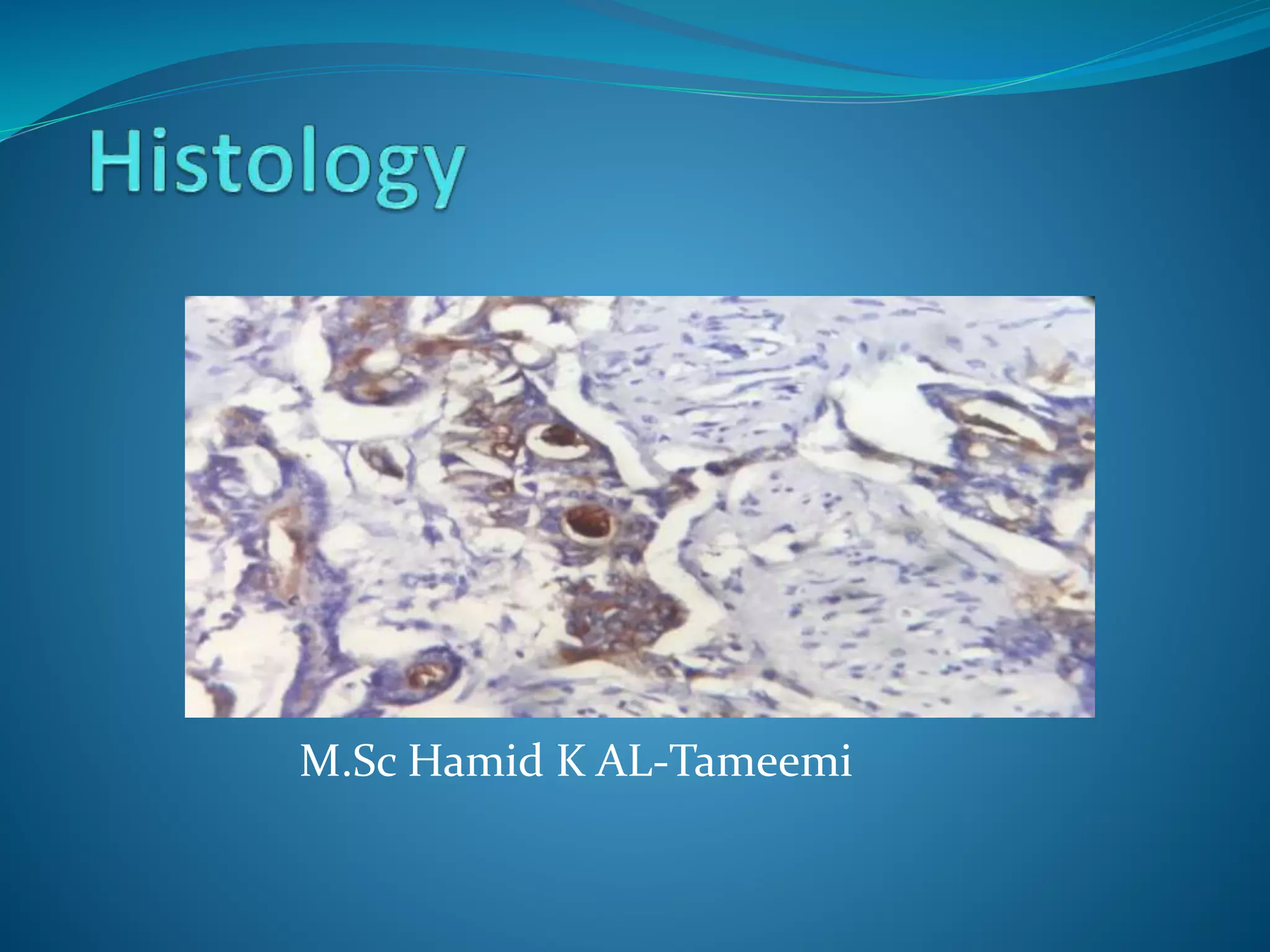

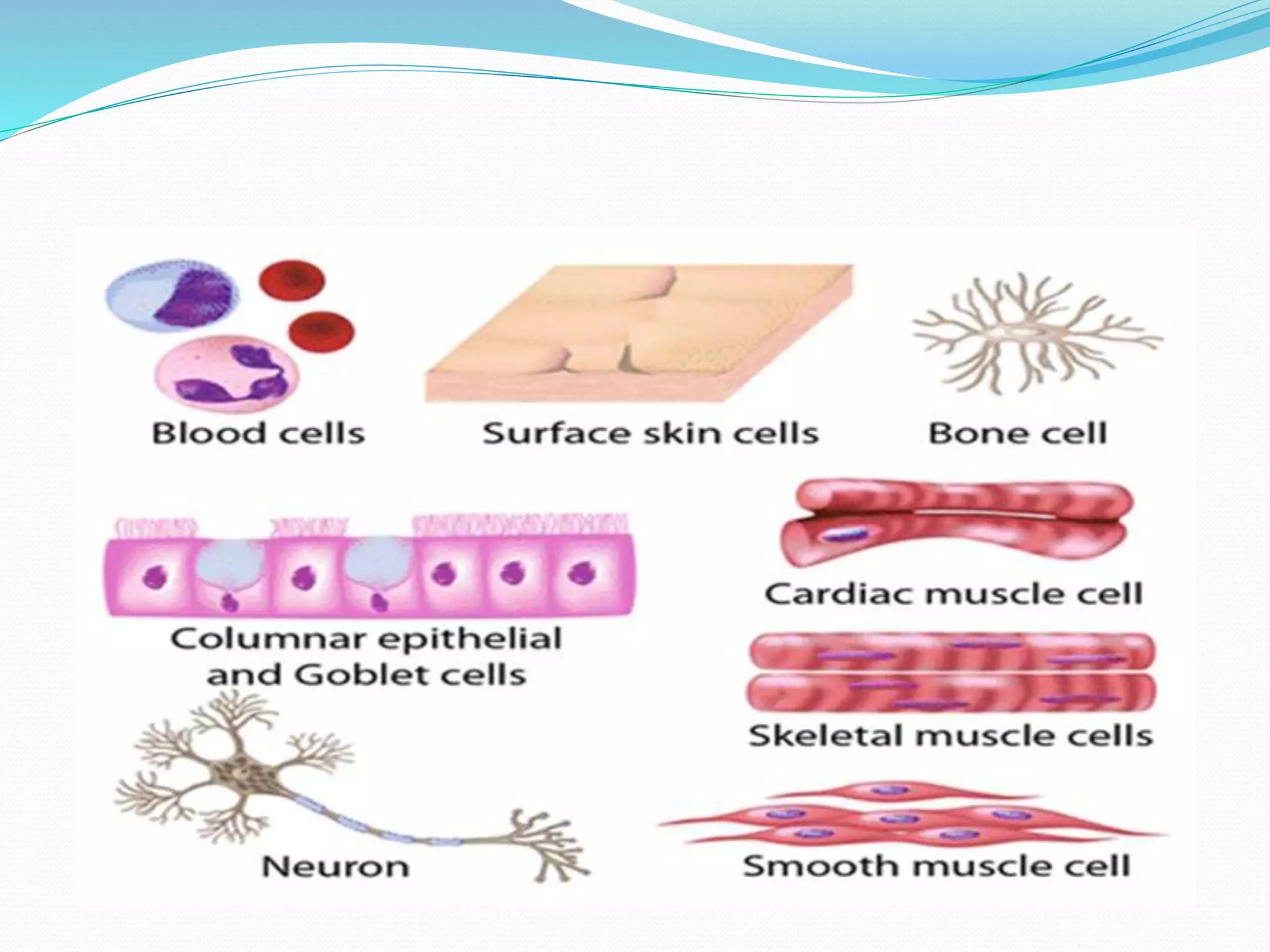
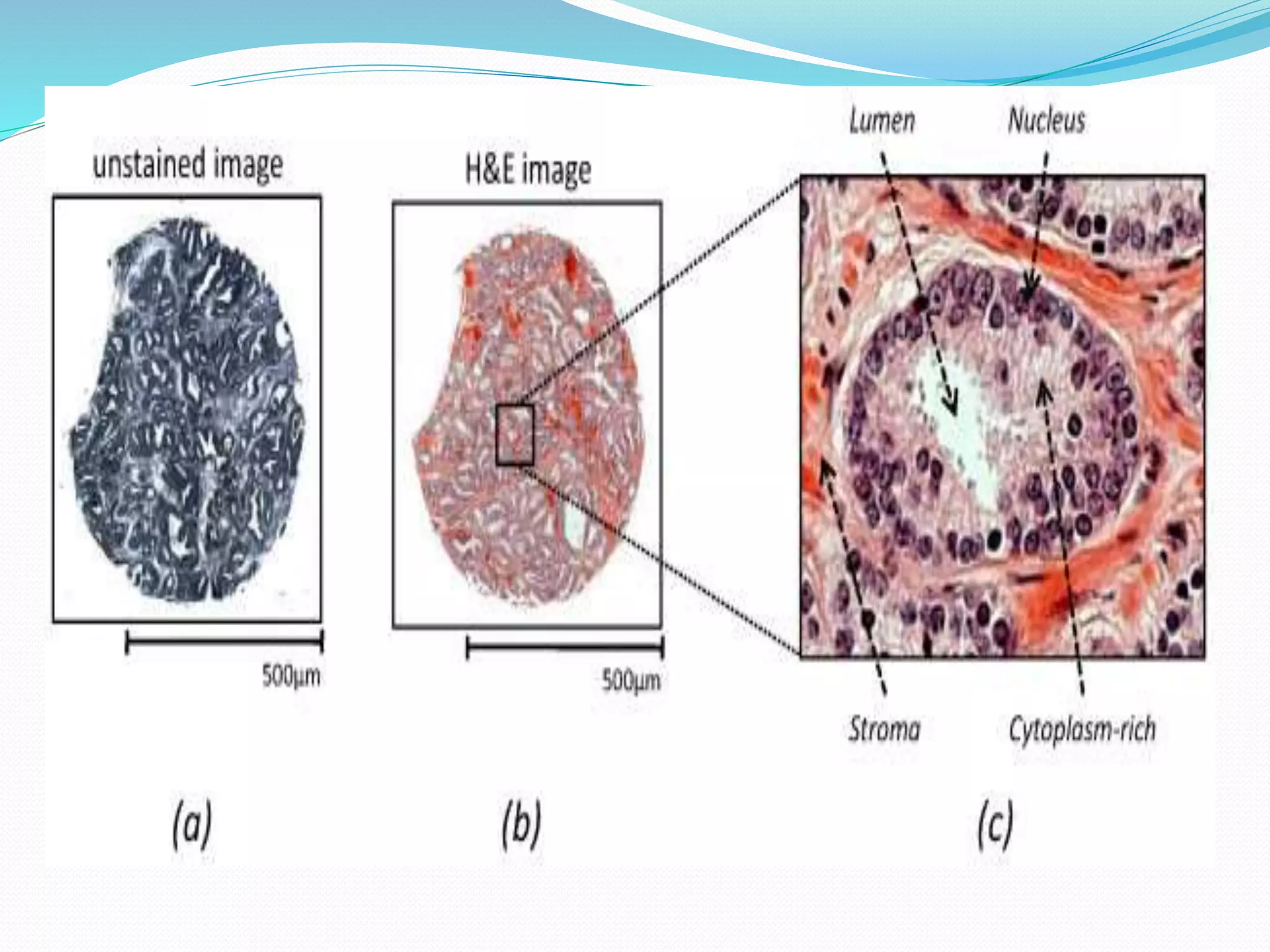


Histology is the study of cells and tissues that are too small to see with the naked eye using microscopy. It involves sectioning tissues into thin slices and staining them so they can be examined under microscopes. The basic unit of life is the cell. Cells come in different shapes depending on their function. Groups of common cell types form tissues, and combinations of tissues make up organs in the body like the heart, stomach, and liver. The cell is bounded by a membrane and contains a nucleus for DNA and cytoplasm with organelles that perform different functions. The cell membrane regulates what enters and exits the cell and maintains its shape while allowing for specialized functions in different cell types.


