
PRESENTATION ON
“INTRODUCTION TO ENVIRONMENT”
By,
Harsh Gupta
130800119030
Content

‱ Relationship Between Different
Components of Environment.
‱ Man – Environment Relationship.
‱ Impact of Technology on Environment.
‱ Environmental Degradation.
‱ Multidisciplinary Nature of
Environmental studies, its Scope And
Impact.
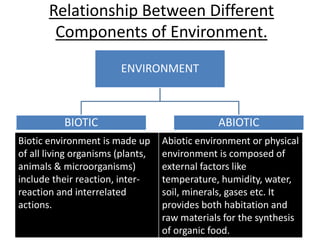
Relationship Between Different
Components of Environment.
ENVIRONMENT
BIOTIC ABIOTIC
Biotic environment is made up
of all living organisms (plants,
animals & microorganisms)
include their reaction, inter-
reaction and interrelated
actions.
Abiotic environment or physical
environment is composed of
external factors like
temperature, humidity, water,
soil, minerals, gases etc. It
provides both habitation and
raw materials for the synthesis
of organic food.
‱ Interaction between Abiotic and Biotic
Components
All living organisms depend upon their
environment for survival essentials:
1) food
2) shelter
3) breeding site.
Continue..
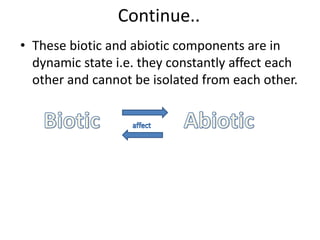
‱ These biotic and abiotic components are in
dynamic state i.e. they constantly affect each
other and cannot be isolated from each other.
Man – Environment Relationship
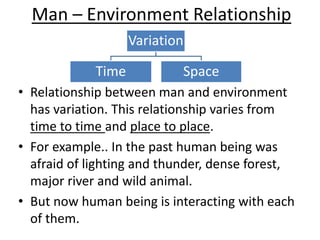
‱ Relationship between man and environment
has variation. This relationship varies from
time to time and place to place.
‱ For example.. In the past human being was
afraid of lighting and thunder, dense forest,
major river and wild animal.
‱ But now human being is interacting with each
of them.
Variation
Time Space
Relief of land :
Factors : 
.
Relief of land
Climate
Soil
Minerals
Water
‱ In Himalayas due to steep
slop agriculture is done with
great difficulties ,industries
establishment also. So this
place are having very less
economy activities.
‱ Therefore very less
population.
Climate :
‱ Most of the area of the
earth are having population
density <2 person/kmÂČ due
to unfavorable climate.
‱ Ex. North Canada, Alaska,
Hot Sharah Desert.
Soil :
‱ Fertile soil will attract
very dense population.
Water :
‱ Earlier settlement and
civilization was well
developed on the bank
of major rivers.
Ex. Nile, Ganga river.
‱ Adequate water supply
provides irrigation
facilities and there by
food production is more.
Minerals :
‱ The presence of coal,
gold, iron, steel, in any
area will attract high
population.
‱ Ex. Jharkhand in India.
‱ Gold mines in Australia.
Impact Of Technology On Environment
Negative Impact
‱ New technology 
Industrialization 
Urbanization  RAPID
EXPLOITATION OF NATURAL
RESOURCES.
‱ Innovation of engines 
Automobile 
Consumption of fossil fuel
 Pollution (air).
Positive Impact
‱ We have technologies to
purify polluted water using
RO system, Aqua guard,..
‱ We have destroyed forest
but we have technologies to
grow fast growing trees.
Continue

‱ Invention of Sawing
machine  Deforestation.
‱ Fertilizers and Pesticides 
Increase in food production
 Pollution of land.
‱ Recycling technologies 
recycling of paper, plastic
etc..
‱ Technologies to conserve
AIR, WATER, LAND, ETC..
Environmental Degradation
‱ It refers to the damage caused to the
environment due to both natural and human
events.
‱ The overall lowering of environmental
qualities due to the damage caused by both
natural and human activities in the basic
structure of environment at local, regional and
global levels adversely affecting all living
organisms including man.
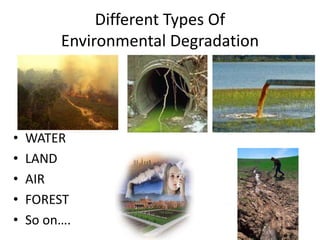
Different Types Of
Environmental Degradation
‱ WATER
‱ LAND
‱ AIR
‱ FOREST
‱ So on
.
‱ Water Degradation : Degradation in the
quality of water is a major & world wide
problem.
Source : 1. Point source.
2. Non point source.
‱ Land Degradation : Land degradation is a
process in which the value of the biophysical
environment is affected by combination of
human-induced processes acting upon the
land.
‱ Air Degradation : W.H.O has stated Delhi and
Kolkata as highly polluted megacities for air
qualities. It is due to deforestation,
industrialization and urbanization.
‱ Forest Degradation : In India in 1980’s forest
cover was about 40% and now it is just 17-18
%..
Multidisciplinary Nature of Environmental
Studies, Its Scope And Impact
‱ Environmental studies can be useful to various
disciplines :
1. Environmental studies for Engineers : By
studying ES engineers can find the
sustainable solutions for different global and
local environmental problems.
2. Environmental studies for Ecologist : By
studying interrelationship between different
Biotic and Abiotic components of ecosystem.
Continue

3. Environmental studies for Hydrologist : By
studying these course the Hydrologist can
study the quality of land water and aquatic
water.
Source

‱ http://en.wikipedia.org/wiki/Main_Page
‱ www.sc.chula.ac.th/courseware/2303105/BBA
_part3_1n.ppt
‱ Reference book: Mahajan Publication.
‱ And other reference books.
Introduction to environment (harsh gupta)

Introduction to environment (harsh gupta)

  • 1.
    PRESENTATION ON “INTRODUCTION TOENVIRONMENT” By, Harsh Gupta 130800119030
  • 2.
    Content
 ‱ Relationship BetweenDifferent Components of Environment. ‱ Man – Environment Relationship. ‱ Impact of Technology on Environment. ‱ Environmental Degradation. ‱ Multidisciplinary Nature of Environmental studies, its Scope And Impact.
  • 3.
    Relationship Between Different Componentsof Environment. ENVIRONMENT BIOTIC ABIOTIC Biotic environment is made up of all living organisms (plants, animals & microorganisms) include their reaction, inter- reaction and interrelated actions. Abiotic environment or physical environment is composed of external factors like temperature, humidity, water, soil, minerals, gases etc. It provides both habitation and raw materials for the synthesis of organic food.
  • 4.
    ‱ Interaction betweenAbiotic and Biotic Components All living organisms depend upon their environment for survival essentials: 1) food 2) shelter 3) breeding site.
  • 5.
    Continue.. ‱ These bioticand abiotic components are in dynamic state i.e. they constantly affect each other and cannot be isolated from each other.
  • 6.
    Man – EnvironmentRelationship ‱ Relationship between man and environment has variation. This relationship varies from time to time and place to place. ‱ For example.. In the past human being was afraid of lighting and thunder, dense forest, major river and wild animal. ‱ But now human being is interacting with each of them. Variation Time Space
  • 7.
    Relief of land: Factors : 
. Relief of land Climate Soil Minerals Water ‱ In Himalayas due to steep slop agriculture is done with great difficulties ,industries establishment also. So this place are having very less economy activities. ‱ Therefore very less population. Climate : ‱ Most of the area of the earth are having population density <2 person/kmÂČ due to unfavorable climate. ‱ Ex. North Canada, Alaska, Hot Sharah Desert.
  • 8.
    Soil : ‱ Fertilesoil will attract very dense population. Water : ‱ Earlier settlement and civilization was well developed on the bank of major rivers. Ex. Nile, Ganga river. ‱ Adequate water supply provides irrigation facilities and there by food production is more. Minerals : ‱ The presence of coal, gold, iron, steel, in any area will attract high population. ‱ Ex. Jharkhand in India. ‱ Gold mines in Australia.
  • 9.
    Impact Of TechnologyOn Environment Negative Impact ‱ New technology  Industrialization  Urbanization  RAPID EXPLOITATION OF NATURAL RESOURCES. ‱ Innovation of engines  Automobile  Consumption of fossil fuel  Pollution (air). Positive Impact ‱ We have technologies to purify polluted water using RO system, Aqua guard,.. ‱ We have destroyed forest but we have technologies to grow fast growing trees.
  • 10.
    Continue
 ‱ Invention ofSawing machine  Deforestation. ‱ Fertilizers and Pesticides  Increase in food production  Pollution of land. ‱ Recycling technologies  recycling of paper, plastic etc.. ‱ Technologies to conserve AIR, WATER, LAND, ETC..
  • 11.
    Environmental Degradation ‱ Itrefers to the damage caused to the environment due to both natural and human events. ‱ The overall lowering of environmental qualities due to the damage caused by both natural and human activities in the basic structure of environment at local, regional and global levels adversely affecting all living organisms including man.
  • 12.
    Different Types Of EnvironmentalDegradation ‱ WATER ‱ LAND ‱ AIR ‱ FOREST ‱ So on
.
  • 13.
    ‱ Water Degradation: Degradation in the quality of water is a major & world wide problem. Source : 1. Point source. 2. Non point source. ‱ Land Degradation : Land degradation is a process in which the value of the biophysical environment is affected by combination of human-induced processes acting upon the land.
  • 14.
    ‱ Air Degradation: W.H.O has stated Delhi and Kolkata as highly polluted megacities for air qualities. It is due to deforestation, industrialization and urbanization. ‱ Forest Degradation : In India in 1980’s forest cover was about 40% and now it is just 17-18 %..
  • 15.
    Multidisciplinary Nature ofEnvironmental Studies, Its Scope And Impact ‱ Environmental studies can be useful to various disciplines : 1. Environmental studies for Engineers : By studying ES engineers can find the sustainable solutions for different global and local environmental problems. 2. Environmental studies for Ecologist : By studying interrelationship between different Biotic and Abiotic components of ecosystem.
  • 16.
    Continue
 3. Environmental studiesfor Hydrologist : By studying these course the Hydrologist can study the quality of land water and aquatic water.
  • 17.