Introduction to Ecology Energy and Organisms
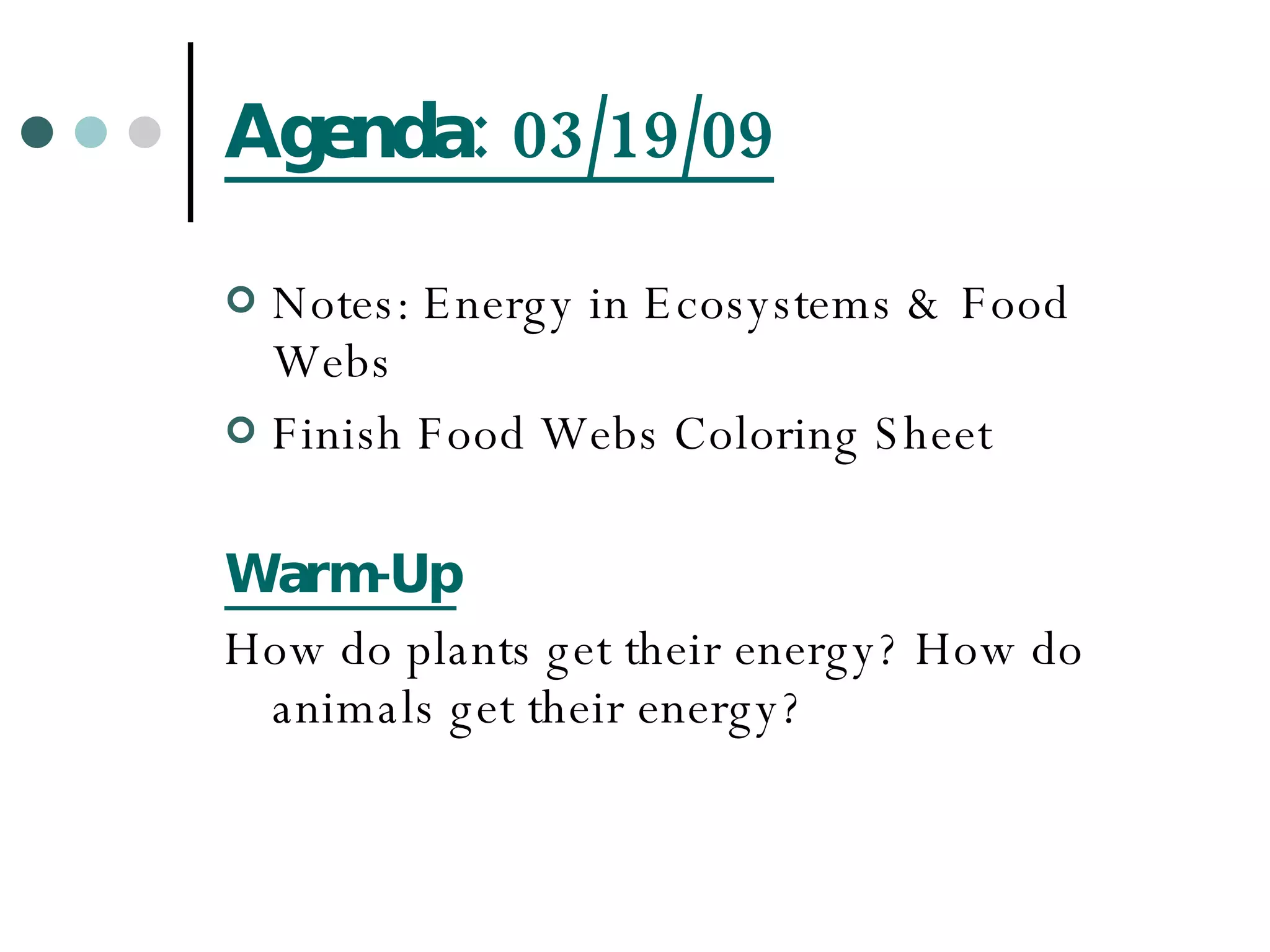
Agenda: 03/19/09 Notes: Energy in Ecosystems & Food Webs Finish Food Webs Coloring Sheet Warm-Up How do plants get their energy? How do animals get their energy?
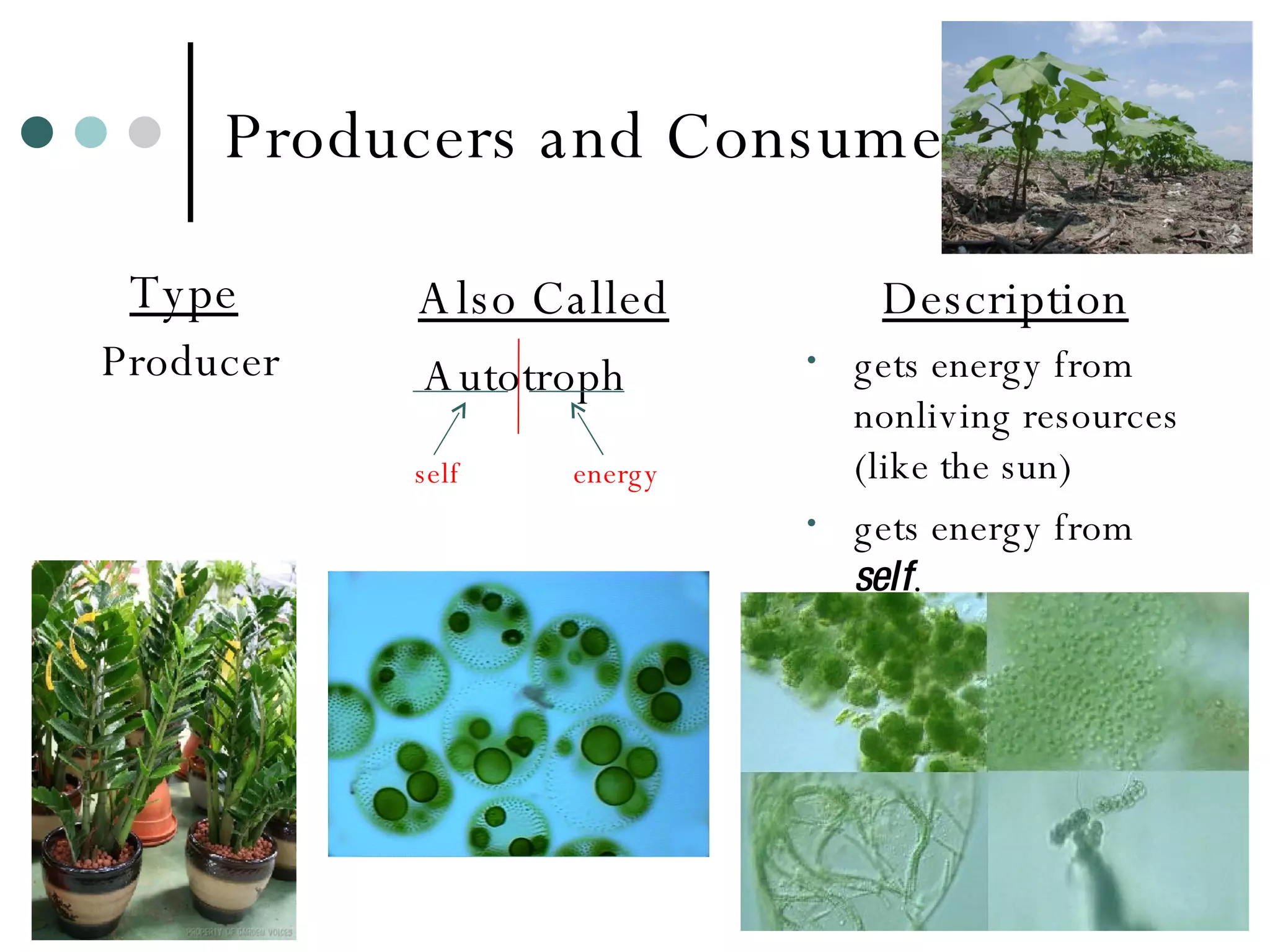
Producers and Consumers Type   Producer Also Called   Autotroph Description gets energy from nonliving resources (like the sun) gets energy from  self . self energy
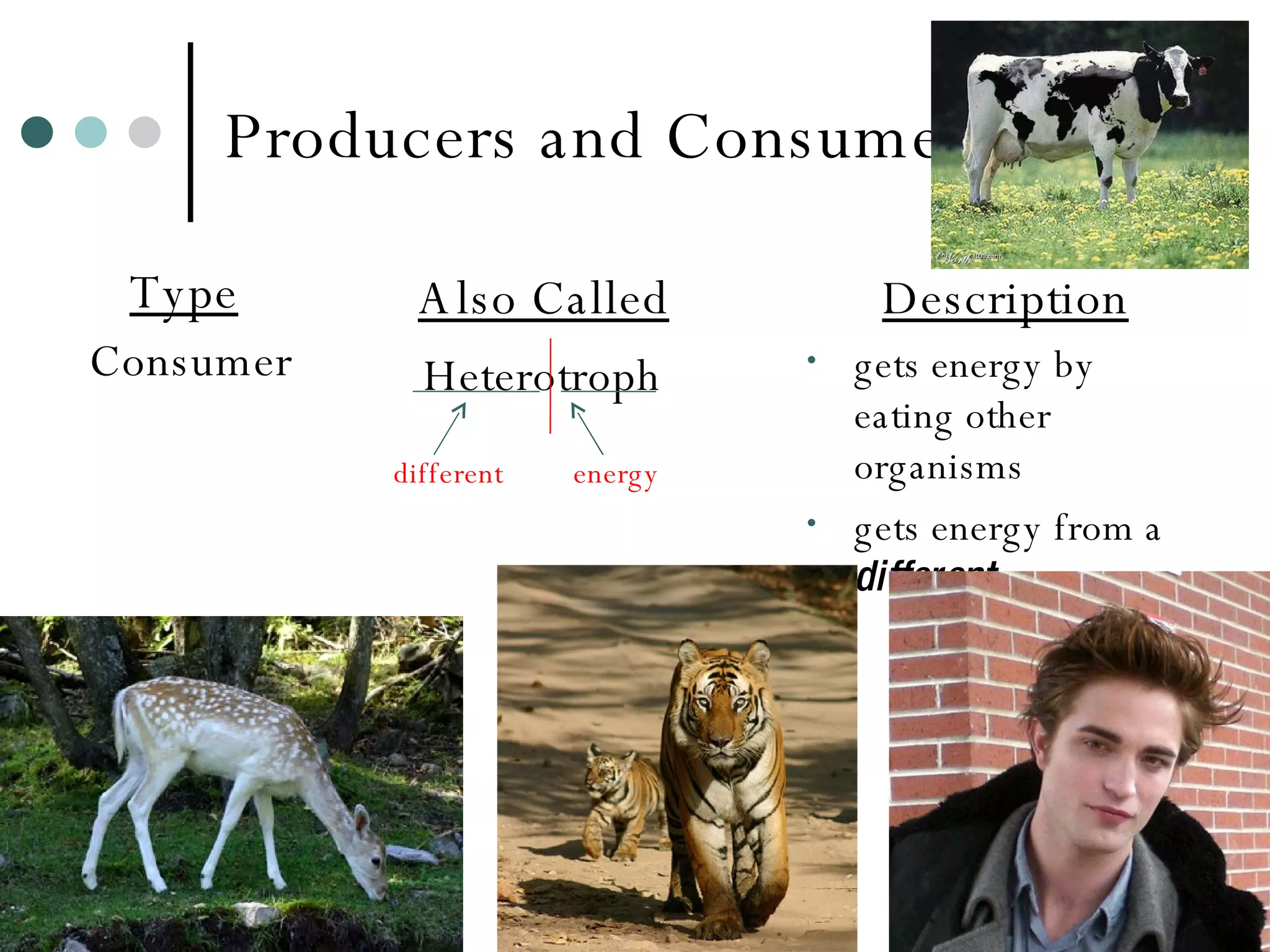
Producers and Consumers Type   Consumer Also Called   Heterotroph Description gets energy by eating other organisms gets energy from a  different  source. different energy
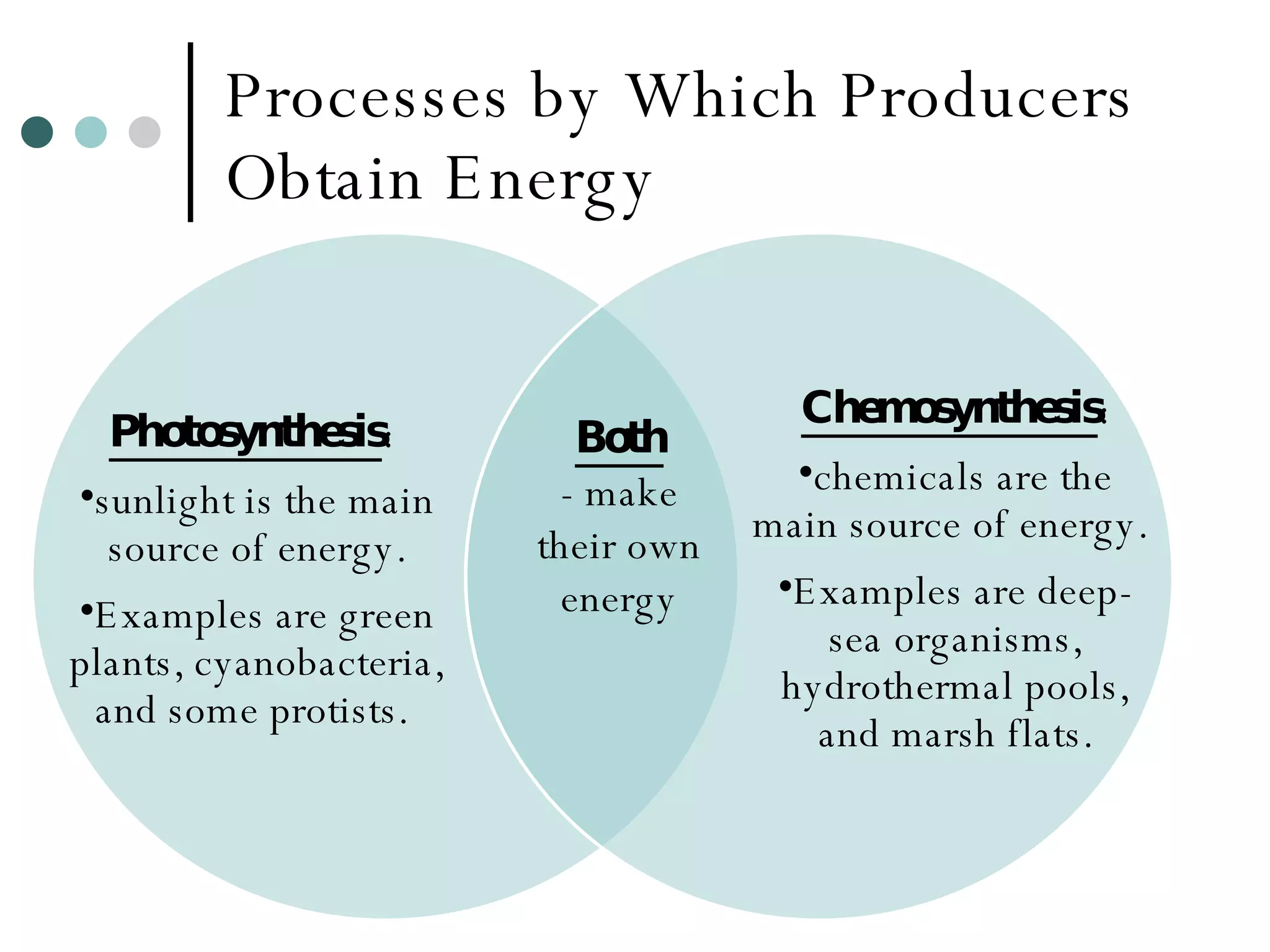
Processes by Which Producers Obtain Energy Photosynthesis :  sunlight is the main source of energy. Examples are green plants, cyanobacteria, and some protists.  Chemosynthesis : chemicals are the main source of energy.  Examples are deep-sea organisms, hydrothermal pools, and marsh flats. Both - make their own energy
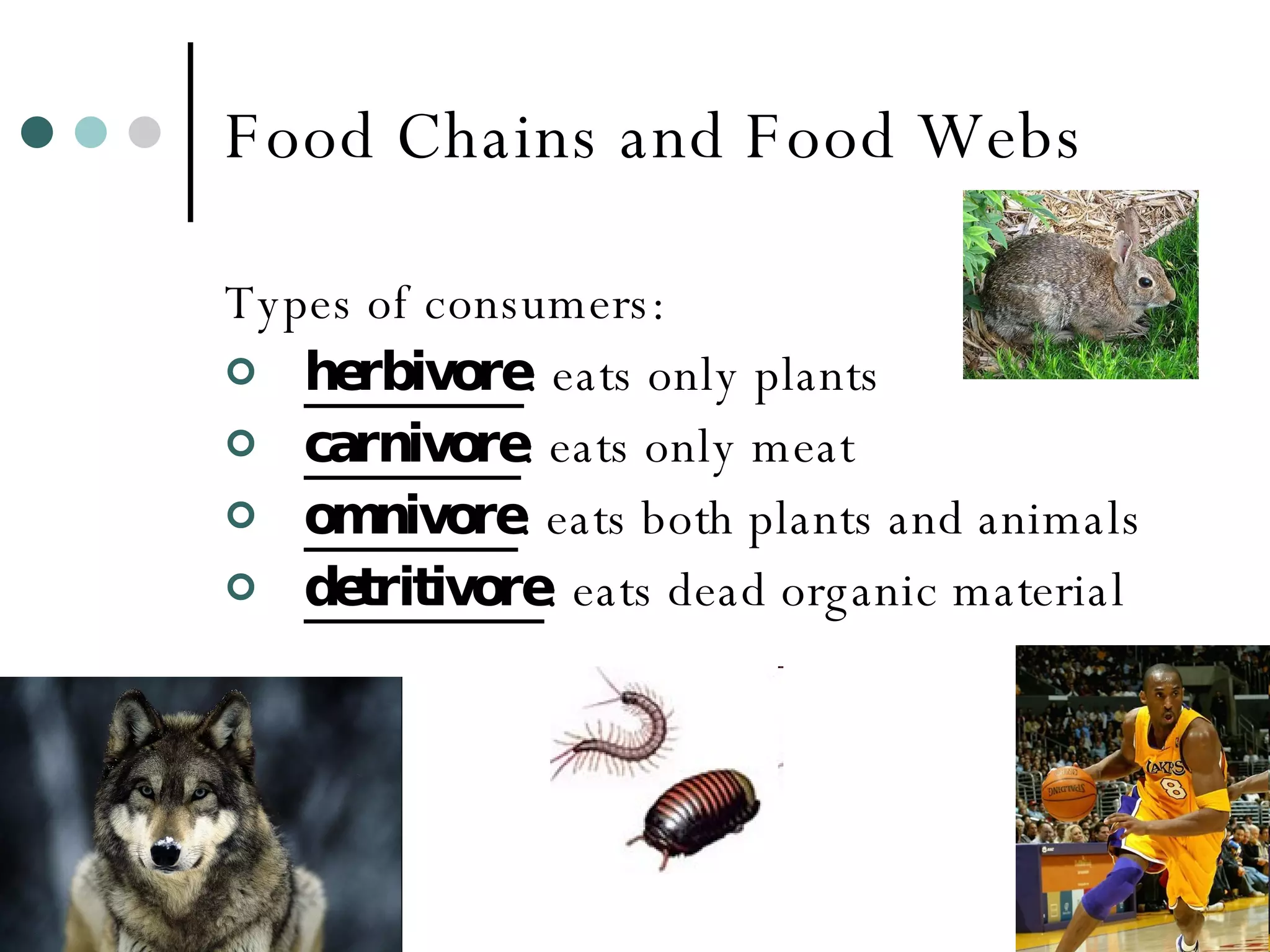
Food Chains and Food Webs Types of consumers: herbivore : eats only plants carnivore : eats only meat omnivore : eats both plants and animals detritivore : eats dead organic material
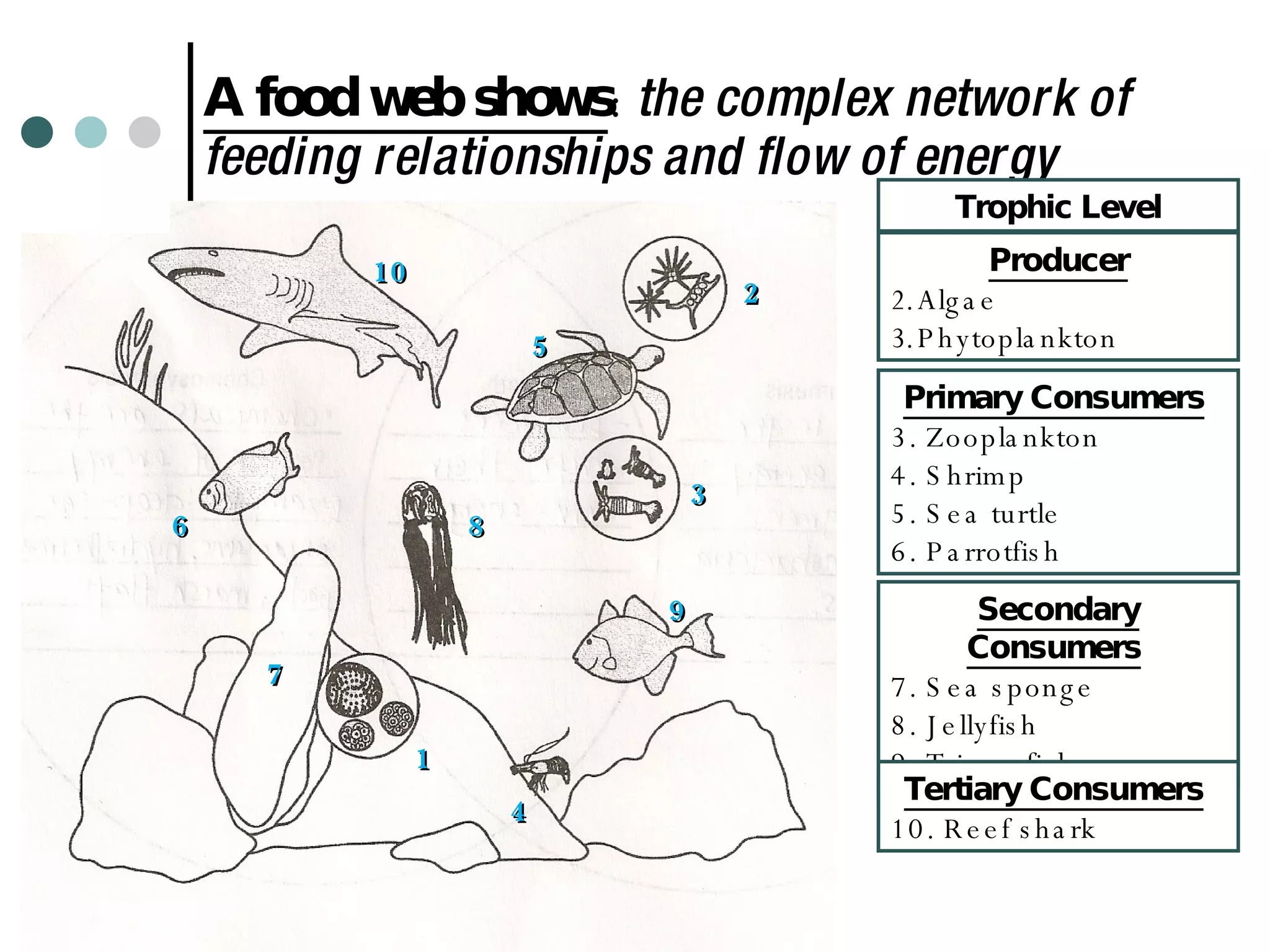
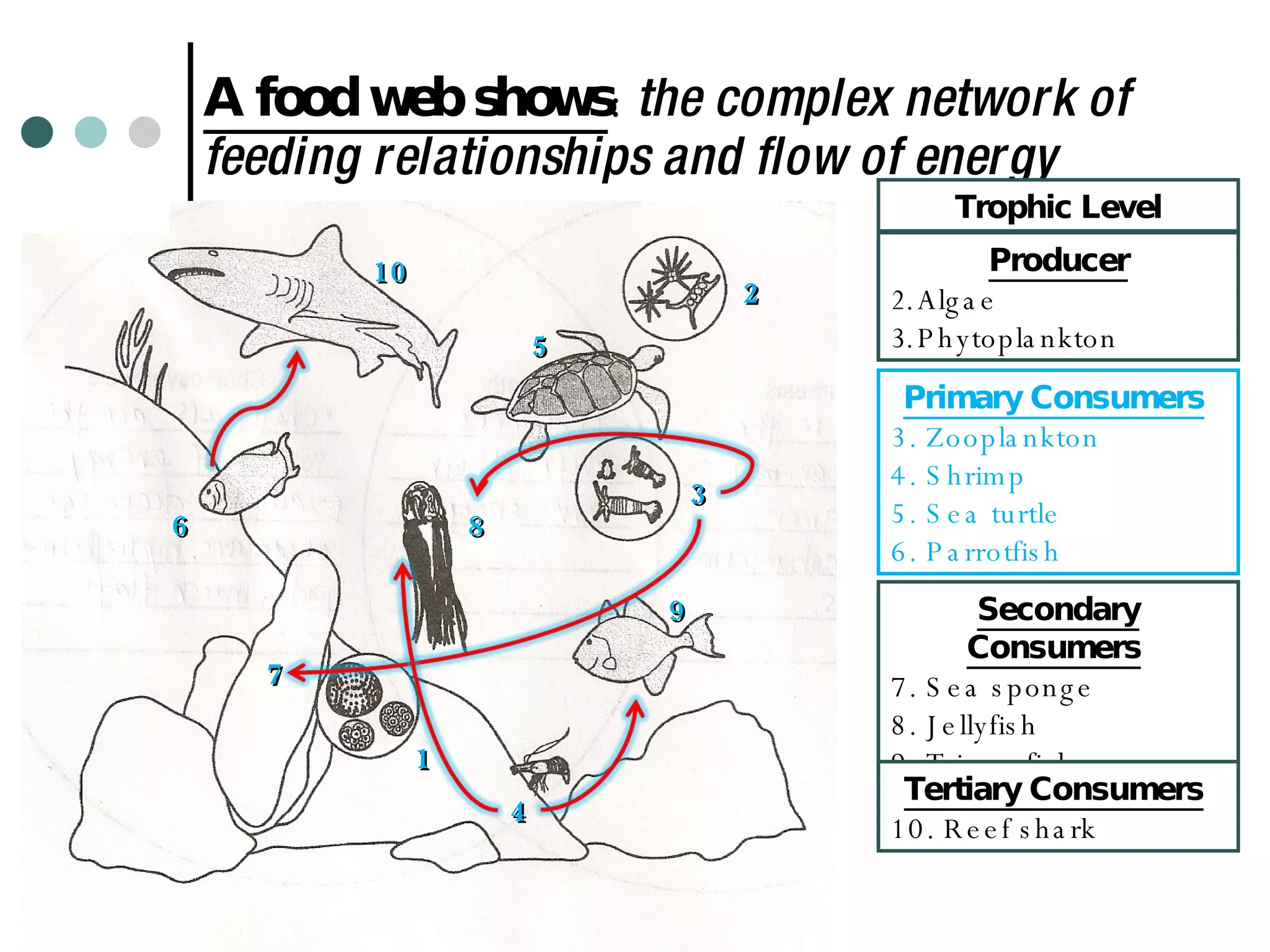
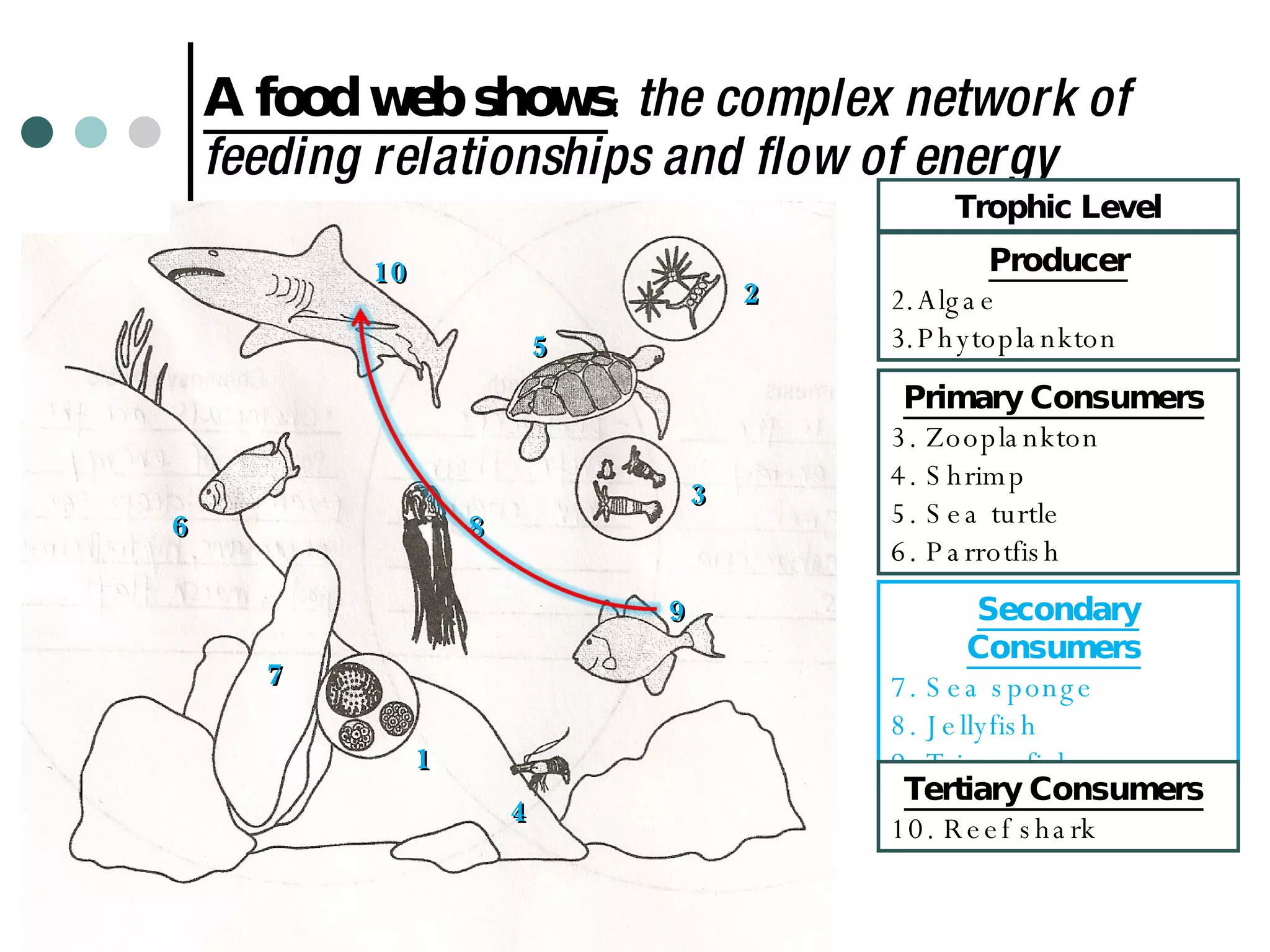
A food web shows :  the complex network of feeding relationships and flow of energy Trophic Level Producer Algae  Phytoplankton 1 2 3 Primary Consumers   3. Zooplankton 4. Shrimp 5. Sea turtle 6. Parrotfish  7 4 5 6 9 8 10 Secondary Consumers   7. Sea sponge 8. Jellyfish  9. Triggerfish Tertiary Consumers   10. Reef shark
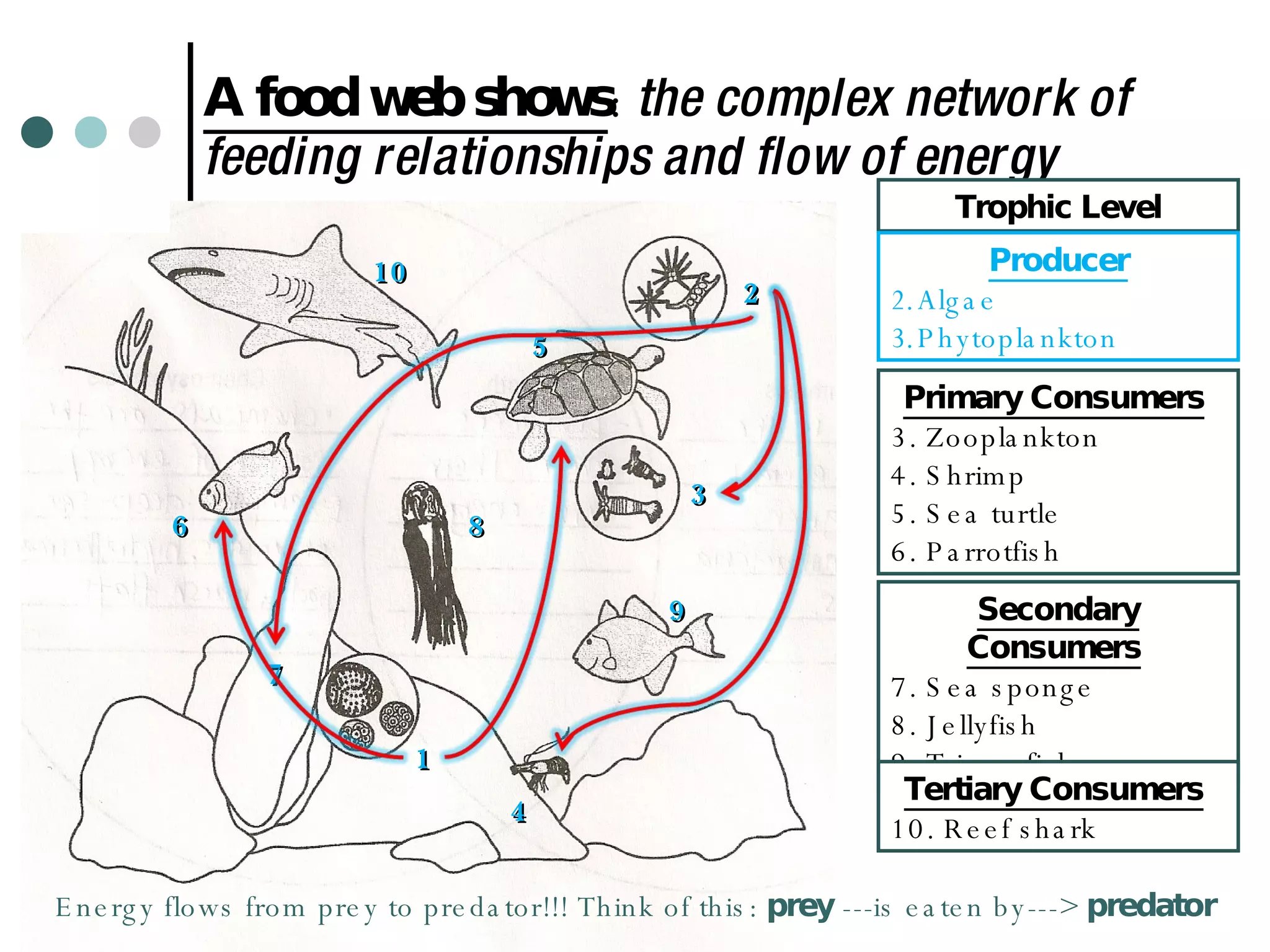
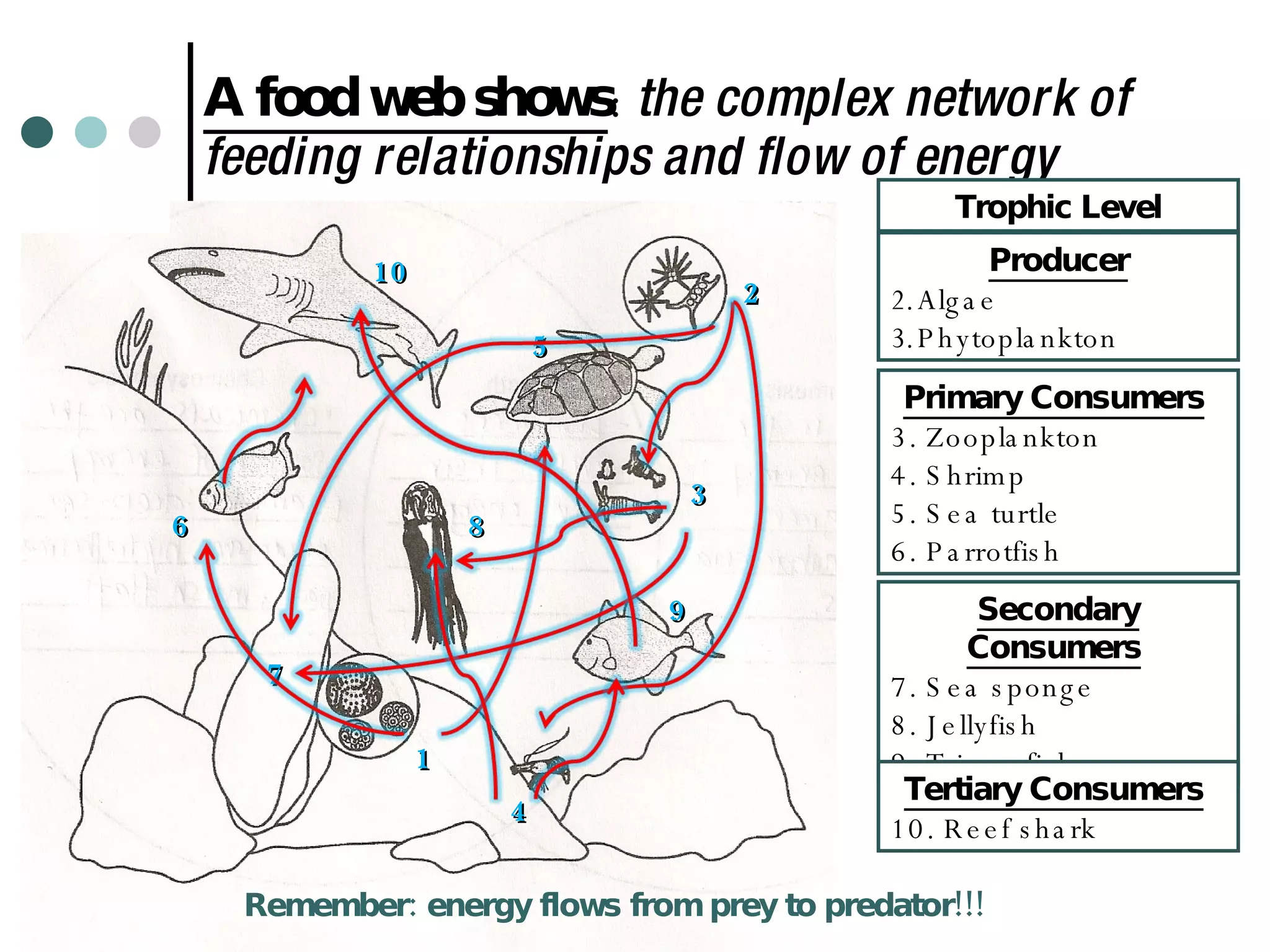
A food web shows :  the complex network of feeding relationships and flow of energy Trophic Level Producer Algae  Phytoplankton 1 2 3 Primary Consumers   3. Zooplankton 4. Shrimp 5. Sea turtle 6. Parrotfish  7 4 5 6 9 8 10 Secondary Consumers   7. Sea sponge 8. Jellyfish  9. Triggerfish Tertiary Consumers   10. Reef shark Energy flows from prey to predator!!! Think of this:  prey  ---is eaten by--->  predator
A food web shows :  the complex network of feeding relationships and flow of energy Trophic Level Producer Algae  Phytoplankton 1 2 3 Primary Consumers   3. Zooplankton 4. Shrimp 5. Sea turtle 6. Parrotfish  7 4 5 6 9 8 10 Secondary Consumers   7. Sea sponge 8. Jellyfish  9. Triggerfish Tertiary Consumers   10. Reef shark
A food web shows :  the complex network of feeding relationships and flow of energy Trophic Level Producer Algae  Phytoplankton 1 2 3 Primary Consumers   3. Zooplankton 4. Shrimp 5. Sea turtle 6. Parrotfish  7 4 5 6 9 8 10 Secondary Consumers   7. Sea sponge 8. Jellyfish  9. Triggerfish Tertiary Consumers   10. Reef shark Remember: energy flows from prey to predator!!!

Introduction To Ecology

  • 1.
    Introduction to EcologyEnergy and Organisms
  • 2.
    Agenda: 03/19/09 Notes:Energy in Ecosystems & Food Webs Finish Food Webs Coloring Sheet Warm-Up How do plants get their energy? How do animals get their energy?
  • 3.
    Producers and ConsumersType Producer Also Called Autotroph Description gets energy from nonliving resources (like the sun) gets energy from self . self energy
  • 4.
    Producers and ConsumersType Consumer Also Called Heterotroph Description gets energy by eating other organisms gets energy from a different source. different energy
  • 5.
    Processes by WhichProducers Obtain Energy Photosynthesis : sunlight is the main source of energy. Examples are green plants, cyanobacteria, and some protists. Chemosynthesis : chemicals are the main source of energy. Examples are deep-sea organisms, hydrothermal pools, and marsh flats. Both - make their own energy
  • 6.
    Food Chains andFood Webs Types of consumers: herbivore : eats only plants carnivore : eats only meat omnivore : eats both plants and animals detritivore : eats dead organic material
  • 7.
    A food webshows : the complex network of feeding relationships and flow of energy Trophic Level Producer Algae Phytoplankton 1 2 3 Primary Consumers 3. Zooplankton 4. Shrimp 5. Sea turtle 6. Parrotfish 7 4 5 6 9 8 10 Secondary Consumers 7. Sea sponge 8. Jellyfish 9. Triggerfish Tertiary Consumers 10. Reef shark
  • 8.
    A food webshows : the complex network of feeding relationships and flow of energy Trophic Level Producer Algae Phytoplankton 1 2 3 Primary Consumers 3. Zooplankton 4. Shrimp 5. Sea turtle 6. Parrotfish 7 4 5 6 9 8 10 Secondary Consumers 7. Sea sponge 8. Jellyfish 9. Triggerfish Tertiary Consumers 10. Reef shark Energy flows from prey to predator!!! Think of this: prey ---is eaten by---> predator
  • 9.
    A food webshows : the complex network of feeding relationships and flow of energy Trophic Level Producer Algae Phytoplankton 1 2 3 Primary Consumers 3. Zooplankton 4. Shrimp 5. Sea turtle 6. Parrotfish 7 4 5 6 9 8 10 Secondary Consumers 7. Sea sponge 8. Jellyfish 9. Triggerfish Tertiary Consumers 10. Reef shark
  • 10.
    A food webshows : the complex network of feeding relationships and flow of energy Trophic Level Producer Algae Phytoplankton 1 2 3 Primary Consumers 3. Zooplankton 4. Shrimp 5. Sea turtle 6. Parrotfish 7 4 5 6 9 8 10 Secondary Consumers 7. Sea sponge 8. Jellyfish 9. Triggerfish Tertiary Consumers 10. Reef shark
  • 11.
    A food webshows : the complex network of feeding relationships and flow of energy Trophic Level Producer Algae Phytoplankton 1 2 3 Primary Consumers 3. Zooplankton 4. Shrimp 5. Sea turtle 6. Parrotfish 7 4 5 6 9 8 10 Secondary Consumers 7. Sea sponge 8. Jellyfish 9. Triggerfish Tertiary Consumers 10. Reef shark Remember: energy flows from prey to predator!!!