BENGAL COLLEGE OF
ENGINEERING & TECHNOLOGY
PRESENTATION ON
CHARACTERISTICS OFDBMS
NAME:-SHYAM KUMAR SAHU
BRANCH:-CSE(B)
SUBJECT:- DATABASE MANAGEMENT SYSTEMS
(PCC-CS601)
YEAR:-3𝑟𝑑 YEAR/6th SEM
UNIVERSITY ROLL NO:-12500121080
Database
Management Systems
A Database Management System (DBMS)
is a software system that provides an
interface for managing data. It allows
users to create, retrieve, update, and
manage data efficiently and securely.
Types of DBMS
Relational
Organizes data into
tables with rows and
columns. It's widely
used for its
simplicity and
flexibility.
Hierarchical
Represents
information in a
tree-like structure.
Useful for specific
applications and
industries.
Network
Utilizes a more
flexible way to
represent data
relationships,
suitable for complex
data structures.
Data Integrity in a DBMS
1 Data Accuracy
Ensuring that
the data
stored in the
database is
accurate and
reliable.
2 Data Validity
Maintaining
data
consistency and
ensuring it
adheres to
defined
standards.
3 Data Completeness
Guaranteeing
that all required
data is stored
without missing
parts.
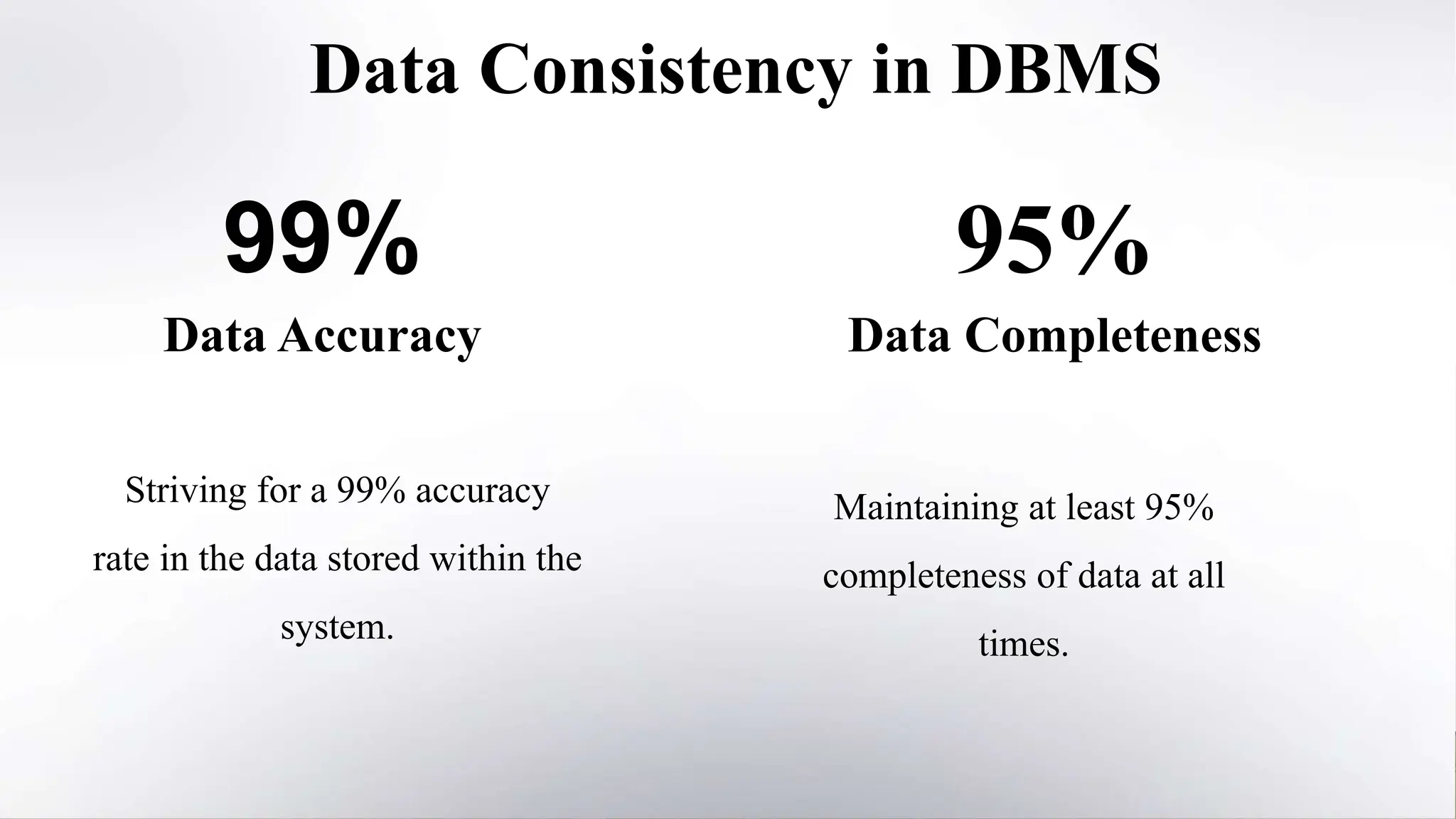
Data Consistency in DBMS
99%
Data Accuracy
Striving for a 99% accuracy
rate in the data stored within the
system.
95%
Data Completeness
Maintaining at least 95%
completeness of data at all
times.
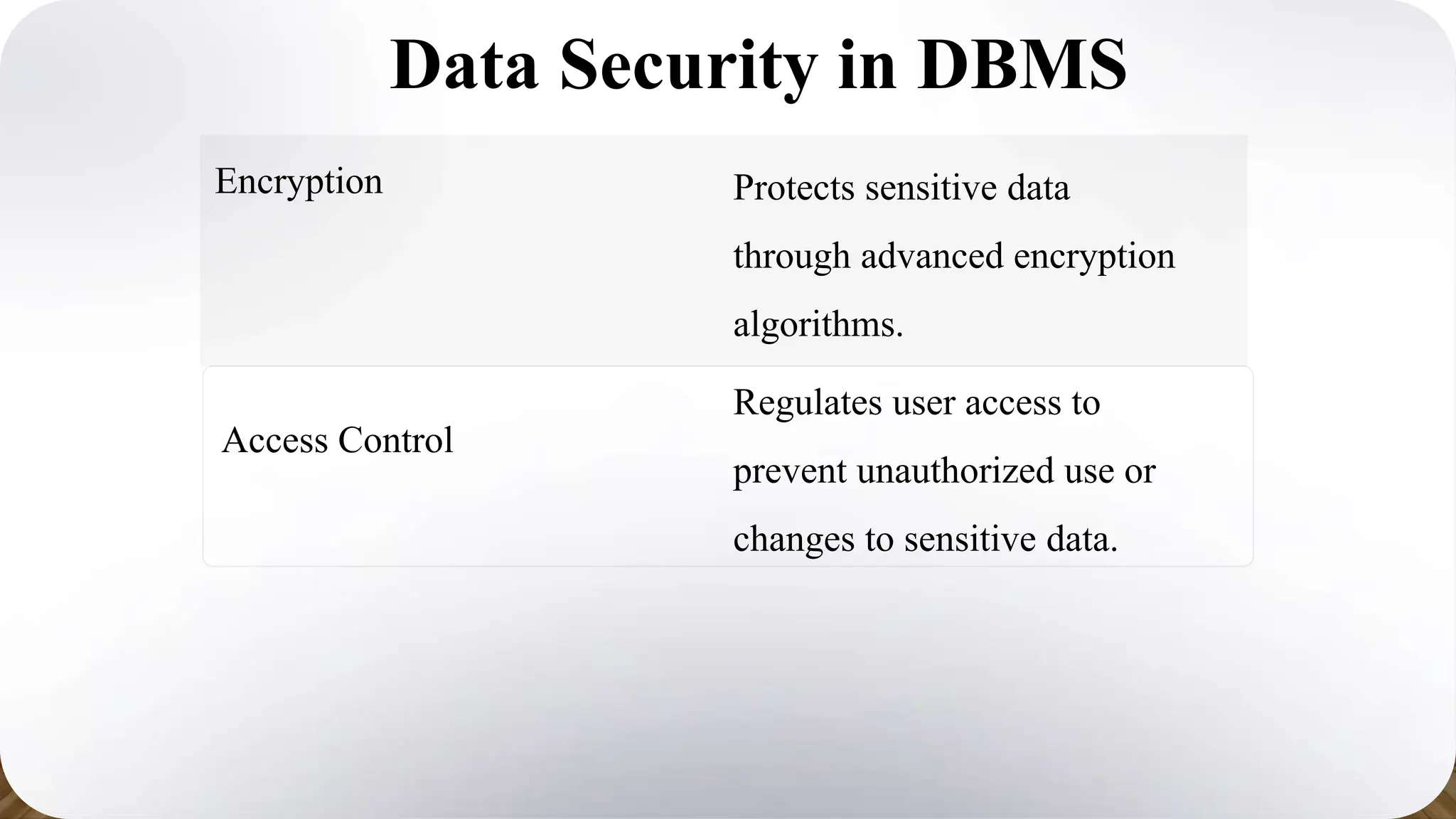
Data Security in DBMS
Encryption Protects sensitive data
through advanced encryption
algorithms.
Access Control
Regulates user access to
prevent unauthorized use or
changes to sensitive data.
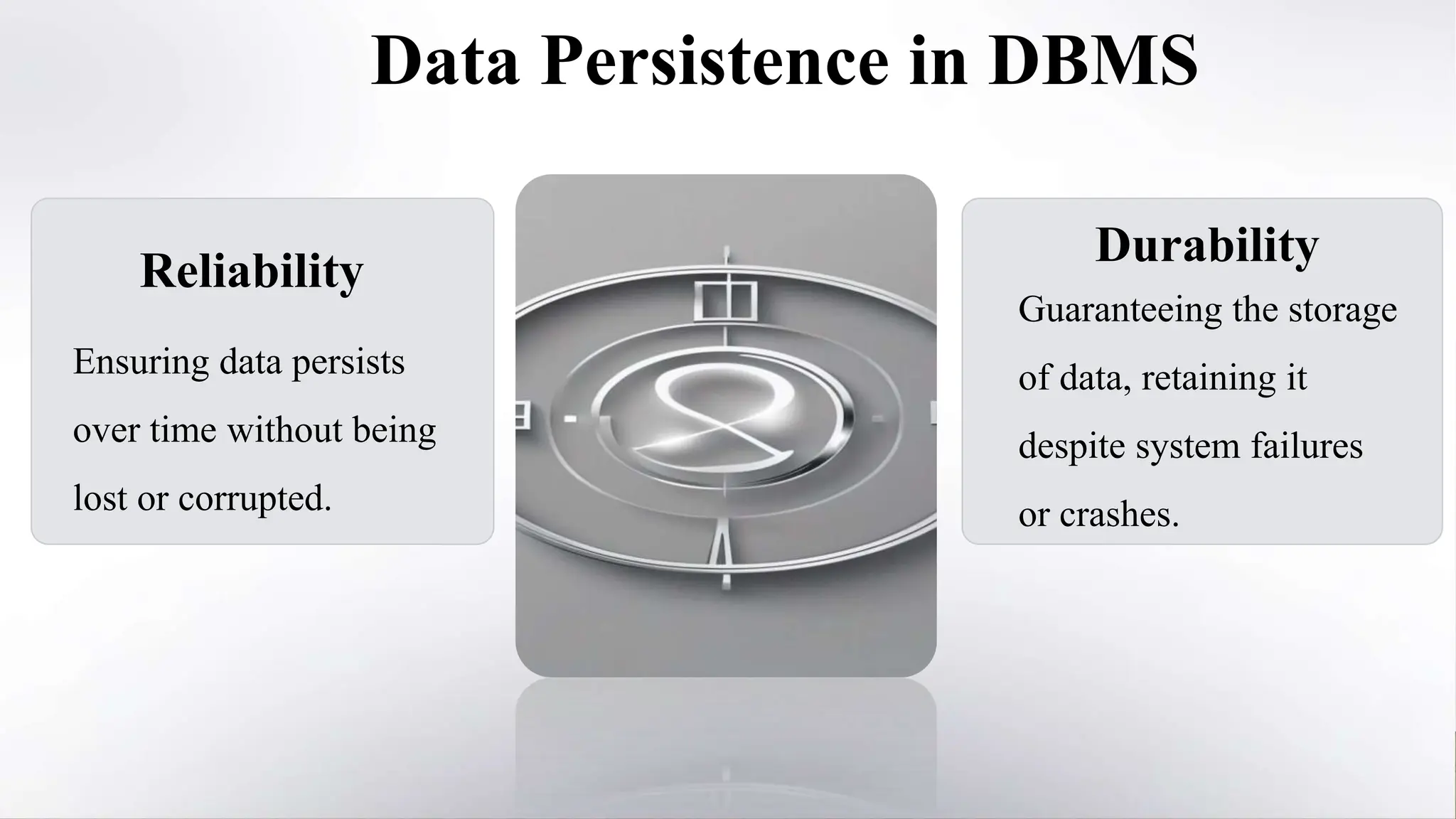
Data Persistence in DBMS
Reliability
Ensuring data persists
over time without being
lost or corrupted.
Durability
Guaranteeing the storage
of data, retaining it
despite system failures
or crashes.
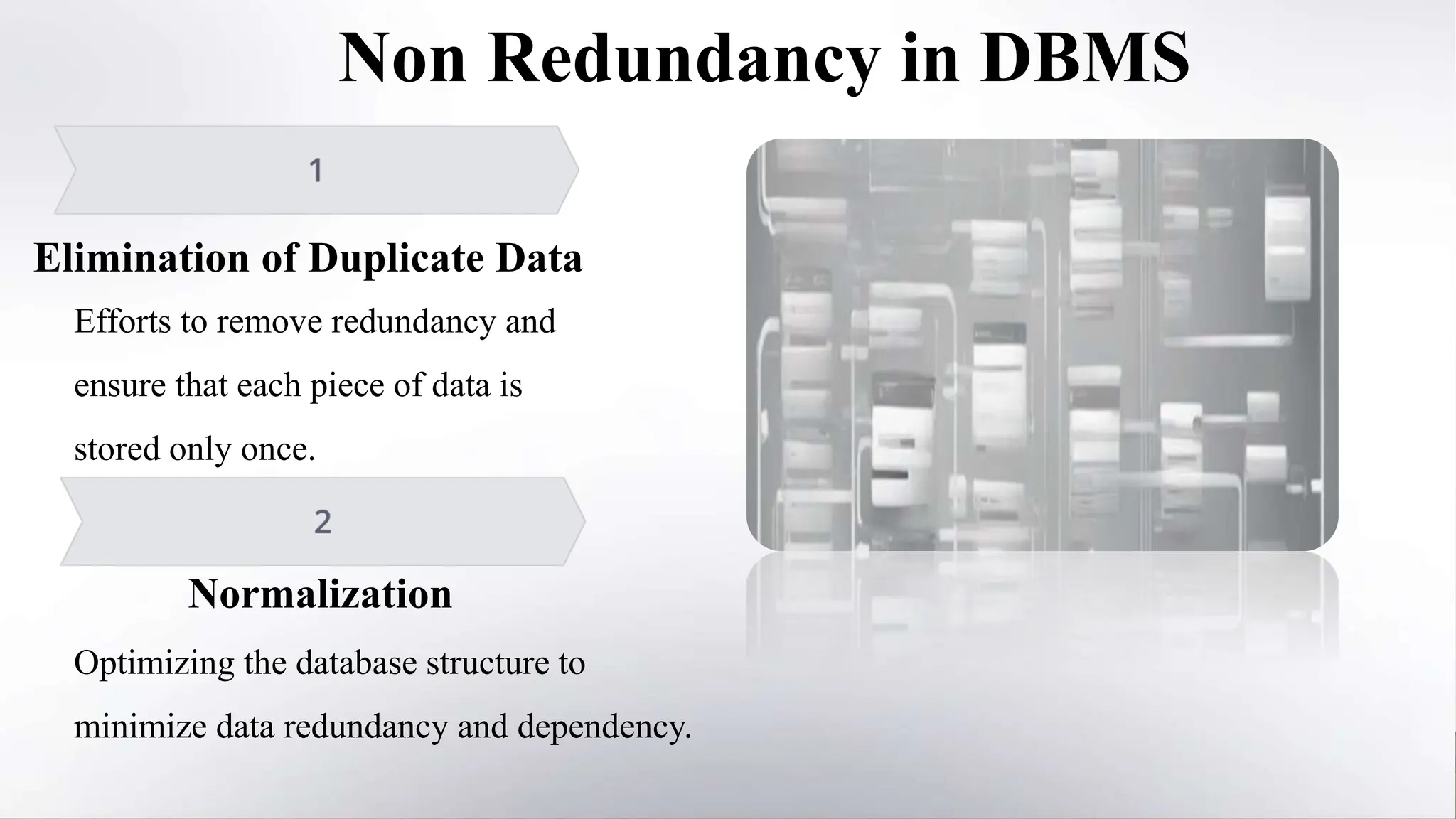
Non Redundancy in DBMS
Elimination of Duplicate Data
Efforts to remove redundancy and
ensure that each piece of data is
stored only once.
Normalization
Optimizing the database structure to
minimize data redundancy and dependency.
Independency in DBMS
1 Data Isolation
Ensuring that individual data is protected and
isolated from other parts of the system.
2 Decentralization
Implementing distributed databases to avoid relying
on a single centralized system.
3 Modularity
Designing the system to have independent and
reusable modules for data management.

Introduction to Database management system .pptx

  • 1.
    BENGAL COLLEGE OF ENGINEERING& TECHNOLOGY PRESENTATION ON CHARACTERISTICS OFDBMS NAME:-SHYAM KUMAR SAHU BRANCH:-CSE(B) SUBJECT:- DATABASE MANAGEMENT SYSTEMS (PCC-CS601) YEAR:-3𝑟𝑑 YEAR/6th SEM UNIVERSITY ROLL NO:-12500121080
  • 2.
    Database Management Systems A DatabaseManagement System (DBMS) is a software system that provides an interface for managing data. It allows users to create, retrieve, update, and manage data efficiently and securely.
  • 3.
    Types of DBMS Relational Organizesdata into tables with rows and columns. It's widely used for its simplicity and flexibility. Hierarchical Represents information in a tree-like structure. Useful for specific applications and industries. Network Utilizes a more flexible way to represent data relationships, suitable for complex data structures.
  • 4.
    Data Integrity ina DBMS 1 Data Accuracy Ensuring that the data stored in the database is accurate and reliable. 2 Data Validity Maintaining data consistency and ensuring it adheres to defined standards. 3 Data Completeness Guaranteeing that all required data is stored without missing parts.
  • 5.
    Data Consistency inDBMS 99% Data Accuracy Striving for a 99% accuracy rate in the data stored within the system. 95% Data Completeness Maintaining at least 95% completeness of data at all times.
  • 6.
    Data Security inDBMS Encryption Protects sensitive data through advanced encryption algorithms. Access Control Regulates user access to prevent unauthorized use or changes to sensitive data.
  • 7.
    Data Persistence inDBMS Reliability Ensuring data persists over time without being lost or corrupted. Durability Guaranteeing the storage of data, retaining it despite system failures or crashes.
  • 8.
    Non Redundancy inDBMS Elimination of Duplicate Data Efforts to remove redundancy and ensure that each piece of data is stored only once. Normalization Optimizing the database structure to minimize data redundancy and dependency.
  • 9.
    Independency in DBMS 1Data Isolation Ensuring that individual data is protected and isolated from other parts of the system. 2 Decentralization Implementing distributed databases to avoid relying on a single centralized system. 3 Modularity Designing the system to have independent and reusable modules for data management.