Foundations of
Database Management
System Concepts
This presentation covers the foundations of
Database Management System (DBMS)
concepts, including data modeling, query
languages, and data integrity. We will
explore the key components and principles
of DBMS and their importance in modern
information systems.
Introduction
A DBMS is a software system that
enables users to define, create,
maintain, and control access to
the database. It provides a
structured framework for
storing, managing, and retrieving
data efficiently.
Database Management System
Data Modeling
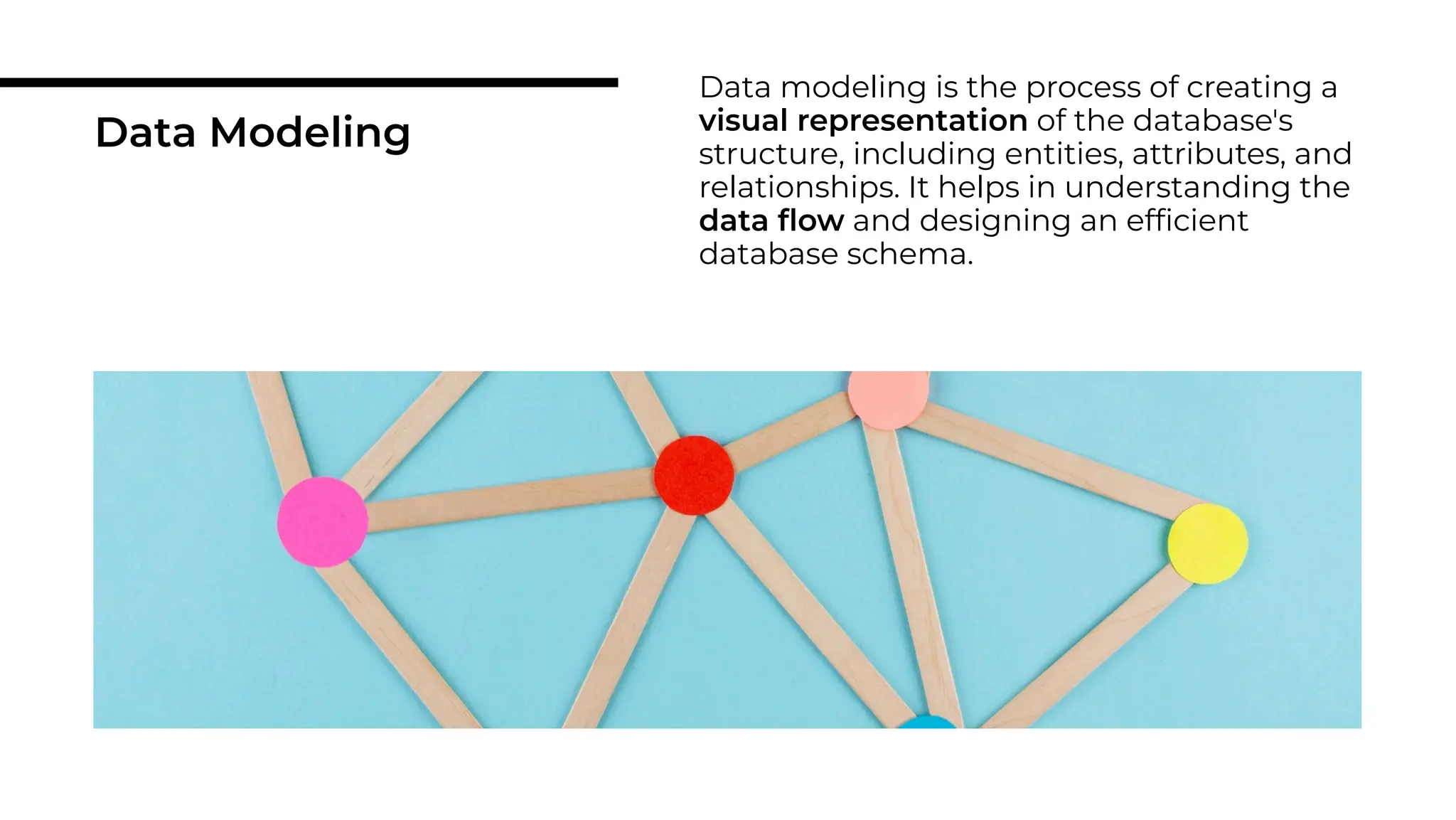
Data modeling is the process of creating a
visual representation of the database's
structure, including entities, attributes, and
relationships. It helps in understanding the
data flow and designing an efficient
database schema.
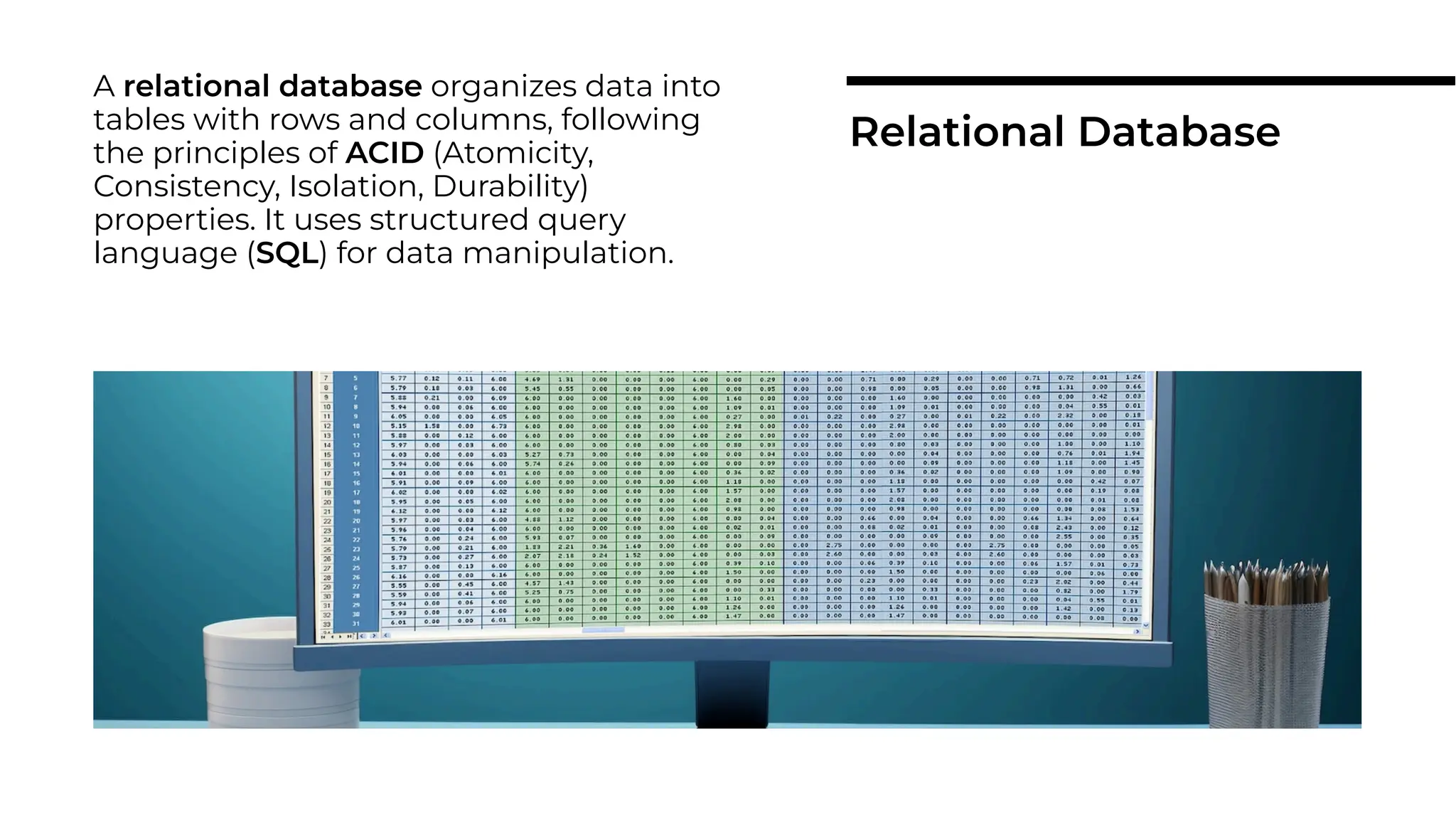
A relational database organizes data into
tables with rows and columns, following
the principles of ACID (Atomicity,
Consistency, Isolation, Durability)
properties. It uses structured query
language (SQL) for data manipulation.
Relational Database
Query Languages
Query languages such as SQL enable users
to retrieve, update, and manipulate data in
the database. Understanding query
optimization and indexing is crucial for
query performance.
Data Integrity
Data integrity ensures the accuracy,
consistency, and reliability of data stored in
the database. It includes entity integrity,
referential integrity, and domain integrity.
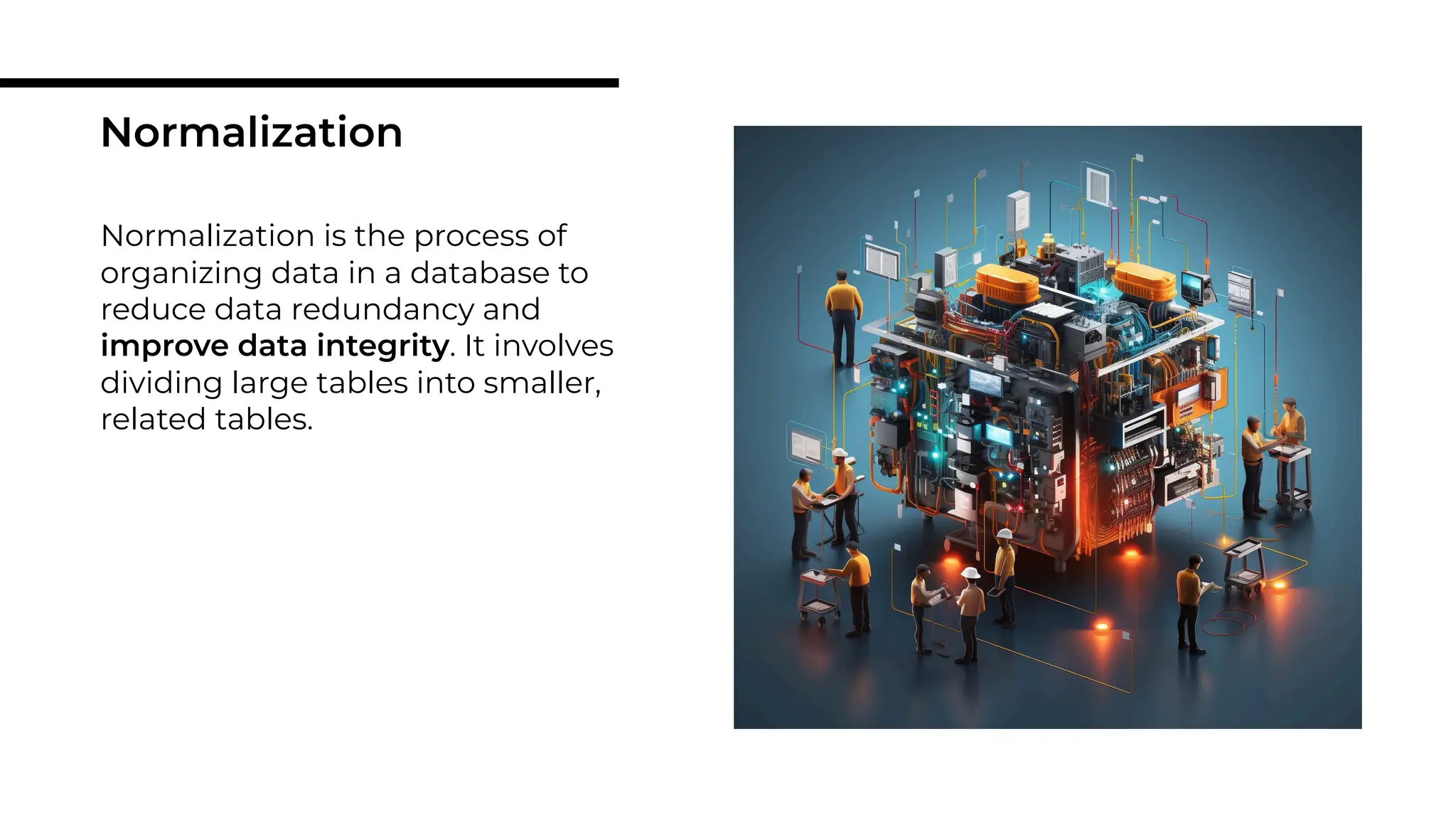
Normalization is the process of
organizing data in a database to
reduce data redundancy and
improve data integrity. It involves
dividing large tables into smaller,
related tables.
Normalization
Indexing is a technique used to improve
the speed of data retrieval operations on a
database table. It creates an ordered list of
keys and pointers to the actual data.
Indexing
Transaction management ensures the
ACID properties of database transactions.
It includes the concepts of concurrency
control and recovery management.
Transaction Management
Database security involves protecting the
database from unauthorized access, data
breaches, and malicious attacks.
Authorization mechanisms control user
access to specific data and operations.
Security and Authorization
The evolving landscape of big
data, cloud computing, and
NoSQL databases presents new
challenges and opportunities for
database management.
Understanding these trends is
crucial for modern database
systems.
Challenges and Trends
In conclusion, a solid
understanding of the
foundations of database
management system concepts is
essential for designing efficient
databases, ensuring data
integrity, and meeting the
evolving needs of information
management.
Conclusion
Do you have any questions?
Thanks!
youremail@email.com
+00 000 000 000
www.yourwebsite.com
Street X, City X - 0000
@yourusername

wepik-foundations-of-database-management-system-concepts-20240419193015rdTe.pdf

  • 1.
  • 2.
    This presentation coversthe foundations of Database Management System (DBMS) concepts, including data modeling, query languages, and data integrity. We will explore the key components and principles of DBMS and their importance in modern information systems. Introduction
  • 3.
    A DBMS isa software system that enables users to define, create, maintain, and control access to the database. It provides a structured framework for storing, managing, and retrieving data efficiently. Database Management System
  • 4.
    Data Modeling Data modelingis the process of creating a visual representation of the database's structure, including entities, attributes, and relationships. It helps in understanding the data flow and designing an efficient database schema.
  • 5.
    A relational databaseorganizes data into tables with rows and columns, following the principles of ACID (Atomicity, Consistency, Isolation, Durability) properties. It uses structured query language (SQL) for data manipulation. Relational Database
  • 6.
    Query Languages Query languagessuch as SQL enable users to retrieve, update, and manipulate data in the database. Understanding query optimization and indexing is crucial for query performance.
  • 7.
    Data Integrity Data integrityensures the accuracy, consistency, and reliability of data stored in the database. It includes entity integrity, referential integrity, and domain integrity.
  • 8.
    Normalization is theprocess of organizing data in a database to reduce data redundancy and improve data integrity. It involves dividing large tables into smaller, related tables. Normalization
  • 9.
    Indexing is atechnique used to improve the speed of data retrieval operations on a database table. It creates an ordered list of keys and pointers to the actual data. Indexing
  • 10.
    Transaction management ensuresthe ACID properties of database transactions. It includes the concepts of concurrency control and recovery management. Transaction Management
  • 11.
    Database security involvesprotecting the database from unauthorized access, data breaches, and malicious attacks. Authorization mechanisms control user access to specific data and operations. Security and Authorization
  • 12.
    The evolving landscapeof big data, cloud computing, and NoSQL databases presents new challenges and opportunities for database management. Understanding these trends is crucial for modern database systems. Challenges and Trends
  • 13.
    In conclusion, asolid understanding of the foundations of database management system concepts is essential for designing efficient databases, ensuring data integrity, and meeting the evolving needs of information management. Conclusion
  • 14.
    Do you haveany questions? Thanks! youremail@email.com +00 000 000 000 www.yourwebsite.com Street X, City X - 0000 @yourusername