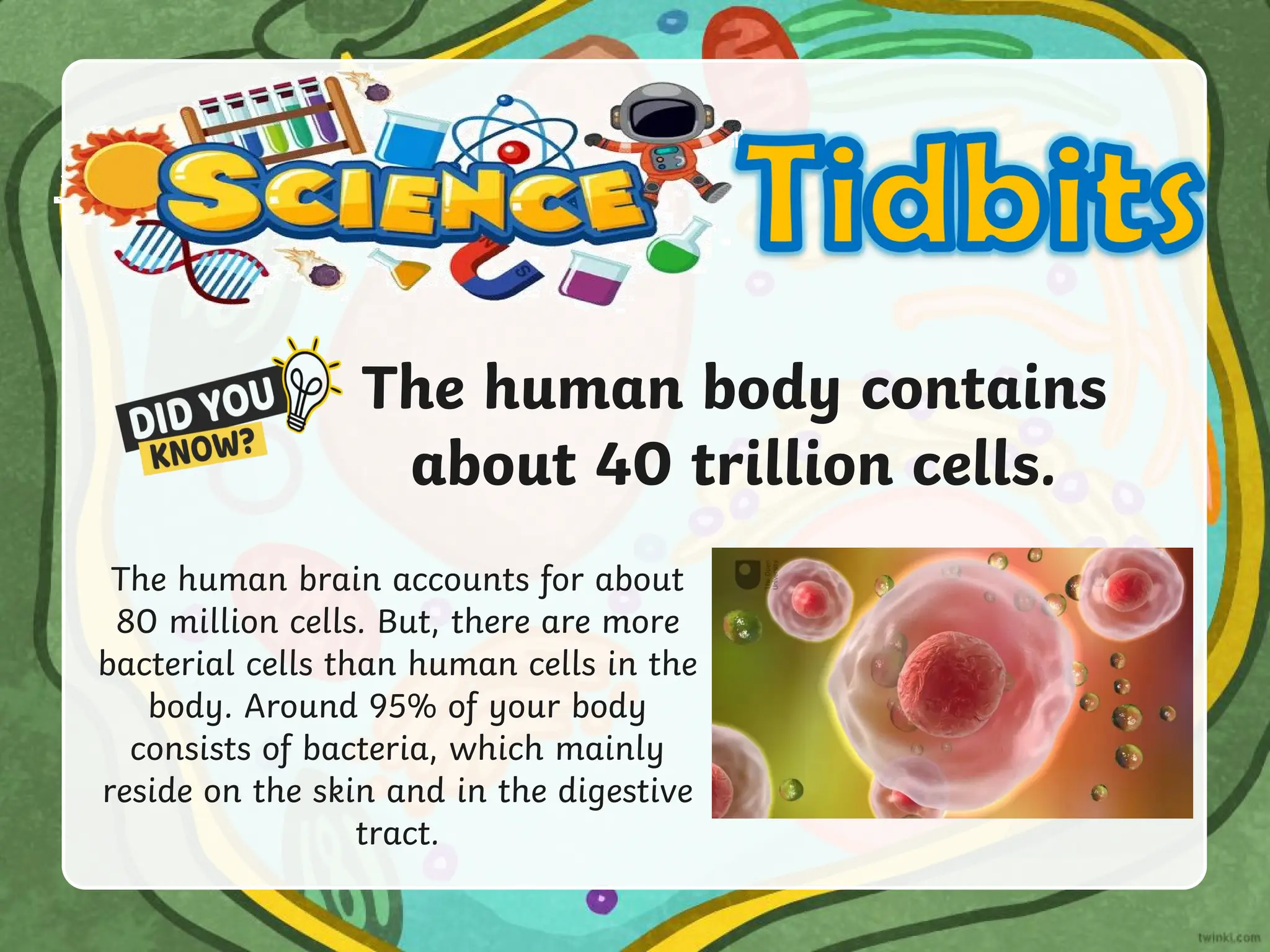
The human body contains
about 40 trillion cells.
The human brain accounts for about
80 million cells. But, there are more
bacterial cells than human cells in the
body. Around 95% of your body
consists of bacteria, which mainly
reside on the skin and in the digestive
tract.
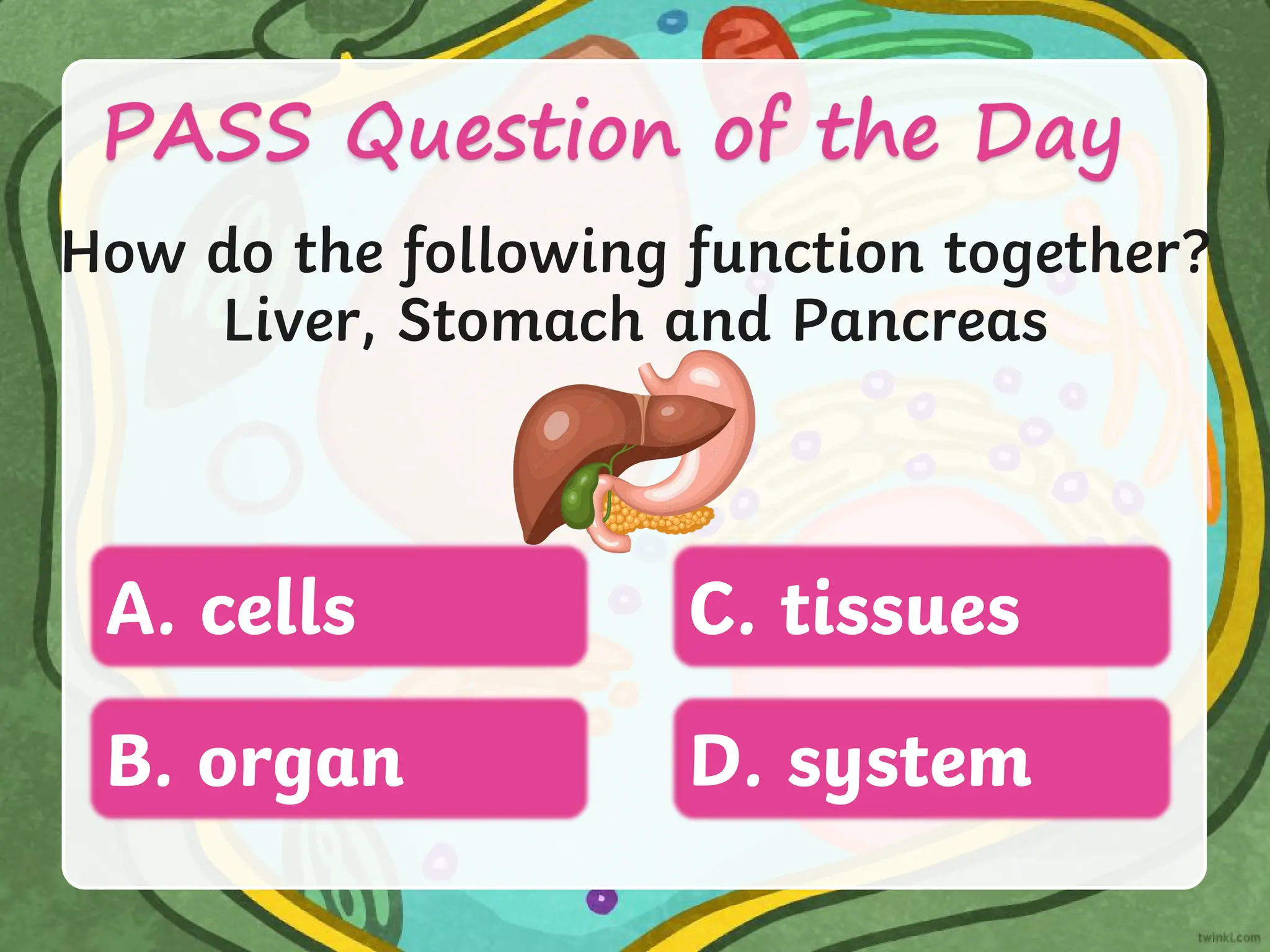
How do the following function together?
Liver, Stomach and Pancreas
A. cells
B. organ
C. tissues
D. system
Answer
system
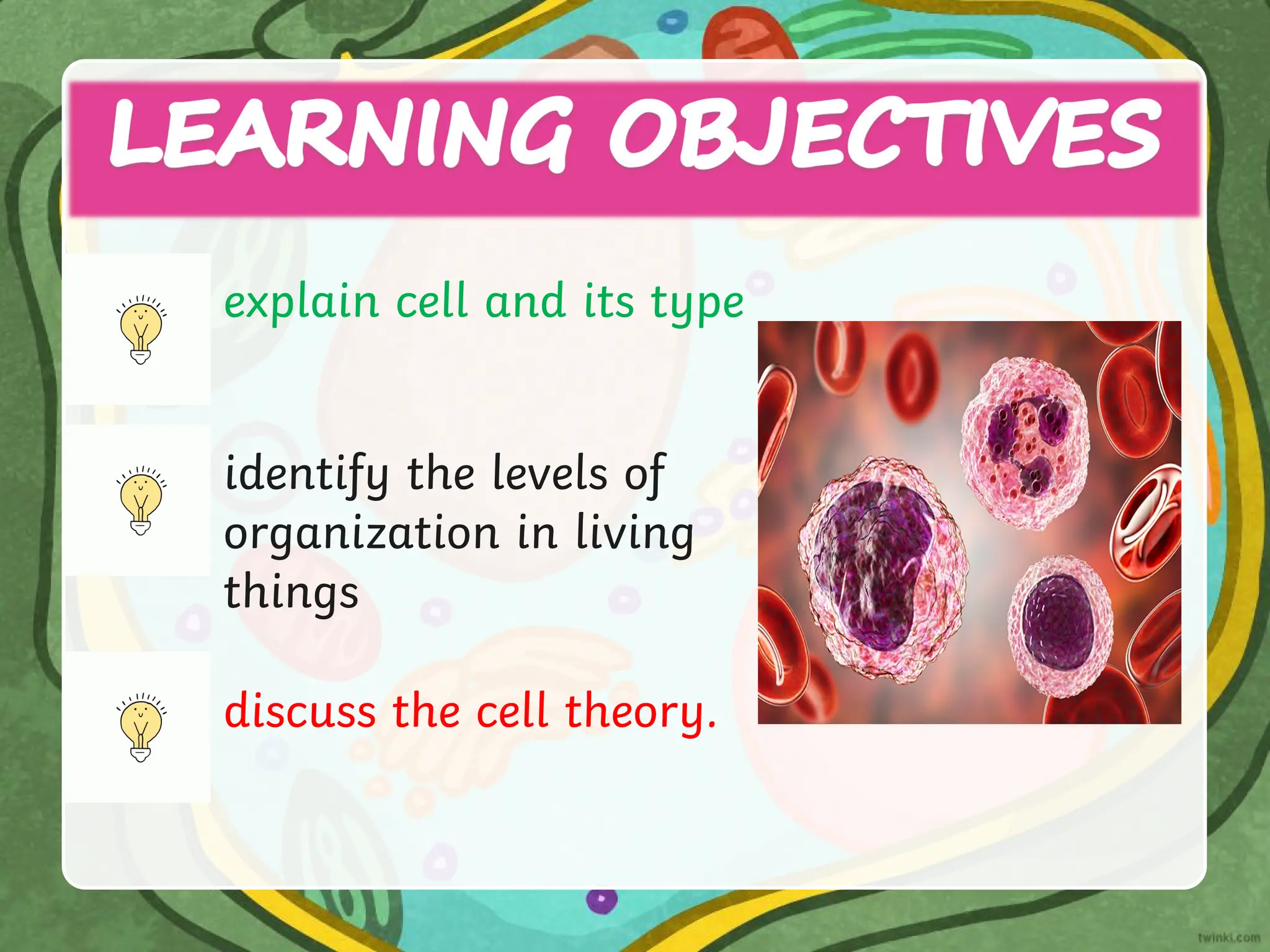
explain cell and its type
identify the levels of
organization in living
things
discuss the cell theory.
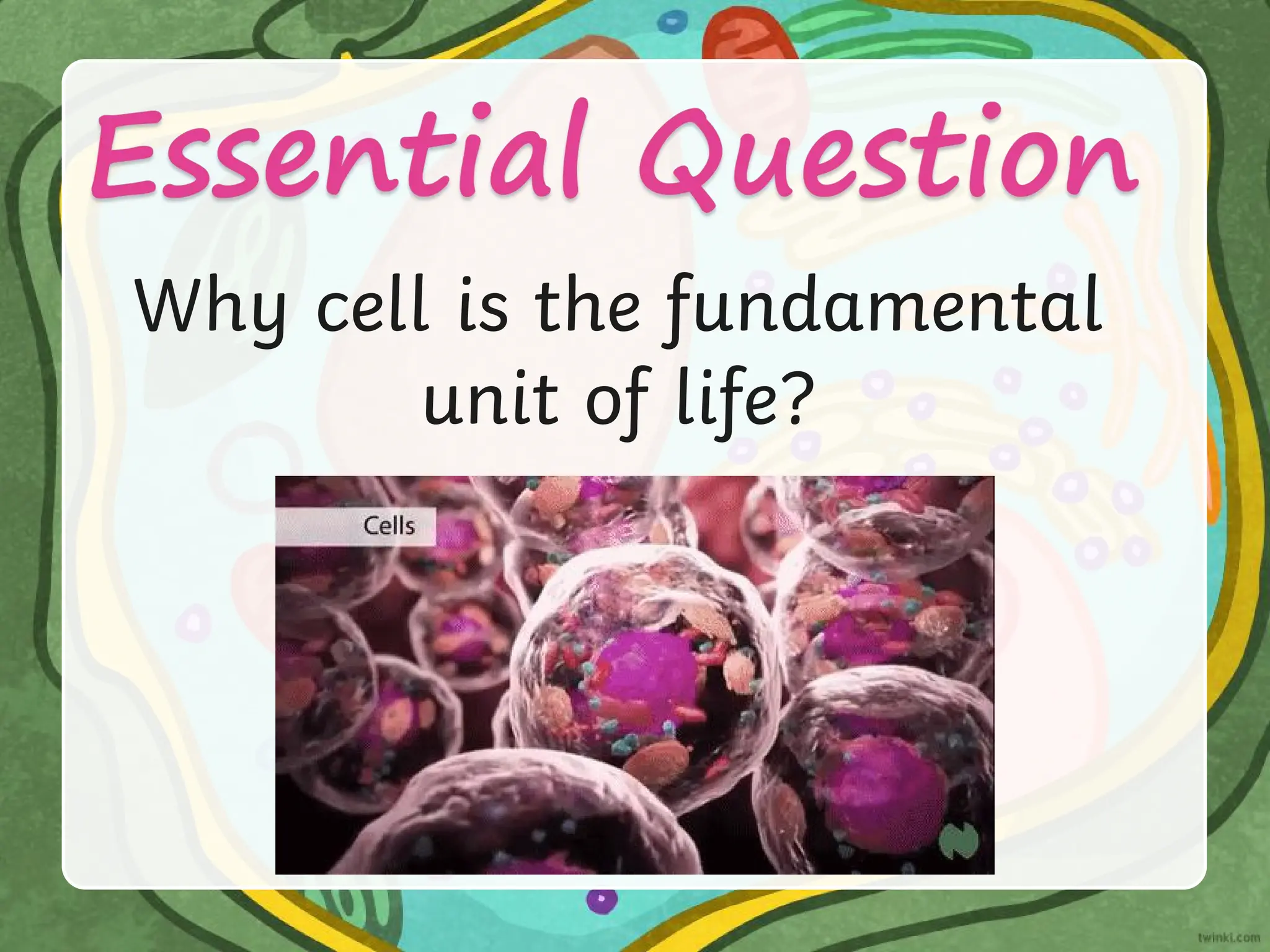
Why cell is the fundamental
unit of life?
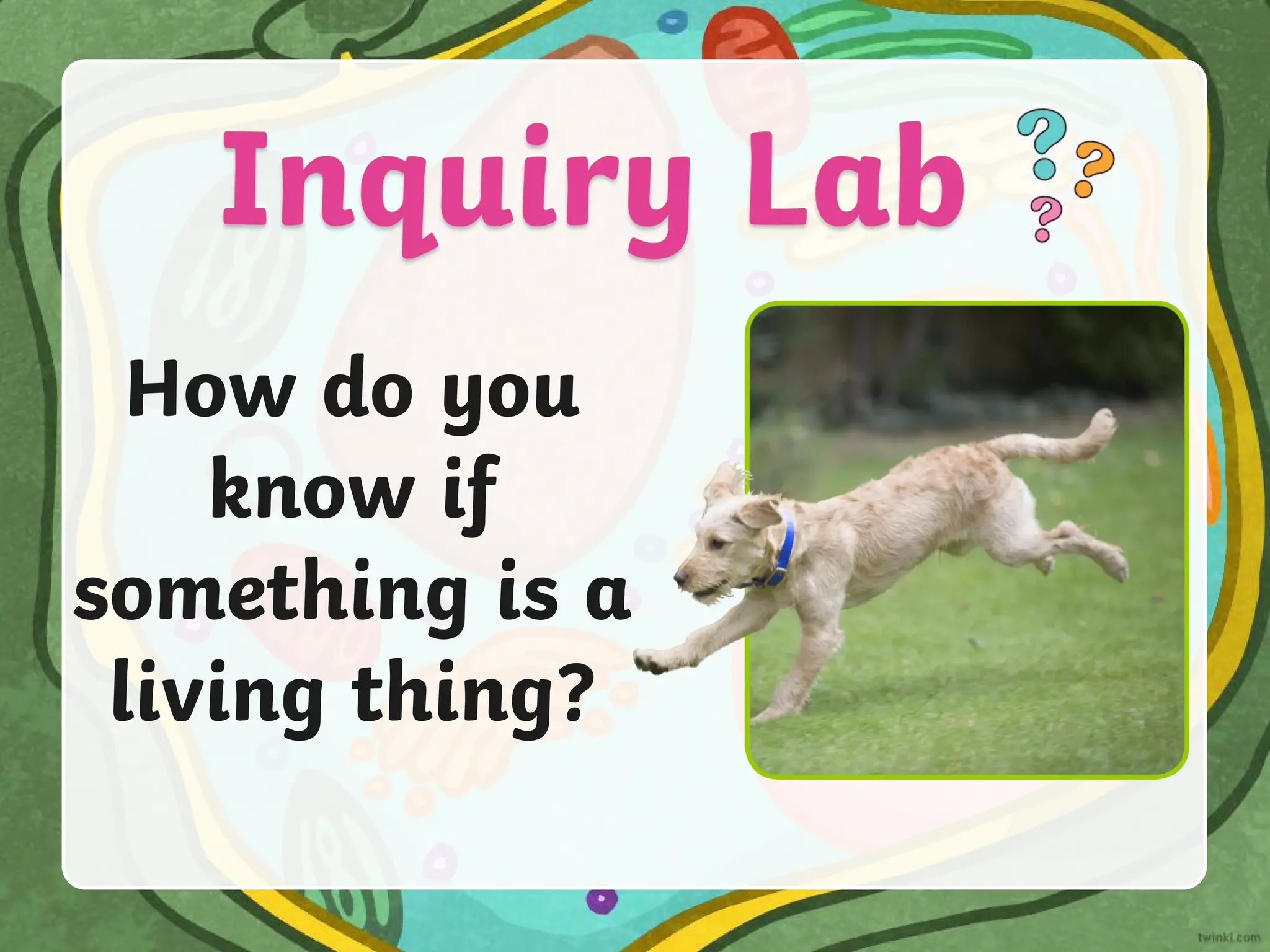
How do you
know if
something is a
living thing?
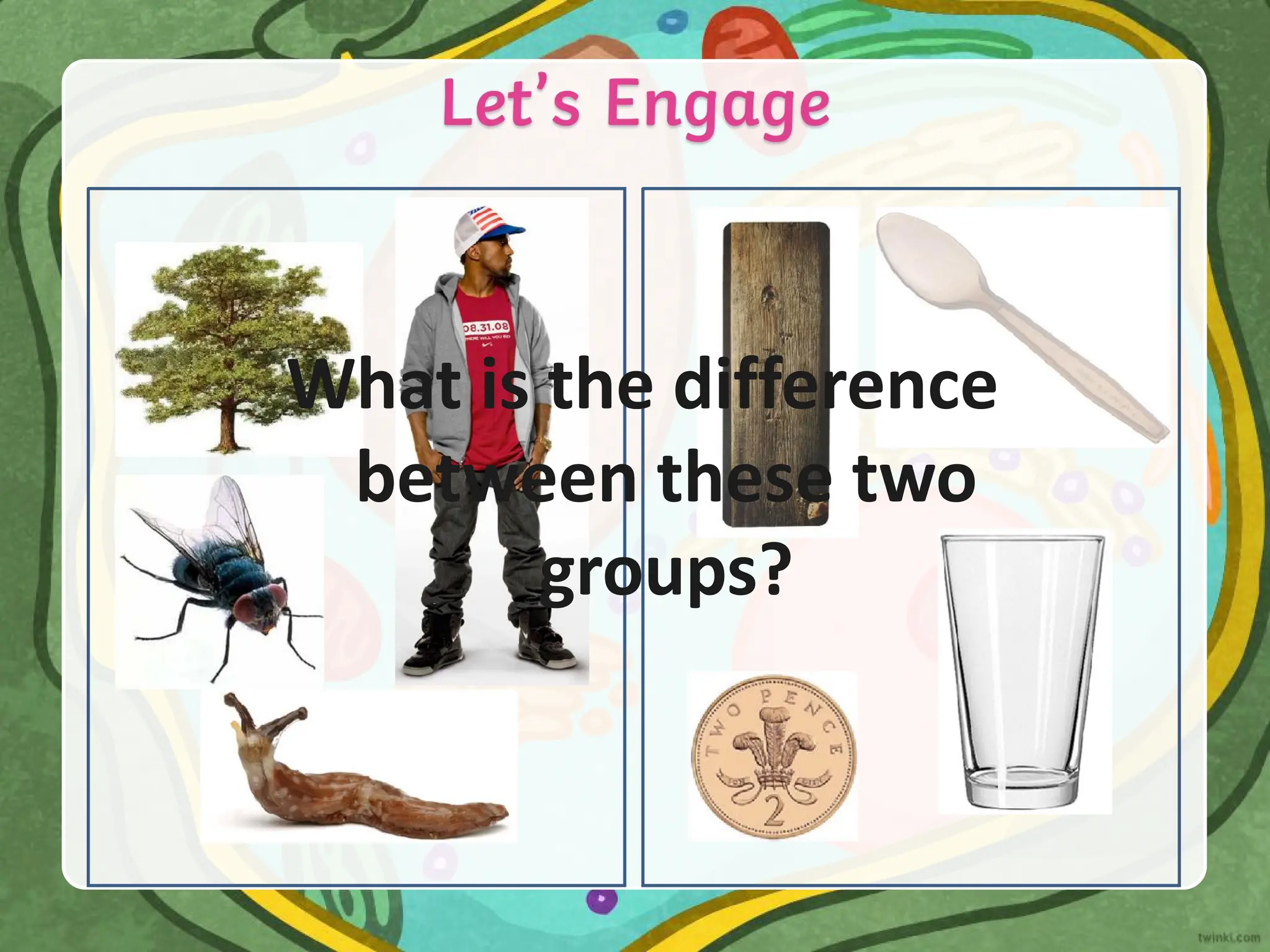
What is the difference
between these two
groups?
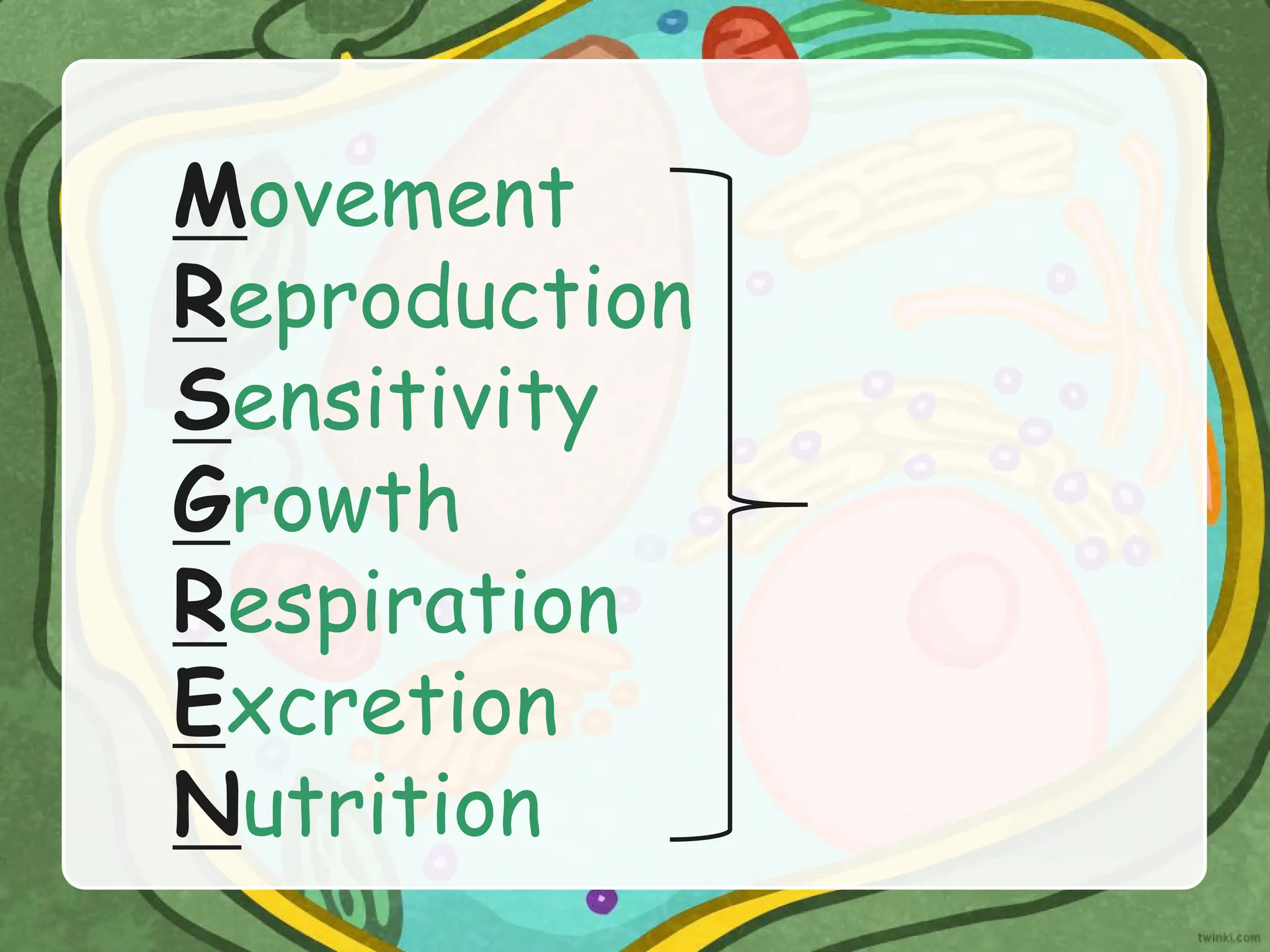
Movement
Reproduction
Sensitivity
Growth
Respiration
Excretion
Nutrition
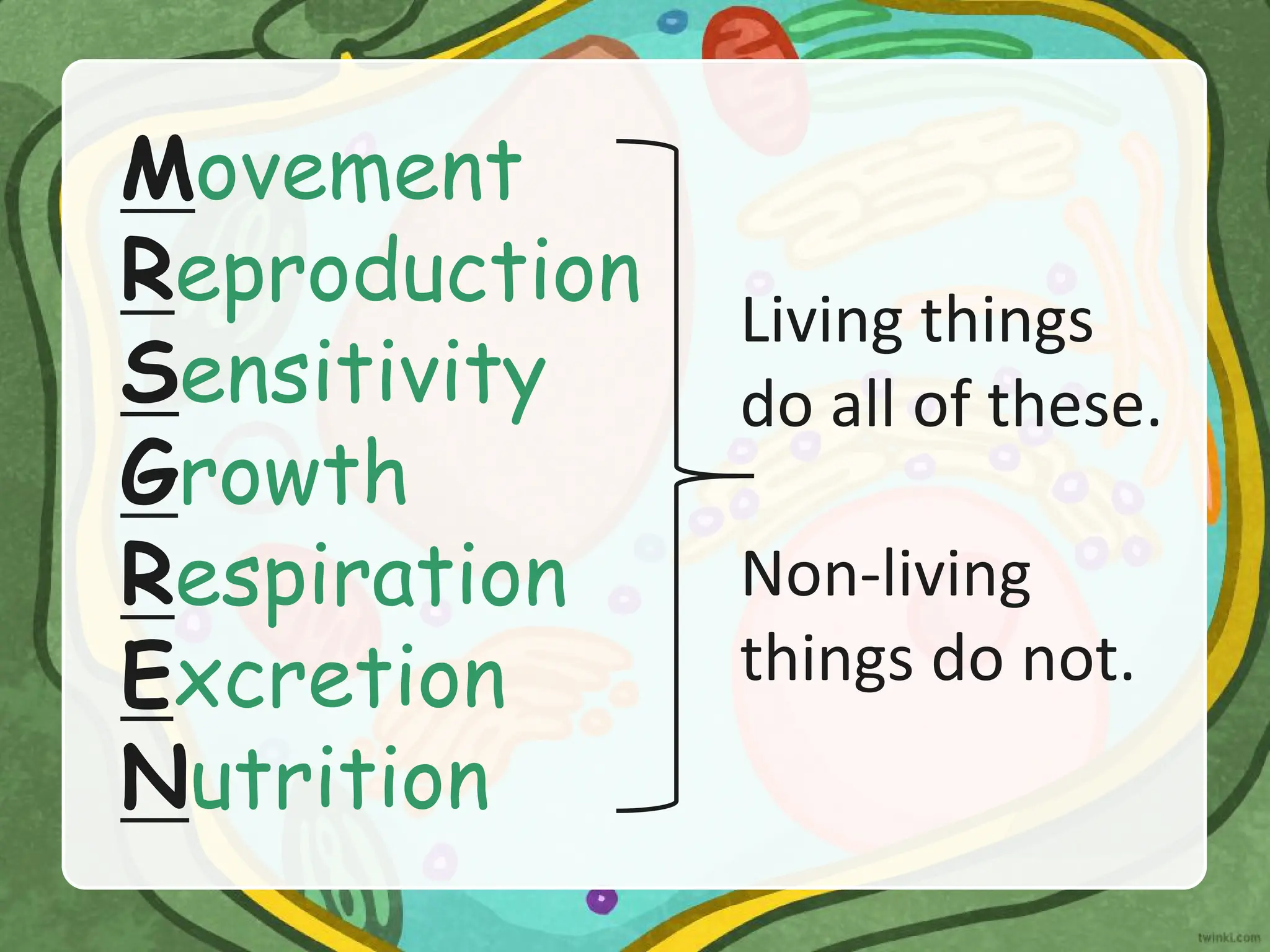
Living things
do all of these.
Non-living
things do not.
Movement
Reproduction
Sensitivity
Growth
Respiration
Excretion
Nutrition
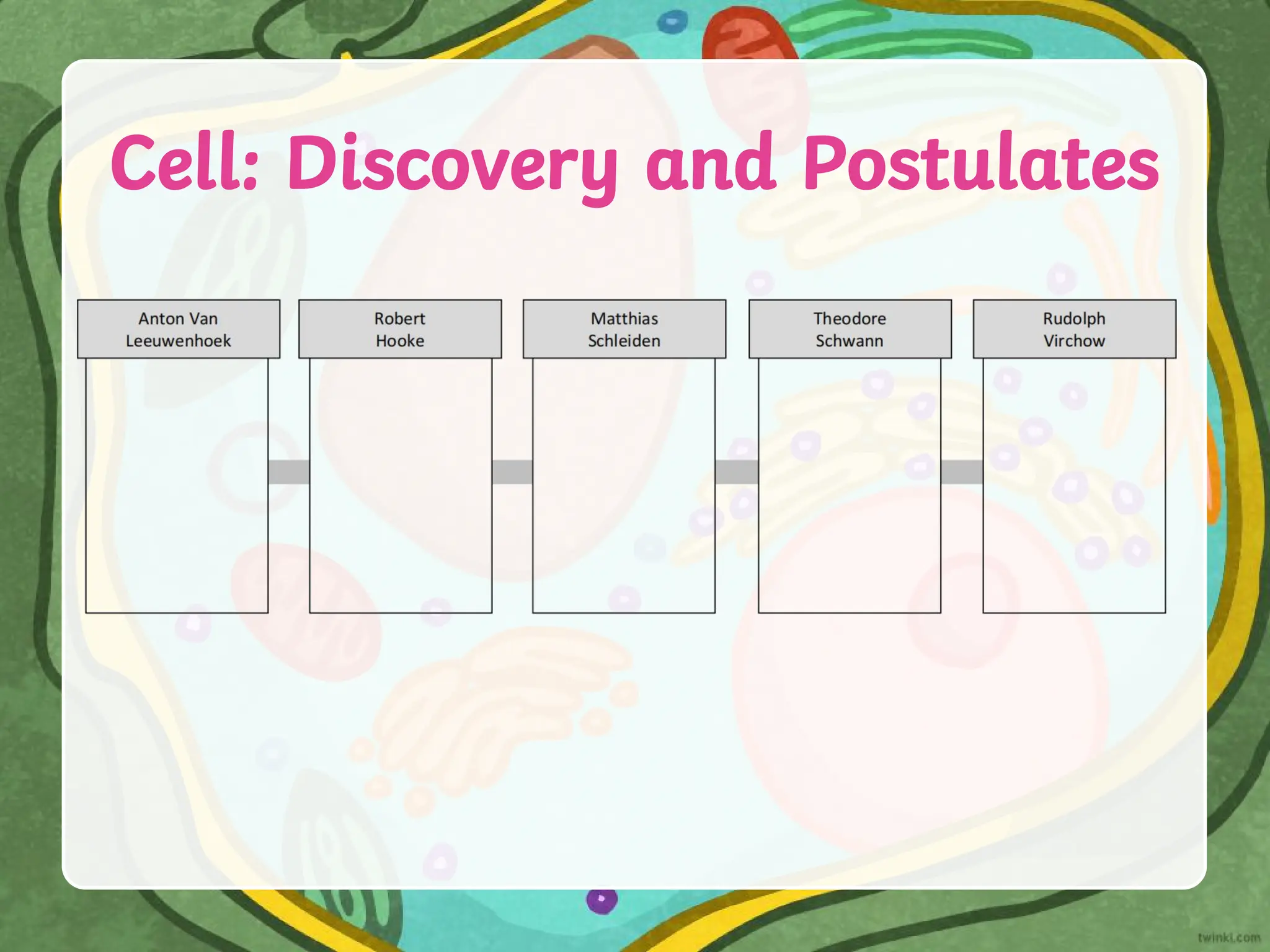
Cell: Discovery and Postulates
Presentation
of Ideas
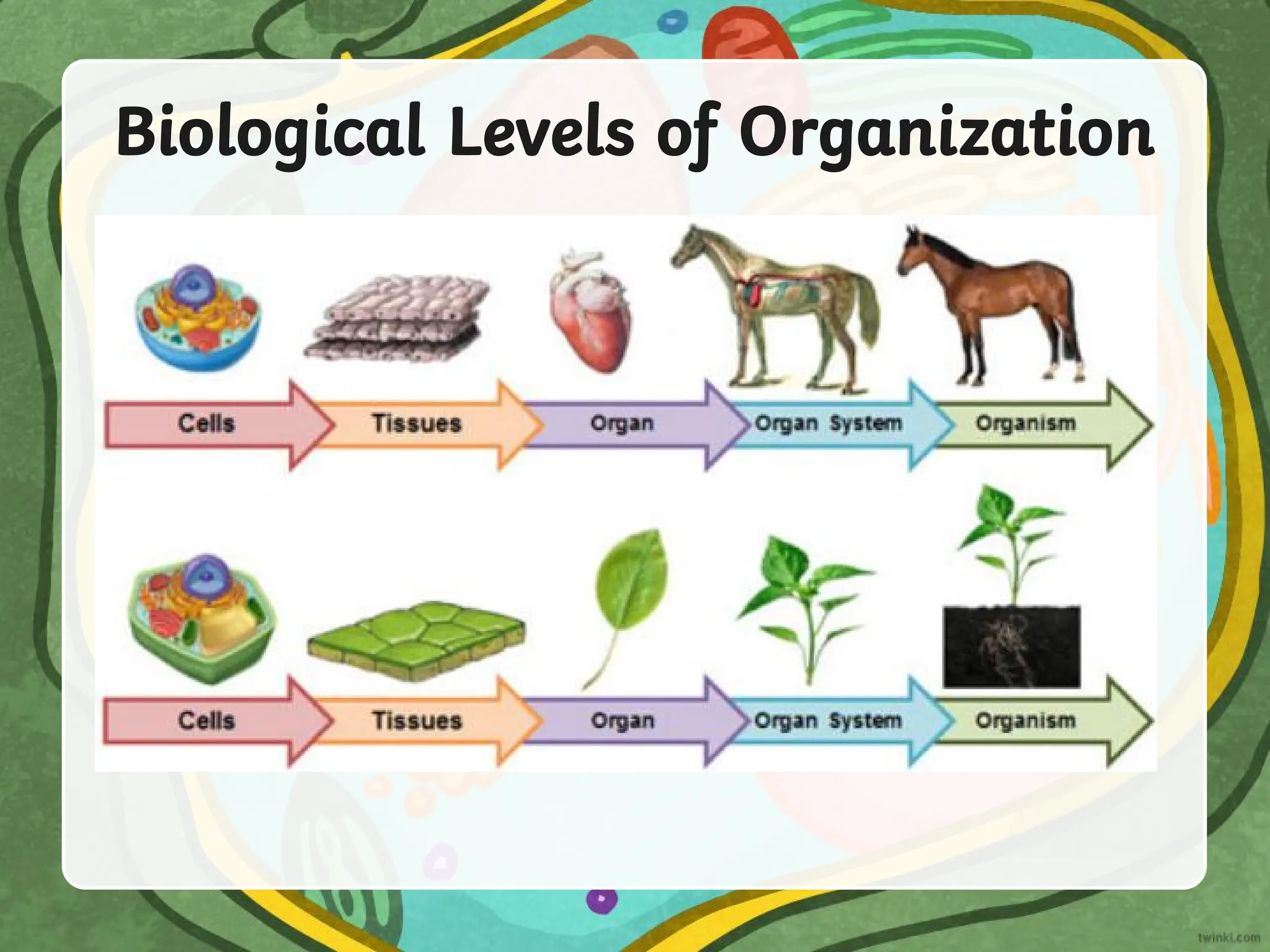
Biological Levels of Organization
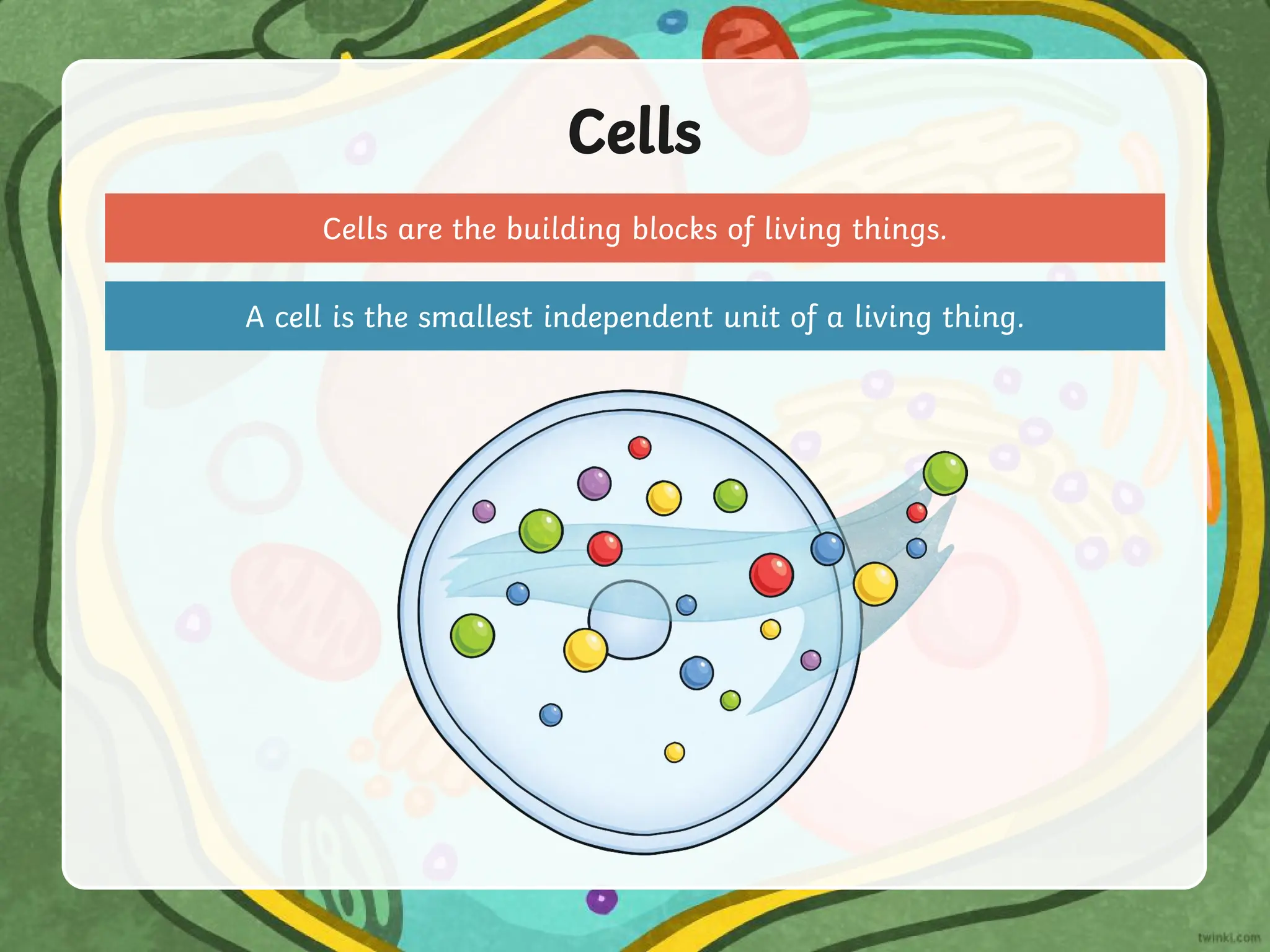
Cells are the building blocks of living things.
Cells
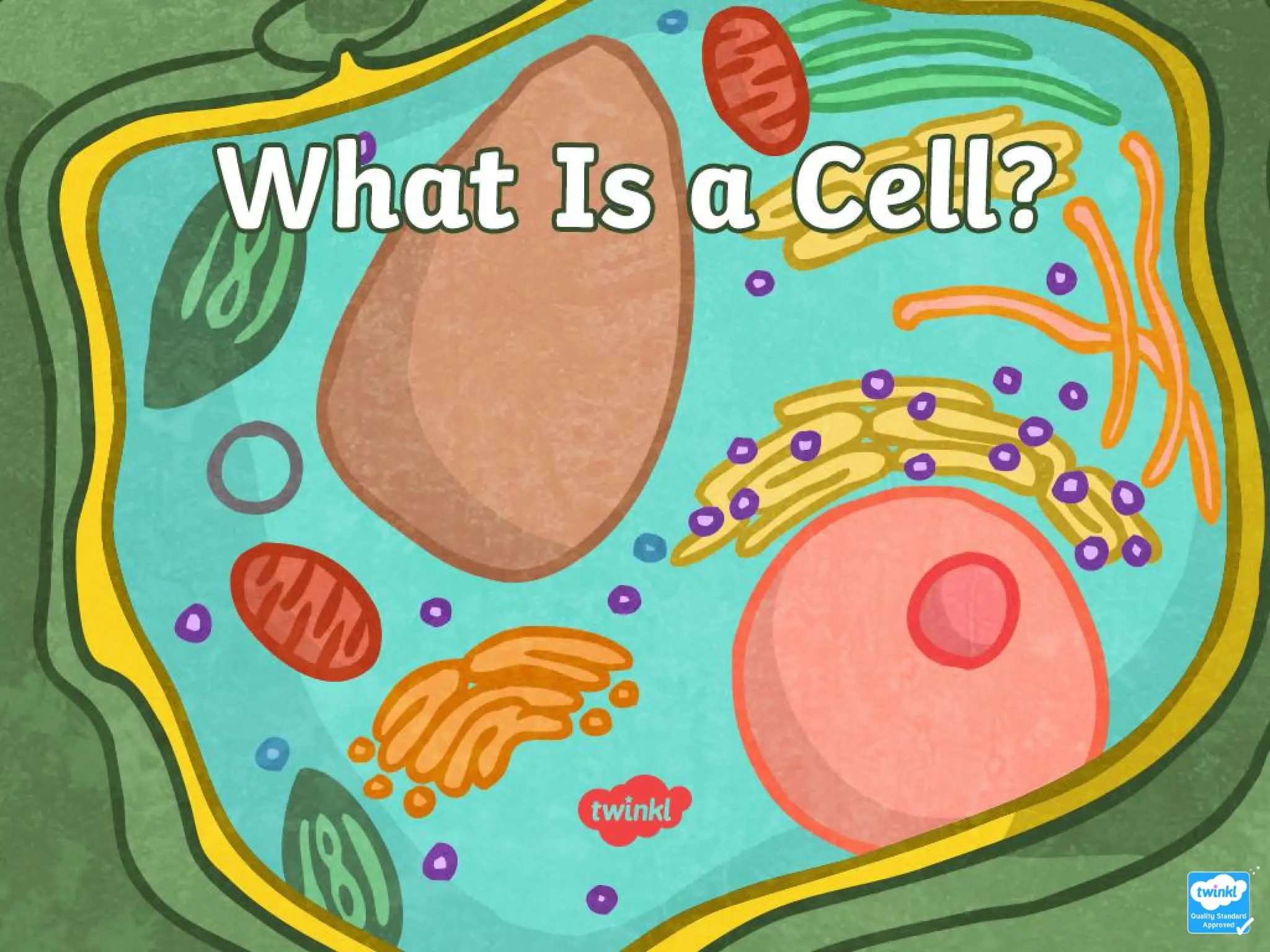
A cell is the smallest independent unit of a living thing.
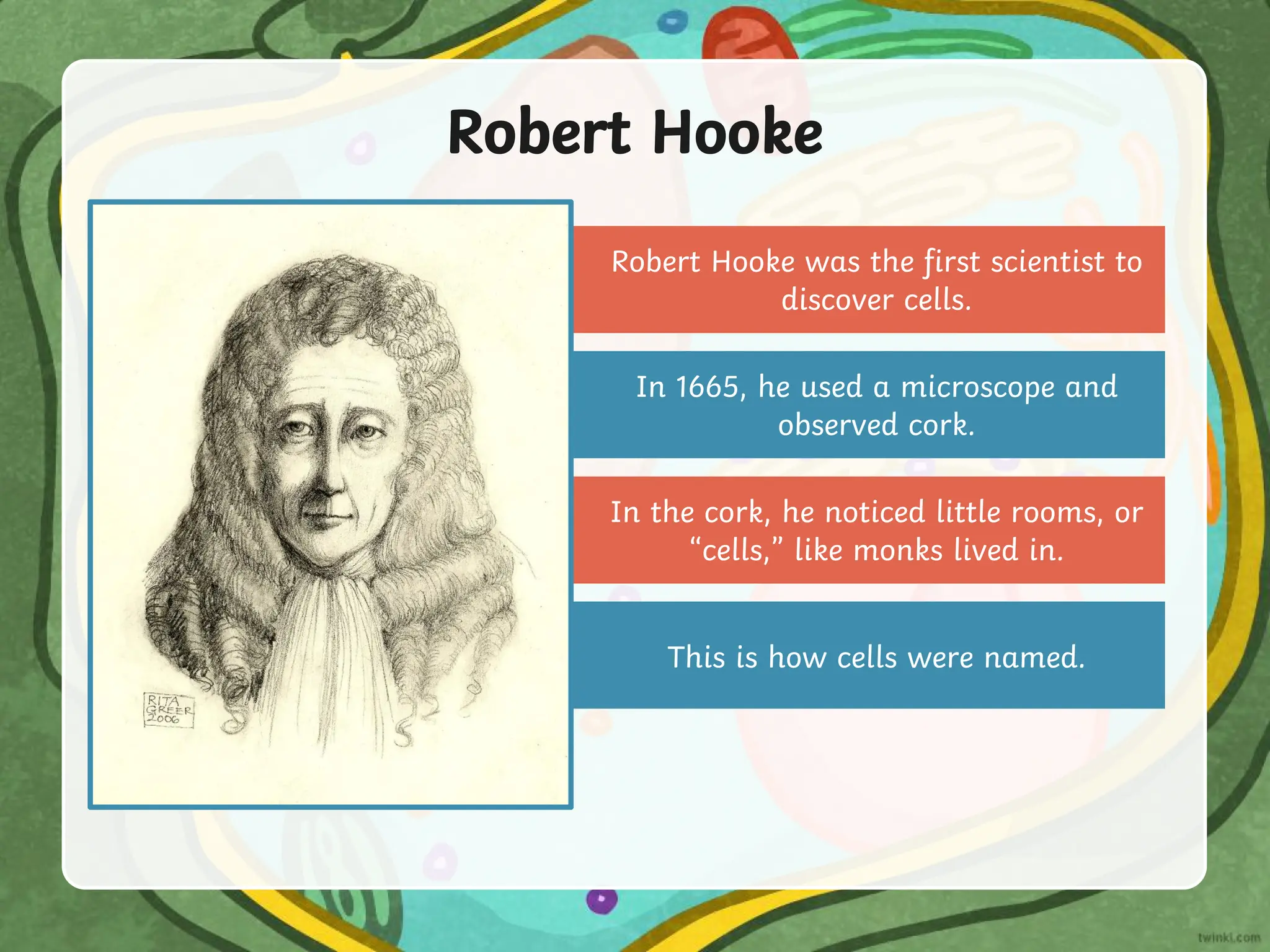
Robert Hooke was the first scientist to
discover cells.
Robert Hooke
In 1665, he used a microscope and
observed cork.
In the cork, he noticed little rooms, or
“cells,” like monks lived in.
This is how cells were named.
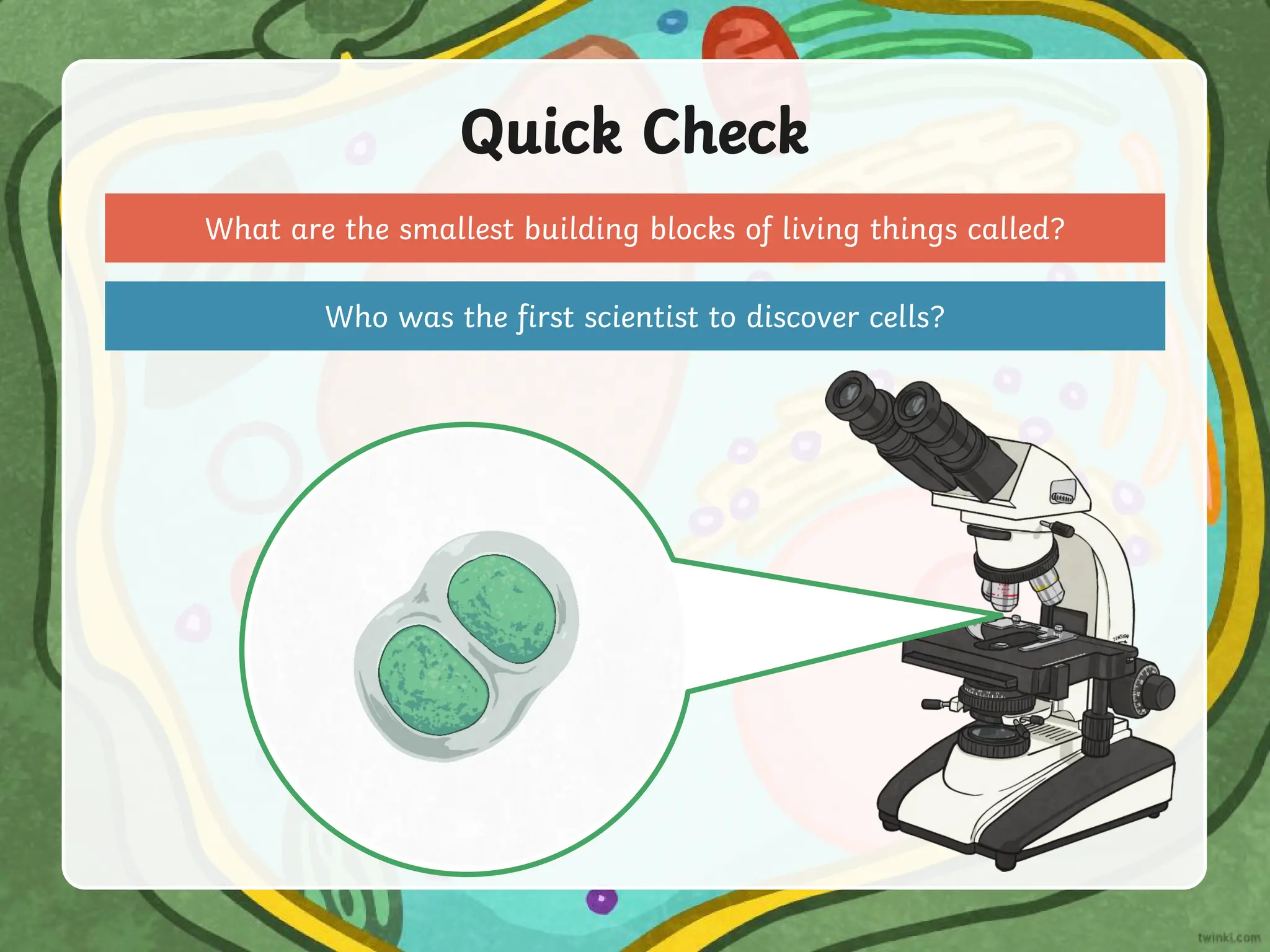
Quick Check
What are the smallest building blocks of living things called?
Who was the first scientist to discover cells?
Cell Theory
As scientists continued to study cells, they realized that:
All living things are made of cells.
1
A cell is the smallest unit of life.
2
Cells make more cells.

3
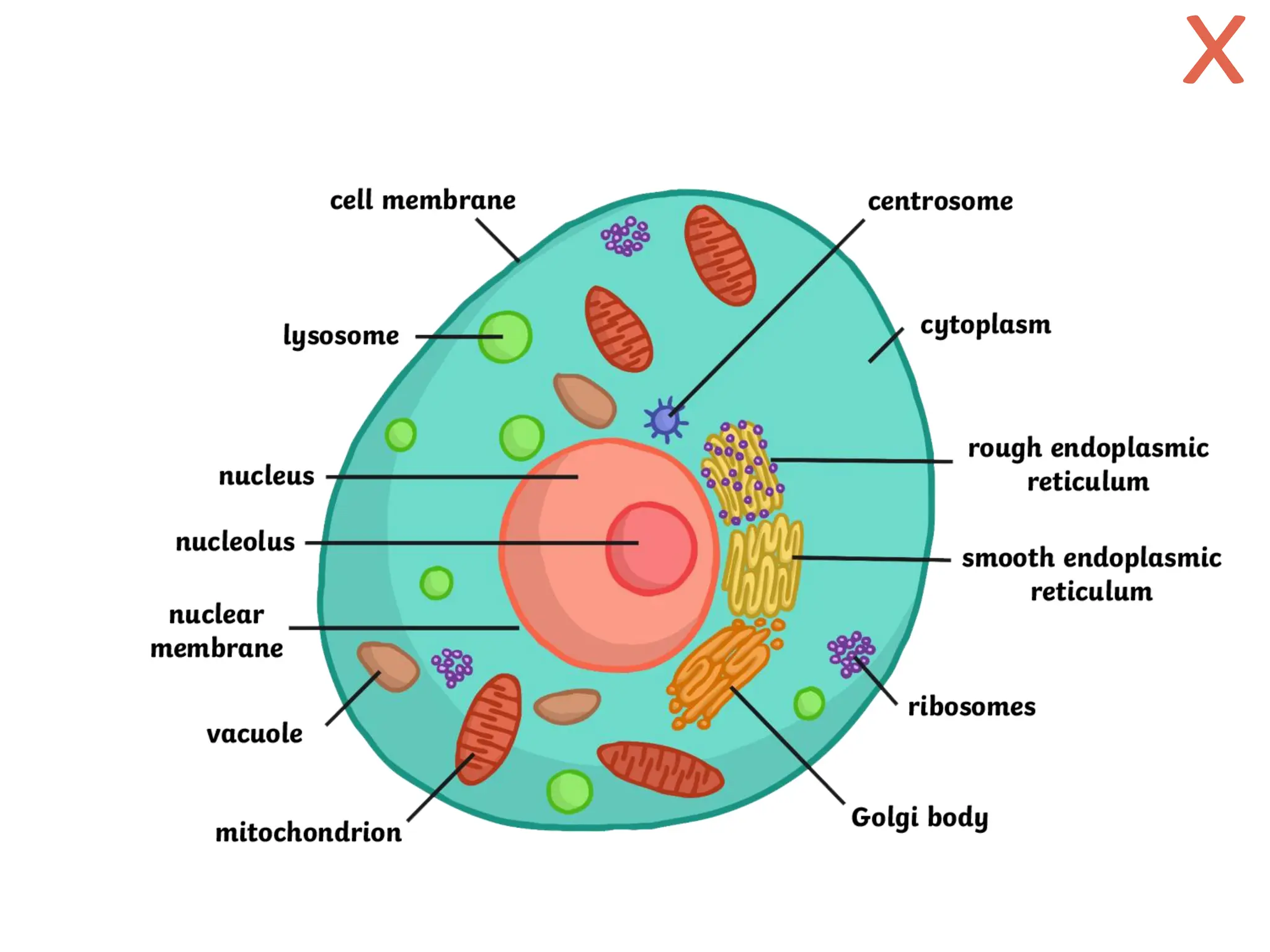
These parts are like the organs of your body:
they have a specific purpose.
Cell parts are called "organelles."
Cell Theory
Cells are made of even smaller parts.
Click to enlarge!
x
Cell Theory
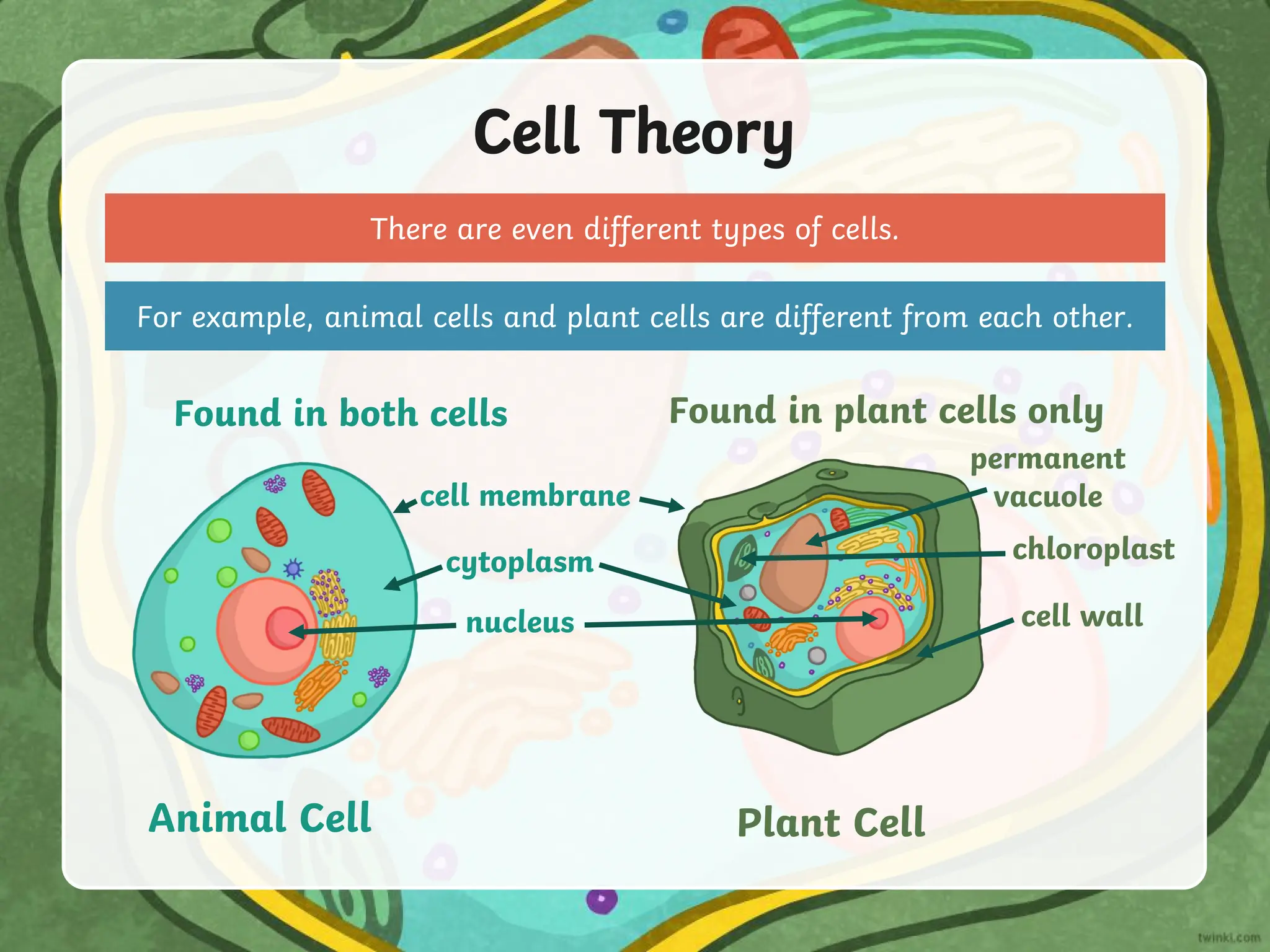
There are even different types of cells.
For example, animal cells and plant cells are different from each other.
Animal Cell
Found in both cells
cell membrane
cytoplasm
nucleus
Plant Cell
cell wall
permanent
vacuole
chloroplast
Found in plant cells only
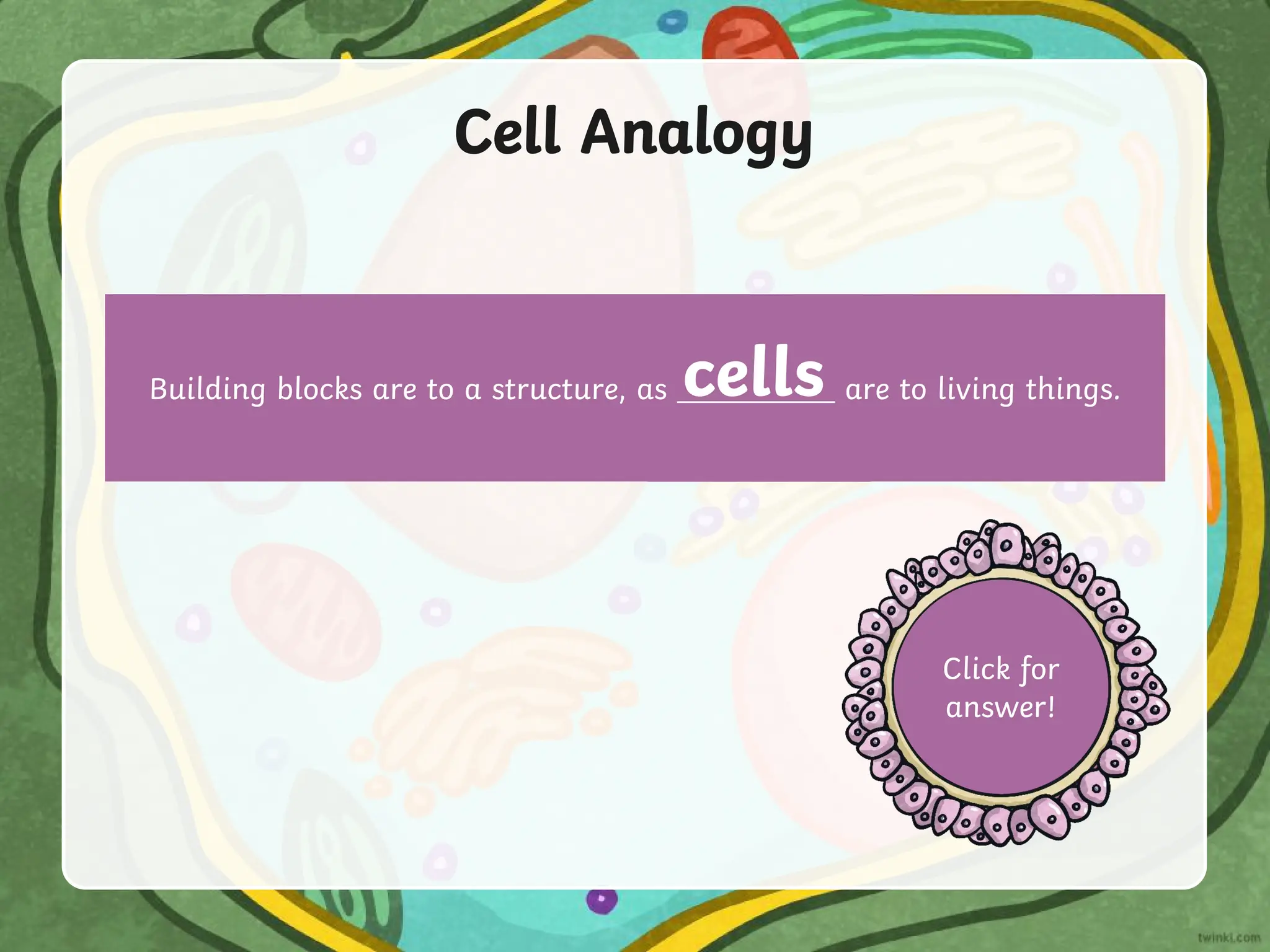
Cell Analogy
Building blocks are to a structure, as are to living things.
cells
Click for
answer!
1. All living things are
made of cells.
2 . C e l l s w e r e f i r s t
identified in the early
1400’s.
3. One of the characteristic of
any organism is that it must
be composed of at least one
cell.
Introduction to Cell.pdf

Introduction to Cell.pdf

  • 1.
    The human bodycontains about 40 trillion cells. The human brain accounts for about 80 million cells. But, there are more bacterial cells than human cells in the body. Around 95% of your body consists of bacteria, which mainly reside on the skin and in the digestive tract.
  • 2.
    How do thefollowing function together? Liver, Stomach and Pancreas A. cells B. organ C. tissues D. system
  • 3.
  • 5.
    explain cell andits type identify the levels of organization in living things discuss the cell theory.
  • 6.
    Why cell isthe fundamental unit of life?
  • 8.
    How do you knowif something is a living thing?
  • 9.
    What is thedifference between these two groups?
  • 10.
  • 11.
    Living things do allof these. Non-living things do not. Movement Reproduction Sensitivity Growth Respiration Excretion Nutrition
  • 12.
  • 18.
  • 20.
  • 21.
    Cells are thebuilding blocks of living things. Cells A cell is the smallest independent unit of a living thing.
  • 22.
    Robert Hooke wasthe first scientist to discover cells. Robert Hooke In 1665, he used a microscope and observed cork. In the cork, he noticed little rooms, or “cells,” like monks lived in. This is how cells were named.
  • 23.
    Quick Check What arethe smallest building blocks of living things called? Who was the first scientist to discover cells?
  • 24.
    Cell Theory As scientistscontinued to study cells, they realized that: All living things are made of cells. 1 A cell is the smallest unit of life. 2 Cells make more cells. 3
  • 25.
    These parts arelike the organs of your body: they have a specific purpose. Cell parts are called "organelles." Cell Theory Cells are made of even smaller parts. Click to enlarge! x
  • 26.
    Cell Theory There areeven different types of cells. For example, animal cells and plant cells are different from each other. Animal Cell Found in both cells cell membrane cytoplasm nucleus Plant Cell cell wall permanent vacuole chloroplast Found in plant cells only
  • 27.
    Cell Analogy Building blocksare to a structure, as are to living things. cells Click for answer!
  • 31.
    1. All livingthings are made of cells.
  • 33.
    2 . Ce l l s w e r e f i r s t identified in the early 1400’s.
  • 35.
    3. One ofthe characteristic of any organism is that it must be composed of at least one cell.