Introduction
to the airline industry


V. Meril
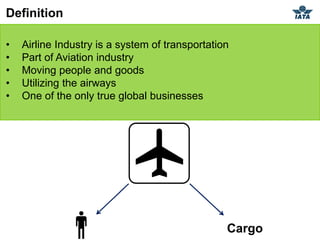
Definition

•   Airline Industry is a system of transportation
•   Part of Aviation industry
•   Moving people and goods
•   Utilizing the airways
•   One of the only true global businesses


                                                 Cargo
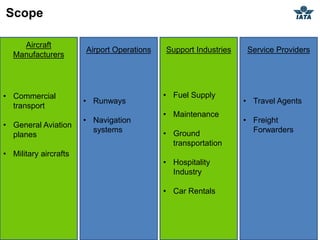
Scope

     Aircraft
                       Airport Operations   Support Industries    Service Providers
   Manufacturers


• Commercial                                • Fuel Supply
                       • Runways                                 • Travel Agents
  transport
                                            • Maintenance
                       • Navigation                              • Freight
• General Aviation
                         systems            • Ground               Forwarders
  planes
                                              transportation
• Military aircrafts
                                            • Hospitality
                                              Industry

                                            • Car Rentals


                                                                                      2
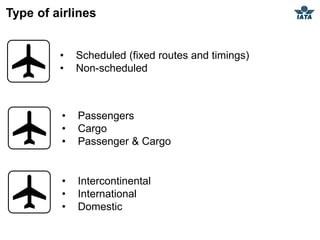
Type of airlines


         •   Scheduled (fixed routes and timings)
         •   Non-scheduled


         •   Passengers
         •   Cargo
         •   Passenger & Cargo


         •   Intercontinental
         •   International
         •   Domestic
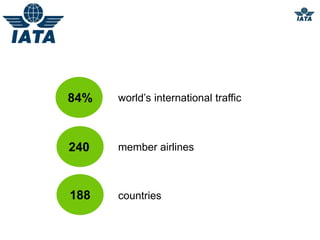
84%   world’s international traffic


240   member airlines


188   countries
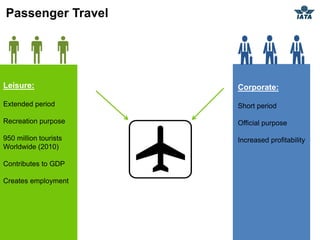
Passenger Travel


Leisure:               Corporate:

Extended period        Short period

Recreation purpose     Official purpose

950 million tourists   Increased profitability
Worldwide (2010)

Contributes to GDP

Creates employment
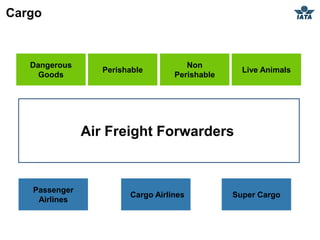
Cargo


   Dangerous                          Non
                  Perishable                      Live Animals
     Goods                         Perishable


          Passenger
               Air Freight Forwarders
           Airlines


   Passenger
                        Cargo Airlines          Super Cargo
    Airlines
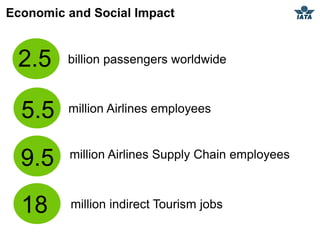
Economic and Social Impact


 2.5     billion passengers worldwide


  5.5    million Airlines employees


  9.5    million Airlines Supply Chain employees


  18     million indirect Tourism jobs
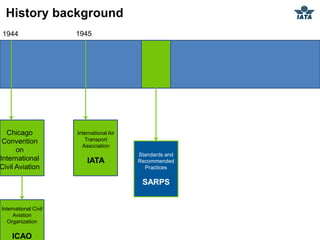
History background
 1944                 1945


  Chicago             International Air
 Convention              Transport
                        Association
      on
                                          Standards and
International             IATA            Recommended
Civil Aviation                              Practices

                                           SARPS


International Civil
     Aviation
   Organization

    ICAO
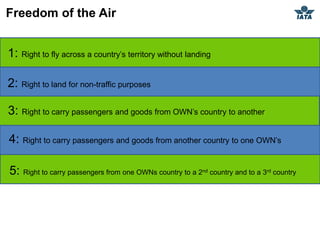
Freedom of the Air


1: Right to fly across a country’s territory without landing

2: Right to land for non-traffic purposes

3: Right to carry passengers and goods from OWN’s country to another

4: Right to carry passengers and goods from another country to one OWN’s

5: Right to carry passengers from one OWNs country to a 2   nd   country and to a 3rd country
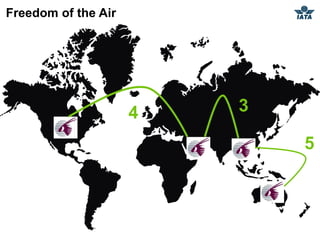
Freedom of the Air


                     4   3

                             5
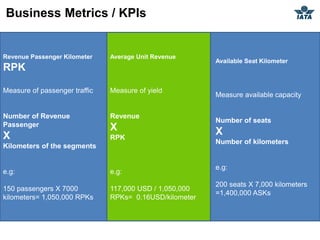
Business Metrics / KPIs


Revenue Passenger Kilometer    Average Unit Revenue
                                                         Available Seat Kilometer
RPK

Measure of passenger traffic   Measure of yield
                                                         Measure available capacity


Number of Revenue              Revenue
                                                         Number of seats
Passenger                      X
X                              RPK
                                                         X
                                                         Number of kilometers
Kilometers of the segments


                                                         e.g:
e.g:                           e.g:
                                                         200 seats X 7,000 kilometers
150 passengers X 7000          117,000 USD / 1,050,000
                                                         =1,400,000 ASKs
kilometers= 1,050,000 RPKs     RPKs= 0.16USD/kilometer
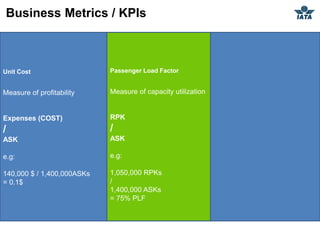
Business Metrics / KPIs


Unit Cost                   Passenger Load Factor


Measure of profitability    Measure of capacity utilization


Expenses (COST)             RPK
/                           /
ASK                         ASK

e.g:                        e.g:

140,000 $ / 1,400,000ASKs   1,050,000 RPKs
= 0.1$                      /
                            1,400,000 ASKs
                            = 75% PLF
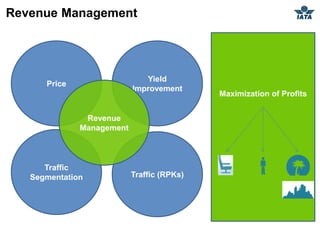
Revenue Management


                              Yield
      Price
                           Improvement
                                            Maximization of Profits


               Revenue
              Management


      Traffic
   Segmentation            Traffic (RPKs)
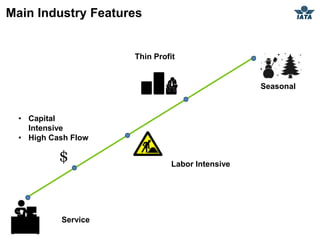
Main Industry Features


                     Thin Profit


                                                 Seasonal


  • Capital
    Intensive
  • High Cash Flow


                               Labor Intensive


           Service
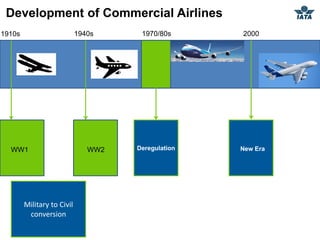
Development of Commercial Airlines
1910s                       1940s     1970/80s      2000


  WW1                          WW2   Deregulation   New Era


        Military to Civil
         conversion

Introduction to Airline Industry

  • 1.
    Introduction to the airlineindustry V. Meril
  • 2.
    Definition • Airline Industry is a system of transportation • Part of Aviation industry • Moving people and goods • Utilizing the airways • One of the only true global businesses Cargo
  • 3.
    Scope Aircraft Airport Operations Support Industries Service Providers Manufacturers • Commercial • Fuel Supply • Runways • Travel Agents transport • Maintenance • Navigation • Freight • General Aviation systems • Ground Forwarders planes transportation • Military aircrafts • Hospitality Industry • Car Rentals 2
  • 4.
    Type of airlines • Scheduled (fixed routes and timings) • Non-scheduled • Passengers • Cargo • Passenger & Cargo • Intercontinental • International • Domestic
  • 5.
    84% world’s international traffic 240 member airlines 188 countries
  • 6.
    Passenger Travel Leisure: Corporate: Extended period Short period Recreation purpose Official purpose 950 million tourists Increased profitability Worldwide (2010) Contributes to GDP Creates employment
  • 7.
    Cargo Dangerous Non Perishable Live Animals Goods Perishable Passenger Air Freight Forwarders Airlines Passenger Cargo Airlines Super Cargo Airlines
  • 8.
    Economic and SocialImpact 2.5 billion passengers worldwide 5.5 million Airlines employees 9.5 million Airlines Supply Chain employees 18 million indirect Tourism jobs
  • 9.
    History background 1944 1945 Chicago International Air Convention Transport Association on Standards and International IATA Recommended Civil Aviation Practices SARPS International Civil Aviation Organization ICAO
  • 10.
    Freedom of theAir 1: Right to fly across a country’s territory without landing 2: Right to land for non-traffic purposes 3: Right to carry passengers and goods from OWN’s country to another 4: Right to carry passengers and goods from another country to one OWN’s 5: Right to carry passengers from one OWNs country to a 2 nd country and to a 3rd country
  • 11.
    Freedom of theAir 4 3 5
  • 12.
    Business Metrics /KPIs Revenue Passenger Kilometer Average Unit Revenue Available Seat Kilometer RPK Measure of passenger traffic Measure of yield Measure available capacity Number of Revenue Revenue Number of seats Passenger X X RPK X Number of kilometers Kilometers of the segments e.g: e.g: e.g: 200 seats X 7,000 kilometers 150 passengers X 7000 117,000 USD / 1,050,000 =1,400,000 ASKs kilometers= 1,050,000 RPKs RPKs= 0.16USD/kilometer
  • 13.
    Business Metrics /KPIs Unit Cost Passenger Load Factor Measure of profitability Measure of capacity utilization Expenses (COST) RPK / / ASK ASK e.g: e.g: 140,000 $ / 1,400,000ASKs 1,050,000 RPKs = 0.1$ / 1,400,000 ASKs = 75% PLF
  • 14.
    Revenue Management Yield Price Improvement Maximization of Profits Revenue Management Traffic Segmentation Traffic (RPKs)
  • 15.
    Main Industry Features Thin Profit Seasonal • Capital Intensive • High Cash Flow Labor Intensive Service
  • 16.
    Development of CommercialAirlines 1910s 1940s 1970/80s 2000 WW1 WW2 Deregulation New Era Military to Civil conversion