Introduction Of Software Engineering
SlideMake.com
1
Introduction to Software Engineering
Software engineering is the discipline of
designing, creating, and maintaining
software systems.
It encompasses a set of principles,
techniques, and processes to ensure the
development of high-quality software.
Software engineering is essential for
building reliable, scalable, and efficient
software applications.
2
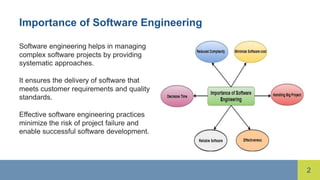
Importance of Software Engineering
Software engineering helps in managing
complex software projects by providing
systematic approaches.
It ensures the delivery of software that
meets customer requirements and quality
standards.
Effective software engineering practices
minimize the risk of project failure and
enable successful software development.
3
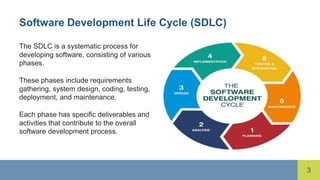
Software Development Life Cycle (SDLC)
The SDLC is a systematic process for
developing software, consisting of various
phases.
These phases include requirements
gathering, system design, coding, testing,
deployment, and maintenance.
Each phase has specific deliverables and
activities that contribute to the overall
software development process.
4
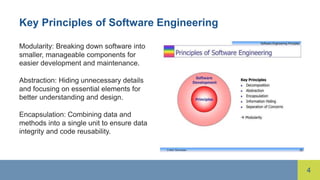
Key Principles of Software Engineering
Modularity: Breaking down software into
smaller, manageable components for
easier development and maintenance.
Abstraction: Hiding unnecessary details
and focusing on essential elements for
better understanding and design.
Encapsulation: Combining data and
methods into a single unit to ensure data
integrity and code reusability.
5
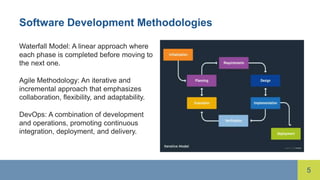
Software Development Methodologies
Waterfall Model: A linear approach where
each phase is completed before moving to
the next one.
Agile Methodology: An iterative and
incremental approach that emphasizes
collaboration, flexibility, and adaptability.
DevOps: A combination of development
and operations, promoting continuous
integration, deployment, and delivery.
6
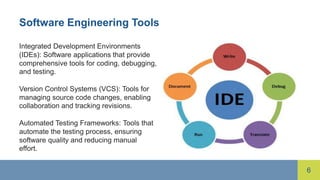
Software Engineering Tools
Integrated Development Environments
(IDEs): Software applications that provide
comprehensive tools for coding, debugging,
and testing.
Version Control Systems (VCS): Tools for
managing source code changes, enabling
collaboration and tracking revisions.
Automated Testing Frameworks: Tools that
automate the testing process, ensuring
software quality and reducing manual
effort.
7
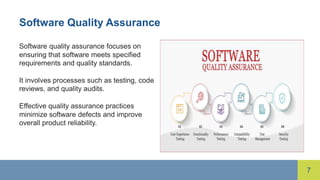
Software Quality Assurance
Software quality assurance focuses on
ensuring that software meets specified
requirements and quality standards.
It involves processes such as testing, code
reviews, and quality audits.
Effective quality assurance practices
minimize software defects and improve
overall product reliability.
8
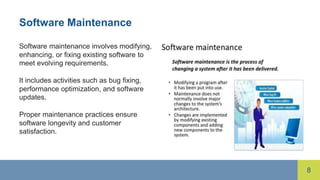
Software Maintenance
Software maintenance involves modifying,
enhancing, or fixing existing software to
meet evolving requirements.
It includes activities such as bug fixing,
performance optimization, and software
updates.
Proper maintenance practices ensure
software longevity and customer
satisfaction.
9
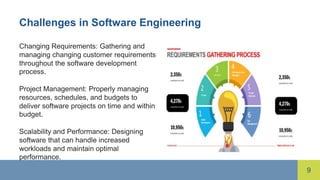
Challenges in Software Engineering
Changing Requirements: Gathering and
managing changing customer requirements
throughout the software development
process.
Project Management: Properly managing
resources, schedules, and budgets to
deliver software projects on time and within
budget.
Scalability and Performance: Designing
software that can handle increased
workloads and maintain optimal
performance.
10
Future Trends in Software Engineering
Artificial Intelligence: Integration of AI
technologies to automate software
development tasks and improve software
intelligence.
Internet of Things (IoT): Development of
software for IoT devices and systems,
enabling seamless connectivity and data
exchange.
Cloud Computing: Leveraging cloud-based
platforms and services for efficient software
development, deployment, and scalability.
11
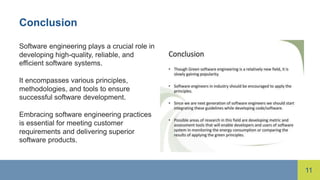
Conclusion
Software engineering plays a crucial role in
developing high-quality, reliable, and
efficient software systems.
It encompasses various principles,
methodologies, and tools to ensure
successful software development.
Embracing software engineering practices
is essential for meeting customer
requirements and delivering superior
software products.

Introduction Of Software Engineering.pptx

  • 1.
    Introduction Of SoftwareEngineering SlideMake.com
  • 2.
    1 Introduction to SoftwareEngineering Software engineering is the discipline of designing, creating, and maintaining software systems. It encompasses a set of principles, techniques, and processes to ensure the development of high-quality software. Software engineering is essential for building reliable, scalable, and efficient software applications.
  • 3.
    2 Importance of SoftwareEngineering Software engineering helps in managing complex software projects by providing systematic approaches. It ensures the delivery of software that meets customer requirements and quality standards. Effective software engineering practices minimize the risk of project failure and enable successful software development.
  • 4.
    3 Software Development LifeCycle (SDLC) The SDLC is a systematic process for developing software, consisting of various phases. These phases include requirements gathering, system design, coding, testing, deployment, and maintenance. Each phase has specific deliverables and activities that contribute to the overall software development process.
  • 5.
    4 Key Principles ofSoftware Engineering Modularity: Breaking down software into smaller, manageable components for easier development and maintenance. Abstraction: Hiding unnecessary details and focusing on essential elements for better understanding and design. Encapsulation: Combining data and methods into a single unit to ensure data integrity and code reusability.
  • 6.
    5 Software Development Methodologies WaterfallModel: A linear approach where each phase is completed before moving to the next one. Agile Methodology: An iterative and incremental approach that emphasizes collaboration, flexibility, and adaptability. DevOps: A combination of development and operations, promoting continuous integration, deployment, and delivery.
  • 7.
    6 Software Engineering Tools IntegratedDevelopment Environments (IDEs): Software applications that provide comprehensive tools for coding, debugging, and testing. Version Control Systems (VCS): Tools for managing source code changes, enabling collaboration and tracking revisions. Automated Testing Frameworks: Tools that automate the testing process, ensuring software quality and reducing manual effort.
  • 8.
    7 Software Quality Assurance Softwarequality assurance focuses on ensuring that software meets specified requirements and quality standards. It involves processes such as testing, code reviews, and quality audits. Effective quality assurance practices minimize software defects and improve overall product reliability.
  • 9.
    8 Software Maintenance Software maintenanceinvolves modifying, enhancing, or fixing existing software to meet evolving requirements. It includes activities such as bug fixing, performance optimization, and software updates. Proper maintenance practices ensure software longevity and customer satisfaction.
  • 10.
    9 Challenges in SoftwareEngineering Changing Requirements: Gathering and managing changing customer requirements throughout the software development process. Project Management: Properly managing resources, schedules, and budgets to deliver software projects on time and within budget. Scalability and Performance: Designing software that can handle increased workloads and maintain optimal performance.
  • 11.
    10 Future Trends inSoftware Engineering Artificial Intelligence: Integration of AI technologies to automate software development tasks and improve software intelligence. Internet of Things (IoT): Development of software for IoT devices and systems, enabling seamless connectivity and data exchange. Cloud Computing: Leveraging cloud-based platforms and services for efficient software development, deployment, and scalability.
  • 12.
    11 Conclusion Software engineering playsa crucial role in developing high-quality, reliable, and efficient software systems. It encompasses various principles, methodologies, and tools to ensure successful software development. Embracing software engineering practices is essential for meeting customer requirements and delivering superior software products.