Basic Concepts Of Software Engineering
SlideMake.com
1
Introduction to Software Engineering
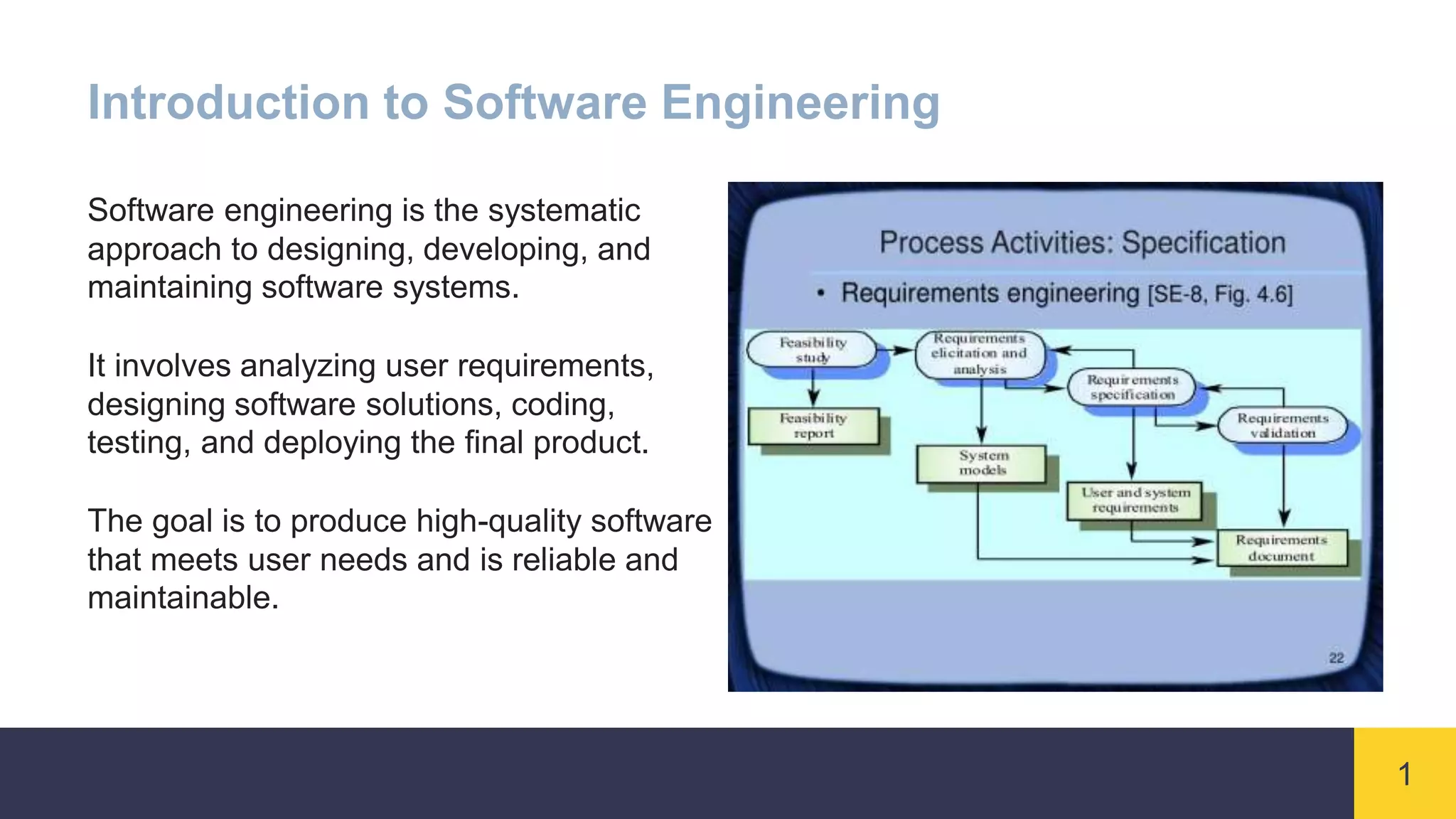
Software engineering is the systematic
approach to designing, developing, and
maintaining software systems.
It involves analyzing user requirements,
designing software solutions, coding,
testing, and deploying the final product.
The goal is to produce high-quality software
that meets user needs and is reliable and
maintainable.
2
Software Development Life Cycle (SDLC)
SDLC is a structured process used to guide
the development of software systems.
It consists of several phases: requirements
gathering, system design, coding, testing,
deployment, and maintenance.
Each phase has specific objectives and
deliverables, ensuring a systematic and
disciplined approach to software
development.
3
Requirements Engineering
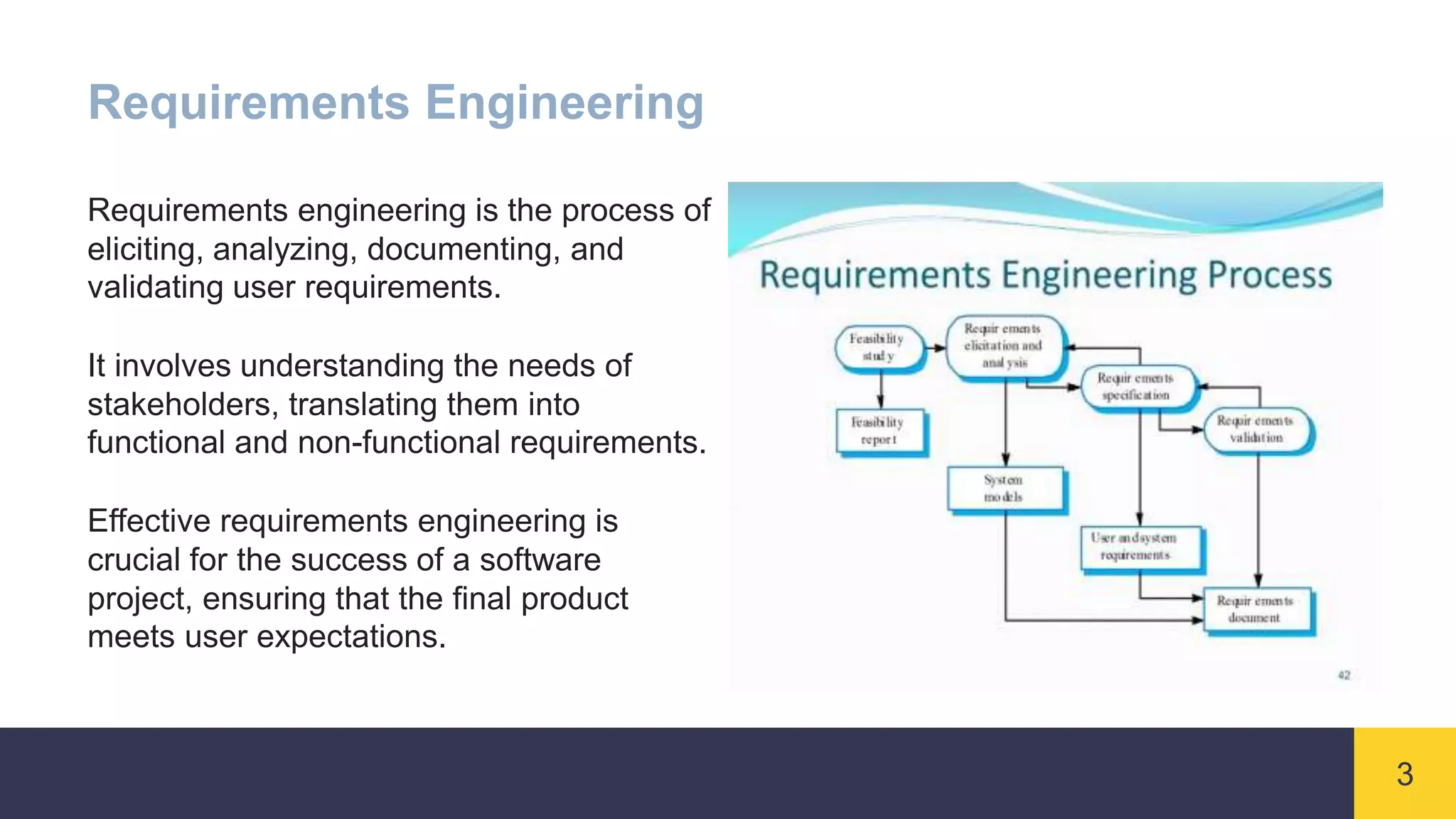
Requirements engineering is the process of
eliciting, analyzing, documenting, and
validating user requirements.
It involves understanding the needs of
stakeholders, translating them into
functional and non-functional requirements.
Effective requirements engineering is
crucial for the success of a software
project, ensuring that the final product
meets user expectations.
4
System Design
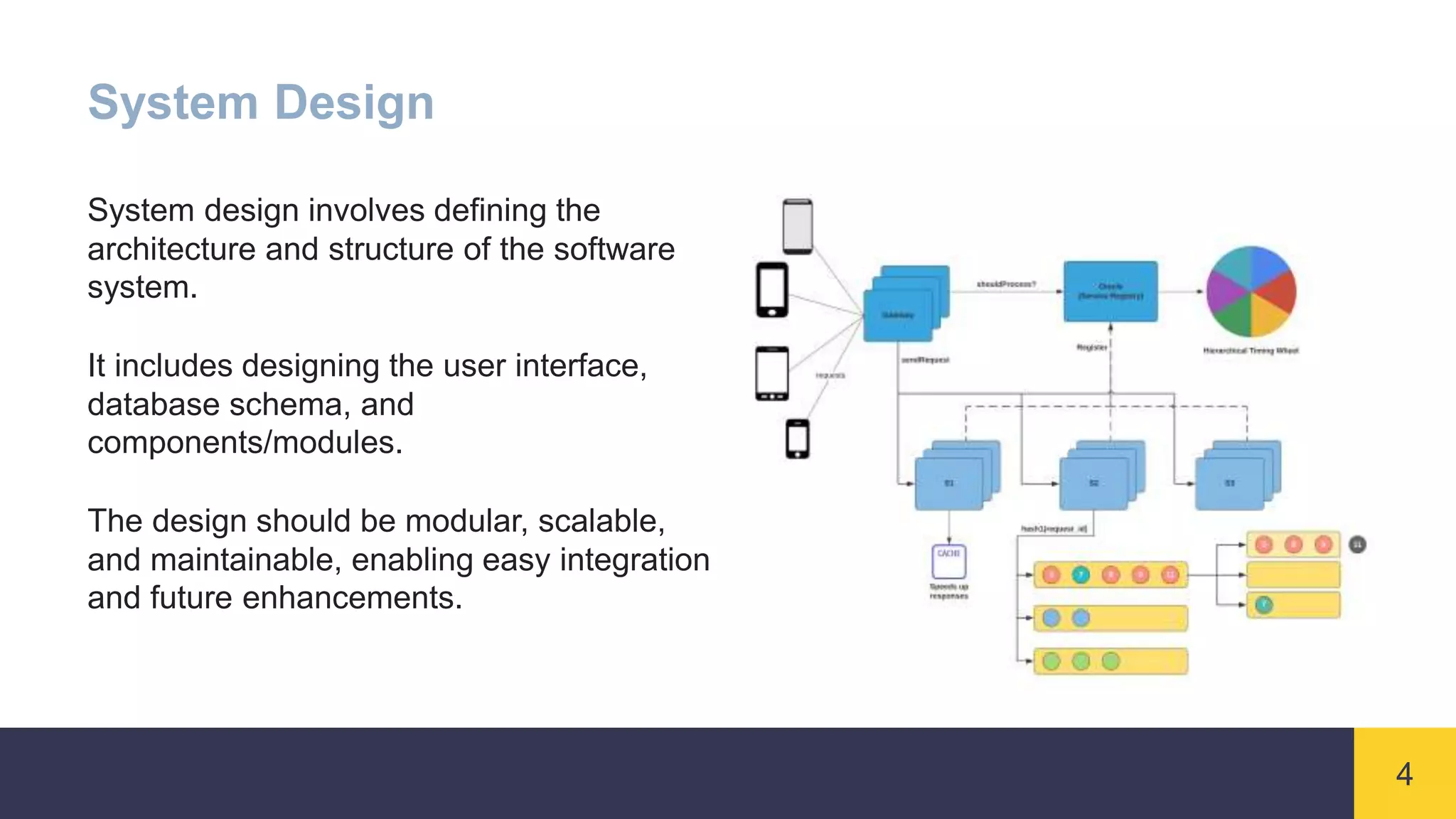
System design involves defining the
architecture and structure of the software
system.
It includes designing the user interface,
database schema, and
components/modules.
The design should be modular, scalable,
and maintainable, enabling easy integration
and future enhancements.
5
Coding and Implementation
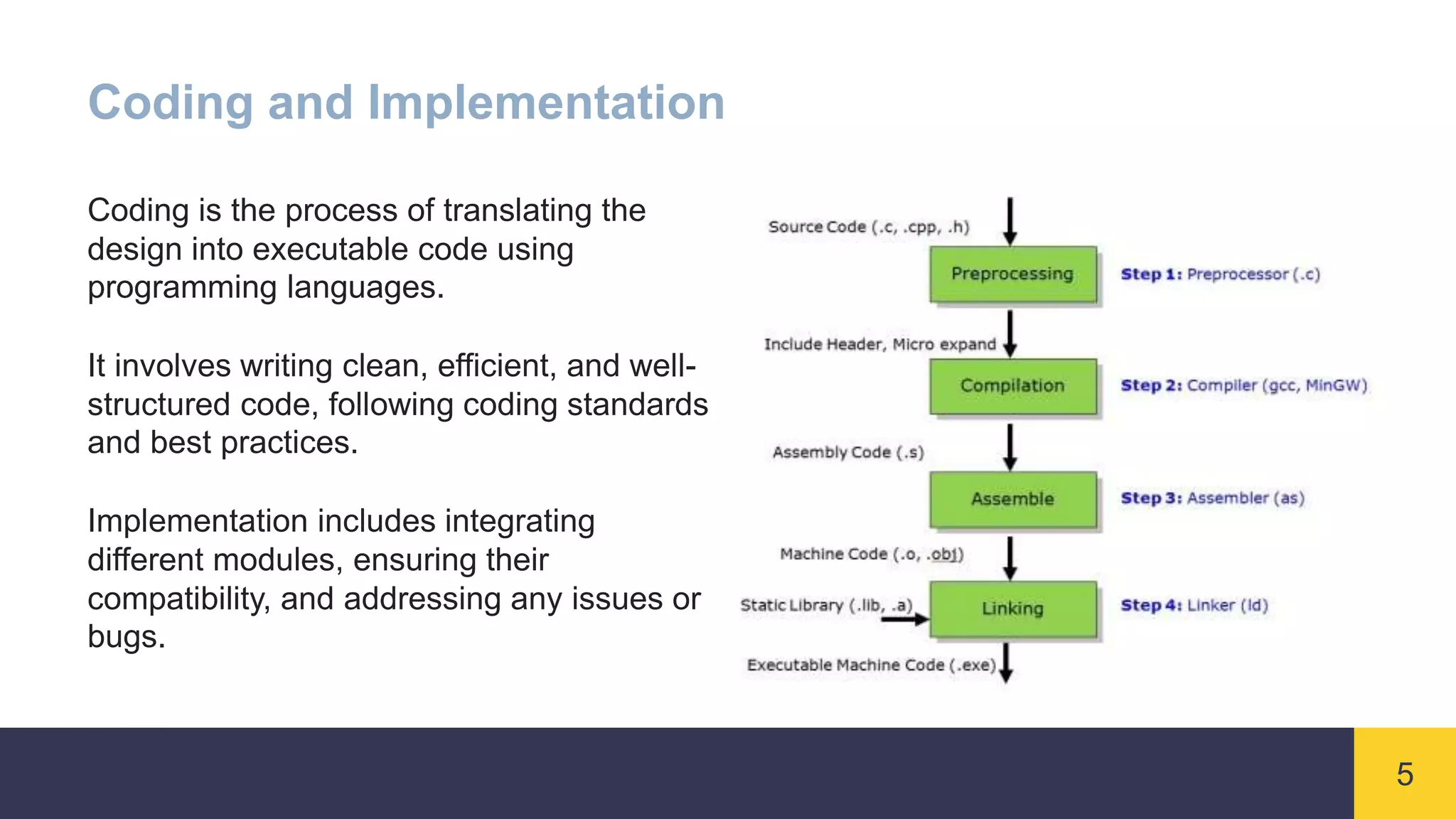
Coding is the process of translating the
design into executable code using
programming languages.
It involves writing clean, efficient, and well-
structured code, following coding standards
and best practices.
Implementation includes integrating
different modules, ensuring their
compatibility, and addressing any issues or
bugs.
6
Testing and Quality Assurance
Testing is the process of verifying and
validating the software against
requirements.
It includes various techniques like unit
testing, integration testing, system testing,
and acceptance testing.
Quality assurance ensures that the
software meets defined quality standards
and is free from defects.
7
Deployment and Release
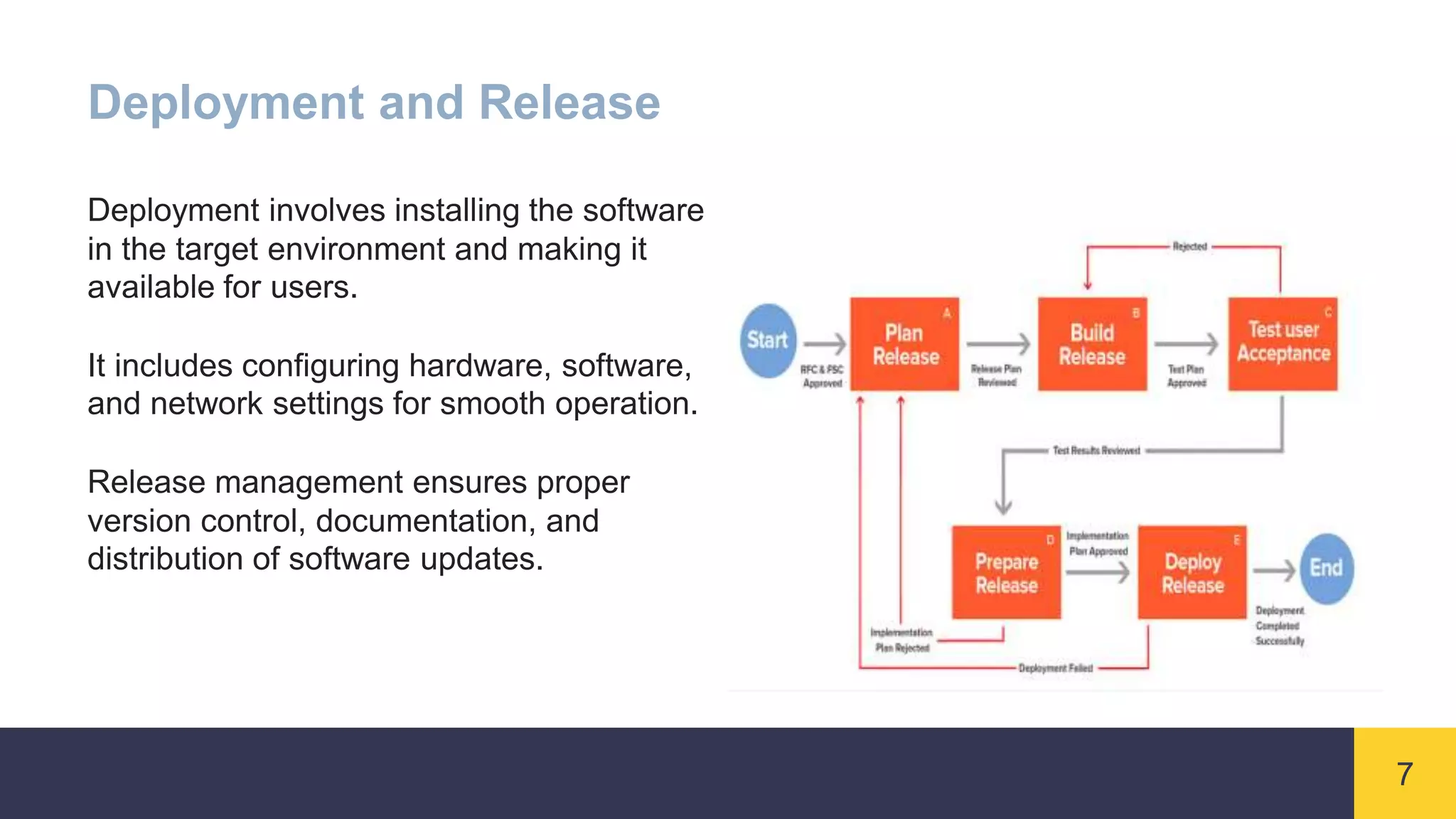
Deployment involves installing the software
in the target environment and making it
available for users.
It includes configuring hardware, software,
and network settings for smooth operation.
Release management ensures proper
version control, documentation, and
distribution of software updates.
8
Maintenance and Support
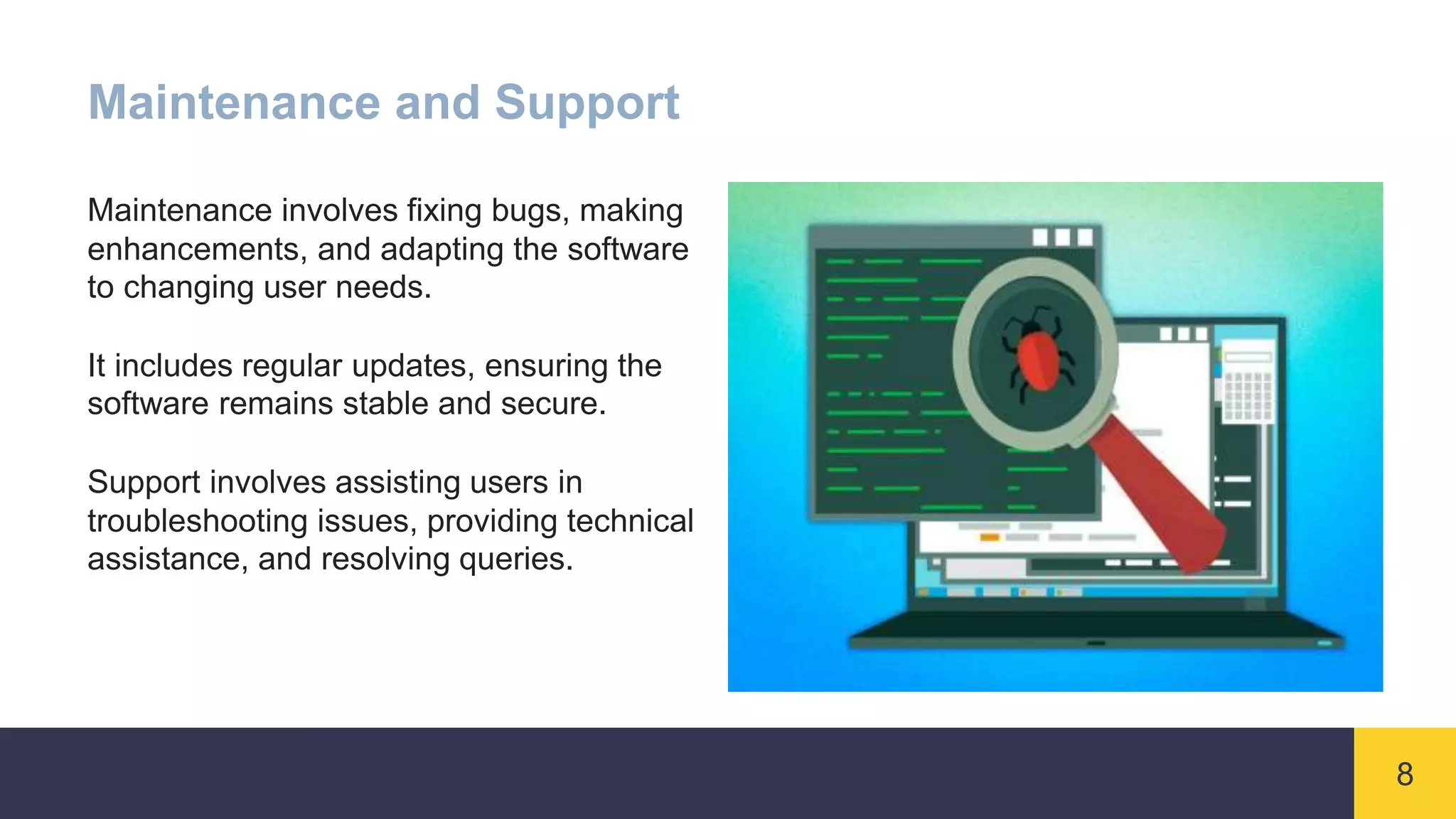
Maintenance involves fixing bugs, making
enhancements, and adapting the software
to changing user needs.
It includes regular updates, ensuring the
software remains stable and secure.
Support involves assisting users in
troubleshooting issues, providing technical
assistance, and resolving queries.
9
Agile Software Development
Agile is an iterative and flexible approach to
software development.
It focuses on collaboration, adaptability,
and continuous improvement.
Agile methods like Scrum and Kanban
promote incremental development, regular
feedback, and rapid delivery.
10
Software Documentation
Documentation is an essential part of
software engineering.
It includes user manuals, technical
specifications, design documents, and
release notes.
Proper documentation enables easy
understanding, maintenance, and future
development of the software.
11
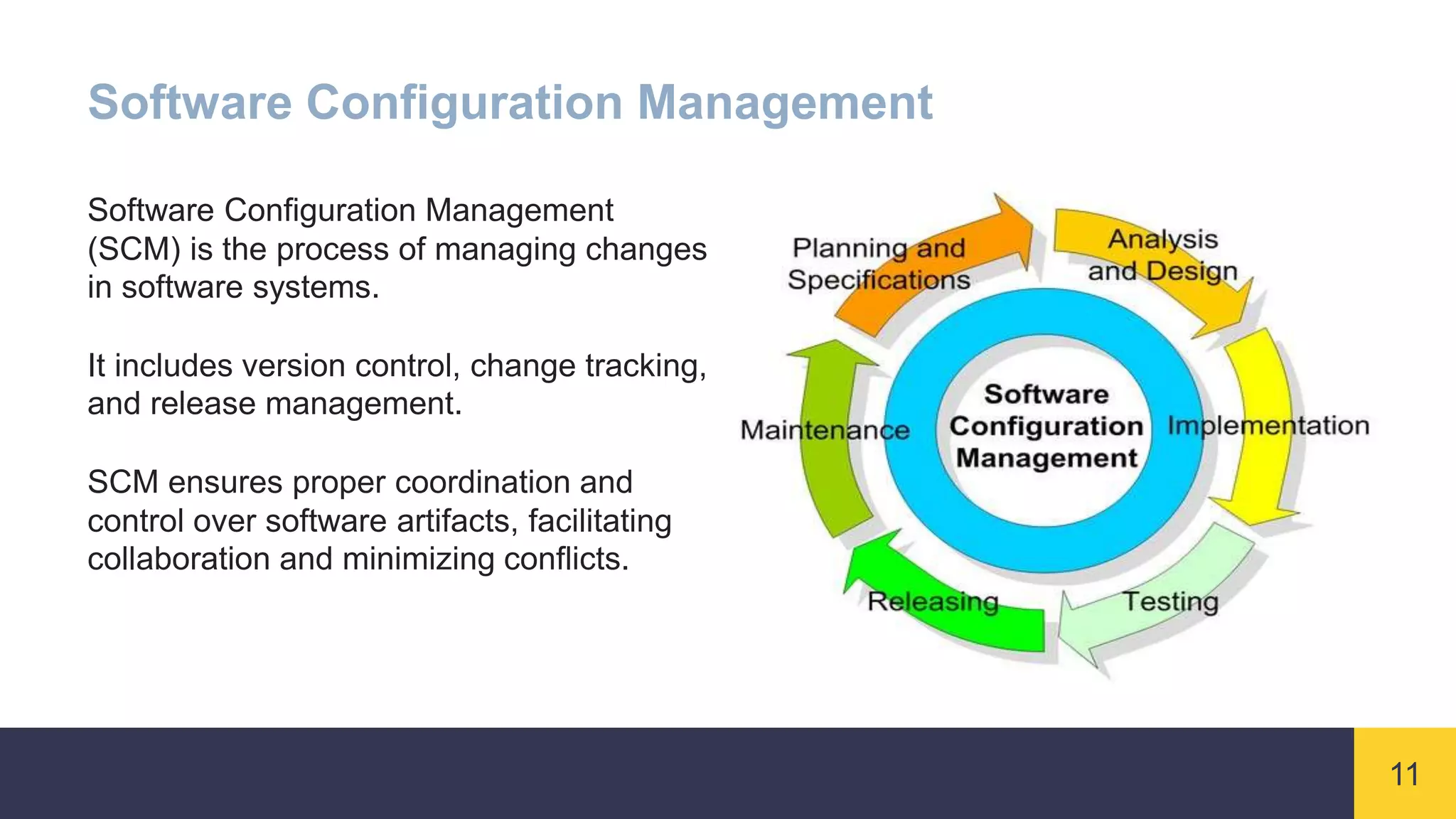
Software Configuration Management
(SCM) is the process of managing changes
in software systems.
It includes version control, change tracking,
and release management.
SCM ensures proper coordination and
control over software artifacts, facilitating
collaboration and minimizing conflicts.
12
Software Engineering Tools
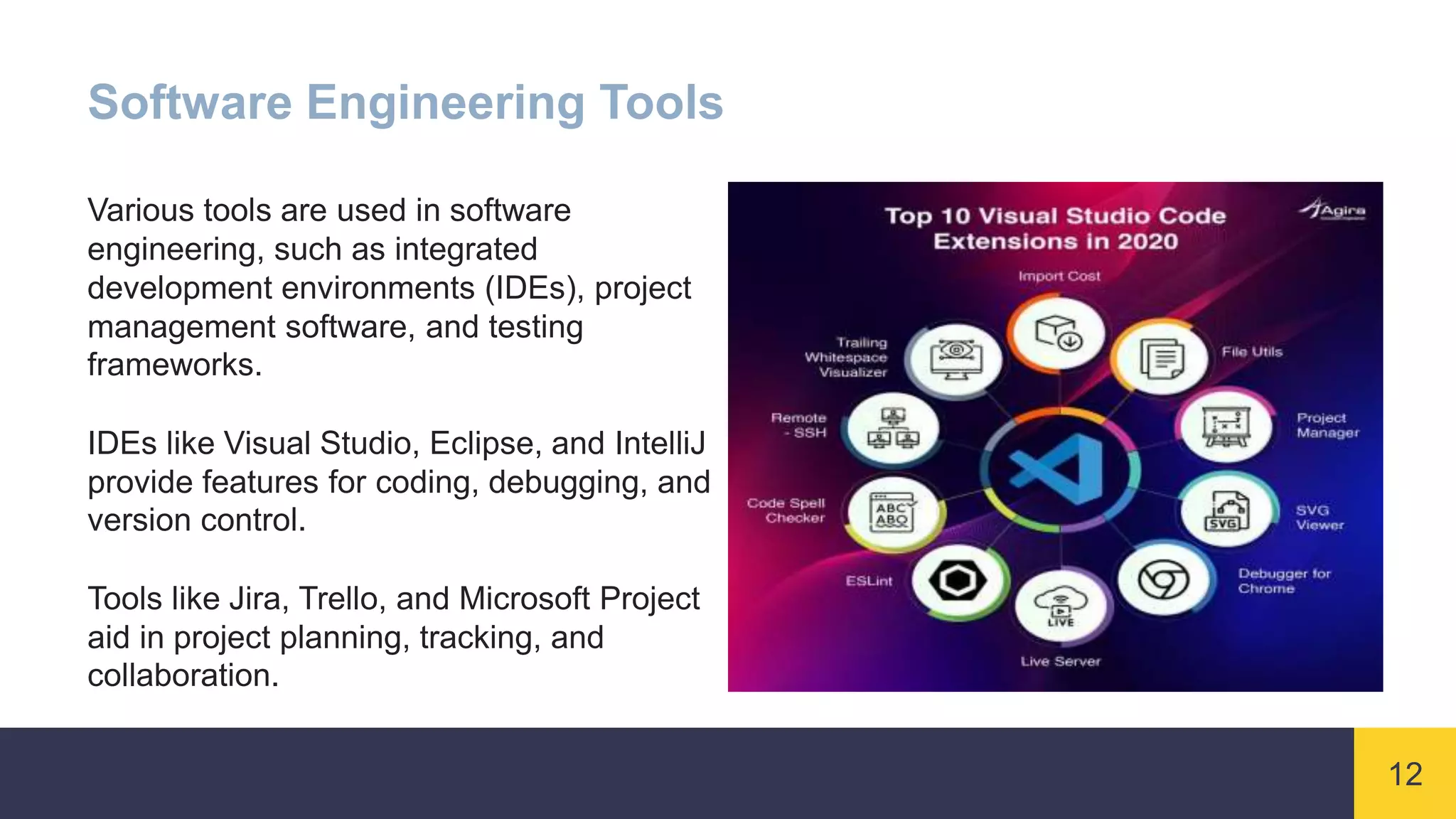
Various tools are used in software
engineering, such as integrated
development environments (IDEs), project
management software, and testing
frameworks.
IDEs like Visual Studio, Eclipse, and IntelliJ
provide features for coding, debugging, and
version control.
Tools like Jira, Trello, and Microsoft Project
aid in project planning, tracking, and
collaboration.
13
Software Engineering Ethics
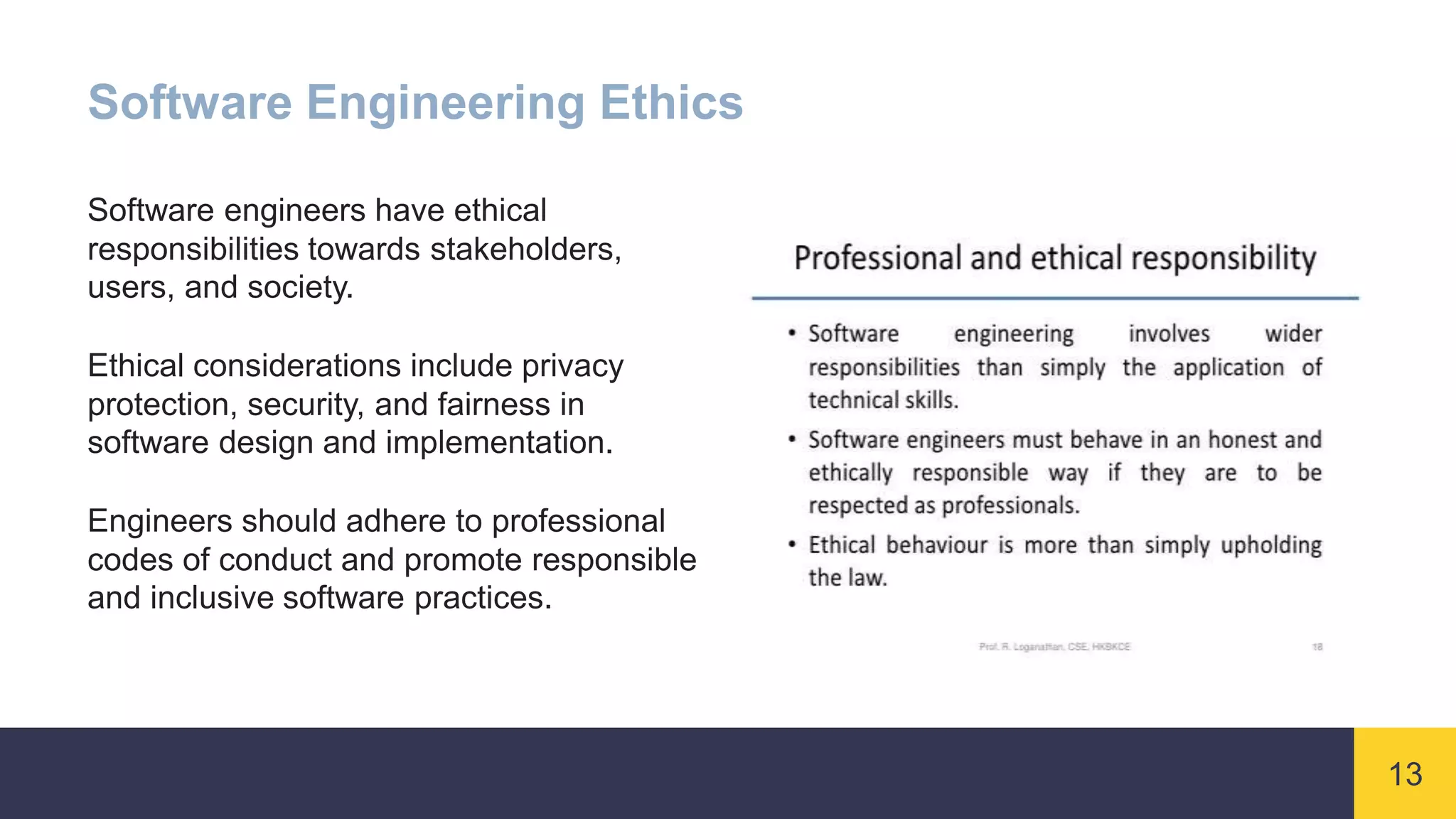
Software engineers have ethical
responsibilities towards stakeholders,
users, and society.
Ethical considerations include privacy
protection, security, and fairness in
software design and implementation.
Engineers should adhere to professional
codes of conduct and promote responsible
and inclusive software practices.
14
Software Engineering Challenges
Software engineering faces challenges like
changing user requirements, tight
deadlines, and limited resources.
Complexity, scalability, and security are
other common challenges in software
development.
Effective project management,
communication, and agile practices can
help address these challenges.
15
Conclusion
Software engineering is a systematic
approach to developing high-quality
software systems.
It involves various phases, from
requirements engineering to deployment
and maintenance.
By following best practices, using
appropriate tools, and considering ethical
considerations, software engineers can
deliver successful software projects.
16
References
Pressman, R. S. (2014). Software
Engineering: A Practitioner's Approach.
McGraw-Hill Education.
Sommerville, I. (2015). Software
Engineering. Pearson Education Limited.
IEEE Computer Society. (2018). IEEE
Code of Ethics. Retrieved from
https://www.computer.org/code-of-ethics

Basic Concepts Of Software Engineering.pptx

  • 1.
    Basic Concepts OfSoftware Engineering SlideMake.com
  • 2.
    1 Introduction to SoftwareEngineering Software engineering is the systematic approach to designing, developing, and maintaining software systems. It involves analyzing user requirements, designing software solutions, coding, testing, and deploying the final product. The goal is to produce high-quality software that meets user needs and is reliable and maintainable.
  • 3.
    2 Software Development LifeCycle (SDLC) SDLC is a structured process used to guide the development of software systems. It consists of several phases: requirements gathering, system design, coding, testing, deployment, and maintenance. Each phase has specific objectives and deliverables, ensuring a systematic and disciplined approach to software development.
  • 4.
    3 Requirements Engineering Requirements engineeringis the process of eliciting, analyzing, documenting, and validating user requirements. It involves understanding the needs of stakeholders, translating them into functional and non-functional requirements. Effective requirements engineering is crucial for the success of a software project, ensuring that the final product meets user expectations.
  • 5.
    4 System Design System designinvolves defining the architecture and structure of the software system. It includes designing the user interface, database schema, and components/modules. The design should be modular, scalable, and maintainable, enabling easy integration and future enhancements.
  • 6.
    5 Coding and Implementation Codingis the process of translating the design into executable code using programming languages. It involves writing clean, efficient, and well- structured code, following coding standards and best practices. Implementation includes integrating different modules, ensuring their compatibility, and addressing any issues or bugs.
  • 7.
    6 Testing and QualityAssurance Testing is the process of verifying and validating the software against requirements. It includes various techniques like unit testing, integration testing, system testing, and acceptance testing. Quality assurance ensures that the software meets defined quality standards and is free from defects.
  • 8.
    7 Deployment and Release Deploymentinvolves installing the software in the target environment and making it available for users. It includes configuring hardware, software, and network settings for smooth operation. Release management ensures proper version control, documentation, and distribution of software updates.
  • 9.
    8 Maintenance and Support Maintenanceinvolves fixing bugs, making enhancements, and adapting the software to changing user needs. It includes regular updates, ensuring the software remains stable and secure. Support involves assisting users in troubleshooting issues, providing technical assistance, and resolving queries.
  • 10.
    9 Agile Software Development Agileis an iterative and flexible approach to software development. It focuses on collaboration, adaptability, and continuous improvement. Agile methods like Scrum and Kanban promote incremental development, regular feedback, and rapid delivery.
  • 11.
    10 Software Documentation Documentation isan essential part of software engineering. It includes user manuals, technical specifications, design documents, and release notes. Proper documentation enables easy understanding, maintenance, and future development of the software.
  • 12.
    11 Software Configuration Management SoftwareConfiguration Management (SCM) is the process of managing changes in software systems. It includes version control, change tracking, and release management. SCM ensures proper coordination and control over software artifacts, facilitating collaboration and minimizing conflicts.
  • 13.
    12 Software Engineering Tools Varioustools are used in software engineering, such as integrated development environments (IDEs), project management software, and testing frameworks. IDEs like Visual Studio, Eclipse, and IntelliJ provide features for coding, debugging, and version control. Tools like Jira, Trello, and Microsoft Project aid in project planning, tracking, and collaboration.
  • 14.
    13 Software Engineering Ethics Softwareengineers have ethical responsibilities towards stakeholders, users, and society. Ethical considerations include privacy protection, security, and fairness in software design and implementation. Engineers should adhere to professional codes of conduct and promote responsible and inclusive software practices.
  • 15.
    14 Software Engineering Challenges Softwareengineering faces challenges like changing user requirements, tight deadlines, and limited resources. Complexity, scalability, and security are other common challenges in software development. Effective project management, communication, and agile practices can help address these challenges.
  • 16.
    15 Conclusion Software engineering isa systematic approach to developing high-quality software systems. It involves various phases, from requirements engineering to deployment and maintenance. By following best practices, using appropriate tools, and considering ethical considerations, software engineers can deliver successful software projects.
  • 17.
    16 References Pressman, R. S.(2014). Software Engineering: A Practitioner's Approach. McGraw-Hill Education. Sommerville, I. (2015). Software Engineering. Pearson Education Limited. IEEE Computer Society. (2018). IEEE Code of Ethics. Retrieved from https://www.computer.org/code-of-ethics