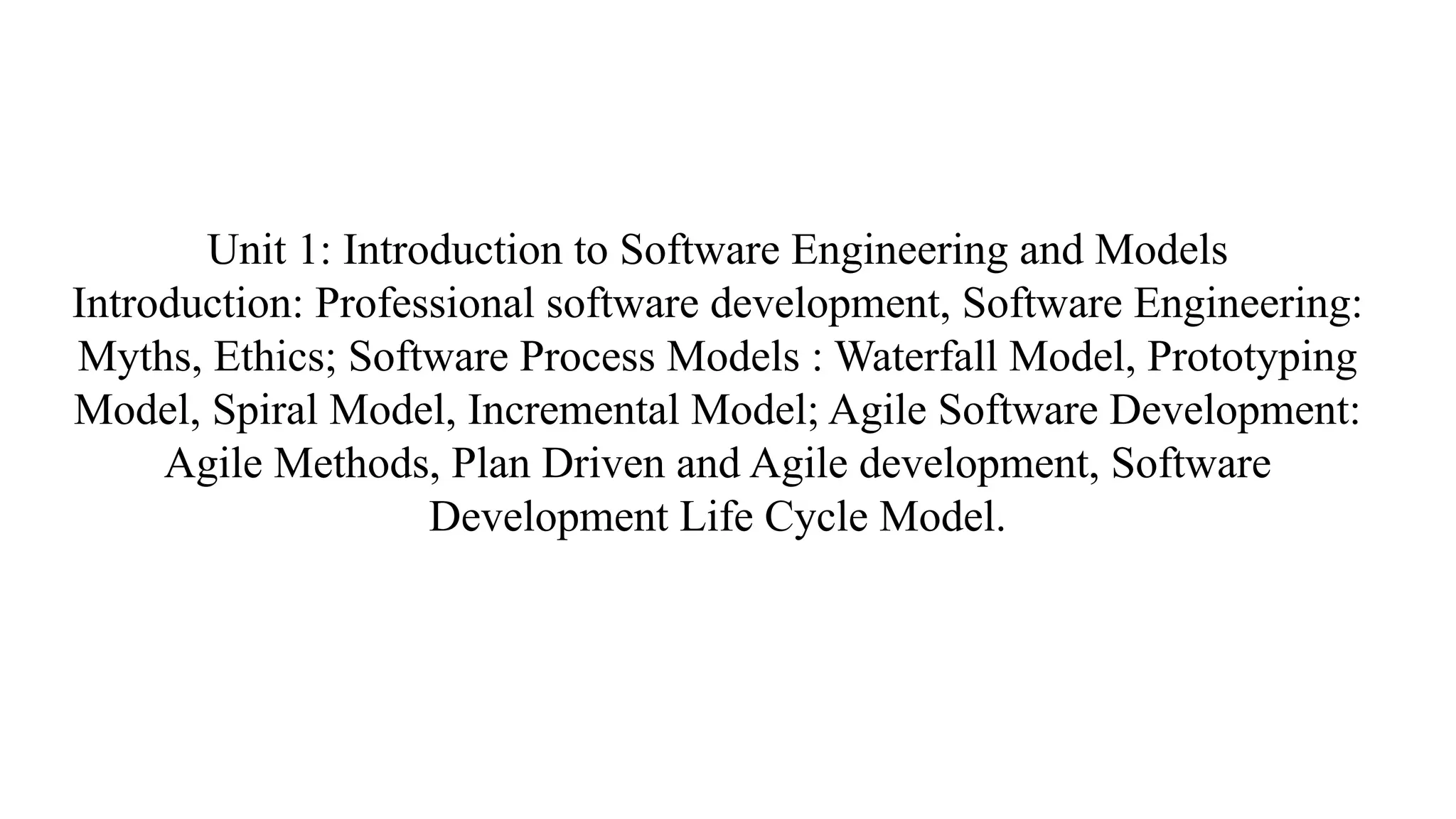
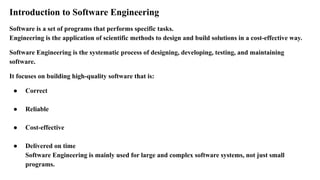
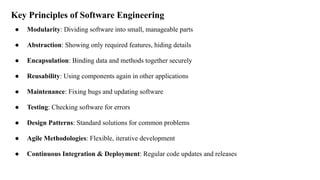
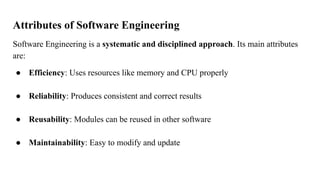
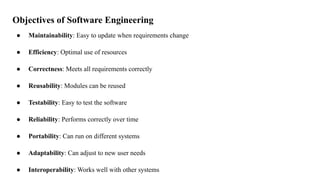
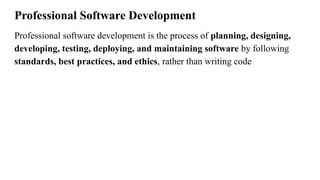
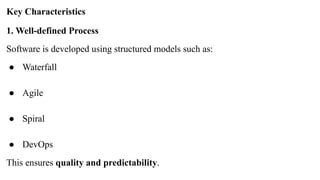
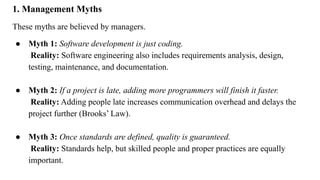
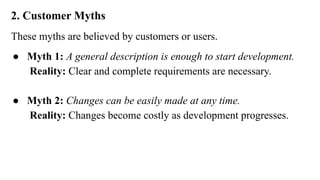
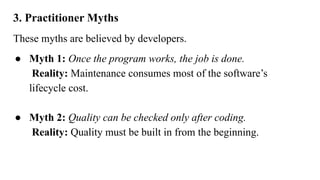
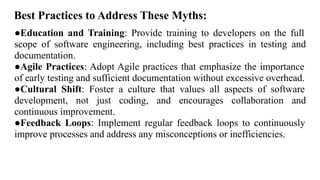
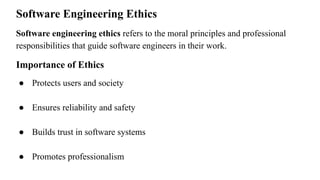
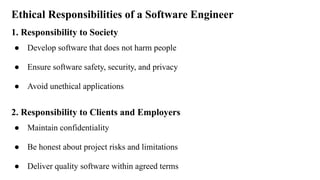
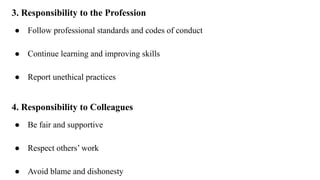
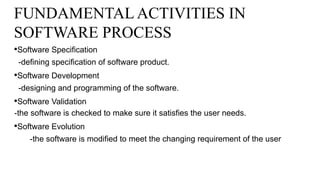
Unit 1 introduces the fundamentals of Software Engineering and the various process models used to develop high-quality software systems in a systematic and professional manner. Professional software development emphasizes teamwork, documentation, standards, quality assurance, and maintenance rather than just coding programs. Software Engineering as a discipline helps in building reliable, efficient, and cost-effective software while following ethical practices such as honesty, respect for intellectual property, user privacy, and professional responsibility. The unit also discusses common myths about software, such as the belief that adding more programmers will always speed up development or that requirements can easily change without affecting cost and schedule. A major focus of this unit is Software Process Models, which provide structured approaches for organizing development activities. The Waterfall Model is a linear and sequential approach where each phase like requirements, design, implementation, testing, and maintenance is completed before moving to the next. The Prototyping Model allows developers to build an early working model to better understand user requirements. The Spiral Model combines iterative development with risk analysis, making it suitable for large and complex projects. The Incremental Model develops software in small, manageable parts, delivering usable components in stages. The unit also introduces Agile Software Development, which focuses on flexibility, customer collaboration, continuous feedback, and rapid delivery. It compares Plan-Driven development, which emphasizes detailed planning and documentation, with Agile methods that adapt to changing requirements. Finally, the Software Development Life Cycle (SDLC) model is explained as a framework that defines all phases of software creation from planning to maintenance, ensuring systematic development and improved software quality.